
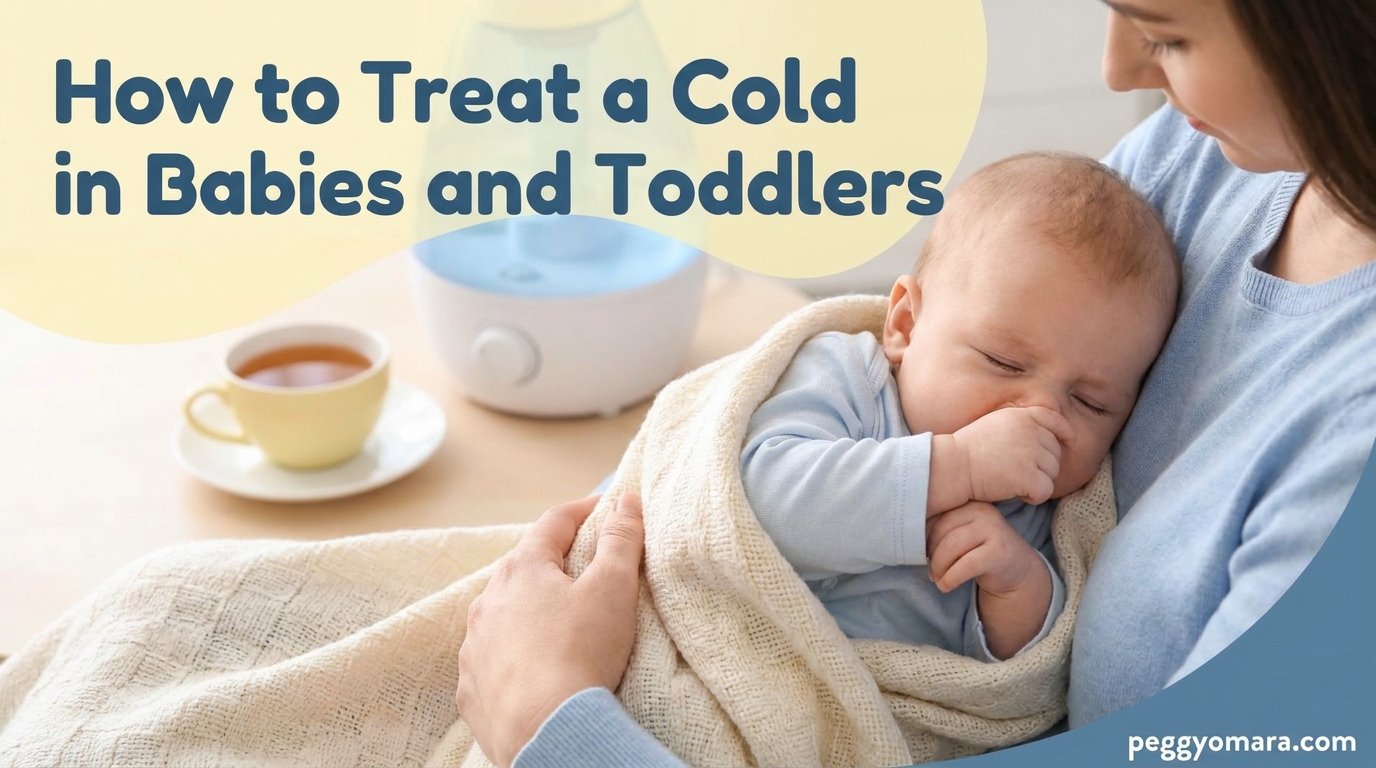
Watching your little one struggle with a runny nose and congestion is one of the hardest parts of parenthood. I remember sitting up at 3 a.m. with my first baby, listening to her stuffy breathing and wondering if I should rush to the emergency room or wait until morning. That feeling of helplessness is universal among parents, and it is completely normal to feel overwhelmed when your baby catches their first cold.
This guide will walk you through exactly how to treat a cold in babies and toddlers with safe, evidence-based home remedies. You will learn the day-by-day progression of symptoms, age-specific medicine guidelines, and clear warning signs that mean it is time to call the pediatrician. By the end, you will feel confident caring for your sick little one and knowing when to seek help.
Table of Contents
Understanding Baby Colds: What Parents Need to Know?
A cold is a viral upper respiratory infection that affects babies and toddlers differently than adults. Young children have narrower nasal passages and developing immune systems, which means congestion feels more severe and lasts longer than it would for you. The common cold is caused by viruses like rhinovirus, and it spreads through droplets when someone coughs or sneezes nearby.
Babies typically catch 6 to 8 colds per year, with the first one often striking around 6 months when their initial immunity from mom starts to fade. Toddlers in daycare may catch even more as they build their immune defenses. While this sounds alarming, each cold actually strengthens their immune system for the future.
How Long Does a Cold Last in an Infant?
Most baby colds last between 7 and 14 days, with symptoms peaking around day 3 to 5. The cough may linger for 2 to 3 weeks even after other symptoms improve. Understanding this timeline helps set realistic expectations and reduces anxiety when symptoms do not disappear immediately.
The Day-by-Day Cold Timeline
Days 1-2: Your baby may seem fussier than usual with a slight runny nose or watery eyes. Some babies spike a low fever during this early phase.
Days 3-5: This is usually the hardest period. Nasal congestion peaks, mucus thickens, and your baby may struggle to nurse or take a bottle. Sleep disruption is common.
Days 6-10: Symptoms gradually improve. The runny nose becomes clear and watery again. Energy levels start returning to normal.
Days 11-14: Most babies are back to their usual selves. A mild cough might persist, which is normal as the airways heal.
Symptoms to Watch For
Recognizing the progression of cold symptoms helps you respond appropriately at each stage. Baby cold symptoms follow a predictable pattern that starts in the nose and may move to the chest as the illness runs its course.
Early Signs (Days 1-2)
- Runny or stuffy nose
- Sneezing
- Fussiness or irritability
- Watery eyes
- Low-grade fever (under 100.4 degrees F for babies under 3 months)
- Decreased appetite
Peak Symptoms (Days 3-5)
- Thick yellow or green mucus
- Significant nasal congestion
- Cough, especially at night
- Sore throat (may refuse feeds)
- Hoarse voice
- Difficulty sleeping flat
- Higher fever (if present)
Recovery Phase (Days 6-14)
- Clear, watery nasal discharge
- Cough becoming less frequent
- Appetite returning to normal
- Energy levels improving
- Mild lingering symptoms
Green or yellow mucus does not automatically mean a bacterial infection. This color change is simply a sign that your baby’s immune system is fighting the virus effectively. Antibiotics are not needed for viral colds and will not help.
Is It a Cold, RSV, or Flu?
Parents often wonder whether their baby has a simple cold or something more serious like RSV or influenza. While only a doctor can diagnose these conditions, there are patterns that help distinguish them.
| Symptom | Common Cold | RSV | Influenza (Flu) |
|---|---|---|---|
| Onset | Gradual over 1-2 days | Gradual, then rapid worsening | Sudden, within hours |
| Fever | Mild or none | Common, may spike high | High fever (101-104 degrees F) |
| Cough | Mild to moderate | Severe, wheezing possible | Dry, hacking, severe |
| Appetite | Slightly decreased | Significantly reduced | Greatly reduced or absent |
| Breathing | Normal, maybe noisy | Rapid, labored, retractions | Normal unless complications |
| Energy | Fussy but interactive | Lethargic, very sleepy | Extremely tired, listless |
| Duration | 7-14 days | 1-2 weeks, cough lingers | 3-7 days with sudden onset |
RSV (respiratory syncytial virus) is particularly concerning in babies under 6 months. It can cause bronchiolitis, an inflammation of the small airways. If your baby is breathing rapidly, showing retractions (skin pulling between ribs), or grunting with each breath, seek medical care immediately.
Safe Home Remedies for Baby Colds (2026)
The best treatment for a baby’s cold focuses on comfort and symptom relief while their immune system fights the virus. These safe home remedies have helped millions of parents soothe their congested little ones without medication.
Saline Drops and Nasal Suction
Clearing nasal mucus is the single most effective way to help a congested baby breathe, nurse, and sleep better. Saline drops thin the mucus, and gentle suction removes it.
How to use saline drops and suction:
- Lay your baby on their back with a rolled towel under their shoulders to tilt the head back slightly.
- Place 2-3 drops of saline in each nostril. Wait 30-60 seconds to let the saline work.
- Use a bulb syringe or nasal aspirator to gently suction the loosened mucus.
- Squeeze the bulb before inserting, then gently release to draw out mucus.
- Clean the device with warm soapy water after each use.
Perform this routine 3-4 times per day and always before feedings and bedtime. Over-suctioning can irritate delicate nasal passages, so find the balance that keeps your baby comfortable.
Humidifier Benefits
A cool-mist humidifier adds moisture to dry air, which helps loosen congestion and soothe irritated nasal passages. Dry winter air and heating systems often make cold symptoms worse by drying out mucus membranes.
Place the humidifier near your baby’s crib but not so close that mist falls directly on them or their bedding. Clean the unit daily according to manufacturer instructions to prevent mold and bacteria growth. Cool-mist humidifiers are safer than warm-mist versions, which pose burn risks if tipped over.
Hydration Strategies
Keeping your baby well-hydrated thins mucus and prevents dehydration, which can become serious quickly in young infants. Breast milk and formula provide both fluids and immune-boosting properties during illness.
Hydration tips by age:
- Under 6 months: Continue regular breastfeeding or formula feeding. Offer smaller, more frequent feeds if appetite is reduced.
- 6-12 months: Add small amounts of water between feeds. Breast milk or formula should remain the primary fluid source.
- Over 1 year: Offer water, diluted juice, warm broths, and popsicles. Toddlers may prefer ice-cold drinks when their throat is sore.
Watch for dehydration signs: fewer wet diapers than usual (under 6 in 24 hours for babies), dark yellow urine, dry mouth, no tears when crying, or a sunken soft spot on the head.
Steam Treatment
Steam helps loosen thick mucus and provides temporary relief from congestion. This simple remedy requires no special equipment.
Run a hot shower and sit with your baby in the steamy bathroom for 10-15 minutes. Hold your baby securely and keep the door closed to trap the steam. Do not put your baby in the actual shower. The warm, moist air helps thin nasal secretions, making them easier to clear with suction afterward.
Many parents find this works best before bedtime to help their baby sleep more comfortably. You can do this 2-3 times per day during the peak congestion period.
Sleep and Comfort Tips
Sleep disruption is one of the hardest parts of a baby’s cold. Congestion worsens when lying flat, making it difficult for babies to breathe comfortably through their nose.
Sleep strategies that help:
- Elevate the head of the crib mattress slightly by placing a rolled towel under the mattress (never in the crib itself).
- Use saline drops and suction right before bedtime and night feedings.
- Run a cool-mist humidifier in the bedroom all night.
- Consider holding your baby upright on your chest for naps if they are very congested.
- Dress your baby in comfortable layers so they do not overheat.
Remember that extra snuggles and comfort are exactly what your baby needs. Do not worry about creating bad sleep habits during a short illness. Your baby will return to their normal routine once they feel better.
Natural Remedies for Toddlers Over 1
Once your child reaches their first birthday, additional natural remedies become safe options. Honey is a particularly effective cough soother for toddlers.
Honey guidelines:
- Ages 1-5 years: Give 1/2 teaspoon of honey as needed for cough.
- Ages 6-11 years: Give 1 teaspoon of honey as needed for cough.
- Offer honey straight from a spoon or mixed into warm water or herbal tea.
- Never give honey to babies under 1 year due to botulism risk.
Studies have shown that honey is as effective as over-the-counter cough medicines for soothing nighttime coughs in children over 1. The sweetness coats the throat, while its antioxidant properties support healing.
Medicine Safety Guidelines by Age (2026)
Understanding what medications are safe at each age prevents dangerous mistakes. Many parents are surprised to learn that most over-the-counter cough and cold medicines are not recommended for young children.
Under 3 Months
Babies under 3 months should not receive any medication without direct pediatrician guidance. Even a low-grade fever (100.4 degrees F or higher) in this age group requires immediate medical evaluation.
Focus entirely on non-medication comfort measures: saline drops, suction, humidifier, and frequent feedings. Call your doctor promptly if your newborn shows any signs of illness.
3-6 Months
At this age, acetaminophen (Tylenol) becomes an option for fever or discomfort, but only with pediatrician approval. Always use the infant formulation and the provided dosing syringe.
Do NOT give ibuprofen to babies under 6 months. Never give aspirin to any child due to the risk of Reye syndrome, a rare but serious condition.
6-12 Months
Both acetaminophen and ibuprofen (Advil, Motrin) are generally safe at this age with proper dosing. Ibuprofen should be given with food to protect the stomach.
Always check with your pediatrician before giving any medication, and use weight-based dosing rather than age-based estimates. Keep a written log of when you give medication to avoid accidental overdose.
Over 1 Year
Toddlers over 1 can safely receive acetaminophen or ibuprofen with proper dosing. Honey becomes an option for cough relief. Vapor rubs can be used on the chest (not under the nose) for children over 2.
Even at this age, avoid multi-symptom cough and cold medicines. The FDA does not recommend OTC cough and cold products for children under 6 years old. These medications have limited effectiveness and significant side effect risks in young children.
Medications to Avoid
- Cough and cold combination products for children under 6 years
- Decongestants for children under 6 years
- Cough suppressants for children under 4 years
- Aspirin at any age
- Honey for babies under 1 year (botulism risk)
- Vapor rub under the nose for children under 2 years
When to Call the Doctor: A Clear Triage Guide
Knowing when to seek medical help versus managing symptoms at home reduces anxiety and ensures your baby gets care when needed. This triage guide helps you make quick decisions during stressful moments.
Call 911 Immediately
These are emergency situations requiring immediate medical attention:
- Your baby is struggling to breathe or making grunting sounds with each breath
- You see retractions (skin pulling in between ribs, under the breastbone, or at the collarbone)
- Lips or face turning blue or gray
- Breathing is very rapid (over 60 breaths per minute for newborns, over 50 for infants)
- Your baby is unresponsive or extremely difficult to wake
- Signs of severe dehydration (no tears, very dry mouth, sunken eyes or soft spot)
Seek Urgent Care Now
Contact your pediatrician immediately or go to urgent care for:
- Fever over 100.4 degrees F in babies under 3 months
- Fever over 102 degrees F in babies 3-6 months
- Fever lasting more than 3 days in any age
- Wheezing or noisy breathing that is new or worsening
- Your baby refuses to drink or has not had wet diapers for 8+ hours
- Persistent vomiting
- Ear pain or tugging (possible ear infection)
Contact Doctor Within 24 Hours
Call your pediatrician for an appointment within the next day if:
- Symptoms are not improving after 7-10 days
- New fever develops after initial improvement
- Cough is worsening or disrupting all sleep
- You suspect an ear infection (tugging at ears, crying when lying down)
- Rash develops along with cold symptoms
- You simply have a gut feeling that something is not right
Schedule Routine Appointment
A regular office visit is appropriate for:
- Cold symptoms lasting longer than 14 days
- Cough persisting beyond 3 weeks
- Follow-up after an urgent visit to ensure recovery
- Discussing recurrent colds or concerns about immune health
Trust your parental instincts. You know your baby better than anyone. If you feel something is wrong, call your doctor even if symptoms do not match these lists exactly.
Preventing Colds and Keeping the Family Healthy
While you cannot completely prevent colds, certain practices reduce your baby’s exposure to viruses and help the whole family stay healthier.
Hand hygiene is essential. Wash your hands thoroughly with soap and water before handling your baby, preparing bottles, or feeding. Teach older siblings to wash hands frequently and use hand sanitizer when soap is not available.
Limit exposure during peak illness times. During cold and flu season, avoid crowded places with your baby when possible. Politely ask sick visitors to postpone their visit until they are fully recovered.
Breastfeeding provides immune protection. If you are nursing, continue doing so through colds. Breast milk contains antibodies that help fight the specific viruses your baby is exposed to. Your body makes targeted antibodies when you are exposed to the same germs.
Keep older siblings home when sick. When possible, have sick siblings stay home from school to prevent bringing viruses into the house. Teach children to cover coughs and sneezes with their elbow.
Maintain a smoke-free environment. Secondhand smoke damages the respiratory system and makes colds more severe. Ensure no one smokes around your baby, even outdoors near open windows.
Frequently Asked Questions
How can I get rid of my baby’s cold fast?
There is no instant cure for a baby’s cold, but you can help symptoms resolve more quickly by using saline nose drops with suction, running a cool-mist humidifier, ensuring plenty of fluids, and using steam from a warm shower. Most colds improve significantly by day 7. Focus on comfort measures and remember that the immune system needs time to fight the virus.
How long does a cold last in an infant?
Most baby colds last 7 to 14 days, with symptoms typically peaking around days 3 to 5. The cough may linger for 2 to 3 weeks even after other symptoms improve. Newborns and young infants may experience symptoms for the full 2 weeks, while older babies might recover faster.
Can I put baby Vicks on my baby’s nose?
No, never apply vapor rub under or inside your baby’s nose. For babies under 2 years, avoid vapor rub entirely. For children 2 years and older, you can apply a thin layer to the chest only. Applying vapor rub near the nose can cause serious breathing problems and mucus production in young children.
What helps a toddler get rid of a cold?
For toddlers over 1 year, offer honey for cough relief, use saline spray with nose blowing, run a humidifier, provide warm fluids like soup, and encourage plenty of rest. You can safely use acetaminophen or ibuprofen for fever or discomfort with proper dosing. Avoid all over-the-counter cough and cold medicines for children under 6 years.
Is it RSV or just a cold?
RSV typically causes more severe symptoms than a common cold, including rapid breathing, wheezing, significant lethargy, and poor feeding. While colds develop gradually, RSV often worsens quickly after a few days. If your baby shows retractions, grunting with breaths, blue lips, or refuses to eat, seek immediate medical care. Only a doctor can definitively diagnose RSV.
Conclusion
Learning how to treat a cold in babies and toddlers empowers you to care for your little one with confidence. Remember that most colds resolve on their own within 7 to 14 days, and your role is to provide comfort and watch for warning signs. The home remedies in this guide, saline drops, humidifiers, hydration, and steam, are safe, effective ways to ease symptoms while your baby’s immune system does its work.
Trust your instincts as a parent. You know your baby best. When in doubt, call your pediatrician. They would rather hear from you with a simple question than miss a serious concern. With the right care and plenty of snuggles, your baby will be back to their happy, healthy self soon.