
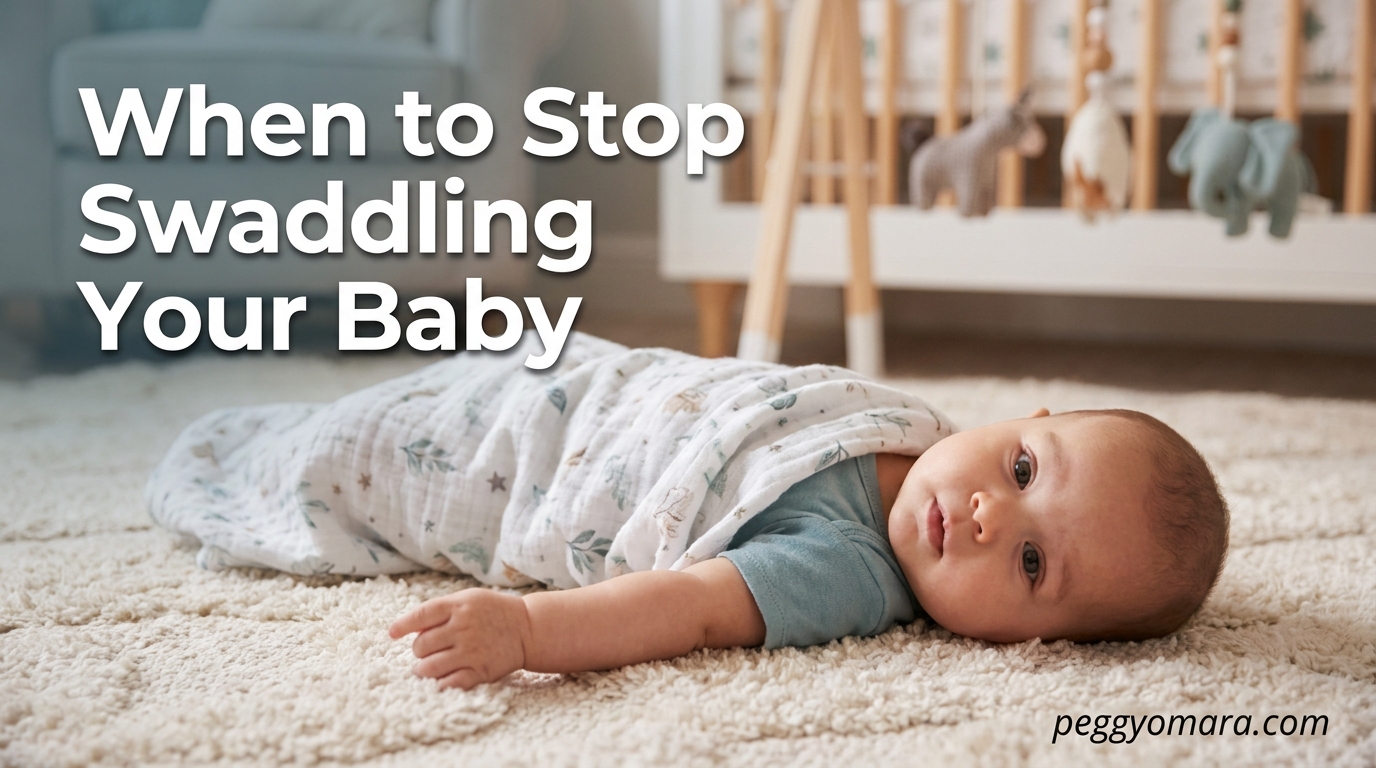
I remember staring at my daughter at 10 weeks old, wondering if every little movement meant she was about to roll. The swaddle had been our sleep salvation since day one. But I kept hearing conflicting advice about when to stop swaddling your baby. Some sources said 2 months. Others said wait for signs of rolling. A few parents on Reddit claimed they swaddled until 6 months without issues.
Figuring out exactly when to stop swaddling your baby is one of the most stressful transitions new parents face. You finally found something that helps your baby sleep. Now you’re supposed to give it up. The good news? This transition is far more manageable than it seems once you understand the clear signs and proven methods.
This guide draws from the American Academy of Pediatrics (AAP) guidelines, pediatric sleep research, and real experiences from thousands of parents navigating this milestone. We will cover the exact age ranges, warning signs that demand immediate action, and three tested approaches to make this transition as smooth as possible.
Table of Contents
Quick Answer: When to Stop Swaddling Your Baby (2026)
You should stop swaddling your baby between 2 and 4 months of age, or immediately when they show any signs of rolling over, whichever comes first. The AAP recommends discontinuing swaddling by 8 weeks (2 months) as the safest approach. Rolling is the primary trigger for stopping because swaddled arms prevent babies from pushing themselves up, creating a suffocation risk if they roll onto their stomach.
Every baby develops at their own pace. Some infants roll intentionally at 8 weeks. Others do not roll until 5 months. Watch for these specific signs: lifting hips and shoulders during tummy time, rocking side to side while on their back, or successfully rolling from tummy to back. Breaking out of the swaddle consistently can also indicate developing strength and coordination.
When to Stop Swaddling Your Baby: Age Guidelines and Key Milestones
The question of when to stop swaddling your baby comes down to two factors: age-based recommendations and developmental milestones. Understanding both helps you make the safest decision for your specific situation.
AAP Guidelines: The 2-Month Recommendation
The American Academy of Pediatrics officially recommends stopping swaddling by 8 weeks of age (2 months). This guideline prioritizes safety over convenience. At 2 months, many babies begin developing the strength and coordination needed for rolling, even if they have not done it yet.
The AAP emphasizes that swaddling becomes increasingly risky as babies gain motor skills. Once a baby can roll, swaddled arms trap them face-down. This position creates suffocation risk because they cannot lift their head or push up on their arms to breathe freely.
I followed the AAP guideline with my first child and stopped at exactly 8 weeks. The transition took about 5 nights of adjustment. With my second, I waited until 12 weeks when he showed early rolling signs. Both approaches worked because I stayed consistent and prepared properly. For context on your own recovery timeline during these early months, see our guide on postpartum recovery timeline.
The 2-4 Month Range: Why Timing Varies
While the AAP suggests 2 months, many pediatricians and sleep consultants acknowledge that the 2-4 month window represents realistic timing for most families. This range accounts for individual development differences while maintaining safety priorities.
Babies in this age range typically experience significant motor development. They gain better head control, strengthen core muscles, and develop coordination between upper and lower body movements. These changes make rolling possible and make continued swaddling unsafe.
However, not all babies roll by 4 months. Some are content back-sleepers well beyond this window. Even if your baby has not rolled by 4 months, most experts recommend transitioning out of the swaddle anyway. The risk increases while the benefits of swaddling decrease naturally as the Moro reflex fades.
The Moro Reflex and Sleep Association Timing
The Moro reflex, also called the startle reflex, is the primary reason swaddling helps newborns sleep. This involuntary response causes babies to fling their arms out and cry when startled by noise, movement, or even their own dreams. Swaddling keeps arms tucked, preventing the full startle response.
The Moro reflex typically begins fading around 3-4 months of age. This natural timing aligns perfectly with swaddle transition recommendations. As the reflex disappears, babies need the swaddle less for sleep quality.
However, some babies develop strong sleep associations with swaddling by 2-3 months. They learn that swaddling signals bedtime. Even without the Moro reflex, they may struggle to fall asleep unswaddled because the routine changed. This is why transition methods matter so much. We will cover those in detail later.
Signs It’s Time to Stop Swaddling
Beyond age guidelines, specific behavioral and physical signs indicate your baby is ready for the transition. Learning to recognize these signs helps you time the transition perfectly.
Rolling Signs to Watch For
The most critical sign is any indication your baby might roll soon. Look for these pre-rolling behaviors during playtime and sleep:
Lifting their head and shoulders high during tummy time, rocking their hips side to side while lying on their back, attempting to arch their back and twist, successfully rolling from tummy to back (even once), and pushing up on extended arms during tummy time.
Many parents miss early rolling attempts that happen during supervised play. Keep a watchful eye during tummy time sessions. Even a single successful roll means stop swaddling immediately. Babies often practice new skills in their sleep before doing them consistently while awake.
Breaking Out of the Swaddle
If your baby consistently breaks out of the swaddle, it signals developing strength and coordination. Some babies are simply strong and active. Others are showing early signs of motor development.
The forum discussions revealed a common parent experience. Many babies become “Houdini babies” around 8-12 weeks, escaping even the most secure swaddles. This usually coincides with the transition window. The breaking out behavior indicates your baby has outgrown the containment swaddling provides.
One parent on Reddit shared their experience: “My daughter was breaking out of every swaddle by 10 weeks. We tried three different brands. Nothing kept her contained. That was our sign to transition.”
Fussiness and Resistance
Some babies communicate readiness through behavior changes. If your previously content swaddled baby suddenly fights the swaddle, arches their back during wrapping, or seems uncomfortable once swaddled, they may be ready for freedom.
This resistance often appears around the same developmental window as rolling signs. Babies become aware of their bodies and want more movement freedom. The swaddle that once soothed them now feels restrictive.
Newborn Curl vs Rolling: Understanding the Difference
One of the most confusing aspects of this transition is distinguishing between normal newborn movements and actual rolling attempts. Understanding this difference prevents both premature transitions and dangerous delays.
What Is the Newborn Curl?
The newborn curl is a natural reflex where babies pull their legs up toward their chest and twist their bodies slightly. This position mimics the fetal position they held for months in the womb. The curl happens reflexively and does not indicate intentional movement.
You will see the newborn curl during sleep, particularly during active sleep phases. Babies may twist onto their side briefly, then return to their back. Their arms typically stay tucked or move randomly rather than pushing purposefully. The movement looks uncoordinated and involuntary.
Many parents mistake the newborn curl for early rolling. They stop swaddling prematurely, disrupting good sleep patterns unnecessarily. The curl typically persists until 8-12 weeks, overlapping with the transition window but not requiring immediate action.
How to Tell the Difference
Intentional rolling shows clear signs of coordination and purpose. When a baby attempts to roll, they engage specific muscle groups deliberately. Look for these distinguishing features:
The baby lifts their head and looks toward where they want to go. They extend one arm while tucking the other, creating leverage. Their eyes track movement or focus on objects they want to reach. The movement is smooth and controlled rather than jerky and reflexive.
Most importantly, a baby who can roll will eventually succeed. They get progressively closer over days or weeks. The newborn curl stays random and does not progress toward actual rolling.
Active Sleep vs Intentional Movement
Babies experience active sleep (REM sleep) for much of their sleep time. During this phase, they twitch, jerk, move their limbs randomly, and may even smile or make sounds. These movements look purposeful but are simply normal sleep behaviors.
Active sleep movements do not indicate rolling readiness. Your baby may thrash around dramatically while swaddled during REM sleep. This is normal and not a sign to stop swaddling. Focus on awake-time behaviors for true rolling assessment.
A pediatric sleep consultant I consulted emphasized this point: “I see so many parents stop swaddling because their baby moves a lot during sleep. Active sleep movements are totally normal. Watch what they do during tummy time and awake play instead.”
How to Transition Out of the Swaddle: 3 Proven Methods
Once you determine it is time to stop swaddling your baby, you need a transition plan. Three main approaches exist, each with advantages depending on your baby’s temperament and your family’s needs.
Method 1: Cold Turkey to Sleep Sack
The cold turkey approach means stopping the swaddle completely and switching immediately to a sleep sack or wearable blanket. This method works best for babies who are not deeply dependent on the swaddle for sleep or for parents who prioritize a quick adjustment period.
To do cold turkey successfully, introduce the sleep sack during your regular bedtime routine. Keep all other elements of the routine identical. The familiar sequence helps your baby understand that bedtime still means sleep time, even without the swaddle.
Most parents report 3-7 nights of adjustment with this method. The first 2-3 nights are typically the hardest. Expect more wake-ups and shorter sleep stretches initially. By night 4-5, most babies begin adapting. By the end of week one, sleep usually returns to pre-transition quality.
This was the method I used with my second child. We chose a transitional sleep sack with slight compression around the chest. The snugness mimicked some swaddle sensation while allowing arm freedom. Night one involved three extra wake-ups. By night four, he was back to his normal pattern.
Method 2: Gradual Arm Freedom
The gradual approach frees one arm at a time over several days. This method suits babies who are strongly attached to swaddling or who still have an active Moro reflex.
Start by swaddling with one arm out for 2-3 nights. Choose the arm your baby seems to prefer having free, or simply pick one consistently. After 2-3 nights of successful sleep, free the second arm. Once both arms are out for 2-3 more nights, transition fully to a sleep sack.
The gradual method extends the total transition timeline but reduces intensity. Instead of several difficult nights, you might have 1-2 slightly disrupted nights per stage. Many parents find this gentler on both baby and parent sleep.
One parent on Reddit described their gradual transition: “We did one arm out for a week, then both arms out for five days, then switched to a sleep sack. Each stage had maybe one rough night. Much easier than I expected.”
Method 3: Partial Night Transition
The partial night method, recommended by Taking Cara Babies and other sleep consultants, lets you remove the swaddle for part of the night only. This approach works well for babies who sleep longer stretches initially but struggle with the early morning hours.
Begin bedtime with arms out or in a sleep sack. When your baby wakes for their first night feeding or resettling, re-swaddle them if they are struggling. Over several nights, gradually reduce the re-swaddling until they can handle the full night unswaddled.
This method acknowledges that sleep pressure is highest at bedtime. Babies fall asleep more easily when first put down. As the night progresses and sleep pressure decreases, the Moro reflex or startle responses become more disruptive. The partial method provides support during the harder hours.
A sleep consultant with 15 years of experience noted in the Baby Sleep Site content that this method works particularly well for babies going through the 4-month sleep regression. The partial support helps them manage the developmental changes without complete disruption.
Timeline Expectations for Each Method
Regardless of the method you choose, set realistic expectations. The transition period typically lasts 1-2 weeks for most babies. Some adapt in 3-5 days. Others need the full two weeks to settle into the new routine.
Factors affecting timeline include: how dependent the baby was on swaddling, whether the Moro reflex has faded, the consistency of the approach, and the baby’s general temperament. Consistency matters more than method choice. Switching between approaches extends the adjustment period.
What to Expect After the Swaddle Transition?
Understanding what happens after you stop swaddling helps you stay calm during the adjustment period. Most parents worry about dramatic sleep deterioration. The reality is usually more manageable than feared.
Typical Sleep Changes
Expect some sleep disruption for 3-7 nights regardless of the transition method. Your baby may take longer to fall asleep initially. Night wakings may increase temporarily. Early morning wake-ups might happen as they adjust to having free arms.
The Moro reflex can cause more dramatic arm movements without the swaddle constraint. Some babies startle themselves awake repeatedly during the first few nights. This is normal and temporary. As they adapt to the new sensation, the startle response becomes less disruptive.
Daytime naps often show more disruption than nighttime sleep. Sleep pressure is lower during the day. Babies have more trouble settling without the familiar swaddle compression. Many parents find naps shorter or more difficult for the first week.
When Sleep Improves
Most babies return to baseline sleep quality within 7-14 days. Some actually sleep better once unswaddled, particularly if they were frequently breaking out of the swaddle or seemed frustrated by the constraint.
One parent shared their surprising experience in a forum discussion: “I dreaded stopping the swaddle. My daughter fought it so much I thought she needed it forever. Turns out she slept way better once she could move freely. Sometimes we hold on longer than necessary.”
Managing the Moro Reflex Without Swaddling
If your baby still has a strong Moro reflex, consider transitional products that provide some containment without full swaddling. Sleep sacks with slight chest compression, weighted sleep sacks (following safe weight guidelines), or arms-up sleep positions can help.
Some babies find comfort in baby swings for soothing during the transition period. The gentle motion helps compensate for the lost swaddle sensation while they adapt to arm freedom.
White noise machines also help by masking the small sounds that trigger the startle reflex. The consistent background noise prevents the reflex from activating as frequently.
2026 Safety Considerations and When to Stop Immediately
While most swaddle transitions happen gradually and safely, certain situations demand immediate action. Understanding these safety boundaries protects your baby from serious risks.
Suffocation and SIDS Risks
The primary danger of swaddling too long is suffocation risk once a baby can roll. Swaddled babies who roll onto their stomachs cannot push up with their arms to clear their airway. They become trapped face-down with limited ability to move or cry for help.
This risk increases significantly once rolling begins. One successful roll during supervised play means your baby has the capability. They will likely roll again, possibly during sleep when you are not watching. Stop swaddling immediately after the first roll, even if it seemed accidental.
The AAP safe sleep guidelines emphasize back-sleeping for all babies. Swaddling after rolling ability undermines this fundamental safety practice. The combination of face-down position and restricted arm movement creates a dangerous situation. For more on creating a safe sleep environment, read our guide on safe sleep positioning.
Hip Dysplasia Concerns
Tight swaddling that keeps legs straight and pressed together can contribute to hip dysplasia, a condition where the hip joint does not form properly. This is particularly concerning for babies with genetic risk factors or breech birth history.
Signs of hip problems include: one leg appearing longer than the other, extra skin folds on one thigh, a clicking sound when moving the hip, and reduced leg movement on one side. If you notice any of these signs, consult your pediatrician immediately and stop swaddling.
The International Hip Dysplasia Institute recommends swaddling that allows leg movement and hip flexion. If your swaddle keeps legs tightly constrained, consider it another reason to transition to a sleep sack that allows natural leg positioning.
Overheating Risks
Swaddling adds warmth beyond regular clothing. As babies grow and become more active, overheating risk increases. Signs of overheating include sweating, damp hair, flushed skin, rapid breathing, and restlessness.
Overheating is a known risk factor for SIDS. Once babies gain mobility and muscle activity, they generate more body heat. Removing the swaddle layer helps regulate temperature more safely.
Daycare and Childcare Considerations
Many daycares and childcare providers have specific policies about swaddling. Some stop accepting swaddled babies at 8 weeks regardless of individual development. Others require parent-signed waivers for swaddling past certain ages.
If your baby attends daycare, check their policies early. Plan your transition timeline accordingly. Consistency between home and daycare helps babies adapt faster. Switching between swaddled and unswaddled environments confuses the sleep association.
Frequently Asked Questions About Stopping the Swaddle
At what age are you supposed to stop swaddling your baby?
You should stop swaddling your baby between 2 and 4 months of age. The American Academy of Pediatrics recommends stopping by 8 weeks (2 months) as the safest approach. However, the exact timing depends on your baby’s development. Stop immediately if your baby shows any signs of rolling over, regardless of age.
Why is swaddling no longer recommended after a certain age?
Swaddling becomes unsafe once babies can roll over because swaddled arms prevent them from pushing up their heads. This creates suffocation risk if they roll face-down. Additionally, tight swaddling can contribute to hip dysplasia as babies grow, and overheating risks increase with age and activity level.
Can I swaddle a baby with hip dysplasia?
You should not swaddle a baby with diagnosed hip dysplasia unless specifically approved by your pediatrician or orthopedic specialist. Tight swaddling that keeps legs straight and together can worsen hip development problems. If hip dysplasia is suspected based on symptoms like uneven leg length or reduced movement, stop swaddling and consult your doctor immediately.
What can I do instead of swaddling?
Sleep sacks and wearable blankets are the recommended alternatives to swaddling. They provide warmth and a cozy sleep environment without restricting arm movement. Some transitional products offer slight chest compression or arms-up positioning for babies who need gradual adjustment. White noise machines and consistent bedtime routines also help compensate for the lost swaddle comfort.
Will my baby sleep worse without the swaddle?
Most babies experience 3-7 nights of sleep disruption after stopping the swaddle. Night wakings may increase temporarily, and falling asleep might take longer. However, sleep typically returns to baseline within 1-2 weeks. Some babies actually sleep better once unswaddled, particularly if they were frustrated by the restriction or frequently broke out of the swaddle.
How long does the swaddle transition take?
The swaddle transition typically takes 1-2 weeks for most babies. Cold turkey methods usually show results within 3-7 nights. Gradual approaches extend over 1-2 weeks but with less intense disruption per night. Consistency is key. Switching between methods or reverting to swaddling after starting the transition extends the adjustment period significantly.
Can I use the one arm out method to transition?
Yes, the one arm out method is a popular gradual transition approach. Swaddle with one arm free for 2-3 nights, then release the second arm for another 2-3 nights before switching to a sleep sack. This method works well for babies who are strongly attached to swaddling or still have an active Moro reflex. It reduces the intensity of disruption compared to cold turkey transitions.
Final Thoughts on When to Stop Swaddling Your Baby
Knowing when to stop swaddling your baby comes down to balancing age guidelines with individual development. The AAP recommendation of 8 weeks provides a safe baseline. The 2-4 month window accommodates most babies’ natural progression. Rolling signs trigger immediate action regardless of age.
The transition feels daunting because the swaddle works so well for newborn sleep. But remember that this change is developmentally appropriate and ultimately safer for your growing baby. The transition methods we covered give you options to match your baby’s temperament and your family’s needs.
Most parents look back on this transition and realize it was smoother than anticipated. The key is consistency, realistic expectations about a 1-2 week adjustment period, and trust in your baby’s ability to adapt. If you are uncertain about your baby’s rolling readiness or have concerns about hip development, consult your pediatrician for personalized guidance.
Consider baby wearing for comfort during awake hours as another way to provide that secure, close feeling as your baby adjusts to more independence during sleep. As you navigate this transition and other parenting milestones, having the right baby care essentials can make the journey smoother. The swaddle phase is brief, but the sleep skills your baby develops during this transition serve them well through toddlerhood and beyond.