
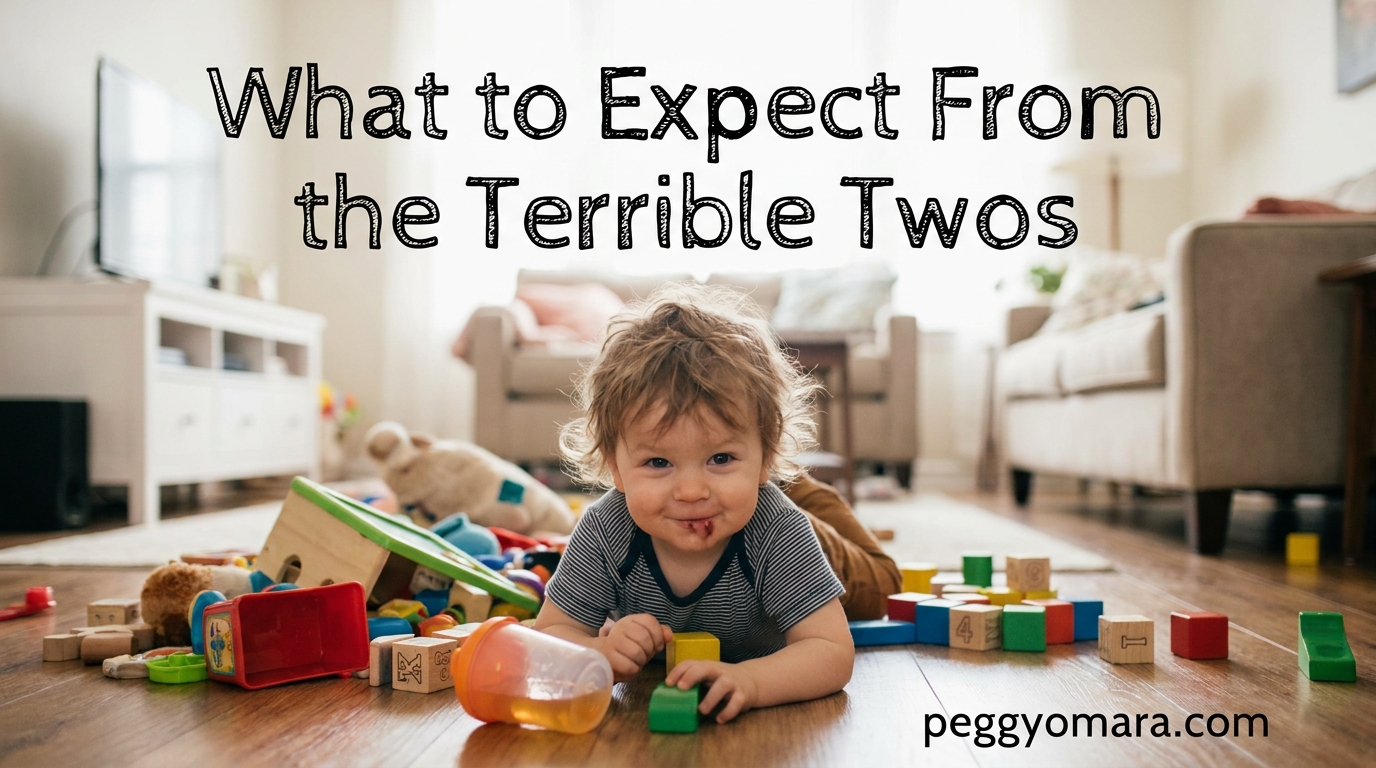
Your sweet baby has suddenly transformed into a tiny tornado of emotions. One moment they’re giggling, the next they’re face-down on the grocery store floor because you handed them a blue cup instead of a green one.
If you’re wondering what to expect from the terrible twos, you’re not alone. Every parent who has weathered this developmental storm remembers the exhaustion, the self-doubt, and the desperate Google searches at 2 AM.
The good news? This phase is completely normal. Even better, understanding what’s happening in your toddler’s developing brain can transform how you respond to those challenging moments. In this guide, we’ll explore the science behind the terrible twos, practical strategies that actually work, and why many experts are renaming this phase entirely.
Table of Contents
What Are the Terrible Twos?
The terrible twos is a normal developmental phase typically beginning between 18-30 months when toddlers experience intense frustration due to the gap between their desire for independence and their limited abilities to communicate and self-regulate.
Many parenting experts, including Dr. Becky Kennedy, are moving away from calling this phase “terrible” altogether. Instead, they describe it as the “turbulent twos” or “transformative twos.” These names capture something important: this isn’t a regression or behavioral problem. It’s actually incredible developmental progress.
Your toddler is realizing they are a separate person with their own preferences, opinions, and desires. They’re developing self-awareness, which is a major cognitive milestone. The challenge is that their emotional and language skills haven’t caught up with their newfound sense of autonomy.
Think of it this way: imagine suddenly wanting to do everything yourself but lacking the vocabulary to explain what you want and the emotional tools to handle frustration when things don’t go your way. You’d probably have a meltdown too.
When Do the Terrible Twos Start and End?
The timeline varies for every child, but most parents notice the first signs between 18 and 30 months. Some children start earlier, around 15 months, while others sail smoothly past their second birthday before the storm hits.
The phase typically peaks between ages 2 and 3, when your child’s sense of independence is strongest but their self-regulation skills remain limited. Most children move through the most intense period by age 3, though some behaviors may continue until age 4 or beyond.
Here’s what parents on Reddit’s r/toddlers community frequently share: “The only tantrums we have are when she’s overtired, super hungry, overstimulated, or a combination.” This observation highlights an important truth. While the terrible twos phase has a general timeline, individual outbursts often follow predictable patterns based on your child’s physical and environmental needs.
Some parents also warn about what comes next. The “threenager” phase can bring its own challenges as language skills improve but negotiation tactics become more sophisticated. Every age has its gifts and difficulties.
Common Terrible Twos Behaviors (2026)
Understanding what behaviors are typical can help you respond with confidence instead of worry. Here are the five most common signs you’re in the thick of the terrible twos:
1. Temper Tantrums
These emotional explosions are the hallmark of the terrible twos. Your child might scream, cry, kick, or go limp when things don’t go their way. Research shows that 75% of tantrums last less than 5 minutes, though they can feel like hours when you’re in the middle of one.
Tantrums happen because your toddler’s prefrontal cortex, the part of the brain responsible for emotional regulation, is still developing. They literally cannot calm themselves down in the way an older child or adult can.
2. Saying “No” to Everything
No becomes your toddler’s favorite word overnight. Dinner? No. Bath? No. Getting dressed? Absolutely not. This defiance isn’t about being difficult. It’s your child practicing their autonomy and testing boundaries to understand where they end and you begin.
3. Physical Aggression
Hitting, biting, and throwing are common during this phase. These behaviors are often your child’s attempt to communicate when words fail them. A toddler who bites may be overwhelmed, frustrated, or seeking sensory input they don’t know how to request appropriately.
4. Sudden Mood Swings
Your toddler might be happily playing one moment and melting down the next. These rapid mood changes reflect their still-developing emotional regulation skills. Small triggers, like a block tower falling or a sibling touching their toy, can cause big feelings they don’t know how to process.
5. Boundary Testing
Your toddler will repeatedly push limits to see if the rules are real. They need to know that your boundaries are sturdy and consistent. This testing, while exhausting for parents, is actually how children develop a sense of safety and security.
Why the Terrible Twos Happen: The Science Behind Toddler Behavior
Understanding the biological and neurological reasons behind your toddler’s behavior can completely shift your perspective. When you know what’s happening in their brain, you stop seeing defiance and start seeing development.
The Language Gap
Your toddler understands far more than they can express. This gap between receptive language (what they understand) and expressive language (what they can say) creates tremendous frustration. They know what they want but can’t tell you. They understand your instructions but can’t explain why they disagree.
Imagine knowing exactly what you want for dinner but being physically unable to say the words. Now imagine someone keeps offering you the wrong thing. You’d feel pretty frustrated too.
The Independence Explosion
Around age 2, children develop a strong sense of themselves as separate individuals. This self-awareness milestone is actually cause for celebration. Your child is becoming their own person with preferences, opinions, and desires.
The problem is that they want to do everything themselves but lack the physical and cognitive skills to succeed. They want to pour their own milk but can’t control the jug. They want to dress themselves but can’t manipulate buttons. Each failed attempt triggers frustration.
Brain Development and Emotional Regulation
The prefrontal cortex, responsible for impulse control, reasoning, and emotional regulation, doesn’t fully develop until the mid-20s. Your toddler is working with a brain that simply cannot manage big emotions effectively yet.
When your child is having a tantrum, their amygdala, the brain’s emotional center, has essentially hijacked their thinking brain. They cannot listen to reason, follow instructions, or calm themselves down. They need your calm presence to help them regulate.
How to Deal With the Terrible Twos: Practical Strategies
Now that you understand what’s happening in your toddler’s brain, let’s talk about what actually works. These strategies draw from attachment parenting principles, positive discipline approaches, and the lived experience of parents who have survived this phase.
1. Practice Connection Before Correction
When your child is melting down, your first instinct might be to fix the behavior or stop the noise. But connection must come before any teaching can happen. Get on your child’s level, make eye contact, and let them know you’re there.
As one parent on r/Parenting shared: “Stay calm, stay by her in a non-threatening posture, name her feelings, and offer a hug.” This approach communicates safety and acceptance even in your child’s most difficult moments.
2. Name the Feelings
Your toddler is experiencing emotions they don’t have words for. You can help build their emotional vocabulary by naming what you observe. “You’re feeling frustrated because the block tower fell” or “You’re angry because it’s time to leave the park.”
Over time, this practice helps your child develop the language to express their emotions instead of acting them out. It’s a foundational skill for emotional intelligence.
3. Offer Limited Choices
Toddlers need to feel some control over their lives. Instead of issuing commands, try offering two acceptable choices. “Do you want the red shirt or the blue shirt?” or “Do you want to walk to the car or hop like a bunny?”
This approach satisfies their need for autonomy while maintaining your boundaries. You’re not giving up authority, you’re sharing age-appropriate decision-making power.
4. Use Redirection Strategically
Sometimes the best approach is to simply change the scene. If your toddler is fixated on something they can’t have, engage their attention elsewhere. “Look at this cool truck outside the window” or “Can you help me find your stuffed bear?”
Young children have short attention spans, and redirection leverages this natural trait. Once their attention shifts, the crisis often fades.
5. Maintain Consistent Boundaries
Dr. Becky Kennedy popularized the concept of “sturdy leadership,” which means providing clear, consistent boundaries that help your child feel secure. When limits are predictable, your toddler doesn’t waste energy testing them repeatedly.
Your child needs to know that your boundaries are real and that you can handle their big feelings without becoming overwhelmed yourself. This security actually reduces the frequency and intensity of meltdowns over time.
6. Create Opportunities for Independent Play
Helping your toddler develop the capacity for independent play supports their growing autonomy. This is where periods of constructive boredom come in. When you resist the urge to constantly entertain your child, you give them space to explore, create, and self-regulate.
Research shows that boredom supports healthy development by encouraging creativity, problem-solving, and self-directed attention. These skills are directly connected to the emotional regulation your toddler is working to develop.
7. Take Care of Yourself
The terrible twos are hard on parents too. You cannot pour from an empty cup, and you cannot regulate a dysregulated child when you’re dysregulated yourself. Build in small moments of self-care throughout your day.
Many parents in online forums report that their ability to stay calm during tantrums is the single biggest factor in how quickly those tantrums resolve. Your calm presence is actually a co-regulation tool for your child.
8. Remember the Mantra
Dr. Becky’s mantra circulates widely in parenting communities for good reason: “My child is having a hard time, not giving me a hard time.” This simple reframe shifts you from feeling victimized by your child’s behavior to feeling compassion for their struggle.
When you view the tantrum as a cry for help rather than an act of defiance, your entire response changes. You become an ally instead of an adversary.
When to Seek Help: Red Flags to Watch For
While the terrible twos are a normal developmental phase, some behaviors warrant professional evaluation. Knowing the difference between typical challenges and concerning patterns can ease your mind or get your child the support they need.
Contact your pediatrician if you observe any of the following:
- Tantrums that last longer than 20-30 minutes regularly
- Aggressive behavior that doesn’t respond to consistent intervention over several weeks
- Extreme withdrawal or refusal to engage with caregivers
- Regression in multiple developmental areas (language, motor skills, social engagement)
- Inability to be comforted by caregivers during distress
- Behavior that puts your child or others at risk of serious harm
It’s also worth seeking help if you, as the parent, are feeling overwhelmed to the point of depression, anxiety, or thoughts of harming yourself or your child. Your wellbeing matters, and support is available.
Remember that frequency and intensity matter more than any single behavior. All toddlers hit, bite, or have epic meltdowns occasionally. It’s when these behaviors are extreme, frequent, and unresponsive to consistent parenting approaches that professional guidance becomes valuable.
Frequently Asked Questions About the Terrible Twos
Why is 2 such a difficult age?
Age 2 is difficult because toddlers develop self-awareness and strong desires for independence before their language skills and emotional regulation abilities can support those drives. They want to do everything themselves but lack the skills to succeed, creating intense frustration.
What are the red flags for a 2 year old?
Red flags include tantrums lasting over 20-30 minutes regularly, extreme aggression that doesn’t respond to intervention, regression in multiple developmental areas, inability to be comforted by caregivers, and behavior that poses serious safety risks. Consult your pediatrician if you observe these patterns.
How long do terrible twos tantrums last?
Most tantrums last between 2-15 minutes, with research showing 75% lasting under 5 minutes. However, every child is different. If tantrums regularly exceed 20-30 minutes, discuss this with your pediatrician.
What does Dr. Becky say about tantrums?
Dr. Becky Kennedy views tantrums as emotional dysregulation rather than disobedience. She encourages parents to provide ‘sturdy leadership’ with consistent boundaries while offering connection and compassion. Her mantra: ‘My child is having a hard time, not giving me a hard time.’
What is the 80 20 rule for toddlers?
The 80/20 rule suggests that 80% of the time, offer your toddler choices, flexibility, and autonomy. Reserve your non-negotiable stance for the remaining 20% that truly matters for safety and core family values. This balance satisfies their need for control while maintaining necessary boundaries.
What comes after the terrible twos?
Most children move through the most intense phase by age 3, though some behaviors may continue until 4. Many parents report the ‘threenager’ phase brings new challenges as language and negotiation skills improve. Every developmental stage has its gifts and difficulties.
Are the terrible twos a real thing?
Yes, the terrible twos describe a real developmental phase, though many experts prefer terms like ‘turbulent twos’ or ‘transformative twos.’ The behaviors are normal signs of healthy brain development, self-awareness, and growing independence.
How can I stay calm during toddler tantrums?
Staying calm involves remembering that tantrums are developmentally normal, using mantras like ‘this is temporary,’ taking deep breaths, and recognizing that your calm presence helps your child regulate. Self-care and realistic expectations about this phase also support parental calm.
Conclusion: You’ve Got This
The terrible twos are not a parenting failure. They’re a developmental milestone that every child must navigate on their way to becoming an independent, self-regulated person. Your job isn’t to prevent the storm, it’s to be the safe harbor your child can return to when the waves settle.
Remember that this phase is temporary. The same child who screams because their cracker broke will one day use their words to tell you exactly how they feel. The toddler who melts down at bedtime will eventually read themselves to sleep. The fierce independence that exhausts you now will become the determination that helps them succeed in life.
When you’re in the thick of it, surrounded by toys and tears, hold onto this truth: your child is not giving you a hard time. They’re having a hard time. And your steady presence through this difficult phase builds the security and trust that will define your relationship for years to come.
You’ve got this. One tantrum at a time.