
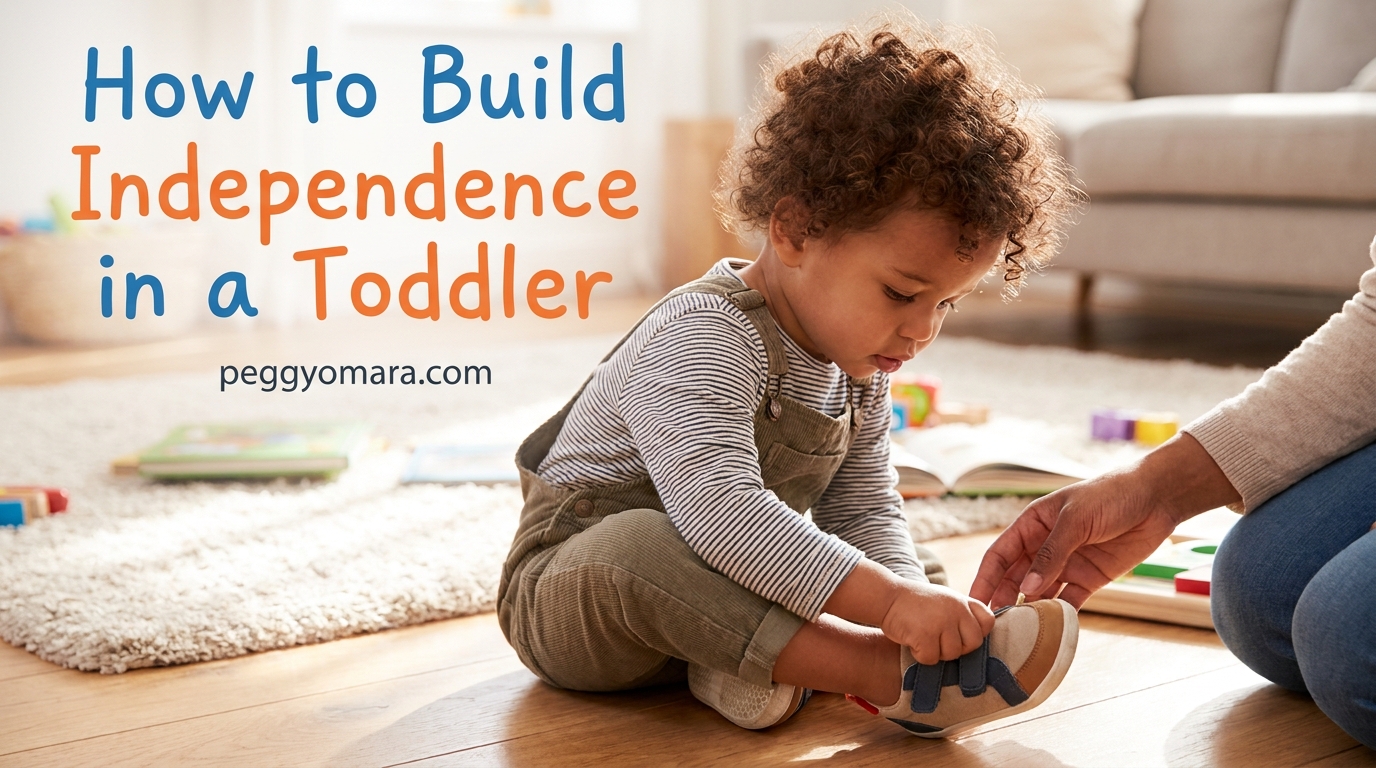
Your toddler yanks their hand away and shouts “Me do it!” for the fifteenth time this morning. They’re determined to put on their own shoes, pour their own milk, and walk up the stairs without holding your hand.
These moments test your patience daily. Yet this fierce determination is exactly what you want to nurture.
Learning how to build independence in a toddler is one of the most important jobs you have as a parent during these years. Between 18 months and 3 years, children enter what developmental psychologists call the “me do it” phase.
According to Erikson’s stages of development, toddlers are working through autonomy versus shame and doubt. They need to feel capable and competent.
The benefits extend far beyond making your mornings easier. Toddler independence builds self-esteem, develops frustration tolerance, strengthens perseverance, and lays the groundwork for executive function skills.
When children master small tasks, they learn they can handle challenges. This confidence carries into preschool, school years, and beyond.
In this guide, I’ll share 10 practical strategies I have used with my own children and learned from child development experts. These approaches work whether you have a cautious 18-month-old just beginning to assert themselves or a fiercely independent 2-year-old who runs away in parking lots.
Table of Contents
10 Ways to Build Independence in Your Toddler (2026)
Here are 10 practical ways to build independence in your toddler:
1. Give Limited Choices That Actually Matter
Toddlers need autonomy, but unlimited choices overwhelm them. Offer two acceptable options instead of open-ended questions.
Instead of asking “What do you want for breakfast?” try “Would you like oatmeal or eggs?” Instead of “What should we wear today?” hold up two shirts and ask “Red shirt or blue shirt?” This approach respects their growing need for control while keeping decisions manageable.
Apply this to daily transitions too. “Do you want to walk to the car or hop like a bunny?” gives them control over how they cooperate. Save the “no choice” moments for genuine safety issues.
2. Build Predictable Routines
Routines are the scaffolding that supports independence. When children know what comes next, they can anticipate and participate rather than wait for direction.
Create a consistent morning sequence: potty, wash hands, breakfast, get dressed. Use the same bedtime routine every night: bath, pajamas, books, lights out. After a few weeks, your toddler will begin moving through these sequences with minimal prompting.
Visual schedules help enormously. Simple picture cards showing each step let preverbal toddlers follow along independently. Point to the pictures and narrate: “First we use the potty, then we wash hands.”
3. Allow Extra Time for Self-Care Tasks
The fastest way to kill independence is rushing. When you’re late for work and your toddler wants to put on their own shoes, the temptation to just do it for them is strong.
Build in 15-20 extra minutes for transitions. Yes, it takes longer when they dress themselves. Yes, the shirt ends up backward sometimes. But that extra time buys you a child who feels capable and a relationship free from constant power struggles.
Use visual timers for older toddlers. “When the red disappears, we need to finish getting dressed.” This gives them control over pacing while maintaining necessary boundaries.
4. Set Up a Toddler-Friendly Home Environment
Your home can either support independence or block it. Look around from your toddler’s eye level.
Install low hooks by the door at toddler height for jackets and bags. Use open shelving for toys and books so they can see and reach their belongings. Put step stools at sinks and toilets. Keep snacks in low cabinets with child-safe containers they can open themselves.
In the kitchen, create a low drawer with toddler dishes, cups, and utensils they can access. Use elastic waistbands on pants for easier self-dressing. These small modifications remove barriers and invite participation.
5. Let Them Help with Real Tasks
Toddlers want to contribute to family life, not just play with toys. Involve them in meaningful work.
Younger toddlers can put clothes in the hamper, help wipe spills, and water plants with a small pitcher. Older toddlers can set the table, feed pets, and help unload groceries. These tasks take longer with help, but the engagement and skill-building are worth it.
Match the tools to the child. Small brooms, spray bottles with water, and lightweight dusters let them participate effectively. When they contribute meaningfully, they develop a sense of belonging and capability.
6. Encourage Problem-Solving Before Rescuing
This is where boredom can actually foster creativity and independence. When your toddler struggles with a puzzle or gets stuck trying to climb, your instinct is to help. Resist that urge for just a moment.
Wait ten seconds before offering assistance. Often, they figure it out themselves. If they continue struggling, offer a verbal cue rather than physical help. “I see the puzzle piece won’t fit. Can you turn it a different way?” or “The chair keeps sliding. What could make it stay still?”
Problem-solving builds perseverance and frustration tolerance. Children who are rescued too quickly learn to depend on others rather than their own abilities.
7. Use Praise That Builds Internal Motivation
Not all praise supports independence. Generic “Good job!” creates dependency on external approval. The Child Mind Institute recommends PRIDE skills: Praise, Reflect, Imitate, Describe, and Enthusiasm.
Describe what you see: “You kept trying even when that was hard.” Reflect their feelings: “You look proud of yourself.” Ask questions: “How did you figure that out?” This type of praise focuses on effort and process rather than outcomes.
Avoid person praise like “You’re so smart.” Instead, use process praise: “You worked really hard on that puzzle.” This builds confidence that comes from within, not from pleasing others.
8. Respect Their “No” When Possible
Toddlers say “no” approximately 400 times per day. This isn’t defiance. It’s the first expression of their separate identity.
Distinguish between “no” that matters and “no” that doesn’t. Safety and health issues are non-negotiable. Preferences, clothing choices, and play decisions are opportunities for autonomy.
When you must override their “no,” acknowledge it first. “You don’t want to hold my hand. I know it’s hard when you want to run. The parking lot isn’t safe, so I’m going to carry you.” This respects their feelings while maintaining boundaries.
9. Create Opportunities for Independent Play
Constant entertainment and direction actually hinder independence. Toddlers need unstructured time to explore, create, and problem-solve without adult intervention.
Set up safe, engaging spaces where they can play independently. Rotate toys to maintain interest. Stay nearby but busy with your own activity. Let them approach you when they need something rather than directing their play.
Start with short periods and gradually extend. A 2-year-old might play independently for 15-20 minutes. A 3-year-old can handle 30-45 minutes. This skill builds focus, creativity, and self-regulation.
10. Model Self-Help Skills and Self-Talk
Toddlers learn by watching you. Narrate your own problem-solving process out loud.
“I can’t find my keys. Let me check my bag first. Nope, not there. Maybe they’re on the counter. Ah, there they are!” This models perseverance and systematic thinking. When you make mistakes, show how you handle them. “Oops, I spilled the water. That’s okay, I’ll get a towel and clean it up.”
Your calm response to frustration teaches them emotional regulation. They learn that mistakes are fixable and challenges are manageable.
Age-Appropriate Independence: What to Expect in 2026?
Not all independence looks the same at every age. Here’s what developmentally appropriate autonomy looks like across the toddler years:
12 to 18 Months: The Beginning
At this stage, independence starts small. Your child might:
- Feed themselves with fingers
- Help pull off their socks
- Make simple choices between two items
- Participate in cleanup songs
- Hold their own cup
Physical independence is limited, but they’re observing and absorbing. This is the time to start routines and establish the pattern of participation.
18 to 24 Months: The “Me Do It” Phase
This is when independence explodes. Expect:
- Using utensils with increasing skill
- Putting on shoes (often backwards)
- Assisting with watering plants and simple chores
- Washing hands with help
- Attempting to dress themselves
- Strong opinions about everything
This age brings the most intense power struggles. Patience and preparation are your best tools.
2 to 3 Years: Growing Capability
Older toddlers can handle more complex tasks:
- Dressing with minimal help (front/back still tricky)
- Setting the table with supervision
- Simple chores like feeding pets
- Problem-solving with verbal guidance
- Independent play for longer periods
- Following multi-step directions
Balance bikes are excellent tools for helping toddlers develop physical confidence at this stage. They provide autonomy with a safety net.
When Independence Becomes Defiance: Setting Healthy Boundaries
Sometimes toddler independence crosses into dangerous territory. The parent on Reddit whose 19-month-old runs away in parking lots and throws herself down stairs rather than accept help is experiencing this reality.
Here’s how to handle it:
The Running Away Problem
For children who bolt in public, independence needs firm boundaries. Practice the “hold hands or be carried” rule at home first. When they refuse, the consequence is immediate: you pick them up. No negotiation, no second chances. Stay calm and consistent. Most toddlers test this boundary for a few weeks before accepting it.
Some parents use toddler leashes for genuine safety concerns. Others use the “hold my pocket” strategy for kids who won’t hold hands. Find what works for your family, but don’t let independence compromise physical safety.
Balancing Safety and Freedom
You can respect autonomy while maintaining limits. Offer choices within boundaries. “You can walk holding my hand or I can carry you. Which do you choose?” Frame safety rules as protection, not control. “I keep you safe near the street” rather than “Because I said so.”
Give them control over what they can control. They can’t choose to run in the parking lot, but they can choose which hand to hold, whether to walk or be carried, and which direction to head once you’re safely across.
Avoiding Power Struggles
Not every request needs to become a battle. Pick your battles carefully. Safety and health are non-negotiable. Preferences and minor inconveniences are opportunities for flexibility.
When you sense a power struggle brewing, redirect rather than confront. “It’s time to leave the park” becomes “Do you want to run to the car or hop like a bunny?” The destination is the same, but the journey feels like their choice.
Frequently Asked Questions
What is the 3-3-3 rule for toddlers?
How do I help my 2-year-old with independence?
What age do toddlers become independent?
When should I worry about my toddler’s independence?
How long should it take for my toddler to do things independently?
Conclusion: Independence Is a Long Game
Learning how to build independence in a toddler requires patience, preparation, and perspective. Those frustrating mornings when putting on socks takes twenty minutes are building blocks for confident, capable children.
The goal isn’t immediate efficiency. It’s raising a child who believes in their own abilities. Every small victory, every “I did it!” moment, adds to their internal sense of competence.
As children grow, their independence expands. As children grow, bikes can provide a sense of freedom and independence. As children enter preschool, tools like smartwatches can support their growing independence while providing peace of mind.
Start today with one small change. Add a step stool to your bathroom. Offer two choices at breakfast. Wait ten seconds before helping with that stuck zipper. These tiny shifts add up to confident, independent children who trust themselves and their abilities.