
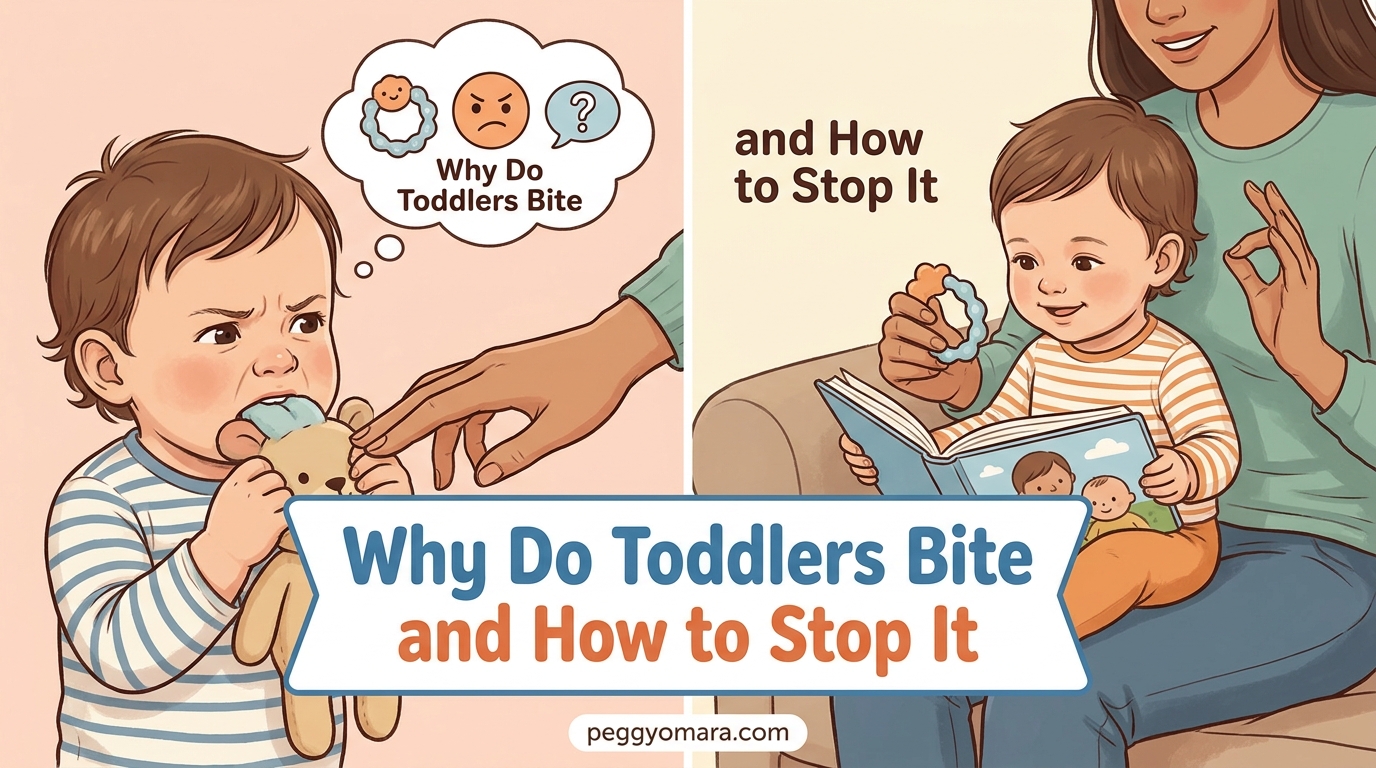
Toddlers bite for several developmental reasons: teething discomfort, limited language skills to express emotions, curiosity about cause-and-effect, seeking attention, or feeling overwhelmed. Most biting occurs between ages 1 and 3 and decreases as children develop better communication abilities. Understanding why do toddlers bite and how to stop it can transform a frustrating phase into an opportunity for teaching and growth.
If you are reading this after another incident at daycare or after your child bit you while nursing, please know you are not alone. Biting is one of the most common concerns parents bring up during pediatric visits. It is also one of the most emotionally challenging behaviors because it affects other children and can make us feel like we are failing as parents.
In this guide, I will explain the developmental reasons behind toddler biting, walk you through exactly what to do when it happens, and share proven prevention strategies that have worked for families in our community. By the end, you will have a clear action plan and the reassurance that this phase will pass.
Table of Contents
Why Do Toddlers Bite? Understanding the Root Causes
Children bite in order to cope with a challenge or fulfill a need. It is never random behavior, even when it seems that way to us. Understanding the specific reason your toddler bites is the first step toward addressing it effectively.
Teething and Oral Exploration
Babies and young toddlers explore the world through their mouths. It is how they learn about texture, temperature, and taste. When teething pain strikes, biting provides counter-pressure that temporarily relieves discomfort. Some children also have stronger oral sensory needs than others and seek stimulation through biting.
If your child bites during teething, offering appropriate alternatives like teething rings, cold washcloths, or crunchy foods can redirect this behavior. The key is giving them acceptable ways to satisfy that oral urge.
Limited Language Skills
The most common reason toddlers bite is that they lack the words to express what they need. A 2-year-old might want a toy back, feel frustrated with a playmate, or need personal space but cannot say those things yet. Biting becomes their way of communicating ‘I need help,’ ‘I don’t like that,’ or ‘Stop.’
This is why biting decreases significantly as language skills develop. The more words a child has, the less they need to use their teeth to communicate.
Emotional Expression and Overwhelm
Toddlers feel emotions intensely but lack the brain development to regulate those feelings. When overwhelmed by frustration, anger, excitement, or even love, biting can be an impulsive release. Some children bite when overtired, hungry, or during difficult transitions like moving from playtime to cleanup.
Many parents report that biting gets worse when a new sibling arrives. The jealousy and attention-seeking can manifest in this physical behavior because children do not yet have the emotional vocabulary to process big feelings.
Cause-and-Effect Curiosity
Toddlers are natural scientists experimenting with how the world works. They may bite to see what happens, what sound it makes, or how the other person reacts. When the reaction is big (screaming, lots of attention), it can actually reinforce the behavior because the child learns that biting produces results.
This cause-and-effect understanding is a normal part of child development. The goal is to help them learn that biting always produces the same calm, firm response and that better behaviors get better results.
Attention Seeking
Sometimes toddlers bite because they have learned it brings immediate, focused attention from adults. Even negative attention is attention. If a child feels ignored or is competing with other children for caregiver focus, they may discover that biting quickly makes them the center of attention.
Addressing this requires shifting the attention spotlight. When we consistently lavish attention on appropriate behaviors and respond minimally to biting (while still addressing it), we change what the child learns to expect.
What to Do Immediately When Your Toddler Bites?
When biting happens, your response in the first 30 seconds matters tremendously. A calm, consistent approach teaches your child that biting never works while preserving their dignity and your relationship. Here is the 5-step process that child development experts recommend.
Step 1: Stay Calm and Stop the Behavior
Your first job is to stop the biting without escalating the situation. Take a breath if you need one. Approach your child calmly but quickly. If they are still biting, gently but firmly remove their mouth from the victim using a neutral, matter-of-fact tone.
Avoid dramatic reactions, even though you may feel shocked or embarrassed. Big reactions can inadvertently reward the behavior with attention or make the situation more stressful for everyone involved.
Step 2: Comfort the Victim First
This step surprises many parents, but it is essential. Turn your attention first to the child who was bitten. Offer comfort, check for injury, and acknowledge their feelings with phrases like ‘That hurt. I am sorry that happened.’ This models empathy and shows all children involved that biting does not get the biter extra attention.
Some parents worry this ignores the child who bit. Actually, it teaches a powerful lesson: biting makes others sad, and we prioritize helping those who are hurt. After a brief moment with the victim, you turn to the child who bit.
Step 3: Use Firm, Simple Language
Get down to your child’s eye level and use a firm, calm voice. Say something simple and direct like ‘No biting. Biting hurts.’ or ‘Teeth are not for biting people.’ Keep it short. Toddlers cannot process long explanations in heated moments.
The tone matters more than the exact words. You want to convey that this behavior is serious and unacceptable, but without yelling or shaming. Think of a referee blowing a whistle, firm and clear but not angry.
Step 4: Remove from the Situation
Help your child take a break from the situation. This is not a punitive time-out in a corner, but rather a brief removal to help them calm down and reset. You might say ‘You need a break. Let us sit here together until you are calm.’
For a 2-year-old, one minute per year of age (about 2 minutes) is appropriate. Stay nearby but do not engage in play or conversation during this break. The message is that biting stops the fun.
Step 5: Teach Alternative Behaviors
Once your child is calm, briefly teach what they can do instead. If they bit because they wanted a toy, teach them to say ‘My turn’ or to ask a grown-up for help. If they bit from excitement, teach them to hug a pillow or stomp their feet. Give them the words or actions they were missing in that moment.
End by reaffirming your connection. Say something like ‘I love you. We do not bite our friends.’ Then allow them to return to play if they are ready.
Special Note: What to Do When Your Toddler Bites While Nursing
Nursing biting requires a slightly different approach because you cannot fully remove attention from the biter (they are attached to you). If your baby or toddler bites while breastfeeding, immediately break the latch by inserting your finger into the corner of their mouth to release the suction. Say ‘No biting. Biting hurts mama.’ Then end the feeding session for a few minutes.
If biting persists, watch for the moment when active sucking stops and the jaw starts to tighten. Break the latch proactively before the bite happens. Many mothers find that stopping the session immediately teaches the lesson quickly because babies want to continue nursing more than they want to bite.
Prevention Strategies: How to Stop Toddler Biting Before It Starts?
Prevention is where you will spend most of your energy, and it is where you will see the most progress. The goal is to understand your child’s specific triggers and meet their underlying needs before they resort to biting. Here are the strategies that work.
Identify and Address Triggers
Start by tracking when biting happens. Is it during transitions? When they are overtired? During toy conflicts? At daycare drop-off? Once you see the pattern, you can intervene earlier in the sequence. If biting happens when your child is hungry, offer a snack before playdates. If it happens during transitions, give a 2-minute warning and establish predictable routines.
Many parents find that biting spikes when their child is overtired or overstimulated. Ensuring adequate sleep and building in downtime can dramatically reduce incidents. Child development experts emphasize that unstructured play and rest are essential for emotional regulation.
Offer Crunchy Snacks for Oral Needs
If your child seems to bite for oral stimulation or sensory needs, keep crunchy foods available. Carrot sticks, apple slices, rice cakes, or teething crackers can satisfy that urge to bite in an appropriate way. Some parents also find success with chewable necklaces or sensory toys designed for safe mouthing.
For sensory-seeking children, activities like blowing bubbles, drinking through straws, or playing with sensory bins can provide alternative oral stimulation that reduces the impulse to bite people.
Teach Communication Words
Children bite because they lack words. Give them the words they need. Teach simple phrases like ‘Stop,’ ‘My turn,’ ‘Space please,’ ‘Mad,’ and ‘Help.’ Practice these words at calm moments, not just during conflicts. The more you model and teach communication skills, the faster your child will replace biting with talking.
Sign language can also bridge the gap for children whose verbal skills are developing more slowly. Simple signs for ‘more,’ ‘all done,’ and ‘help’ can prevent a lot of frustration.
Ensure Adequate Active Play
Some children bite because they need more physical activity. Toddlers have energy that needs an outlet, and without adequate active play, that energy can come out inappropriately. Make sure your child gets plenty of opportunities to run, climb, and play vigorously every day. Active play supports healthy child development and helps regulate emotions.
Shadow and Supervise During High-Risk Times
Until the biting phase passes, stay close during situations where biting has happened before. Shadow your child during playdates, at the park, or during transitions. Watch for warning signs like tension in the body, facial expressions, or approaching another child too closely. When you see those signals, intervene early with redirection or coaching.
This close supervision is temporary. As your child develops better skills and outgrows the phase, you can gradually step back.
Coordinate with Daycare or Caregivers
If biting is happening at daycare, work closely with the caregivers. Share what you have observed about triggers at home. Ask them to share their observations too. Consistency across environments helps children learn faster. Make sure all caregivers are using the same 5-step response and the same language.
Many daycares have experience with biting and can be valuable partners. They may also be able to provide extra supervision during high-risk times or suggest specific strategies that work in group settings.
Read Books About Biting Together
Books can help toddlers understand biting in a non-threatening way. Some excellent titles include ‘Teeth Are Not for Biting’ by Elizabeth Verdick, ‘No Biting’ by Karen Katz, and ‘No Biting, Louise’ by Margie Palatini. Reading these together opens conversations about feelings, appropriate behavior, and why we do not bite our friends.
Books also normalize the experience. When children see characters in stories working through the same challenges, they feel less alone and more capable of learning new behaviors.
Redirect Attention Proactively
Redirection is a powerful toddler parenting tool. When you see your child approaching a situation where biting has happened before, redirect them to a different activity before trouble starts. ‘Let us go build with blocks over here’ can prevent a bite that was about to happen over a toy dispute.
Redirection works because toddlers have short attention spans and are easily engaged by novelty. Use this to your advantage.
What NOT to Do When Your Toddler Bites?
How we respond to biting matters as much as what we do. Certain responses can actually make biting worse or damage our relationship with our child. Here is what to avoid.
Never Bite Back
Some well-meaning relatives might suggest biting your child back to ‘teach them how it feels.’ Please do not do this. Biting back teaches that biting is acceptable when you are bigger and angrier. It also breaks trust between you and your child. We cannot teach children not to bite by biting them.
Avoid Shaming or Labeling
Do not call your child a ‘biter’ in front of them or others. Labels stick and can become self-fulfilling prophecies. Instead of ‘You are a biter,’ say ‘Biting is not allowed’ or ‘You are learning not to bite.’ Keep the behavior separate from your child’s identity.
Also avoid making your child apologize immediately after biting, especially when they are still upset. Forced apologies teach nothing. Instead, model empathy by caring for the victim yourself.
Do Not Use Harsh Punishment
Extended time-outs, spanking, yelling, or other harsh punishments do not teach the skills a child needs to stop biting. Toddlers lack the impulse control to think before they bite, so punishment after the fact does not prevent future incidents. It may also increase biting by adding fear and shame to the mix of emotions your child is already struggling to manage.
Avoid Isolation Without Explanation
Brief breaks are fine, but isolating a child for extended periods or without explaining why is not helpful. Toddlers need to understand the connection between biting and the consequence. They also need your presence to learn self-regulation. Solitary punishment does not teach emotional regulation skills.
Why These Responses Fail
Harsh responses fail because they address the symptom (biting) without addressing the cause (needs not being met or skills not yet developed). They also create a negative emotional climate that makes behavior worse. Children who feel safe, connected, and supported learn faster than children who feel afraid or shamed.
When to Seek Professional Help
Most toddler biting is normal and resolves with time and consistent guidance. However, there are situations where professional input can help.
Normal Developmental Timeline
Biting is most common between ages 1 and 3. Most children stop biting between ages 3 and 4 as their language skills and emotional regulation improve. Occasional biting at age 2 is developmentally appropriate. Regular biting at age 4 may warrant additional support.
Signs Biting May Be Excessive
Consider consulting your pediatrician if biting is frequent (multiple times daily), causes significant injury, continues past age 4, or occurs alongside other aggressive behaviors like frequent hitting or extreme tantrums. Also seek help if your child seems unable to respond to consistent guidance over several months.
A speech-language assessment may be helpful if your child seems frustrated by inability to communicate. A child psychologist can help if there are sensory processing concerns or if the biting seems connected to anxiety or trauma.
Daycare Concerns
If daycare is threatening to expel your child due to biting, ask for a meeting with the director and your child’s teachers. Work together on a consistent plan. If the daycare is unwilling to work with you or if the biting continues despite a coordinated approach, consult your pediatrician for guidance.
Frequently Asked Questions
How to stop excessive biting in toddlers?
To stop excessive biting: 1) Identify triggers like hunger, overtiredness, or transitions. 2) Teach alternative behaviors and communication words. 3) Offer crunchy snacks for oral sensory needs. 4) Ensure adequate sleep and active play. 5) Respond calmly but firmly with simple language like ‘no biting, biting hurts.’ 6) Comfort the victim first to remove attention from the behavior. 7) Coordinate consistent responses across all caregivers. If biting continues past age 3-4 or worsens, consult your pediatrician.
Is biting a form of autism?
Biting is not typically a sign of autism. It is a normal developmental behavior in toddlers ages 1-3 related to teething, limited language skills, frustration, or sensory needs. While some children with autism may bite, biting alone does not indicate autism. Most children outgrow biting by ages 3-4 as communication skills develop. Consult a doctor only if biting persists past age 4, intensifies significantly, or occurs alongside other developmental concerns like delayed speech or social withdrawal.
How do you discipline a 2 year old for biting?
For a 2-year-old biter, focus on teaching rather than punishment. DO NOT bite back, shame, yell, or use harsh punishment. Instead: 1) Stay calm and stop the behavior gently. 2) Comfort the victim first. 3) Use firm, simple language like ‘no biting, biting hurts.’ 4) Remove your child briefly to help them calm down. 5) Teach words they can use instead. 6) Redirect to positive activities. Two-year-olds lack impulse control, so your goal is guiding their development, not punitive discipline.
What age do toddlers usually stop biting?
Most toddlers stop biting between ages 3 and 4 as their language skills develop and they learn better ways to express emotions. Biting is most common between ages 1 and 2 when children have big feelings but limited words. By age 3, most children can communicate needs verbally and have developed better impulse control. If biting continues past age 4, increases in frequency, or occurs alongside other concerning aggressive behaviors, consult your child’s pediatrician for guidance.
How to respond to toddler biting parents?
When your toddler bites you, respond calmly but firmly. Immediately stop the behavior by gently removing their mouth from your skin. Say ‘no biting, biting hurts’ in a neutral, firm tone. For nursing bites, break the latch by inserting your finger in the corner of their mouth and end the feeding session briefly. Give minimal attention to the biter and shift focus to caring for yourself or the victim if another child was involved. Then teach alternative behaviors once your child is calm.
What is the 3 bite rule for kids?
The ‘3 bite rule’ is a feeding strategy unrelated to biting behavior. It encourages children to try at least 3 bites of a new food before deciding if they like it. This rule is sometimes confused with biting behavior guidance. For addressing toddler biting, focus instead on the 5-step response: stop the behavior, comfort the victim, use firm language, remove briefly, and teach alternatives. Do not use any ‘3 strikes’ approach for biting as toddlers need immediate, consistent responses every time.
Final Thoughts
Toddler biting is one of the most challenging phases of early childhood, but it is also one of the most common and most temporary. Your child is not bad, and you are not failing. Biting is simply a developmental behavior that emerges when children have big needs and limited skills to meet them.
The strategies in this guide work. Identify the reasons your child bites, respond consistently with the 5-step approach, and focus on prevention by meeting underlying needs. With time, patience, and support, your child will learn better ways to communicate and this phase will pass. You have got this, and we are here with you every step of the way.