
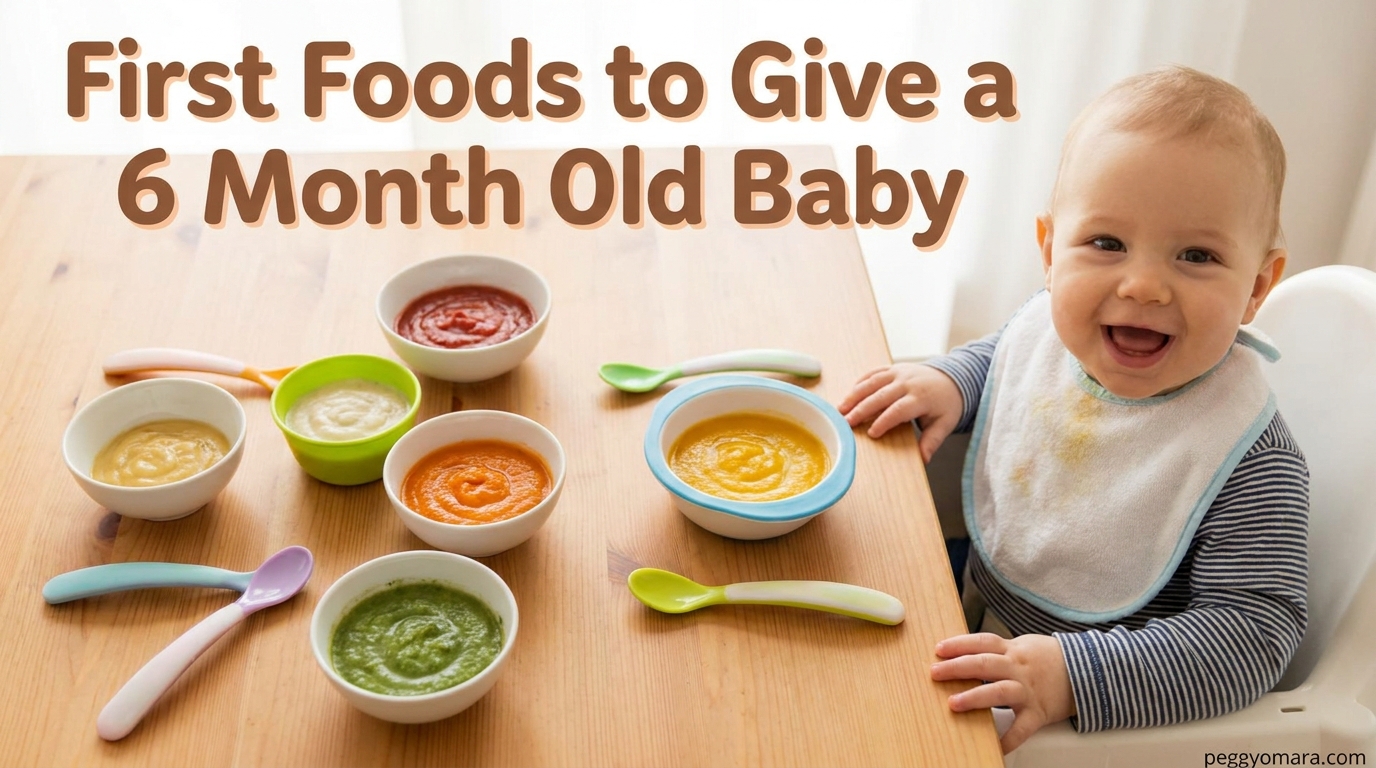
There is a moment that stays with you forever. Your baby sits in the high chair for the first time, eyes wide with curiosity, little hands reaching toward your plate. You feel a mix of joy and uncertainty. Is my baby ready? What if they choke? Am I doing this right?
I remember that moment with each of my four children. Each experience was different, and each taught me something important about trusting my baby and myself. The journey of first foods to give a 6 month old baby is not about following rigid rules. It is about responding to your child’s unique readiness and needs.
In this guide, I will walk you through everything you need to know about starting solids. You will learn the signs that show your baby is ready, which foods offer the best nutrition, how to introduce allergens safely, and practical tips that make mealtime enjoyable for both of you. Whether you choose purees, baby-led weaning, or a combination of both, you will find the confidence to nourish your little one with love and intention.
Table of Contents
Quick Answer: What Should My 6 Month Old Eat First?
The best first foods for your baby are nutrient-dense, easy to digest, and appropriate for their developmental stage. Here are the top five foods to begin with:
- Iron-fortified infant cereal mixed with breast milk or formula – Provides essential iron that babies need after 6 months
- Mashed or pureed sweet potato – Naturally sweet, packed with vitamin A, and easy to prepare
- Avocado – Rich in healthy fats that support brain development
- Well-cooked and pureed or mashed meat – Beef, chicken, or turkey offer highly absorbable iron and zinc
- Mashed banana – Soft texture, portable, and gentle on sensitive tummies
These foods represent the foundation of healthy infant nutrition. Each offers specific benefits that support your baby’s rapid growth and development during this important stage.
Signs Your Baby is Ready for Solids (2026)
Babies develop at their own pace, and readiness for solid foods is not determined by age alone. While the American Academy of Pediatrics recommends introducing solids around 6 months, your baby will give you clear signals when they are prepared for this next step.
Developmental Milestones to Watch For
Your baby is likely ready for first foods when they can demonstrate these abilities:
- Good head and neck control. Your baby can hold their head steady and upright without support.
- Ability to sit with support. They can maintain an upright position in a high chair with minimal assistance.
- Loss of the tongue-thrust reflex. When you offer a spoon, they do not automatically push it out with their tongue.
- Interest in food. They watch you eat, reach for your food, or open their mouth when food approaches.
- Ability to grasp objects. They can pick up toys and bring them to their mouth.
The tongue-thrust reflex is a protective mechanism that helps young babies breastfeed or bottle-feed without choking. When this reflex fades, usually between 4 and 6 months, your baby can move food to the back of their mouth and swallow effectively.
Why the 6 Month Guideline Matters
You may wonder why the AAP changed their recommendation from 4-6 months to around 6 months. The evidence is clear. Exclusive breastfeeding or formula feeding provides complete nutrition for the first six months of life. Introducing solids too early can displace the milk feedings that remain essential for your baby’s health.
Waiting until 6 months also aligns with your baby’s developing digestive system. Their gut is more mature and better able to handle solid foods. Their immune system is stronger, reducing risks of food sensitivities and allergies. Most importantly, they can participate more actively in the feeding experience, making it a joyful bonding time rather than a struggle.
Trust Your Baby’s Timing
Some babies show readiness at 5 and a half months. Others need until 7 months. If your baby was born prematurely, you may want to use their adjusted age when considering readiness. Watch your baby, not the calendar. If your little one is crying at the high chair or turning away from the spoon, they may not be ready yet. That is perfectly okay. Follow their lead.
Best First Foods for 6 Month Olds
The transition to solid foods, also called complementary feeding, is an opportunity to introduce your baby to a variety of flavors, textures, and nutrients. The goal is not to replace breast milk or formula but to supplement it with foods that meet your baby’s evolving nutritional needs.
Iron-Rich Foods: The Priority Group
Between 6 and 12 months, babies need more iron than their milk feedings alone can provide. Iron deficiency anemia is one of the most common nutritional concerns for infants, affecting development, energy, and immune function. Prioritizing iron-rich foods from the start sets your baby up for health.
Meat and poultry. Well-cooked and pureed beef, chicken, turkey, and lamb offer heme iron, which is more easily absorbed than plant-based iron. Many parents are surprised that meat can be a first food, but it is nutritionally ideal. Cook until very tender, then blend with a little breast milk, formula, or cooking liquid to reach a smooth consistency.
Iron-fortified cereals. Single-grain infant cereals mixed with breast milk or formula remain a traditional first food for good reason. They are easy to digest and provide a reliable iron source. Mix with enough liquid to create a thin, soupy consistency at first, gradually thickening as your baby adjusts.
Beans and lentils. Well-cooked and mashed beans offer plant-based iron along with fiber and protein. Choose low-sodium varieties or cook dried beans yourself without added salt.
Dark leafy greens. Cooked and pureed spinach, kale, and other greens provide iron and a host of other nutrients. Pair with vitamin C-rich foods like pureed tomatoes or fruit to enhance iron absorption.
Vegetables: Building a Love for Savory Flavors
Vegetables introduce important vitamins, minerals, and fiber. Many parents wonder whether to start with vegetables or fruits. While there is no strict rule, offering vegetables before overly sweet fruits can help babies develop a taste for savory flavors.
Sweet potato and butternut squash. These orange vegetables are naturally sweet, easy to digest, and rich in beta-carotene. Bake or steam until soft, then mash or puree.
Carrots. Cooked until very soft and pureed, carrots offer vitamin A and a naturally sweet flavor that babies enjoy.
Broccoli and cauliflower. Steam until tender and puree. These cruciferous vegetables provide vitamin C and folate. The flavor is more assertive, so be patient if your baby needs multiple exposures to accept them.
Zucchini and yellow squash. Mild in flavor and easy to prepare, these summer vegetables make excellent first foods.
Peas. Sweet and starchy, cooked peas can be pureed or mashed. They offer protein and fiber alongside vitamins.
Fruits: Natural Sweetness and Nutrients
Fruits provide vitamins, fiber, and hydration. They are generally well-accepted by babies and can be mixed with cereals or vegetables for variety.
Banana. Ripe banana requires no cooking. Simply mash with a fork and serve. It is portable, convenient, and gentle on digestion.
Avocado. Technically a fruit, avocado offers healthy monounsaturated fats that support brain development. The creamy texture makes it easy to spread on soft toast or serve mashed.
Apples and pears. Cook and puree these fruits for an easy first food. As your baby grows, you can offer soft cooked slices for self-feeding.
Peaches and plums. Peeled and cooked until soft, these stone fruits offer natural sweetness and vitamin C.
Blueberries and strawberries. Puree or mash cooked berries. Wait until your baby is comfortable with single foods before introducing mixed berry purees.
Grains and Starchy Foods
Grains provide energy and can be a vehicle for other nutrients. Beyond infant cereal, consider these options:
Oatmeal. Cooked and thinned with breast milk or formula, oatmeal offers fiber and a different texture from rice cereal.
Soft bread and pasta. Once your baby masters purees, soft pieces of bread or well-cooked pasta can introduce new textures.
Rice. Well-cooked rice can be mashed or offered as soft clumps. Choose white rice over brown initially, as brown rice contains higher levels of naturally occurring arsenic.
Quinoa. This protein-rich grain cooks to a soft texture that can be pureed or mashed for older babies.
Dairy and Other Proteins
While cow’s milk should not replace breast milk or formula until 12 months, other dairy foods can be introduced at 6 months.
Full-fat plain yogurt. Offer unsweetened, whole milk yogurt. The probiotics support digestive health, and the calcium and protein support growth.
Soft cheeses. Cottage cheese and cream cheese can be mashed and offered in small amounts.
Egg yolk. Well-cooked egg yolk provides iron, choline, and healthy fats. You can offer the yolk alone initially, introducing the white later.
Tofu. Soft, silken tofu can be mashed and offers plant-based protein and calcium.
Cultural Foods and Family Traditions
Your family’s cultural foods deserve a place in your baby’s diet. Foods like well-cooked lentils, hummus, congee, rice porridge, plantains, and chapati can all be adapted for babies. The key is soft textures and appropriate preparation without added salt, sugar, or strong spices. Feeding your baby foods that reflect your heritage connects them to family traditions from the very beginning.
How to Introduce Solid Foods to Your Baby?
There is no single right way to introduce solids. Some families prefer starting with purees and spoon-feeding. Others embrace baby-led weaning, offering soft finger foods from the start. Many parents find success with a flexible combination of both approaches. The best method is the one that feels right for your family and responds to your baby’s cues.
Purees vs Baby-Led Weaning: Understanding Both Approaches
The puree approach. Starting with smooth, single-ingredient purees allows you to control exactly what your baby eats and in what quantity. Spoon-feeding lets you observe your baby’s reactions closely and ensures they receive iron-rich foods from the beginning. You gradually increase texture from smooth to mashed to lumpy over several months.
Baby-led weaning. This approach skips purees entirely and offers babies soft, finger-sized pieces of family foods from the start. Babies self-feed, exploring textures and flavors at their own pace. Proponents say it builds fine motor skills, encourages adventurous eating, and integrates babies into family meals naturally.
The combination approach. Many parents find that offering both purees and soft finger foods works best. You might spoon-feed iron-fortified cereal at one meal and offer soft avocado slices at another. This flexibility lets you respond to your baby’s hunger, skill level, and preferences.
Step-by-Step Guide for First Feedings
Here is how to approach those first meals with confidence:
Step 1: Choose the right time. Pick a moment when your baby is well-rested, alert, and slightly hungry but not famished. Mid-morning, after the first milk feeding of the day, often works well. Avoid times when your baby is tired, cranky, or overly hungry.
Step 2: Set up the feeding space. Use a safe high chair with good support. Ensure your baby sits upright with their feet supported if possible. Have bibs, soft-tipped spoons, and a damp cloth within reach.
Step 3: Prepare a small amount. Start with just 1-2 teaspoons of food. Your baby will not eat much at first, and that is completely normal. The goal is exploration, not a full meal.
Step 4: Offer, do not force. Let your baby see and smell the food first. Touch the spoon to their lips and allow them to open their mouth. If they turn away or seem uninterested, respect that signal. Try again another day.
Step 5: Follow their pace. Let your baby set the speed of the feeding. Wait for them to finish chewing and swallowing before offering more. Watch for cues that they want more (opening mouth, leaning forward) or that they are done (turning away, closing mouth, playing with food).
Step 6: End on a positive note. Keep first feedings short, around 10-15 minutes. End while everyone is still enjoying the experience. Your baby will have many more opportunities to eat.
Texture Progression Timeline
As your baby develops eating skills, you will gradually increase food textures:
- 6-7 months: Smooth purees, mashed foods, very soft cooked fruits and vegetables
- 7-8 months: Mashed foods with small soft lumps, soft finger foods like banana slices or cooked vegetable sticks
- 8-10 months: Ground or finely chopped foods, more variety of soft finger foods, small pieces of soft meat
- 10-12 months: Minced or chopped family foods, a wider range of finger foods, practicing with a spoon
Always supervise your baby during meals and ensure foods are soft enough to mash with gentle pressure between your fingers.
Preparing Foods Safely
Safe food preparation protects your baby from foodborne illness and choking risks. Follow these guidelines:
Wash your hands thoroughly before preparing food or feeding your baby. Clean all surfaces and utensils. Cook meats, poultry, fish, and eggs thoroughly. Avoid raw honey, unpasteurized dairy, and undercooked eggs entirely during the first year.
Cut foods into appropriate sizes. For purees, ensure a completely smooth consistency. For finger foods, cut into strips about the size of your finger so your baby can grasp them easily. Round foods like grapes should be quartered lengthwise. Remove skins, seeds, and pits from fruits.
If you are making your own baby food, consider investing in one of the best baby food makers to simplify the process. Homemade food lets you control ingredients and introduce your baby to the flavors your family enjoys.
Refrigerate or freeze homemade purees promptly. Use refrigerated purees within 48 hours. Thaw frozen foods in the refrigerator or microwave, never at room temperature. Throw away any food that has been sitting out for more than two hours or that your baby has spit out or touched with dirty hands.
Introducing Allergens Safely
For years, parents were told to delay introducing allergenic foods like peanuts, eggs, and dairy. The guidance has changed dramatically based on new research. Early introduction, not delay, appears to help prevent food allergies.
Current Evidence on Allergen Introduction
Major studies, including the LEAP study published in the New England Journal of Medicine, showed that introducing peanut protein early and regularly reduced peanut allergy risk by over 80% in high-risk children. Similar patterns emerged for other allergens. The current recommendation from the AAP and other major pediatric organizations is to introduce allergenic foods early, around 6 months, alongside other first foods.
The Top 9 Allergenic Foods
These foods account for the majority of allergic reactions:
- Peanuts and tree nuts
- Eggs
- Milk and dairy
- Soy
- Wheat
- Fish
- Shellfish
- Sesame
Introduce each new allergen at home, in the morning, when you can observe your baby for several hours. Start with a tiny amount, about a quarter teaspoon, mixed into a food your baby already tolerates.
Recognizing Allergic Reactions
Most allergic reactions occur within minutes to two hours after eating. Watch for these signs:
Mild symptoms: Hives, itching, skin redness, mild swelling of lips or face, runny nose, sneezing, mild stomach upset.
Severe symptoms: Difficulty breathing, wheezing, repetitive coughing, swelling of tongue or throat, pale or blue skin color, sudden tiredness or limpness, loss of consciousness.
If you notice severe symptoms, call emergency services immediately. For mild reactions, stop feeding the food and contact your pediatrician for guidance.
If Your Baby Has Known Risk Factors
Some babies have higher allergy risk, including those with severe eczema, known egg allergy, or a parent or sibling with food allergies. If this applies to your baby, discuss an introduction plan with your pediatrician or allergist before starting solids. They may recommend introducing allergens in a controlled medical setting.
Foods to Avoid in the First Year
While most foods can be part of your baby’s diet with appropriate preparation, some foods pose real risks and should be avoided entirely during the first year.
Choking Hazards
These foods are difficult for babies to manage safely:
- Whole nuts and seeds
- Popcorn
- Hard raw vegetables
- Whole grapes and cherry tomatoes (unless quartered)
- Chunks of meat or cheese
- Hard candies or gum
- Marshmallows
Always modify foods to a safe texture and size. Supervise every meal, and learn the difference between gagging and choking so you can respond appropriately.
Foods That Pose Health Risks
Honey. Never give honey to a baby under 12 months. It can contain botulism spores that babies’ immature immune systems cannot fight. This includes raw honey, cooked honey, and honey in processed foods.
Cow’s milk as a main drink. While small amounts of yogurt and cheese are fine, cow’s milk should not replace breast milk or formula before 12 months. It does not provide adequate nutrition and can irritate the digestive system.
Added salt and sugar. Babies’ kidneys cannot process much salt, and early exposure to added sugars sets up preferences for overly sweet foods. Avoid processed foods with added salt or sugar. Use herbs and mild spices for flavor instead.
Juice and sugary drinks. Even 100% fruit juice offers more sugar than nutrition. Offer whole fruits instead. Water can be introduced with meals, but breast milk or formula remains the primary drink.
Undercooked eggs, meat, or fish. Ensure all animal products are thoroughly cooked to prevent foodborne illness.
Practical Feeding Tips for Real Life (2026)
Starting solids is not just about nutrition. It is about establishing a positive relationship with food, navigating real-world challenges, and finding what works for your family.
Portion Sizes and Frequency
At 6 months, solid foods complement milk feedings rather than replace them. Start with one meal per day, offering 1-2 tablespoons of food. Gradually increase to two meals, then three, over the following months.
By 8-9 months, many babies eat three small meals plus snacks. Let your baby guide you. Some days they will eat more, some days less. Trust their appetite signals.
Continuing Breast Milk or Formula
Breast milk or formula remains the primary source of nutrition throughout the first year. Offer milk feedings before solids until around 9-10 months, then gradually shift to offering solids first as your baby eats more substantial amounts. By 12 months, many babies naturally transition to three meals with milk as a complement.
Handling Food Refusal
Food refusal is normal and common. Babies may reject a food 10 to 15 times before accepting it. Continue offering rejected foods without pressure. Make mealtime pleasant and stress-free. Never force your baby to eat. If refusal persists or you have concerns about intake, speak with your pediatrician.
Managing the Mess
Meals with babies are messy. That is how they learn. Place a splat mat under the high chair. Use bibs that wipe clean easily. Keep a damp cloth nearby for quick face and hand wipes. Strip your baby down to a diaper for particularly messy foods if the weather permits. Remember, the mess is temporary. The learning is lasting.
Integrating Baby Into Family Meals
Eating together as a family offers tremendous benefits. Your baby learns by watching you eat. They pick up on social cues around food and mealtime. Adapt family foods for your baby by setting aside portions before adding salt or strong spices. Let your baby sit at the table with you, even if they are just playing with food while you eat.
What to Expect: Gagging, Mess, and Food Refusal
Many parents feel anxiety about starting solids. Understanding what is normal can help you respond with confidence.
Gagging is Normal
Gagging is a protective reflex that helps babies move food around in their mouths and prevent choking. It looks dramatic. Your baby may cough, make noises, and have watery eyes. Stay calm. Give your baby time to work the food forward. Gagging is not choking. With practice, gagging decreases as your baby learns to handle different textures.
Choking is Different
Choking is silent. Your baby cannot cough, cry, or breathe. They may turn blue. This is an emergency requiring immediate intervention. Learn infant choking first aid before starting solids. Cut foods appropriately, supervise all meals, and trust your instincts.
The Mess is Learning
Babies explore food with all their senses. Touching, smearing, and dropping food are part of learning about textures, temperatures, and cause-and-effect. The floor will get messy. Your baby will need a bath. This phase passes. The sensory learning supports brain development and helps babies become more accepting of different foods.
Emotional Readiness for Parents
Starting solids marks a transition. Your baby is growing up. This can bring up feelings of pride, sadness, excitement, and worry all at once. You are not alone in feeling overwhelmed. Talk with other parents, ask your pediatrician questions, and give yourself permission to learn alongside your baby. There is no perfect way to do this. There is only your way, guided by love and attentiveness.
Frequently Asked Questions
What should my 6 month old eat first?
What is the 3 6 9 rule for babies?
What food is most suitable for babies in their first 6 months?
What foods help babies with constipation?
What is the 90 90 90 rule for feeding?
Why did AAP change solids to 6 months?
What is the hardest month for a baby?
Conclusion: Trust the Journey
Introducing first foods to your 6 month old baby is a milestone that marks the beginning of a lifelong relationship with food. It is normal to feel excited and uncertain all at once. Remember that there is no single right way to do this. Your baby will guide you with their cues, their preferences, and their unique timeline.
Focus on offering nutrient-rich foods, responding to your baby’s signals, and making mealtimes pleasant experiences. The iron-rich foods, vegetables, fruits, and grains you introduce now lay the foundation for healthy eating patterns that can last a lifetime. The connection you build during these early feedings matters just as much as the nutrition.
You are doing better than you think you are. Trust your instincts, follow your baby’s lead, and know that every messy meal, every rejected food, and every successful bite is part of the beautiful, imperfect journey of parenting. The first foods to give a 6 month old baby are just the beginning of an adventure you and your child will share together.