
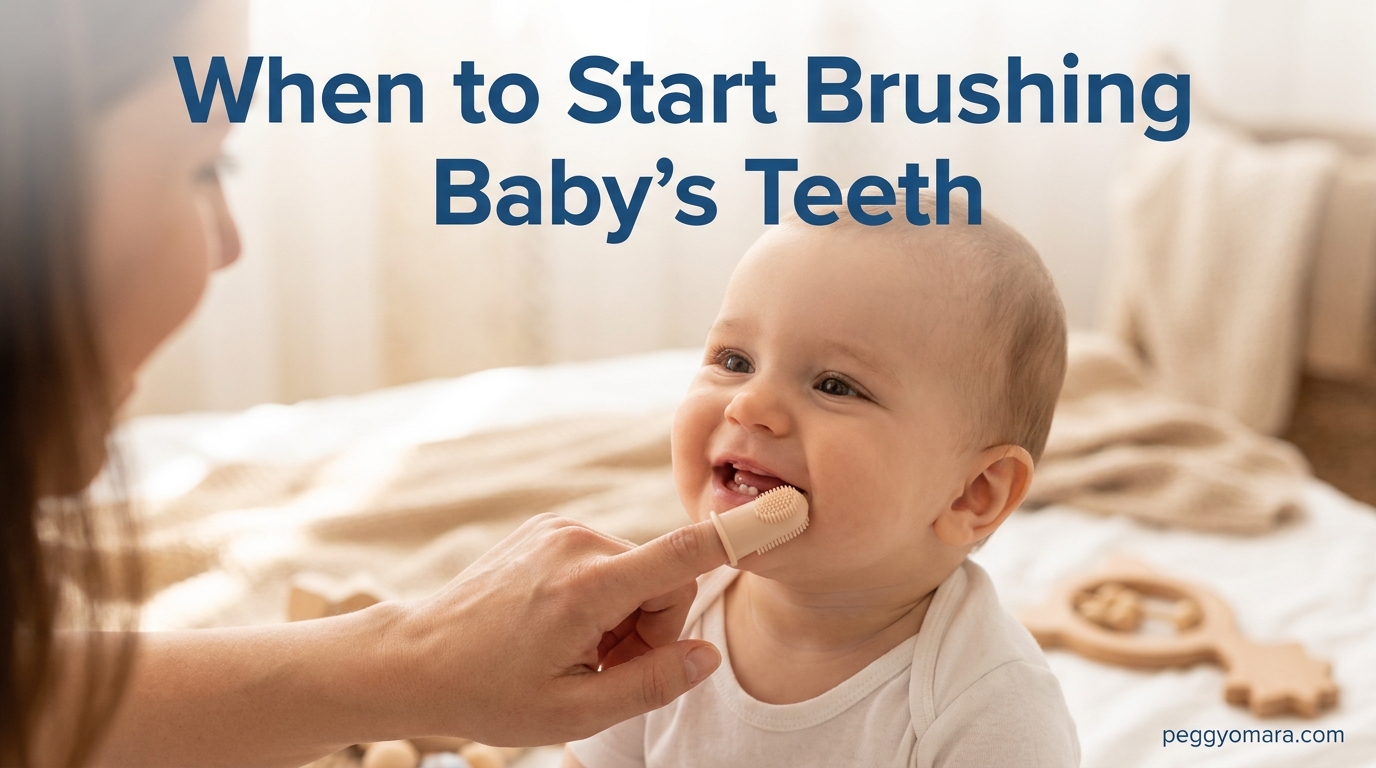
When to start brushing baby’s teeth is one of the most common questions new parents ask, yet many assume those tiny temporary teeth do not need much attention. That first tooth might seem insignificant, but baby teeth play a critical role in nutrition, speech development, and guiding permanent teeth into position. Some of those little teeth will stay in your child’s mouth until age 12, making early care far more important than most parents realize.
I have spoken with dozens of parents who felt overwhelmed by conflicting advice about infant oral care. Our team researched pediatric dental guidelines extensively and consulted parent forums where real families shared what actually worked. The good news is that establishing healthy brushing habits early creates a foundation that lasts a lifetime.
Table of Contents
When to Start Brushing Baby’s Teeth?
Start brushing your baby’s teeth as soon as the first tooth appears through the gums, typically around 6 months of age. The American Academy of Pediatric Dentistry recommends using a soft-bristled infant toothbrush with a rice grain-sized smear of fluoride toothpaste from day one of that first tooth.
Even before that first tooth arrives, oral care should begin from birth. Gently wipe your baby’s gums with a clean, damp washcloth or gauze pad after feedings. This removes bacteria and gets both you and baby comfortable with the routine.
2026 Complete Timeline: From Birth to Toddler
Understanding the progression of infant oral care helps you know exactly what to do at each stage. Here is the developmental timeline every parent should follow.
Birth to First Tooth: Gum Care
Before any teeth appear, clean your baby’s gums daily using a soft, damp washcloth or finger brush wrapped in gauze. Gently wipe along the gum line after each feeding to remove milk residue and bacteria.
This early routine serves two purposes. It keeps the mouth clean, and it helps your baby become accustomed to oral care before a brush ever enters the picture.
First Tooth Appears (Around 6 Months)
That first tooth eruption is your signal to begin proper brushing. Use a soft-bristled baby toothbrush with a rice grain-sized smear of fluoride toothpaste. Brush twice daily, morning and before bedtime.
Even a single tooth can develop cavities, so do not wait for more teeth to appear. The front teeth are particularly vulnerable to decay from milk and formula pooling in the mouth.
Two Teeth That Touch
Once your baby has two teeth that touch, usually between 10-12 months, add flossing to the routine. Use infant floss picks or a soft floss holder to gently clean between those touching teeth.
Continue brushing all tooth surfaces while adding this interdental cleaning step. Most parents find this stage challenging because babies resist, but consistency matters more than perfection.
Age 2-3: Building Independence
By age 2, increase the toothpaste amount to a pea-sized dollop. Begin teaching your child to spit after brushing, though swallowing a small amount remains safe at this stage.
Let your toddler practice holding the brush with your supervision. They should attempt brushing first, then you finish the job to ensure thorough cleaning. Continue supervising all brushing until at least age 6.
How to Brush Baby Teeth: Step-by-Step Process
Proper technique ensures effective cleaning while keeping your baby comfortable. Follow these steps for successful brushing sessions.
Step 1: Position your baby comfortably. Sit with baby in your lap facing away from you, or lay them on a changing table with their head near your torso.
Step 2: Apply a rice grain-sized smear of fluoride toothpaste to a soft infant toothbrush.
Step 3: Use gentle circular motions to brush all tooth surfaces. Clean the outer surfaces, inner surfaces, and chewing tops of each tooth.
Step 4: Pay special attention to the gumline where plaque accumulates most heavily.
Step 5: Brush for approximately two minutes, twice daily. Morning brushing establishes the routine; bedtime brushing removes accumulated debris from the day.
Step 6: Rinse the brush thoroughly and store it upright to dry. Replace the brush every 2-4 months or sooner if bristles fray.
When Baby Resists: Tips That Actually Work
Every parent forum thread about brushing includes this struggle: the baby clamps their mouth shut, turns away, or cries during brushing. After reviewing hundreds of parent experiences, here are techniques that actually work.
Sing songs or play music. Many parents find that singing a specific tooth-brushing song distracts their baby long enough to complete the task. One popular approach is singing to the tune of familiar nursery rhymes with lyrics about brushing.
Let baby explore the brush first. Before attempting to brush, let your baby hold and mouth the toothbrush during playtime. This removes the novelty and reduces resistance when it is time for actual cleaning.
Brush together as a family. Babies love imitating parents. Let your baby watch you brush your own teeth with enthusiasm, then offer them their brush. Family brushing sessions turn resistance into bonding time.
Use a washcloth for tender gums. During active teething, gums become sensitive and a brush may cause discomfort. Switch to a soft washcloth wrapped around your finger temporarily until the discomfort passes.
Try the positioning technique dentists recommend. Lay your baby on their back with their head in your lap, facing you. One parent gently holds the jaw to keep the mouth open while the other brushes. This “fish hooking” technique, suggested by pediatric dentists in parent forums, helps when all else fails.
Stay calm and consistent. Your baby senses your stress. If brushing becomes a battle, take a breath and try again later. Never skip brushing entirely, but do not force it to the point of trauma. It genuinely gets easier with practice.
Fluoride for Babies: What Parents Should Know?
Many parents express confusion and concern about fluoride safety for infants. Online forums show constant debate about fluoride versus fluoride-free toothpaste for babies.
The American Academy of Pediatric Dentistry and the CDC both recommend fluoride toothpaste from the very first tooth. Using a rice grain-sized amount is safe even if swallowed. By age 3, when children learn to spit, this concern becomes even less relevant.
Fluoride strengthens developing tooth enamel and significantly reduces cavity risk. The tiny amounts used for infant brushing provide protective benefits without health risks. If you have specific concerns about your water supply’s fluoride levels, discuss them with your pediatric dentist.
Frequently Asked Questions
When are you supposed to start brushing your baby’s teeth?
Start brushing as soon as the first tooth appears through the gums, typically around 6 months of age. Before teeth erupt, clean gums daily with a damp washcloth.
What is the 2-2-2 rule for brushing teeth?
The 2-2-2 rule means brushing 2 times a day, for 2 minutes each time, and seeing the dentist 2 times a year. This simple guideline helps children and adults maintain good oral health habits.
What happens if you don’t brush your baby’s teeth?
Without brushing, baby teeth can develop cavities causing pain, infection, and difficulty eating. Decay in baby teeth can also affect permanent teeth alignment and lead to speech development problems. Some baby teeth remain until age 12, making early care essential.
When should my baby first see a dentist?
Schedule the first dental visit by your baby’s first birthday, or within 6 months of the first tooth appearing – whichever comes first. This early visit helps establish a dental home and allows the dentist to check development.
Should I brush my baby’s gums?
Yes, clean your baby’s gums daily from birth using a soft, damp washcloth or gauze pad. This removes bacteria and milk residue while preparing your baby for the toothbrushing routine that follows.
Can babies use fluoride toothpaste?
Yes, the American Academy of Pediatric Dentistry recommends fluoride toothpaste from the first tooth. Use a rice grain-sized smear for children under 3. This small amount is safe even if swallowed and provides important cavity protection.
Starting a Lifetime of Healthy Smiles
When to start brushing baby’s teeth has a clear answer: begin gum care from birth and transition to brushing the moment that first tooth appears. Those early routines, established around 6 months of age, create habits that protect your child’s oral health for decades.
Remember that consistency matters more than perfection. Some days brushing will go smoothly; other days it will feel impossible. Stay patient, keep showing up, and do not forget to schedule that first dental visit by your baby’s first birthday. The foundation you build now supports a lifetime of healthy smiles.