
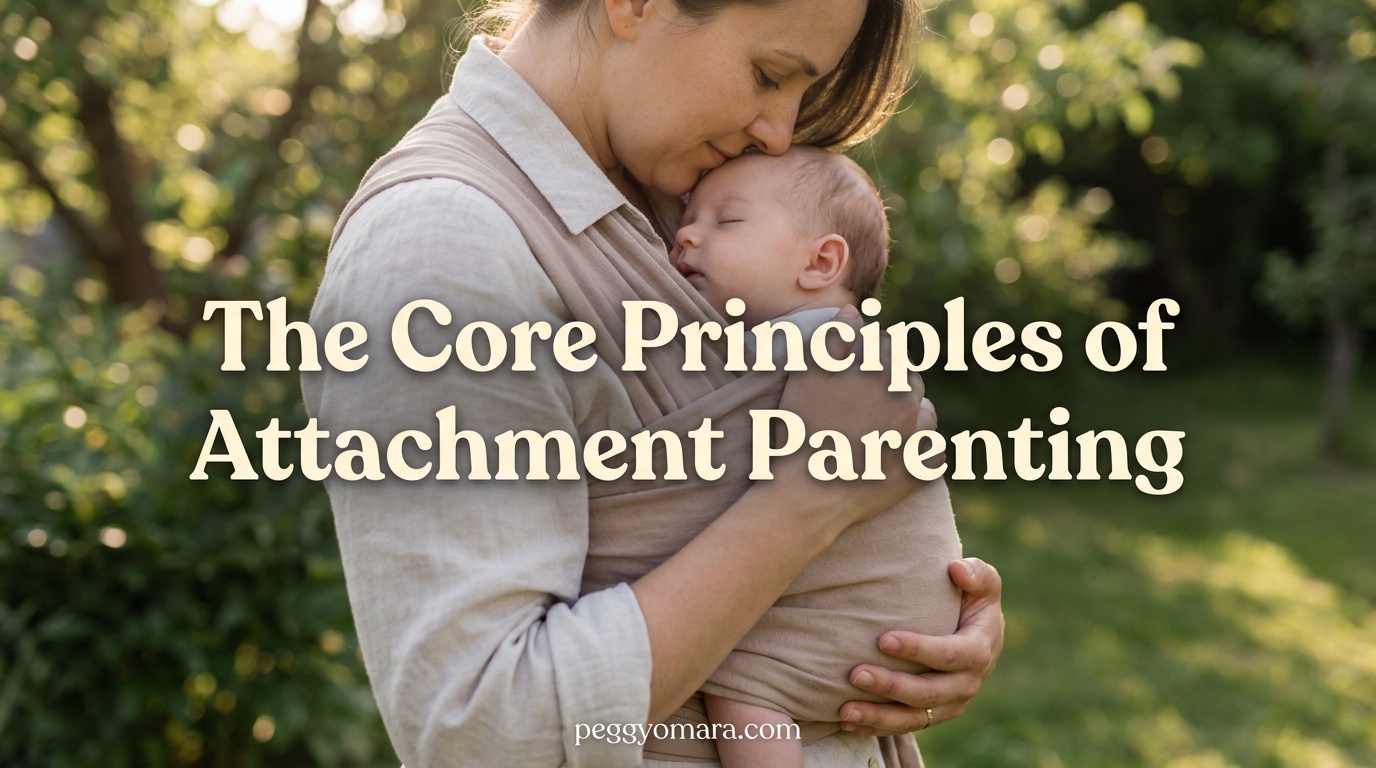
Attachment parenting is a philosophy that emphasizes building strong emotional bonds between parents and children through responsive, sensitive caregiving. At its heart, this approach recognizes that secure attachment forms the foundation for healthy child development and future relationships. The core principles of attachment parenting provide a framework for nurturing that connection from the very beginning.
These principles emerged from decades of research in developmental psychology, particularly the work of John Bowlby and Mary Ainsworth on attachment theory. Dr. William Sears later popularized the concept through his books and the “7 Baby Bs” framework. Attachment Parenting International formalized the eight principles in the 1990s as a way to make these concepts accessible to modern parents.
Understanding these principles matters whether you are an expectant parent preparing for your first child or a seasoned caregiver looking to deepen your connection with your children. This guide explores each principle in detail, addresses common misconceptions, and offers practical guidance for implementing these ideas in real family life.
Table of Contents
Understanding Attachment Theory and Attachment Parenting (2026)
Before diving into the specific principles, it is important to understand the distinction between attachment theory and attachment parenting. These related but separate concepts often create confusion for parents researching this approach.
Attachment Theory: The Scientific Foundation
Attachment theory was developed by British psychiatrist John Bowlby in the 1950s and 1960s. Bowlby proposed that infants are biologically programmed to form emotional bonds with caregivers as a survival mechanism. Psychologist Mary Ainsworth expanded this research through her famous “Strange Situation” study, which identified different attachment styles in children.
Attachment theory identifies four main attachment patterns. Secure attachment develops when caregivers consistently respond to a child’s needs. Avoidant attachment occurs when caregivers are emotionally unavailable. Ambivalent or resistant attachment forms when responses are unpredictable. Disorganized attachment develops in situations of trauma or extreme inconsistency.
How Attachment Parenting Applies the Theory?
Attachment parenting takes the scientific findings of attachment theory and translates them into practical parenting approaches. While attachment theory describes what happens in child-caregiver relationships, attachment parenting offers methods for fostering secure attachment through specific practices and philosophies.
The goal is not perfection but responsiveness. Secure attachment develops through what researchers call the “good enough” parent who meets their child’s needs consistently, not flawlessly. This distinction matters because many parents feel pressure to execute every principle perfectly, which can lead to burnout and guilt.
What Is Secure Attachment?
Secure attachment means a child trusts that their caregiver will respond to their needs. This security creates what Bowlby called a “secure base” from which children can explore the world. Children with secure attachment typically show distress when separated from caregivers but can be comforted upon reunion. They feel confident to explore their environment while knowing they have a safe place to return.
Research consistently shows that secure attachment in early childhood correlates with better emotional regulation, stronger social skills, and healthier relationships later in life. The core principles of attachment parenting are designed to create the conditions where this secure bond can flourish.
The Eight Core Principles of Attachment Parenting Explained
The eight principles developed by Attachment Parenting International serve as entry points to understanding this parenting philosophy. They are not rigid rules but guidelines that families can adapt to their unique circumstances.
Principle 1: Prepare for Pregnancy, Birth, and Parenting
This principle emphasizes the importance of education and emotional preparation before baby arrives. Parents who understand normal child development, breastfeeding basics, and infant sleep patterns feel more confident in their parenting decisions. Preparation includes researching birth options, learning about newborn care, and reflecting on your own parenting values.
Physical preparation matters too. Creating a supportive environment for pregnancy and birth, assembling resources for postpartum support, and establishing a network of helpers all support this principle. The goal is entering parenthood feeling informed and supported rather than anxious and uncertain.
Many parents find that preparation extends beyond the birth. Reading about child development stages, attending parenting classes, and connecting with other parents who share similar values all support this foundational principle.
Principle 2: Feed with Love and Respect
This principle recognizes that feeding times are opportunities for emotional connection, not just nutritional transactions. Whether breastfeeding, bottle-feeding, or eventually sharing family meals, the approach emphasizes responsiveness to hunger cues and a warm, connected atmosphere.
Breastfeeding is often associated with attachment parenting because it provides natural opportunities for skin-to-skin contact, eye contact, and responsive feeding. However, this principle explicitly includes all feeding methods. Parents who cannot or choose not to breastfeed can absolutely practice attachment parenting by bringing the same love and respect to bottle-feeding.
As children grow, this principle extends to family mealtimes. Eating together without pressure, offering nutritious foods without forcing, and making mealtimes pleasant social occasions all reflect feeding with love and respect.
Principle 3: Respond with Sensitivity
Responsive parenting means tuning into your child’s cues and responding promptly and appropriately. Babies communicate through cries, body language, and facial expressions. Responding with sensitivity requires observing these signals and meeting the underlying need.
This principle sometimes gets misunderstood as requiring immediate response to every sound a baby makes. In practice, responding with sensitivity means learning your child’s unique communication patterns. Some babies need instant comfort while others fuss briefly before settling. The goal is attunement, not panic.
Responsive parenting builds trust. When babies learn that their communications result in care, they develop confidence in relationships. This responsiveness forms the neural pathways for emotional regulation and empathy that serve children throughout life.
Principle 4: Use Nurturing Touch
Physical closeness through touch supports bonding and healthy development. This principle encompasses practices like babywearing, skin-to-skin contact, and gentle physical affection. Nurturing touch triggers the release of oxytocin, often called the “bonding hormone,” in both parent and child.
Babywearing, or carrying your baby in a sling or carrier, keeps infants close while freeing parents’ hands for other tasks. Many attachment parents find babywearing essential during the “fourth trimester” when babies want near-constant contact. The physical closeness helps regulate the baby’s temperature, breathing, and heart rate.
This principle extends beyond infancy. Toddlers and older children benefit from regular physical affection appropriate to their developmental stage. Hugs, hand-holding, sitting close while reading, and playful roughhousing all provide the nurturing touch that supports attachment.
Principle 5: Ensure Safe Sleep, Physically and Emotionally
Sleep practices in attachment parenting emphasize both physical safety and emotional security. This principle acknowledges that babies have needs for nighttime closeness and feeding while recognizing the importance of safe sleep environments.
Safe co-sleeping and room-sharing are common practices in attachment parenting. When parents choose bed-sharing, they follow safety guidelines including firm mattresses, no loose bedding, and no smoking or substance use. Many families opt for a sidecar crib or room-sharing as a middle ground that provides closeness while maintaining separate sleep surfaces.
Emotional safety in sleep means responding to nighttime needs without judgment. Babies wake at night for many reasons including hunger, discomfort, or the simple need for reassurance. Responding to these needs helps babies feel secure even in the vulnerable state of sleep.
This principle also evolves as children grow. Gradual transitions to independent sleep, when families choose to make them, work best when respectful of the child’s emotional readiness.
Principle 6: Provide Consistent and Loving Care
Consistency helps children feel secure. This principle emphasizes the importance of predictable, loving responses from caregivers. Children thrive when they know what to expect and who will respond to their needs.
For many families, this principle raises questions about childcare and working parents. The key is not that parents must provide 100% of care but that caregivers should be consistent and loving. A regular babysitter, grandparent, or daycare provider who forms a genuine attachment with the child can provide this consistent care.
Consistency also means following through on promises, maintaining routines that work for your family, and being emotionally available during the time you spend with your child. Even working parents can provide consistent and loving care through quality interactions and predictable reunion rituals.
Principle 7: Practice Positive Discipline
Positive discipline in attachment parenting views guidance as teaching rather than punishment. This principle recognizes that children misbehave when they have unmet needs or lack skills, not because they are inherently naughty.
The approach emphasizes empathy, communication, and problem-solving. Instead of time-outs or spanking, attachment parents might use redirection, natural consequences, and calm discussion. The goal is helping children develop internal self-control rather than just external compliance.
Positive discipline requires developmentally appropriate expectations. A toddler cannot share consistently because their brain has not developed that capacity. A preschooler needs help with transitions because executive function is still emerging. Understanding child development helps parents respond to behavior with appropriate guidance rather than frustration.
Principle 8: Strive for Balance in Personal and Family Life
This final principle acknowledges that parenting works best when parents also care for themselves. Burned-out, depleted caregivers struggle to respond sensitively. Balance means meeting your own needs alongside your child’s needs.
Balance looks different for every family. It might mean trading off nighttime duties between parents, accepting help from friends and family, or adjusting work schedules when possible. It definitely means letting go of perfectionism and accepting that you will not execute every principle flawlessly.
This principle explicitly rejects the martyr parent model. Attachment parenting is not about sacrificing yourself completely for your child. It is about creating a family system where everyone’s needs are considered and met as much as possible.
The 8 API Principles vs The 7 Baby Bs: Understanding the Difference (2026)
Parents researching attachment parenting often encounter two frameworks: the eight principles from Attachment Parenting International and the “7 Baby Bs” from Dr. William Sears. Understanding the relationship between these helps clarify the philosophy.
The 7 Baby Bs from William Sears
Dr. William Sears, a pediatrician who coined the term “attachment parenting” in the 1980s, outlined seven practices that support bonding. These are:
- Birth bonding – Immediate connection after birth
- Breastfeeding – Responsive nursing relationship
- Babywearing – Keeping baby close in a carrier
- Bedding close to baby – Co-sleeping or room-sharing
- Belief in the language value of your baby’s cry – Responding to cries as communication
- Beware of baby trainers – Avoiding strict schedules and cry-it-out
- Balance – Taking care of yourself and your marriage
How the 8 Principles Expand the Framework?
Attachment Parenting International developed the eight principles to broaden the framework beyond infancy and include more diverse family situations. The API principles cover the same basic concepts as the 7 Bs but expand them.
Preparation for pregnancy and birth becomes its own principle. Feeding with love and respect explicitly includes non-breastfeeding families. Positive discipline addresses the guidance of older children. The principles of consistent care and balance receive more detailed treatment as separate concepts.
Both frameworks are valid. Many parents find the 7 Bs easier to remember and apply during the infant years. The 8 principles offer more comprehensive guidance that extends through childhood. Neither is “correct” – both serve as tools for understanding attachment-based caregiving.
Addressing Common Misconceptions and Criticisms
Attachment parenting faces criticism from some parenting experts and confusion from families trying to understand the approach. Addressing these concerns honestly helps parents make informed decisions.
Myth: Attachment Parenting Creates Dependent Children
Research consistently shows the opposite. Children with secure attachment actually become more independent because they have a secure base to explore from. They know they can return to their caregiver when needed, which gives them confidence to venture out.
Children whose needs are met consistently learn that the world is predictable and safe. This security enables rather than inhibits independence. The myth of dependency likely arises from confusing immediate responsiveness with indulgence of every whim.
Myth: It Is All-or-Nothing
Many parents abandon attachment parenting because they cannot implement every principle perfectly. This reflects a misunderstanding. The principles are guidelines, not rules. Families can practice attachment parenting while using bottles, separate sleep spaces, or childcare.
What matters is the underlying attitude of responsiveness and connection, not specific practices. A parent who cannot bed-share but responds sensitively to their baby is practicing attachment parenting. A working parent who reconnects warmly in the evening builds secure attachment.
Myth: Only Stay-at-Home Parents Can Do It
Attachment parenting is absolutely compatible with working outside the home. The principles emphasize quality of care and responsiveness, not quantity of hours. Working parents can and do raise securely attached children.
The key is making the time you have with your child count. Warm reunion rituals, responsive caregiving during your hours together, and consistent loving attention all build secure attachment regardless of work status.
Myth: You Can Never Leave Your Baby
Attachment parenting does not require 24/7 contact. Babies benefit from secure relationships with multiple caregivers. Parents need breaks. The principle of balance explicitly acknowledges that parents have needs too.
Secure attachment means your baby trusts you will return, not that you never leave. Brief separations with loving substitute caregivers do not damage attachment when the primary relationship remains consistent and responsive.
Attachment Parenting for Working Parents
One of the most common questions from parents researching attachment parenting is whether it works for families where both parents work outside the home. The answer is yes, with some thoughtful adaptation.
Quality Over Quantity
Working parents often worry that they cannot provide enough time to build secure attachment. Research suggests that quality of interaction matters more than quantity. A few hours of responsive, engaged caregiving builds stronger attachment than many hours of distracted presence.
Focus on being fully present during your time with your child. Put away phones, minimize multitasking, and engage in activities that foster connection. Reading together, playing games, having conversations, and simply being available all strengthen attachment.
Strategies for Separation and Reunion
Develop rituals for leaving and returning that help your child feel secure. Consistent goodbye routines, even brief ones, signal that separations are predictable and manageable. Equally important are warm reunion rituals that help you reconnect after time apart.
Some working parents find that babywearing in the evening helps them catch up on physical closeness. Others prioritize nursing or feeding upon return home. Evening family time, bedtime routines, and weekend activities all provide opportunities for connection.
Choosing Childcare
Selecting a caregiver who understands and supports your approach makes working compatible with attachment parenting. Look for providers who respond sensitively to cues, provide nurturing touch, and maintain consistency in care.
Quality childcare can actually support attachment parenting. A warm, responsive daycare provider becomes another secure attachment figure for your child. The goal is not exclusivity but a network of loving, consistent relationships.
Implementing the Principles: Practical Tips
Knowing the principles is different from living them. Here are practical suggestions for incorporating these ideas into everyday family life without overwhelm.
Start With One Principle
You do not need to overhaul your entire parenting approach overnight. Choose one principle that resonates with your family’s current situation and focus there. Perhaps you begin with responding more sensitively to nighttime wakings. Maybe you work on adding more nurturing touch through babywearing.
As one principle becomes natural, add another. Attachment parenting is a journey, not a destination. Each small change in the direction of responsiveness and connection benefits your child.
Trust Your Instincts
While guidelines help, you know your child best. If a recommended practice feels wrong for your family, modify it. Attachment parenting should enhance your confidence, not undermine it. Trust that you can respond to your child’s unique needs better than any expert formula.
Sometimes what looks like attachment parenting on the outside does not feel like connection on the inside. Check in with your intuition. Genuine responsiveness comes from authentic connection, not forced compliance with rules.
Find Your Community
Practicing attachment parenting can feel isolating when surrounded by families using different approaches. Connecting with like-minded parents provides support, reduces judgment, and normalizes your choices.
Local attachment parenting groups, online communities, and parenting classes can all provide community. Hearing that other families struggle with the same challenges and adapt the same principles helps you feel less alone on this journey.
Allow for Flexibility
Life happens. Illness, work demands, multiple children, and personal struggles all require flexibility. The principles are ideals to work toward, not chains that bind you. A sick parent cannot babywear. A traveling parent cannot co-sleep temporarily. These circumstances do not mean you have failed at attachment parenting.
Return to the principles when circumstances allow. Brief deviations for practical necessity do not damage secure attachment. What matters is the overall pattern of responsiveness and connection over time.
Frequently Asked Questions
What are the core principles of attachment parenting?
The eight core principles of attachment parenting are: 1) Prepare for Pregnancy, Birth, and Parenting, 2) Feed with Love and Respect, 3) Respond with Sensitivity, 4) Use Nurturing Touch, 5) Ensure Safe Sleep, Physically and Emotionally, 6) Provide Consistent and Loving Care, 7) Practice Positive Discipline, and 8) Strive for Balance in Personal and Family Life. These principles were developed by Attachment Parenting International as guidelines for building secure parent-child relationships.
What are the 5 principles of attachment?
The five principles of attachment theory (developed by John Bowlby) include: proximity maintenance (wanting to be near the attachment figure), safe haven (returning to the attachment figure for comfort when frightened), secure base (using the attachment figure as a base to explore), separation distress (anxiety when separated), and internal working model (mental representation of relationships formed from attachment experiences). These describe how attachment functions psychologically.
What are the 5 B’s of attachment parenting?
The 5 B’s typically refer to a subset of Dr. William Sears’ 7 Baby Bs: Birth bonding, Breastfeeding, Babywearing, Bedding close to baby, and Belief in the language value of your baby’s cry. The full Sears framework includes two additional Bs: Beware of baby trainers and Balance. The 7 Baby Bs represent practices that support attachment during infancy.
What are the 4 main points of attachment theory?
The four main points of attachment theory are: 1) Infants are biologically predisposed to form attachments for survival, 2) The quality of attachment depends on caregiver responsiveness, 3) Attachment patterns become internal working models for future relationships, and 4) Secure attachment provides a foundation for healthy emotional development. These concepts were developed by John Bowlby and expanded by Mary Ainsworth’s research.
Can I practice attachment parenting if I cannot breastfeed?
Absolutely. Attachment parenting explicitly includes all feeding methods under the principle of feeding with love and respect. Whether breastfeeding, bottle-feeding, or using formula, you can practice attachment parenting by being responsive to hunger cues, holding your baby close during feeds, making eye contact, and creating a warm feeding environment. Breastfeeding is not required for secure attachment.
Is co-sleeping safe for babies?
Co-sleeping can be safe when following proper guidelines. Safe bed-sharing requires a firm mattress, no loose bedding or pillows near baby, no gaps between mattress and wall, and parents who do not smoke, drink alcohol, or use sedating medications. Many attachment parenting families choose room-sharing with a sidecar crib or bassinet as a safer alternative that still provides nighttime closeness. Always follow current safety recommendations from pediatric authorities.
Will attachment parenting spoil my child?
Research shows that responsive parenting does not spoil children. Children with secure attachment actually become more independent and emotionally healthy. Meeting needs promptly builds trust and teaches children that the world is safe. Spoiling typically refers to indulging wants rather than needs. Attachment parenting focuses on responding to genuine needs for comfort, nutrition, and security, which supports healthy development.
How can working parents practice attachment parenting?
Working parents can practice attachment parenting by focusing on quality over quantity of time. Establish warm reunion rituals after work, be fully present during your hours together, maintain consistent and loving care when you are home, and choose childcare providers who respond sensitively to your child. The principles emphasize the quality of responsiveness and connection, not the number of hours spent together.
What is the difference between attachment theory and attachment parenting?
Attachment theory is a scientific framework developed by John Bowlby and Mary Ainsworth describing how emotional bonds form between children and caregivers. It identifies different attachment styles and their developmental impacts. Attachment parenting is a philosophy that applies attachment theory research to practical parenting approaches. While attachment theory describes what happens in relationships, attachment parenting offers methods for fostering secure attachment through specific practices.
Is sleep training compatible with attachment parenting?
Strict cry-it-out methods are generally not compatible with attachment parenting principles, which emphasize responding with sensitivity to a child’s cries. However, there is a spectrum of approaches. Some attachment parents use gentle, gradual methods that involve staying present and responsive while helping children learn to settle. The key is choosing approaches that do not leave babies to cry alone without comfort. Every family must find the balance that works for them.
Conclusion
The core principles of attachment parenting offer a framework for building strong, secure relationships with your children. These eight guidelines – preparation, feeding with respect, sensitive responsiveness, nurturing touch, safe sleep, consistent care, positive discipline, and balance – provide entry points to a connected parenting approach rooted in decades of research.
Remember that attachment parenting is not about perfection. It is about connection. You do not need to implement every principle flawlessly to raise a securely attached child. What matters is the overall pattern of responsiveness, the quality of your relationship, and your willingness to meet your child’s emotional needs with love and respect.
Whether you are a stay-at-home parent or working full-time, whether you breastfeed or bottle-feed, whether you co-sleep or room-share, you can practice the core principles of attachment parenting in ways that work for your unique family. The goal is not adherence to rules but the cultivation of secure attachment that will serve your child throughout life.