
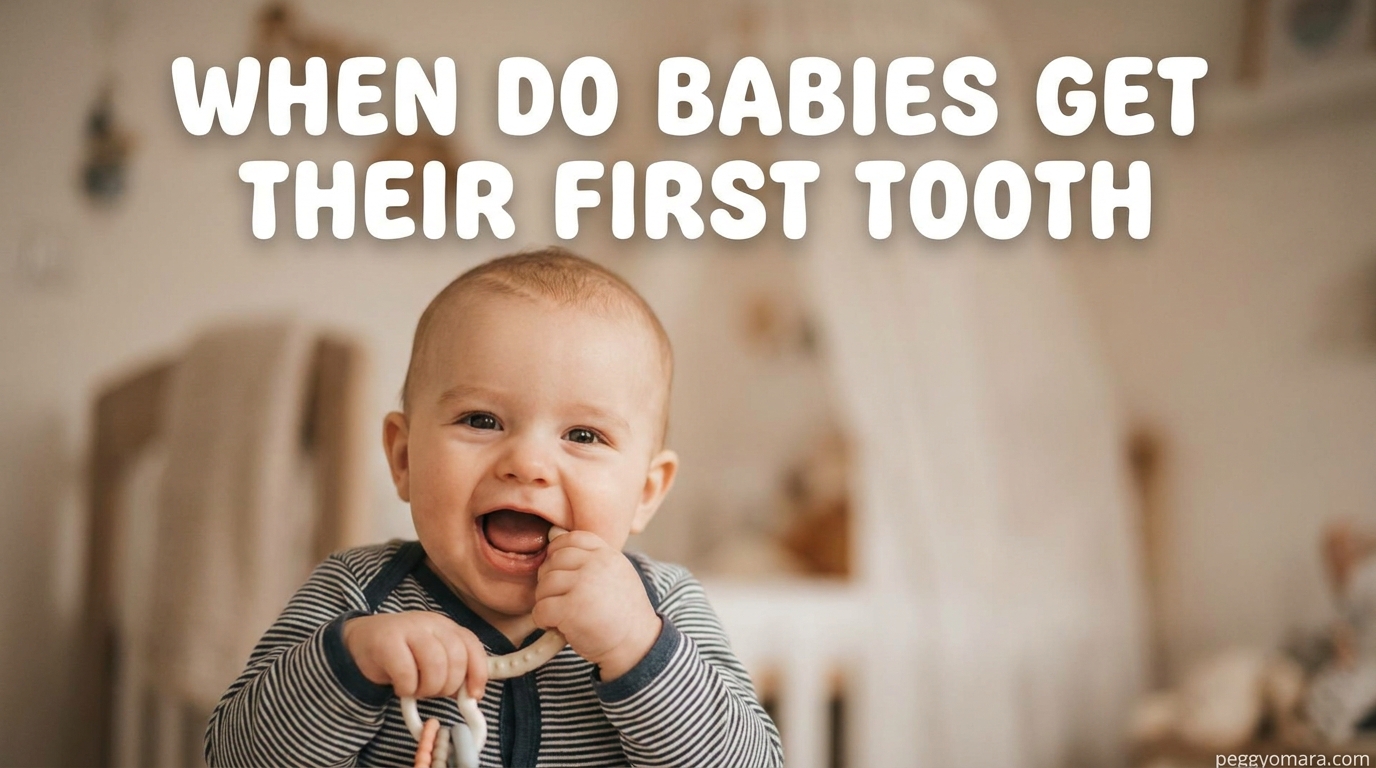
Most babies get their first tooth between 6 and 12 months of age, typically around 6 months. The first teeth to appear are usually the lower front teeth (lower central incisors). However, some babies may start teething as early as 3-4 months, while others may not get their first tooth until after their first birthday.
I remember watching my first baby like a hawk in 2026, checking his gums daily for signs of that elusive first tooth. When it finally popped through at 5 months, I felt like we’d both accomplished something monumental. The truth is, every baby follows their own timeline, and that wide range of “normal” can feel both reassuring and frustrating when you’re the one wiping drool at 3 AM.
This guide covers everything you need to know about your baby’s first tooth. You’ll find a detailed teething timeline, symptoms to watch for, natural relief strategies that align with gentle parenting, and practical tips for breastfeeding through the biting phase.
Table of Contents
When Do Babies Get Their First Tooth: The Complete Timeline (2026)
Understanding when teeth typically appear helps set realistic expectations. The timeline varies significantly from baby to baby, influenced by genetics, nutrition, and individual development patterns.
The Typical Age Range
Most babies cut their first tooth somewhere between 6 and 10 months. By age 3, most children have their full set of 20 primary teeth. This gives you plenty of time to adjust to the new reality of tooth brushing and dental visits.
Some babies surprise their parents with early teeth. I have heard from countless mothers whose little ones sprouted teeth at 3 or 4 months. These early teethers often catch parents off guard, especially if breastfeeding has just gotten comfortable.
On the other end of the spectrum, late teethers are equally normal. If your 10-month-old still has a gummy smile, you are not alone. Some babies do not get their first tooth until closer to their first birthday, and a few even teethe into their second year.
The 2-2-2 Rule and 7-4 Rule Explained
Two simple rules help parents remember dental milestones. The 2-2-2 rule recommends: first dental visit by first tooth or first birthday (whichever comes first), brush 2 times daily, and 2 minutes per session when older.
The 7-4 rule describes the pattern of tooth eruption. Baby teeth typically come in sets of 4, with about 7 months between major eruptions. This means teeth emerge in waves rather than one at a time.
| Age Range | Teeth That Erupt | Typical Count |
|---|---|---|
| 6-10 months | Lower central incisors (bottom front) | 2 teeth |
| 8-12 months | Upper central incisors (top front) | 4 teeth total |
| 9-13 months | Upper lateral incisors (either side of top front) | 6 teeth total |
| 10-16 months | Lower lateral incisors (either side of bottom front) | 8 teeth total |
| 13-19 months | First molars (back teeth) | 12 teeth total |
| 16-22 months | Canine teeth (sharp teeth beside molars) | 16 teeth total |
| 25-33 months | Second molars (very back) | 20 teeth total |
What Order Do Baby Teeth Come In?
The sequence matters almost as much as the timing. Most babies follow a predictable pattern, though variations happen and are usually harmless.
The Standard Eruption Sequence
Nearly always, the first teeth to break through are the two bottom front teeth, called the lower central incisors. These usually appear between 6 and 10 months. Parents often notice increased drooling and chewing before these teeth actually emerge.
Next come the four upper front teeth, typically in pairs. The top central incisors appear around 8-12 months, followed by the lateral incisors on either side. By 12 months, many babies have 4-8 teeth in this classic pattern.
The first molars usually arrive between 13-19 months, creating more dramatic symptoms due to their larger size. Canines fill the gaps between molars and incisors around 16-22 months. The second molars complete the set between 25-33 months.
When Teeth Come In Differently
Not every baby follows the textbook pattern. Some babies get molars as their first tooth, which surprises parents but is not medically concerning. Others have teeth that come in pairs, while some emerge one at a time.
If your baby’s teeth are coming in an unusual order, mention it at the next pediatric or dental visit. In most cases, it simply reflects your child’s unique development timeline. However, a dentist can rule out any structural concerns.
Teething Symptoms: What to Expect
Teething symptoms vary widely between babies. Some show almost no signs, while others experience significant discomfort for weeks before a tooth appears.
The Earliest Signs
Excessive drooling often signals that teeth are on their way. This can start 1-2 months before the first tooth actually breaks through. You might notice your baby soaking through bibs more frequently or developing a mild rash on their chin from constant moisture.
Chewing and gnawing behaviors increase as babies instinctively try to relieve gum pressure. They will gnaw on fingers, toys, crib rails, and anything within reach. Some babies rub their cheeks or pull at their ears as nerve pathways from gums radiate to these areas.
Irritability and sleep disruption rank among the most challenging symptoms for parents. Your baby may wake more frequently, have trouble settling, or seem generally fussy without an obvious cause.
Common Teething Symptoms
- Swollen, red gums where teeth are emerging
- Increased need to chew on hard objects
- Fussiness and irritability, especially in late afternoon and evening
- Decreased appetite or refusal to nurse or eat
- Mild temperature elevation (less than 100.4°F)
- Changes in sleep patterns
- Rash around the mouth from drooling
Symptoms That Are NOT Normal
Many parents wonder whether certain symptoms indicate teething or illness. High fever over 100.4°F is not caused by teething. Diarrhea, vomiting, severe diaper rash, or congestion are also not typical teething symptoms.
If your baby displays these symptoms, contact your pediatrician. Teething can coincide with illness because the immune system is slightly compromised during this developmental phase. It is always better to rule out infection or other medical concerns.
| Normal Teething Signs | Symptoms Requiring Medical Attention |
|---|---|
| Mild temperature under 100.4°F | Fever over 100.4°F |
| Increased drooling | Diarrhea or vomiting |
| Swollen gums | Severe diaper rash with open sores |
| Fussiness and sleep disruption | Lethargy or unusual sleepiness |
| Chewing and gnawing | Refusing all food and fluids |
| Mild appetite decrease | Signs of dehydration |
Natural Teething Relief That Actually Works
Finding safe, effective relief for teething discomfort matters deeply to parents who prefer natural approaches. These strategies have helped generations of babies through the teething phase without harsh medications.
Cold and Pressure Techniques
Cold provides excellent numbing relief for inflamed gums. A clean, wet washcloth chilled in the refrigerator (not frozen solid) offers safe chewing material. The fabric texture also helps break down gum tissue as the tooth pushes through.
Many parents make breast milk popsicles by freezing expressed milk in silicone molds. These provide comfort, nutrition, and hydration all at once. The cold soothes gums while the familiar taste offers emotional comfort.
Natural rubber teethers without BPA or phthalates offer safe chewing options. Look for designs that babies can hold easily. Some parents chill these briefly in the refrigerator for added relief.
Gentle Gum Massage
Using a clean finger, gently massage your baby’s gums in circular motions. The pressure counteracts the upward pressure of the emerging tooth. Some babies love this, while others resist. Follow your baby’s cues.
You can dip your finger in cool water or diluted chamomile tea before massaging. Chamomile has mild anti-inflammatory properties and has been used traditionally for teething discomfort for centuries.
What to Avoid
The FDA warns against benzocaine-based teething gels for children under 2 years. These products can cause a dangerous blood condition called methemoglobinemia. Homeopathic teething tablets and gels have also been linked to safety concerns.
Amber teething necklaces pose strangulation and choking risks without proven benefits. If you choose to use one, never leave your baby unattended with it and remove it for sleep.
Hard frozen objects can damage sensitive gums. Always check that frozen items are not rock-solid before offering them to your baby.
Breastfeeding and Teething: Navigating Bites and Discomfort
Teething and breastfeeding create a unique challenge that few parenting books address thoroughly. Many mothers worry that teething will end their nursing journey, but with the right approach, you can continue breastfeeding comfortably.
Why Babies Bite During Nursing
Babies do not bite out of malice. When a tooth is pushing through the gum, biting down creates counter-pressure that temporarily relieves discomfort. During nursing, the sucking motion changes as the gum texture shifts, sometimes causing accidental bites.
Some babies bite at the end of a feeding when they are no longer actively swallowing. Others bite at the beginning when the urge to chew is strongest. Understanding the pattern helps you respond appropriately.
How to Respond to Biting
When your baby bites, calmly unlatch by inserting your finger into the corner of their mouth to break the suction. Say “no biting” gently but firmly, then pause the feeding for a moment. This teaches that biting stops the flow of milk.
Avoid yelling or dramatic reactions, which can frighten your baby and create nursing aversion. Some babies bite to get a reaction, so staying calm prevents the behavior from becoming a game.
Offering a cold teether before nursing can reduce the urge to bite. When gums are less inflamed, babies are less likely to seek relief through biting.
Maintaining Supply During Teething
Some babies nurse less frequently during active teething due to mouth discomfort. This temporary decrease rarely impacts your milk supply if you continue offering the breast regularly.
Comfort nursing actually increases during teething for many babies. The sucking motion releases endorphins that provide natural pain relief, and the closeness offers emotional security during a challenging developmental phase.
Night nursing often increases during teething, which helps maintain your supply while providing comfort during the hardest hours for sleep.
Helping Your Baby Sleep Through Teething
Teething and sleep disruption go hand in hand for many families. Understanding when discomfort peaks and how to respond can help everyone get more rest.
When Discomfort Peaks
Teething pain often intensifies in the late afternoon and evening. This happens because blood rushes to the head when babies lie down, increasing pressure on already inflamed gums. Night wakings become more frequent during active teething phases.
The 24-48 hours before a tooth breaks through the gum surface typically cause the most significant symptoms. Once the tooth emerges, discomfort usually decreases significantly.
Practical Sleep Strategies
Offer comfort nursing or a bottle before bedtime if your baby is receptive. The sucking motion releases natural calming hormones. Some babies want to nurse more during teething, while others resist. Follow your baby’s lead.
A cool, damp washcloth can be offered if your baby wakes uncomfortable. For co-sleeping families, simple proximity often provides enough comfort to help babies settle back to sleep.
Consider whether teething is truly the cause of sleep disruption. Around the same age as teething peaks, babies experience developmental leaps, separation anxiety, and sleep pattern changes. Addressing the wrong cause leads to frustration.
First Tooth Care: Getting Started Right
That first tooth marks the beginning of a lifetime of dental care. Starting good habits early prevents problems and establishes routines that will serve your child for decades.
When to Schedule the First Dental Visit
The American Academy of Pediatric Dentistry recommends a first dental visit by your child’s first birthday or within 6 months of the first tooth erupting, whichever comes first. This early visit allows the dentist to check development and discuss preventive care.
Early dental visits also help children become comfortable with the dental environment. Kids who start young typically experience less anxiety about dental care throughout childhood.
Brushing Your Baby’s First Tooth
Start brushing as soon as the first tooth appears. Use a soft-bristled infant toothbrush and a tiny smear of fluoride toothpaste about the size of a grain of rice. This small amount provides protection without risking fluorosis from swallowing.
Brush twice daily, especially before bedtime. Nighttime is when teeth are most vulnerable to decay because saliva production decreases during sleep. Even one tooth needs this protection.
Never put your baby to bed with a bottle of milk or juice. The sugars pool around teeth and cause rapid decay known as baby bottle tooth decay. If your baby needs comfort at night, offer water or breast milk directly from the breast.
Frequently Asked Questions About Baby’s First Tooth
What is the average age for a baby to get his first tooth?
The average age is around 6 months, though the normal range spans from 3 to 12 months. Most babies get their first tooth between 6 and 10 months of age.
What is the 2-2-2 rule for teeth?
The 2-2-2 rule recommends: first dental visit by first tooth or first birthday (whichever comes first), brush 2 times daily, and spend 2 minutes brushing when children are old enough.
What are the earliest signs of teething?
The earliest signs include excessive drooling (often starting 1-2 months before teeth appear), increased chewing on objects, swollen or red gums, and mild irritability. Some babies also pull at their ears or rub their cheeks.
Is it normal for a 10 month old to have no teeth?
Yes, this is completely normal. While many babies have several teeth by 10 months, others remain toothless until closer to their first birthday. If no teeth have appeared by 18 months, consult a pediatric dentist.
Does teething pain start before a tooth appears?
Yes, teething discomfort often begins weeks before a tooth actually breaks through the gum surface. The tooth must push through bone and gum tissue, a process that takes time and causes gradual pressure and inflammation.
How long does teething pain last for babies’ first teeth?
Each tooth typically causes significant discomfort for a few days to a week, with the worst pain occurring 24-48 hours before the tooth breaks through. Once the tooth emerges, pain usually subsides quickly.
What is the 7-4 rule for tooth eruption?
The 7-4 rule describes the pattern of baby teeth coming in sets of 4, approximately 7 months apart. This pattern helps parents anticipate when new teeth might emerge.
Are babies’ first teeth the most painful?
Not necessarily. While the first teeth surprise parents, molars often cause more discomfort due to their larger size. Each baby experiences teething differently, and some teeth pass with barely any symptoms.
Trusting Your Baby’s Unique Timeline
When do babies get their first tooth? The answer is as individual as your child. Whether those first pearly whites appear at 4 months or 14 months, your baby is following their own developmental path perfectly.
I have learned through raising my own children and connecting with thousands of parents over the years that milestone anxiety serves no one. Your baby will get teeth. They will sleep again. The drooling will stop.
Focus on providing comfort through the challenging moments, respond to symptoms thoughtfully, and trust your instincts about when to seek professional guidance. The teething phase, like all phases, passes. What remains is your responsive, attuned relationship with your child.
Have you found natural teething remedies that worked for your family? I would love to hear about your experience in navigating this milestone with gentleness and patience.