
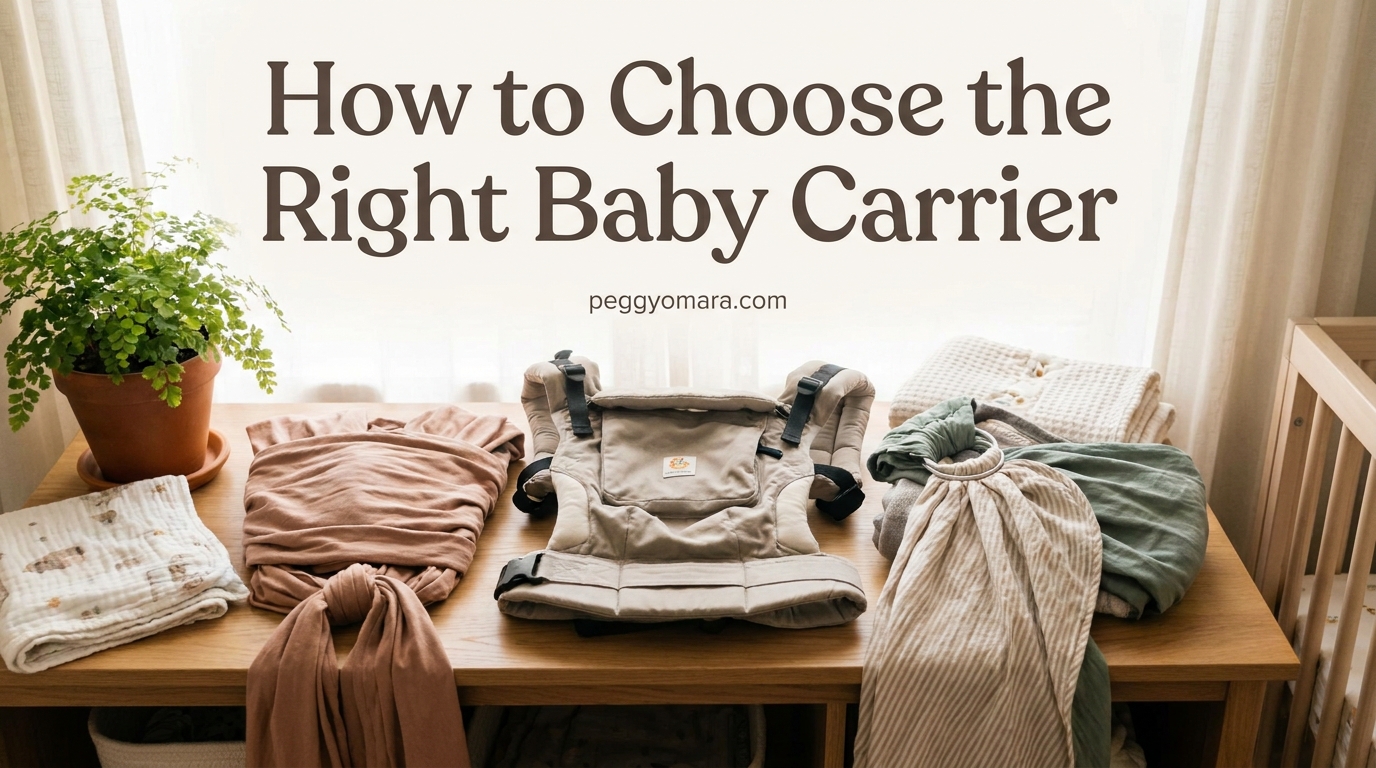
I stood in the baby store, surrounded by what felt like hundreds of fabric contraptions and confusing buckle systems. My pregnant belly was getting in the way, and I had no idea which baby carrier would actually work for our family. If you’re feeling overwhelmed by the options, you’re not alone. Learning how to choose the right baby carrier is one of the most common struggles new parents face.
Babywearing has been practiced for centuries across every culture, and for good reason. It keeps your baby close while freeing your hands for daily tasks. It can reduce crying by up to 43% in the first three months. It promotes bonding and helps you respond quickly to your baby’s needs. But with so many types available today, finding the perfect carrier can feel impossible.
After researching extensively and talking with babywearing consultants, I’ve created this comprehensive guide. Whether you’re preparing for your first baby or looking to upgrade your current setup, this article will walk you through everything you need to know. We’ll cover every major carrier type, safety guidelines that matter, and a decision framework to help you find your perfect match. You might also find our detailed guide to the best ring slings for newborns helpful if you’re specifically interested in that style.
Table of Contents
Understanding the Different Types of Baby Carriers (2026)
Baby carriers fall into six main categories. Each type has distinct advantages and works better for different situations. Understanding these differences is the foundation of making the right choice.
Think about your daily routine. Do you need something quick for running errands? Are you planning long walks? Do you want one carrier that grows with your baby, or are you okay with switching as they develop? These questions will help you narrow down which types to consider.
Stretchy Wraps: The Newborn Favorite
Stretchy wraps are long pieces of soft, jersey-like fabric that wrap around your body and baby. Brands like Solly Baby, Moby, and Boba have made these popular with new parents. They’re essentially one-size-fits-all and mold perfectly to your body and baby.
These wraps excel during the newborn stage. The snug fit mimics the womb environment, which soothes fussy babies. The fabric distributes weight evenly across both shoulders and your back. Most stretchy wraps support babies from 7-8 pounds up to about 25-30 pounds.
The main drawback is the learning curve. It takes practice to get the wrapping technique right. You’ll need to pre-tie before putting baby in, which isn’t ideal for quick errands. Once tied, the wrap stays tied, so you’ll need to rewrap for each use. The stretchy nature also means they become less supportive as babies get heavier.
Best for: Newborn parents who want an affordable, snug option for home use and short outings. Parents who don’t mind taking a few extra minutes to get baby settled.
Woven Wraps: The Customizable Choice
Woven wraps look similar to stretchy wraps but are made from woven fabric that doesn’t stretch. They come in various sizes, from short wraps for simple carries to long wraps for elaborate wrapping styles. The fabric options are endless: cotton, linen, hemp, silk blends, and more.
The beauty of woven wraps is their versatility. You can use them from newborn through toddlerhood with different carrying positions. They offer complete adjustability since you’re creating the structure with each wrap. Many parents find them the most comfortable option for extended wearing, especially with older babies.
However, the learning curve is steeper than with stretchy wraps. You’ll need to learn different wrapping techniques for front, hip, and back carries. Good quality woven wraps can also be expensive, with prices ranging from $50 to several hundred dollars for handwoven artisan pieces. They also take longer to put on than structured carriers.
Best for: Parents committed to babywearing long-term who want one solution from birth through toddlerhood. Those who enjoy learning new skills and appreciate the aesthetics of woven fabrics.
Ring Slings: Quick and Convenient
Ring slings consist of a long piece of fabric threaded through two rings, creating an adjustable pouch. You wear the ring high on your shoulder, and the tail hangs down for tightening adjustments. This design has been used across cultures for generations.
Ring slings shine when you need to pop baby in and out frequently. They’re perfect for “quick ups” around the house, running short errands, or nursing on the go. The compact design fits easily in a diaper bag. Once threaded properly, they go on in seconds.
The main challenge is the one-shoulder weight distribution. After extended periods, you may feel strain on the wearing shoulder. Getting the tightening right takes practice: too loose and baby sags, too tight and it’s hard to adjust. You’ll want to check out our detailed guide to the best ring slings for newborns if this style appeals to you.
Best for: Parents who need quick, convenient carrying for short periods. Those who want something compact for travel or diaper bag storage. Breastfeeding parents who need easy nursing access.
Soft-Structured Carriers (SSCs): The Popular Pick
Soft-structured carriers, often called buckle carriers, are the most popular type in 2026. They feature a structured panel for baby, padded shoulder straps, and a waistband that fastens with buckles. Major brands include Ergobaby, Baby Tula, Lillebaby, and Kinderpack.
SSCs are beloved for their ease of use. Once adjusted to your body, you can put baby in and out quickly without retying. The padded straps and waistband distribute weight comfortably for hours. Many offer multiple carrying positions: front inward, front outward (for older babies), hip, and back.
Key features to look for include lumbar support, which prevents lower back strain during long wearing sessions. Crossable shoulder straps distribute weight more evenly across your back than backpack-style straps. Adjustable seat width ensures proper knee-to-knee support as baby grows.
On the downside, SSCs are bulkier than wraps or slings. Quality carriers cost $100-200, making them a significant investment. Some parents find certain brands don’t fit their body type well, which is why trying before buying is valuable.
Best for: Most parents, especially beginners who want ease of use. Those planning regular babywearing for walks, outings, and daily tasks. Parents who need a carrier that works from infant through toddlerhood.
Meh Dai (Mei Tai): The Hybrid Solution
The Meh Dai (also spelled Mei Tai) originated in Asian babywearing traditions. It combines a rectangular body panel with four long straps that tie around your waist and shoulders. There are no buckles, just fabric ties.
This design offers a middle ground between wraps and SSCs. You get the custom fit of wrapping with more structure than a simple wrap. The tied waist and shoulder straps distribute weight well. They’re typically more compact than SSCs and pack down smaller.
Parents appreciate the adjustability across different body types and sharing between caregivers. The lack of buckles means nothing to break or adjust in the wrong position. Many Meh Dais work from newborn (with specific tying methods) through toddlerhood.
The tying requirement is the main consideration. While simpler than full wrapping, you still need to learn proper tying techniques. The long straps can drag on the ground while tying if you’re not careful. They’re not as quick as buckled carriers for frequent in-and-out situations.
Best for: Parents wanting a balance between structure and custom fit. Those who prefer tying to buckles but want more guidance than free-form wrapping. Families sharing carriers between very different body sizes.
Onbuhimo: The Back-Carry Specialist
The Onbuhimo is a Japanese-style carrier designed specifically for back carrying. It features a panel for baby with two long straps that go over your shoulders and attach to rings or loops at the bottom of the panel. There’s no waistband at all.
This waistband-free design makes Onbuhimos unique. They’re excellent for pregnant parents who find waist pressure uncomfortable. They’re also preferred by some post-C-section parents who want to avoid pressure on healing incisions. The high back position gives toddlers a great view.
Because there’s no waist support, the weight sits entirely on your shoulders. This works fine for quick back carries but can become uncomfortable for extended periods with heavier children. Most Onbuhimos are designed for babies who can sit independently, typically around 6 months and up.
Best for: Pregnant parents continuing to babywear. Post-C-section recovery when waist pressure is uncomfortable. Parents of independent sitters who primarily need back carrying for quick ups.
Structured Hiking Carriers: For the Great Outdoors
Structured hiking carriers are essentially framed backpacks designed for carrying children. They feature aluminum frames, substantial storage compartments, sun shades, and often include extras like stirrups for the child’s feet.
These carriers excel for serious outdoor activities. The frame transfers most weight to your hips, making it possible to carry toddlers and preschoolers for miles. The storage space fits diapers, snacks, water, and hiking essentials. Built-in sun and rain protection keeps baby comfortable in changing weather.
However, they’re not designed for daily use. Most weigh 5-8 pounds empty, making them overkill for grocery runs. The bulk makes them impractical for travel. They’re also the most expensive option, with quality hiking carriers costing $200-400.
Best for: Outdoor enthusiasts planning regular hikes with older babies and toddlers. Families who need extended carrying capacity for all-day adventures. Those with storage space and budget for specialized equipment.
Carrier Type Comparison
Choosing between carrier types becomes clearer when you compare them side by side. Here’s a quick reference guide to help you narrow down your options.
Stretchy wraps work best for newborns up to about 6 months, with weight limits around 25-30 pounds. They’re affordable at $40-60 but have a moderate learning curve. Best for home use and short walks.
Woven wraps serve from newborn through toddlerhood, often supporting 35+ pounds. Prices range widely from $50-300+. The learning curve is steeper, but they’re the most versatile long-term option.
Ring slings fit from newborn to toddler (8-35 pounds) and cost $40-100. The learning curve is moderate, with quick setup once you master it. Ideal for short carries and frequent in-and-out situations.
Soft-structured carriers typically support 7-45 pounds depending on the model. They cost $100-200 and have the easiest learning curve. Perfect for beginners and regular daily use.
Meh Dais work from birth through toddlerhood with similar weight ranges to SSCs. They cost $60-150 and have a moderate learning curve. Great middle ground between wrapping and structured carriers.
Onbuhimos are designed for babies who sit independently (6+ months) through preschool age. They cost $80-150 with a moderate learning curve. Specialized for back carrying without waist pressure.
2026 Safety First: Essential Guidelines for Babywearing
Safety should be your top priority when choosing and using any baby carrier. The good news is that modern carriers, when used correctly, are very safe. Understanding a few key principles will give you confidence in your babywearing practice.
Always buy carriers from reputable manufacturers who follow safety standards. Look for ASTM (American Society for Testing and Materials) and CPSIA (Consumer Product Safety Improvement Act) compliance. Some carriers also carry International Hip Dysplasia Institute (IHDI) certification for healthy hip positioning.
The T.I.C.K.S. Rules
T.I.C.K.S. is the standard safety acronym every babywearer should memorize. These five rules ensure safe positioning every time you carry.
T – Tight. The carrier should be tight enough to hold baby close to your body. Loose fabric allows baby to slump, which can compromise their airway.
I – In view at all times. You should be able to see your baby’s face simply by looking down. No fabric should cover their nose or mouth.
C – Close enough to kiss. Position baby high enough that you can easily kiss the top of their head without straining. This ensures proper height for airway protection.
K – Keep chin off chest. Baby’s chin should never press against their chest. You should be able to fit two fingers between their chin and chest to ensure an open airway.
S – Supported back. Baby’s back should be supported in a natural position, not slumped or overextended. For newborns, this means a more curled position. For older babies, upright support.
The M-Position for Healthy Hips
Proper hip positioning is crucial for preventing hip dysplasia and supporting healthy development. The M-position, also called the spread squat position, is the gold standard for hip health.
In the M-position, baby’s bottom sits lower than their knees, forming an “M” shape with their legs and bottom. The knees should be spread to the sides, supported from knee-to-knee across the carrier seat. This position supports the hip socket naturally and allows proper development.
Avoid carriers that keep baby’s legs dangling straight down. This puts pressure on the hip joints and doesn’t provide adequate support. Look for carriers with adjustable seat widths that can grow with your baby while maintaining proper positioning.
Some babies are born with hip dysplasia or are at higher risk due to breech position or family history. If this applies to your baby, consult your pediatrician or orthopedist about babywearing. In most cases, proper M-position carrying is actually beneficial for hip development, but professional guidance ensures safety.
Why Babies Shouldn’t Wear Footies in Carriers
This might seem like a strange warning, but there’s a legitimate safety concern with footed pajamas in carriers. When baby’s legs are supported in the M-position, footed clothing pulls taut across the feet and ankles.
This tension can cause several problems. It restricts proper leg positioning, potentially pulling the feet down and compromising the M-shape. The tight fabric can also put pressure on baby’s toes and affect circulation. Additionally, if baby’s legs get warm (which they often do in carriers), footie pajamas trap heat and cause overheating.
The simple solution is to choose footless clothing for babywearing. Pants, leggings, or bodysuits without feet work perfectly. If you only have footies available, you can size up significantly so the fabric doesn’t pull tight when legs are spread.
Additional Safety Considerations
Never cook over a hot stove while wearing baby. Burns from splattering oil or steam are a real risk. Front carries keep baby facing away from hot surfaces, but it’s still best to step away from the stove when cooking.
Be mindful of your center of gravity. Carrying a baby changes your balance, especially on stairs or uneven terrain. Use handrails and move more carefully than usual.
Check your carrier regularly for wear and tear. Look for frayed straps, loose stitching, or damaged buckles. Quality carriers are durable, but nothing lasts forever. Retire carriers showing significant wear.
How to Choose: Your Personal Decision Framework
Now that you understand the options and safety requirements, let’s create your personal decision framework. How to choose the right baby carrier depends on five key factors specific to your situation.
Factor 1: Your Baby’s Age and Stage
Newborns (0-3 months) need head and neck support. Their legs stay tucked in a frog position rather than spread. Stretchy wraps, woven wraps with newborn techniques, ring slings, and many SSCs with infant inserts work well. Some Meh Dais can work with specific newborn tying.
Infants (3-6 months) gain head control and start spreading their legs more. Most carrier types work at this stage, though Onbuhimos are still not recommended until sitting independently. This is a versatile age for trying different styles.
Sitters (6+ months) open up back carrying options and can use most carrier types including Onbuhimos. They need more interactive carrying positions and often prefer being able to see outward.
Toddlers (12+ months) are heavier and more active. Support becomes critical, especially for the caregiver’s back. Structured carriers with good waist support, woven wraps, or hiking carriers work best for extended carrying.
Factor 2: Your Body Type and Comfort
Body type significantly impacts carrier comfort. What works for a 5’2″ petite parent may not work for a 6’2″ broad-shouldered parent.
Plus-size parents should look for carriers with generous strap and waistband lengths. Some brands offer specific plus-size options or extensions. Wraps and Meh Dais naturally adjust to any size. Check strap length specifications before purchasing.
Petite parents often struggle with straps that are too long or waistbands that don’t tighten enough. Look for carriers with wide adjustment ranges. Crossable straps often work better than backpack-style straps for narrow shoulders.
Those with back pain need excellent lumbar support. SSCs with substantial waist padding and lumbar support panels work well. High-quality woven wraps also distribute weight beautifully when wrapped properly.
Those with limited mobility or strength may prefer buckle carriers over tying styles. The quick on-and-off of SSCs requires less manual dexterity than wrapping techniques.
Factor 3: Your Lifestyle and Activities
Consider where you’ll use the carrier most. Around the house for soothing a fussy baby? Any comfortable option works. Quick errands and frequent in-and-outs? Ring slings or easy SSCs shine here.
Long walks and outdoor adventures demand structured support. SSCs with good waist support or hiking carriers for serious outings work best. Daily commute on public transit? Compact options that fit in a bag might be essential.
Working parents babywearing while on calls need comfortable, long-wearing options. Parents of multiples need options for tandem wearing or quick switches between children. Frequent travelers need lightweight, packable carriers.
Factor 4: Climate and Fabric Preferences
Babywearing generates heat between you and baby. In warm climates or summer months, breathable fabrics are essential. Look for carriers with mesh panels, lightweight cotton or linen weaves, or open-weave fabrics.
In cold climates, you’ll want carriers that work with babywearing coats or allow layering. Avoiding bulk under the carrier keeps the fit secure. Some parents use carrier covers or simply wear larger coats that zip around both parent and baby.
Consider fabric care too. Machine-washable options are practical for spit-up and diaper blowouts. Delicate fabrics like silk blends or handwoven wraps need more careful handling.
Factor 5: Budget Considerations
Baby carriers range from $40 basic models to $400+ premium options. You don’t need to spend a fortune, but quality matters for safety and comfort.
Stretchy wraps and basic ring slings offer affordable entry points at $40-60. Quality SSCs typically cost $100-200 but last for years. Woven wraps have the widest price range depending on materials and craftsmanship.
Consider cost-per-use. A $150 carrier worn daily for two years costs about 20 cents per day. A $50 carrier that sits unused in the closet wastes the entire $50. Investing in a carrier you’ll actually use is more economical than buying multiple cheaper options that don’t work.
Special Situations
After C-section delivery, many parents want to avoid waist pressure initially. Onbuhimos, high-waisted Meh Dais, or ring slings worn high work well. Wait until cleared by your doctor, typically around 6 weeks, and start with short sessions.
During pregnancy, continuing to wear your older child is often possible. Onbuhimos were designed for this situation. You can also use waistless options or carry on your back with a high-waisted carrier that sits above the belly.
For multiples, tandem wearing (carrying two babies) is possible with two ring slings, a wrap for one and sling for another, or specialized twin carriers. Babywearing consultants are especially helpful for learning tandem techniques.
If your baby has hip dysplasia or is at risk, consult your pediatrician. Most babies can be worn safely in the M-position, and babywearing can actually support hip development. Some carriers are specifically IHDI certified for hip health.
Pro Tips for Babywearing Success
Learning to babywear takes practice. Even with the “easiest” carriers, there’s a learning curve. These tips from experienced parents and certified consultants will help you succeed faster.
Watch video tutorials before trying a new carrier. YouTube has excellent demonstrations for every carrier type. Seeing the technique in motion is much clearer than reading instructions.
Practice over a soft surface at first. Use your bed or couch while learning so you and baby are both comfortable if you need to adjust. Many parents practice with a stuffed animal first to get the mechanics down.
Consider joining a babywearing group. Many cities have babywearing international chapters or local Facebook groups where you can meet other parents and try different carriers. Some groups have lending libraries where you can borrow carriers to test.
Consultants are worth the investment if you’re struggling. Certified babywearing consultants can assess your technique, suggest carriers for your specific body and needs, and troubleshoot issues. A single consultation often costs $30-50 but saves you from buying the wrong carriers.
Don’t expect perfection immediately. It takes time to find the right carrier and master the technique. Many parents try 2-3 carriers before finding their perfect match. That’s completely normal.
Break in new carriers before long sessions. Woven wraps especially need breaking in to soften. Stiffer carriers can be uncomfortable until the fabric softens with use and washing.
Trust your instincts about fit and comfort. If something feels wrong, it probably is. Baby should feel secure, not like they’re sliding. You shouldn’t have pain during or after wearing. Adjust and try again or seek help.
Frequently Asked Questions
How do I pick the right baby carrier?
Start by considering your baby’s age, your body type, and your lifestyle. Newborns do well with stretchy wraps or ring slings, while older babies benefit from soft-structured carriers. Think about where you’ll use it most: quick errands favor ring slings, while long walks need structured support. If possible, try carriers before buying or borrow from friends to test different styles.
Why shouldn’t babies wear footies in a carrier?
Footed pajamas pull tight when baby’s legs are spread in the M-position, restricting proper leg positioning and potentially affecting circulation. The tension can pull feet downward and compromise healthy hip positioning. Choose footless clothing like pants or bodysuits for babywearing instead.
Can you use a baby carrier with hip dysplasia?
Most babies with hip dysplasia can be worn safely when the carrier supports proper M-position. The M-position, where baby’s bottom sits lower than their knees with legs spread, actually supports healthy hip development. Always consult your pediatrician or orthopedist first, and look for carriers certified by the International Hip Dysplasia Institute.
Which is better, a sling or a baby carrier?
Neither is universally better; they serve different purposes. Ring slings excel for quick ups, nursing, and portability. Soft-structured carriers work better for long walks and extended wearing. Many parents find both useful for different situations. Consider starting with one type based on your primary need.
When can I start using a baby carrier?
You can start using most carriers from birth, provided they support proper newborn positioning. Stretchy wraps, woven wraps, and ring slings work for newborns. Soft-structured carriers often need infant inserts for babies under 7-12 pounds. Always ensure the carrier supports head and neck positioning for babies without full head control.
How long can I wear my baby in a carrier?
You can wear your baby as long as both of you remain comfortable. Follow the carrier’s weight limits and take breaks as needed. Newborns may need frequent position changes. Listen to your body: any pain, numbness, or significant discomfort means it’s time for a break.
What age can baby face forward in a carrier?
Most experts recommend waiting until baby has excellent head and neck control, typically around 5-6 months, before forward-facing. The forward-facing position should be limited to short periods since it can overstimulate baby and doesn’t support natural sleep. Always check your specific carrier’s guidelines, as age recommendations vary by design.
Finding Your Perfect Carrier
Learning how to choose the right baby carrier doesn’t have to be overwhelming. By understanding the different types, prioritizing safety with the T.I.C.K.S. rules and M-position, and considering your specific situation, you’ll find a carrier that works beautifully for your family.
Remember that there’s no single “best” carrier for everyone. The perfect carrier is the one you’ll actually use. It should be comfortable for both you and baby, fit your body properly, suit your daily activities, and meet your safety standards.
Don’t be afraid to try multiple options. Many parents go through two or three carriers before finding their favorite. That’s normal and part of the learning process. Each carrier teaches you more about what works for your body and your baby.
Babywearing is a skill that improves with practice. The first few attempts might feel awkward. Give yourself grace to learn. Soon enough, you’ll be popping your baby in and out without a second thought, enjoying hands-free parenting while keeping your little one close.
Start your babywearing journey with confidence. Your baby will love being close to you, and you’ll love having your hands free. That’s a win for the whole family.