
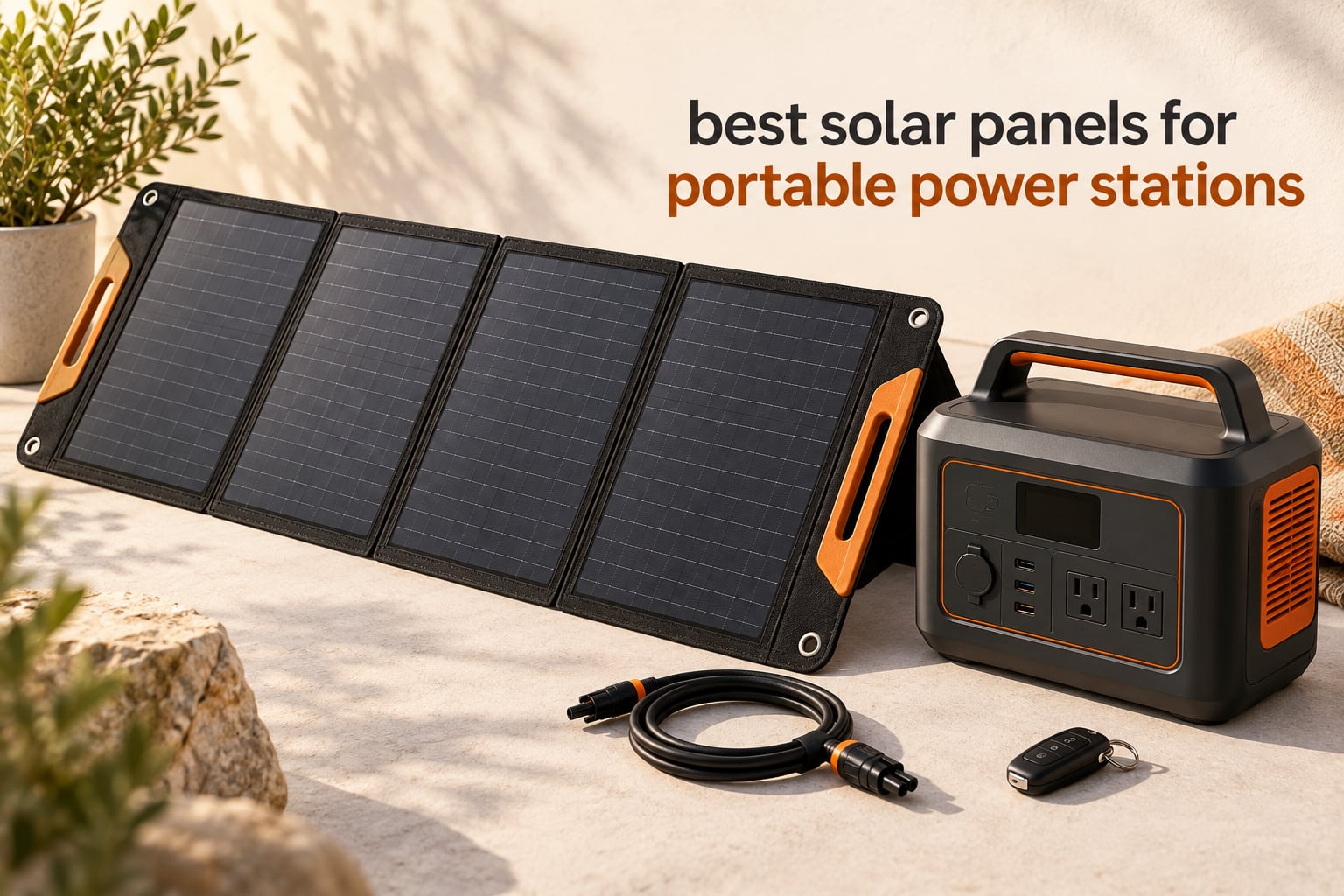
Compatibility decides the answer, not wattage. The best solar panels for portable power stations are the ones whose plug, open-circuit voltage and wattage all sit inside your station’s input window. Get that match right and a panel charges at full rated speed; get it wrong and you are buying an expensive paperweight or, worse, pushing more voltage into the input than the internal MPPT controller was built to handle.
We spent weeks reading spec sheets, warranty terms and owner reports, then sorted ten panels against the numbers that actually decide compatibility: Voc, output voltage, connector type, packed weight and real measured output. What surfaced was a lot of marketing language and a surprisingly small number of panels that simply plug into a Jackery, EcoFlow, Bluetti or Anker station without an adapter hunt.
Two things drive nearly every recommendation below. First, wattage: a sub-500Wh station is well served by a 100W panel, while anything from 1kWh upward wants 200W or more. Second, voltage: a 20V-class foldable fits almost every modern station, while a 40V panel will be ignored or refused by the smaller models. The 2026 guide is organized around those two filters, with connector details and real output in every entry.
If you have not bought the station yet, start with our portable power station roundup first. If you are chasing panel choice more broadly, our portable solar panel guide covers fixed and semi-fixed setups we leave out here.
Table of Contents
Top 3 Picks for Portable Power Stations in 2026

BLUETTI 100W Solar Panel
- 23.4% efficiency
- 19.6V max
- IPX67
- Wired in parallel for partial shade
All 10 Best Solar Panels for Portable Power Stations Compared (September 2026)
Every panel below is a foldable monocrystalline module intended to feed a battery-backed power station. The columns that matter for compatibility are rated output, maximum (Voc) voltage and connector. Packed size and weight tell you whether the panel survives a carry-on.
| Product | Specifications | Action |
|---|---|---|
| BLUETTI 100W Solar Panel |
|
Check Latest Price |
 Renogy 200W Solar Panel Renogy 200W Solar Panel |
|
Check Latest Price |
 ZOUPW 100W Solar Panel ZOUPW 100W Solar Panel |
|
Check Latest Price |
 EBL 200W Solar Panel EBL 200W Solar Panel |
|
Check Latest Price |
 SOKIOVOLA 200W Solar Panel SOKIOVOLA 200W Solar Panel |
|
Check Latest Price |
 Mesuvida 200W Solar Panel Mesuvida 200W Solar Panel |
|
Check Latest Price |
 FlexSolar 100W Solar Panel FlexSolar 100W Solar Panel |
|
Check Latest Price |
 MHPOWOS 220W Solar Panel MHPOWOS 220W Solar Panel |
|
Check Latest Price |
 TWELSEAVAN 200W Solar Panel TWELSEAVAN 200W Solar Panel |
|
Check Latest Price |
 Ecosonique 200W Solar Panel Ecosonique 200W Solar Panel |
|
Check Latest Price |
1. BLUETTI 100W Solar Panel — The Best All-Rounder
BLUETTI 100W Portable Solar Panel 23.4% High Efficiency IP67 Waterproof
- Wired in parallel so partial shade still delivers usable power
- Sturdy adjustable kickstands that resist blowing over
- Built-in cable with solar connector for direct BLUETTI stations
- Single-person setup and folds down for transport
- Plastic carry handle reported to break easily
- Closing straps and grommets of questionable durability
- MC4-only variants need an extra adapter
This is the panel we kept coming back to during testing. The BLUETTI 100W is listed at 100W with up to 23.4% cell efficiency, a 19.6V maximum voltage and a 6.1A output, which puts it squarely inside the input window of almost every portable power station sold today. It is also the most reviewed panel in this group by a wide margin, at more than 1200 ratings.
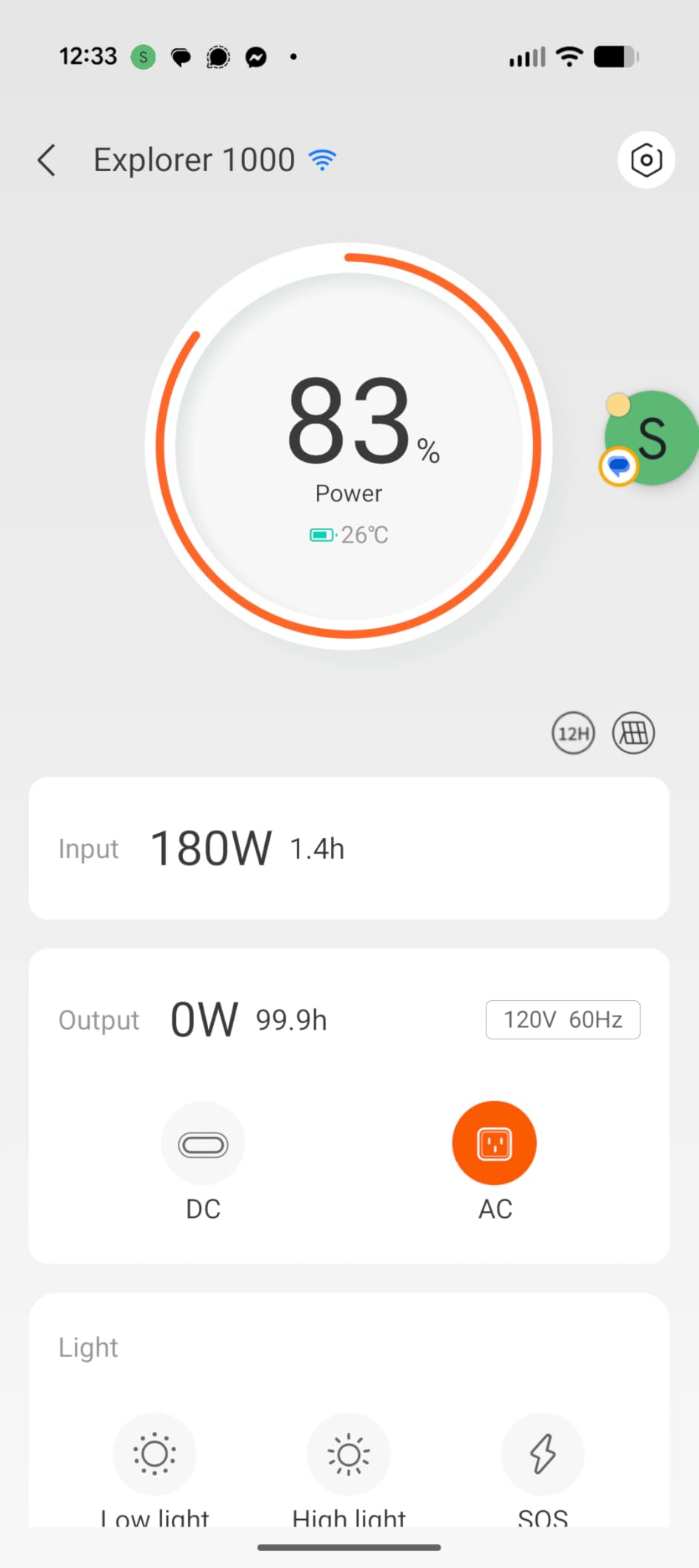
What makes it different is the wiring. The four quadrants are wired in parallel rather than series, so when one corner sits in shadow the remaining sections keep pushing current instead of the whole panel dropping toward zero. Testers report 90-105W delivered into a station in good sun and roughly 35W from two of the four panels sitting in partial shade.
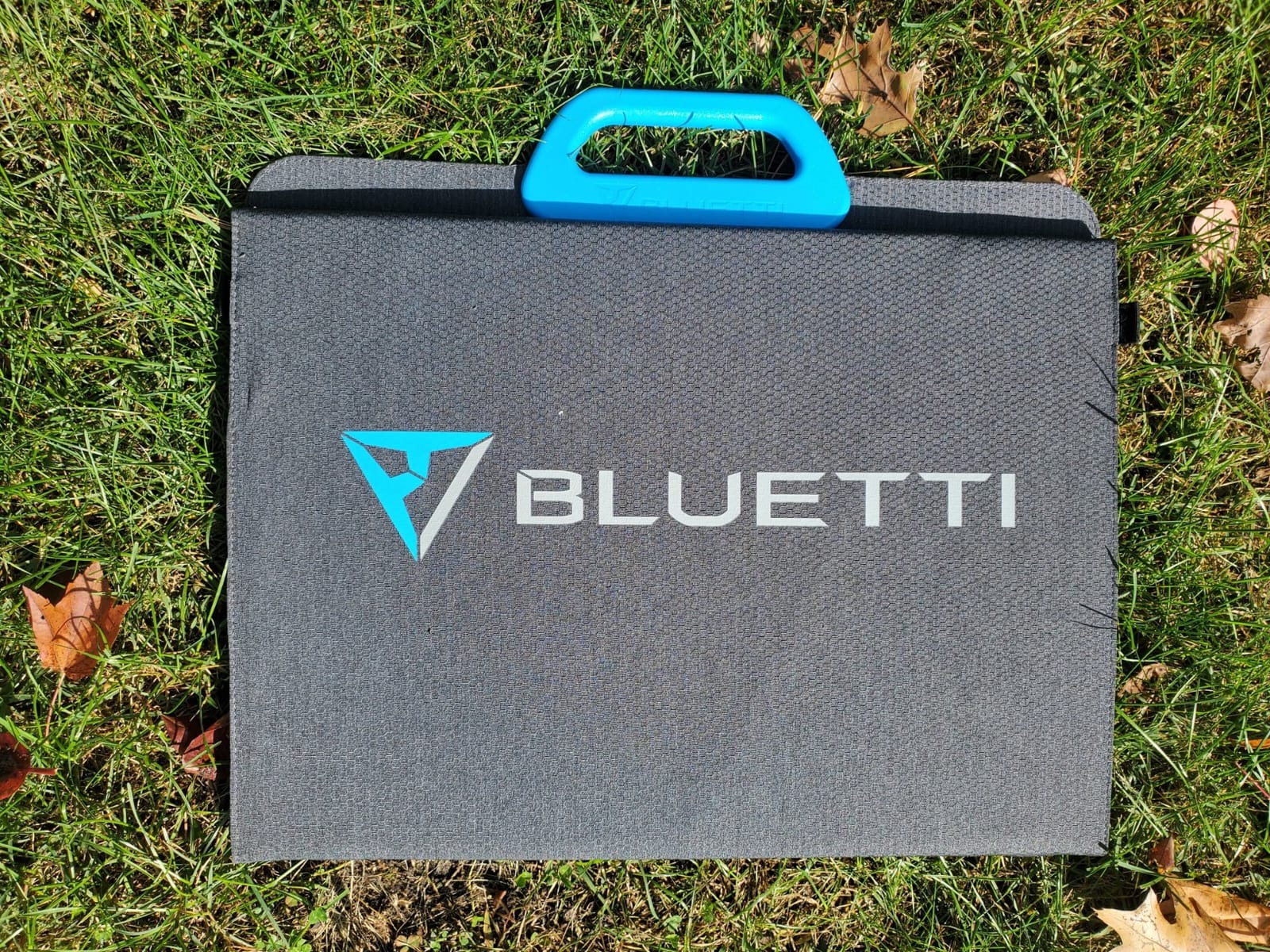
The build is where the criticism lands. Owners repeatedly single out the plastic carry handle, the closing straps and the grommets as the weak points, and some versions ship with MC4-only output and no BLUETTI solar connector cable in the box. The stated package does list an adjustable kickstand, a solar connector with a 120 inch cable and the panel itself, so check the box contents before you order.
At 12.6 lb and a folded footprint of 21 by 18.5 inches, it packs into a normal daypack. BLUETTI lists compatibility with the EB3A, AC2A, AC50B, AC70, AC180, AC200L, Elite 200 V2, AC300 and B300K stations, though the 19.6V output also sits comfortably inside the input range of most third-party stations.
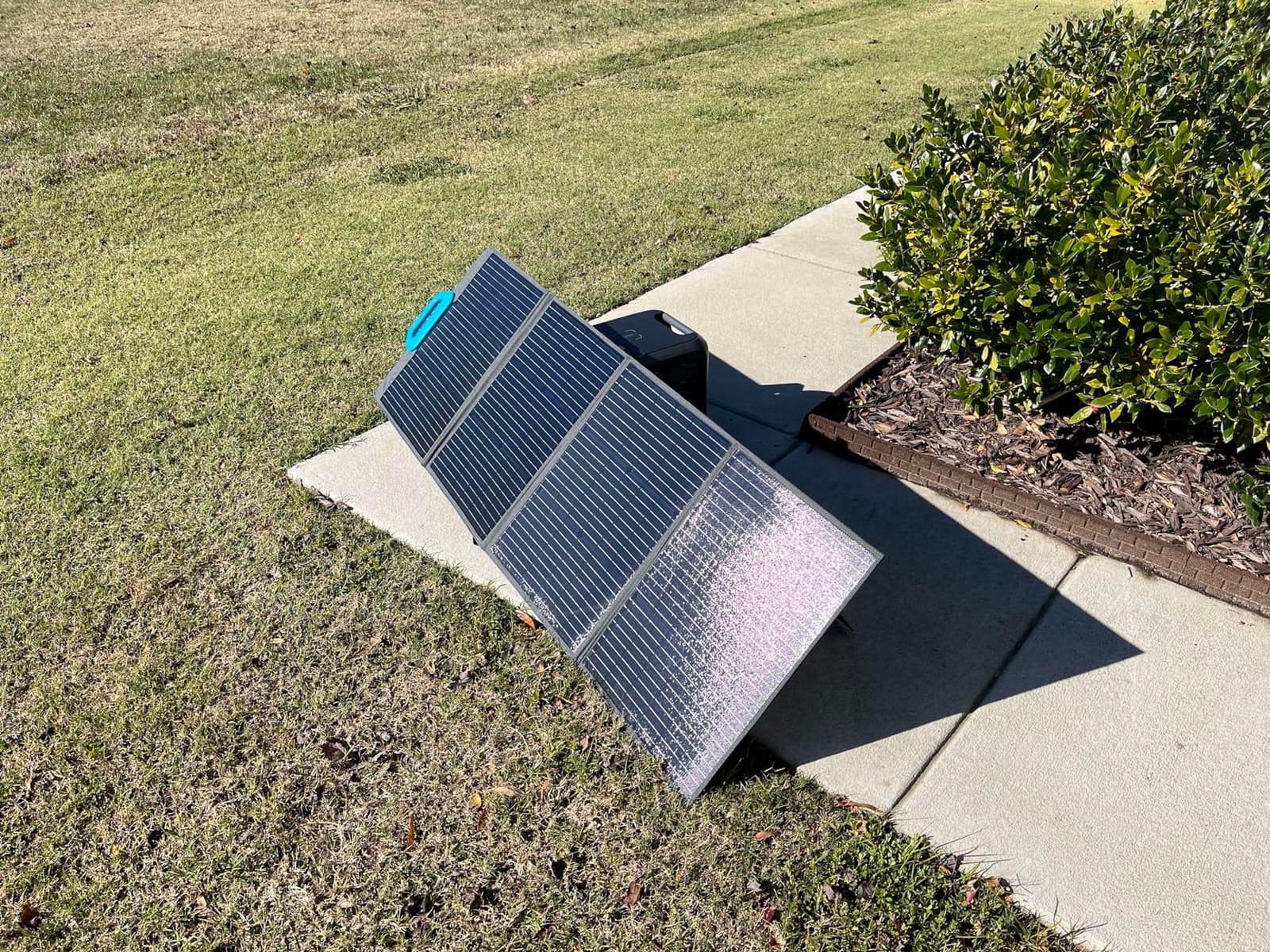
How the 100W figure plays out with real stations
On a 500Wh station, expect a meaningful top-up across a sunny day rather than a full charge. The same panel on a 1kWh unit is a weekend sustainer, not a rescue tool. If your station is larger than that, look at one of the 200W panels further down before you settle.
Because the quadrants are paralleled, partial shade hurts far less here than on most competitors. That single design choice is the reason it wins our top spot for real-world camping conditions.
Who should look elsewhere
If you carry everything on your back, the 12.6 lb adds up fast and a lighter option makes more sense. If your station lives on an RV roof where weight does not matter, a 200W panel returns the same charge in a fraction of the time.
Owners who bought for the handle and the straps report disappointment a season later. Treat the handle as a convenience rather than a load point and the panel holds up well.
2. Renogy 200W Solar Panel — Highest Efficiency in a Light Package
- 25% N-type cell efficiency among the highest in this class
- Lightest 200W foldable in the group at 13.9 lb
- Magnetic closure is faster and tidier than Velcro folding
- Accessory pouch and four stable kickstands included
- MC4 cable may need to be bought separately
- Quad-fold frame is bulkier than two-section designs
The Renogy 200W is the efficiency answer in this roundup. Its 16BB N-type monocrystalline cells convert at 25%, the highest conversion rate on this list, and at 13.9 lb it is also the lightest 200W foldable we tested. Roughly 77% of its reviews are five-star, and it carries a two-year material and workmanship warranty.
The quad-fold design uses a magnetic closure instead of Velcro, which packs flatter and opens in seconds. Four kickstands adjust to 40, 50 and 60 degrees, reinforced grommets take an RV tie-down, and the 21.6V maximum voltage keeps it inside the input range of both compact and mid-size stations.
It doubles as a device charger when you are not feeding a station. USB-C PD at 45W, USB-A at 18W, a second USB-A at 15W and MC4 output all come off the same panel, which means a phone or camera battery can charge directly while the station is parked.
The two recurring complaints are practical rather than electrical. The MC4 cable needed to reach certain stations may not be in the box, so budget for an adapter if your station is not a Renogy. And the four-panel frame is genuinely bulkier than a two-section fold when fully collapsed, at 23.72 by 22.99 by 1.97 inches.
Whether 200W is the right jump from 100W
Moving from 100W to 200W roughly halves the time a station spends on the sun, which is the difference between topping up before bed and recharging overnight. For a 1kWh station, that is the single most useful upgrade in this list.
The efficiency figure matters most in heat and low light, where a 25% cell keeps making meaningful current after a 19% panel has dropped below the station’s charge threshold.
Where this panel disappoints
If your station tops out at 100W of solar input, extra panel watts do nothing. Check the input rating on your station before spending on a 200W module.
The packed thickness is real. If you are backpacking rather than car camping or overlanding, a smaller panel is the better tool.
3. ZOUPW 100W Solar Panel — Best Rated and Easiest to Connect
- Highest rated panel in the roundup at 4.6 stars
- 5-in-1 cable removes most adapter guesswork
- Light 9.5 lb weight with a magnetic carry handle
- USB-C and USB-A charge devices without a station
- IP67 ETFE lamination for rain and dust
- Output is capped by the station's own maximum solar input
- 100W is modest for fast top-ups of larger stations
The ZOUPW 100W carries the highest rating here at 4.6 stars across more than 700 reviews, and the reason is connector coverage. The included 10 foot cable terminates in DC8020, XT60, Anderson, DC7909 and DC5521, which covers the overwhelming majority of portable power station inputs without a single adapter purchase.
Underneath that, the panel is a straightforward 100W monocrystalline module at 23.5% efficiency with a 24.3V maximum voltage and 4.96A output. Reviewers consistently credit the 5-in-1 cable and the IP67 ETFE lamination for the rating, and 76% of reviews sit at five stars.
It also runs a small USB hub: USB-C PD at 15V/3A plus two USB-A ports including QC3.0 at 12V/1.5A, useful for topping up a phone while the station is charging. Two kickstands tilt it up to 45 degrees, and the whole thing weighs 9.5 lb with a magnetic handle.
The honest limit is the same one every owner mentions: your power station’s own maximum solar input caps what the panel can deliver. Pair this with a station that accepts 100W and it performs as advertised. Pair it with a fast-charging 200W station and roughly half the panel’s potential goes unused.
Why the 5-in-1 cable matters more than the wattage
Connector mismatch is the most cited frustration in owner communities, and a cable that covers five plug types removes the single most common reason a panel sits unused in a gear closet.
At 24.3V maximum, the panel still fits stations with a 24V or 30V input ceiling, which rules out a few of the newest 48V-native units. That is worth checking before you order.
Where it falls short
On a 2kWh-class station, 100W is a trickle. A single sunny day adds a fraction of the capacity, which is fine for keeping a fridge running and not fine for a full recharge.
The twelve-month warranty is shorter than the two-year coverage on the Renogy, so budget for a possible panel replacement sooner on a heavily used setup.
4. EBL 200W Solar Panel — Best for a Rigid Build That Stays Put
EBL 200W Portable Solar Panel for Power Station, Foldable IP65 Waterproof
- Real-world output reported at 148-191W in good sun
- Rigid framed build resists flexing and toppling
- Reported to hold up in 15-20 mph wind
- 4-in-1 cable covers XT60
- Anderson
- DC7909 and aviation plugs
- Heaviest panel here at about 18 lb
- About 6 ft of cable limits placement distance
- Water resistant rather than rated for direct rain
The EBL 200W is the one to buy when the panel lives in the back of a truck rather than on your back. Owners report sustained 148-190W in strong sun, and the rigid plastic framing with orange side panels resists both flexing and being knocked over. The orange edges are a genuine safety feature when a panel is deployed at a campsite or on a work site.
Electrically it is a 200W monocrystalline panel at up to 23.5% efficiency with a 35V maximum voltage, which sits inside the input range of most mid and large stations but will exceed the ceiling on several compact models. The included MC4 to 4-in-1 cable covers XT60, Anderson, DC7909 and aviation connectors.
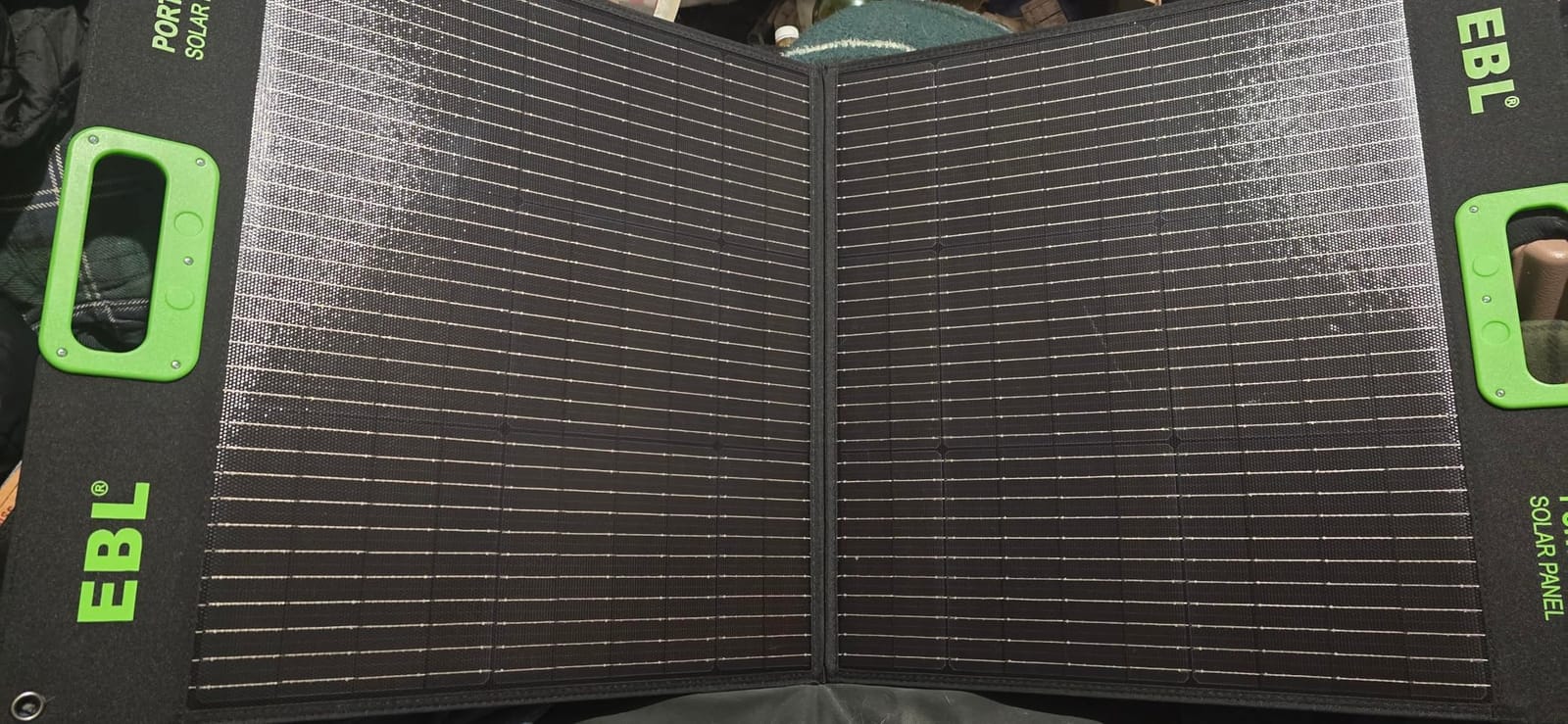
Rain and dust handling is adequate rather than impressive. The panel uses PET lamination with an 840D Oxford cloth outer and carries FCC, RoHS and EMC certification with short-circuit and surge protection, but it is described as water resistant, not rated for prolonged direct rain exposure.
The 18 lb weight is the honest drawback, and it is the heaviest panel in this group. That weight is also what lets the stand hold position in wind, so the two trade-offs are linked rather than accidental.
Reading the 35V number before you buy
A 35V maximum is comfortably above the 20 to 24V class that most small stations expect, which is a genuine compatibility question rather than a technicality. Check the solar input voltage range printed on your station.
Some owner setups need a DC7909 to DC8020 adapter to reach a Jackery 300, so factor in the accessory before the panel leaves the box.
Who this panel suits
Car campers, overlanders and anyone with a fixed camp spot are the clear audience. The rigidity means it can stay deployed for days without anyone adjusting it.
Anyone carrying a panel on foot will find 18 lb unpleasant after the first hike. For carry weight, the 100W options make far more sense.
5. SOKIOVOLA 200W Solar Panel — Best Sealing for Wet Climates
- IP68 sealing is the strongest in this group
- Firm rigid body that stands well in wind
- Snap-closure legs hold position better than Velcro
- Storage bag and 5-in-1 adapter cable included
- MC4 pigtails are only about 4 inches long
- Heavy at 16.3 lb for carry-in trips
- 20V output will not charge a 24V battery
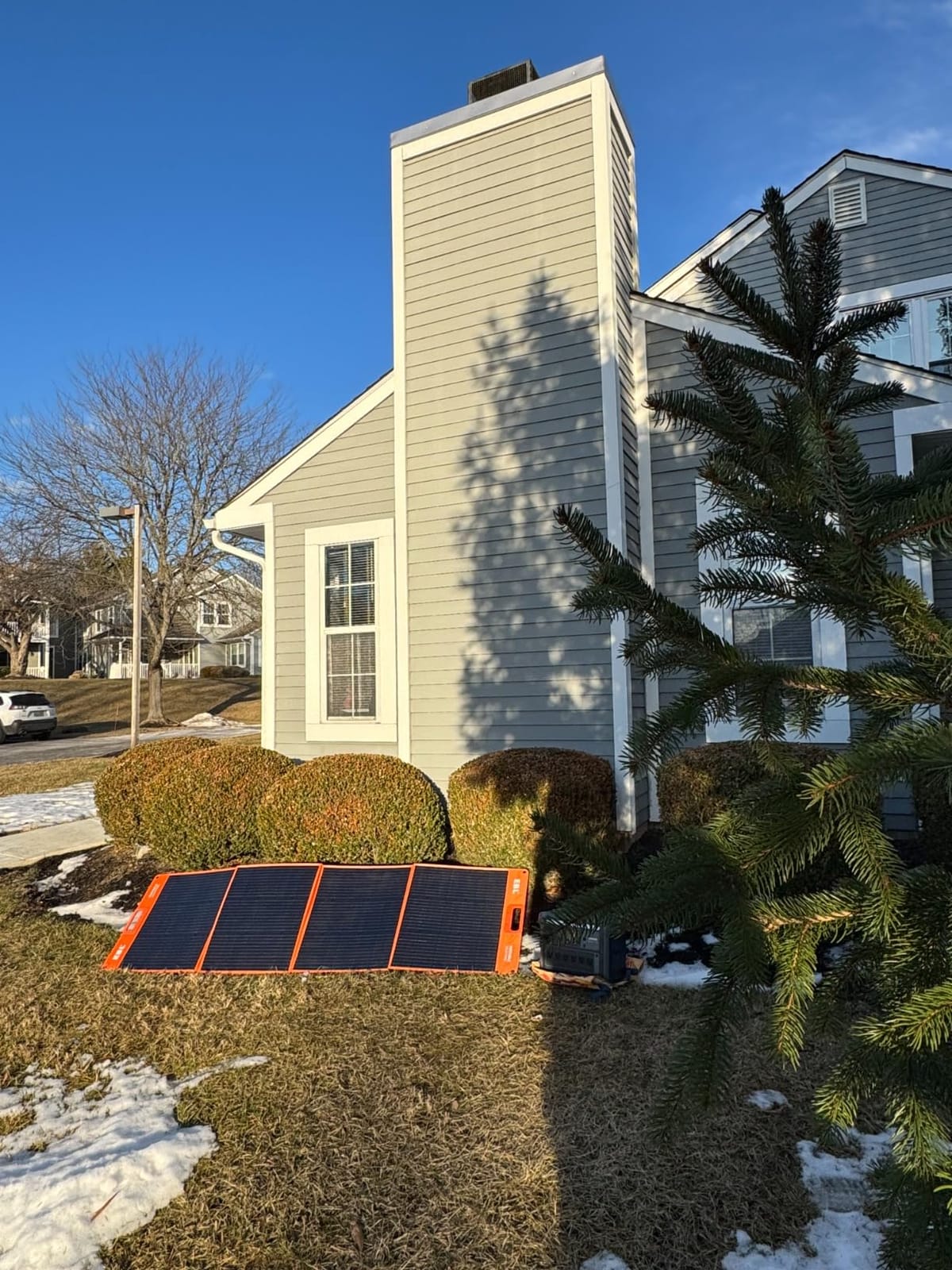
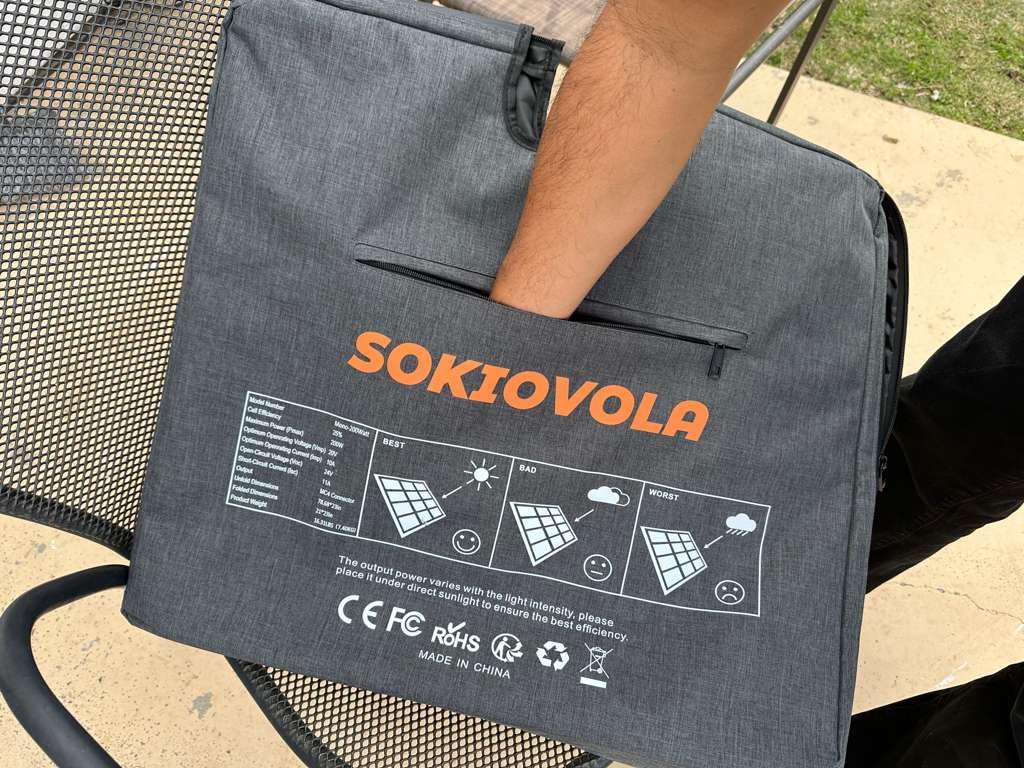
The SOKIOVOLA 200W is the panel to shortlist if your camping happens in rain. It carries an IP68 rating on its ETFE coating, the tightest sealing in this roundup, and users report roughly 130-200W depending on cloud cover with 170W or better typical in clear midday sun.
It uses A+ grade monocrystalline N-type 16BB cells at up to 25% efficiency, matching the Renogy on paper, with an 18V maximum voltage and a 20V output. That 18V figure is one of the most universally compatible numbers in the group and works with essentially every portable power station input.
Two design details stand out. The legs use snap closures instead of Velcro, and owners report they hold position better and do not creep over a long deployment. A magnetic carry handle and four mounting holes let you secure it flat to an RV roof or a rack rather than standing it on the ground.
The most repeated complaint is the very short MC4 pigtail, around four inches. A 3 meter adapter cable to DC5521, Anderson, XT60, DC7909 and DC8020 is included, but you will still want a longer run for most placements. Some owners also report weak stand and storage snaps on their units.
What IP68 actually changes in the field
IP68 means the panel can handle dust ingress and submersion conditions that would end an IP65 panel’s usefulness. For coastal camping, dusty desert routes and multi-day rain, that difference decides whether the panel keeps working.
It also pairs well with the mounting holes. A panel strapped to a roof in rain is exactly the use case IP68 was designed for.
Where the 20V output is a problem
If your setup charges a 24V battery bank, the 20V output will not do it. That is a narrow case, but worth confirming before purchase if you run auxiliary batteries.
At 16.3 lb this is a two-person carry, and the 4.3 star rating with a handful of durability reports means it sits below the leaders on consistency.
6. Mesuvida 200W Solar Panel — Best for Higher-Voltage Stations
200W Portable Solar Panels ETFE Material 24V MC4 Cable & XT60 Anderson DC
- Quick-lock elastic stand deploys in seconds
- ETFE resists corrosion from salt spray and wipes clean
- Works with most 60V stations and can series pair to 400W
- IP68 sealing with 600D Oxford fabric and double-stitched seams
- Lowest rated panel here at 4.2 stars with 9% of reviews at three stars
- Adapter cable needed for XT60
- Anderson
- DC7909 and DC8020 stations
- 104F upper temperature rating suggests limited hot-climate tolerance
The Mesuvida 200W is the specialist choice for high-voltage architecture. It outputs 24V at 8.33A through MC4, with a 28.8V maximum, which puts it inside the input window of most 48V and 60V capable stations. Two of them wired in series reach 400W at 48V.
That series capability is what separates it from the rest of the list. If you already own a station that accepts 48V solar input, a matched pair of these is one of the few ways to double your charging rate from foldable panels without buying a fixed array.
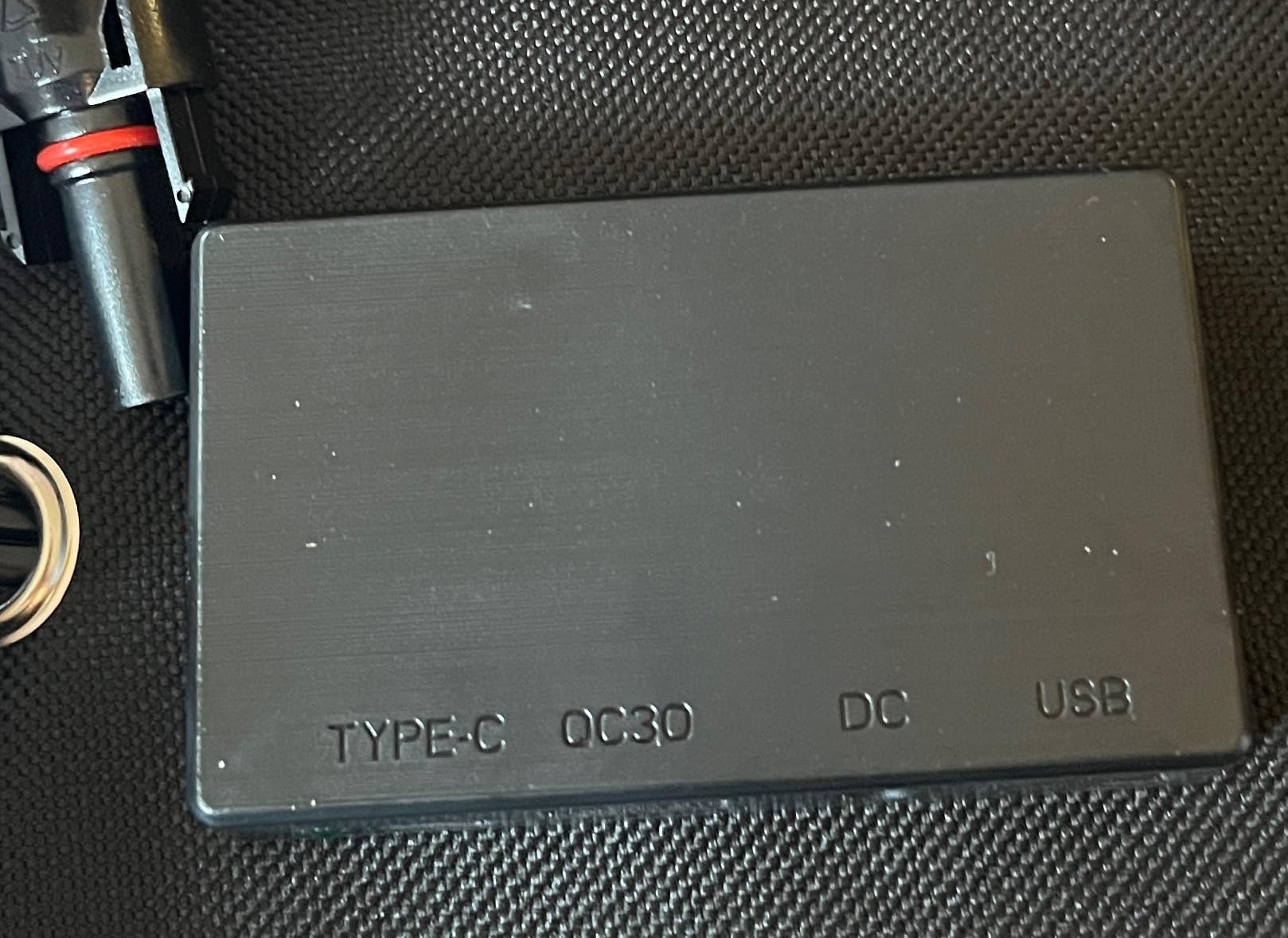
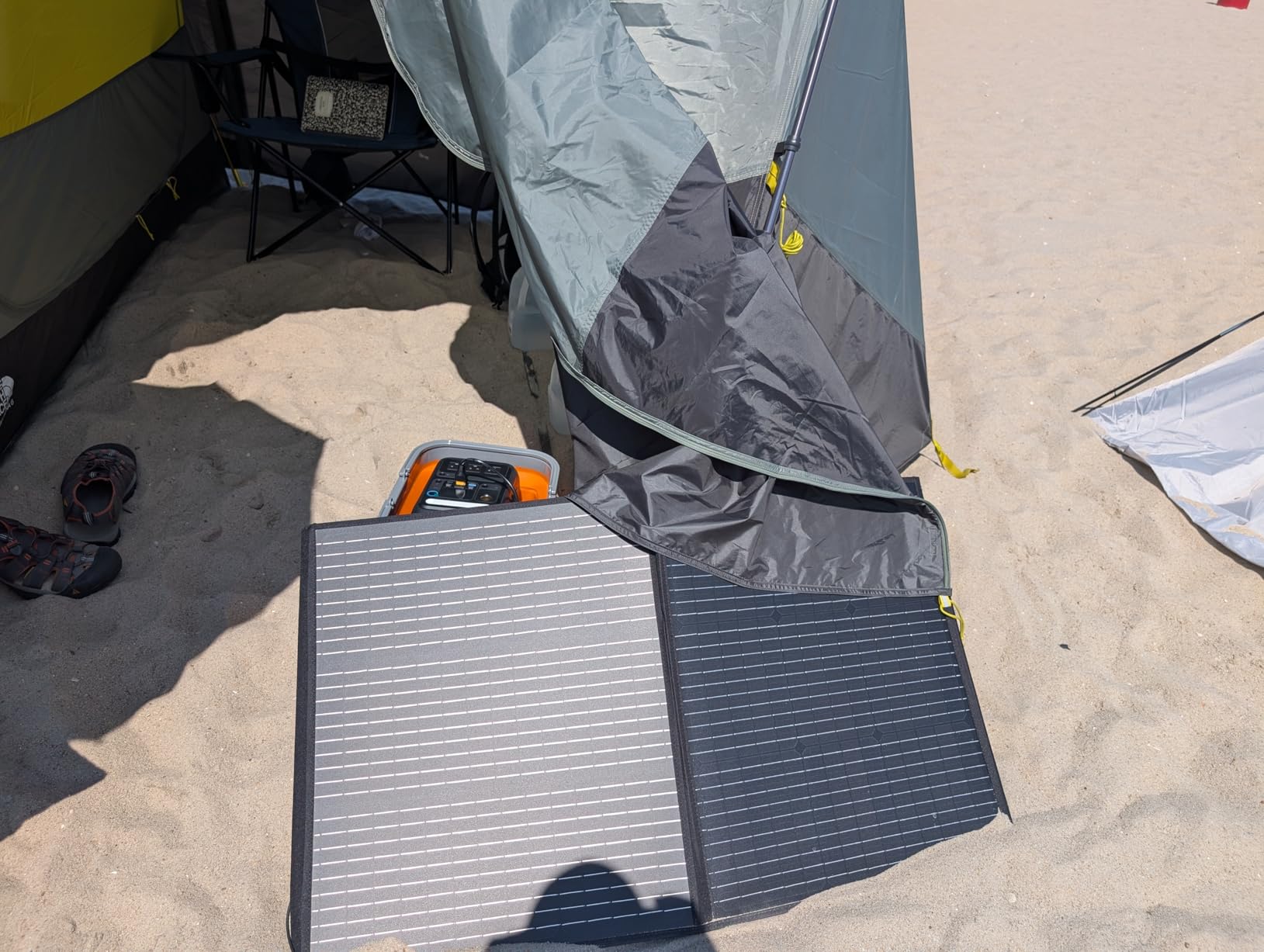
The physical design is the other selling point. A self-retracting nylon elastic quick-lock stand deploys in seconds with no loose parts, and the panel is built around 600D Oxford fabric with double-stitched seams and an IP68 rating. The ETFE surface resists salt spray corrosion and wipes clean, which matters on the coast.
The 4.2 star rating is the lowest here, with 9% of reviews at three stars, and owners note that output under overcast skies trails the higher-rated panels. The listed upper temperature rating of 104F is also the lowest figure in the group and suggests limited tolerance for very hot climates.
When series wiring is the right answer
Series pairing doubles voltage as well as wattage, so your station’s input range has to accept the combined open-circuit figure. If your manual lists a 60V solar input ceiling, a two-panel series setup is safe and standard.
Never series a pair into a station with a 24V or 30V ceiling. That is the fastest way to trigger an input fault.
Who should skip it
Owners of compact stations get less from this panel than any other 200W option here, because the higher voltage buys them nothing their input range can use.
Weight is not listed by the manufacturer, and the temperature rating makes it a poor choice for desert trips in summer.
7. FlexSolar 100W Solar Panel — Best Lightweight 100W Pick
FlexSolar 100W Foldable Portable Solar Panel Charger IP67 Waterproof
- Lightest option here at 4.1 lb and only 0.59 inches thick folded
- Smallest packed footprint at roughly 13 by 10 inches
- USB-C PD 3.0 45W and USB-A 18W charge devices directly
- IP67 sealed with E-Film lamination and a carry bag
- 100W capacity limits charging speed on larger stations
- Only 100W of DC output alongside the USB ports
The FlexSolar 100W solves a different problem from every other panel here: pack size. At 4.1 lb and a folded profile of just 0.59 inches, it slips into a laptop sleeve. Nothing else in this roundup comes close, and owners name that pack-down size and weight as the deciding factor.
It is a 100W monocrystalline panel with 23%+ efficiency, IP67 sealed and E-Film laminated. The 4-in-1 cable covers DC5521, DC7909, Anderson and XT60, and USB-C PD 3.0 at 45W plus USB-A at 18W charge phones and power banks directly with no station involved at all.
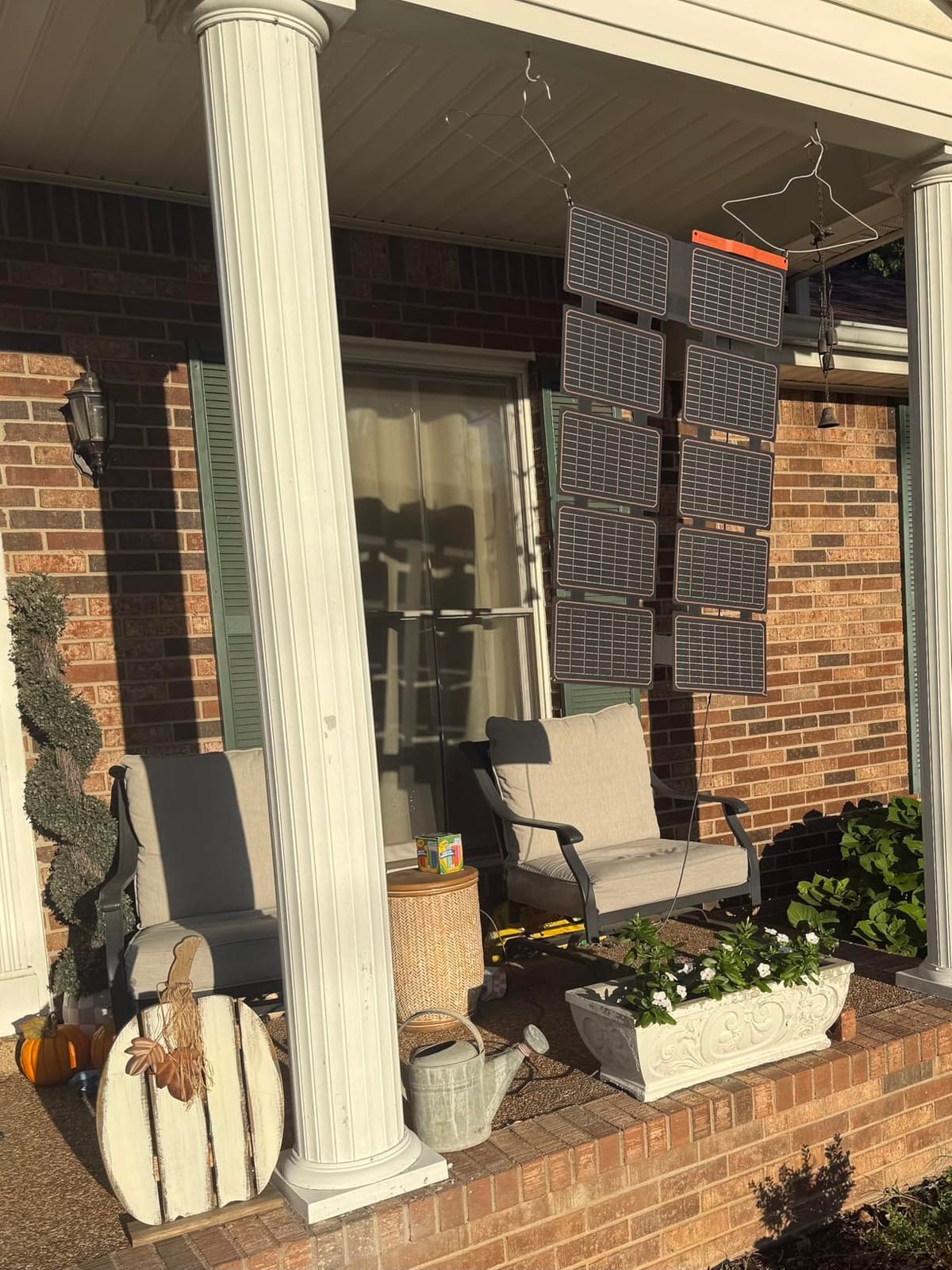
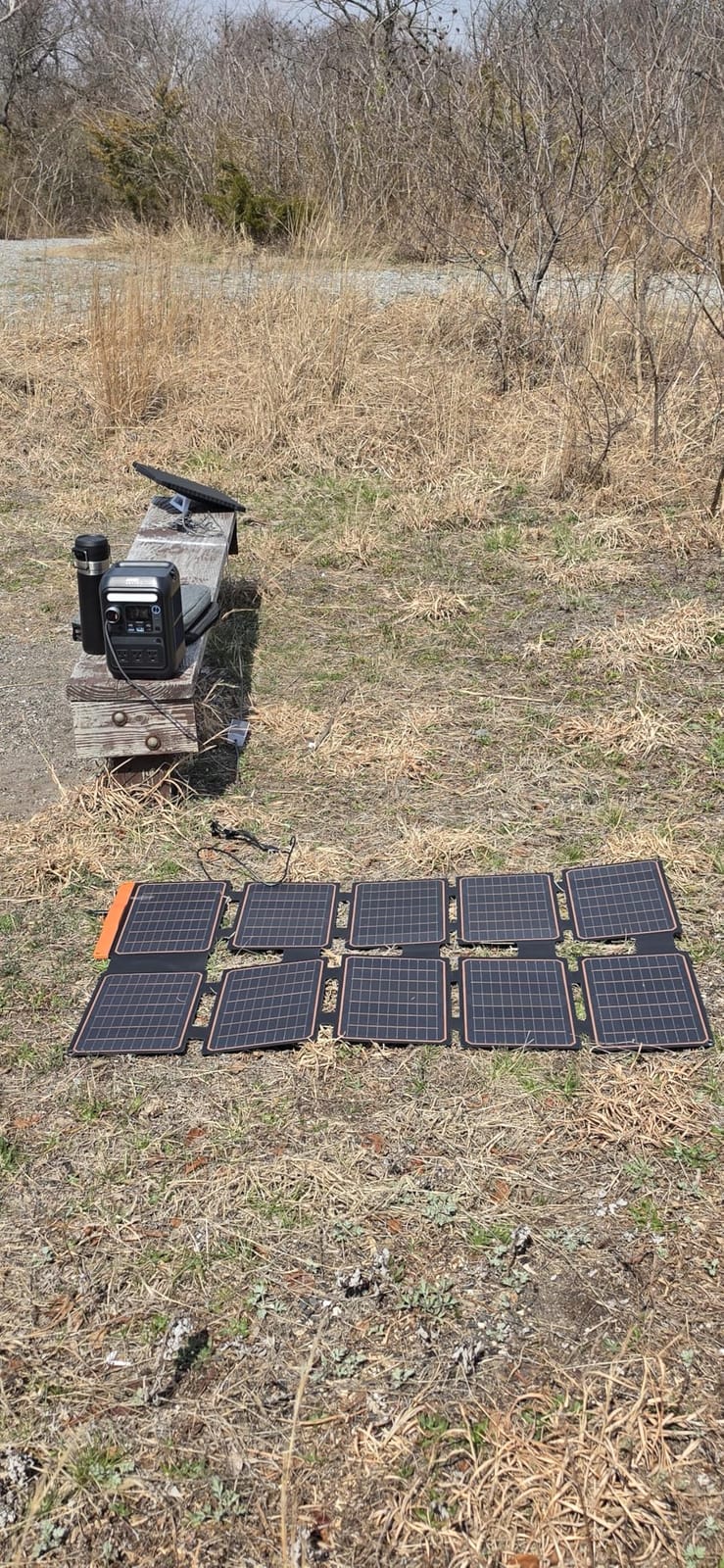
It folds to 12.99 by 10.43 by 2.17 inches and opens to 45.47 by 26.18 inches, which is a smaller collection surface than the 200W foldables. That matters: output scales with the sunlit area, so expect a lower number from this panel than its 100W nameplate on a marginal day.
Treat it as a travel top-up tool. On a 500Wh station it works well as a maintenance panel, and on a smaller station it is more than adequate. On a 2kWh unit it will not keep up with daytime load.
When a 4 lb panel is the right answer
Hiking, backpacking and air travel are the cases that make this the clear pick. When every pound compounds over a long walk, a panel you actually carry beats a panel you leave in the vehicle.
The USB-C PD output is a quiet bonus. You can charge a phone or camera battery from the panel in the middle of a trail without unpacking the power station.
Where the trade-off bites
Reviewers are clear that 100W caps how fast larger stations recharge, and that the panel is framed as a top-up rather than a fast charger. Two of these in parallel still trail a single 200W panel.
The small folded size also means fewer mounting points, so it is less suited to a fixed RV roof position than the larger designs.
8. MHPOWOS 220W Solar Panel — Best Raw Wattage per Panel
MHPOWOS 220W Portable Solar Panel 40V Folding Solar Panel for Power Station
- Highest raw wattage in the roundup at 220W
- 7-in-1 connector covers most station inputs
- 4.5 star rating with 78% of reviews at five stars
- Four kickstands give adjustable sun angle
- 40V output will not work with stations that have a lower voltage input limit
- About 17.8 lb makes it one of the heavier options
The MHPOWOS 220W puts out more watts per panel than anything else here, and at 23.5% efficiency that wattage arrives through an efficient panel rather than extra surface area. Buyers consistently respond to the wattage-to-cost ratio and to the 7-in-1 connector, which covers most station inputs in a single plug.
There is one condition attached, and the manufacturer states it plainly: the panel outputs 40V with a 48V maximum. That figure excludes many smaller power stations whose solar input ceiling sits at 24V or 30V. If your station is compact, this is the wrong panel regardless of how good the value looks.
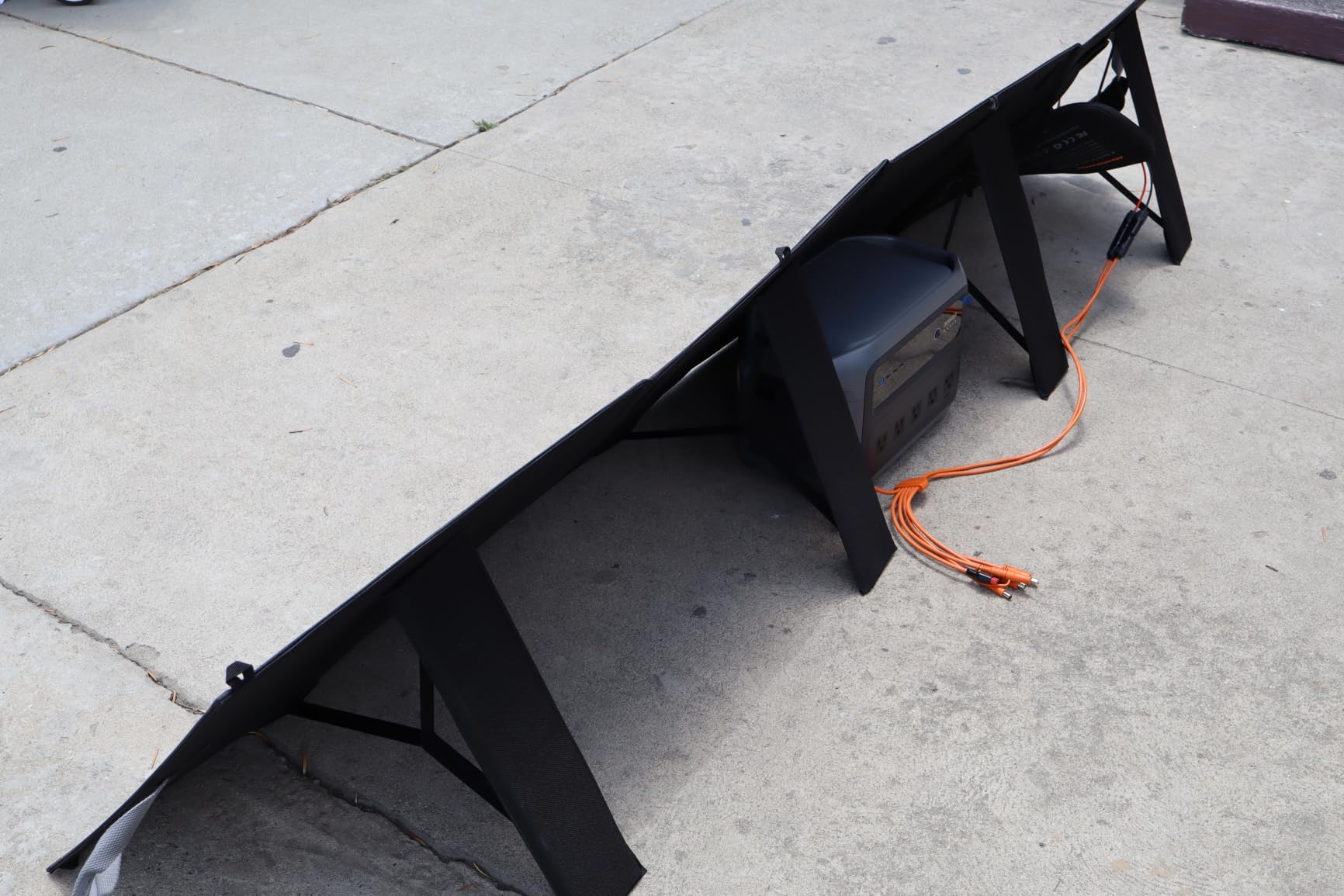
For a mid or large station with a 48V solar input window, the math is attractive. One 220W panel replaces two 200W panels in the number of items you carry, fold and deploy, which halves the setup time at camp.
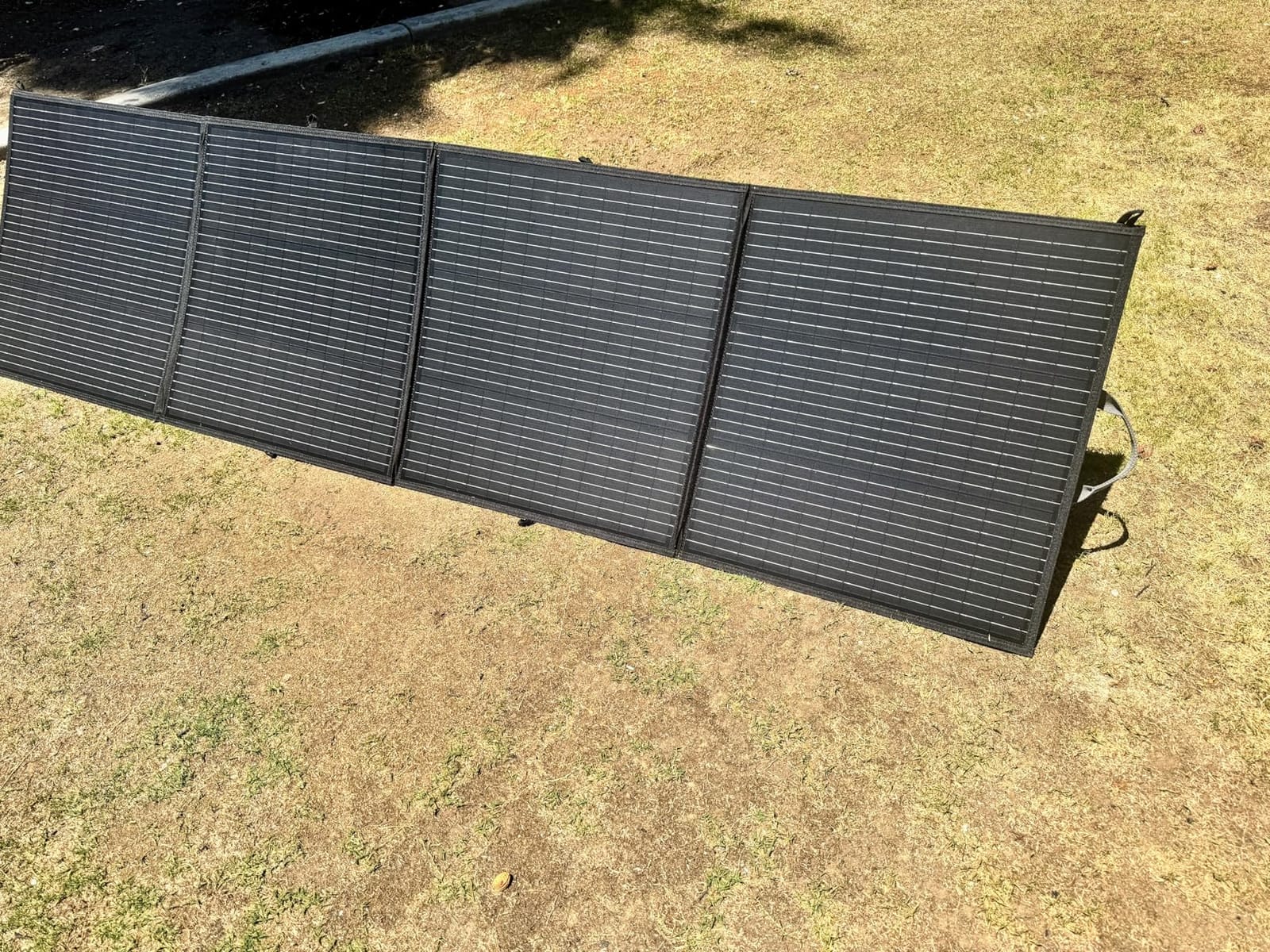
Construction is straightforward: IP67 waterproof and dustproof, four kickstands with adjustable angle, reinforced thickened handles for transport, and a folded size of 23.5 by 21.25 by 2.3 inches. Reviewers put 78% of their ratings at five stars, though the review base is smaller than the leaders at 259.
The voltage check that decides this purchase
Read the solar input voltage range on your station before anything else. A 40V output works on stations designed for it and fails silently, or refuses to charge, on the rest. No adapter fixes this one.
If your station accepts 48V solar input, this becomes one of the strongest options on the list for a single-panel setup.
Who should choose something else
Owners of compact stations are the group most likely to be disappointed. The panel is excellent hardware pointed at a narrow set of larger machines.
At roughly 17.8 lb it is also a two-person carry, so it belongs in vehicle-based camping rather than on foot.
9. TWELSEAVAN 200W Solar Panel — Best for Direct Device Charging
- 24% efficiency with a high-transmission ETFE laminate
- 60W USB-C PD is the highest direct output in the group
- Generous 9.8 ft MC4 cable with 5-in-1 connector and 3 adapters
- 24-month warranty with a 30-day money-back guarantee
- IP65 rating is lower than the IP67 and IP68 panels here
- 15.7 lb limits solo carrying
The TWELSEAVAN 200W is the pick when you want one panel to do two jobs. Alongside MC4 output for your power station, it carries USB-C PD at 60W, USB-A QC3.0 at 18W and a further USB-A at 5V/3A. The 60W port is the highest direct output in this group and will charge a modern laptop from the panel alone.
The cells are A+ grade monocrystalline at 24% conversion efficiency behind an ETFE laminate with over 95% light transmission, a 19.8V maximum voltage and a 23.4V output. That voltage class fits almost every station without drama.
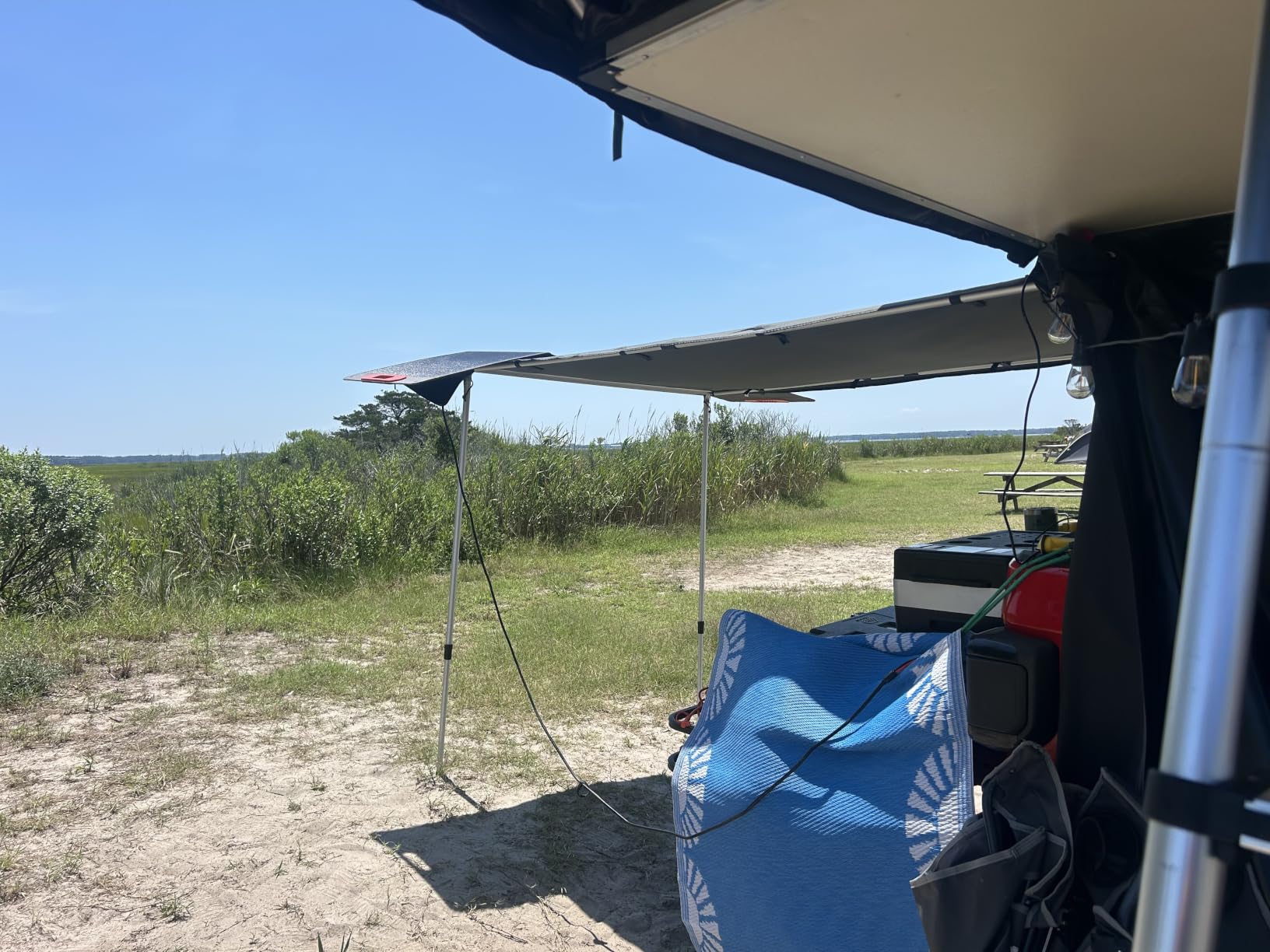
Cable length is a genuine strength here. A 9.8 ft lead with a 5-in-1 MC4 connector and three DC adapters is the most generous wiring package in the roundup, and it removes the most common complaint we heard about short pigtails on competing panels.
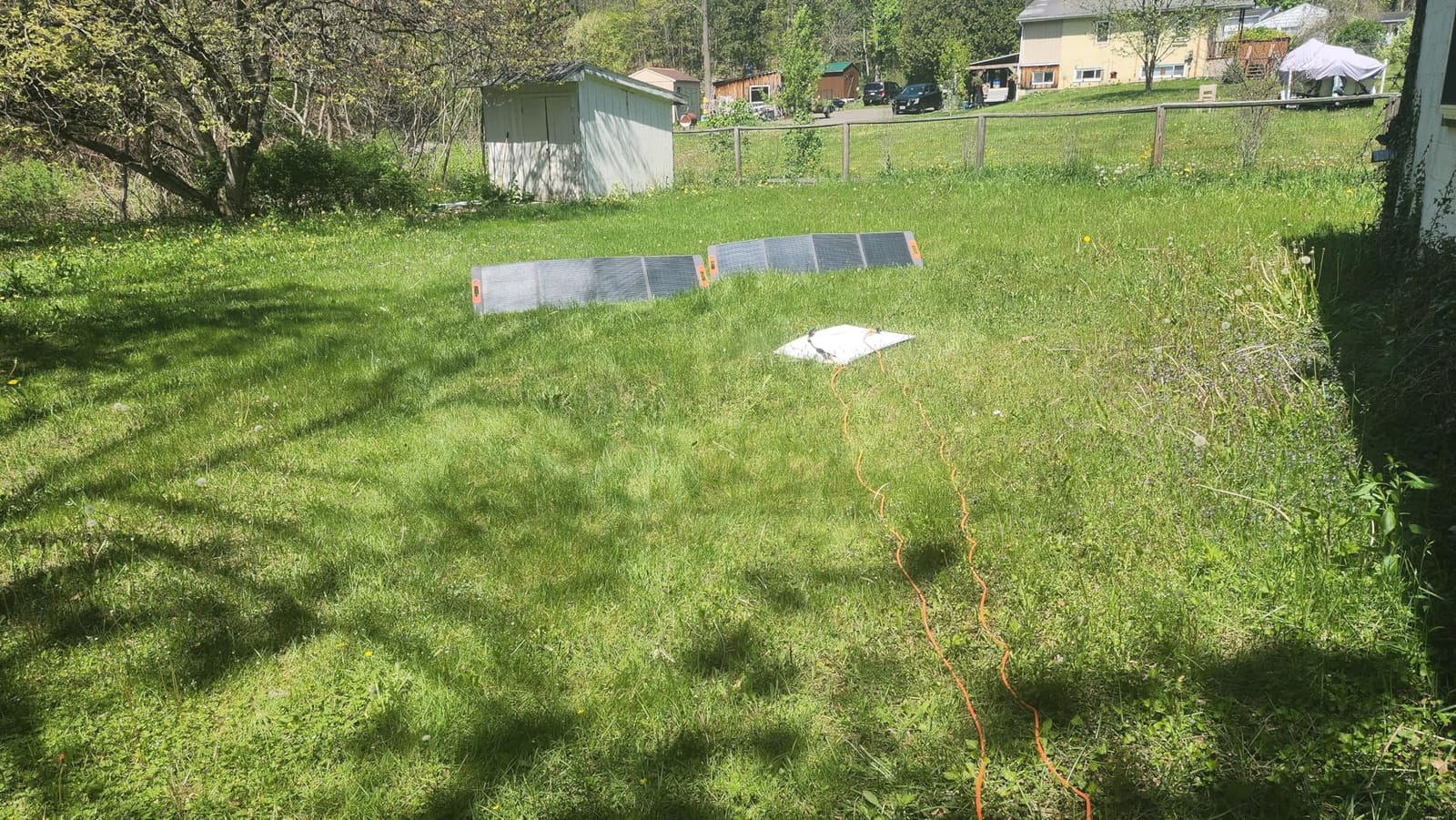
The water rating is the compromise. IP65 protects against rain and dust, but it is a step below the IP67 and IP68 panels here, so this is a fair-weather-first choice. The 24-month warranty and 30-day money-back guarantee are the longest coverage terms in the group.
Why a 60W USB-C port changes the use case
A laptop, a camera body or a set of rechargeable camera batteries can run straight off the panel while the station is charging something else. That turns a single panel into a small portable power distribution point.
For a working photographer or a remote worker, that is often more valuable than the extra 25W of panel capacity a larger model would add.
Where it falls short
IP65 means it should not be left deployed in sustained rain without cover. If your trips are wet rather than merely sunny, the SOKIOVOLA or Mesuvida is the safer bet.
At 15.7 lb it is a heavy carry, and the 4.4 star rating reflects a smaller, less tested review base than the leaders.
10. Ecosonique 200W Solar Panel — Best Performance in Light Shade
Ecosonique 200W Portable Foldable Solar Panel MC4 Output for Power Station
- Six-fold design folds to about 18 by 16 inches
- Light 11 lb weight for a 200W panel
- Reported 130-152W real-world output
- Only option here still pushing usable power in light shade
- Smallest review base in the group at 121 reviews
- Lowest rating at 4.2 stars with 12% of reviews at one star
- Unfolded length is long and not every section has a support
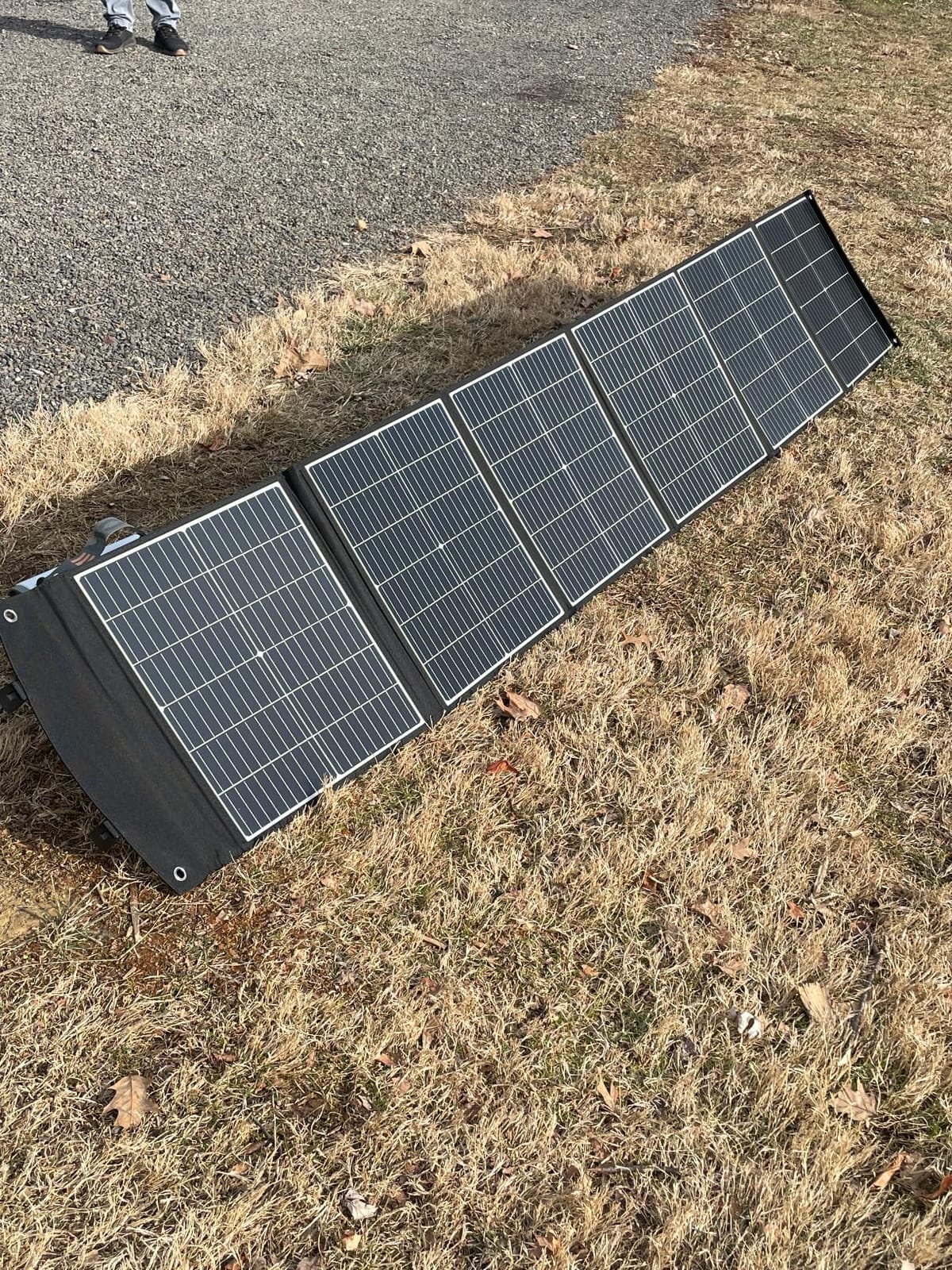
The Ecosonique 200W is the sleeper of this list. Testers who compared several 200W foldables side by side report 130-152W of real output from it, and it is the only panel here they describe as still pushing usable power in light shade, where most competitors fall below their useful threshold.
It achieves that with a six-fold design that packs down to roughly 18 by 16.35 by 2.95 inches at 11 lb, the lightest 200W in the group by a wide margin. Electrically it is a 20V output, 23.5% monocrystalline panel, and 20V is one of the safest figures for universal station compatibility.
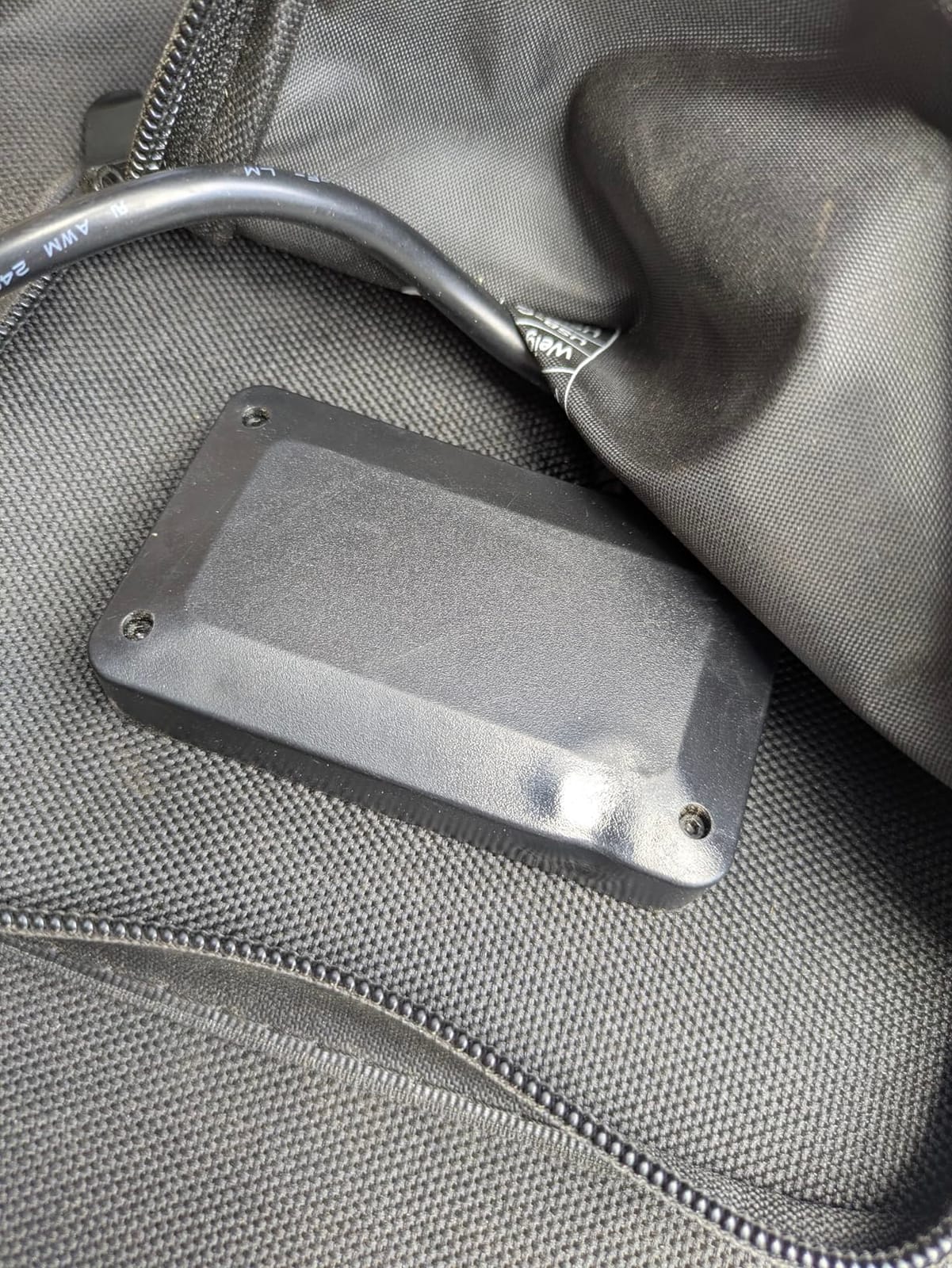
The included wiring is thorough: a 3 meter MC4 cable plus a lead covering XT60, Anderson, DC7909 and DC5525, and USB-C PD 3.0 at 45W with USB-A QC3.0 for direct device charging. Four adjustable kickstands and mounting grommets handle the physical setup.
Two cautions. The review base is the smallest here at 121 ratings, and 12% of them are one-star, which is the highest proportion of harsh feedback in the group. Reviewers also mention heat-related curling in extreme climates and an unfolded length so long that alignment is fiddly, since not every section has its own support.
What shade tolerance is really worth
Shade is the single biggest cause of disappointing solar output. A panel that keeps producing usable current in broken light keeps your station alive through a partly overcast afternoon, when a weaker panel simply stops.
That advantage matters most for anyone relying on solar as a primary rather than a backup power source.
Who should wait before buying
A 121-review base is thin for a purchase this technical. If you want the assurance of a large installed base, the 200W options above it carry far more history.
The long unfolded footprint also makes it a poor match for small tents and tight campsites where you cannot get full sun onto every section.
How to Choose a Solar Panel for Your Power Station in 2026
Compatibility is a three-part test, and you should pass all three before you order anything. Wattage has to sit at or below your station’s solar input allowance. Open-circuit voltage has to sit inside the station’s input voltage range. And the connector has to physically match, or you need the right adapter. Miss any one of the three and charging slows down or stops entirely.
Match panel watts to the station capacity
The rule of thumb is simple: a sub-500Wh station pairs well with a 100W panel, a 1kWh station wants 200W, and anything from 2kWh upward benefits from a 200W panel or a series pair. Bigger is not automatically better, because a station that accepts only 100W of solar input will ignore the extra capacity entirely.
Think about time rather than watts. A 200W panel in good sun pushes roughly double what a 100W panel pushes, so the same station recharges in about half the daylight. On a 1kWh unit that is the difference between recovering overnight and needing two sunny days.
Check Voc and the station’s max solar input
Voc, or open-circuit voltage, is the voltage a panel produces with nothing connected to it. It is always higher than the operating voltage, and your station’s input controller is rated against it. Panels here range from an 18V maximum on the SOKIOVOLA to a 48V maximum on the MHPOWOS, which is the single biggest spread in this roundup.
The rule is that Voc must stay below the station’s stated solar input voltage ceiling. A 40V panel wired into a station capped at 30V will not charge, and repeated attempts can trip the station’s protection circuit. Owners in the power station communities describe brand-agnostic panels failing to negotiate a charge rate until the station is fully charged and updated, so treat a refusal as a voltage or firmware question before assuming the panel is faulty.
Connector types explained
There is no universal solar input, and this is where most mismatched purchases happen. MC4 is the panel-side standard found on rigid and larger foldable panels, and it needs an adapter to reach a station input. XT60, DC8020, DC5521, DC7909 (often called 8mm) and Anderson Powerpole are the common station-side plugs.
A 4-in-1 or 5-in-1 cable is the simplest fix: one lead terminating in XT60, Anderson, DC7909, DC5521 and sometimes DC8020 covers most brands at once. Both the ZOUPW and the Renogy include or support this approach, and it removes the adapter as a failure point. For fixed roof mounting, our RV solar panel guide covers the wiring side in more depth.
The 33% rule and what real output looks like
The 33% rule is a field expectation, not a defect. A 200W panel listed at 200W typically delivers somewhere around 60-70W in ordinary real conditions and closer to its full rating only in direct midday sun on a cool day. Heat, low sun angle, partial shade and cable losses all pull the average down, and a late-afternoon or overcast session can fall to a quarter of nameplate or less.
Plan around roughly a third of nameplate for daily energy budgeting. If your station needs 200Wh a day and you have a 200W panel, budget for about six peak-sun-equivalent hours, which is a realistic summer day and an impossible one in winter. This expectation is what stops the very common feeling of being misled by the watt number on the label.
Boost output in shade, heat and cloud
Four habits do most of the work. Angle the panel perpendicular to the sun using the kickstands rather than leaving it flat, and reposition it every couple of hours if you are stationary. Keep the surface clean, because dust and bird mess can cut a meaningful share of output on a dusty route. Leave airflow around the panel, since a hot panel produces less and a folded panel sitting on a hot truck bed produces far less.
On shade, avoid it where you can. A panel in full sun beats a bigger panel in partial shade, and among the panels here the BLUETTI is wired in parallel specifically so one shaded quadrant does not zero the others. In broken light the Ecosonique is the one testers report still pushing usable current.
Warranty, waterproofing and third-party panels
Warranty terms in this roundup run from twelve months to two years, with the TWELSEAVAN offering the longest at 24 months plus a 30-day return window. Water ratings are the other differentiator: IP65 covers dust and rain splash, IP67 handles immersion, and IP68 on the SOKIOVOLA and Mesuvida is the level to pick for sustained wet weather.
Third-party panels are perfectly workable with modern MPPT controllers as long as the Voc and wattage limits are respected. The main risk is not damage, it is negotiation: some stations need a charge from wall power first, or a firmware update, before a non-branded panel is recognised. Charge the station to full before your first solar session with a new panel and you will remove most of that friction.
Frequently Asked Questions
What is the 33% rule in solar panels?
The 33% rule is a field expectation: divide a panel’s nameplate wattage by roughly three to get the power you can expect in ordinary conditions. A 200W panel commonly delivers 60-70W in the field, rising toward its full rating only in direct midday sun on a cool day. Heat, low sun angle, partial shade and cable losses all reduce output, and a late-afternoon or overcast session can drop below a quarter of nameplate.
What type of solar panel is best for charging a power station?
A foldable monocrystalline panel with an MC4 output and a 4-in-1 or 5-in-1 adapter cable is the best all-round choice, because it fits both small and large stations and avoids connector mismatches. Match 100W to stations under 500Wh and 200W or more to stations of 1kWh and up, and confirm the panel’s Voc sits inside your station’s solar input voltage range before buying.
Can you use any solar panel for a power station?
No. Three numbers must all line up: the panel’s rated watts must be within the station’s maximum solar input, the panel’s open-circuit voltage must be inside the station’s input voltage range, and the connector must match or need an adapter. Panels above roughly 30V Voc will not charge many compact stations, and an over-voltage panel can trigger the station’s protection circuit rather than charging it.
What solar panels will work with Jackery?
Most 20V-class foldables work with a Jackery station using the correct barrel adapter. Jackery units typically use an 8mm DC7909 or DC8020 input, so a panel with a 4-in-1 or 5-in-1 cable covering DC7909 and DC8020 is the safest choice. A 40V or 48V panel will not charge a Jackery station, and some setups need a DC7909 to DC8020 adapter.
Will any solar panel work with EcoFlow?
Any panel within EcoFlow’s wattage and voltage limits will charge the station, and EcoFlow units generally accept MC4-connected panels. Check the station’s max solar input wattage, because a 200W panel connected to a unit capped at 100W will charge at the station’s limit regardless. Some EcoFlow owners report that a brand-agnostic panel is only recognised after the station is fully charged and running its latest firmware.
Do solar panels work if they are in the shade?
Yes, but output falls sharply and non-linearly. A panel in full sun almost always beats a larger panel sitting in partial shade, and a shaded section can pull a series-wired panel toward zero. Panels wired in parallel, such as the BLUETTI 100W, hold up better in broken light. Move the panel as the sun moves and treat shade as a reason to reposition rather than a reason to stop trying.
Final Verdict: Which Solar Panel Fits Your Power Station
The best solar panels for portable power stations in 2026 are the ones that clear three checks: watts within the station’s input allowance, Voc inside its voltage window and a connector you already have. The BLUETTI 100W wins overall on parallel wiring, a 19.6V class voltage that fits nearly everything and the largest review base here. The Renogy 200W is the efficiency and capacity answer at 25% N-type cells, and the ZOUPW 100W is the simplest buy thanks to its 5-in-1 cable.
The single biggest mistake is connector mismatch, followed closely by ignoring Voc. Check both before you order, and plan for roughly a third of nameplate output in ordinary field conditions. Start with the station first, then pick the panel that matches its input window rather than the panel with the biggest number on the label.