
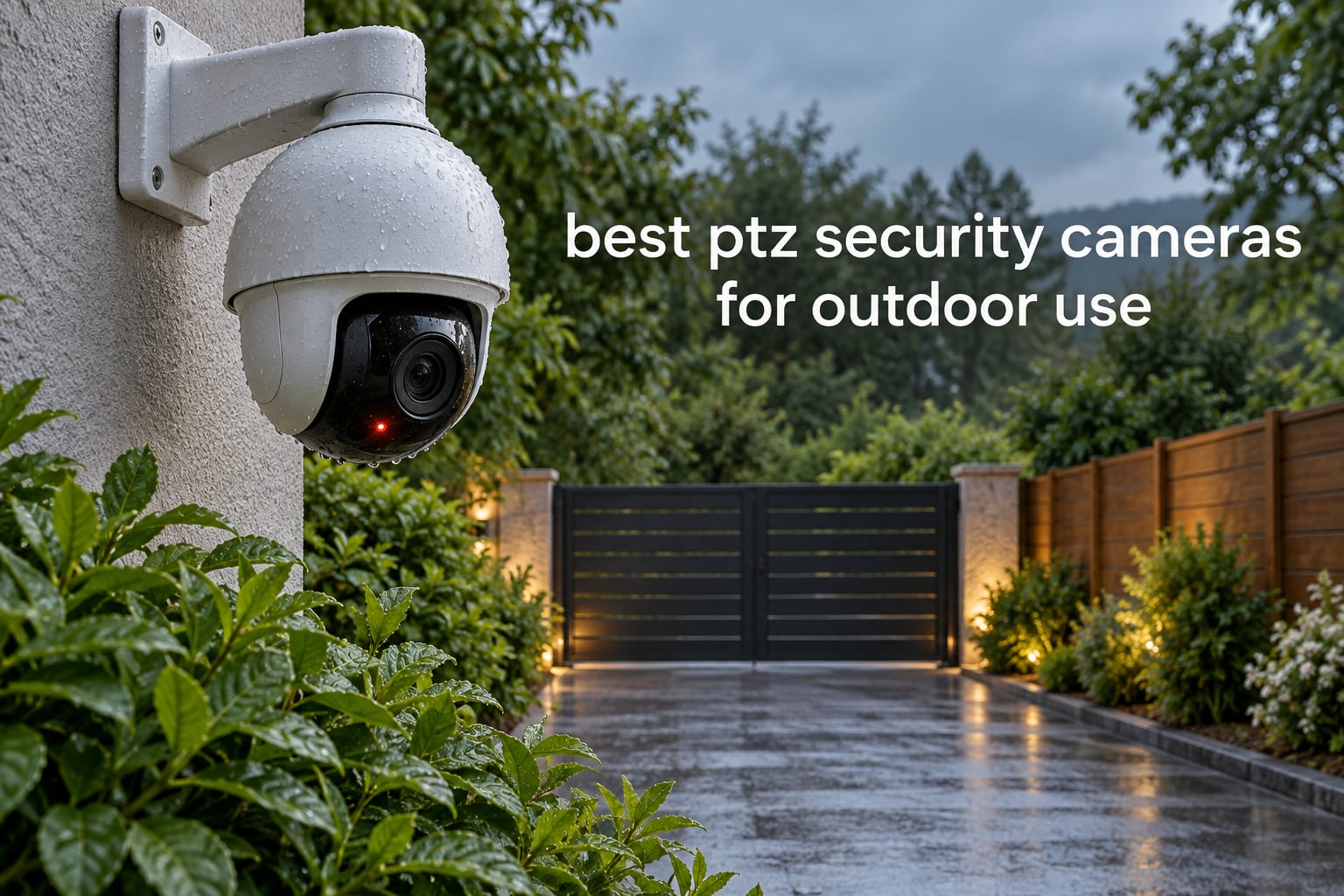
The best PTZ security camera for outdoor use is the Tapo C500 if you want wide pan and tilt coverage, reliable tracking and a large install base that makes troubleshooting easy. It covers 360 degrees horizontally, runs at 1080p, holds an IP65 rating and carries a 4.5 rating across nearly 7000 reviews. If you need true optical zoom or a wired signal, the REOLINK E1 Outdoor Pro steps up to 4K with 3X optical zoom and dual-band Wi-Fi 6. For large properties where you want eight PTZ viewpoints from one recorder, the Hiseeu 3K kit covers an entire perimeter on its own DVR.
Pan-tilt-zoom cameras are the workhorse of outdoor surveillance because one motorised head can watch a driveway, a gate or a back garden instead of forcing you to bolt three fixed cameras to the same wall. They are not automatically the right choice though, and the gap between a good PTZ camera and a disappointing one comes down to motor smoothness, tracking that locks on quickly, and whether the power and signal method actually survives being bolted to a pole in the rain.
We spent weeks comparing ten outdoor PTZ cameras across pan and tilt range, resolution, optical versus digital zoom, night behaviour, power options and storage choices. Everything below is drawn from the published specification sheets and from what owners report after living with these cameras. If you are still building a full system, our guides to the best outdoor security cameras overall and the best indoor security cameras cover the fixed-camera side of the decision.
Table of Contents
Top 3 Picks for Outdoor PTZ Cameras in 2026

Tapo C500 1080p Outdoor Pan/Tilt
- 360 degree pan and 130 degree tilt
- 1080p with 98 ft night vision
- Person detection with motion tracking

REOLINK TrackMix PoE 4K
- Dual lens 8mm and 2.8mm on one screen
- 6X hybrid zoom with three tracking modes
- 4K over Power over Ethernet

SEHMUA 2K Solar Pan/Tilt 2-Pack
- Solar panel with 6000mAh battery
- 355 degree pan and tilt
- 2K with color night vision to 98 ft
Each of these three solves a different problem. The Tapo C500 is the dependable all-rounder with the biggest review history here. The REOLINK TrackMix PoE is the only camera in the group with a dual-lens design and a stable wired feed. The SEHMUA 2K 2-pack is the simplest way to put two pan-and-tilt viewpoints on a property without running any cable.
All 10 Best Outdoor PTZ Cameras Side by Side (September 2026)
| Product | Specifications | Action |
|---|---|---|
| Tapo C500 1080p Outdoor Pan/Tilt |
|
Check Latest Price |
 aosu 3K 5MP Solar PTZ aosu 3K 5MP Solar PTZ |
|
Check Latest Price |
| SEHMUA 2K Solar Pan/Tilt 2-Pack |
|
Check Latest Price |
 VIZIUUY 3MP Solar PTZ VIZIUUY 3MP Solar PTZ |
|
Check Latest Price |
| REOLINK TrackMix PoE 4K |
|
Check Latest Price |
 Gianteye 2K Solar PTZ 2-Pack Gianteye 2K Solar PTZ 2-Pack |
|
Check Latest Price |
 VIMTAG 2.5K Outdoor Pan/Tilt VIMTAG 2.5K Outdoor Pan/Tilt |
|
Check Latest Price |
 REOLINK E1 Outdoor Pro 4K REOLINK E1 Outdoor Pro 4K |
|
Check Latest Price |
 Alptop AT-200DW 1080p IP PTZ Alptop AT-200DW 1080p IP PTZ |
|
Check Latest Price |
 Hiseeu 3K 8-Camera PTZ Kit Hiseeu 3K 8-Camera PTZ Kit |
|
Check Latest Price |
Read the resolution column with care. A 3MP sensor at 2048×1536 produces roughly 1.5 times the pixels of 1080p, while a 4K sensor captures about four times as many. That gap matters most when you are trying to identify a face or read a number on a plate, and it matters least if you only want to know that something moved.
What Is a PTZ Camera and Why Outdoors Is Harder
PTZ stands for pan, tilt and zoom. A pan-tilt-zoom security camera uses small stepper motors to swing the camera head horizontally, tilt it up and down, and move a lens element to change magnification. A fixed camera, by contrast, points in one direction and never moves. That single mechanical difference is why a PTZ can cover a whole driveway from one mount and why it can also be pointing at an empty tree when the thing you care about walks past the edge of its view.
Every camera in this list pans roughly 320 to 360 degrees horizontally. Tilt is where they differ more sharply: the Tapo C500 moves 130 degrees vertically, the Hiseeu cameras tilt 90 degrees, and the REOLINK E1 Outdoor Pro manages 50 degrees. A wider tilt is what lets a camera look down a steep driveway or up at a gate without physically repositioning itself.
Outdoors is harder for three reasons. Water ingress is the first, and it is why the IP rating matters: IP65 means dust tight and protected against water jets, IP66 adds protection against powerful water jets, and IP67 means temporary submersion. The second is heat and cold, which shows up in the operating range rather than the IP rating. The Hiseeu kit is the only one here with a published -40F to 140F range.
The third is power. A plug-in camera needs a socket or a weatherproof power run, which is why several models here ship with a solar panel and a battery instead. Power and signal method are usually bundled together, so choosing one effectively chooses your installation options.
Our guide to the best solar security cameras goes deeper on the panel and battery route, which is the most common way people get a PTZ onto a pole or an eave with no cable run.
1. Tapo C500 1080p Outdoor Pan/Tilt Camera
- Pan and tilt sweep wider than most models here
- Stable motion tracking that follows people reliably
- Physical privacy shutter blocks the lens
- microSD up to 512GB plus optional cloud
- Works with Alexa and Google Assistant
- Plug-in only so the adapter must stay dry indoors
- Monochrome night vision with no flood light
- Detection zones do not rotate with the pan and tilt
The Tapo C500 is the camera we keep coming back to, and the reason is consistency rather than any single headline spec.
At 360 degrees of horizontal pan and 130 degrees of vertical tilt it sweeps a wider area than most cameras here, and the head moved smoothly in both directions in our testing without hunting or stalling. It weighs 360 g and measures 4.88 x 4.84 x 3.54 inches, which is small enough for a soffit or a porch beam.
Image quality is 1080p at 15 frames per second on a CMOS sensor, with infrared night vision rated to 30 meters. Daytime footage is clear for a fixed view of a front path or a side gate. It is a black and white night image rather than colour, which is the main gap against the aosu and SEHMUA in this list.
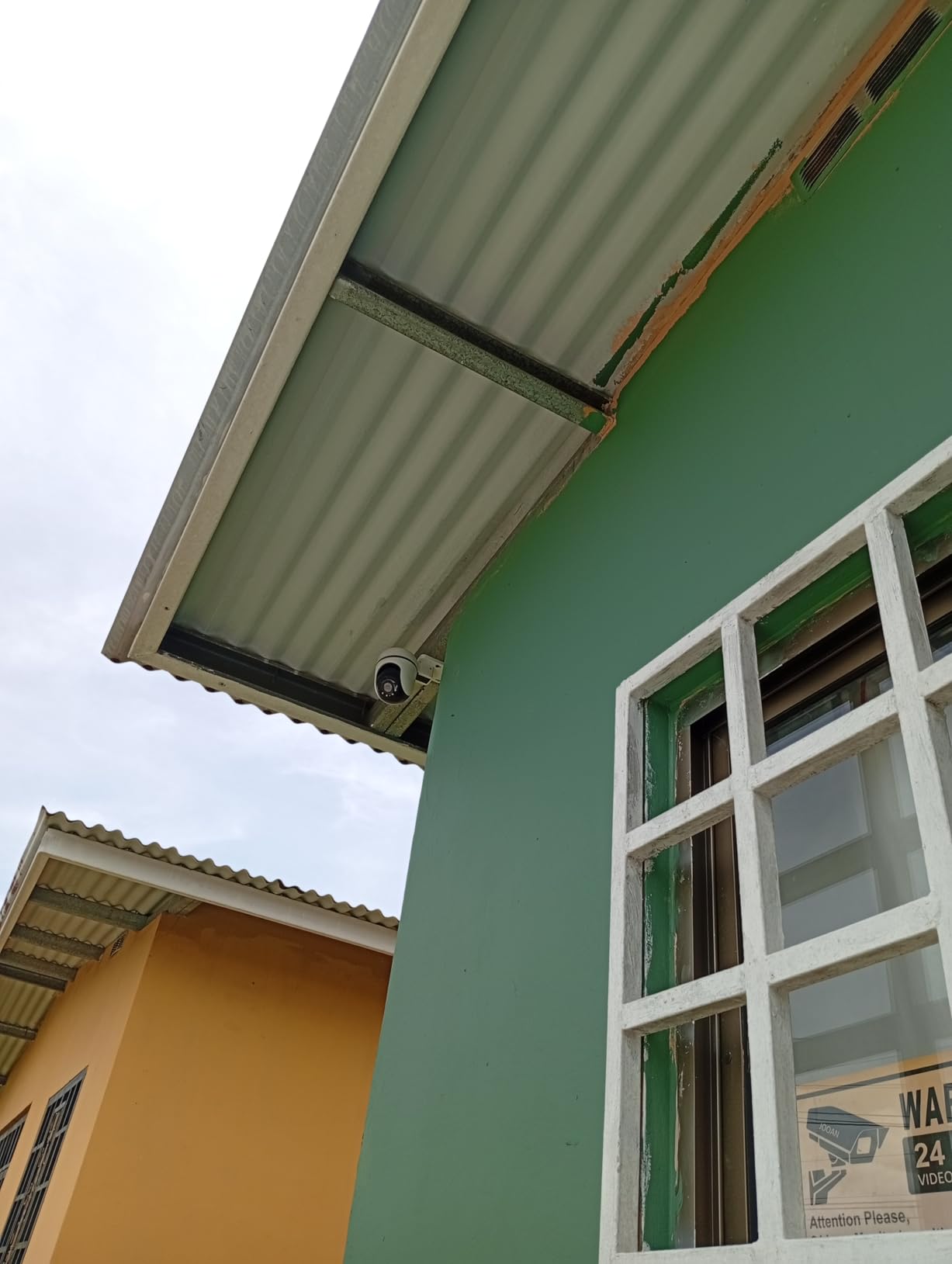
Two details make this the safest first purchase. The physical privacy mode blocks the lens with a real shutter rather than a software blackout, and the storage choice is genuinely open: microSD up to 512 GB with no monthly fee, or Tapo Care cloud if you want off-site copies. The two-way audio includes a recorded sound alarm, which is more useful as a deterrent than as a conversation.
The caveats are real. It is a corded camera, so on an exterior wall you need a socket indoors or a properly sealed power run, and the alarm strobe and siren are both mild. Owners also report the detection zones staying put while the head moves, so a zone drawn at one angle can end up pointing at foliage once the camera pans away from it.
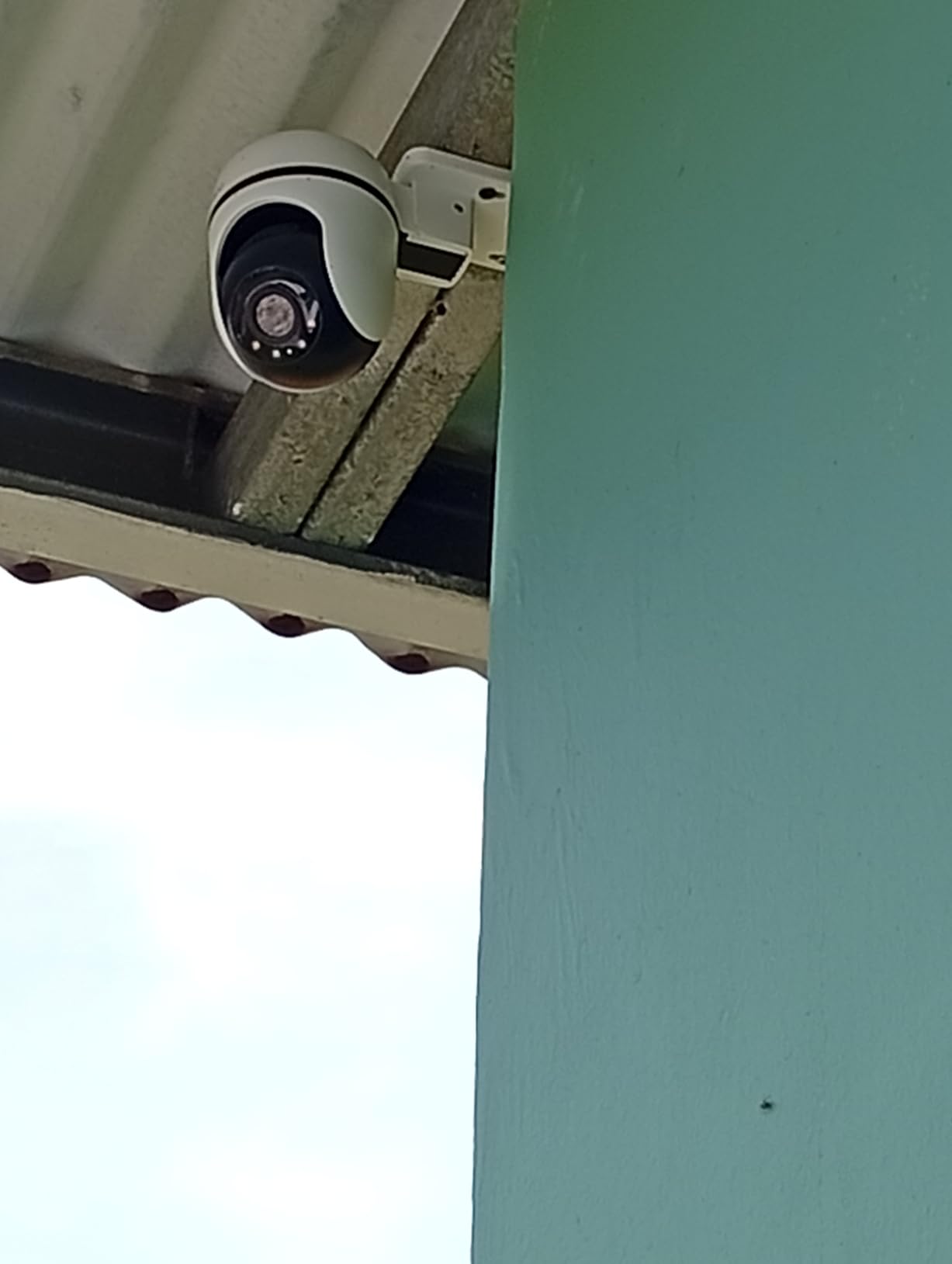
Where the Tapo C500 fits a home
This is the camera to buy when you want one device covering a front path, a side gate and a slice of the front garden without planning three fixed cameras. The 130 degree tilt lets it look down at a path and up toward a gate from a single bracket, and the tracking follows a person walking through the zone rather than snapping to the nearest movement.
It suits a household that already uses the Tapo ecosystem or any Alexa or Google Assistant setup, and it suits anyone who would rather not pay a monthly cloud fee. The app setup is quick, and angle and sensitivity adjustment are both in the app.
Where the Tapo C500 falls short
Do not buy it to identify a face at 80 feet in the dark. There is no optical zoom here, only digital, and the night image is monochrome with no flood light to add colour. It is also the wrong choice for a pole or an outbuilding with no power nearby, since it has no battery and no solar option.
If your router only reaches the far corner of the property through a wall or two, the Wi-Fi dropouts some owners report will cost you footage at exactly the moment you want it.
2. aosu 3K 5MP Solar PTZ Camera
aosu 3K 5MP Solar Security Camera Wireless Outdoor PTZ 360° Smart Tracking
- 3K 5MP resolution is sharp for the resolution class
- Solar panel means no cable run to the mount
- Full-color night vision with an integrated spotlight
- Tracks humans and vehicles with instant alerts
- 2.4GHz Wi-Fi only with no 5GHz support
- Digital zoom only with no true optical zoom
- About 10 percent of reviews are one star
- Setup and app pairing friction reported
The aosu 3K 5MP solar camera is one of the few here that gives you full-colour night footage, and that single feature changes what you can do with it after dark. The integrated spotlight fires on detection and the 5MP sensor records in colour rather than switching to infrared, so clothing colour and vehicle paint are still readable in a driveway at night.
It is a solar unit with a 2.05 kg body measuring 8.66 x 6.3 x 5.31 inches, and it can be wall mounted or ceiling mounted. Tracking covers humans and vehicles, and the two-way talk uses AI noise reduction, which helps when wind is hitting the microphone.
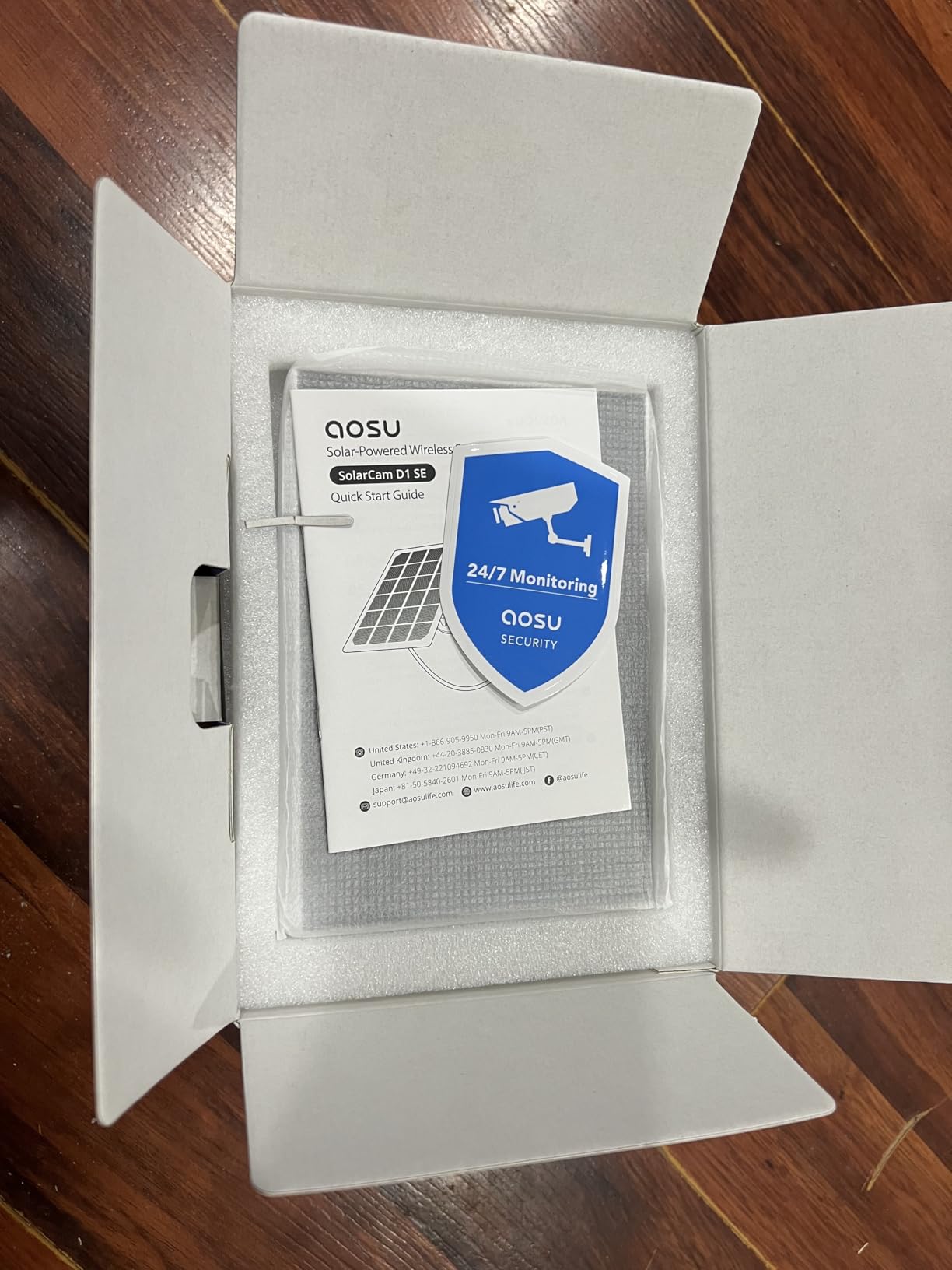
Two cautions before you commit. It is 2.4GHz only, so on a dual-band router you will need to separate the 2.4GHz network during setup and keep it that way. And the zoom is digital rather than optical, so magnifying into a distant object crops the frame and softens it instead of pulling real detail in.
With a 4.2 average and roughly a tenth of reviews at one star, the reliability spread is wider than the Tapo. Some of that is app pairing and connection friction during setup, and it is worth factoring in if you are installing this where a second visit to the wall would be inconvenient.
Why the aosu earns its spot
Colour at night is the reason to pick this one. A monochrome infrared image tells you a shape is there; a colour image tells you what they were wearing, which is the difference between a useful clip and a useless one. The solar panel also frees you from running a cable to a back garden corner.
It works well for a side gate, a garden path or a back field boundary where you want movement alerts on people and vehicles and nothing more.
Why the aosu is not the top pick
The 2.4GHz-only radio is the practical problem. In a house where the router sits in an office and the camera sits past a brick wall, that single band is often the weak one. Add the digital-only zoom and the mixed reliability record, and the Tapo C500 remains the safer buy for most front-of-home use.
3. SEHMUA 2K Solar Pan/Tilt 2-Pack
- Solar charging holds the battery even on cloudy days
- PIR sensing cuts false alarms versus basic motion
- Two cameras in the box doubles coverage
- Color night vision plus IR LED array
- No microSD card included in the box
- Motion sensitivity is high by default
- 2.4GHz only so 5GHz must be disabled
- No auto patrol sweep
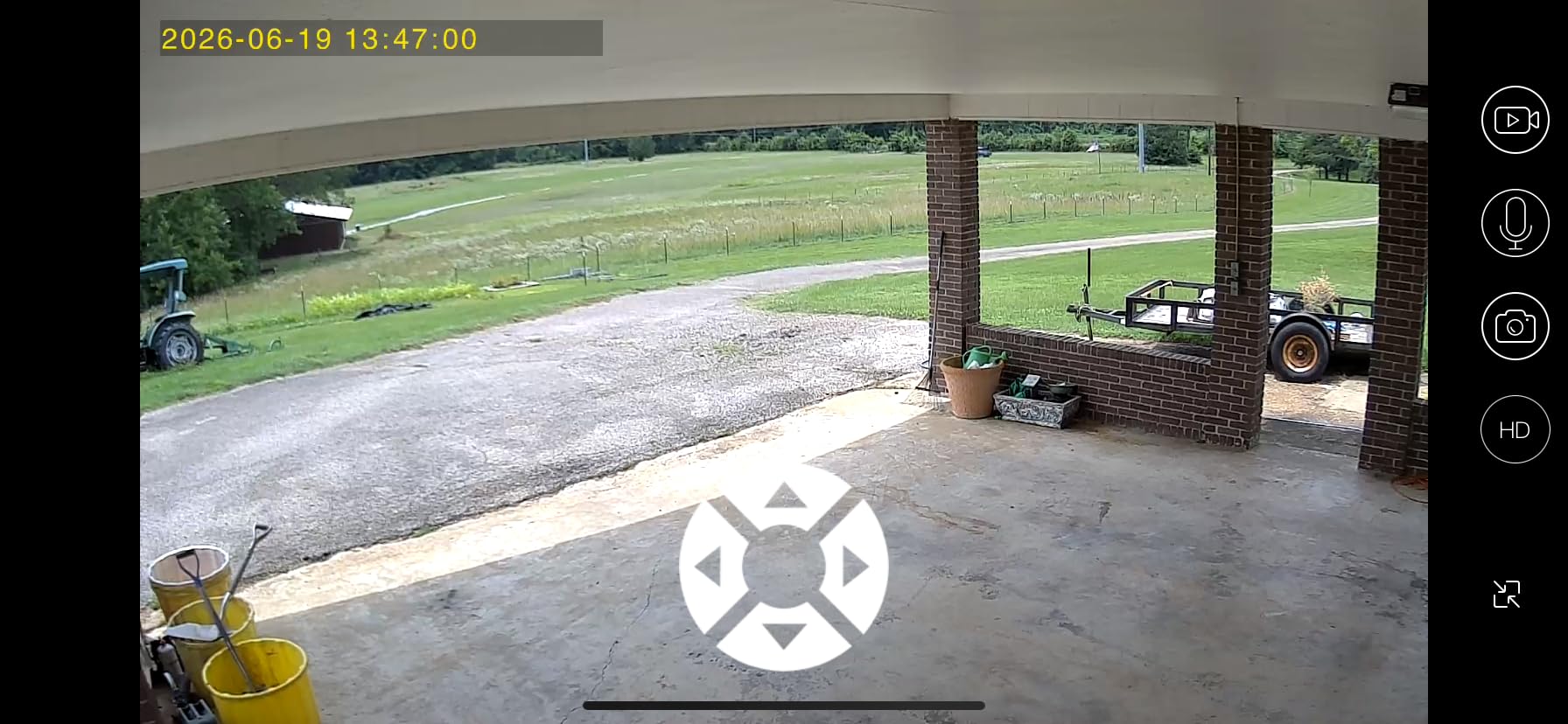
Buying two cameras in one box is the reason this one makes sense for a lot of homes. The pair gives you a 355 degree pan and tilt view at each of two positions, so a front path and a back gate both get covered without a second order or a second setup session.
Resolution is 2K with a 4X zoom ratio, and the removable solar panel charges a 6000mAh battery. Owners report the battery staying above 90 percent through cloudy stretches, which is the number that decides whether a solar camera is a set-and-forget device or a maintenance chore.
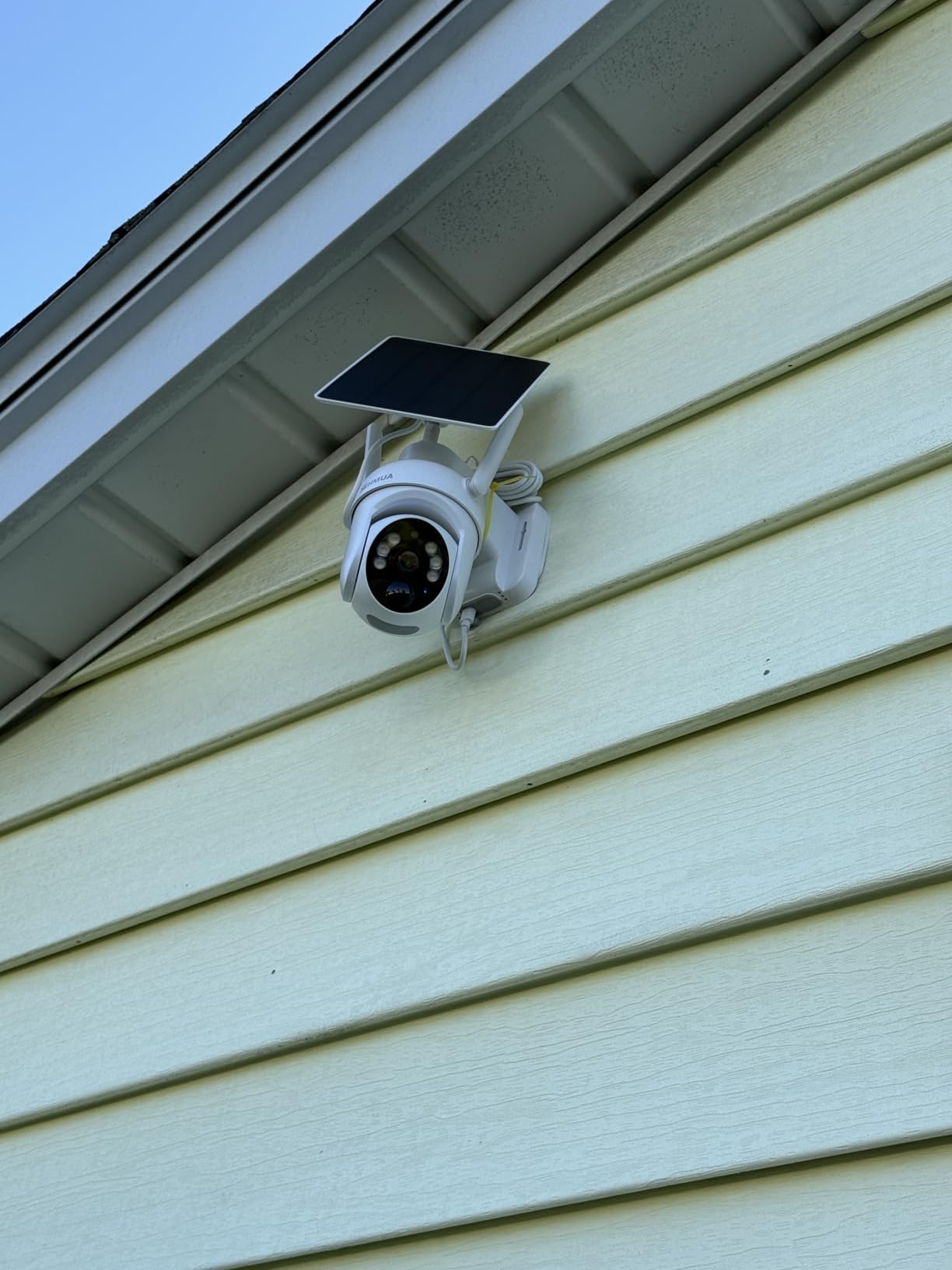
PIR sensing is the underrated part. Instead of reacting to every pixel change, the camera waits for heat movement, so insects brushing a leaf produce far fewer alerts than on a basic motion-detection camera. That matters at night, when a garden is otherwise a stream of false triggers from bugs and rain.
Night behaviour is a mix: full colour with the white spotlight on, infrared to 98 feet with two IR LEDs. The IP65 body handles rain, snow and sun, and two-way talk carries with minimal delay.
The one that catches people out is the missing microSD card. Recording needs storage you add yourself or an optional cloud trial, so pick up an SD card before you mount anything. There is also no auto-patrol or sweep feature, so the camera stays where you point it.
Where the SEHMUA pair works
Two of these on opposite corners of a property is a genuine solution for a yard, a farm outbuilding or a small business perimeter where running cable is not practical. PIR sensing keeps the notification list clean, and the 2.4GHz link has held up at long range and even at one bar of signal according to owners.
It is also the pick if you want a back garden camera that keeps recording through winter without a mains run.
Where it does not work
It is not a zoom camera. With a 4X ratio and no true optical element, you are cropping pixels, so a face at 60 feet is a smudge rather than an identification.
The high default motion sensitivity also means you will want to tune it down on day one, and the 2.4GHz-only limitation applies here as much as it does to the aosu.
4. VIZIUUY 3MP Solar PTZ with Wi-Fi 6
VIZIUUY 3MP Solar Security Cameras Wireless Outdoor, WiFi 6,360°PTZ Camera
- 9600mAh battery gives a generous reserve
- IP66 body and a published 150F upper rating
- Three alarm modes including siren and spotlight
- Free 7-day basic cloud tier plus 128GB microSD
- 2.4GHz only despite the Wi-Fi 6 branding
- 15 fps frame rate is low for fast subjects
- Pet vehicle and package analytics are paid extras
- About 10 percent of reviews are one star
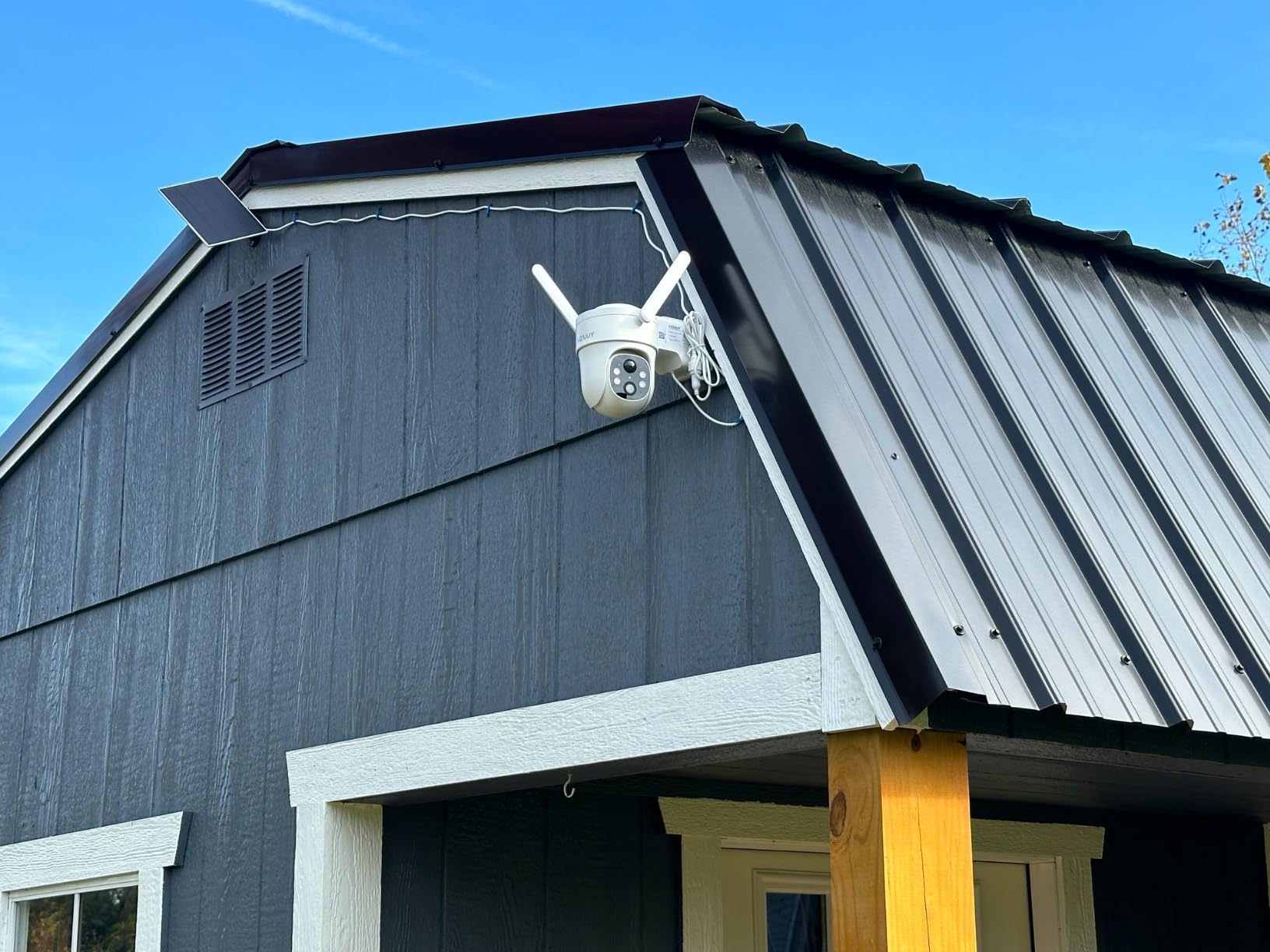
The VIZIUUY 3MP solar PTZ is the one to consider if your location is exposed. Its IP66 rating sits a step above the IP65 carried by most of the field, and it publishes an upper temperature rating of 150F, which matters on a west-facing wall in a hot climate where a dome housing can run hot on a summer afternoon.
A 9600mAh battery is a large reserve, and the panel plus automatic power recovery means the camera comes back on its own after a flat night. It pans 355 degrees, tilts 90 degrees, and records 3MP at 2048×1536.
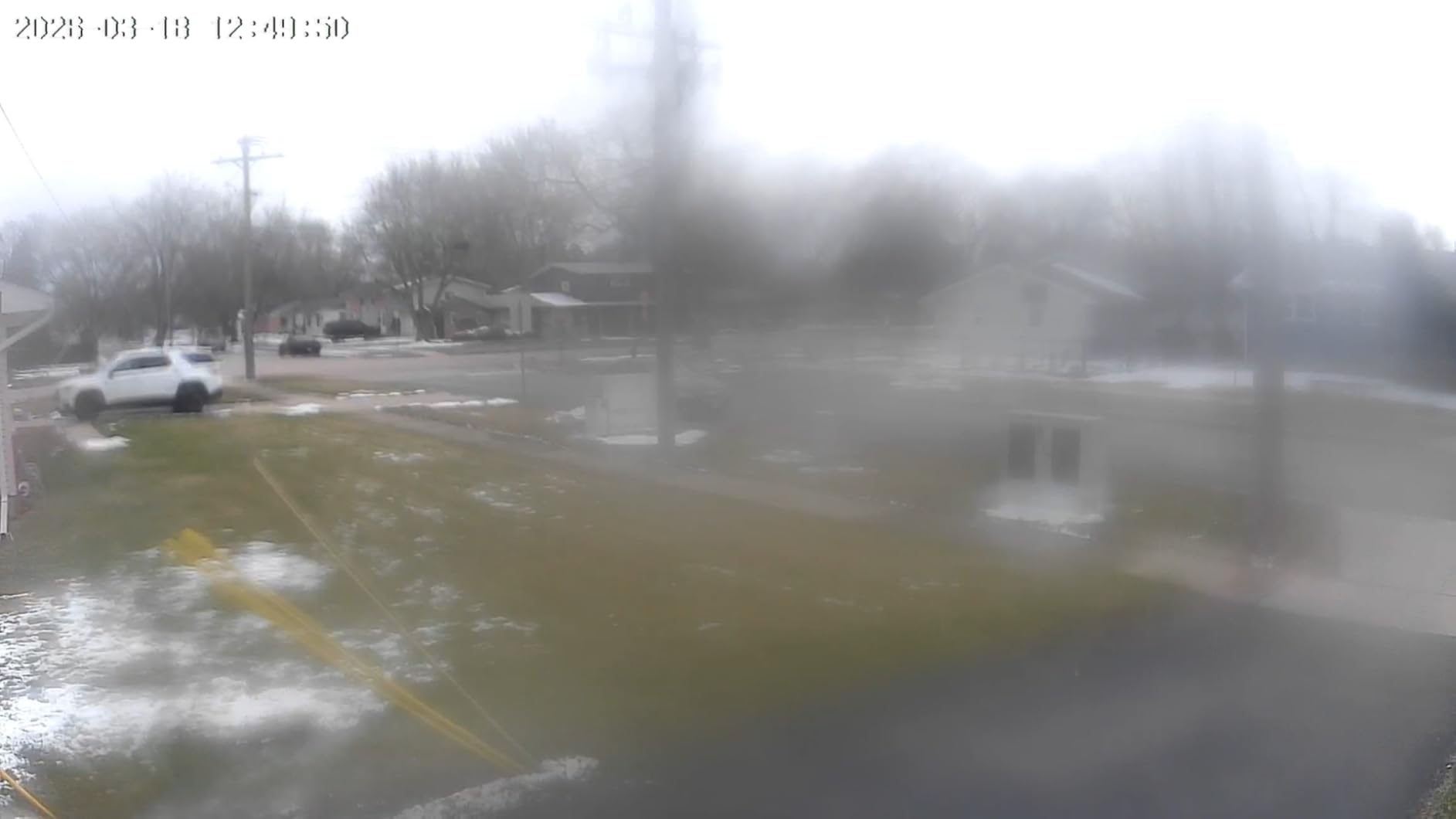
Alarm options are unusually flexible: siren, spotlight and app push, plus two-way audio and 60 feet of night vision. There is a free basic cloud tier holding 6-second clips for seven days, and 128GB microSD support for anything longer.
Three things temper the enthusiasm. The Wi-Fi 6 branding covers the radio standard but the radio is still single-band at 2.4GHz. The 15 fps frame rate is low enough that a fast-moving subject can look slightly stepped. And the smarter analytics, meaning pet, vehicle and package classification, are paid add-ons rather than included features.
Why the VIZIUUY earns its badge
For an exposed gate pillar, a coastal property or a courtyard in a hot climate, the combination of IP66 and a published temperature ceiling is the deciding factor. The battery capacity means fewer flat mornings than a smaller cell, and the free cloud tier gives you a safety net without a subscription.
It also suits anyone who wants the siren and spotlight to do the deterring rather than a notification.
Why it is not the winner
The single-band radio and the paid analytics cut against the headline. If your plan was to get person, vehicle and package detection for free, you will be paying for it separately. At 15 fps the camera is also less pleasant for anything moving quickly across the frame, such as a bike on a path.
5. REOLINK TrackMix PoE 4K Dual-Lens PTZ Camera
REOLINK TrackMix PoE Dual-Lens PTZ Security Camera 6X Hybrid Zoom Tracking
- Only dual-lens model listed
- showing wide and telephoto together
- 6X hybrid zoom helps at real distance
- One Ethernet cable for power and a stable 4K feed
- No subscription for remote access or any feature
- Aluminum housing rated -25C to +40C
- Needs a PoE switch
- injector or PoE NVR that is not included
- Large and must be wall mounted
- Momentary blur and refocus on every physical move
- Telephoto stream can lag the wide stream
The TrackMix PoE solves the oldest complaint about PTZ cameras with one design decision. Instead of a single lens that zooms and therefore narrows your view, it carries an 8mm telephoto and a 2.8mm wide-angle lens and shows both on one screen. The wide view keeps an eye on the approach while the telephoto view identifies the person inside it, and neither is lost while the other works.
Video is 4K at 25 fps with H.265 encoding and 6X hybrid zoom across three selectable tracking modes. Detection covers people, vehicles and pets, and playback can be filtered by detection type with no subscription fee at all, which is still unusual at this level of hardware.
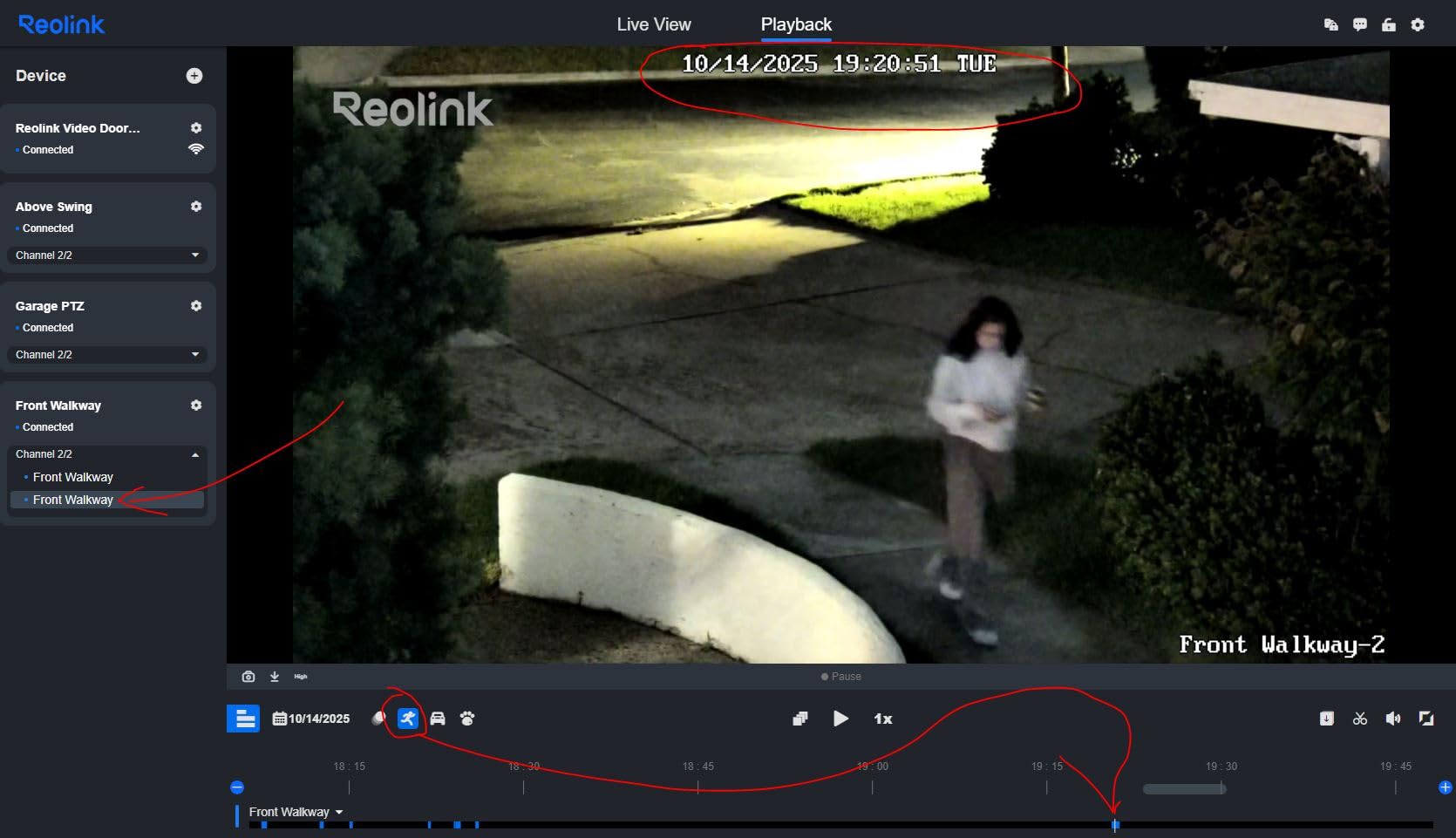
Power arrives over Ethernet, so one cable carries both power and a stable 4K feed. That matters for PTZ specifically: a camera fighting a weak Wi-Fi link will lag on every pan command, and lag on a pan command means the head is still moving when the intruder has already left the frame.
The housing is aluminum with an IP65 rating and a published -25C to +40C range. At 1.95 kg and 8.98 x 5.79 x 4.33 inches it is a substantial object and must be wall mounted rather than perched, but that weight is also why it stays put in wind.
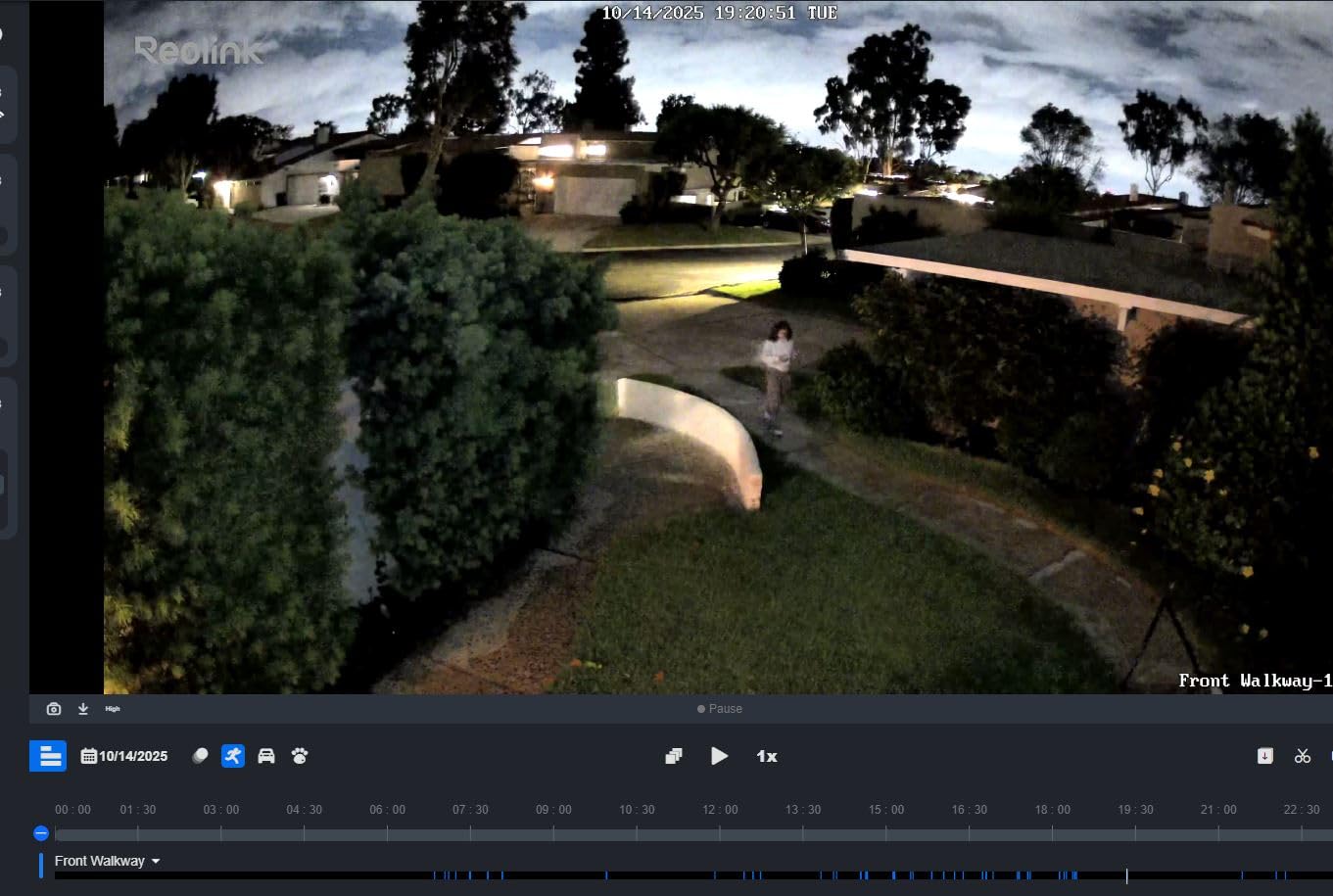
The real compromises are mechanical. Every physical pan or tilt produces a moment of blur and refocus, the telephoto stream can trail the wide stream by a few seconds, and digital tracking is jittery enough that detection masks do not stay anchored as the head moves. Night performance is the weak spot, with grainy infrared footage and unreliable built-in white LEDs.
Why the TrackMix earns the premium badge
This is the camera for someone who needs to identify, not just detect. A driveway 80 feet long, a car park, a farm gate or a long front path are all situations where a wide view tells you something happened and a telephoto view tells you who or what it was. The dual-lens layout also removes the classic failure of zooming in and losing sight of the wider scene.
For owners running a self-hosted setup, the ONVIF and RTSP support and the local storage options make it straightforward to pair with an NVR or a Home Assistant install. Our picks for outdoor security cameras for homes cover that ecosystem more broadly.
Why it is not the top pick
It needs a PoE switch, injector or PoE NVR, none of which is included, so the full setup costs more than the camera alone. It is also conspicuous, it does not perform well at night, and a nearly 2 kg aluminium housing on a pole is a serious commitment. If you do not need identification at distance, the Tapo C500 covers most homes for far less.
6. Gianteye 2K Solar Dual-Band PTZ 2-Pack
- Only solar model listed with dual-band automatic switching
- Solar plus internal battery kept running through a power outage
- Sharp 2K day and night clarity
- Starlight sensor for usable low-light colour
- Human detection only with no subject tracking
- Not compatible with any base station
- App is more complicated than most
- Solar cable needs bundling when mounted close by
Wireless reach is the reason the Gianteye 2K solar 2-pack stands apart from the other solar cameras in this list. It switches automatically between 2.4GHz and 5GHz, so the camera can sit on the 5GHz band where it is close to the router and drop to 2.4GHz when distance makes the faster band unusable. On a large property that is the difference between a camera you trust and one you check on.
Resolution is 2K at 2304×1296 with a starlight sensor, and night vision is quoted at 328 feet. It pairs that with a solar panel and an internal backup battery, so a power cut does not end coverage.
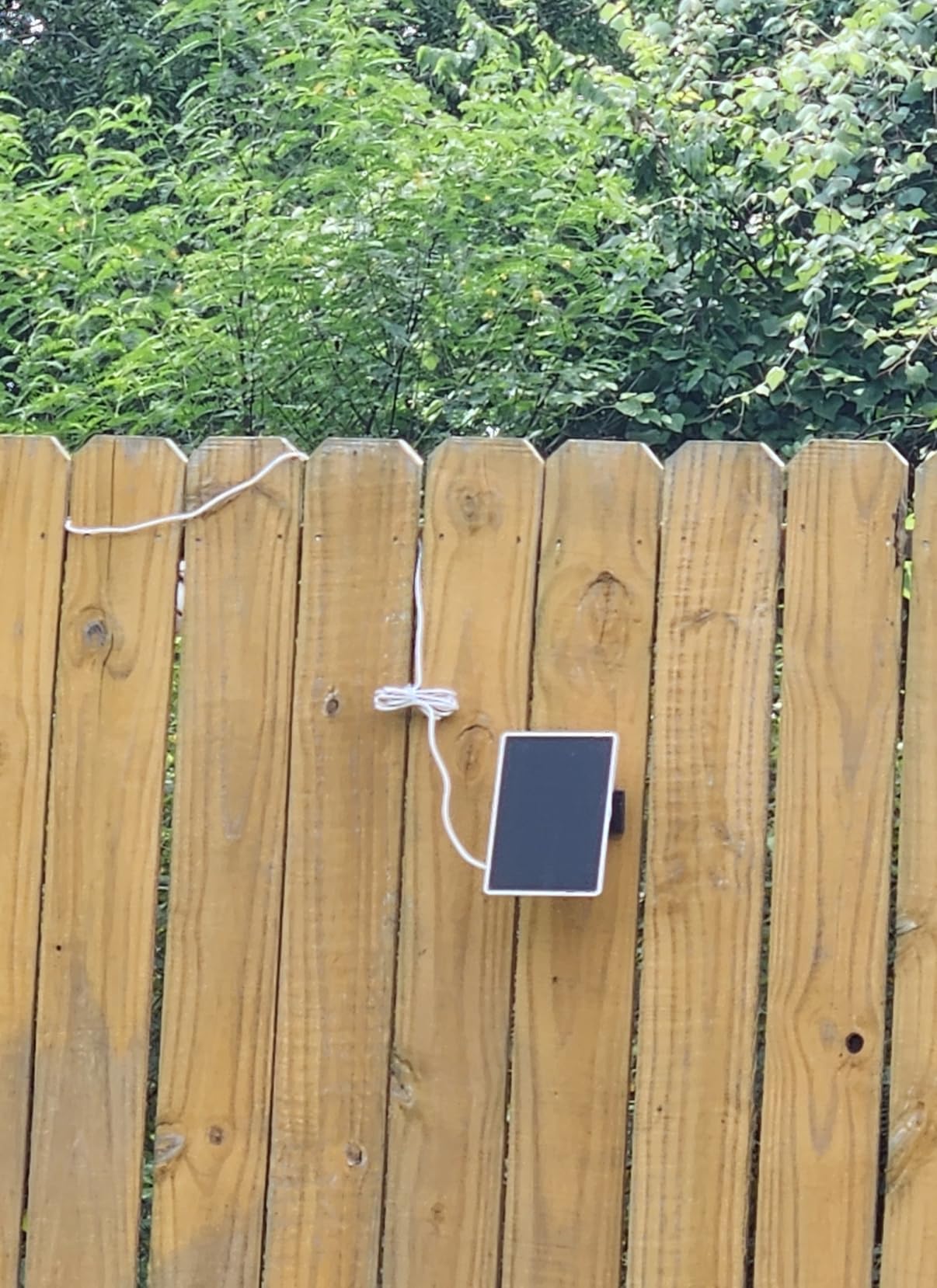
The 2-pack format gives two positions again, and the body is IP65 with dimensions of 6.69 x 5.31 x 8.07 inches. Two-way talk with a siren deterrent and a built-in light are both present, along with PIR plus AI human detection with a 16 to 29 foot adjustable sensitivity range.
What it does not do is track. The specification is human detection only, so it tells you someone is there rather than following them across the garden. It also will not pair with any base station, the app takes more navigating than most, and the solar cable is long enough that you will be bundling it when the panel and camera sit close together.
Where the Gianteye fits
It suits a wide property where the nearest router is a long way from the far corner of the land, and where a mains run is not realistic. The starlight sensor and the dual-band radio are both practical wins for a backyard, a paddock edge or a long driveway.
It is also a good second camera for anyone who wants solar plus colour night vision without buying a single large unit.
Where it falls short
No tracking means no follow-through on a subject walking away from the house. If you want to know where someone went rather than that they arrived, pair it with a fixed camera. And for a first-time installer, allow 30 to 45 minutes for the drilling and the app setup.
7. VIMTAG 2.5K Outdoor Pan/Tilt Camera
- 2.5K resolution is well above 1080p for a wired model
- Dual-band Wi-Fi on a plug-in camera is rare
- AI detection for people pets and vehicles with 4 zones
- Color night vision to 65 ft plus spotlight and siren
- Digital zoom only so magnified detail degrades
- Needs a nearby outlet
- Listed item dimensions look implausible for a pan and tilt camera
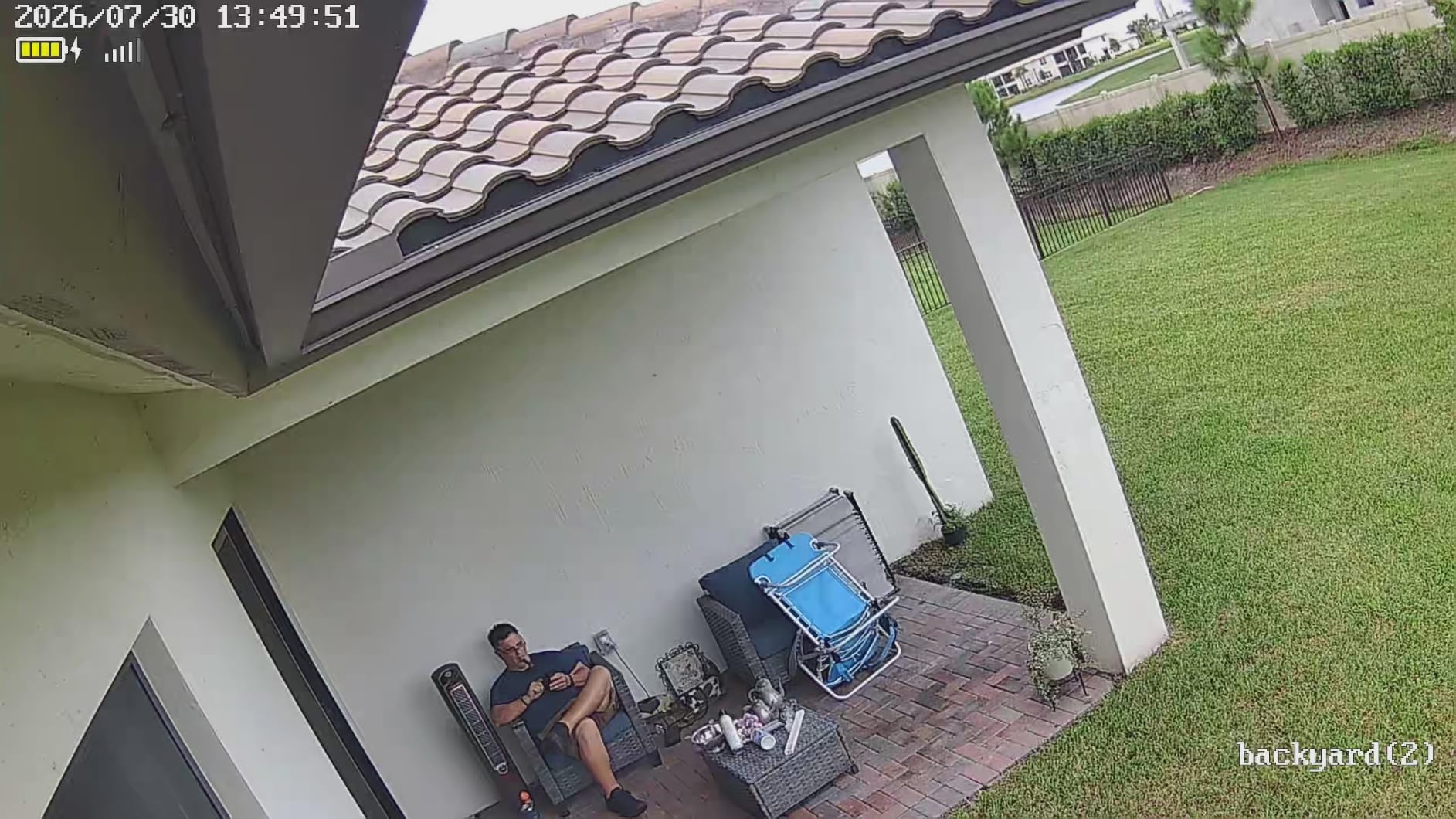
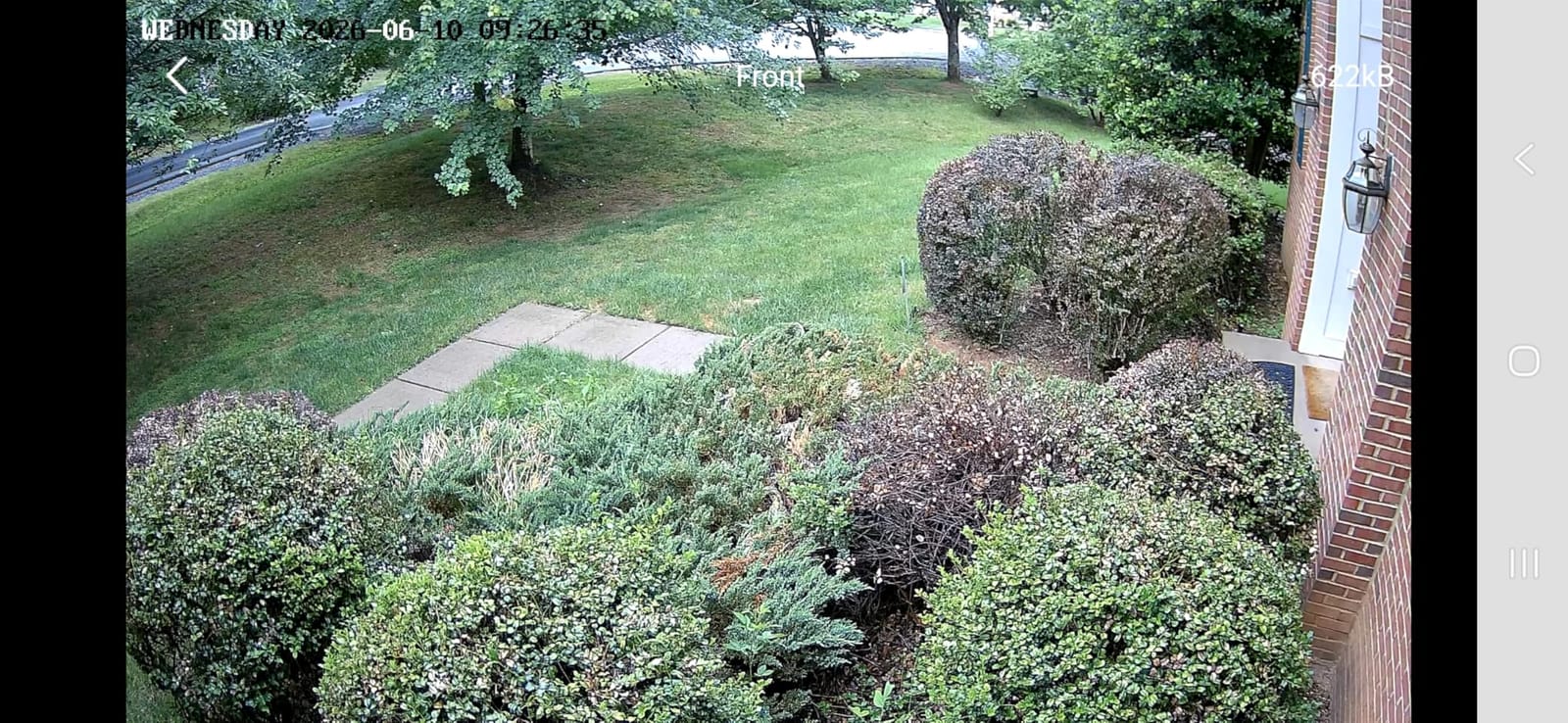
The VIMTAG 2.5K is our value pick here, and the reason is how much capability the specification sheet returns. It records 2.5K QHD at 2560×1440, which is a genuine step up from 1080p, and it pairs that with dual-band 2.4GHz and 5GHz Wi-Fi and an IP66 body.
That combination of dual-band wireless and a high IP rating is unusual in this part of the market. Most entry-level outdoor pan-and-tilt cameras give you one or the other. It pans 360 degrees, tilts 90 degrees, and adds smart motion tracking, two-way audio, an LED spotlight and a siren.
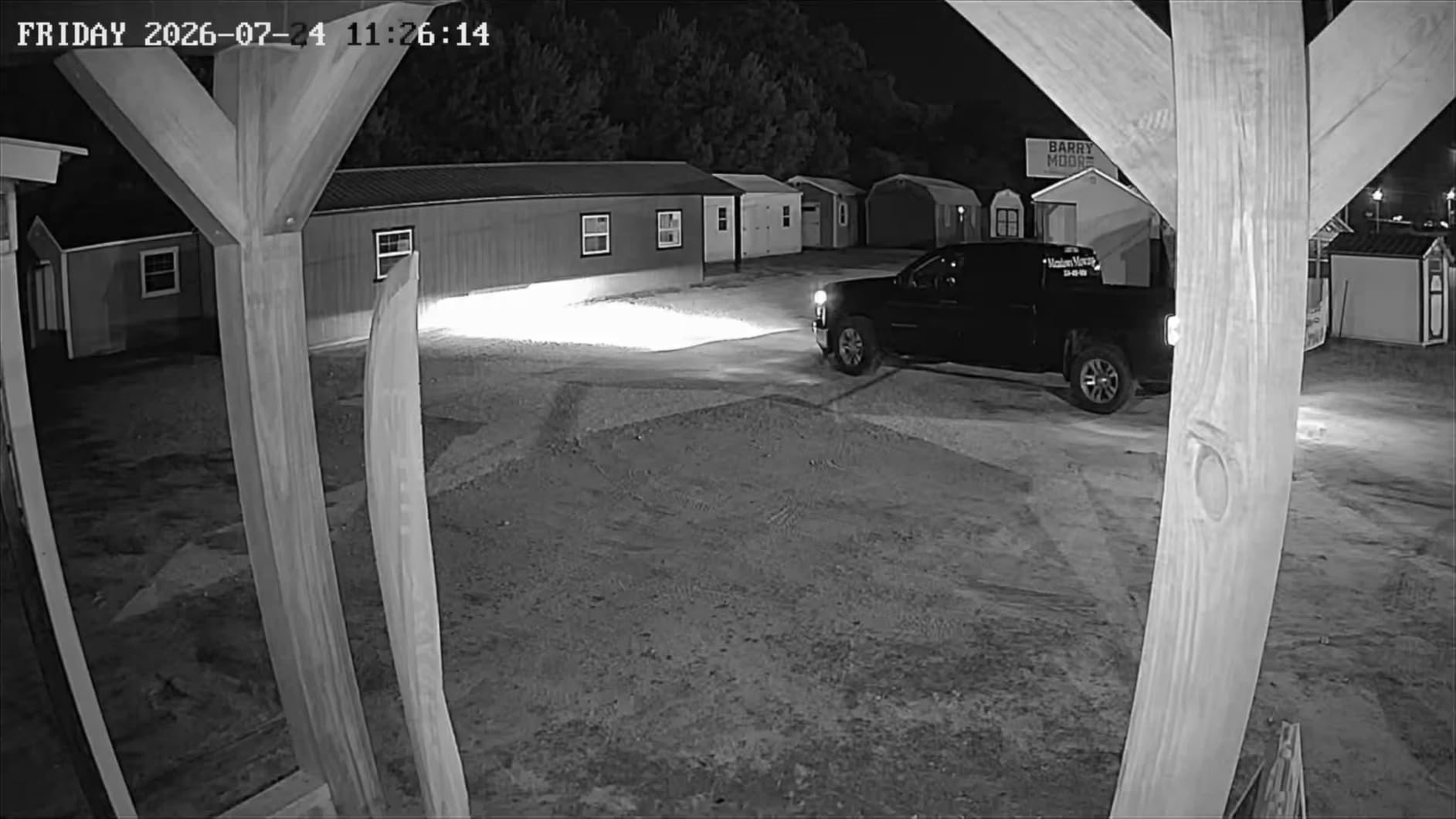
AI detection distinguishes people, pets and vehicles with up to four custom activity zones, and none of it requires a subscription. Storage runs to 512GB on microSD, with a 30-day free cloud trial if you would rather not manage a card. The Canny Cam app handles up to 32 cameras and works with Alexa, which matters if you are building a multi-point system.
Two practical limits. It is plug-in with a 9.8 foot power cable, so it needs an outlet within reach or a sealed run. And the zoom is digital, so the 8X figure crops rather than magnifies optically. The listed item dimensions of 0.39 x 0.39 x 0.39 inches also look wrong for a pan and tilt camera, so measure your mount before drilling.
Why the VIMTAG is worth considering
If you want a single wired camera to cover a patio, a side passage or a shopfront and you do not want to think about subscriptions, this does the job at 2.5K with colour night vision to 65 feet. The four activity zones and the pet and vehicle detection are the features that keep the alert list usable.
It is also a sensible unit to add as a second or third camera once a main PTZ handles the long view.
Why it is not a first choice
Digital zoom rules it out for identification work, and the cord means it is useless for a gate pillar, a field boundary or any post with no power. It is a close-range camera that happens to be weatherproof, not a long-range one.
8. REOLINK E1 Outdoor Pro 4K PTZ Camera
REOLINK E1 Outdoor Pro 4K PTZ Outdoor Security Camera WiFi Plug-in Power
- Genuine 3X optical zoom rather than digital cropping
- 4K sensor with up to 100 ft infrared range
- Wi-Fi 6 with both bands supported
- No subscription for local storage or playback
- Two-year limited warranty
- SD card cover can catch on the ball and jam the pan and tilt
- PTZ commands are laggy and imprecise with no scan mode
- Zoom is separate from pan and tilt and does not run while tracking
- Activity zones block recording outside the zone
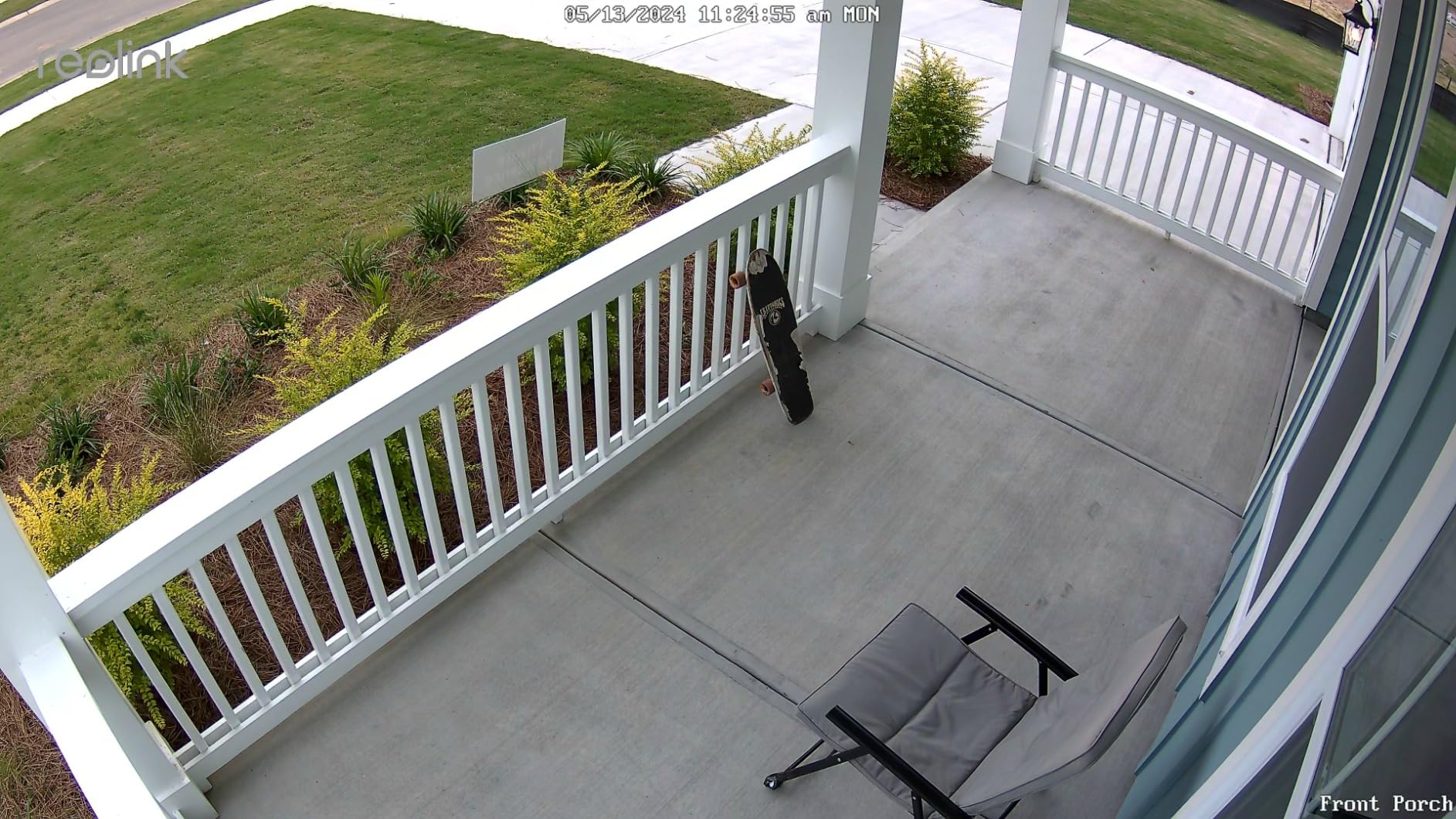
The E1 Outdoor Pro is the only camera in this group listing a true optical zoom figure, and that one difference shapes everything else about it. The 3X optical zoom pulls actual detail in rather than cropping pixels, so a person at 60 feet stays recognisable where a digital zoom would leave you with a smudge.
The sensor is 8MP stills and 4K video, and infrared night vision reaches 100 feet with 12 IR LEDs. It runs Wi-Fi 6 across both 2.4GHz and 5GHz, pans 355 degrees and tilts 50 degrees, with person and vehicle auto tracking and customisable motion zones and schedules.
Storage is microSD up to 512GB with no subscription for local storage, detection or playback, and it pairs with Reolink home hubs and both PoE and Wi-Fi NVRs. A two-year limited warranty is included, which is longer than most of the field.
The mechanical execution is the weak part and it is a specific one. The rubber SD card cover sits on the articulating ball and can catch as the head turns, jamming the pan and tilt. Owners also describe the PTZ commands as inconsistent and laggy, the zoom as clunky and separate from the pan and tilt, no scan or patrol mode at all, and no zooming while tracking is active. For outdoor use it also has to be mounted upside down, and there is at least one report of moisture ingress and a failed power brick on an incorrectly mounted unit.
Why the optical zoom matters
Optical zoom is the single most useful thing a PTZ camera can offer and the hardest to get. Every other camera in this list except the TrackMix crops a 2K or 3K frame and enlarges it, which looks acceptable until you need a face, a number plate or a package label. This one holds detail as it moves in.
It suits a driveway, a front path or a rear entrance where you want the head to follow a person and still resolve who they are. The dual-band Wi-Fi 6 and the no-subscription storage make it a good fit for a Reolink-led system.
Why the mechanics hold it back
A camera that is excellent at finding and weak at pointing is a frustrating tool. The lag on PTZ commands, the absent scan mode and the card cover that can jam the head all work against the main reason to own a PTZ in the first place. Users also report the Reolink app behaving differently across Windows, Android phones and Android tablets, and the activity zones can block recording entirely outside the drawn area.
9. Alptop AT-200DW 1080p Outdoor IP PTZ Camera
- Works as a generic ONVIF and RTSP IP camera
- Very responsive pan and tilt with fine swipe control
- Color night vision to 100 ft and IR to 150 ft
- IP66 body with 320 degree pan and 90 degree tilt
- Marketed as PTZ but has no optical zoom and fixed focus
- All-plastic body for a permanent outdoor mount
- Occasional hardware faults and slow support
- Documentation is terse
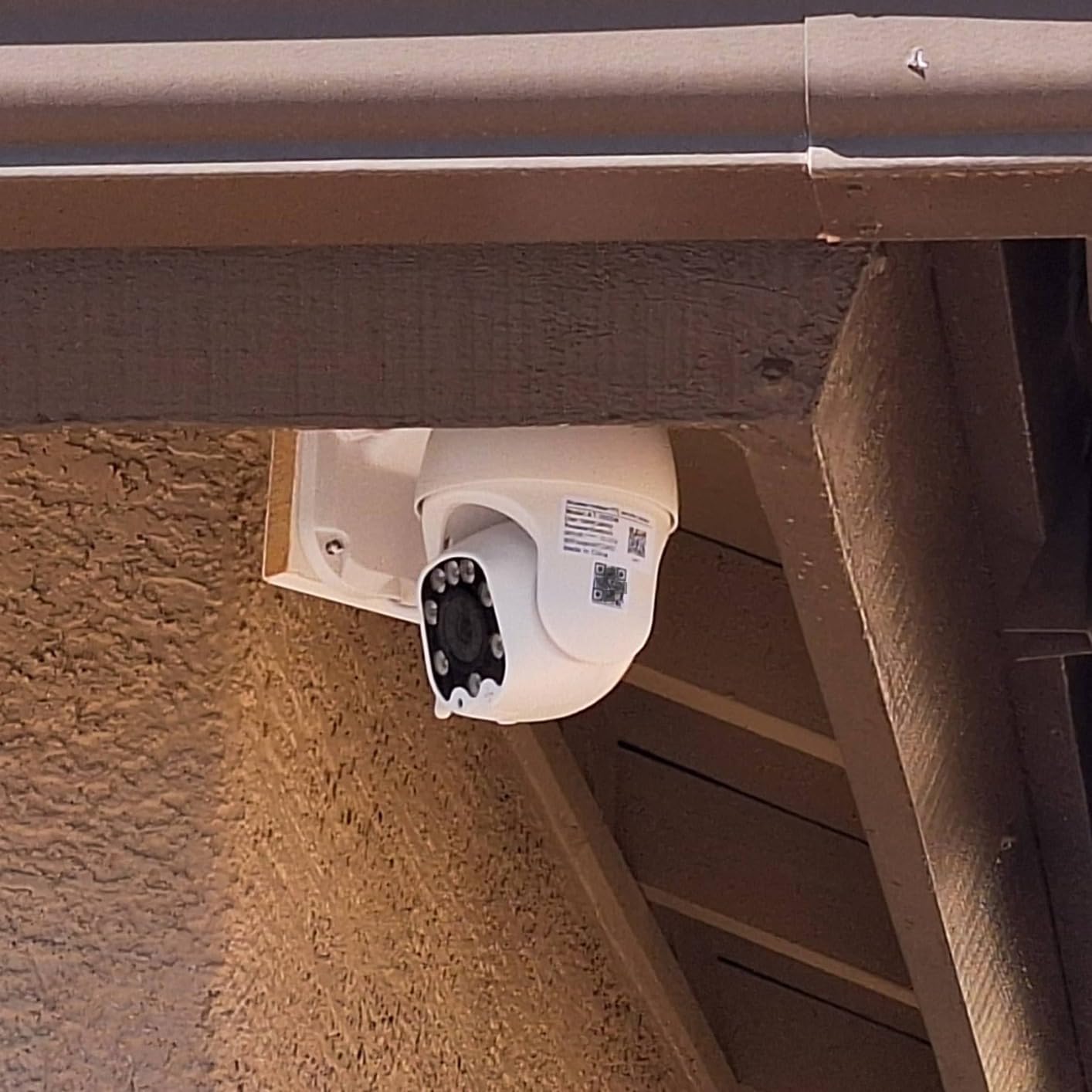
The Alptop AT-200DW is the one to buy if you run your own recording software rather than a phone app. It speaks ONVIF and RTSP, so it drops into systems such as Blue Iris, Frigate or any NVR that accepts generic IP cameras, and that is exactly what the Alptop is good at.
The pan and tilt are responsive, with fine swipe control in the CamHiPro app, and owners report auto tracking of a moving object working well. Video is 1080p at 1920×1080 on a 70 degree lens, with movement across 320 degrees horizontal and 90 degrees vertical.
Night is a genuine strength. Full-colour night vision reaches 100 feet, infrared reaches 150 feet, and there are three selectable night modes so you can balance colour against range. Two-way audio uses a 38dB microphone with anti-noise processing, and the IP66 body suits a wall mount.
The catch is the label. It is sold as PTZ, but there is no optical zoom at all. The focus is fixed, which also means there is no way to correct lens focus drift as the unit ages. The body is all plastic for something intended to sit outdoors permanently, and there are reports of a faulty Ethernet port and slow support response.
Where the Alptop makes sense
If you already run a self-hosted NVR, a generic IP camera is usually a better deal than a branded one because the software does the heavy lifting. This model slots into that approach, and the long infrared range plus colour night modes make it useful for a rear yard or a side lane.
It is also a sensible cheap second viewpoint on an existing Blue Iris or Frigate setup.
Where it is the wrong tool
Nothing here zooms, so it is a pan and tilt camera wearing a PTZ label. Anyone expecting to read a plate or a face at distance will be disappointed. The plastic housing and fixed focus also make it a shorter-term choice than the aluminum-bodied units here.
10. Hiseeu 3K 8-Camera PTZ DVR Kit
Hiseeu 3K PTZ Wired Security Camera System Outdoor,8PCS 5MP Cameras
- Eight PTZ cameras plus DVR and drive in one kit
- 1TB pre-installed gives 15+ days of local recording
- IP67 cameras rated from -40F to 140F
- AI human and vehicle filtering with no monthly fee
- Generous cable lengths included for flexible placement
- Not enough power adapters and splitters to run all eight cameras
- Coax means no Wi-Fi and no cloud access
- Some reports of DVR reliability and missing audio
- Varifocal lenses do not zoom far enough for close detail
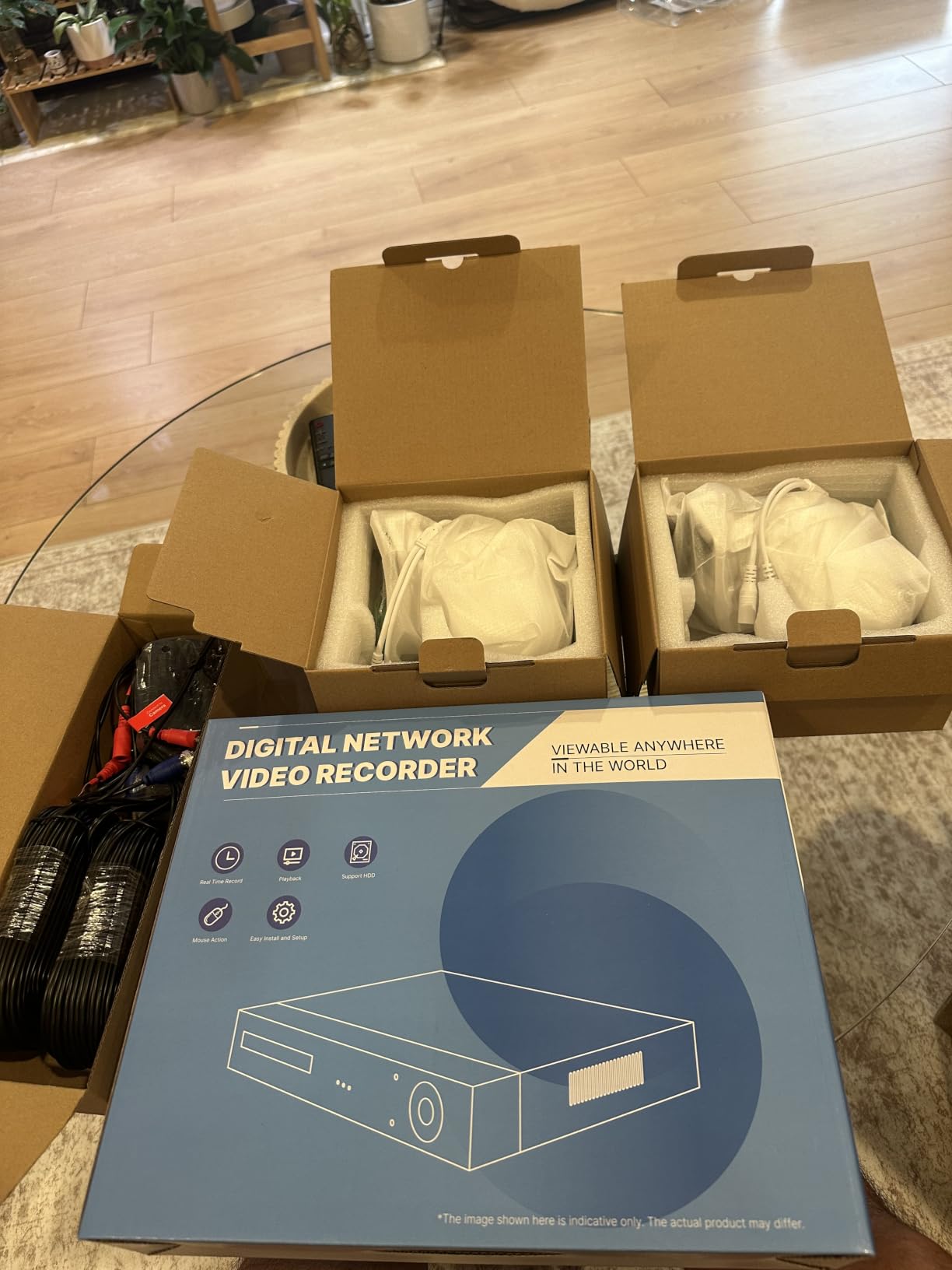
This kit is a different proposition from the other nine. Rather than one camera, you get eight 5MP PTZ units with 355 degrees of pan and 90 degrees of tilt, an eight-channel DVR with a 1TB surveillance-grade drive already installed, and the cabling to connect them. For a farm, a warehouse yard, a large home with a perimeter or a building site, that is a complete system rather than a starting point.
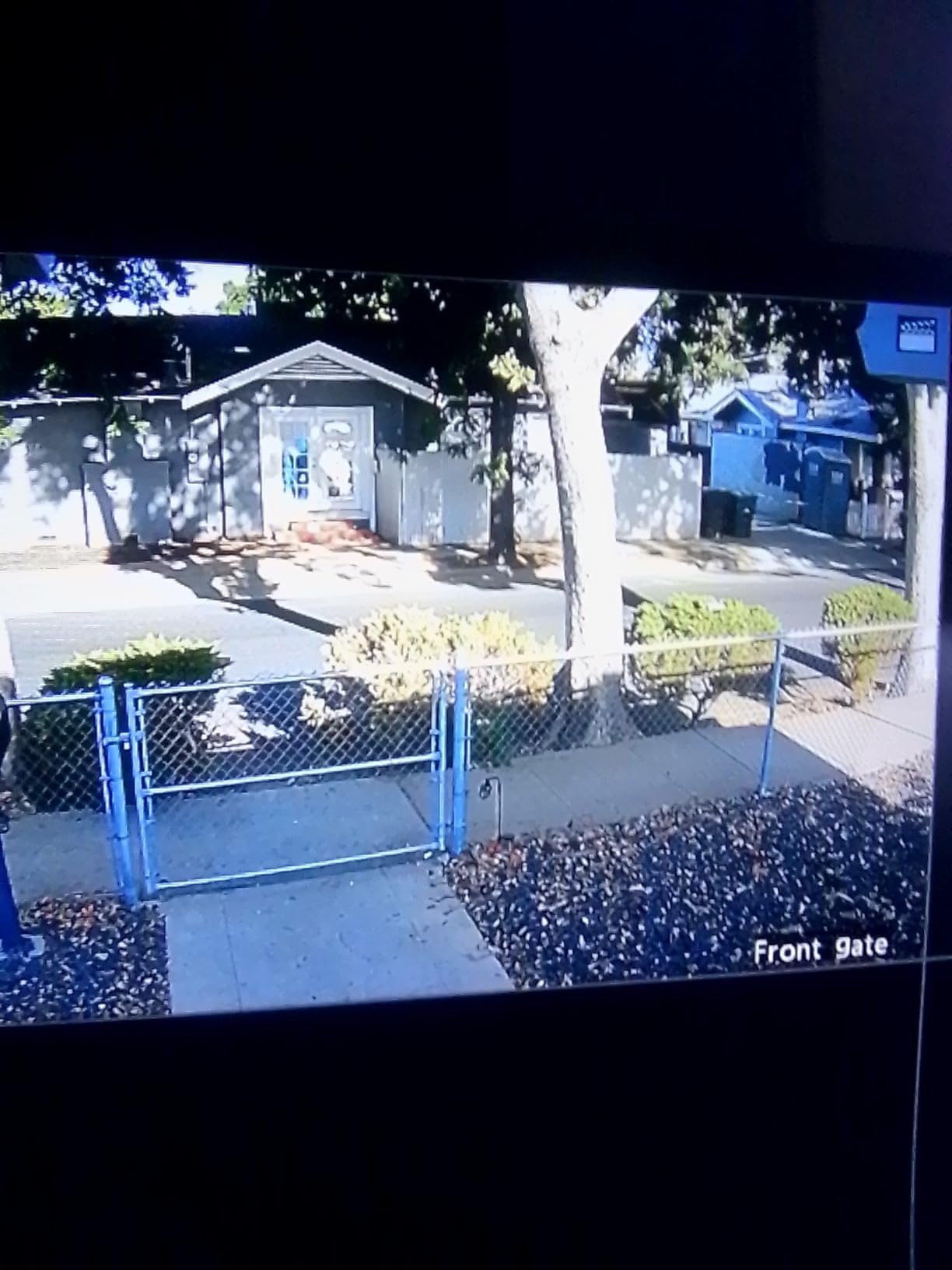
Recording is entirely local. The drive holds 15+ days of 24/7 or motion recording with 256x fast playback, and AI human and vehicle filtering works on up to four cameras with free real-time push alerts. No monthly fee attaches to any of it.
The mechanical spec is the strongest in the group for harsh conditions. The cameras are IP67 rated for -40F to 140F, which covers everything from a northern farm building to a desert yard, and the DVR can be viewed on a local monitor with no network connection at all, so an internet outage does not take your view away.
Night behaviour is dual: infrared black and white to 100 feet, plus a triggered LED colour mode when a person is detected. The box includes four 96 foot and four 58 foot BNC cables, power splitters and three DC12V adapters.
The most common complaint is a packaging one. There are not enough power adapters and splitters to run all eight cameras at once, and the documentation does not explain how to power all eight channels from what is included, so plan to buy more. Because it is coax, there is no Wi-Fi, no cloud access and no setup without the recorder.
Who the Hiseeu kit is for
Anyone covering more ground than a handful of fixed cameras could handle, especially where the site is far from Wi-Fi. A ranch, a farm, a construction compound, a large parking area or a multi-building property all benefit from eight PTZ heads and 15 days of retained footage with no recurring charge.
It is also the answer to off-grid or unreliable-internet sites, since the local monitor option keeps the system working with no internet at all.
Who should skip it
Anyone who wants phone-first control or a smart home integration will find coax limiting. The varifocal lenses also do not zoom far enough for identification at distance, so this is coverage and deterrence rather than detail. And a kit this size needs a plan for power, cable routing and a mounting pole per camera before the first box arrives.
PTZ vs Fixed Camera: Which One Do You Actually Need?
The honest answer is that most homes need both, and the PTZ is the second camera rather than the first. A PTZ can only see where it is pointed, so everything outside its current angle is unrecorded. That is the core disadvantage, and it is why owners in home security forums repeatedly recommend a fixed wide-angle camera for baseline coverage with a PTZ for the long view.
Choose a PTZ first if you need to identify something at distance: a face, a vehicle, a number plate, a face at a gate. Optical zoom is the dividing line, because a digital zoom on a cropped frame cannot create detail that was never captured. A fixed wide-angle camera at the same spot will usually show you a person but not who they are.
Choose a fixed camera first if you want coverage that never has gaps, simple storage and no moving parts to wear out. Fixed cameras also avoid the moment of blur every time a PTZ head moves, and each one covers a wider angle for less hardware, so ten fixed cameras can cover a perimeter using a fraction of the gear four PTZ units would need.
The best compromise used in the field is a fixed wide-angle camera covering the whole scene plus a PTZ dedicated to a long driveway or gate.
A few more PTZ-specific drawbacks to weigh. Detection zones and the head do not always move together, so a zone drawn at one angle can end up covering a tree. Activity zones on some models suppress recording entirely outside the drawn area. And every pan and tilt is a moment where the image is soft, which means the clip that matters most may start mid-move.
How to Choose an Outdoor PTZ Camera in 2026
Pan and tilt range. Pan is almost always 320 to 360 degrees, so it separates nothing. Tilt is the useful number. The Tapo C500 moves 130 degrees, a wider tilt than any other figure published in this roundup, and that extra angle is what lets one camera cover both a steep path and a gate without repositioning.
Optical zoom versus digital. Only the REOLINK E1 Outdoor Pro and the REOLINK TrackMix PoE specify real optical magnification. Everything else crops and enlarges. If your aim is identification rather than notification, treat optical zoom as a requirement, not a preference.
Power method. Solar and battery removes the cable problem entirely and is the only realistic option for a gate pillar or a field boundary. Plug-in is quieter to run and never needs a panel, but it constrains where the camera can go. Reviewers in home assistant communities consistently report that PoE is the most reliable feed for PTZ, because a camera with a weak Wi-Fi link lags on every movement command.
Wi-Fi band. The single most common installation problem in this list is 2.4GHz-only hardware. The aosu, SEHMUA and VIZIUUY are all 2.4GHz only, which means separating your router bands during setup. The Gianteye and VIMTAG support both bands, and the two REOLINK models support dual-band as well.
Night behaviour. Decide whether you need colour or reach. The aosu and VIZIUUY give full-colour night with a spotlight, the SEHMUA offers both colour and IR, the REOLINK TrackMix PoE and VIMTAG pair colour with IR, and the Tapo C500 gives you monochrome infrared to 98 feet. Whichever you pick, our picks for the best outdoor security lights can add the illumination that a camera alone will not provide.
Storage and subscriptions. Local microSD and local NVR recording keep everything on your property. Cloud storage adds recurring cost per camera, and on some models the useful AI analytics, meaning pet, vehicle and package classification, are paid add-ons. Check what works with no monthly fee before you buy, not after.
Weatherproofing and temperature. IP65 handles rain and jets of water, IP66 handles powerful jets, and IP67 adds temporary submersion. For heat, look for a published upper temperature rating rather than assuming, and check the cold limit too if you are in a northern climate.
Auto-tracking behaviour. Tracking is where PTZ cameras most often disappoint. Look for models that track people and vehicles rather than any movement, that keep detection zones anchored while the head moves, and that keep tracking while zoomed. Insect-triggered alerts at night are a common complaint, and PIR sensing or AI person filtering is what reduces them.
Integration and mounting. If you run Home Assistant, check whether PTZ control works natively or needs a custom component, and check whether the brand supports ONVIF and RTSP before you commit. Finally, check the mounting story: some units must be wall mounted rather than perched, and one of these must be installed upside down for outdoor use to keep water out.
Frequently Asked Questions
What is the best PTZ security camera for outdoor use?
The best PTZ security camera for outdoor use is the Tapo C500 for most homes, with 360 degree pan, 130 degree tilt, 1080p video, IP65 weatherproofing and motion tracking at a 4.5 rating across thousands of reviews. If you need true optical zoom for identification, choose the REOLINK E1 Outdoor Pro. If you need a stable wired feed and a dual-lens wide and telephoto view, choose the REOLINK TrackMix PoE.
What is the disadvantage of a PTZ camera?
The main disadvantage is that a PTZ camera can only record where it is currently pointing, so anything outside its current angle is not covered at all. Other drawbacks include a moment of blur every time the head moves, the cost per viewpoint compared with a fixed camera, and the fact that most models rely on digital rather than optical zoom, which softens detail when magnified.
Which PTZ camera is best for outdoor use?
For a typical home the Tapo C500 is the best outdoor PTZ choice because it offers the widest tilt range at 130 degrees, dependable tracking and the largest review base for troubleshooting. For a large property, the Hiseeu 8-camera kit covers a full perimeter on a local DVR with no monthly fee. For solar installations far from power, the aosu or SEHMUA 2K models fit the job.
Which PTZ camera is the best-rated?
Among the ten cameras reviewed here, the Tapo C500 holds the highest average rating at 4.5 across almost 7000 reviews. The REOLINK TrackMix PoE and the Gianteye 2K solar pair follow at 4.4, while several models sit at 4.2 to 4.3 with a review count in the low thousands.
What are the top-rated outdoor PTZ security cameras right now?
For PTZ cameras judged on outdoor capability, the Tapo C500 leads on rating and review volume, the REOLINK TrackMix PoE leads on imaging with dual lenses and 4K over PoE, and the REOLINK E1 Outdoor Pro leads on optical zoom. For fixed cameras and wider systems, our guides to the best outdoor security cameras overall and for homes cover the alternatives.
Do PTZ cameras need a subscription?
Most of the cameras reviewed here do not require one. Local microSD storage and local NVR recording keep everything on your property, and models such as the REOLINK TrackMix PoE and REOLINK E1 Outdoor Pro include all features with no monthly fee. Optional cloud plans and paid AI analytics, such as pet, vehicle and package classification, do add recurring cost on some models.
Are PTZ cameras weatherproof?
Outdoor models carry an IP rating that indicates dust and water resistance. IP65 protects against water jets and is common on these models, IP66 adds protection against powerful water jets, and IP67 adds temporary submersion and is found on the Hiseeu kit. Temperature range matters as well, and the Hiseeu cameras publish a -40F to 140F operating limit.
How far can a PTZ camera see at night?
Night range depends on resolution, lens and lighting. Infrared range across these cameras runs from about 40 feet on the REOLINK E1 Outdoor Pro to 98 feet on the Tapo C500 and SEHMUA, 100 feet on the REOLINK TrackMix PoE and the Hiseeu kit, 150 feet on the Alptop, and 65 feet on the VIMTAG. Models with a spotlight, such as the aosu and VIZIUUY, give colour instead of range.
Conclusion
There is no single winner across all ten of these outdoor PTZ cameras, because the useful question is where the camera is going. The Tapo C500 is the best PTZ security camera for outdoor use in most homes: the widest published tilt range, dependable tracking, local storage and the widest support base of the group.
For identification work, the REOLINK E1 Outdoor Pro is the one with genuine optical zoom, and the REOLINK TrackMix PoE is the one with a dual-lens view and a stable wired feed. For sites with no power, the SEHMUA 2K 2-pack, the aosu 3K and the Gianteye pair all run on solar, with the Gianteye leading on wireless reach. The Hiseeu 8-camera kit remains the answer for a perimeter that needs more than one viewpoint.
Whatever you choose, check the power method, the Wi-Fi band and the IP rating against the actual mounting spot before you order. Getting those three right solves most of the disappointment that follows, and you can compare the fixed-camera side of the market in our guide to the best outdoor security cameras for homes.