
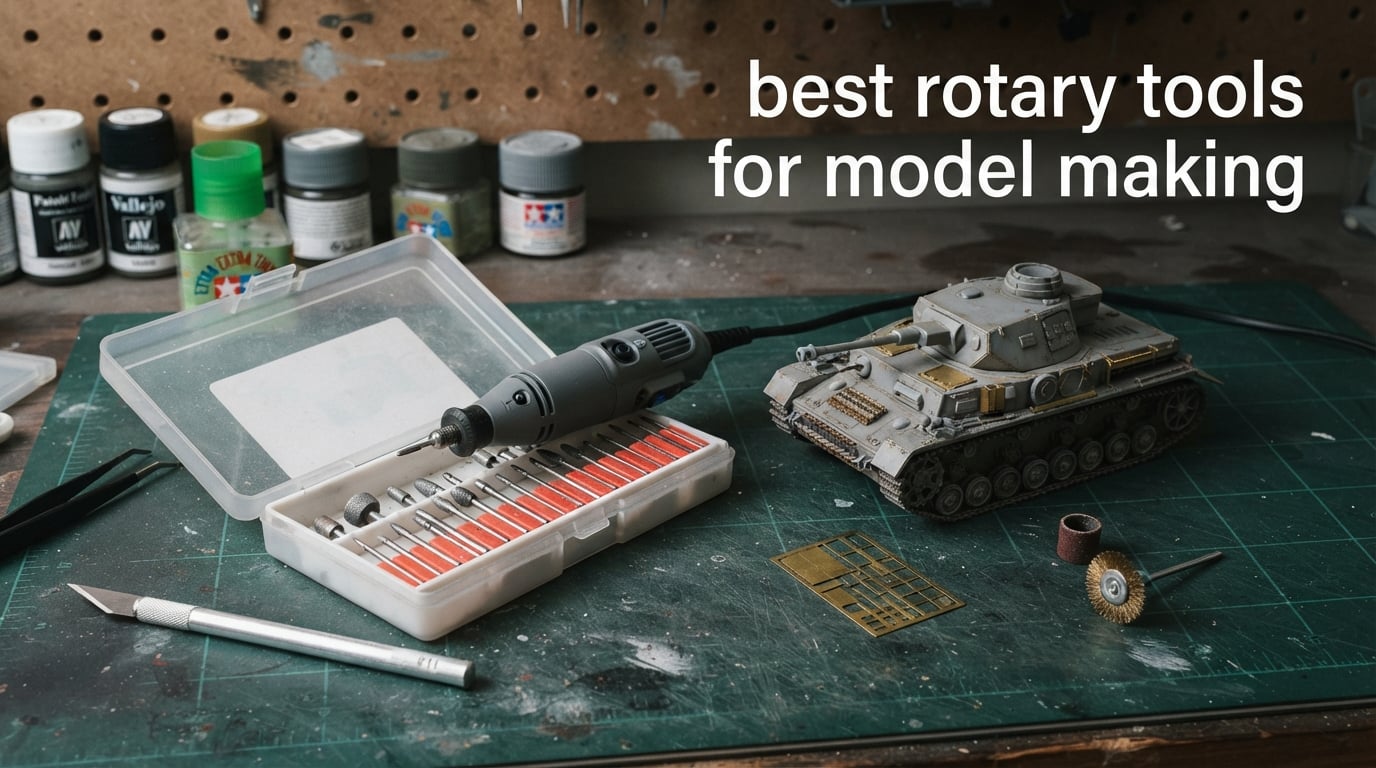
Two hours into sanding a styrene armour panel, the mold line was gone and so was the corner of the part. A rotary tool running too fast, pressed too hard, and a bead of melted plastic exactly where the scoring should have been. That failure is why we spent weeks putting ten of the best rotary tools for model making through real kit work instead of reading spec sheets.
The short answer: the Dremel 4300-5/40 takes the top spot for most builders because it holds anywhere from 5000 to 35000 RPM under load, keeps the speed steady as material changes, and carries a pivot light that lights up panel lines and recesses. If you want cordless freedom, the Dremel 8250-5 is the pick. If run-out and quiet running matter more than top-end speed, the PROXXON IBS/E wins on feel.
Everything below is written around the way modellers actually work: trimming sprues, removing mold lines, scribing panel lines, cleaning photo-etch brass, and finishing resin or 3D-printed parts. We also flag where a rotary tool is the wrong instrument entirely, because modellers on r/modelmakers say the same thing over and over. Rotary tools are useful, but they rarely take the place of a file for a flat surface. If you want the wider picture of these tools outside the modelling context, our general rotary tool roundup covers cutting, grinding and engraving workloads, and our rotary cutter picks cover heavier material removal.
Modelling is one of the few crafts where the bit is in contact with the work for a matter of seconds at a time, which means heat control matters more than raw power. That single fact is the thread running through every pick below.
Table of Contents
Top 3 Best Rotary Tool Picks for Model Making (October 2026)
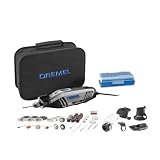
Dremel 4300-5/40
- 5000-35000 RPM with electronic speed feedback
- Universal 3-jaw chuck
- Pivot light attachment
- 1.2 lb slim body

PROXXON IBS/E
- Aluminum die-cast head
- 5000-20000 RPM
- Counter-clockwise rotation
- Collet set plus 34 bits
The 4300 is the safest all-round buy, the 8250 removes the cord from your workflow, and the PROXXON is the one that feels machined rather than moulded. Our full reasoning for each sits in the numbered reviews below.
Comparing the Best Rotary Tools for Model Making in 2026
| Product | Specifications | Action |
|---|---|---|
| Dremel 4300-5/40 Rotary Tool Kit |
|
Check Latest Price |
 Dremel 4000-2/32 Rotary Tool Kit Dremel 4000-2/32 Rotary Tool Kit |
|
Check Latest Price |
| Dremel 8250-5 12V Cordless Kit |
|
Check Latest Price |
| PROXXON IBS/E Professional Rotary Tool |
|
Check Latest Price |
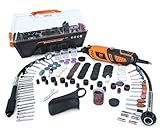 WEN 23190 Variable Speed Rotary Tool WEN 23190 Variable Speed Rotary Tool |
|
Check Latest Price |
 GOXAWEE 140-Piece Rotary Tool Kit GOXAWEE 140-Piece Rotary Tool Kit |
|
Check Latest Price |
 Fanttik F2 Master Mini Cordless Kit Fanttik F2 Master Mini Cordless Kit |
|
Check Latest Price |
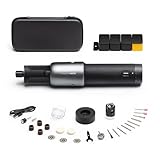 HOTO Cordless Rotary Tool Kit HOTO Cordless Rotary Tool Kit |
|
Check Latest Price |
 DEKOPRO 129-Piece Rotary Tool Kit DEKOPRO 129-Piece Rotary Tool Kit |
|
Check Latest Price |
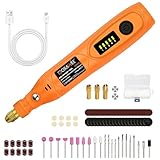 GOXAWEE Mini Cordless 105-Piece Kit GOXAWEE Mini Cordless 105-Piece Kit |
|
Check Latest Price |
Safe RPM by Material: The Number That Stops Melted Plastic
Melting is a heat problem before it is a speed problem. Friction between the bit, the swarf and the part generates heat, and styrene softens early. Drop your speed, keep the bit moving, and let it cut rather than grind.
Styrene plastic kits: 8000 to 15000 RPM. This is the range we use for mold lines, and anything above roughly 18000 RPM needs very light contact.
Resin castings and 3D prints: 10000 to 20000 RPM. Resin chips rather than melts, but higher speeds still fuzz the surface and dull sanding belts fast.
Brass photo-etch: 15000 to 25000 RPM. Brass is far more forgiving than plastic, but cut it wet or with a firm, non-following hand so it does not tear.
White metal and die-cast: 20000 to 30000 RPM. Hard alloys need speed and pressure, and a spinning wheel bites far better than a slow one.
Wood and balsa display bases: 15000 to 25000 RPM. Cut, do not burn, and keep the bit sharp.
Acrylic and clear parts: 8000 to 15000 RPM for polishing, and slow enough that the wheel never grabs. Clear parts crack when a wheel catches.
Two habits matter more than the number. First, let the bit do the work. If you are pushing, the bit is dull or the speed is wrong. Second, keep the bit moving in a steady sweep and lift it away every few seconds, because a stationary bit is what burns a hole in a panel. A third habit completes it: keep a finger on the safety switch while you work, so a dropped tool cannot spin on the bench.
One caveat on the table above. These are working ranges, not manufacturer limits, and a dull bit generates heat faster than a sharp one at the same setting. Change the abrasive when it stops cutting rather than reaching for more speed.
1. Dremel 4300-5/40 – The All-Round Winner
- Holds speed under load thanks to electronic feedback
- Pivot light lights up panel lines and tight recesses
- Universal 3-jaw chuck accepts all Dremel shank sizes
- Slim body stays comfortable in long sessions
- Small bundled bits wear and chip quickly
- Body runs warm after long continuous use
- Storage pouch has no carry handle
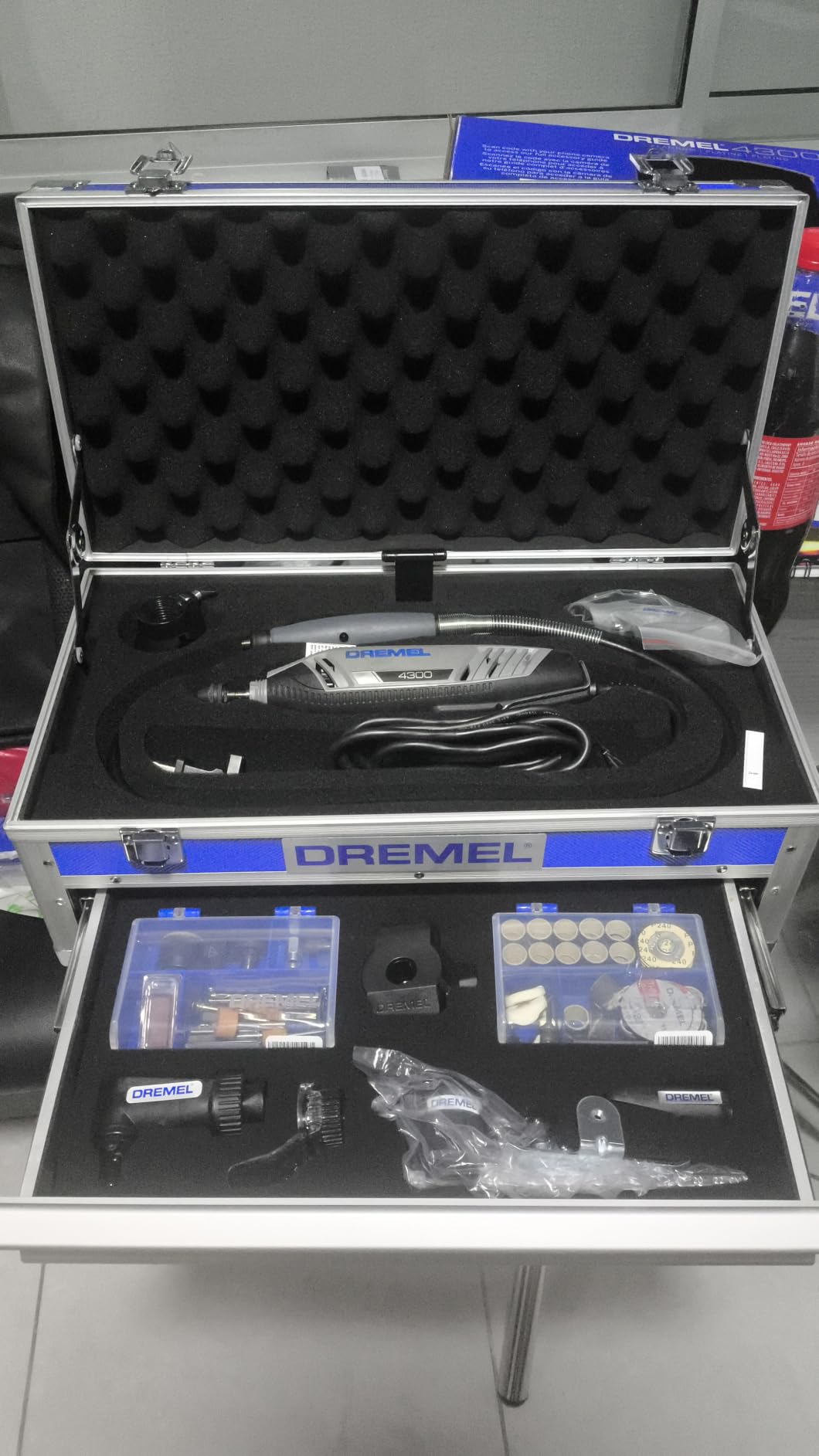
This is the tool we kept reaching for. Over several weeks of work on a 1/35 armour kit and a resin garage kit, the 4300 was the one that never made us change our approach mid-job. The 1.8 Amp motor is the most powerful in the range, and the electronic speed feedback means the setting you dial in is closer to the speed the bit actually holds when it touches material.
The pivot light attachment earned its place faster than we expected. Scribing panel lines and engraving rivet detail on the underside of a wing is exactly the situation where your head blocks your view, and a light that rotates to follow your hand removes the guesswork.
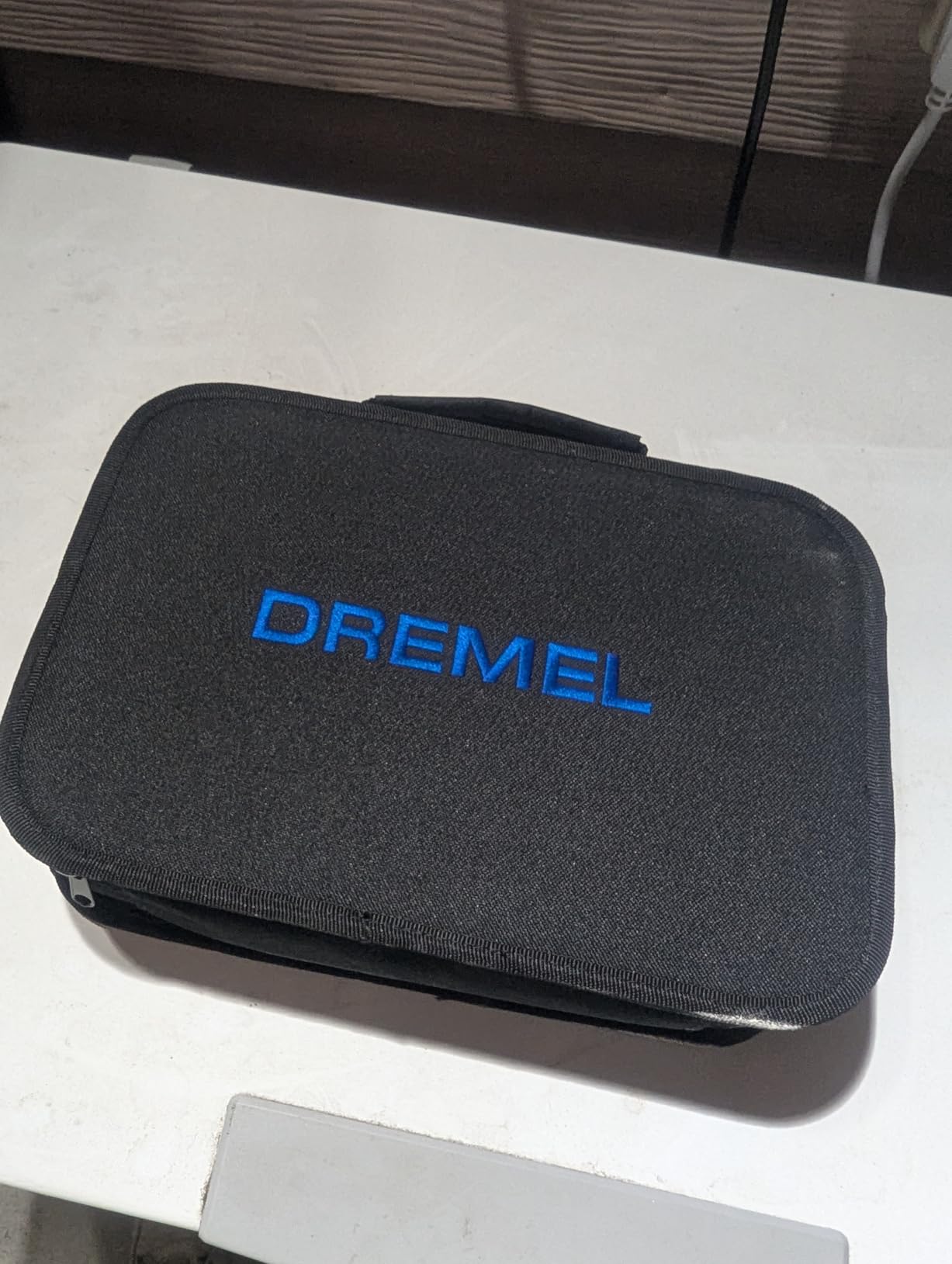
The universal 3-jaw chuck is a quiet advantage over collet-only tools. You can swap between a sanding drum and an engraving bit without reaching for a wrench, and given how many bit changes a single kit demands, that adds up across a build.
Buyers rate it at 4.7 out of 5 across more than 9200 reviews, and that consistency is telling. The complaints are narrow: the small bundled bits wear quickly, the body gets warm after a long uninterrupted run, and the storage pouch has no handle. None of those touch the tool’s job on the bench.
Where the 4300 earns its place
It is the tool that handled a full build without a rethink for us. Sprue gates, mold lines, panel lines, brass trimming, polish and light drilling all sit inside its 5000 to 35000 RPM range, and the air flow system keeps it cooler and quieter than you would expect from a 1.8 Amp motor.
Where it will disappoint you
If you work with brass photo-etch at fine scale and want the absolute cleanest cut, the PROXXON below is a step up in rigidity. And if your bench is a shared space or you work at night, the brushless cordless tools here run quieter.
2. Dremel 4000-2/32 – The Comfortable Mid-Size
Dremel 4000-2/32 Rotary Tool Kit with 2 Attachments and 32 Accessories
- 33 percent more motor power than the Dremel 3100
- Electronic speed control holds speed under load
- Grip zone stays comfortable through whole sessions
- Air flow system keeps runs cool and quiet
- Housing uses over 55 percent recycled plastic
- Corded design needs an outlet at the bench
- Fewer bundled accessories than the 4300 kit
Where the 4300 wins on power, the 4000 wins on comfort. The 360-degree grip zone is the feature we noticed most over long evening sessions, because the body stays workable no matter which way you rotate it in your hand. That matters when you are sanding a wing root from three different angles.
Its 1.6 Amp motor is listed as 33 percent more powerful than the Dremel 3100, and across a 5000 to 35000 RPM range with electronic speed control it had no trouble holding a steady speed on styrene or on 3D-printed PLA at 12000 RPM.
The 4000 also handles the unglamorous jobs well: cutting through sprue runners, cleaning up a 3D print at 12000 RPM, and drilling mounting holes before a figure is permanently attached. The air flow system keeps it running cooler and quieter than the raw 1.6 Amp rating suggests, which matters when a single session runs for a couple of hours.
Our one reservation is that the tool is entirely corded, with the cable as part of the design. If your bench has a socket within reach, that is a non-issue and arguably a benefit. If not, plan your sessions around it. At 1.6 Amp the 4000 is also the second most powerful tool here, and the difference between it and the 1.8 Amp 4300 shows up most in thick resin gates rather than in anything else a modeller does.
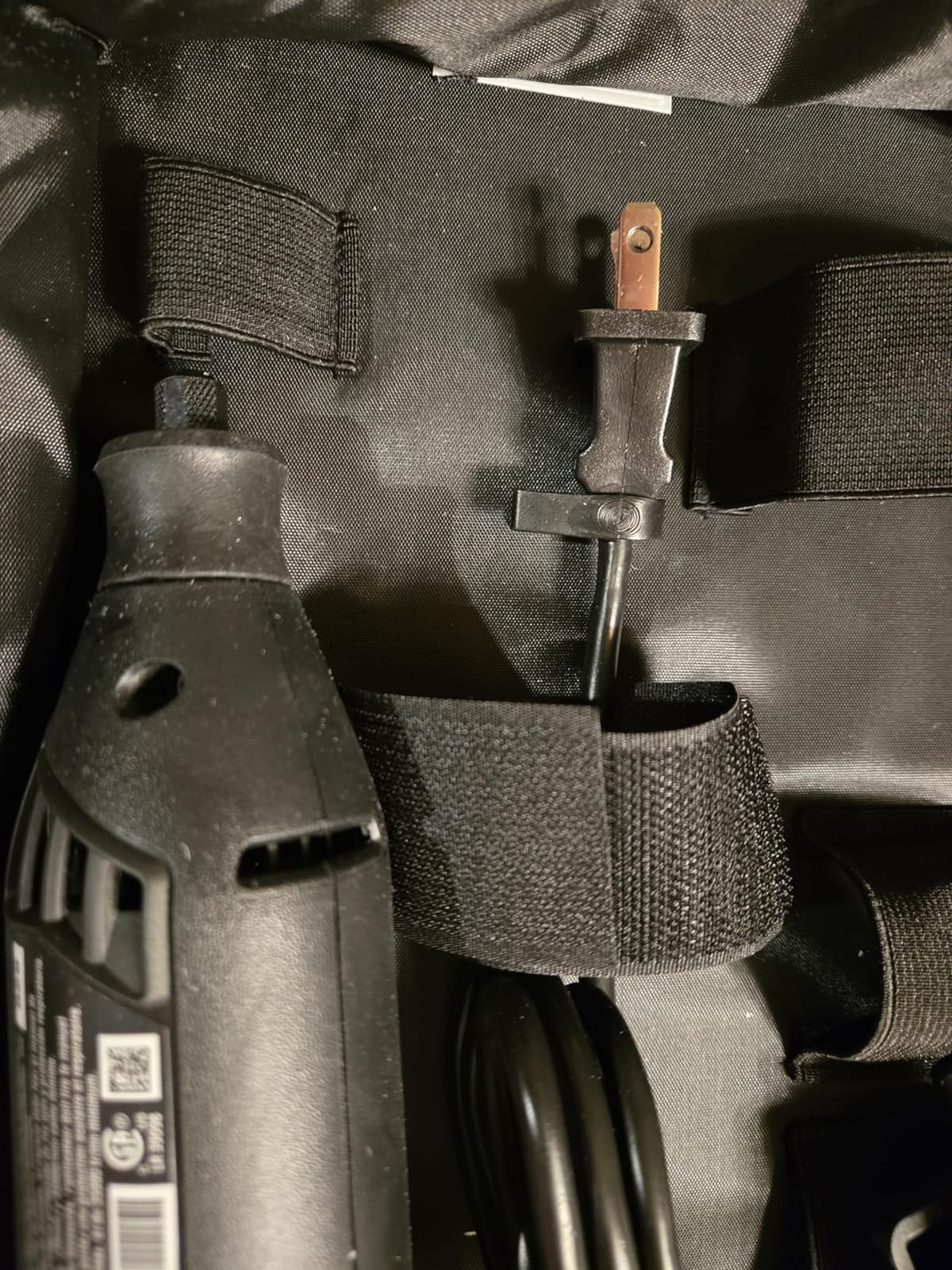
The accessory set is 32 pieces plus two attachments, which is fewer than the 4300 bundle. In practice we stopped noticing, because most of the extras in the larger kits are duplicative anyway. You will buy your own engraving bit and your own sanding drum set regardless.
It holds a 4.7 rating across 814 reviews. The honest limitation is the cord. For a fixed bench with an outlet nearby, that is a non-issue. For a crowded table or a build on the move, look at the cordless picks further down.
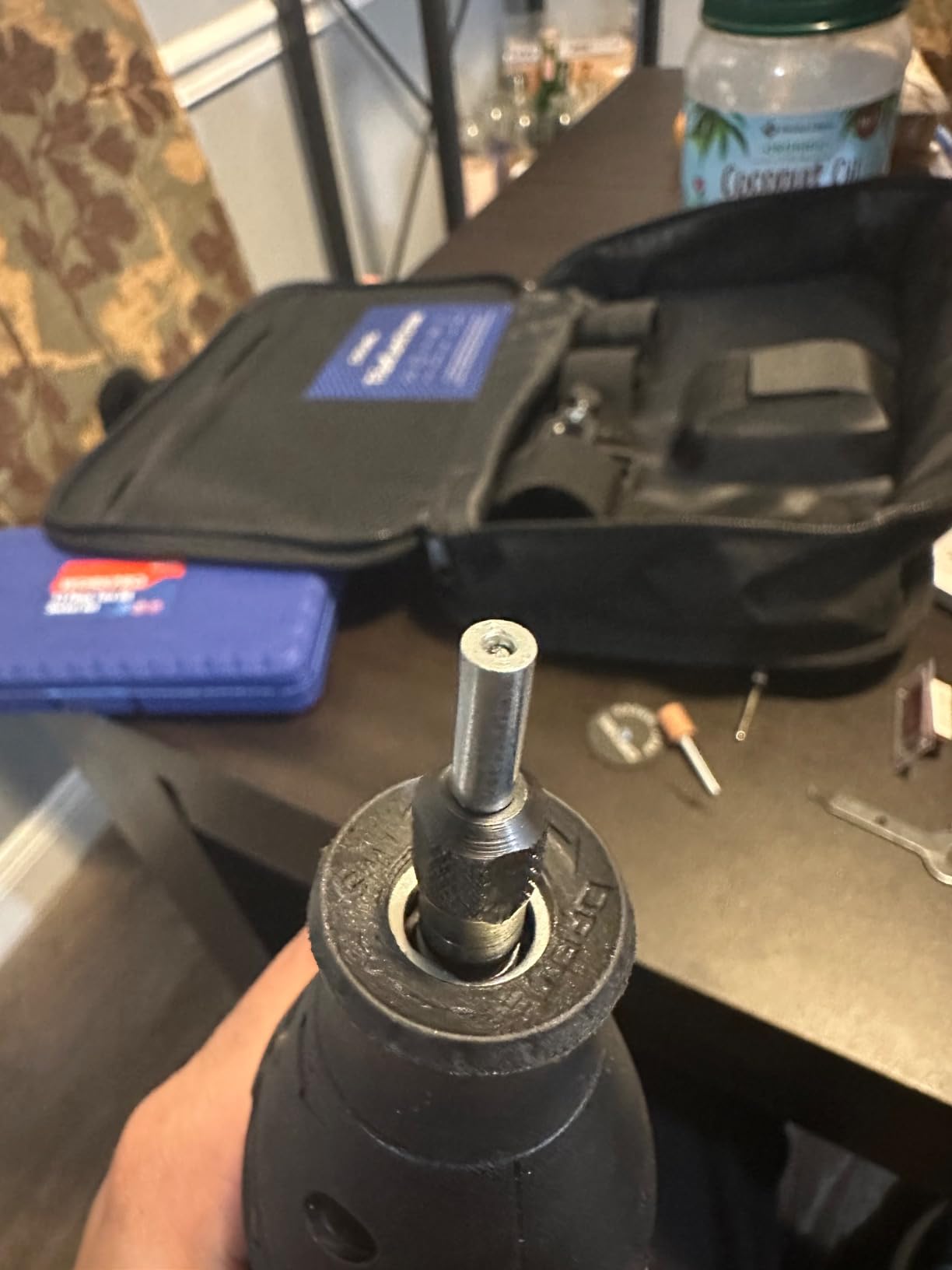
Who should buy the 4000
A modeller who spends a full weekend on one kit and notices their wrist afterwards. The grip and the cooler running make it a better long-session tool than more powerful alternatives.
Who should look elsewhere
Anyone working resin garage kits with heavy gates to cut, or anyone who needs a battery. The 4000 is a bench tool and it is comfortable admitting that.
3. Dremel 8250-5 – The Cordless Powerhouse
- Brushless motor with no carbon brushes to replace
- 20 percent more power than the corded 4300
- Patented EZ Twist nose cap for tool-free bit changes
- Cordless body never snags on the work
- Single 3.0Ah pack drains fast under continuous cutting
- Bulkier and heavier than the corded 4000
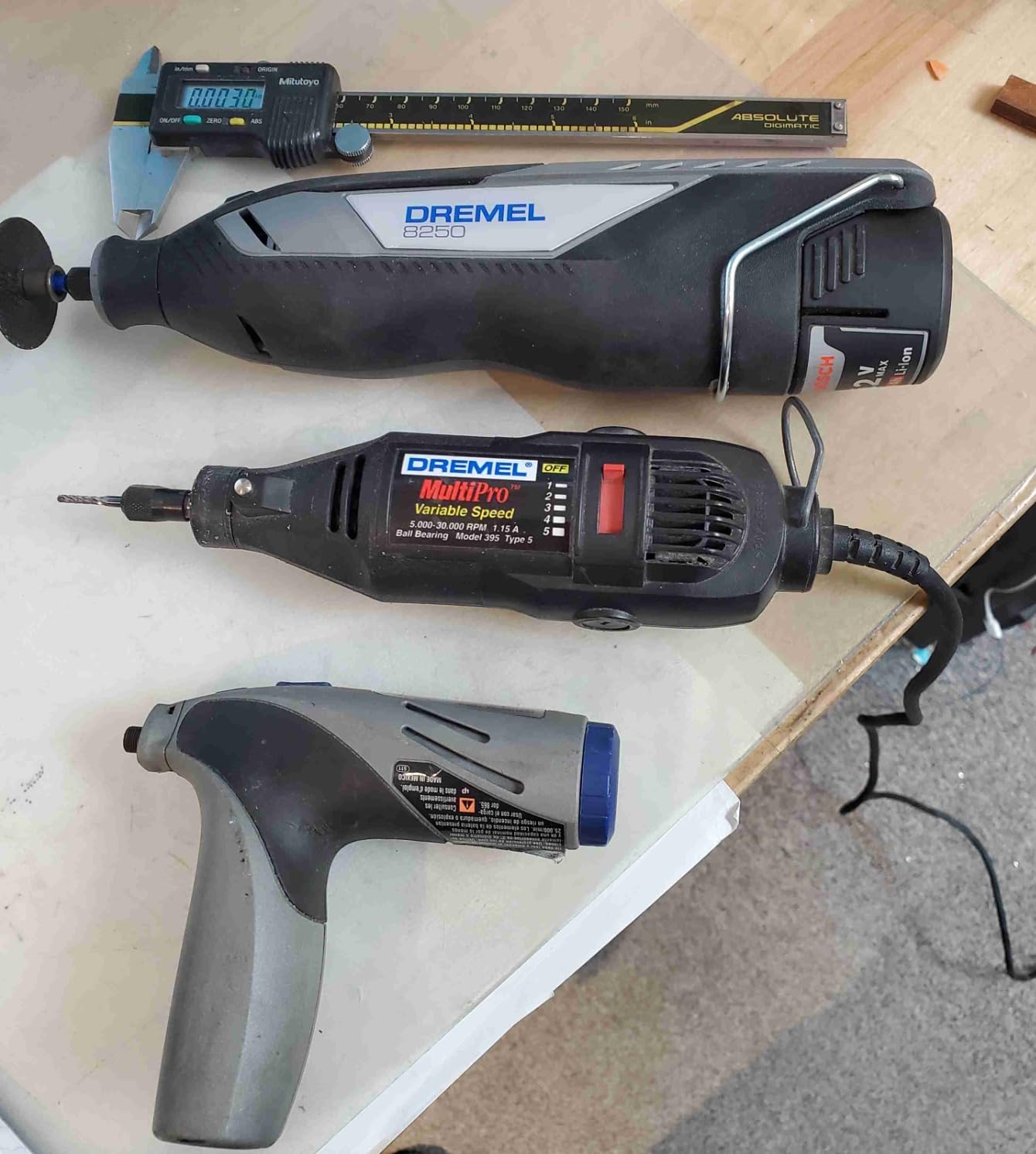
The 8250 is the one we reached for whenever the cord got in the way. On a kit built around a figure bust, where you rotate the work constantly rather than the tool, having no cable means no snagging and no dragging the model across the bench.
The brushless motor delivers 20 percent more power than the corded 4300 and 100 percent more runtime than the older 8220, across 5000 to 30000 RPM. It runs cooler and quieter than earlier Dremel cordless models, which is a genuine step change for evening builds.
On endurance, the battery specs are worth reading honestly rather than optimistically. The pack is a 12V 3.0Ah unit, which is ample for a typical evening of intermittent work. Sustained cutting, particularly through resin gates or hardwood, is what drains it, and that is the case that prompts a second battery.
Speed runs 5000 to 30000 RPM, so the full modelling range is available. The top end sits below the corded Dremels, which matters mainly for bulk material removal rather than for anything you should be doing to a scale model anyway.
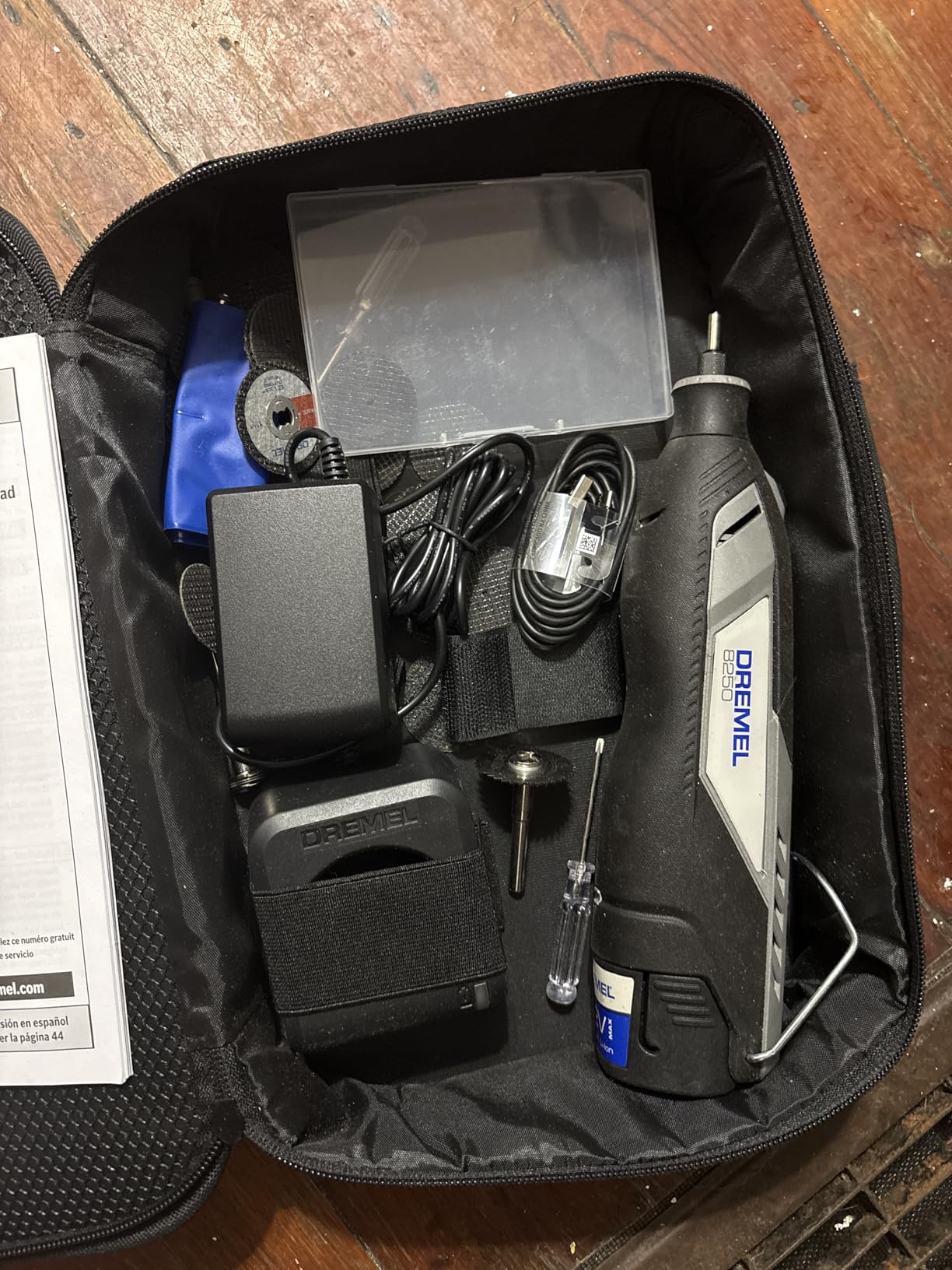
The EZ Twist nose cap means you change bits without the small wrench that usually ends up lost. On a build where you might change tooling twenty times, that is a real quality-of-life gain rather than a gimmick.
The most repeated reservation in reviews is battery endurance. One 3.0Ah pack drains quickly under continuous cutting, and many owners immediately order a second.
Where cordless actually wins
Busts, figures and anything you hold rather than lay flat. The freedom of movement is worth the compromise, and the 20 percent power gain means you are not accepting a toy to get it.
What you give up
Runtime under heavy load, a small amount of bulk in the hand, and a top speed of 30000 rather than 35000 RPM. If your work is long straight runs on flat panels, the corded tools are faster. If it is constant repositioning, this is the better tool.
4. PROXXON IBS/E – The Precision Benchmark
- Aluminum die-cast head gives near-zero collet run-out
- Exceptionally quiet across the whole speed range
- Holds selected speed under load with little pressure
- Counter-clockwise rotation throws debris away from you
- Includes 34 bits and cutters plus a case
- Top speed of 20000 RPM is below the 35000 RPM class
- The PROXXON keyless chuck does not fit this model
For fine work, the difference is not the marketing. It is the aluminum die-cast head, which resists twisting and holds the collet true. Owners who measure run-out describe it as effectively zero, and you can feel the difference on a scribed line because the bit does not wander as it deepens.
Speed runs from 5000 to 20000 RPM with full-wave electronic control. That ceiling is low next to a Dremel, and it is the single clearest trade-off here. For plastic and light metal work it is plenty, because those are the jobs you should be doing slowly anyway.
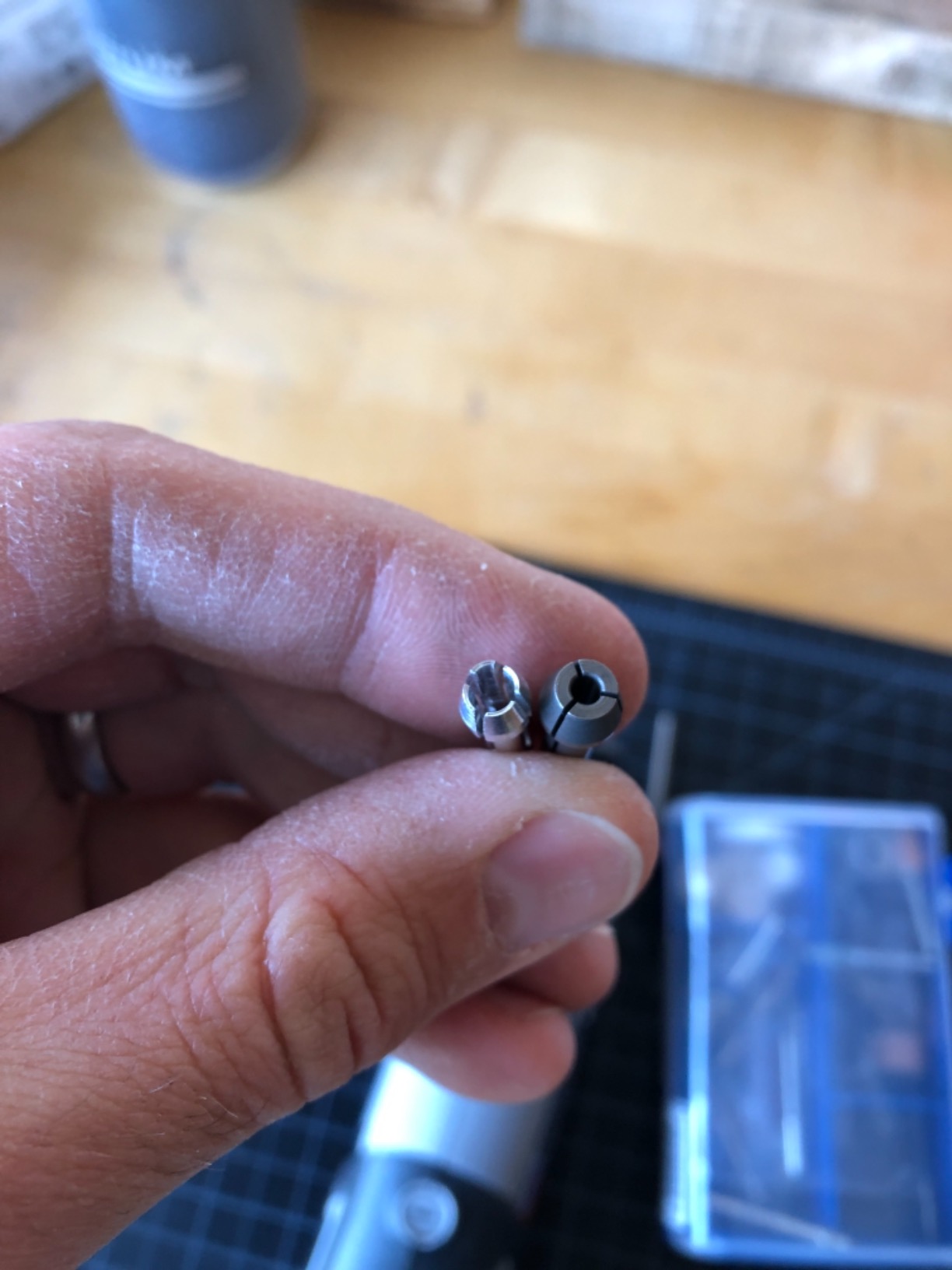
The counter-clockwise rotation is a small detail that matters on a modelling bench. Debris is thrown away from your face instead of toward it, which keeps your sightline on the work and keeps plastic dust out of the panel line you are cutting. The tool is also quiet enough to use in a shared room.
Worth weighing before you commit: at 4.3 out of 5 it sits at the lower end of this group’s ratings, and its 335 reviews are the thinnest. That figure reflects a smaller, more specialist buyer base rather than a complaint about precision, which is what owners consistently praise. Buying from a seller with a straightforward return policy reduces any risk.
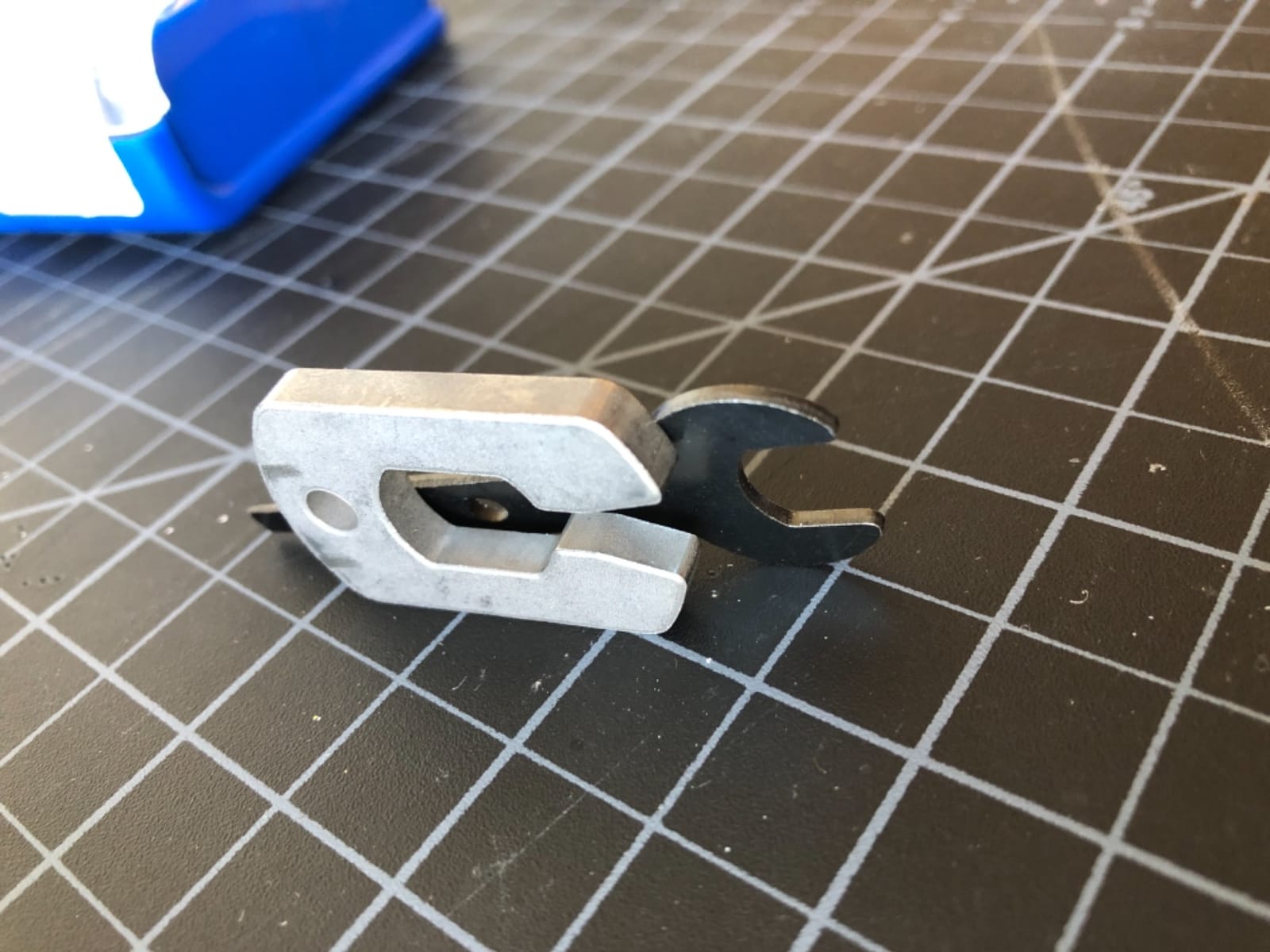
Two things catch people out. The frequently recommended PROXXON keyless chuck does not fit this model, so check fitment before buying an attachment. And the 20000 RPM ceiling means this is a tool you will be running slowly, which suits detail work but rules out fast stock removal.
Where the PROXXON shows its worth
Photo-etch brass, fine engraving, and any job where a wandering bit ruins the part. It is also the tool we would trust with a limited-run resin casting, where replacing a damaged component is not realistic.
Where it frustrates people
The 20000 RPM ceiling rules out fast cutting and heavy material removal, and the attachment ecosystem is harder to source than Dremel’s. If you cut a lot of sprue gates rather than scribe a lot of detail, this is the wrong end of the trade.
5. WEN 23190 – The Value Starter With Flex Shaft
WEN 23190 1.3-Amp Variable Speed Steady-Grip Rotary Tool with 190-Piece Accessory Kit, Flex Shaft, and Carrying Case, Multicolor
- Removable steady-grip handle improves control and comfort
- Included 3.3 foot flex shaft for intricate detail work
- Collets cover 1/32 inch through 1/8 inch shanks
- Carrying case organises the tool and 190 accessories
- Wide 8000-35000 RPM range on a 1.3 Amp motor
- 8000 RPM floor leaves no very slow end for fine polishing
- Accessory count includes a number of low-wear filler bits
- 1.3 Amp rating is modest for heavy material removal
The standout here is the removable steady-grip handle. Clip it on and you get a palm grip that genuinely improves control on a flat panel; take it off and the tool becomes a pen-style body for recesses. Few tools at this level let you choose between the two.
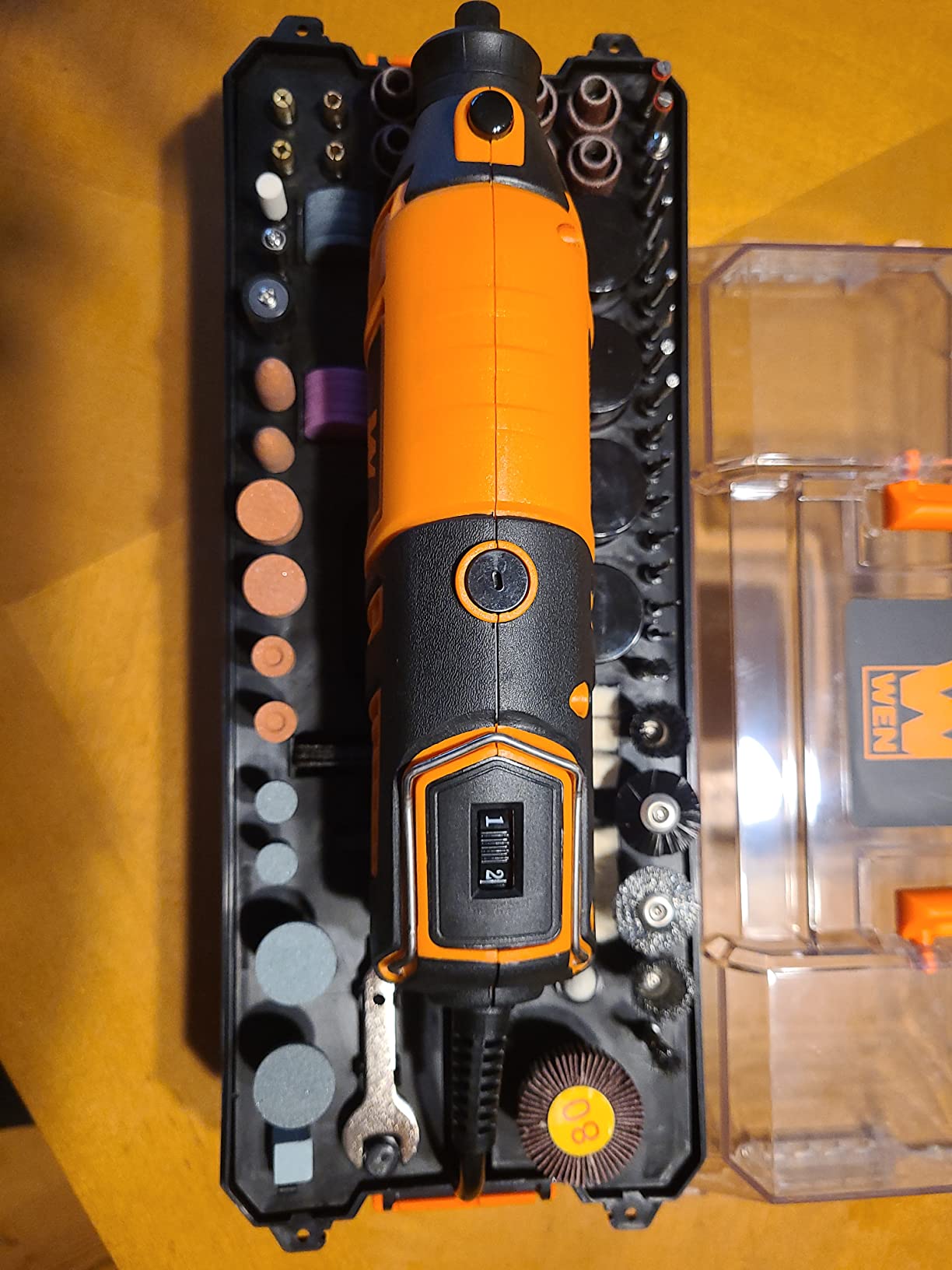
It also bundles a flex shaft in the box, which is usually an add-on. On a large airframe interior, a shaft gets your hand out of the line of sight and keeps vibration down. The collet set covers 1/32 inch to 1/8 inch, so almost all common modelling bits fit.
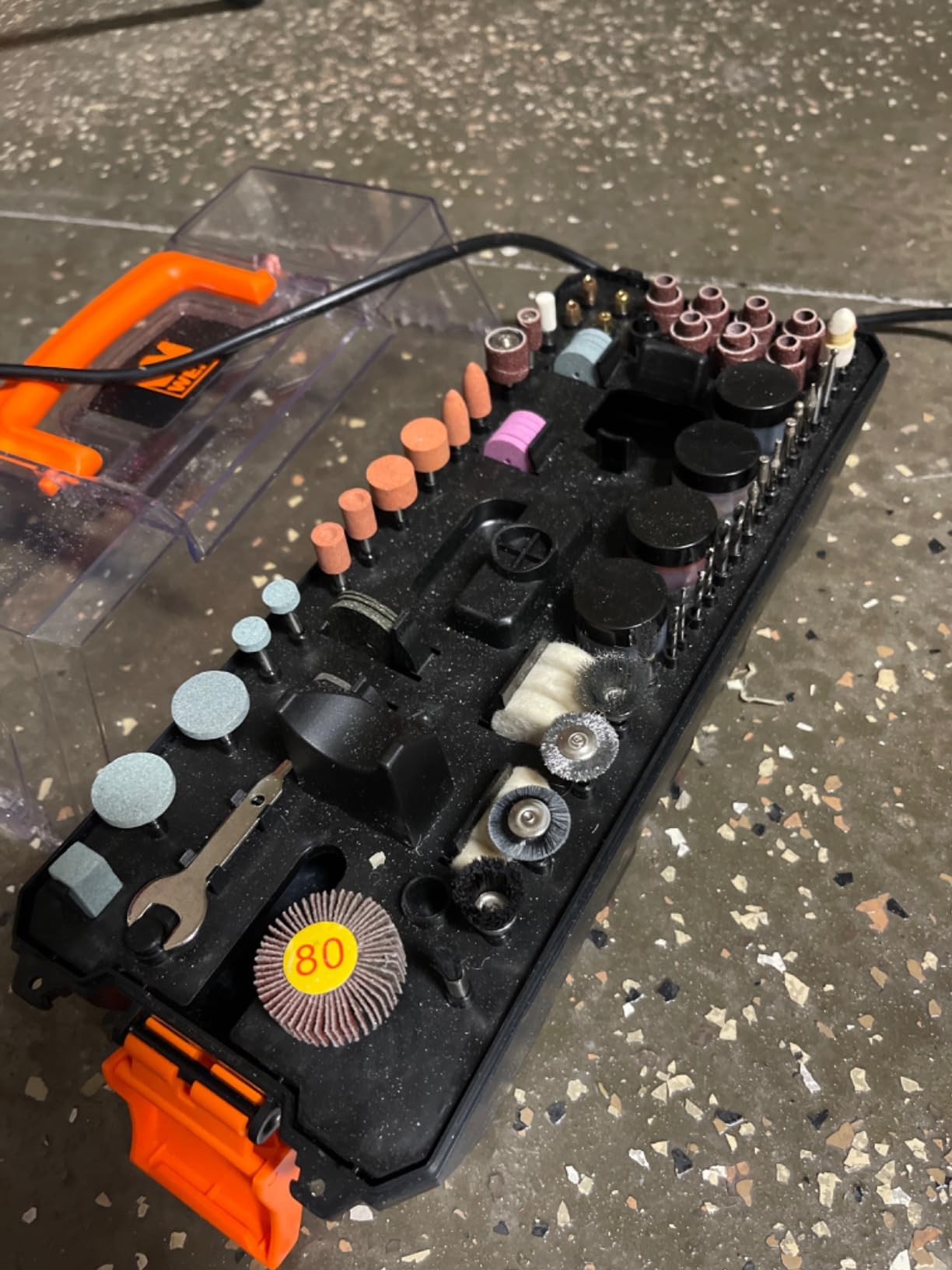
Buyers treat this as a dependable first bench kit, and at 4.5 out of 5 across more than 3300 reviews that consensus holds. Performance for hobby-scale cutting, carving, sanding and polishing is smooth and predictable, with a 1.3 Amp motor doing the work without fuss.
The 190-piece count deserves a reality check. A small number of those bits earn a permanent place, and the cheapest filler pieces wear out quickly. Judge the kit by the tool, the handle and the flex shaft rather than the number on the box. Note also that the lowest speed is 8000 RPM, which removes the very slow end some modellers want for polishing.
Who this works for
First-time builders, students, and anyone who wants a flex shaft in the box on a budget. It covers the common jobs: gates, mold lines, light sanding, brass trimming and polish.
Where you will outgrow it
Thick material removal and very fine work. The 1.3 Amp motor is the smallest in this group, and the 8000 RPM floor means it cannot creep. Move up once you know which parts of the hobby you actually enjoy.
6. GOXAWEE 140-Piece Corded Kit – The First Rotary Tool
GOXAWEE Mini Power Rotary Tool Kit with Flex Shaft & Keyless Chuck -140Pcs
- Keyless 3-jaw chuck for tool-free bit changes
- 130W pure copper motor is quiet and low-vibration
- 3.3 foot flex shaft helps with engraving and corner work
- Well-balanced body grips easily in multiple positions
- Largest review base of any tool in this group
- Grinding bits can slip in the chuck under combined speed and pressure
- Lowest speed setting is still brisk for delicate engraving
- Hand drifts over the vent slots and raises heat
This is the most-reviewed tool we tested, with more than 23000 ratings, and that volume tells you something useful about it. It is a common starting point for first-time modellers, and it works for foam, plastic, light wood and 3D prints without being a frustrating compromise.
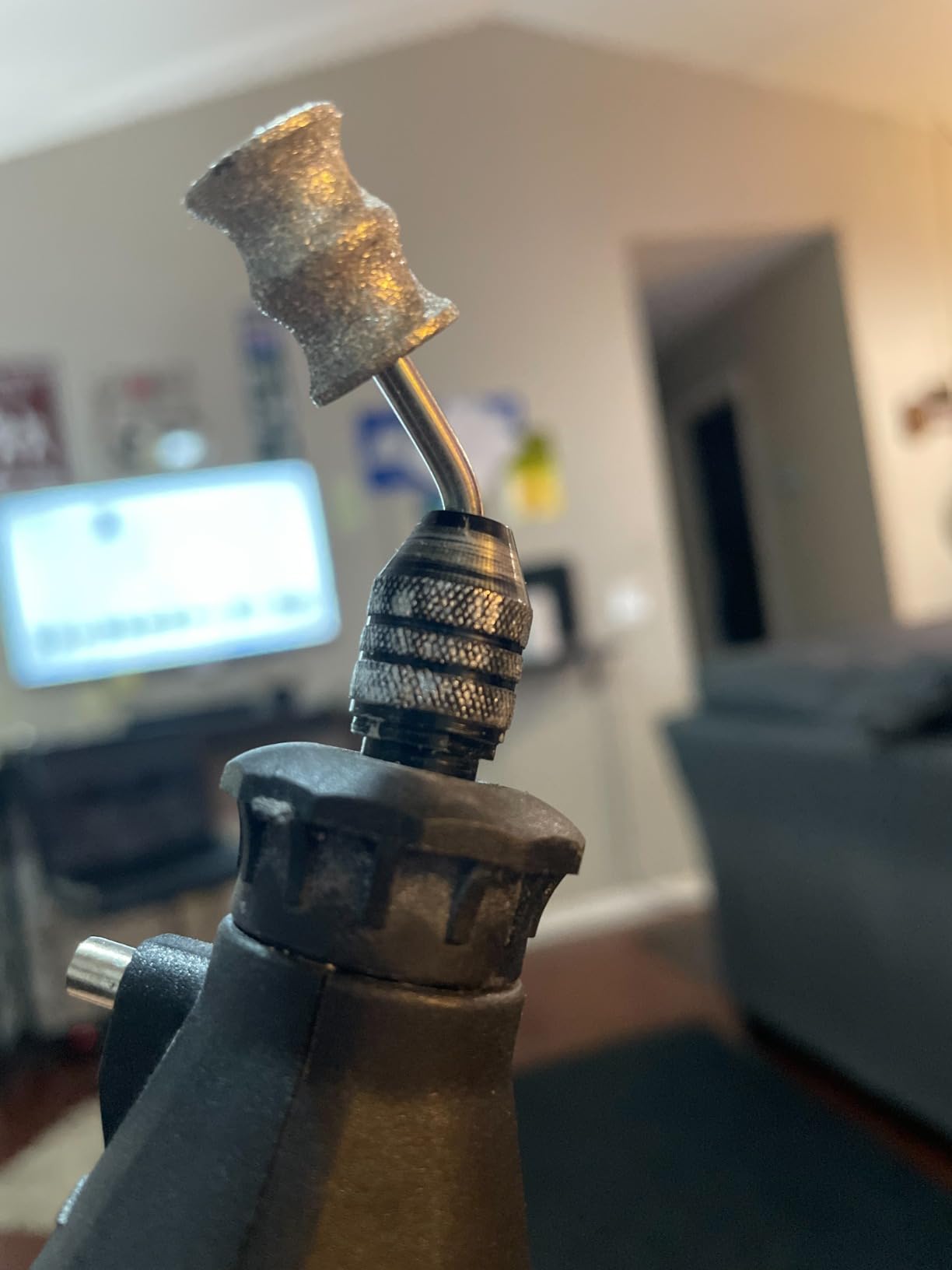
The keyless 3-jaw chuck is the reason people stay with it. No collet wrench means no lost wrench and no half-tightened collet, and the chuck accepts 1/32 inch to 1/8 inch shanks. The included 3.3 foot flex shaft is a genuine bonus at this level and handles engraving, etching and corner sanding.
Run it at the lowest setting and it is still fairly brisk for delicate engraving, which is worth knowing before you start a fine scribed line. The motor itself is quiet for its size and low on vibration, and the body is chunky and well balanced, which keeps the tool steady in awkward grips.
Reviewers flag three recurring issues. Grinding bits can slip in the chuck when speed and pressure combine, so re-seat them if the tool jumps. Your hand naturally drifts over the ventilation slots on a long job, which raises heat. And the weakest finishing bits deform quickly, so buy your own before a resin build.
Why it is the easiest first buy
Everything a beginner needs is in the box and the chuck removes the fiddliest part of using a rotary tool. It is a very good first tool even though it is not a final one.
Where precision runs out
At 8000 RPM minimum, and with a chuck rather than collets, this is not the tool for brass photo-etch or scribing fine rivet detail. Treat it as the beginner’s bench tool, then graduate when you know what you need.
7. Fanttik F2 Master – The Quiet Miniature Specialist
Fanttik F2 Master Mini Cordless Rotary Tool Kit for 3D Printer Sanding
- Hollow-cup motor cuts noise by roughly 30 percent
- At 0.22 lb it stays comfortable through long sessions
- Five stepped speeds with an LED speed readout
- Magnetic RevoStor hub organises 35 accessories
- Cordless body avoids snagging in tight spots
- 3/32 inch collet only so most standard Dremel-style bits will not fit
- Underpowered for hardwood and plywood routing or metal work
- Collet knobs are small and can loosen and let the bit drop
The F2 Master is built for a specific job, and it does that job extremely well. At 0.22 lb it is among the lightest tools here, and for miniatures, diorama debris and 3D-print finishing the weight itself is the selling point. Your hand stays steady because the tool weighs almost nothing.
The hollow-cup motor reduces noise by roughly 30 percent against a standard motor of this type. That is not marketing filler. It is the reason this tool is pleasant to use in a flat or a shared room, and it changes how long you are willing to work.
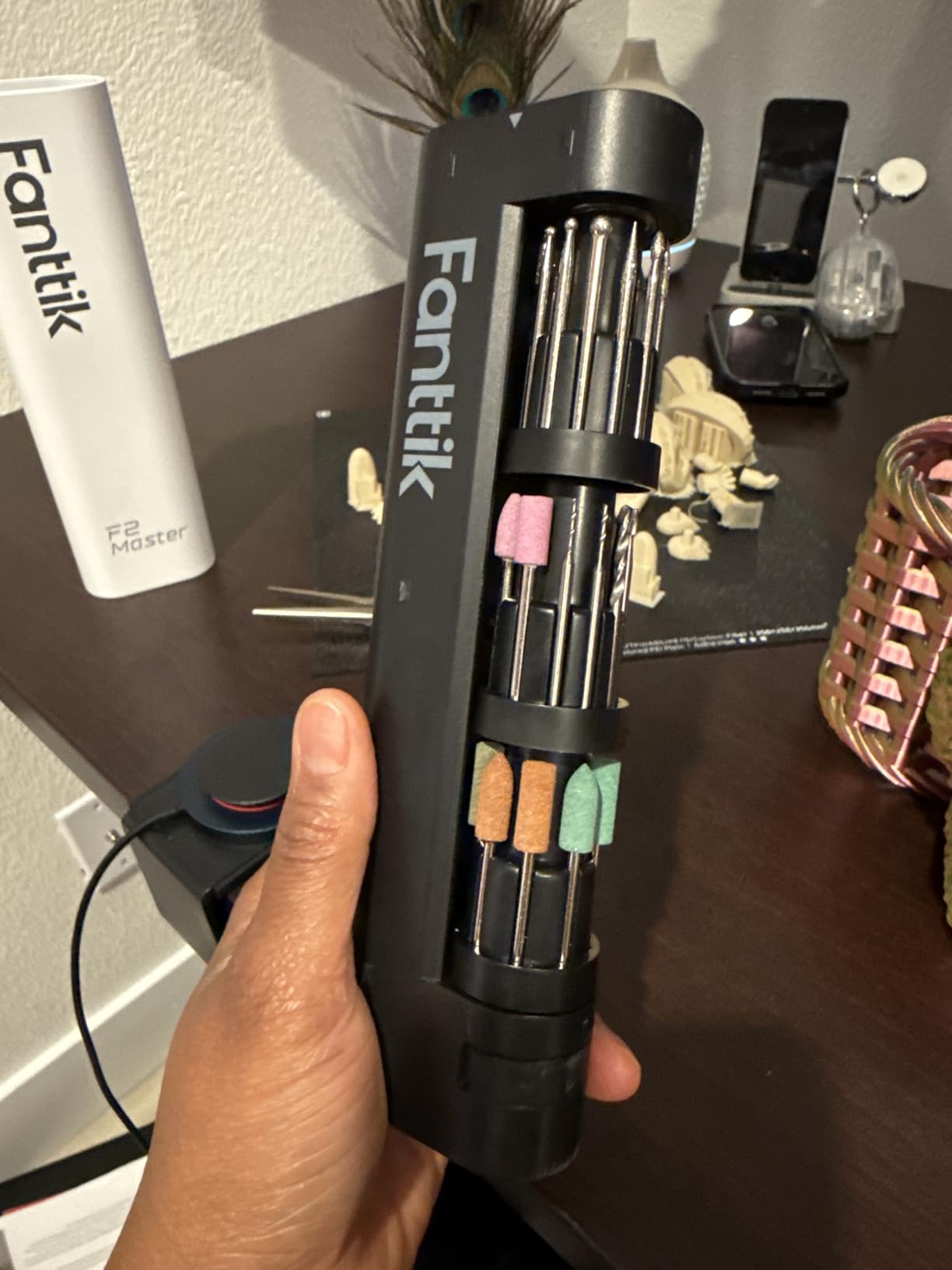
Five stepped speed settings from 12000 to 25000 RPM with an LED readout give repeatable results, and the 360-degree magnetic RevoStor hub holds 35 accessories in reach. A front LED light handles tight corners.
The catch is the collet. It accepts 3/32 inch, or 2.3mm, accessories only, which means most standard Dremel-style bits will not fit. The collet knobs are also small enough to loosen and drop a bit mid-job. If you already own a Dremel bit collection, this is not the tool for you.
Where the F2 Master wins
Tabletop miniatures, resin and resin-printed parts, foam, balsa and plexiglass diorama work. It is a finishing tool with a very light touch, and the quiet running is a genuine advantage over everything else in the corded group.
What you cannot do with it
Hardwood, plywood routing, or any metal work, and you will need to source 3/32 inch bits separately. Buying a second collet is not possible. Choose this for delicate work and keep a full-size tool for the heavy cutting.
8. HOTO Cordless Rotary Tool Kit – The Balanced Desk Tool
HOTO Cordless Rotary Tool Kit, 5-Speed for 3D Printer Sanding & DIY
- Dual 3.2mm and 2.3mm collets cover most common accessories
- Five clearly stepped speeds from 5000-25000 RPM give repeatable results
- Low-vibration quiet motor suits a shared workspace
- Built-in LED light illuminates tight spots
- Snap-on dust shield protects hands and surfaces
- Limited power for hardwood or heavy material removal
- Small collet opening suits fine bits more than large cutting wheels
- Battery pack is sealed and not user-replaceable
Where the Fanttik commits to a 3/32 inch collet only, the HOTO supports both 3.2mm and 2.3mm collets. That single design choice is why it fits more of the accessories you already own, and it is why we treat it as the more practical cordless pen-style kit here.
Speed runs 5000 to 25000 RPM across five clearly stepped settings. The stepping matters for repeatability: you can return to the same setting tomorrow and get the same result, which is harder with a continuous dial and a cheap tool.
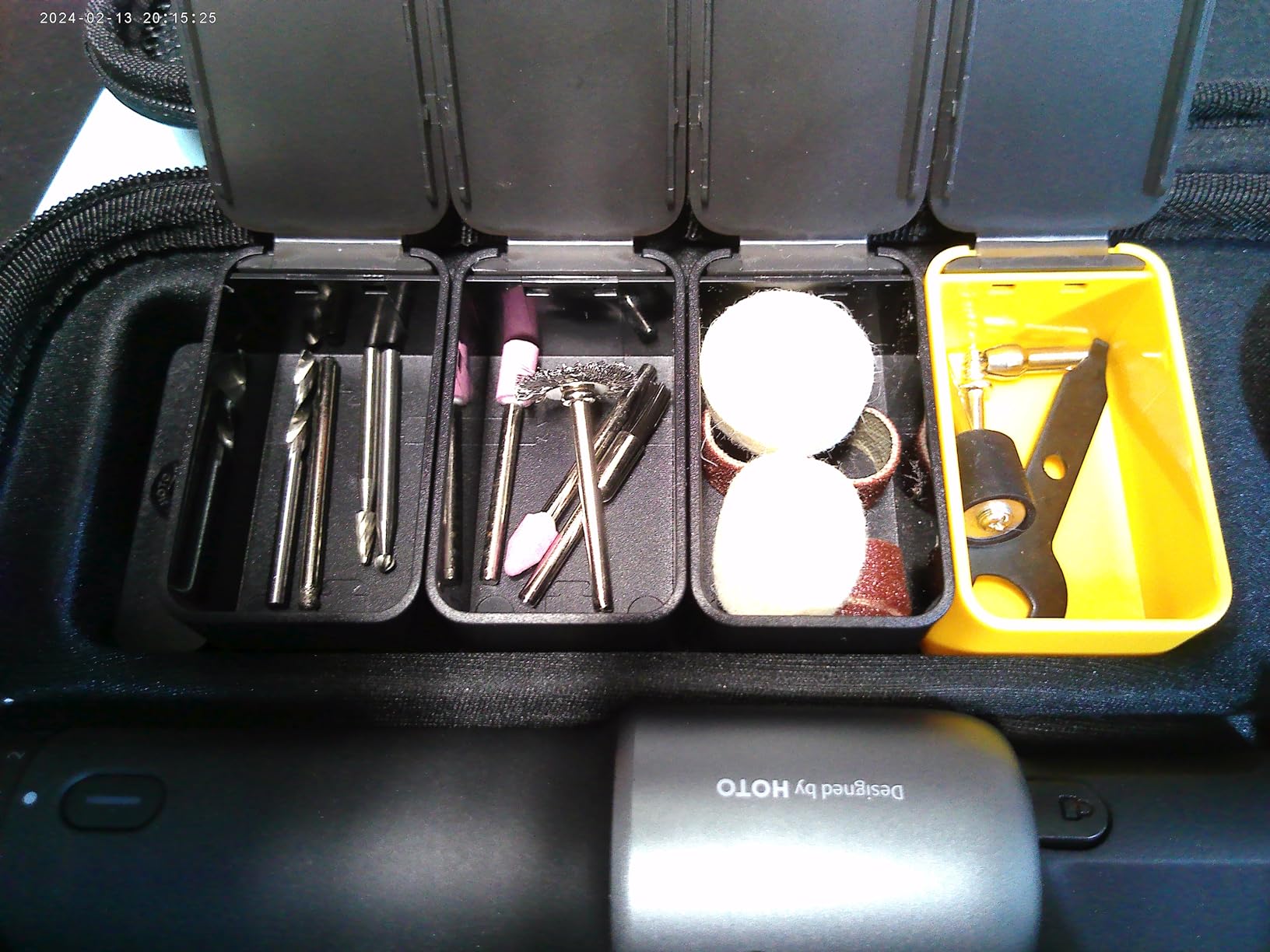
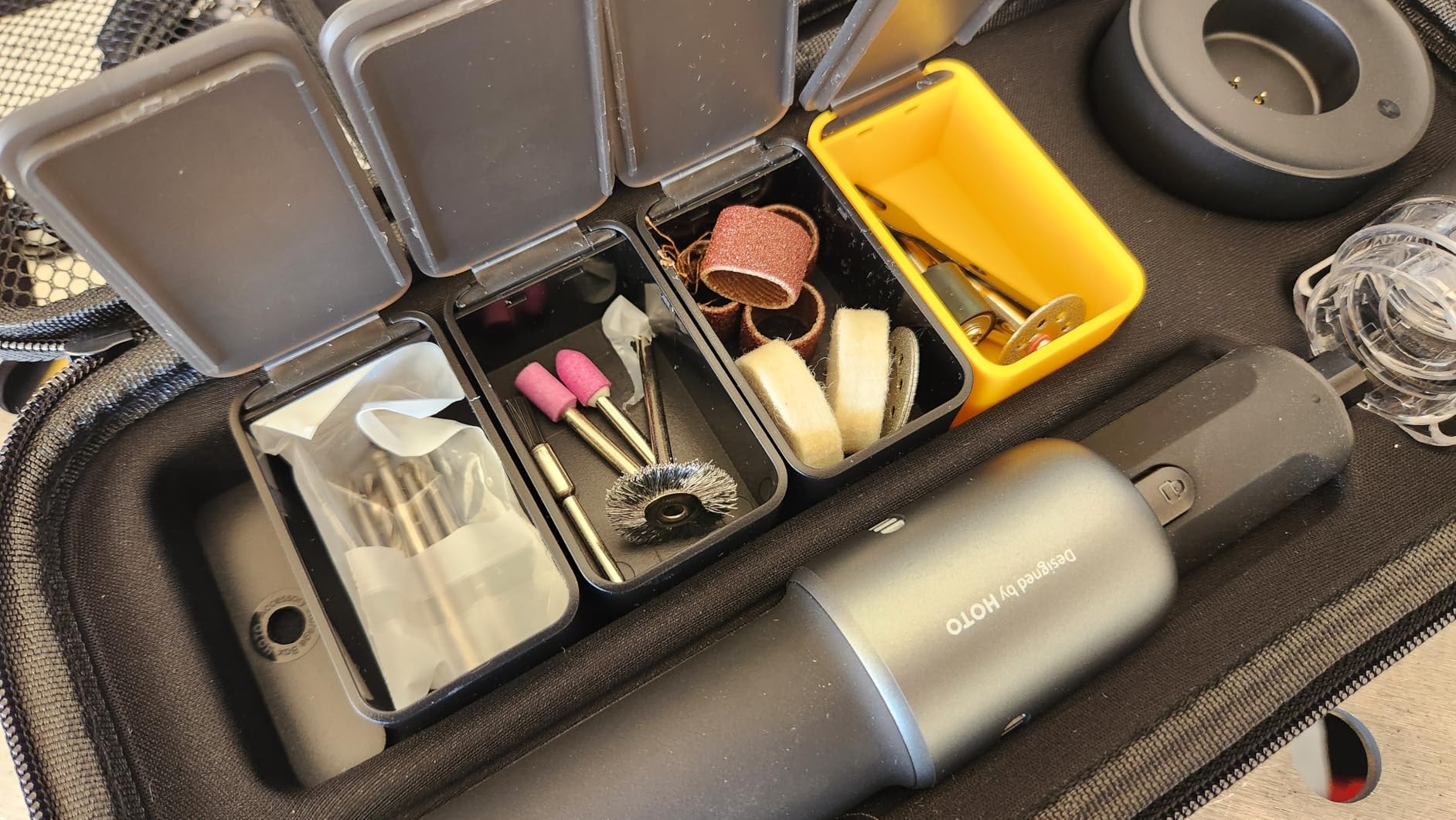
The body is a balanced pen shape, and the review consensus is that it reduces hand fatigue on long jobs. The built-in LED light and the snap-on dust shield are both useful on a modelling bench, where swarf and styrene dust get everywhere and you need to see into a recess.
Set your expectations honestly. Buyers describe it as a light-duty precision tool, and the manufacturer does too. The small collet opening suits fine bits more than large cutting wheels, the battery is sealed and cannot be replaced, and hardwood work is beyond it.
Why it suits a workbench
It is quiet, light, cordless, and it accepts the two collet sizes most modellers already own. For 3D-print finishing, light carving, polishing and small modelling tasks, that combination is genuinely complete.
Where the power runs out
Cutting thick rod, sanding large flat surfaces, or working anything hard. It is a precision companion, and treating it as a general workshop tool leads to frustration.
9. DEKOPRO 129-Piece Kit – The Long-Reach Flex Shaft
- 42 inch flex shaft reaches awkward corners with less vibration
- Six-speed dial plus gear adjustment gives fine control
- Four collet sizes plus a 3-jaw universal chuck
- Rubber body and assist handle give two-handed control
- Cover shield and drill locator included in the kit
- Long flex shaft can feel loose for very fine engraving
- Accessory quality is uneven across such a large kit
The 42 inch flex shaft is the reason to consider this kit. On a large model, that reach lets you work inside a hull or a cockpit without putting your hand anywhere near the part, and the length keeps vibration off your fingers. For reach, nothing else in this group comes close.
The 1.5 Amp corded motor and six-speed dial plus gear adjustment cover 8000 to 35000 RPM, which is a wide working range. Four collet sizes, including 1/8 inch, 3/32 inch and two 1/16 inch, plus a 3-jaw universal chuck, give broad bit compatibility.
The soft rubber body and auxiliary assist handle give a solid two-handed grip for longer sanding passes. Reviewers also mention the cover shield and drill locator being genuinely useful rather than decorative, which is rare in a kit of this size.
The honest downsides are precision and consistency. Several buyers find the long shaft loose for very fine engraving, which is the opposite of what you want in a scribing tool. And accessory quality is uneven across 129 pieces, so buy the bits you rely on separately.
Where it is the right tool
Big models, interior spaces and repetitive sanding passes where reach and grip matter more than a perfect line. The assist handle and the shield make long sessions manageable.
Where it is the wrong one
Fine engraving and photo-etch. Reach is its strength, precision is not, and the loose-shaft reports are exactly where precision is required.
10. GOXAWEE Mini Cordless 105-Piece Kit – The Lightest Budget Pick
- At 3.5 oz it causes almost no hand fatigue
- Cordless USB-C with over 100 minutes of runtime
- Three collet sizes cover 3/32 inch and 1/8 inch bits
- One-button power and speed control is simple to learn
- LED indicator shows speed and charging status
- 18000 RPM ceiling is well below full-size rotary tools
- Manufacturer states it is not suitable for heavy-duty projects
- Sealed battery cannot be replaced
At 3.5 ounces this is a very light tool, and on long detail sessions that weight is the point. Reviewers pick it for resin prints, EVA foam, softwood and jewellery-scale polishing, where the light touch matters more than anything else.
Five stepped speeds run 8000, 12000, 14000, 16000 and 18000 RPM, with an LED indicator for the setting and the charge. Three collets, at 2.3mm, 3.0mm and 3.2mm, cover 3/32 inch and 1/8 inch accessories, and the battery gives over 100 minutes of cordless use.
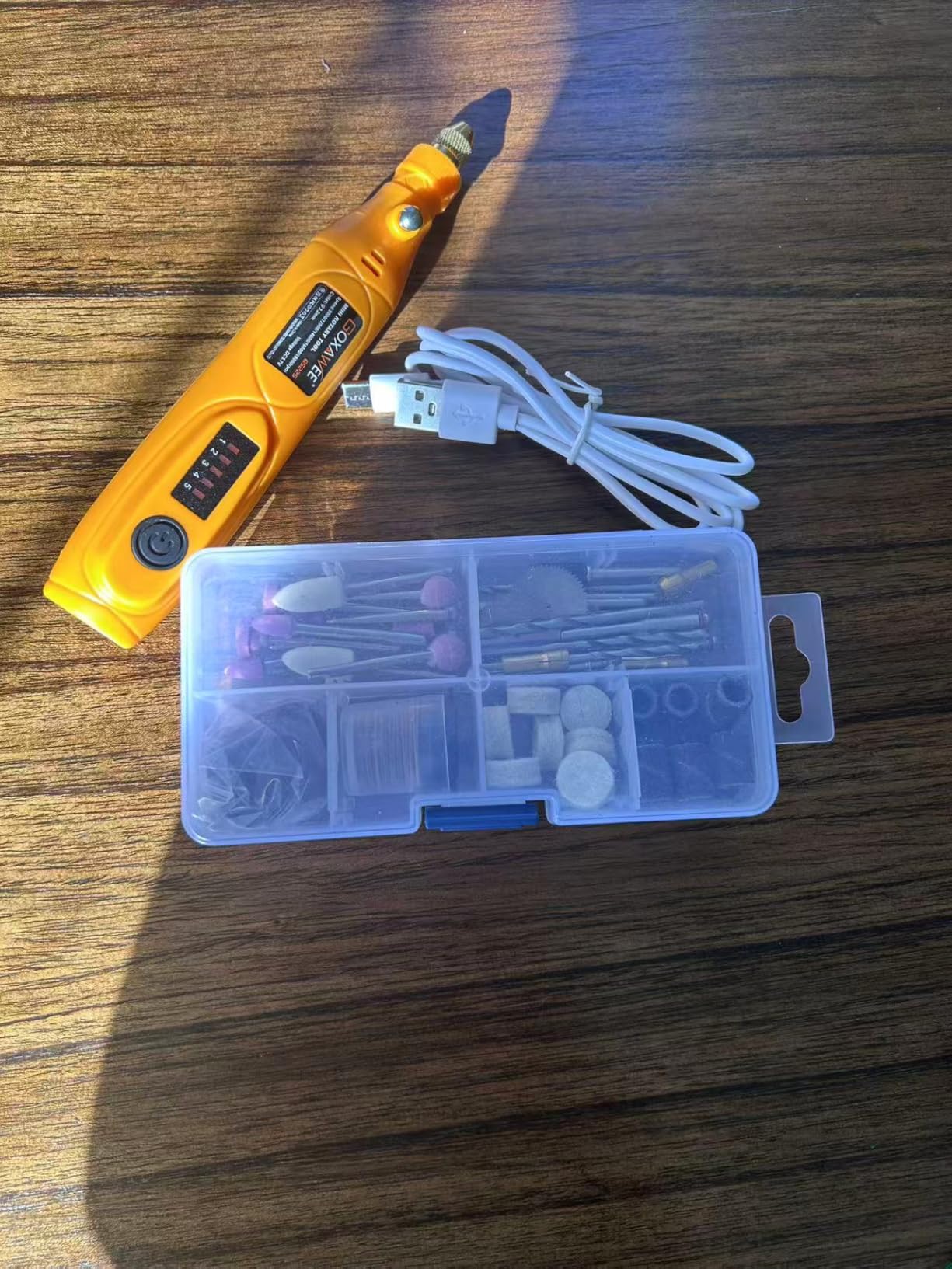
There is no argument here about it being a heavy-duty machine. The manufacturer states plainly that it is not suitable for heavy-duty projects, and reviewers agree, rating it well within its weight class rather than pretending otherwise. That honesty makes it easier to buy correctly.
The 18000 RPM ceiling is the limit that matters most. It is low next to a full-size tool, and it removes the very slow end you would want for polishing clear parts. The battery is sealed into the body and cannot be replaced, so the tool has a built-in end of life.
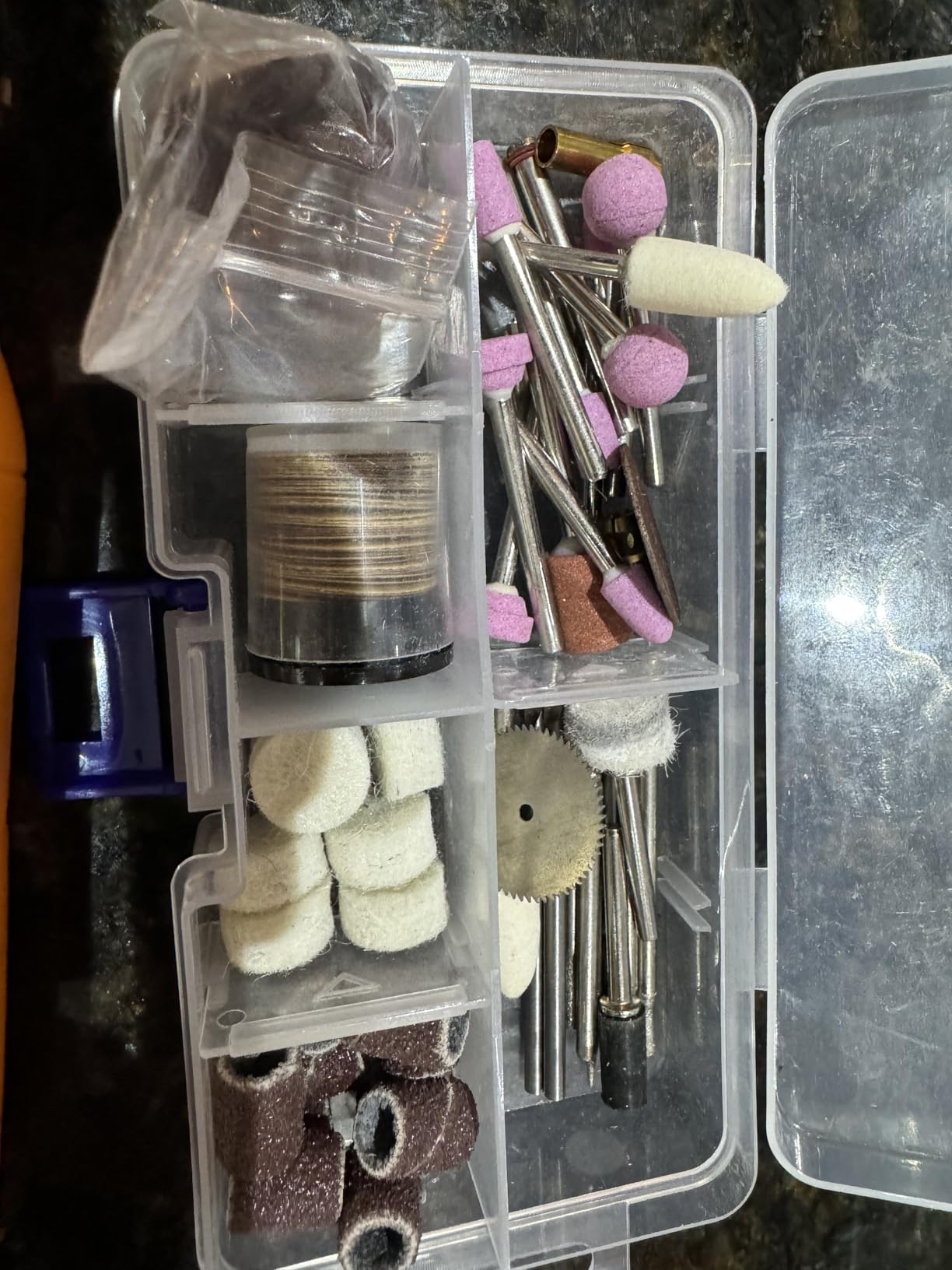
Where it is genuinely good
Travel and finishing work. If you build away from a fixed bench, or you mostly finish 3D prints and foam scenery, the weight and runtime make this a sensible low-cost companion.
Where you will be disappointed
Anything structural. Brass, white metal, hard plastic gates and dense resin are all outside what the motor and the speed ceiling can manage.
How to Choose a Rotary Tool for Model Making
Low-end torque and speed control matter more than peak RPM
The 35000 RPM figure on the box attracts attention and helps you least. What matters for modelling is the bottom of the range, because that is where mold lines, polish and scribing happen. Four of the ten tools here start at 5000 RPM, which is the useful minimum for very slow work. The three that floor at 8000 RPM limit how slowly you can creep, and the two mini tools start even higher, at 12000 RPM.
Speed control quality is the other half. Electronic control with feedback holds the set speed when the bit meets resistance, which is exactly what happens on a sprue gate. A cheap open-loop dial slows down under load, and you end up pressing harder to compensate.
Collet, chuck and shank compatibility
This is where most purchase regret comes from, and it is worth understanding before you buy. A universal 3-jaw chuck accepts all Dremel shank sizes and removes the wrench entirely, which is the most flexible setup available. Collets are more precise but demand the correct size for your bit.
Dremel 4300, 4000 and 8250: universal 3-jaw chuck, so any Dremel accessory fits. The WEN and DEKOPRO kits supply collets covering 1/32 inch to 1/8 inch, with DEKOPRO also including a 3-jaw chuck.
Fanttik F2 Master: 3/32 inch (2.3mm) collet only, so most standard Dremel-style bits will not fit. Check your existing bits first.
HOTO cordless kit and GOXAWEE mini cordless kit: the two most accommodating mini kits, taking 3.2mm and 2.3mm, and 2.3mm, 3.0mm and 3.2mm respectively.
PROXXON IBS/E: supplied with a MICROMOT collet set, and the PROXXON keyless chuck frequently recommended for other models does not fit this one.
Two benchmarks from wider experience: Dremel collets run from 3/32 inch to 1/8 inch, while Foredom handpieces accept up to 1/4 inch. If you plan to move to a bench flex shaft system later, the larger collet ceiling is worth knowing about.
Dremel, Proxxon, Foredom or a budget brand
Dremel owns the accessory ecosystem, so parts, attachments and bits are easy to find. Proxxon buys you rigidity, near-silent running and low run-out, and you pay for that in a lower top speed and harder-to-source attachments.
Foredom sits in a different category, and it is worth being clear about what it is: a bench-mounted motor driving a handpiece through a flex shaft, used for sustained precision work at the bench rather than handheld work. That arrangement removes tool weight from your hand entirely, which is why it appeals to people whose wrists hurt after a long session, and why flex shaft quality matters more than motor power. None of the ten tools here is a substitute for it, although the bundled flex shafts on the WEN, GOXAWEE and DEKOPRO kits are a cheap way to find out whether you like the feel.
Budget kits work for foam, plastic and 3D prints. What separates them is collet quality and speed control consistency, both of which show up in fine work rather than rough work.
Die grinder or rotary tool for modelling
The die grinder is a bigger tool for bigger material, running far faster in a heavier body. It is excellent for shaping and cutting solid material, and it is the wrong instrument for a 1/48 wing or a 28mm miniature, where weight and speed translate directly into damage. For scale modelling, a rotary tool wins; for building a wooden base or cutting brass rod, a die grinder does.
When a rotary tool is the wrong tool
This is the honest objection modellers raise most often on forums, and it deserves a direct answer. A rotary tool is not good at producing a flat surface, and it will rarely replace a file. For flat panels, a file followed by sanding paper gives a cleaner result in less time.
Files, sanding sticks and sticks with self-adhesive abrasive remain better for gentle, even surface work, and dedicated sanding pens are preferred by many miniature builders precisely because they cannot melt a part. Reserve the rotary tool for what only it can do: scribing, engraving, brass trimming, recesses, drill holes and polish.
Dust, fumes and protective equipment
One more practical note on safety. Styrene dust and resin dust are both irritants, and none of these tools has any extraction of its own. Keep a vacuum nozzle near the work, wear a particulate mask when you sand resin, and remember that a light tool still spins fast enough to throw swarf across a bench.
Work outside or ventilate whenever you sand resin or cut brass, and never blow plastic dust off a part with compressed air. If you build resin kits regularly, a respirator is a sensible purchase rather than an optional extra.
The six bits model makers actually use
Ignore the piece count. Across a full build, most modellers use a small core set: a sanding drum in a few grits for mold lines and flat panels, a cutting wheel for sprue gates, a fine engraving bit for panel lines, a diamond needle file for brass and stiff plastic, a flex shaft with a small abrasive cylinder, and a polishing wheel with compound. The remaining hundred-plus pieces in most kits duplicate these in worse quality.
What a build actually costs over time
Budget for the extras a purchase listing does not mention. Replacement bits wear and need buying again, a flex shaft needs periodic lubrication, and a good bench motor is a separate purchase from any handheld tool. If you are choosing between kits, count the cost of the bits you will actually keep.
Frequently Asked Questions
What is the best quality rotary tool?
For model making, the Dremel 4300-5/40 is the strongest all-round choice, holding 5000-35000 RPM under load with electronic speed feedback and a universal 3-jaw chuck. If precision and low run-out matter most, the PROXXON IBS/E leads, and if you need cordless freedom the Dremel 8250-5 takes it. Look first at the low end of the speed range, chuck type and collet size, not peak RPM.
What are some good rotary tools for miniatures?
The Dremel 4300 and 4000 handle general miniature preparation, mold lines and trimming, and the Fanttik F2 Master is built specifically for small parts at 0.22 lb with a quiet hollow-cup motor. The GOXAWEE mini cordless kit at 3.5 oz is the lightest option for long detail sessions. For Warhammer-scale work, run any of them at the lowest speed that still cuts, around 8000-15000 RPM for styrene.
Is there a better rotary tool than Dremel?
There are better tools for specific jobs. The PROXXON IBS/E has a die-cast head, near-zero run-out and quieter running, which makes it better for fine engraving and photo-etch brass, though it tops out at 20000 RPM. Dremel remains the safer general answer because the accessory range is far easier to source and the universal 3-jaw chuck fits every Dremel accessory.
Which rotary tool is better, the Foredom or the Dremel?
A Dremel is better for handheld work on individual parts, while a Foredom is a bench-mounted motor driving a handpiece through a flex shaft, built for sustained precision sessions at a fixed desk. Choose the Foredom if you build at a dedicated bench and value longevity; choose the Dremel for portability and a lower outlay.
What is the best mini rotary tool?
The HOTO cordless kit is the most practical mini tool here because it accepts both 3.2mm and 2.3mm collets, covering more of your existing accessories. The Fanttik F2 Master is lighter at 0.22 lb and quieter, but its 3/32 inch collet excludes most Dremel-style bits. The GOXAWEE mini cordless kit is the lightest at 3.5 oz, with an 18000 RPM ceiling and sealed battery.
Is Dremel or Milwaukee rotary tool better?
For model making, a Dremel is the relevant choice. Milwaukee is a general-purpose power tool maker and none of its rotary tools appeared in our ten-tool test group, so we cannot give measured results for them. The Dremel rotary range is also built around the 1/8 inch accessory ecosystem that modelling bits are sold into, which is the deciding factor on a modeller’s bench.
Final Verdict: Which Rotary Tool Should You Buy?
The Dremel 4300-5/40 is our pick as the best rotary tools for model making goes. It covers the whole range of jobs a modeller actually performs, holds speed under load, changes bits without a wrench, and carries a light that solves a real problem. Buy that one and most builders never need a second tool.
Choose the Dremel 8250-5 if you work away from a fixed bench or build pieces you constantly rotate. Choose the PROXXON IBS/E if fine engraving, photo-etch brass and low run-out are the centre of your hobby. Choose the Dremel 4000-2/32 if wrist comfort across a long weekend matters most. The WEN 23190 and the GOXAWEE 140-piece corded kit make the most sense as first tools, and the Fanttik F2 Master, HOTO and the GOXAWEE mini cordless kit are finishing instruments for miniatures and light work rather than general bench tools.
Whichever you pick, respect the speed numbers, keep the bit moving, and remember that a file still makes a better flat surface than any rotary tool. Then buy a few good bits, because that is what decides how the tool feels in your hands.