
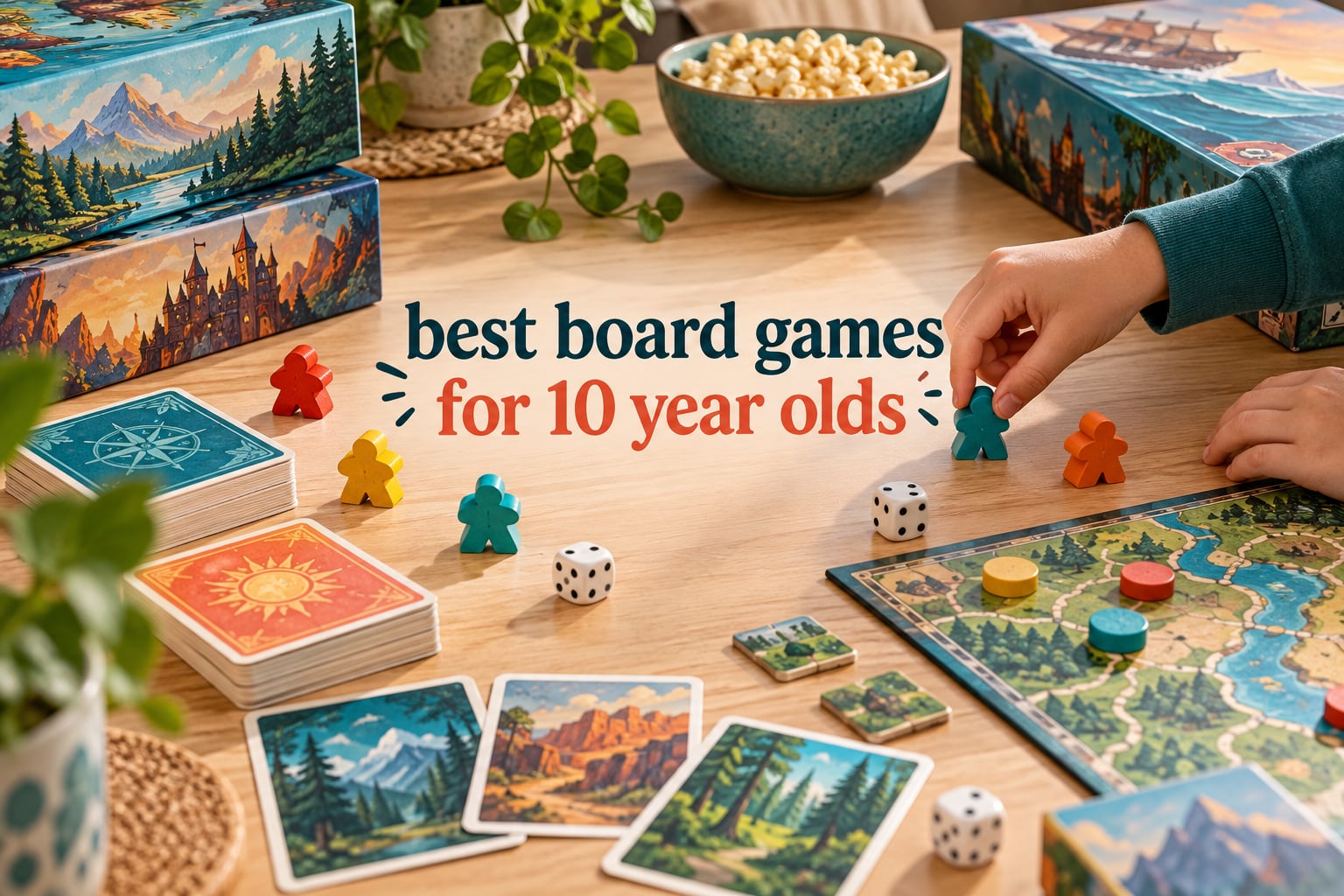
What is a good game for a 10 year old? It is a game with rules a child can learn in under ten minutes but a real decision to make on every turn, at a table where an adult stays interested. The best board games for 10 year olds sit in that exact middle: not the babyish games that feel insulting at double digits, and not the heavy strategy boxes that never get finished.
We vetted this list by playing it. My kids are 9 and 12, my sister brings her 10 year old niece to almost every game night, and every pick below has been through enough sessions that I know where it holds up and where it does not. We rated each one on teach time, actual play time, player count and game weight, because those four numbers decide whether a game survives past its third play.
Two questions came up more than any other in our testing and in the parent forums we read while building this round-up. The first is sibling age gap: a 10 year old and a 6 year old at the same table will destroy most competitive games. The second is setup time, which is the single most common reason a game gets abandoned before it starts. Both of those shape the recommendations, and the best board games for 5 year olds round-up covers the younger end of the same shelf.
Table of Contents
Top 3 Best Board Game Picks for 10 Year Olds in 2026

magilano SKYJO Card Game
- 2-8 players
- ages 8+
- 30 minute games
- Learn-play math with picture rules
- 150 cards plus notepad
- Travels in a backpack

SEQUENCE Original with Folding Board
- 2-12 players
- ages 7+
- Learned in under five minutes
- 135 chips and two card decks
- Team or head-to-head play

Pandemic Cooperative Strategy Game
- 2-4 players
- ages 8+
- 45-60 minute games
- Everyone wins or loses together
- Roles change every session
The Best Board Games for 10 Year Olds in 2026: Quick Overview
| Product | Specifications | Action |
|---|---|---|
| magilano SKYJO Card Game |
|
Check Latest Price |
 Taco Cat Goat Cheese Pizza Taco Cat Goat Cheese Pizza |
|
Check Latest Price |
| SEQUENCE Original Folding Board |
|
Check Latest Price |
 WHAT DO YOU MEME? Family Edition WHAT DO YOU MEME? Family Edition |
|
Check Latest Price |
| Pandemic Cooperative Strategy Game |
|
Check Latest Price |
 Carcassonne Classic Edition Carcassonne Classic Edition |
|
Check Latest Price |
 Ravensburger Labyrinth Ravensburger Labyrinth |
|
Check Latest Price |
 Risk Board Game Risk Board Game |
|
Check Latest Price |
 Sleeping Queens Card Game Sleeping Queens Card Game |
|
Check Latest Price |
 Hasbro Scrabble Board Game Hasbro Scrabble Board Game |
|
Check Latest Price |
 Herd Mentality Kids Edition Herd Mentality Kids Edition |
|
Check Latest Price |
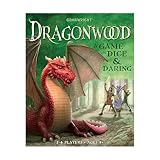 Gamewright Dragonwood Gamewright Dragonwood |
|
Check Latest Price |
1. magilano SKYJO: The Card Game That Teaches Math Without Saying So
magilano SKYJO, Fun Card Game for Young and Least Young, Fun Game Parties in The Circle of Friends and Family.
- Learned in minutes by genuinely mixed-age groups
- Scoring doubles as two-digit addition practice
- Fits in a backpack for travel
- Fast rounds mean several games in one sitting
- New cards feel stiff for the first few plays
- Scoring needs basic addition and subtraction
- Popular enough that groups may need house rules
SKYJO is the game I buy first for any new 10 year old I know. The whole idea is inverted: you want the lowest score at the end, so every card you flip, exchange and collect is a small penalty. That inversion is instantly interesting to a 10 year old because it is the opposite of everything else they play.
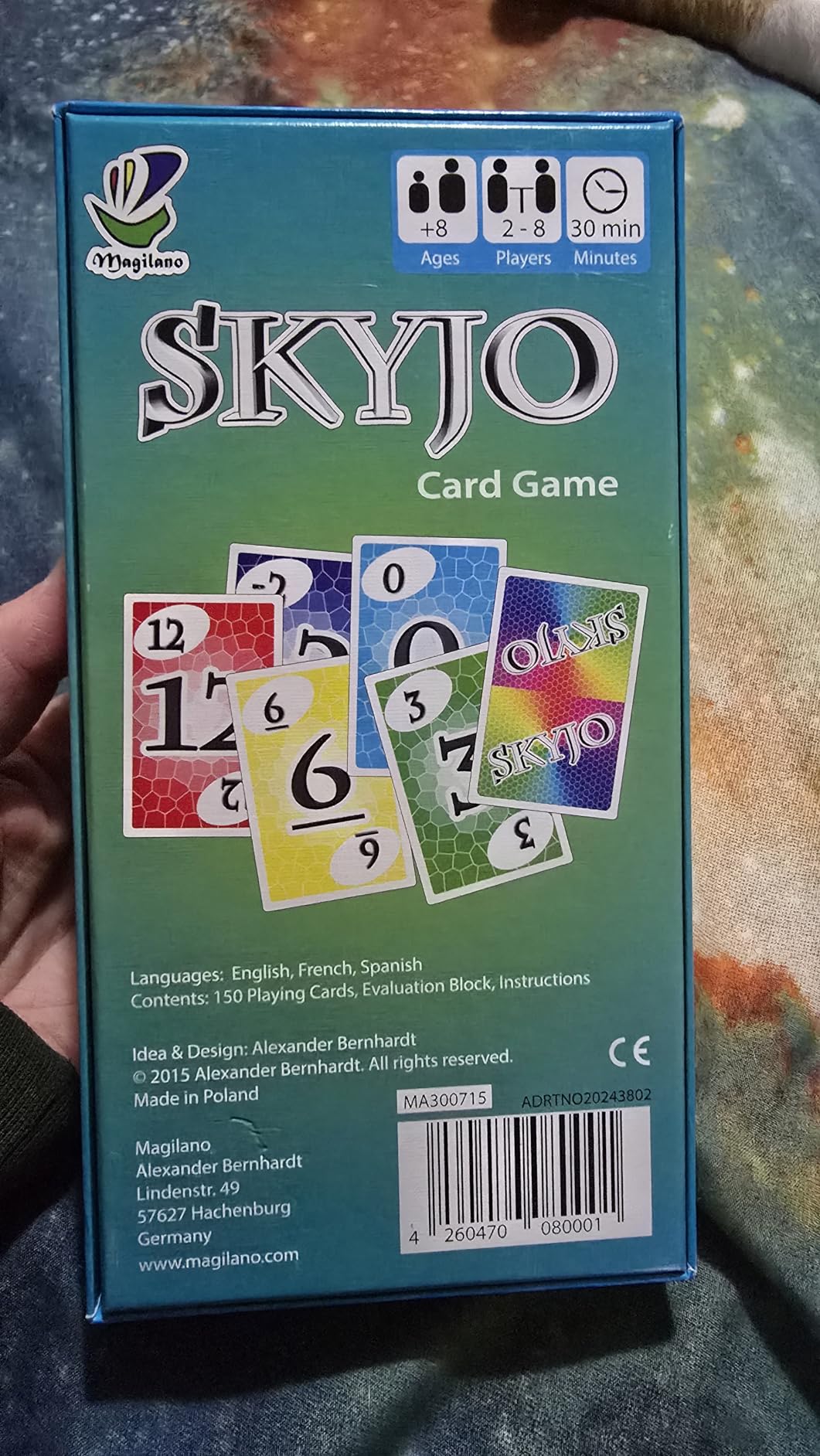
The box holds 150 cards, a scoring pad and the instructions, and the manufacturer rates it for ages 8 and up across 2 to 8 players. Picture-based rules mean nobody has to read a manual before starting, which is why my 6 year old niece can join the same game as her 10 year old sister without a separate rules briefing.
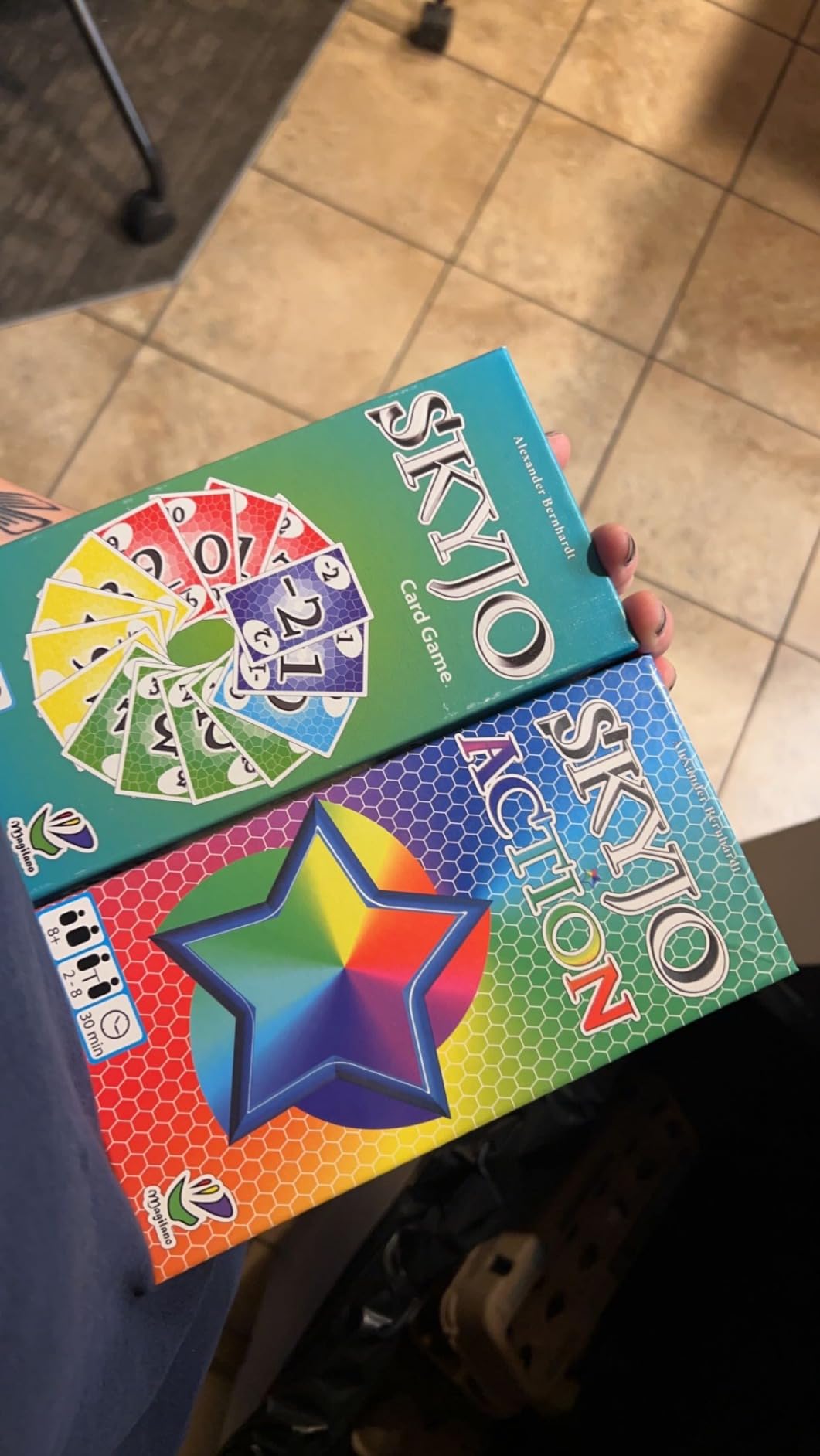
What surprised me most is the hidden arithmetic. The published educational objective is developing calculation, estimation and concentration skills, and that is not marketing filler. Players add up to 100 two-digit numbers at the end of every round, and they get better at it without noticing, which is exactly the kind of practice a school night needs.
We have played this at the table, in a car park while waiting for rain to stop, and at a birthday party with eight kids. It is the single game on this list that I never have to convince anyone to start.
Why it works for a 10 year old
It teaches in under three minutes and the decision each turn is a genuine trade-off rather than a reflex. The scoring system is simple addition, which is exactly the maths level sitting in a Year 6 classroom, so practice happens without a worksheet.
A compact 7.64 by 3.98 inch box means it comes to a sleepover, a tent or a long car journey. With a 4.8 star average across more than 76,000 reviews, it is also the most battle-tested pick in this round-up by a wide margin.
Who it does not suit
If your child hates any element of chance, SKYJO is not it. Everything resolves from shuffled cards, so a bad run feels like bad luck rather than bad decisions, and a competitive 10 year old can lose several rounds in a row.
The scoring does require addition and subtraction. A child working below that level will need an adult to run the pad, which adds a small amount of adult babysitting to what is otherwise a hands-off game.
2. Taco Cat Goat Cheese Pizza: The 15 Minute Party Filler
Taco Cat Goat Cheese Pizza Card Game by Taco Cat Games, Age 7+, 2-8 Players
- All rules fit on a single card
- Teach time is under a minute
- Several rounds fit inside one play session
- Compact deck travels anywhere
- Gets loud and chaotic fast
- Slap-heavy play is intense for calm players
- International buyers occasionally report deck size mismatches
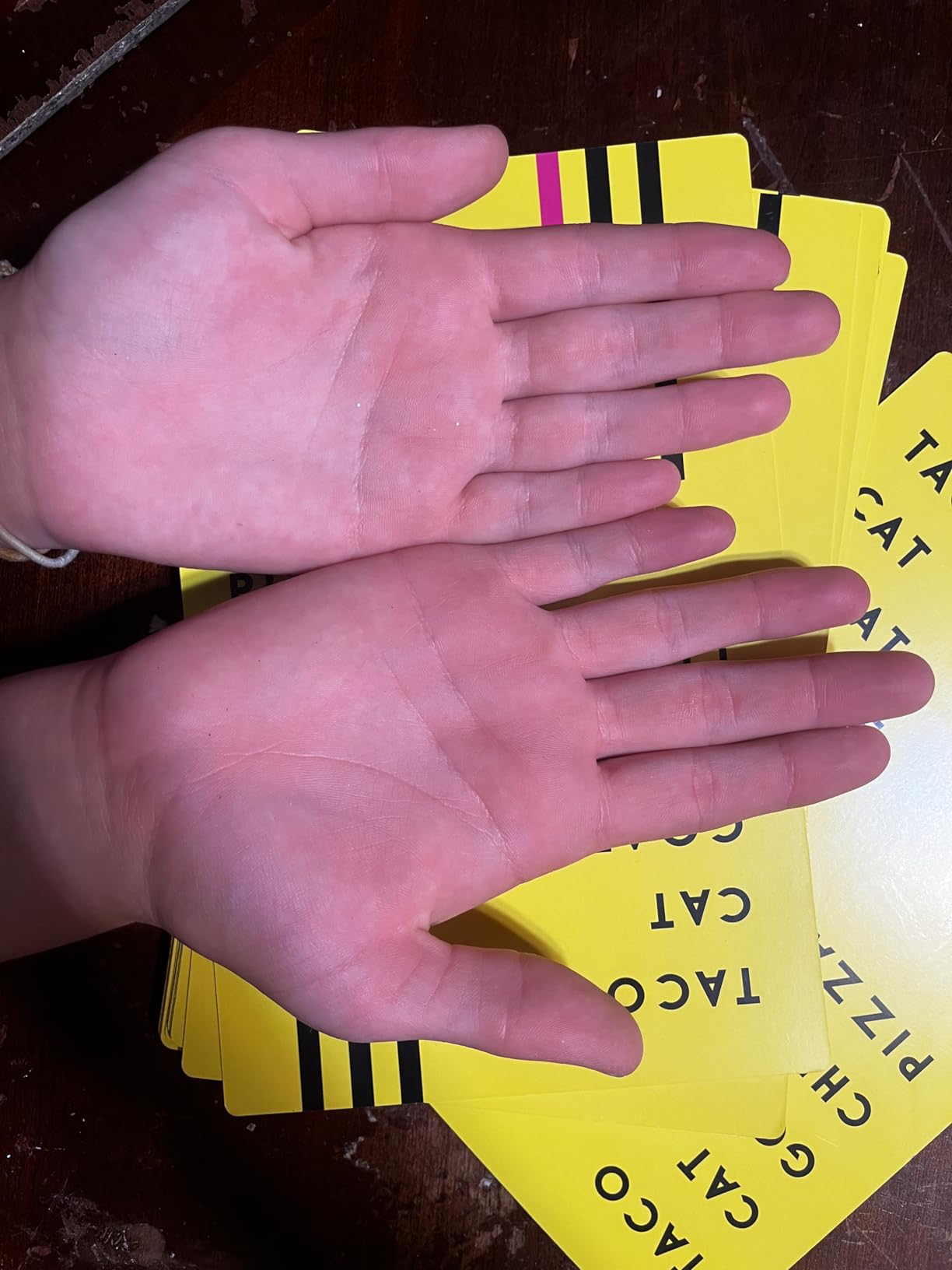
The entire ruleset is a list of words. When a player turns over a card, if the card and the spoken card match, you slap it. Miss, and the next player goes. That is genuinely all there is, and that is the entire appeal for a 10 year old who thinks a 20 minute rule briefing is a punishment.
Rounds run 10 to 15 minutes for 2 to 8 players, so a group can play four or five times and still be finished before the kettle boils. Surprise cards like Gorilla, Groundhog and Narwhal add a twist without adding instructions, and they are the reason my kids ask for it again weeks later.
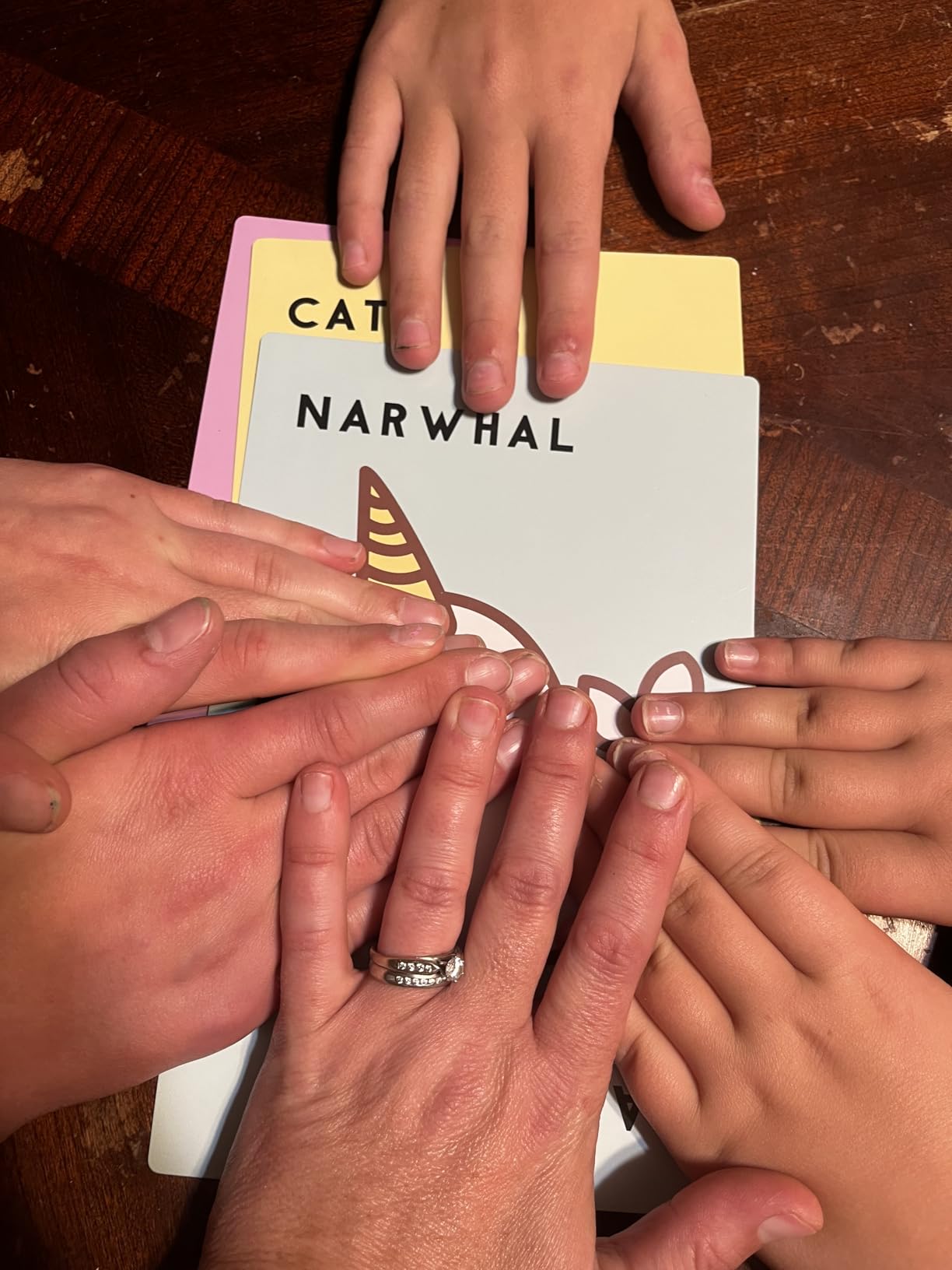
It scales cleanly in a way heavier games cannot. On a tween birthday party we ran it with eight players, and when two friends arrived late we handed them a deck mid-session and they were scoring within two hands. Nothing about it needs to be re-taught.
The developer lists the educational objective as improving cognitive skills and fostering social interaction, which sounds corporate but matches what we saw. Kids have to track what has been played, listen hard, and keep an eye on the next card.
Why it works for a 10 year old
It is the fastest turn-around of anything on this list and the teach is measured in seconds rather than minutes. Adults and kids laugh at the same moments, which is what makes it hold up at a mixed-age table.
A 4.8 star average over more than 54,000 reviews reflects how reliably it does one job. The scoring skill built here is pattern recognition under time pressure, and the physical skills are real too.
Who it does not suit
It is genuinely loud and it escalates. Younger or sensitive players sometimes find the slapping and shouting too much, and one child at our table stopped enjoying it after a few sessions.
There is no strategy to learn and nothing carries over between games. If your 10 year old has moved on from the fastest possible filler and wants depth, this is a stepping stone rather than a destination.
3. SEQUENCE: The Board That Scales From Two Players to Twelve
- Rules learned in under five minutes
- Works from a 2-player duel to teams of 12
- Mix of card luck and board strategy
- Solid board
- cards and chips
- Small round chips are a hazard for very young children
- Base game only with no expansions in the box
- Folding board needs setting up each session
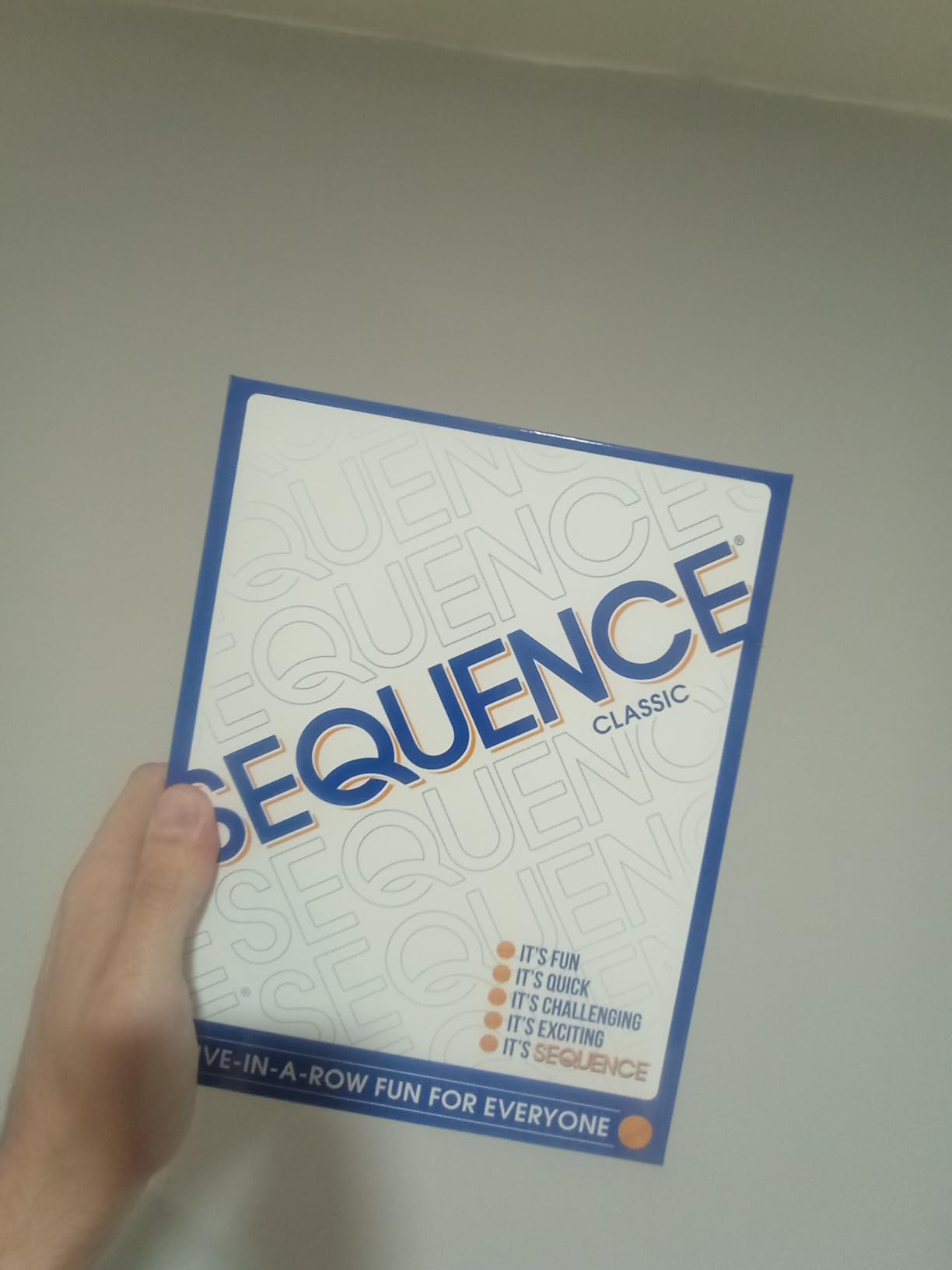
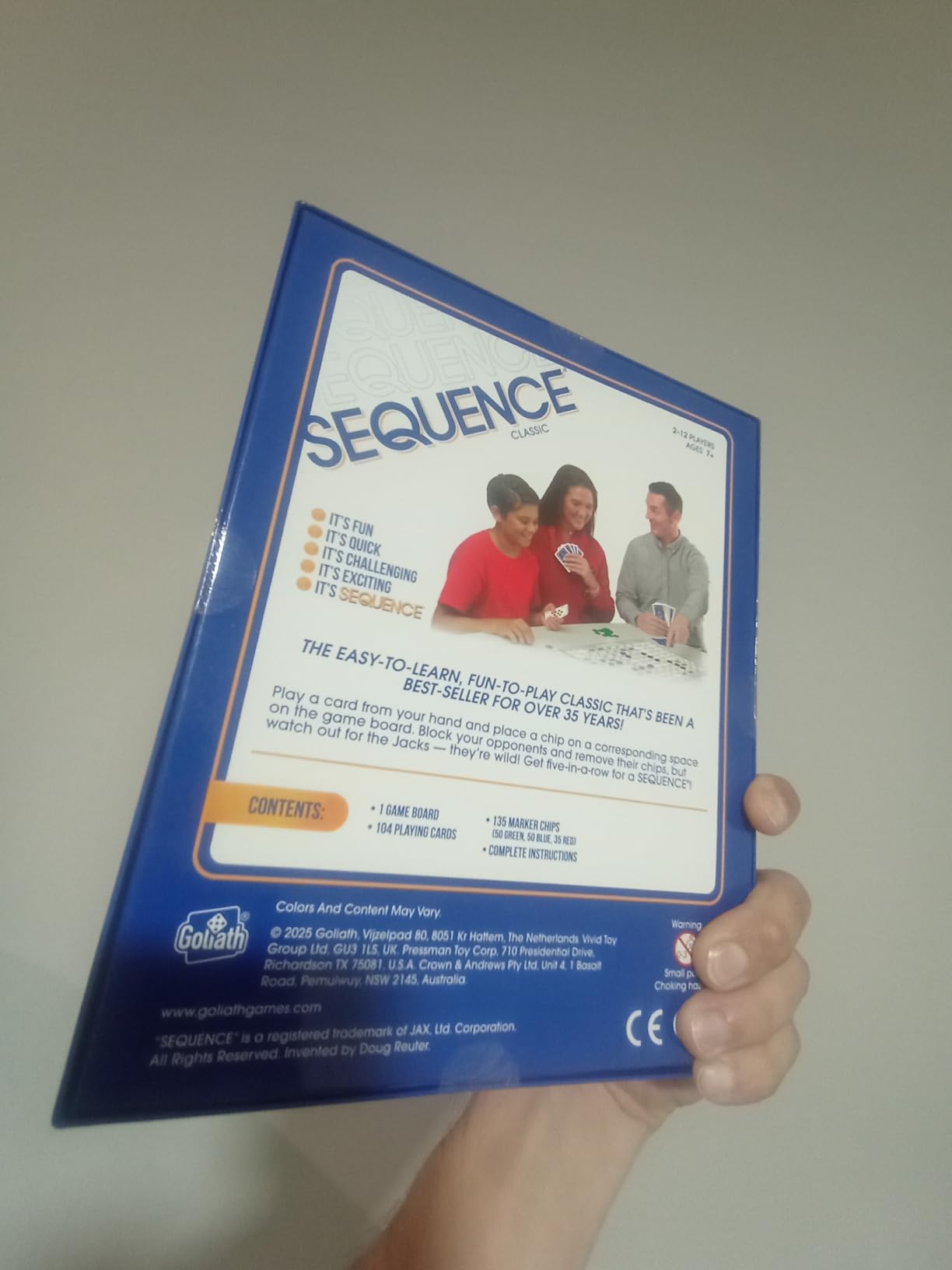
SEQUENCE is the answer when you do not know how many people will show up. Two players duel it. Four players pair up into teams. Eight or ten players fill the board and it becomes a loud, fast scramble, and the rules never change.
The mechanic is simple: play a card from your hand, put a chip on the matching space, and try to get five in a row. What keeps it interesting well past the age when children usually tire of it is the blend of luck and board reading, because sometimes you draw exactly the card you needed and sometimes the board is simply in the way.
The publisher lists strategic thinking, problem-solving and numerical skills as the educational aims, and the maths is incidental rather than forced. Counting gaps, tracking which cards are still live and working out what an opponent might play all happen without anyone naming it a lesson.
It is also the game our 12 year old and 9 year old play most, which is the strongest signal of longevity I can give you. The 7+ rating on the box turns out to be conservative rather than generous.
Why it works for a 10 year old
Teach time is under five minutes and the decision depth is real, so a 10 year old gets a genuine game rather than a toy. It rewards patience and reading the table, which are the exact skills parents tend to want built at this age.
With a 4.8 star average across more than 45,000 reviews, this is the safest recommendation on the list for a household that does not know its own player count yet.
Who it does not suit
There is a small-parts warning here. The chips are round and small, so a family with a child under three at the same table should keep them out of reach.
Only the base tile set is in the box, and the folding board has to be assembled and packed away each time. Long-term players will want expansions, and if your child is a dedicated tabletop hobbyist this will be a starting point rather than an endgame.
4. WHAT DO YOU MEME? Family Edition: The Laughter Generator
- Learns almost instantly with no explanation
- Family Edition humour works in mixed settings
- Large cards and a simple display easel
- Plays two-player by turning over the top card
- A portion of the photo cards get judged as not funny
- Winning depends on the rotating judge
- Internet meme references may not land with every child
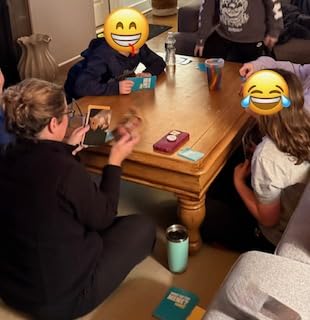
The Family Edition takes a format built for adults and strips out the material that would embarrass a mixed group. Each round, a judge sets a photo card, everyone picks a caption card to complete the meme, and the judge picks the funniest combination. The humour is mild, which is the entire point of this version.
What we like is how little scaffolding it needs. I have seen a group of six people start playing this with no explanation at all, because the box basically explains itself once you turn over a few cards. That matters at a birthday party where you do not have an hour to teach.
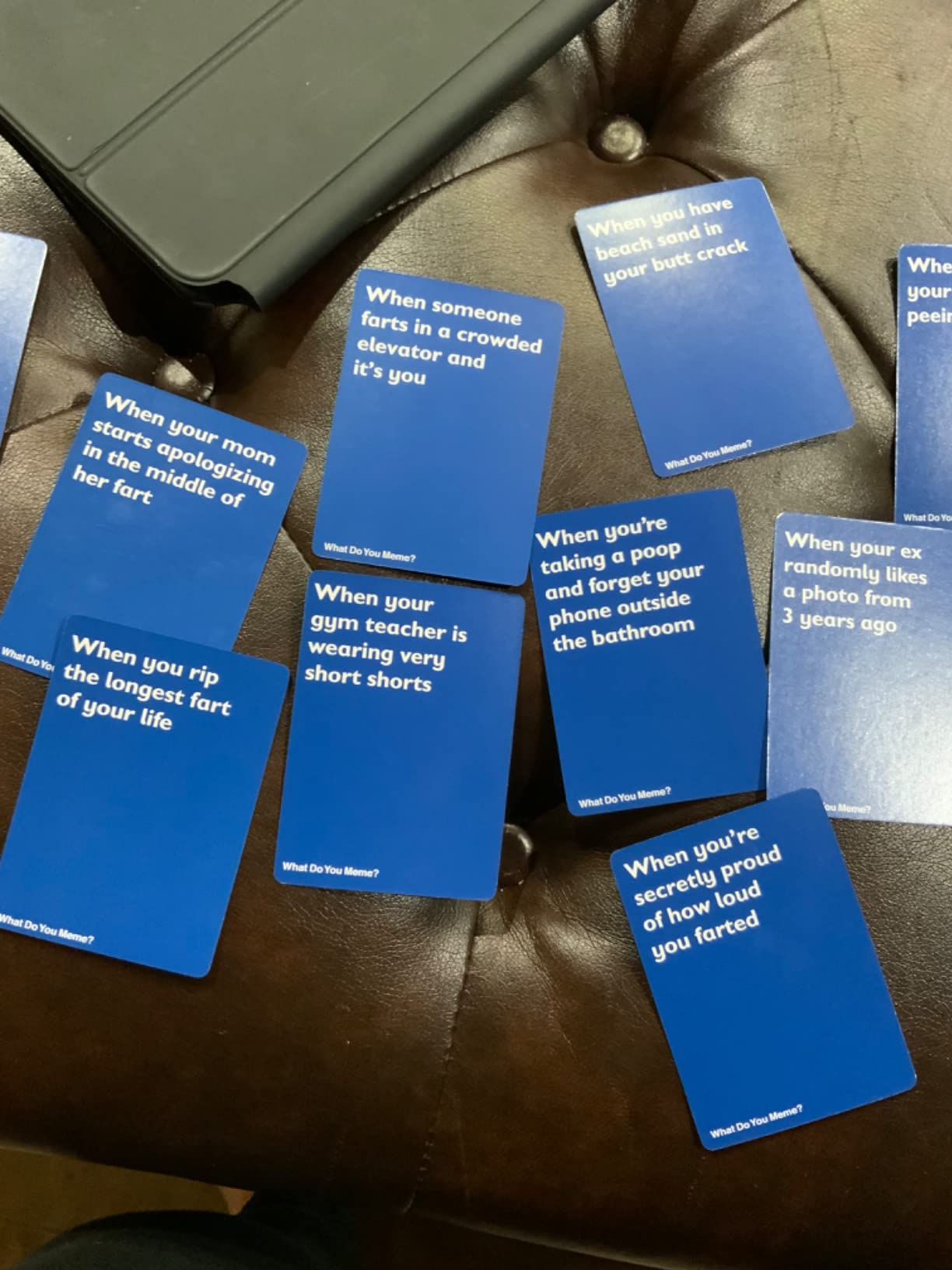
The contents are 300 caption cards, 108 photo cards, instructions and a small easel for standing the meme up on the table so everyone can see it. Publisher guidance is 3 or more players, ages 8 and up, which is a bit misleading because the photo card count limits a large group more than the caption count does.
We have run it with adults, with kids and with a group that had both. The two-player version is a clever trick: turn over the top card of the caption deck and treat it as the shared judge card, so two people can play it without a rotating role.
Why it works for a 10 year old
It keeps a group of screen-free kids genuinely engaged, which is the hardest thing to buy. The social creativity involved, putting a caption next to a photo and hoping it lands, is a real skill and a 10 year old is exactly the age where they start to get it.
Because the humour is family-safe, it works for playdates, sibling afternoons and classroom events without a content check first.
Who it does not suit
Judge-based scoring can feel unfair, especially to a child who is genuinely funny and keeps losing on someone else’s taste. A rotate-the-judge rule only partly fixes this.
Some of the photo cards get a shrug rather than a laugh, and a 4.6 star average is lower than the rest of this list for exactly that reason. A child who is not plugged into internet meme culture may also need a few rounds before the format clicks.
5. Pandemic: The Cooperative Benchmark That Fixes Sibling Rivalry
- Everyone wins or loses together
- Randomly dealt roles change the strategy each game
- Short rulebook and clear info cards
- Difficulty can be scaled with epidemic cards
- Setup is fiddlier than it looks
- Easy to forget the infection step in early plays
- Losing is common in the first few attempts
Outbreaks are spreading across a world map and the team has to contain four of them before they run out of disease cubes. There is no individual scoreboard in this game, which is the reason it solves the biggest problem in family game night: the older child always wins.
Each player is secretly dealt a role with a special ability, such as Medic, Scientist, Researcher or Operations Expert. Those roles change how you think about the whole board, so the same physical game plays very differently depending on who drew what. This is an updated edition and includes the character cards that let abilities be reused between sessions.
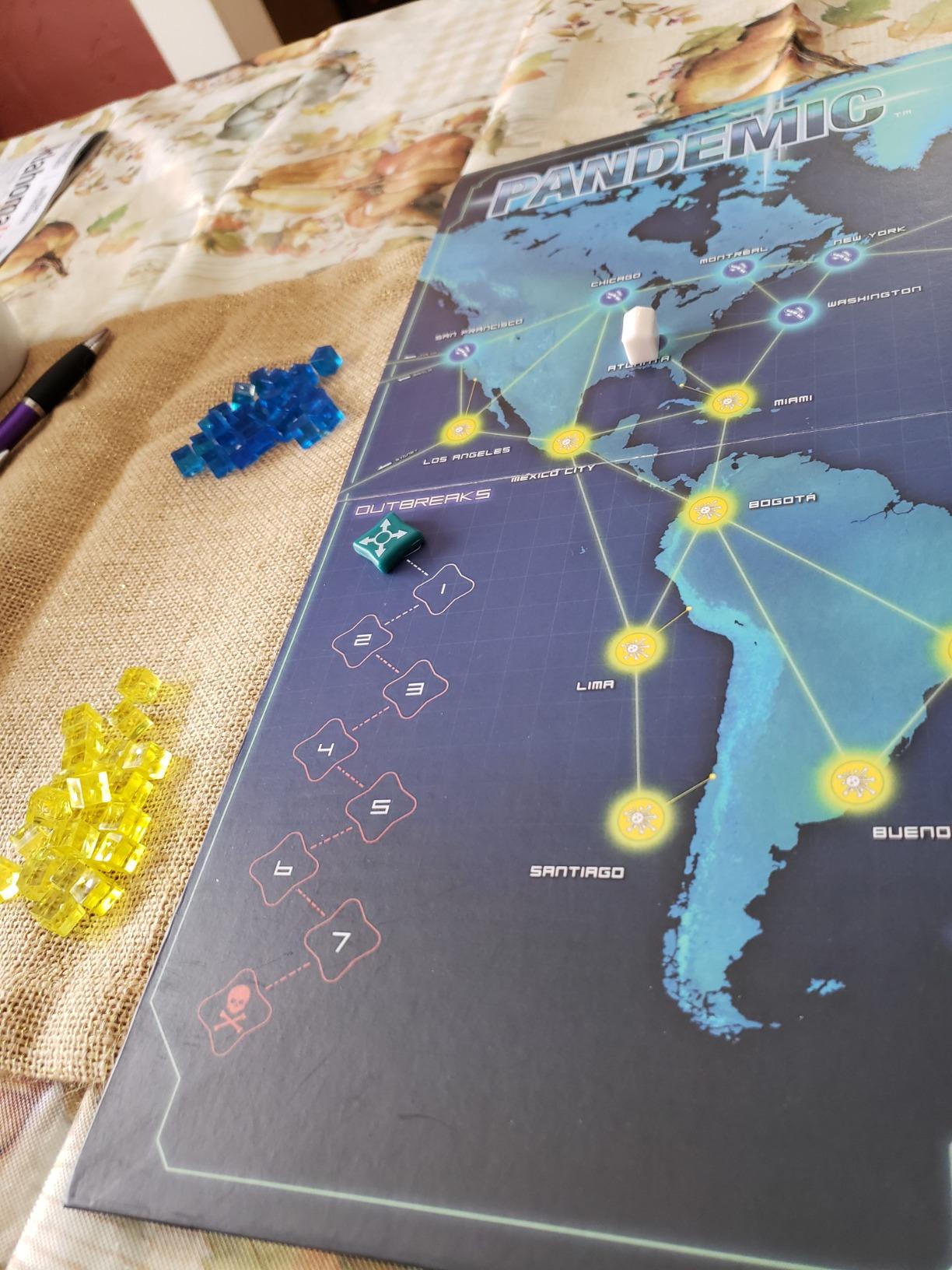
Time it properly. A full game is 45 to 60 minutes, plus setup, so this is an after-dinner and weekend game rather than a quick filler. It also scales cleanly from 2 to 4 players, and 2 player mode is a genuinely good fit for a parent and one child on a quiet evening.
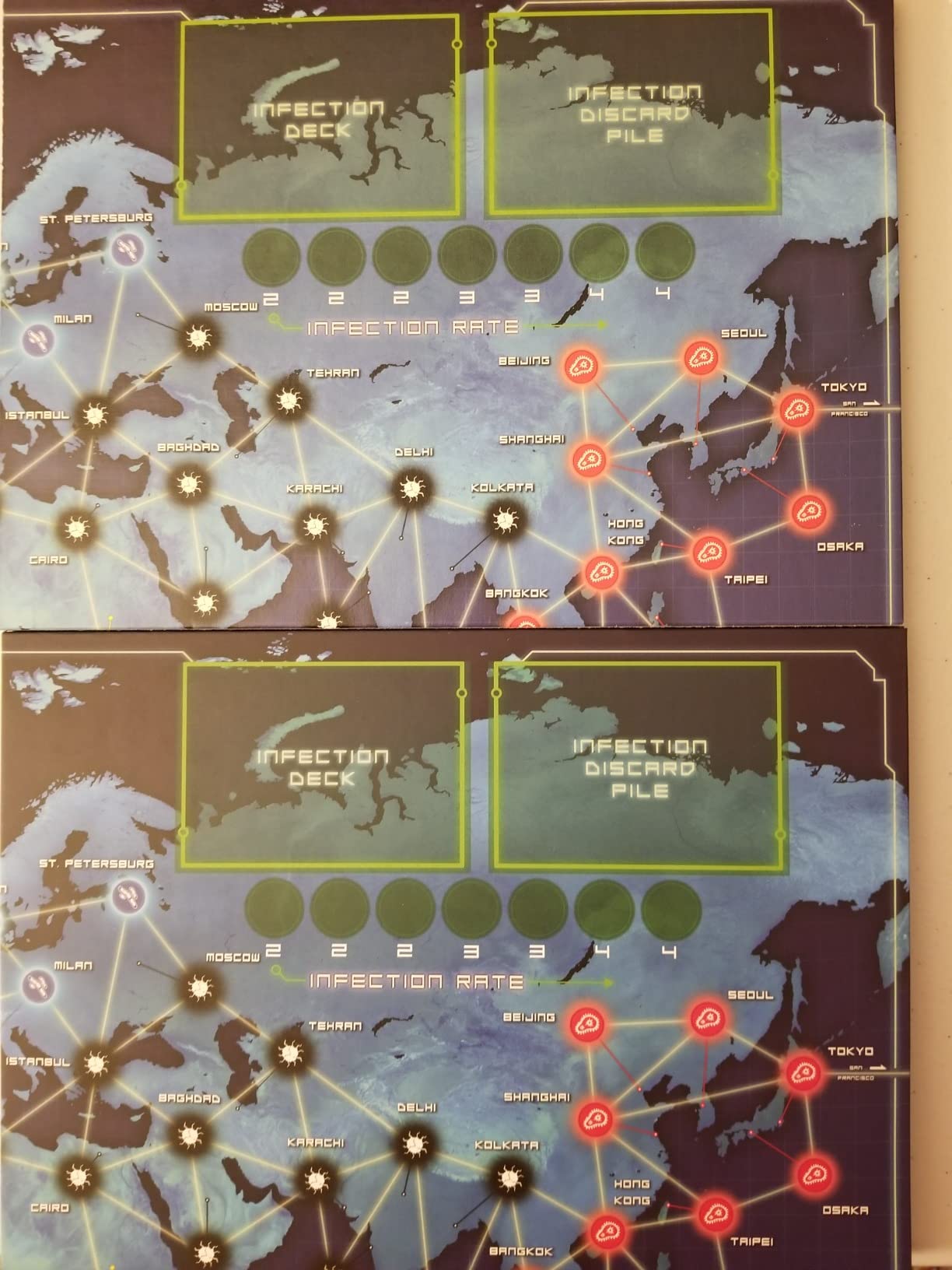
The one real friction point is setup. Two decks have to be shuffled, dealt and recombined, and if you skip a step the game breaks in a confusing way. We now sit down five minutes early just for that part, and our own tip is to watch a setup walkthrough once before the first play rather than reading the rulebook aloud.
Why it works for a 10 year old
Planning ahead, counting resources and negotiating with a teammate are the exact skills this age can absorb. There is no luck driving the outcome, so a win is something a child can genuinely take credit for.
Difficulty scales with the number of epidemic cards, so a family can make the first three games winnable and then add them back as the group improves. It is also the entry point into a much larger series when they are ready.
Who it does not suit
If your family will not accept losing, this will not work. The team can lose on the very first turn with an unlucky epidemic chain, and a competitive 10 year old can take that badly even when everyone agreed to play.
It also has the fussiest setup and clean-up of anything here, with many small components and crowded city circles. A 60 minute commitment after a long school week is more than some households will manage.
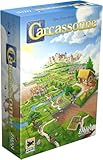
6. Carcassonne: The Tile Placement Classic That Grows With Your Child
Carcassonne Tile Placement Strategy Board Game, 2-5 Players, 35 Min
- Rules can be taught during the first round
- Random tile draws mean no two games match
- Painted wooden meeples and readable artwork
- Plays well for two or for the full group
- Scoring and meeple rules are a lot for newcomers
- The big man rule confuses younger children
- Thin outer packaging and occasional missing pieces
Carcassonne is the game on this list most likely to still be on the shelf at 14. You draw a landscape tile, place it against an existing one, and put a wooden meeple down to claim a feature. Every tile is different, so the map you build is different every single time.
The manufacturer rate is 7 to 16 years, which is the widest band on this list, and it is accurate. A 10 year old is right in the middle of where this game works. My 12 year old now thinks about placement two moves ahead, while my 9 year old is still content to build roads and watch for a monastery.
The box includes The Abbot and The River mini expansions, which is unusual at this level and gives you two extra things to learn without a separate purchase. Average playtime is around 35 minutes, comfortably inside a school night.
Component quality is a genuine strength here. The painted wooden meeples and the readable tile artwork give it real table presence, and it looks and feels a step above the plastic-and-card games that usually sit next to it.
Why it works for a 10 year old
The design has a rare quality: a complete game can be taught while the first round is being played. That means a 10 year old is not sitting through a lecture waiting to be allowed to start.
Spatial reasoning, forward planning and reading the intentions of other players are all on the table without being labelled. It is also one of the few games here that plays genuinely well for two, which matters for a playdate.
Who it does not suit
For a complete newcomer, the full meeple and scoring rules are a genuine amount to absorb in one sitting. The farmer rule is the usual first casualty and many families simply ignore it for the first few games.
Quality control is not perfect. Reviewers report arriving with missing expansion pieces such as the abbots, and the tiles and score track are cardboard that can tear if the die-cut sheets are pulled apart carelessly.
7. Labyrinth: The Shifting Maze That Teaches Planning
- Simple rules that still feel tactical
- The maze changes every turn
- Short sessions fit a bedtime window
- Well-regarded game with quality components
- Impulsive players get frustrated when plans fail
- Games speed up at the higher treasure cards
- Small pieces need care around younger siblings
Labyrinth is a game about moving through a maze that someone else can rearrange underneath you. Every turn the players flip a maze card and shift a wall, which means the safe route you memorised on the last turn may be blocked. Collecting treasure cards, the real goal of the game, often means the long way round.
That is a clever design for this age because it trains cause and effect directly. My 10 year old started playing by reacting and now plays by planning two turns ahead, and that shift happened over maybe ten games rather than being taught.
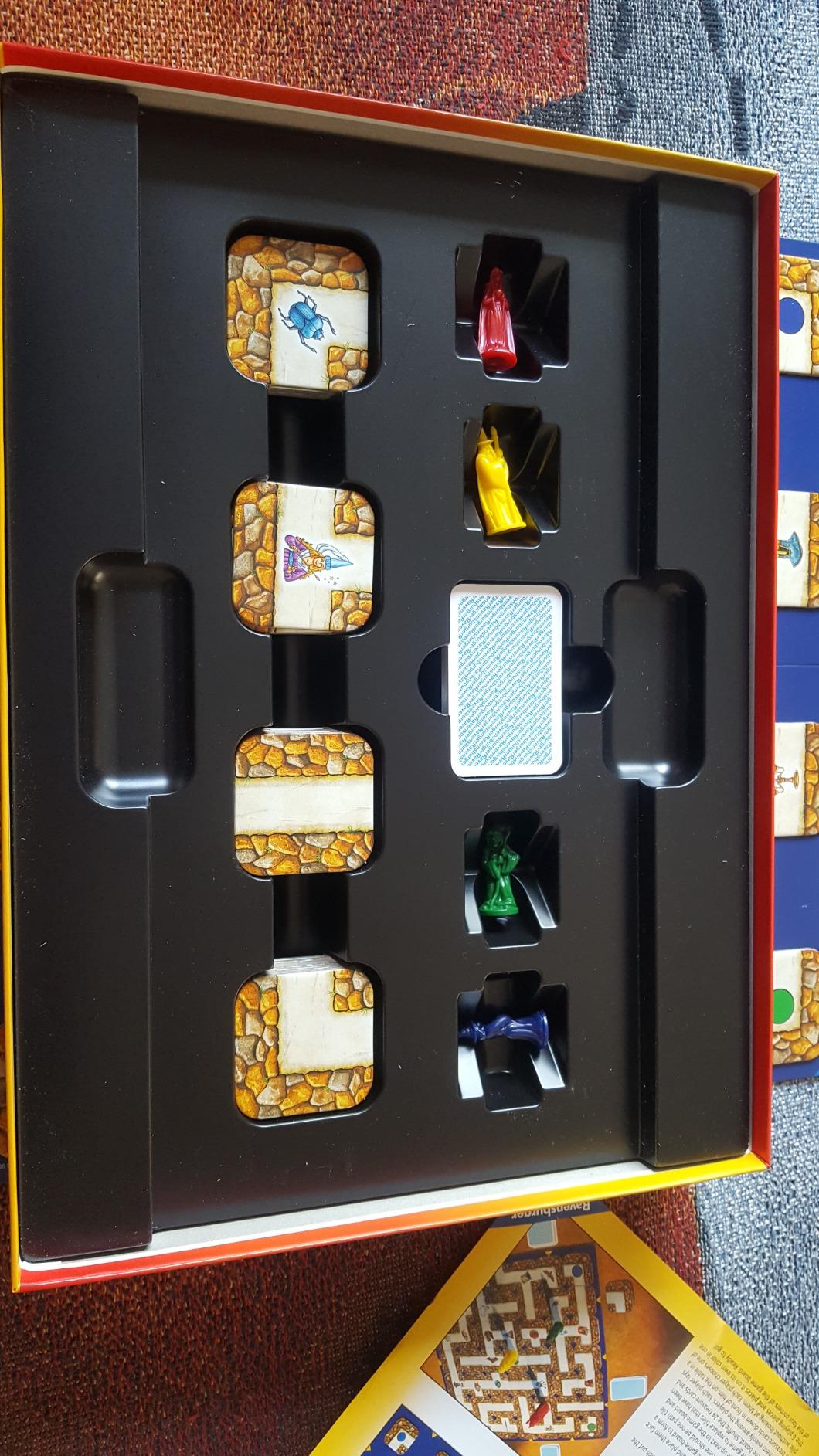
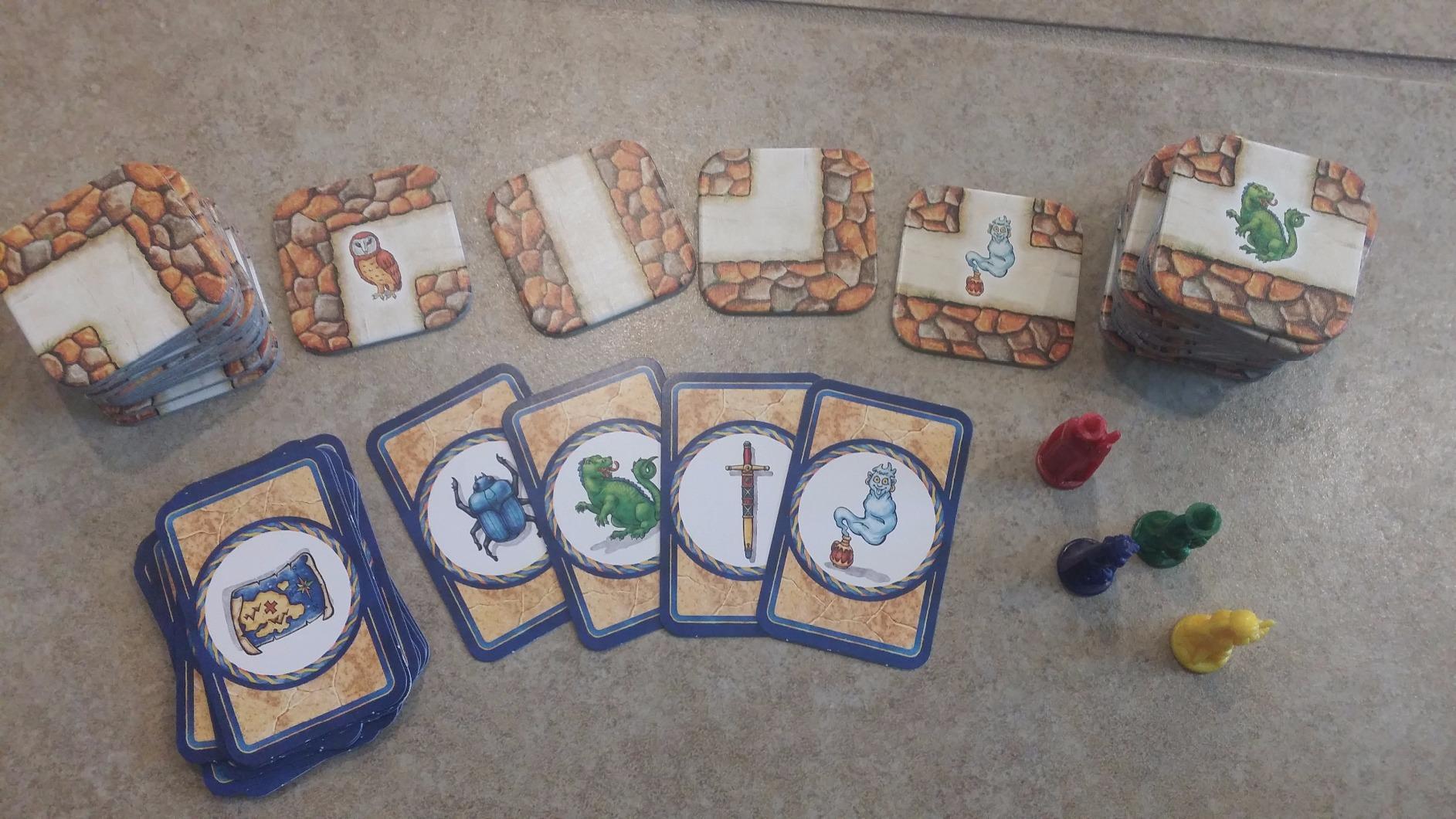
The box contains a playing board, 34 maze cards, 24 treasure cards and 4 playing pieces. Playtime is 20 to 30 minutes, which puts it in the same short slot as a filler but with a much heavier decision underneath.
Ravensburger is a respected European publisher and the component quality shows it. It also holds up as an adult game, which matters, because our table has a mix of players who take it seriously and players who just like moving the walls.
Why it works for a 10 year old
The rules take about two minutes and the child is immediately making real decisions, which is the balance this whole round-up is looking for. Critical thinking and planning are the stated educational goals and they are genuinely the game.
Short sessions mean it fits an after-dinner window rather than an evening, so it gets played rather than put back in the box. The maze reshuffles every turn, so replay value holds up well past the fourth play.
Who it does not suit
This is a thinking game, not a reaction game. A child who acts first and plans afterwards tends to get stuck behind walls and lose repeatedly, and that can end the fun quickly.
Once players reach the higher treasure cards the game swings fast. The pieces are also small enough to need keeping away from a much younger sibling at the same table.
8. Risk: The One to Buy When Your Child Is Really 12
Risk Board Game, Strategy Games for 2-5 Players, Strategy Board Games for Teens, Adults, and Family, War Games, Ages 10 and Up
- Refreshed board and unit moulds read clearly
- Large component count suits mixed skill levels
- A long-standing intergenerational classic
- Generous component list in the box
- Hard for children under 12 to pick up alone
- Games run well over the printed time estimate
- Intense table dynamics some groups dislike
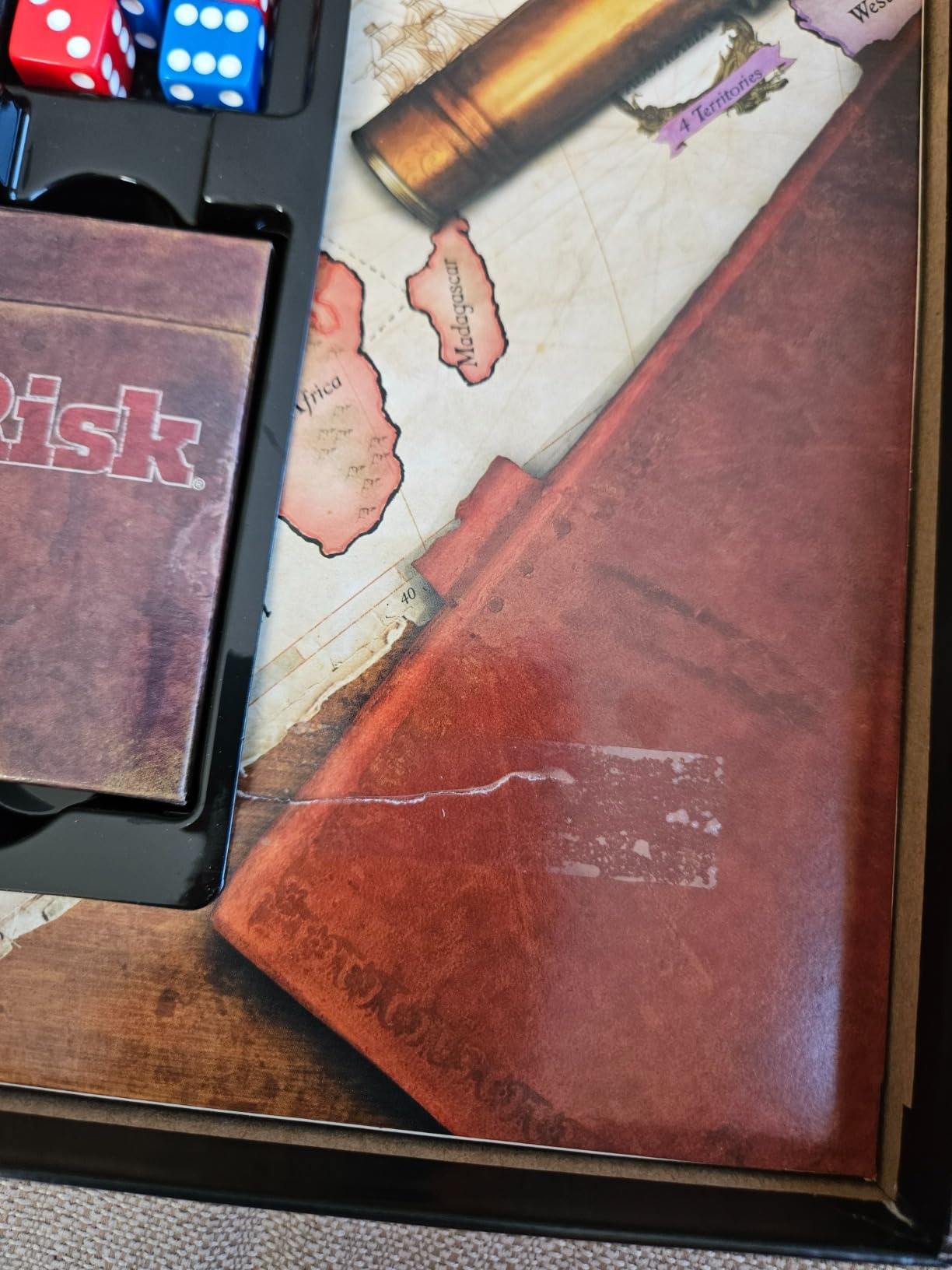
I include Risk with a warning label, because it is the only game here the manufacturer rates from 10 upwards and the only one I would not hand to a 10 year old as the sole occupant of the table. Give it to a confident older tween or play it with adults present, and it is a genuinely good game.
The mechanics are area control: dice to attack, territories to hold, cards to reinforce. This edition refreshes the board and the unit moulds so armies are easier to read at a glance, and the box is generous with five armies, 56 Risk cards, five dice and cardboard war crates.
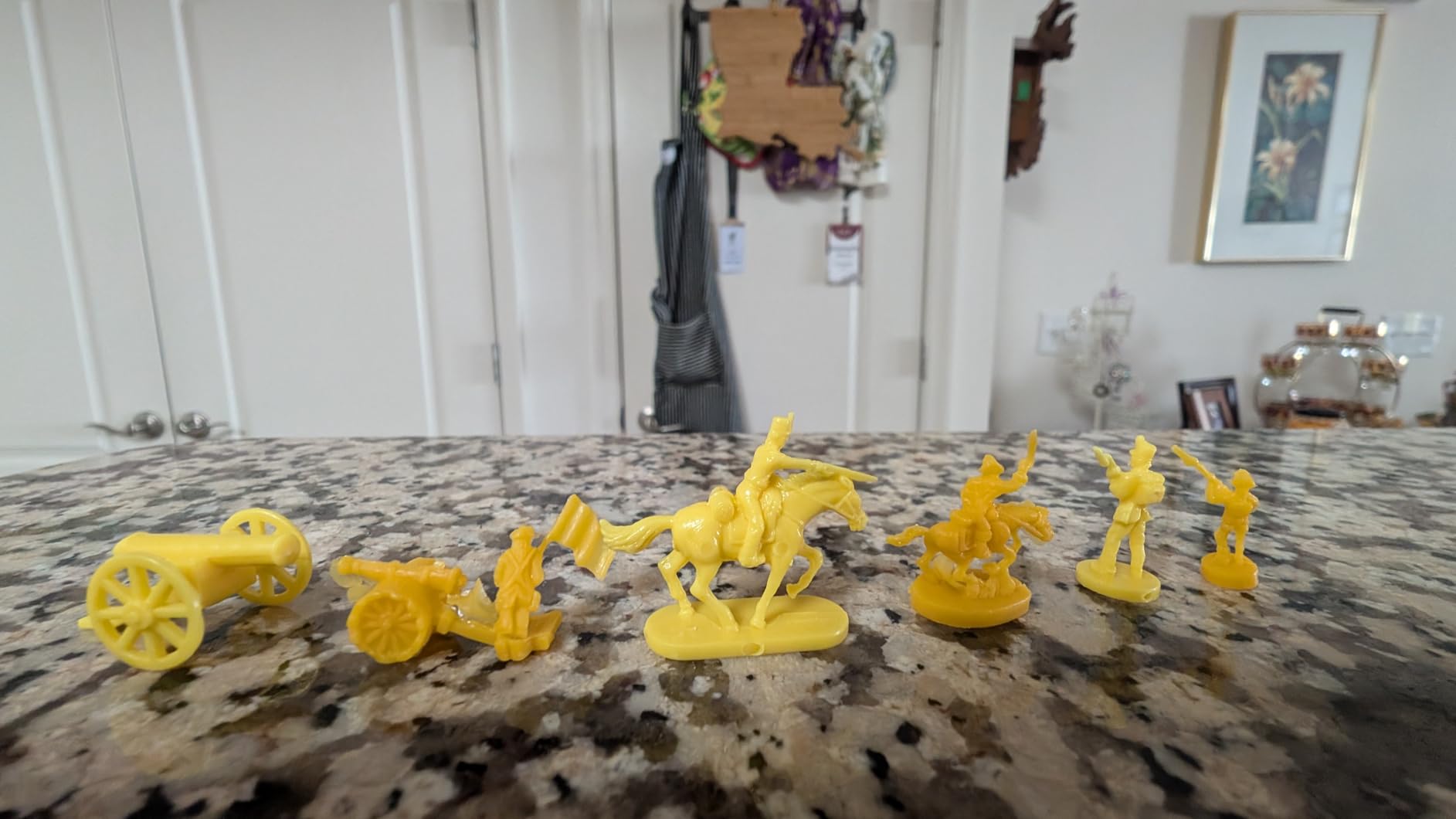
There is also a dragon token to destroy before it destroys your troops, and an optional Alexa skill if you have the device. The skill is a gimmick, but kids here find it amusing the first few times.
Playtime is the problem. The printed estimate is 120 minutes and reviewers consistently report going well beyond it, which means a Risk night is an evening event. Plan it as the one thing you do that weekend, not as filler after dinner.
Why it works for a 10 year old
For a child who is bored of being patronised, Risk is the antidote. It treats them as a general, and the strategic planning and reading of an opponent’s position is a genuine challenge at the level of the printed age range.
Many parents played it as children, so it works as a family tradition across two generations. The refreshed components and clearer rulesbook also make it far less fiddly than the version most people remember.
Who it does not suit
A 10 year old playing against adults will lose often and the elimination phase is brutal. This is the game on the list most likely to end with someone genuinely upset and the box put away.
It encourages negotiation, betrayal and table arguments, and some groups actively dislike that. This particular listing is also the French-language edition, which several international buyers did not realise until delivery. Check what you actually receive before buying for a gift.
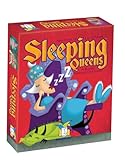
9. Sleeping Queens: The Highest Rated Card Game in the Lineup
Sleeping Queens Card Game by Gamewright | Kids and Family Card Games for Ages 8 and up | Fast Playing Strategy & Math Board Game | 2–5 Players
- Highest average rating in this round-up at 4.9 stars
- Fast setup and short rounds
- Quiet play that sits alongside other activities
- Mix of strategy
- memory and addition
- Luck elements can decide the result
- Older children may find it less challenging over time
- The full card set takes a couple of games to click
Sleeping Queens is a 4.9 star average across close to 9,500 reviews, which makes it the best-rated game in this round-up by a clear margin. The picture is simple: a row of face-down queens, and you are trying to wake them, avoid the dragon and never be holding a queen when the cards are turned.
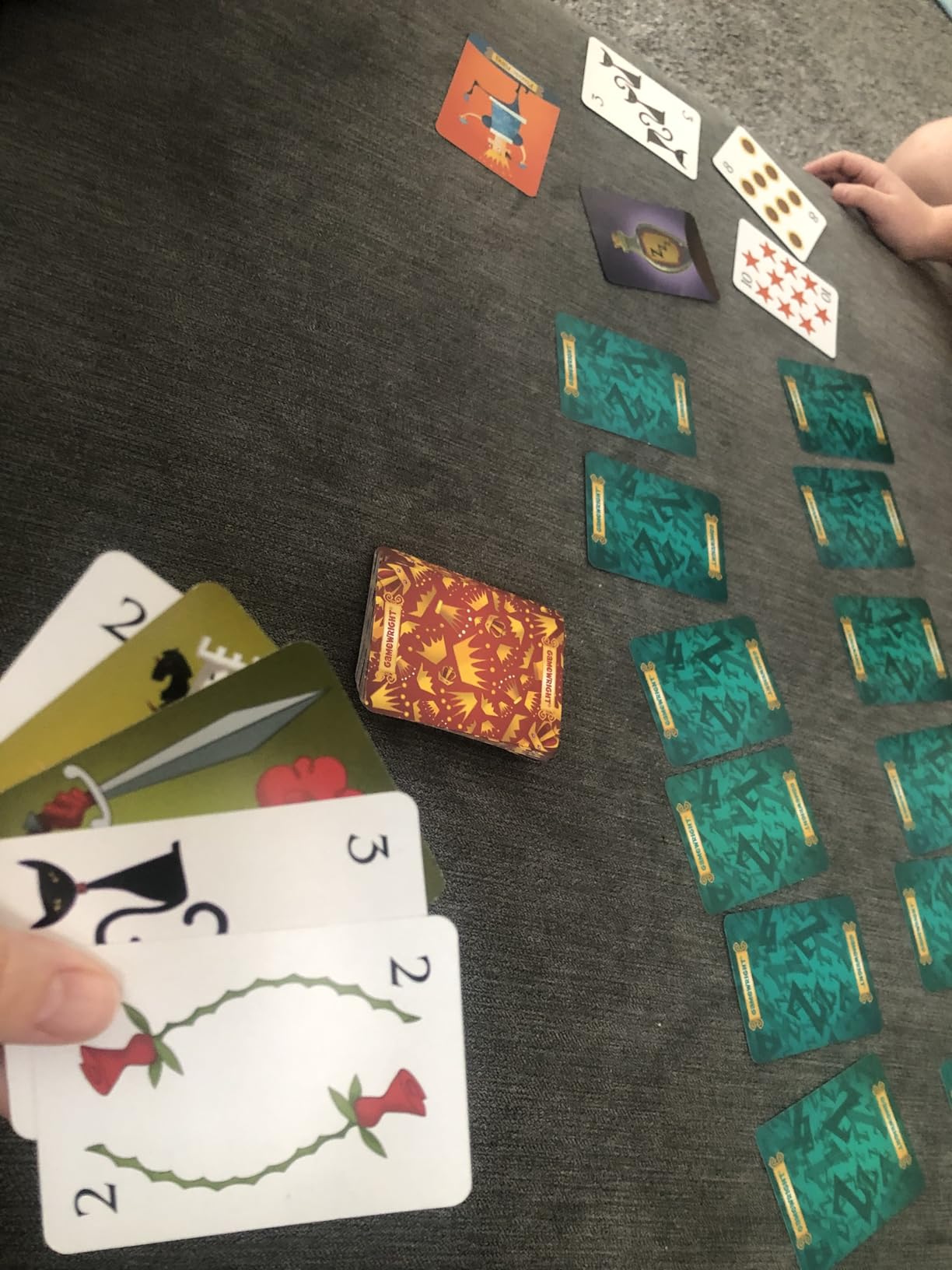
The mechanic sounds trivially easy and is not. Players play knights, jesters, dragons and magic potions, and the small card inside the potion has to be kept in your hand to be played at the right moment. That one card creates most of the tension in the game.
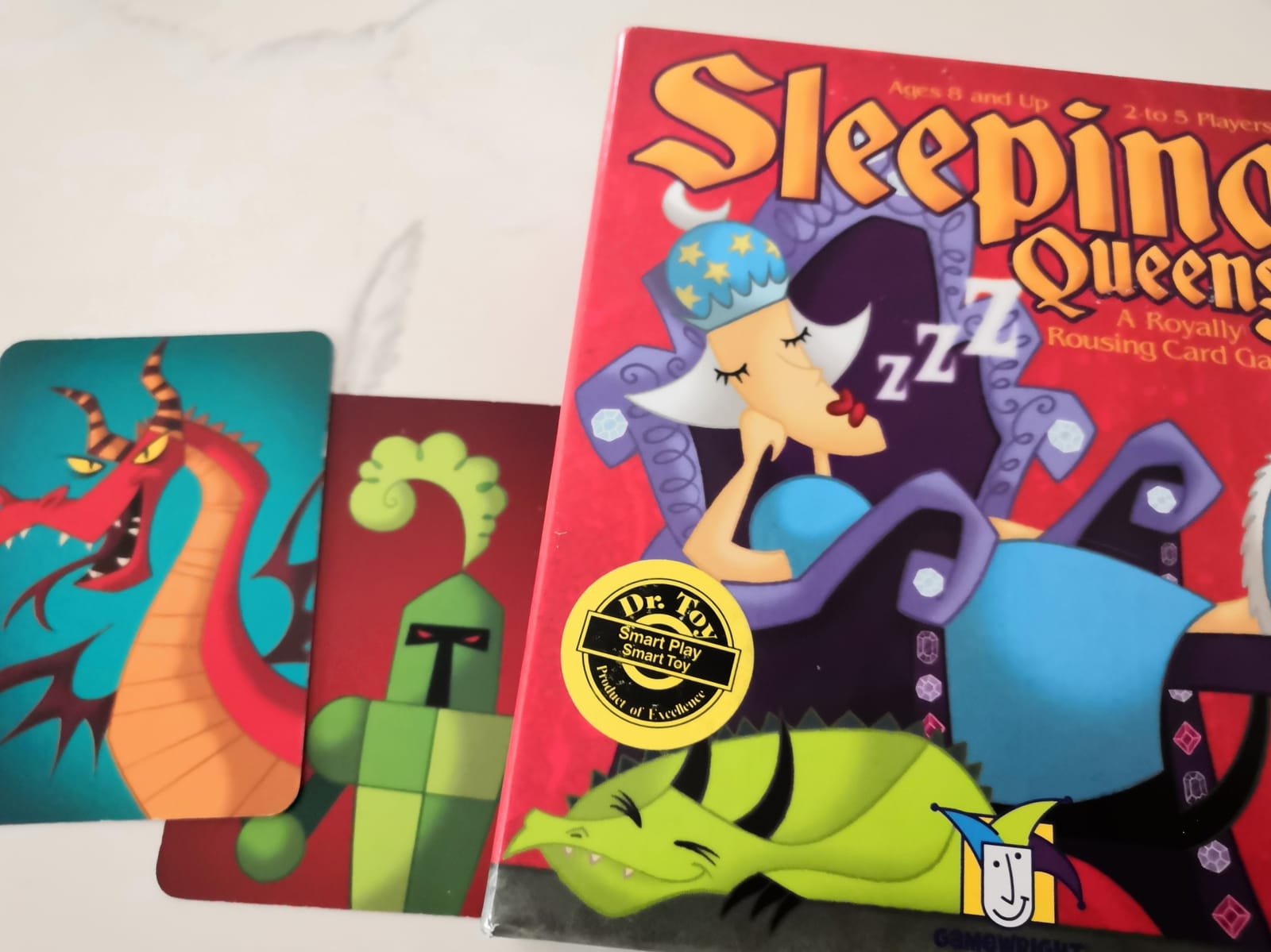
Rounds are 15 to 20 minutes for 2 to 5 players, and the box holds 79 beautifully illustrated cards. It is quiet, which makes it unusual on this list, and it works well when other people in the room are doing something else entirely.
My 10 year old uses it as a mental maths warm-up without being asked. Playing a card is usually addition, and adding a few two-digit numbers quickly under time pressure is genuinely good practice for the right age.
Why it works for a 10 year old
The stated educational objectives are strategy, memory, quick thinking and basic maths, and all four are load-bearing rather than bolted on. A 10 year old is the exact age where memory drills stop feeling like drills.
It is also the easiest recommendation here to slip into an evening. Quiet, short, portable and it needs no table space, which is why it survives school nights better than anything else on this list.
Who it does not suit
Luck does a lot of the work. A cautious child who thinks they lost because of a bad draw often decides the game is unfair, and the rating reflects enthusiasm more than depth.
A child who is already chasing heavier games will find this too simple after a dozen plays, and the whole card set does not fully click for a few games in. For one 10 year old, it is the ceiling rather than the starting line.
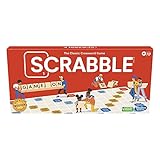
10. Scrabble: The Vocabulary Builder That Never Tires Adults
Hasbro Gaming Scrabble Board Game, Classic Word Games for Kids Ages 8 and Up, Fun Family Game for 2-4 Players, The Classic Crossword Game
- Real wooden tiles and racks feel solid
- Textured board keeps tiles in place
- Medium size is easy to store and carry
- Genuinely expands vocabulary and spelling
- Build quality is rated average by some reviewers
- Strong players can dominate younger children
- Turns drag for players who overthink
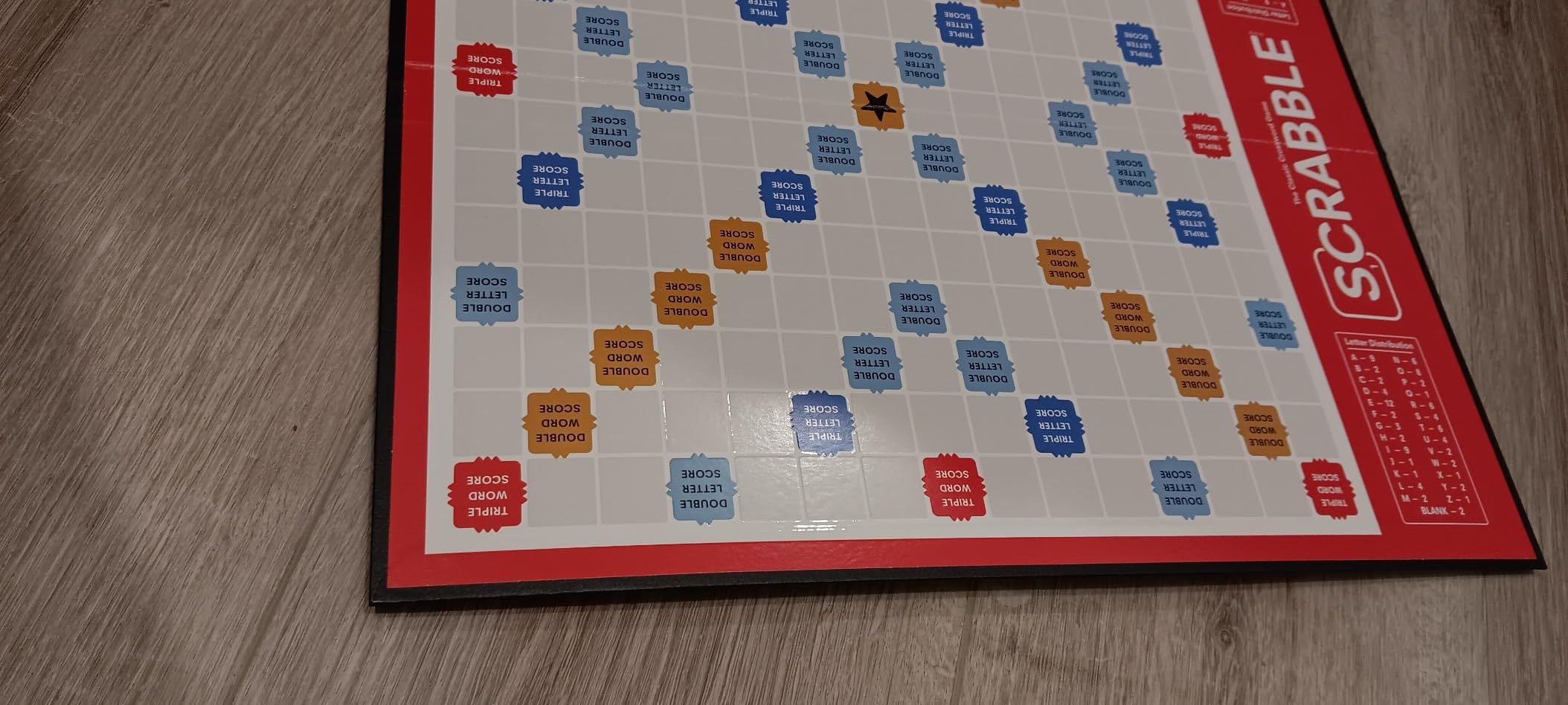
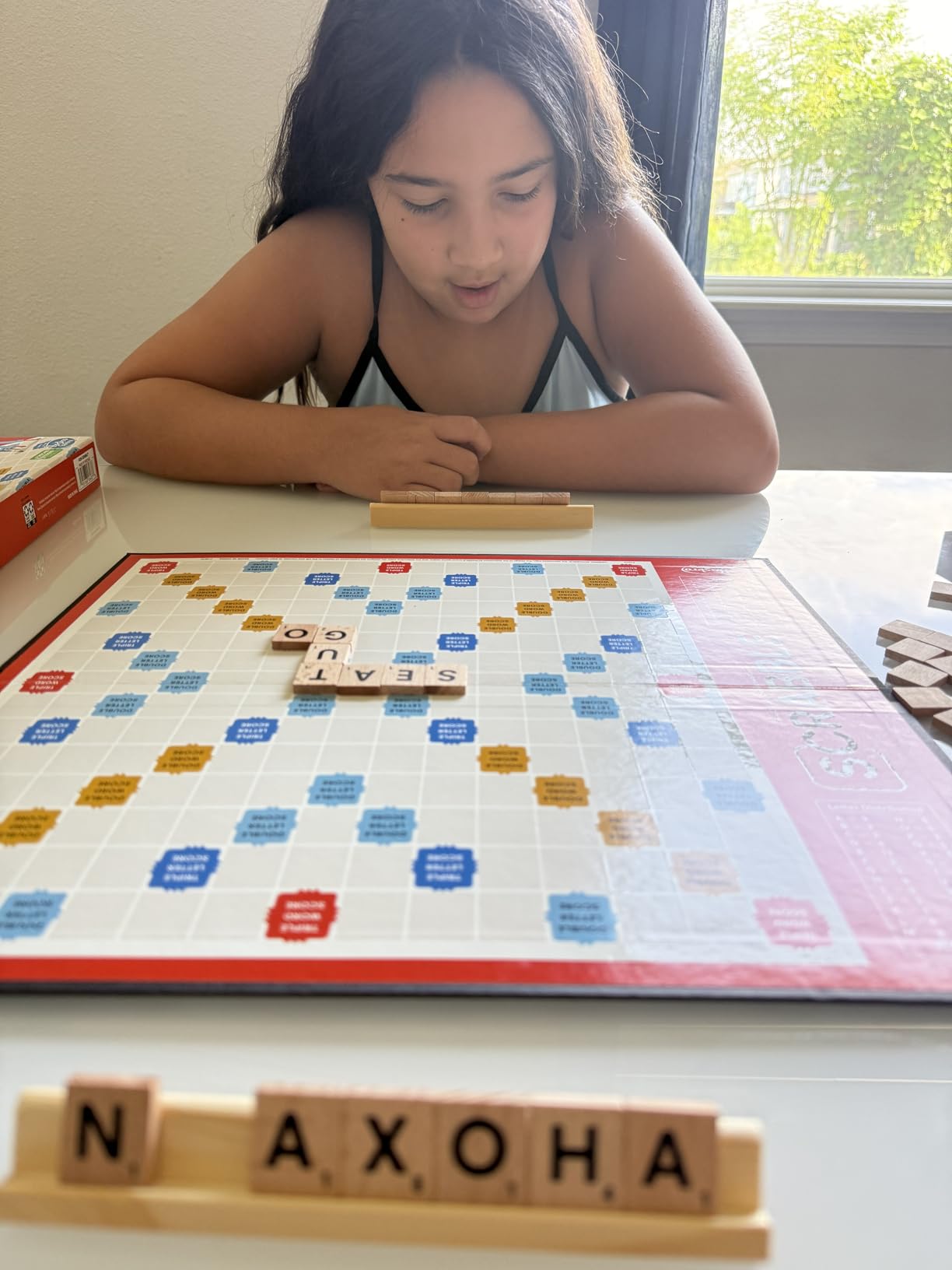
Scrabble is the game I recommend when a parent specifically asks what to buy to help with spelling. There is no other game on this list where the practice is the point, and the premium square scoring adds a genuine strategic layer on top of the vocabulary work.
This edition uses 100 wooden letter tiles and wooden tile racks, and the textured board surface keeps tiles from sliding, which sounds minor until you have played a plastic version where the whole grid shifts mid-word. Playtime is around 40 minutes for 2 to 4 players.
The game guide includes expert tips and alternative ways to play, which is useful if your child finishes the base rules quickly. We have found that the two-player crosswords variant keeps a strong older player and a younger one closer together than the standard grid does.
It is also a good bridge game in a family. My 9 year old and my 12 year old will happily play Scrabble together precisely because the older one cannot run away with it, which is unusual for a game at this table height.
Why it works for a 10 year old
It builds spelling and vocabulary without a worksheet, and the feedback is immediate. A 10 year old sees a letter value of four on the board and understands the scoring logic straight away.
It plays head to head or in teams, works for two, and the medium size board is easy to carry to a family gathering. A 4.7 star average from more than 5,600 reviews reflects how dependable it is.
Who it does not suit
Word games have natural winners, and a strong speller can make it one-sided for a child who is still learning. If the gap in ability frustrates rather than motivates, this is a hard sell for a full evening.
Some reviewers find the overall build quality average rather than premium, and turns drag badly when players pause for a long time thinking. Neither issue is serious, but both are real.
11. Herd Mentality: The Only Pick That Fits Twenty People
Herd Mentality: Funny Family Party Board Game for Game Night, 4-20 Players
- Handles 4-20 players
- far beyond most family games
- Rules take seconds to explain
- 20 minute rounds stay in one sitting
- Majority-play mechanic sparks real laughter
- Light on strategy
- Losing players take the pink cow of doom
- Humour depends on the group and can flop when shy
Most family games fall apart past six players because turns slow to a crawl. Herd Mentality does not, because everyone acts at once. You turn over a question, everyone guesses what most of the room answered, and if you are in the majority you take a cow.
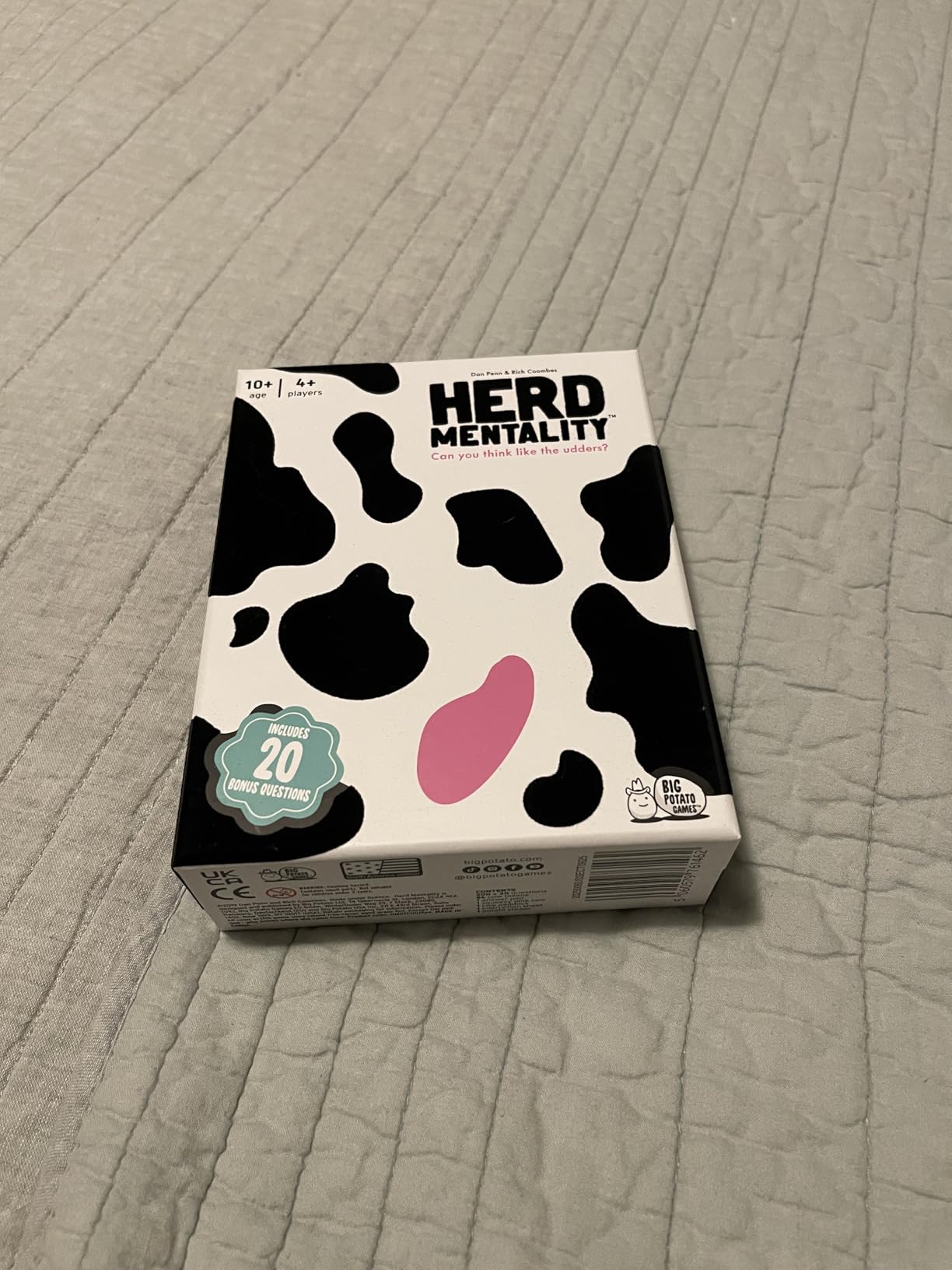
Be the odd one out and you get the pink cow of doom, which is the only real stake in the game. This Kids Edition includes 20 extra questions beyond the standard pack, and publisher guidance is 4 to 20 players, ages 10 and up, with around 20 minute rounds.
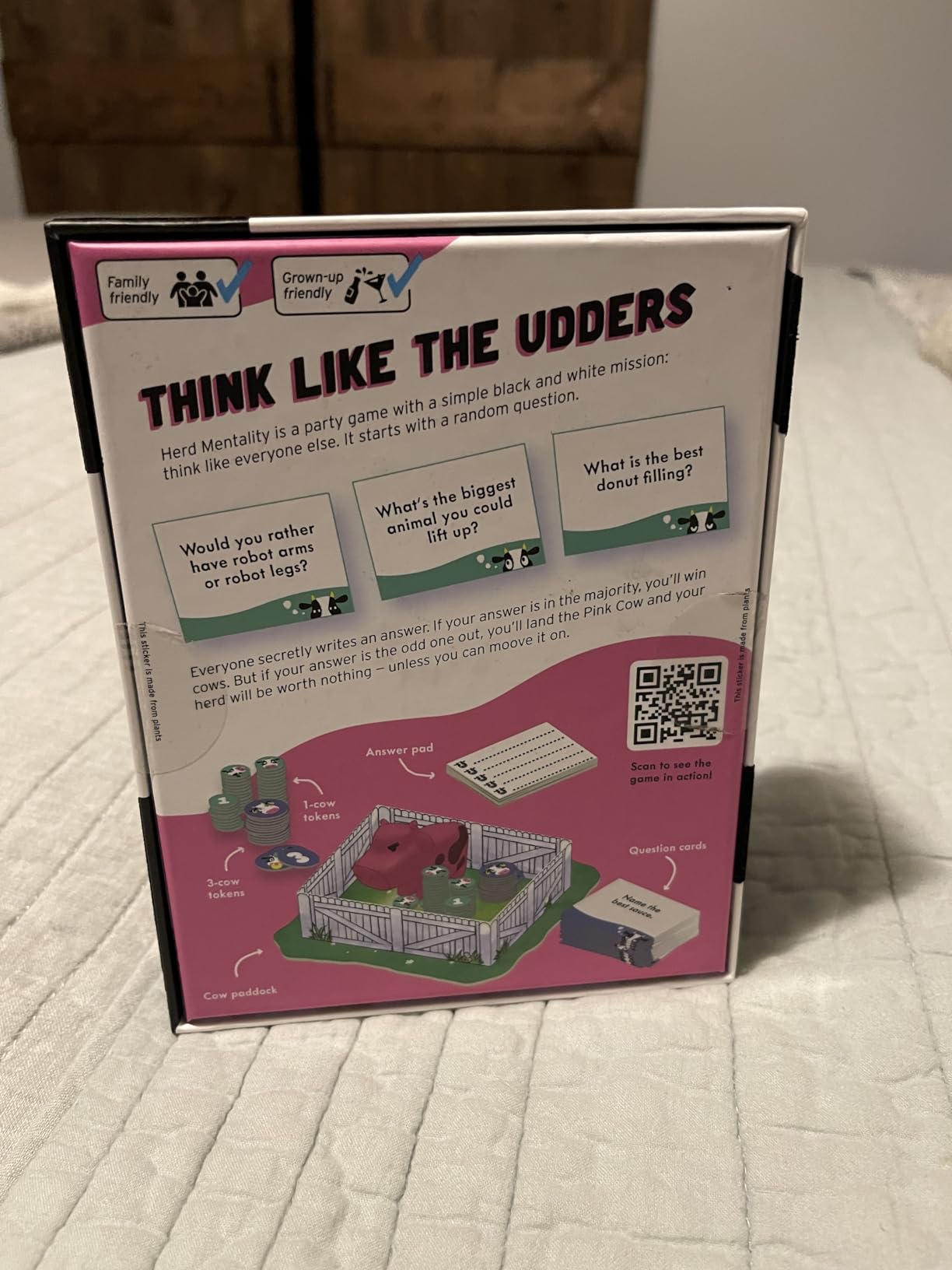
It is the closest thing to a no-teach game here. You can explain it in about fifteen seconds, which is exactly what you need when a tween birthday party involves fifteen people who did not agree to play anything in particular.
We have used it as an icebreaker before a longer game, which is its real strength. It fills an awkward ten minutes while people decide what they actually want to play, and it works with adults mixed in.
Why it works for a 10 year old
At 10, most children have started worrying about looking foolish in front of friends. This game removes that risk because the wrong answer is the funny part, and a group of kids laughing at the same cow is a good social outcome.
It is also the only game here that genuinely scales to a whole class or a large family gathering without a game breaking down. Twenty minutes, start to finish.
Who it does not suit
There is no strategy in it at all, and reviewers are blunt about that. A child who wants to think will find it shallow after two rounds.
The pink cow of doom can genuinely upset a younger or more sensitive player, and the humour depends on the people in the room. A shy group may produce silence rather than laughter, which is the failure mode to watch for.
12. Dragonwood: The Fantasy Dice Game for a 20 Minute Adventure
Gamewright Dragonwood A Game of Dice & Daring Board Game Multi-colored, 5″
- Twenty minute games fit a family evening
- Adventurer cards make each round different
- Set collection gives kids a clear goal
- Rich fantasy artwork appeals at this age
- Card reading limits the youngest players
- Dice luck can swing results sharply
- Listing copy mixes in puzzle details
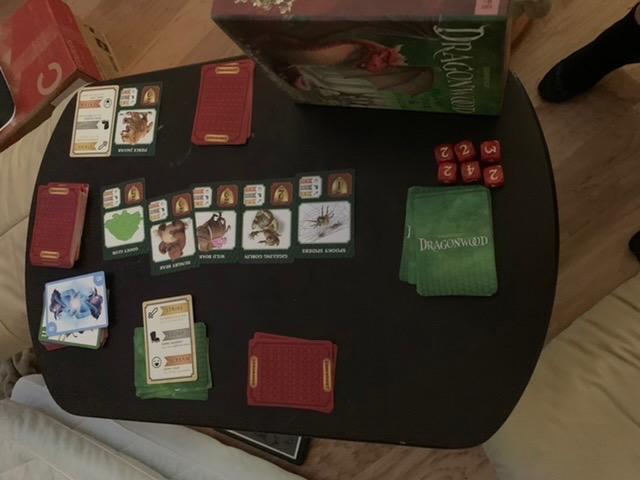
Dragonwood is the pick when a 10 year old wants a fantasy theme and a treasure hunt. You roll dice to travel through a forest, fight woodland creatures and collect the dragon eggs, and the sets you gather and store in a personal reserve are the scoring system that drives everything.
Publisher guidance is 2 to 4 players with an average playtime of about 20 minutes, rated for ages 8 to 15. That range is one of the widest on this list and it is accurate: a 10 year old is right where the game works, and the illustrations do a lot of the selling.
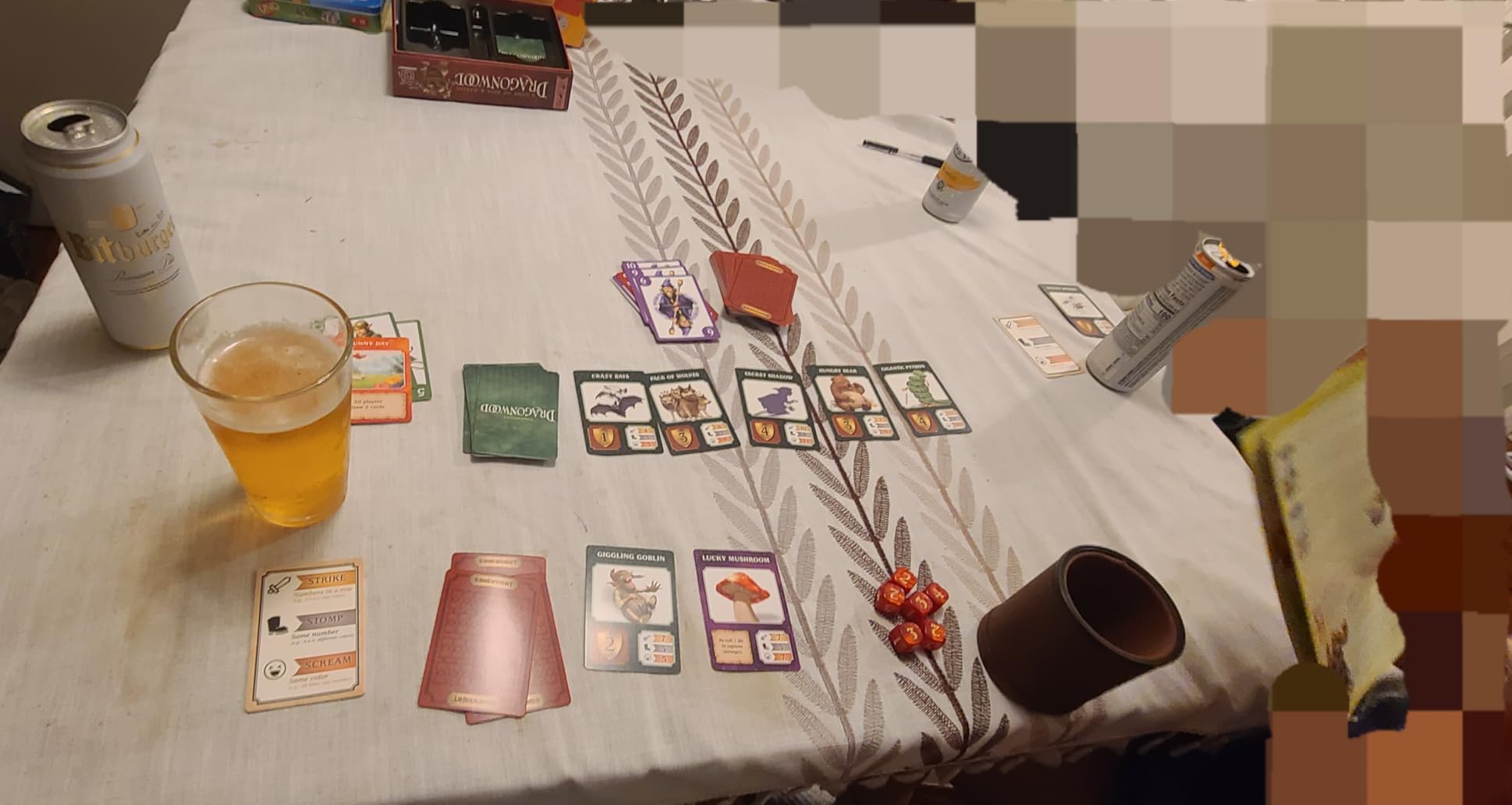
What I like is the quietly useful skill underneath. The stated educational objective is reinforcing probability and visual discrimination, and both are genuinely in play. Counting your eggs, working out whether another player is going to beat your set and spotting which creature card you need all happen automatically.
The adventurer cards add a twist each round, which is what keeps it from being a pure dice-rolling exercise. They also need reading, which is the catch.
Why it works for a 10 year old
Set collection is a better motivator at this age than points. There is always an obvious next set to build, so a child is playing to finish something rather than to win a fight against a sibling.
Twenty minutes is a real advantage on a school night, and the fantasy theme gives it shelf appeal next to the non-game toys. A 4.8 star average across more than 4,800 reviews reflects a consistently pleasant game.
Who it does not suit
Reading the adventurer cards is a genuine barrier, and younger siblings need help with them every single turn. In a house with a 6 year old who wants to join, that adds adult workload.
It is also luck-heavy, so a cautious child can watch a good run fall apart. Be aware that the listing copy also mixes in text about a jigsaw puzzle that does not apply to this board game.
How to Choose a Board Game for a 10 Year Old
Skip the age sticker on the box. It tells you nothing about whether a 10 year old will enjoy a game on a Tuesday evening. These six questions will tell you far more, and they take about two minutes to work through.
1. Count the players who will actually be at the table. The printed range is a wish, not a promise. A game that supports 2 to 8 may be miserable with 8 and dull with 2. We know the real number for every pick above, which is why Herd Mentality is the only one we recommend for a crowd of 15. If the gap at your table is bigger than that, our guide to the best board games for 5 year olds is the right starting point.
2. Check the teach time, not just the play time. Setup and rule teaching is the number one friction point parents report, and a game that promises 30 minutes of play can cost you 25 minutes of explaining first. Games that can be taught while the first round happens, like Carcassonne, save real time.
3. Find a game weight you can live with. Game weight is a 1 to 5 rating of how much rules and decision-making a game demands. Below 2 it is a filler. Between 2 and 3 it teaches fast and still rewards thinking. Above 3.5 you should expect a slower start and a child who quits if the rules do not click on turn one.
4. Decide cooperative or competitive first. Cooperative games remove the loser entirely and are the only reliable fix for a big sibling age gap. Competitive games teach sportsmanship but only when the child can handle losing regularly.
5. Match the theme to what they already care about. A fantasy theme, a meme theme or a word theme changes willingness to start more than any mechanical difference. A child will happily learn an involved game if the theme pulls them in.
6. Ask what it will still be in three years. A game with a fixed single outcome loses its pull after three or four plays. Games with random draws, set collection or variable player goals keep their replay value. If you want something that survives to 13, Carcassonne and SEQUENCE are the two on this list that we would still be playing.
For a child who is naturally curious about how things work rather than competitive, pairing a board game with something hands-on tends to work well too. Our best STEM toys for 10 year olds guide covers that side of the shelf.
Cooperative vs Competitive Games for 10 Year Olds
If there is a large age gap at your table, buy cooperative and skip the argument. A 10 year old and a 6 year old playing a competitive game produces one winner and one child who has decided the game is unfair, and that outcome is not fixable with a better choice of game.
Pandemic is the strong pick here because the roles genuinely matter, so the younger player is not just carrying a rulebook. Everyone contributes, nobody is eliminated, and a 60 minute commitment is the real cost. Sleeping Queens and Herd Mentality are lighter-weight alternatives, though neither has the same sense of a shared problem.
Competitive is not the wrong answer if your 10 year old handles losing well. Labyrinth, Carcassonne and SEQUENCE all have real decisions inside them, and losing to a well-played turn is a lesson worth learning. Just play two or three rounds first so the pattern is clear.
Best Two Player Board Games for 10 Year Olds
Most evenings only have two people at the table, and half the shelf disappears at that count. These are the picks that genuinely hold up one on one.
Carcassonne works from two players and rewards long-term planning rather than reflexes, which makes it the strongest two-player game here. Scrabble is built for 2 to 4 and plays well as a duel. Sleeping Queens is rated 2 to 5 and short enough for a quiet evening. SKYJO and Taco Cat Goat Cheese Pizza both support 2 to 8 and are the fastest way to fill a gap.
Two traps to avoid. A game that needs three players minimum, like WHAT DO YOU MEME? in its standard mode, forces a fudge that slows the evening down. And any game where two players can identify every remaining move becomes solved on play two, so check for hidden information before committing.
What to Skip at Age 10
Some games marketed at this age are a poor fit, and the reasons are specific rather than general. The biggest is anything designed for five to seven year olds, which stops feeling clever at 10 and starts feeling like a baby game. Adults often keep playing them out of politeness, which teaches the child that board games are boring.
The second is anything with a campaign. Multi-session games are excellent at 13 and a hard sell at 10, because a 10 year old wants a complete result in one sitting and loses interest when the box goes back on the shelf still unfinished.
The third is heavy reading load. A game that needs constant card interpretation turns into an adult doing the work. If you cannot finish the game in one session, it will be abandoned on the table, and that is the single most common pattern in the parent discussions we read while putting this together.
One content note for party games specifically. Anything sold as a tween party game needs a check for innuendo and adult humour before it goes on a table with a mixed group. The Family Edition picks on this list were chosen partly because they are safe in that respect, and a card game rated for older players is not automatically safe for a 10 year old birthday.
Finally, think about what fills the room while the games are not out. If a younger sibling needs an activity of their own, our best STEM toys for 4 year olds and best balance bikes for 4 year olds guides cover the two age bands most often alongside this one.
Frequently Asked Questions
What is a good game for a 10 year old?
A good game for a 10 year old has rules that can be taught in under ten minutes but a real decision on every turn, and it holds the attention of an adult too. Look for two to five players, a playtime inside 45 minutes, and a game weight between 2 and 3 out of 5.
What are the top 10 board games for 10 year olds?
Our top ten are SKYJO, Taco Cat Goat Cheese Pizza, SEQUENCE, WHAT DO YOU MEME? Family Edition, Pandemic, Carcassonne, Labyrinth, Risk, Sleeping Queens and Scrabble. Each one is rated for ages 7 to 10 and up, and all twelve picks in this guide were picked for a short teach and a real decision.
What is the most popular board game for 10 year olds?
By review volume, SKYJO is the most proven pick in this round-up, holding a 4.8 star average across more than 76,000 reviews. SEQUENCE and Taco Cat Goat Cheese Pizza follow with more than 45,000 reviews each, and all three teach in minutes.
What board games do 11 year olds play?
Most 11 year olds move toward the same games that work at 10, with a little more strategy. Carcassonne and SEQUENCE are the two on this list that grow with the child, while lighter card games such as SKYJO and Sleeping Queens can start to feel too simple by 12.
What is the 20 rule in gaming?
The 20 rule is a guideline that a new game should be playable within about 20 minutes, including the time spent teaching the rules. It is a practical test for buying: if a game cannot be taught and played inside roughly 20 minutes, it is unlikely to survive a school night.
What games should you not let your kids play?
At age 10 the common problems are not violent content but poor fit. Avoid games designed for five to seven year olds that feel babyish, multi-session campaigns that never reach an ending, and unmoderated tween party games that can carry innuendo. Also avoid any game a child loses every single time without a way to catch up.
Conclusion
The best board games for 10 year olds in 2026 all share one trait: the teach is short and the decisions are real. If you buy just one, take SKYJO for the widest age range and the hidden maths. Buy two if you can, and make the second one either SEQUENCE for reliable family game night or Pandemic if sibling arguments are the problem you are actually solving.
Everything else on this list fills a specific gap, from a 15 minute party filler to a 20 player icebreaker. The mistake to avoid is buying for what worked at seven, because a shelf full of babyish games teaches a 10 year old that board games are boring. Pick the weight they can handle, give them the theme they care about, and turn the box over.