
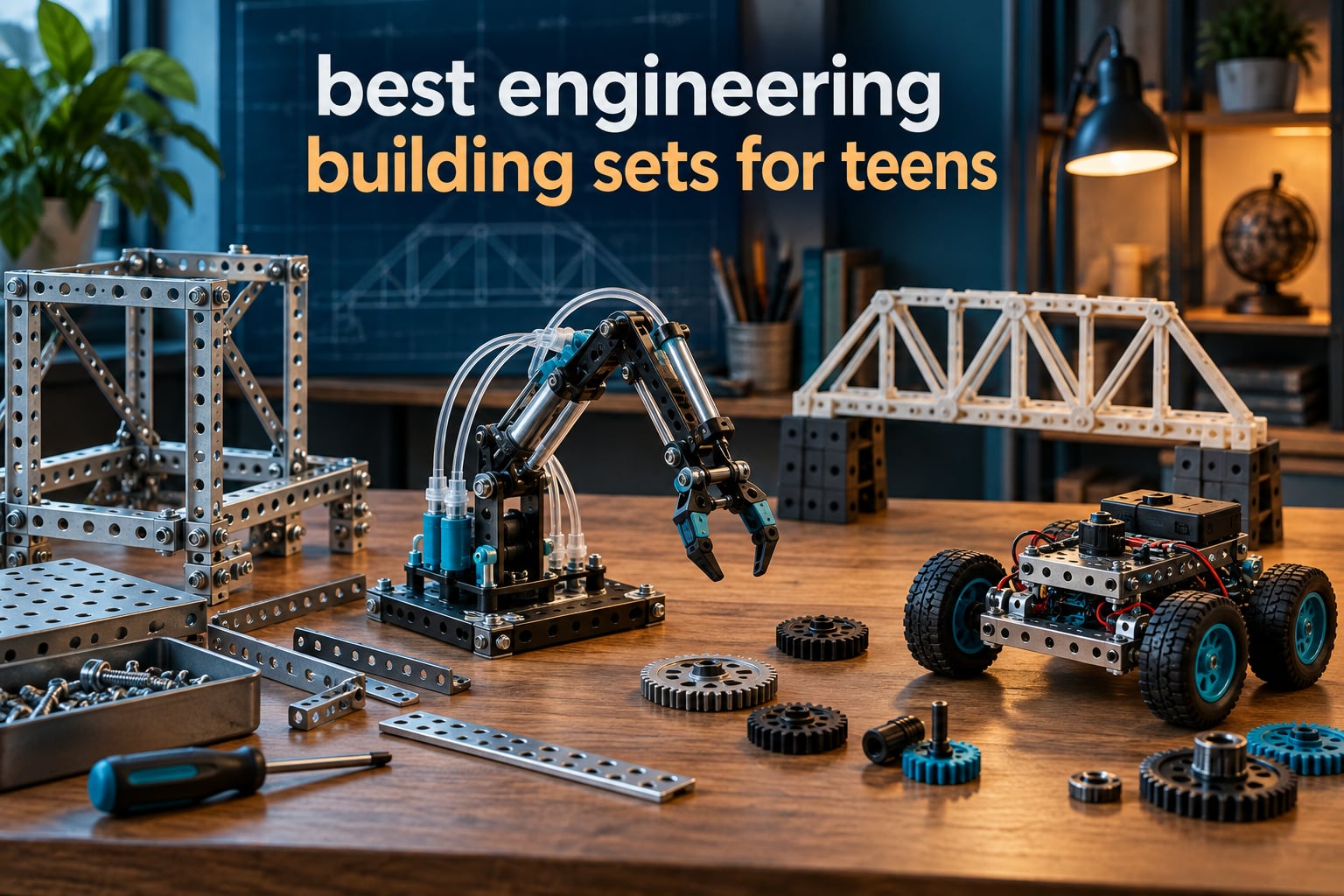
There is a specific kind of teenager who does not want a puzzle. They want the thing that is broken. The engine on the desk, the remote control that stopped responding, the tower of blocks that collapsed under a book. Buying for that teenager means finding something that hands over a real mechanism and a genuine problem to solve, not a plastic box of snap-together parts that a nine-year-old finishes in an afternoon.
That is what the best engineering building sets for teens are built around. Not age labels, not bright colours, but real load paths, real gear ratios and real circuits that a teenager can take apart, change one variable and rebuild. If you also want programmable robot options beyond this list, our guide to the best robot building kits for teens covers that side of the market in more depth. The twelve sets below are the ones I kept coming back to while comparing piece counts, manuals, materials and the honest complaints in thousands of buyer reviews.
Every pick here includes a plain-language answer to the question that matters most when you are buying for a teenager: can they start it without you sitting next to them? That single factor decides whether a kit gets finished in a weekend or abandoned in the box, and I have rated all twelve against it. I also grouped the sets by engineering discipline so you can match the kit to the kind of thinking the teen enjoys, from bridges and trusses through hydraulics and coding. Teenagers who arrive already fluent in construction systems may prefer our picks for LEGO Technic sets for teens instead, which cover similar mechanical ground with a different building system.
Table of Contents
What Is an Engineering Building Set?
An engineering building set is a construction kit containing gears, pulleys, beams, motors, circuits or structural members, so the builder has to assemble working machines, structures or robots using real engineering principles such as force, motion, load and energy, rather than simply stacking blocks on top of each other.
The difference between that and a regular construction toy is what happens after the build. An engineering set invites a second pass. A bridge that holds a heavier load, a robot that takes a new route, a coaster whose car carries an extra coin: those experiments are where the learning actually lives, and they are the reason a good kit outlasts a bad one.
Asked what makes a good engineering gift for a teenager, our short answer is this: a kit with a clear printed manual, a real physical mechanism rather than a pretend one, enough interchangeable parts to allow redesign, and a difficulty level that takes more than one sitting. Those four criteria shaped every pick in this roundup.
Top 3 Best Engineering Building Sets for Teens in 2026
These three sets earned the top slots because they combine the highest ratings with the largest volume of buyer feedback, and because each one passes the independence test. One teaches mechanics with no power source, one offers the largest parts count, and one is the smoothest on-ramp to coding for a teen who has never programmed.

Teach Tech Hydrobot Arm
- Water-powered hydraulics
- no batteries
- 6 axes of movement up to 270 degrees rotation
- rated 12 and up

Meccano Erector 25-in-1
- 638 metal pieces
- 25 buildable models
- 6V motor and real tools included

ELEGOO UNO R3 Smart Robot Car
- Arduino-compatible
- FPV camera and line tracking
- 2000 mAh rechargeable battery
All 12 Sets at a Glance (October 2026)
The full lineup, ordered by how confident we are that a teenager will finish the build and want to keep going. Read the key features column first, then jump to the full review for the independence and durability verdict.
| Product | Specifications | Action |
|---|---|---|
| Teach Tech Hydrobot Arm |
|
Check Latest Price |
 Playz V8 Engine Model Kit Playz V8 Engine Model Kit |
|
Check Latest Price |
| ELEGOO UNO R3 Smart Robot Car |
|
Check Latest Price |
| Meccano Erector Super 25-in-1 |
|
Check Latest Price |
 Engino Structures Buildings and Bridges Engino Structures Buildings and Bridges |
|
Check Latest Price |
 Thames and Kosmos Structural Engineering Thames and Kosmos Structural Engineering |
|
Check Latest Price |
 Engino Physics Laws and Circular Motion Engino Physics Laws and Circular Motion |
|
Check Latest Price |
 Thames and Kosmos Roller Coaster Engineering Thames and Kosmos Roller Coaster Engineering |
|
Check Latest Price |
 194-Piece Metal Engineering Kit 194-Piece Metal Engineering Kit |
|
Check Latest Price |
 BseSparklion 703-Piece V8 Engine Kit BseSparklion 703-Piece V8 Engine Kit |
|
Check Latest Price |
 Thames and Kosmos Architectural Engineering Thames and Kosmos Architectural Engineering |
|
Check Latest Price |
 MALUVRIAN 389-Piece Erector Set MALUVRIAN 389-Piece Erector Set |
|
Check Latest Price |
1. Teach Tech Hydrobot Arm – Water-Powered Mechanics With No Battery
TEACH TECH Hydrobot Arm STEM Hydraulic Building Toy for Kids Ages 12+
- Teaches mechanical engineering with a genuinely working mechanism
- No batteries or motors to fail
- Six axes of movement with levers controlling the gripper
- Suction components included as an alternative to the grabber
- Several hours of build time before the arm is usable
- Needs careful step-by-step assembly to seal properly
This is the set I recommend to a teenager who takes things apart. The Hydrobot Arm is driven entirely by water moving through clear tubing, so there is no motor, no battery pack and nothing to wear out. That single design decision removes the failure mode that ruins most hydraulic kits.
It also gives the teen something real to reason about. Water pressure moves fluid through a tube, that pressure drives pistons, and the pistons position six axes of movement. When a joint does not move, the answer is in the plumbing, not in a dead motor, and that is a genuinely transferable troubleshooting habit.
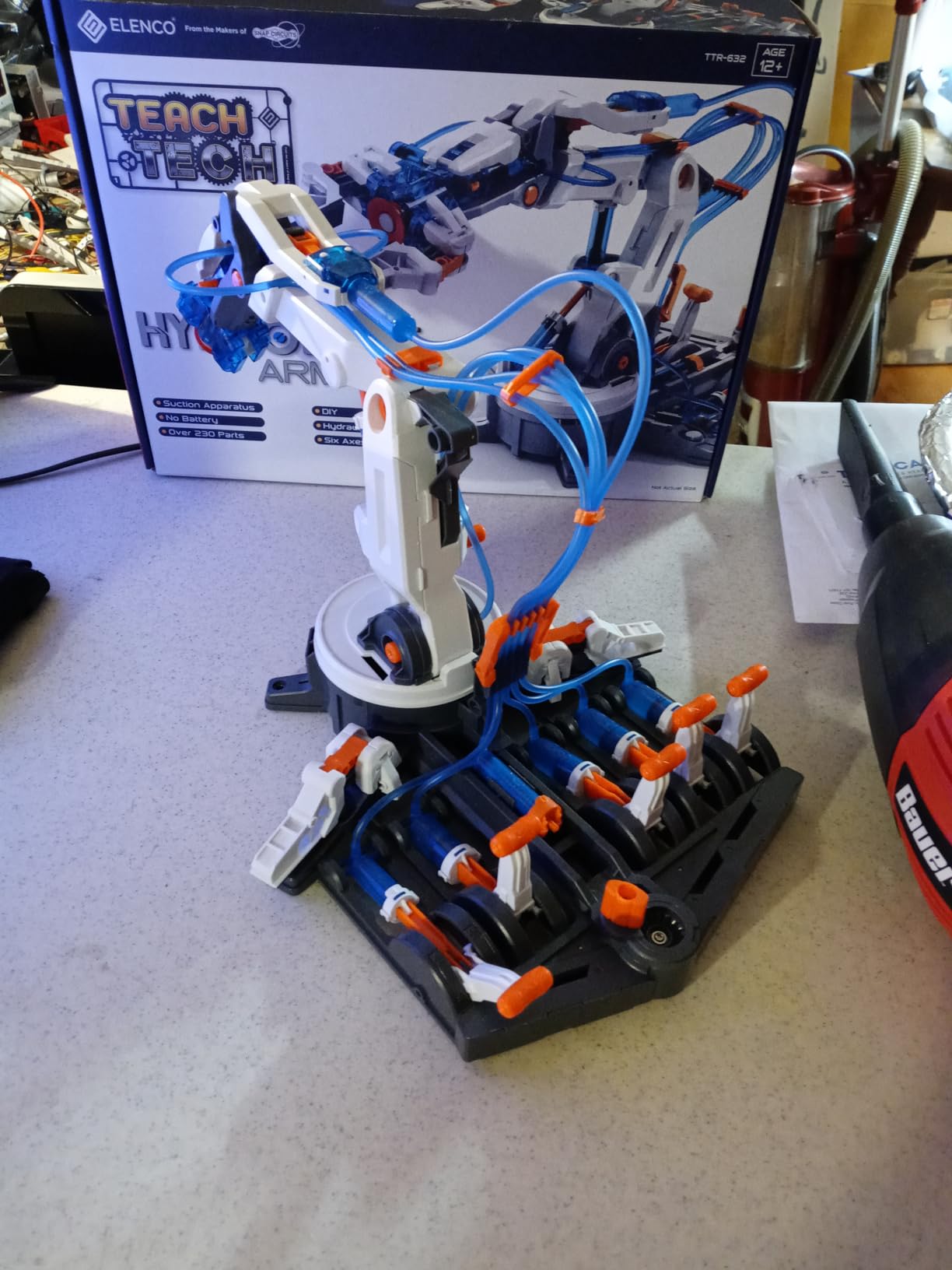
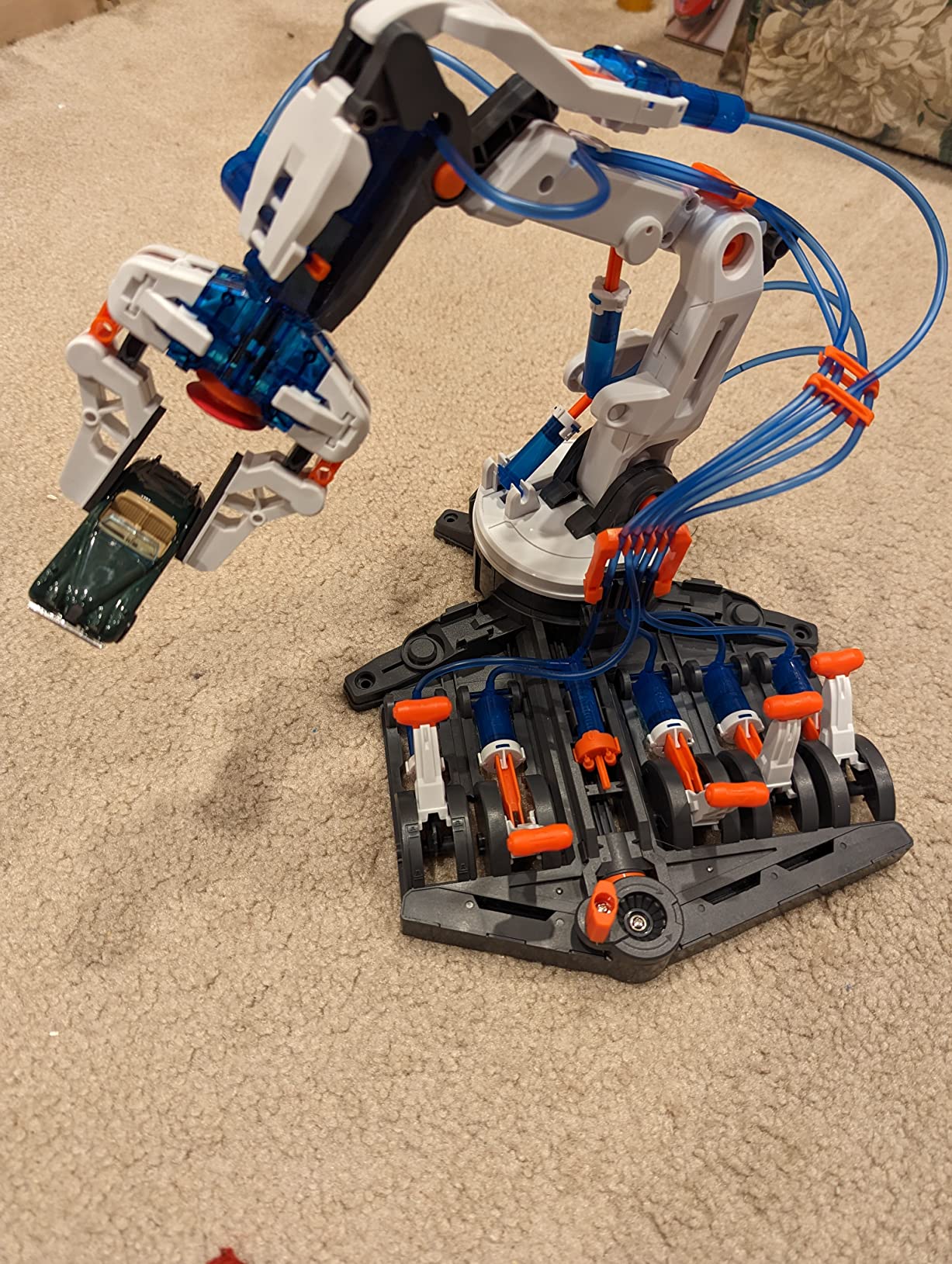
The build is not quick. Owners consistently describe it as a multi-hour project that most teens spread over two or three evenings, and the instructions need to be followed in order or the arm simply will not hold pressure. Once it is finished, the levers give you a gripper that can be swapped for suction cups.
It ships with assembly parts and an English instruction manual, and the manufacturer is OWI with a one year warranty against defects. At 2.8 pounds and roughly 15.6 by 11.4 inches, it is a substantial object rather than a small plastic tray.
Can a Teen Start This Without an Adult
Yes, with one caveat. The manual is printed and legible, and the sequence is logical enough that a determined teenager can work through it alone. The caveat is patience: a first-timer who rushes a tube connection will have to take the arm apart and rebuild it.
If your teen has never built a kit before, sit with them for the first twenty minutes and then leave. After that the arm teaches on its own.
Will It Survive Real Teen Use
Better than most, because hydraulics have no motor to burn out and the moving parts are slow. The weak point is the tubing clips, which can work loose if the arm is dragged across a surface by its own cable. Keep it on a desk and it will stay together indefinitely.
2. Playz V8 Engine Model Kit – See the Four-Stroke Cycle Move
Playz Large V8 Engine Model Kit Build Your Own Mini V8 Engine kit that Runs
- Pistons
- crankshaft and belt system move realistically
- Translucent body shows internal workings while running
- Builders report learning about cam shafts and valve timing
- No written step-by-step instructions
- bags and pieces are unmarked so parts must be searched for
- Camshaft has no end-play control and gears can walk off the shaft
An internal combustion engine is one of the most satisfying things a teenager can put together on a desk, because the motion is visible and continuous. This kit gives you a working replica of an eight-cylinder engine with moving pistons, a crankshaft and belts, and it plays real engine sounds while it runs.
The translucent body is the detail that sells it. Instead of a sealed shell, you watch the pistons travel through the cylinders and the crank convert linear motion into rotation. Buyers consistently report finishing this kit with a working understanding of valve timing and the four-stroke cycle, which is a lot to get from a desk toy.
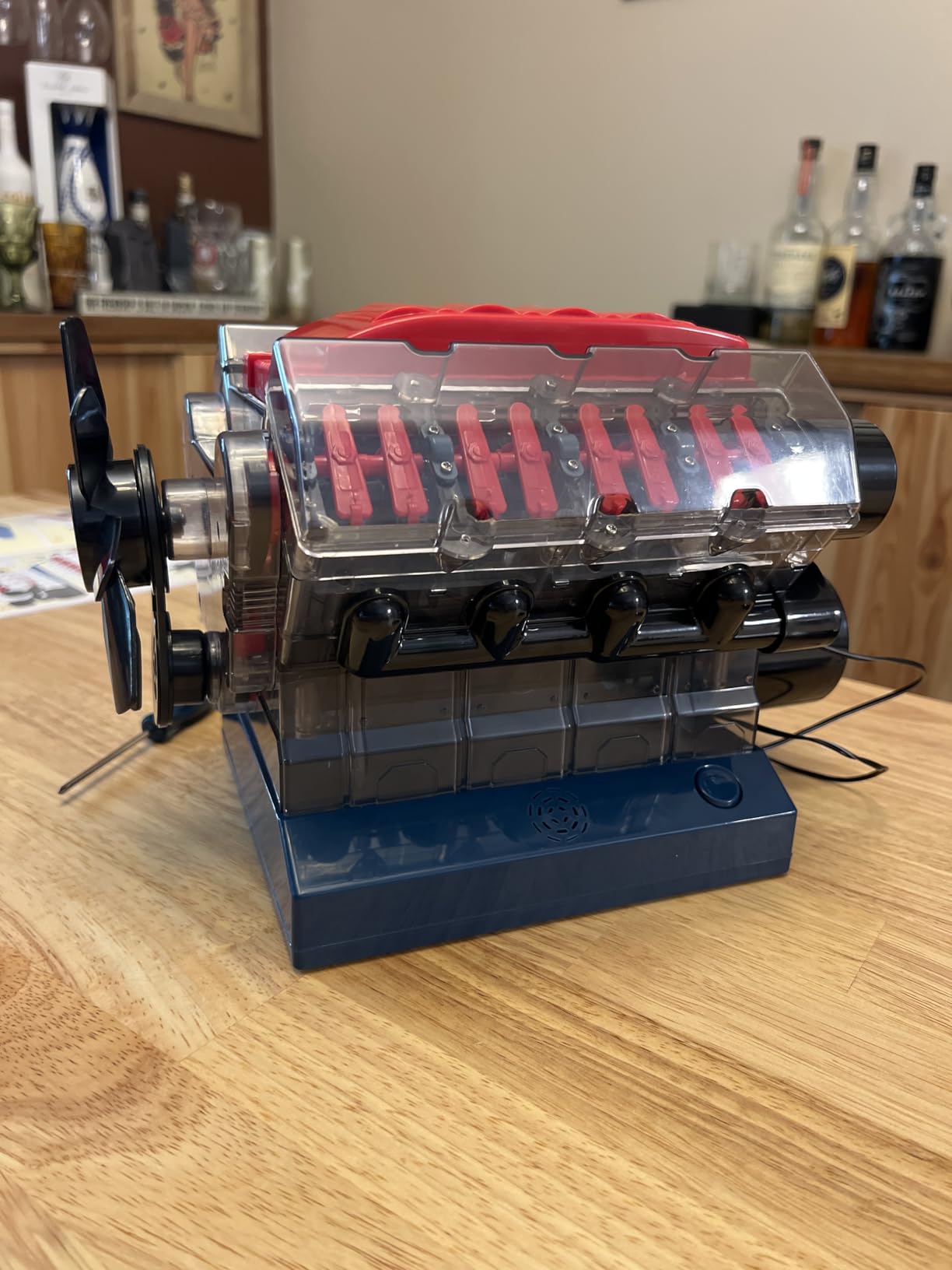
It runs on three AA batteries, and the educational framing on the box names STEM, spatial reasoning, problem solving and mechanical engineering as the objectives. The listed manufacturer age is 12 and up, which lines up well with a younger teen or a tween who is ready for a day-long project.
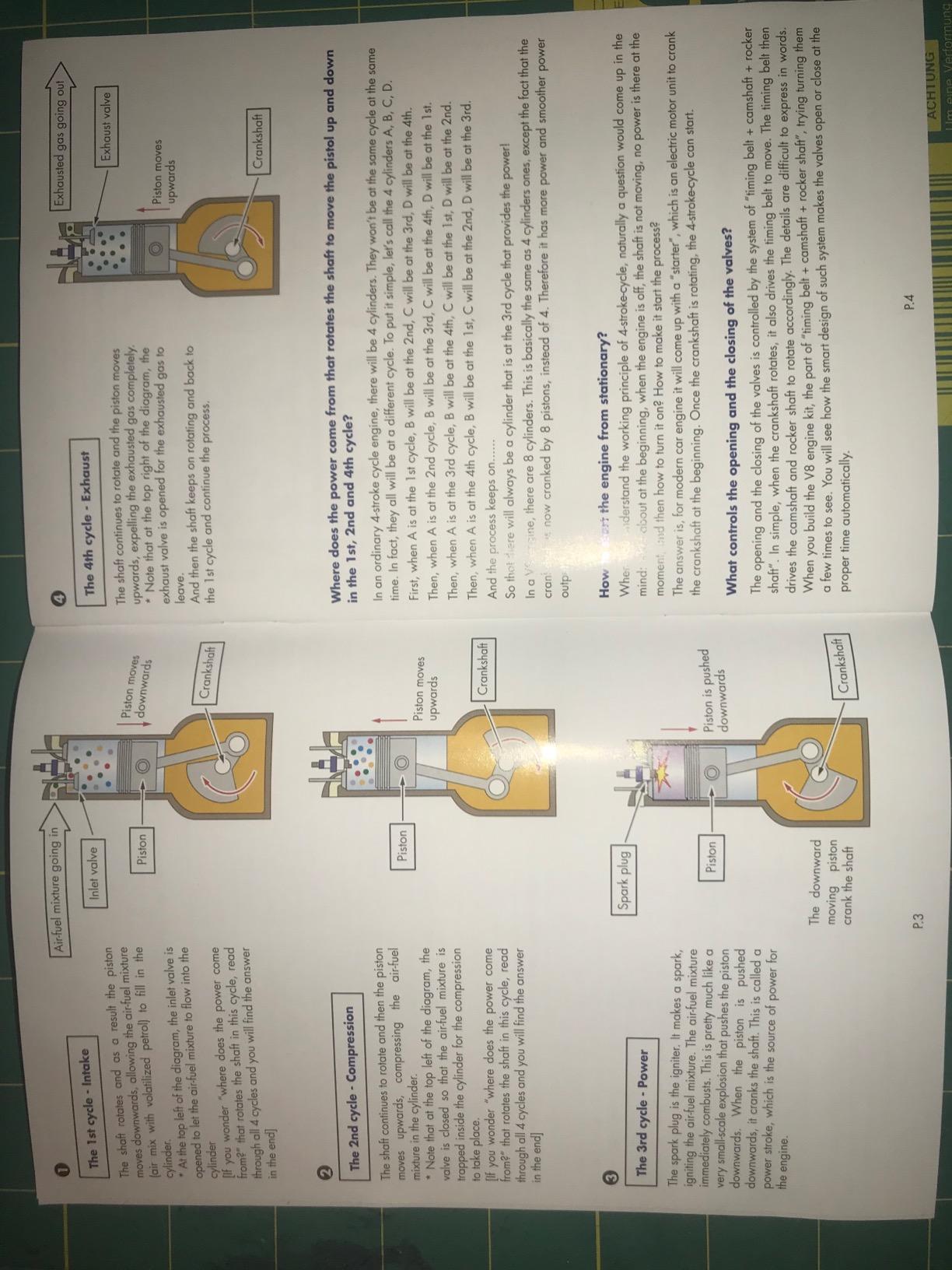
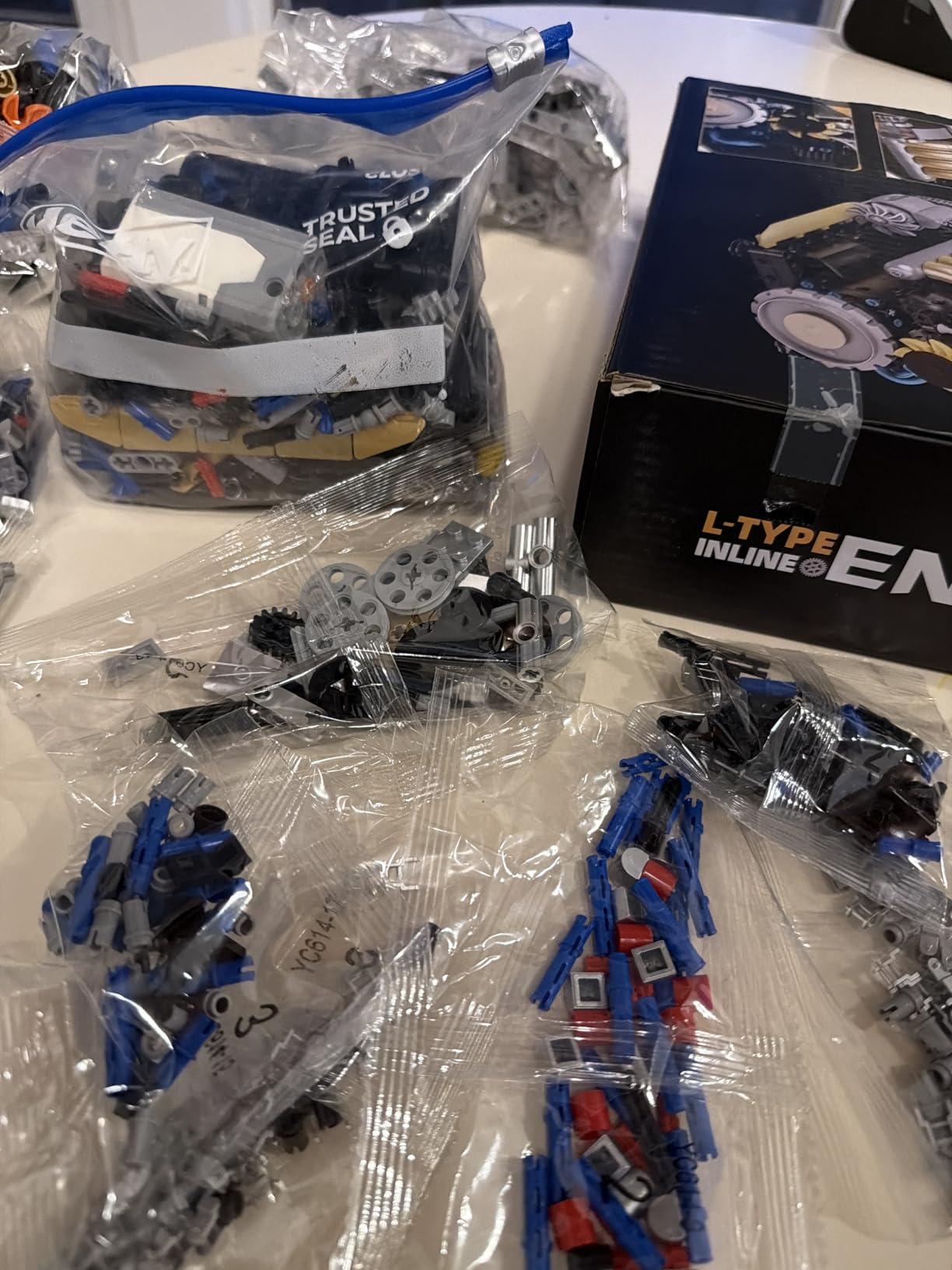
Here is the honest drawback, and it is the one every reviewer mentions. There is no written step-by-step instruction manual. Builders rely on diagrams alone, and the bags of parts are not marked, so a teenager will spend real time laying pieces out and matching shapes to the drawings.
Can a Teen Start This Without an Adult
This is a with-a-nudge build. A self-directed teenager who enjoys reverse engineering will happily work from the diagrams, but anyone who expects to sit down and be told what goes where will stall. We suggest printing a parts inventory first and sorting the pieces into groups by shape.
Pair it with the second V8 kit on this list if your teen prefers a manual. Between the two, the documentation problem is solved.
Will It Survive Real Teen Use
Mostly, with one recurring fault. Sprue nubs on the plastic parts need a quick file before assembly, and the camshaft assembly has no end-play control, which can let the cam drive gears walk off the shaft during handling. It is a repairable fault rather than a fatal one.
3. ELEGOO UNO R3 Smart Robot Car Kit – The Smoothest Route Into Coding
- Clear instructions with labelled parts bags
- many builders complete it in about an hour
- Pre-programmed board drives immediately with the IR remote or app
- FPV video
- line tracking and obstacle avoidance all work
- Power switch on the battery pack does not work so you unplug the battery box
- Stock software has no motor speed ramping so the car starts and stops abruptly
- Camera mount sits about 45 degrees above horizontal
If your teenager has never written a line of code, this is the set I hand over first. The controller is a genuine Arduino-compatible board, the wiring is labelled, and the parts come in organised bags, which sounds unglamorous and is in fact the entire reason this build succeeds.
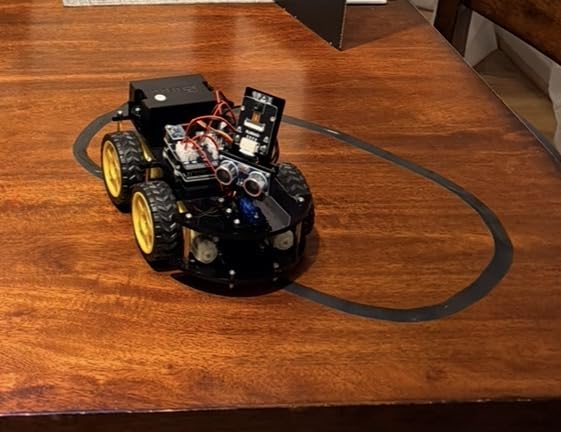
Out of the box the car already works. It has line tracking, ultrasonic obstacle avoidance and a first-person camera with live video, and the included phone app or the IR remote will drive it before a teenager has touched a keyboard. That matters, because a robot that moves on assembly day gets a second week of attention. One that does not move gets boxed.
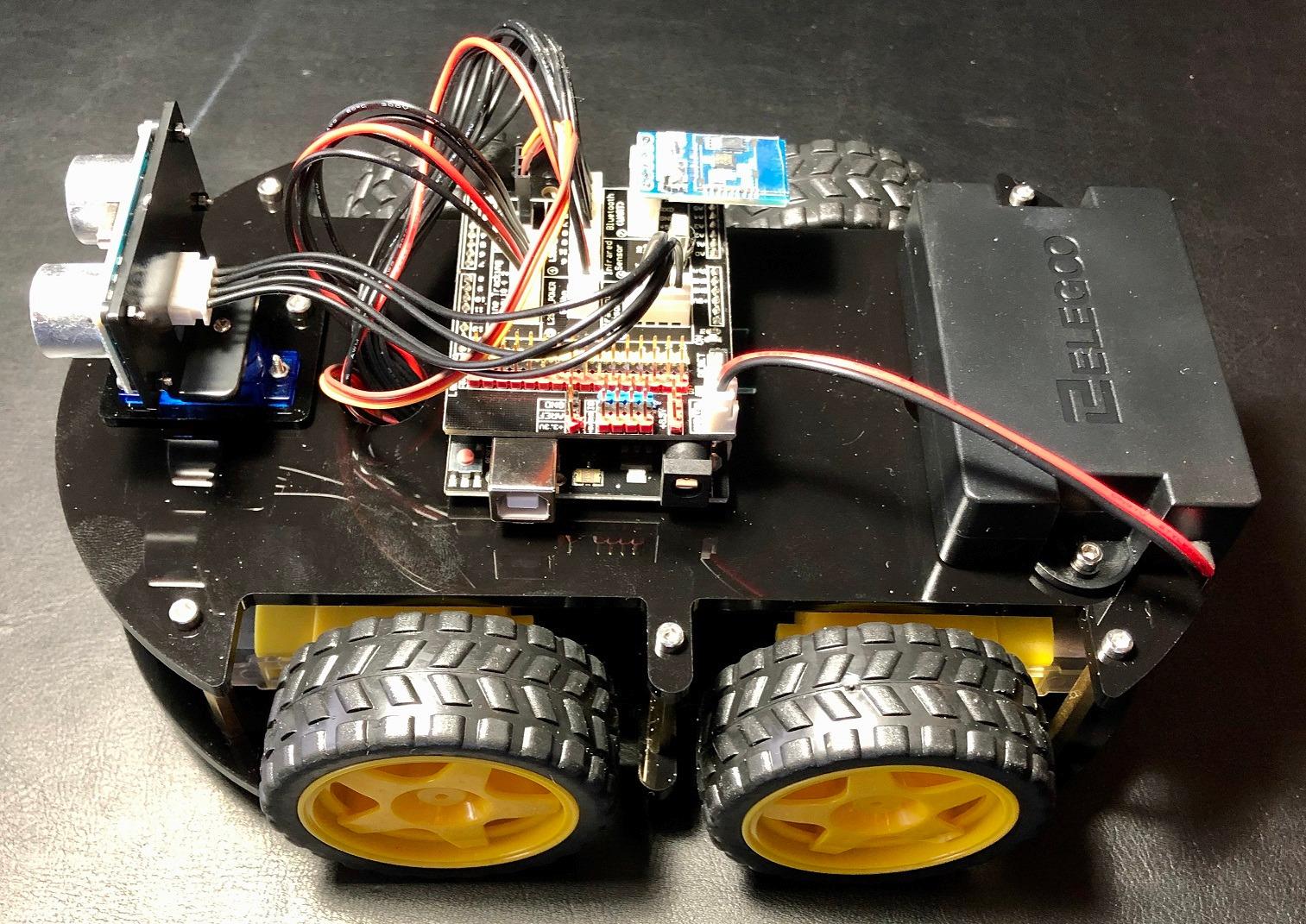
The technical parts are the real article: an UNO R3 controller, an ESP32-WROVER module handling the camera and Wi-Fi, a 2000 mAh rechargeable lithium-ion battery with a charging management unit, a line-tracking sensor, an ultrasonic sensor and four motors. Once the stock behaviour feels limited, the Arduino IDE opens the door to custom routes and real robotics experiments.
The manufacturer lists this for 12 years and up, with a half year warranty, and it measures about 8 by 7 by 6 inches. It is also the only kit here designed for classroom and coding-club use as its primary purpose, so the documentation suits a room of learners.
Can a Teen Start This Without an Adult
This is the most independent-friendly set in the roundup. Many builders complete the assembly in about an hour with no help, and because the board is pre-programmed, there is nothing to debug on day one. A teenager can start the Arduino IDE the same afternoon.
The only reason I would not call it fully independent is the wiring stage, where a crossed motor cable will make the car drive backwards. That is a two-minute fix, and every builder works it out on their own.
Will It Survive Real Teen Use
Well. The acrylic and plastic chassis is rigid and the four motors are the standard hobby-grade size. The failure point is the battery pack switch, which does not function, so the teen will unplug the battery box instead. That is mildly irritating rather than damaging, and it does not affect the build.
4. Meccano Erector Super Construction 25-in-1 – The Big Metal One
MECCANO Erector Super Construction 25-in-1 Motorized Building Set, Steam Education Toy, 638 Parts, for Ages 10+
- Large metal construction set with hundreds of pieces that hold together firmly
- 25 models encourage repeat play and original mixed designs
- The motorized crane really works with a rotary body and extendable hook
- Only one instruction sheet included and it covers 11 of the 25 advertised models
- Requires 4 AA batteries for the motorized model
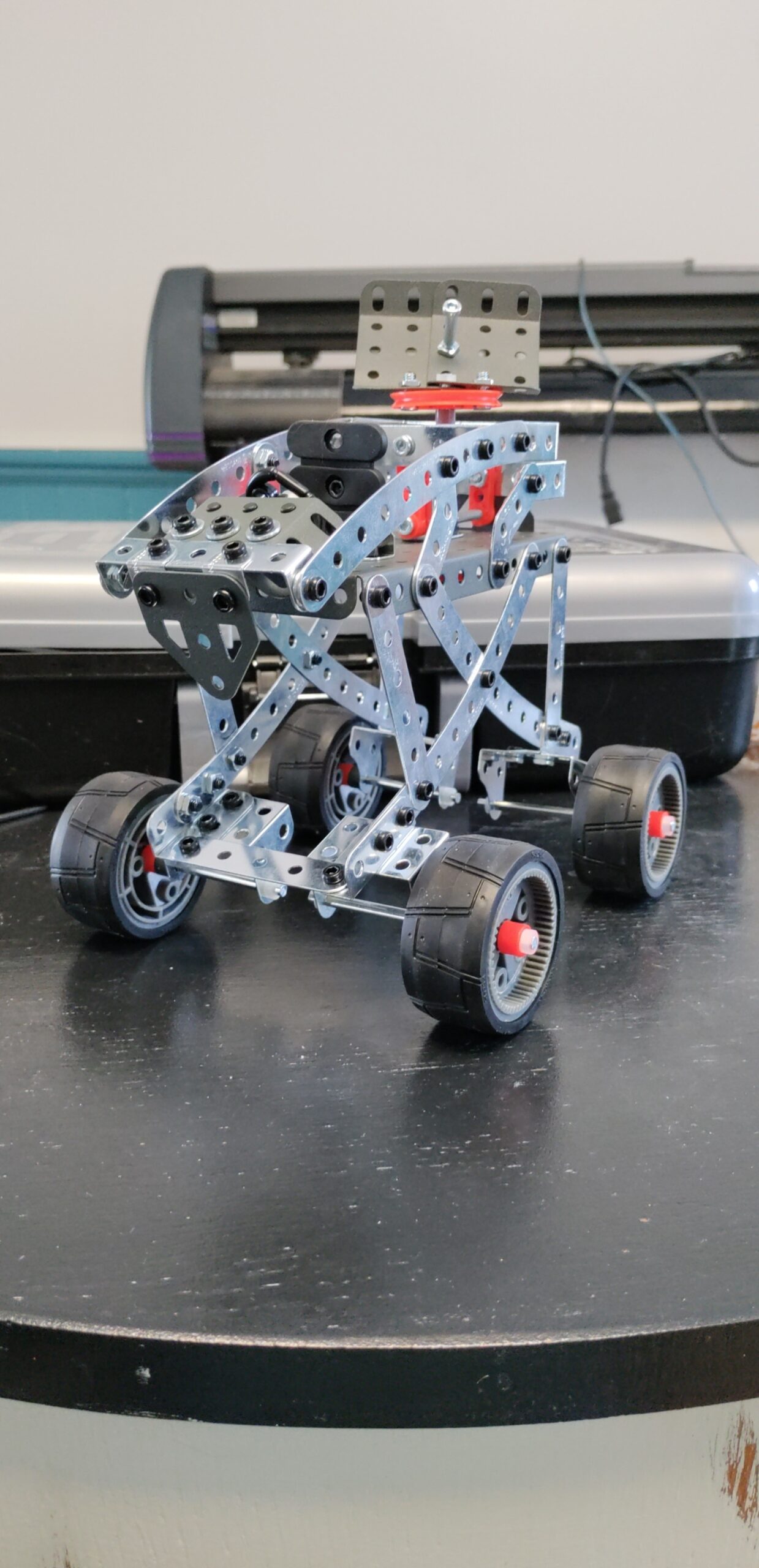
Everything else in this roundup is plastic except two sets, and this is the better of the two for a teenager. Six hundred and thirty-eight interlocking metal pieces, a 6V electrical motor, three real tools and a carrying case with storage compartments, all under Spinmaster manufacturing.
Metal is the reason this one survives. The pieces hold together firmly, they tolerate being taken apart and rebuilt dozens of times, and they do not snap when a teenager grips them hard. Parents who have watched plastic kits crack after a year of use understand immediately why that matters.
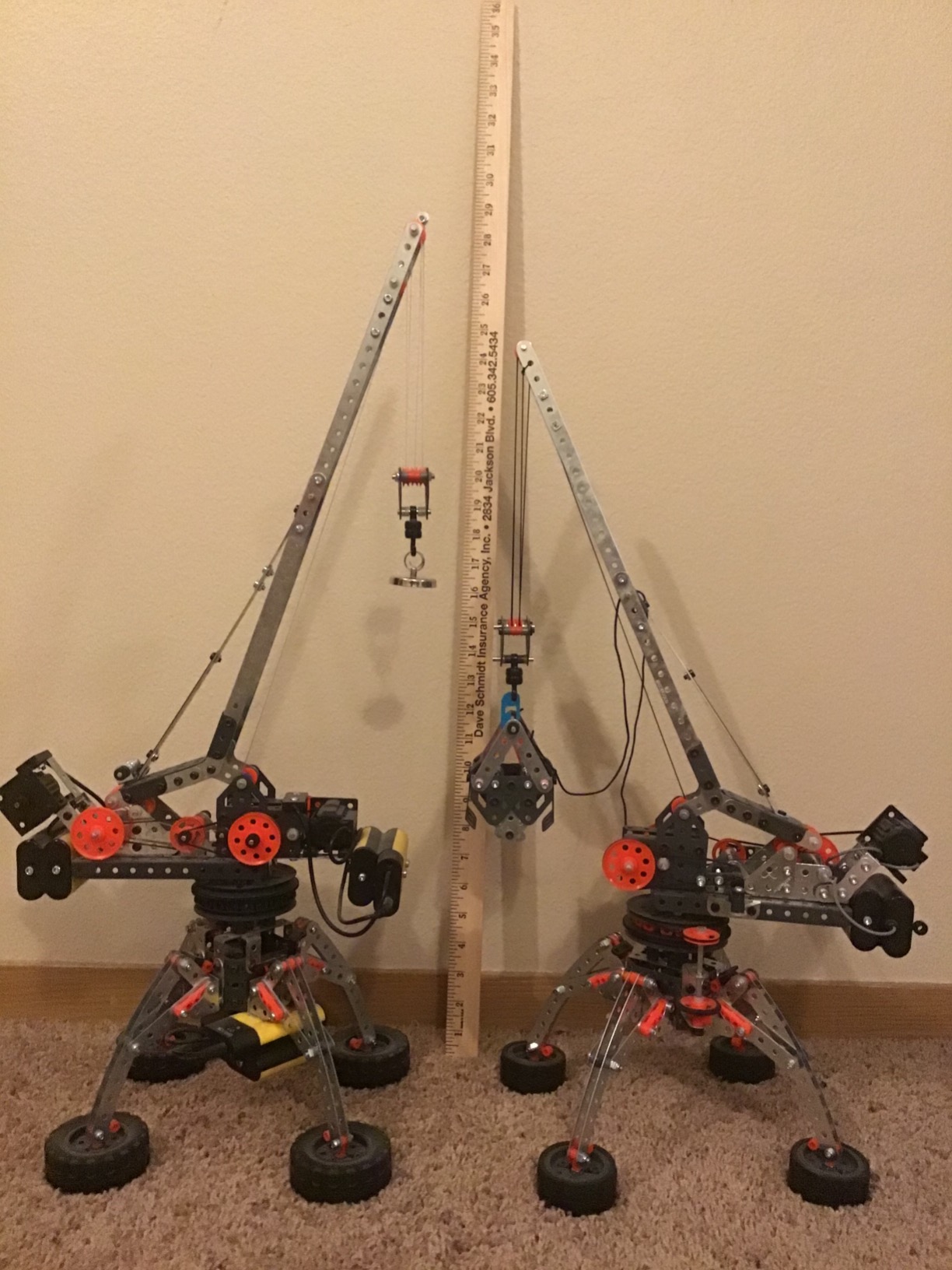
The set builds one of 25 different construction vehicle models, and the marquee build is the motorized crane with a rotary body and an extendable hook that actually turns. A teenager who builds all 25 will use every part, then start mixing pieces into an original design that the piece count actually supports.
Two facts to set expectations. The included instruction sheet covers 11 of the 25 advertised models, so the remaining 14 are freestyle constructions, which most teens prefer anyway. And the motorized model needs four AA batteries.
Can a Teen Start This Without an Adult
Yes. The metal pieces and the included real screwdriver and wrench mean the teen is using tools the way an adult would, not pinching small plastic tabs. Many builds need no instruction sheet at all, and the eleven documented models are laid out clearly.
The caveat is space. At 7.2 pounds and 4 by 16 by 13.88 inches, this is a large kit that wants a dedicated table and the included storage case.
Will It Survive Real Teen Use
Better than anything else here, by a wide margin. Metal parts and a 60 day parts and labour warranty mean a missing piece is far less likely to end the project. This is the set we would put in front of a teenager who treats builds roughly.
5. Engino Structures, Buildings and Bridges – Real Bridge Types, Nine Models
- Teaches real structural engineering through actual bridge types
- Sturdy ABS pieces that hold up to repeated building
- Theory booklet
- experiments and quizzes add substance beyond a build-and-play kit
- App is required to build anything beyond the simplest models
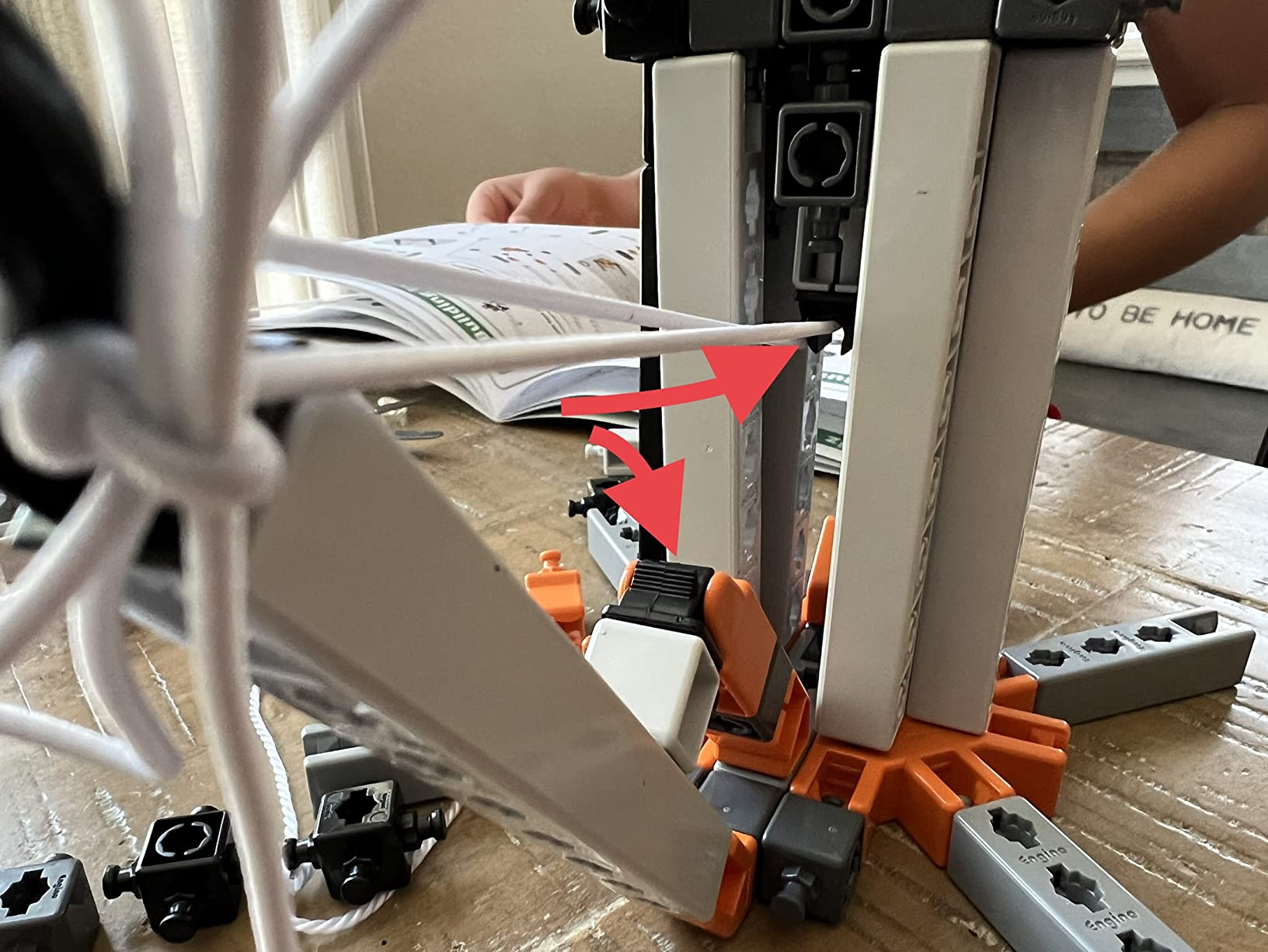
- Cable and rope attachment for the bridge models is not explained in the app or the booklet
Civil engineering, properly. This set builds nine real engineering models: a house, a pyramid, a beam bridge, an arch, a truss, and cable-stayed and suspension bridges. Those are the actual structural forms a teenager would meet in a physics or civil engineering course, not a generic pile of beams.
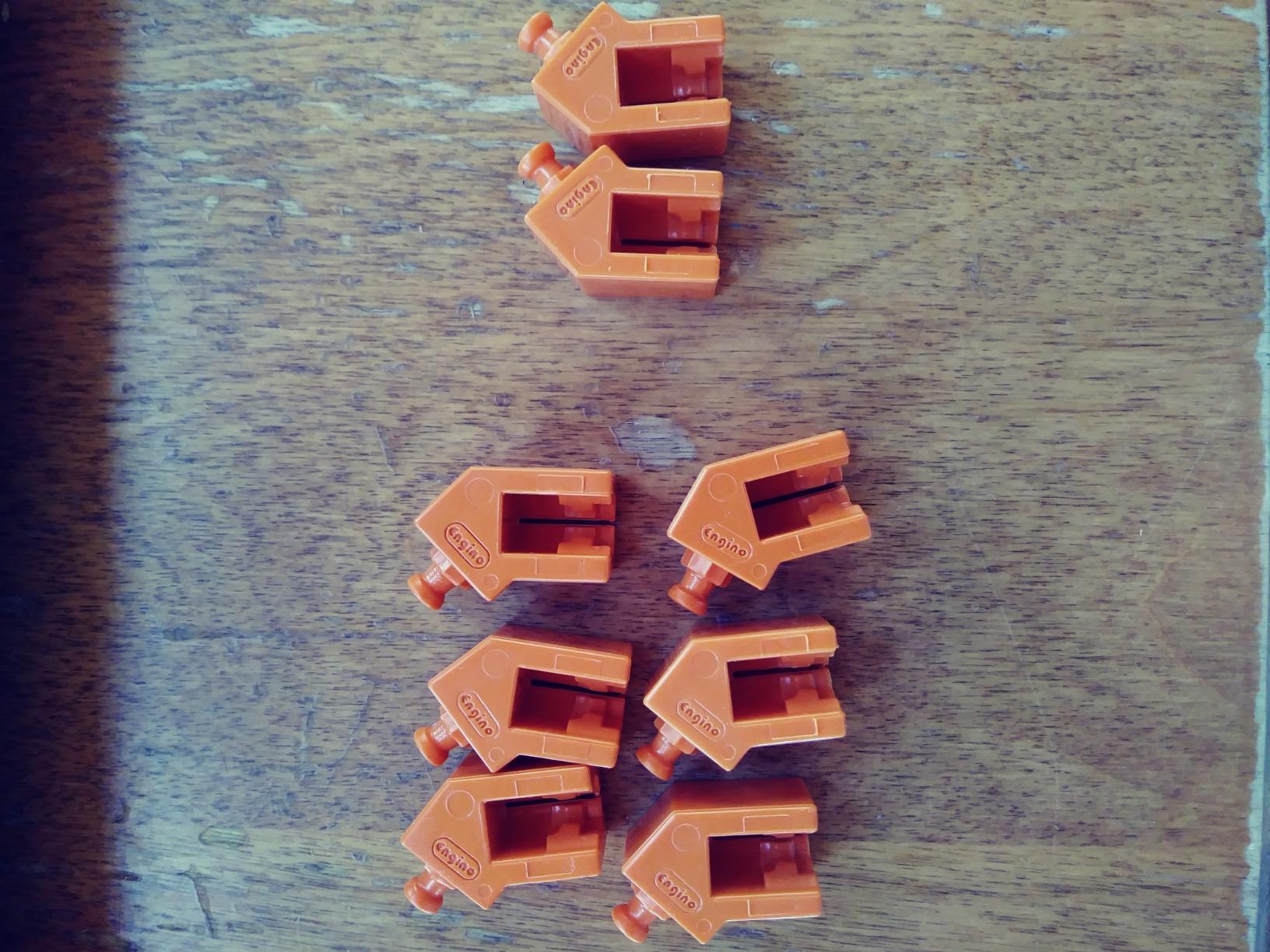
The patented snap-fit system connects in multiple directions, which is what makes three-dimensional structures hold their shape without glue. Engino designed and makes these components in Europe, the pieces are ABS plastic, and the manufacturer warranty is two years, the longest in this roundup.
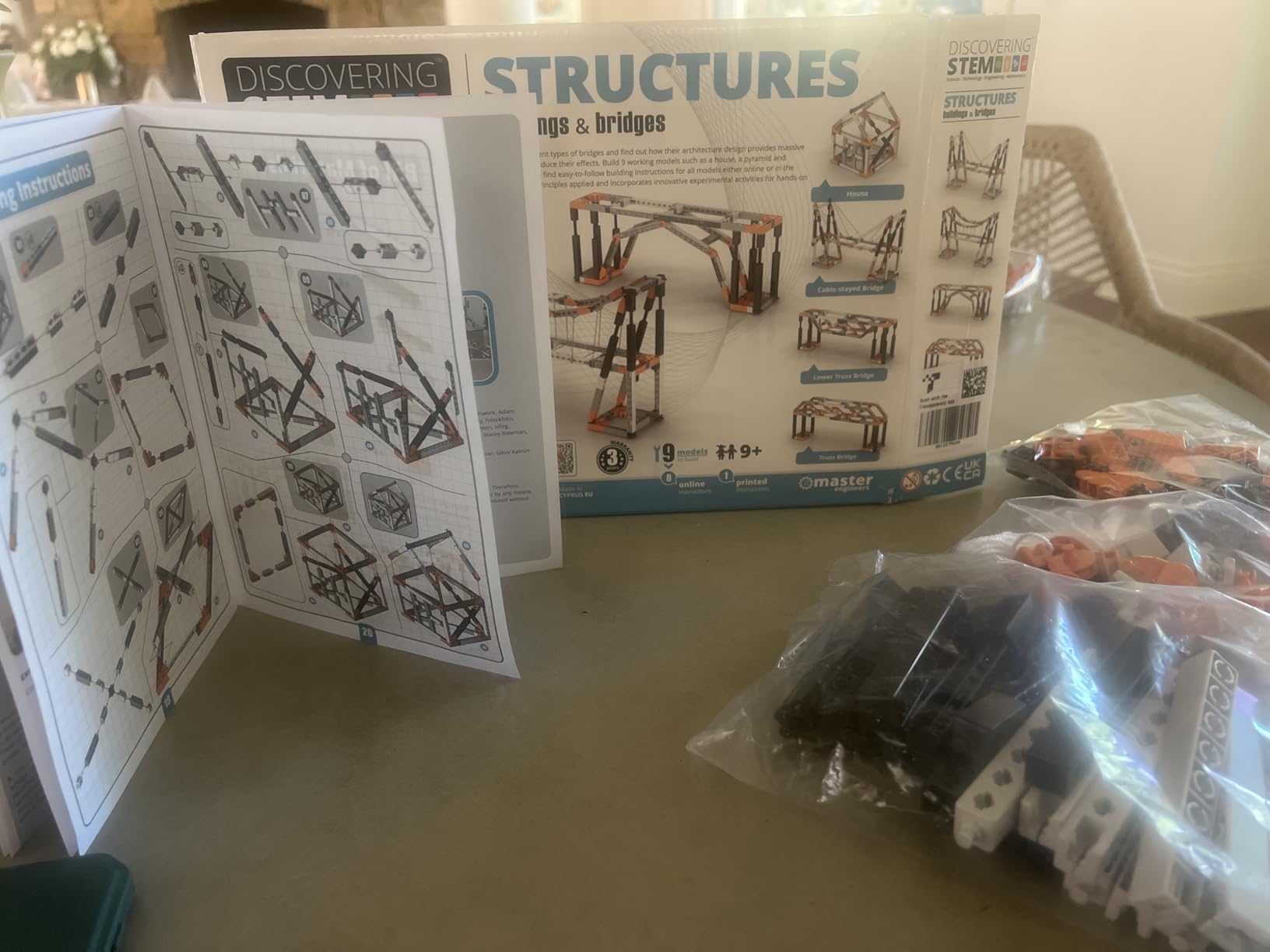
There is real educational substance in the box beyond the models: ten pages of theory and facts, fun experiments and a three-page quiz. Reviewers report that many buyers come back for a second set, and educators use it for middle-school STEM work, so the depth is not just marketing.
Two limitations to weigh. The free app is required for anything beyond the simplest models, so this is not a fully offline kit. And the cable and rope attachment for the bridge models is not explained in either the app or the printed booklet, which is an odd gap in an otherwise thorough package.
Can a Teen Start This Without an Adult
With a phone and no adult, yes. A teenager with a device can follow the app instructions and work through all nine models, though the cable-and-rope stage will need someone to work it out alongside, or a short video search.
If your teen has no device access at the time, the simplest models still build from the printed manual. It is a good pick for a birthday where the phone is not the main gift.
Will It Survive Real Teen Use
Well for a plastic kit. The snap-fit ABS pieces are described as sturdy and durable across repeated building, and two years of warranty cover manufacturing defects. Small beam ends can still be levered out of alignment by a teenager who forces a joint.
6. Thames and Kosmos Structural Engineering – Force, Load, Compression and Tension
- Large assortment of interchangeable pieces
- 36-page manual teaches force
- load
- compression and tension
- Many users report using it repeatedly in physics and mechanics classes
- Plastic is described as cheap and prone to breaking after about a year
- Joints are very tight and pieces can snap when connected or disconnected
This is the set that teaches the words. The 36-page illustrated experiment manual covers force, load, compression and tension, and it is written as an experiment guide rather than a parts list, so a teenager reads a principle, builds a model and tests it.
There are over 285 interchangeable plastic building pieces and 20 different models, and the manufacturer calls the skill level intermediate with a recommended age range of 8 to 14. That rating is honest, which is refreshing. It is pitched at the younger end of our audience, so a fifteen or sixteen-year-old will find it quick, and a strong eleven or twelve-year-old will find it substantial.
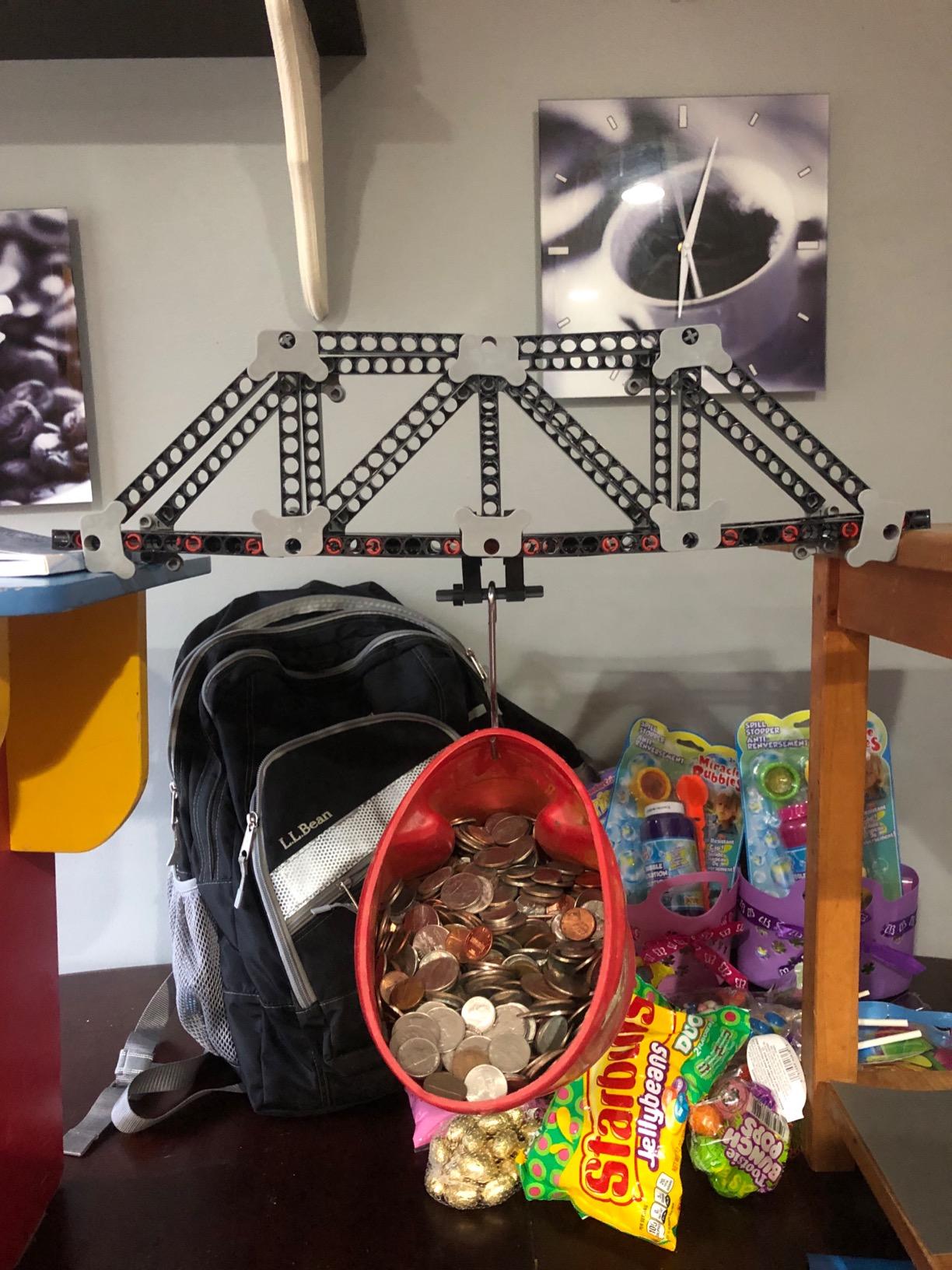
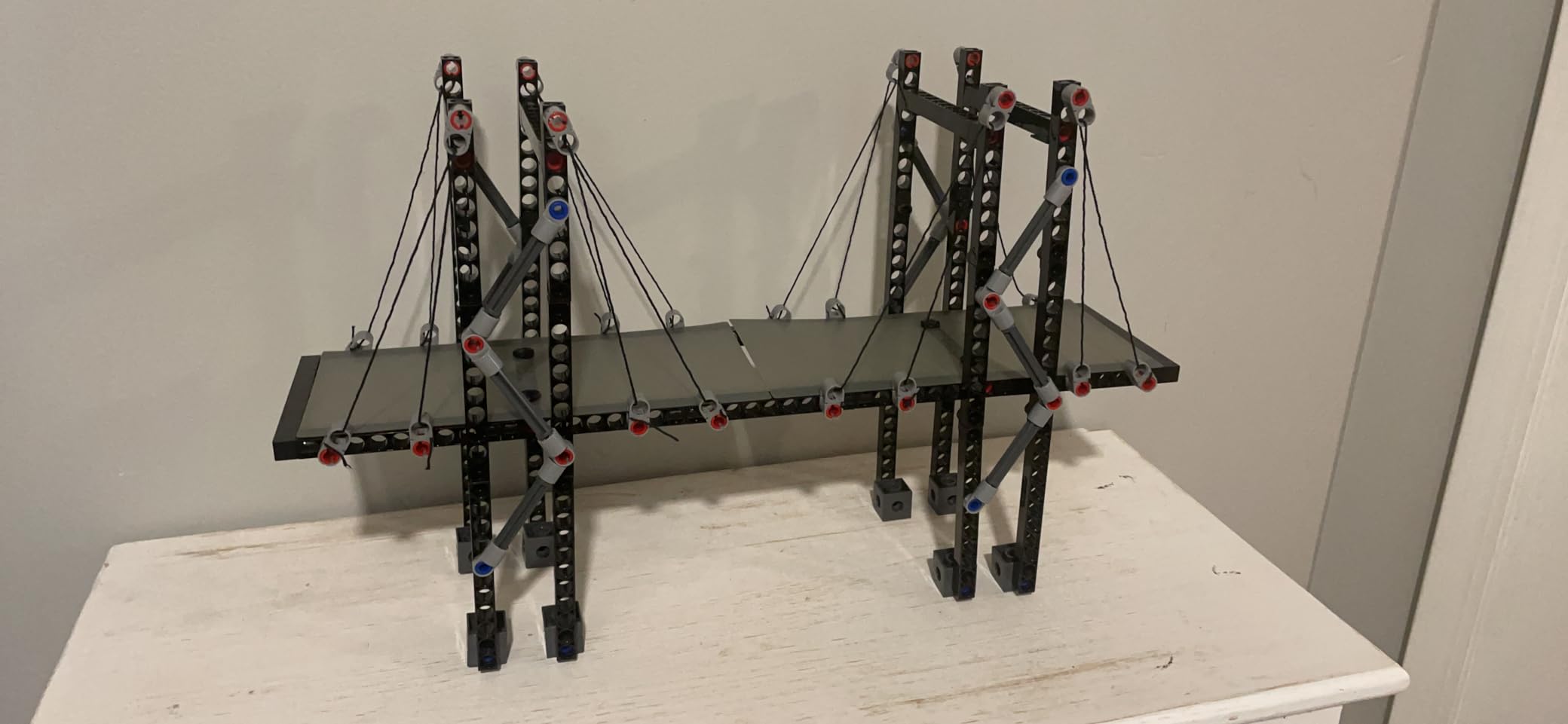
What stands out is how often buyers describe using this as a teaching tool rather than a toy. Parents and teachers mention pairing it with physics and mechanics lessons and rebuilding the models repeatedly to demonstrate load distribution. It is a small set at 16 ounces and 13.1 by 1.8 by 11.6 inches, so it is easy to keep on a desk and easy to put away.
The durability reviews are the honest concern. The plastic is described as cheap, with pieces cracking after about a year, and the joints are very tight enough that a teenager levering two pieces apart can snap one. Treat it as a study tool rather than a rough-play construction set.
Can a Teen Start This Without an Adult
Yes, and this is one of the most independent-friendly sets here. The manual carries both the assembly guide and the experiment, so the teenager can work through a model, read the theory and run the test without a parent translating anything.
For a younger teen this is often the first engineering kit they finish entirely alone, which makes it a good bridge into the harder sets on this list.
Will It Survive Real Teen Use
This is where it is weakest. The combination of cheap plastic and very tight joints means it will not tolerate being dismantled aggressively, and a year of regular use is when cracks start showing. Plan on it living on a shelf between sessions rather than in a toy bin.
7. Engino Physics Laws – Inertia, Friction and Circular Motion on a Budget
- Kids genuinely engage with the working models
- especially the rocket launcher and crash test rig
- Manual reads like a textbook plus a lab book
- Interactive 3D app helps with assembly
- Educators report it works well for tutoring
- Instructions can be unclear or incomplete for some builds
- Small parts are easily lost
- Some components including Velcro pads can break or wear out during assembly
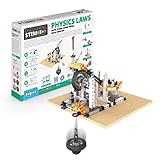
This is the entry point we recommend when a family wants to test whether a teenager is genuinely interested before committing to an expensive set. It sits at the entry end of the price range and covers inertia, friction, circular motion and energy conservation across six working models.
The two models buyers mention most are the rocket launcher and the crash test rig. Both are hands-on demonstrations of a physical principle rather than decorative models, and both give a teenager something to adjust and re-test. That adjust-and-retest loop is where the interest either takes hold or fades.
The manual runs 12 pages of theory, facts and experiments with a four-page quiz section, and the interactive 3D app adds virtual building. Owners describe the manual as reading like a textbook plus a lab book, and educators use it for middle-school STEM classes and tutoring sessions.
Reviewers are overwhelmingly positive, and the rating distribution is unusually concentrated at the top, with 76 percent five-star reviews. The minority complaints are consistent: instructions can be unclear for some builds, small parts are easily lost, and Velcro pads wear out during assembly.
Can a Teen Start This Without an Adult
Mostly independent, with one condition. The manual and the 3D app together cover the assembly well enough that most older kids build unassisted, and a younger teen may want a hand on the first build. One reviewer noted the difficulty in a different way, saying the kit kept nine to eleven-year-olds engaged for a couple of hours, which is the right calibration.
Will It Survive Real Teen Use
Average. The small parts are the risk with any snap-fit system and they are genuinely easy to lose, so a teenager who builds near a sofa cushion will lose pieces. The Velcro pads are the component most likely to fail first.
8. Thames and Kosmos Roller Coaster Engineering – Motion and Energy in One Afternoon
- Clear hands-on introduction to potential versus kinetic energy
- force and gravity
- Step-by-step manual is easy to follow and doubles as a science text
- Satisfying challenge level that gets easier with practice
- Kids can add coins to change speed and behaviour
- Plastic components can crack under repeated use
- especially the start ramp and car thread mounts
- Challenging for younger builders without adult help
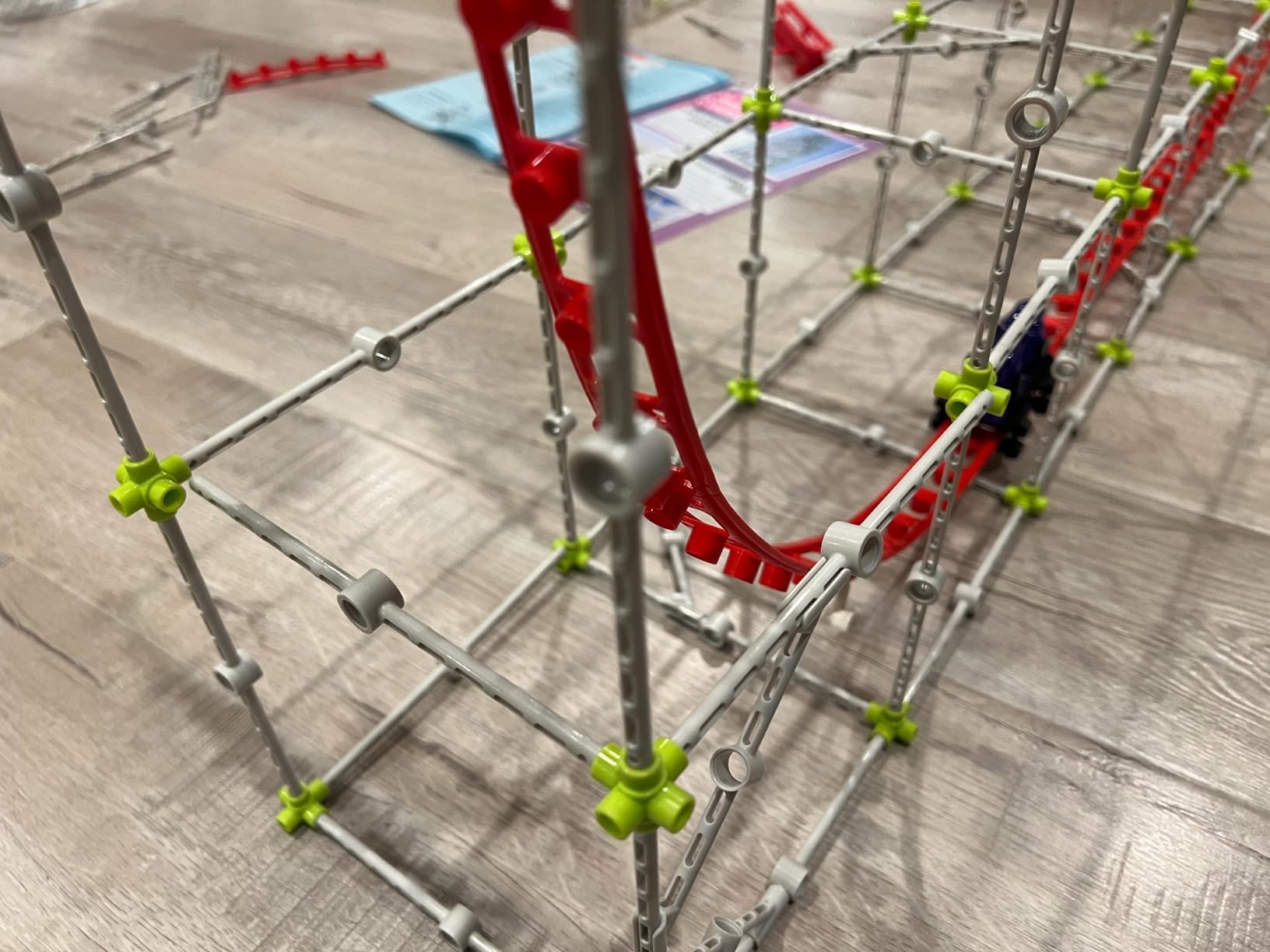
Energy conversion is one of the harder ideas in school physics to make click, and a roller coaster makes it click visually. A teenager designs a track, builds it, loads the car and watches potential energy turn into kinetic energy over the drop. Then they add a coin to the car and watch the whole thing change.
The kit requires no batteries, which is refreshing, and the 32-page full-colour manual is both an assembly guide and a science text. The manufacturer recommends ages 6 to 18, one of the widest ranges in this roundup, so the same box works across a large age span.
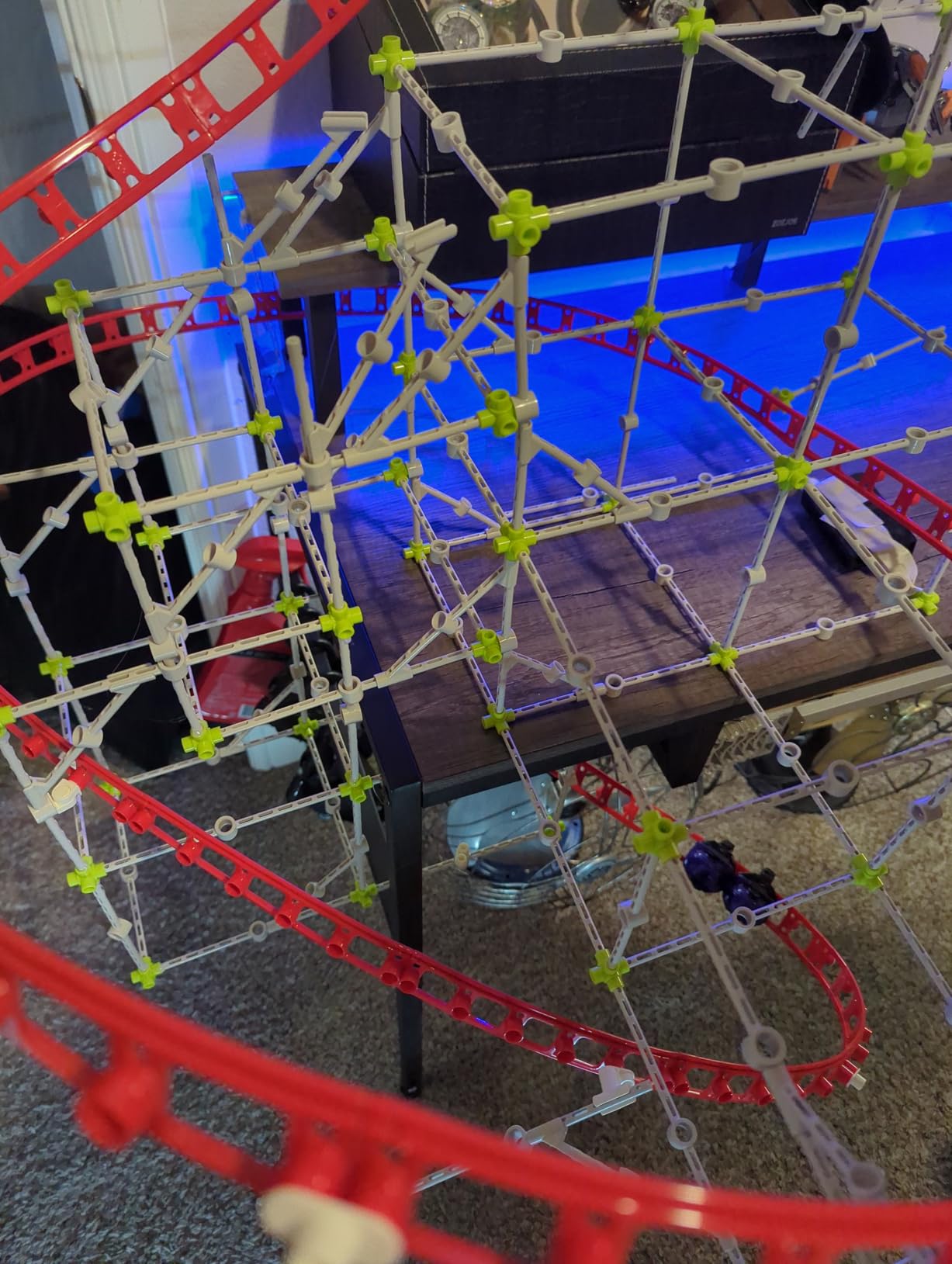
Buyers report that most kids build independently after the first two simple models, which is a better independence result than the manufacturer range suggests. The manual also includes challenges that require coasters of all shapes and sizes, so the difficulty rises as confidence grows rather than starting high.
It is also genuinely a good screen-free activity for a teen and a grandparent or parent to do together, which is one of the quieter benefits of these sets. At 2 pounds and 14.6 by 2.3 by 11.5 inches, it is a comfortable build surface.
Can a Teen Start This Without an Adult
Yes, past the first two models. The very first builds are the point where a younger builder may want a hand, and reviewers note it is challenging for younger children alone. A teenager will not need one. The manual is step-by-step and easy to follow.
Will It Survive Real Teen Use
This is the durability complaint we hear most clearly on this set. The start ramp and the car thread mounts can crack after a few runs, and connections pop apart and need firm pressure to stay secure. A coaster is a high-stress build because every joint carries load, so expect to reseat pieces often.
9. 194-Piece Metal Engineering Kit – Small, Cheap and Genuinely Metal
- Metal parts feel solid and are described as good quality
- Includes the screwdriver and wrench needed for assembly
- Satisfying challenge that keeps 9 to 11 year olds engaged
- Compact enough to gift easily and doubles as a hardware kit
- Pieces are quite small which frustrated some younger builders
- One reviewer found the assembled model too small to interest their child
- Instructions are basic so younger kids need guidance
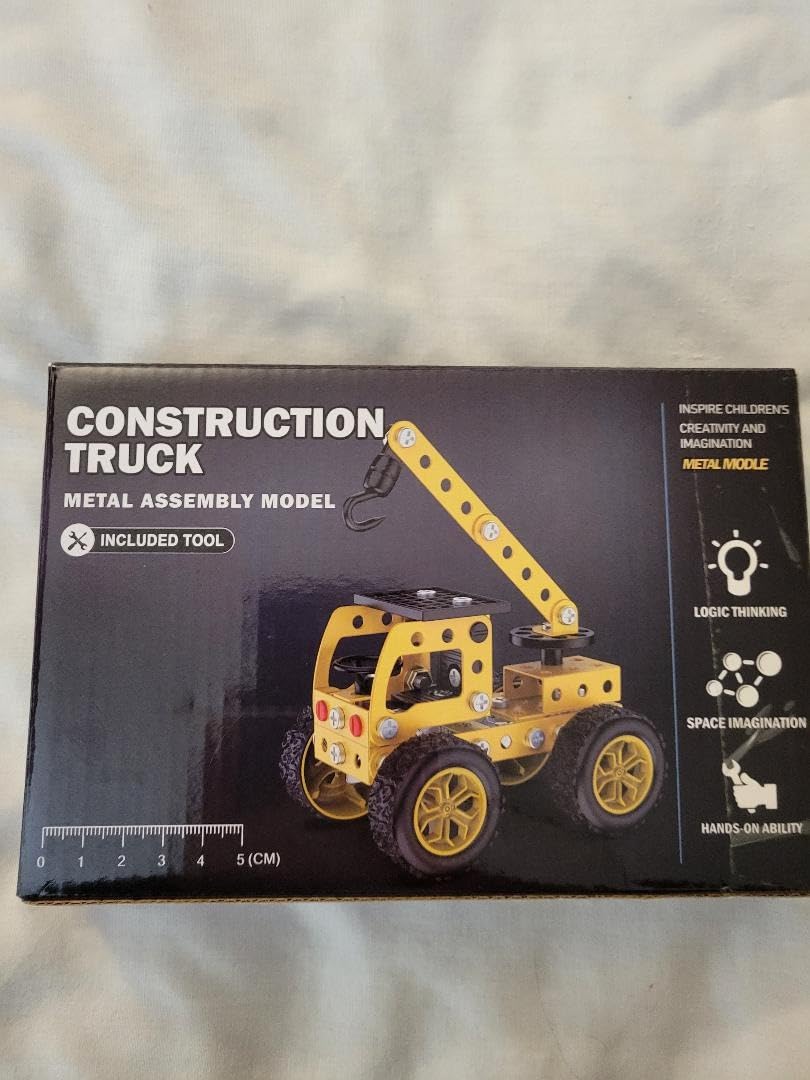
This is the compact metal option. At 194 precision-engineered metal components, it builds two unique mechanical designs one at a time, and it needs no power source at all. The included screwdriver and small wrench are a genuinely nice touch at this size, and it doubles as a fixing kit afterwards.
It is also the smallest, lightest thing in this roundup at roughly 4.92 by 3.74 by 3.15 inches, which makes it easy to slip into a stocking or a travel bag. Several reviewers mention it being a satisfying challenge that an older child or a tween works through in an hour or two and then keeps on a shelf.
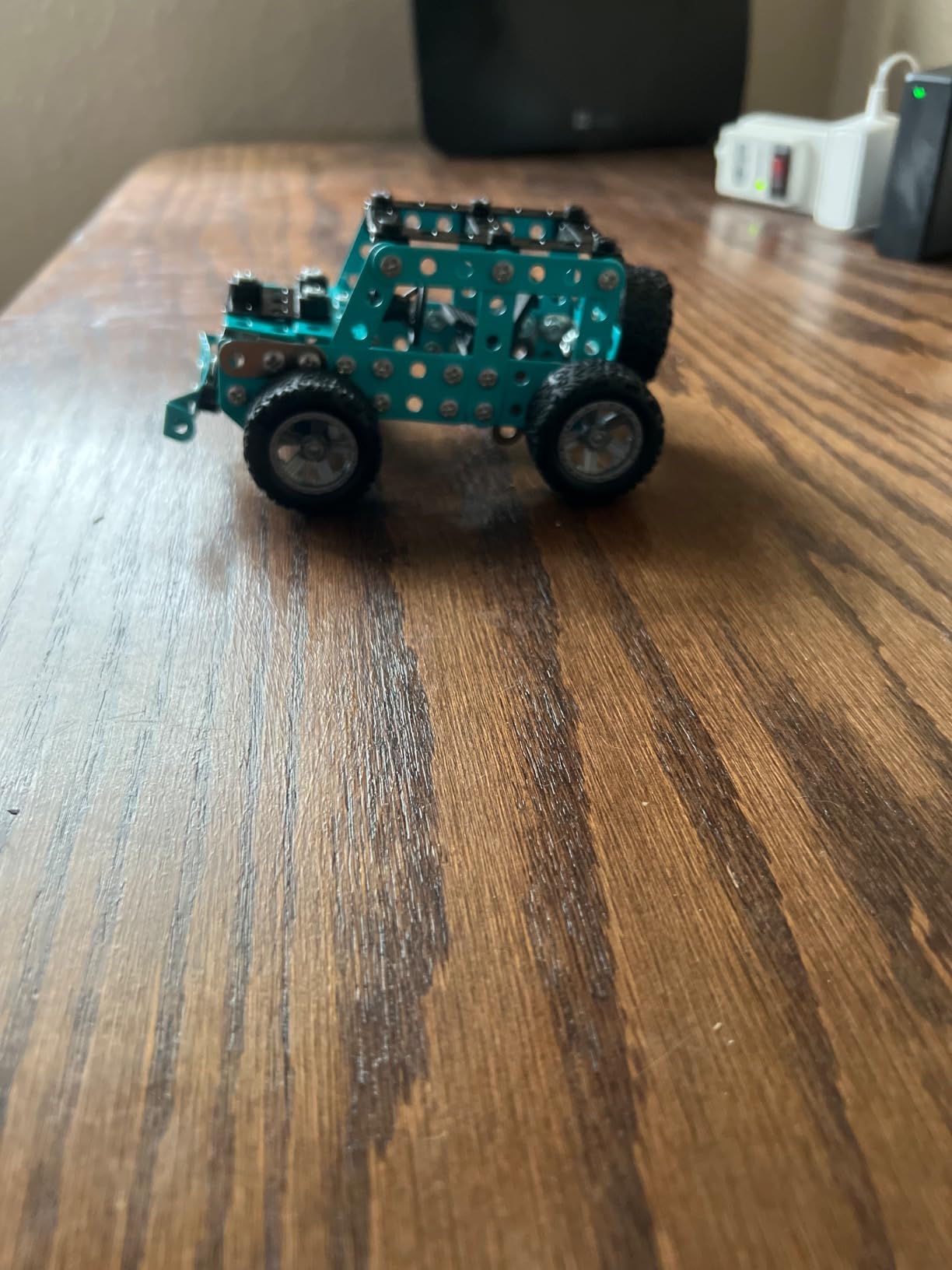
Educational framing on the listing covers logical thinking, spatial imagination, concentration and hands-on ability, and it suits one to four players. That makes it one of the few sets here that works for a sibling or a parent sitting alongside, which matters when the goal is shared time rather than solo focus.
The recurring complaint is scale. The individual pieces are small, and one reviewer returned the kit because the finished model was smaller than expected. Set expectations honestly and a teenager will find it a desk-scale model rather than a disappointment.
Can a Teen Start This Without an Adult
With no battery, no app and no motor, it is one of the few kits here that is completely self-contained. The step-by-step illustrated instructions are basic rather than detailed, so a teenager will manage comfortably and a younger child will want guidance on the first model.
Will It Survive Real Teen Use
Well. The metal components have smooth finishes and hold their threads, and the biggest long-term risk is simply that the pieces are small enough to be swept off a table. That is a storage problem rather than a durability problem.
10. BseSparklion 703-Piece V8 Engine Kit – A Full Day of Building for Older Teens
- Working powered model with visible piston movement
- Excellent teaching tool for how engine components work together
- A full day-long build that teens and adults finish and enjoy
- Runs reliably once assembled using USB power
- Instructions are weak and pieces are largely unlabelled
- Many pieces share similar colours and shapes causing misassembly
- Builds read as very Lego-like rather than a true mechanical model
This is the set for a teenager who wants a project, not an activity. At 703 pieces, the build takes roughly a full day, and the manufacturer recommends 14 years and up, so it is pitched squarely at the older end of the teen range.
The result is a working V8 with a transparent cylinder head and simulated piston movement, powered by a USB charging cable and motor rather than batteries. Buyers describe it as an excellent teaching tool for how an engine’s components work together, and it appeals to car fans as both a display model and a hobby.
The material is ABS, described as non-toxic and odour-free, and it is tested to ASTM and CPSIA standards. The weight is a little over a kilogram and it measures about 8.66 by 5.51 by 5.11 inches, so it is a solid desk object once finished.
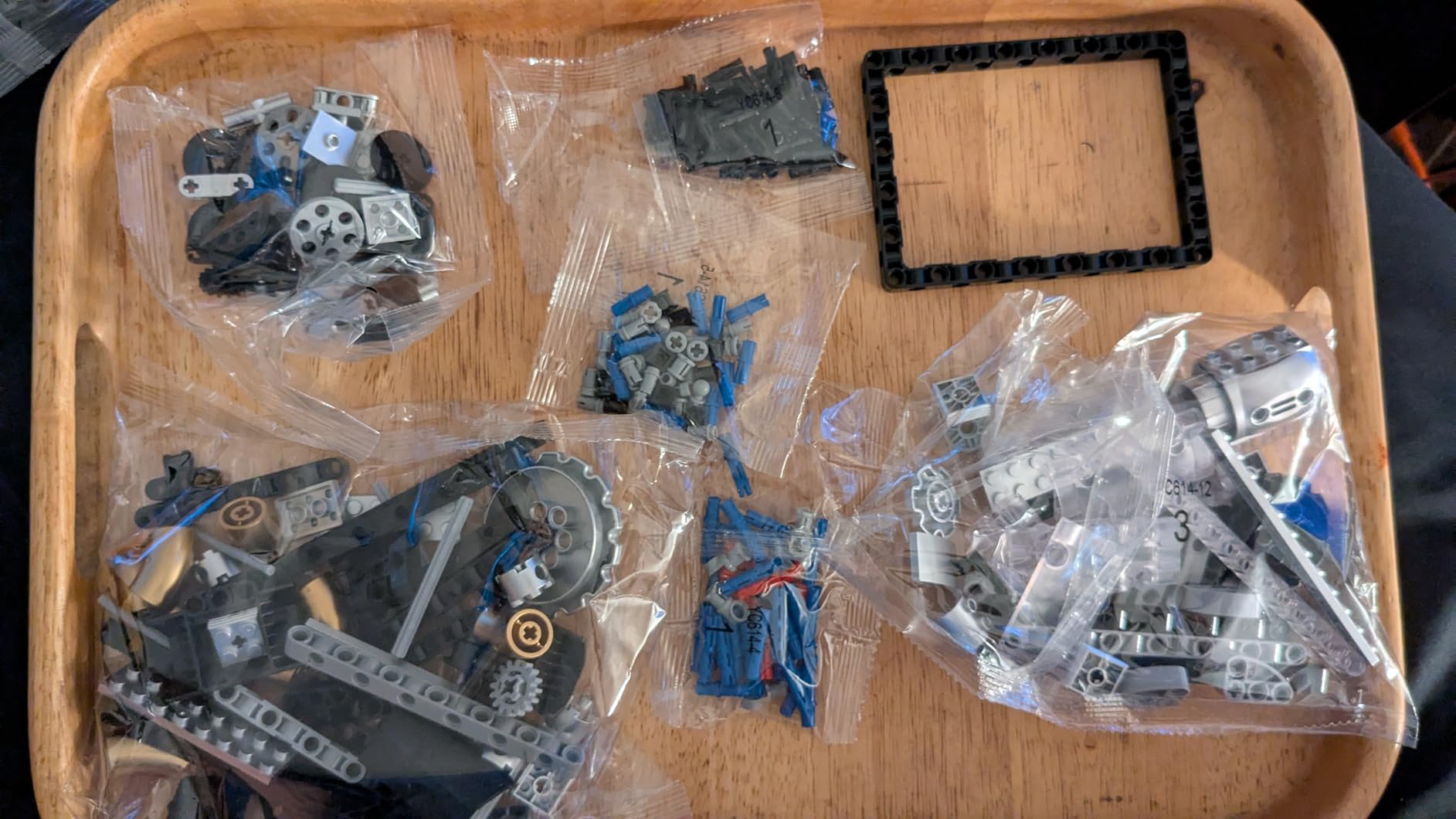
Documentation is the weak point, and reviewers are blunt about it. Instructions are weak, pieces are largely unlabelled, and many components share similar colours and near-identical shapes, which leads to repeated disassembly when something does not fit. Some buyers also note the finished build reads as very Lego-like rather than a true part-by-part mechanical model.
Can a Teen Start This Without an Adult
For a sixteen or seventeen-year-old who enjoys sorting and matching, yes. For a younger teen or anyone who wants step-by-step guidance, this one needs company at the start, because the shape-matching problem appears within the first hour.
Our practical advice: sort every piece into piles by shape before the first connection, and photograph the sub-assemblies as you go. That turns the misassembly problem into a ten-minute sorting task instead of an evening of frustration.
Will It Survive Real Teen Use
Fine once assembled. The motor runs reliably on USB power, and the transparent parts do not take much handling stress. The snapping joints are the part that wears first under a build this size.
11. Thames and Kosmos Architectural Engineering – 26 Models of Structures
- Clear instructions plus freedom to design original structures
- Buyers highlight the Eiffel Tower and Ferris Wheel models as standout builds
- Durable flexible parts that hold up to repeated assembly and disassembly
- Works for classrooms
- display pieces or open-ended family play
- Parts are plastic rather than the metal the packaging imagery suggests
- Piece count supports roughly one structure at a time rather than the full model list
- The list of buildable models is not clearly spelled out in the description
Architecture is the one branch of engineering that rewards patience and a plan, and this set is built around that. It progresses from basic trusses, arches and domes through to scaled-down real structures, using new flexible building pieces that mimic steel frames.
The two builds buyers single out are the Eiffel Tower and the Ferris Wheel, and both are the sort of project a teenager will want to finish rather than abandon. The 44-page full-colour manual carries building exercises for ages eight and up, and the manufacturer recommended range is 8 to 14.

The part compatibility is the quiet strength here. Every piece works with other Thames and Kosmos engineering and physics kits, so a family that owns the structural or roller coaster set can combine them into larger structures instead of keeping the sets siloed. There is a one year warranty against manufacturer defects.
Two expectation gaps to flag. Several buyers expected metal from the packaging imagery and received plastic, which is fair frustration. And while the box advertises 26 models, the piece count realistically supports about one structure at a time, so treat it as a long sequence of projects rather than a one-afternoon kit.
Can a Teen Start This Without an Adult
Yes. The manual is clear, and the parts are flexible rather than brittle, which makes a misaligned connection easy to correct by hand. This is among the least frustrating sets in the roundup for a teenager working alone.
Will It Survive Real Teen Use
Well. Buyers specifically call out the flexible parts holding up to repeated assembly and disassembly, which is the opposite complaint to the tight-jointed plastic sets on this list. The one reported missing-parts issue was resolved by customer service.
12. MALUVRIAN 389-Piece Erector Set – The Hardest Build on the List
- Genuinely challenging build that an 11-year-old Lego fan completed unassisted
- Complete and accurate instructions that keep kids engaged about an hour a day
- Two display-worthy models using almost all parts
- Open-ended option to build custom crafts and vehicles
- Stamped holes can be misaligned and need reaming before parts fit
- Some pieces ship missing and some plastic parts need machining
- A portion of the parts are not metal and are not compatible with standard Meccano sets
This is the difficulty pick. The listing is aimed squarely at advanced kids, teens and adults, and buyers report older kids and adults spending the better part of a week on it and feeling genuinely proud of finishing. That is the response you want from a teenager who thinks toy kits are for children.
At 389 metal pieces you build a robot or an excavator, and the open-ended option lets you design custom crafts and vehicles beyond those two. One reviewer describes an eleven-year-old Lego fan completing it unassisted, with the instructions keeping them engaged for about an hour a day.
Can a Teen Start This Without an Adult
Yes, and the completeness of the instructions is a specific strength here. Reviewers call them complete and accurate, which is not a description we can apply to several other kits in this roundup. The difficulty is in the machining rather than the direction.
We would put this one at the top of the difficulty ladder for a fifteen or sixteen-year-old, not at the bottom.
Will It Survive Real Teen Use
The metal holds up, but the manufacturing consistency is the issue. Stamped holes can be misaligned and need reaming before parts fit, some pieces arrive missing, and some plastic parts need machining. A portion of the components are not metal and are not compatible with standard Meccano sets, which one reviewer weighed against the spend.
How to Choose an Engineering Building Set for a Teen
Start with the discipline the teen already gravitates toward, because interest beats novelty. A teenager who dismantles household appliances wants mechanical sets with gears, pulleys and linkages. One who is always asking how a bridge stands up wants structural sets with trusses, arches and load experiments. One who games wants a programmable robot, and that is a very different purchase from a hydraulic arm.
Next, check the independence rating honestly. Buy a kit that matches the teen’s current tolerance for a multi-day project. A fourteen-year-old who abandons anything over an hour will not finish a 700-piece engine, and a sixteen-year-old will be bored by a set that comes together in forty minutes. The right difficulty is uncomfortable in the second hour, not the first.
Documentation decides more of these purchases than buyers expect. A printed manual with clear diagrams, and parts that are bagged and labelled, will survive a teenager’s attention span. Sets that depend entirely on an app, or that ship unlabelled similar-looking pieces, create friction that gets blamed on the kit rather than on the process. We have noted the documentation quality for every pick above.
Budget-wise, there are three tiers worth knowing about. The low tier covers simple physics and mechanics sets with a dozen working models, which are the right test purchase. The middle tier covers dedicated structural, architectural and hydraulic sets with a substantial parts count and a real experiment manual. The top tier is programmable robotics, where the hardware is only half the product and the other half is the software environment the teen grows into. We round up the other lab-style options in our guide to the best chemistry sets for teens, and open-ended plastic construction systems in our picks for LEGO modular building sets.
On a three-year progression path, a twelve-year-old can start with a physics-laws or roller-coaster set and learn the manual. At fourteen, move to a structural or architectural set that demands a plan before the build starts. At sixteen, a programmable robot car is the natural next step, because it introduces the logic and iteration that real engineering work runs on. Kits that skip a rung tend to stall.
If you are buying for a teenager who has no STEM background at all, do not start with the most advanced set on the list. A gifted but untested teen needs a ramp, not a summit, and a hydraulic arm or a bridge set gives a first success within a weekend. That first success is what buys you permission to buy the next one.
A few practical gifting notes. Pair a kit with a real tool: a tape measure, a small spirit level or a hobby screwdriver makes a teenager feel taken seriously in a way another plastic toy does not. Check the warranty length, since two years on Engino sets is meaningfully better than one year when a small part fails. And if the teenager lives far away, avoid kits that need an adult in the room for the first hour.
What to Skip and Why
Skip kits marketed to under-eights with an eight-plus label attached. A teenager can tell within ten minutes whether a set was designed for a child, and the packaging is often the tell: cartoon characters, bright colour-coded steps and a build that ends in twenty minutes.
Skip kits that need a soldering iron unless the teenager has asked for one specifically. Soldering is a genuine skill, but it is a barrier that stops most builds before they start, and it is a poor surprise gift for a remote birthday.
Skip kits where the free app is the only route to most of the models, unless the teenager already has reliable device access. An app-dependent kit becomes dead weight the moment the trial period ends or the manufacturer changes the app, and the frustration lands on the person who gave it.
Skip sets with very tight plastic joints if the teenager treats builds roughly. Tight joints snap under a teenager’s grip, and losing one piece can end a model that required hours of assembly. Metal kits tolerate that handling far better.
Frequently Asked Questions
What is a good engineering gift for a teenager?
A good engineering gift for a teenager is one with a clear printed manual, a genuine working mechanism, enough interchangeable parts to allow redesign, and a difficulty level that takes more than one sitting. Our top pick is the Teach Tech Hydrobot Arm, a hydraulic arm powered by water with no batteries and six axes of movement, rated for ages twelve and up and finished by thousands of buyers.
What are some good building kits for teenagers?
Good building kits for teenagers include the Teach Tech Hydrobot Arm for hydraulics, the Meccano Erector 25-in-1 for large metal construction, the ELEGOO UNO R3 for programming in Arduino, and the Engino Structures set for real bridge types. The right choice depends on whether the teenager prefers mechanical mechanisms, structures, electronics or code.
What are some good kits for engineering students?
For a college-bound teenager, the ELEGOO UNO R3 Smart Robot Car is the strongest starting point because its controller is genuinely Arduino-compatible and it opens into the Arduino IDE. A teenager who wants hardware rather than software often prefers the Meccano Erector set, with 638 metal pieces, a 6V motor and 25 buildable models.
What are some good engineering build kits for kids?
For younger builders, the Engino Physics Laws set covers inertia, friction and circular motion across six working models with twelve pages of theory, and the Thames and Kosmos Roller Coaster Engineering set teaches potential and kinetic energy through a hands-on track design. Both carry manufacturer age guidance starting around nine and both are usable without an adult after the first model.
What are the best engineering kits for teenagers?
The best engineering kits for teenagers are the Teach Tech Hydrobot Arm, the Meccano Erector Super 25-in-1 and the ELEGOO UNO R3 Smart Robot Car. They lead our roundup because each has thousands of reviews, each teaches a transferable concept rather than a one-time assembly, and each can be started by a teenager without adult supervision.
What are some good STEM building kits for teenagers?
Strong STEM building sets for teenagers span several disciplines. Structural sets such as the Engino Structures kit and the Thames and Kosmos Structural Engineering set teach load, compression and tension. The Engino Physics Laws set teaches inertia and friction. The ELEGOO UNO R3 teaches programming, and the Teach Tech Hydrobot Arm teaches mechanical engineering through hydraulics.
What are some cool engineering projects for teenagers?
Cool engineering projects for teenagers include designing a marble-run or roller-coaster track and testing how added weight changes speed, building each of the seven real bridge types in the Engino Structures set and load testing them, writing custom routes for the ELEGOO robot car in the Arduino IDE, and extending the Hydrobot Arm with a second gripper or suction attachment.
The Verdict on the Best Engineering Building Sets for Teens
The best engineering building sets for teens share one trait: they let a teenager change something and see what happens. If the teen takes machines apart, start with the Teach Tech Hydrobot Arm, our editor’s choice for the way hydraulics teach real troubleshooting with no motor to fail. If they handle builds roughly and want something that will still work in three years, the Meccano Erector 25-in-1 is the one that survives. If they are already on a computer more than they would like to admit, the ELEGOO UNO R3 is the smoothest bridge into real programming.
For a younger teen or a first-time builder, the Engino Physics Laws set is the least risky way to find out whether the interest is real. For a teenager heading toward civil engineering, the Engino Structures set and the Thames and Kosmos Structural Engineering manual are the two that will actually teach something. Every one of the twelve above is worth the parts, provided you match the difficulty to the teenager and expect the build to take more than an evening.
We update this roundup as new kits reach the market and as buyer reviews accumulate. If you want the closest match to our own shelves, start with the number one pick.