
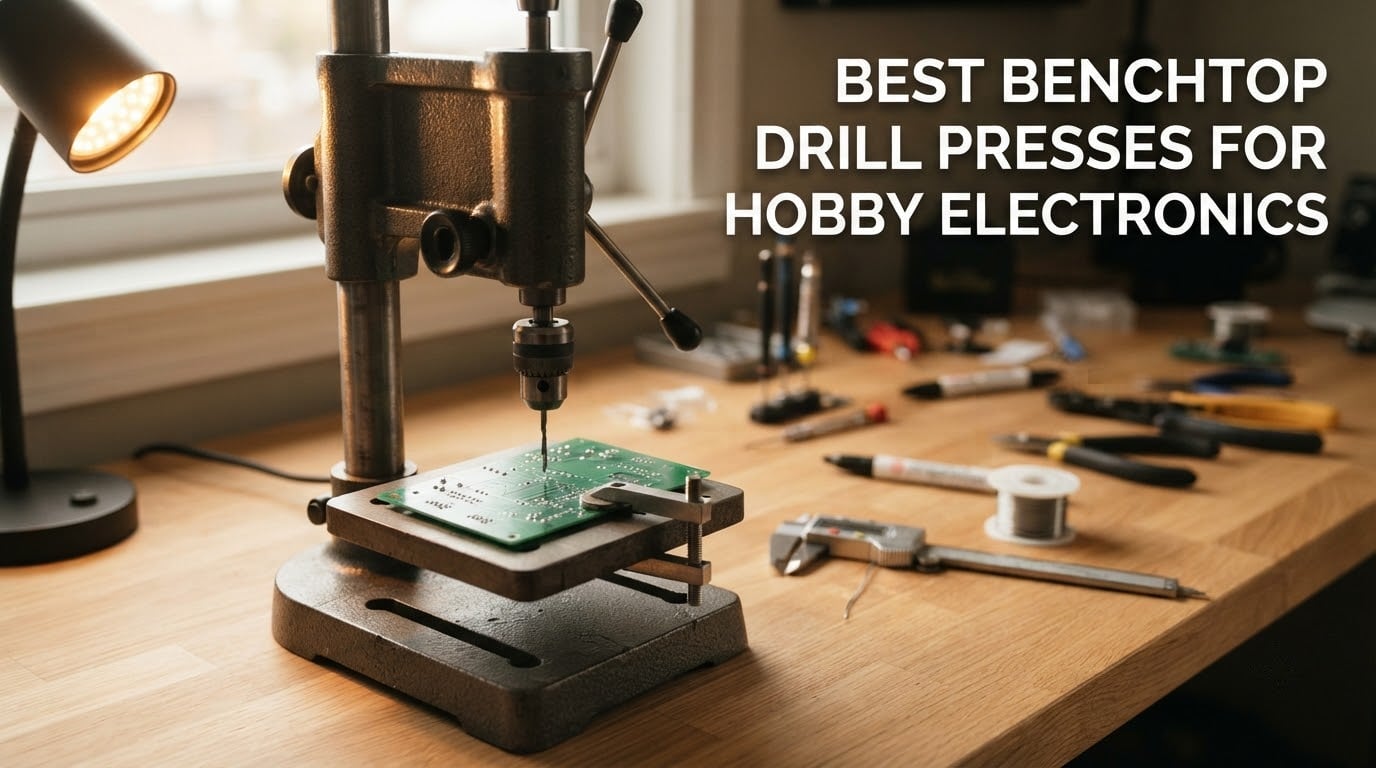
The first time I tried to drill a row of 0.8mm holes through a piece of FR4, I wasted two boards. A handheld drill wandered the instant the bit touched the surface, the holes came out oblong, and the component leads no longer fit their pads. A benchtop drill press fixed that problem on the first afternoon, because the bit travels down a fixed vertical axis and nothing changes between the first hole and the tenth.
That is the whole argument for the best benchtop drill presses for hobby electronics. A handheld drill is fine for one hole in a softwood offcut. It is not fine for repeated small holes, for front panels that have to sit flush, or for any hole under about 1mm where a wandering bit means a scrapped board. A press costs a fraction of what a small CNC does and gives you square, repeatable holes every time.
We compared 10 benchtop drill presses and mini drill presses, weighing published specifications against what owners report after living with the machines. The specs come straight from the manufacturer data and the review summaries; where a number is disputed by owners, we say so rather than repeat the marketing. Below you will find the accuracy-first picks, the workhorse options, and an honest section on what a benchtop press cannot do for you. If you also machine larger stock, our bench drill press guide covers the floor-standing tier.
Table of Contents
Top 3 Picks for Hobby Electronics in 2026
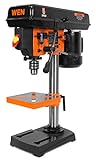
WEN 4206T 8-Inch Cast Iron Press
- 2.3A induction motor
- 8-inch swing
- 2-inch spindle travel
- 5 speeds to 3200 RPM
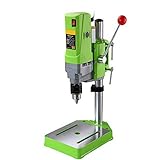
BACHIN 710W Mini Drill Stand
- 710W direct drive
- 1.5-13mm keyed chuck
- 6 speeds to 2800 RPM
- rotatable head
Best Benchtop Drill Presses at a Glance (October 2026)
Every press below is listed with the same four criteria we judged: the motor rating, the swing, the speed range, and the single feature that decides whether it suits electronics work. We favour machines with a low-speed setting and low runout, because those are what decide whether a hole lands where you put it. Full reviews follow.
| Product | Specifications | Action |
|---|---|---|
| WEN 4206T 8-Inch 5-Speed Cast Iron Drill Press |
|
Check Latest Price |
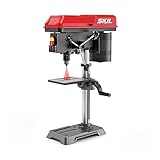 SKIL DP9505-00 10-Inch 5-Speed Press with Laser SKIL DP9505-00 10-Inch 5-Speed Press with Laser |
|
Check Latest Price |
| BACHIN 710W Mini Bench Drill Stand |
|
Check Latest Price |
 NovelLife B10 Precision Mini Drill Press NovelLife B10 Precision Mini Drill Press |
|
Check Latest Price |
 BUCKTOOL 10-Inch 3/4 HP Drill Press BUCKTOOL 10-Inch 3/4 HP Drill Press |
|
Check Latest Price |
 VEVOR 8-Inch Benchtop Drill Press DP8 VEVOR 8-Inch Benchtop Drill Press DP8 |
|
Check Latest Price |
 PROXXON TBM 115 Precision Bench Drill Press PROXXON TBM 115 Precision Bench Drill Press |
|
Check Latest Price |
 WOODSKIL DP-8 8-Inch 5-Speed Press with Laser WOODSKIL DP-8 8-Inch 5-Speed Press with Laser |
|
Check Latest Price |
 WEN DP1263V 12-Inch Variable Speed Drill Press WEN DP1263V 12-Inch Variable Speed Drill Press |
|
Check Latest Price |
 SHOPMAX 8-Inch 9-Speed Benchtop Drill Press SHOPMAX 8-Inch 9-Speed Benchtop Drill Press |
|
Check Latest Price |
1. WEN 4206T 8-Inch Cast Iron Press – Best Overall for Electronics Benches
- Cast iron build with a weighted stable base
- Five mechanical speeds from 750 to 3200 RPM
- Table bevels 45 degrees in each direction
- Onboard chuck key storage
- 2.3A motor is limited for heavy metal work
- 6.5-inch table restricts workpiece size
The WEN 4206T is the press I recommend to most people building electronics at a home bench. It is a cast iron machine, not folded steel, and that mass is the reason the spindle stays where you put it while a small bit breaks through FR4. At 32 pounds it is heavy enough to resist the sideways shove of a 0.8mm bit and light enough to carry to another bench when you move your workspace.
Its five mechanical speeds run 750, 1100, 1500, 2100 and 3200 RPM. That 750 RPM setting is the number that matters for electronics, because it lets a small carbide bit cut FR4 slowly enough to stay sharp instead of polishing itself dull. For soft materials such as resin, plastic and thin acrylic, the same low setting prevents cracking.
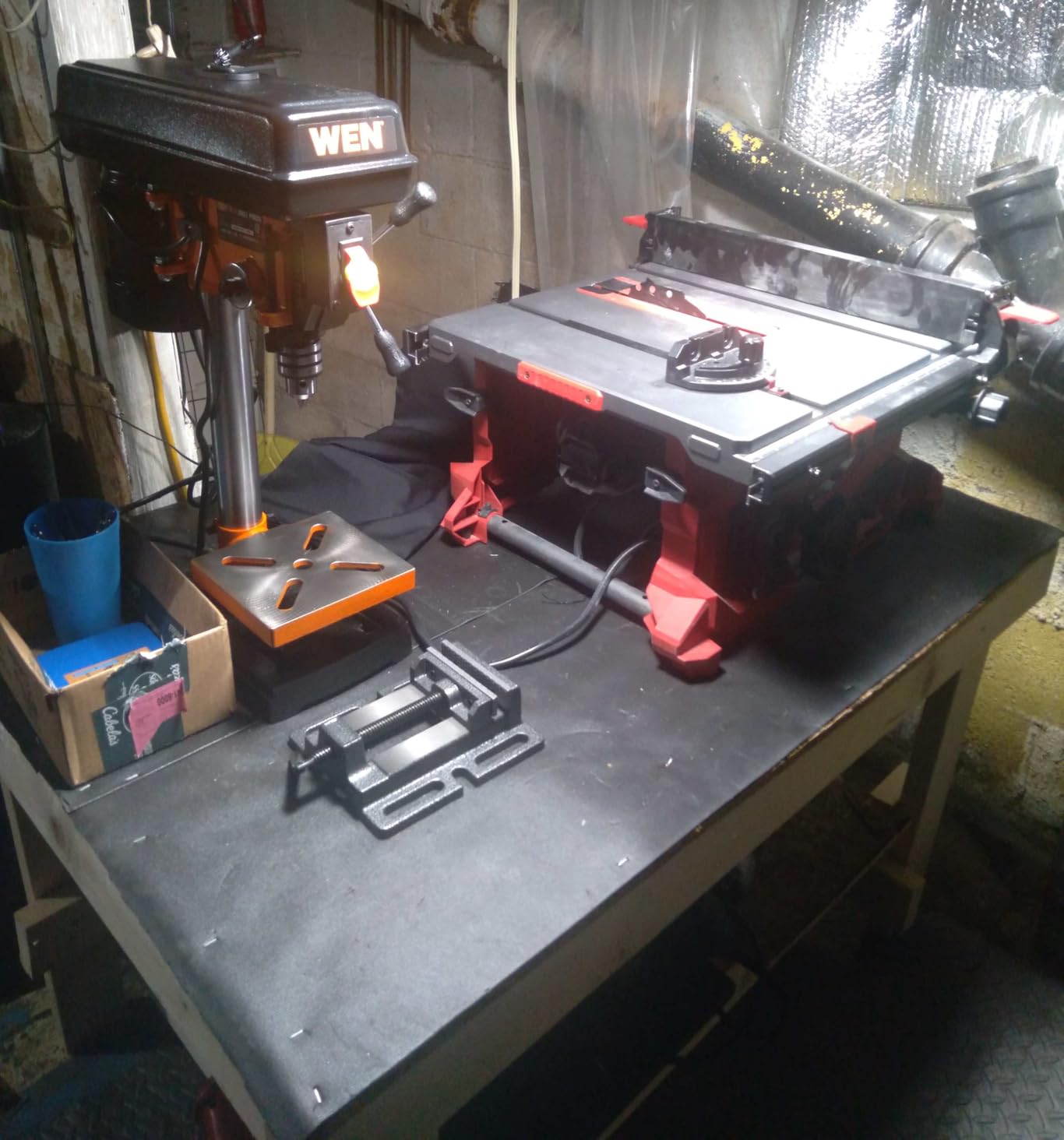
The 8-inch swing is measured from the spindle centre to the column face, doubled, which is why a small bench press feels roomier than the number suggests. For a front panel, a small project enclosure or a wall plate, that is more than enough. The 6.5 by 6.5 inch table tilts 45 degrees in each direction, which matters for drilling into the side of a box rather than the face.
Spindle travel of 2 inches is the honest limit of this class. It will not drill more than 2 inches deep, which rules out thick hardwood and some aluminium stock, but no electronics project needs that. The 1/2-inch keyed chuck grips small bits firmly, and the key stows in the base so it does not go missing, which is a small courtesy we appreciated.
Why it suits hobby electronics work
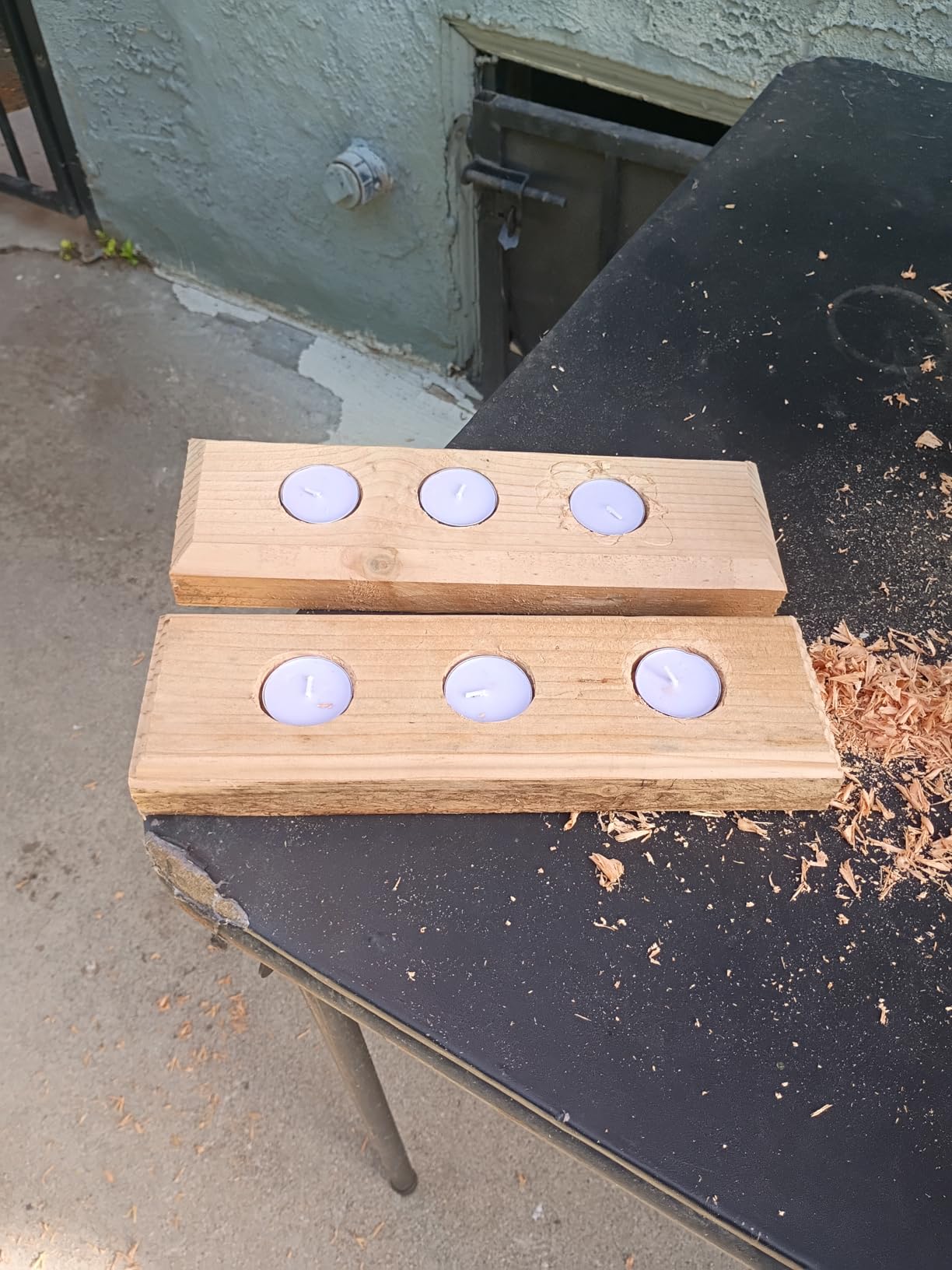
Cast iron construction, a 750 RPM low setting and a 32-pound frame cover the three things that decide small-hole accuracy on an electronics bench. Owners report quiet running and easy portability, and the 2-inch stroke is more than enough for a control panel, a project box or a shield board.
It also suits mixed work. If you drill enclosure holes in aluminium one afternoon and wooden enclosure sides the next, five speeds and a tilting table cover both without changing machines.
Where it falls short
A 2.3 amp motor is a light-duty motor. It will drill 0.5 inch holes in soft metal with sharp bits and patience, but sustained metal work heats it quickly. Reviewers also note the 6.5-inch table is small, so a wider front panel needs support off the edge or a roller extension.
If your work is mostly tiny holes and micro work, a purpose-built mini press will be more accurate. If you need to bore through steel, the motor is the wrong size.
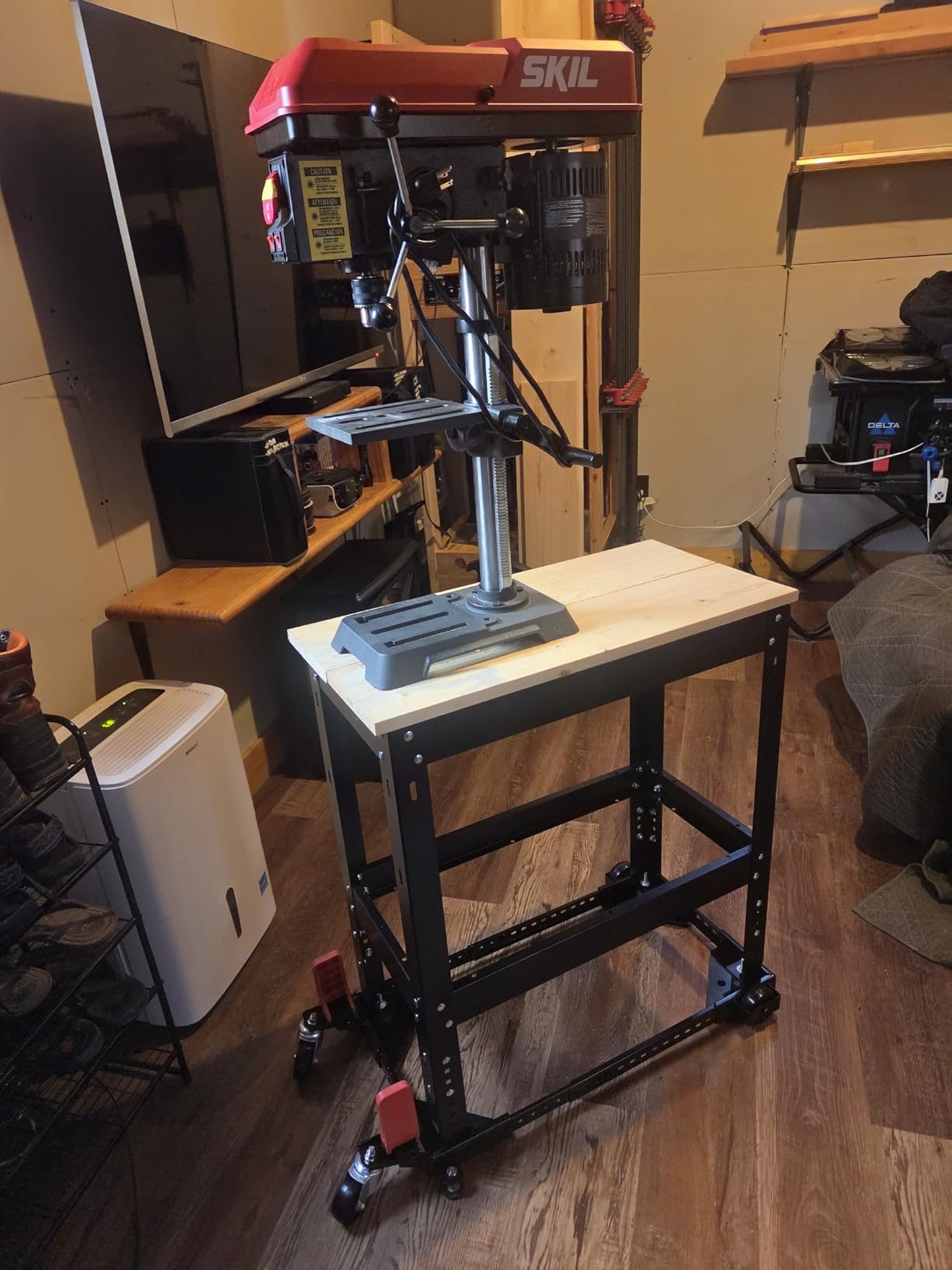
2. SKIL DP9505-00 10-Inch Press – Best for Enclosure and Front Panel Drilling
SKIL 6.2 Amp 10 In. 5-Speed Benchtop Drill Press with Laser Alignment & Work Light – DP9505-00
- 6.2A motor drills steel on the slower settings
- Laser arrives well calibrated and stays useful after table moves
- Depth stop and height-adjustable table are genuinely useful
- Quiet smooth motor
- Quick assembly
- Table can wander during height adjustment
- Included chuck has slight lateral runout
- Column and rack feel light for the tier
The SKIL DP9505-00 is the one I reach for when the job is a drilled enclosure or a front panel for a DIY amplifier or keyboard. The 6.2 amp induction motor is roughly double the current of the compact 2.3 amp machines, and that extra torque is the difference between a clean hole in 2mm aluminium and a bit that stalls and walks.
It runs five speeds from 610 to 2800 RPM. The 610 RPM setting is the slowest in this group, which makes it the best low-speed option among the full benchtop presses here, and it is the setting you want for thin aluminium panels and brittle plastics where a fast spindle shatters the edge.
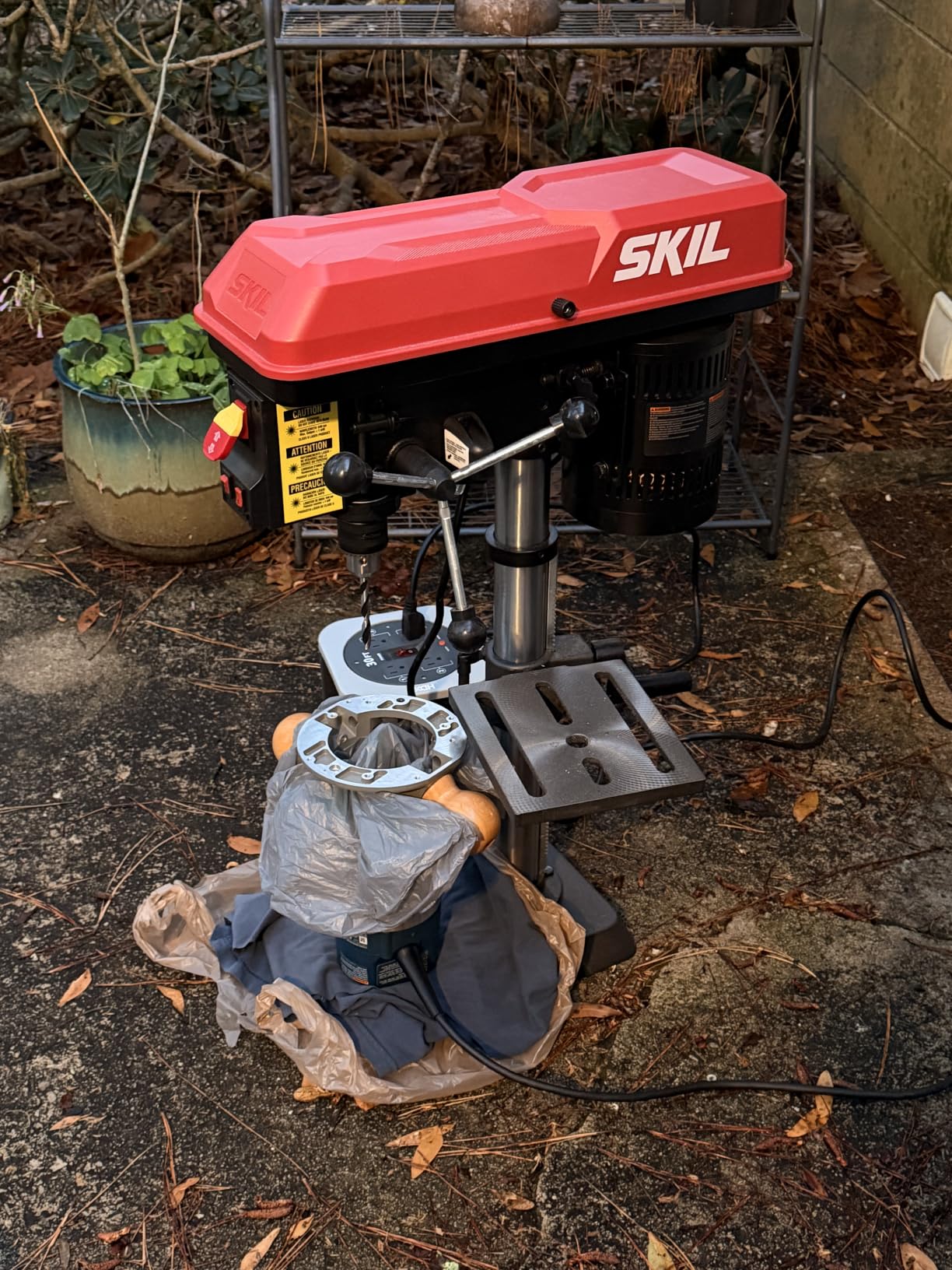
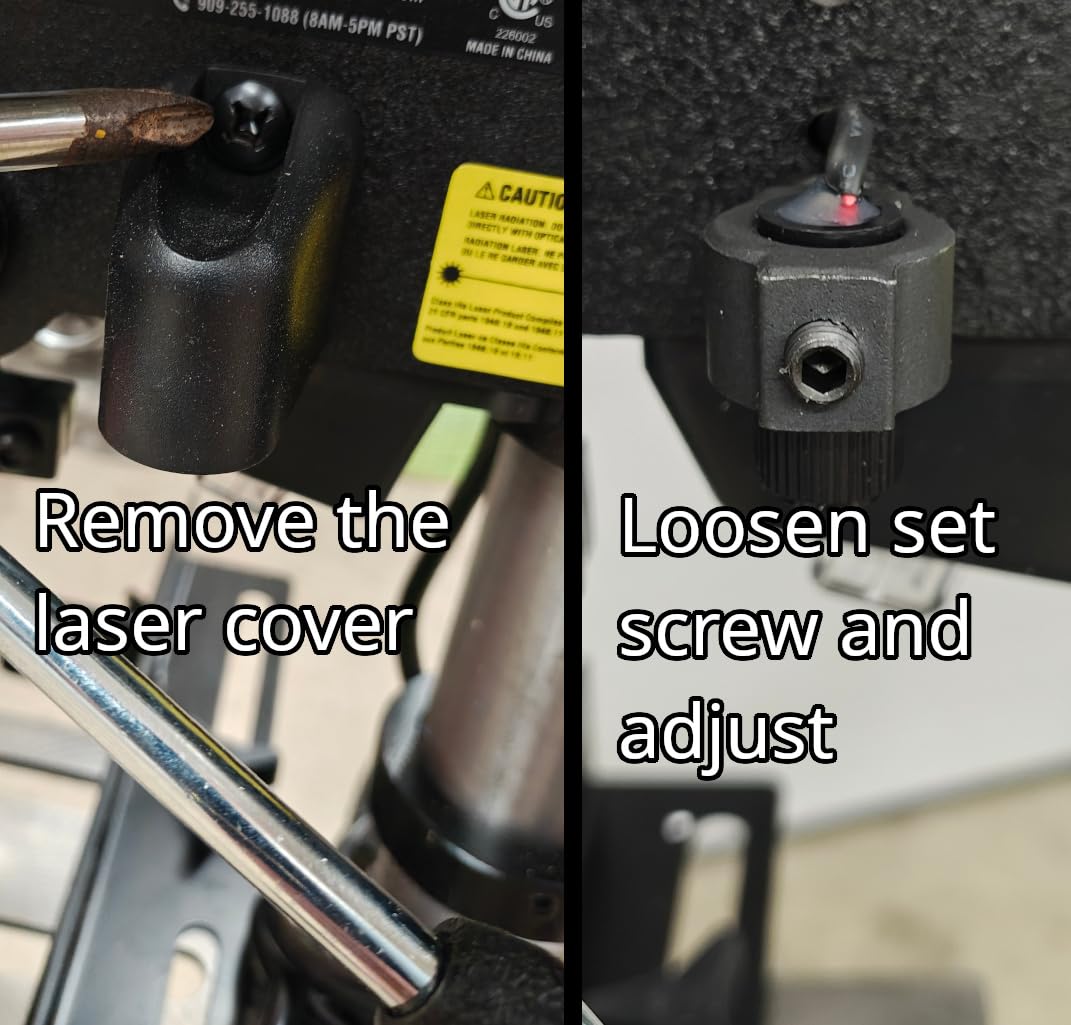
Both the laser alignment system and the LED work light are built in. The laser is a Class II unit rated at 0.83mW maximum radiant power, and owners generally find it arrives correctly set and stays useful after the table has been moved, which is the usual complaint with cheaper units. The tilt surface handles 0 to 45 degrees in either direction, and the adjustable depth stop repeats the same depth on every hole.
The honest weakness is the included chuck. Owners report a small amount of lateral runout, and reviewers frequently replace it with a better one. The table can also wander during height adjustment, and the centre column and worm-drive rack feel light for the money once you handle them. A 3-year limited warranty is a genuine plus that few machines in this group offer.
Why it suits hobby electronics work
Enclosure holes are large holes, and large holes in metal demand torque. A 6.2 amp motor plus a 610 RPM low setting covers thin aluminium, steel and plastic panels without swapping machines, and the tilting table handles drilling into the side wall of a box.
The depth stop is the feature that quietly saves time. Once you set it for a mounting hole depth, a row of identical standoff holes comes out consistent without measuring each one.
Where it falls short
The included chuck runout is the reason this is not our top pick. On holes under 1mm, a few thousandths of an inch of runout is enough to walk the bit, so this press is better suited to 2mm and above than to PCB drilling. The rack collar lock is also the part owners most often struggle to engage on the first attempt.
Reviewers who bolted the support plate down report the wobble disappears. Skipping that step is the most common reason people rate this machine lower than it deserves.
3. BACHIN 710W Mini Drill Stand – Best for Rivets, Inserts and Standoffs
- Compact and light enough to store on a shelf
- Zero chuck play and a tight smooth feed for small holes
- Handles precision and heavier work without losing RPM
- Can be clamped to a bench with a custom table
- Listed minimum RPM is optimistic and the real low speed is nearer 450
- Noisy gearbox whine that rises sharply with RPM
- Track tensioning screws need adjusting or the head drifts
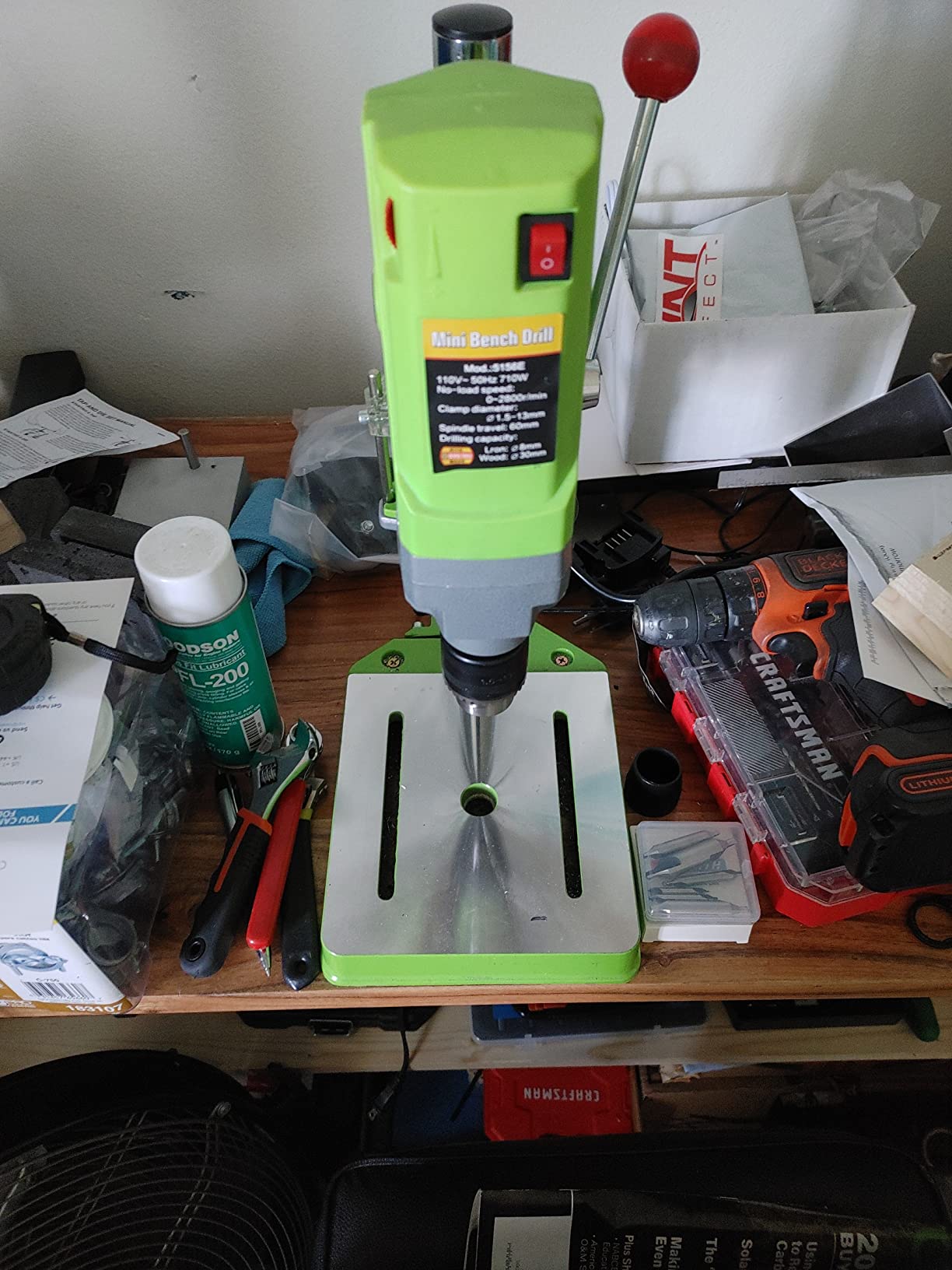
The BACHIN 710W is the mini press I would pick for threaded inserts, rivets, standoffs and small hardware. It weighs 11.4 pounds and stores on a shelf between projects, which matters more than it sounds when your bench space is shared with a soldering station and a parts drawer. You take it down, use it, and put it away.
The direct-drive geared motor has no belt, so there is no belt to stretch or slip, and the six-speed range covers 0 to 2800 RPM. Reviewers consistently single out the zero chuck play and the tight, smooth feed as the reasons this machine punches above its weight on small holes. The 1.5-13mm keyed chuck takes the small HSS bits you already own.
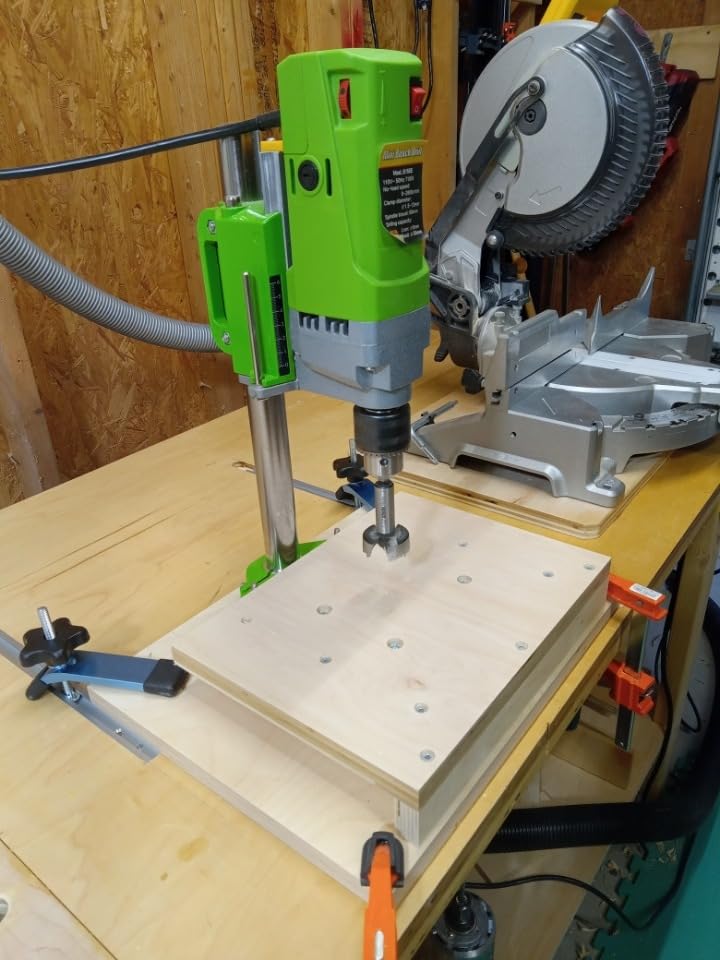
The head rotates 180 degrees, so you can drill straight down into a clamped part or sideways into a face. On a mini press of this size that flexibility is a real advantage, and it is why the machine suits jigs and fences as much as single holes. Spare carbon brushes are included, which matters because they are the part that eventually wears out.
Two cautions from owners. The listed minimum of 0 RPM is optimistic; the real low speed is closer to 450 RPM, which will overheat small diamond bits if you expect a true crawl. And the gearbox whine rises sharply with RPM, so this is a poor choice for a shared room or an apartment bench.
Why it suits hobby electronics work
Threaded inserts need a press, not a hand drill. A press applies steady axial force while the bit stays on axis, which stops the insert distorting, and a 3/4 HP-class benchtop machine is overkill for a 3mm part. The compact footprint and the rotating head also make it easy to build a simple fence or stop block around a small jig.
Because the chuck is a 1.5-13mm keyed type, small bits are gripped properly, which is where most budget presses start to wander.
Where it falls short
The optimistic speed listing is the biggest trap. At roughly 450 RPM minimum, this is not the machine for 0.3mm diamond bits, and the track tensioning screws need attention or the head drifts under load. Seller support is thin, and some examples arrive without a chuck key.
If your work is larger than about 8mm in metal, the 8mm metal capacity is a hard ceiling. Choose a full press instead.
4. NovelLife B10 Precision Mini Press – Budget Pick for Micro Work
NovelLife Precision Mini Drill Press Benchtop Driller Machine B10 Upgraded
- Very low runout
- equal to or better than full-size presses at 1-4mm work
- Quiet operation and a stable base with no wobble
- External 24V supply allows slow controlled feed
- Arrives assembled and oiled on recent batches
- Not for steel or thick aluminium
- Included flat vise is weak
- No indexing or reference lines for alignment
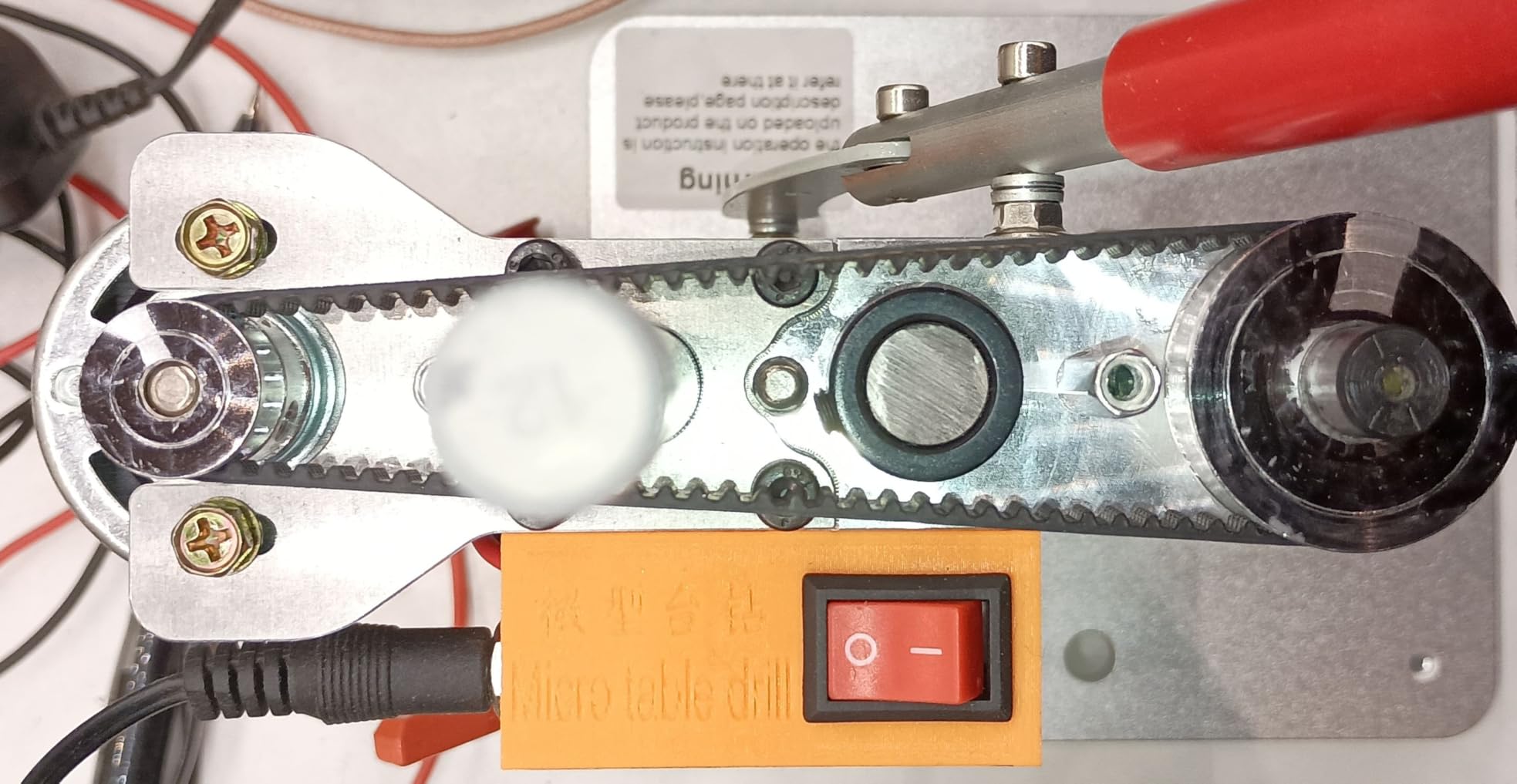
The NovelLife B10 is the press I use when the job is genuinely small: 0.6 to 2mm holes in plastic, resin and soft aluminium, and model or watch-scale work. Two linear bearings and three metal axes give it a feed that feels far more expensive than the price suggests, and the 5.9 by 4.7 inch footprint takes up almost no bench space at all.
The 795 DC motor reaches 7000 RPM and is fed by an external 24V adjustable supply. That supply is the feature to understand: turning the voltage down gives you genuinely slow, controlled feed, which is exactly what stops a small bit from snapping or a thin workpiece from being gripped too hard. On a mains press, you are limited to whatever the slowest gear is.

Owners with a model-building or electronics background rate the accuracy at or better than full-size presses for 1-4mm work, and the 2.2 kg machine is quiet enough to run beside a laptop. The base has two slot types that accept the included mini bench vise or a CNC sliding table, so a stop block is a cheap upgrade rather than a custom part.
There is a firm duty limit. This is not a machine for steel or thick aluminium bar, and the included flat vise is weak enough that owners replace it. The height-stop hex key that ships in the box is also slightly undersized, which is an easy five-minute fix if you have a 2.5mm hex key on hand.
Why it suits hobby electronics work
Variable feed speed is the reason this press beats most of its rivals on small work. You can creep into a 1mm hole in a thin panel and stop the moment the bit breaks through, which is a technique a stepped-speed press cannot do. The quiet motor also means it is practical in a room where conversation matters.
It doubles as a polishing and grinding station, so if you already do model or watch work, the same machine handles that too.
Where it falls short
There is no indexing or reference line, so lining up a small workpiece means eyes and patience, and owners report alignment is fiddly on thin or irregular stock. The chuck tops out at 6mm and the duty limit excludes steel and thick aluminium, so this is a specialist tool rather than a general one.
If your project needs holes in a steel bracket, this is the wrong machine at any speed setting.
5. BUCKTOOL 10-Inch 3/4 HP Press – Best for Steel and Heavier Metal
BUCKTOOL 10-Inch Drill Press 6.2 Amp 3/4 HP Bench Drill Press
- 0.75 HP motor gives noticeably more torque than 2-amp machines
- Cast iron base keeps vibration low
- Tilting table with LED light and fence cover angled work
- Removable switch keys are a real safety benefit
- Speed changes require repositioning the belt under the top cover
- Limited chip and swarf extraction
The BUCKTOOL is the heavy-attitude option in this group. A CSA-certified 3/4 HP 6.2 amp motor gives it roughly triple the torque of the 2.3 amp compact presses, and that is what you need when a job involves a steel bracket, a thicker aluminium plate or a row of 1/4 inch mounting holes rather than delicate small work.
It runs five speeds from 650 to 3100 RPM on a belt positioned under the top cover, with 2-inch spindle travel, 10-inch swing and 30-inch total height. The 1/2-inch keyed chuck takes the common shank sizes, and the cast iron base is described by owners as the reason vibration stays low under load.
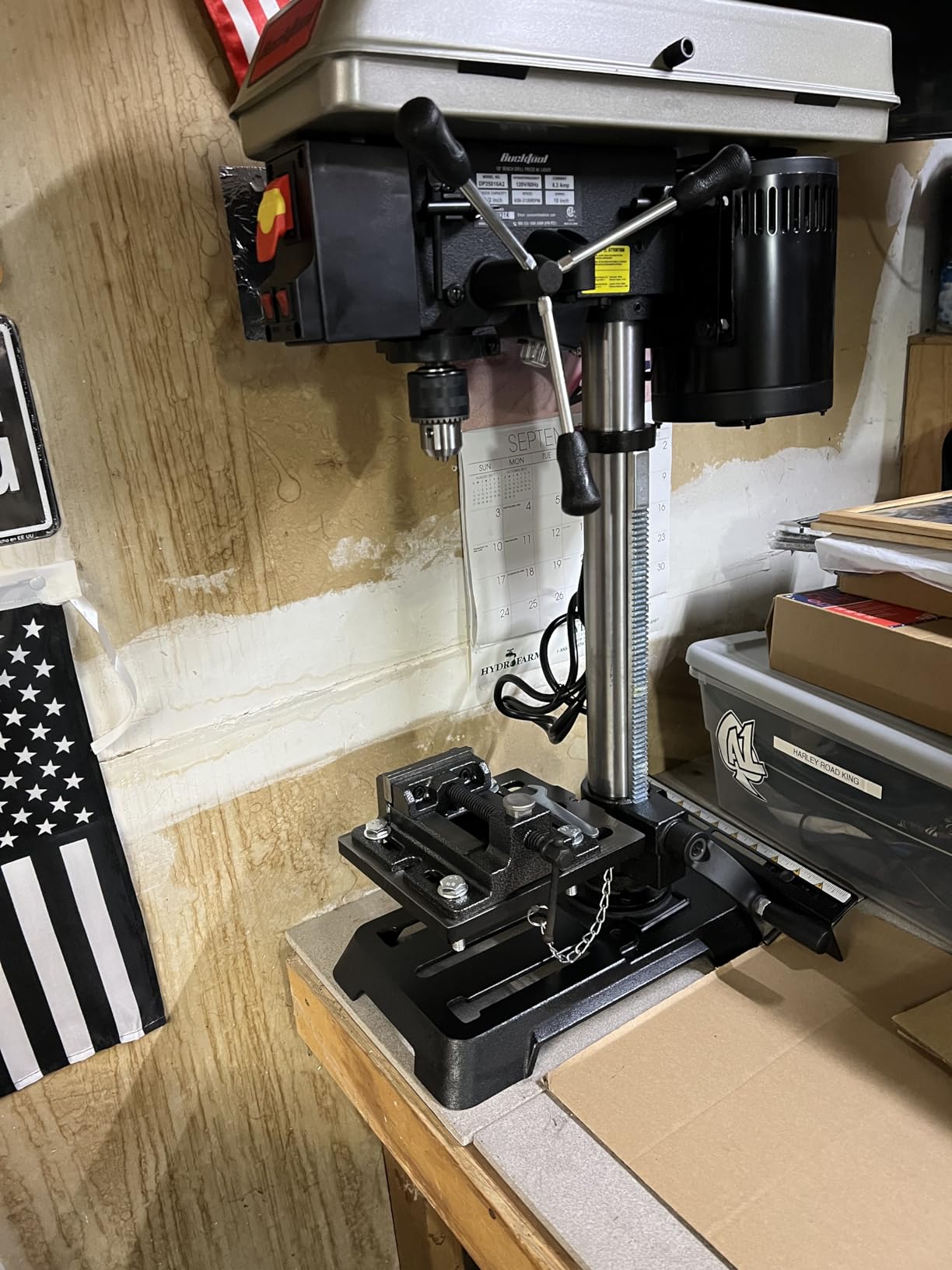
The tilting worktable comes with a built-in LED light, a fence and the head assembly, so angled drilling into the face of a box is straightforward. Removable switch keys are a genuinely useful safety feature, because a press with a key switch cannot be started by a stray bump while you are reaching for a workpiece.
The compromise is speed change convenience. Moving the belt under the top cover is a two-handed job with the machine stopped, and it becomes a real friction point when you switch between thin aluminium and FR4 all afternoon. Chip extraction is also limited, so a shop vac hose nearby helps.
Why it suits hobby electronics work
Electronics projects stop being electronics projects the moment you need to mount a panel to a steel chassis or drill a heatsink. This press has the torque for that, and the 650 RPM low setting is still slow enough for thin material and brittle plastic without breaking the bit.
The tilt table and fence make it a good companion to a small assembly bench, where the same press handles both the aluminium enclosure and the steel bracket in a single session.
Where it falls short
Belt-based speed changes are the main friction, and the limited swarf extraction means chips gather around the table on long sessions. Neither issue affects accuracy, but both slow you down when you are drilling many different sizes.
For pure micro work, the 10-inch swing and 1/2-inch chuck are wasted capability. Buy this for torque, not for precision.
6. VEVOR DP8 8-Inch Press – Best Value for PCB and Enclosure Projects
- Easy to assemble with a clear setup video
- Quiet motor and stable base for small work
- Low-end speeds are gentle enough for brittle materials
- Tilting table helps position odd-shaped parts
- 2.5A motor is underpowered for metal and can overheat
- Thin sheet base is not ideal for fast heavy work
- Arrives without a fence or hold-down
- Speed changes need belt repositioning
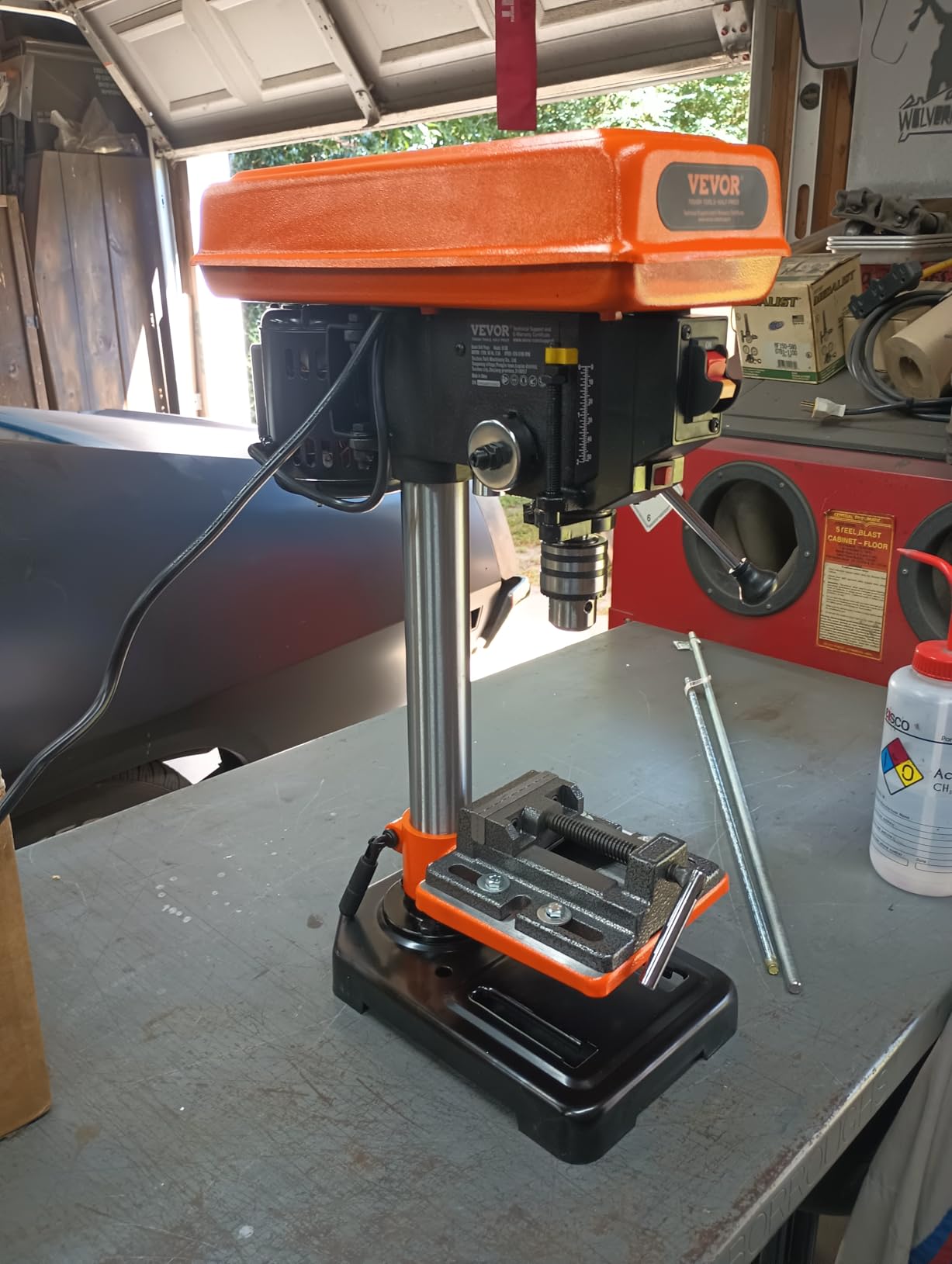
The VEVOR DP8 is the value pick in this roundup, and the 4.6 rating across 161 reviews backs that up. It covers the two things most electronics hobbyists actually do: drill small holes in boards and panels, and drill mounting holes in enclosures. The 2.5 amp induction motor is quiet, and the five belt-adjusted speeds run from 750 to 3200 RPM.
That 750 RPM bottom setting is the reason it earns its place in a list written for electronics. Slow spindle speed is what stops a small carbide bit from burning, and it is the speed you want for thin acrylic, plastic and shell-type materials that crack under a fast spin. The integrated LED work light makes small holes far easier to see than a bare bench lamp does.
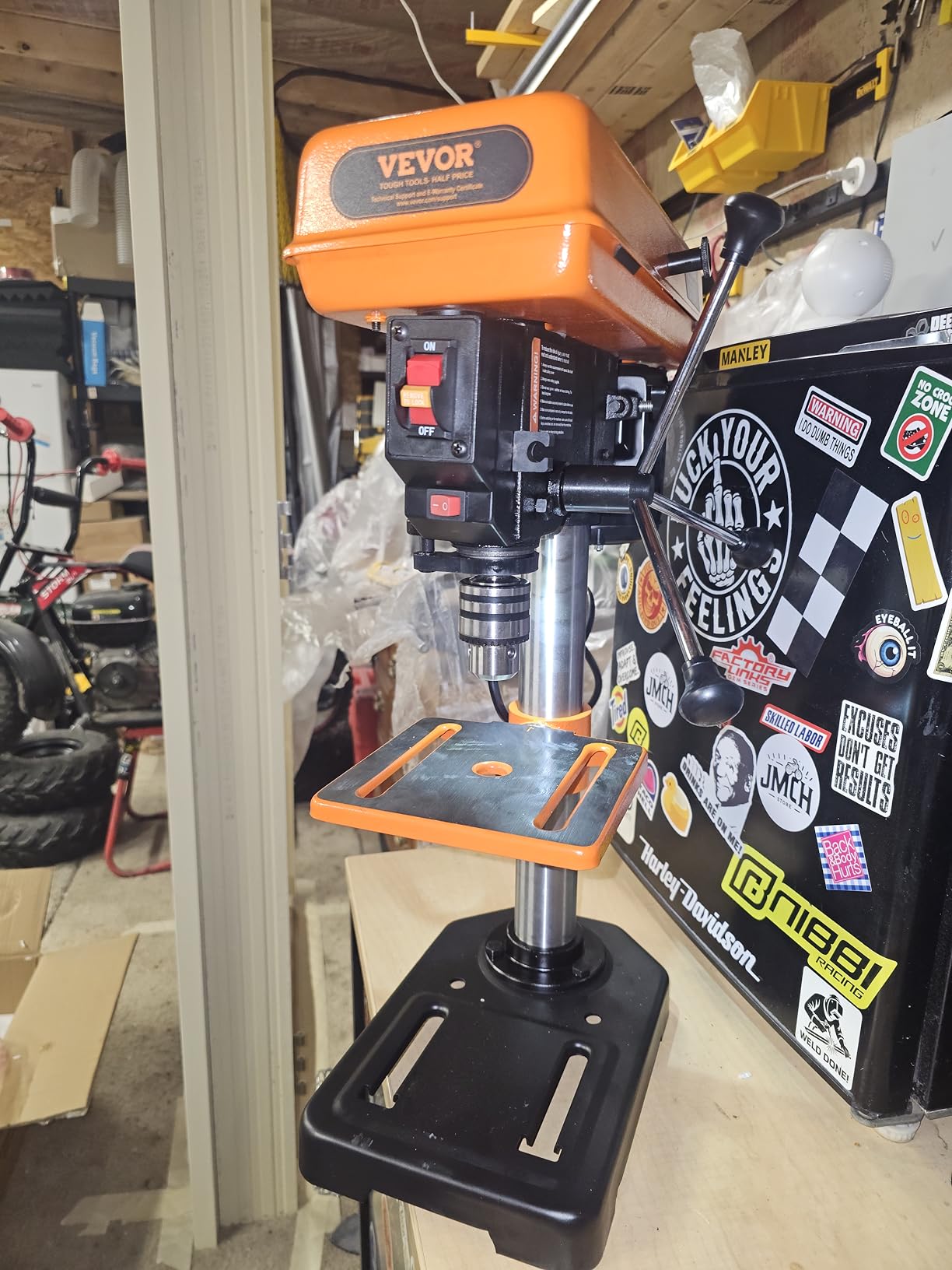
The manufacturer lists low radial runout alongside a 2-inch spindle travel and an adjustable depth stop, and the table height-adjusts and tilts up to 45 degrees. At 25.4 pounds the machine is light enough to reposition on a crowded bench, and assembly is straightforward with the setup video as a reference.
Two practical warnings. The 2.5 amp motor is underpowered for sustained metal work and can overheat under a continuous load, and the base is thin sheet material, so it is not a press for fast, heavy duty use. It also arrives without table accessories such as a fence or hold-down, so plan to add a small clamp or a stop block for the work.
Why it suits hobby electronics work
Most hobby electronics drilling is small-diameter holes in non-ferrous and non-metal material. This press does exactly that, quietly, with a low speed available and a light that illuminates the work point. The tilting table helps when a small part is not round and will not sit flat.
It is also the easiest machine here to move when you need the bench for something else, which matters in a room that doubles as an office.
Where it falls short
Motor power is the limit. A small number of reviewers report the 2.5 amp motor is only really adequate for wood and light work, and heating under sustained load is a fair criticism. The thin base also transmits more vibration than cast iron when you push hard.
Plan a small investment in a hold-down before you start, and keep steel work for a stronger press.
7. PROXXON TBM 115 – Best for Micro-Hole Precision
PROXXON Precision Bench Drill Press – Micro Hole Capability, Adjustable Depth & Table, 3-Speed Selection, Durable Design, with 6 Precision Collets for Detailed Projects – TBM 115
- Exceptionally precise with essentially no perceptible runout
- Quiet and smooth with a well-machined finish
- Collets hold 0.3mm holes repeatably without breaking bits
- Bulky die-cast base and steel column add real stability
- Premium price and the vise and chuck are extra
- Limited quill travel constrains hole depth
- No indexing marks so aligning small parts is slow
- Collars do not accept collets above 6mm
The PROXXON TBM 115 is the only true micro-hole press in this group, and that single fact defines when to buy it. It drills down to 1/64 inch, which is 0.5mm, and the six supplied steel collets grip small bits far more accurately than a keyed chuck ever can. If your work involves watch-scale parts, fine connector pins or 0.3mm holes, this is the machine that does them properly.
Owners report essentially no perceptible runout once the collets are in use, and specifically mention repeatable 0.3mm holes without breaking bits. The ribbed die-cast aluminium table and the solid hard-chromed steel column give it real stability, and at 85 watts with 8500 RPM and 1.5 ft-lb of torque, the motor is sized for precision rather than force.
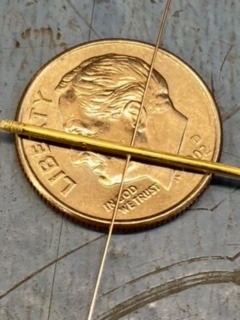
Three spindle speeds cover different torque requirements, and the adjustable parallel fence carries a scale alongside a depth gauge, which is a detail that matters when you are drilling a row of identical holes. The 8.3-pound body is small, but the base is deliberately bulky to stay planted on the bench.
The honest cost is money and setup time. This is one of the higher-priced presses in the roundup, and the vise and a universal chuck are separate purchases. Quill travel is limited, which constrains hole depth, and there are no indexing or reference marks, so finding a 0.5mm hole on an unmarked workpiece is slow. The motor is also the noisiest here for the amount of work it does.
Why it suits hobby electronics work
Collets are the reason. A keyed chuck is designed to be easy to tighten by hand, which means it holds a small bit with two jaws and a small amount of slop. A collet closes on the bit in a full circle, so the bit is concentric at the shank, and that is what produces a clean micro hole without walking.
The 8500 RPM ceiling is also meaningfully higher than the 3200 RPM of a standard benchtop press, which is closer to what small-diameter PCB bits actually want.
Where it falls short
It does not scale up. Limited quill travel caps hole depth, the collet set stops at 6mm, and the 1.5 ft-lb of torque will not drive a large bit through metal. It is a specialist instrument, and buying it for general bench work is paying precision prices for general results.
The missing indexing marks are the practical annoyance. Plan to reference your own marks on the table with a pen before starting a row of holes.
8. WOODSKIL DP-8 – Best Starting Press for a First Electronics Project
WOODSKIL 8-Inch Benchtop Drill Press, 2.3 Amp 5-Speed with Laser Guide
- Heavy cast iron table and base give a stable platform
- Table bevels 45 degrees in each direction and height-adjusts
- Laser guide helps line up small workpieces
- Five-speed range covers most hobby drilling
- 2.3A motor is light for metal work
- Highest one-star share in this group at 11% of reviews
- Speed changes need mechanical belt repositioning
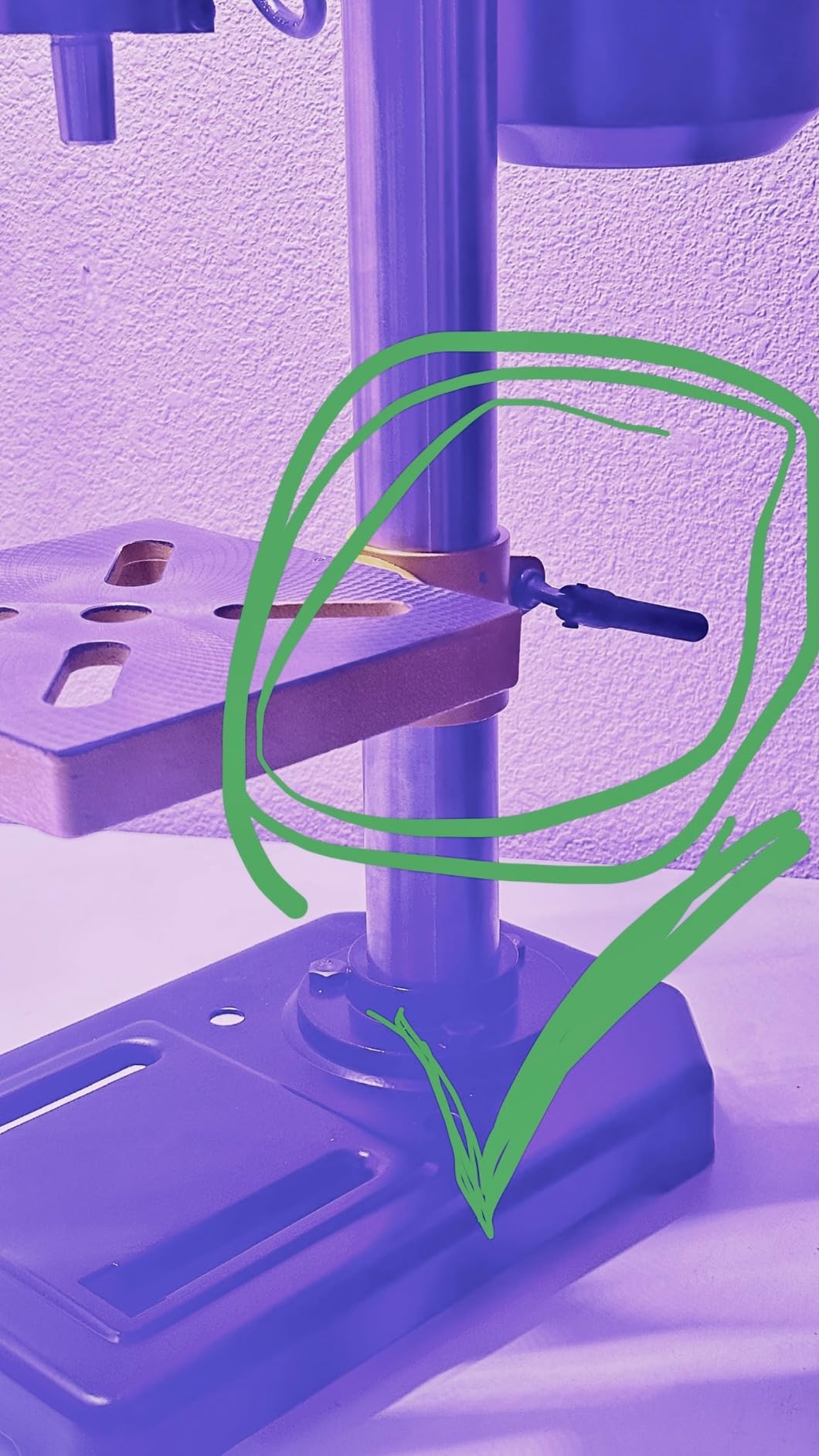
The WOODSKIL DP-8 is a sensible first press if you are building electronics and know you will not outgrow small work quickly. It uses the same 1/3 HP 2.3 amp motor class as the compact favourites, but adds a laser guide so you can line up a small hole without guessing, and it carries a 2-year limited warranty.
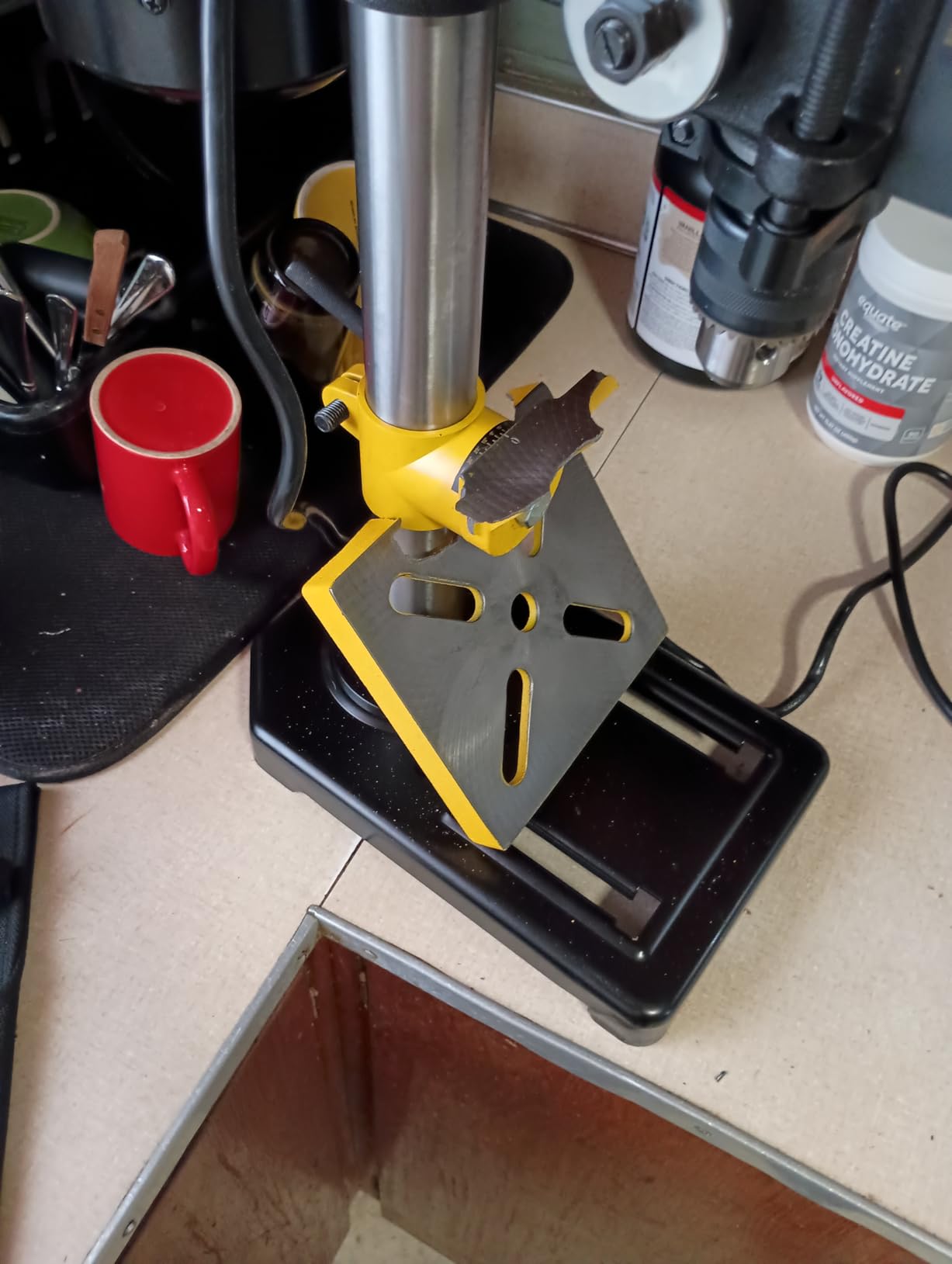
The cast iron worktable is the part that lifts it above several similarly priced machines. It bevels 45 degrees in each direction and adjusts in height, and owners consistently point to the table and base mass as the source of the stable platform that makes holes come out square. Five mechanical speeds run 750, 1100, 1500, 2100 and 3200 RPM.
The laser guide is a Class IIIA 2.5mW unit. It helps with positioning, and as with any laser in this class, expect to check its alignment after delivery rather than trusting it permanently. That single habit covers the recalibration complaints owners report across this whole price tier.
Two things temper the recommendation. The 2.3 amp motor is light on power for metal, and this press carries the highest share of one-star reviews in the group at 11%. It is not a bad machine, but its consistency across owners is weaker than the machines ranked above it.
Why it suits hobby electronics work
The combination of a cast iron table, a 750 RPM low speed and a laser guide covers the beginner’s specific problem, which is lining up a first hole accurately on a small panel. The table bevel also makes it easy to drill into the side of a box on your first build rather than your fifth.
It is a complete machine with a warranty, which removes the assembly anxiety that comes with a bare imported kit.
Where it falls short
Motor power is the ceiling. Thin aluminium is fine; steel is not, and pushing this motor hard shortens its life. The mechanical belt speed change also means you will be under the hood whenever you switch between FR4 and acrylic.
Check the laser alignment on day one, and keep a spare belt on hand.
9. WEN DP1263V 12-Inch Variable Speed Press – Best for Mixed Work
WEN 12-Inch Benchtop Drill Press, 6.2-Amp Variable Speed Motor with Cast Iron Construction, Laser and LED Work Light (DP1263V)
- Variable speed control eliminates belt changes under the hood
- Digital RPM readout is bright and readable
- Laser and LED are integrated into the head
- Substantial build owners compare to far costlier models
- Table ships out of front-to-back alignment by about 1.5mm
- 45-degree tilt is hard to fine-tune
- Supplied knuckle clamps are weak
- 85-pound weight needs a proper stand
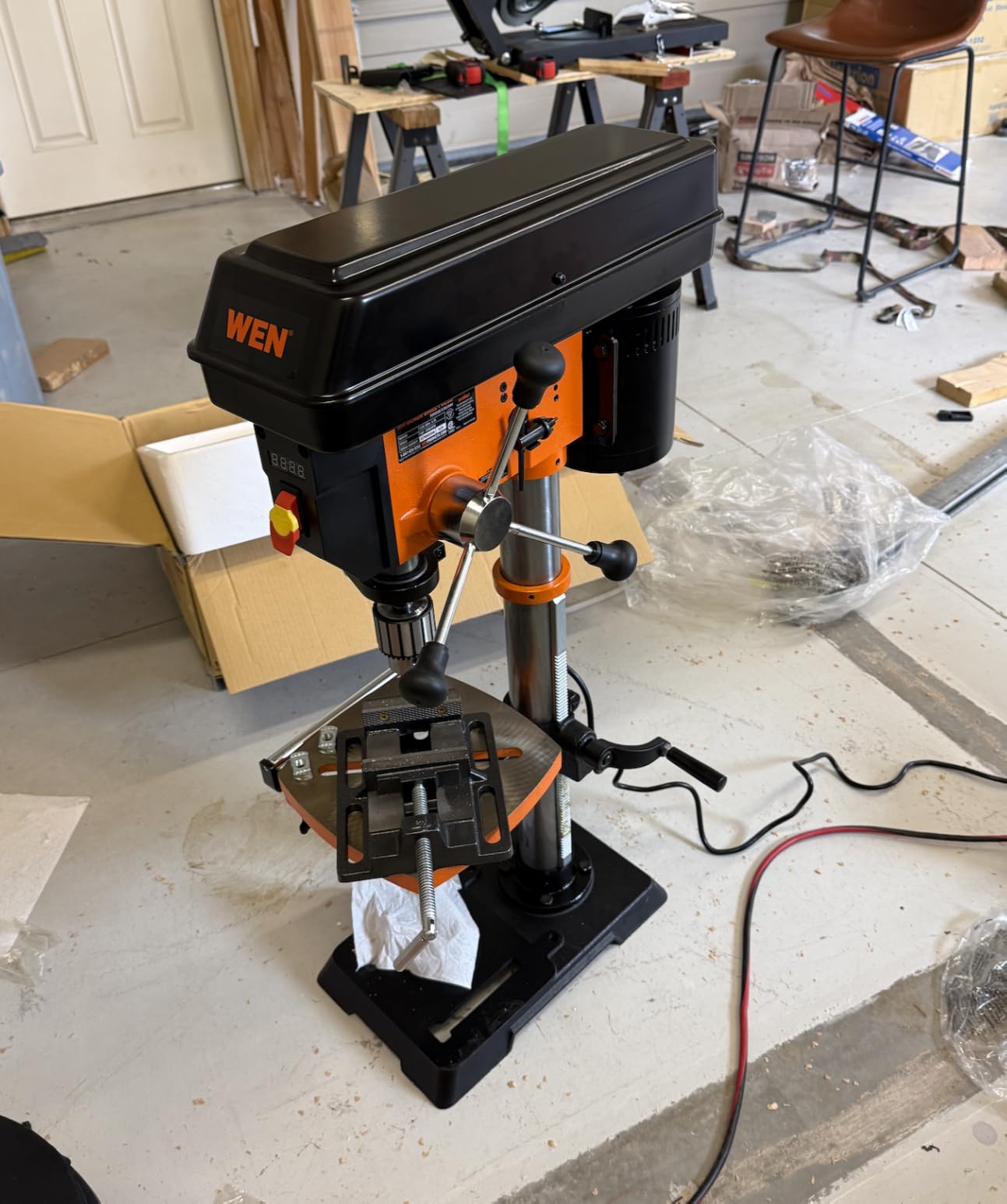
The WEN DP1263V is the machine to buy if your bench is shared between electronics and general shop work. The mechanical variable speed control runs 580 to 3100 RPM and is adjusted from a dial rather than a belt under a cover, which means you can drop to 580 RPM in seconds instead of reaching for tools. On small work where you switch materials constantly, that is worth more than any single spec.
The digital 4-digit RPM readout tells you what the spindle is actually doing rather than what the lever position implies. A 12-inch swing, 3-1/8-inch spindle travel and a 5/8-inch capacity keyed chuck put it well beyond electronics scale, and the depth stop, table roller extension and beveling 9.5-inch table make it a genuine two-machine replacement.
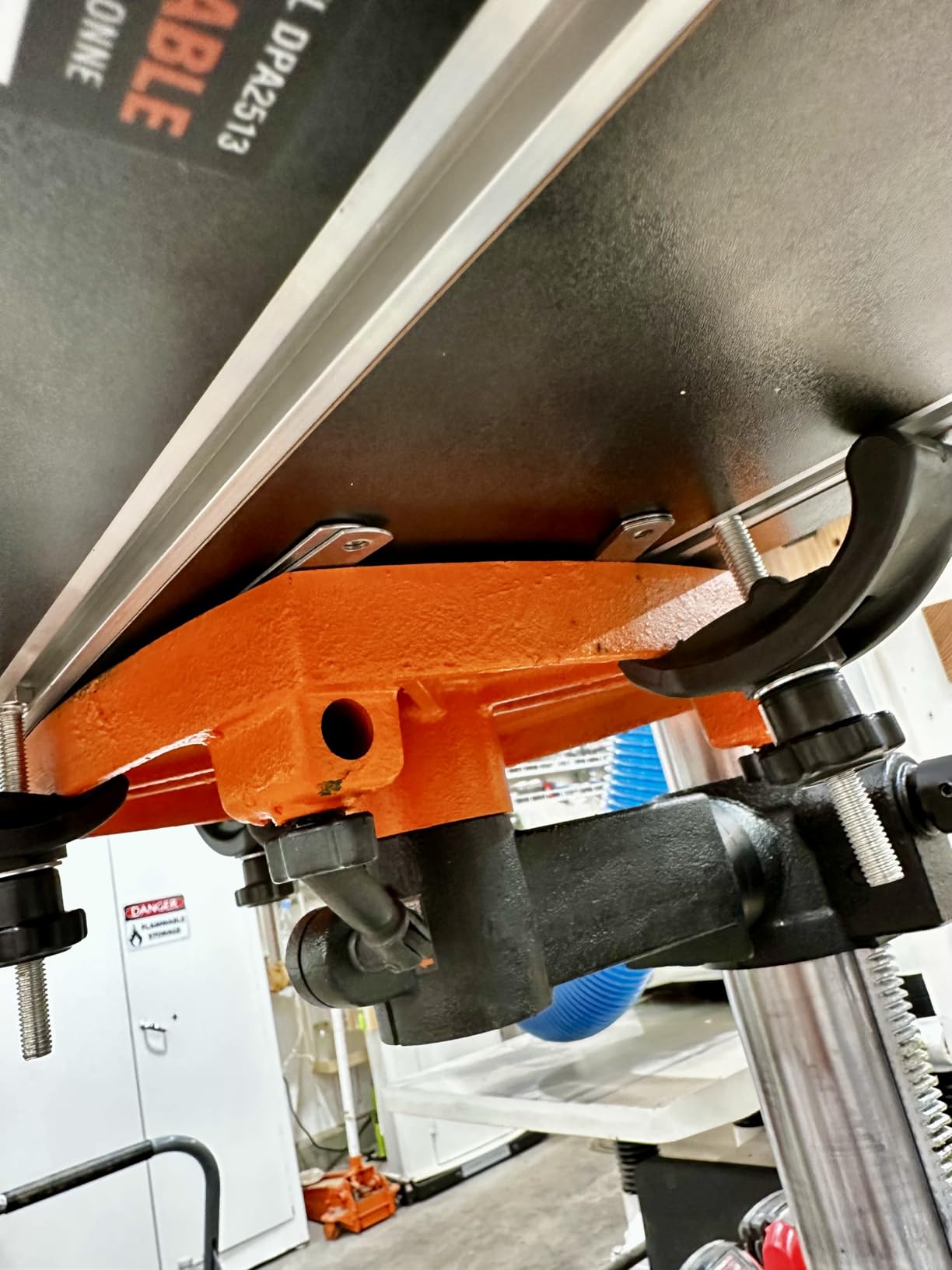
Owners frequently compare the build favourably to machines costing several times as much, and several describe assembly as under five minutes with a 5/8 inch wrench. The Class IIIA 2.5mW laser and overhead LED are integrated into the head rather than added later, and a 2-year warranty is included.
There is one documented defect worth knowing before you buy. The table ships out of front-to-back alignment by around 1.5mm with no adjustment available, and the supplied knuckle clamps are weak enough that many owners replace them after levelling. At 85 pounds it also needs a proper stand rather than a light bench.
Why it suits hobby electronics work
Fine speed control is the answer to bit walk. At 580 RPM with a sharp carbide bit, a small hole in FR4 or thin aluminium starts straight and stays straight, and the digital readout lets you return to the same setting for the next board rather than approximating it.
The 3-1/8 inch travel and the roller extension also mean a taller enclosure will not run out of quill, which is where compact presses stop.
Where it falls short
The table alignment issue is real, and on a project where hole position matters to the millimetre, it matters. Owners also swap the supplied keyed chuck for a keyless one. If your work is genuinely micro, the size of the machine works against you rather than for you.
Budget for a stand and a replacement chuck clamp, and check table alignment with a straightedge on arrival.
10. SHOPMAX SD0813 8-Inch Press – Most Versatile with Nine Speeds
- Nine speed settings give finer control than a 5-speed press
- Table rotates 360 degrees and tilts 45 degrees each way
- 0.68 HP motor is stronger than 2.3-2.5 amp machines
- Compact 8-inch swing suits a small bench
- Smallest metal drilling capacity in the group at 0.2 inch
- Lowest average rating at 4.1 with 11% one-star reviews
- Speed changes are mechanical
- Stated wattage is inconsistent with the 0.68 HP rating
The SHOPMAX SD0813 earns its place on one feature: nine speed settings from 500 to 3200 RPM where most machines in this list offer five. For electronics work, where you may drill 0.8mm in FR4 one hour and 3mm in acrylic the next, that extra resolution is genuinely useful, and 500 RPM is a slow enough setting for delicate work.
The table rotates 360 degrees and tilts 45 degrees in either direction, which is the most flexible work surface arrangement here, and the 0.68 HP 4.2 amp motor is stronger than the 2.3 and 2.5 amp machines at a similar size. The 8-inch swing and 2-inch travel with a 1/2-inch keyed chuck cover enclosure drilling comfortably.
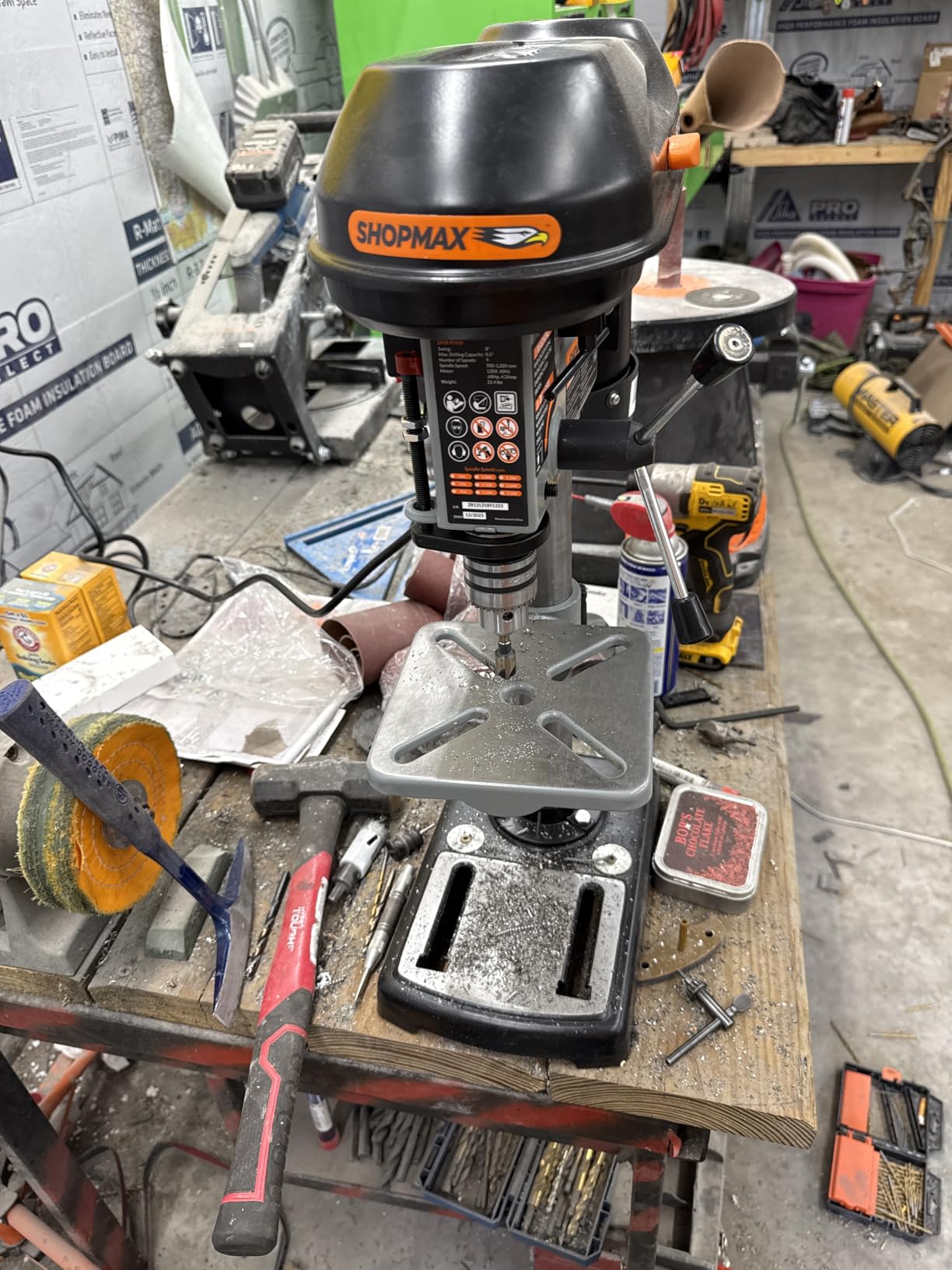
The limitations are clear and worth weighing. The listed metal drilling capacity of 0.2 inch is the smallest in this group, so this is a wood and light non-ferrous machine rather than a metal one. Build consistency is also the weakest, with the lowest average rating and an 11% share of one-star reviews across a 52-review base.
One documentation note so you are not caught out: the listing states 1056 watts, which does not reconcile with a 0.68 HP motor. Judge the machine on the 0.68 HP and 4.2 amp figures, which are consistent, and treat the wattage as a listing error.
Why it suits hobby electronics work
Speed resolution is the argument. When a hole is under 1mm, the difference between a 750 RPM setting and a 500 RPM setting is the difference between a clean entry and a walked bit, and only this machine in the roundup offers settings that fine at the low end.
The rotating table also makes drilling into the side of a tall enclosure straightforward without repositioning the part.
Where it falls short
Capacity and consistency. A 0.2 inch metal limit rules out most steel and thicker aluminium, and a 4.1 average with 11% one-star reviews tells you the finish varies between examples. The published wattage figure is also wrong, which is a small sign of loose quality control elsewhere.
Check the table and quill play as soon as it arrives, and keep your fingers clear of the belt while changing speeds.
What a Benchtop Drill Press Cannot Do for You
It is worth being blunt about this before you spend anything. On forum.arduino.cc, builders describe a small Harbor Freight bench press used exclusively for PCB drilling, and that setup works for a specific kind of work. What it does not do is match the capability of a dedicated machine.
The ceiling is speed, and it is large. As noted on forum.eevblog.com, most commercial PCB drilling machines run above 100,000 RPM, with 150,000 RPM typical. The best machine in this roundup tops out at 8500 RPM, and most benchtop presses stop at 3200 RPM. That is a gap of more than an order of magnitude, and it exists for a reason: a small-diameter bit needs speed to cut rather than rub, and rubbing generates heat that delaminates the fiberglass and dulls the bit.
That is why a press struggles with plated-through vias and fine tracks. A user on electro-tech-online put it plainly, describing using a benchtop press with leads that bend enough to fit or bridge gaps. This is a geometry problem before it is a speed problem: if you cannot drill a 0.3mm hole straight and perpendicular, a faster spindle will not fix the position.
So here is the honest dividing line. A benchtop drill press is the right tool for drilled enclosures, front panels, mounting holes, standoffs, rivets, threaded inserts and prototype boards where you are working above about 1mm. It is the wrong tool for volume PCB production, dense via fields, or anything where lead bending ruins the board.
Two more limits are worth knowing. Bit walk is mostly runout, not operator error, and a chuck holding more than 0.002 inches of runout will walk a small bit the moment it touches material. And any benchtop press should be bolted to the bench: owners of several machines here report the base wiggles until it is fixed down, then never moves again.
If you need the higher tiers, our guide to the best benchtop drill presses overall compares the woodworking and general shop side of the category, and magnetic drill presses cover the on-the-job alternative for steel fabrication.
How to Choose a Benchtop Drill Press for Electronics Work
Six specifications decide whether a press suits electronics work. Everything else on the spec sheet is preference. We have ordered these by how much they affect the outcome.
1. Runout, measured as total indicator reading
Runout is how far the bit tip moves sideways when the spindle turns, and it is the single most important number on this page. Under 0.002 inches and you can drill a small hole without the bit walking. Over 0.005 inches and it will not, regardless of how carefully you work. Interpreting the figure matters: a keyed chuck that holds within 0.002 inches will keep a 0.8mm bit straight, while the same chuck at 0.005 inches will send that bit skating across an FR4 surface.
2. The lowest available speed
For electronics, the bottom speed setting matters more than the top one. A press that bottoms out at 750 RPM gives a small carbide bit time to cut FR4. One that starts at 1500 RPM makes the bit heat and dull. The 580 RPM machine here is genuinely better for thin material than a 3200 RPM machine that is otherwise equal.
3. Spindle travel, also called quill travel
This is how far the quill drops. Two inches is the budget standard and covers most electronics work. Three inches and beyond, as on the 12-inch press here, is what you want if you ever need to drill into a tall enclosure. Anything under 2 inches will feel cramped even on small jobs.
4. Swing, and whether the table is big enough
Swing is twice the distance from spindle centre to the column face, which is why an 8-inch swing means 4 inches of offset in each direction. For a project enclosure that is generous. Check the table dimensions too, because a small table is the limit you will actually hit, not the swing figure.
5. Chuck type, and the runout it implies
A keyed chuck is easy to tighten by hand and grips unevenly, which is why budget machines wander. A keyless chuck grips more evenly and is worth an upgrade. A collet is better still, because it closes on the full circumference of the bit shank, and it is the reason the PROXXON holds 0.3mm holes repeatably.
6. Table, fixturing and how you hold a tiny part
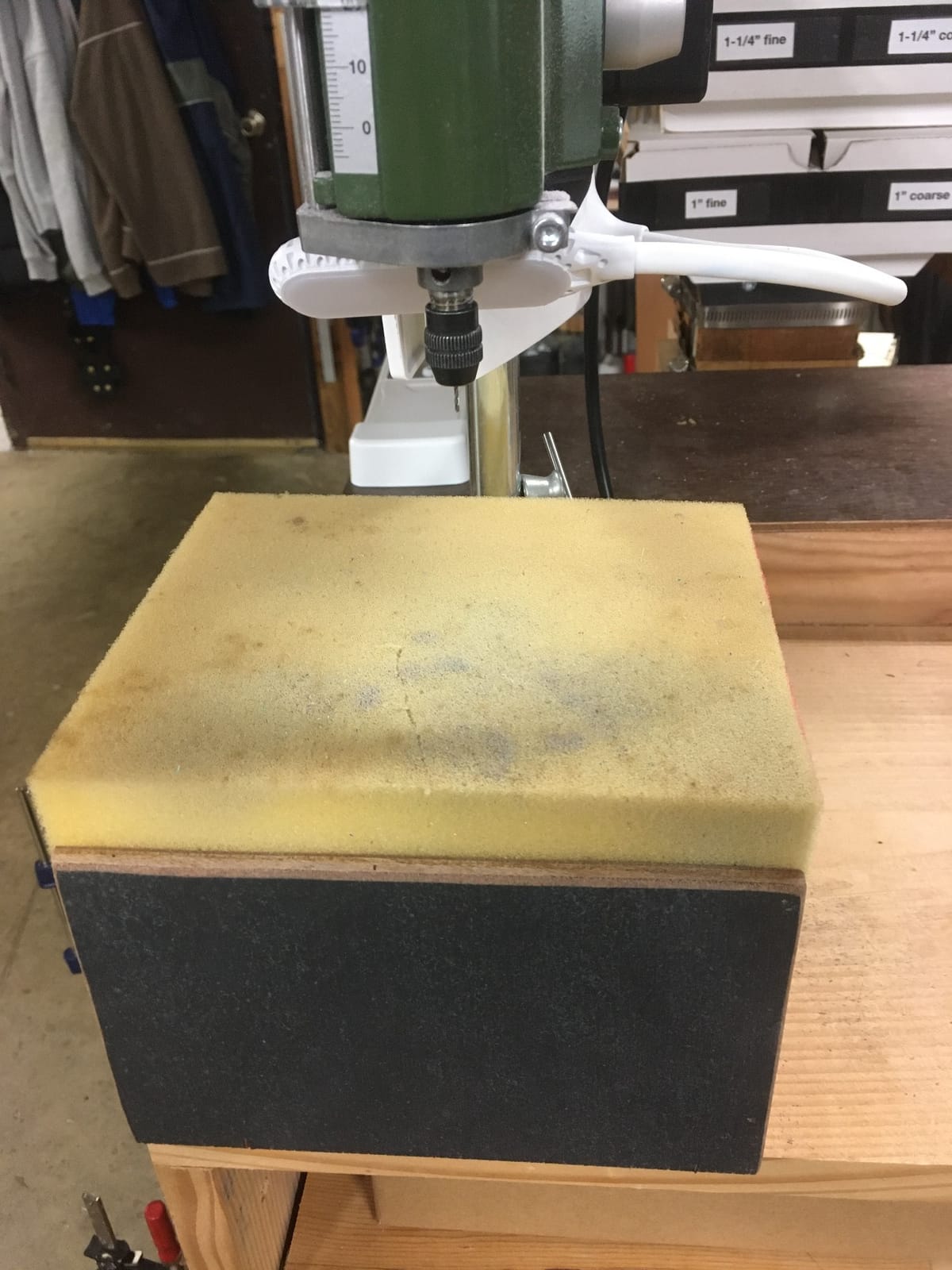
This is where electronics hobbyists actually lose accuracy. A 0.8mm hole in a 20mm square of FR4 is impossible to hold by hand, and a sloppy stop block makes it worse. Buy a small bench vise, add a stop block or a sacrificial backing board, and use the depth stop so every hole in a row is identical. For panel work, a hold-down or clamp matters more than any other table feature.
Drilling FR4 without losing the board
Always back the board with a sacrificial piece so the bit does not break through and grab. Peck-drill, meaning drill partway, withdraw fully, and drill deeper, because continuous pressure generates heat and heat delaminates the laminate. Use sharp carbide bits, and start with a centre punch or a short approach at slow speed to stop the bit walking on holes under 1mm.
Safety and setup habits
Wear eye protection every time, keep hands and hair away from a spinning bit, and unplug the machine before changing a bit or adjusting the belt. Clear chips with a brush rather than fingers. And bolt the press to the bench, because the machines here all report steadier operation once fixed down. If you work on thin metal, also brush chips off before the next hole starts, since a chip under the workpiece is a common cause of a snapped bit.
Frequently Asked Questions
What is the best benchtop drill press for the money?
For most electronics hobbyists the WEN 4206T is the strongest value in this roundup. Its cast iron body, 32-pound frame and 750 RPM low setting give repeatable small holes, and it carries a 4.6 rating across 797 reviews. If your work is micro-scale, the NovelLife B10 costs less and drills smaller holes more accurately.
What is a good quality bench drill press?
A good quality bench press is defined by four things: runout under 0.002 inches, cast iron or cast aluminium table and base, a keyed or keyless chuck that grips evenly, and a low speed setting below 1000 RPM. Motors above 1/3 HP, spindle travel of at least 2 inches and a 2-year warranty are sensible additions rather than requirements.
What is the best value-for-money bench drill press?
The VEVOR DP8 delivers the most capability per unit of spend for electronics work: five speeds from 750 to 3200 RPM, a tilting table, an integrated LED work light and low radial runout, at a 4.6 rating across 161 reviews. It is the press to buy if you want enclosure and board drilling without spending heavily.
Are Harbor Freight drill presses any good?
Yes for the task at hand. A builder on forum.arduino.cc describes a small Harbor Freight bench press used exclusively for PCB drilling, paired with carbide PCB bits from the same source, as a working setup. Expect less refinement than a cast iron press with a better chuck, and plan to bolt it down and check chuck runout before relying on it for holes under 1mm.
What is the best drill press for hobbyists?
For a hobbyist who mostly drills small holes, a compact 8-inch cast iron press with a low speed setting is the sweet spot, which is why the WEN 4206T leads this list. Hobbyists consistently rate WEN and Grizzly highest on reputation. Add a mini press later if you move into micro work, rather than buying a large machine first.
What is the best heavy-duty bench top drill press?
Heavy duty means motor torque, so look for 1/2 HP or more and a current rating around 6 amps. The BUCKTOOL in this roundup uses a CSA-certified 3/4 HP 6.2 amp motor, and the SKIL DP9505-00 uses 6.2 amps, both of which drill steel that stalls a 2.3 amp machine. Pair torque with a cast iron base and a tilting table for angled work.
Do I need a benchtop drill press for electronics?
You need one if you drill repeated or small holes on a hobby bench: PCB prototypes, enclosure and front panel holes for an amplifier build, or mounting hardware where a handheld cannot stay square. You do not need one for a single hole in softwood. It will not replace a CNC for volume PCB production, where hole position matters more than hole quality.
Can a benchtop drill press drill PCB?
Yes, for prototype work above roughly 1mm, and that is where runout matters most. Bit walk on anything smaller is a chuck problem, not a technique problem, and a press holding under 0.002 inches of runout will hold a 0.8mm bit straight. For dense via fields, a press is not enough: a user on electro-tech-online reports leads bending and bridging at hobby speed settings.
Final Verdict: Which Drill Press Should You Buy?
For most readers building the best benchtop drill press setup for hobby electronics, the WEN 4206T is the pick. Cast iron, a 32-pound frame, a 750 RPM low setting and the highest review base in the roundup make it the safest first press, and it handles both board work and enclosure drilling.
Choose differently if your work is more specific. The NovelLife B10 is the right machine for micro holes in thin, soft material, and the PROXXON TBM 115 is the only one here that reaches 0.5mm with collet accuracy. The SKIL DP9505-00 suits aluminium and steel enclosures, and the BUCKTOOL covers heavier metal. For volume PCB work, save your money and look at a small CNC instead.
Whatever you pick, bolt it to the bench, check the chuck runout before your first board, and keep a sacrificial board underneath. Those three habits decide more about your results than the difference between any two machines on this list. Our broader picks for the benchtop planer comparison cover the other half of a compact hobby shop.