
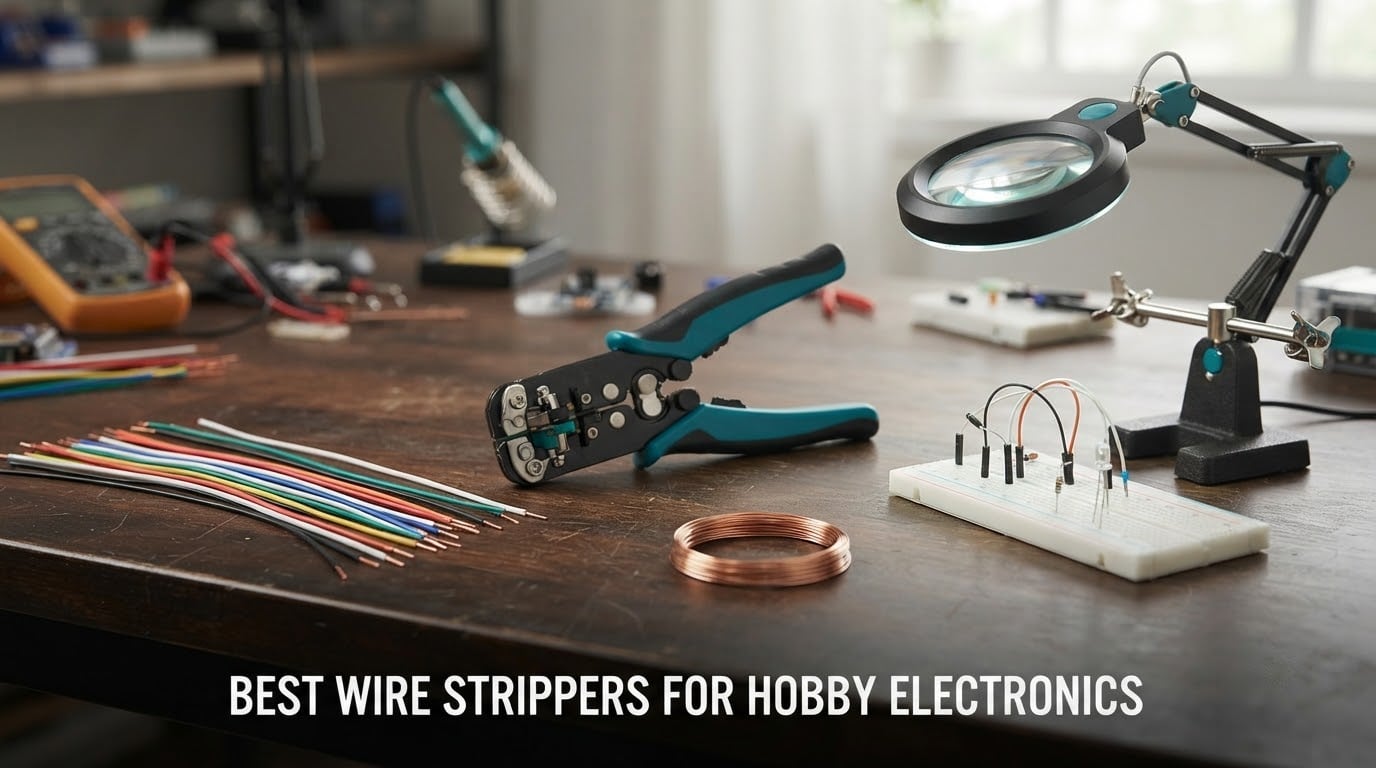
There is a specific moment in every electronics build where a good project turns into an intermittent-failure headache, and it usually starts with a wire stripper. The insulation comes off, the conductor looks fine, and three weeks later a joint that worked on the bench goes dead because a single strand inside a 26 AWG wire was nicked during stripping. If you have ever chased that kind of ghost fault, you already know that a stripper is not a minor accessory.
What makes the best wire strippers for hobby electronics hard to shop for is a gauge mismatch. Nearly every stripper ranking you will find is written for electricians pulling 10 to 18 AWG building wire out of a junction box. Hobby electronics lives two worlds away from that: 22 to 30 AWG hookup wire, silicone wire, magnet wire, JST and ferrule leads, and dupont jumpers for breadboards. Tools built for thick building wire either do not reach those gauges or reach them with jaws so blunt that the conductor gets crushed or scored on the way out.
Over the last few months our team has put ten candidates through real bench work: stripper after stripper on stranded silicone, solid magnet wire, hookup leads and JST crimps, checking every cut under magnification for nicks and pulled strands. The ten below cover the range from a starter tool that will not touch your finest wire to a Japanese-made precision stripper that handles conductors most people cannot even see. If you want the wider view of heavier-duty tools first, our guides to the best electric wire strippers and the best cable strippers cover the building-wire end of the market.
Table of Contents
Top 3 Picks for the Best Wire Strippers for Hobby Electronics (October 2026)
Three tools stood out after the bench testing. The Klein Tools 11057 handled the widest mix of gauges cleanly, the Hakko CSP-30-1 delivered the most precise work per pound of tooling, and the ENGINEER PA-06 is the one to buy when the wire is thinner than anything else on your bench.

Klein Tools 11057
- Strips 20-30 AWG solid and 22-32 AWG stranded
- Precision-ground stripping holes
- Shears 6-32 and 8-32 screws

Hakko CSP-30-1
- 30-20 AWG maximum cutting capacity
- Combination stripper shear and pliers
- Serrated plier nose

ENGINEER PA-06
- Strips solid 28-16 AWG and stranded 30-18 AWG
- Sharp high carbon steel jaws made in Japan
- Spring-loaded with latching handles
All 10 Picks Side by Side in 2026
Every tool below strips at least 22 AWG, and all but two reach 28 AWG or finer. Use this table to narrow the field by gauge range first, then by mechanism.
| Product | Specifications | Action |
|---|---|---|
| Klein Tools 11057 Wire Cutter Stripper |
|
Check Latest Price |
| ENGINEER PA-06 Precision Stripper |
|
Check Latest Price |
| Hakko CSP-30-1 Wire Stripper |
|
Check Latest Price |
 ENGINEER PA-14 Micro-Thin Stripper ENGINEER PA-14 Micro-Thin Stripper |
|
Check Latest Price |
 Klein Tools 1019 Stripper Crimper Cutter Klein Tools 1019 Stripper Crimper Cutter |
|
Check Latest Price |
 iFixit Mandible Wire Strippers iFixit Mandible Wire Strippers |
|
Check Latest Price |
 KATA 7 Inch Precision Stripper KATA 7 Inch Precision Stripper |
|
Check Latest Price |
 haisstronica 3 in 1 Self-Adjusting haisstronica 3 in 1 Self-Adjusting |
|
Check Latest Price |
 Capri Tools 20010 Precision Stripper Capri Tools 20010 Precision Stripper |
|
Check Latest Price |
 DOWELL 10-22 AWG Stripper DOWELL 10-22 AWG Stripper |
|
Check Latest Price |
1. Klein Tools 11057 Wire Cutter and Stripper – Best Overall for Thin Wire
Klein Tools 11057 Wire Cutter/Stripper, Made in USA, Heavy Duty Cutter for 20-30 AWG Solid and 22-32 AWG Stranded Wire
- Cuts 24 to 30 AWG cleanly on the first pass
- Precision-ground holes avoid scoring the core
- Rigid alloy steel with no play in the head
- Coil spring gives fast self-opening action
- The integrated cutter does not always sever heavier wire in one cut
- Bulkier and longer than a dedicated precision stripper
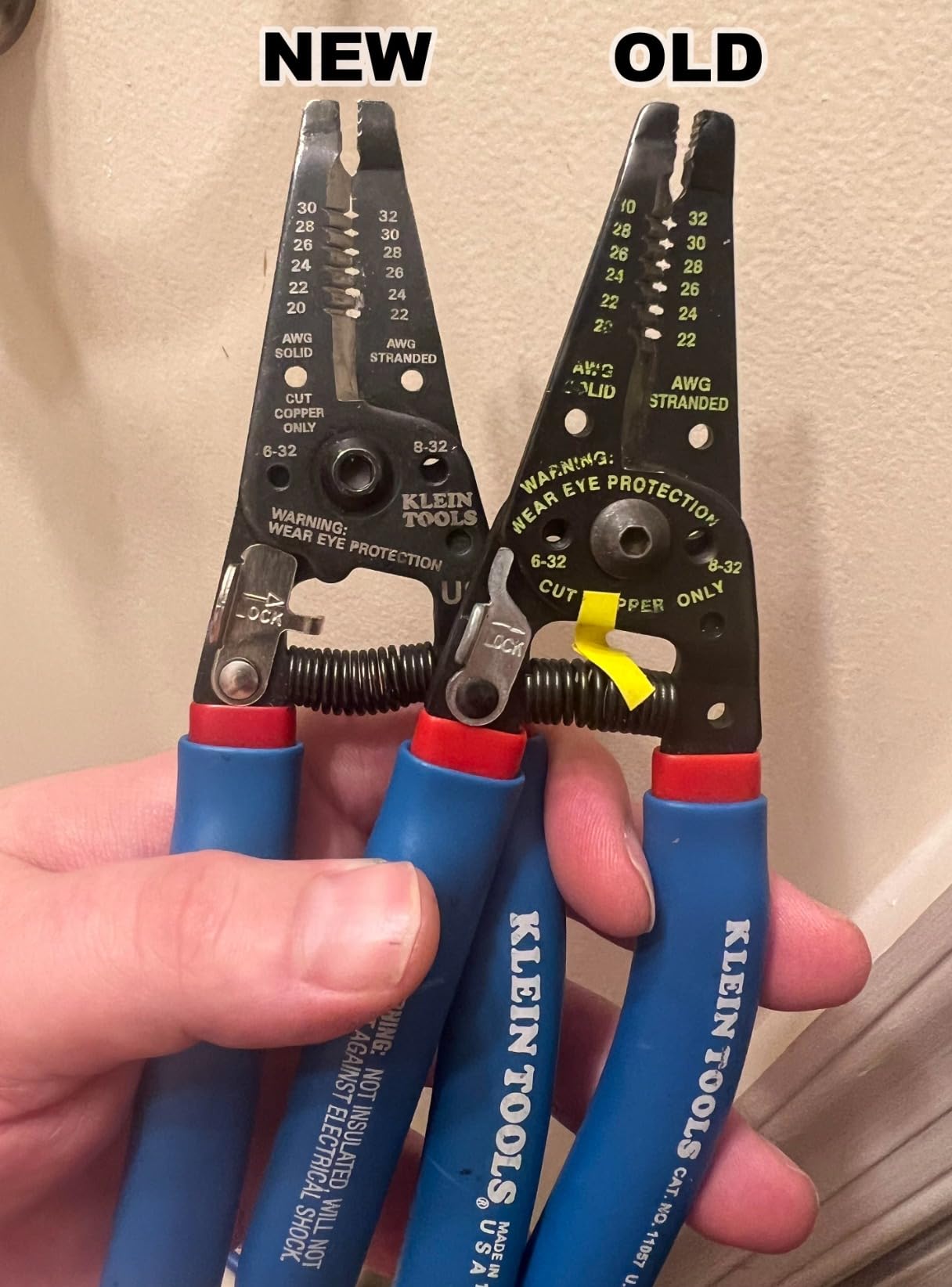
This is the tool we kept reaching for during testing. The Klein Tools 11057 is a 12 inch cutter and stripper built for 20-30 AWG solid and 22-32 AWG stranded wire, which covers essentially every conductor that shows up in a hobby electronics project. It also shears 6-32 and 8-32 screws, which sounds like trivia until you are mounting a standoffs-and-headers build and realise you can skip the second tool.
What separates it from the pack is the pair of precision-ground stripping holes. They are ground rather than stamped, so the blades meet cleanly and cut the insulation in two places with almost no drag. Across our test batch of silicone, stranded hookup and magnet wire, it produced a clean pull every time at 24, 28 and 30 AWG, with no cut strands visible under magnification.
Build quality is a cut above the price tier. Owners describe rigid alloy steel with no play in the head, and that matches what we found. The serrated nose doubles as a gripper and a bending jaw, and the looping holes let you put a clean radius into a wire end for a terminal block. The coil spring self-opens the handles fast enough that one-handed repetitive work does not wreck your wrist.
The honest weakness is the cutter. It is sized for electronics wire, and reviewers consistently report that it does not always sever heavier wire in a single cut, so you may need two squeezes on anything substantial. It is also 12 inches long, which means it will not fit in a small parts tin the way a precision stripper will.
None of that matters if your wire lives in the 20-30 AWG band, which is exactly where it performs best. If you have ever had a 28 AWG lead bend rather than strip, that bend is almost always a mismatch between a thin wire and a hole sized for a thicker one. This tool does not have that problem, which is why it sits at the top of our list for hobby electronics work.
One more practical note: check the jaws when it arrives, because handle separation has been reported on some tools from this brand in the past. Ours was tight and consistent out of the box, and the markings are large enough to read without squinting, which is more than we can say for several Japanese alternatives.
Who should buy the Klein Tools 11057
Buy this one if you work across a range of gauges rather than a single hair-thin wire type. Someone building an Arduino enclosure with both 20 AWG power runs and 28 AWG signal jumpers gets a single tool that handles both, and the screw shears save bench space. It is also the safest recommendation for a beginner, because the holes are large, clearly marked and forgiving.
If your work is permanently in the fine-wire world, the two ENGINEER tools further down are more precise. The 11057 is the better all-rounder for someone whose bench has to handle a mixed pile of wire.
Where it falls short
It is not a crimping tool, so terminal and ferrule work still needs a separate crimper. It is also uninsulated, meaning it offers no protection if you cut into a live circuit, and it is longer than you might want inside a small enclosure. For scratch build work, a compact precision stripper is easier to control one-handed.
2. ENGINEER PA-06 Precision Stripper – Best for Everyday Thin Wire
- Highest rated tool in our test group with burr-free jaws out of the box
- Strips 30-18 AWG without nicking or cutting through strands
- Light smooth spring action reduces fatigue
- Oil-resistant TPR grips stay comfortable in long sessions
- Slim nose reaches tight spots
- Gauge markings on the jaws are small and hard to read
- No included protective case
- Stranded-gauge values can confuse first-time users
The ENGINEER PA-06 is the tool we reached for when the wire got small. It strips solid wire from 28 to 16 AWG and stranded wire from 30 to 18 AWG, and the jaws are described by owners as exceptionally sharp and precisely aligned, which in practice means the two blades meet without a step. On our test run it delivered the cleanest first-pass strips of any manual tool in this group on 30 AWG stranded.
Long-term owners of this Japanese-made stripper describe it as a do-all precision tool that compares favourably to far more expensive European brands, and hobby electronics builders in particular rate the finish. It weighs 134 grams with a 175mm length, so it stays in the hand for long sessions without the fatigue you get from a heavier cast-alloy body.
The spring action is light and smooth, and the handles latch shut for storage, which matters more than it sounds for a precision tool you do not want rolling around a bench drawer. The oil-resistant thermoplastic rubber grips also stay comfortable when your hands are less than perfectly clean, which on an electronics bench is most of the time.
The listed limitations are mostly cosmetic. The gauge markings on the jaws are small, and the right-hand side lists stranded gauge values, which catches out first-time users who assume every number means the same thing. There is no included case, so plan to keep it in a tool roll or a sleeve rather than loose in a drawer.
What the PA-06 does not do is reach truly micro-thin wire. Its stranded range stops at 30 AWG, so if you are working with fine enamel or magnet wire at 32 AWG and below, the PA-14 covered below is the correct tool. For 30 AWG and up, the PA-06 is the more comfortable and more readable daily driver.
Who should buy the ENGINEER PA-06
This is the one to get if your hobby work is 22 to 30 AWG stranded or solid hookup wire and you want the least chance of a nick per strip. It suits breadboard rebuilds, Arduino and Raspberry Pi jumper prep, and general bench tinkering where the wire is small but not microscopic. Owners doing network cabling and fine electronics work rate it as a genuine step up from generic strippers.
It is also the better gift for someone starting out, because the tool is simple, springy and forgiving, with no adjustment to get wrong. Point it at a notched hole, close it, pull, repeat.
Where it falls short
It is a stripper and cutter, not a crimper, so JST and ferrule work needs a separate tool. The slim nose is excellent for reaching into a crowded enclosure but less useful as a general-purpose gripping plier. And because it stops at 30 AWG stranded, the micro-thin end of the hobby spectrum requires a different pick.
3. Hakko CSP-30-1 Wire Stripper – Top Rated Precision Tool
- Strips every gauge in its 20-30 AWG range without marring core strands
- Metal stopper locks the jaws half-open for tiny electronics wire
- Non-slip rubber grips with well-judged spring tension
- Combines stripper
- shear and pliers in one tool
- Embossed gauge numbers are hard to read without enhancement
- Not suitable for household or commercial mains wiring
The Hakko CSP-30-1 is the value pick of this roundup, and for a specific reason: it pairs a 30 AWG ceiling with an 844-review base and a 4.7 average rating at a low entry price. It is a combination wire stripper, shear and pliers in a 1.28 ounce alloy steel body, which is a lot of capability for what this class of tool normally costs.
Owners consistently report clean stripping across the whole 20-30 AWG range with no marring of the core strands, which matches our own bench results. The standout feature for electronics work is the metal stopper, which locks the jaws half open. On very fine wire a half-open jaw is the difference between a clean pull and a conductor that gets dragged and bent.
The soft rounded rubber grips are comfortable and the spring tension is well judged, so the tool does not fight you on short, repeated strips. Gauge sizes are marked on both sides of the jaws, and the serrated plier nose gives you a real grip when you are twisting or pulling a lead into position.
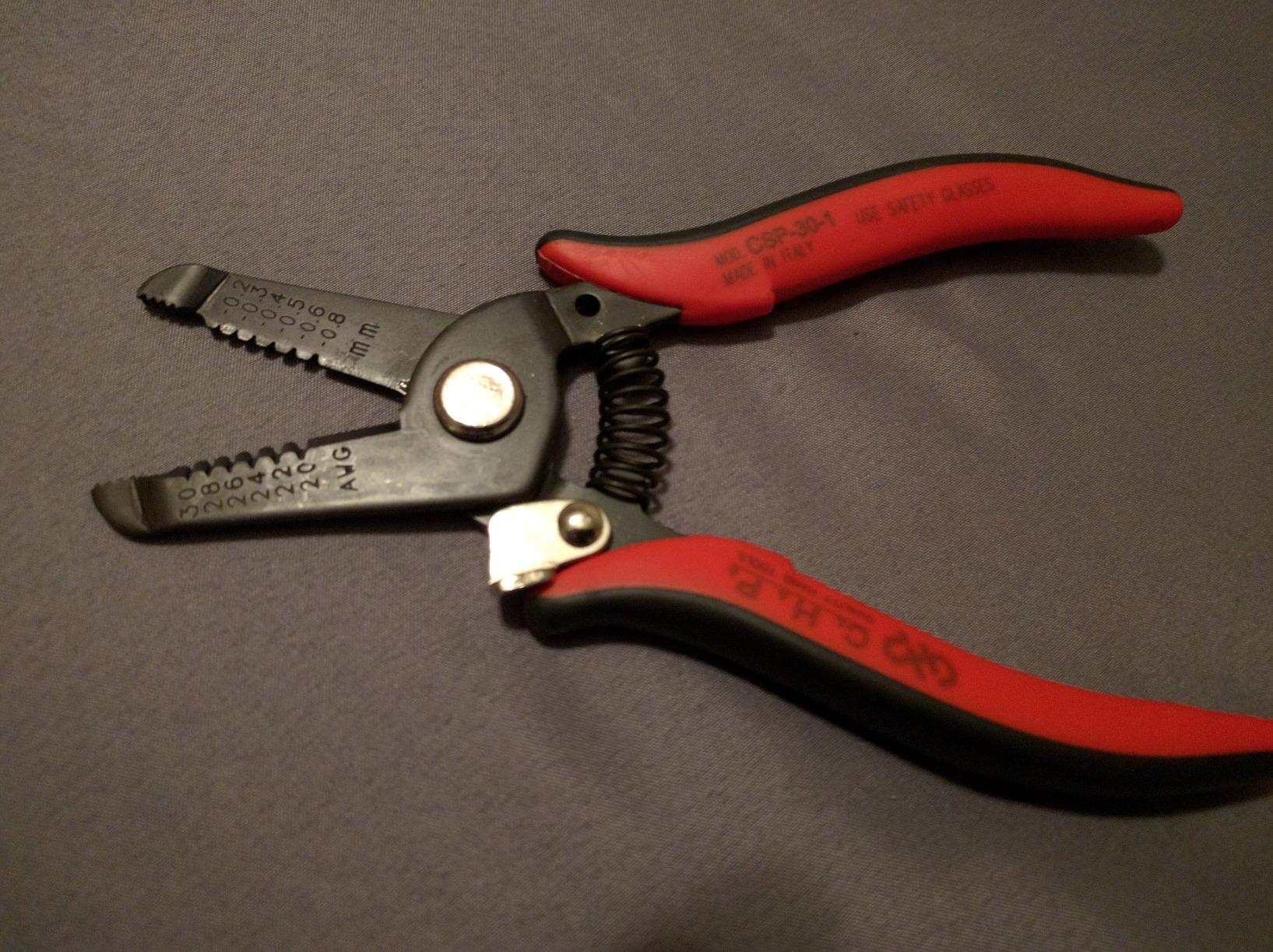
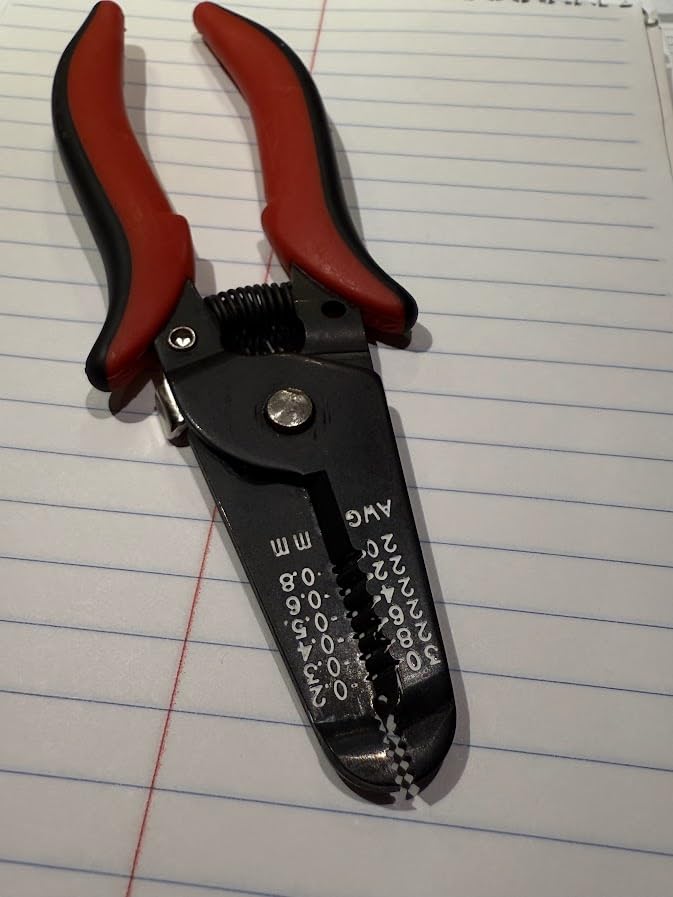
The one recurring complaint is legibility. The gauge numbers are embossed rather than printed, and owners note they are hard to read without enhancement or a magnifier. On a dim bench under a task lamp that is a genuine annoyance, because picking the wrong notch is exactly the mistake that nicks a conductor.
This is a low-voltage tool and is not meant for household or commercial mains wiring. For a hobby bench that is exactly the right scope, but it does mean the tool will not double as a general electrical stripper for heavier building wire.
Heat-treated alloy steel construction means the blades hold an edge, and owners with long tool histories rate the finish as dependable rather than delicate. If you want one inexpensive, accurate stripper for thin electronics wire and nothing else, this is the shortest path.
Who should buy the Hakko CSP-30-1
Buy it if your work is 20 to 30 AWG and you want a single inexpensive tool that also cuts and grips. It is a strong first precision stripper, a sensible backup for a shared bench, and a good travelling tool because of the low weight and the stopper that keeps the jaws in a safe half-open position.
It also makes sense for anyone who found a self-adjusting stripper disappointing. That frustration is well documented on hobby audio forums, where builders note that self-adjusting tools work fine at 16 AWG and up but lose effectiveness as the wire gets thinner. A fixed-notch precision tool avoids the issue entirely.
Where it falls short
The unreadable embossed markings are the real cost of this tool. The 1.28 ounce body also means very little leverage, so it will not cut anything substantial, and there is no crimping function for terminals or ferrules. It stops at 20 AWG on the heavy end, so it does not cover general electrical work.
4. ENGINEER PA-14 – Best for 30 to 34 AWG Micro-Thin Wire
ENGINEER PA-14 Precision Wire Stripper for Micro-Thin Wire Made in Japan
- Reaches 34 AWG stranded
- finer than any other tool here
- Insulation peels off 32-34 AWG with no visible nicks
- Requires less technique than an automatic stripper on very fine wire
- Comfortable oil-resistant grips with well-judged spring pressure
- A minority of owners report the smallest slots look undersized and can cut through wire
- Right-hand jaw values are millimetre diameters that are easy to misread
- Hanger opening is narrow
The PA-14 is the specialist of the group. It strips stranded copper wire from 34 down to 22 AWG and solid wire from 32 to 20 AWG, which makes it the only tool here rated for true micro-thin conductors. If your project involves tonearm rewiring, fine LED work, network cabling or 30-plus AWG magnet wire, nothing else in this roundup reaches that far.
Owners doing exactly that kind of work report that the insulation peels off 32-34 AWG with no visible nicks even under magnification, and they praise the Japanese build. The jaws have a sharp round finishing edge, which matters on fine wire because a square-cut edge tends to leave a burr on the conductor rather than a clean taper.
A second practical advantage is that it demands less technique than a self-adjusting stripper. With a self-adjusting tool, grip force scales with conductor diameter, so a 32 AWG wire gets almost no grip. With fixed notches sized to the wire, the PA-14 applies a consistent light bite every time, which is why owners doing fine work prefer it.
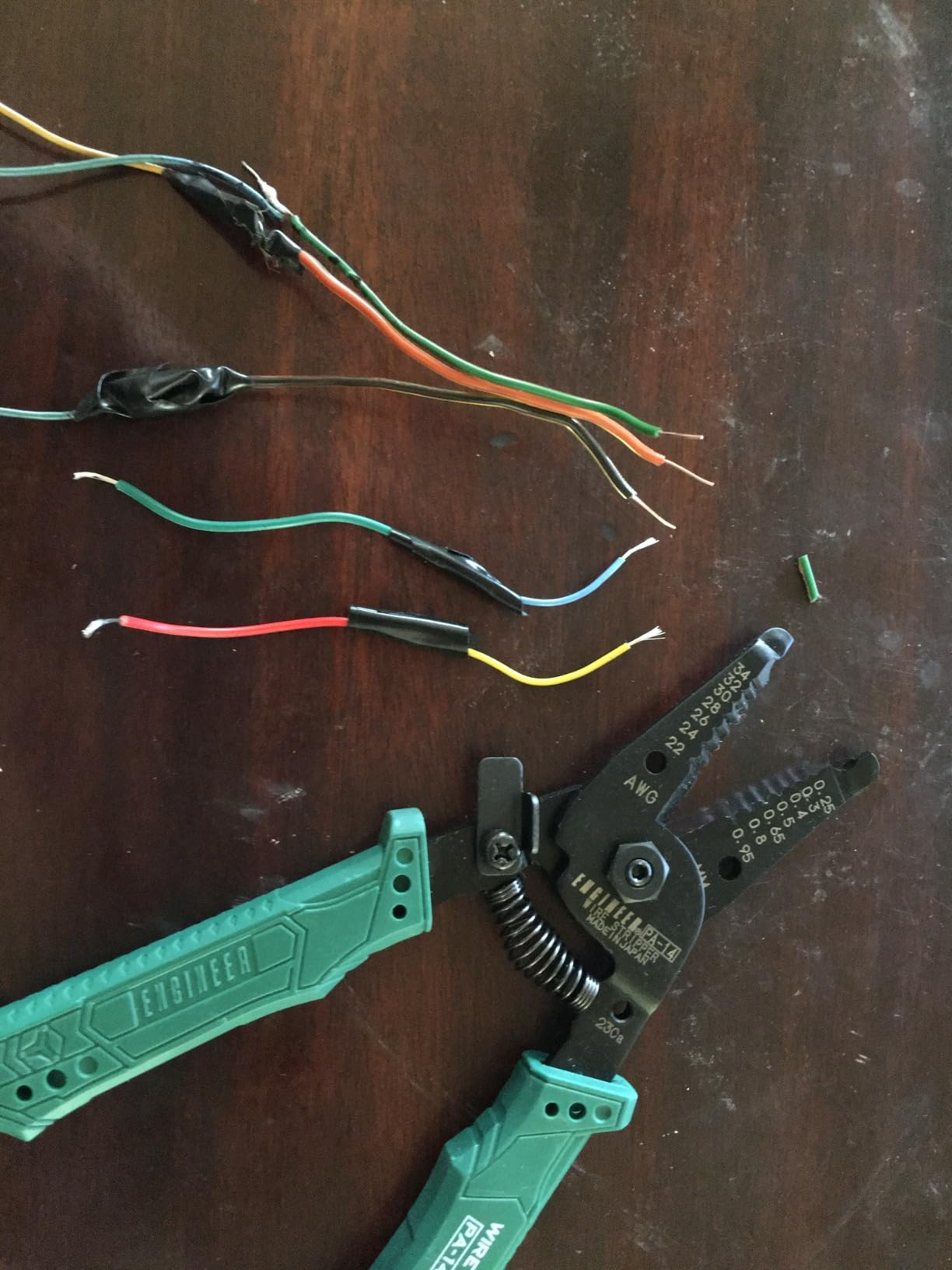
There is a real complaint here worth taking seriously. A minority of owners report that the smallest slots appear undersized and can cut through the wire when the handles are fully closed. If you work in that range, close the tool gently and stop at the first resistance rather than crushing the handles together.
The right-hand side of the jaws lists values in millimetre diameters rather than square millimetres, and owners flag this as easy to misread for anyone who has not used Japanese strippers before. The hanger opening at the handle end is also narrow, so it wants a small ring to sit on a hook.
At 4.5 stars from 464 reviews it sits slightly below the group average, and the feedback on smaller slots accounts for most of that. The stripping results on the mid and larger gauges are not what pulls the score down.
Who should buy the ENGINEER PA-14
Buy it if your thinnest wire is 30 AWG or finer. That covers ultra-fine LED strips, small signal harnesses, fine network cable work and hobby magnet wire. It also makes a sensible second stripper for anyone who has outgrown the Hakko and now needs the extra reach without changing technique.
It is also the better tool for anyone who found self-adjusting strippers unreliable on small wire. The fixed-nothing design removes the variable that causes the problem, and the round finishing edge is the right choice for conductors that are barely thicker than a hair.
Where it falls short
It is not a general-purpose stripper, because it stops at 20 AWG solid and 22 AWG stranded, so anything heavier is out of reach. Confusing metric markings and the undersized-slot reports mean it rewards a careful first session. And like the PA-06, it is a stripper and cutter with no crimping function.
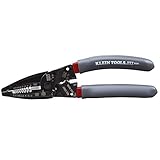
5. Klein Tools 1019 – Best for JST and Terminal Crimping
Klein Tools 1019 Klein Kurve Wire Stripper / Crimper / Cutter, Made in USA, Cutting / Crimping / Stripping Tool for B and IDC Connectors, Terminals, More
- Covers strip cut screw-shear and terminal crimping in one tool
- Reinforced head resists flex for repeatable crimps
- Large review base and established brand record
- Shears 6-32 and 8-32 screws cleanly
- Stops at 28 AWG stranded so it is not for the thinnest hookup wire
- Not a true precision stripper for micro-thin conductors
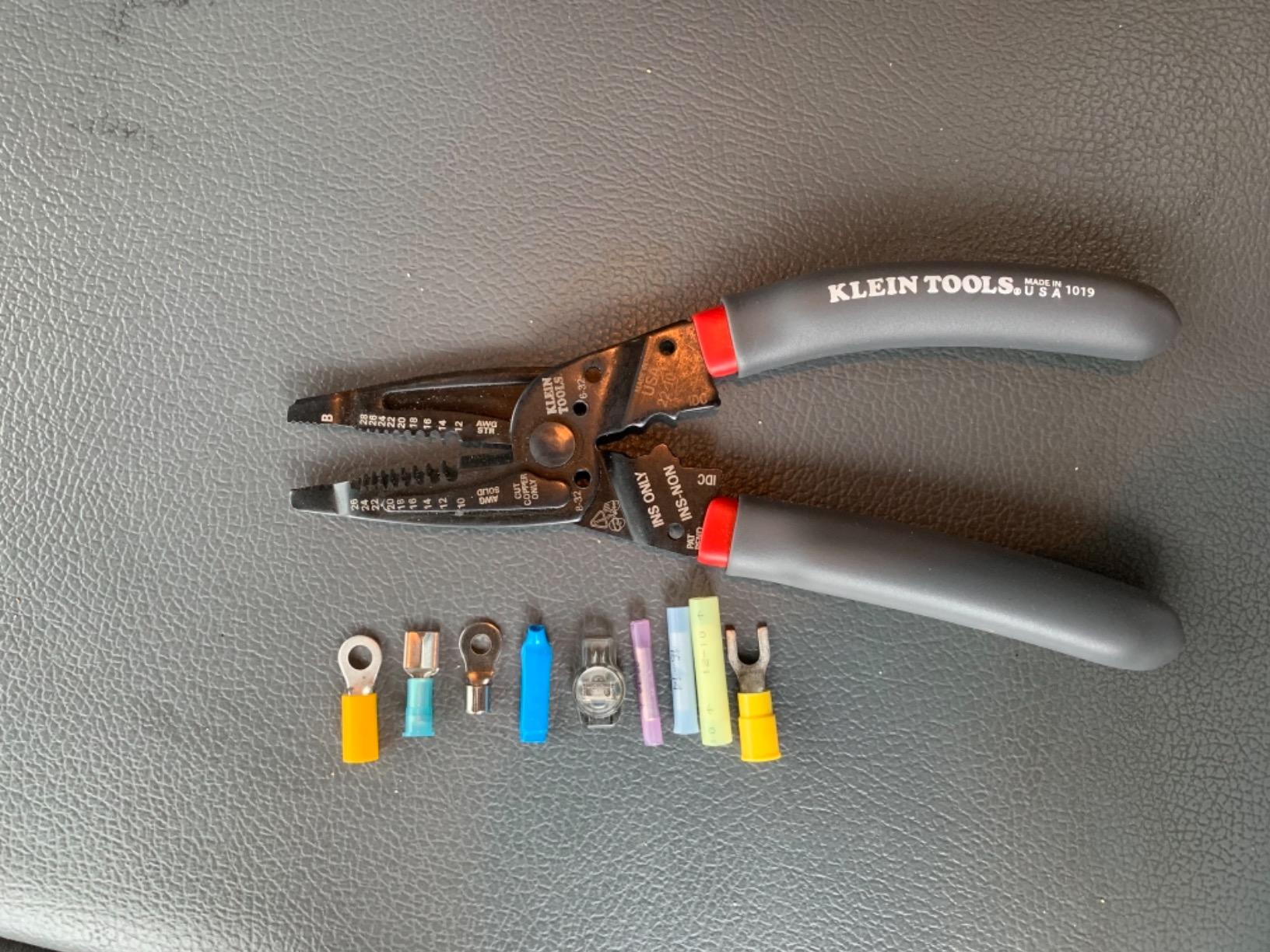
The Klein Tools 1019 is the one to buy if crimping is half of your workflow. It strips 10-26 AWG solid and 12-28 AWG stranded wire, crimps 10-22 AWG insulated and non-insulated terminals, and also handles B connectors and Scotchlok-style IDC connectors. That last capability is uncommon, and IDC crimping is genuinely useful for telephone-style punch-down panels and some field wiring.
The reinforced head is the detail that matters for crimping. It reduces flex, which is what makes a crimp repeatably good, and the precision shear-type cutting blades give you a clean cut rather than a crushed one. The tool is made in USA alloy steel and carries a 2,222-review base at 4.7 stars, so there is a lot of long-term use behind the rating.
It also shears 6-32 and 8-32 screws cleanly, which turns it into a general bench tool for chassis builds. If you already own the 11057 covered above, the two together cover strip, cut, loop, screw-shear and crimp without a third tool.
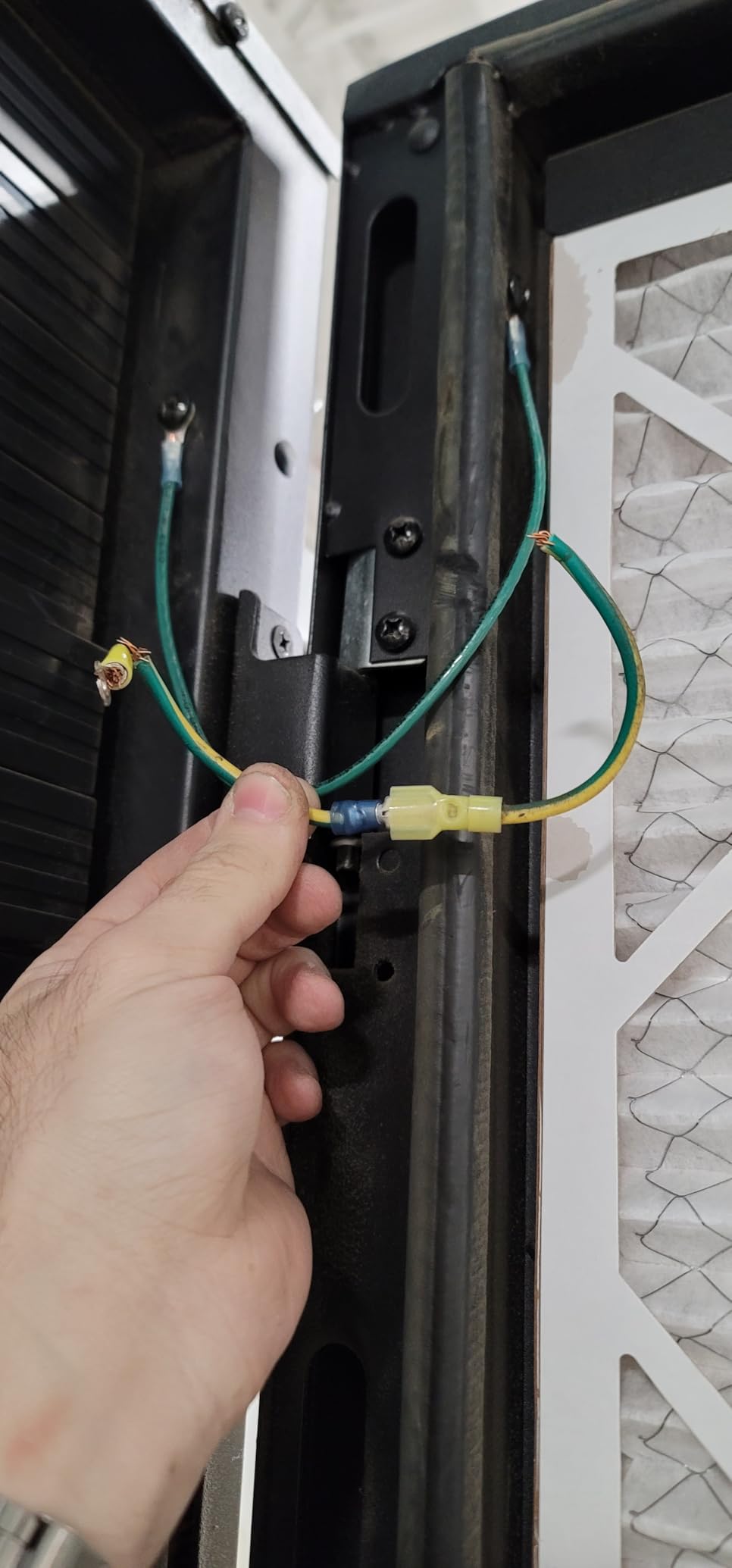
The limitation is gauge range at the thin end. It stops at 28 AWG stranded, so the very fine hookup wire that shows up in JST and small sensor harnesses is out of reach, and it is not a precision stripper for micro-thin conductors. You will still want a dedicated fine-wire tool for that work.
It is also worth being clear that a combined crimper is a general-purpose terminal crimper, not a ratcheting JST crimper. For small JST-XH and similar crimps, a dedicated crimp tool gives a more repeatable result because the die is sized to that specific connector.
Buyers treat this as an all-in-one stripper, crimper and cutter for terminal work rather than a precision instrument, and at this review volume the consistency is clear. The main criticism in the feedback is simply that the gauge range stops where hobby electronics often does not.
Who should buy the Klein Tools 1019
Buy it if you build harnesses, panel wiring or anything that terminates rather than just strips. Terminal blocks, spade connectors, B connectors and IDC punch-downs all fall inside what it does, and the reinforced head gives you crimps you can trust to hold. It is also a strong first tool for a control-panel or low-voltage distribution build.
For a bench that mixes electronics with light AC or low-voltage DC runs, its 10-26 AWG solid range is genuinely useful in a way the precision strippers are not. It is the broadest working range of the ten in this roundup.
Where it falls short
It cannot reach the thinnest stranded wire, and it is not the tool to use on magnet or enamel wire at the fine end. Nor is it insulated, so it should not be used around live circuits. If your whole project is 26 to 30 AWG jumper wire, this is more tool than you need.
6. iFixit Mandible – Best for a Pocketable Repair Kit
iFixit Mandible Wire Strippers – Auto-Open Latch for Electronics Repair
- Strips 30-10 AWG cleanly without nicking the copper
- Compact and far more precise than house-wiring strippers
- Spring-loaded action reduces hand fatigue on repetitive work
- Rubberized handles give good control on small wire
- Backed by a lifetime guarantee
- Locking latch can pop open inside a crowded tool bag
- Not built for heavy industrial or thick-cable work
- Takes practice to select the correct notch quickly
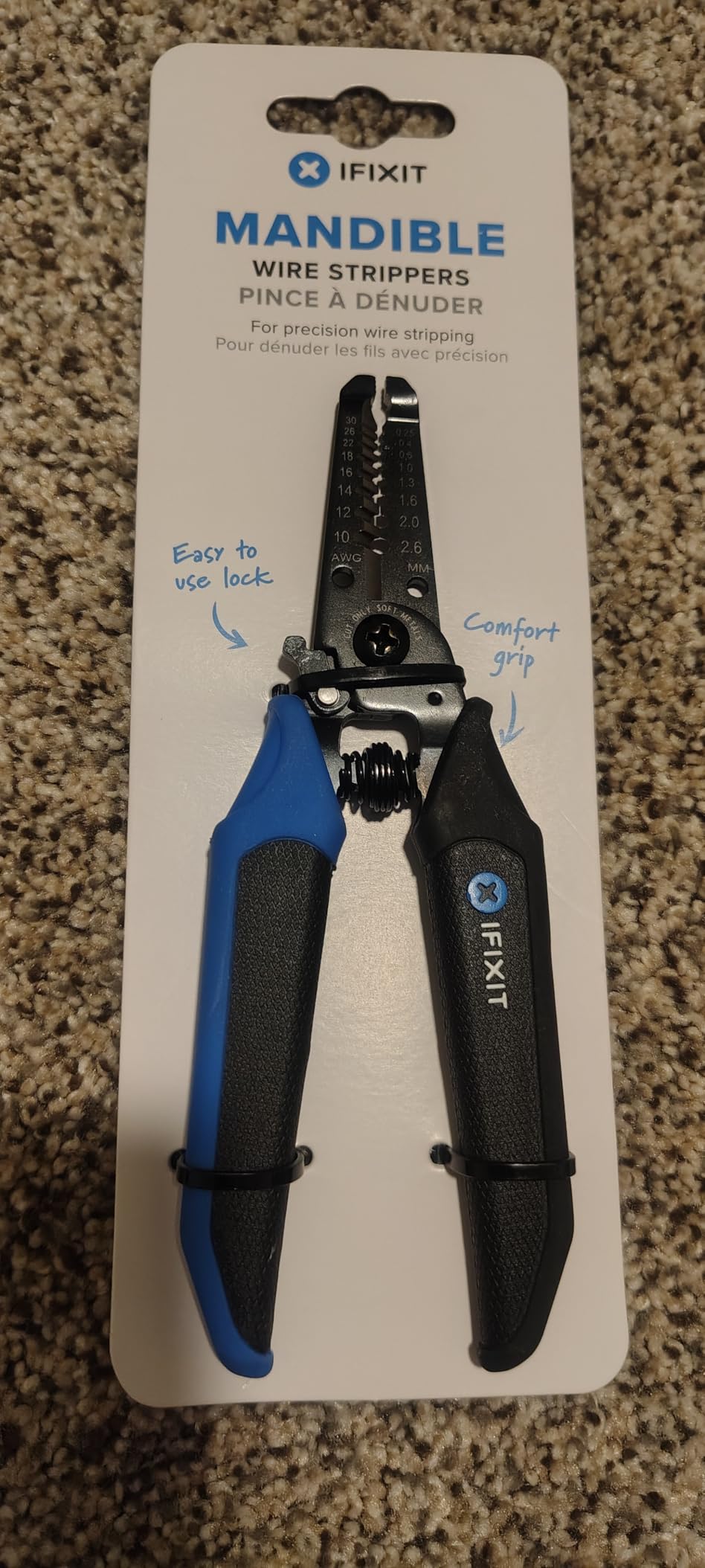
The iFixit Mandible is built for a different job than the rest of this list: field repair. At 3.2 ounces it disappears into a laptop bag or a field kit, and it cuts, strips and bends 30-10 AWG wire, which is the widest thin-wire-adjacent range here. The alloy steel core and rubberized handles make it feel far more precise than the house-wiring strippers it is often compared against.
Owners consistently praise clean, nick-free stripping across the 30-10 AWG range and the compact, comfortable feel for electronics work. The spring-loaded handle resets automatically after each use, so on repetitive bench or field work your hand does not have to reset the tool between strips, and the built-in small plier grips help shape wire for breadboard and soldering-jig work.
It is also the only tool in this roundup backed by a lifetime guarantee, which matters for a tool you expect to carry for years. The locking latch allows one-handed opening and keeps the jaws closed in a bag, which is good practice around a laptop.
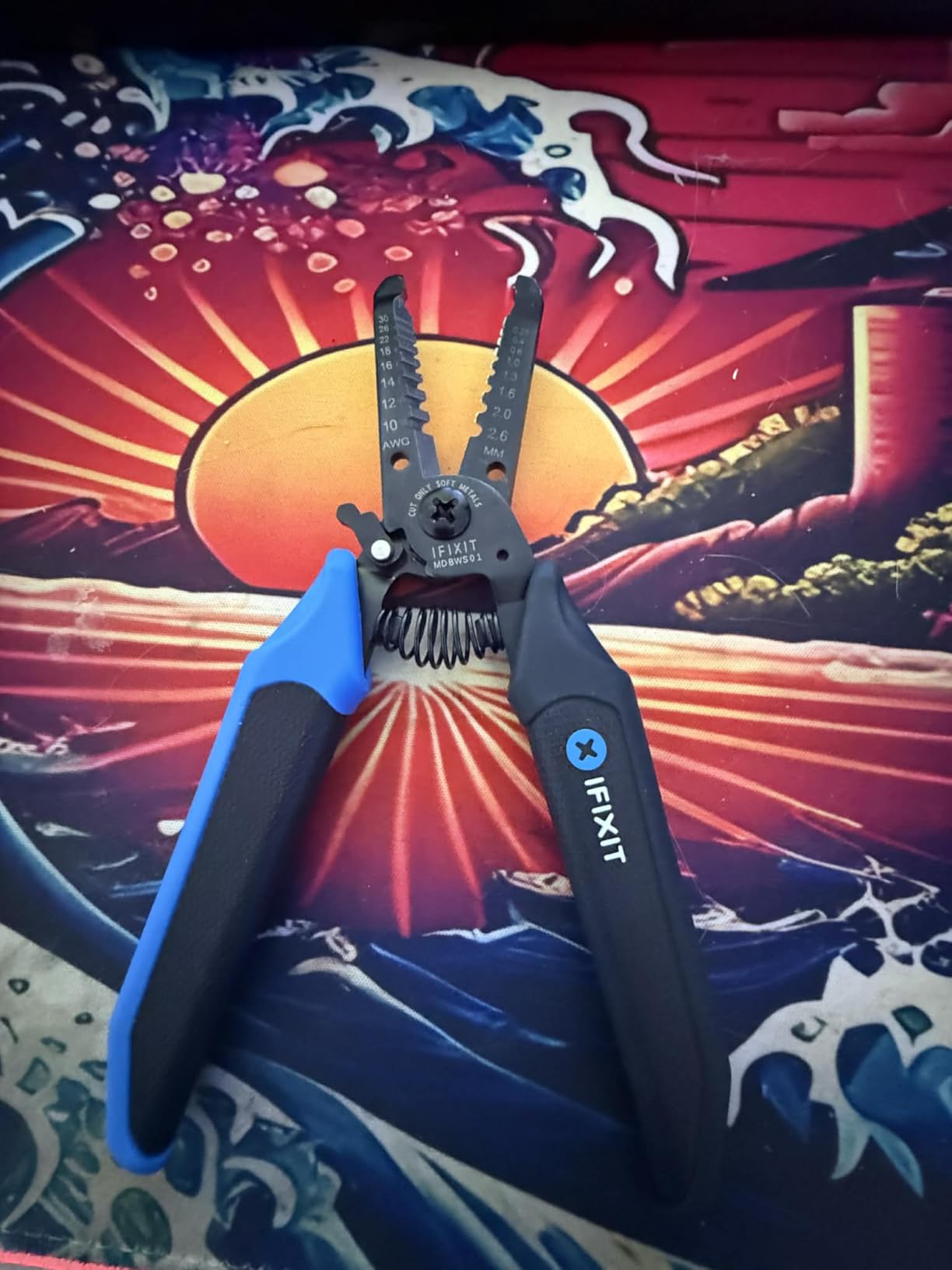
The recurring complaint is the latch itself. Owners report that the locking latch can pop open inside a crowded tool bag, which is a mild irritation rather than a failure, but it does mean you should check it before zipping the case shut. The tool also takes some practice to select the correct notch quickly at first.
It is clearly not built for heavy industrial or thick-cable work, so if you also do building electrical you will need a second tool. The 10 AWG end of the range is a limit on where it is comfortable, and the strip quality is good rather than exceptional compared with the fixed-notch Japanese tools.
For its actual purpose, though, a repair kit that fits in a pocket, resets itself and is guaranteed for life is hard to argue with. If you fix electronics away from a bench, that portability is worth more than raw precision.
Who should buy the iFixit Mandible
Buy it if you repair electronics on the move, teach, or travel to clients and sites. The 3.2 ounce weight and the 30-10 AWG range cover most field repair work, and the auto-reset spring means you are not fighting the tool one-handed in a laptop bag. It is also a reasonable second stripper for anyone who wants a general-purpose tool alongside a precision one.
For students, it is a good first serious tool because the gauge range is broad and there is no wrong gauge class to worry about. The lifetime guarantee also removes the risk from a first purchase.
Where it falls short
The latch behaviour in a tool bag is a genuine annoyance, and the tool has no crimping function at all. Notch selection takes practice, and it is not the right choice for micro-thin conductors where you need repeatable precision rather than portability. The 10 AWG ceiling also rules out general electrical work.
7. KATA 7 Inch Precision Stripper – Most Versatile
KATA 7 Inch Precision Wire Stripper, 20-32 AWG Tool for Electronics DIY
- Reaches 32 AWG stranded
- finer than most tools in this class
- Sharp heat-treated carbon steel edge makes stripping quick
- Feels solid and outperforms cheaper big-box strippers
- Comfortable grip even for users with arthritic hands
- A small number of users report blade misalignment on small stranded wire
- Intended for low-voltage electronics only
- Not for household power wiring
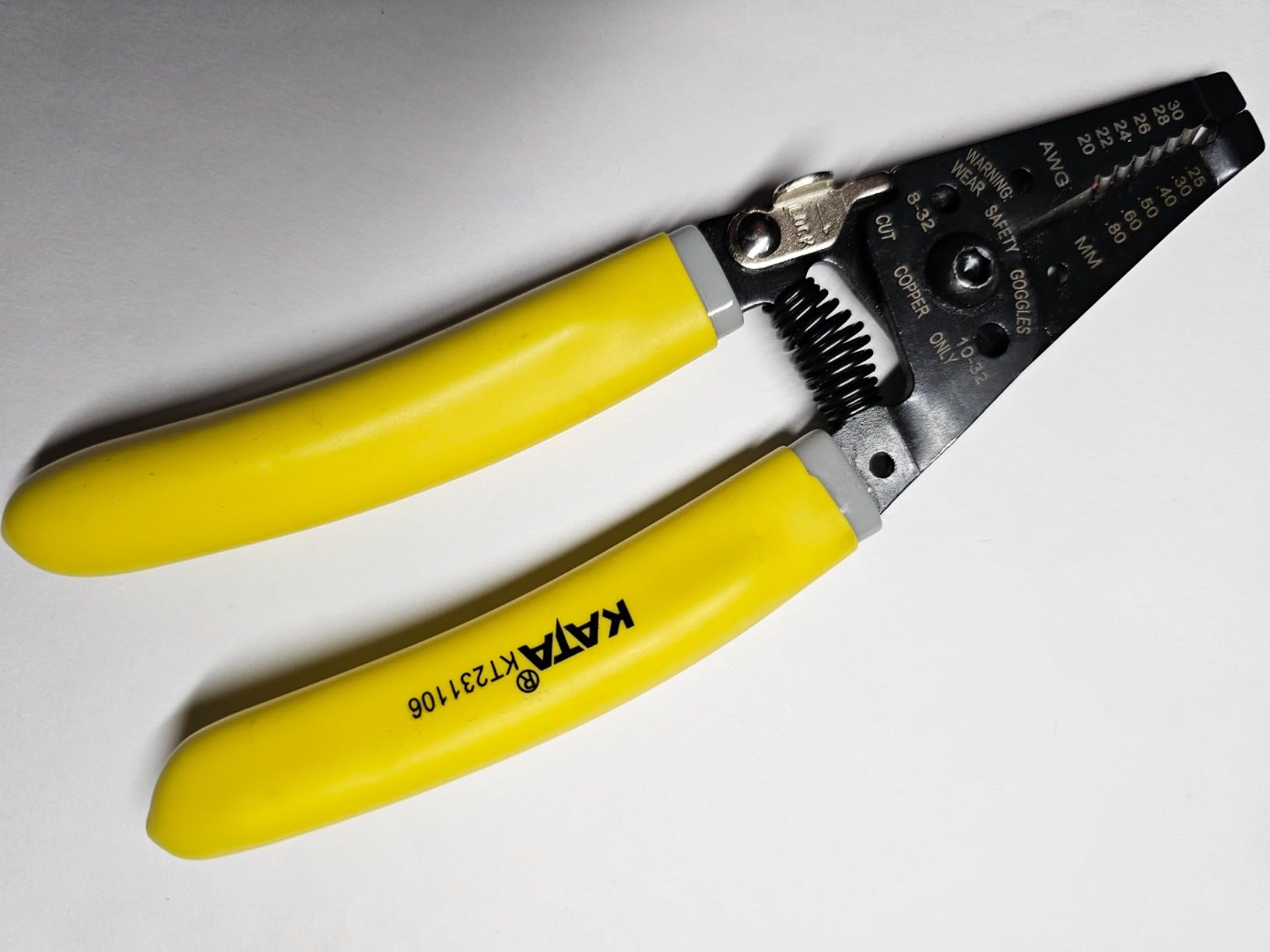
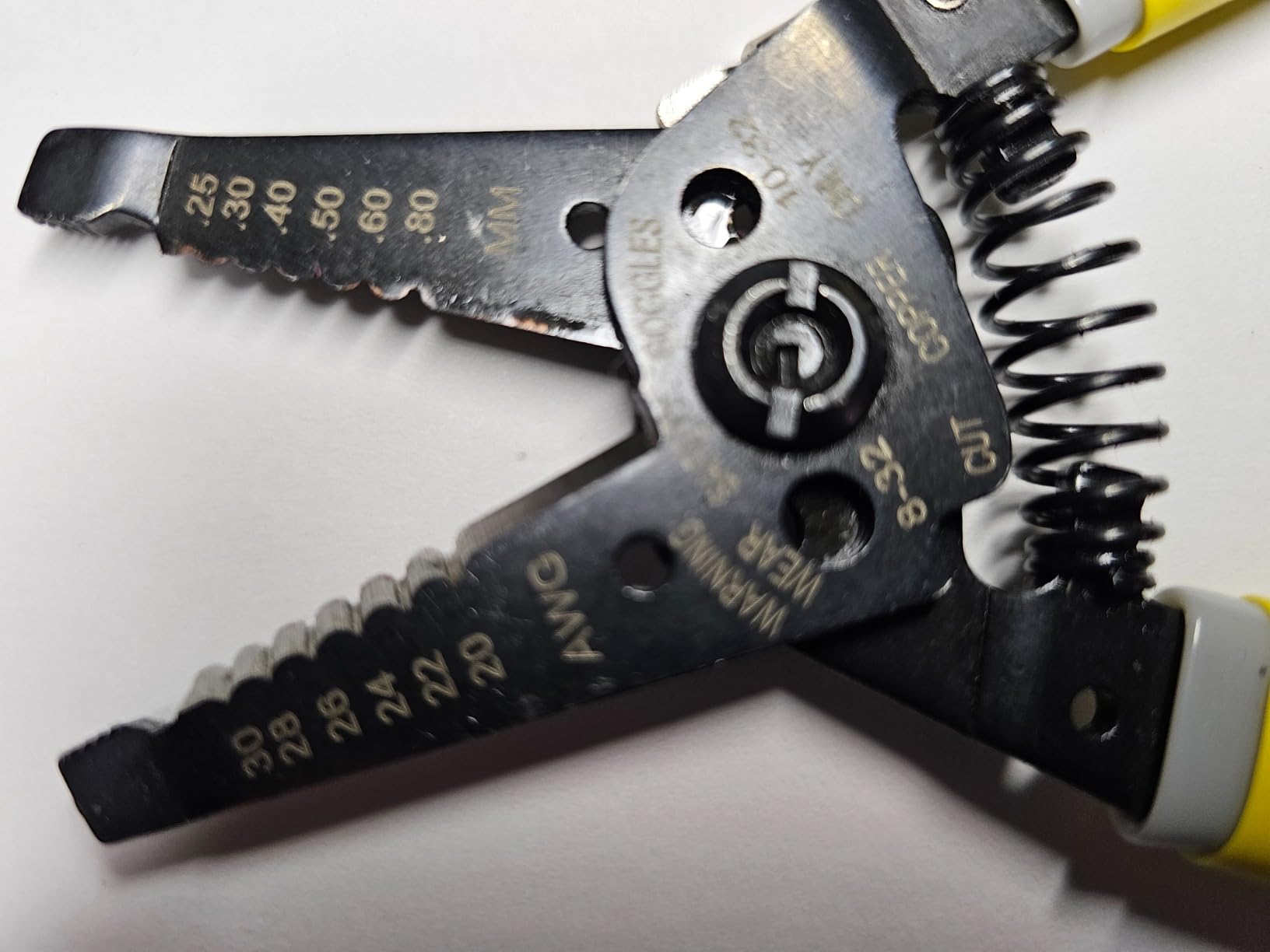
The KATA 7 Inch Precision Stripper is an affordable route into competent thin-wire work, and the gauge range is better than its price suggests. It strips 20-30 AWG solid and 22-32 AWG stranded, which covers dupont jumpers, hookup wire, small LED runs and most 3D printer or model wiring, and it also clamps and crimps insulation terminals.
The body is 50-pound heat-treated carbon steel with a sharp cutting edge, weighing 179 grams at 7 inches long. Owners building dollhouses, cameras, 3D printers and LED projects rate it as solid-feeling, sharp and accurate down to 30 AWG stranded, and several note the grip stays comfortable for users with arthritic hands, which is more useful than it sounds for a tool you squeeze repeatedly.
It strips, cuts, clamps and crimps, so a single tool covers most of a small electronics kit. The compact 7-inch form suits a small bench or a maker space where a 12-inch stripper feels oversized.
There is one significant negative theme in the feedback, and it is worth knowing about: a small number of users report blade misalignment on small stranded wire, which causes the wire to bend before the insulation comes off. If that happens, stop using the affected notch and check the tool rather than forcing it.
The other limitation is scope. It is designed for low-voltage electronics, industrial and DIY wiring, and terminal work, and explicitly not for household power wiring. The construction is stamped rather than machined, which is where the alignment reports come from.
At this price point, expecting Japanese machining tolerances is unrealistic, and the tool mostly delivers. The gauge range is the standout, because reaching 32 AWG stranded is genuinely unusual for the money.
Who should buy the KATA precision stripper
Buy it if you are building your first electronics kit and you want proper thin-wire capability without spending much. It suits model, dollhouse, camera, LED and 3D printer wiring, and the crimping and clamping functions cover more of a small kit than most tools at this level.
It is also a good bench companion for a maker space where tools get lost, because the compact form is easy to replace and the 22-32 AWG stranded range covers most microcontroller jumper work.
Where it falls short
Stamped construction means less consistency than a machined or precision-ground tool, and the blade alignment reports on small stranded wire are the reason to check it on arrival. It is a low-voltage tool only, and it has no fine-gauge reach below 32 AWG stranded for truly micro-thin work.
8. haisstronica 3-in-1 Self-Adjusting – Best for Mixed-Gauge Batch Work
haisstronica 3 in 1 Self-Adjusting Wire Stripper, AWG 24-10 Tool
- Self-adjusting jaws remove the guesswork from gauge selection
- Strips cuts and crimps in one inexpensive tool
- Heat-treated alloy steel blades stay sharp
- Rubberized handle is comfortable for extended use
- Automatic action can nick or crush very thin stranded wire
- Heaviest body here at 0.35 kg which is tiring for fine bench work
- Gauge range is weighted to heavier wire
The haisstronica is a self-adjusting 3-in-1 stripper, cutter and crimper, and with 3,930 reviews at 4.6 stars it is one of the most proven tools in this roundup. It handles 22-18, 22-10, 16-14 and 12-10 AWG conductors across copper, cable, coaxial and aluminium wire, which makes it a good general electrical companion for a bench that is not exclusively electronics.
Owners like that the self-adjusting jaws remove the guesswork from gauge selection, which is the main appeal when you are working through a pile of mixed wire without time to read markings. The heat-treated, polished, black-oxidized alloy steel blades are reported to stay sharp, and the rubberized handle is comfortable over extended use.
For batch jobs, stripping, cutting and crimping in one tool means fewer swaps and a faster rhythm. If you already own a precision stripper for fine work, this is the tool to reach for when the job is broader.
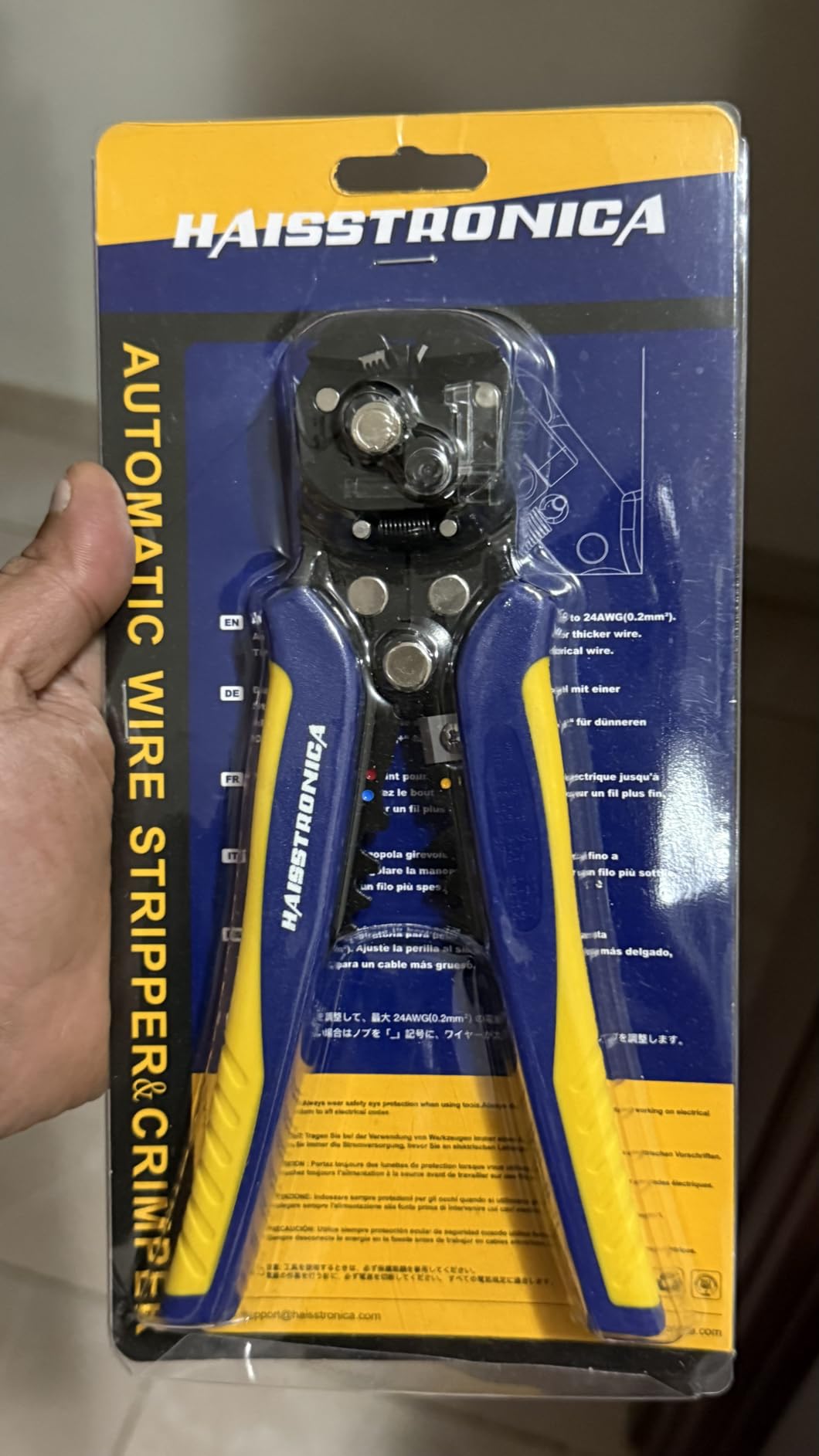
Now the part that matters for this particular roundup: self-adjusting mechanisms are less gentle on delicate conductors. The feedback is consistent that the automatic action can nick or crush very thin stranded wire compared with precision strippers, and that is the single biggest reason hobby builders should treat a self-adjusting tool as a secondary instrument.
The physical reason is simple. An automatic stripper applies grip force based on the wire it senses, and grip force scales down as conductor diameter shrinks, so a 30 AWG wire receives far less holding force than a 16 AWG wire. Hobbyists on audio forums describe the same pattern: self-adjusting strippers are fine at 16 AWG and up, but the smaller the wire, the less effective they become.
It is also the heaviest body in this roundup at 0.35 kg, which is tiring for fine bench work, and the gauge range is weighted toward heavier wire rather than micro-thin hookup. The three-in-one design also means the crimp and cut functions are general purpose, not connector-specific.
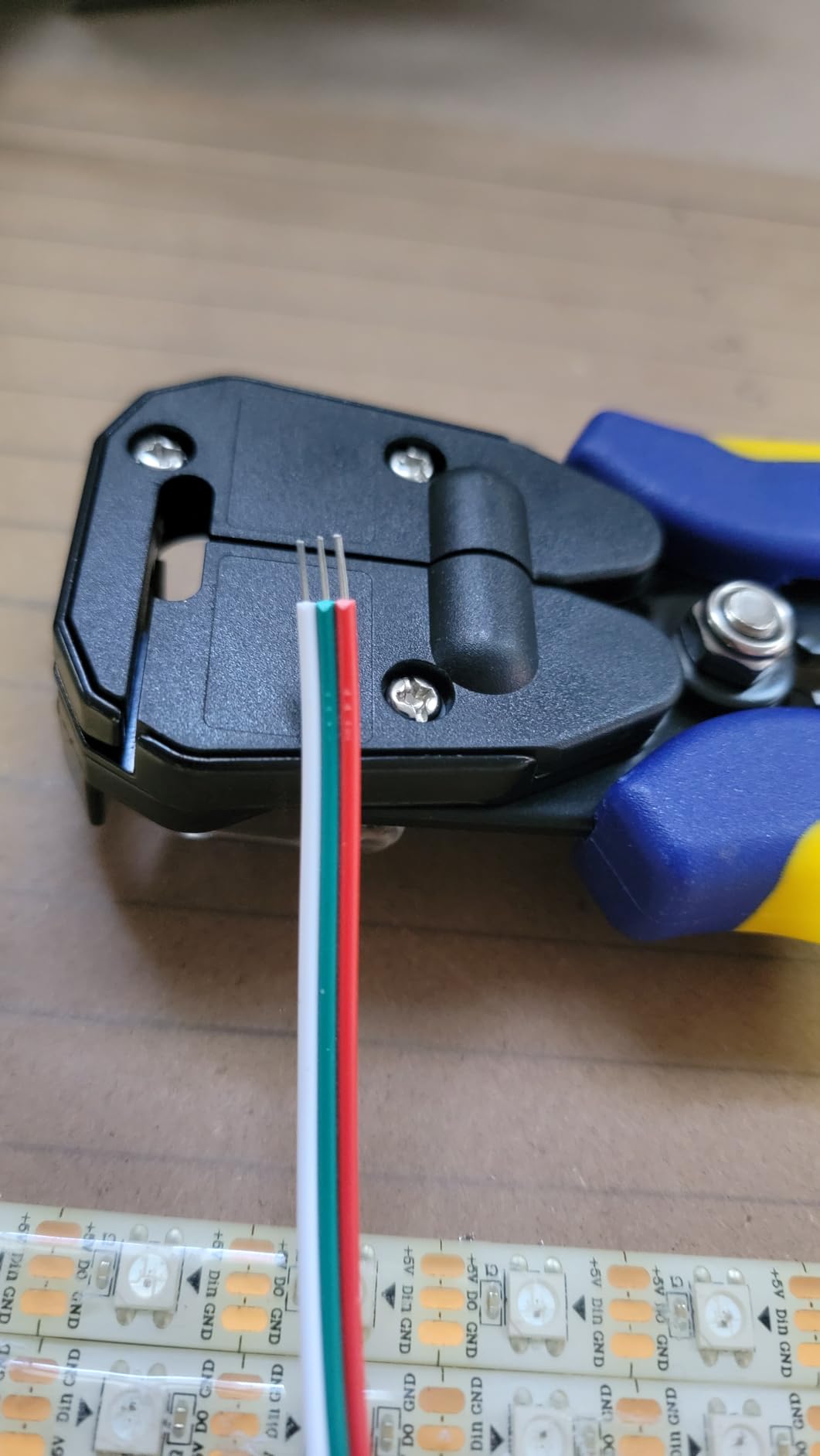
Who should buy the haisstronica self-adjusting stripper
Buy it if you strip a lot of wire across mixed gauges and do not need surgical precision on the fine end. It is a strong second tool for a bench that handles both electronics and heavier low-voltage work, and the coaxial and aluminium capability broadens what you can do with it. The 3,930-review base means the design is well proven rather than experimental.
It is also a reasonable choice for bulk stripping tasks where speed per strip matters more than cut quality, such as recovering copper from scrap wire, which electricians on forums describe as the reason they own heavy strippers at all.
Where it falls short
It is the wrong primary tool for 26 to 32 AWG stranded electronics wire, where the automatic action can nick or crush strands. The 0.35 kg body is heavy for fine work, and it has no crimping function for small JST or ferrule connectors. If thin wire is most of what you strip, buy a fixed-notch precision tool instead.
9. Capri Tools 20010 – Best for 22-8 AWG Precision Work
- Precision machined stripping holes avoid damaging the conductor
- Cast alloy build backed by a 10 year warranty
- Recoiling spring and tension-loaded grip for one-handed use
- Very large review base at 4.7 stars
- Heavier cast alloy body than typical precision strippers
- Gauge range bottoms out at 22 AWG so it will not touch the thinnest hookup wire
The Capri Tools 20010 is a precision stripper for the thicker half of the hobby electronics range, and it has the largest review base of the machined tools here at 2,192 ratings and 4.7 stars, with 82% five-star. It strips 22-8 AWG wire using precision-gauge notches, so it covers hookup wire, low-voltage DC runs and light AC work rather than micro-thin signal leads.
The machining is the point. Precision-machined stripping holes remove insulation without damaging the conductor, and the fast compound stripping action means a short, decisive pull rather than a slow draw. The recoiling spring and tension-loaded wire grip let you strip one-handed, which speeds up repetitive terminal work considerably.
The cast alloy chassis is heavy at 14.4 ounces, and that weight is exactly why the stripping is stable and repeatable. There is a 10-year manufacturer warranty behind it, which is the longest explicit warranty in this roundup and a fair signal of expected service life.
What makes it different from the others
Where most of the precision tools here bottom out around 28 or 30 AWG, the 20010 stops at 22 AWG. That makes it the natural companion to a fine-wire stripper rather than a replacement for one, covering the range from hookup wire up through lighter building wire in a single machined tool.
The trade is weight and range. Fourteen ounces is the second-heaviest tool in this group, and a bench where you only strip 26 AWG will find that mass annoying rather than reassuring. The ten-year warranty partly compensates, but the fit is the deciding factor.
Who should buy the Capri Tools 20010
Buy it if you are moving from breadboard work into permanent wiring, panel assembly or terminal blocks, and you want a machined tool that will not deform a 20 AWG conductor. The tension-loaded grip and compound action suit fast repetitive work, and the warranty makes it an easy long-term bench purchase.
It is also a good match for anyone who values a long tool history and a large installed base, since the review volume speaks to how the design has held up over years rather than months.
Where it falls short
It simply will not touch the fine end of the hobby spectrum. 22 AWG is the thinnest it goes, so any 26 AWG and finer wire is out of reach, and the cast alloy weight makes it tiring for long fine-wire sessions. It also has no crimping function.
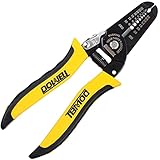
10. DOWELL 10-22 AWG Wire Stripper – Best Starter Tool for General Use
- Largest review base of any pick with over 11000 ratings
- Low cost entry point for basic stripping and cutting
- Stainless steel body holds up to long-term continuous use
- Safety lock keeps the jaws closed in storage
- Cuts copper and fine iron wire in the same tool
- Gauge range stops at 22 AWG which is too coarse for most electronics hookup wire
- Basic stamped construction without precision-ground jaws
The DOWELL 10-22 AWG is the most proven tool in this roundup by a wide margin, carrying over 11,000 ratings at 4.6 stars. It strips 10-22 AWG wire, cuts copper and fine iron wire, and carries a safety lock that keeps the jaws shut in a drawer or tool bag. For general workshop tasks that is a complete, serviceable tool.
Owners rate the stainless steel body as durable under long-term, continuous use, and the 120 gram, 7-inch form is light and easy to control. The thermoplastic elastomer handle is comfortable enough for repeated work, and the safety lock is a small feature that prevents the most common complaint about cheap strippers, which is bent jaws in a bag.
The 76% five-star rating is the highest proportion of any tool here, which says more about consistency than the headline average does. For cutting and stripping 10-22 AWG wire in a mixed household and workshop context, it is hard to argue with the track record.
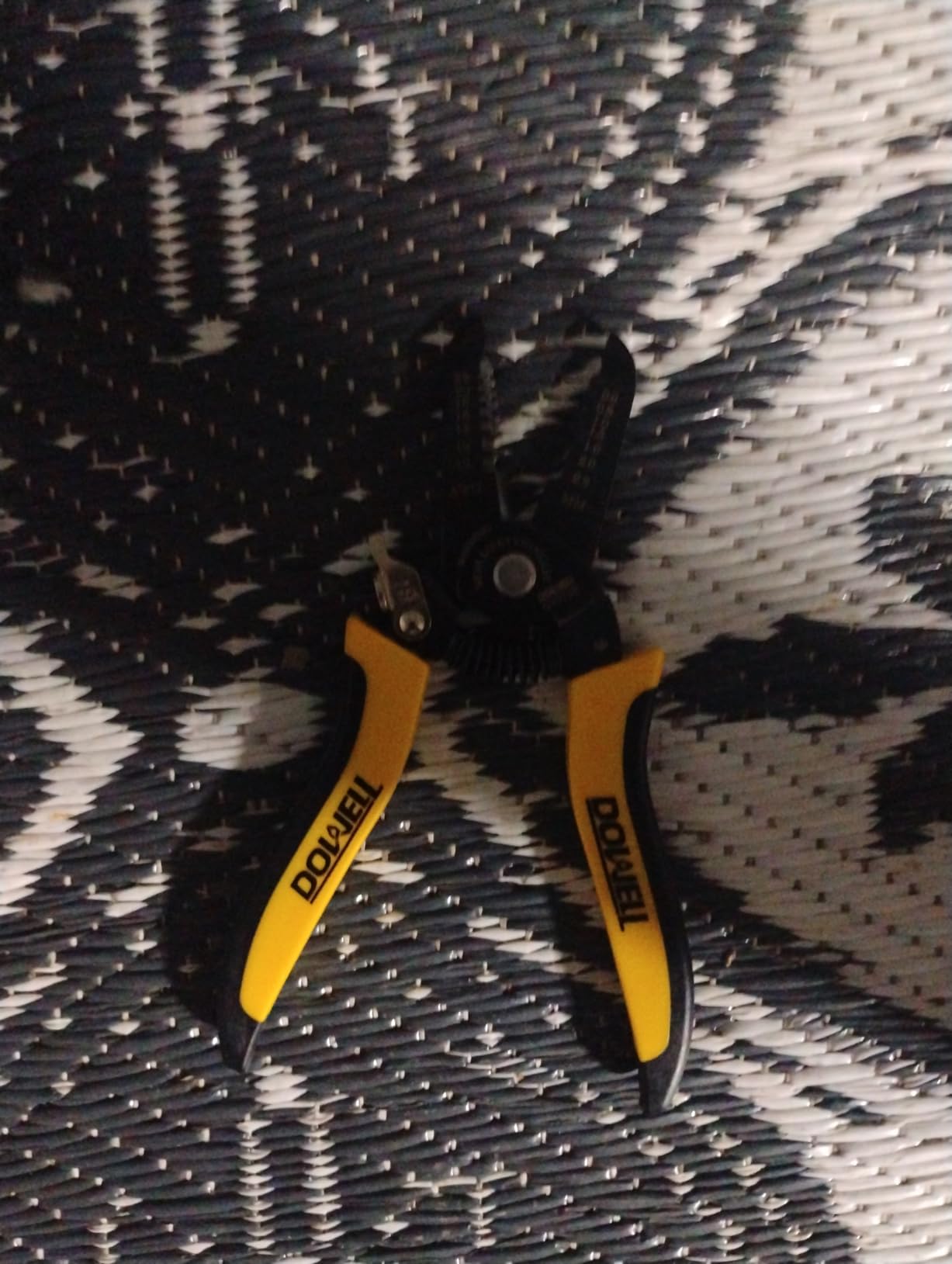
The reason it sits last in a roundup about hobby electronics is the gauge range. Twenty-two AWG is the thinnest it goes, and most hookup wire in an electronics project is 24 to 30 AWG. Buyers in the comments consistently flag this as the limiting factor, and the tool is popular for general purpose work rather than fine electronics.
The construction is basic stamped stainless steel without the precision-ground or machined jaws of the ENGINEER, Klein, Hakko or Capri tools. That is a fair trade at this level, but it is why the cut quality on thin wire will not match a dedicated precision stripper.
As a companion tool it works well, stripping heavier wire while a precision stripper handles the fine end. It is also the least risky first purchase, given the review volume and the low replacement cost if it does not suit.
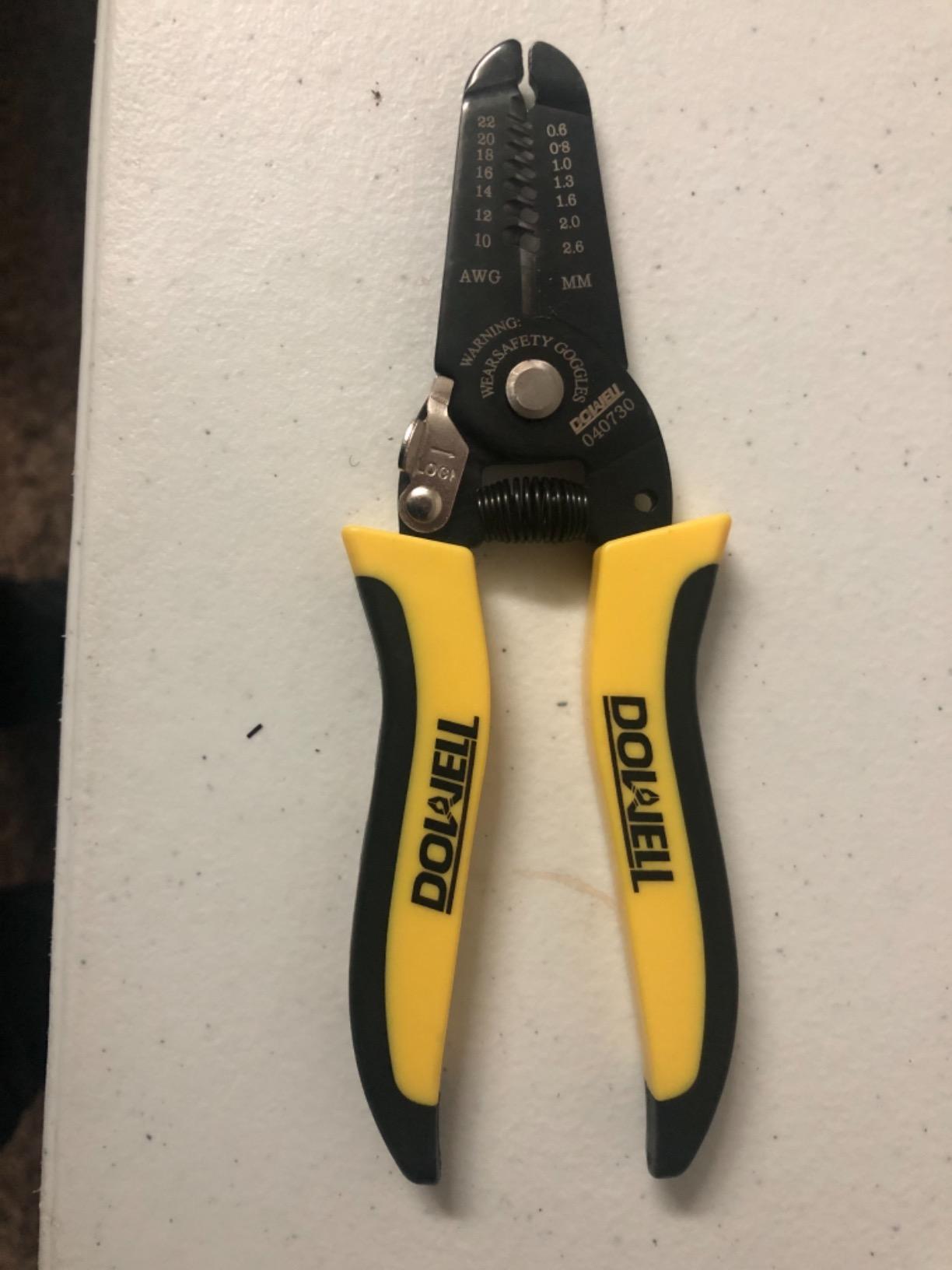
Who should buy the DOWELL stripper
Buy it if you need a dependable general-purpose stripper and cutter that will not be used on micro-thin wire. It suits 10-22 AWG work, fine iron wire, and mixed household or workshop tasks, and the safety lock makes it easy to store. It is also a good backup for a shared bench or a student kit.
If you are only ever handling electronics hookup wire, spend a little more on a fixed-notch precision tool. If your work spans both, this and a precision stripper make a capable pair.
Where it falls short
The 22 AWG floor rules out most electronics hookup wire, and the stamped construction gives up accuracy on thin conductors compared with the machined tools in this list. It has no crimping function and no loop-forming holes, so terminal and ferrule work still needs another tool.
How to Strip Wire Without Nicking the Conductor
The best way to strip electrical wire is to match the conductor to a notch cut for that exact gauge, close the jaws until they bite the insulation only, and pull the tool away in one smooth motion while the wire itself stays still. Precision-ground or machined stripping holes cut the insulation in two places and lift out the middle section cleanly, which is why a good tool and the right notch matter more than technique alone.
Measure and mark the strip length with the tool’s own markings or a small ruler before you cut. Small conductors stretch under tension, so decide the length first.
Select the notch that matches your conductor gauge, not the insulation diameter. On Japanese precision tools, check whether the marking refers to solid or stranded wire.
Insert the wire and close the handles slowly until you feel the blades seat on the insulation. Do not squeeze harder than that.
Hold the conductor itself between two fingers and pull the tool away along the axis of the wire in one continuous motion, not a twist and not a slow draw.
Inspect the result. A clean strip leaves a smooth taper on the copper and a cylinder of insulation that slides off without fraying.
For very thin wire at 26 to 30 AWG, the technique shifts slightly. Close the tool only partway if the handles allow it, grip the wire closer to the cut than you think you need to so the insulation does not drag, and support the conductor so it cannot flex sideways as the tool comes off. A stripper with fixed notches is far kinder here than a self-adjusting one.
Most nicks come from one of four causes: a notch too large so the blades grip the conductor, a notch too small so the tool has to be forced, a dull blade that shears rather than cuts, and a bent wire being forced into a straight hole. Blunt blades are the one you cannot feel immediately, which is why checking a fresh tool on scrap wire from the same spool is worth doing before a build.
How to Choose a Wire Stripper for 20-30 AWG Hobby Electronics Work
The right way to narrow this market is to answer three questions in order: are you working with solid or stranded wire, what is the thinnest gauge you actually handle, and do you want a fixed-notch manual tool or a self-adjusting one. Answer those and the choice narrows to two or three options out of the ten above.
What AWG means and why 26 AWG is the number to remember
AWG is the American Wire Gauge standard, and it runs backwards: a lower number means thicker wire. In hobby electronics you will mostly meet 30 to 22 AWG, where 26 AWG is roughly 0.4 mm of conductor. Common uses by gauge include 30-32 AWG for fine signal and LED work, 26-28 AWG for dupont jumpers and microcontroller wiring, 22-24 AWG for hookup wire and small power runs, and 20 AWG and heavier for low-voltage DC and light AC runs.
Insulation thickness varies between types, which is why a notch that works on one wire can bite into another. Magnet wire, for example, carries enamel rather than a plastic jacket, and enamel is scraped or chemically stripped rather than pulled off in a cylinder.
Solid versus stranded, and why it changes the tool
Stranded wire is a bundle of fine strands and must be stripped in a single fast pull, or the strands separate and splay. Solid wire is a single conductor, cuts more cleanly, and is easier to nick because there is nothing to absorb a mis-sized blade. Most precision strippers here list a separate range for each, and you should check the stranded number before buying, since a tool that only reaches 26 AWG solid may stop at 28 AWG stranded.
Automatic and self-adjusting strippers are also harder on stranded wire. The gripping force scales with the conductor, so a thin stranded bundle gets squeezed between a closing jaw and a pulling jaw, and that is the combination most likely to crush rather than cut. Fixed notches sized to your gauge are gentler because the bite is set by the hole, not by the mechanism.
Manual, self-adjusting, or a combination tool
Manual fixed-notch tools are the right answer for 22 to 30 AWG electronics work, and the reason is precision. Every strip uses the same geometry, so results are repeatable and a bent wire is a user error rather than a mechanism fault. Self-adjusting tools are better for mixed-gauge batch work and heavier wire, and the haisstronica above is the clear example of that.
The honest summary, and the one that matches what hobby builders report on forums, is that self-adjusting strippers work well at 16 AWG and above and lose effectiveness as the wire gets thinner. If the majority of your wire is 26 AWG or finer, do not start with an automatic tool.
Is a stripper and crimper combo worth it for a hobbyist?
Sometimes. A combination tool like the Klein 1019 covers terminal, B connector and IDC crimping alongside stripping, which is genuinely useful for panel and terminal block work. For small JST-type connectors and ferrules, though, a connector-specific crimper gives a more repeatable result because the die is matched to that pin and insulation size, so a hobbyist building cable harnesses is better served by a dedicated crimper alongside a precision stripper.
What a hobbyist does not need to buy
Most hobby electronics builders can skip 1000V insulated hand tools entirely, since they protect against contact with live mains circuits and most of our work is on low-voltage DC. You also do not need hydraulic or ratcheting heavy-gauge strippers, high-leverage building-wire cutters, or a drill-powered stripping machine. That last category is worth one line: it suits bulk scrap copper recovery, not precision electronics work.
Similarly, be cautious with unbranded multi-function wire stripper and crimper sets marketed as eight tools in one. They look like value on a product page, but the blades are stamped rather than ground and the gauges are rarely marked accurately, which defeats the purpose of owning a stripper at all.
Knipex, Klein, Hakko or ENGINEER for hobby work
Brand debate is loud online, and hobbyists often overpay for a name rather than the right gauge range. Klein Tools has the deepest catalogue of genuinely useful combinations for electronics, which is why two of its tools appear here. Hakko and ENGINEER cover the Japanese precision end, where fixed notches and machined jaws give the cleanest cuts on thin wire.
For hobby electronics specifically, judge on gauge range first, then on whether the stripping holes are precision-ground or machined, then on the return spring and handle feel. Knipex and Greenlee dominate the electrician conversation and the scrap-recycling conversation, but they are built for gauges far heavier than most hobby work uses.
Maintenance and when your blades are done
Clear debris from between the stripping holes with a wooden toothpick or a stiff brush rather than metal, since metal chips mark the jaws. Wipe the blades clean and add a small drop of light oil at the pivot. For spring-loaded precision tools, store them latched closed or with the spring unloaded so the tension does not creep.
Dull blades are the quiet cause of most nicking. Signs are increasing force needed to complete a strip, a torn rather than clean insulation cylinder, and frayed strands on stranded wire. A stripper that needs force is already doing damage, so replace or resharpen rather than push harder. Check a new tool on scrap wire from the same spool before a build.
Frequently Asked Questions
What is the best way to strip electrical wire?
Match the conductor to a notch cut for that exact gauge, close the jaws until they bite the insulation only, hold the conductor still, and pull the tool away in one smooth motion along the wire axis. A tool with precision-ground or machined stripping holes cuts insulation in two places and lifts out the middle section, which is why notching matters more than force or speed.
What is the best way to strip very thin wire?
Use a fixed-notch precision stripper rated for your gauge, close the jaws only partway if the handles allow it, grip the wire close to the cut, and pull in one continuous motion without twisting. Avoid self-adjusting strippers on thin wire, because gripping force scales with conductor diameter and the small strands of a 26 to 30 AWG bundle get crushed rather than cut. Support the wire so it cannot flex as the tool comes off.
What gauge wire stripper do I need for electronics?
For most hobby electronics work, look for a tool covering 22 to 30 AWG stranded and 20 to 30 AWG solid. Hookup wire, silicone wire and microcontroller jumpers sit around 24 to 28 AWG, while LED and fine signal work pushes to 30 AWG and below. If you also work with magnet or enamel wire at 32 AWG and finer, you need a specialist micro-thin stripper that reaches 34 AWG stranded.
Do I need an automatic wire stripper for electronics?
Usually not, for the fine end of the range. Self-adjusting mechanisms apply grip force based on the wire they sense, and that force falls as the conductor gets smaller, so they are effective at 16 AWG and above but lose effectiveness on thinner stranded wire. They are useful for mixed-gauge batch work, coaxial and heavier conductors, and for bulk scrap recovery, where speed matters more than cut quality.
What is the difference between solid and stranded wire stripping?
Stranded wire is a bundle of fine strands and needs a single fast pull along the wire axis, or the strands splay and separate. Solid wire is one conductor, cuts more predictably, and is easier to nick because there is nothing to absorb a mis-sized blade. Always check the stranded gauge rating separately, since many tools reach further on solid wire than they do on stranded.
Final Verdict for 2026
The best wire strippers for hobby electronics all share one trait that matters more than any brand: a fixed notch cut for the gauge you actually use. The Klein Tools 11057 takes the top spot for 2026 because it strips 20-30 AWG solid and 22-32 AWG stranded with precision-ground holes, carries a 4.8 rating from 2,333 reviews, and handles 6-32 and 8-32 screws on the same pass.
For the sharpest accuracy per pound of tooling, the Hakko CSP-30-1 is the value pick, and the ENGINEER PA-06 is the one to buy for everyday thin-wire work. Push below 30 AWG and the ENGINEER PA-14 is the only tool here rated to 34 AWG stranded. Budget buyers should look at the KATA for its 22-32 AWG stranded range, and anyone doing terminal or IDC crimping alongside stripping should add the Klein Tools 1019.
Whatever you pick, buy it for the gauge you strip most, test it on scrap wire from the same spool first, and store spring-loaded precision tools latched closed. If your builds move toward marine or vehicle-scale wiring, our marine electronics guide covers the heavier connectors and harnesses those projects need.