
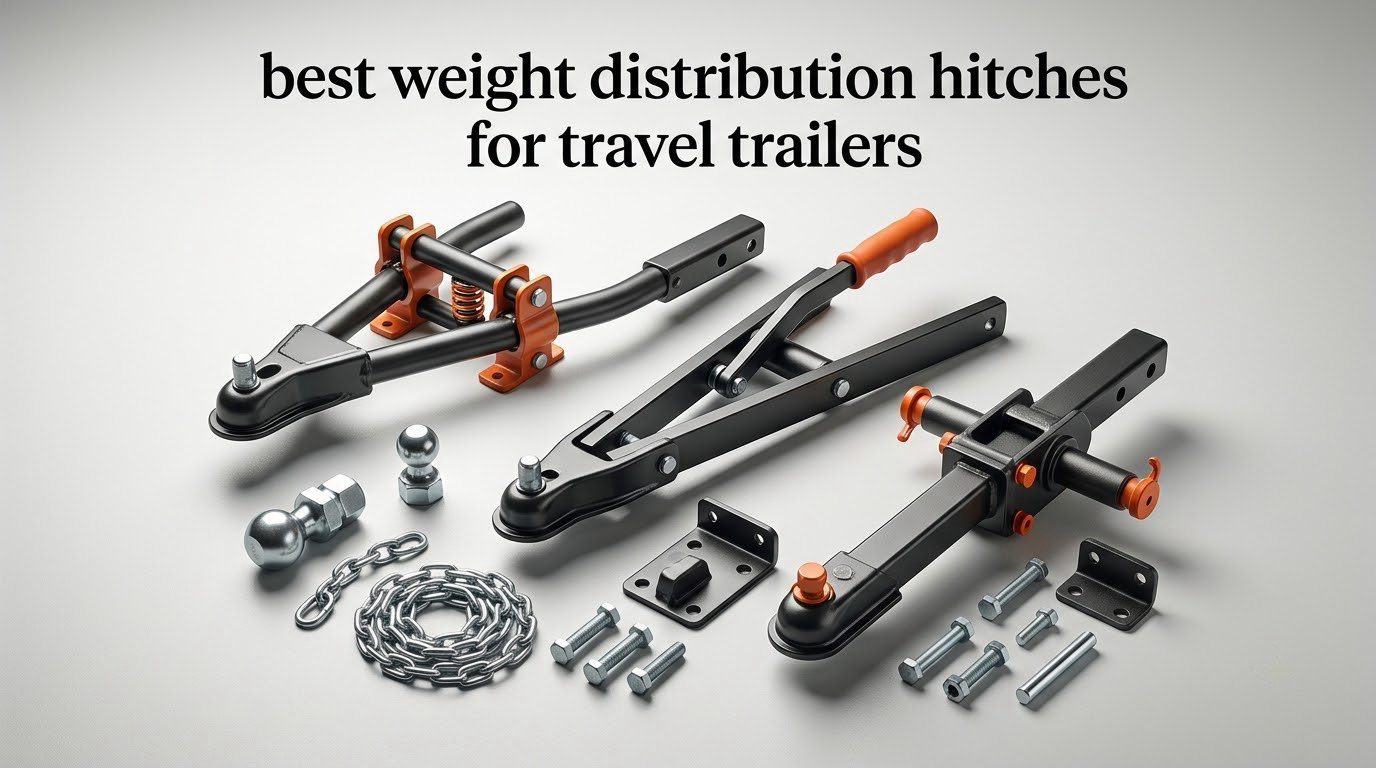
Choosing the best weight distribution hitches for travel trailers comes down to three numbers most buyers never check: your trailer’s loaded tongue weight, your truck’s remaining payload, and the size of the hitch class that covers both. Get those right and almost any well-built hitch performs. Get them wrong and no brand name will save the tow.
A weight distribution hitch is a hitch assembly that leans part of your loaded trailer’s tongue weight forward onto the truck’s rear axle. It transfers roughly half of the tongue load to the truck, puts the front steering tires back on the road, and adds built-in resistance to sway. The hitch itself weighs 55 to 105 pounds depending on the design, so it also eats into the payload capacity you thought you had left.
Here is the honest part first. On the iRV2 hitch thread, several long-term owners point out that the mainstream systems from Andersen, Equal-i-zer, Blue Ox, Fastway and EAZ-Lift do essentially the same job when the trailer’s weight balance is correct and the hitch is tensioned properly. The gap between budget and premium designs is not “safe versus unsafe.” It is noise, ease of adjustment, and how the rig behaves when you back into a tight site.
What follows is a pick for all ten mainstream systems, plus the sizing math, the setup sequence, and an honest look at who should skip this purchase entirely. If you are still cross-shopping tow vehicle hardware, our trailer hitch roundup covers the receiver and ball choices that pair with these units.
Table of Contents
Top 3 Best Weight Distribution Hitches for Travel Trailers (October 2026)

Camco Eaz-Lift Elite 1000 lb Kit
- Manually adjustable sway control
- Ready-to-tow ball and chain package
- Spring bars fit either side

Camco Eaz-Lift ReCurve R3
- Top-loading grease-free spring bars
- Chain-free quiet operation
- Quick bolt-turn sway clamp

Fastway Connect
- 1000 lb tongue weight rating
- Chain-and-arm design
- Pre-installed 2-5/16 inch ball
Best Weight Distribution Hitches at a Glance in 2026
| Product | Specifications | Action |
|---|---|---|
| Camco Eaz-Lift Elite 1000 lb Kit |
|
Check Latest Price |
 CURT 17063 Round Bar 14K CURT 17063 Round Bar 14K |
|
Check Latest Price |
 Andersen 3380 No Sway No Bounce 8 inch Drop Andersen 3380 No Sway No Bounce 8 inch Drop |
|
Check Latest Price |
 Husky Towing 30849 Husky Towing 30849 |
|
Check Latest Price |
 CURT 17500 TruTrack 4P 10K CURT 17500 TruTrack 4P 10K |
|
Check Latest Price |
 Equal-i-zer 4-Point Sway Control 10K Equal-i-zer 4-Point Sway Control 10K |
|
Check Latest Price |
| Fastway Connect |
|
Check Latest Price |
 CURT 17422 Short Trunnion 15K CURT 17422 Short Trunnion 15K |
|
Check Latest Price |
| Camco Eaz-Lift ReCurve R3 |
|
Check Latest Price |
 Fastway e2 2-Point Round Bar 8K Fastway e2 2-Point Round Bar 8K |
|
Check Latest Price |
1. Camco Eaz-Lift Elite 1,000 lb Kit: Best Overall Weight Distribution Hitch
- Levels the tow vehicle and cuts highway sway
- Manually adjustable sway control clamps on and off
- Ball and sway ball arrive pre-installed and torqued
- Spring bars mount on either side of the hitch head
- One-year limited warranty on material and workmanship
- Printed instructions are unclear
- Sway bar is loud during slow tight turns
- Included hitch pin wore after roughly 2500 miles
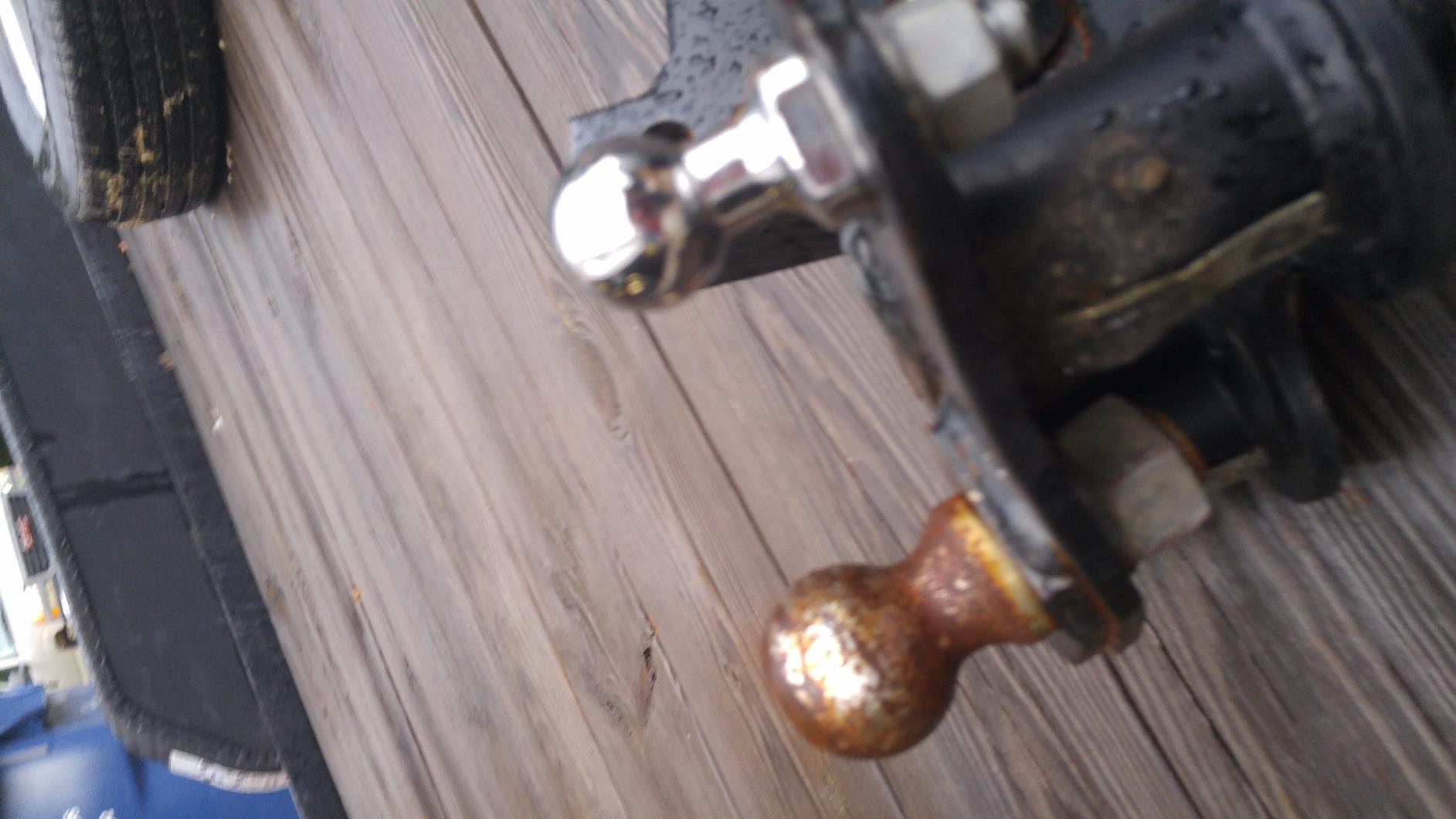
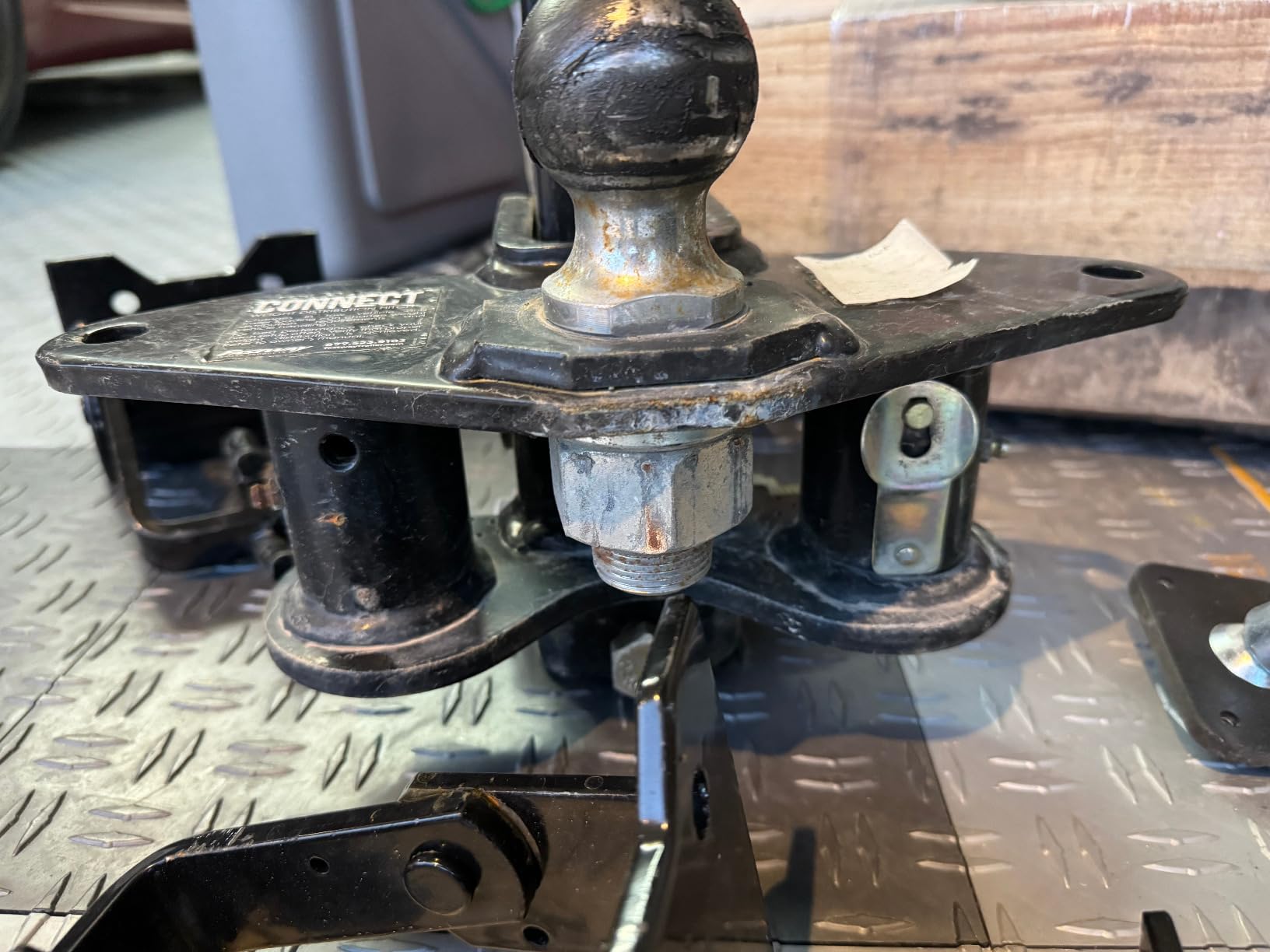
This is the kit I keep coming back to because it removes the two steps that trip up first-time installers. The 2-5/16 inch hitch ball and the sway control ball arrive already mounted and torqued in the box, so the first job is not wrestling with a loose ball on a greasy thread.
The included U-bolt and chain package is genuinely complete. No other kit in this roundup arrives with that much of the hardware laid out for you, and for a first weight distribution hitch that matters more than any spec line.
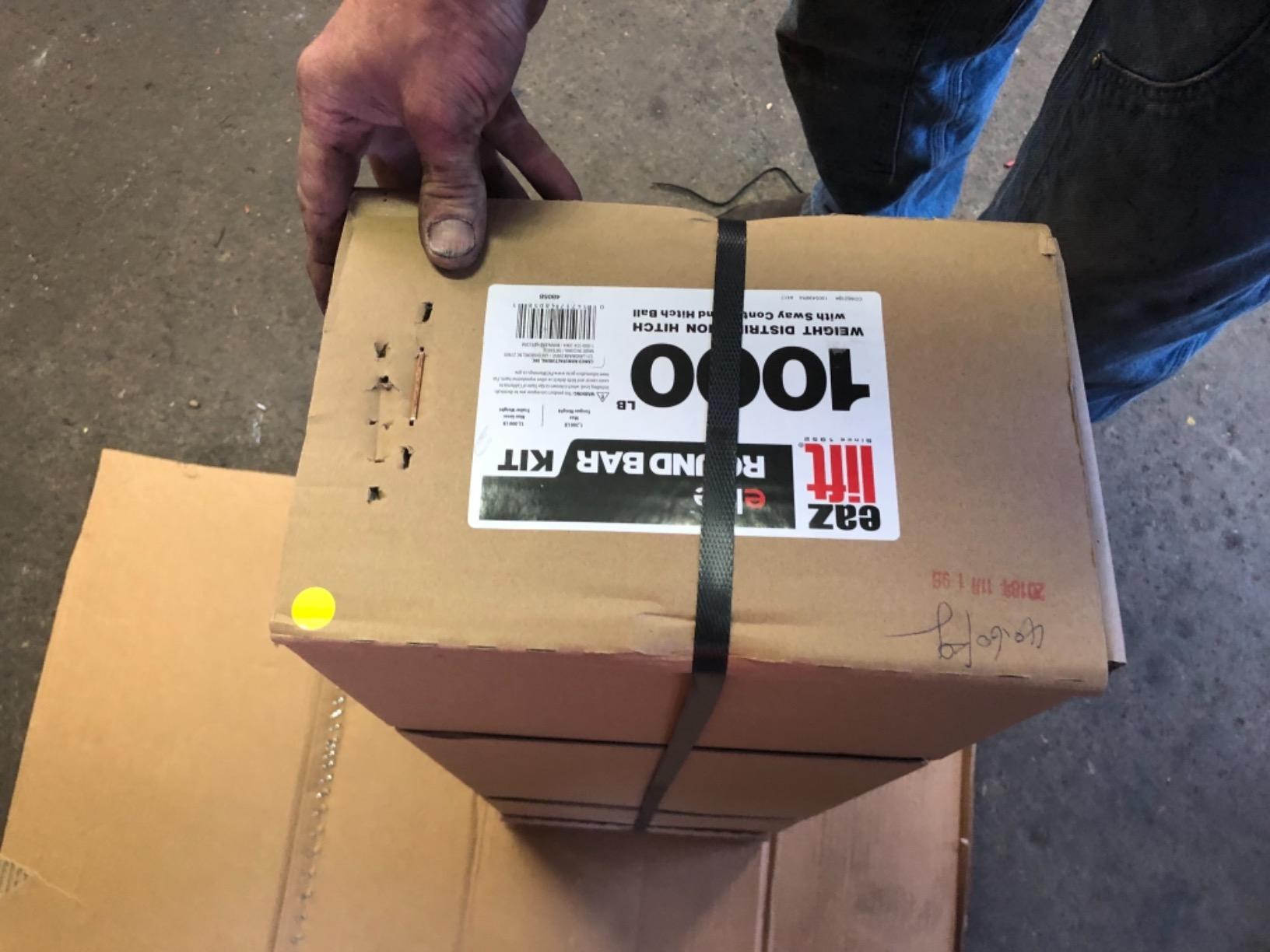
The manually adjusted sway control is the piece buyers argue about. It uses a clamp on an external arm rather than a friction plate buried in the head, so you can wind resistance up or take it completely out of the way without pulling pins. Owners who set it correctly report it is effective at highway speed once dialled in, and they say the whole sequence takes about an hour once you know the order.
The spring bars are interchangeable and can sit on either side of the hitch head, which matters when your trailer frame has a bracket on the near side or when the receiver position pushes the assembly close to the exhaust.
The 1,000 pound version is the one that needs a large torque wrench to install, and several buyers fitted a taller rise shank to suit a higher trailer frame. There is also an 800 pound kit in the same family if your loaded tongue weight lands lower.
What to check before you buy
Confirm your loaded tongue weight lands inside this kit’s class with headroom. A hitch that is right at its limit in warm weather with a full trailer and a full tow vehicle has no margin for the load you add at the campground store.
Then check the receiver height. The supplied shank may not drop far enough to level the trailer, and a rise shank is an add-on cost that catches first-time buyers out.
Where it falls short
The instructions are the weak point. Plenty of owners worked from videos or from an experienced installer’s guidance instead, which tells you the printed sequence does not communicate the setup on its own.
The sway control bar is also genuinely loud in slow tight turns, and the included hitch pin showed wear sooner than a lot of owners expected. Both are fixable, neither is a dealbreaker.
2. CURT 17063 Round Bar 14K: Best for Heavy Trailers
CURT 17063 Round Bar Weight Distribution Hitch with Sway Control, 14,000 lb
- Forged steel round spring bars and a fabricated head
- Integrated grease zerk fittings in the head
- Adjustable 2 inch shank flips for rise or drop
- Pre-torqued 2-5/16 inch trailer ball
- Carbide black powder coat resists corrosion
- Round bars must be removed for tight turns or backing
- Spring bars need periodic greasing
- Heavy at 100 lb
This is a traditional round bar system, and it is the honest traditional answer for a heavy travel trailer. The forged steel round spring bars and the fabricated head are rated across a 1,000 to 1,400 pound tongue weight window, which covers the mid-size to heavy family trailer without upsizing to the biggest class on the market.
The lift handle and hookup brackets are thoughtful details. They make the job of levering the bars into place and attaching chains far less awkward than a bare bar setup, and that matters more than it sounds when you are doing it in a campground parking lot at dusk.
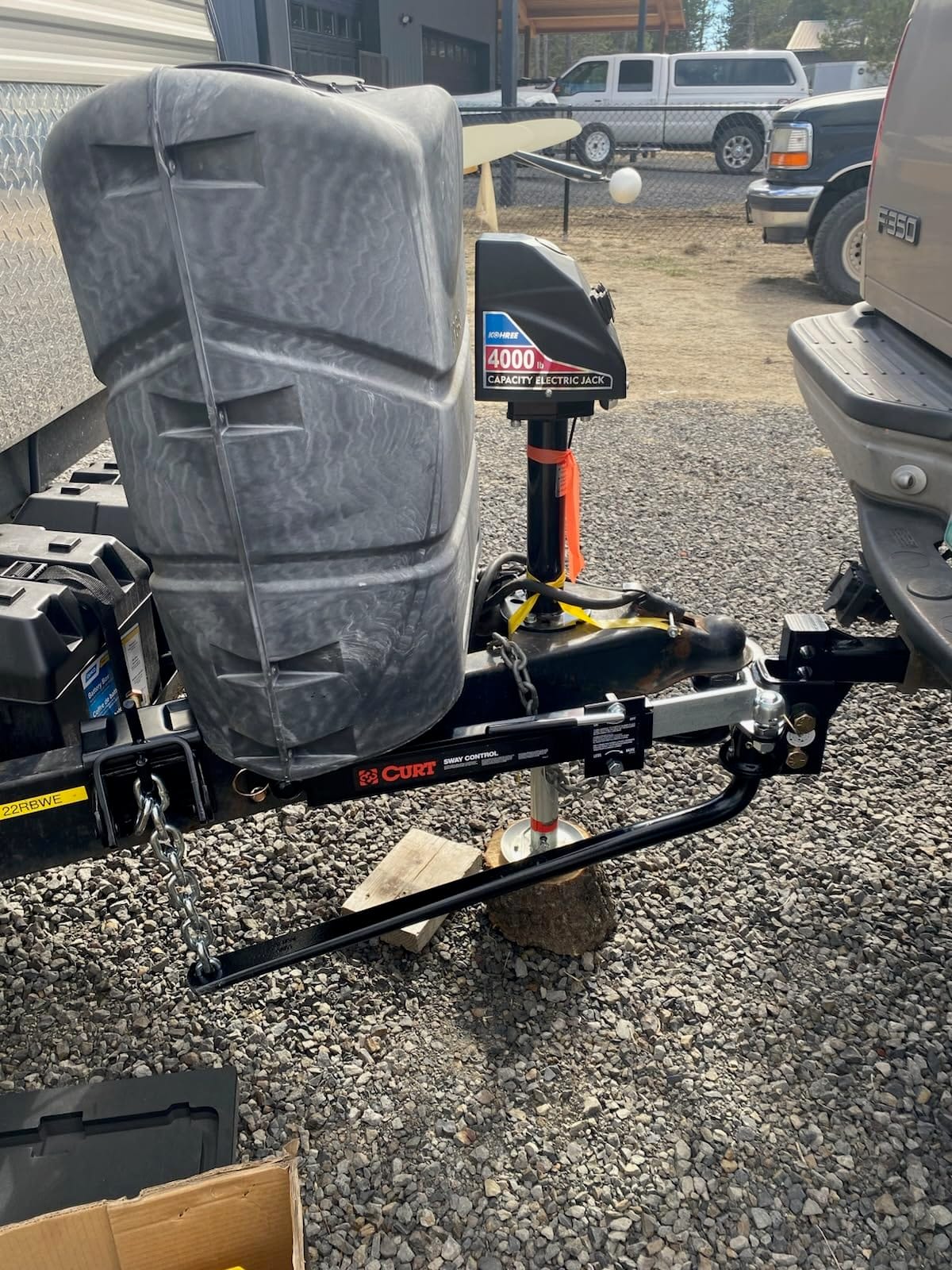
The integrated grease zerk fittings in the hitch head are the feature owners mention most, and they are the answer to the noise complaints that plague chain-and-plate designs. Lubricating the spring bar mounts takes a minute and it is the difference between a hitch that creaks and one that is quiet.
The adjustable 2 inch shank can be flipped for drop or rise, so the same hitch covers a standard-height truck and a lifted one if you pick the right orientation. The pre-torqued 2-5/16 inch ball means it is ready for the common travel trailer coupler.
This hitch is 100 pounds. If your truck’s payload is already tight after passengers, gear, and a tongue box, that number belongs in your decision before anything else.
What to check before you buy
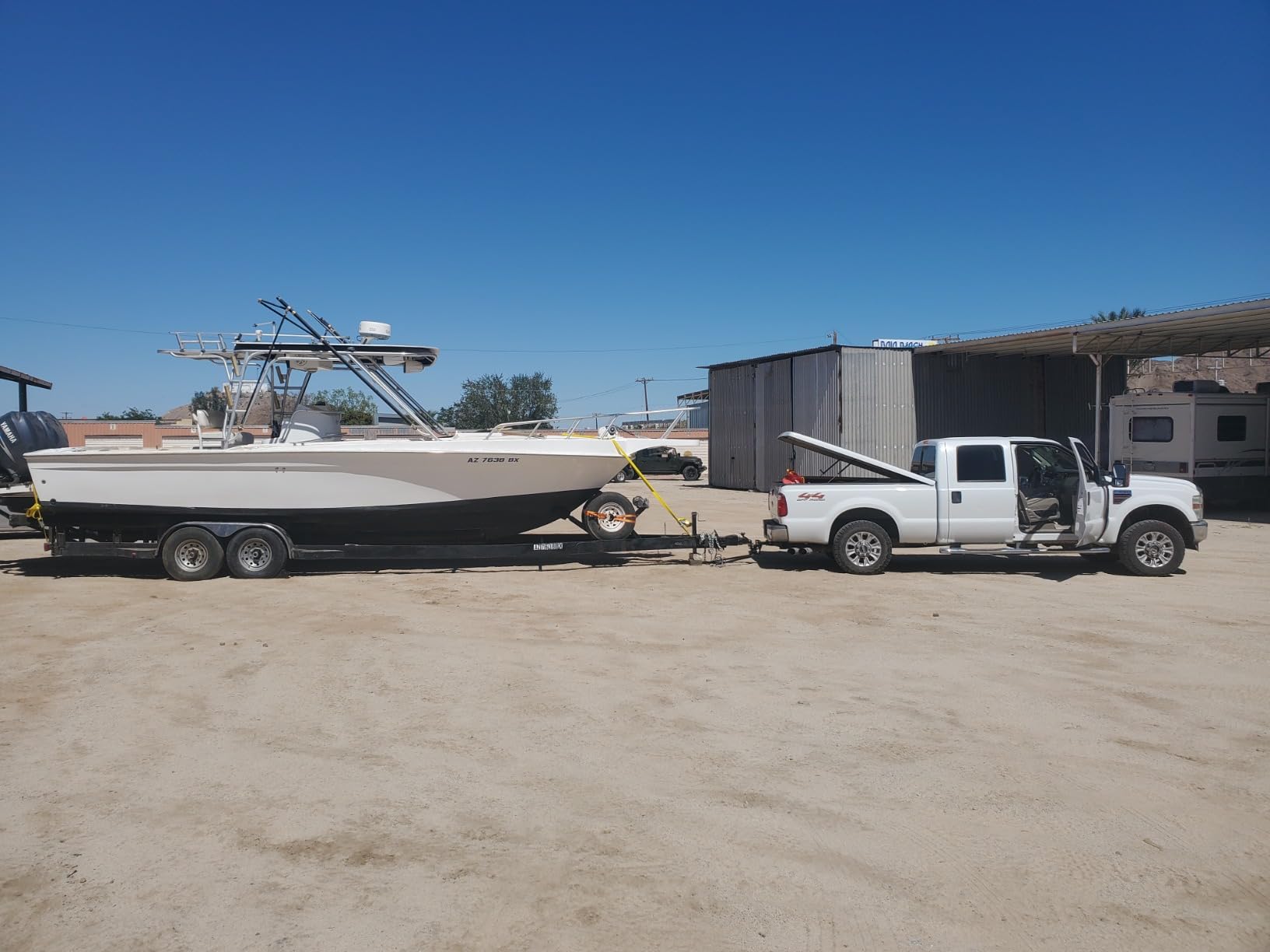
Match the class to your GVWR before anything else. The 1,000 to 1,400 pound tongue weight range spans a lot of trailers, and the right answer depends on your loaded weight rather than the dry weight printed on the trailer.
Plan for bar removal at every campsite. This is a round bar system, so the bars come off for sharp turns and for backing, and at 100 pounds that is a two-person job with the tailgate down.
Where it falls short
It needs grease. Owners who skip the zerk service hear the hitch long before they feel a problem, and the round bar geometry is louder than the top-loading designs on a rough road.
The included sway control kit is a separate add-on piece that mounts on the head, so budget for the full system rather than the head alone.
3. Andersen 3380 No Sway No Bounce: Best for Lifted Trucks
Andersen Hitches Weight Distribution Hitch 2 Inch Shank 8 Inch Drop 2-5/16 Inch Ball 14K GTWR 3 4 5 6 Inch Brackets Anti-Sway
- Tension chains set up and adjust faster than spring bar systems
- Integrated friction cone adds active sway control
- 8 inch drop suits lifted tow vehicles
- Choice of 3
- 4
- 5 or 6 inch brackets for head angle
- Made in the USA with a lifetime warranty
- Costs far more than conventional chain or spring bar kits
- Weighs 55 lb so it is not the lightest unit here
The reason buyers pick Andersen is the setup speed. Tension chains attach to the trailer frame instead of relying on heavy spring bars, and the adjustment is a matter of moving chain position rather than levering steel into a bracket. For anyone who has fought spring bars in a parking lot, that difference is immediate.
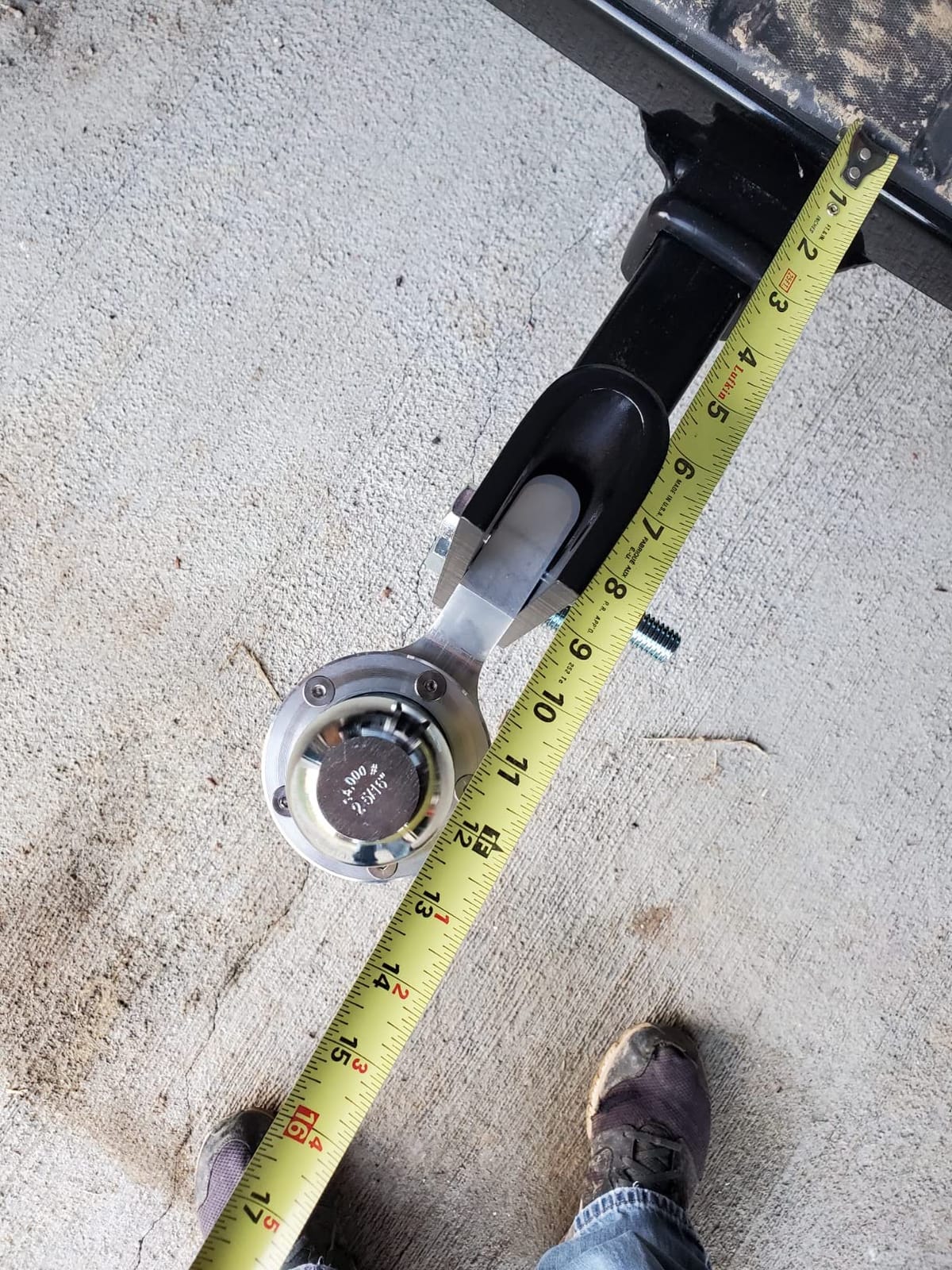
This variant is the 8 inch drop, which is the piece that makes it interesting on a lifted tow vehicle pulling a heavier trailer. The long drop gets the coupler close to level without stacking risers, and the 2-5/16 inch ball is rated for 14,000 pounds GTWR.
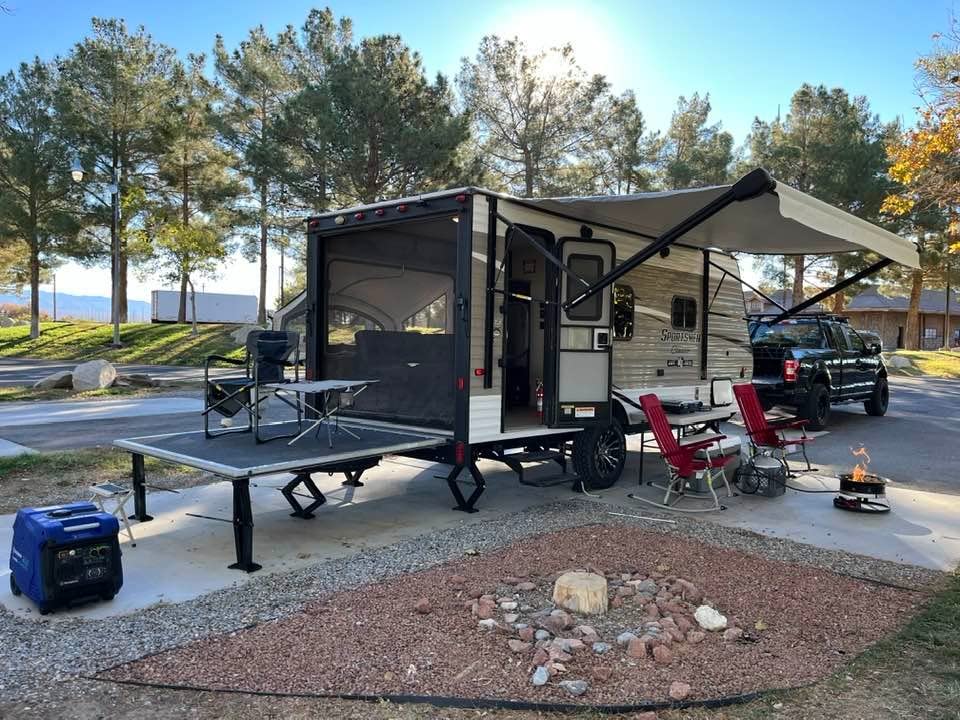
The integrated friction cone in the ball housing does the sway work alongside the chains. It damps sway and absorbs bounce rather than simply resisting a push, and buyers who came from a friction-plate equalizer describe the ride as settled rather than controlled.
The bracket choice matters more than it looks. Pick from 3, 4, 5, or 6 inch brackets to land on the head angle that gives you the weight distribution you need, which is exactly the variable that separates a well-set hitch from a mediocre one.
There are 4 inch, 6 inch, and 8 inch drop and rise options in the same family, so if your truck is not lifted you are not stuck with this drop figure.
What to check before you buy
Get the drop right for your truck. A lift kit changes the geometry completely, and buying the 8 inch drop for a standard-height tow vehicle is a straightforward way to end up with a coupler that will not level or clear.
Confirm your frame bracket size too. The 5 and 6 inch brackets are supplied in the kit here, and mismatched bracket height is the usual reason distribution comes out weak on the first attempt.
Where it falls short
The price gap is the honest drawback. This costs noticeably more than conventional chain or spring bar kits, and buyers who move up to it accept that premium for the no-sway design and the faster adjustment.
At 55 pounds it is among the lighter builds in this roundup, but it is not light, and chain tension still needs checking after the first few hundred miles.
4. Husky Towing 30849: Best for Mid-Size Trailers
- Bolt-together ball mount and shank makes assembly straightforward
- Interchangeable spring bars fit on either side of the head
- Rated 1200 lb tongue weight and 12000 lb GTW
- Includes 2-5/16 inch trailer ball and sway control unit
- Black polyester finish resists rust and corrosion
- Very heavy at 104 lb and bulky behind the bumper
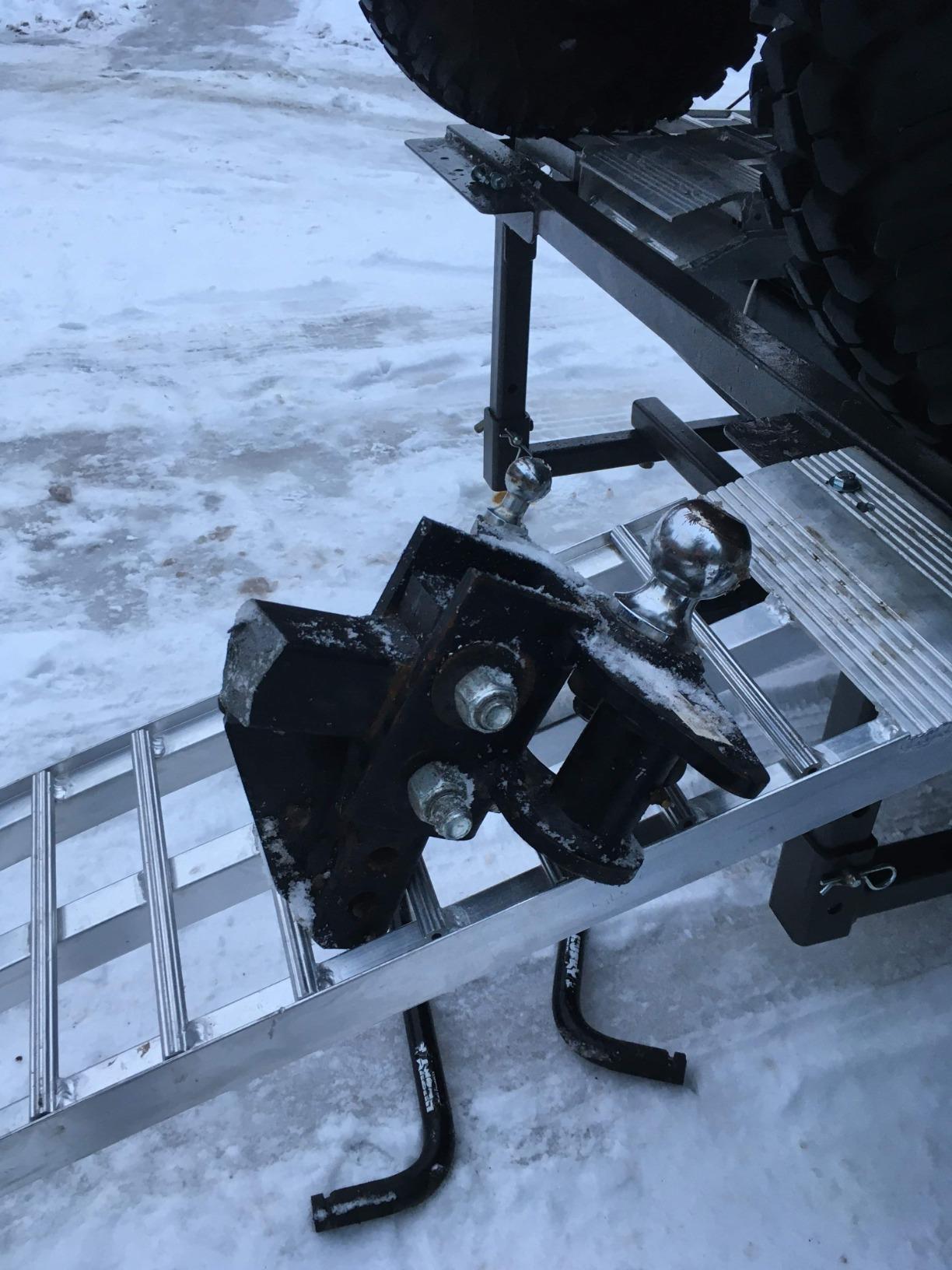
- Lift brackets and spring bars crowd the space behind the bumper
This is a full-size traditional unit with a 1,200 pound tongue weight rating and 12,000 pounds of gross trailer weight behind it, which puts it squarely in the mid-size travel trailer slot. Owners rate the assembly as straightforward, and the bolt-together ball mount and shank design is why.
Eight inches of total height adjustment gives a lot of room to level the rig. Rise is 5-5/8 inch, drop is 2-3/8 inch, the shank is 10 inches long, and ball to pin hole measures 12-3/4 inch, so the numbers usually work in your favour on a standard truck.
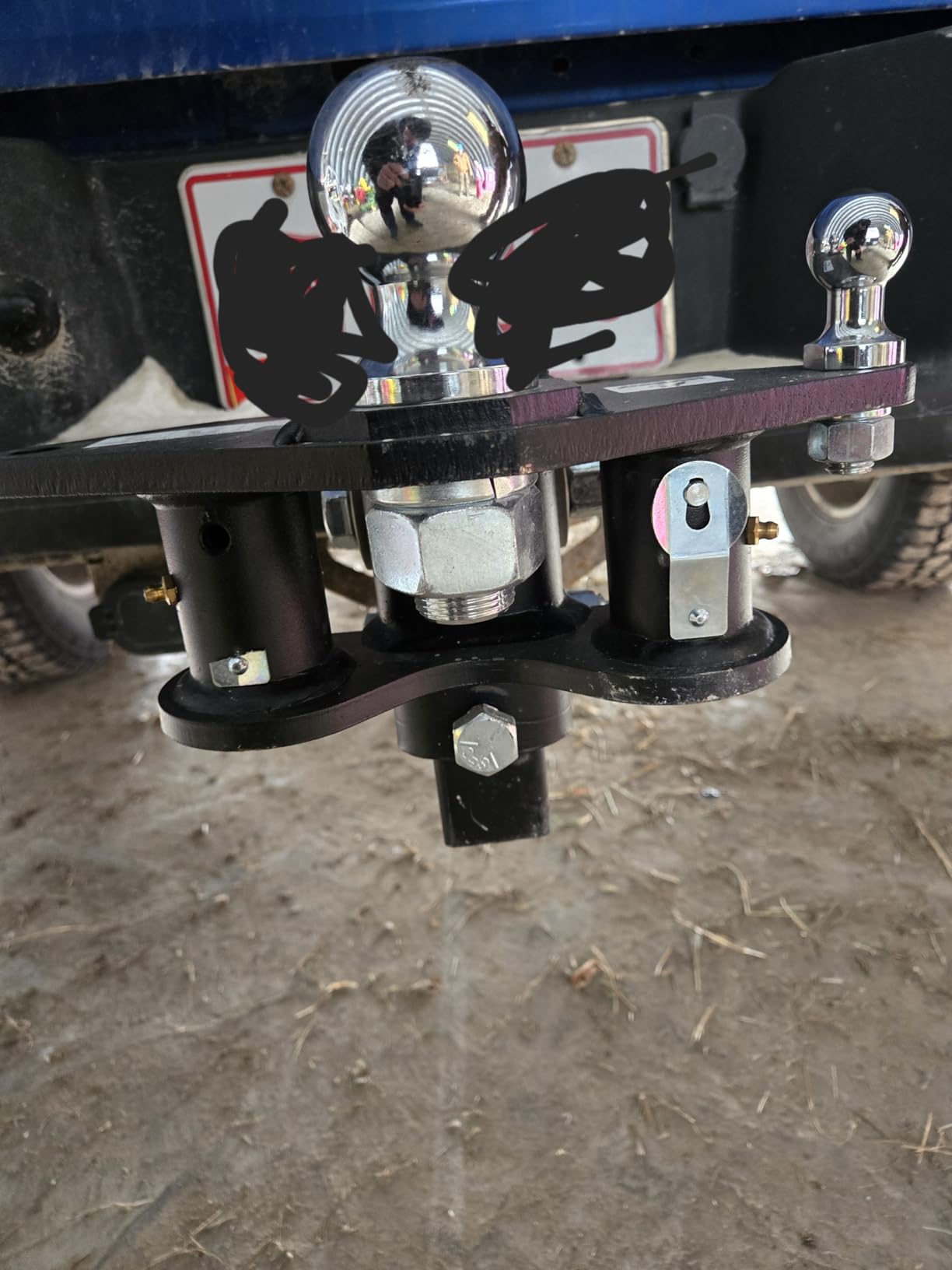
The head assembly uses a 1-1/4 inch hole, which is the detail that catches people mid-purchase. The trailer ball has to take a 1-1/4 inch shank, and the 2-5/16 inch ball included here is specified to match. Check that before you assume any standard ball will work.
The interchangeable spring bars fit on either side of the hitch head, so you are not blocked by which side your trailer frame brackets sit on. Assembly hardware and chains come in the box.
There is a dual sway control platform, so you have a place to mount the sway control unit rather than improvising a bracket on the frame.
What to check before you buy
Verify the ball shank diameter before you order a replacement ball. The 1-1/4 inch hole in the head is a different interface from the common setup, and mismatching it means returning the whole unit.
Look at your truck’s payload sticker. at 104 pounds this is one of the heaviest builds in the roundup, and the hitch weight lands on the rear axle along with the trailer’s tongue weight.
Where it falls short
Bulk behind the bumper is the recurring complaint. The spring bars and lift brackets take real space, and owners notice it when they are hooking up in a tight spot.
It is a manual system. The bars come off for backing and sharp turns, so this is not the hitch for a couple who backs into a cramped site every weekend.
5. CURT 17500 TruTrack 4P: Best Four-Point Sway Control
CURT 17500 TruTrack 4P Weight Distribution Hitch with Sway Control, 10K
- Four points of active sway control resist sway in crosswinds and passing semis
- Spring and cam system with hardened components
- Adjustable fixed-support brackets give positive connection
- Stays attached for tight turns and backing
- Well above average ground clearance
- Levelling takes practice and a helper
- Bent brackets and bars when over-torqued during setup
- Thin levelling guidance compared with the rest of CURT support
This is the design I recommend to anyone whose trailer has ever swayed in a crosswind or been pushed by a passing semi. Four points of active sway control work together, and owners switching to TruTrack from a chain-style equalizer report the sway problem largely disappears and the trailer tracks straight.
Unlike a friction plate system, TruTrack uses a spring and cam arrangement with hardened components. The welded head has cast pieces and trunnion-style forged steel spring bars, and the adjustable brackets provide a fixed support rather than a chain link carrying the load.
It also stays attached for tight turns and backing, which removes the single most irritating task in this whole category. Ground clearance is well above average compared with chain and spring bar hitches, and that is not a small thing when you are pulling a V-nose trailer over uneven access roads.
The 800 to 1,000 pound tongue weight class covers a 10,000 pound trailer. The adjustable 2 inch shank and 2-5/16 inch ball are standard, and the fixed-support brackets are the component that decides how the connection feels once you are rolling.
There are other configurations in the same family, including passive 2-point, 10,000 to 15,000 pound 4-point, and 5,000 to 8,000 pound 4-point versions.
What to check before you buy
Budget the setup time honestly. Owners report that getting the trailer properly levelled can take several hours with a helper, and that is the main reason people regret this purchase. If your tow vehicle has a factory lower hitch height, the adjustment is wider, not narrower.
Confirm the variant you are buying matches your trailer. A 10,000 pound 4-point active unit and a 5,000 to 8,000 pound 4-point unit behave very differently at the same tongue weight.
Where it falls short
Over-torquing during setup is the real failure mode here. A few owners bent the L-brackets and levelling bars by cranking the system too tight, and that damage is not covered by a warranty that was designed for towing loads, not assembly errors.
The paint can flake and surface rust can show after a couple of seasons of heavy use, and the levelling guidance is thinner than the rest of the CURT support material.
6. Equal-i-zer 4-Point Sway Control 10K: Best for Parts Availability
- Integrated 4-point sway control gives strong sway resistance
- Transfers tongue weight to all axles and keeps the truck nose level
- Improves steering and braking response
- Works with nearly all bumper-pull trailers including surge brake models
- Limited lifetime warranty with a wide range of ratings
- 2-5/16 inch hitch ball is sold separately
- Heavy at 102 lb and hard to remove and reinstall
- Costs more than basic chain-style hitches
On the Forest River and Heartland owner forums, the most repeated reason for choosing Equal-i-zer is not engineering. It is that replacement parts are available almost anywhere, and someone in the thread puts it plainly: the parts are available anywhere, so the hitch keeps working for years. That is a real advantage over any single-brand ecosystem.
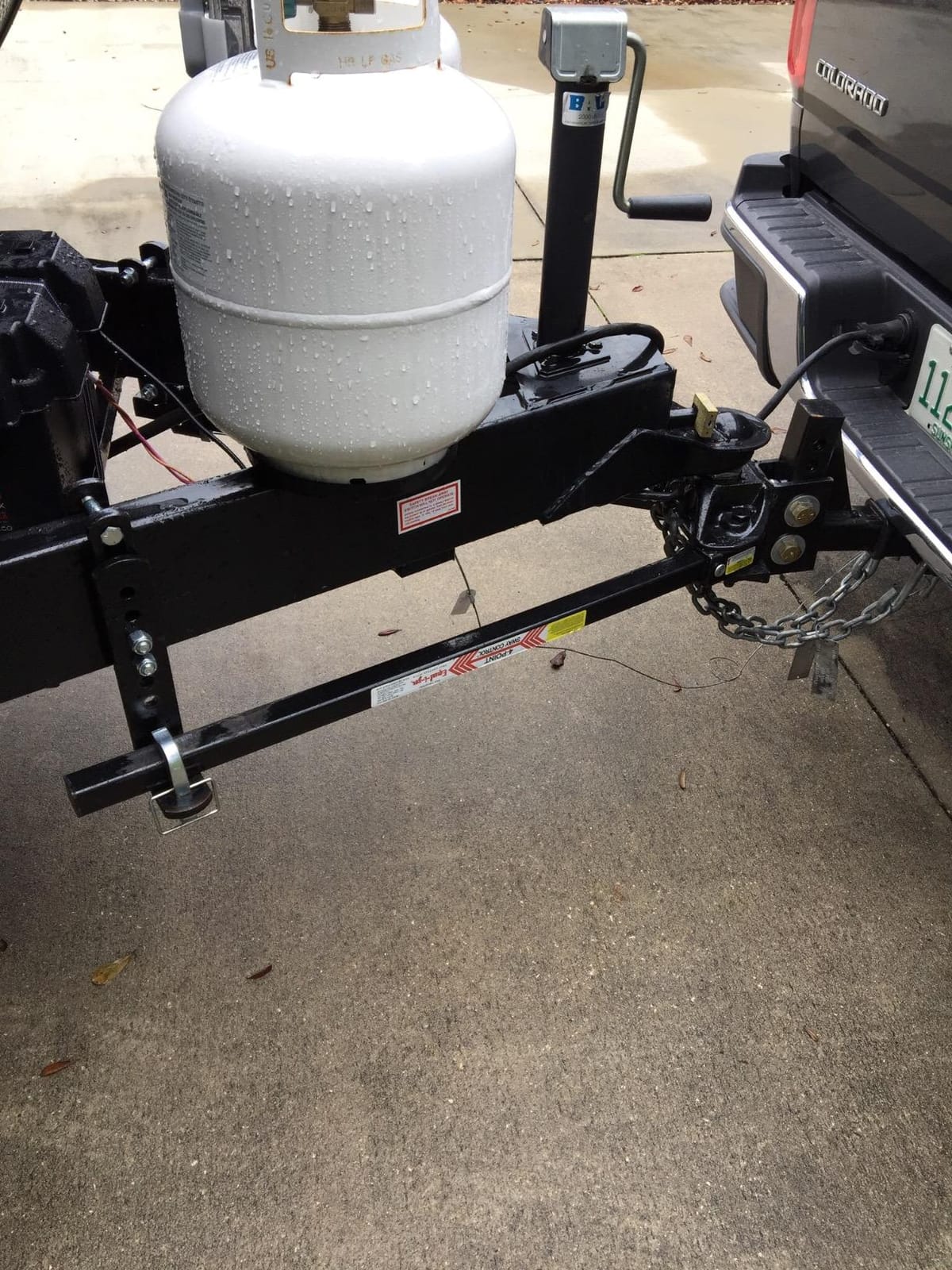
The integrated 4-point sway control is the strongest sway resistance in the traditional category. The weight distributing design transfers tongue weight to all the axles and keeps the front of the tow vehicle planted, and it works with virtually all bumper-pull trailers including those with surge brakes, which is a large part of the travel trailer world.
The spring bars measure 36 inches long by 1-3/8 inch wide on a 12 inch shank, with the sway control brackets mounting 27 to 32 inches back from the center of the coupler. Maximum trailer frame height is 6 inch, with a 7 inch rise from the top of the receiver opening and a 3 inch drop, and that geometry is what you measure before you buy.
The rating family runs from 400 to 1,600 pounds of tongue weight in steps, with or without a hitch ball. The 400 pound, 600 pound, 1,200 pound, 1,400 pound, and 1,600 pound classes all exist, so the sizing decision becomes simple rather than a guess.
One purchase-planning note: the 2-5/16 inch ball is not included with this configuration. Budget for it separately.
What to check before you buy
Measure your frame height and your receiver opening before ordering. The 6 inch maximum frame height and 3 inch maximum drop leave less room than some competitors, and a mismatch here is the most common Equal-i-zer installation complaint.
Decide on the ball up front. This variant ships without one, and the standard 2-5/16 inch ball is a separate purchase.
Where it falls short
At 102 pounds it is a genuinely heavy lift, and it is a manual system that needs the bars removed for backing. If you back into tight sites daily, the inconvenience is real and constant.
The price sits above basic chain-style kits, and you are paying partly for the parts network rather than purely for performance.
7. Fastway Connect: Best Budget Weight Distribution Hitch
- Hardened steel chains and round bar arms level the tow vehicle
- Adjustment is a matter of changing which chain link attaches
- Reaches a 1000 lb tongue weight rating at the lowest cost in the group
- Pre-installed 2-5/16 inch ball plus shank with 3 inch drop and 7 inch rise
- Installs with no frame drilling required
- Chain and arm assembly is awkward and benefits from power tools
- Heavy at 89 lb
- Written directions and install video are weak
If the budget is the deciding factor, this is the one to look at first. It holds a category-leading rating, and it reaches a 1,000 pound tongue weight rating and 10,000 pounds of trailer weight without moving into premium money.
The design is straightforward: hardened steel chains connect the hitch arms to your trailer frame, and adjustment is done by changing which link of the chain attaches to the frame hook. There is nothing to lubricate on the friction path and no cam mechanism to learn.
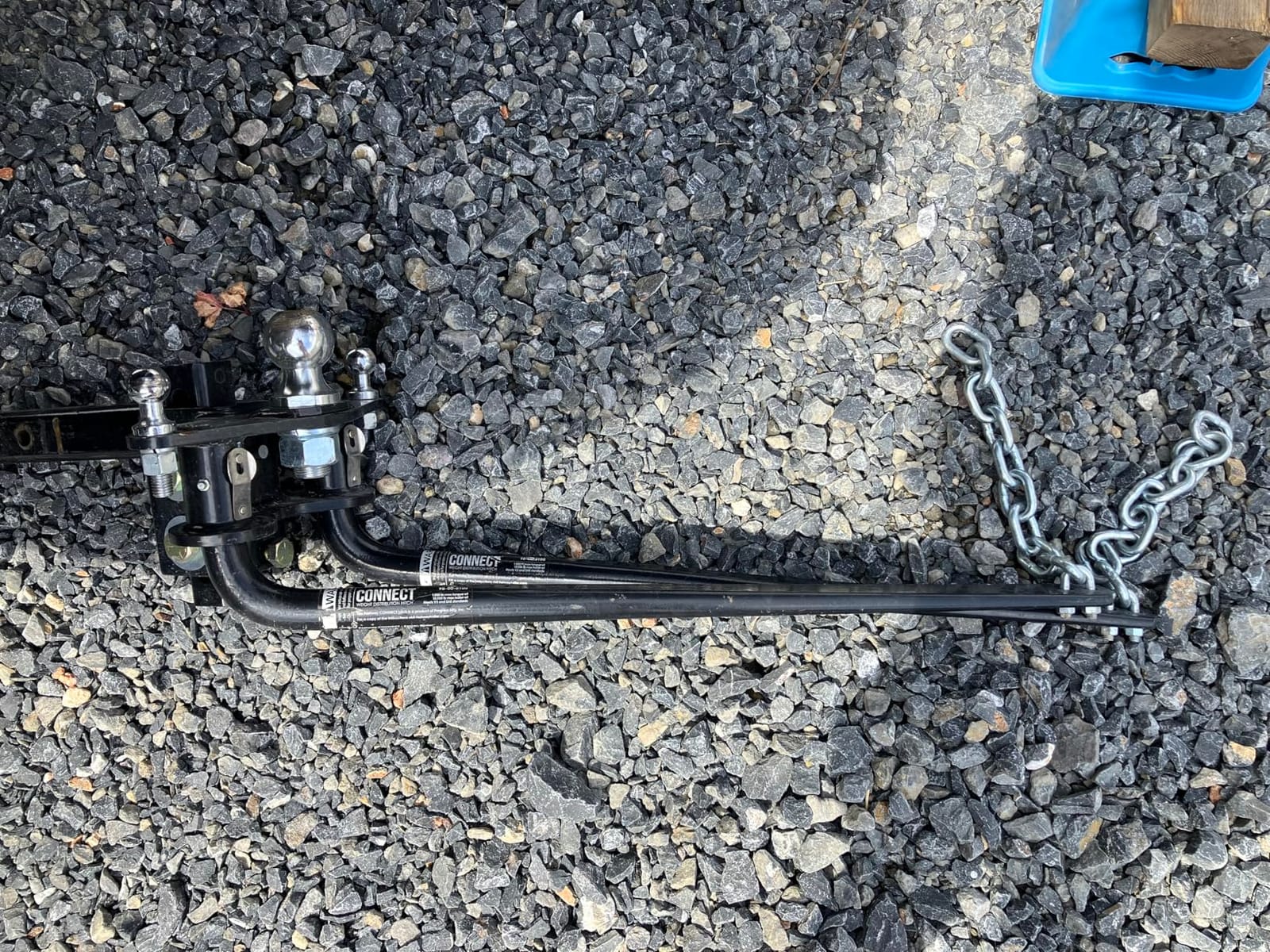
It ranks at the very top of its category for search interest among the hitches in this roundup, which tells you how many owners are running the same setup. Owners report it levels the tow vehicle and cuts sway noticeably for a 22 foot tag-along, which is a realistic match for this class.
The ball is pre-installed, and the standard shank gives you 3 inch drop and 7 inch rise for a 2 inch receiver, so most trucks are covered out of the box.
It installs on RV, cargo, utility, horse, and ATV trailers with no frame drilling, which matters if you ever change trailers.
What to check before you buy
Have a second pair of hands or a power tool on hand. The chain and arm assembly is genuinely fiddly, and most buyers say a ratchet or a helper cuts the job time dramatically.
Check that a 1,000 pound tongue weight rating is not overkill for your trailer. Several owners note it is more hitch than a small trailer needs, and a lighter class would leave more of your truck’s payload available.
Where it falls short
The documentation is the weak link. The shipped instructions and the install video do not match the quality of the design, so expect to rely on community walkthroughs for the setup sequence.
At 89 pounds it is a heavy lift for a budget unit, and a 10,000 pound rated hitch needs a truck rated to pull that much to be used as intended.
8. CURT 17422 Short Trunnion 15K: Best for 15,000 lb Trailers
CURT 17422 Short Trunnion Bar Weight Distribution Hitch with Sway Control, Up to 15,000 lbs., 2-Inch Shank, 2-5/16-Inch Ball
- Short trunnion bars and adjustable head make height changes easy
- Handles up to 15000 lb gross trailer weight
- Sway control kit mounts on built-in tabs
- Forged steel spring bars and heavy-duty head
- Reported to take roughly an inch of rear sag off a 2500HD
- Printed instructions often arrive damaged and unusable
- Supplied self-drilling screws snapped during installation
- Short trunnion design needs a specific mounting position
- Very heavy at 105 lb
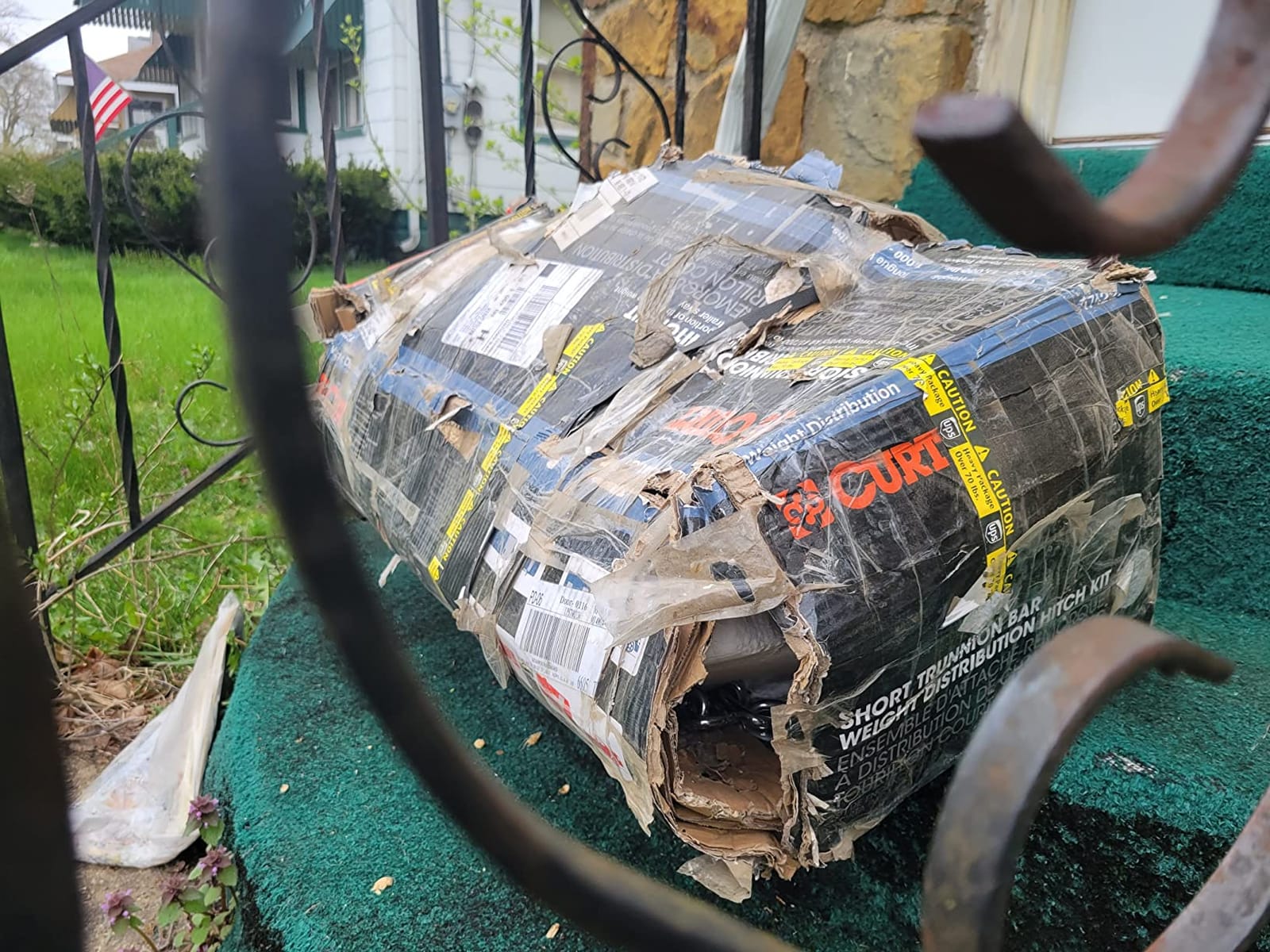
This is the pick when the trailer is genuinely heavy and the tow vehicle is a one-ton or a heavy three-quarter ton. The 15,000 pound gross trailer weight rating is the highest in this roundup, and the 28-3/8 inch trunnion-style forged steel spring bars are the reason the rating is credible.
Short trunnion bars and an adjustable formed head are the practical advantages. When the hitch height needs to change, the short bars move the geometry in smaller, more predictable increments than a long bar does, and owners report measurable results once it is set correctly.
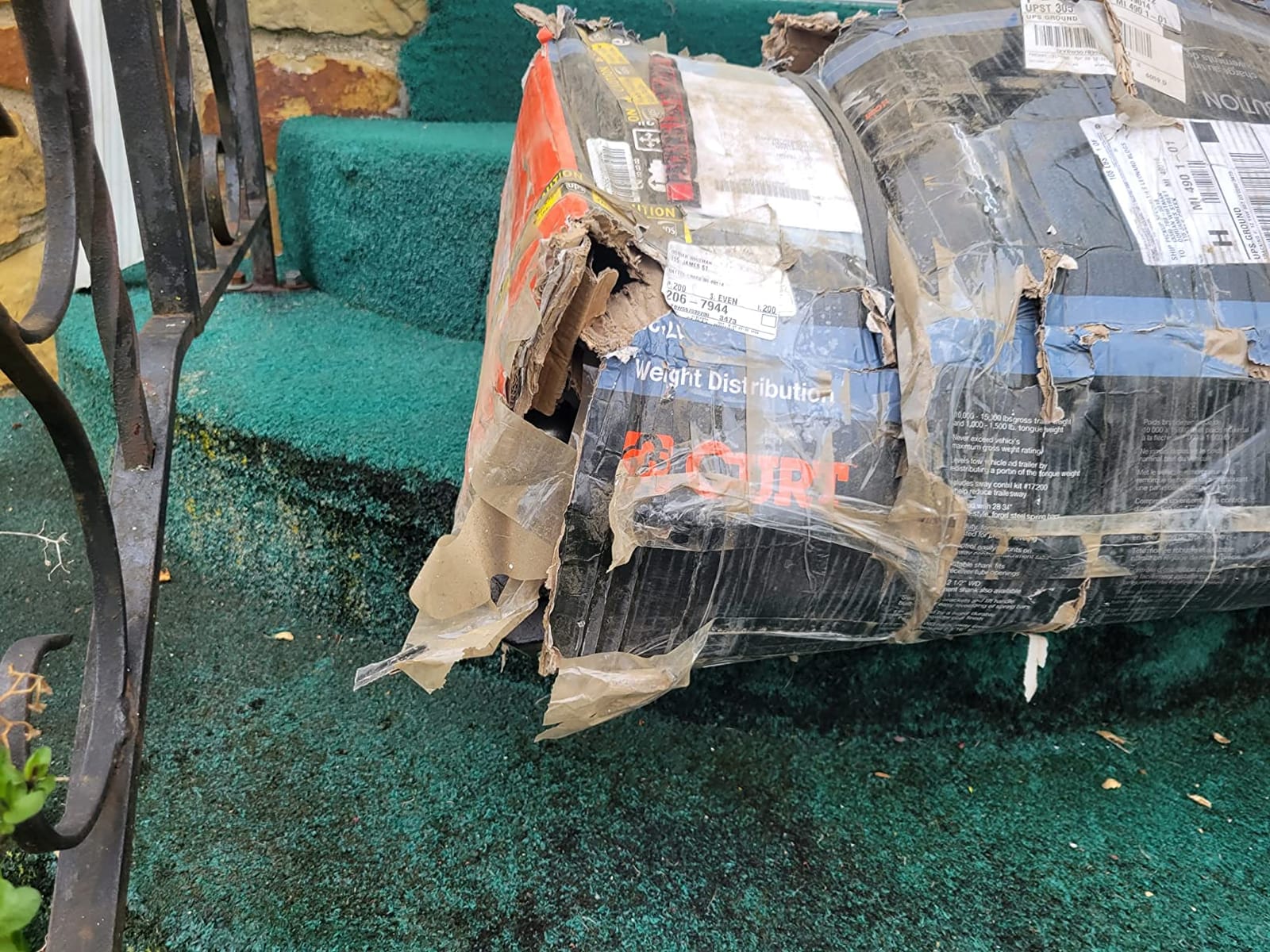
One owner reported that the setup took roughly an inch of rear sag off a 2500HD, which is the kind of specific before-and-after number you want from a weight distribution hitch. That is the whole job: put the rear axle back under load and the truck sits where it should.
The sway control kit mounts on built-in attachment tabs on the head, so you are not bolting a bracket onto the trailer frame. The 2 inch shank and 2-5/16 inch ball are standard, and the adjustable 2 inch shank can be flipped for drop or rise.
A 10,000 pound capacity version exists in the same family if your trailer is lighter than the 15,000 pound ceiling.
What to check before you buy
Pay attention to the mounting position. The short trunnion design only lines up correctly in a specific position, and getting it wrong means the head sits at the wrong angle and the distribution is off.
Plan the install around the paperwork. The printed instructions arriving damaged is a repeated complaint, so have a reliable written procedure ready before you start, and do not rely on what is in the box.
Where it falls short
The supplied self-drilling screws for the sway control ball bracket are weak enough to snap during installation. Have a replacement pack ready rather than discovering it halfway through the job.
At 105 pounds this is the heaviest build here, and installation and removal both need planning and a second person.
9. Camco Eaz-Lift ReCurve R3: Best Value for Quiet Towing
Camco Eaz-Lift ReCurve R3 RV Weight Distribution Hitch Kit, 1000 lb, 48752
- Top-loading spring bars drop in from above so they cannot fall out
- No chains and no greasing
- Quick bolt-turn sway clamp adjustment with supplied tool
- Stays attached for backing and tight maneuvering
- 1200 lb max tongue weight and 12000 lb max GTWR
- Heavy so removing it is a two-person job
- Included lock washer and nut strip when properly torqued
- Variant-specific instructions are hard to find online
Noise is the thing this design was built to solve. There are no chains, no grease, and no metal-on-metal wear surface at the bar mount, so owners who came from a chain-and-grease hitch describe it as a large upgrade in both hookup speed and noise. The listing claims 2-5/16 inch ball rated for 15,000 pounds, 1,200 pounds max tongue weight, and 12,000 pounds max GTWR.
Top-loading spring bars are the single best feature for real campground use. They drop in from above, which removes the chance of a bar falling out during a tight turn, and the same geometry gives better ground clearance than a bar that loads in from the side.
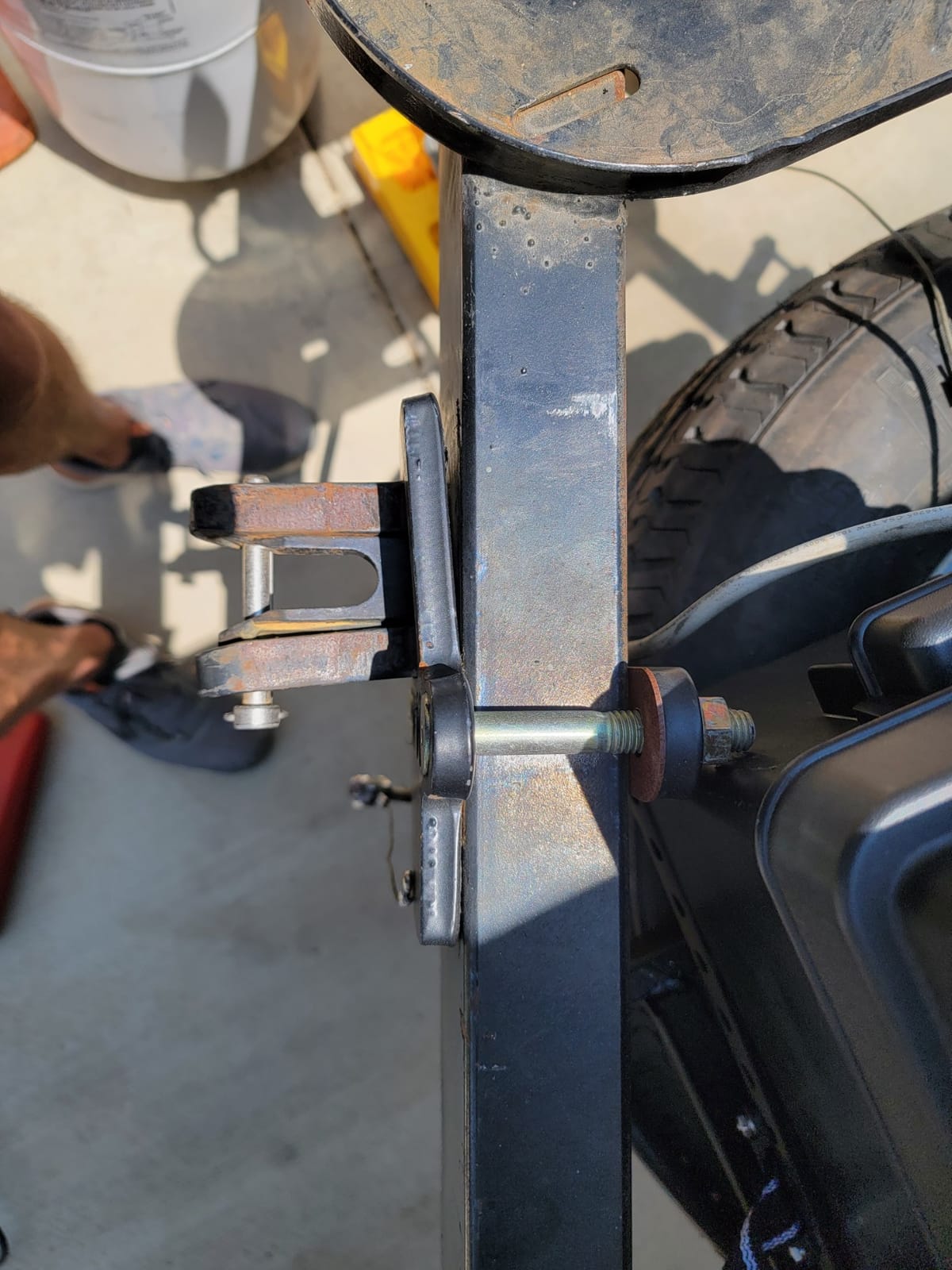
Sway control adjustment is a single bolt-turn clamp using the included tool, with an on and off position. That means you can switch it off to reverse or to squeeze into a tight site and switch it back on when you are rolling, without pulling a pin and hunting for a clip.
It stays attached for backing and tight maneuvering, which directly addresses the complaint that shows up most often in forum threads about this category. Spare part availability is listed at five years, and the warranty is limited to five years.
Setup is generally described as easy, and the top-loading design is the main reason: there is no bar to thread through a slot while you are holding a loaded trailer.
What to check before you buy
Have your own hardware on hand. The lock washer and nut included with the kit are of poor quality and strip when they are properly torqued, and several owners had to replace them at a hardware store mid-install.
Measure your receiver fit. Some buyers report play in the shank within the receiver, and a sloppy fit makes the bar tension read inconsistently every time you hook up.
Where it falls short
Support is the frustrating part. Instructions for this specific variant are not easily available online, and the phone-only support channel responds slowly by email, so you may be tuning distribution without a clear reference.
It is heavy, so pulling it off for a week away from the truck is a two-person job rather than a solo errand.
10. Fastway e2 2-Point Round Bar 8K: Best for Small Trailers
- Built-in two-point sway control removes the need for add-on sway hardware
- Can stay attached for backing and turning at any angle
- Bridges trailer and tow vehicle so they work as one unit
- Front axle stays planted for better steering control
- Backed by a 10-year limited warranty
- Ball is not included with this variant
- Lowest capacity class in the roundup at 800 lb tongue weight
- Rates 4.2 with a higher share of one-star reviews
The pitch here is convenience. Built-in two-point sway control means you are not adding a separate sway unit and then removing it every time you back up, and the e2 can stay attached for backing and turning in any weather or at any angle.
Because the design bridges the trailer and the tow vehicle so they act as one unit, the front axle stays planted and steering control improves. It is a simple idea executed without a cam mechanism or a friction plate stack to maintain.
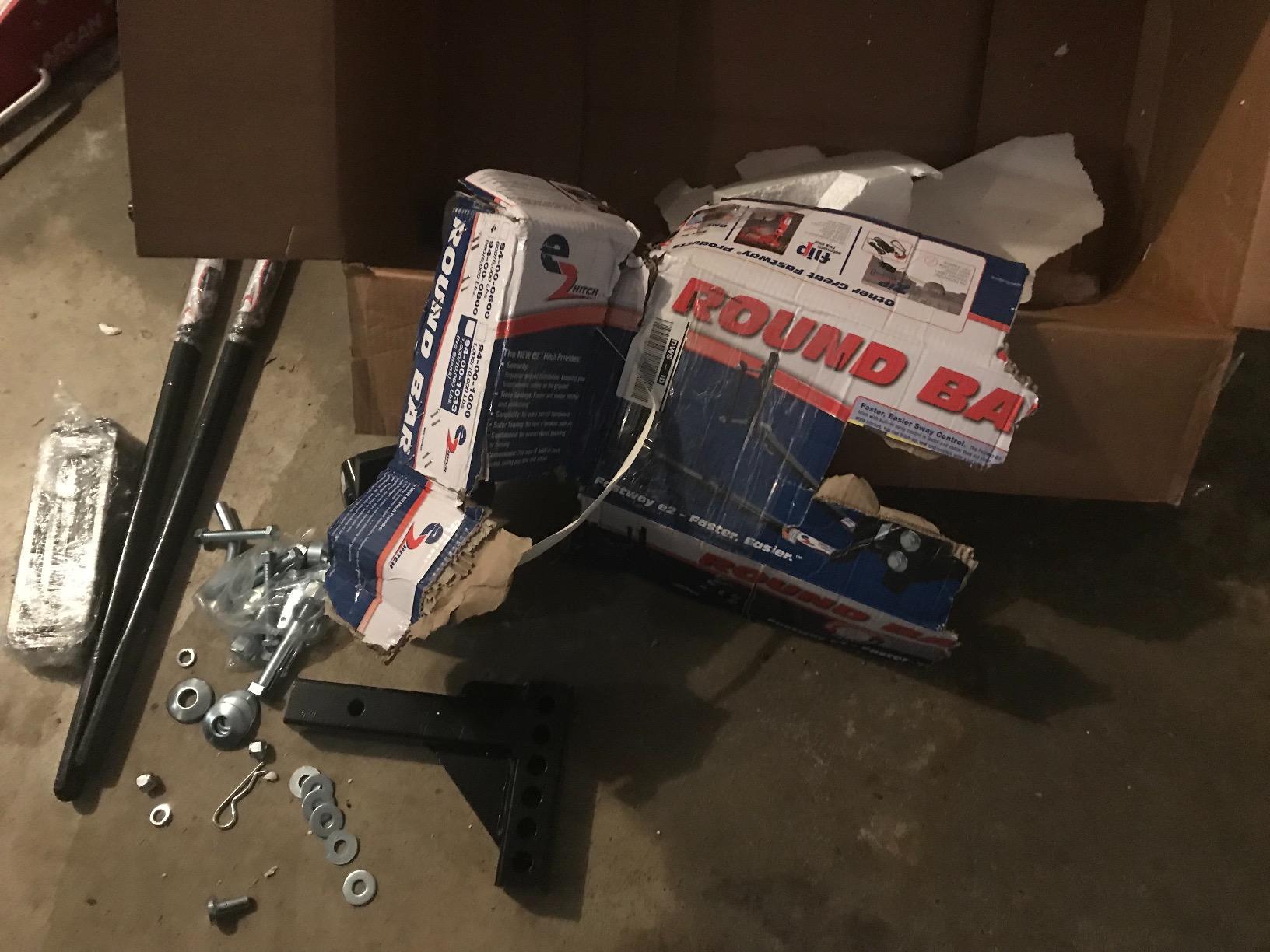
The capacity is the constraint that decides this one. At 800 pounds of tongue weight and 8,000 pounds of trailer weight, it is the smallest class in this roundup, and that number is the reason it is aimed at smaller trailers rather than mid-size family rigs.
The warranty is 10 years limited, which is longer than several premium hitches in this list, and the 2-point round bar architecture is straightforward to service if a component does need replacing.
Check the finish before you order. Other capacities in the same family include 6,000 pound and 10,000 pound round bar versions, and 10,000 pound versions are available with or without a shank and with or without a ball.
What to check before you buy
Run your loaded tongue weight against the 800 pound figure first. Owners who bought it for a larger trailer regret the mismatch, and the fix is a bigger capacity class rather than a different brand.
Confirm whether you need a ball. This variant ships without one, which is a purchase-planning gotcha that catches people at the trailer aisle.
Where it falls short
It rates 4.2 with a noticeably higher share of one-star reviews than the rest of this group, and it carries the lowest capacity class here. Buy it for a small trailer, not for a mid-size one.
Two-point sway control is inherently less capable than four-point. If your trailer has a history of sway in crosswinds, this is not the design that solves it.
Do You Actually Need a Weight Distribution Hitch?
Some of the most common questions on RV forums are people trying to talk themselves out of a purchase. If your setup matches the list below, you can likely skip it and put the money into a brake controller or better tires instead.
You probably do not need one if your travel trailer sits under roughly 5,000 pounds GVWR, your tow vehicle is a half-ton or a midsize SUV rated to pull that weight, and your loaded tongue weight lands at 10 to 15 percent of the loaded trailer weight. In that case the truck’s rear axle rating is the limiting factor, not the hitch.
You do need one if any of these apply: your trailer GVWR is above roughly 5,000 pounds, your loaded tongue weight is pushing the truck’s rear axle or receiver rating, your tow vehicle has a factory hitch that is not rated for the load, or you tow at highway speeds with a trailer that has a documented sway problem.
Two numbers settle it. Weigh the trailer loaded and multiply by 10 to 15 percent for the tongue weight range, then compare that to the rear axle rating and the receiver rating on the truck door sticker. If the tongue weight sits under both with room to spare, you can skip the hitch.
A poor trailer weight balance causes sway no matter what hitch is bolted to the receiver. If the trailer is nose-heavy or the cargo is all stacked at the back, fix that before spending on hardware.
What Are the Disadvantages of a Weight Distribution Hitch?
The main disadvantages are weight, cost, and inconvenience. The hitch itself adds 55 to 105 pounds to your rear axle, which reduces the payload you have for passengers and gear. Round bar and chain designs must be removed to back up, taking up a campground pitch every stop. Spring bars need periodic lubrication, and a poorly tensioned setup adds noise, porpoising over dips, and a risk of bent bars or L-pins.
That paragraph is the honest version, and it is why the sizing advice earlier matters. A hitch that is oversized for your trailer adds weight without adding capability, and a hitch that is undersized is a liability on the highway.
Trailer balance matters more than brand. If the trailer itself is nose-heavy, no weight distribution hitch will fix the sway, and money is better spent on moving the cargo.
How to Size a Weight Distribution Hitch for Your Trailer
Sizing takes four steps and about fifteen minutes. The order matters, because most undersized hitches are bought by picking a brand first and checking the numbers afterwards.
1. Weigh the trailer loaded. Use the trailer’s GVWR as the starting point if you have not actually weighed it, then measure your real loaded tongue weight with a tongue weight scale. This is the only number that cannot be estimated.
2. Convert to a tongue weight figure. Loaded tongue weight should be 10 to 15 percent of the loaded trailer weight. Multiply your measured tongue weight by 1.2 to find a hitch class with 20 percent headroom, which covers a full water tank, propane, and a heavier battery bank.
3. Match the class to your GVWR. As a rough map, a 600 to 700 pound class suits lightweight travel trailers up to about 6,000 pounds, an 800 to 1,000 pound class covers roughly 5,000 to 10,000 pounds, and a 1,200 to 1,400 pound class is for 10,000 to 14,000 pound trailers. Anything above 14,000 pounds needs the largest class available.
4. Verify against the truck. Add the hitch weight itself to the loaded tongue weight, then check that total against the truck’s rear axle rating and the receiver rating. A 100 pound hitch behind a half-ton is not a rounding error.
On the Curt versus Equalizer question that comes up constantly: CURT offers the widest capacity range and the TruTrack 4-point design, while Equal-i-zer concentrates on traditional 4-point systems and wins on parts availability. Curt is the stronger choice if you want four-point sway control and the ability to back up without removing anything. Equal-i-zer is the stronger choice if you plan to keep a hitch for many years and replace components yourself.
For the trailer itself, our guide to Jetter trailers covers the tow ratings you will see listed, and our livestock trailer roundup covers the non-travel-trailer uses where tongue weight runs proportionally higher.
The Four Sway Control Designs Explained
Every hitch in this roundup uses one of four sway control philosophies. Understanding which one you are buying explains most of the differences in noise, maintenance, and feel.
Friction 2-point. A wedge or cam applies friction at two points on the hitch head. It is simple, light, and usually the least expensive, but it is also the least able to resist a sustained sway event.
Friction 4-point. The same principle applied at four contact points, which roughly doubles the resistance. This is what the Equal-i-zer and the CURT TruTrack 4-point both deliver, and it is the traditional benchmark for crosswind stability.
No-sway inertial. The Andersen design leans on a friction cone inside the ball housing that dampens sway and absorbs bounce rather than simply resisting. There is no lubrication to service and no pad to wear.
Chain and cam. Chains carry load and a cam or clamp controls how much resistance they offer. The Camco Eaz-Lift Elite is a manual clamp version of this, and the Fastway Connect is a pure chain-and-arm version.
Two designs worth calling out are the articulated pivot, where the pivot point projects forward of the coupler for maximum leverage, and the top-loading spring bar, where the bars load in from above. Neither appears as a dedicated pick in this roundup, but the Camco ReCurve R3 is the closest example of the second, and it is the design several owners rate as the quietest.
Noise vs Sway Control: The Tradeoff Nobody Explains
There is a rule of thumb repeated across the RV forums we reviewed, and it holds up. Stiffer spring bars resting directly on L-brackets give better weight distribution and better sway control, but they are noisier and ride rougher. Thinner bars and chain attachments ride quieter and smoother, and they give up some distribution capability and some sway control.
This is a genuine engineering tradeoff, not a quality difference. A hitch that feels dead solid over a road surface is doing more work at the hitch head, and that work is audible. A quieter hitch is absorbing less of the load path.
The practical takeaway is to pick your noise tolerance before you pick a brand. If you tow long highway stretches on rough pavement and a creaking hitch will bother you, a chain-and-bar or top-loading design such as the Fastway Connect or the Camco ReCurve R3 fits better. If you tow in crosswinds and want maximum control, a four-point system such as the CURT TruTrack or the Equal-i-zer is the better trade.
Whatever you choose, the zerk fittings and grease points exist for a reason. A dry L-bracket interface is the most common source of the popping and clunking that owners blame on the hitch design.
Setup and Tensioning: Getting It Right the First Time
Most disappointing hitch performance traces back to setup rather than to the hardware. A correctly installed mediocre hitch beats a badly installed premium one every time, and the iRV2 consensus on this is close to unanimous.
1. Park on level ground and reconnect. Couple the trailer fully, connect the brake controller and safety chains, and turn off the engine so nothing creeps during the measurement.
2. Set the shank height first. Adjust the rise or drop until the trailer frame is level, or slightly nose-down. A nose-down attitude of a degree or two is normal and desirable. Get this wrong and no amount of bar tension will fix it.
3. Set the chains or bars. Attach the chains or spring bars, then check contact. On a chain system, the chain links should be about one-third of the way down the frame bracket hole, not stretched tight and not slack.
4. Raise the jack until the spring bars just touch. For trunnion and round bar systems, crank the jack until the bars rest against the L-brackets and you cannot slide a flat hand between them. That is the pre-load.
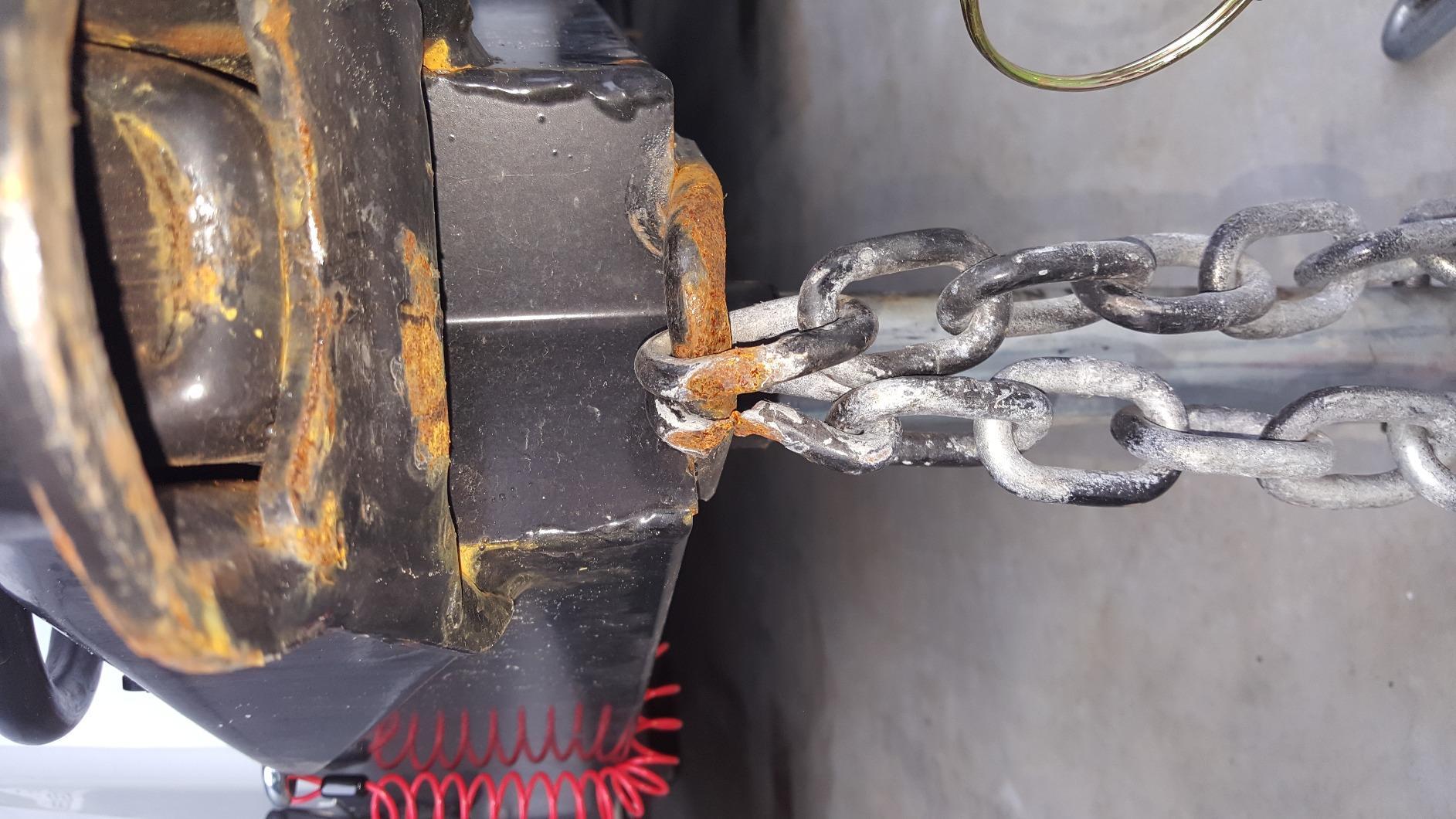
5. Tighten the L-pins, not the chain. The pin goes in to hold the load, and the chain takes the shock load. Over-tightening is the number one cause of bent bars and bent L-pins, and the TruTrack reviews specifically mention people bending brackets by over-torquing during setup.
6. Raise the trailer until the bars straighten. Do this before connecting the safety chains. If you do it after, you overload the bars and the L-brackets instead of the axle.
A five-minute check before every trip: the bars are straight and seated, the L-brackets are in contact, the pins are fully inserted and pinned, and the shank bolts are torqued. If the bars are not straight, something is bent or over-tensioned, and you should find out at the driveway rather than on the interstate.
Budget an hour for a chain or spring bar kit and several hours with a helper for a cam-based system like the CURT TruTrack. If you are not confident, a shop install is cheaper than replacing bent bars.
Can You Back Up Without Removing the Spring Bars?
This is the question that separates the designs in this roundup more than any other, and it comes up in nearly every forum thread on the topic.
Yes, without removal: the CURT TruTrack 4-point, the Camco ReCurve R3, the Andersen 3380, and the Fastway e2. All four either stay attached or use a bar geometry that clears when reversing, and the Fastway e2 states it plainly, leaving the hitch in place for backing and turning in any weather or at any angle.
No, removal required: the CURT 17063 round bar, the Husky 30849, the Equal-i-zer 4-point, the CURT 17422 short trunnion, the Camco Eaz-Lift Elite, and the Fastway Connect. These are traditional systems where the spring bars or chains must come off for tight turns and reversing.
The Reddit r/traveltrailers thread on selecting a weight distribution hitch makes the case in a single sentence: chain-suspended or top-loading bar designs are quieter, and the ability to reverse with the hitch in place removes a daily friction. A GoodSam community reply about the Blue Ox Sway Pro makes the same point, praising that it backs up with no removal and describes it as super easy to use.
If you back into a cramped site more than a few times a year, that convenience is worth paying extra for. If you tow with a spotter and mostly use open sites, a traditional system costs less and does the same job once it is set up correctly.
For context on the trailers these hitches are usually paired with, our boat trailer roundup covers the lighter GVWR range where a weight distribution hitch is often unnecessary.
Frequently Asked Questions
Which weight distribution hitch is better, Curt or Equalizer?
CURT covers a wider capacity range and its TruTrack 4-point adds four-point active sway control with the ability to back up without removing anything. Equal-i-zer concentrates on traditional 4-point systems and is chosen for parts availability that is nationwide. Pick CURT for control and convenience, and Equal-i-zer for long-term serviceability.
Which weight distribution hitch is the easiest to use?
The Andersen 3380 is generally the easiest because tension chains adjust in seconds instead of minutes and there is no lubrication to service. The Camco ReCurve R3 is a close second with top-loading spring bars and a single bolt-turn sway clamp. Neither requires wrestling heavy steel bars into position.
How to pick the correct weight distribution hitch?
Measure your loaded tongue weight, multiply it by 1.2 for headroom, and choose a hitch class that covers the result. Then confirm that hitch weight plus tongue weight stays under your truck’s rear axle rating and receiver rating. Match the class to GVWR as a cross-check: 600 to 700 lb for light trailers, 800 to 1,000 lb for mid-size, and 1,200 to 1,400 lb for heavy trailers.
What is the disadvantage of a weight distribution hitch?
The main disadvantages are weight, cost, and inconvenience. The hitch adds 55 to 105 pounds to your rear axle, reducing available payload. Traditional designs must be removed to back up, and spring bars need periodic lubrication. A poorly tensioned setup also adds noise, porpoising, and a risk of bent bars or L-pins.
Can a weight distribution hitch damage a trailer?
Not when it is correctly sized and tensioned. Damage happens when a hitch is undersized for the loaded tongue weight, when the shank height is wrong, or when the L-pins are over-torqued during setup, which bends bars and brackets. Check that the hitch class covers your measured tongue weight with 20 percent headroom before the first tow.
Can you put too much tension on a weight distribution hitch?
Yes, and it is the most common installation error. Over-torquing the L-pins or raising the trailer before straightening the spring bars bends bars, bends brackets, and can take weight off the steer tires. Crank the jack until the bars just touch the L-brackets, insert the pins, then raise the trailer until the bars straighten.
How do I know if my weight distribution hitch is correct?
Check five things: the trailer sits level or slightly nose-down, the spring bars are straight and fully seated, the L-brackets are in contact, the L-pins are inserted and pinned, and the shank bolts are torqued. If the bars are not straight when the trailer is coupled and supported, something is bent or over-tensioned.
Conclusion
The best weight distribution hitches for travel trailers in 2026 come down to your trailer and your patience, not the badge on the head. For most couples towing a mid-size trailer, the Camco Eaz-Lift Elite is the pick we would make first: it carries the highest review count in this group, it arrives with the ball and hardware already assembled, and it does the job without demanding a special technique.
If quietness at the campsite matters more than anything, the Camco ReCurve R3 is the upgrade, and if the budget is fixed, the Fastway Connect delivers the same 1,000 pound rating class for a fraction of the outlay. Towing a heavy trailer behind a one-ton or a lifted three-quarter ton, the Andersen 3380 with its 8 inch drop and the CURT 17422 for 15,000 pound ratings are the two worth a closer look.
Whichever you choose, measure the loaded tongue weight before you buy, leave 20 percent headroom, and get the shank height right before you touch the tension. That preparation is worth more than any brand name on the hitch head.