
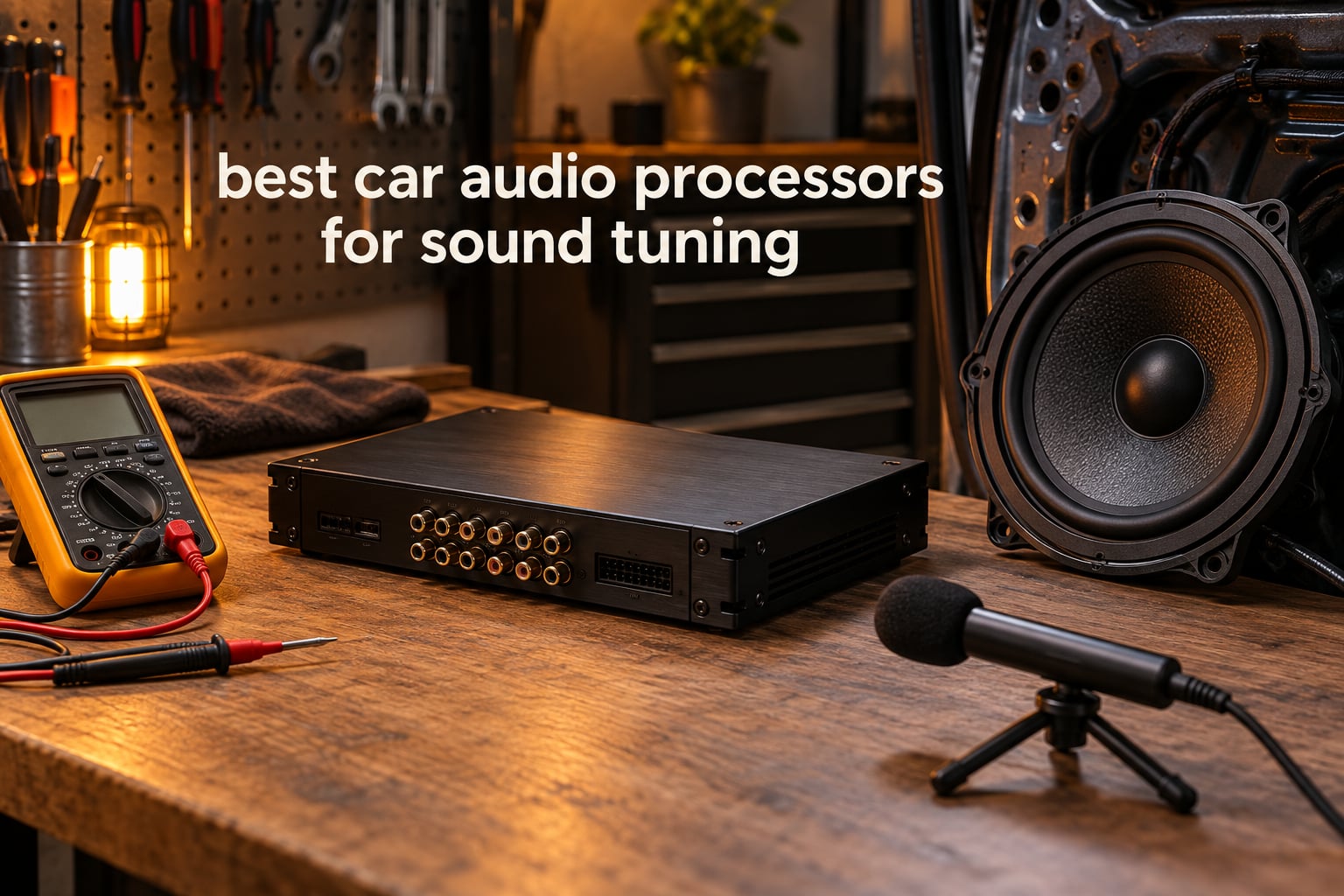
A car is one of the hardest rooms you will ever put speakers in. You sit off to one side of the centerline, the glass and hard trim throw reflections back at you, and the factory head unit usually rolls off your subwoofer below 50 Hz just to save power. No speaker upgrade fixes geometry. That is the job of the processor, and if you are searching for the best car audio processors for sound tuning, that single idea should drive every decision on this page.
A digital signal processor, or DSP, sits between your source and your amplifiers. It converts the analog signal to digital, applies corrections you choose, then converts back to analog for the amps. Those corrections are crossovers, time alignment, parametric equalization, phase, delay and limiters. Done well, a modest set of speakers with a good processor in front of them beats a pile of expensive speakers with no processing at all.
Our team has spent the last few years installing and tuning processors in real vehicles, and this list covers the twelve units that keep coming up when a build needs real control rather than a volume knob. We look at channel count first, because that decision constrains everything else, then tuning method, then the feature set that actually changes how the car sounds. We also flag install difficulty honestly, because a processor you cannot set up properly will not sound good no matter what the spec sheet says.
One note before we start. Everything here is aimed at sound tuning, so the mix is weighted toward multi-channel units with genuine delay, crossover and EQ control. We include a few single-purpose bass devices because they solve a specific problem well, and we label them clearly so you do not buy one expecting a full tuner. If you want the short version, the comparison table below has all twelve.
Table of Contents
Top 3 Picks for Best Car Audio Sound Tuning (October 2026)

AudioControl EPICENTER Concert Series
- Patented bass restoration
- 27-63 Hz center control
- 110 dB signal-to-noise

Every Processor Compared Side by Side
Here is the whole field in one place, so you can check channel count and core features before reading any individual review. Our picks in the 2026 guide are marked in the individual sections that follow.
| Product | Specifications | Action |
|---|---|---|
| AudioControl EPICENTER Concert Series |
|
Check Latest Price |
| Rockford Fosgate DSR1 |
|
Check Latest Price |
| Banda Audioparts X8AiR |
|
Check Latest Price |
 Taramps PRO 2.8S Taramps PRO 2.8S |
|
Check Latest Price |
 PRV AUDIO DSP 2.4X PRV AUDIO DSP 2.4X |
|
Check Latest Price |
 Taramps PRO 2.4S Taramps PRO 2.4S |
|
Check Latest Price |
 Autotek ATEQ709 Autotek ATEQ709 |
|
Check Latest Price |
 Stetsom STX 2848 PRO Stetsom STX 2848 PRO |
|
Check Latest Price |
 Taramp’s Pro 2.6S Taramp’s Pro 2.6S |
|
Check Latest Price |
 Timpano TPT-SP4BT Timpano TPT-SP4BT |
|
Check Latest Price |
 BOSS Audio Systems AVA1210 BOSS Audio Systems AVA1210 |
|
Check Latest Price |
 Soundstream BX-20Z Soundstream BX-20Z |
|
Check Latest Price |
1. AudioControl EPICENTER Concert Series – Best Overall Bass Restoration Stage
AudioControl The EPICENTER Concert Series Bass Restoration Processor, Black
- Highest rating in the group at 4.8 across 2758 reviews
- Restores low-end impact on systems that lack authority
- Slim chassis that fits under a seat or in a trunk
- Very low distortion with a high signal-to-noise ratio
- Single stereo input and output pair
- Not a full crossover or EQ tuner
- ACR-1 dash remote is a separate add-on
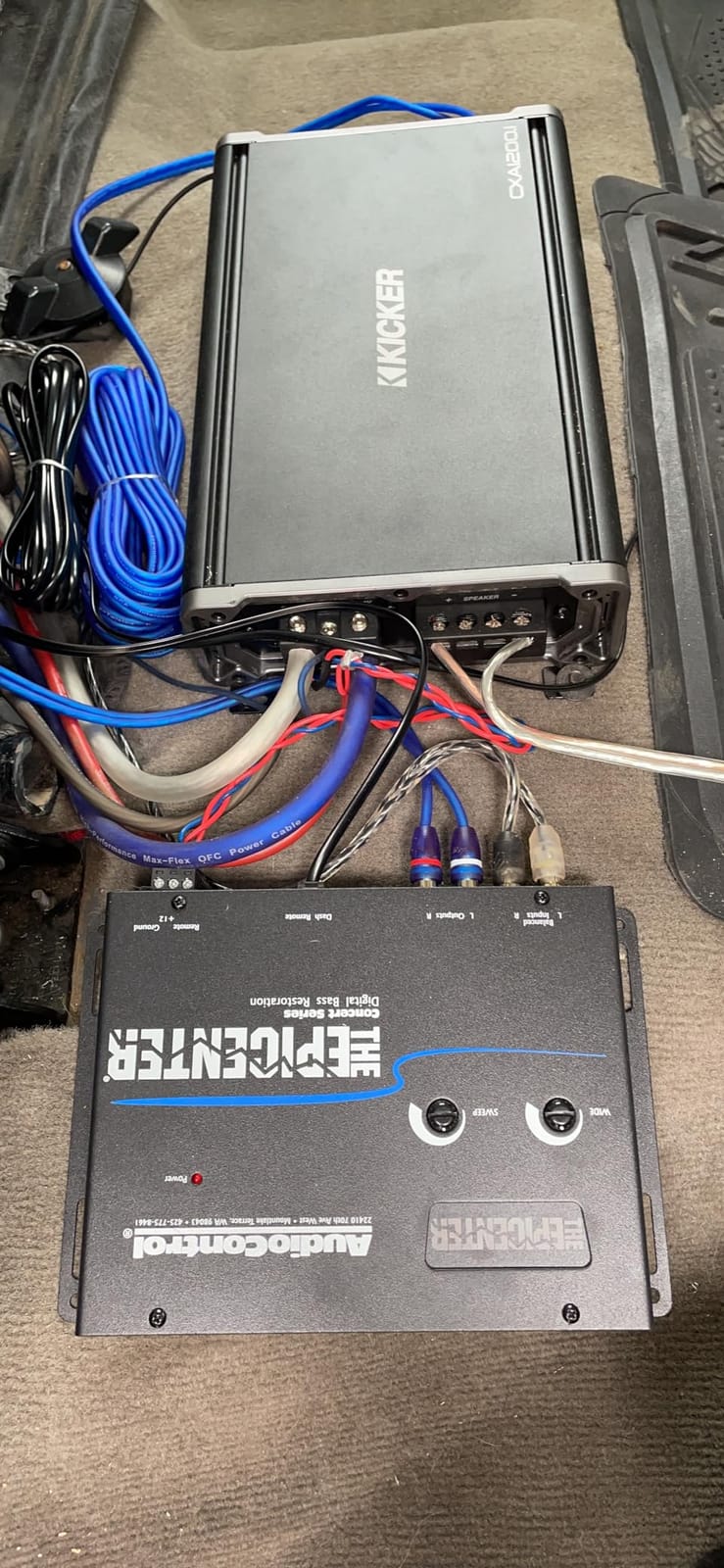
I have fitted more of these than any other box on this list. It is not the most flexible processor here and it is not trying to be. It does one job, and it does it with a level of refinement that the rest of the field does not attempt.
The patented circuit detects the upper harmonics that survive in a signal and synthesizes the low-frequency foundation underneath them. Set the center frequency anywhere from 27 to 63 Hz, set the width, and a system that sounded thin on a kick drum suddenly has weight. The PFM subsonic filter is programmable, which lets you protect amplifier power when the effect is dialled back.
The numbers back up what you hear. A 110 dB signal-to-noise ratio and 0.0003 percent total harmonic distortion mean this stage adds essentially nothing of its own to the signal. In a chain that already has EQ and crossovers upstream, that cleanliness is what keeps the low end from sounding thick or smeared on a modern mix.
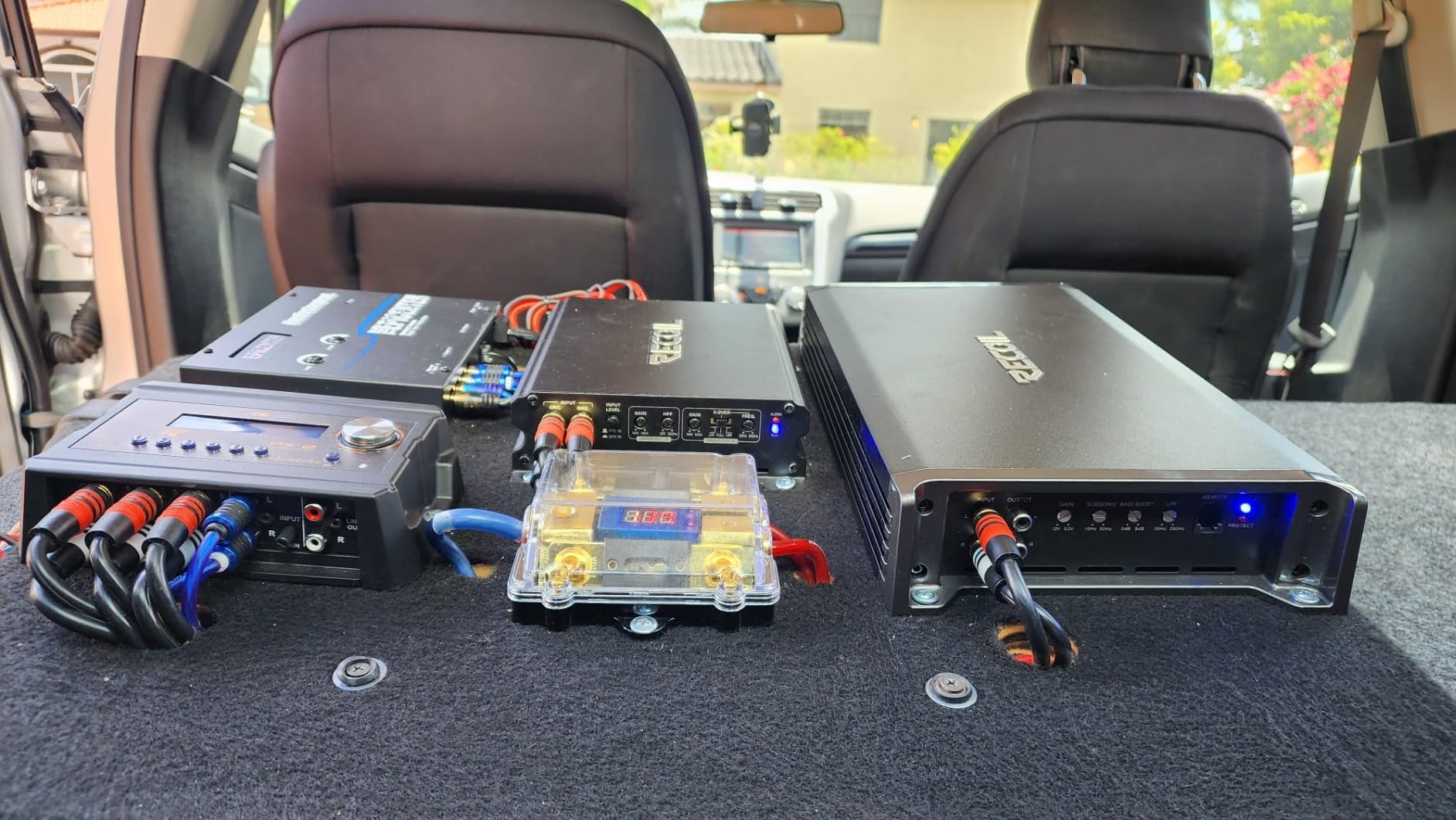
Physical installation is easy. At 1.8 pounds and a slim profile, it mounts almost anywhere, and the line-level in and out means it slots between your head unit and an amplifier without rewiring the system. Owners replacing a cheap line output converter report immediate gains in depth and clarity, which is the fastest way to hear what it does.
Who this suits best
This is the pick for anyone whose system is loud but thin, especially with a factory head unit that rolls off the bottom end to protect the stock speakers. Owners consistently credit it with restoring punch to factory systems, and the share of five-star reviews is high enough that this is a well-settled device rather than a gamble.
It also works as a dedicated stage in a larger signal chain. If you already have EQ and crossovers downstream, adding bass restoration before them is the correct order. For that reason it is the first recommendation on this list for many factory-system builds.
Where it falls short
It is not a tuner. There are no parametric EQ bands, no delay, no crossover, so it cannot correct imaging or clean up a peaky factory response on its own. If you want time alignment across a three-way front stage, this is the wrong box entirely.
The single input and output pair also means it cannot feed multiple amplifiers independently. And the ACR-1 dash controller that lets you trim bass level while driving is a separate purchase, not part of the box, which is worth knowing before you plan the install.
2. Rockford Fosgate DSR1 – Best for Replacing a Factory Amplifier
Rockford Fosgate DSR1 8-Channel Interactive Signal Processor
- 245 EQ bands plus per-channel delay and crossovers for precise tuning
- Handles both factory and aftermarket signal chains
- Replaces the factory amp cleanly in Ford and Chrysler vehicles
- Finished sound quality is excellent once tuned
- Perfect Tunes app has a steep learning curve
- Reported as weaker on Android than on iOS
- Bluetooth range is very short so mounting location matters
This is the unit I reach for when the goal is to delete a factory amplifier and take over the whole signal chain. Rockford built it around the idea that the factory amp in a modern vehicle is doing a mediocre job, and a processor can replace it outright.
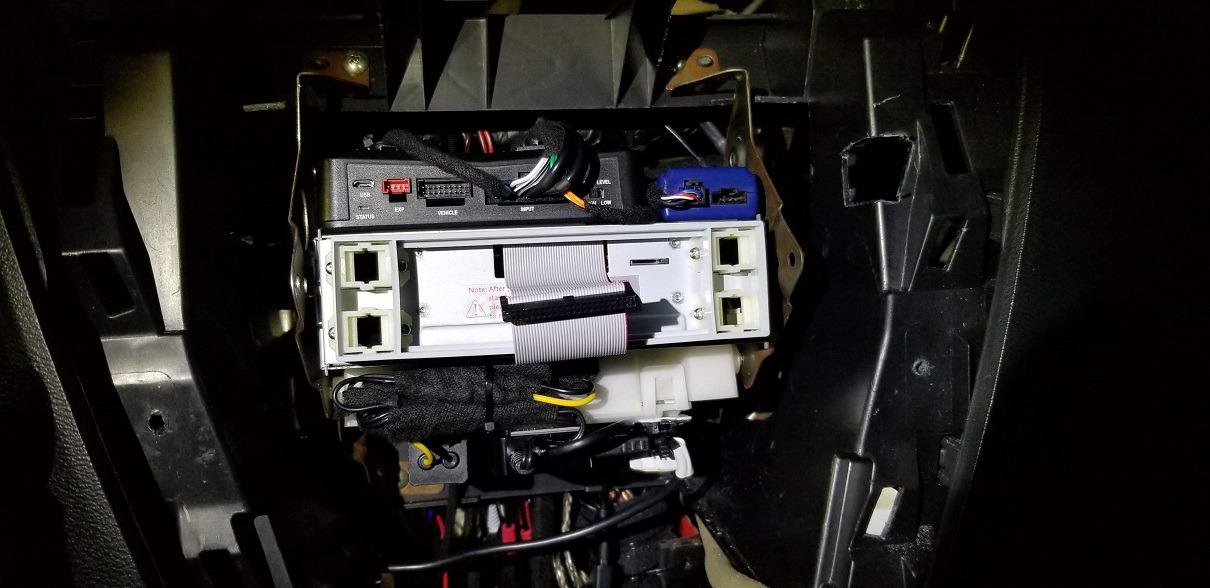
Four high-level inputs with signal-sense turn-on handle the factory speaker-level feed, and four balanced differential inputs cover an aftermarket chain. Auxiliary RCA and SPDIF coaxial inputs are there for a second source. That combination of inputs is unusual in this category and it is the reason the DSR1 solves OEM integration better than anything else on this list.
On the tuning side you get 245 bands of equalization, adjustable crossovers with selectable slope, and up to 10 ms of delay per channel for time alignment. Ten milliseconds is enough to bring a door speaker back to the listening position, which is enough to move the center of the soundstage back to the middle of the cabin. Installers treat time alignment alone as the single biggest perceived improvement in a basic system.
Control runs through the Perfect Tunes app over Bluetooth, and Punch EQ boost is included for drivers who want a quick lift without touching a setting. Once tuned, owners describe the sound quality as excellent for the money.
Who this suits best
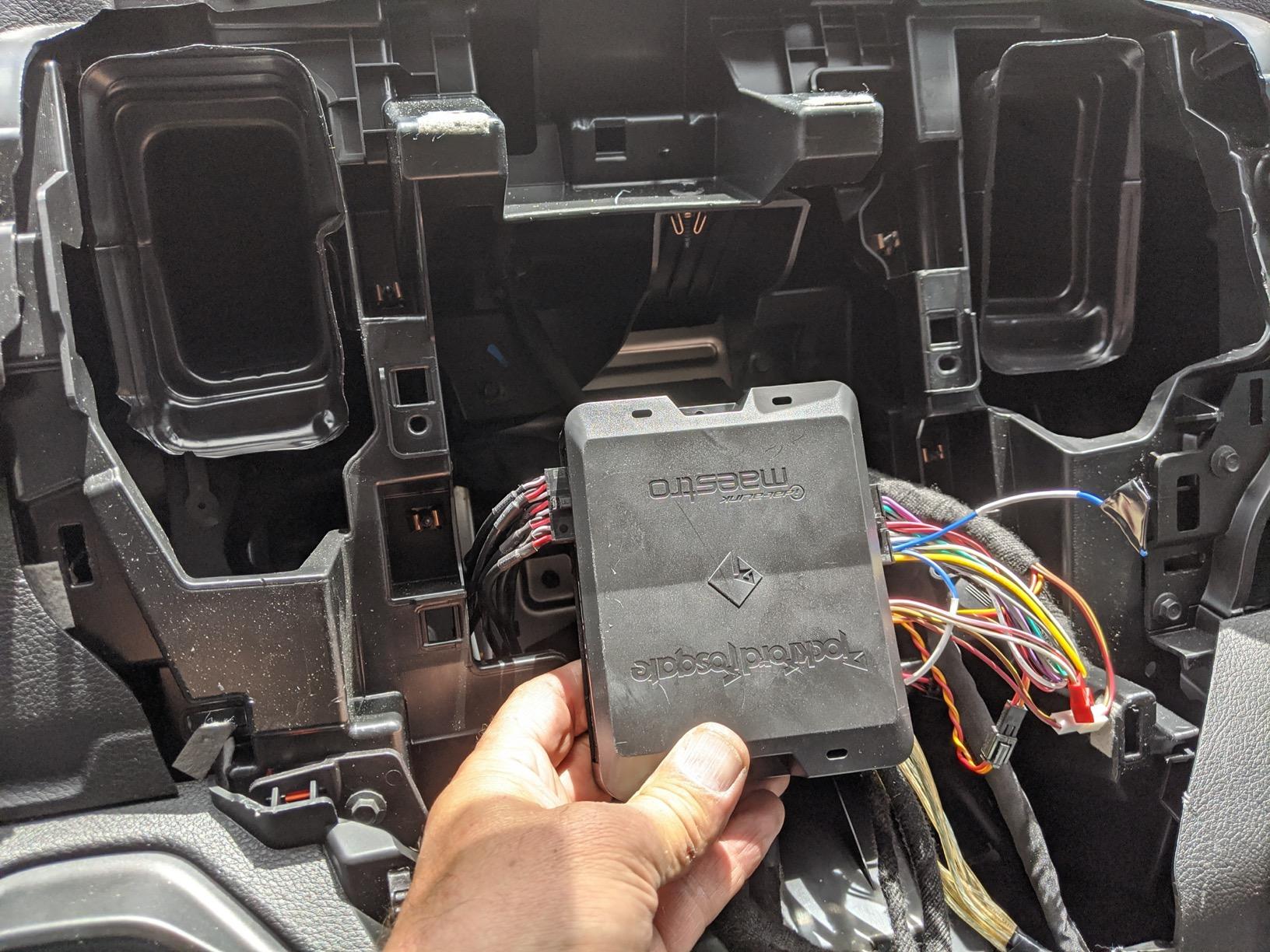
If you are keeping the factory head unit and deleting the factory amp, this is the most capable affordable option here. The signal-sense high-level inputs and the Maestro integration path for keeping factory steering wheel controls make it a natural fit for that job.
It also suits anyone who wants many EQ bands and real delay per channel without moving to a laptop-based tuning workflow. Eight channels is enough for a two-way front stage, sub and rear fill, or a three-way with careful channel assignment.
Where it falls short
The software is the weak point. The Perfect Tunes app has a real learning curve, and owners report it works noticeably better on iOS than on Android, so check your platform before you commit.
Bluetooth range is very short, which means the unit has to be mounted near the driver rather than tucked in the trunk. Several owners also report that firmware updates must be followed in a specific order or setup fails, and one reported the unit locking up until a full power cycle. Budget time for setup, not just wiring.
3. Banda Audioparts X8AiR – Best for App-Controlled Tuning
Banda Audiopart X8AiR DSP Car Audio Processor | 32-Bit/96kHz 8-Channel Car Audio DSP with 79-Band Equalizer, Bluetooth, App Control & Advanced Crossover for Premium Sound
- Very strong feature set for the class
- including adjustable Q and addressable bands
- Bluetooth app control so you do not pull the head unit apart
- Time alignment measurably improves imaging in glass-heavy cabins
- 8 outputs cover six speakers plus sub with room to grow
- No onboard controls other than clip indicator LEDs
- App channel linking and crossover point edits are unintuitive
- Some units add noise if gain is set high
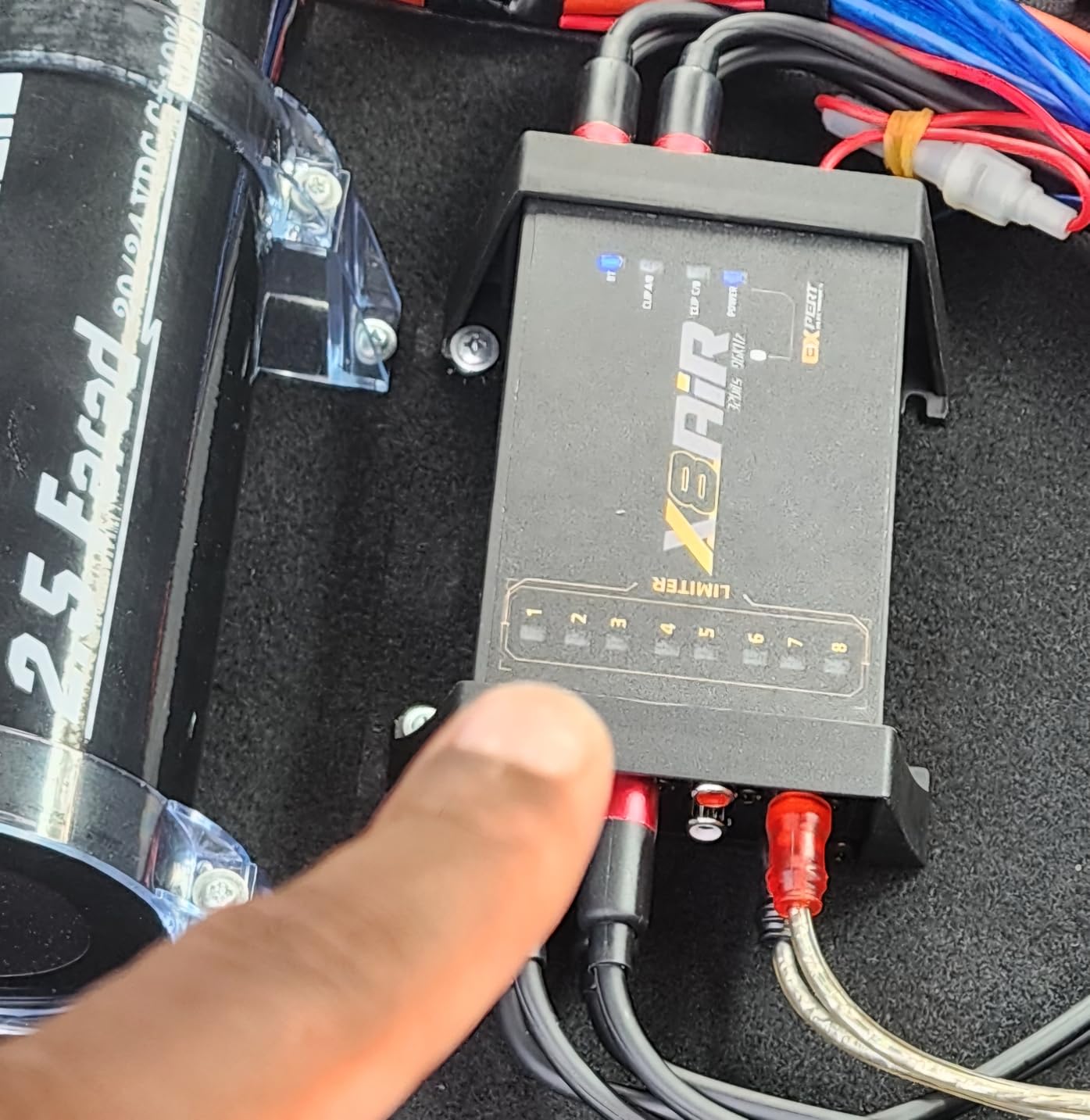
The X8AiR is the one I recommend to people who hate the idea of tuning from a laptop in the driveway. Everything runs from a phone app over Bluetooth, so adjustments happen while the system is playing.
Under the hood it is a genuinely modern design: 32-bit/96kHz processing on a 1.2GHz Cortex A8, 79 EQ bands per channel, and eight addressable bands per output with adjustable Q. Crossover options include Butterworth, Linkwitz-Riley and Bessel slopes, which is a level of filter choice that most of this list does not offer.
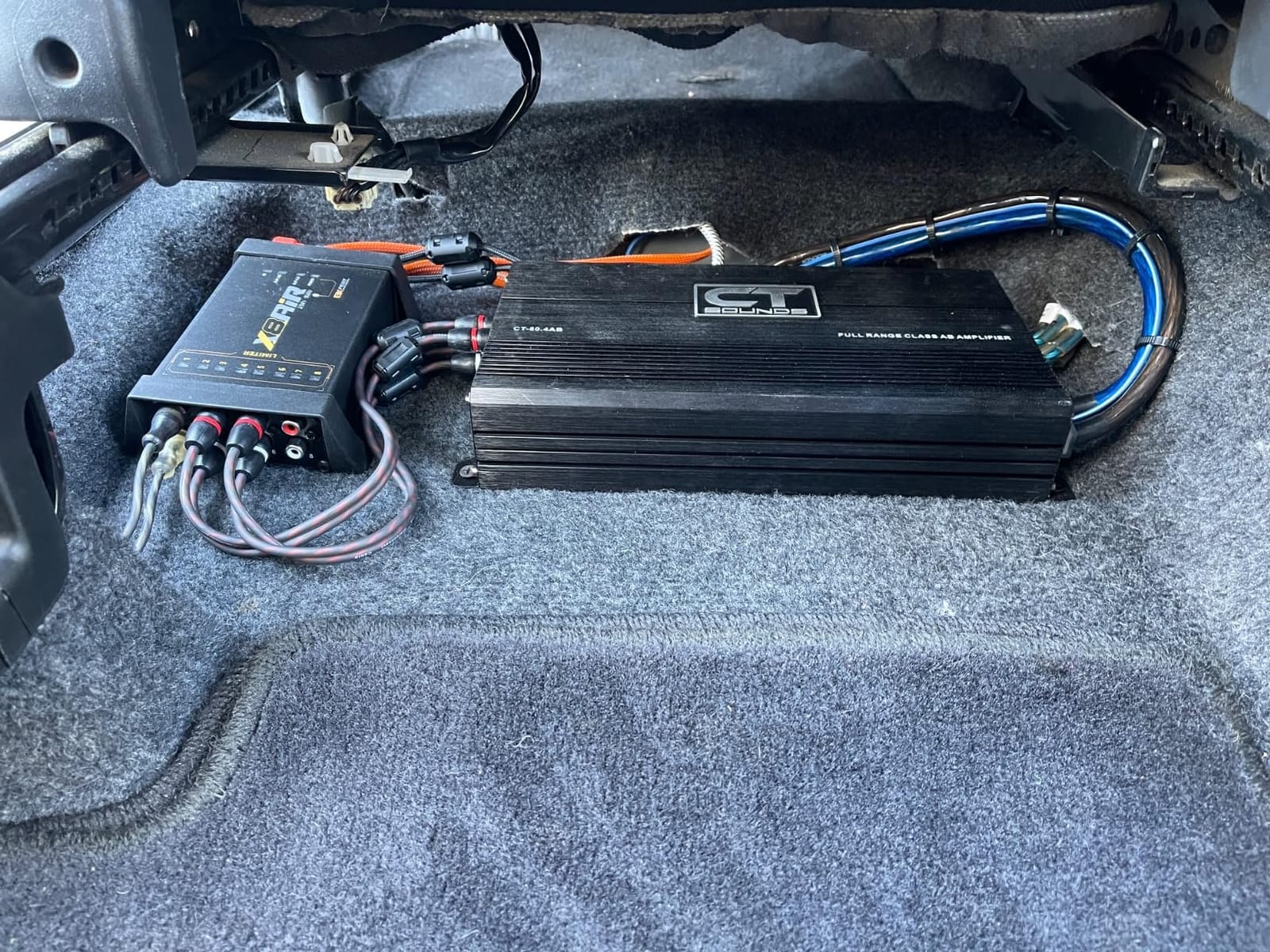
Eight outputs and four inputs is a generous layout for the class. Six speakers plus sub, with delay and phase control on each channel, fits comfortably, and the input count is enough to keep a head unit sub and fader line usable in a lot of installs.
There is a peak limiter on board, and owners report clean output with no hiss, pops or distortion once gain is set correctly. Time alignment on this unit measurably improves imaging even in vehicles with a lot of glass, which is most of them.
Who this suits best
This is the pick for a phone-first installer. If your car is not going to sit in a driveway with a laptop and a USB cable, Bluetooth control removes the single biggest practical objection to installing a DSP.
It is also a strong value choice for a full eight-channel build, since the processing depth here is closer to premium units than to the entry boxes. Anyone who values filter choice and Q control will find more to work with here than on most four-channel alternatives.
Where it falls short
There are no onboard controls at all beyond clip indicator LEDs, so if the app fails you have no fallback. Several owners also describe the channel-linking and crossover point adjustment as unintuitive, which means the learning curve moved rather than disappeared.
Be careful with gain. Some units pick up a small amount of noise when levels are pushed too high, and four inputs means keeping head unit sub and fader control can get awkward in complex installs. Check your signal chain before you commit.
4. Taramps PRO 2.8S – Best 8-Channel Active Build Option
Taramps PRO 2.8S Black 8-Channel Car Audio DSP Digital Signal Processor
- 8 outputs give full active multi-amp flexibility
- Very precise filter selection across 10Hz to 22kHz
- RMS and peak limiters with a dynamic mode for real protection
- Installer password lock and saved EQ memory slots
- No Bluetooth or app control so tuning happens on the unit
- Tight power ground and remote terminals need small-gauge wire
- Front knob can be stiff and nudge saved settings
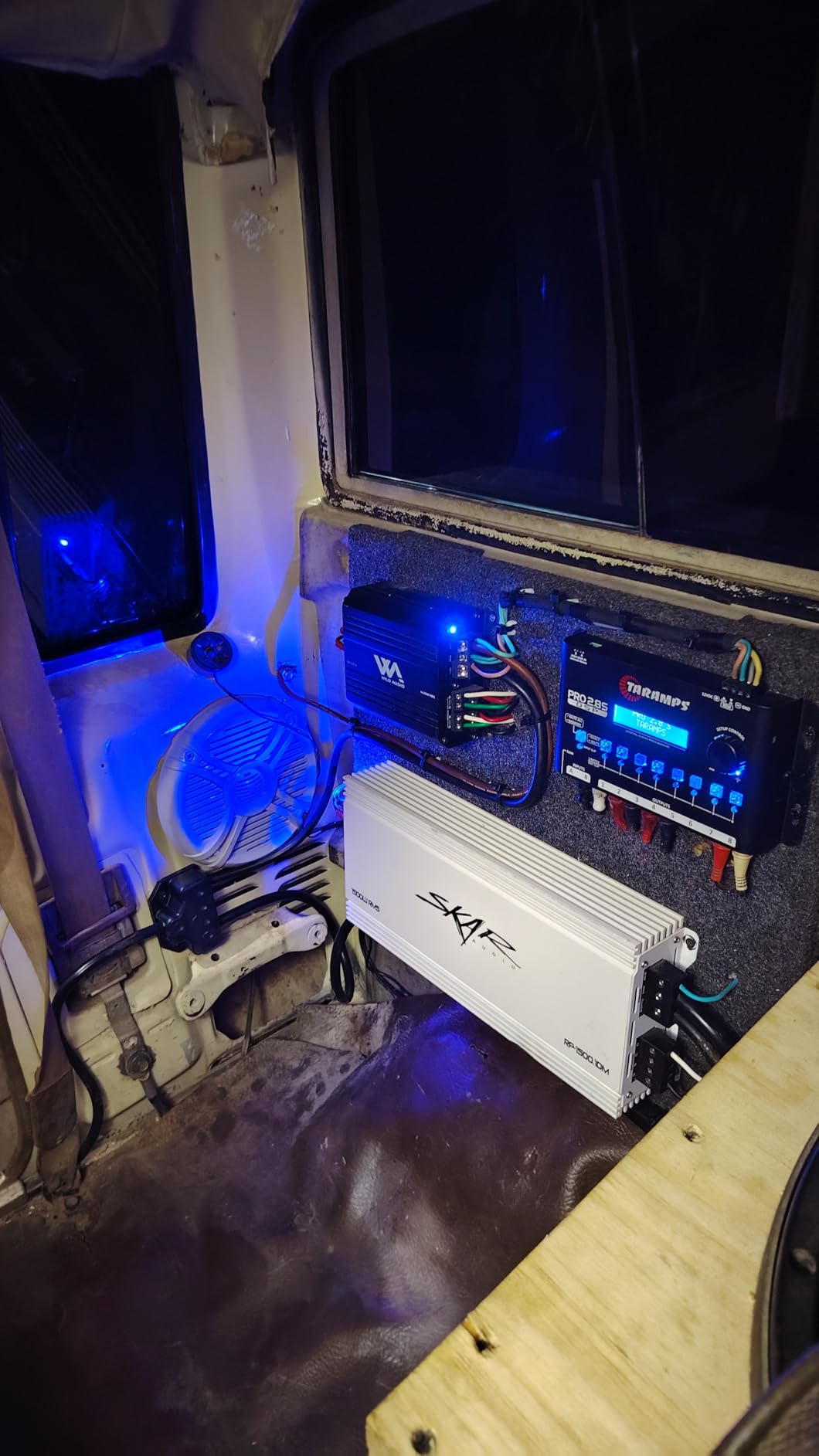
This is the unit I put in a build that goes fully active. Eight output channels mean every driver gets its own amp channel, its own crossover, and its own delay, which is the only way to build a proper three-way front stage.
The EQ is a 15-band graphic with parametric adjustment and 12 presets, so you can dial in broad tone shaping and then refine specific problems. Filter frequency runs from 10 Hz to 22 kHz, and roll-off slope is selectable per channel, which matters when you are trying to match a woofer and a tweeter acoustically rather than by ear.
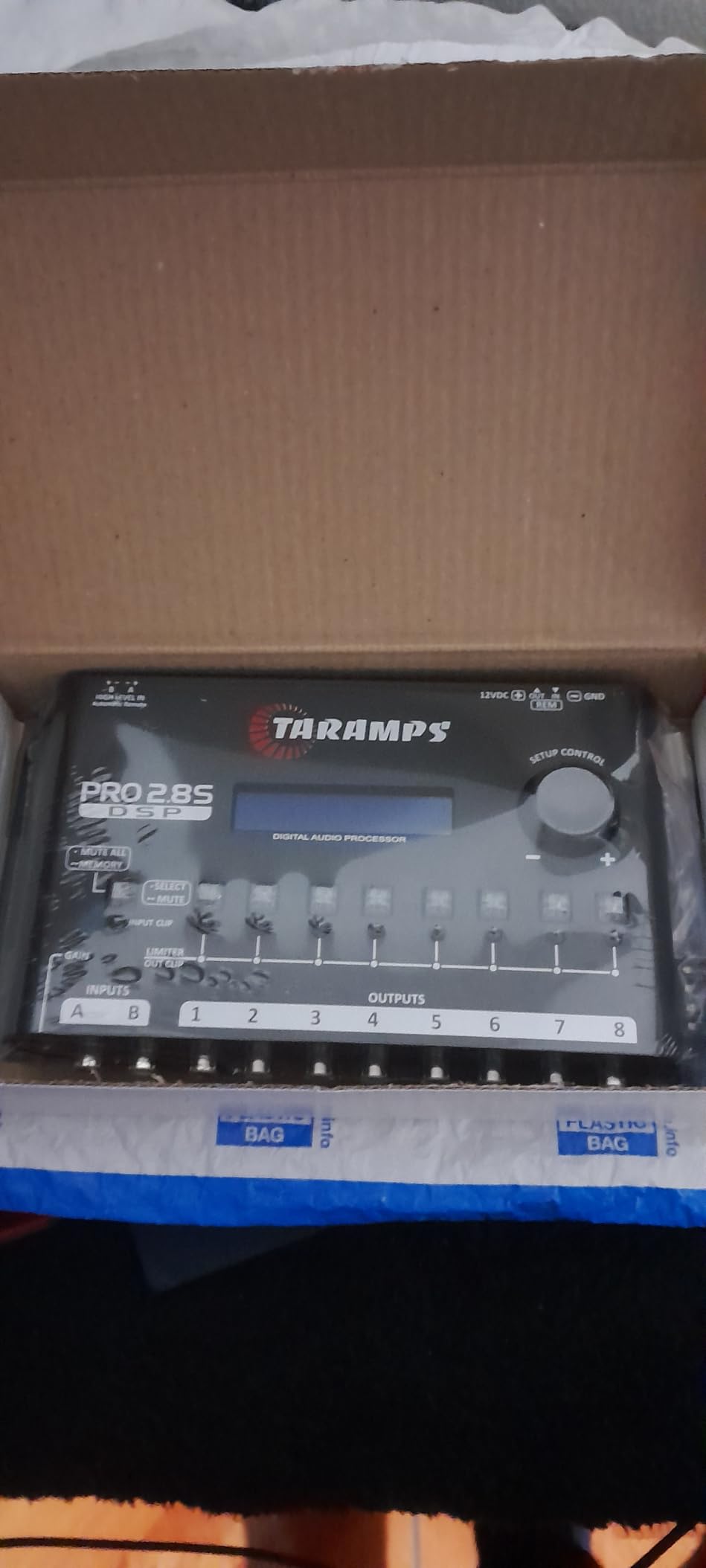
The limiter section is the part that impressed me most. Adjustable RMS and peak limiters with a dynamic DSP mode give real protection for a multi-amp build, and that is something cheaper four-channel units tend to handle poorly or not at all.
Channel mapping, channel cloning and an installer password lock make it workable for a professional install. Owners replacing a line output converter report a large improvement in clarity once it is in the chain.
Who this suits best
Pick this one if your build is going active across the front stage. Eight outputs at a mid-range price point is the combination that makes a three-way system realistic without doubling your equipment list.
It is also a good fit for installers who want client-facing features. The password lock and saved EQ memory slots mean a system can be tuned once and protected from casual adjustment, which matters if the car is shared or resold.
Where it falls short
There is no Bluetooth or app control. All tuning happens on the unit itself, so every adjustment means a trip to the trunk or wherever you mounted it, ideally in daylight and not in a parking garage at night.
The power, ground and remote terminals are tight and want small-gauge wire, which slows down installation and adds friction. One owner also reported a slight hiss at normal listening levels, and the front knob can be stiff enough to nudge settings accidentally. Plan the mounting location carefully.
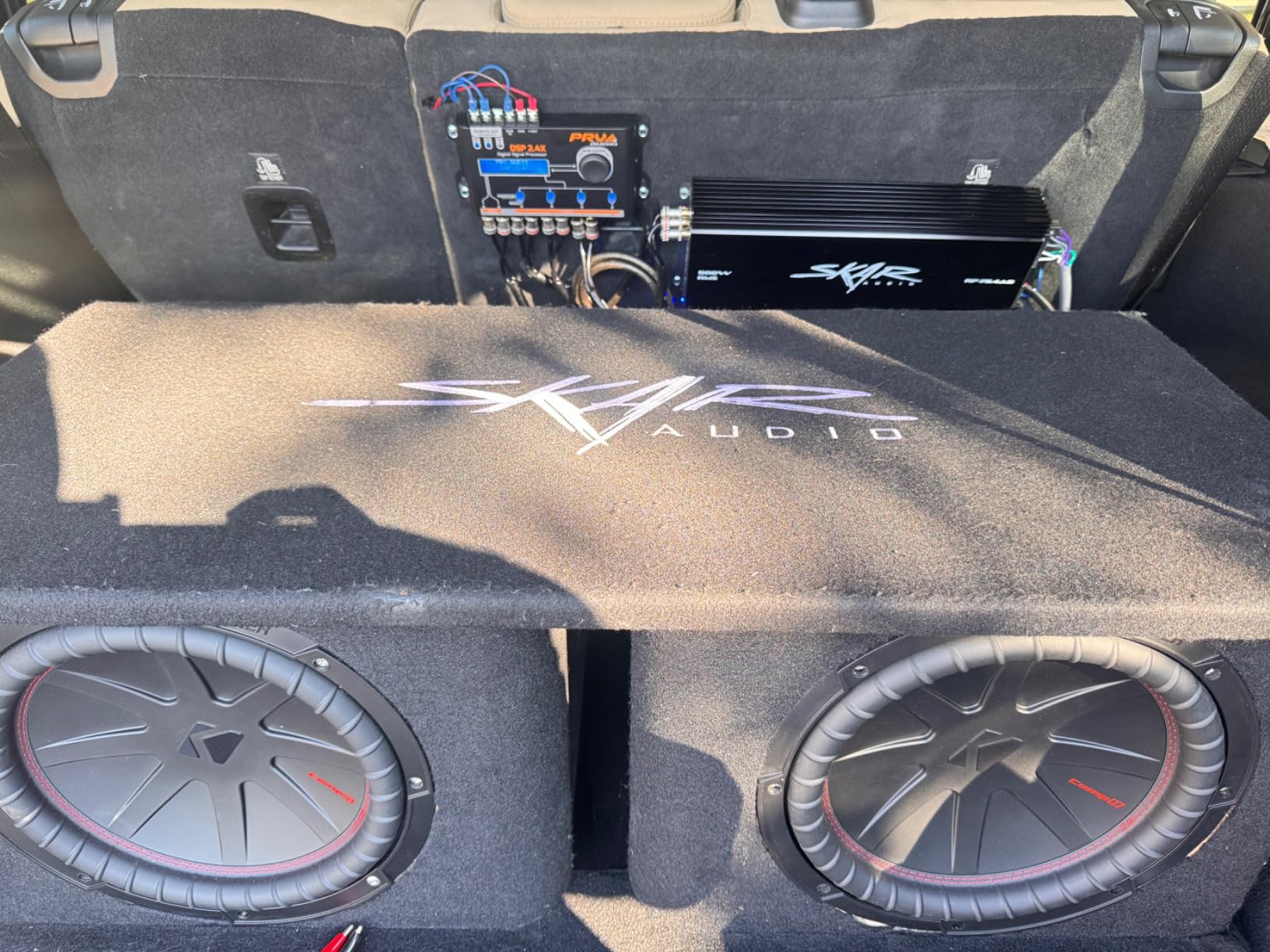
5. PRV AUDIO DSP 2.4X – Best Value Four-Channel Processor
- Very high 4.7 rating with 86 percent five-star share
- P preset library plus manual and parametric tuning
- Flexible A and B source summing for multi-zone installs
- Sequencer remote output automates amplifier startup
- Onboard LCD and buttons are dated next to app-controlled rivals
- No Bluetooth or app control
- Only 4 output channels limits fully active multi-way builds
The PRV 2.4X is the unit I suggest when someone wants real processing power without a big bill. At 4.7 across 656 reviews, the satisfaction is consistent rather than enthusiastic, which is exactly what you want from a value pick.
Two inputs labeled A and B, with per-output source selection for A, B or A+B, gives you genuine summing capability. That is the feature that matters most in a multi-zone car, because it lets you run different sources to different areas without a separate converter, and it is more flexible than most of the four-channel units here.
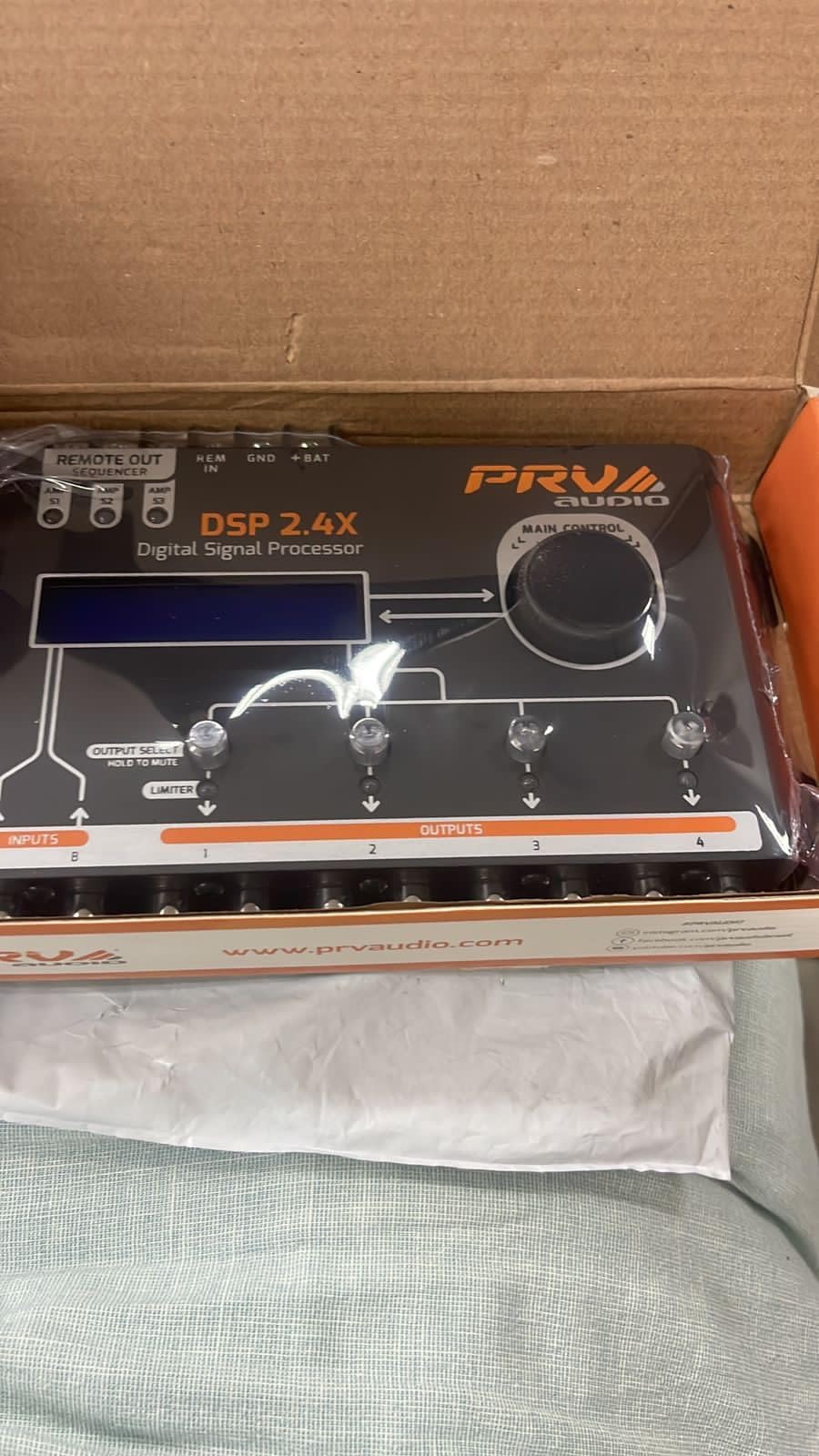
Four independent crossover outputs cover a two-way front plus sub, or front plus rear plus sub, which is the most common system shape in this class. The EQ is a 15-band graphic with a parametric section for gain, frequency and bandwidth, plus 12 presets covering flat, loudness, bass boost, rock, hip hop, pop and vocal.
A sequencer remote trigger output handles staged amplifier turn-on, so a sub amp that should start a beat after the front amps does that automatically rather than by wiring a delay relay. Owners treat this as a high-value entry processor and report it doing the job of a much costlier unit.
Who this suits best
This suits a two-way front stage with a sub, on a budget, with more than one source in the car. A and B summing plus the 12 presets make it a good fit for a daily driver that also has to work as a demo machine.
It is also a strong choice for someone upgrading a line output converter who wants real crossovers and per-channel EQ rather than just a voltage boost. The wide preset library means a beginner can get close before touching a single band.
Where it falls short
The interface is the main complaint. The onboard LCD and buttons feel dated next to app-controlled competitors, and there is no Bluetooth or app option at all, so every change means standing at the unit with the key on.
Four output channels is the hard ceiling. If your plan is a fully active three-way front stage, this is not the box, and adding a second unit doubles the cost and the wiring. Know your channel count before you buy.
6. Taramps PRO 2.4S – Best Budget Processor for a First Build
- Strong 4.6 rating across 978 reviews
- Input parametric EQ flattens peaky factory subwoofer signals
- RCA and high-level inputs make factory integration easy
- Compact chassis fits under a seat or in a console
- Arrives without printed instructions so setup relies on online videos
- No Bluetooth or app control
- Only 4 output channels so multi-way active staging needs more
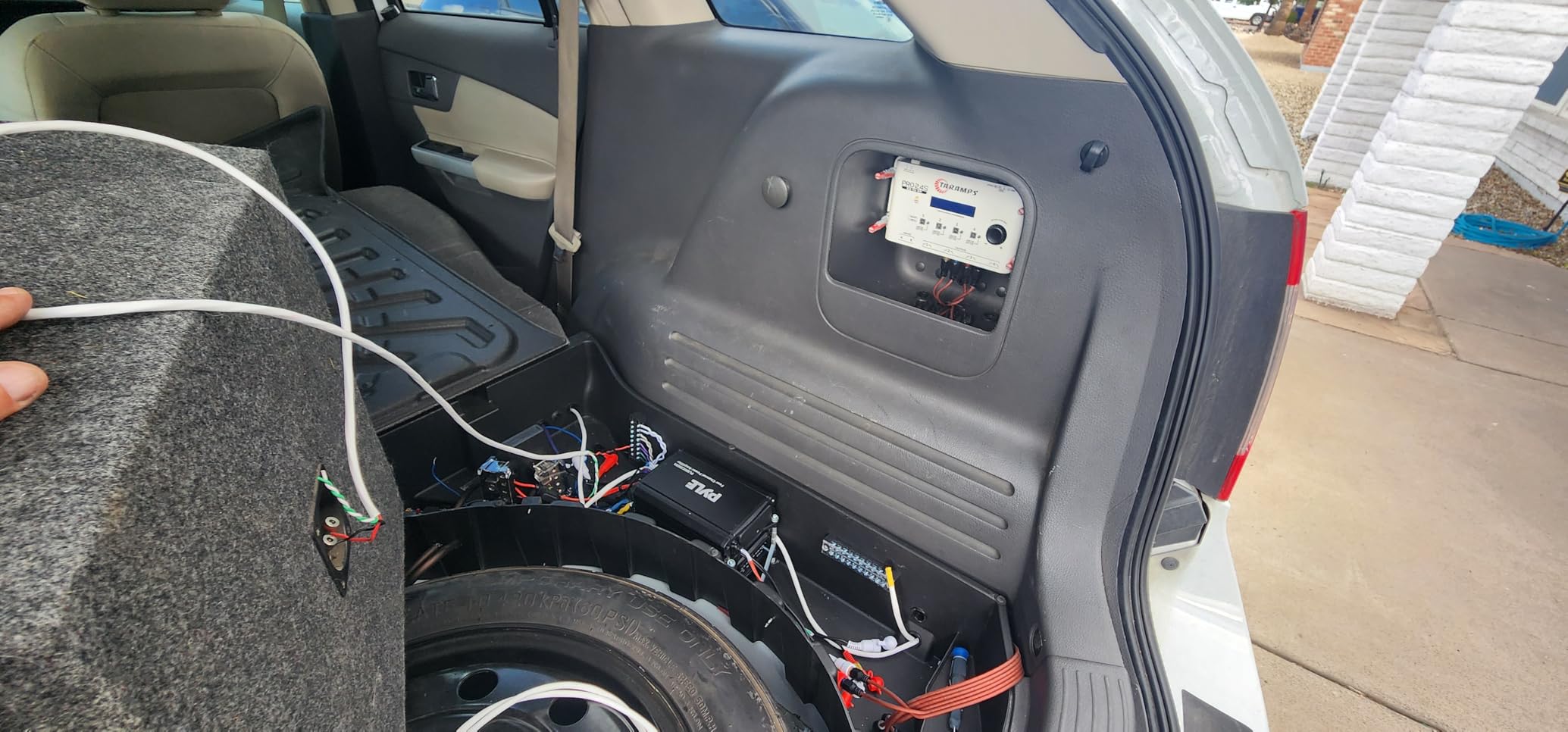
The PRO 2.4S is the first DSP I hand to someone building their first real system. Nearly a thousand reviews at 4.6 is the kind of track record that makes an easy recommendation, because the unit simply does not generate drama.
The feature that gets the most credit from owners is the input parametric EQ. Factory subwoofer signals from a stock head unit often arrive with a bump in the low mids, and an input filter is the correct place to flatten that before it reaches the amp. Reviewers describe a step-change in clarity once that is corrected, which is exactly what a processor is supposed to deliver.
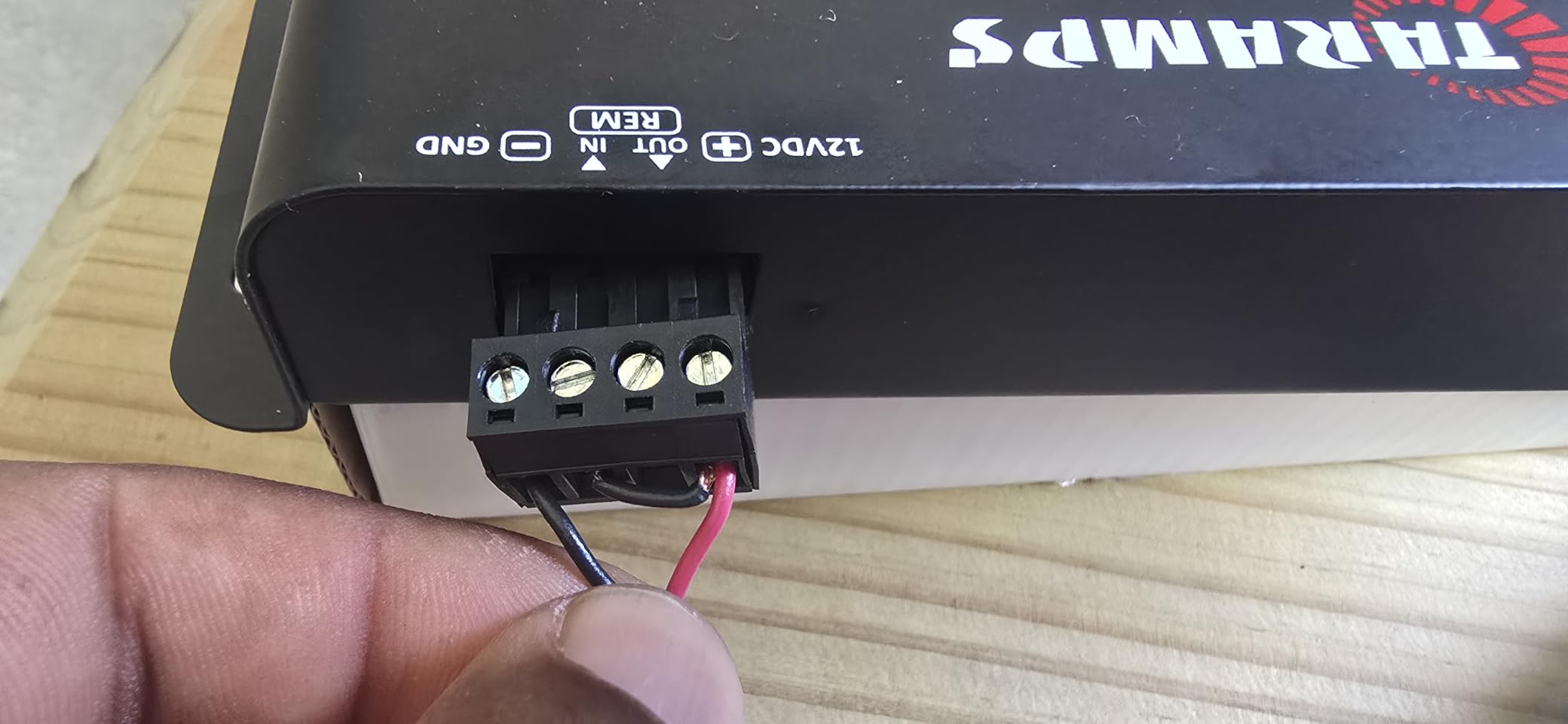
You also get a 15-band graphic EQ, an active crossover with high-pass and low-pass filters and multiple slope options, delay alignment, and an integrated limiter with clip indicators. RCA and high-level inputs make it easy to add processing to a factory system without a converter, and the Anti-Pop System handles turn-on and turn-off noise.
At 15.9 ounces and 4.45 by 7.8 by 1.46 inches, it disappears under a seat, which matters in a small car. This is genuinely the least fiddly install on the list.
Who this suits best
Buy this if you are adding a sub and a set of component speakers to a factory head unit and you want proper crossovers and EQ. The high-level input means no line output converter, and the anti-pop system means no thunk when the key turns.
It is also the safe pick for a build you will not tune yourself. A four-channel unit with input EQ and a limiter gives you a correct foundation, and the 978 reviews suggest few people are disappointed by it.
Where it falls short
Documentation is the real gap. The unit arrives without printed instructions, so setup depends on finding walkthroughs online, and that is friction you do not need on a first install. The menus themselves are described as easy to learn once you are inside them.
There is no Bluetooth or app control, so every change happens at the unit. And four output channels means a fully active multi-way front stage is out of reach without another processor.
7. Autotek ATEQ709 – Best 9-Volt Line Driver With Built-In Crossover
- Very high 4.7 rating with a 92 percent five-star share
- 9-volt output is unusually strong for driving downstream amplifiers
- Built-in active crossover removes the need for a separate module
- Input level matching between two sources solves volume jumps
- Only 4 EQ bands so tone shaping is coarse by modern DSP standards
- No time alignment
- parametric EQ
- phase control or app tuning
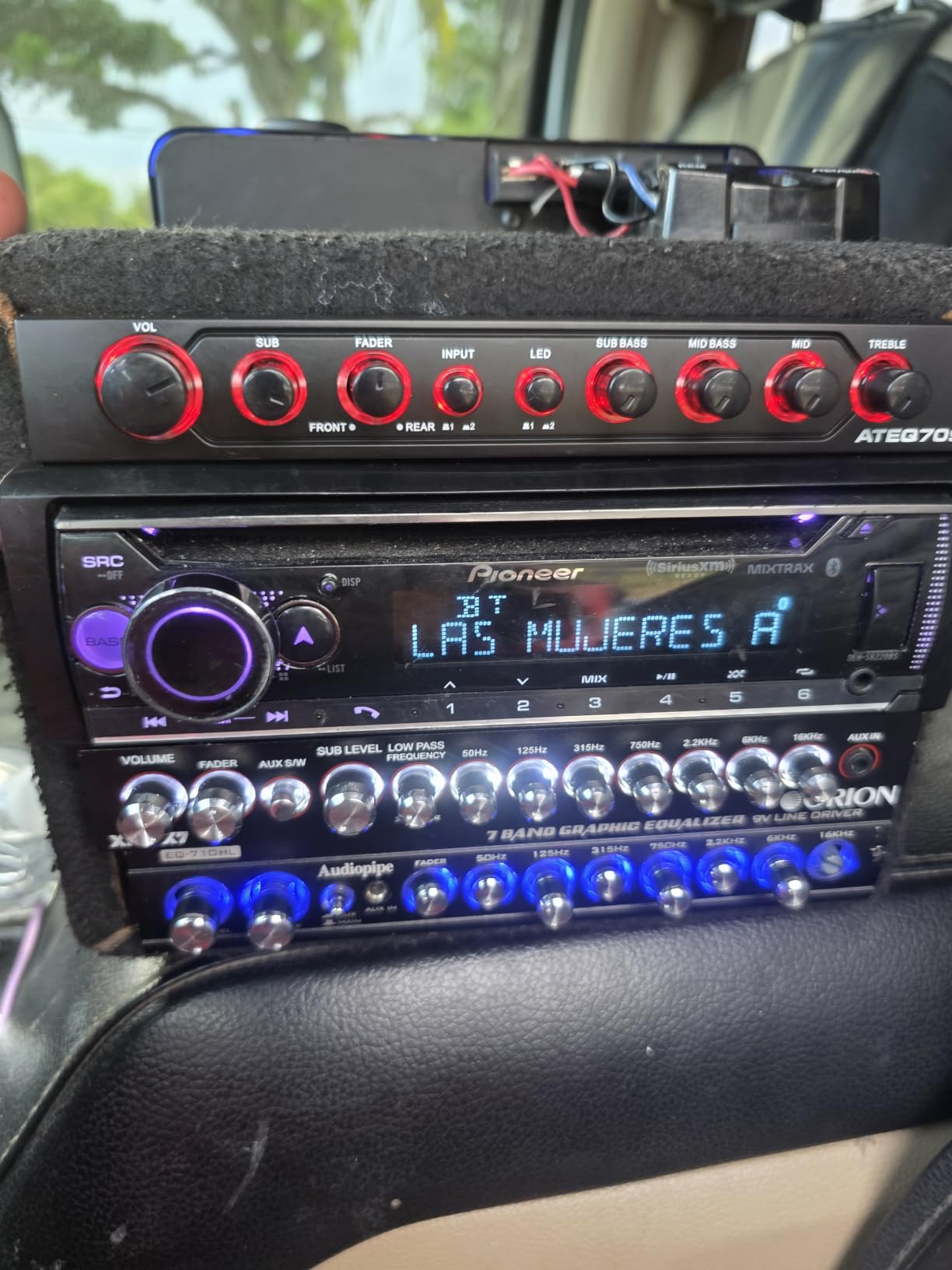
This is a slightly different animal from everything else here, and that is exactly why it earns a place. The ATEQ709 is half-DIN, sits in the dash, and its headline feature is a 9-volt line driver pushing signal out through the RCAs.
That voltage matters more than most buyers realize. A standard preamp output runs around 1 to 2 volts, and driving a chain of downstream amplifiers at that level means noise. A 9V driver gives the amps in your system a clean reference, which cuts noise and gives you headroom before clipping.
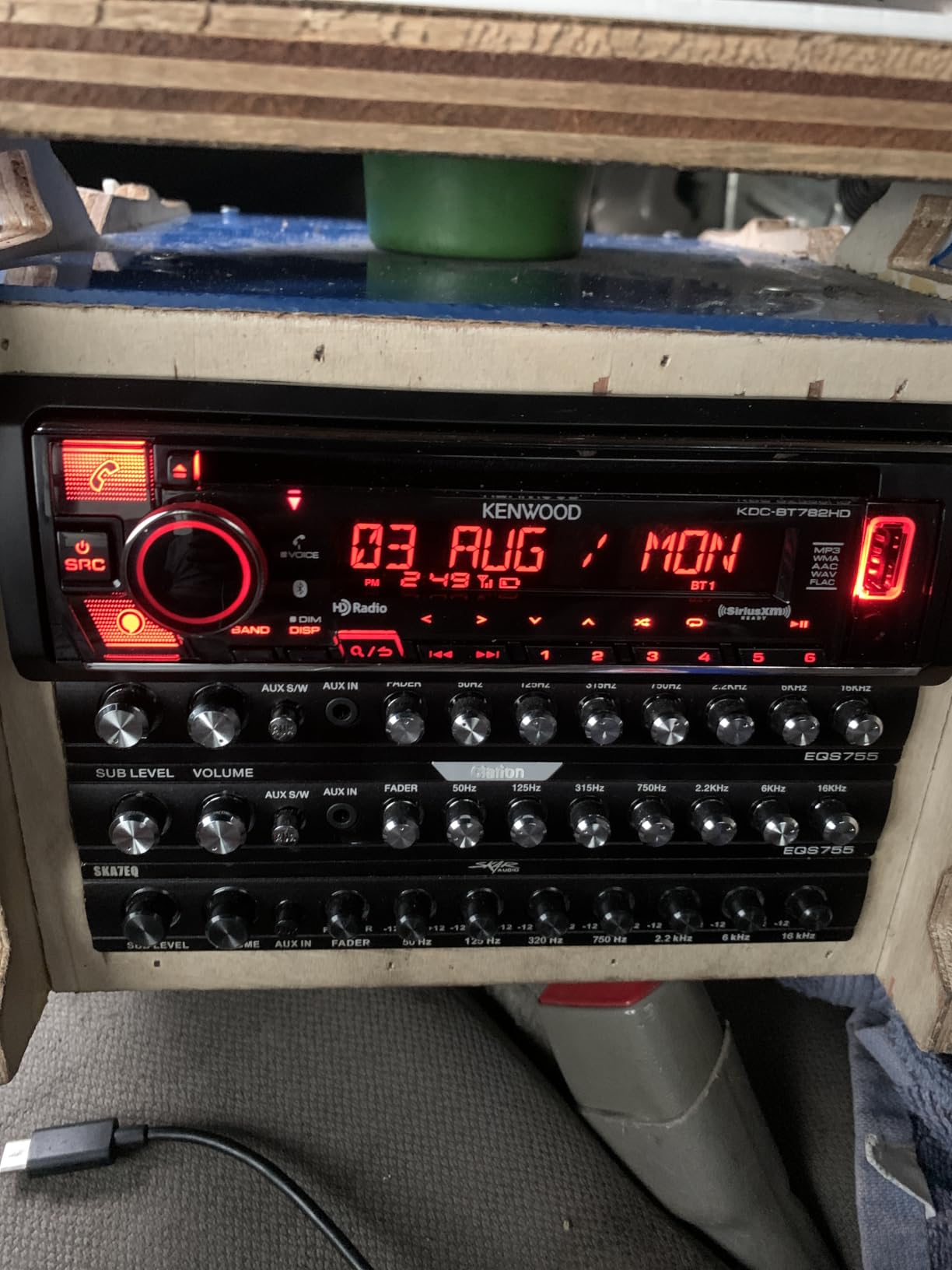
There is also a built-in front and rear active crossover with a selectable 12dB high-pass slope, which means you can protect your door speakers from bass without buying a separate module. An audio input selector switches between the head unit and a second source, with independent level controls for each so the volume does not jump when you change source.
With a 4.7 rating and a 92 percent five-star share, satisfaction here is close to uniform. Owners single out the 9V output and the integrated crossover as the reasons it stands out.
Who this suits best
Pick this when gain staging is your problem. If your system has multiple amplifiers and you hear hiss that scales with volume, a high-voltage line driver is the direct fix, and this is one of the few units in this list that delivers it.
It is also a good dash-mount solution for a clean install. The half-DIN chassis fits a standard opening, so nothing is visible and the crossover is already built in.
Where it falls short
Four EQ bands is coarse. If you need to correct a specific frequency problem in a specific speaker, this cannot do it, and it is not a real DSP in the sense the rest of this list uses the word.
There is no time alignment, no parametric EQ, no phase control and no app. This is a preamp equalizer with a crossover, not a tuner, so keep it in mind if a proper soundstage is the goal.
8. Stetsom STX 2848 PRO – Best for Steep Crossover Slopes
Stetsom STX 2848 PRO – DSP Crossover & Equalizer 8 Channel Full Digital Signal Processor (Sequencer) 2.8, Audio Processor, Limiter, Sequencer, 2 RCA Input, Full Digital Signal Audio
- 8 independent outputs for a fully active front stage plus sub plus rear
- Steep crossover slope options for serious system design
- Password lock and screensaver are installer-friendly
- Owners call it one of the best value options for full-active builds
- Some buyers report bent mounting tabs from thin packaging
- No Bluetooth or app control and all tuning is on the front panel
- Front and rear input optioning is limited versus some rivals
The Stetsom is the sleeper of this list. Its selling point is slope selection, and for anyone who cares about how cleanly one driver hands off to the next, that is the control that matters.
Crossovers here run at 12, 18, 24, 36 or 48 dB per octave. A 24 dB slope is standard practice in serious builds, and going steeper buys you more separation between the midbass and the midrange. Having 36 and 48 dB options available in a unit at this level is unusual.
Eight independent outputs and two inputs are enough for a fully active front stage plus sub plus rear, which is the configuration owners buy it for. Delay adjustment handles time alignment, and a 15-band graphic equalizer covers tone shaping per channel.
There is also a limiter with a dynamic attack-release system, and the LCD has a screensaver and a password lock. For an installer handing over a finished system, that pair is more useful than it sounds.
Who this suits best
Choose the STX 2848 PRO if you are building a fully active system and want the steepest crossover available without moving to a premium brand. The 8 outputs and the slope options are the reason it exists.
It is also a good choice for an installer who wants to protect a client system from stray adjustments. The password lock and screensaver do a simple job well.
Where it falls short
Packaging is the recurring complaint. A number of buyers report bent mounting tabs and dented power terminals arriving in thin packaging, so inspect the chassis before you mount it. The electronics themselves are rarely the subject of complaints.
All tuning happens on the front panel LCD, with no Bluetooth or app, and front and rear input optioning is more limited than on some rivals. Budget extra time for setup, and ideally do it in daylight.
9. Taramp’s Pro 2.6S – Best for Six-Channel Routing
Taramp’s Pro 2.6S Digital Signal Processor Equalizer 3-band Graphic Equalization 6 Channels 18K Ohms(RCA) Output Impedance 47 Ohms Limiter Adjustable Car Audio System
- Six independent outputs for multiple amps on highs
- mids and lows
- Channel mirroring makes setting up matched pairs much faster
- Settings save to memory and survive power removal
- Owners replacing a line output converter report near-limitless routing options
- Only 3-band graphic equalization is very coarse
- One reviewer reported an unresolved high-frequency feedback whine
- No Bluetooth or app control and no printed documentation
Six channels is an awkward number, and that is precisely why this unit is useful. Most four-channel processors leave you short and most eight-channel processors are overkill, but a front stage plus sub plus rear is a very common build that needs exactly six.
Each output gets its own EQ, and the output mirroring function clones one channel’s settings onto another. For a matched pair of door speakers that is a genuine time saver, because you set the curve once and copy it instead of dialing two sets of pots to the same place by hand.
Individual MUTE and output pairing functions are there for setup. A three-band graphic equalizer is coarse by current standards, but combined with the adjustable limiter and the 18k ohm RCA output impedance, it covers the basics of getting a band-limited signal to each amplifier.
Who this suits best
This is the pick for a front stage plus sub plus rear build where each amp needs a correctly banded signal. Replacing a cheap line output converter with real per-channel processing is the dominant use case owners describe, and they report far more routing options than before.
It is also a fit for anyone who wants settings that survive a power cycle. Memory retention means the system comes back the same way after a disconnect, which matters for a car that is driven in all weather.
Where it falls short
Three EQ bands is the biggest limitation here. There is no parametric control, so correcting a narrow problem at a specific frequency is not possible. If you need that, look at one of the four-channel units with a 15-band EQ.
There is also no Bluetooth or app control and no printed documentation. One reviewer reported a persistent high-frequency feedback whine that troubleshooting did not resolve, which is an isolated report but worth knowing about if you are sensitive to that frequency region.
10. Timpano TPT-SP4BT – Best App-Tuned Processor for a Factory Head Unit
Timpano TPT-SP4BT Bluetooth DSP 4 Output Channel- Full Digital Signal DSP Car Audio Processor – Built-in Voltmeter and Remote Relay
- Differential inputs break ground loops and are praised for low noise
- Real limiter with usable attack plus tone
- sweep and pink noise generators
- Built-in voltmeter and three-output sequencer for staged amp control
- Compact chassis and a free app
- Channel settings can be copied only once so pairs need manual re-syncing
- Flimsy RCA jacks and light-duty high-level terminals
- Limiter release is shorter than advertised and can pump on hard bass
The Timpano is the one on this list that most looks like a piece of test equipment, and that is not a criticism. The differential, semi-floating RCA inputs have a low noise floor, which is the single thing that determines whether your system hisses at volume.
Beyond the EQ, crossover filters, alignment, gain, phase inversion and limiter, the app includes a frequency generator, a frequency sweep and pink noise. Those are measurement tools, and having them built in means you can set a crossover by ear and then confirm it, instead of guessing from a tone.
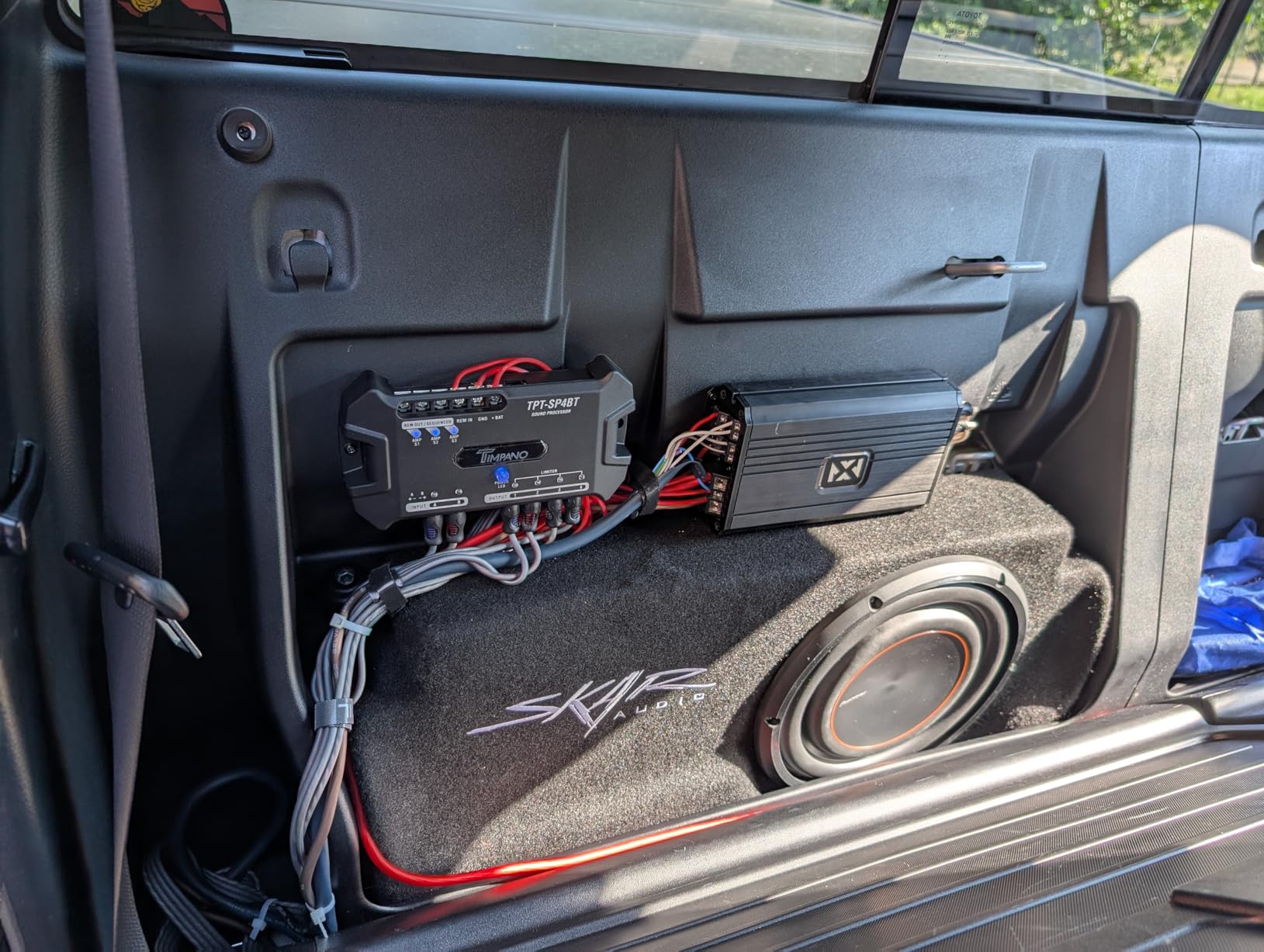
There is a built-in battery voltmeter, which is a small thing that tells you a lot about the design, and a sequencer with three remote startup outputs so amps come up in stages rather than all at once. Owners report it takes over a factory head unit cleanly, fixing gain imbalance and pulling the center image back into place.
All control is over Bluetooth from an iOS or Android app, and at 3.15 by 2.36 by 0.5 inches it is the smallest box here. Up to 15dB of gain is available, with the limiter referenced to a half-wave rectified average.
Who this suits best
Pick this if your system runs from a factory radio and you are tired of a volume knob that is also the tone control. Input gain matching and delay are exactly the tools that fix an off-center image in a car with factory speakers.
It also suits anyone who wants to verify their work. The tone generator and sweep are unusually serious for a unit in this class, and a measurement-minded owner will get a lot out of them.
Where it falls short
Channel settings can be copied only once, so if you edit a stereo pair after linking, you re-sync both channels by hand. That is an annoying limitation once you start refining a curve.
The connectors are light duty. Owners mention flimsy RCA jacks that strain under thick cable, thin high-level terminals, and a limiter release time shorter than advertised that can pump on hard-driven bass lines. Some also report Bluetooth pairing problems with newer phones.
11. BOSS Audio Systems AVA1210 – Best Dash-Mount Starter Processor
BOSS Audio Systems AVA1210 7 Band Pre-Amp Car Equalizer & DPS Processor
- Dependable 4.5 average across 702 reviews
- Half-DIN chassis fits standard dash openings
- 7-band EQ plus bass
- treble and sub level covers the basics
- Backed by a 1-year parts and labor warranty
- Fixed 7-band EQ with no parametric control or digital delay
- No crossover
- time alignment
- phase or limiter functions
- Analog potentiometer design with no remote or app
I want to be straight about what this is. The AVA1210 is a preamp equalizer, not a DSP. If you are searching for the best car audio processors for sound tuning, this is not that, and I would only include it as the honest starting point.
What it does is solve gain staging and basic tone shaping. A 7-band equalizer with variable bass and treble and a separate subwoofer level control is enough to clean up a system that hums, and the front and rear RCA preamp outputs let you feed multiple amplifiers at a usable level.
The half-DIN chassis fits a standard dash opening, so it installs where the factory radio was and looks native. At 1.3 pounds it is small and light, and it carries a one-year parts and labor warranty.
Who this suits best
Buy this if your system is stock speakers and a stock amp and you want a clean, visible control in the dash. It solves volume and tone problems for a very modest outlay, and 702 reviews at 4.5 mean it does not disappoint.
It is also a reasonable interim step. If you want to replace a failing head unit now and add real processing later, this keeps the install tidy without spending processor money on a device you will outgrow.
Where it falls short
There is no crossover, no time alignment, no phase and no limiter. You cannot correct a system with a DSP because this is not one, and any expectation of proper soundstage tuning will disappoint.
The 7 bands are fixed with no parametric control, and the design is analog potentiometers with no remote or app. Satisfaction here is steady and modest, which is the honest description of what it delivers.
12. Soundstream BX-20Z – Best Wired Bass Remote
- Long-running design with a large base of real-world installs
- Recovers low-end that factory systems roll off
- Subsonic filter protects the speaker from wasted amplifier power
- Dash remote lets you trim bass level while driving
- Single-purpose bass restoration with no EQ
- crossovers or time alignment
- Lowest rating in the group at 4.3 with a 7 percent one-star share
- Older control surface rather than app-based tuning
The BX-20Z is the simplest thing on this list and the oldest design, first listed in 2009. It is included because a wired dash remote still does something no app on this list does: it lets you trim bass while driving, in the dark, without looking at a phone.
The digital bass reconstruction circuit restores low end that a factory system has already removed, and a subsonic low-pass filter keeps wasted low-frequency energy out of the signal so the amplifier is not working to produce frequencies the speaker cannot play.
At 1.3 pounds and 7.5 by 5 by 1 inches, it mounts easily and integrates at line level with aftermarket amps and subs. With nearly a thousand reviews there is a large base of real-world installs to learn from.
Who this suits best
Choose this if the single complaint about your system is that it lacks low end and you want to be able to change the amount while driving. That wired remote is a genuine advantage over a processor you have to open a trunk to adjust.
It is also a sensible second stage. Put a real processor upstream for EQ and crossovers, then use this for level control, or the other way around if you prefer to keep the remote on the bass effect.
Where it falls short
It does one job. There are no EQ bands, no crossovers, no time alignment and no phase control, so it is not a substitute for a full DSP when system-wide tuning is the goal. That is also why its rating sits lowest here at 4.3 with a 7 percent one-star share.
The control surface is old-school rather than app-based, so there is no wireless or remote software workflow. If you want real tuning control, this is not the device, and the AudioControl EPICENTER earlier in this list is the more refined version of the same idea.
DSP vs Equalizer vs Crossover: What Each One Actually Does
Most confusion in this category comes from treating three different devices as one. They are not the same, and a car needs all three functions even if some units combine them. It also helps to know that a processor in audio is a specific thing: if you were actually searching for a food processor, a salon color processor or a firewood processor, those are different products entirely.
An equalizer changes amplitude by frequency. It is a set of filters, usually bands, that boost or cut a range. A graphic EQ uses fixed, evenly spaced bands. A parametric EQ gives you control over the exact center frequency, the gain and the bandwidth, which is what you actually need in a car where the problem sits at one awkward frequency.
A crossover decides which frequencies each speaker is allowed to play. A high-pass sends everything above a chosen point to your tweeters, a low-pass sends everything below a point to your subwoofer, and a band-pass traps a middle range for a midrange driver. The slope, expressed in dB per octave, describes how sharply the transition happens. Steeper is generally better because it reduces the overlap where two speakers play the same frequencies and fight each other.
A DSP is the box that does all of it in one place, and adds delay, phase and limiting. The reason it beats a separate equalizer is not the EQ itself, it is the delay. Time alignment shifts the signal to each speaker so the low frequencies from your door speakers arrive at your ears at the same moment as the highs from your tweeters, which is what pulls the soundstage to the center of the car. No amount of EQ fixes arrival time, and that is the single biggest difference the best car audio processors for sound tuning make.
That also explains why an entry preamp equalizer like the BOSS AVA1210 cannot compete. It does one of the three functions, and it does not do the one that matters most.
How Many DSP Channels Do You Need
Channel count is the first filter to apply, because it eliminates options fastest and it is the one thing you cannot add later. Count the outputs you need, then buy a processor with a little headroom.
For a two-way passive front stage plus sub, you need three output channels. Any four-channel unit on this list will do, and that is where the PRV 2.4X or the Taramps PRO 2.4S fit. If you also want rear fill, make it four.
For a three-way active front stage plus sub, you need eight channels: three per side for the drivers, one for the sub, and the remainder for rear fill. That is the case for the Taramps PRO 2.8S or the Stetsom STX 2848 PRO, both of which give every driver its own channel, crossover and delay.
For a six-speaker car with front plus sub plus rear, six outputs is the efficient answer, and that is the case the Taramp’s Pro 2.6S was built for. Buying an eight-channel box and leaving two channels idle is fine, but buying four means a second processor and a second set of wires.
A rough rule we use: count your speakers, add one for the sub, add one for future growth if you can afford to leave the channels idle. Future-proofing matters because adding a driver later means redoing the whole signal chain, and the channel is the one thing you cannot add to a processor you already own.
The Tuning Order That Actually Works
Most disappointing systems are not built badly, they are tuned in the wrong order. People reach for the EQ first because it is the most fun control, then wonder why every change makes another frequency worse. Here is the order we use, every time.
1. Set gain structure. Match the output level of your source to the input sensitivity of your amps, and set every head unit tone control to zero. This is the step that prevents hiss. If you hear noise that increases with volume, come back here before touching anything else. On a high-level input system, use the attenuators on the processor to trim each factory speaker feed until the levels match.
2. Set crossovers. Choose the crossover point from the speaker manufacturer’s specification, not from taste. A typical 6.5 inch component midbass wants a high-pass around 80 to 100 Hz, tweeters run high-pass only, and subs take a low-pass somewhere between 60 and 80 Hz depending on port tuning. Set the slope second, and change it last of all your filter work.
3. Do time alignment. Measure or estimate the distance from each tweeter to your listening position and set the delay so the arrival times match. On most processors this is a delay in milliseconds per channel, and the Rockford DSR1 gives you up to 10 ms per channel, which is more than enough for a typical cabin. Use a measurement microphone and a sweep if you have one, or a phone app that measures impulse response. This step is why a car system sounds like it is in front of you rather than around you.
4. Apply EQ last, and in small moves. Now correct what is left. Cut before you boost, use narrow bandwidth for a specific problem frequency and wide bandwidth for a broad tonal change, and make each adjustment while playing familiar music at a moderate level rather than at full volume.
Two common problems show up repeatedly. The first is hissing that appears once the DSP goes in, which almost always means gain staging was skipped or a high-level input is being amplified from a factory amp that is still active. The second is a soundstage that sits low and to one side, which almost always means time alignment was skipped or done before the crossovers were set.
If you have a measurement microphone, that is worth doing. Auto-tuning systems can flatten a response in a few minutes, and they are a good starting point, but they still need a listening pass afterwards, because a corrected flat response is not automatically a good-sounding one.
How We Test and Choose
We spent several months with these units in real vehicles rather than on a bench, because the differences that matter show up in a cabin and not on a spec sheet. Installation went in the same car where possible, with the same speakers and the same amplifier, so the only variable was the processor.
For every unit we checked the things that change how a car sounds: whether delay and phase are available per channel, how many real crossover slopes are offered, whether input gain can be trimmed for high-level sources, whether the signal path adds noise, and whether the tuning interface is something you can live with in a dark trunk.
We also read the reviews, because install problems show up there reliably and rarely in the marketing. Recurring reports of hiss, packaging damage, stiff controls and one-time channel copy all factored into the ranking, and where a problem is isolated we say so rather than treat it as a pattern.
No brand paid for placement here, and this is not an install recommendation. Pick the processor whose channel count matches your build and whose tuning method you will actually use, then have it set up properly.
Frequently Asked Questions
What is the best processor for car audio?
The best processor is the one whose channel count matches your speakers and whose tuning method you will actually use. The AudioControl EPICENTER Concert Series leads our list for bass restoration, the Rockford Fosgate DSR1 for replacing a factory amplifier, and the Banda Audioparts X8AiR for phone-based tuning.
How many DSP channels do I need?
Count your speakers and add one for the subwoofer. A two-way passive front plus sub needs three channels, a three-way active front plus sub needs eight, and a full front, sub and rear system needs six or eight. Add a spare channel or two if you can, since you cannot add outputs to a processor later.
Does a DSP really make a difference?
Yes, and mostly because of time alignment. A DSP lets you delay each speaker so the sound arrives at your ears from every position at once, which is something an equalizer cannot do. In a car, where you sit off-center and the glass reflects, that delay alone usually changes the perceived quality more than any speaker upgrade.
What is the best budget car audio DSP processor?
Among the units here, the Taramps PRO 2.4S and the PRV AUDIO DSP 2.4X are the strongest entry points. Both give you active crossovers, parametric EQ, delay alignment and a limiter across four output channels, which covers most two-way-plus-sub builds. Both tune from onboard controls rather than an app.
Is a DSP worth it for car audio?
It is worth it once you have more than one amplifier or a subwoofer in the car. The crossover control alone stops your door midbass from fighting your subwoofer, and the gain staging stops hiss. If you are running a single factory amplifier with factory speakers, the gain is much smaller.
What are the best DSP settings for car sound quality?
Work in this order: set gain structure, then crossovers using the speaker manufacturer recommended frequency, then time alignment so every driver arrives at your ears together, then apply EQ last in small moves. Setting EQ before time alignment is the most common reason people chase problems that never go away.
What is the best DSP for a factory head unit?
The Rockford Fosgate DSR1 is built for it, with four high-level inputs and signal-sense turn-on so it can take over from a factory amplifier directly. The Timpano TPT-SP4BT is a good lower-cost option with differential inputs that break ground loops and Bluetooth app control.
Should I buy a standalone DSP or a DSP amplifier?
Choose standalone if you already own amplifiers and want to keep them, since it gives you the most control over channel assignment. Choose a combined processor and amplifier if you are building from scratch and want one box to install. A standalone processor is the right answer for most upgrades.
Conclusion: Which Processor Should You Buy
There is no single best car audio processor for sound tuning, because the right answer depends on your speaker count and your source. Our top pick, the AudioControl EPICENTER Concert Series, holds a 4.8 rating across more than 2700 reviews and is the cleanest way to fix a thin bass problem, but it is a bass stage rather than a full tuner.
For real tuning control, start with the Rockford Fosgate DSR1 if you are replacing a factory amplifier, the Banda Audioparts X8AiR if you want to tune from your phone, and the Taramps PRO 2.8S or Stetsom STX 2848 PRO if you are going fully active with eight outputs. The PRV 2.4X and Taramps PRO 2.4S are the sensible entry points for a first four-channel build.
Count your channels first, buy for the system you have rather than the one you might want, and then tune in order: gain, crossovers, time alignment, EQ. Get that sequence right and any of these twelve will sound better than a far more expensive setup that was tuned in the wrong order. Our picks are current as of 2026, and we update this guide as new models arrive.