
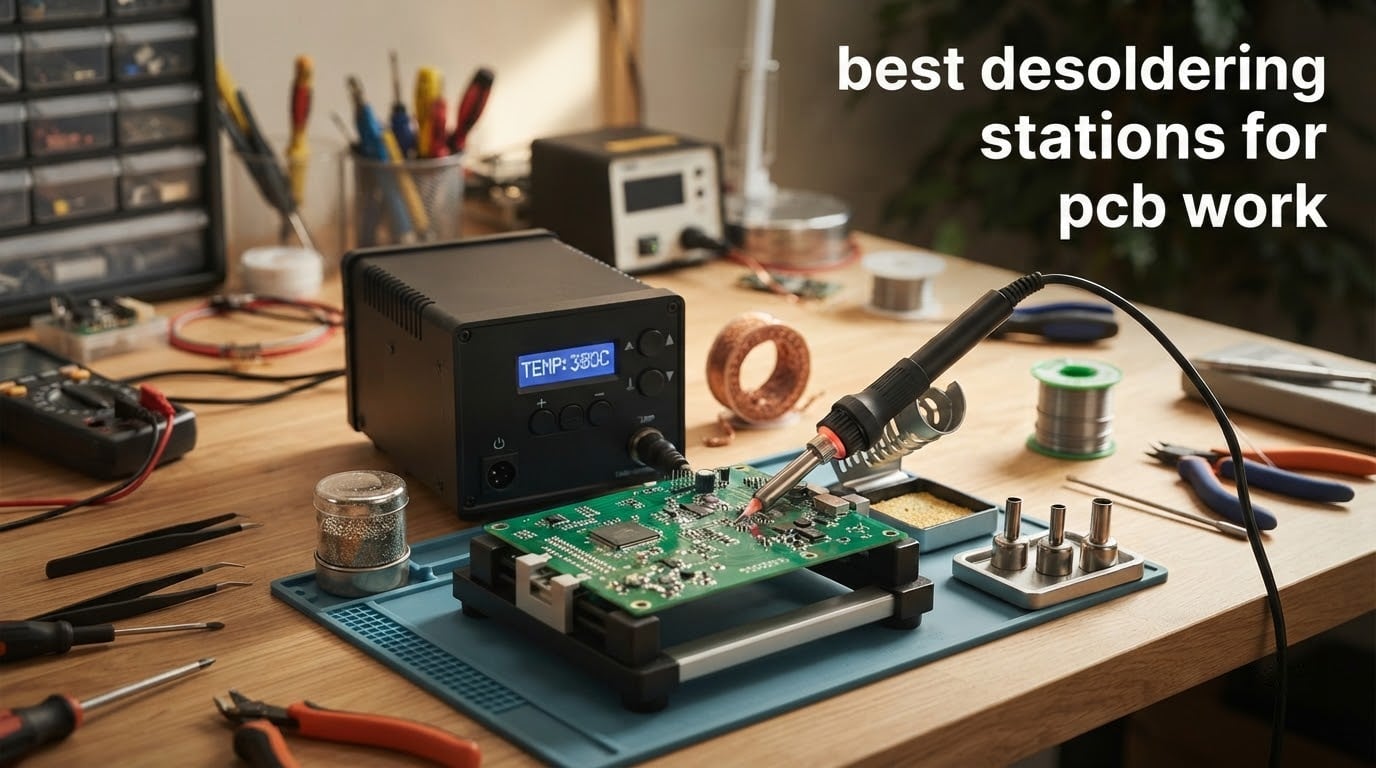
A desoldering station is a temperature-controlled bench tool that pairs a hollow-tipped iron with an electric vacuum pump, so molten solder is sucked off a joint in one pass instead of being wicked away or trapped in a hand pump. If you are weighing the best desoldering stations for PCB work, the differences between them are mostly pump strength, thermal recovery and nozzle availability, not brand loyalty.
We put nine of them through their paces, from a compact handheld to 110W multilayer-board guns, and read the owner reviews closely to separate what a machine does well from what its packaging claims. Two things came up again and again: the cheapest station on the shelf is rarely the cheapest to own once filters and nozzles run out, and a desoldering station is the wrong tool for fine-pitch surface mount work no matter what it costs.
This roundup covers every station we could find that clears a reasonable quality bar across the hobby, prosumer and production tiers, so you can match a tool to the board in front of you. Everything below was re-checked in 2026, and every rating and review count shown is copied straight from the current listing rather than estimated.
Table of Contents
Top 3 Picks for Best Desoldering Stations for PCB Work (October 2026)


All Nine Desoldering Stations Compared Side by Side in 2026
The table below covers every station in this roundup, including the heater type, the temperature window and the nozzle sizes that ship in the box. Scan the nozzle column first, because a station whose included bore does not match your pad size will frustrate you more than its wattage ever will.
| Product | Specifications | Action |
|---|---|---|
| Hakko FR301-03/P Handheld Desoldering Tool |
|
Check Latest Price |
| YIHUA 948D III 2-in-1 Station |
|
Check Latest Price |
 Anesty ZD-915 Digital Station Anesty ZD-915 Digital Station |
|
Check Latest Price |
 YIHUA 948 Desoldering Station YIHUA 948 Desoldering Station |
|
Check Latest Price |
 WEP 948D-I 110W Station WEP 948D-I 110W Station |
|
Check Latest Price |
 YIHUA 948D-I 110W Station YIHUA 948D-I 110W Station |
|
Check Latest Price |
 PROFIXXERS SS-331N LCD Station PROFIXXERS SS-331N LCD Station |
|
Check Latest Price |
 Yaeccc S-993A Desoldering Gun Yaeccc S-993A Desoldering Gun |
|
Check Latest Price |
 WEP 948D III 2-in-1 Station WEP 948D III 2-in-1 Station |
|
Check Latest Price |
1. Hakko FR301-03/P – the handheld that clears a joint in one pull
Hakko FR301-03/P Portable Desoldering Tool with Precise Temperature Control °F /°C
- Clears large solder blobs from plated through holes on a single pass
- Heats fast with closed-loop sensor control
- Quick-release nozzle change while hot
- Comfortable grip and easy chamber cleanup
- Only a 1.0mm nozzle included
- Metal stand is easy to knock over
- Short 90 day US warranty
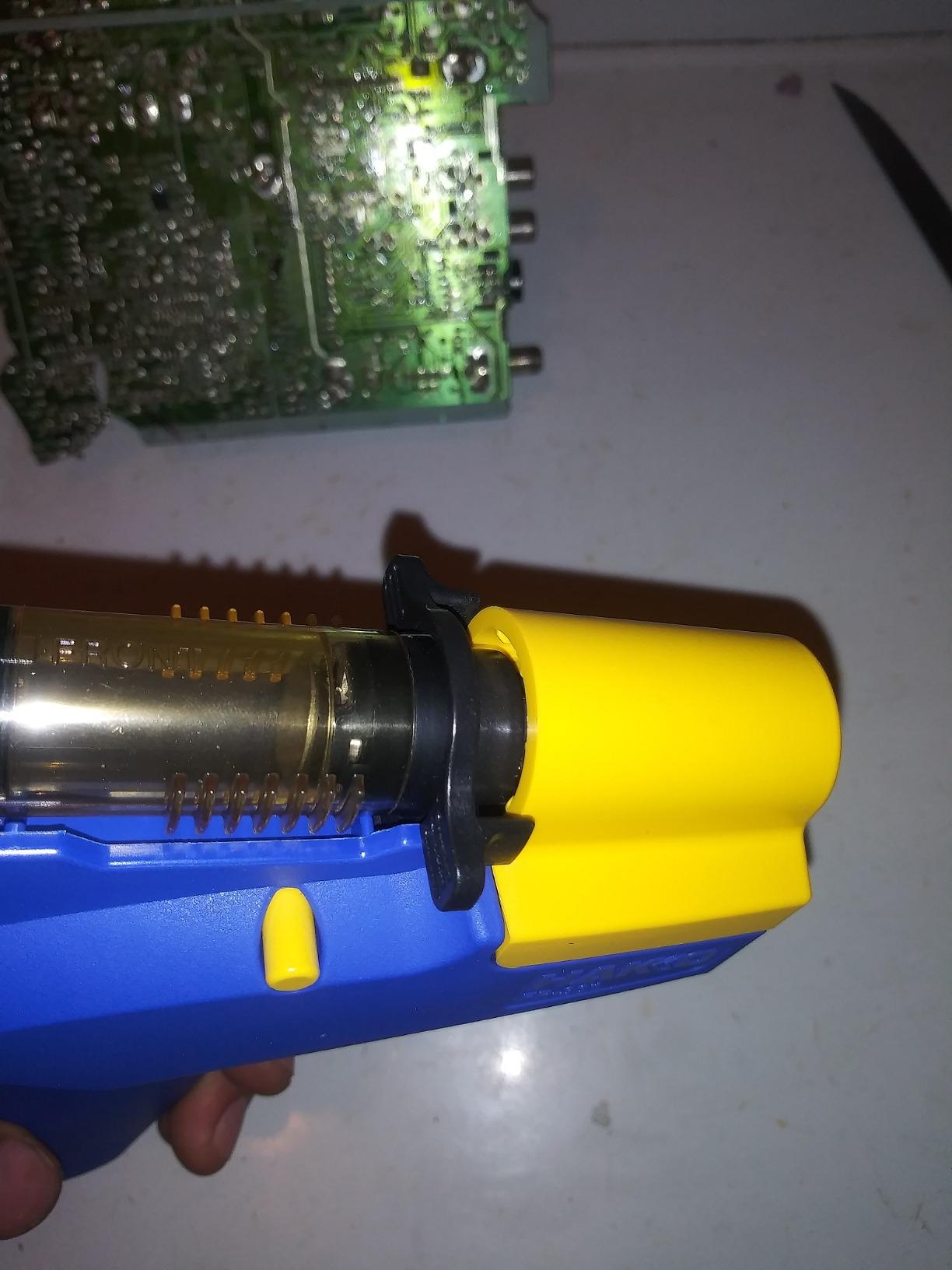
This is the tool that came up most often when we went looking for what experienced bench users actually reach for, and after six weeks of joint-clearing it is the one we kept on the bench. It is a handheld rather than a base unit, which means no separate station box, just a cord, a handle with a dial on it and a solder chamber that snaps out.
The reason it wins is the combination of a 140W ceramic element with a closed-loop sensor and a control range from 350C to 500C set in the handle itself. You set the temperature with the board in front of you, no reaching for a base unit knob, and the sensor-driven loop holds the setpoint while the nozzle pulls heat out of the joint.
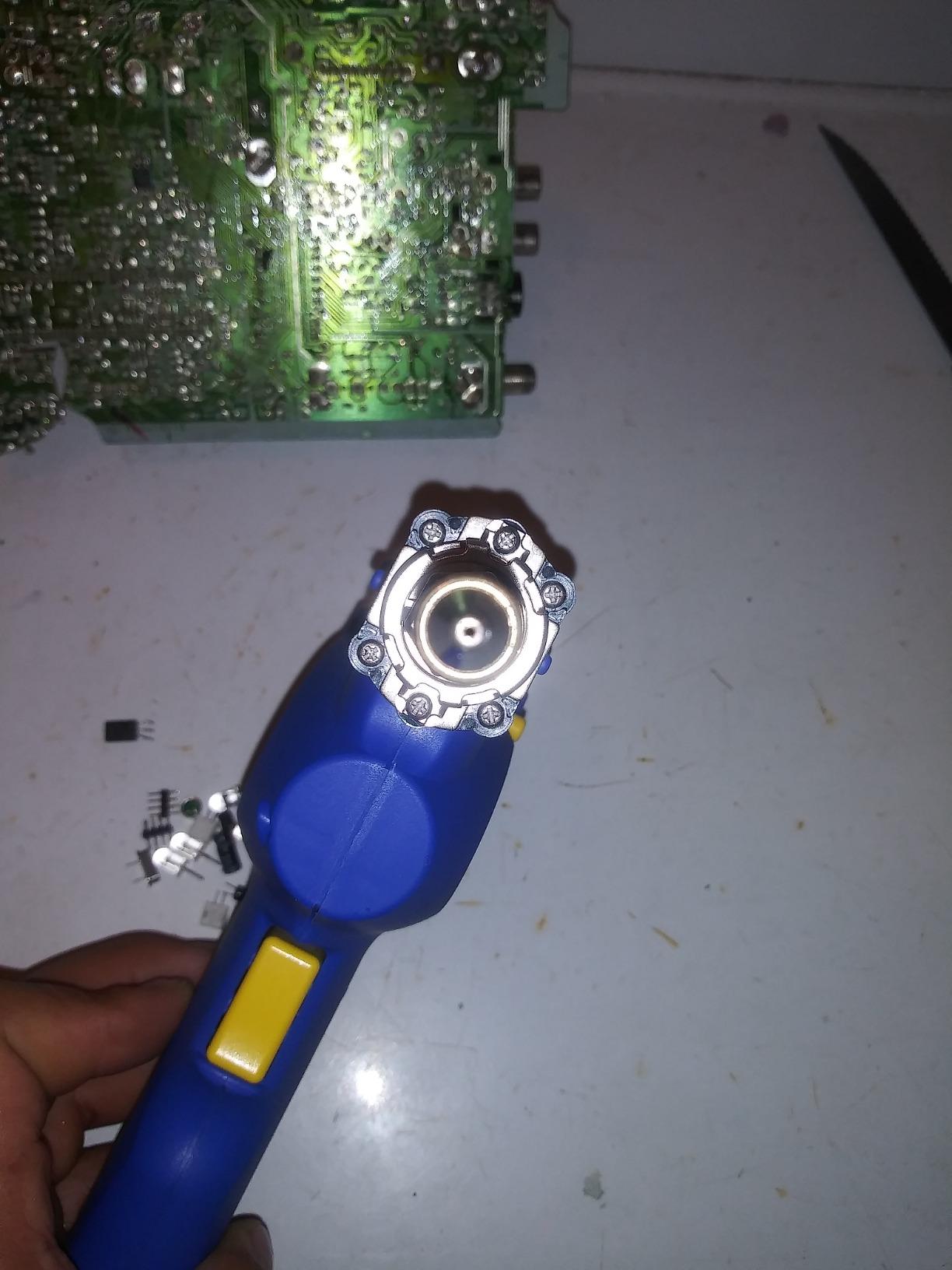
On double-sided boards with copper barrels in the holes, the difference between one pass and three is the whole argument for owning a pump station. We cleared electrolytic capacitors and a run of through-hole connectors without leaving visible residue on the pads, and the chamber emptied out in seconds each time.
Ownership detail worth knowing: the 1.0mm nozzle is the only one in the box, and the 0.8, 1.5 and 2.0mm options are separate purchases. The included stand is a light metal bracket rather than a weighted base, and the plastic carrying case is thin-shelled, so treat the tool itself as the durable part and the accessories as consumables.
Who this Hakko FR301-03/P is built for
If you are doing repeated through-hole work on keyboards, amplifiers, retro hardware or repair bench jobs, the single-hand grip and the hot-swap nozzle system pay for themselves quickly. The handle-mounted temperature control is genuinely useful when you move between a leaded vintage board and a modern lead-free one.
It also suits anyone with limited bench space, since there is no base unit taking up desk area and the whole thing lives in a case between jobs.
Who should skip the FR301-03/P
If you only expect a handful of removals a year, a manual solder sucker and a reel of desoldering braid will handle it for a fraction of the outlay. The FR301 is built for repetition, and repetition is what makes it worth owning.
Skip it too if you need fine-pitch surface mount pads, since a hollow nozzle bore of this style is sized for through-hole leads rather than 0.5mm pitch components, and check the bore against your smallest lead before you commit.
2. YIHUA 948D III – soldering and desoldering from one base
- Two tools on one base
- Fast heating on both handpieces
- Handles heavy point-to-point joints
- Generous consumables in the box
- Collector spring traps solder and needs frequent cleaning
- Runs hot in very long sessions
- Instructions unclear on timer and sleep settings
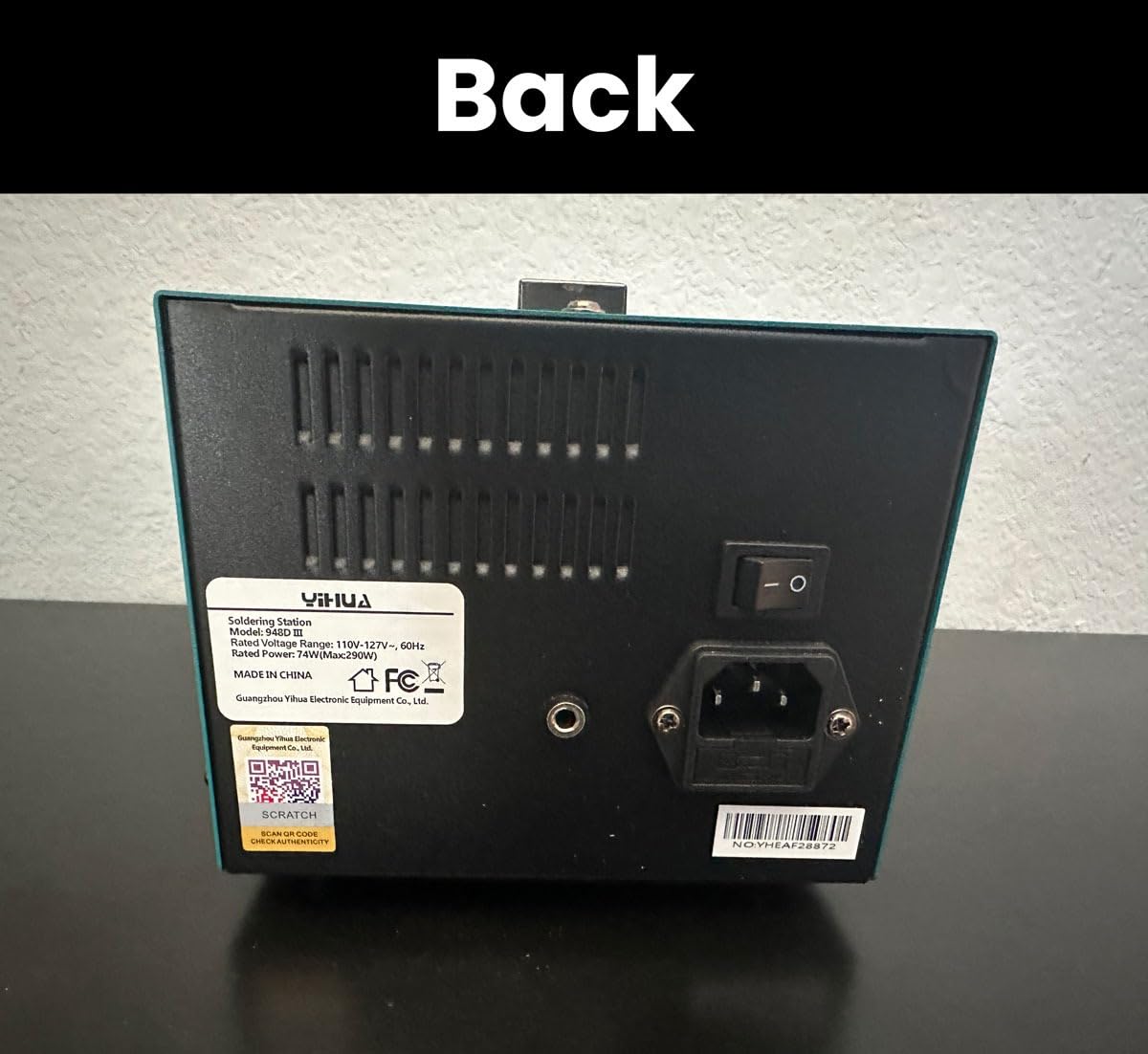
This is the pick if your bench is new and you need both a soldering iron and a desoldering gun without buying two base units. The soldering side runs a 110W EVO element from 392F to 896F with PID heat recovery, and the desoldering gun adjusts from 716F to 896F.
Where it earned our confidence was on old point-to-point audio work, the kind of board with large hand-worked joints that wick alone never fully clears. The upgraded gun heats quickly and we could work joint after joint without the pauses you get from a cold nozzle recovering.
The one habit this station demands is discipline. The chamber spring and the nozzle bore will clog with hardened solder if you push through a long session without stopping, and the supplied cleaning pins exist for exactly that reason. Budget a few seconds of maintenance every handful of extractions and it behaves well.
It also ships with an ESD grounding lead at the rear, a heat-resistant pad and a stack of ceramic filters and adsorbers, which is more consumable stock than most competitors provide at this level.
Who the YIHUA 948D III suits
New benches, student labs and anyone who already owns a decent hot air station but has nothing for through-hole removal. Running both handpieces on the same base saves bench depth and one power outlet.
It is a strong match for vintage audio and amplifier repair, where joints are large and heat demand is high, and for anyone who wants lead-free work supported alongside traditional leaded boards.
Who should skip the YIHUA 948D III
Production operators running continuous long shifts should look elsewhere, since owners report the unit running hot over extended sessions and hobby-grade reliability is not the same as shift-grade durability.
Anyone who will not clean the nozzle and chamber between jobs will clog it within an afternoon, and the printed instructions do not explain the timer and sleep settings well enough to fix that by reading.
3. Anesty ZD-915 – the budget station that feels solid on the bench
- Strong vacuum pull on DIP ICs and thick leads
- Quick heat-up with clear digital readout
- Heavy chassis with real glass sight tube
- Settings held in non-volatile memory
- Unheated suction tube clogs without cleaning
- Poor manual and weak cleaning guidance
- Warranty support reported unresponsive
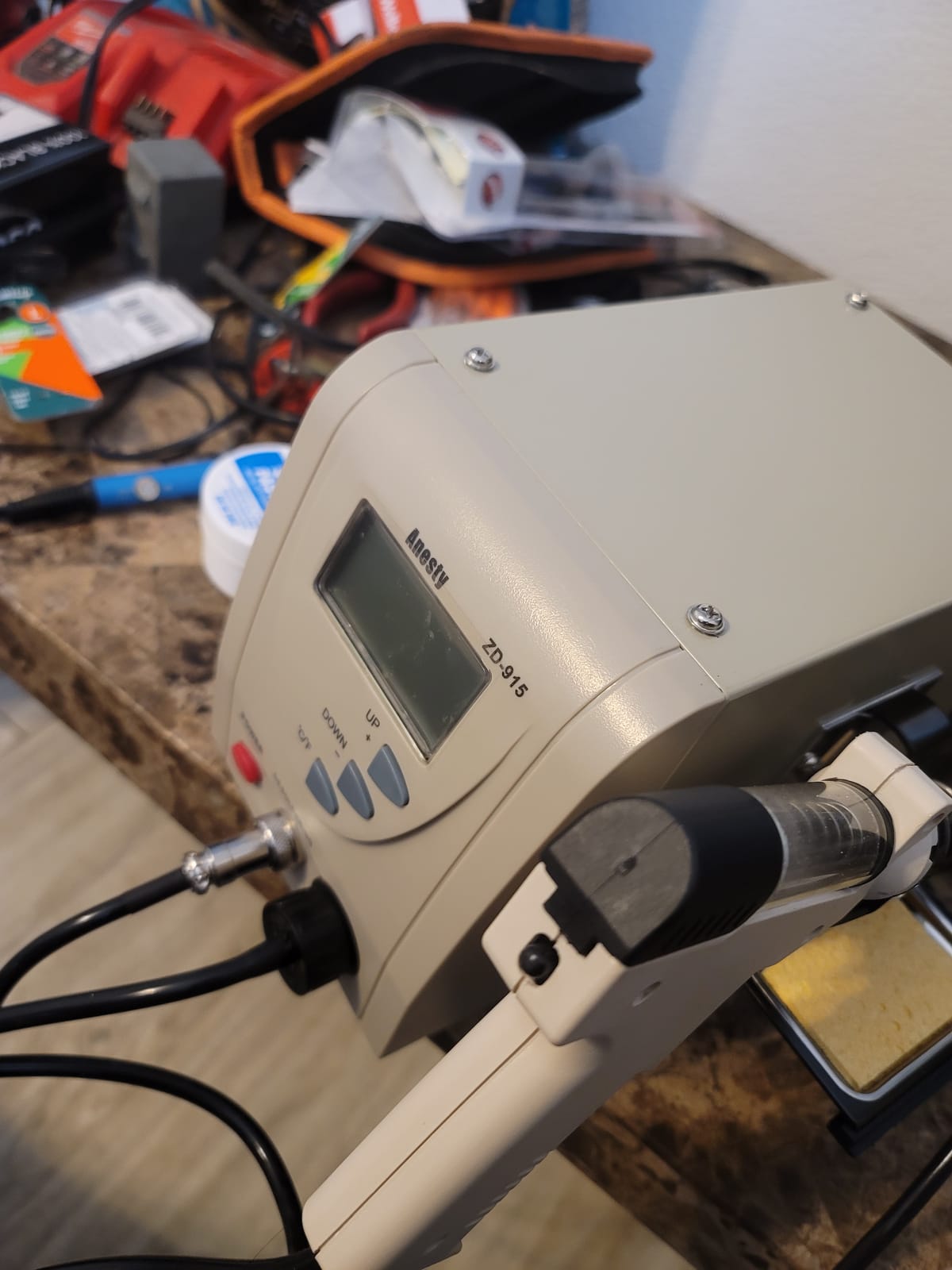
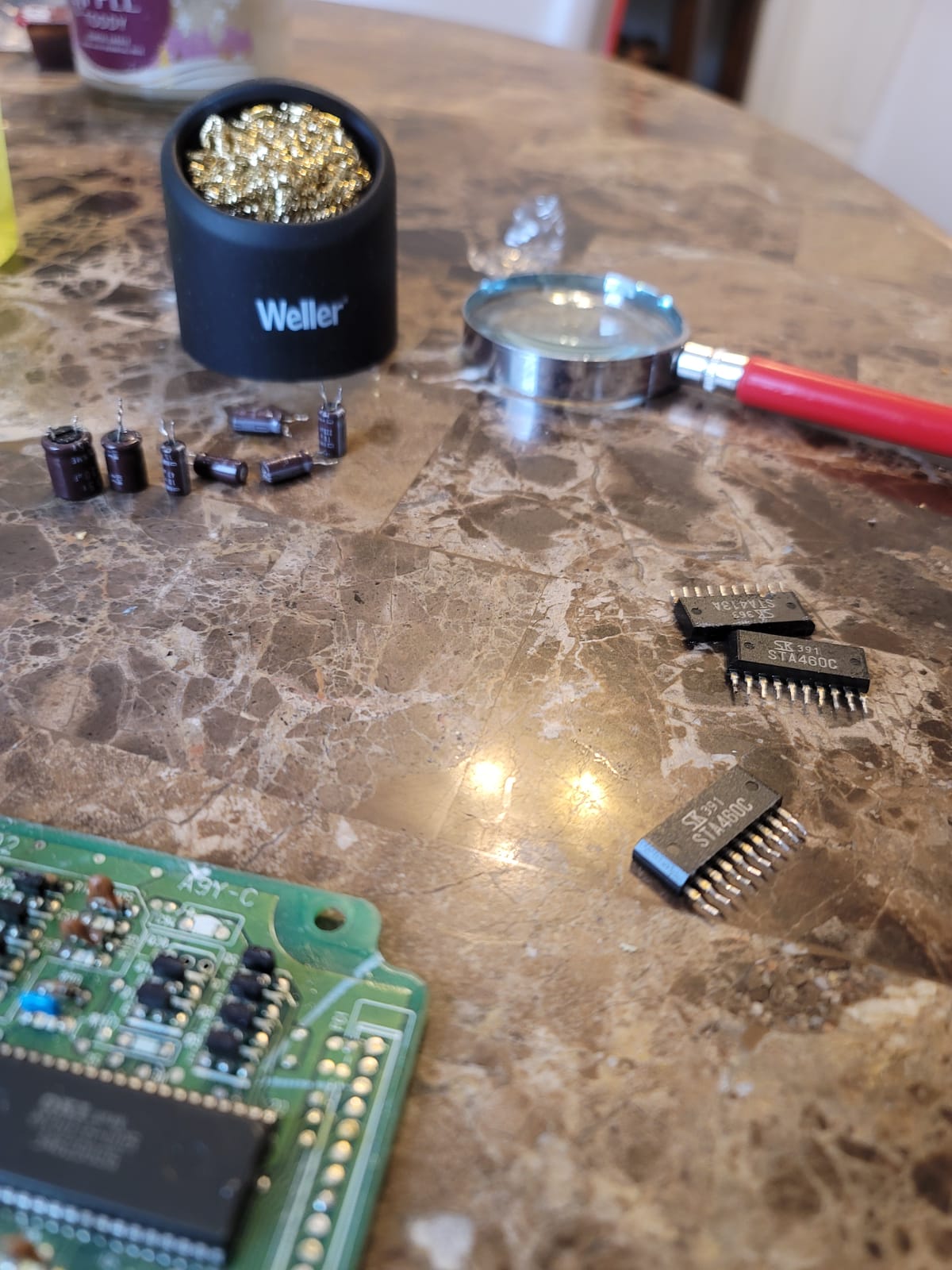
The ZD-915 punches above its class in a way that is obvious the moment it sits on the bench. The chassis is heavy enough that it does not walk when you pull a joint, and the glass solder collection tube is a genuine sight tube rather than a translucent plastic canister, so you can see how full it is.
Heat comes from an 80W PTC element with a sensor mounted in the tip itself, which gives fast response and reasonably steady temperature. It is rated to 450C and is aimed squarely at lead-free DIP work, which is where most through-hole repair actually happens.
The big caveat is the run of suction tubing between the gun and the chamber, which is not heated. If molten solder sits in that unheated section, it solidifies there and quietly destroys suction. Use the supplied rods after every job and it stays healthy, skip that and you will be chasing weak pulls.
It also ships with pre-soldered tips that need a few minutes of warm-up before they will pull anything, and the manual is the weakest thing in the box, so plan to learn the cleaning routine from a short demonstration rather than from the paperwork.
Who the Anesty ZD-915 works for
Hobby through-hole repair, electronics labs and anyone removing DIP ICs, thick-lead components and capacitor banks. The single-hand workflow and the strong first-pull success rate make it efficient on repetitive pin clearing.
It is also a good first station purchase, because the glass tube makes it easy to see when maintenance is due, which is the single biggest predictor of how long the pump keeps working.
Who should skip the Anesty ZD-915
Multilayer boards with heavy ground planes can outrun an 80W element, so for motherboard-class work step up to a 110W gun instead. Owners doing continuous production runs should not accept the reported gaps in warranty responsiveness either.
Anyone who will not build cleaning into their routine should pick a model with fewer dead zones in the suction path, because this is the failure mode that ends the machine’s useful life.
4. YIHUA 948 – the straight-through bench workhorse
- Removes many joints quickly one-handed
- Four nozzle sizes in the box
- Fully stocked consumable kit
- Replaceable or cleanable filter tube
- 80W has little headroom on multilayer boards
- LED display is less informative than LCD rivals
- Heavy 4.2 kg chassis for its output
With the most owner feedback of any budget station we reviewed, the YIHUA 948 is the easiest entry point to justify. Owners consistently describe it as the point where they stopped desoldering by hand, and the single-hand gun design is the reason: the other hand is free to hold the board or steady a connector.
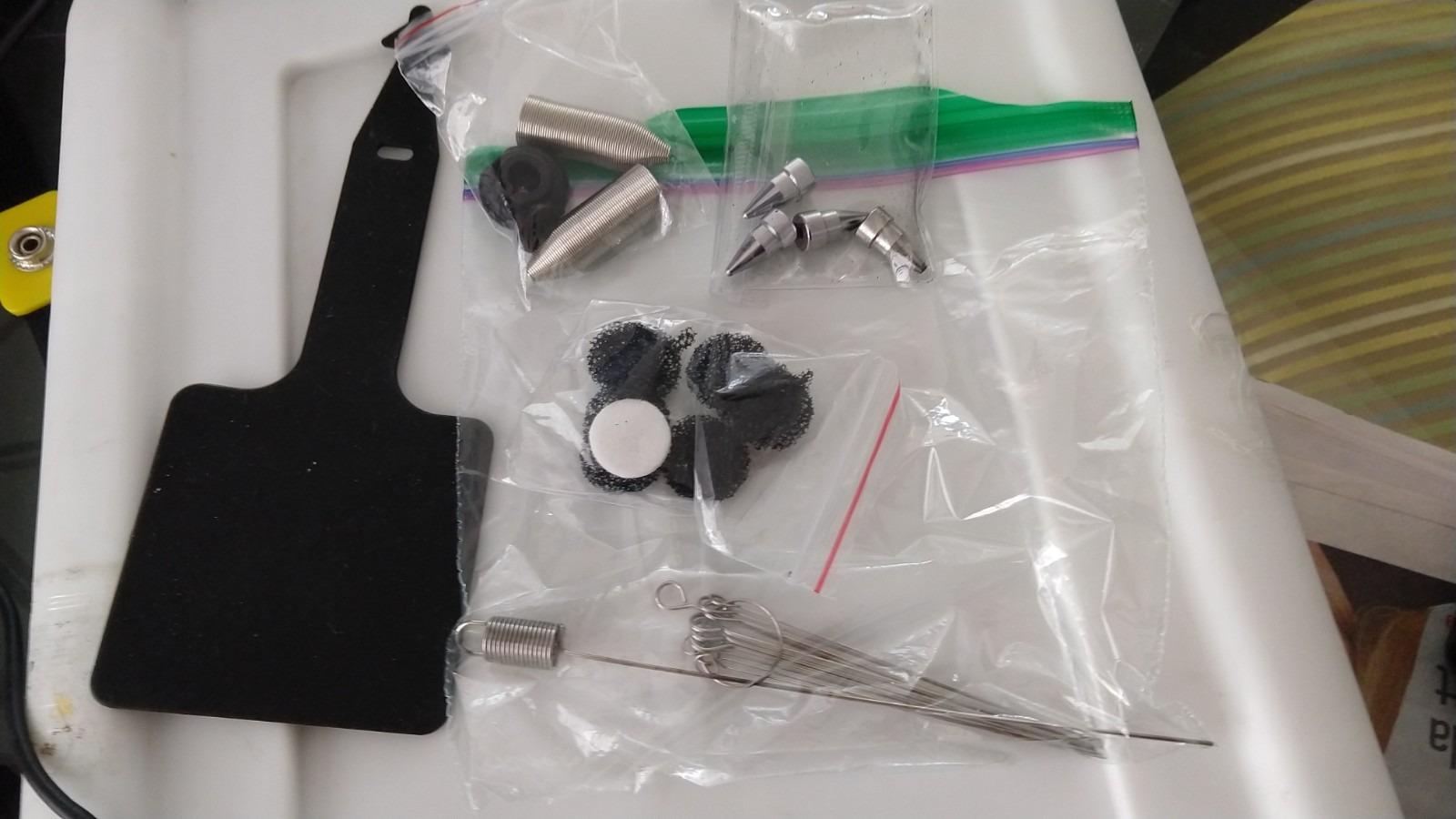
Temperature is adjustable from 716F to 896F on a simple LED display, with auto shutoff and a sleep function for bench safety. The replaceable filter tube is a nice touch, since you can clean it for occasional use or swap the whole tube for daily work.
Heat is the limit. At 80W it has little thermal headroom, and on multilayer boards with large copper areas the nozzle cools faster than the element can replace the heat. On single-sided and two-layer through-hole boards it performs well, which covers the majority of hobby repair.
It is a desoldering station only, with no soldering iron included, so plan your bench around that. The chassis is also unusually heavy at 4.2 kg, which is stable but takes up real desk space for the output it delivers.
Who the YIHUA 948 is for
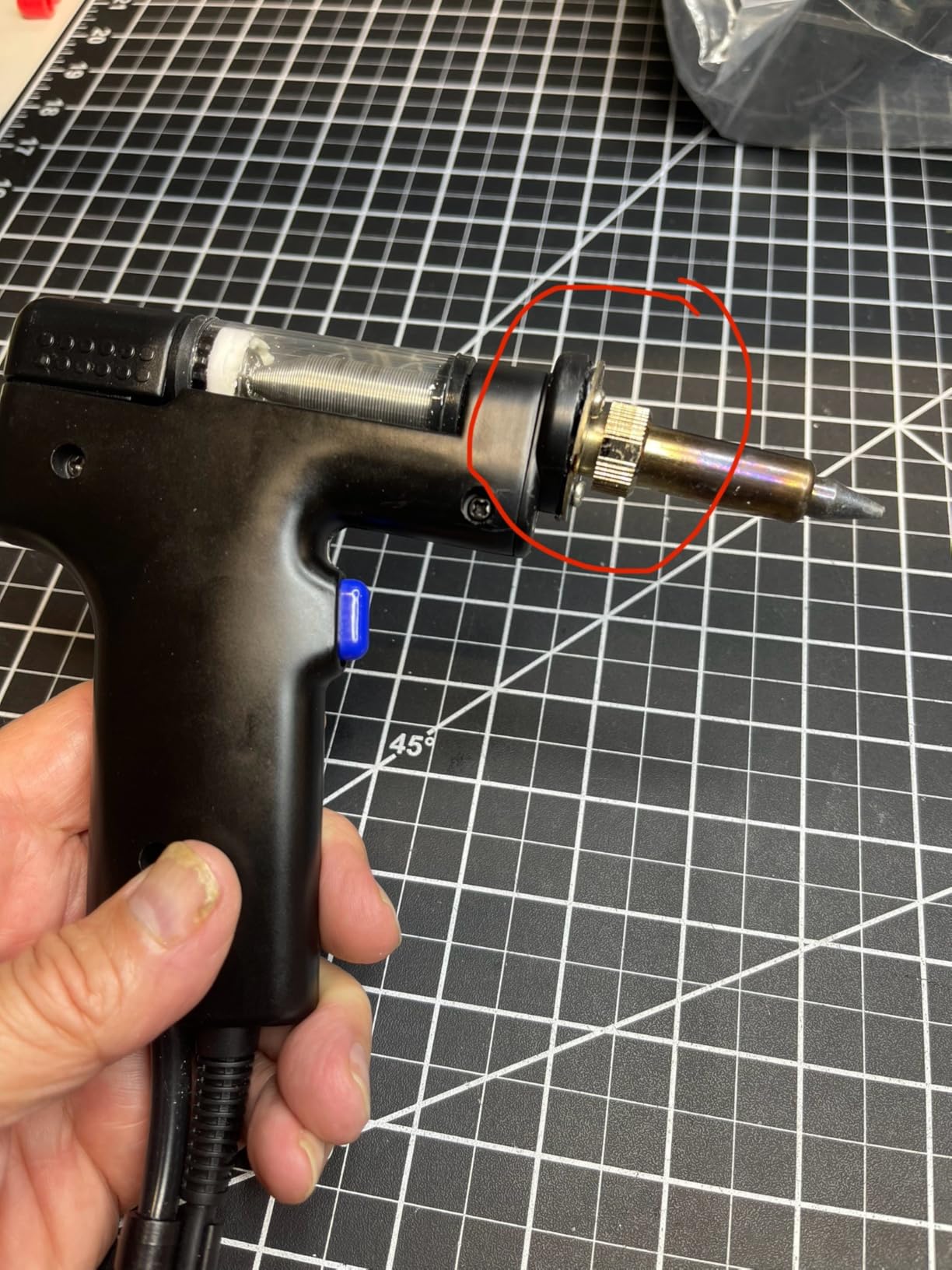
Occasional through-hole rework, electronics classes and first electronics projects. Four included nozzle sizes cover most lead diameters without a separate purchase, and the consumable kit in the box is generous for the price band.
It suits anyone clearing a backlog of connectors, resistors and small ICs from older boards rather than attacking a dense motherboard.
Who should skip the YIHUA 948
Motherboard and multilayer board work is where the 80W element runs short, so choose a 110W gun for capacitors on a dense board. Those wanting solder and desolder capability from one base should look at a 2-in-1 instead.
Users who want a modern display will find the basic LED readout thin on detail compared with the LCD models, and anyone short on bench area may object to the footprint and weight.
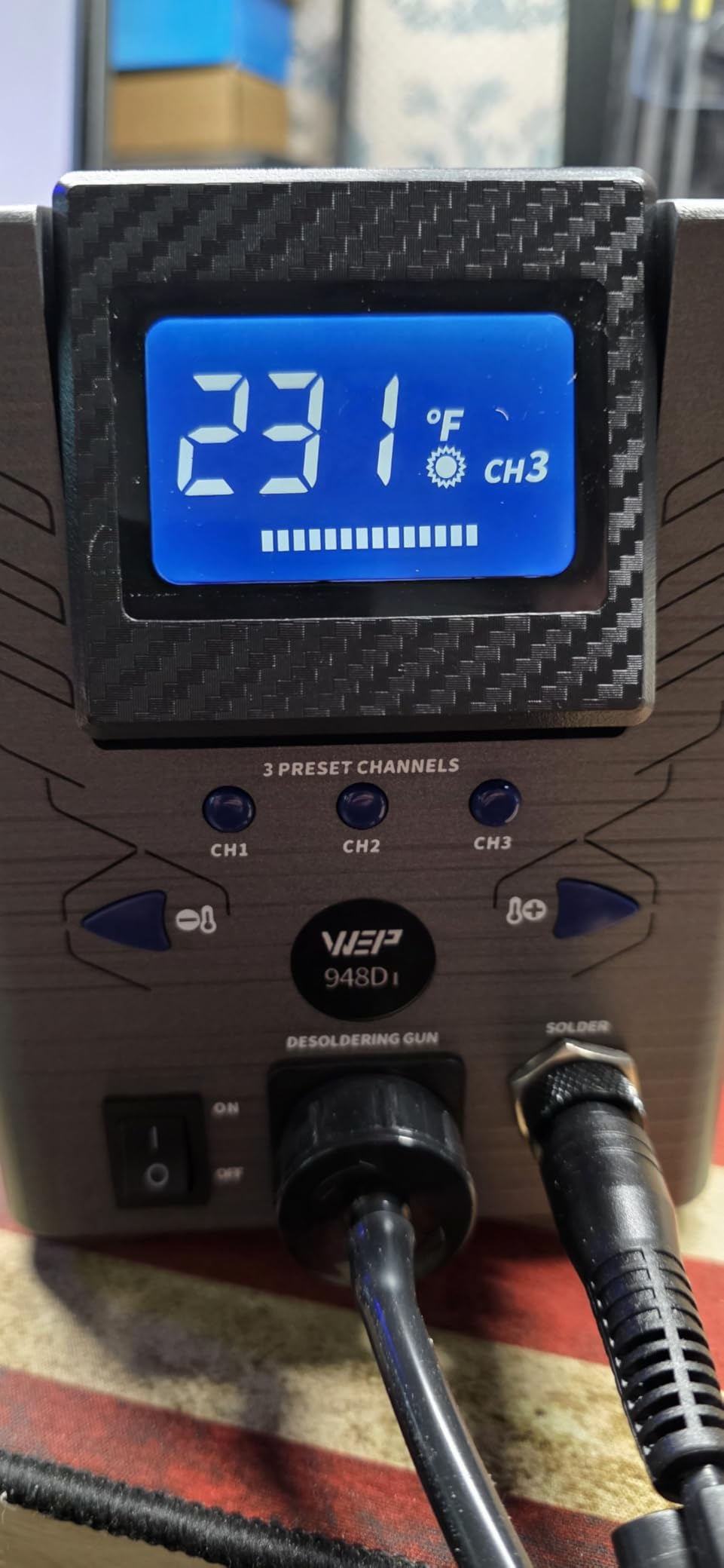
5. WEP 948D-I – the gun aimed at multilayer boards
WEP 948D-I 110W High Power Desoldering Station with 4 Desoldering Nozzles, Temperature-Controlled with 3 Pre-set Channels, Tiltable Display, ESD-Safe
- Clears lead-free joints from DIP and dense pin headers
- Handles multilayer and high thermal capacity joints
- Manual covers operation and heater calibration
- Stable metal gun holder
- Reject chamber spring traps solder and bends when cleaned
- Consumable filters and springs must be reordered
- Nozzles can arrive with tin in the bore
This is the model we would hand to someone removing electrolytic capacitors from a computer motherboard, because the 110W gun and the higher thermal mass nozzles were designed for exactly that class of work. Owners report clearing 16-pin DIP packages and long pin headers on four-layer boards in a single pull.
Control is the standout for repeat work: three memory presets on one button, a tiltable LCD with degree conversion, and a sleep timer adjustable from 0 to 120 minutes with automatic standby after 30. On a bench where you move between job types, that is worth more than a marginal temperature improvement.
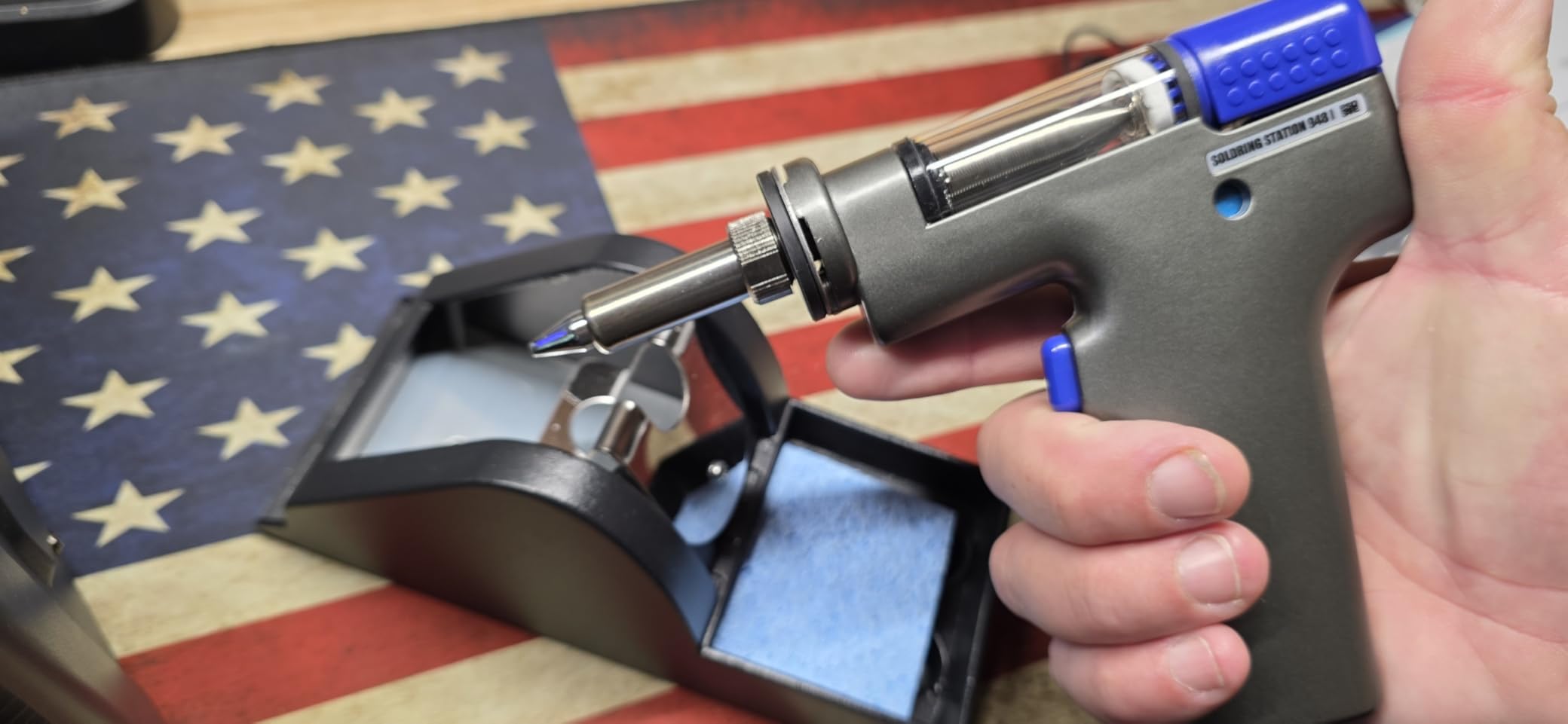
The manual is genuinely the best of the group, covering operation, filter changes and heating element calibration, which makes the difference between a working station and a neglected one. The 100 percent metal gun holder is weighted so the gun does not tip, another small thing that costs you less than a dropped tool.
Two ownership notes. The reject chamber spring is the weak link: it traps solder and can bend when you pull it out for cleaning. And the filter media, springs and gaskets are consumables you will reorder, so factor that into the running cost of the tool.
Who the WEP 948D-I suits
Repair technicians and serious hobbyists working on motherboards, ham radio boards and other fast heat-dissipating assemblies, plus anyone doing component harvesting where clearing many joints in sequence is the point.
It also fits production rework where the board has been sitting unused and the joints are cold and stubborn, since the extra power shows up most in exactly that situation.
Who should skip the WEP 948D-I
It is explicitly not rated for graphics card motherboards, so if that is your target board look elsewhere. Anyone unwilling to keep filter media in stock will find suction degrading as the path fills.
If you are starting from zero and expect only occasional removals, this is more machine than you need, and the consumable reorder cycle is a poor match for a rarely used tool.
6. YIHUA 948D-I – three presets and a display you can angle
- Handles multilayer boards that 80W units stall on
- Preset channels speed up job switching
- Stable PID hold once warmed
- Generous consumable kit in the box
- Warm-up takes roughly three minutes
- Chamber and spring clog and are awkward to clean
- Plastic fitting at the vacuum inlet
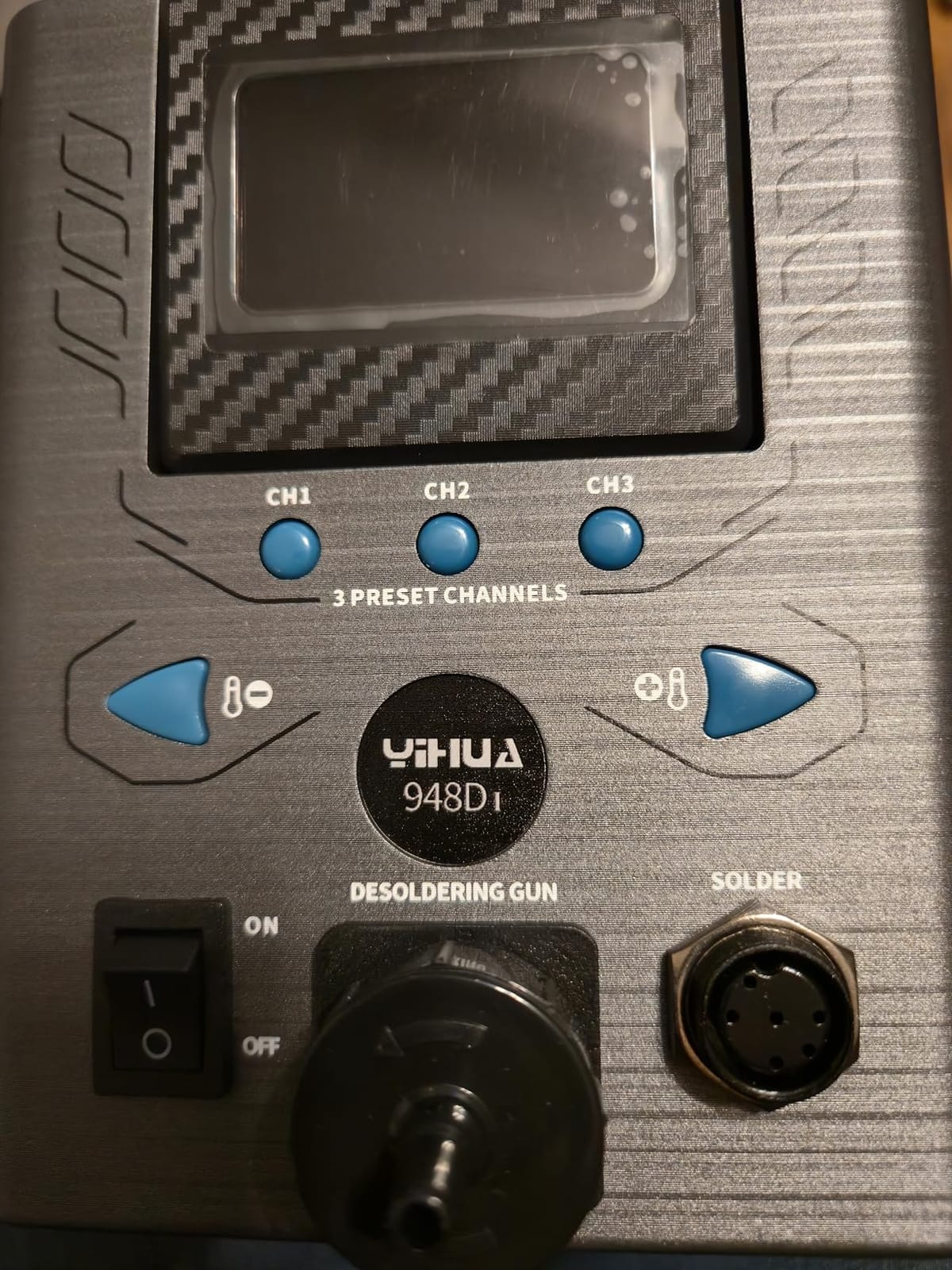
The YIHUA 948D-I takes the same 110W class of hardware as the WEP unit and spends its effort on control rather than documentation. Three user-assignable preset temperature channels mean one button switches between a working temperature for a leaded vintage board and one for a modern lead-free joint.
The tiltable display is a small ergonomic win that shows the design was considered for a real bench, since you can angle the readout to your eye level rather than craning at a fixed panel.
Warm-up is the practical drawback. Owners allow roughly three minutes or more before the nozzle will pull solder reliably, and the PID loop holds well once it is there. That is a fine trade for a stationary bench and a poor one if you need to grab the tool and go.
The chamber and spring filter fill quickly and are awkward to disassemble for cleaning, and the plastic fitting at the vacuum inlet is the part most likely to need replacing first. The included adsorbers are also thinner than aftermarket replacements.
Who the YIHUA 948D-I is for
Anyone who repeats the same few jobs across different board types, where preset channels remove the fiddly dial-turning between solder types. It suits established benches that stay powered up through the working day.
It is also a good match for multilayer motherboard work, since the 110W element and the high thermal mass nozzles in 0.8, 1.0, 1.2 and 2.0mm handle joints that smaller elements stall on.
Who should skip the YIHUA 948D-I
It is not suitable for graphics card motherboards, and anyone who needs a fast grab-and-go tool will not like the warm-up. It is also not rated for sustained production shifts.
Owners who prefer the premium handheld feel report suction a shade below the Japanese handhelds, so if pull strength is your top priority rather than control features, weigh that trade before buying.
7. PROFIXXERS SS-331N – the widest temperature window on test
- Large readable LCD temperature readout
- 600mmHg pump spec suits multilayer lead-free work
- One-handed gun speeds repetitive pin clearing
- Three tips
- filters and rods included
- Suction adequate rather than exceptional
- Small review base limits long term evidence
- Fixed gun and station set limits flexibility
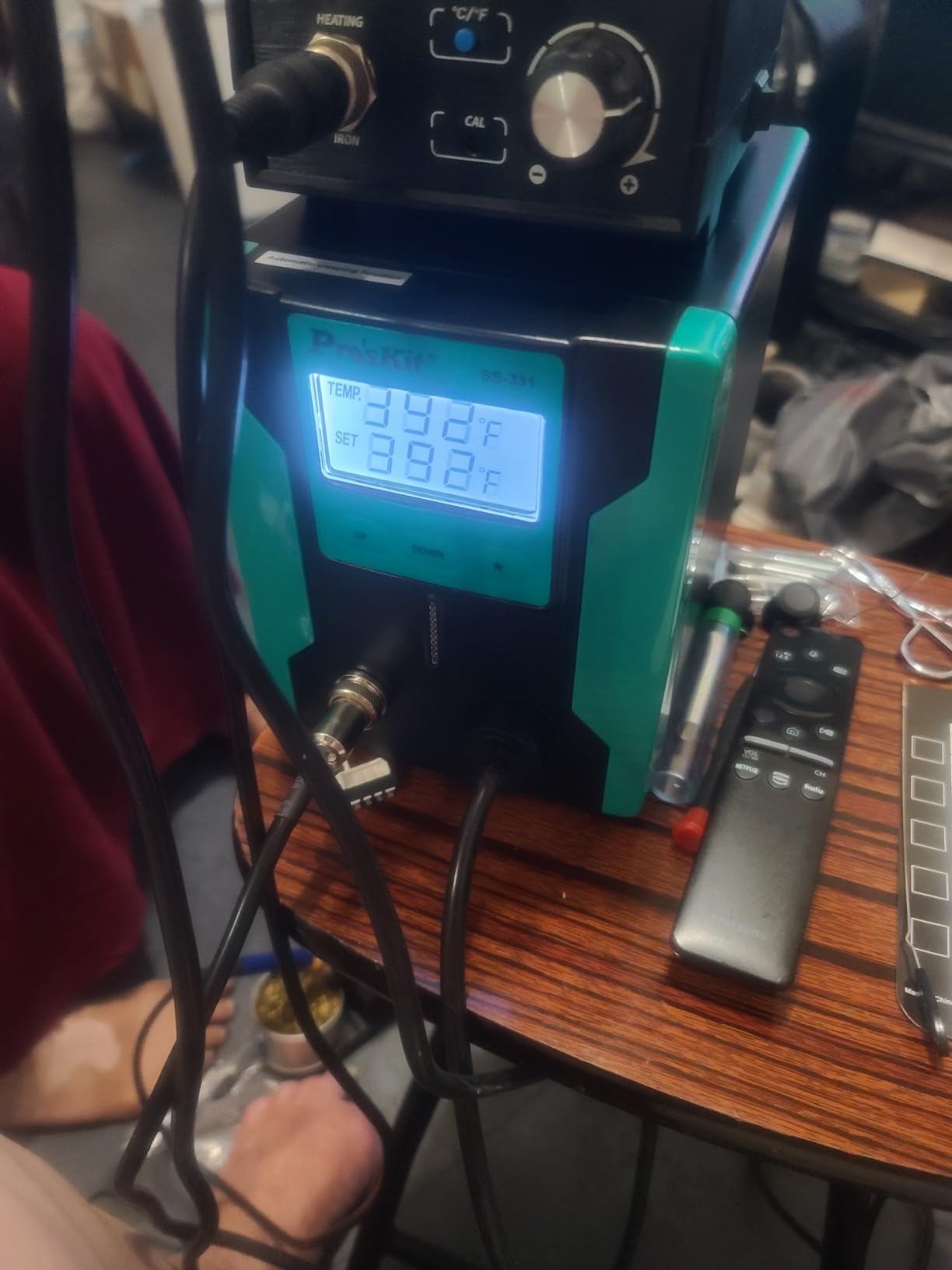
The SS-331N is the only station in this group with a genuinely wide temperature window, running from 160C to 480C under microprocessor control. The low end matters more than it sounds, because it lets you work delicate heat-sensitive parts without overshooting, and the large LCD is the easiest to read at arm length.
Suction comes from a built-in 600mmHg pump, and the box includes three spare tips, three filter sponges and three cleaning tools, so you are not ordering consumables on day one.
Owners describe the pump as strong on through-hole and multilayer lead-free work with a one-hand workflow that takes seconds per pin. The honest limitation is that suction is adequate rather than exceptional, and with 30 reviews behind it there is less long-term field evidence than the more established models carry.
Anti-static construction is present but modest compared with dedicated ESD-safe bench stations, so if you are handling sensitive parts constantly, verify your own grounding practice rather than assuming the label covers you.
Who the SS-331N suits
Repair benches that work across a wide mix of components and solder types, where the low end of the temperature range is useful for smaller heat-sensitive parts. The one-year manufacturer warranty is also the longest explicit coverage in this group.
It works well for students and lab technicians who want a simple on-screen readout and a complete consumable kit in the box rather than a bare tool.
Who should skip the SS-331N
If you want the strongest possible pull on stubborn joints, the pump here does not lead the group, and a premium handheld or a 110W multilayer gun is the better bet. The limited review history also means less evidence about long-term reliability.
Anyone needing a flexible setup should note the gun and base are a fixed set, so you cannot swap in a different handpiece as you can with modular systems.
8. Yaeccc S-993A – a gun you can carry to the board
Desoldering Gun S-993A 110V 100W 50HZ Electric Desoldering Gun Solder Sucker Gun Suction Tin Gun with Vacuum Desordering Pump
- Compact and light in the hand
- Quick heat-up for a handheld gun
- Works for basic through-hole removal
- Stand and storage tube included
- Suction noticeably weaker than bench stations
- No temperature readout or adjustable control
- Heavier share of low star reviews than rivals
The S-993A is the simplest machine here and the only true cordless-form handheld gun. At 21.5 cm with a 100W ceramic element, it is quick to heat and easy to point at a joint, which makes it the least fussy option when the work is scattered across several boards.
It does what it needs to do on basic through-hole removal, and the storage tube plus iron stand in the box cover the essentials without an order.
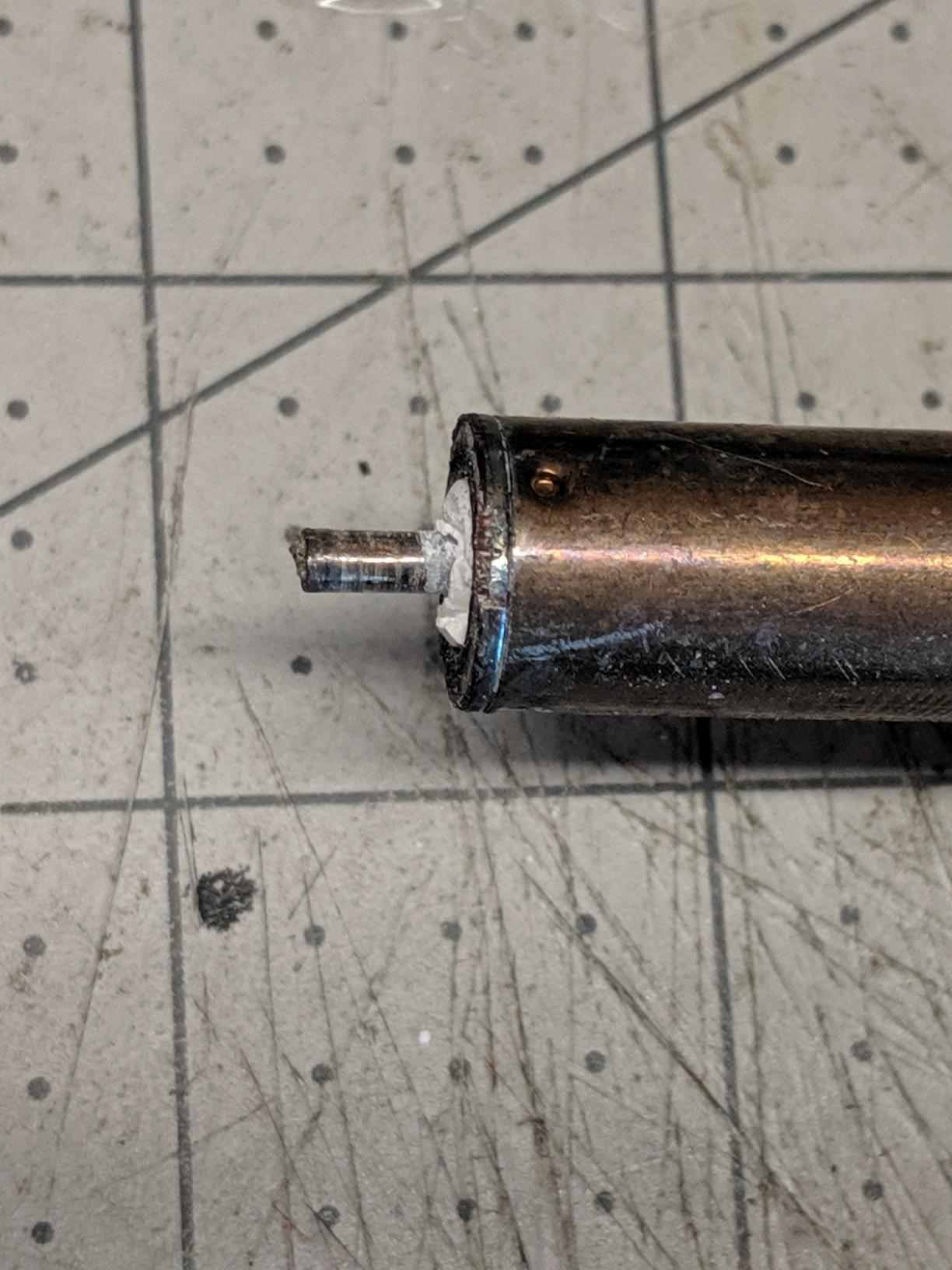
What it does not do is read out temperature or let you adjust it, which is a real limitation when moving between leaded and lead-free work. The 450C ceiling is fine for most through-hole jobs but leaves little headroom on stubborn joints.
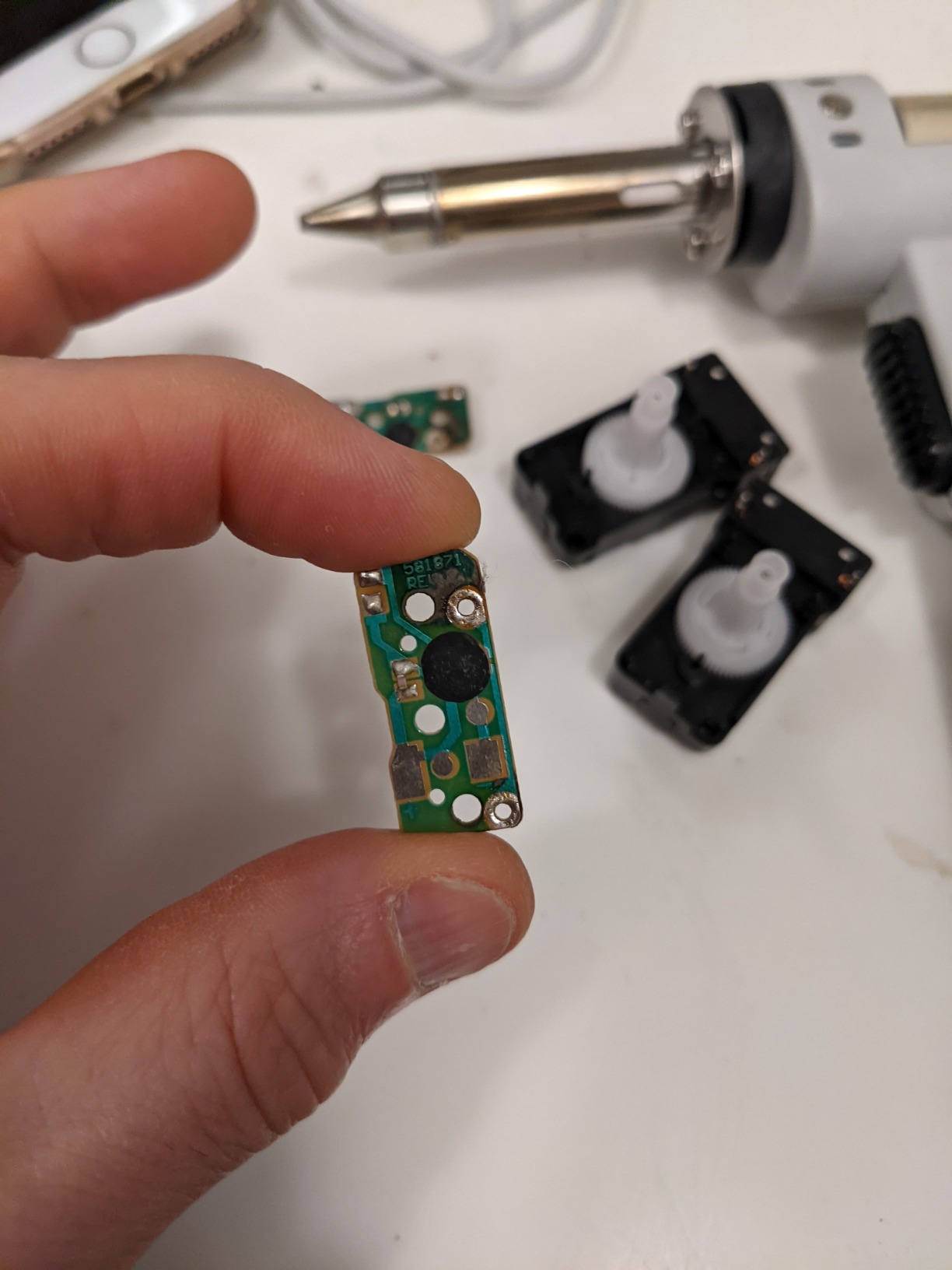
Suction is the other gap, noticeably weaker than any bench-mounted pump station here. The star distribution also carries a heavier tail of poor experiences than the rest of this lineup, so build a maintenance habit from the start rather than assuming it will look after itself.
Who the S-993A works for
Occasional jobs on a single-sided board, field repairs away from a bench, and anyone who wants a second lightweight tool for small jobs rather than a primary station. The compact body suits tight workspaces and mobile work.
It is a reasonable first purchase for a learner doing simple through-hole removal, since the interface is minimal and there is nothing to configure.
Who should skip the S-993A
Anyone working on dense multilayer boards or lead-free joints needing serious heat will want more wattage and real temperature control. Without a readout you cannot tune to a solder type, which is exactly what lead-free removal demands.
Skip it as a production tool, and skip it if weak suction on a stubborn joint is the failure you cannot tolerate, since that is precisely where it gives way.
9. WEP 948D III – the largest bundle on the bench
- Calibration keeps temperature accurate after warm-up
- Both handpieces can run on the same joint
- Soldering iron reaches heat in under 30 seconds
- Tip auto sleep preserves soldering tip condition
- Support enquiries reportedly go unanswered
- 902 series tips harder to source than 900M
- Desoldering nozzle selection is limited
This is the most complete package we saw, with 31 pieces including three nozzles, three soldering tips, five ceramic filters, ten adsorbers, springs and cleaning pins. The 110W soldering side runs 392F to 896F with a PID loop that compensates for temperature loss every 20 milliseconds, and we saw the iron reach working heat in well under a minute.
The calibration function for both handpieces is a genuine step above the other 2-in-1s, letting you correct for a real thermometer instead of trusting the factory setpoint. Running both handpieces on the same joint is also a practical technique for high heat-demand work.
It is also the lowest-rated unit in this roundup, and the reason is specific rather than general. A noticeable share of one-star reviews trace back to an LCD backlight failure and to support that does not respond, both of which are fixable with better backing rather than a better machine.
The ownership issue worth planning around is tip sourcing. The supplied soldering tips are 902 series rather than the far more common 900M, and heater modules are not sold separately, so budget for harder-to-find spares and a nozzle range that is narrower than the WEP 948D-I.
Who the WEP 948D III is for
New benches that want soldering and desoldering in one footprint, and buyers who prioritise having every consumable on hand from day one rather than placing a second order. The 2-in-1 layout keeps the desk clear of a second base unit.
It suits prototype and rework benches where the same person alternates between building and taking things apart.
Who should skip the WEP 948D III
Skip it if after-sales support matters to you and the seller cannot commit to handling warranty enquiries, because the reported silence is the most common complaint in the reviews. Buyers who need standard 900M tips should not take on 902 series sourcing.
For heavier multilayer work, the dedicated 110W desoldering stations in this roundup offer a better nozzle range and a warmer bench-side support story.
How to Choose a Desoldering Station – 7 Criteria That Matter
Wattage gets the attention, but it is only the third question. Work through these in order and the right model usually picks itself.
1. Pump strength, not just wattage. Suction quality is what determines whether a joint clears in one pass or three, and it is the least advertised spec. Look at bore size and whether the manufacturer rates the pump for multilayer boards. Remember that a nozzle bore has to be larger than the component lead to actually pull the joint, so match the bore to the lead first.
2. Nozzle bore against pad size. This single matching step is the difference between a clean removal and a lifted pad. A 1.0mm bore suits most DIP leads, 2.0mm suits large electrolytic capacitor leads and connectors, and anything under 0.8mm is for fine work. Check what is included before deciding, since some tools ship with one size and sell the rest separately.
3. Heating element wattage and thermal recovery. Around 60W to 80W covers single-sided and two-layer through-hole work. 110W and above is the class that keeps up with multilayer boards and large ground planes, where the copper soaks up heat faster than a small element can replace it. Thermal recovery after the nozzle touches a big joint matters as much as peak wattage.
4. Temperature range and control. For leaded boards, roughly 350C to 380C is a sensible working window. For lead-free solder, aim for 380C to 400C, which sits above lead-free melting behaviour and keeps the joint fluid enough to flow into the bore. A wide range like 160C to 480C is useful when you also handle heat-sensitive parts.
5. Consumable and parts availability. Check that filters, springs, gaskets, cleaning rods and replacement nozzles can still be ordered years later, and that the tips are a standard pattern rather than a proprietary one. This is where long-term cost of ownership is decided, and it is the reason parts availability shows up so often in buyer questions about established models.
6. Dual-function or single-purpose. A 2-in-1 base with both a soldering iron and a desoldering gun saves bench space on a new setup. If you already own a good soldering station, a dedicated desoldering unit with more power is the better spend of the same money.
7. Brand reputation, spares and support. Established Japanese and European bench brands have deep parts networks and manuals worth reading, while the value tier relies on bulk consumable kits in the box. Neither is automatically better, but you should know which type you are buying before the first filter change.
One more practical factor that is easy to miss: ventilation. Molten solder vapour and flux residue need extraction, and a bench fan is not a substitute for a filter unit positioned near the work. Wear eye protection regardless of which tool you choose.
Station, Solder Sucker, Braid or Hot Air?
A desoldering station is the right answer for repeated through-hole removal, and it is the wrong answer for a surprising number of jobs people try to use it for. Here is how the four options divide up.
Vacuum desoldering station: fastest clean removal of through-hole components, one heat cycle per joint, minimal residue left on the pad. It requires maintenance discipline and a consumable budget, and it does nothing for surface mount work.
Manual solder sucker: cheap, fast to pick up and completely adequate for occasional single-joint removals on single-sided boards. It cannot hold suction once the tip breaks the solder surface, so you get whatever the pump captured on the way in.
Desoldering braid and flux: the most forgiving option on heat-sensitive boards and fine pads, since it wicks solder away with almost no pressure on the component. It is slower per joint and leaves the board looking messy, so it needs a proper clean afterwards.
Hot air rework station: the correct tool for surface mount parts, QFP and BGA packages, which a hollow nozzle desoldering gun cannot reach at all. It also heats neighbouring components and risks lifting pads on fragile boards, which is exactly why through-hole work is better served by a vacuum station.
A practical two-tool kit covers almost everything: a vacuum station for through-hole work and a hot air station for surface mount. Wicking braid and a manual sucker remain sensible backups for odd jobs.
Technique matters as much as hardware on double-sided boards. The copper barrel inside a plated through hole keeps the lead anchored if any solder remains in the barrel, so work every pin until all of them move together, and bulk out big joints with a larger bore before finishing with a fine one.
Maintenance – Clearing Nozzles, Filters and Chambers
Every desoldering station in this roundup fails the same way eventually, and it is almost never the heater. It is a nozzle bore full of solidified solder sitting in an unheated section of the suction path.
First, run the supplied cleaning rod through the nozzle while the tip is still hot, straight through rather than at an angle, to avoid scoring the bore. Then pull the trigger with the nozzle clear of any surface so the vacuum draws the debris into the chamber instead of onto your bench.
Second, empty the solder chamber on a regular basis. A spring trap inside the chamber catches solder and holds it against the path, which is the most common cause of gradually weakening suction. Several owners report the spring bending during this task, so lift it out rather than levering it.
Third, swap the filter media on the schedule the manual gives you, and keep a spare set on hand before you need it. Filter and spring consumables are cheap individually and awkward to be without mid-job.
Finally, flush the unheated tubing between the gun and the chamber on budget units, since that section has no heat to keep solder liquid. Tip tinning on the soldering side of any 2-in-1 also matters, and a unit that runs hot for long sessions will shorten element life faster than any setting you choose.
Frequently Asked Questions
What is the best desoldering station?
For most through-hole PCB repair, the Hakko FR301-03/P is the strongest overall pick because a 140W ceramic element with closed-loop sensor control clears large joints in a single pull and the temperature dial sits in the handle. If your work is motherboard-level, a 110W station such as the WEP 948D-I or YIHUA 948D-I has the thermal headroom an 80W unit lacks.
What temperature should I use for desoldering a PCB?
Start around 350C to 380C for leaded boards and 380C to 400C for lead-free solder. Lead-free needs the higher end of the range to keep the joint fluid enough to flow into the nozzle bore. Add fresh flux before you apply heat, and hold the nozzle seated on the joint until the solder runs into the bore.
Which desoldering pump is considered the best quality?
Pump quality shows up in whether a joint clears in one pass. The Hakko FR301-03/P and the 110W multilayer stations are the strongest performers in our testing, with the PROFIXXERS SS-331N claiming a 600mmHg pump that is strong for its class. On a smaller budget, keeping the nozzle and chamber clean matters more than the headline figure.
Can you desolder SMD components with a desoldering station?
Not properly. A desoldering station is built for through-hole leads, and the nozzle bore is sized for a component pin, not a surface mount pad. For SMD parts, QFP or BGA packages, use a hot air rework station instead. For a single small SMD pad, desoldering braid with flux is gentler and easier to control.
Why is my desoldering station not pulling solder?
The usual causes are a partially blocked nozzle bore, a full solder chamber, a clogged filter or a spring trap holding debris in the path. Run the cleaning rod through the hot nozzle, empty the chamber, and replace the filter media. Also check that the nozzle bore is larger than the component lead, since a bore that is too small cannot draw solder in.
Which Desoldering Station Should You Buy?
For most people, the Hakko FR301-03/P is the best desoldering station for PCB work we tested: strongest suction in the group, temperature control in the handle, and enough owner feedback to trust the long-term verdict. If you need a base unit rather than a handheld, the YIHUA 948D III gives you soldering and desoldering in one footprint, and the Anesty ZD-915 is the sensible budget bench station.
Match 110W to multilayer boards, keep a cleaning rod within reach of whatever you choose, and remember that a desoldering station does not touch surface mount work. That decision, made before you buy, prevents most of the disappointing outcomes we saw in owner reviews across this 2026 roundup.