
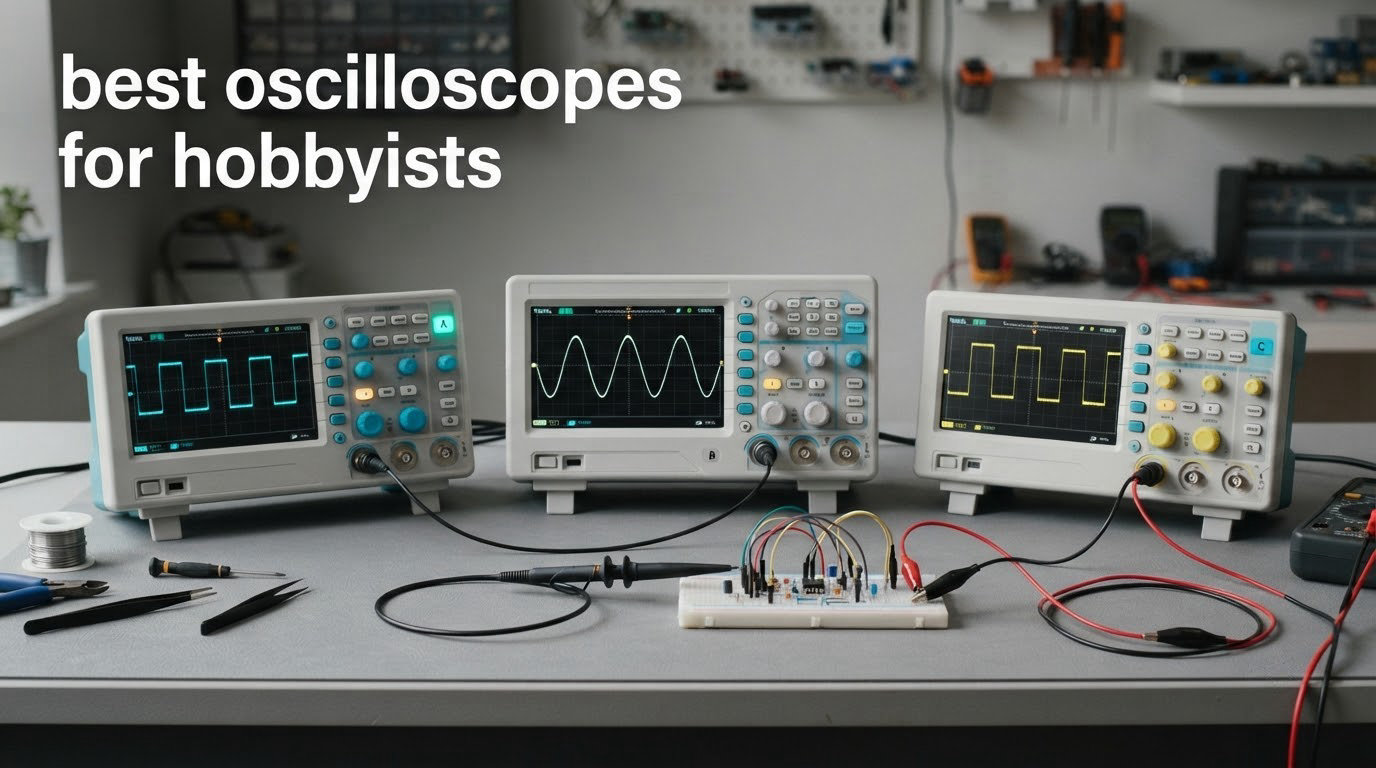
Short answer: the Siglent SDS1202X-E is the best oscilloscope for most hobbyists in 2026. It gives you 200 MHz of bandwidth on two channels, 14 Mpts of memory, and serial decoding for I2C, SPI, UART, RS232, CAN and LIN straight out of the box, with no licence keys and no add-on modules. If your work is four-channel embedded debugging, the Siglent SDS1104X-E is the stronger buy because of its dual-ADC front end. If you need something that fits in a toolbox and runs on a battery, look at the HANMATEK HO52 instead.
That is the honest framing of this roundup. The hobbyist scope market is split into three very different worlds, and the marketing flattens them into one spec sheet. There are USB units that need a laptop to show you a waveform, battery handhelds that pack a scope, a multimeter and a signal generator into one small box, and benchtop instruments with four channels and a screen you can read from standing up. A single “best” label hides that choice, so I ranked the ten units below by what they actually let you do once they are on the bench.
Before the picks, a quick word on what a scope is for. A multimeter tells you a pin sits at 5 V. It cannot tell you whether that pin’s clock is really 16 MHz, whether the duty cycle is 40 percent instead of 50, whether the I2C bus is acknowledging, or whether there is a 200 mV ring on your supply every time a MOSFET switches. A scope is the only practical way to see the shape and timing of a signal, and that is the whole reason to buy one.
Every specification in this article comes from the manufacturer listing and the aggregated owner review data, cross-checked against what owners report on r/AskElectronics, r/embedded and the EEVblog forums. Where a community thread is quoted, it names the model in question. We earn a commission on qualifying purchases, which is why the disclaimers sit under every product card.
Table of Contents
Top 3 Best Oscilloscope Picks for Hobbyists in 2026
Siglent SDS1202X-E
- 200 MHz bandwidth
- 2 channels
- 14 Mpts memory
- All serial decoders included

Siglent SDS1104X-E
- 100 MHz bandwidth
- 4 channels
- Dual-ADC architecture
- Standard CAN and LIN decode
All 10 Scopes in This Roundup at a Glance (October 2026)
Here is the whole ladder in one place, from the palm-sized FNIRSI DSO152 up to the four-channel benchtop units. Bandwidth, channel count, sample rate and memory depth are the four numbers that decide whether an instrument suits your work.
| Product | Specifications | Action |
|---|---|---|
| Siglent SDS1202X-E |
|
Check Latest Price |
| Siglent SDS1104X-E |
|
Check Latest Price |
 Rigol DS1054Z Rigol DS1054Z |
|
Check Latest Price |
 IMARS 3-in-1 Handheld IMARS 3-in-1 Handheld |
|
Check Latest Price |
 FNIRSI 2C53T 3-in-1 FNIRSI 2C53T 3-in-1 |
|
Check Latest Price |
 HANMATEK HO52 HANMATEK HO52 |
|
Check Latest Price |
 PicoScope 2204A PicoScope 2204A |
|
Check Latest Price |
 FNIRSI DSO152 FNIRSI DSO152 |
|
Check Latest Price |
 FNIRSI 1013D Plus FNIRSI 1013D Plus |
|
Check Latest Price |
 Hantek 1008C Hantek 1008C |
|
Check Latest Price |
1. Siglent SDS1202X-E: Our Top Pick for Most Hobbyist Benches
Siglent Technologies SDS1202X-E 200 mhz Digital Oscilloscope 2 Channels, Grey
- 14 Mpts record length captures long detailed waveforms
- All serial bus decoding included as standard
- Bright display with adjustable brightness and trace intensity
- Most owner reviews on this list
- Two channels share one ADC so sample rate drops in dual-channel use
- Optional MSO and AWG modules cost a lot on top
- Wi-Fi needs a separate USB dongle and licence
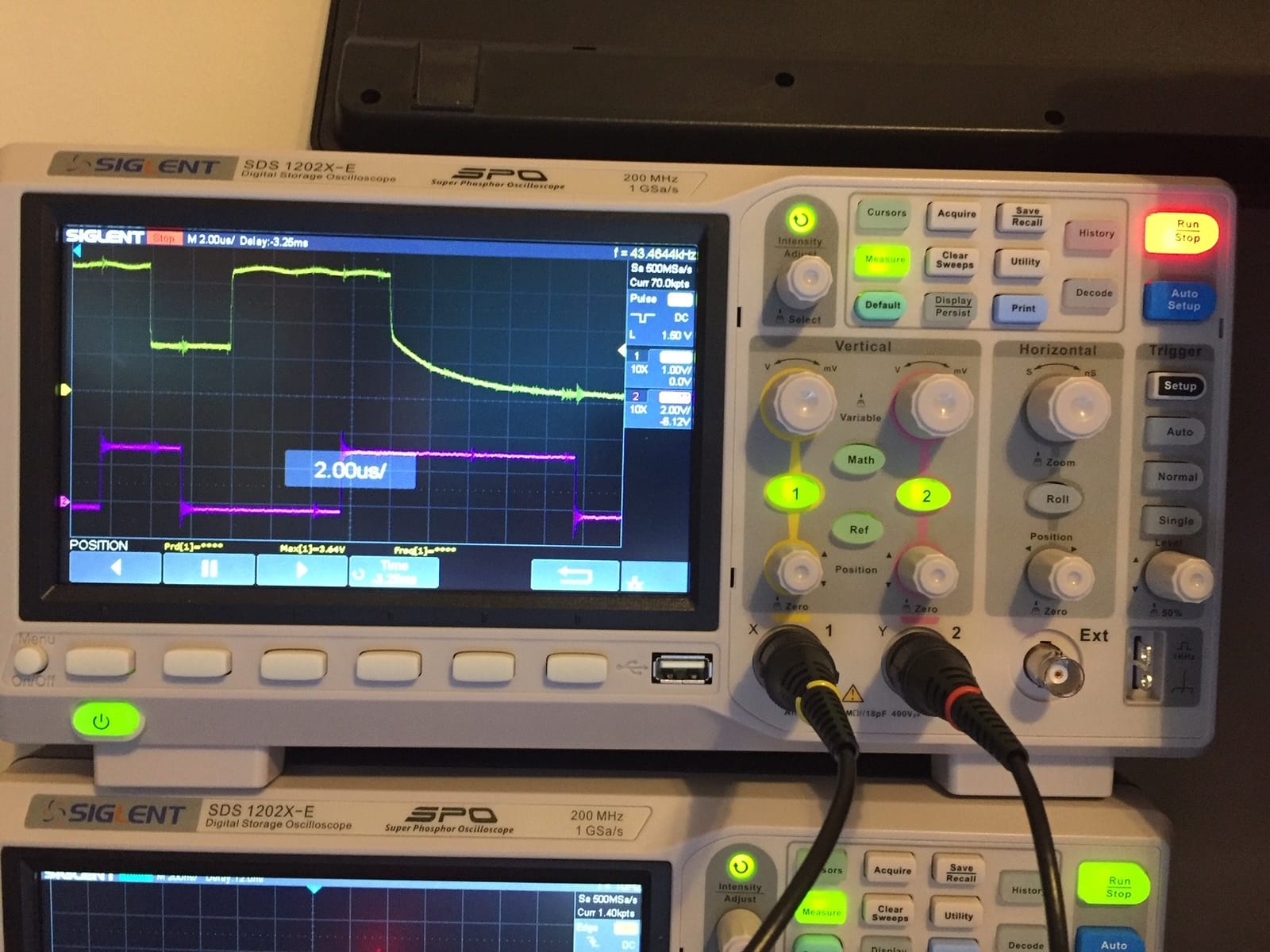
The SDS1202X-E is the instrument I keep coming back to when someone asks me what one oscilloscope to buy. It has been on the market since 2017, which means the accumulated knowledge base around it is enormous, and it carries the largest owner review count of any unit in this roundup. That matters more than it sounds: when something breaks, there is almost certainly a thread that already covers it.
Two channels at 200 MHz is a genuinely useful pairing. Two channels is fewer than a four-channel unit, but for the majority of hobbyist work it is the right number. You get a signal and its reference, a clock and its data line, or an input and its output.
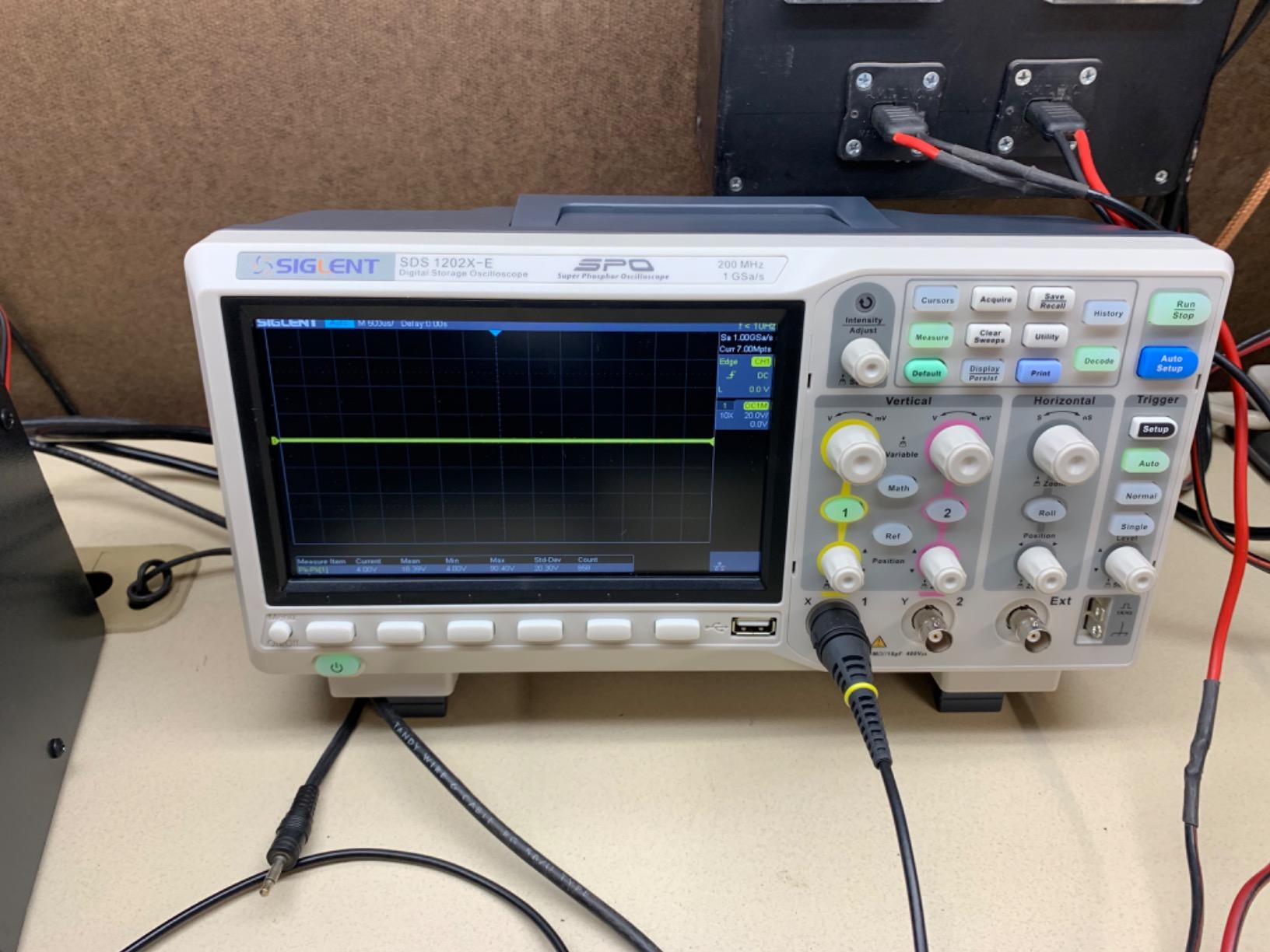
The 14 Mpts of record length is the spec that separates it from cheaper bench units. Long memory means you can zoom into a burst that happened two seconds ago, zoom out and still see the whole second of context, then zoom back in without re-arming the trigger. Owners on r/AskElectronics repeatedly point to memory depth, rather than bandwidth, as the feature that actually changes how they work once a scope is on the bench.
The shared-ADC design is the one real compromise. Fit in the second channel and the sample rate halves, so you are not getting full-rate capture on two simultaneous signals. For periodic waveforms that is not a problem. For catching a one-off glitch on two fast lines at once, it is.
Who the SDS1202X-E suits best
It suits anyone working across mixed signal types: audio electronics, switching supply work, motor control, and general microcontroller debugging. The standard decoders cover I2C, SPI, UART, RS232, CAN and LIN, which is the full set most hobbyist projects ever need, and none of them require a licence.
If you teach, or you want one instrument that covers the widest range of signals without a second purchase, this is also the pick. The screen is bright, the menu system is straightforward once you learn it, and the measurement menus are the ones you would expect from a lab instrument.
Who should skip it
Skip it if your work is three or four simultaneous digital lines. I2C debugging alone needs clock and data, and adding a chip-select or interrupt line pushes you to three signals. At that point the four-channel SDS1104X-E is a better fit for the money you are already spending.
Also skip it if you want a function generator or mixed-signal channel built in. The optional MSO and AWG modules add a substantial amount to the total, and at that point a 3-in-1 handheld such as the IMARS HO-3S below packs more functionality into a smaller body.
2. Siglent SDS1104X-E: Best Value for Four-Channel Work
Siglent Technologies SDS1104X-E 100Mhz Digital Oscilloscope 4 Channels Standard Decoder, Grey
- Dual-ADC design holds high sample rates at four channels
- All common serial decoders unlocked out of the box
- Responsive interface on a bright 7-inch class display
- Built-in Ethernet and web server for remote viewing
- Four passive probes and calibration certificate in the box
- Sample rate halves to 500 MSa/s when channels share an ADC
- Select knob is twitchy and can jump menu items
- Optional Wi-Fi MSO and AWG upgrades are expensive
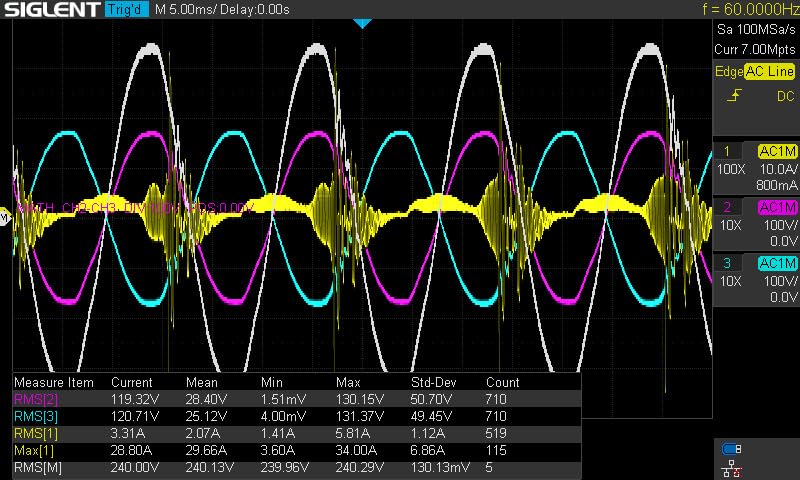
The community consensus on channel count is blunt: get four. Debugging I2C needs a clock and a data line, add a chip-select and you are at three, add an interrupt line and you are at four. The SDS1104X-E is the most straightforward way to have all four visible at once, and it holds the highest owner rating in this roundup at 4.8 across 966 reviews.
The dual-ADC architecture is the reason it out-performs its price class. With one ADC shared between two channels, turning on a second channel often costs you more than sample rate. With separate ADCs on each pair, four channels stay usable together. That is not a marketing difference, it is the difference between capturing four lines and capturing two.
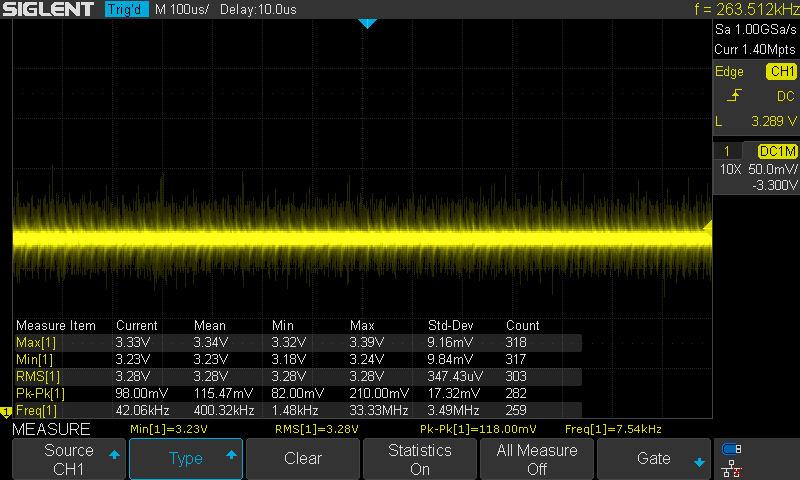
The box includes a calibration certificate, quick start guide, four passive probes and a USB cable. Owners on r/embedded frequently point out that the supplied probes are usable but that a good 10X probe is where a first upgrade budget should go.
The built-in web server is the feature nobody expects to use and everybody ends up using. Plug it into the same network as your laptop and you can open a browser, look at the screen, capture it and share the link. For bench documentation or a second screen across the room, it removes a cable problem instantly.
Who the SDS1104X-E suits best
It suits embedded developers who work with more than two signals at once, and anyone whose projects involve CAN or LIN bus work, since those decoders ship standard rather than as a paid option. The Ethernet and remote viewing also make it a good fit for a shared teaching lab.
It is the pick if you want a single instrument that will carry you from Arduino timing problems to bus troubleshooting to basic switching supply work without a second scope on the desk.
Who should skip it
Skip it if you need to look at fast edges above 100 MHz. Four channels at 100 MHz is honest capability, and if your work involves RF or high-speed digital above that band, the bandwidth is not there.
Skip it if you plan to rely on the menu knob. Owners describe it as twitchy, capable of bouncing to the next menu item when pressed. If fine physical control matters to you, the Rigol DHO-style screens with touch navigation handle that better.
3. Rigol DS1054Z: The Long-Consensus First Scope for Embedded Work
Rigol DS1054Z Digital Oscilloscope, 50MHz, 4 Channel, 1GSa/s, Best Value
- 24 Mpts memory and 30000 wfms/s capture in a four-channel body
- Serial bus trigger and decode for RS232 UART I2C and SPI enabled out of the box
- Bright screen with colour coding matched to the input jacks
- Persistence display makes intermittent glitches obvious
- Built-in help and a very large body of community documentation
- Intensity and select encoder jumps a step when pressed
- Noisier cooling fan than rivals with similar power draw
- Supplied probes are mediocre and hard to compensate
- Channel 2 and 4 trace colours are nearly identical
- No external trigger input
Ask ten experienced hobbyists what a first oscilloscope should be and a large share will name the Rigol DS1054Z. It has been sold since 2014, it is the default recommendation across EEVblog and the Arduino forums, and there is no beginner question it has not been asked. If you buy this, you are buying the most documented instrument in the hobby world.
Four channels, up to 1 GSa/s single-channel sampling and up to 24 Mpts of memory put it in a class above the cheap two-channel units on memory depth. Memory falls to 12 Mpts on two channels and 6 Mpts on three or four, which is worth knowing before you plan a long capture across four lines.
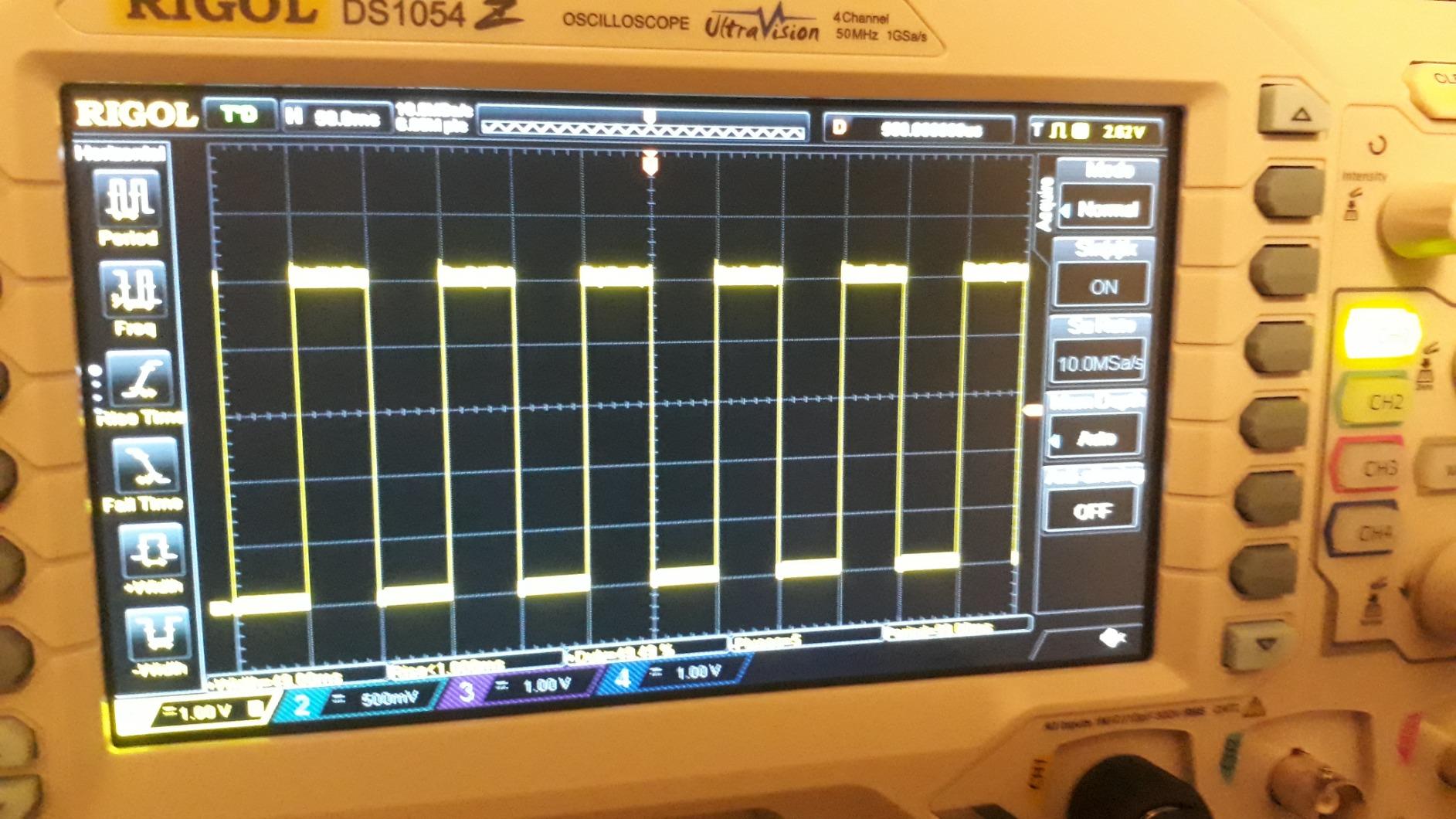
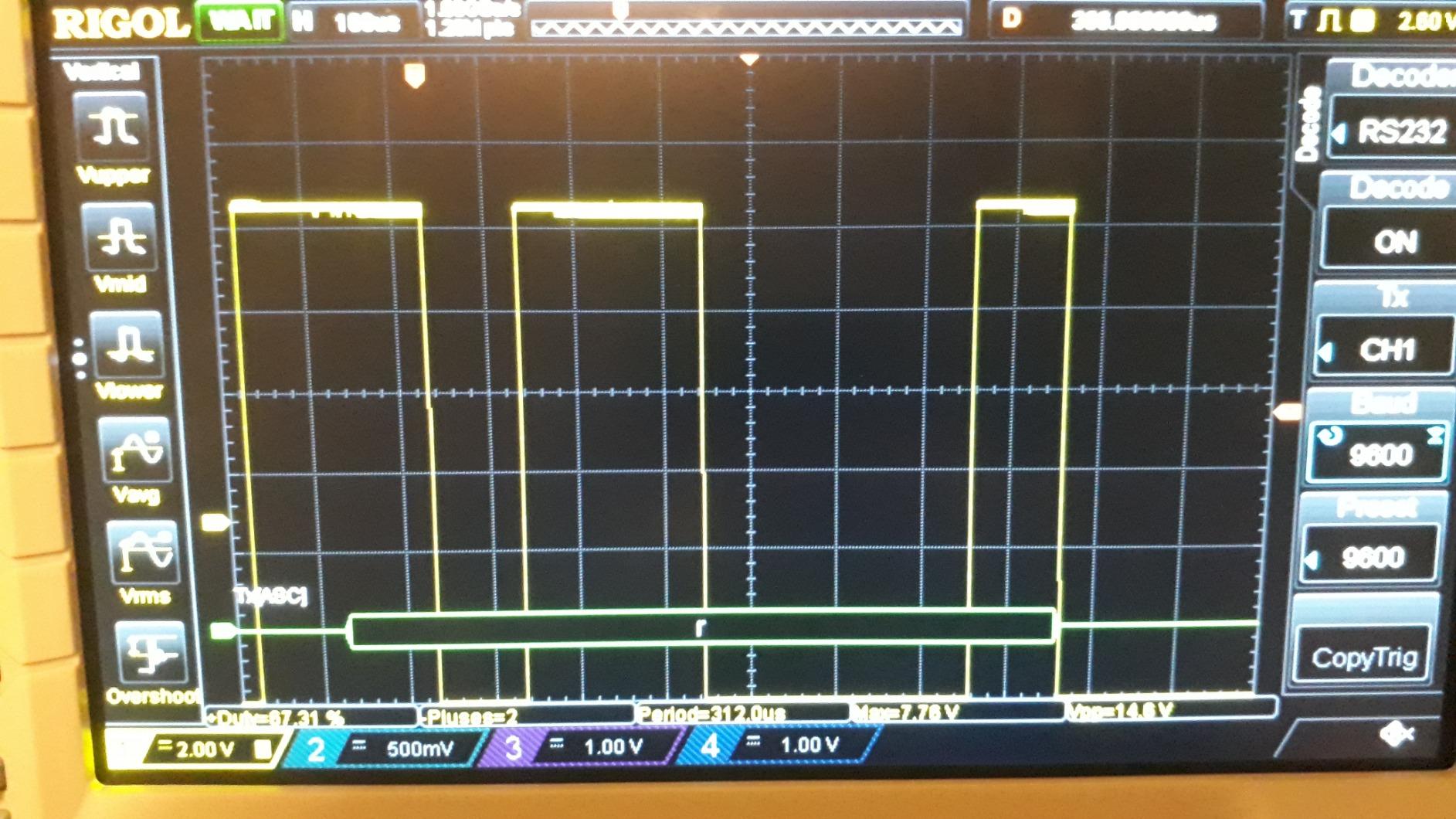
The UltraVision capture engine is what separates it from a generic four-channel scope. Up to 30,000 waveform updates per second with intensity grading means a rare glitch appears as a bright trace that stands out from the dimmer background of repeated triggers. Owners doing intermittent fault-finding on motor controllers and 3D printer stepper drivers cite this specifically as the reason the unit earns its place.
Waveform recording and playback of up to 60,000 frames lets you capture a fault over minutes and then step through it afterwards. Combined with the deep memory, it is the most capable glitch-hunting setup in this list at a price most hobbyists can justify.
Who the DS1054Z suits best
It suits embedded hobbyists on a budget who want serial decode, deep memory and a fast capture rate in one box. For Arduino, ESP32 and I2C work, 50 MHz of bandwidth is genuinely sufficient, which is why the community treats it as a complete first instrument rather than a compromise.
It also suits anyone who plans to keep the scope for years and will want to grow into harder problems. The instruction help is built in, and when you get stuck, the video library is the deepest of any scope in this roundup.
Who should skip it
Skip it if you work above 50 MHz. Some owners unlock extra bandwidth through a command in the calibration menu, and the procedure is widely discussed, but it voids nothing that matters in practice and it is not something we would rely on for a purchase decision. Judge it at its stated 50 MHz.
Skip it if a quiet bench matters. The cooling fan is noticeably louder than comparable units, and the intensity and select encoder is the most common complaint in owner reviews, along with near-identical trace colours on channels 2 and 4.
4. IMARS HO-3S 3-in-1: Best Handheld for Battery-Isolated Work
Dual Channel 3-in-1 Handheld Oscilloscope Multimeter, 70MHz Signal Generato
- Scope
- true-RMS multimeter and signal generator in one body
- Meter accuracy compares well against a Fluke reference
- Readable colour TFT with adjustable backlight and flashlight
- Light 7.8 ounce body with Type-C charging
- Stores 1000 measurement sets and 200 waveform records
- Auto-ranging sometimes shows spurious overload readings
- Screen is hard to read in direct sunlight
- Scope controls need a learning curve and a cheat sheet
- Listing photos do not always match the delivered accessories
EEVblog users recommend battery-powered scopes for one specific reason: running on a battery isolates the instrument from mains earth, which removes the ground-loop problem that can wreck measurements or damage a beginner’s setup when probing anything connected to line power. That safety argument is the strongest thing this unit has going for it.
The HO-3S pairs 70 MHz of dual-channel bandwidth with 200 MS/s sampling and a 20,000-count true-RMS multimeter covering voltage, current, resistance, capacitance, frequency, duty cycle, diode and continuity. There is also a built-in signal generator for sine, triangle and square output.
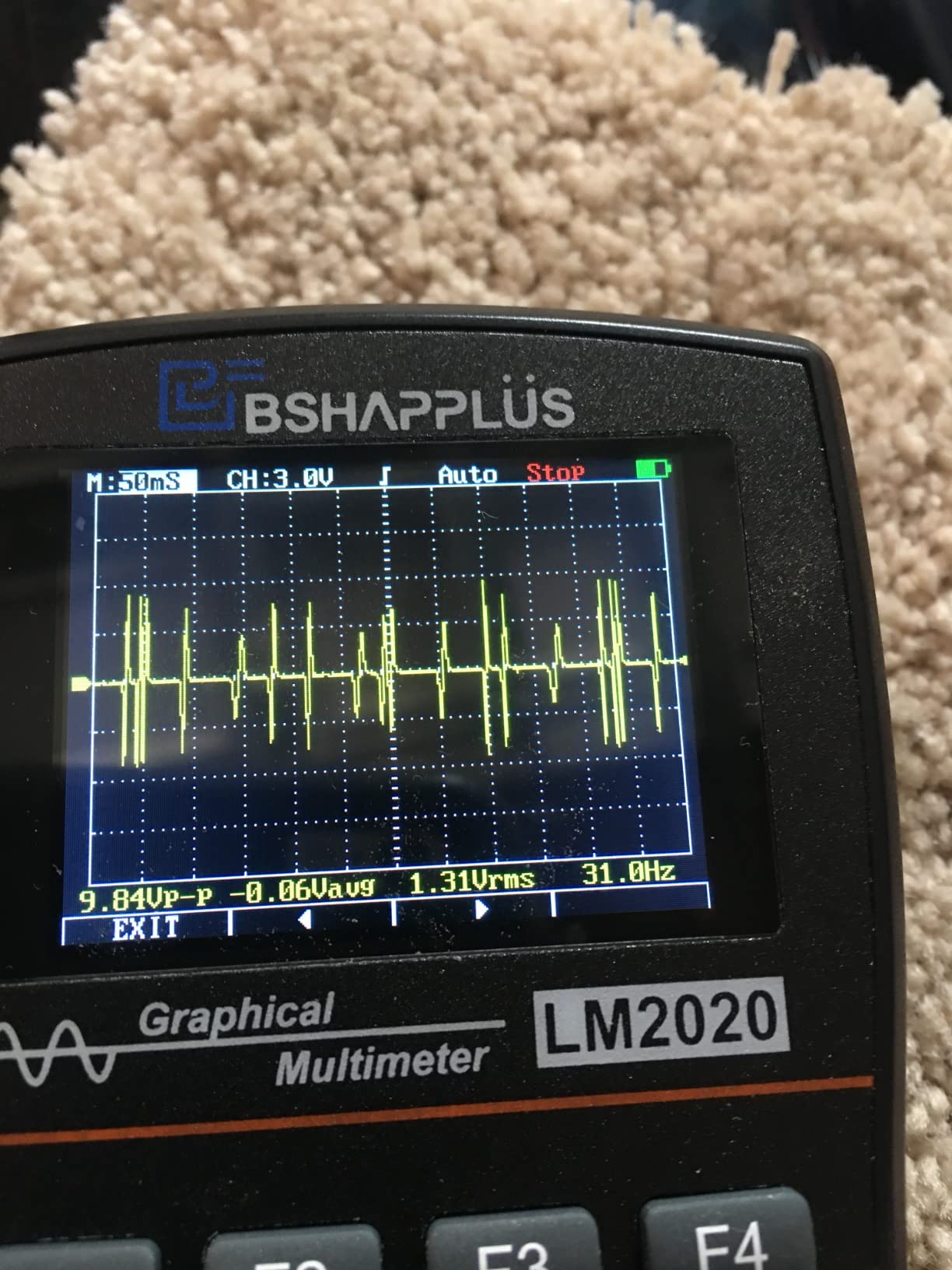
Owners who compared the meter against a reference instrument report accuracy that holds up for bench work. Reviewers single out the scope mode as useful for setting amplifier gains and checking PWM and sine waveforms, which is exactly the class of task a handheld is good at.
Storage is better than most handhelds in this list. It holds up to 1000 sets of multimeter measurements and 200 waveform records with one-touch save and recall, so field work does not end the moment the session does.
Who the HO-3S suits best
It suits field and automotive work, teaching labs and anyone working on a circuit that shares mains earth with the bench supply. Battery isolation makes it the safest option here for probing equipment connected to line power, and the CAT II 1000V rating with dual fuse protection backs that up.
It also suits a bench with very little space. At 3.3 by 6.3 by 1.3 inches and 7.8 ounces, it replaces a scope, a meter and a function generator in the space of a large soldering iron.
Who should skip it
Skip it if you need to capture and scroll back through long waveforms. The record depth is not the strength here, and a bench unit with tens of megabytes of memory will find a transient you cannot.
Skip it if you work outdoors in daylight. The 2.4-inch colour TFT is readable in a lit room but owners specifically report trouble in direct sun. The auto-range overload glitch also shows up often enough that manual ranging is the safer habit.
5. FNIRSI 2C53T: The Budget 3-in-1 Everyone Buys First
FNIRSI 2C53T 3-in-1 50MHz 2CH Oscilloscope Multimeter DDS Signal Generator
- Three instruments in one inexpensive handheld
- Math
- cursor
- persistence and XY modes over the earlier model
- One-click save with reference-waveform overlay for before and after comparison
- Bundled with 10X probe
- crocodile clip
- Type-C cable and case
- High-voltage protection module suits automotive and field work
- 1 Kpts record depth is shallow for post-analysis
- 2.8-inch display is small and grid lines need extra brightness
- Signal generator stops at 50 kHz
- Battery life of about 6 hours is short between charges
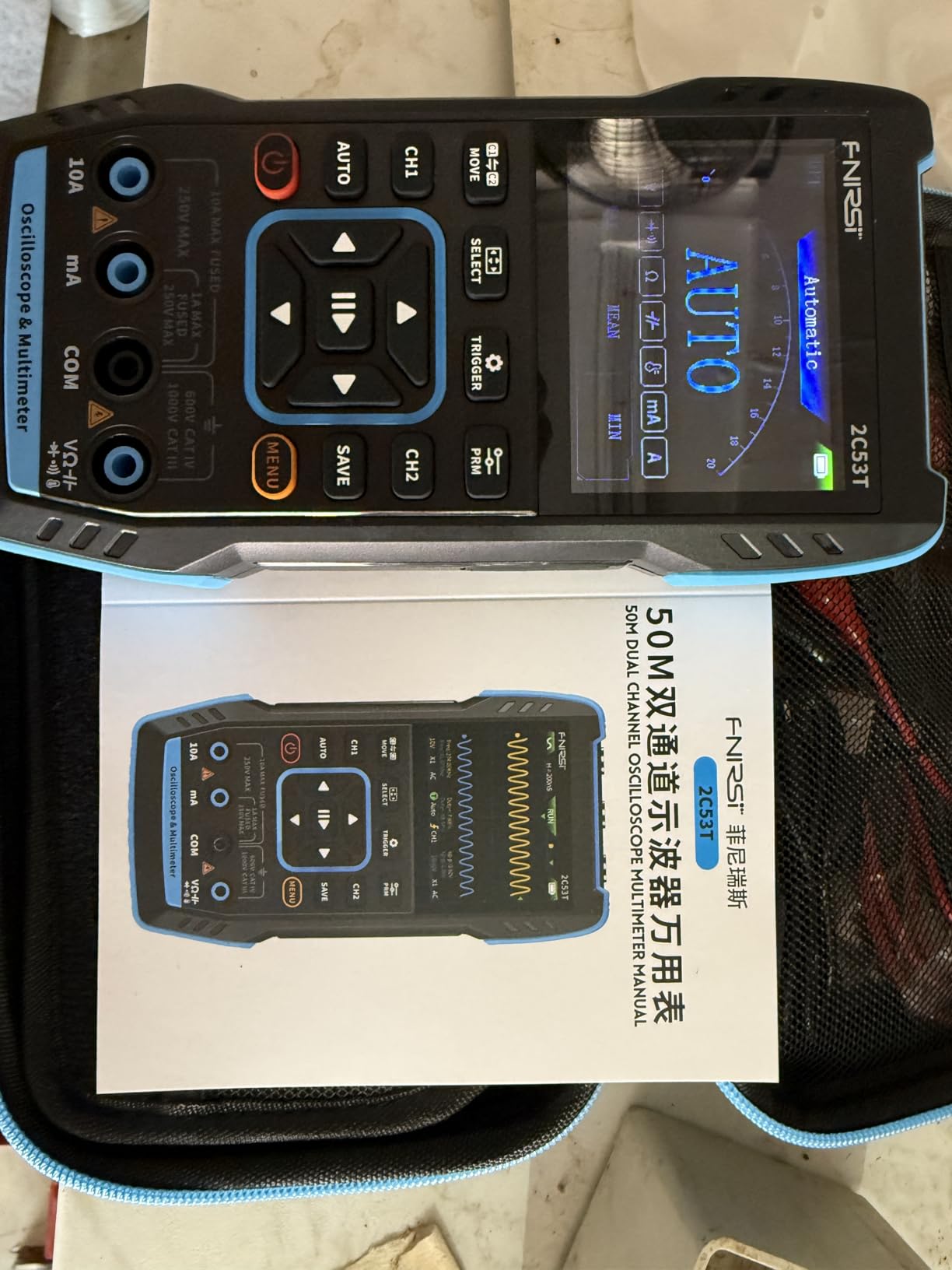
The 2C53T is the upgraded version of the 2C23T, and the upgrade is the reason to buy the newer body. It adds math operations, cursor measurement, persistence mode and XY mode, which are the four functions that turn a toy scope into something you can actually diagnose with.
Reference-waveform overlay is the sleeper feature. Save a known-good waveform, display it behind the live one, and any deviation from the previous behaviour shows up immediately. For a beginner learning what a correct signal looks like, that comparison is worth more than another 50 MHz.
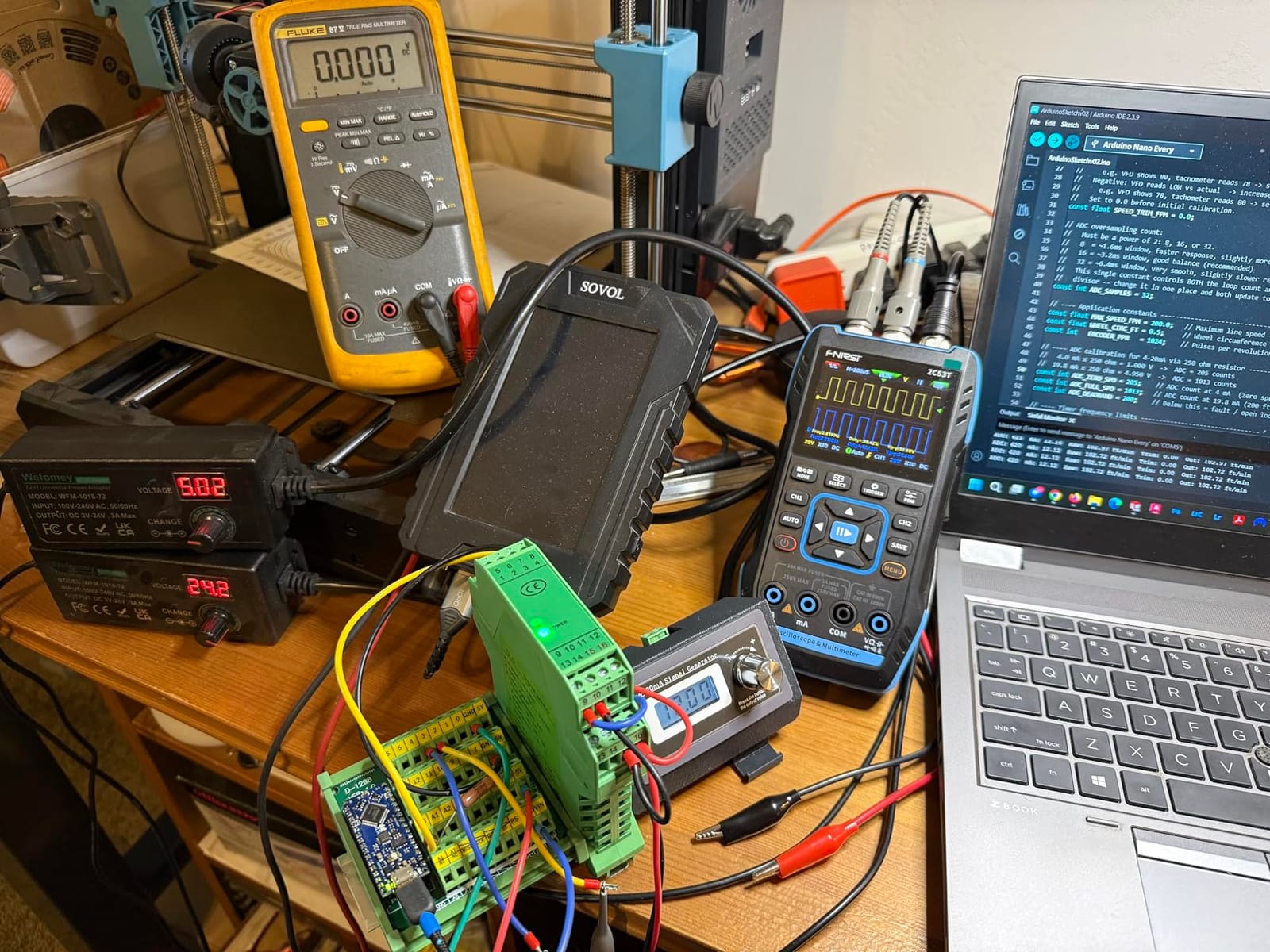
Specifications read like a much more expensive instrument: 50 MHz bandwidth, 250 MSa/s sampling, 10 mV to 10 V per division sensitivity, a 19,999-count four-and-a-half-digit meter measuring to 750 V AC, and an FPGA plus MCU plus ADC architecture with a built-in high-voltage protection module.
The 4.3 rating is honest, and the distribution tells you why. Most reviews are positive, but one-star feedback is a real slice of the total, and it clusters around the small screen, the shallow memory and the limited generator output.
Who the 2C53T suits best
It suits a first purchase, a student lab and anyone who wants scope, meter and signal source in one body at the lowest total cost in this roundup. The bundle includes a 10X probe, crocodile clip probe, multimeter probe, Type-C cable and storage case, so there is nothing extra to buy to get started.
It also suits anyone teaching basic electronics. Three instruments in one body at this price point is how a classroom or a family gets a bench for the price of a single tool.
Who should skip it
Skip it if you need long captures. At 1 Kpts of record depth, you cannot scroll back through anything meaningful, and a transient that happened a moment ago is simply gone.
Skip it if you need to drive a circuit from the generator. Output stops at 50 kHz, which rules out audio-band stimulus work and anything faster. Budget for a separate function generator if that is your use case.
6. HANMATEK HO52: Best Handheld for Automotive Diagnostics
- 50 MHz two-channel scope plus a 4.5-digit true-RMS meter in a 16 ounce body
- 250 MSa/s sampling with 10000 wfms/s refresh
- One-key AUTO setup gets first captures without knob hunting
- Saves waveforms and images to CSV and reads them back over Type-C
- Reference-waveform overlay and six auto measurements on screen
- 8k-dot record depth is thin for long low-frequency captures
- 3.5-inch TFT limits on-screen detail against larger units
- Only four save slots per category
- Shared screen gets cramped for full automotive workflows
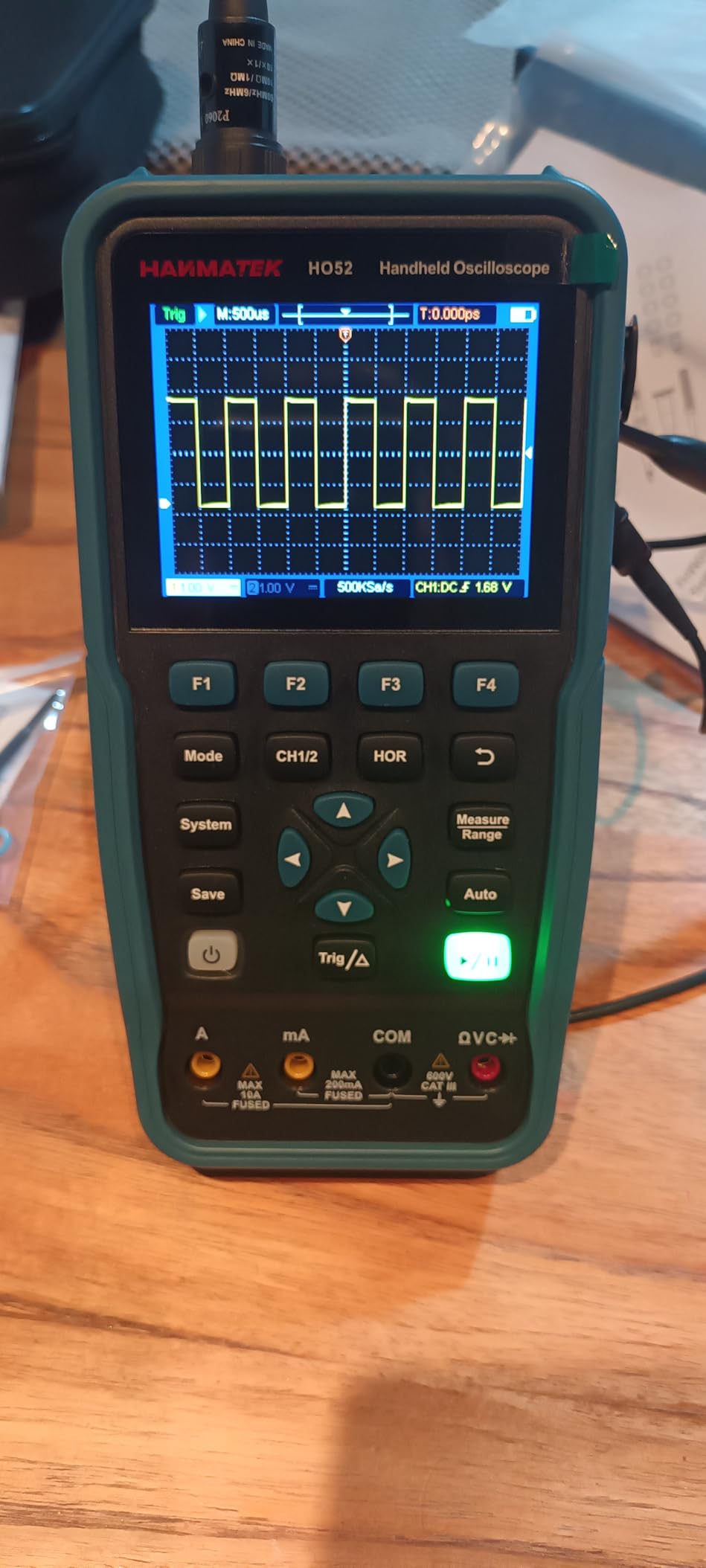
The HO52 is the handheld to beat for car electrical work. Two independent inputs, a 50 MHz scope mode and a 4.5-digit true-RMS meter in a 16-ounce body, with the meter maximum input rated at 750 V AC and 1000 V DC. Reviewers on automotive forums consistently describe it as the one they keep in the car.
What separates it from cheaper 3-in-1 units is the export path. It saves up to four setups, four reference waveforms, four images and four groups of waveforms in CSV format, then reads them back over Type-C. That means a waveform captured in a car park on a Sunday is on your laptop on Monday.
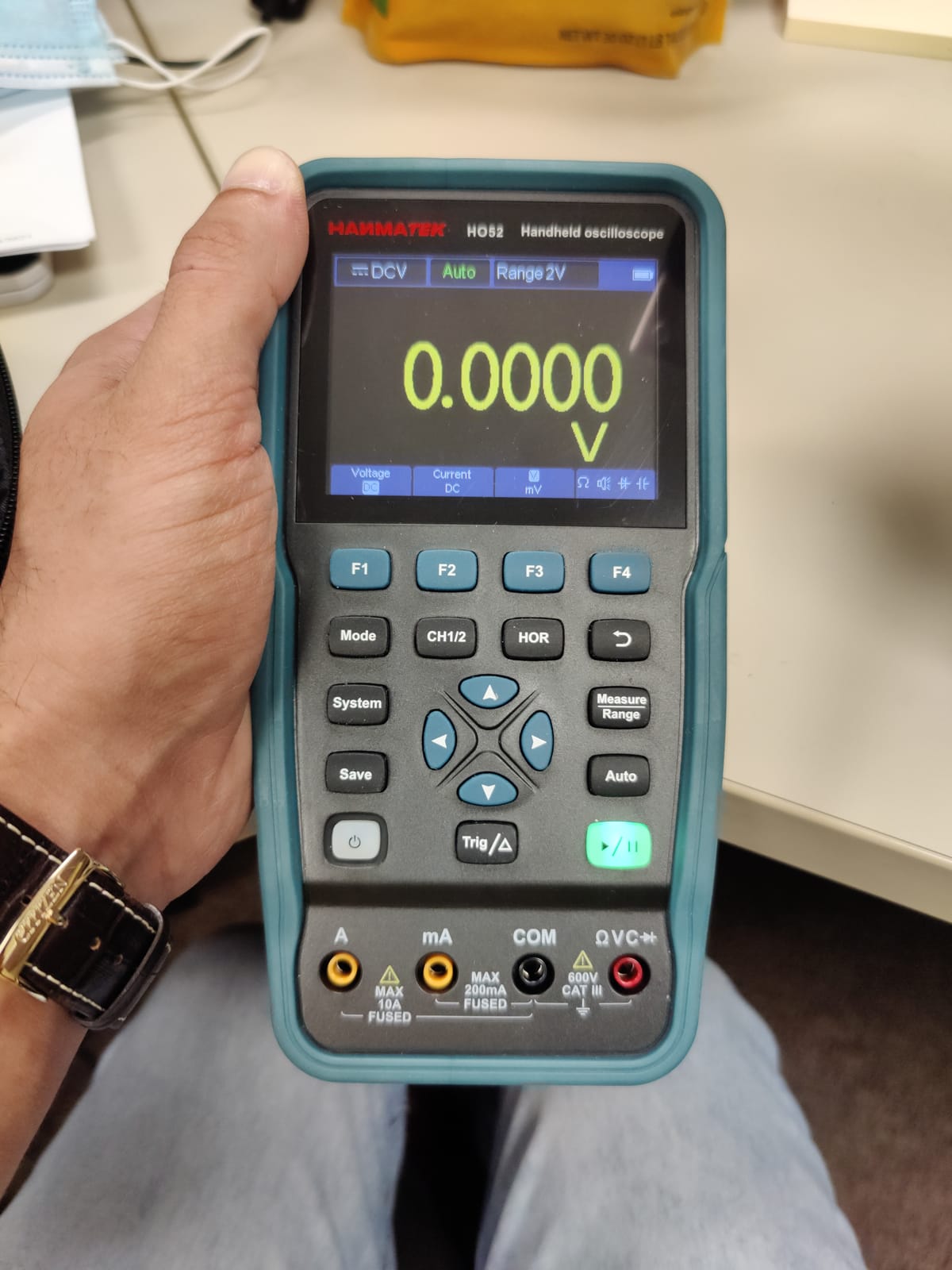
The one-key AUTO function sets every parameter and captures immediately, which is the single most useful thing a beginner can have when the signal is a crank trigger or a throttle position ramp that will not wait. Cursor measurement, XY mode and seven automatic measurement functions cover the rest of the basics.
Its 4.7 average across 589 reviews sits at the top of the handheld group. The criticisms are consistent and narrow: modest memory depth, a small screen and a limited number of save slots.
Who the HO52 suits best
It suits automotive diagnostics, marine electronics and any field work where the circuit is battery powered and the instrument must be self-contained. A battery-powered handheld is isolated from line earth, which is exactly what you want when probing a vehicle network that shares ground with your charger.
It also suits anyone who wants CSV export. Being able to open a captured waveform in a spreadsheet or a plotting tool is a real advantage when you are documenting a fault over several days.
Who should skip it
Skip it if you are doing sustained bench work in a single sitting. Eight thousand points of record depth and a 3.5-inch screen are poor tools for a long analysis session, and the workflow gets cramped once you are looking at two channels plus meter readings at once.
Skip it if you need protocol decoding. The handheld tier in this roundup has no I2C, SPI or CAN decoders, and if your work is bus debugging rather than analogue and switching work, a bench scope is the right instrument.
7. PicoScope 2204A: Best Choice if Your Scope Is a Laptop
Pico Technology PicoScope 2204A Oscilloscope 2 Channel 10 MHz Bandwidth USB
- PicoScope 7 software with free lifetime updates for Windows
- Linux and Mac
- Decodes 40 serial protocols as standard
- USB connected and powered at 5 ounces so it fits in a laptop bag
- Up to 12-bit enhanced vertical resolution for finer detail
- 2000 waveforms per second with a 10000-waveform circular buffer
- 10 MHz bandwidth is narrow for high-frequency or modern digital work
- Needs a PC
- so there is no standalone screen
- Not compatible with PicoScope 7 Automotive Software
- 8 kS capture memory is small for long records
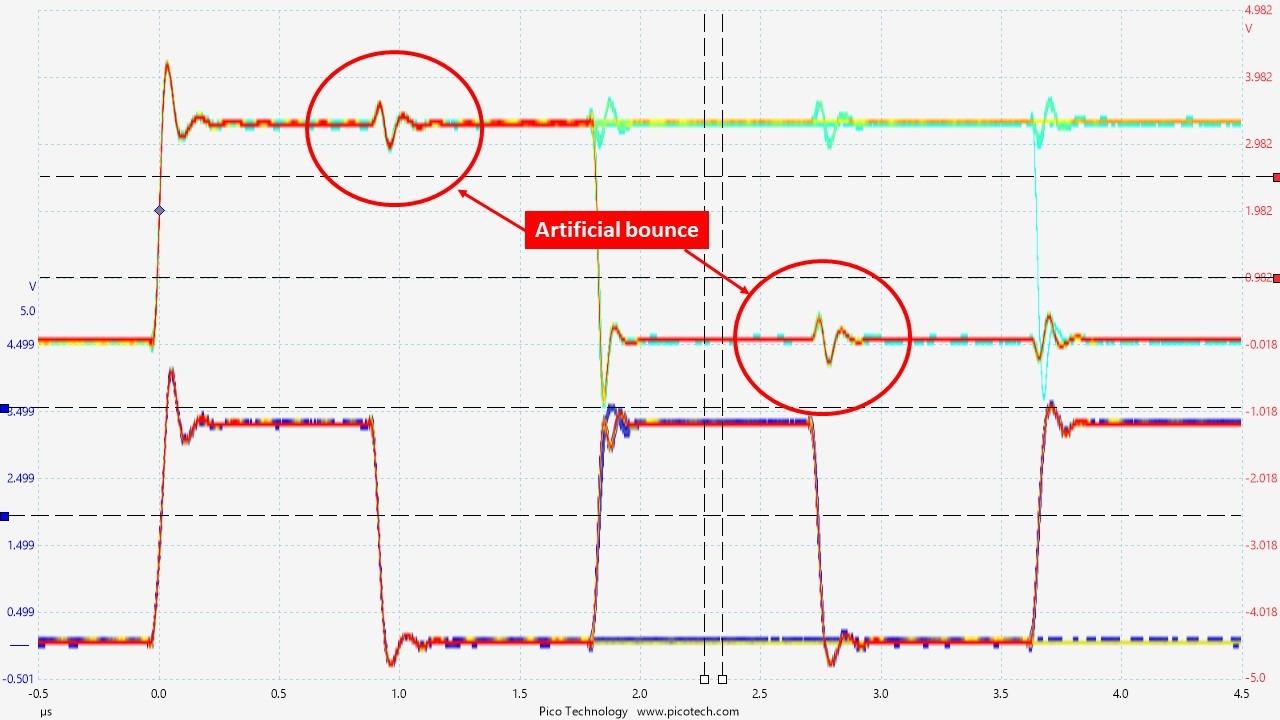
The 2204A is the counterweight to every bundled-software complaint in this category. Pico ships PicoScope 7 for Windows, Linux and Mac with free upgrades for the life of the product and a named technical support team behind it. When hobbyists complain about vendor drivers on USB scopes, this is the unit they are usually recommending instead.
It is also more than a scope. The same box runs as a spectrum analyzer, a function generator and an arbitrary waveform generator, and it decodes 40 serial protocols as standard rather than as an add-on. The 12-bit enhanced vertical resolution is the other differentiator, giving roughly 16 times more detail on a small signal riding on a large one than a plain 8-bit converter.
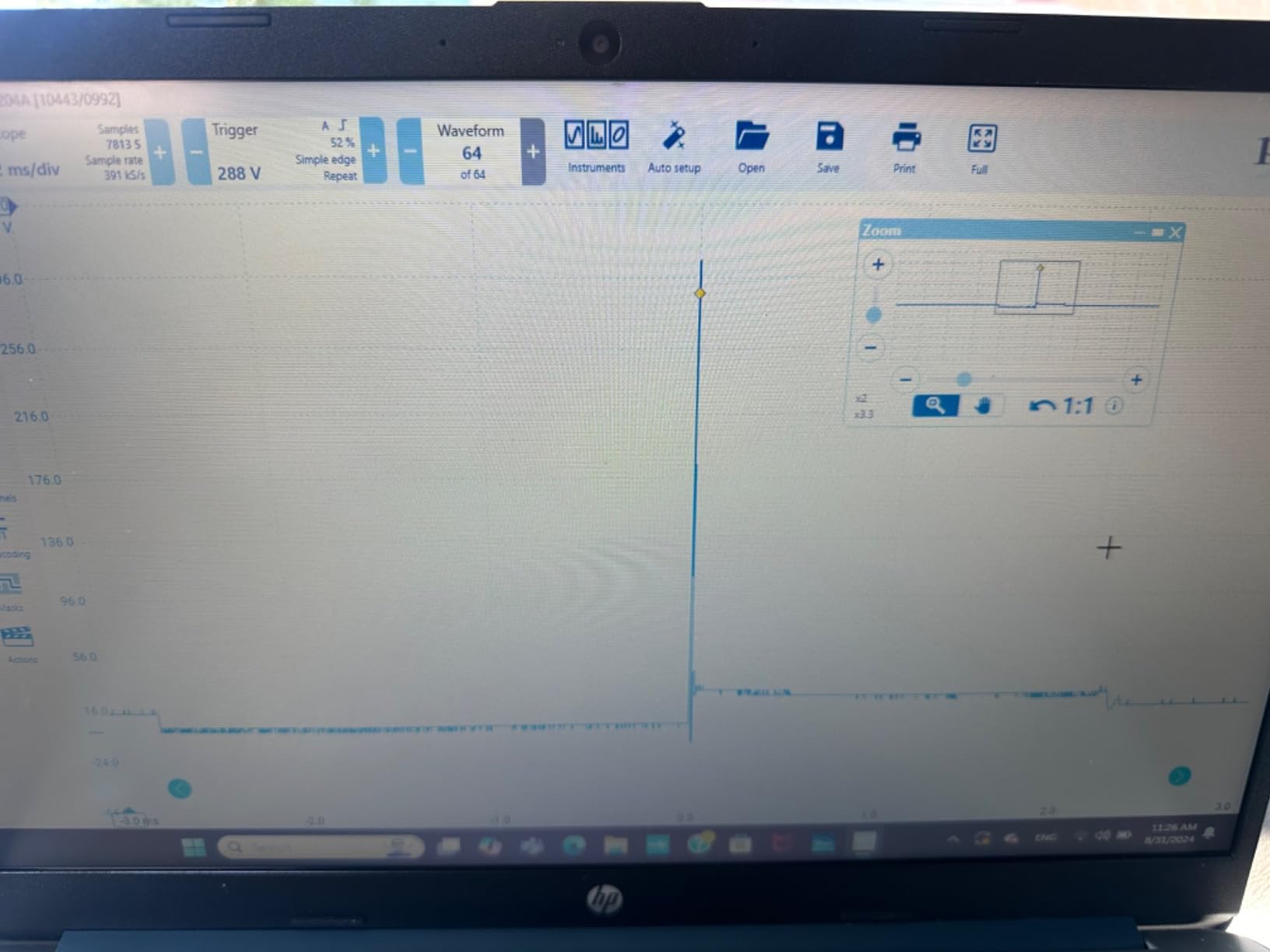
At 5 ounces and 5.59 by 3.62 by 0.74 inches, powered entirely over USB, it is genuinely portable. Reviewers describe it as a favourite for field debugging and for teaching, where you can project the laptop screen instead of squinting at a small panel.
The 10,000-waveform circular buffer with a 2,000 per second update rate, plus mask limit testing, means you can build a pass and fail mask for a known-good signal and let the unit screen thousands of boards for you.
Who the 2204A suits best
It suits anyone whose bench is a laptop, anyone on Linux or macOS where bundled Windows-only drivers are the norm, and anyone who wants serial decode without buying a licence. Forty protocols out of the box covers far more bus types than the four-channel bench units include.
It also suits students and teachers, because a 12-bit display on a large laptop screen is more readable than any small handheld panel, and the software is the same one you would use professionally.
Who should skip it
Skip it if your signals go above 10 MHz. That ceiling rules out modern digital design, switching converters with fast edges and anything in RF. The measurement is still accurate at 10 MHz, it simply cannot see the content above it.
Skip it if you need the scope to work in the field without a laptop, or if you work on automotive protocols, since this device is not compatible with PicoScope 7 Automotive Software.
8. FNIRSI DSO152: The Pocket Scope for First-Time Users
FNIRSI DSO152 Handheld Oscilloscope 200kHz Bandwidth, 2.5MS/s Sampling Rate
- Pocket-sized
- light
- and shipped as a finished assembled unit
- One-key AUTO sets every parameter and calibrates the baseline
- 10X probe reaches 800 Vpp so it handles automotive and mains signals
- Auto
- Normal and Single trigger modes for periodic and aperiodic signals
- About 4 hours of runtime with Type-C charging and firmware upgrade
- 200 kHz bandwidth and 2.5 MS/s sampling rule out anything above audio or slow digital
- 320x240 2.8-inch LCD is small and low resolution
- No serial bus decode or other bench conveniences
Not everyone should start by spending on a benchtop. The DSO152 is the cheapest real instrument in this roundup, and for some first projects it is genuinely enough. It arrives as a finished assembled machine, so there is no soldering and no assembly to rule out, and one-key AUTO sets every parameter and calibrates the baseline in a single press.
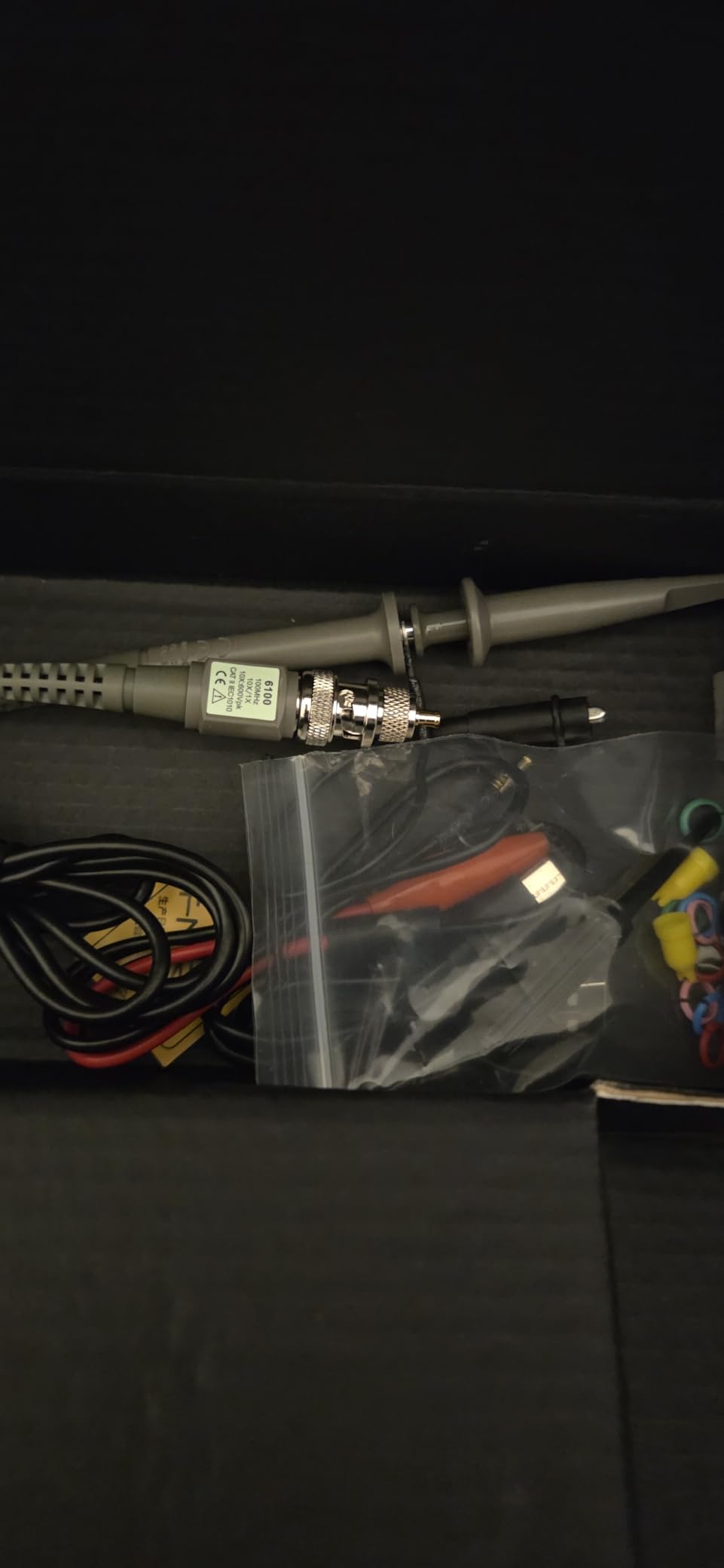
The probe range is the surprise. The 10X probe measures up to 800 Vpp, and voltages up to 400 V are readable, which puts it in territory for basic mains-related and 12 V vehicle electrical checks that far more expensive units cannot touch safely.
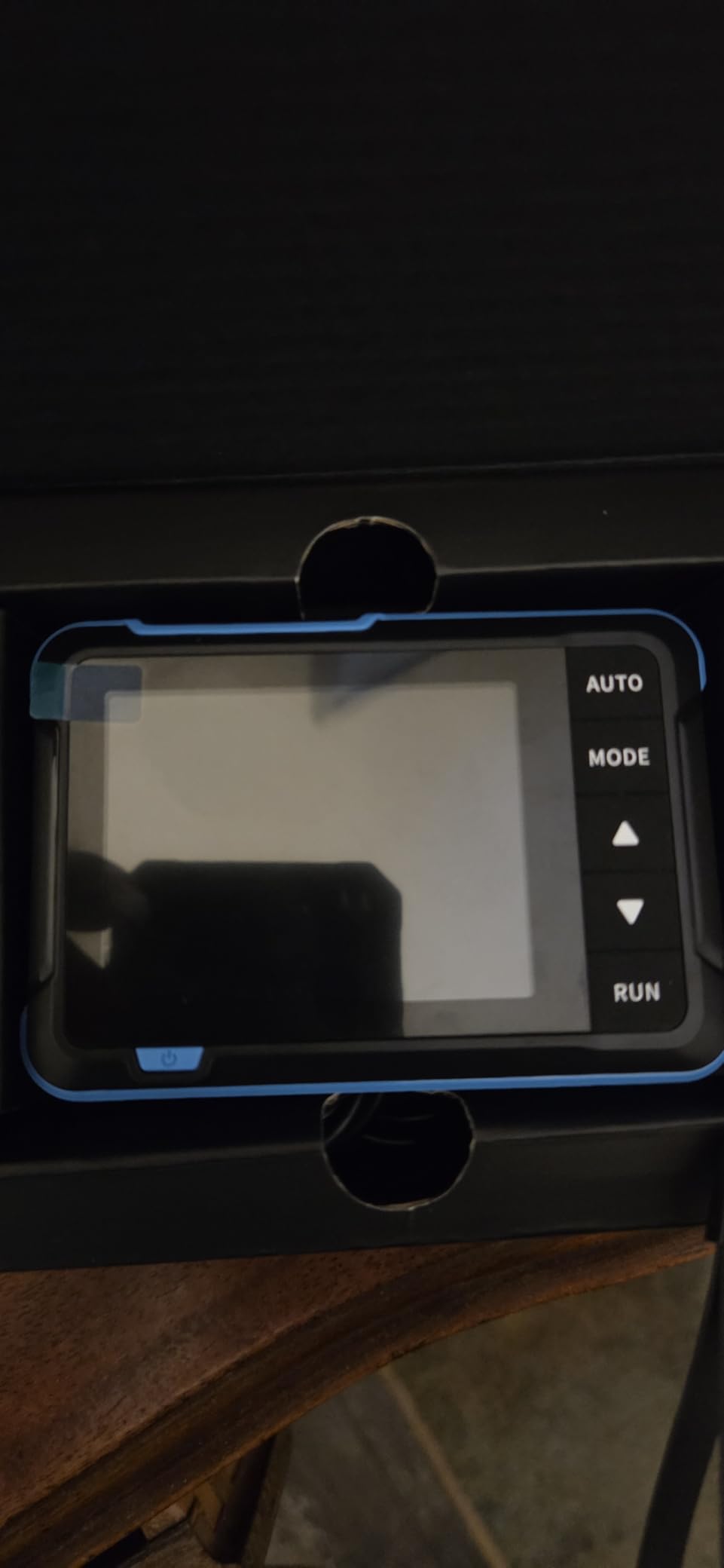
Trigger modes cover auto, normal and single, so it handles both periodic analogue signals and aperiodic digital ones, which is more than many units of this class manage. The built-in 1000 mAh battery gives roughly 4 hours of continuous use, and the Type-C port handles data, charging and firmware upgrade.
Be clear-eyed about what it is. At 200 kHz of bandwidth and 2.5 MS/s of sampling, it sees mains, audio-band ripple and slow switching waveforms. It does not see a 16 MHz microcontroller clock, and no firmware update changes that.
Who the DSO152 suits best
It suits a complete beginner who wants to see a waveform before committing to a real instrument, a parent buying a first present for an electronics-obsessed child, and anyone checking 12 V vehicle wiring or simple power supplies where the frequency content is low.
It also suits as a second opinion instrument. When a bench scope reading looks odd and you want to confirm a 50 Hz ripple figure, a pocket unit that measures it independently is a useful cross-check.
Who should skip it
Skip it if you work with microcontrollers, because the ceiling is far below any digital bus you would want to debug. It has no serial bus decode, no FFT worth the name and no memory depth to speak of.
Skip it if you want a screen you can read comfortably. At 320 by 240 on a 2.8-inch panel, reading a cursor position means leaning in, and the 4.4 rating reflects that ceiling clearly.
9. FNIRSI 1013D Plus: Best Touchscreen Option for Bench-Quality Feel
FNIRSI 1013D Plus 100MHz Oscilloscope, 2 Channel Oscilloscope 7″ TFT Touch
- 7-inch 800x480 capacitive touchscreen simplifies navigation and cursor work
- 100 MHz per channel with 1 GSa/s sampling covers real hobbyist projects
- 1 GB storage holds 1000 screenshots and 1000 waveform sets with thumbnail browsing
- Lissajous XY view and FFT add genuine analysis value
- High-voltage protection tolerates continuous voltages to 400 V
- 6000 mAh battery sustains about 4 hours of use
- On-screen keys leave little waveform area on a 7-inch panel
- Touch UI can feel sluggish next to a physical-knob bench scope
- Some 1-star reviews report firmware and touch responsiveness issues
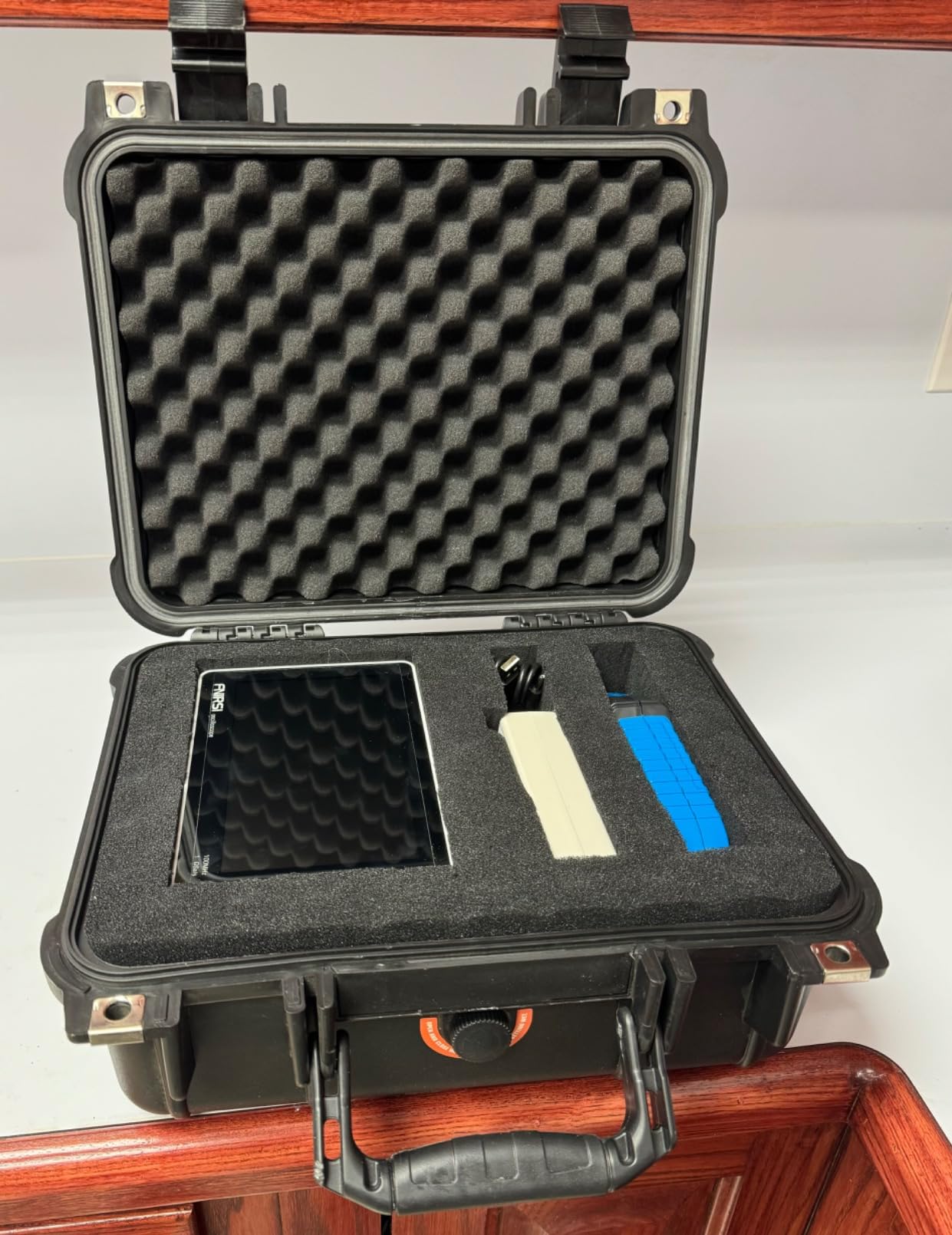
The 1013D Plus is the handheld that tries to be a bench scope. Two channels at 100 MHz each with 1 GSa/s sampling is a specification set most bench instruments in this roundup do not reach at this size, and the 7-inch 800 by 480 capacitive touchscreen makes navigation and cursor measurement direct rather than knob-driven.
Storage is unusually generous for a portable. One gigabyte holds up to 1000 screenshots and 1000 waveform sets, with a thumbnail browser, zooming and panning, so a session’s work does not need to be cleared before the next one.
The Lissajous XY display lets you compare amplitude, frequency and phase between two signals, which is how you check stereo alignment, amplifier balance and phase shift. The FFT view estimates harmonic content, which is how you spot distortion sources. Both are analysis tools that a two-channel scope rarely offers outside the bench tier.
Touch and gesture cursor measurement gives a direct peak-to-peak and frequency readout rather than making you read the graticule, and the built-in high-voltage protection module tolerates continuous voltages up to 400 V.
Who the 1013D Plus suits best
It suits hobbyists who want bench-class bandwidth and a large readable screen but need the instrument to be portable, and it suits anyone who prefers touch and gesture control to a dense menu tree. Audio and amplifier work benefits directly from the XY view and the FFT.
It also suits a mixed bench. Plug it in when you want the screen, unplug it and carry it to a car or a customer site, and the 6000 mAh battery still gives roughly 4 hours away from mains.
Who should skip it
Skip it if you want a serial protocol decoder. There is no I2C, SPI or CAN decoding in this unit, and for embedded debugging that is the feature that decides the purchase.
Skip it if you dislike on-screen controls eating display area. Owners note that the on-screen keys leave little room for the waveform on a 7-inch panel, and the touch response is not as immediate as a physical knob. The 9 percent one-star share is mostly firmware and touch responsiveness.
10. Hantek 1008C: Best for Eight-Channel Automotive Diagnostics
Hantek 1008C PC USB 8CH Automotive Diagnostic Digital Oscilloscope/DAQ/Programmable Generator
- Eight channels with more than 80 guided automotive diagnostic routines
- Software presets auto-configure volts per division
- timebase and trigger per test
- Diagnostic reports can be generated
- printed or captured with one key
- Far cheaper than a professional eight-channel automotive scope
- Includes auto probe and four alligator clip to coaxial leads
- PC software is dated and clunky next to modern automotive tools
- Secondary ignition pickup can freeze software and reportedly crash the PC
- USB connection has been reported to drop intermittently
- Windows-only
- with some users unable to run it on Windows 11
- Included test leads are thin and worth replacing
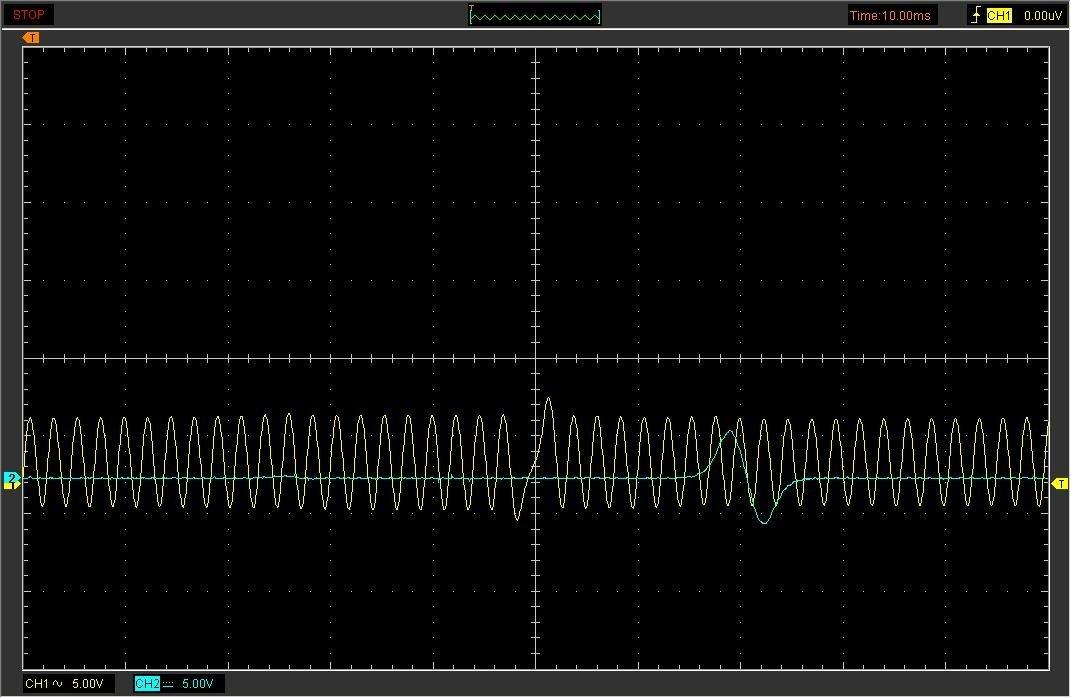
The 1008C exists for one job, and it does that job well. It is a PC-connected eight-channel scope with more than 80 guided automotive diagnostic routines covering ignition, sensors, bus detection, starter and charging circuits. Each routine presets volts per division, timebase and trigger, so you get a meaningful waveform without knowing what you are doing.
Getting a readable waveform quickly is the whole value proposition in car diagnosis. A student with a manual on a laptop would spend an hour setting up the same capture, which is why automotive technicians who own one rate it as a capable budget entry into eight-channel work.
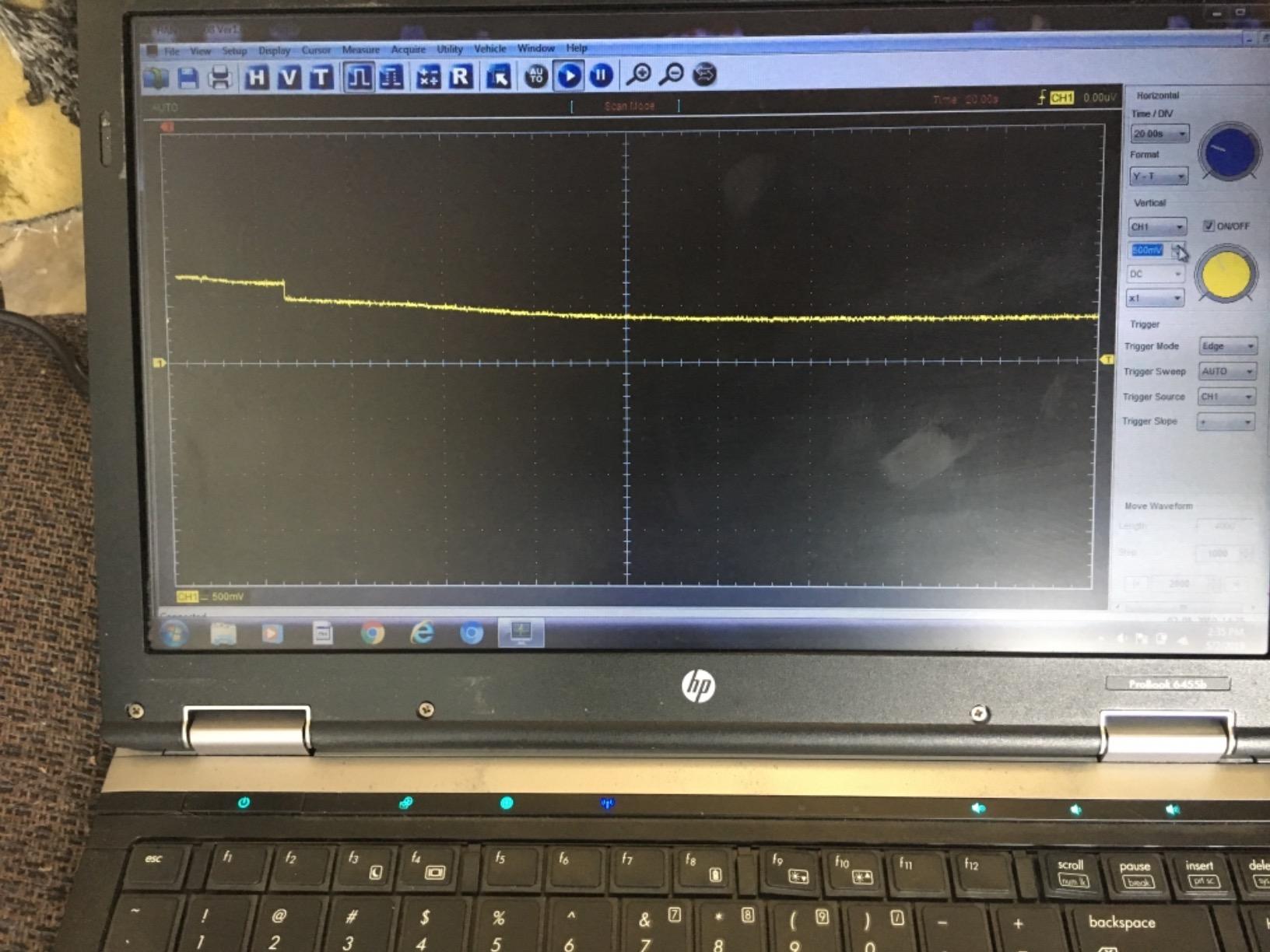
Reporting is handled too. One-key screenshot capture, printable diagnostic reports and video help with online walkthroughs are all included, which matters when you need to hand a customer evidence of what you found.
It also works as a DAQ and a programmable waveform generator, so the same box covers bench logging tasks. The box includes the scope, an auto probe, four alligator clip to coaxial cables and four coaxial connectors.
Who the 1008C suits best
It suits automotive technicians and hobbyists doing occasional diagnostics, students learning vehicle electrical systems, and anyone who needs more channels than any other unit here offers. Eight channels lets you watch an entire ignition system or several sensors at once rather than swapping leads.
It suits anyone already committed to a Windows laptop, since the whole workflow is the bundled PC software. The 90-day manufacturer warranty and two-year spare part availability are also worth noting for a workshop tool.
Who should skip it
Skip it if you are on macOS or Linux, and think hard on Windows 11. The software is Windows-only, and a small group of owners report it will not run on current Windows 11 builds. Check compatibility before committing.
Skip it if software quality matters. The interface is dated and clunky next to PicoScope or modern automotive tools, secondary ignition pickup is reported to freeze or crash, and the USB link has been reported to drop mid-session. The thin supplied leads are worth replacing immediately.
How to Choose an Oscilloscope for Hobbyist Work
Pick the instrument by the fastest signal you expect to measure, not by the most impressive number on the box. Everything else follows from that. Here is the process I would use.
1. Name your highest frequency. An Arduino runs its I/O at 16 MHz, so its clock line and fastest edges are around that figure. An audio amp tops out at 20 kHz. A switching converter with a 1 MHz switch has harmonics well past 100 MHz. A radio front end is a different order of problem again.
2. Apply the five-times rule. Pick a bandwidth three to five times the highest frequency you will measure. That headroom is what lets you see the shape of an edge rather than a smeared approximation, and it is why 50 MHz comfortably covers a 16 MHz microcontroller while 20 MHz does not. A cheap 10 MHz scope is the reason beginners conclude a 3.3 V signal is too slow and start buying components.
3. Check the sample rate, and do not over-read it. A common confusion is treating the GSa/s figure as equivalent to bandwidth. It is not. What matters is having several samples per division across the screen at your timebase. If the spec sheet only claims a high sample rate on one channel, find out what happens when you turn on a second.
4. Count the signals you need to see at once. Two channels cover most beginner work. I2C needs two. SPI needs four. If your projects involve bus debugging, four channels is the number to buy, and the community view on r/AskElectronics is unambiguous about this.
5. Check protocol decoding, and the memory depth behind it. Decoding turns a screen of square waves into readable text. It is the single most hobbyist-relevant premium feature, and you should not pay extra for it if you can avoid that. Memory depth decides whether you can scroll back and find the transient that just happened; 1 Kpts is not enough to do that, and 14 to 24 Mpts is comfortable.
6. Choose the form factor. A benchtop unit needs nothing but a bench. A USB unit needs a laptop and gives you better software in exchange. A handheld runs on a battery, which isolates it from line earth and removes ground-loop risk when probing mains-adjacent circuits. A 3-in-1 adds a multimeter and a generator, which is real value if you have no bench space and no existing meter.
7. Budget for accessories. Nearly every review quotes the scope and nothing else. The probes that ship with the mid-range units are usable but not good, and a set of proper 10X probes plus a few ground leads and a USB cable is a meaningful part of your total outlay. If you also need a bench for woodworking and cabinet work, our guide to the best edge banders for hobbyists covers the other half of a small workshop, though the two tools share nothing but a desk.
8. If you are buying used, check these five things. First, a calibration self-test on every channel with a known signal. Second, connect all channels simultaneously and confirm none drop out at high sample rates. Third, run a long capture and look for dropouts or memory errors. Fourth, inspect connectors and probe compensation, which is where wear actually shows. Fifth, verify the unit powers from cold and holds its clock setting, a known fault on one of the Siglent models reviewed here.
Two more models you will see recommended and should understand before you buy: the OWON HDS2202S sits in the same handheld-plus-meter category as the HANMATEK above, and the Hantek DSO5072P is a 70 MHz two-channel bench unit aimed at the same first-scope buyer. Neither changes the ranking here.
Rigol vs Siglent: What Actually Differs for a Hobbyist
Both brands build the instruments most hobbyists end up on, and the practical difference is narrower than the specification lists suggest. Siglent leans on its LeCroy-derived analog front end and 12-bit converters in the HD line, which owners praise for a cleaner noise floor, and it includes CAN and LIN decoding as standard. Rigol has the larger installed base and the deeper body of community video and forum knowledge, and its UltraVision capture engine is harder to match on intermittent fault-finding.
For embedded work the two are closer than most comparisons admit. If your deciding factor is protocol decoding at no extra cost, Siglent wins on the standard decoder set. If your deciding factor is documentation and a decade of tutorials, Rigol wins on that alone. Both the SDS1202X-E and the SDS1104X-E in this roundup are better first buys than most of what the comparison tests assume.
Frequently Asked Questions
What is the best brand for oscilloscopes?
There is no single best brand, but two dominate the hobbyist market. Siglent leads on included serial decoders and on the 12-bit converters in its HD line, which give a cleaner noise floor. Rigol leads on installed base, community documentation and its UltraVision capture engine for finding intermittent faults. For most hobbyists the deciding factor is not the badge, it is whether the model includes I2C, SPI and UART decoding without a paid licence.
What is a good, cheap oscilloscope for hobbyists?
Three good cheap options cover most of the range. The FNIRSI 2C53T gives you a 50 MHz two-channel scope, a 19,999-count multimeter and a signal generator in one body. The IMARS HO-3S raises bandwidth to 70 MHz and adds a 20,000-count true-RMS meter. The FNIRSI DSO152 is the cheapest genuine instrument, but at 200 kHz of bandwidth it only covers mains, ripple and slow signals. Pick the 2C53T or the HO-3S unless you specifically want a pocket unit.
How do I pick a good oscilloscope?
Start with the fastest signal you expect to measure, then multiply by three to five for your bandwidth figure. An Arduino tops out around 16 MHz, so 50 MHz of scope bandwidth is genuinely enough. Next check that the sample rate holds up with the channel count you will use, then count how many signals you need to see simultaneously, and finally confirm the model includes protocol decoding and has enough memory depth to scroll back to a transient.
What are the key differences between Rigol and Siglent oscilloscopes?
Siglent’s four-channel units use a dual-ADC architecture, which keeps sample rates high when all four channels are active, and they include CAN and LIN decoding as standard. Rigol’s four-channel units offer deeper memory on some models, a capture-rate system tuned for spotting intermittent faults, and a much larger body of community documentation. The choice usually comes down to protocol decoding requirements and which brand’s software and tutorials you already know.
What is the best budget handheld oscilloscope for hobbyists?
The HANMATEK HO52 is the strongest budget handheld in this roundup, pairing a 50 MHz two-channel scope with a 4.5-digit true-RMS meter in a 16-ounce battery-powered body, plus CSV waveform export over Type-C. For a touchscreen and bench-class bandwidth, the FNIRSI 1013D Plus gives you 100 MHz per channel on a 7-inch display. If automotive work is the goal, the Hantek 1008C adds eight channels and 80-plus guided diagnostic routines to a laptop workflow.
Do I need an oscilloscope, or is a multimeter enough?
A multimeter is enough if you only care about steady DC levels, resistance and continuity, and those are the questions most beginner projects start with. As soon as you need to know whether a PWM duty cycle is right, whether an I2C bus is acknowledging, or how much ripple sits on a supply, you need a scope. The transition point is usually the first time a project does not work and a voltage reading tells you nothing about why.
The Short Answer for Most Hobbyist Benches
If you buy one oscilloscope in 2026, buy the Siglent SDS1202X-E unless your work needs three or four digital lines at once, in which case take the Siglent SDS1104X-E. Buy the Rigol DS1054Z if you want the deepest community knowledge base and the best intermittent fault-finding. If your bench is a laptop, the PicoScope 2204A gives you better software than any bundled driver in this roundup.
Go handheld only when you genuinely work away from the bench or probe circuits tied to mains, and go 3-in-1 only if you lack a multimeter and a function generator already. Whichever you pick, budget for proper probes, and check the specs one last time against the fastest signal in your project before you click through.