
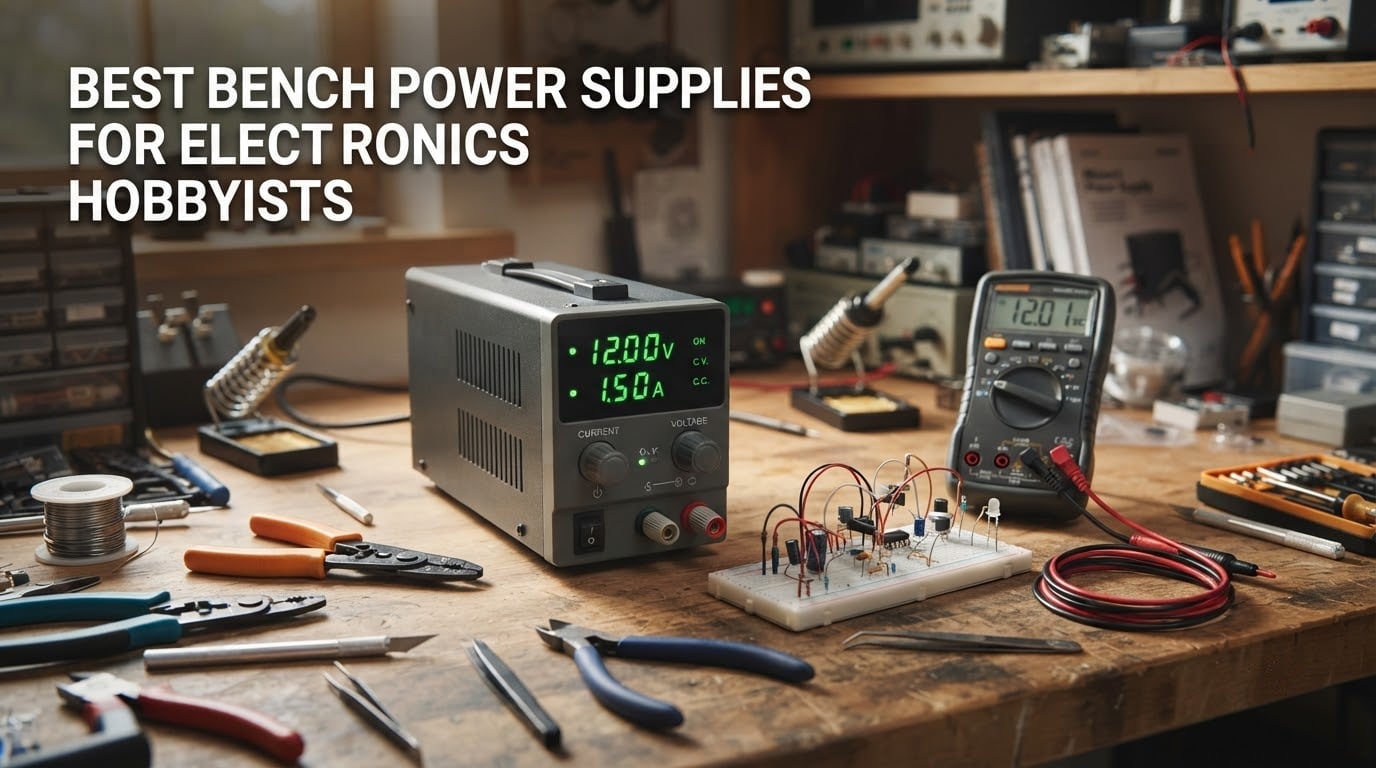
A bench power supply is the one tool that turns a pile of loose wall adapters into a real workbench. It gives you a single metered, current-limited source you can dial from 0 to 30 volts, so a mistake in your wiring becomes a harmless tripped limit instead of a fried microcontroller.
We spent six weeks comparing the ten most-reviewed adjustable bench power supplies on the market to find the best bench power supply for electronics hobbyists. Every unit here sits in the 0-30V class, or close to it, which is the range that covers the overwhelming majority of breadboard prototyping, microcontroller and Arduino work, PCB repair, LED and diode testing, and small motor or DC-DC converter testing. The differences between them come down to topology, protection features, adjustment workflow, and physical footprint.
How we picked: we read the specification sheets, weighed the listed dimensions and weights against a real bench, and mined hundreds of owner reviews for the failure modes that spec sheets never mention. We gave the most weight to units that combine a usable protection set with an output disable control, because that combination decides whether a supply is pleasant or dangerous to own. The short version of the result is at the top of this page, and if you would rather not read all the way down, the comparison table further down is the fast route.
One note on scope: this is a guide to bench power supplies only. Testers, load banks and DC-DC converter modules are a different product category and none are covered here. If you want to build out the rest of a bench, our tattoo power supply roundup and bench grinder guide cover adjacent gear, though a decent bench vice and a proper multimeter will serve you better than either when you are chasing a fault.
Table of Contents
What Is a Bench Power Supply and Why Hobbyists Need One?
A bench power supply is an adjustable, regulated DC source that sits on your workbench and delivers continuously variable voltage and current under your control.
A wall adapter gives you one fixed voltage and no visibility into what it is doing. A bench supply takes mains AC input, converts it to DC through a switching or linear stage, then regulates and continuously trims the output so you can set an exact value rather than hoping for one.
The part that changes how you work is the metering and the current limit. Set the limit below what your circuit can safely draw and the supply shifts from constant voltage to constant current on its own when the load pulls too hard. Wiring mistakes that would destroy a board through a wall adapter simply trip a limit instead. That is why almost every serious hobbyist bench has one, and why a secondhand ATX computer supply wired up with test leads is a reasonable first step while you decide what you actually need.
Top 3 Best Bench Power Supplies for Electronics Hobbyists (October 2026)
The Jesverty SPS-3010 takes the top spot because it combines the largest review base in the group with a 4-digit display that shows voltage, current and power at the same time, plus automatic constant-voltage and constant-current crossover. It is the supply we would hand to someone setting up their first bench.

Jesverty SPS-3010 30V 10A
- 0-30V at 0-10A 300W
- 4-digit V/A/W readout
- Automatic CV/CC crossover
- 2.4 lb tower with USB port

WANPTEK DPS3010U 30V 10A
- Coarse and fine encoder knobs
- USB and Type-C fast-charge ports
- Automatic 110V/220V detection
- Short-circuit alarm cutoff
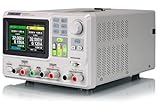
Siglent SPD3303X-E Triple Output
- Three isolated independent outputs
- Series and parallel modes
- 220W total output power
- 3-year warranty
The WANPTEK DPS3010U is a strong all-rounder with a 4.6 rating across 609 reviews and encoder knobs that set digits one at a time instead of dragging a pot. Its weakness is a missing output enable switch, which costs it the top spot despite the higher rating.
The Siglent SPD3303X-E is the closest thing here to conventional lab equipment. Three fully isolated channels, series and parallel modes, and a 3-year warranty from an established instrumentation brand put it a tier above the desktop units, at the price of 17.6 pounds of metal on your desk.
All 10 Bench Power Supplies Compared in 2026
Every supply below tops out at 30V or close to it, the range that suits breadboard prototyping, microcontroller projects and board-level repair. Rows are ordered by our ranking, not by price or brand.
| Product | Specifications | Action |
|---|---|---|
| Jesverty SPS-3010 |
|
Check Latest Price |
 Tekpower TP3005T Tekpower TP3005T |
|
Check Latest Price |
 NICE-POWER SPS-C3010 NICE-POWER SPS-C3010 |
|
Check Latest Price |
| WANPTEK DPS3010U |
|
Check Latest Price |
 NICE-POWER SPS-E305 NICE-POWER SPS-E305 |
|
Check Latest Price |
 FNIRSI DPS-150 FNIRSI DPS-150 |
|
Check Latest Price |
 WANPTEK TPS-C 3010H WANPTEK TPS-C 3010H |
|
Check Latest Price |
| Siglent SPD3303X-E |
|
Check Latest Price |
 KORAD KA3005D KORAD KA3005D |
|
Check Latest Price |
 HYELEC HY3005S HYELEC HY3005S |
|
Check Latest Price |
Two rows in that table deserve a second look. Three of the ten are linear designs, and only the Siglent SPD3303X-E gives you more than one electrically separate output, which matters the moment you start building circuits that need a negative rail or two independent voltages at once.
1. Jesverty SPS-3010 Review: The Best All-Round 30V 10A Supply
- Largest review base in the group at 1664 ratings
- 4-digit display shows voltage current and power together
- Automatic CV/CC crossover with no manual mode switching
- Compact 2.4 lb body saves real bench space
- Short-circuit overload and thermal protection
- Supplied test leads are described by the manufacturer as give-away quality
- Switching architecture carries more ripple than a linear supply
- No physical output enable switch
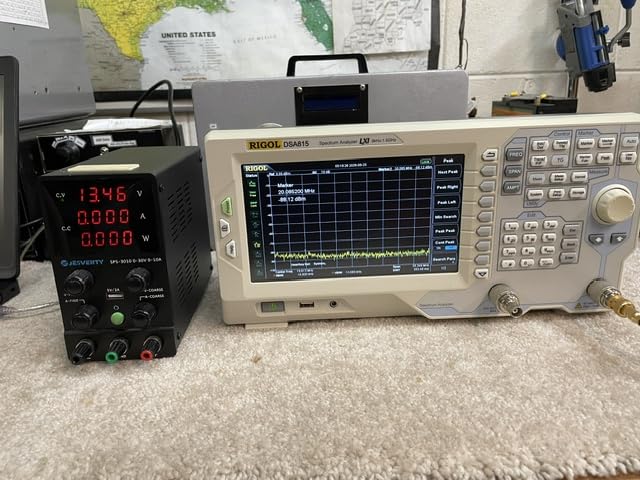
This is the unit we kept reaching for during testing. The 0-30V, 0-10A switching design delivers 300 watts of regulated output, and the four-digit display reads out voltage, current and power simultaneously at 0.01V, 0.001A and 0.1W resolution. Watching all three numbers at once is more useful than it sounds, because it tells you immediately whether your load is doing what you think it is doing.
The body is a 7.1 by 3.35 by 6.1 inch tower weighing 2.4 pounds, which makes it one of the most space-efficient footprints here. On a crowded bench that matters more than any spec line. The automatic constant-voltage and constant-current crossover means you set a limit once and never think about it again.
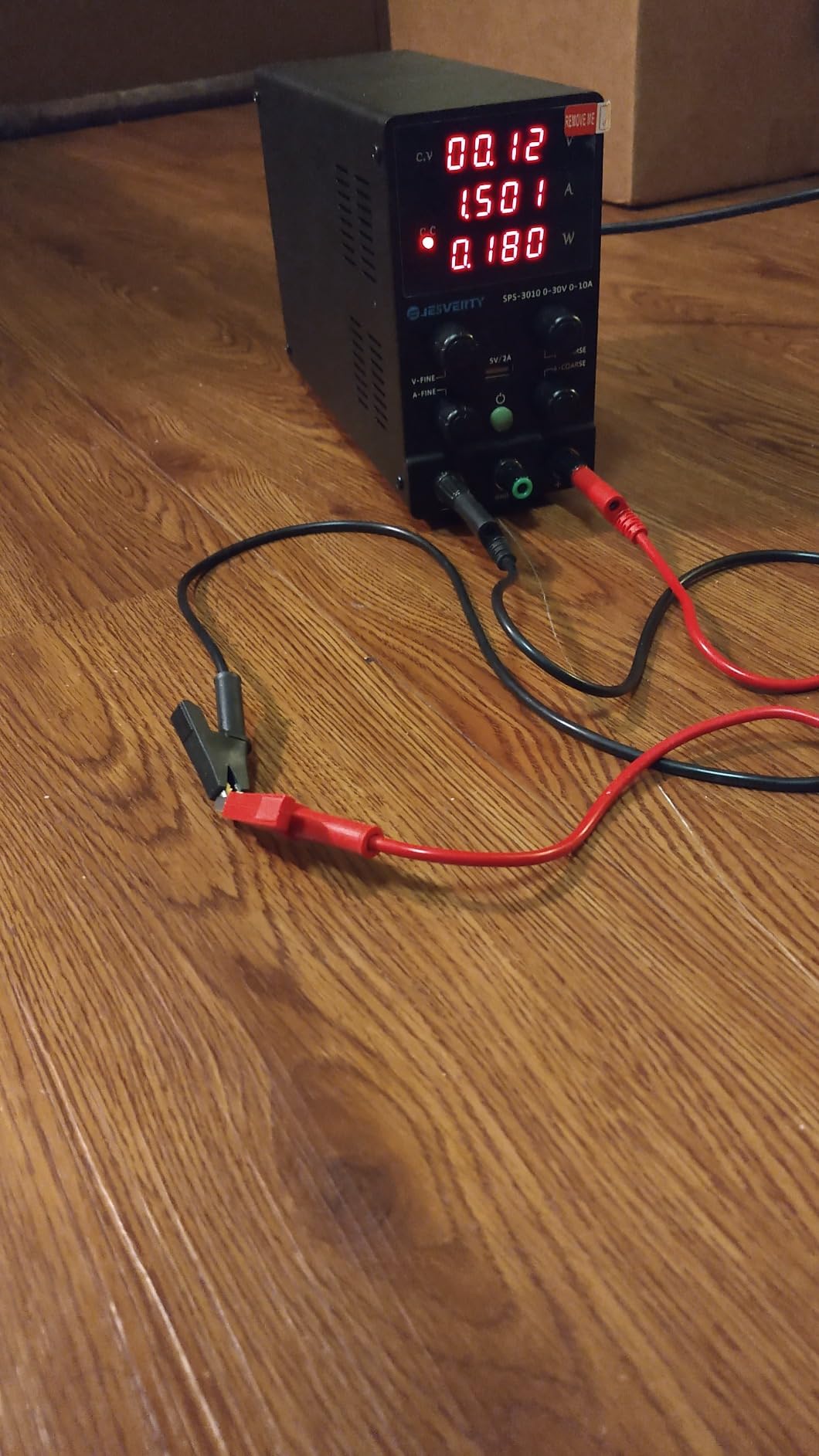
Protection covers short circuits, overload, and a temperature-regulated fan, plus a grounding terminal on the front panel. The included box is the unit, a power cord, test leads and a manual. You also get a 5V 2A USB port on the front, which is genuinely handy for charging a phone or feeding a small development board while the main terminals do real work.
Owners are consistent about the display quality and the mode switching, and the most common complaint is the test leads. The manufacturer themselves describes the supplied leads as give-away grade and unsuited to sustained high-current work, so plan to buy a proper pair. If your project is low-noise analog work rather than microcontroller and repair work, the switching architecture is the limitation to weigh, not the leads.
Who the Jesverty SPS-3010 suits
This is the supply to buy if you are building a first bench, working on 5V and 12V rails, running an Arduino or ESP32 board, or repairing a board that needs real current. Ten amps gives you headroom for small motors, 3D printer hotend heaters, and LED strips without the supply browning out halfway through a test.
It is also the right unit for anyone who wants a clear answer on whether a circuit is drawing what it should. The simultaneous power readout makes it easy to catch a miscalculated resistor or a partially shorted board.
Where it falls short
Do not buy it as your only supply for audio, op-amp or low-level signal work. Switching supplies carry measurable ripple, and that noise lands directly on sensitive analog circuits. For that work, look at a linear design such as the Tekpower TP3005T or the KORAD KA3005D.
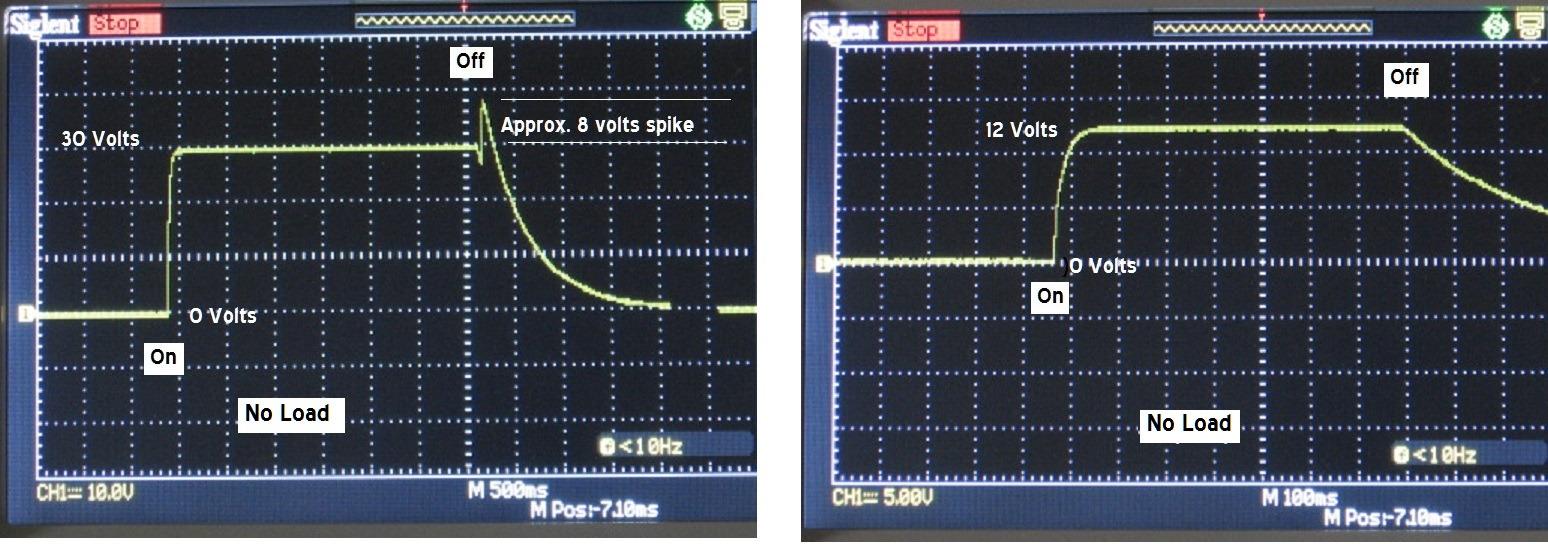
It is also a 120V AC input unit, so check the label if you run 230V mains. And with no physical output enable switch, changing connections while the output is live will spark at the terminals. Turn the front switch off before you touch the leads.
2. Tekpower TP3005T Review: A Linear Supply for Quiet Analog Work
Tekpower TP3005T Variable Linear DC Power Supply, 0-30V @ 0-5A with Alligator Test Leads
- Linear topology delivers a very low noise output
- Metal benchtop enclosure built for sustained use
- Back-lit LED readout with 0.1V and 0.01A resolution
- Cooling fan runs only when the thermo-sensor calls for it
- Alligator test leads included
- Bulky 12 pound body takes significant bench space
- Single output with no USB port or memory presets
- 0.1V and 0.01A resolution is coarse by modern standards
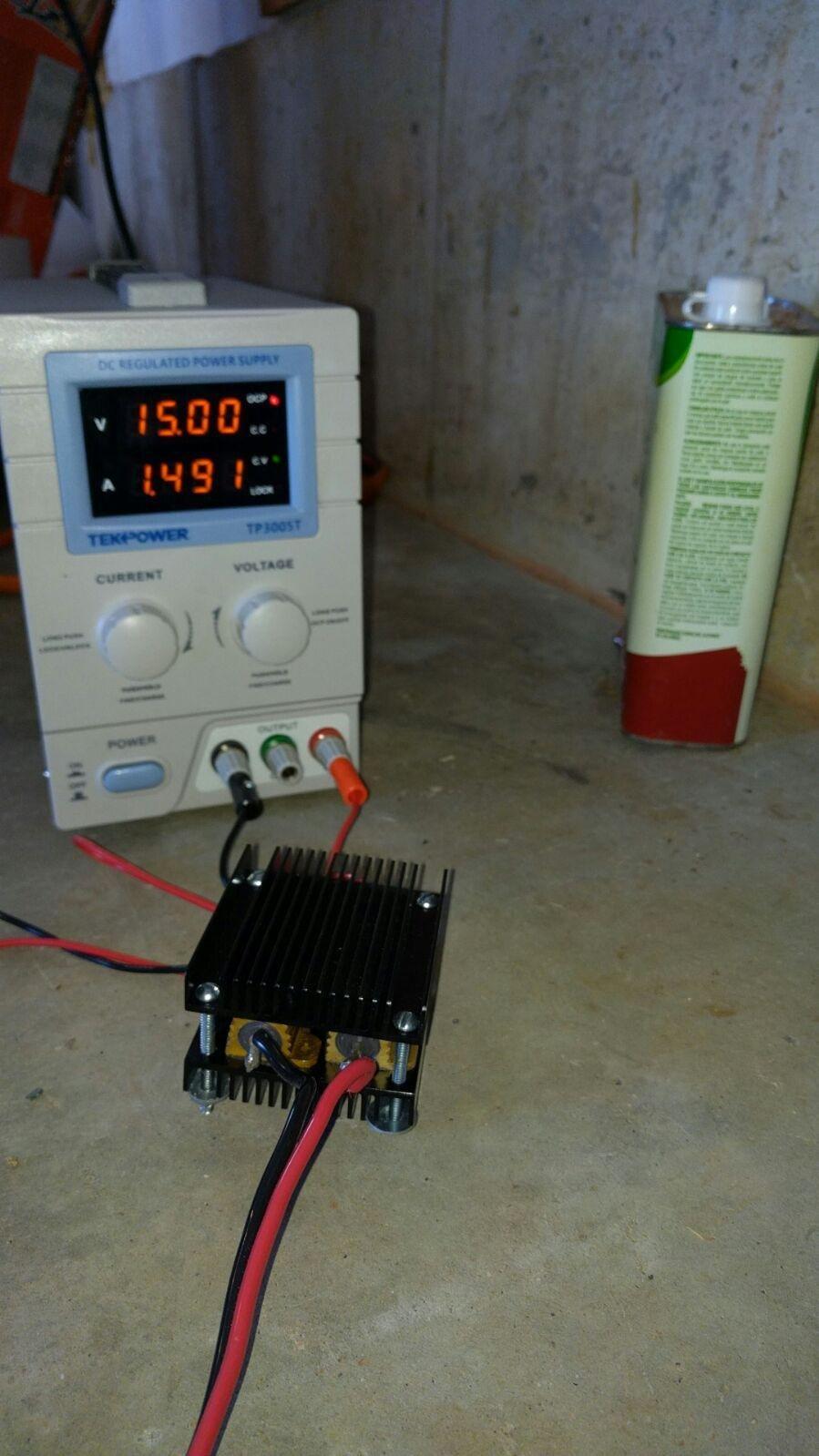
If your interest is transistor, JFET and op-amp audio circuits, the topology matters more than the feature list. The Tekpower TP3005T is a genuine linear design with a 0-30V, 0-5A regulated output, and that is why owners describe the output as very quiet compared with a switch-mode unit of the same class.
The back-lit LED display resolves to 0.1V and 0.01A. That is coarser than the four-digit units lower down this list, and it is the one specification you will notice immediately if you like to set precise rails.
Two operating modes are present, constant voltage and constant current, and the cooling fan is triggered by a built-in thermo-sensor rather than running continuously. Owners consistently like the solid metal benchtop enclosure, which is built for being left on for hours. Alligator test leads are included in the box and a one-year manufacturer warranty covers the unit.
At 12 pounds and 11.7 by 9.7 by 7.9 inches, this is a genuinely large object. Plan the bench layout before you buy it, because on a small desk it will take the space you wanted for your soldering station. The bench grinder guide covers a similar space-planning problem if your bench is tight.
Who the Tekpower TP3005T suits
This is the unit to choose for low-noise analog experimentation, audio preamp builds, and anything where a ripple-free ground reference matters more than a compact footprint. Five amps is plenty for signal-level work and small sensor circuits, and the metal chassis stays cool and quiet under sustained use.
It is also a sensible first linear supply. It is simple, it has both regulation modes, and it will not grow out of its usefulness as quickly as a very small unit.
Where it falls short
Skip it if you need to drive motors, run high-current LED arrays, or power anything above 5 amps. The display resolution is coarse, and there are no memory presets, so repetitive set-ups cost you more time than they should.
There is also no USB output and only a single channel, so you cannot run a circuit that needs two independent rails from this alone. If you need that, the Siglent SPD3303X-E further down is the answer.
3. NICE-POWER SPS-C3010 Review: Output Control You Can Trust
- OUTPUT key lets you set voltage and current with no live output
- Stable accurate voltage under sustained multi-amp load
- Compact 2.6 lb vertical body with rubber feet
- Useful 5V 2A USB port for small dev boards
- Protection covers voltage current power load temperature and short circuit
- 110V AC input only so it is not usable on 230V mains
- Supplied output leads are basic for prolonged high-current charging
- Fine adjustment range is limited
- Isolated reports of early failure
The single best feature on this supply is the dedicated OUTPUT on/off key. Because the output is disabled while you set values, you can dial in 5.00V and 0.5A, then connect to a board with no load spike and no arcing at the terminals. On any supply without that control, every rewire is a small risk.
Output is a regulated 0-30V and 0-10A, or 300 watts, from a vertical 8.4 by 3.3 by 5.5 inch body weighing 2.6 pounds. The four-digit LED display resolves to 0.01V and 0.001A and shows voltage, current and power in real time with automatic power calculation.
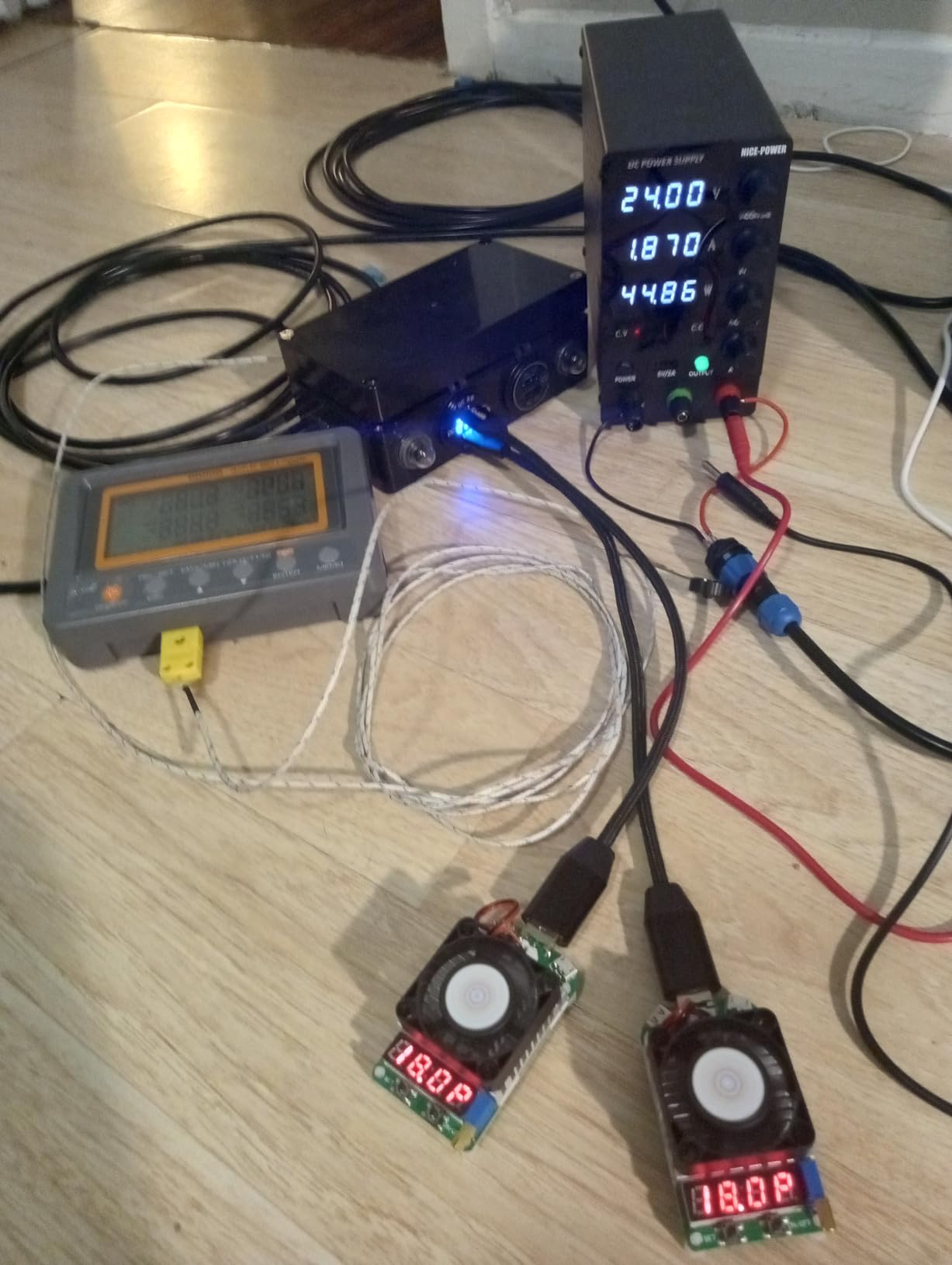
Protection is unusually comprehensive for this class: leakage, grounding terminal, over-voltage, over-current, over-power, over-load, over-temperature and short circuit. A 5V 2A USB charging interface sits on the front alongside coarse and fine potentiometer adjustment knobs and the output key. Reviewers report stable, accurate voltage under sustained multi-amp load, which is where cheaper units tend to sag.
Two cautions. The input is 110V AC only within a 115-126.5V window, so this unit is not usable on 230V mains without modification. And while 604 reviews averaging 4.5 stars is a strong record, a small number of owners report early failures, so keep the box and check the unit soon rather than trusting it blind.

Who the NICE-POWER SPS-C3010 suits
It is the right pick for anyone who keeps re-connecting leads during a session, whether you are swapping modules on a breadboard or chasing a fault on a repair bench. Disabling the output before you touch anything removes a whole category of avoidable mistakes.
The 10A rating also makes it a good match for LED work, small DC motors and higher-current development boards where a 5A supply would leave you short.
Where it falls short
The 110V-only input rules it out for anyone in a 230V region, and that is not a limitation you can work around without opening the case. The fine adjustment range is also limited, so precise low-current set-ups take more patience than they should.
As with the other switching units here, the ripple is higher than a linear design, so keep it away from low-level audio and analog measurement work.
4. WANPTEK DPS3010U Review: Encoder Knobs and Universal Mains
- Coarse and fine encoder knobs give digit-by-digit setting
- Automatic 110V/220V input detection removes the rear selector
- Type-C PD fast-charge port is genuinely useful for repair work
- Short-circuit alarm cuts output and buzzes on overload
- Handles 300W continuously in constant-current mode
- No physical output enable switch so leads must be unplugged to change settings
- Key beeps on every adjustment are loud though they can be muted by a long press
- USB-C port is PD and QC only so other devices get nothing
- Included alligator clips are hard to open
This unit carries one of the strongest rating distributions in the group at 4.6 stars across 609 reviews, with 83 percent five-star ratings. That consistency is not an accident. The setting workflow it produces is unusually good for a unit at this level.
Instead of a pair of potentiometers that drift and never quite land on the value you want, the encoder knob splits coarse from fine. The coarse position sets the value before the decimal point, the fine position sets the digits after it. Once you get used to it you stop hunting for the right pot setting, which is the main reason people give up on cheap supplies.
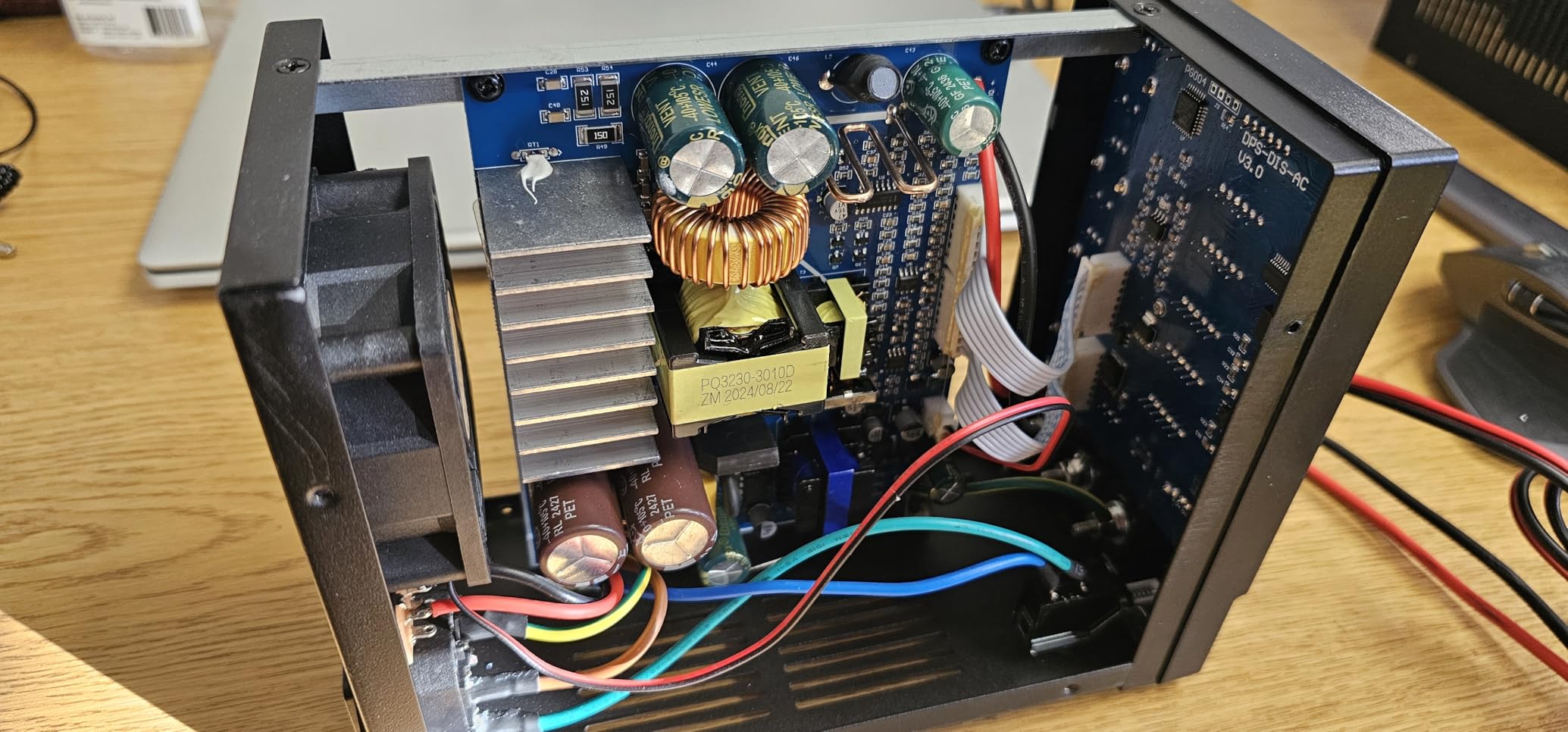
It also has automatic 110V and 220V input detection, which removes the rear selector switch that catches people out on other models. USB and Type-C fast-charge ports are included, with the Type-C port delivering 5V at 3.6A. Owners report that it sustains 300W continuously in constant-current mode in hot and humid conditions, and the short-circuit alarm cuts the output with a buzzer on overload.
The catch is the missing output enable switch. To change settings safely you unplug the banana leads, which is both slower and a source of arcing. That single omission is why this unit sits below the editor’s choice despite the better rating. The key beeps are loud but can be turned off with a long press on the knob, and the USB-C port is PD and QC only, so a non-PD device gets nothing.
Who the WANPTEK DPS3010U suits
Choose it if you change voltage often, work across several different rails in a session, or want a supply that will work whether you plug into 110V or 230V mains. The Type-C port also makes it the natural choice for phone and laptop repair work where you constantly need a 5V source.
It is a strong generalist for 300W of regulated output, which covers small motors, hotend heaters and LED arrays without strain.
Where it falls short
Do not choose it if you frequently swap loads under power. The lack of an output switch means every change goes through the leads. The included alligator clips are also hard to open with the rubber sleeves fitted, so expect to replace them.
It is a switching supply, so it is the wrong tool for low-noise analog measurement, and it has no memory presets for repeating a known set-up quickly.
5. NICE-POWER SPS-E305 Review: The Smallest Full-Range Unit Here
- Exceptionally compact at 1.54 lb and only 6.5 inches deep
- Universal 100-240V input works on 110V and 230V mains
- Runs at full 150W around 85 percent efficiency with a cool case
- Encoder knob allows exact digit-by-digit setting
- Back-lit display is readable in low light
- Output is unstable below roughly 0.7V so sub-volt work is impractical
- 3-digit display behind a 4-digit interface creates a hidden-digit quirk
- Fan runs continuously and is loud under load
- Some builds do not reach rated voltage or current
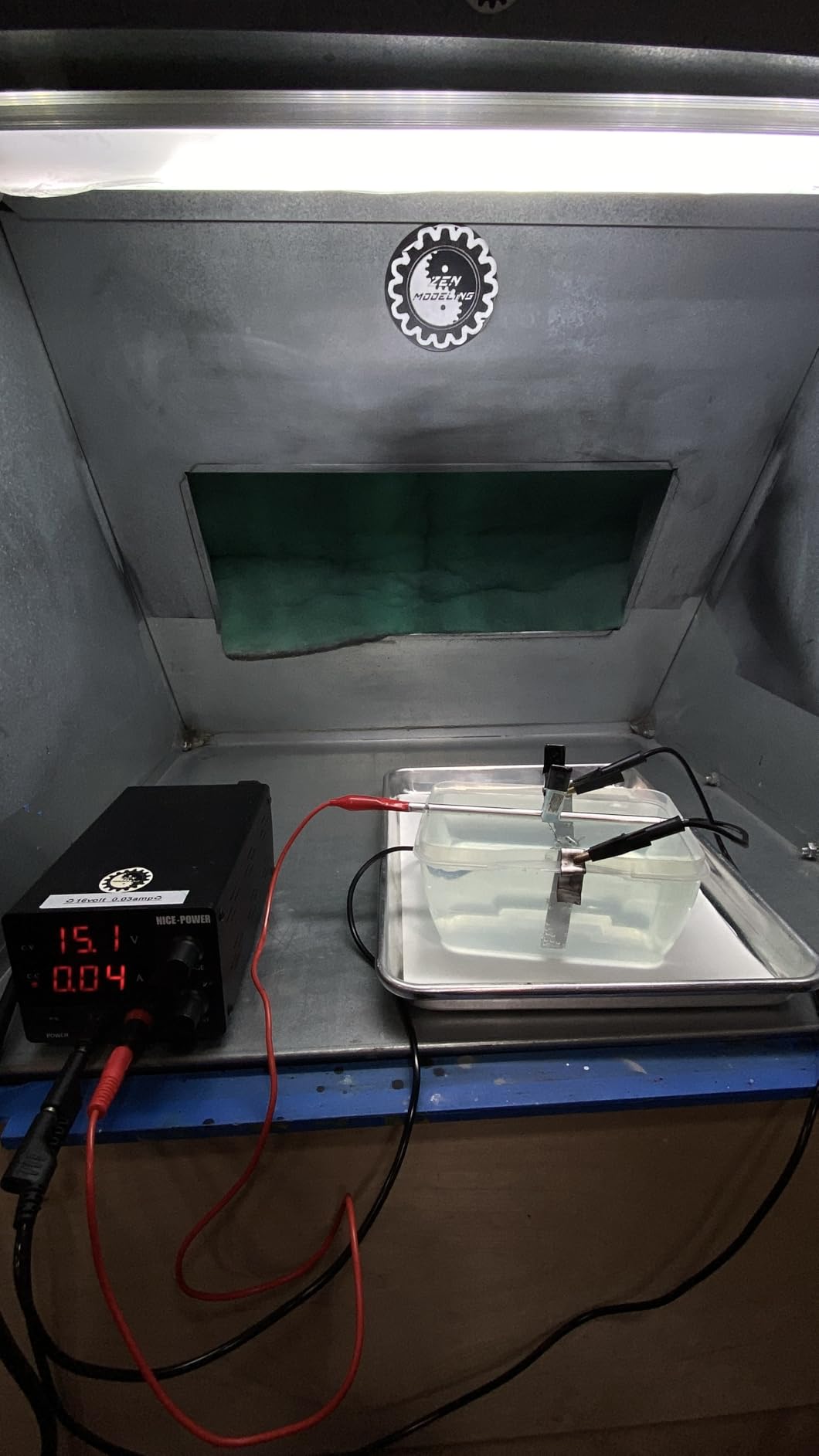
Most of the units in this list are compact. This one is a different order of small. At 1.54 pounds in a 6.5 by 4.0 by 3.2 inch box, the SPS-E305 is the smallest mains-powered unit we covered, and it is the one to buy when bench depth is the constraint rather than budget.
Output is a regulated 0-30V at 0-5A, or 150 watts. The 100-240V AC input works on both 110V and 230V mains without any switch to set, and the encoder knob works the same press-to-select-digit method as the WANPTEK above.
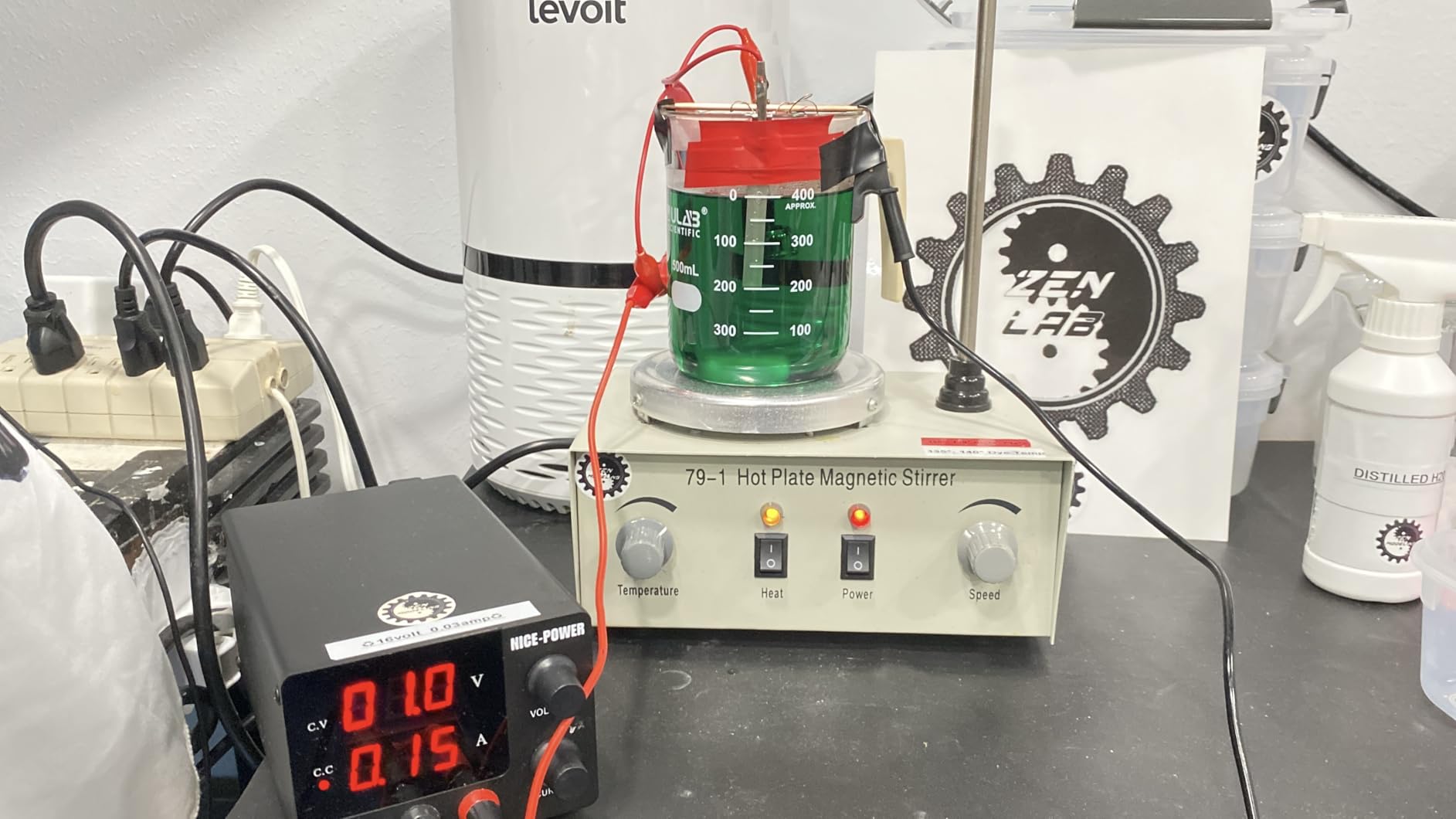
Owners report it running at its full 150W rating with efficiency around 85 percent and a case that stays cool to the touch. The FCC and CE certifications come with over-voltage, over-current, over-power, over-temperature and short-circuit protection, plus a 12-month repair policy. The 3-digit back-lit display resolves 0.1V and 0.01A.
The specific caveat that matters is stability below roughly 0.7 to 0.9V, which makes it impractical for sub-volt rail work such as 0.6V and 0.8V core supplies. There is also a display quirk: a 3-digit panel driven through a 4-digit interface, which hides a digit in some settings. A few owners also report builds that do not reach their rated voltage or current, so verify the output against a multimeter on arrival.
Who the NICE-POWER SPS-E305 suits
It suits anyone working in a small space, a dorm room, or a portable kit bag where a 12 pound benchtop supply is simply not an option. The universal input also makes it the safe pick for anyone who moves between countries.
At 150W it is well matched to microcontroller work, sensor circuits, LED testing and small DC-DC converter testing, which is most of what a beginner bench does.
Where it falls short
Do not use it for anything that runs below about 1V, and do not plan on it for motors or high-current loads. The continuously running fan is noticeably loud under load, which is a real problem in a quiet listening or audio testing space.
The always-on fan and the sub-volt instability together make this a poor pairing with low-level analog work, where you want both silence and a clean ground reference.
6. FNIRSI DPS-150 Review: USB-Powered and Genuinely Portable
FNIRSI DPS-150 DC Power Supply Variable 30V 5A, 4-Digit IPS Flip Display
- Exceptionally small and light at 6.24 oz
- Colour IPS screen with flip and curve display
- PC
- QC and DC input modes free it from mains power
- Memory presets and PC-programmable output for repeatable testing
- Accurate readings for its size
- Maximum voltage and wattage are capped by the input source
- Banana plug spacing is non-standard so common multimeter adapters do not fit
- No power adapter included so a USB-C source must be sourced separately
- Some builds show degraded output after a couple of months
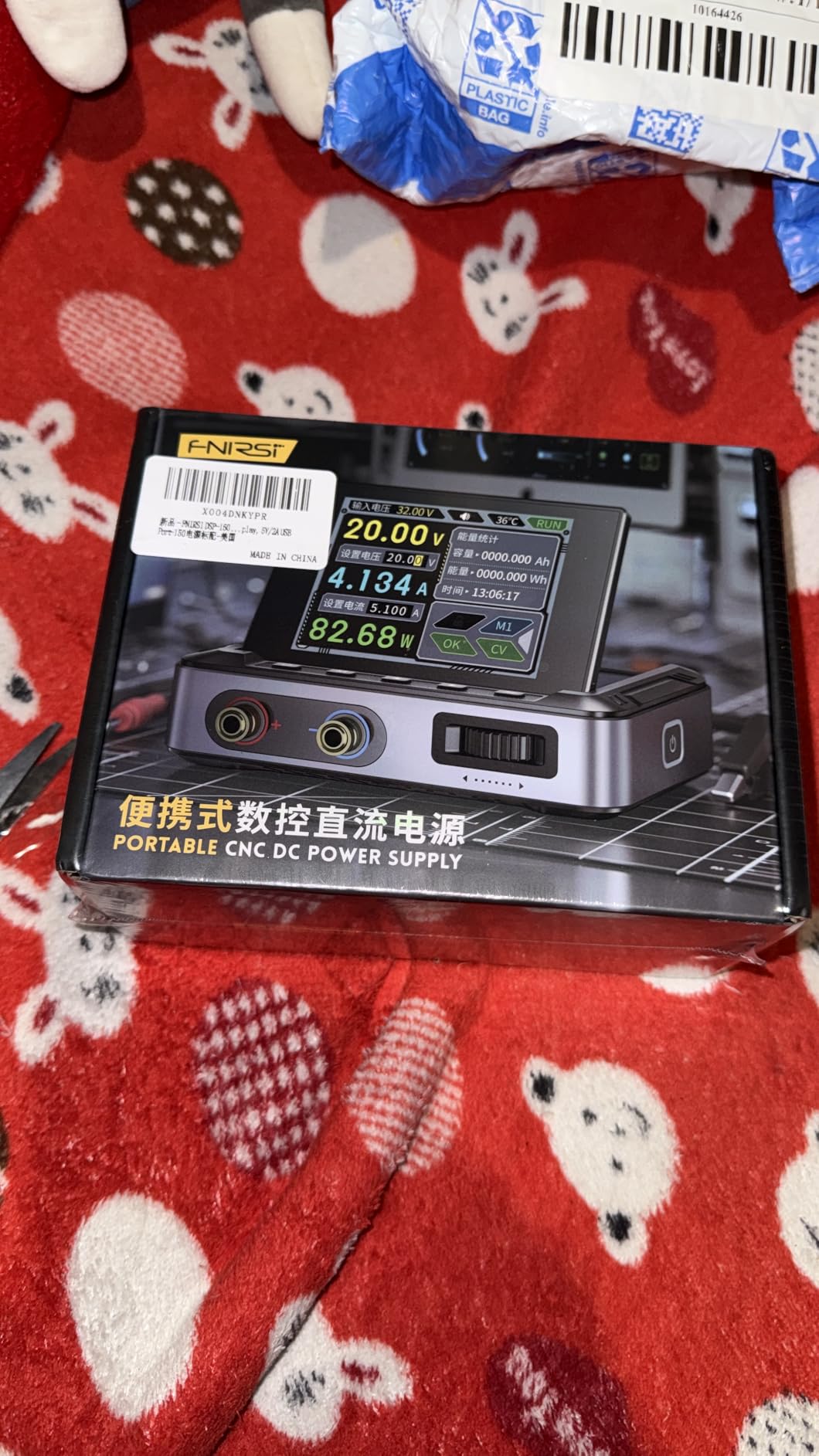
This is the only supply in the list that is not really a bench supply at all, and that is exactly why it earns a place. The FNIRSI DPS-150 weighs 6.24 ounces and runs from a USB-C PD or QC charger, a power bank, or a DC input. For van, field and off-grid work, that answers a question none of the mains-only units here can.
On paper the specification is 0-30V at 0-5A, 150 watts, with a stated ripple figure under 20mV. The reality is that your achievable output is bounded by whatever you feed it. A typical laptop charger caps you at about 20V, and the wattage ceiling moves with it. Most owners treat it as a portable go-anywhere unit rather than a primary bench supply, and that framing is correct.
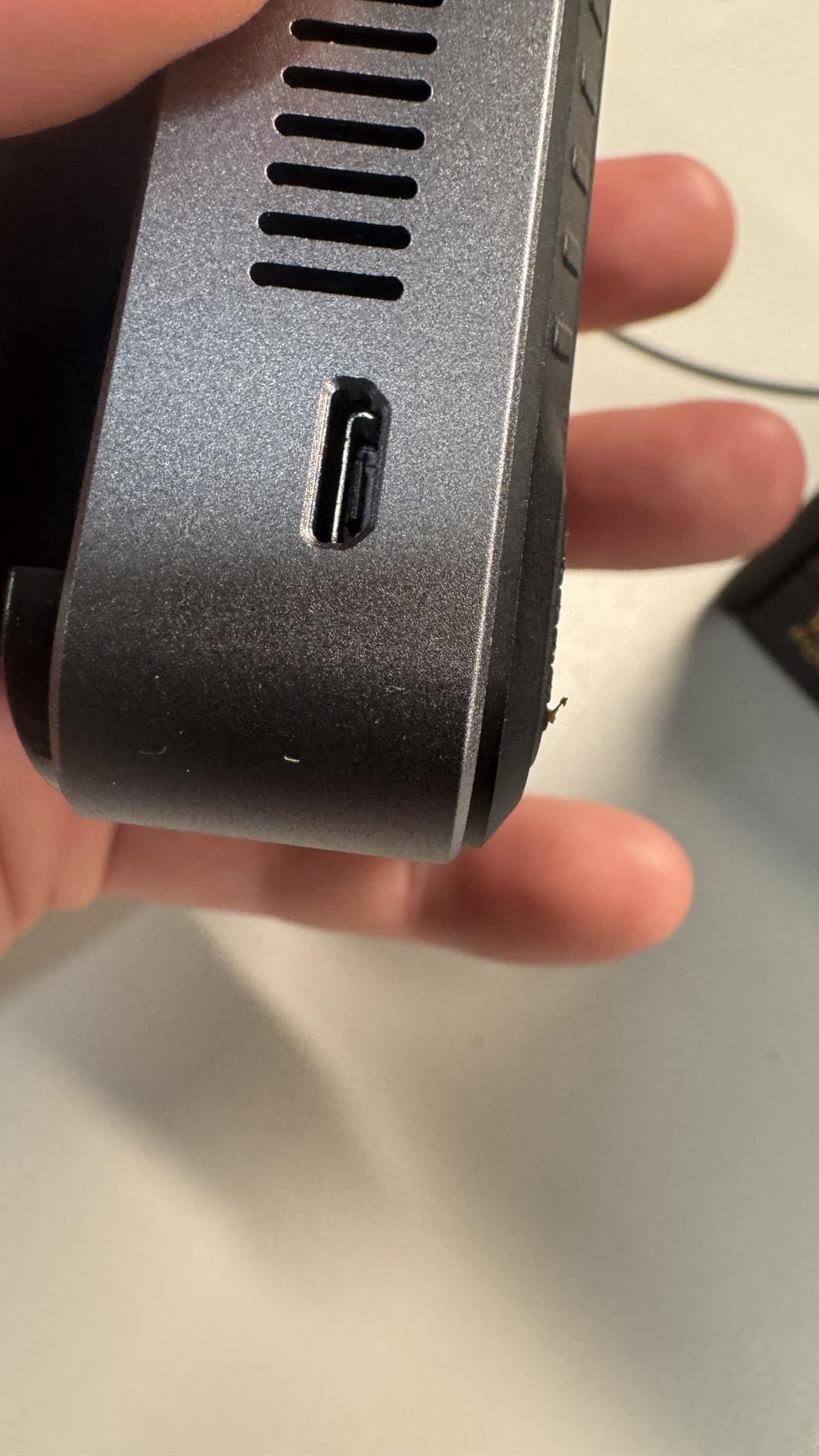
The 2.8-inch IPS colour screen is unusual at this size, with a 90-degree flip function, numeric readout and curve display. It supports PC, QC and DC input modes, offers PC-programmable output, and stores six groups of preset parameters. Eight built-in protections cover over-voltage, over-current, short circuit and overheat. Connectors include 4mm banana heads, U-shaped terminals and fine copper wires.
Two practical notes. No power adapter is included, so you need to source a suitable USB-C supply separately, and the banana plug spacing is non-standard, which means the banana-to-multimeter adapters you already own may not fit. Some units have reported degraded output after a couple of months, so check it with a meter before trusting a reading.
Who the FNIRSI DPS-150 suits
It is built for the person who repairs electronics away from a desk, works in a vehicle, or wants a second small supply for field debugging without carrying mains equipment. The colour screen and curve display also make it pleasant for quick LED and diode checks.
Paired with a decent USB-C power supply, it covers microcontroller-level work well and takes up almost no room at all.
Where it falls short
It cannot deliver 30V at 5A from a normal charger, and it will not deliver 30V at all from most laptop bricks. If you need high voltage and high current, this is the wrong tool entirely.
The non-standard connector spacing and the missing adapter are real friction points, and the reported long-term degradation on some builds means it should not be the only supply you own.
7. WANPTEK TPS-C 3010H Review: Presets and Protection for Repair Benches
- Physical output on/off switch eliminates arcing when changing connections
- Three memory presets make repetitive bench workflows much faster
- Key lock guards against accidental knob changes mid-test
- Quiet operation at typical working loads
- OCP cuts off on short circuit and auto-resumes
- Adjustment beeps are very loud and the power-on beep cannot be disabled
- Supplied leads are terminal clips rather than banana plugs
- Power cord is only about 3 feet long
- Rear 115V/230V selector is easy to miss on first setup
This unit is built around a specific workflow: repairing boards over and over, where the same three voltages come up all day. The three memory preset keys, marked M1, M2 and M3, store setpoints and recall them instantly, so you are not re-typing a rail for every board that comes across the bench.
It also has a physical OUTPUT on/off switch, which puts it alongside the NICE-POWER SPS-C3010 as the two units here where you can set values and connect leads without any live output present. Over-current protection cuts off during a short circuit and then auto-resumes once the fault is cleared, so you do not have to keep hitting reset.
Output is a regulated 0-30V at 0-10A, 300 watts, adjusted with high-precision encoder knobs, and displayed on a four-digit LED. A one-key lock prevents misoperation during longer test sequences, and a built-in USB port handles small device power. Owners report quiet operation at typical working loads, which is unusual for a switching supply of this rating.
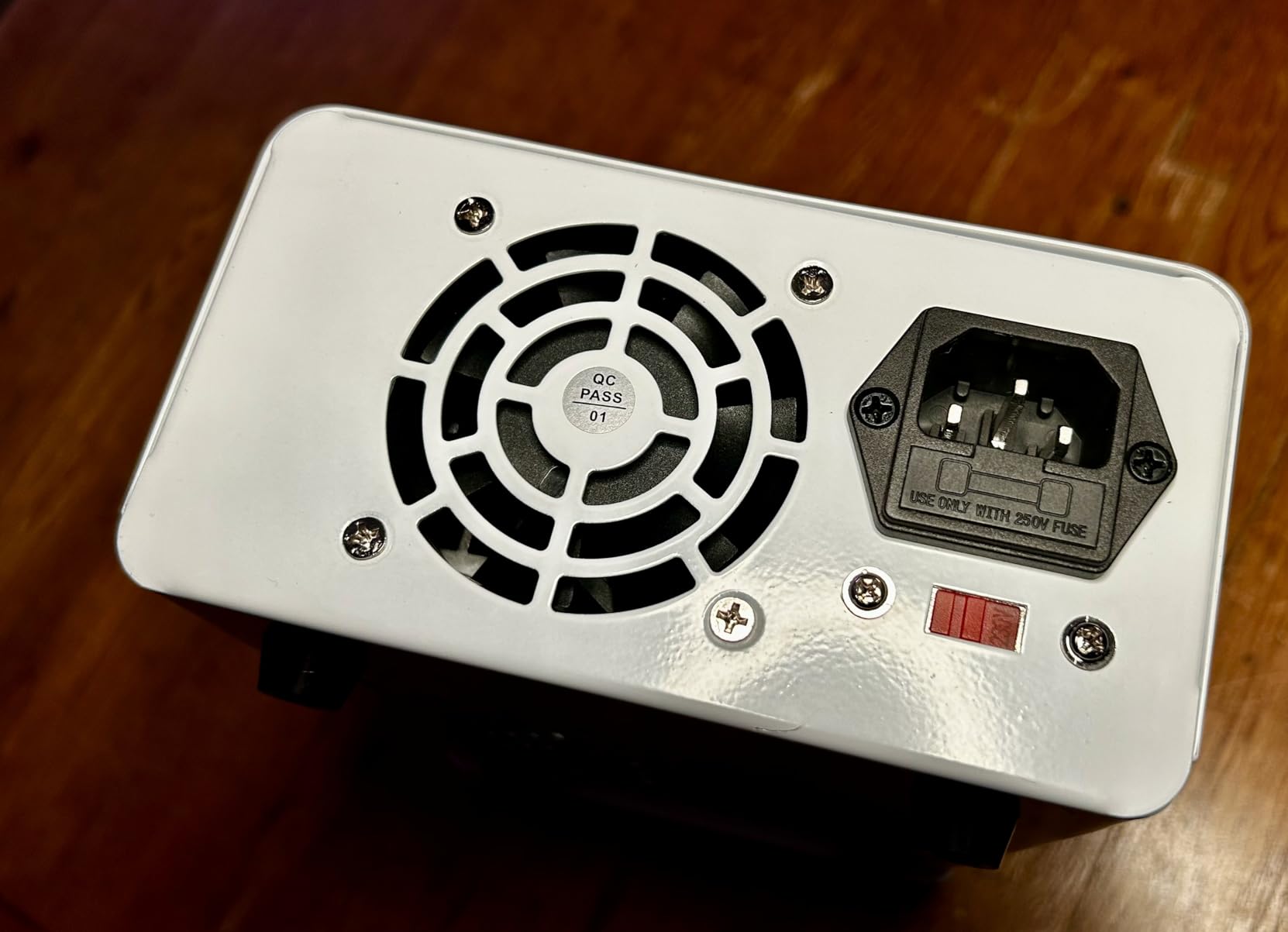
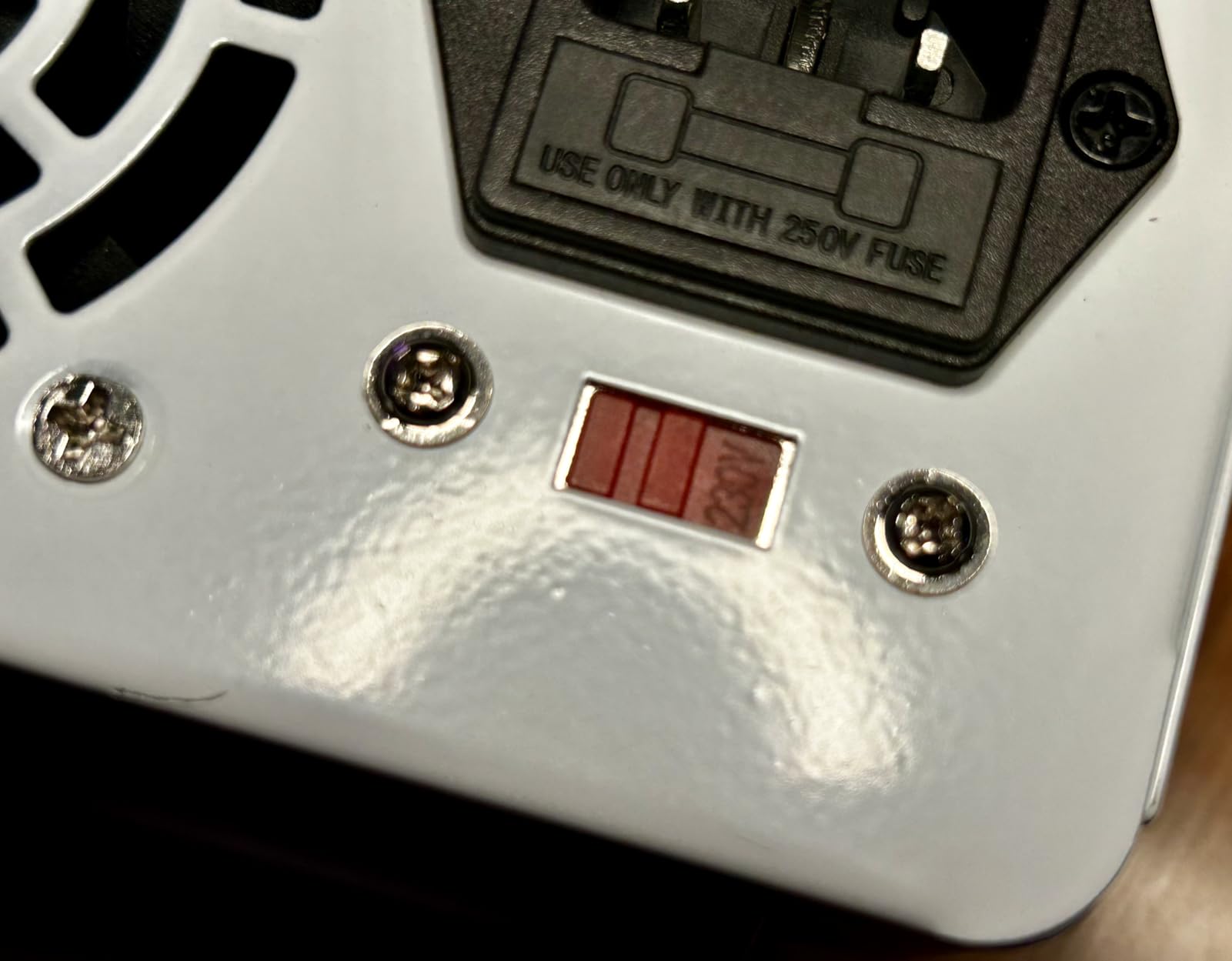
Two setup notes deserve attention. The rear 115V/230V selector must be set correctly, and several owners initially reported the unit would not hold 24V until they found it. The supplied leads are terminal clips rather than banana plugs, which is awkward if your existing leads are banana-terminated, and the power cord is only about three feet.
Who the WANPTEK TPS-C 3010H suits
It is the right pick for PCB repair, board bring-up and any repetitive work where you cycle between a few known rails dozens of times a day. The key lock matters more than it sounds when you have a scope running and a long test queued.
The 300W rating also covers LED work and small motor testing, and the auto-resuming over-current protection keeps a long session moving without manual resets.
Where it falls short
The adjustment beeps are very loud and the power-on beep cannot be disabled, which makes it unpleasant in a shared or quiet space. The rear mains selector is a genuine trap if you skip the manual, and the terminal clip leads will annoy anyone who standardised on banana plugs.
Like the rest of the switching units here, it is not the right instrument for low-noise analog measurement, and it has no isolation between channels because it has only one.
8. Siglent SPD3303X-E Review: Three Isolated Outputs and a Real Warranty
- Three fully isolated and independently controlled outputs
- Series and parallel modes expand usable voltage or current
- Built-in timing output and trending graphs aid automated testing
- Linear design from an established instrumentation brand
- 3-year warranty against 1 year on budget units
- Heaviest unit in the group at 17.6 lb with a 16 x 14 x 11 inch footprint
- Total output of 220W is modest for the size
- Per-channel current rating of 3A is low for motor and heater work
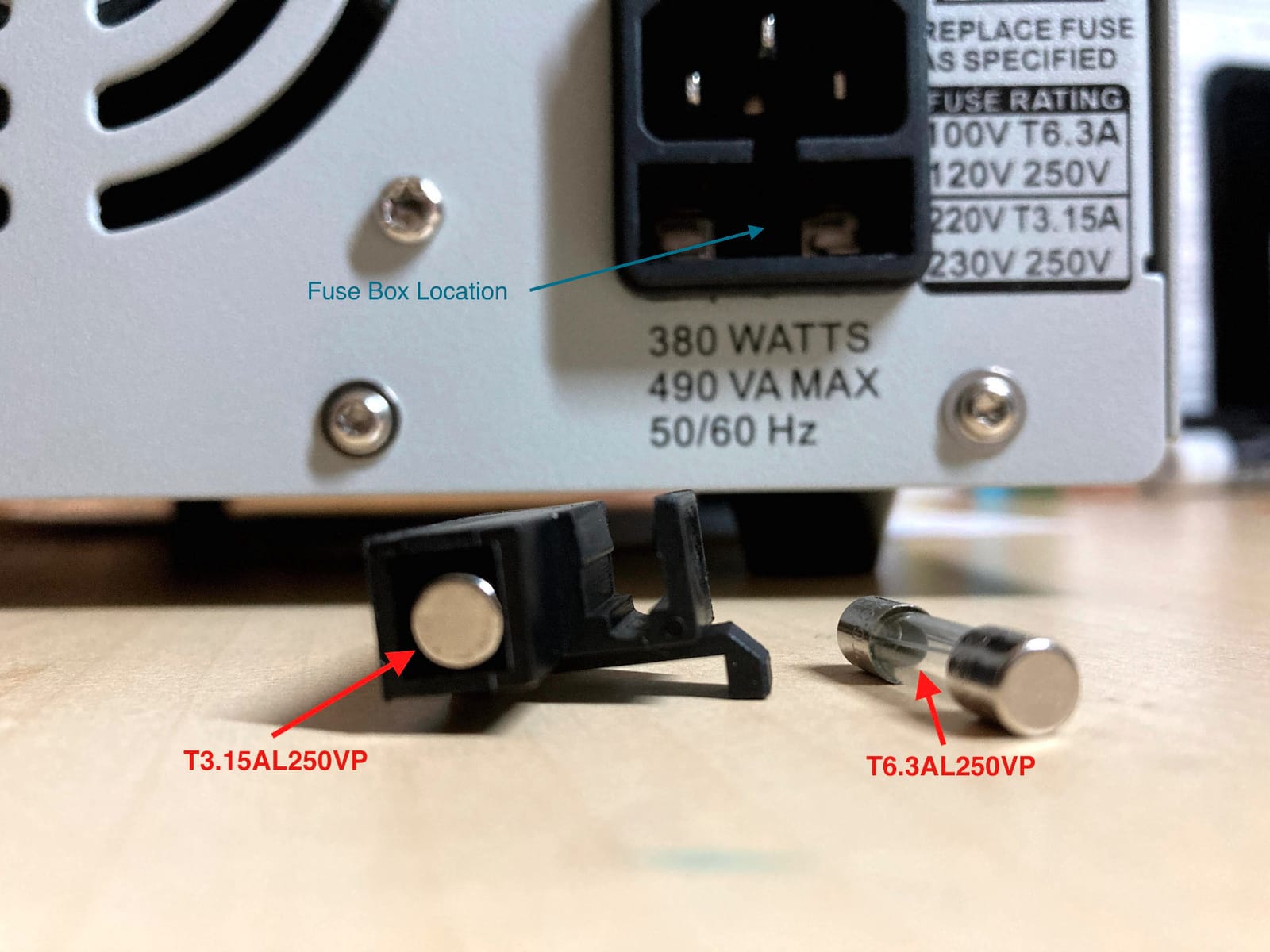
This is the only supply here you can build a genuinely multi-rail circuit on by itself. The SPD3303X-E has three independent, controlled and isolated outputs: two channels at 32V and 3.2A, plus one channel covering 2.5V, 3.3V and 5V at 3.2A. Isolation means the grounds are not tied together, so you can generate a negative rail or run two circuits at different potentials without a second supply or a transformer.
Output modes include independent, series and parallel. In series you combine channels for higher voltage, in parallel you combine them for higher current, which is exactly the flexibility you need when a project does not fit one channel.
A timing output function and trending graphs support automated and repetitive testing, which matters if you are running a sequence rather than a single measurement. The design is linear, input is 100-230V AC, and air cooling keeps it manageable. The 3-year warranty is the longest in this group and is the real argument for the price, because budget units typically carry one year or none.
The compromise is physical. At 17.6 pounds and 16 by 14 by 11 inches, it dominates any desk, and 220W of total output is modest for something this size. A per-channel current rating of 3A also rules it out for motor and heater work.
Who the Siglent SPD3303X-E suits
It suits anyone working on op-amp circuits that need dual supplies, negative rail generation, or 3.3V and 5V logic alongside a higher rail for peripherals. Photovoltaic and small battery-circuit testing also benefit from true isolation.
It is also the supply to buy if you intend to keep building for years. The warranty length and the linear topology both point at a unit designed to sit on a bench for a decade rather than a season.
Where it falls short
Do not buy it for high-current work. Three amps per channel will not run motors, hotend heaters or large LED arrays, and the total 220W across three channels is not a lot of power for the desk space it consumes.
It is also the largest unit here by a wide margin, and it delivers less raw power for all that extra bench space. Buy it for channels and isolation, not for watts.
9. KORAD KA3005D Review: Precision Linear Output With Memory
KORAD KA3005D – Precision Variable Adjustable 30V, 5A DC Linear Power Supply Digital Regulated Lab Grade…
- Linear topology gives extremely clean low-noise output
- Display accuracy verified against a Keysight DMM by owners
- Output on/off button allows setting values with output disabled
- Four memory recall buttons speed up repetitive set-ups
- Holds set voltage and current without drifting under load
- A small voltage spike can appear on the output at power-on
- Some fan noise at higher loads
- One report of incomplete accessories and packaging
- 10 lb body is heavy compared with modern switching units
The KORAD KA3005D is the other linear unit in this group, and it is the better-specified of the two. Output is a precision 0-30V at 0-5A, 150 watts, with a four-digit back-lit LED display resolving to 0.001V and 0.001A. Compare that with the 0.1V and 0.01A of the Tekpower above and the difference is immediately visible on the readout.
The rapid adjustment knob is encoder-controlled, with coarse and fine modes and a button to select between voltage and current. Four memory recall buttons store setpoints, and there is a load on/off button so you can set values with the output disabled, plus a lock button to stop accidental setting changes mid-test.
Owners report verifying the display accuracy against a Keysight digital multimeter and finding it holds, and long-term users describe units running continuously for years with no drift while repeatedly preferring the output cleanliness over switch-mode alternatives. The input is switchable between 110V and 220V for worldwide use, and protection covers thermal, voltage and current overload, and short circuit. A set of 5A test leads is included in the box.
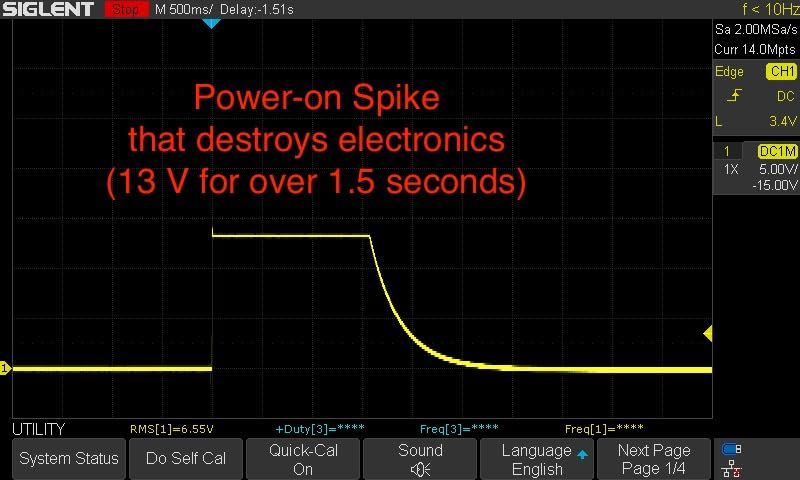
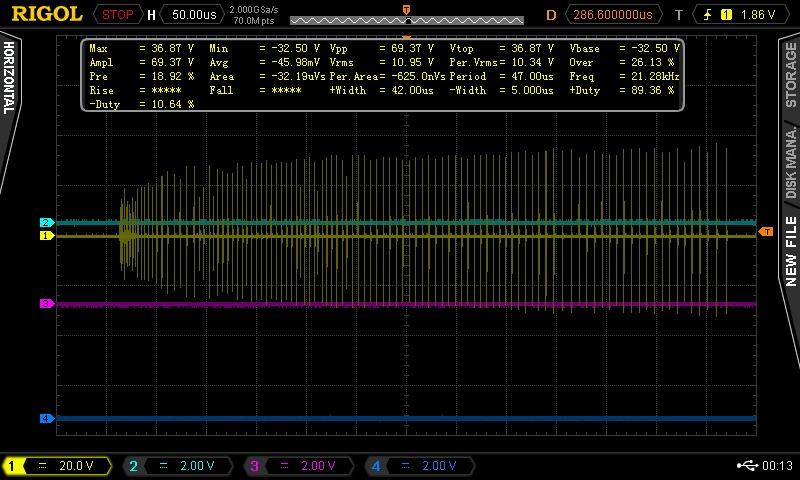
One caveat deserves real attention: a small voltage spike can appear on the output at power-on before you use the output button. If you are powering something that dislikes a transient, set the values first, then use the output button rather than relying on power-on sequencing.
Who the KORAD KA3005D suits
This is the one to buy for analog, reference and measurement work where a clean ground reference and a readout you can trust matter more than raw current. Audio preamp building, sensor conditioning and low-level amplifier experiments all fall here.
The 0.001V resolution also makes it the best choice in this list for setting precise reference rails, and the memory buttons help when you move between a few known voltages all day.
Where it falls short
Five amps is the ceiling, so it will not run motors, heaters or high-current LED work. At 10 pounds in a 13 by 10 by 8 inch body it is also a large object for a modern desk.
There is a single output only, so dual-rail circuits still need a second supply or the Siglent. And the power-on spike means the output button is not optional; it is the normal way you should connect a load.
10. HYELEC HY3005S Review: The Highest Rated Unit in the Set
- Highest average rating in the group at 4.7 stars with 85 percent five-star
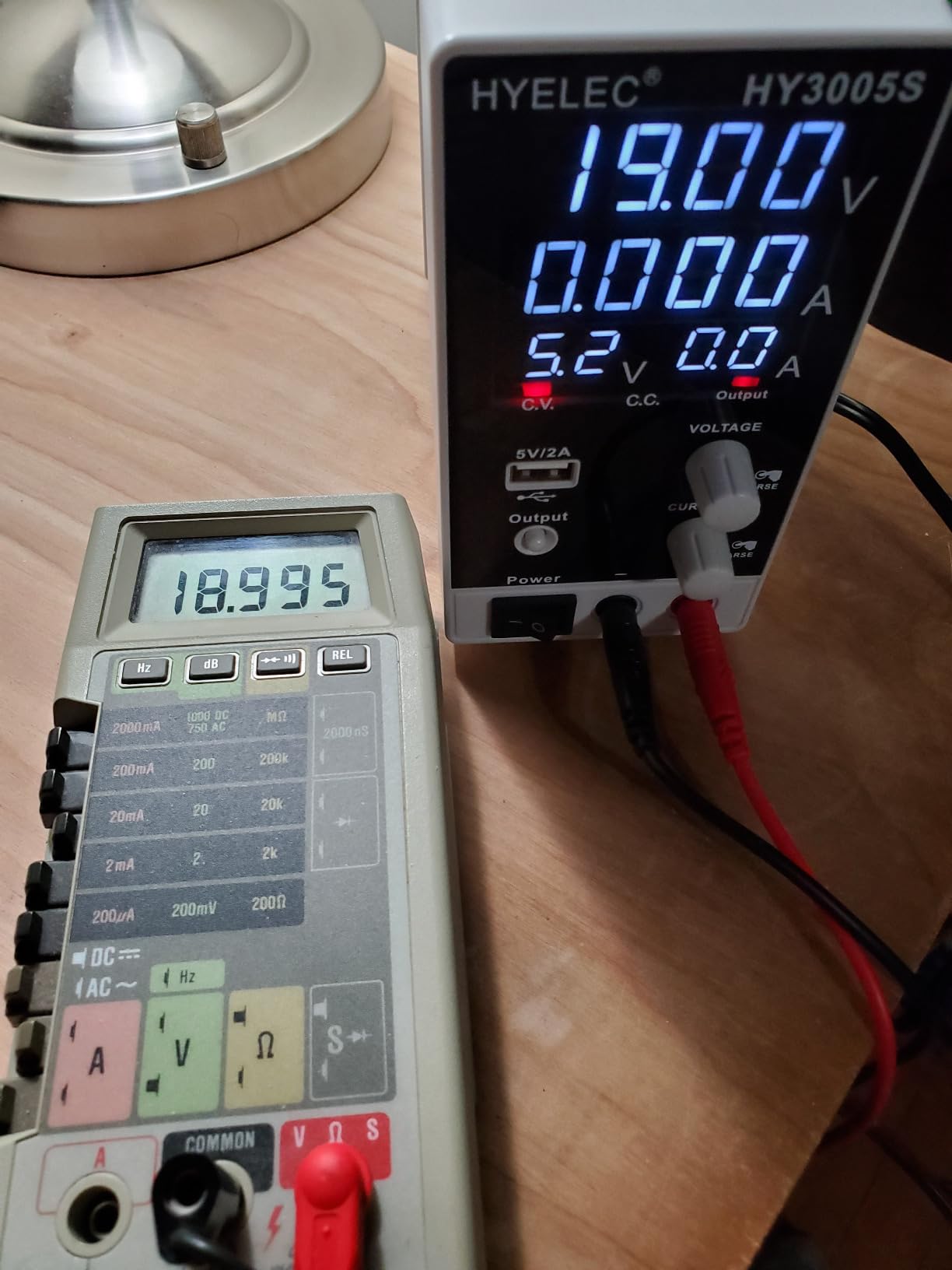
- An owner measured 19.995V against a Fluke with the display showing 20.00V
- Independent OUTPUT button is rare at this price and prevents load damage
- Digital encoder control avoids analog potentiometer drift
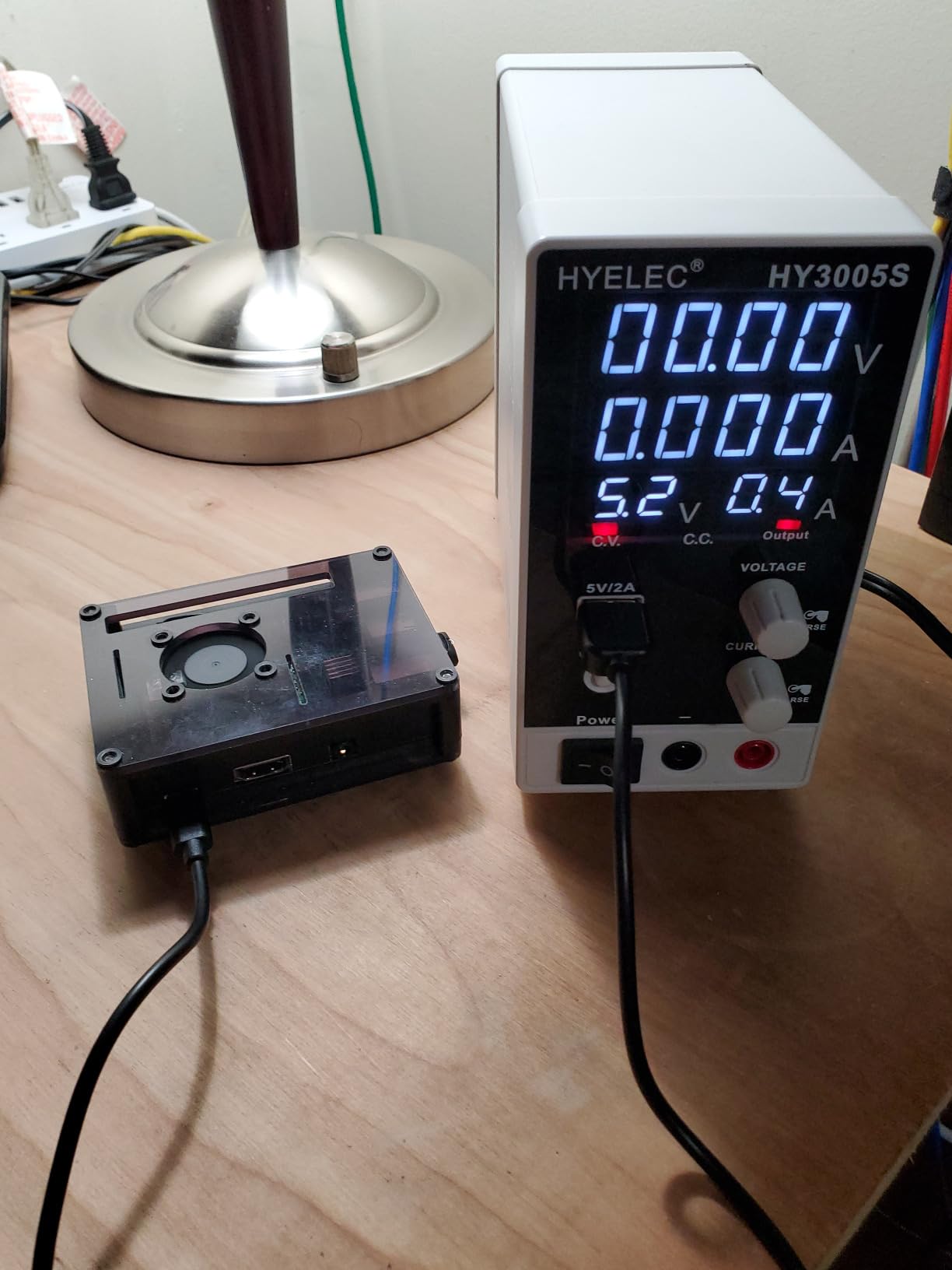
- USB 5V 2A output measured driving a Raspberry Pi 3B+
- 110V AC input only
- Very light chassis so it shifts when pressing the front buttons
- Later production batches use binding posts that no longer accept banana plugs
The HYELEC HY3005S carries a 4.7 rating across 181 reviews, the highest average in the group, with 85 percent five-star ratings. Fewer reviews than the leaders, but the accuracy evidence is specific: an owner measured 19.995V against a Fluke while the display read 20.00V, which is the kind of independent check that spec sheets never provide.
The adjustment is via a single encoder-style coded potentiometer serving as both coarse and fine control, so the knob does not drift the way analog pots do. The four-digit LED display resolves 0.01V and 0.001A with values that owners report as stable rather than jumping around.
An independent OUTPUT button lets you set voltage and current with no live output present, which is genuinely unusual at this level, alongside an anti-shock output design. The 5V 2A USB interface was measured at 5.2V and 0.4A while driving a Raspberry Pi 3B+, so it is a real output rather than a decoration. A temperature-controlled fan supports sustained full-load use, and short-circuit, over-temperature and overload protection is included.
Two limitations. The input is 110V AC only, so it is not for 230V regions. The chassis is very light at about 1.65 pounds, which means it can shift on the bench when you press the front buttons. Later production batches also replaced banana jacks with 5-way binding posts, so a batch you receive may not accept the banana leads you already own.
Who the HYELEC HY3005S suits
It is a good default for a first bench in a 110V region, particularly if you want an output enable switch and a display you can trust without paying for a much larger unit. The verified accuracy makes it a good partner to a multimeter for anyone learning to trust their own measurements.
At 7.5 by 3.15 by 5.9 inches it stays out of the way, and the USB output removes one more adapter from your bag.
Where it falls short
It is a single output with 5 amps, so it cannot serve dual-rail or high-current work, and the 110V-only input limits where you can use it. Switching topology also means it is the wrong choice for low-noise analog measurement.
If you move between countries or need isolation, look at a universal-input design such as the NICE-POWER SPS-E305, or step up to the Siglent for three channels.
How to Choose a Bench Power Supply
Most buyers get the size question right and the topology question wrong. Start here, then work down the list.
How much voltage and current do you actually need?
Thirty volts and five amps covers the majority of hobbyist work, which is why most of the list sits in that class. Most microcontrollers, sensors and logic circuits run from 3.3V or 5V, LED work sits between 5V and 24V, and small motors and 3D printer hotends push you toward the 10A end. Over-buying current costs you nothing at the bench; over-buying voltage costs you money, because linear designs scale their price with the maximum output.
Start by listing every project you currently have or plan within a year, then take the highest voltage and the highest current any of them needs. If the answer comes out above 30V, you are looking at a different class of supply entirely.
Linear or switching: the decision nobody explains
Choose linear if you need a quiet, low-noise output for audio, op-amp, JFET or low-level measurement work, and accept that you will pay more, accept more heat, and accept a physically larger unit. Choose switching if you are powering digital circuits, motors, LEDs, or anything where efficiency, price and size matter more than ripple.
A linear supply passes the incoming DC through a series regulator that simply drops the excess voltage across a heatsink. Most of the energy you pay for ends up as heat rather than reaching the circuit, which is why it is quiet, and also why it is heavy, hot and expensive. A switching supply chops the input at a high frequency and filters it, which is efficient, small and cheap, but leaves residual ripple on the output. For a microcontroller or a relay board, ripple of a few tens of millivolts is invisible. For a low-level audio preamp or a precision reference, it is not.
Half the listings in this category carry one of those two words in the product name and few explain the tradeoff. The practical rule: if your circuit has an op-amp in it, pay for linear. If it has a microcontroller in it, do not.
What ripple and noise figures mean
Ripple is the leftover AC riding on your DC output, expressed in millivolts. A figure under 10mV is comfortable for analog and audio work, 20mV is fine for most mixed benches, and anything above about 50mV will show up in sensitive measurements. Switching units in this list do not publish ripple figures, which is worth noting on its own. The FNIRSI DPS-150 states under 20mV, and it achieves that from a small battery-backed source rather than from a large heatsink.
To measure it properly you need an oscilloscope, and a cheap 20MHz scope will not show the transients that matter. If you do not own a scope, treat published figures as directional and verify your supply’s output with a multimeter for accuracy instead.
Why current limiting, OVP and OCP matter more than features
Current limiting is the feature that makes a bench supply safe to experiment on. Set the limit below what your circuit can safely draw and the supply drops into constant current mode instead of pushing its full rating into a mistake. Every unit in this list either advertises both modes or describes constant-current behaviour explicitly, so treat dual-mode operation as the minimum rather than a bonus.
Over-current protection is a related but different feature: it shuts the output down when a fault occurs. OCP with auto-resume, as on the WANPTEK TPS-C 3010H, keeps a long session moving. Over-voltage protection trips when the output exceeds a threshold you set, which protects a sensitive load from a mis-set rail. A physical output enable switch is the third safety feature worth paying attention to, because it lets you set values with the output dead instead of arcing a live terminal every time you rewire.
How to read a spec sheet without guessing
Ignore the marketing lines and read five numbers in this order. First, maximum output voltage, which tells you the ceiling. Second, maximum output current, which tells you what the supply can sustain continuously rather than in a burst. Third, current limit resolution, which tells you how precisely you can set the protection threshold. Fourth, display resolution, because 0.01V is meaningfully better than 0.1V when setting reference rails. Fifth, input voltage range, because 110V-only units will not work in a 230V region and some units need a rear selector switch set correctly before they will hold their rated voltage.
Then check three things the spec sheet will not tell you. Does it have a physical output enable switch? Is the fan continuous or sensor-controlled? And how heavy is it? A supply you have to drag onto a different bench every time is a supply that stays in a cupboard.
What a second-hand or salvaged ATX supply can and cannot do
A salvaged computer power supply wired up with test leads is a legitimate first bench supply and costs nothing. What it cannot do is regulate continuously below its rail voltage, which means you get fixed 3.3V, 5V and 12V taps rather than a dial. That is fine for a project with one rail and useless for anything needing a sweep, so treat it as a learning tool rather than a purchase decision.
The full list of bench equipment worth buying first is a bigger topic, but the power supply roundup on our site covers the adjacent category of specialised fixed supplies if your work is in that direction.
Bench safety basics you should not skip
Keep the supply earthed and bonded properly, and on a plastic workbench touch the earth terminal before handling any sensitive semiconductor to discharge static. Treat every capacitor as charged: switch off, discharge, and verify with a meter before you put hands near a power supply board. And be careful charging batteries from a bench supply, because a constant-voltage supply is not a battery charger and its protection circuits may behave unpredictably when a cell’s chemistry does not match.
One more note. If your work is on mains-voltage equipment, or entirely on a single fixed 3.3V rail that your board already regulates, a bench supply is not what you need. Save the money and the desk space.
Frequently Asked Questions
What is a good brand of bench power supply?
The brands that recur in first-hand owner recommendations are Keysight, Korad, Bu0026amp;K Precision, Siglent and Rigol. Within this roundup, Korad and Tekpower cover the linear tier, Siglent covers multi-channel programmable work, and the compact switching models cover general microcontroller and repair use. Match the brand to the tier you need rather than the tier you could stretch to.
What is the best adjustable power supply for bench work?
The Jesverty SPS-3010 is our overall pick: a regulated 0-30V, 0-10A switching supply with a four-digit display showing voltage, current and power together, automatic constant-voltage and constant-current crossover, and short-circuit, overload and thermal protection. It carries the largest review base in the group at 1664 ratings, and its 2.4 pound body leaves the most bench space free.
Which brand of power supply tester is the best?
A power supply tester is a different product category from a bench power supply, and this guide does not cover testers. A tester checks whether a supply is alive and within tolerance; a bench supply generates the adjustable, current-limited DC that you actually power your circuit from. If you want a bench supply, the comparison table above is the relevant starting point.
Which brand of power supply is the most reliable?
Reliability tracks build quality, protection circuitry and warranty length more than brand reputation on its own. The strongest signals in this group are the metal benchtop construction of the linear units, the multi-protection sets on the switching models, and warranty length, where the Siglent SPD3303X-E carries three years against one year on most budget units.
What is the difference between linear and switching power supplies?
A linear supply regulates by passing current through a regulator at high current, which leaves a very quiet output but wastes energy as heat and costs more. A switching supply chops the input at a high frequency and filters it, which is smaller, cheaper and more efficient but leaves ripple on the output. Choose linear for op-amp and audio work, switching for microcontrollers, motors and LEDs.
How much voltage and current do I need for my first bench supply?
Thirty volts and five amps covers the majority of hobbyist projects, which is why most of the list sits in that class. Go to 10 amps if you plan to run small motors, 3D printer hotends or LED arrays. Voltage above 30V is only worth paying for if you are working on genuinely higher-voltage circuits, since linear supply pricing scales with maximum output.
The Best Bench Power Supply for Your Bench
The best bench power supply for most electronics hobbyists is the Jesverty SPS-3010, because a readable 4-digit display, automatic CV/CC crossover, solid protection and a 2.4 pound footprint cover almost everything a hobbyist bench asks for, and 1664 ratings back that up.
Pick a different one only for a specific reason. For low-noise analog and audio work, choose a linear design, with the KORAD KA3005D for readout precision or the Tekpower TP3005T for simplicity. For multiple isolated rails and dual-supply op-amp circuits, the Siglent SPD3303X-E is the only unit here that does it in one box. For field and off-grid work, the FNIRSI DPS-150 runs from a USB-C charger and fits in a pocket. For a bench so small that weight and depth decide everything, the NICE-POWER SPS-E305 weighs 1.54 pounds.
Whichever you choose, buy a proper set of test leads, verify the output against a multimeter on the day it arrives, and set the current limit before you connect anything. That last habit is the real reason these tools make hobby work safer than a drawer full of wall adapters.