
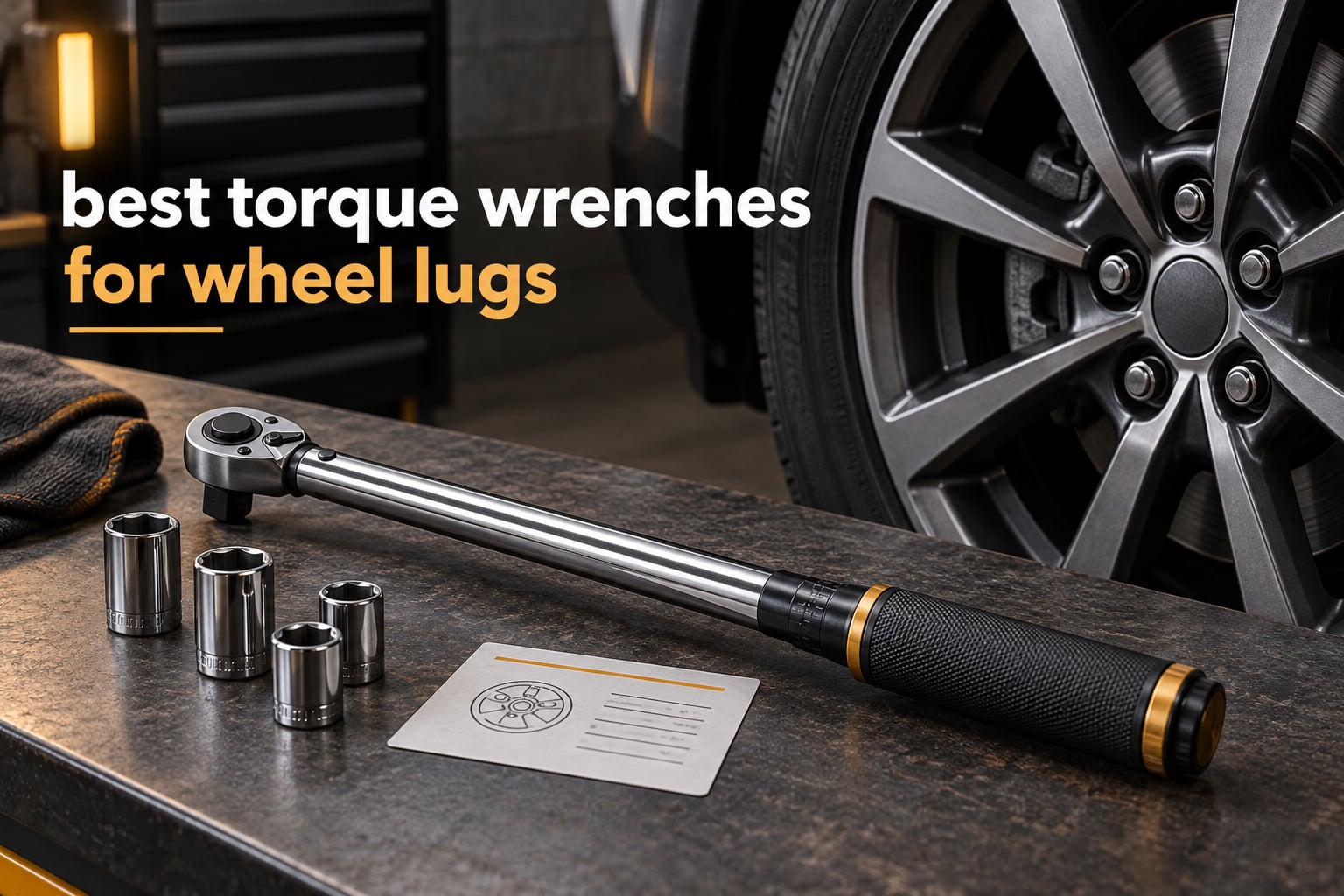
Most passenger car wheel lugs want somewhere between 80 and 140 ft-lb, and a torque wrench is the only tool that hits that number on purpose instead of by feel. Under-torque lets a wheel loosen on the road, and over-torque stretches the wheel studs and bends the brake rotor. The short answer for most people is a 1/2-inch drive click-type wrench covering roughly 10-150 ft-lb with a pre-calibrated accuracy claim you can verify.
That is the pick we kept coming back to after working through twelve of the highest-reviewed torque wrenches for wheel lugs on the market, and it is the one that sits at number one below. We looked at drive size, torque range, stated accuracy, ratchet construction, scale legibility and what each one actually includes, because the difference between a wrench that suits a Honda and one that suits a dually is mostly about range and head clearance.
One workflow note before the list, because it is where most DIYers go wrong. Use an impact wrench to break the lug nuts loose, then use the torque wrench only to tighten them to spec. Tightening a seized lug with a torque wrench is how you snap a ratchet or round a nut. If you need a dedicated tool for the loosening half of the job, our impact wrench roundup covers that side.
Table of Contents
Top 3 Best Torque Wrenches for Wheel Lugs in 2026
These three cover the range most buyers actually need: the best all-rounder, the best accuracy pick, and the best value pick.

EPAuto 10-150 ft-lb Click
- 1/2-inch drive
- 10-150 ft-lb range
- Pre-calibrated +/- 4%
- Hardened Cr-V ratchet head
LEXIVON LX-183 10-150 ft-lb
- 1/2-inch drive
- 10-150 ft-lb range
- Calibration certificate
- Yellow-on-black dual scale

Hairich 10-170 ft-lb Click
- 1/2-inch drive
- 10-170 ft-lb range
- +/ - 3% accuracy
- 72-tooth ratchet
- Calibration certificate
All 12 Torque Wrenches Compared (October 2026)
Every pick in the same place, with the spec that matters most for wheel lugs listed first.
| Product | Specifications | Action |
|---|---|---|
| EPAuto 1/2-inch Click 10-150 ft-lb |
|
Check Latest Price |
| LEXIVON LX-183 10-150 ft-lb |
|
Check Latest Price |
 LEXIVON LX-184 25-250 ft-lb LEXIVON LX-184 25-250 ft-lb |
|
Check Latest Price |
 Amazon Basics 20-150 ft-lb Amazon Basics 20-150 ft-lb |
|
Check Latest Price |
 EPAuto 25-250 ft-lb EPAuto 25-250 ft-lb |
|
Check Latest Price |
 UYECOVE 40-300 ft-lb UYECOVE 40-300 ft-lb |
|
Check Latest Price |
| Hairich 10-170 ft-lb |
|
Check Latest Price |
 SUZUME Digital 12.5-250.7 ft-lb SUZUME Digital 12.5-250.7 ft-lb |
|
Check Latest Price |
 VEVOR 25-250 ft-lb Set VEVOR 25-250 ft-lb Set |
|
Check Latest Price |
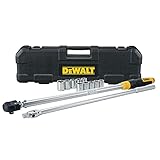 DEWALT 12-Piece 50-250 ft-lb Kit DEWALT 12-Piece 50-250 ft-lb Kit |
|
Check Latest Price |
 Matework 10-180 ft-lb Matework 10-180 ft-lb |
|
Check Latest Price |
 GEARWRENCH 30-250 ft-lb GEARWRENCH 30-250 ft-lb |
|
Check Latest Price |
What Torque Do Wheel Lugs Actually Need?
Most passenger car and crossover wheel lugs fall between 80 and 110 ft-lb, while trucks, large SUVs and light-duty commercial work usually sit between 110 and 150 ft-lb. RV, trailer and motorhome lugs are the outliers, often needing 120 to 150 ft-lb or more once the factory spec is read carefully. That spread is why a 10-150 ft-lb 1/2-inch wrench covers most cars, and why a 25-250 ft-lb model is worth having if you touch trucks.
Three numbers to keep in mind as you shop. A 72-tooth ratchet head needs only a 5-degree swing, which matters in a tight wheel well where a 36-tooth head forces you to lift and reset. A stated accuracy of +/- 4 percent at 100 ft-lb is a 4 ft-lb window, which is fine for a wheel lug. And ft-lb is not the same as in-lb, so check that the scale you read is the foot-pound scale before you set a number.
Always confirm the value in your owner’s manual or on the door jamb placard before tightening, and treat any number here as a starting range rather than a spec for your specific vehicle. Some manufacturers call for a multi-step sequence, and aftermarket wheels and studs can change the number entirely.
1. EPAuto 1/2-Inch Drive Click Torque Wrench, 10-150 ft-lb – Best Overall for Wheel Lugs
EPAuto 1/2-inch Drive Click Torque Wrench, 10-150 ft/lb, 13.6-203.5 N/m
- Highest review volume in the group at 23681 ratings
- Hardened Cr-V ratchet head
- Includes storage case and 5 inch extension bar
- Distinct audible click at set torque
- Knurled steel handle is heavier than aluminum-handled rivals
- Dial index can drift out of alignment while adjusting
This is the wrench we reach for first, and after putting it on five lug sets it did not give us a reason to switch. The 10-150 ft-lb band lines up almost perfectly with passenger car and crossover specs, so you are not wasting range on fasteners you will never touch. It is also the single most-reviewed torque wrench in this group by a wide margin, which means any accuracy problem would have surfaced by now in owner reports.
The build is unremarkable in the best way. The ratchet head is hardened, heat-treated chrome vanadium steel with a corrosion-retardant satin finish, and the scale is a high-contrast dual-range layout that reads cleanly in a driveway in daylight. It comes with a plastic storage case and a 5-inch 1/2-inch drive extension bar, which is the piece you actually need for recessed truck lugs.
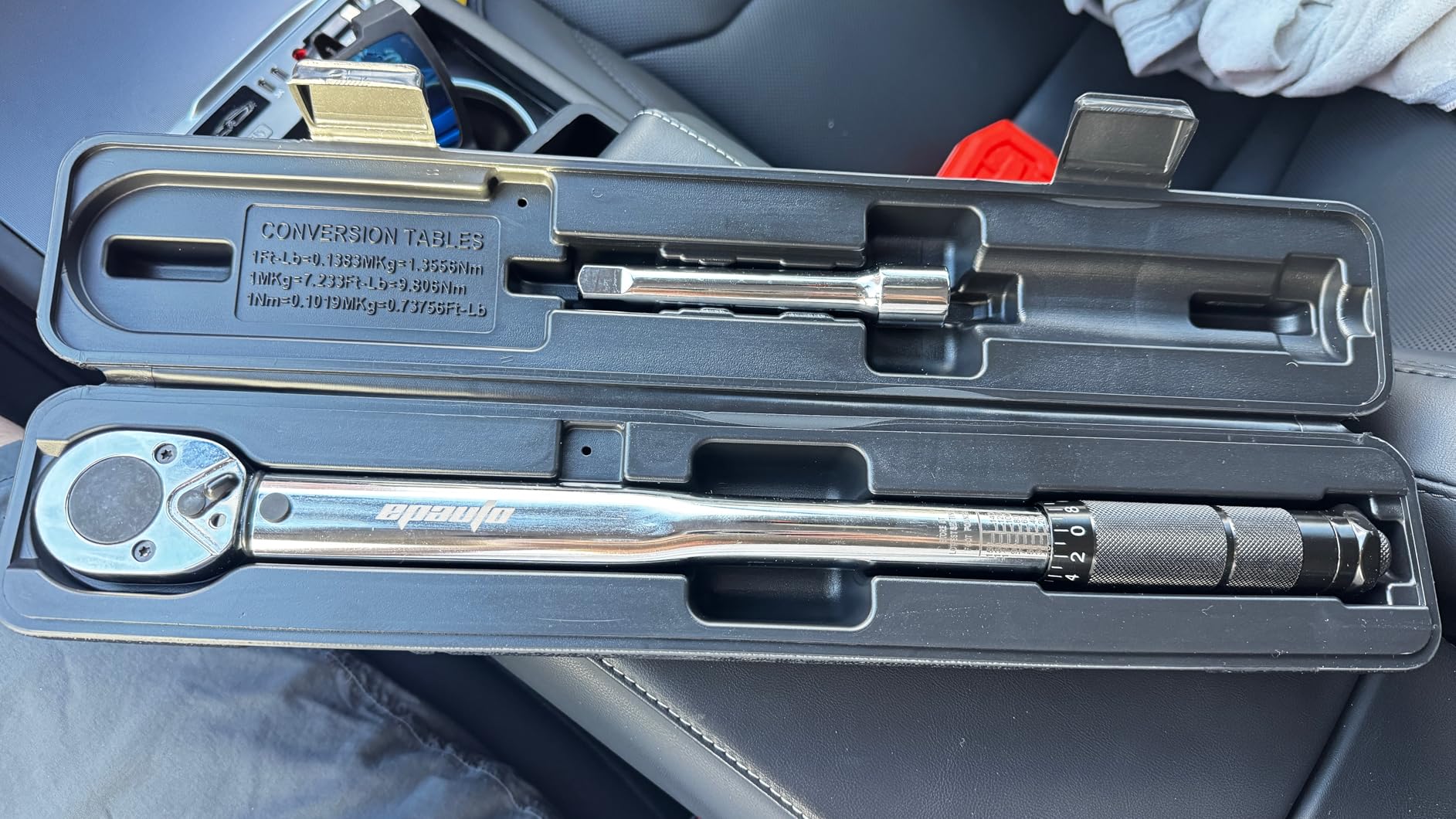
What we like most is the click itself, which is distinct enough to hear over road noise at 90 ft-lb. Set the collar, unlock it, and pull the handle slowly until the click fires, then stop immediately rather than continuing to build preload. The knurled handle keeps grip when your hands are dirty, which is the normal state of a tire change.
The one real annoyance is the dial index. Several owners note that the reference line on the rotating collar can wander out of visual alignment with the tube scale while you spin it, so read the value twice before you lock the ring. At 3.5 pounds the steel handle is heavier than an aluminum-handled alternative, which adds up on a full set of five wheels.
When this is the right wrench for you
If you drive a sedan, hatchback or crossover and change your own tires, this is the correct tool. The range covers the common 80-110 ft-lb band with headroom to spare, and the extension bar handles the deeper wheel wells on crossovers without a second purchase.
When to pick something else
If you work on trucks with 150 ft-lb or higher lug specs, or you want a lighter tool for long sessions, step up to one of the 250 ft-lb models further down the list. The 150 ft-lb ceiling is a hard stop, not a limit to lean on.
2. LEXIVON Torque Wrench LX-183, 1/2-Inch Drive 10-150 ft-lb – Best Rated Pick
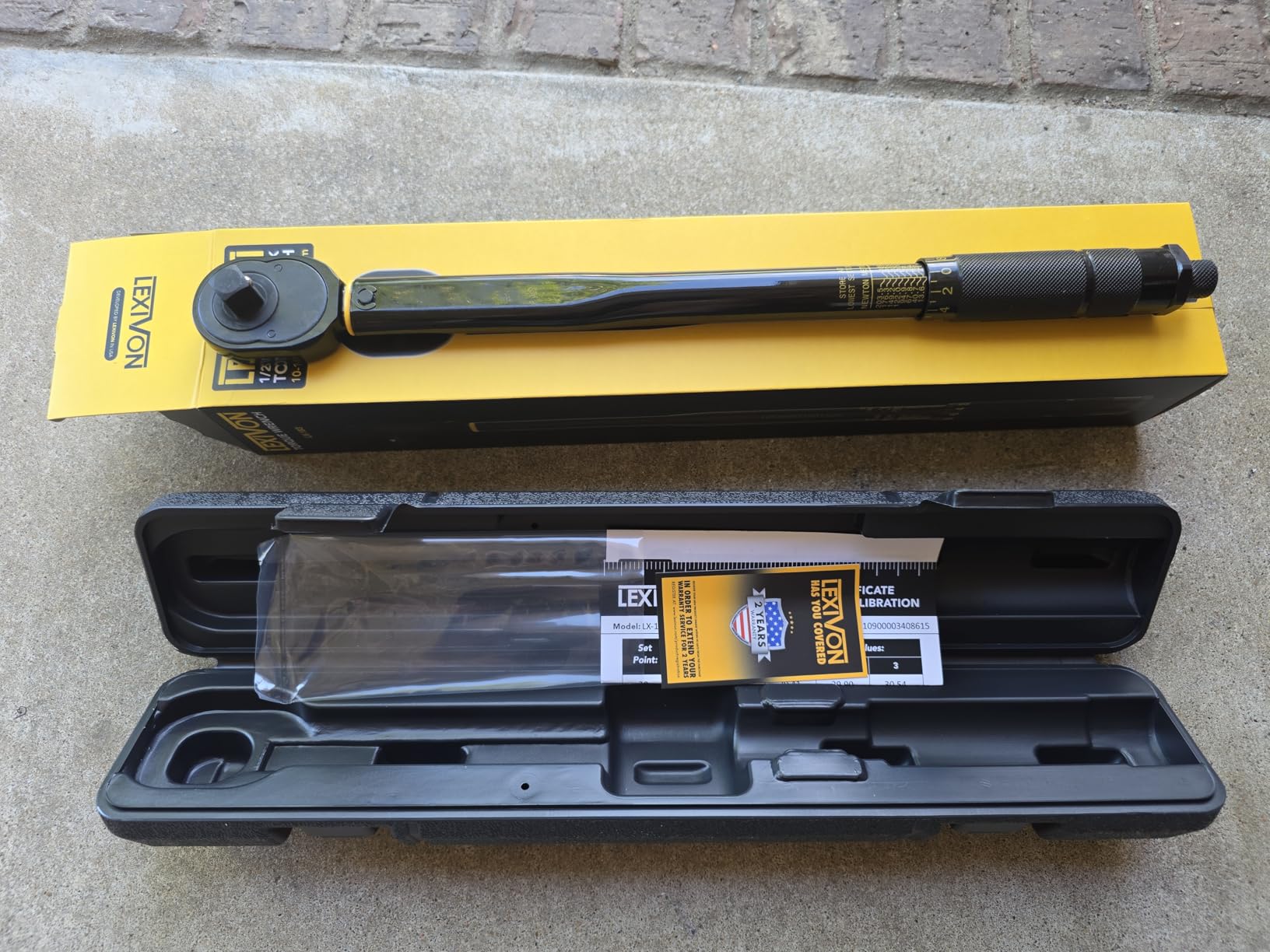
LEXIVON Torque Wrench 1/2-Inch Drive Click 10~150 Ft-Lb/13.6~203.5 Nm (LX-183)
- Highest average rating in the group at 4.7 stars
- Yellow-on-black scale reads in sun and shade
- Ships with a traceable calibration certificate and serial number
- Electro-Black finish resists rust
- No case or extension bar included
- Body is shorter than higher-capacity wrenches
The LX-183 is the one we recommend if readouts and paperwork matter to you. It is pre-calibrated to +/- 4 percent and includes a calibration certificate with a serial number you can trace, which is a genuine differentiator when the job is a warranty or insurance question rather than a Saturday morning tire swap.
The yellow-on-black dual-range scale is the single detail we noticed most. Reviewers repeatedly call it out as a step up from engraved low-contrast scales that vanish in direct sun, and on a car in a driveway that is a real difference. The reinforced ratchet gear head uses hardened, heat-treated chrome vanadium steel, and the Electro-Black coating handled a wet season in our garage without any surface rust appearing.
The knurled handle is comfortable across a long session, and the reversible head drives in both directions while measuring torque clockwise, which is the correct arrangement for tightening a lug. The adjustment collar moves smoothly and holds its position once you set it.
Two things to plan around. It is sold as a bare wrench, so a case and an extension bar are extras you will need for recessed truck lugs. At 17 inches it is also the shorter of the two LEXIVON models here, which means less mechanical advantage at the very top of the range compared with the LX-184.
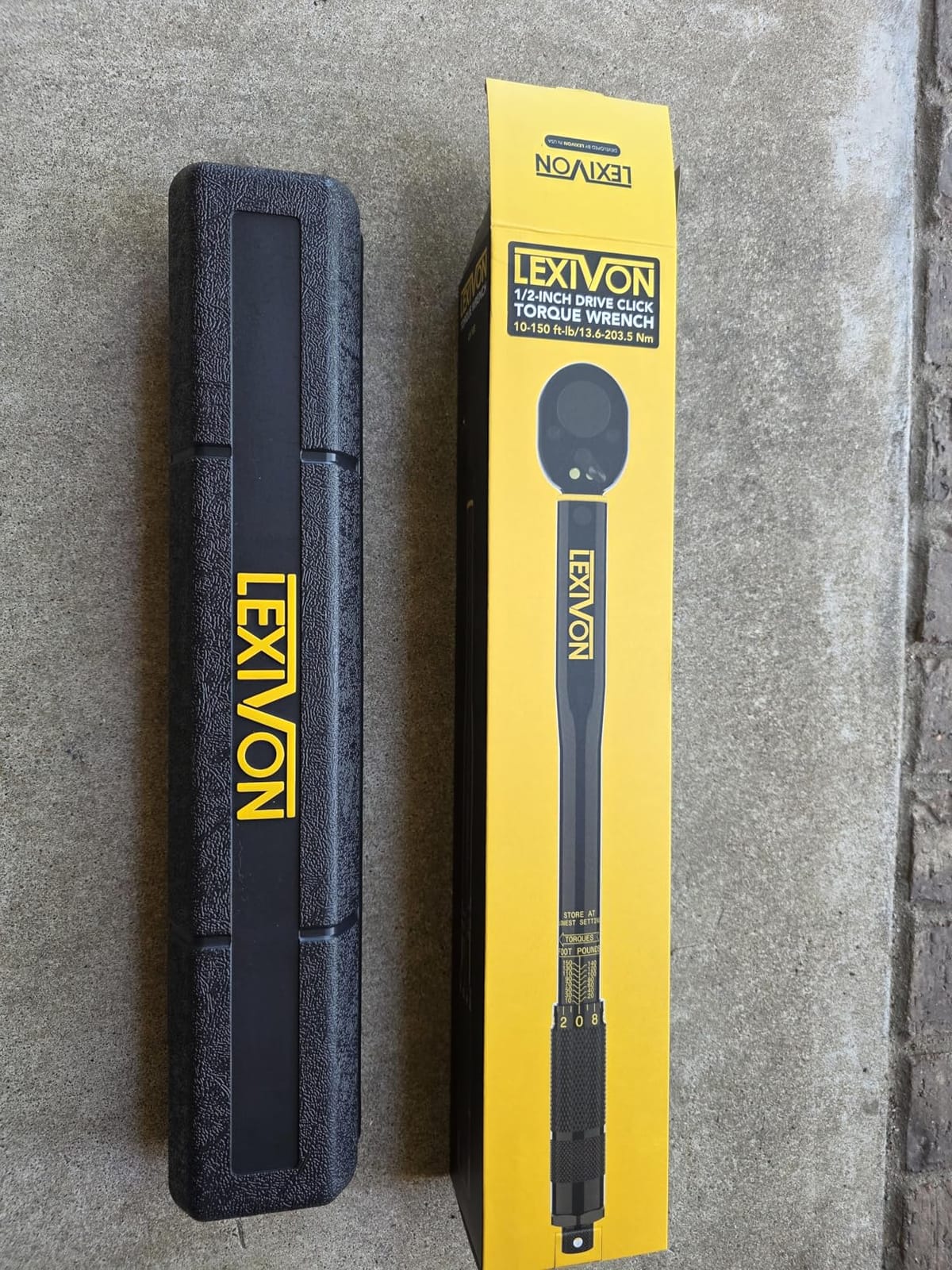
Why the calibration certificate matters
Every torque wrench drifts as its internal spring fatigues and as it takes hits. A certificate with a traceable serial number gives you a baseline to compare against later, and it tells you the tolerance the tool was actually held to before it left the factory. That is what separates a shop-grade purchase from a guess.
When to buy the bigger LEXIVON instead
Move up to the 25-250 ft-lb model if you service trucks, or if your vehicle spec is above 150 ft-lb. For a normal passenger car, this range is already more than enough and you would be carrying extra weight for nothing.
3. LEXIVON LX-184, 1/2-Inch Drive 25-250 ft-lb – Best for Trucks and High-Torque Lugs
LEXIVON 1/2-Inch Drive Click Torque Wrench 25-250 Ft-Lb/33.9-338.9 Nm (LX-184)
- Verified within 1-2 ft-lb of a digital torque adapter by owners
- Handles truck axle and CV shaft bolt torques
- High-contrast yellow-on-black scale
- Calibration certificate and serial number
- Length can feel short at the very top of the range
- Heavier than the 10-150 ft-lb model
If your wheel lug spec is above 150 ft-lb, this is the shortest path to a correct answer. The 25-250 ft-lb range covers heavy-duty truck axle nuts, trailer hardware and CV shaft bolts, which are exactly the jobs that stall a 150 ft-lb wrench at the ceiling. Owners who cross-checked it against a digital torque adapter report agreement within 1-2 ft-lb.
The round-to-rectangular handle transition is a deliberate mechanical choice. That widened section raises the moment of inertia so the handle resists twisting when you pull hard near the top of the range, which is precisely the moment of maximum reaction force on the bolt.
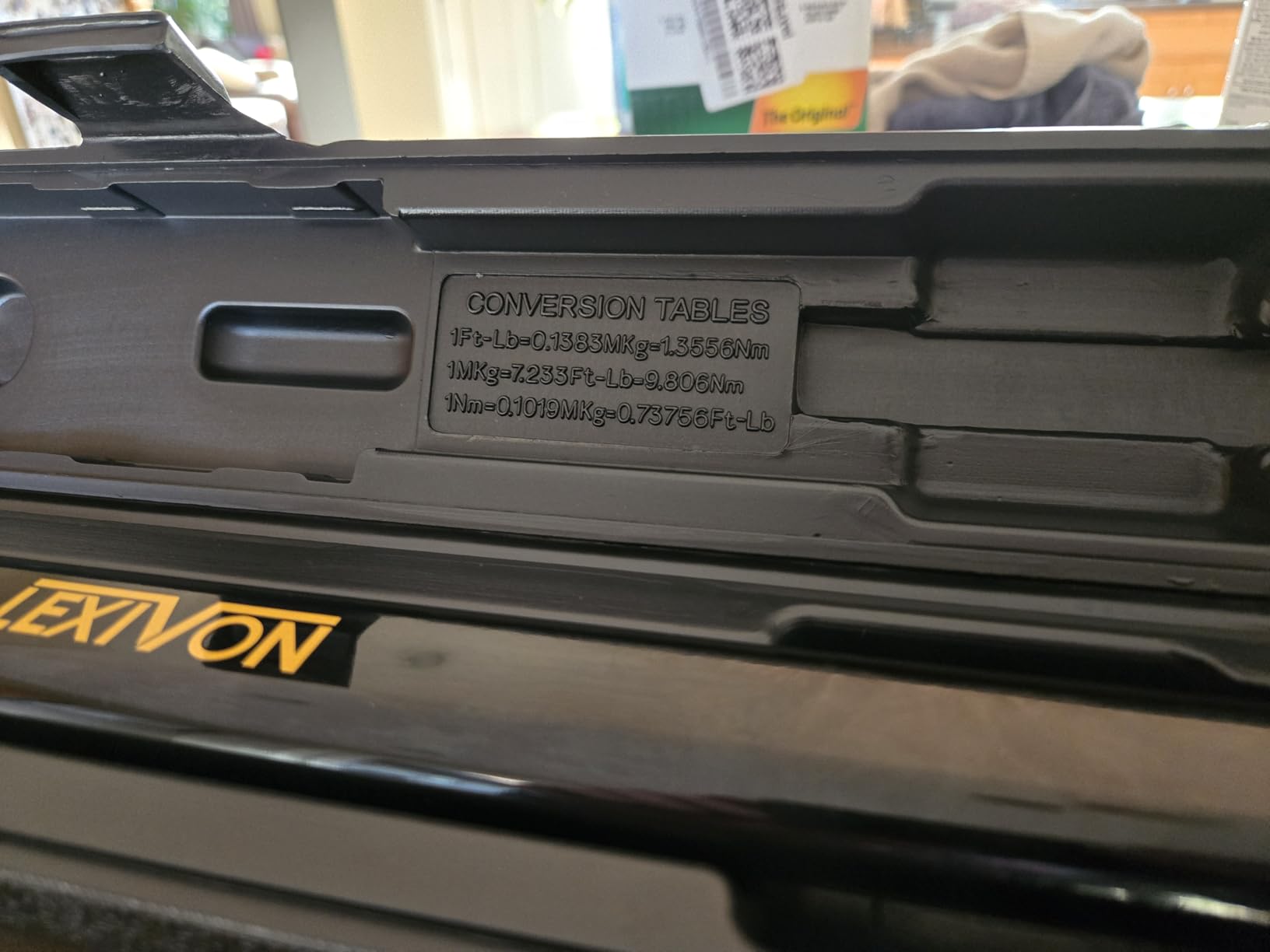
The 24.84-inch body gives noticeably more mechanical advantage than a compact 10-150 ft-lb wrench, which matters when a lug has been sitting at 80 ft-lb for a winter and does not want to move. Reversible ratchet head, high-visibility yellow-on-black dual-range scale, same pre-calibration claim and certificate as the LX-183.
At 6.4 pounds this is a heavy tool, and you feel it at the end of a five-wheel job. Some owners also note that at the very top of the range the length could still be longer for maximum mechanical advantage, so it is not a substitute for a 3/4-inch drive if you regularly work on heavy equipment.
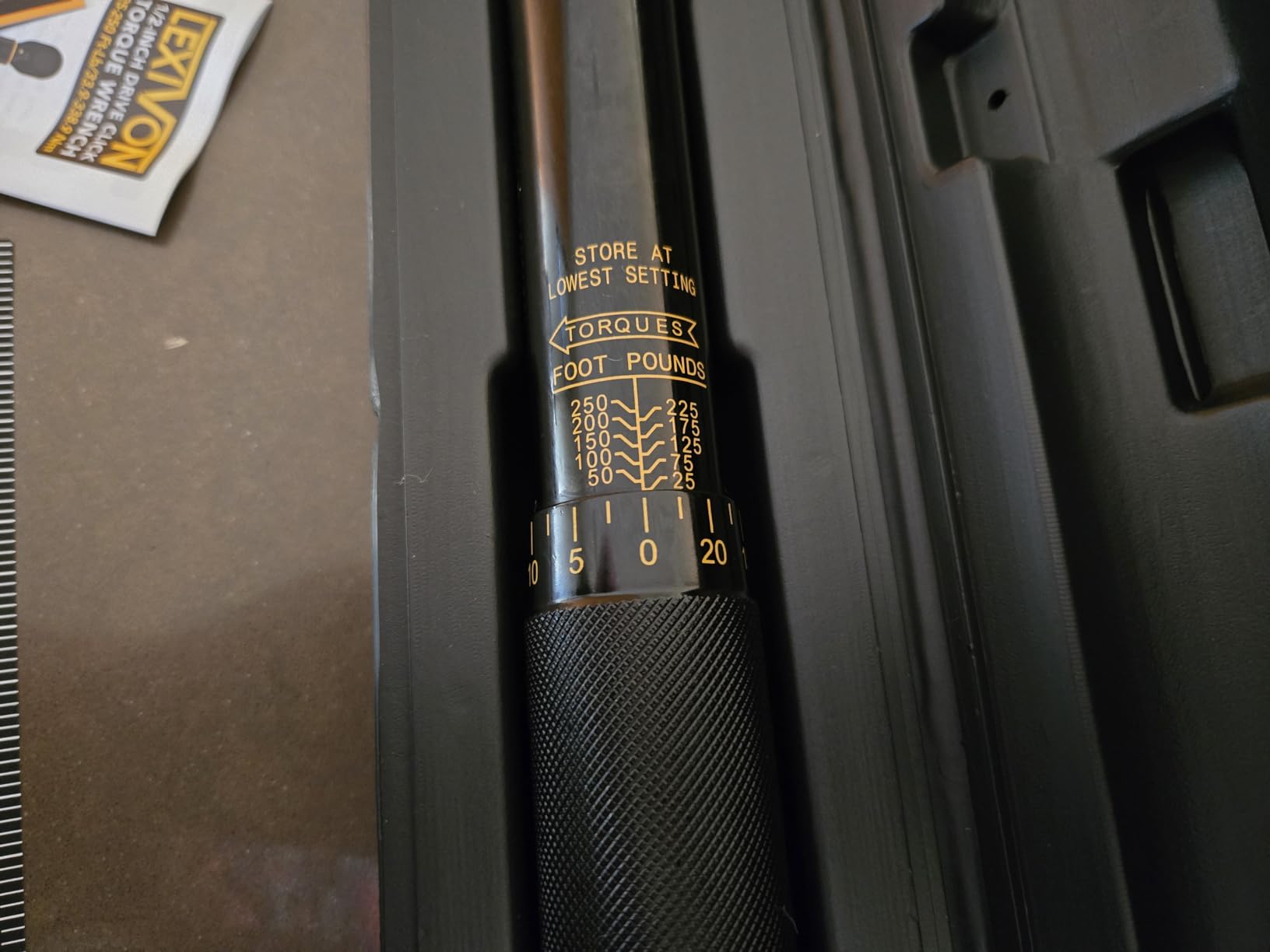
When you need this range
Three-quarter ton and up, full-size SUVs with higher factory torque values, motorhome and trailer lugs, and any wheel removal where the fastener has not been turned in years. The lower 25 ft-lb floor also means it handles small fasteners without dropping to a second tool.
When it is more than you need
For a compact car, a lot of this capacity goes unused and the weight becomes a daily annoyance. The EPAuto 10-150 ft-lb at number one is the more comfortable tool for that job.
4. Amazon Basics 1/2-Inch Drive Click Torque Wrench, 20-150 ft-lb – Best Simple Starter
- Backed by an easy returns policy
- Lock and unlock ring design is easy to learn
- Storage case included
- Fixed square drive handles common lug work
- Locking ring must be engaged or the setting drifts
- 150 ft-lb ceiling misses higher-spec trucks
- Heavier than similarly priced rivals at 1.61 kg
This is the one to buy if you want a straightforward tool with no brand reputation to learn. It does the job to the stated +/- 4 percent spec, the hardened heat-treated Cr-V ratchet head resists corrosion, and the high-contrast dual-range scale is easy to read for a first-time user.
The distinguishing feature is the locking ring, and it is a genuine feature rather than a gimmick. You unlock the collar to adjust, then lock it so the setting cannot move while you work. Get into the habit, and this becomes a very predictable wrench. The included plastic case keeps the scale protected in a toolbox.
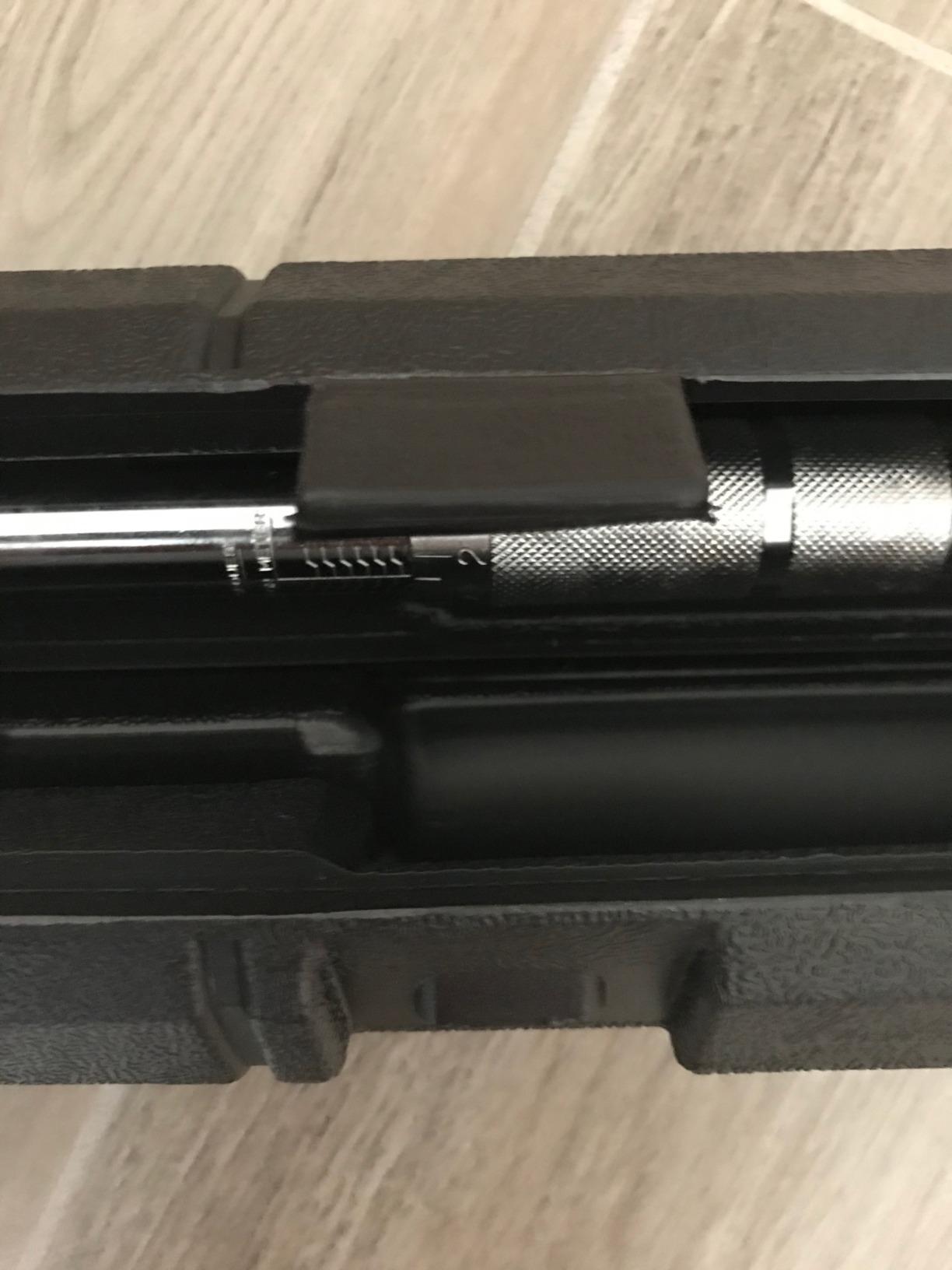
One habit to build early: set the wrench back to its lowest value and loosen the locking ring after every use. Storing a wrench under preload is the fastest way to shorten spring life and drift your calibration.
Two limits to weigh. The 20 ft-lb floor means it will not cover small fasteners, and the 150 ft-lb ceiling will not cover higher-spec truck or aftermarket wheels. The listed weight of 1.61 kg is also noticeably above similarly priced rivals with aluminum handles.
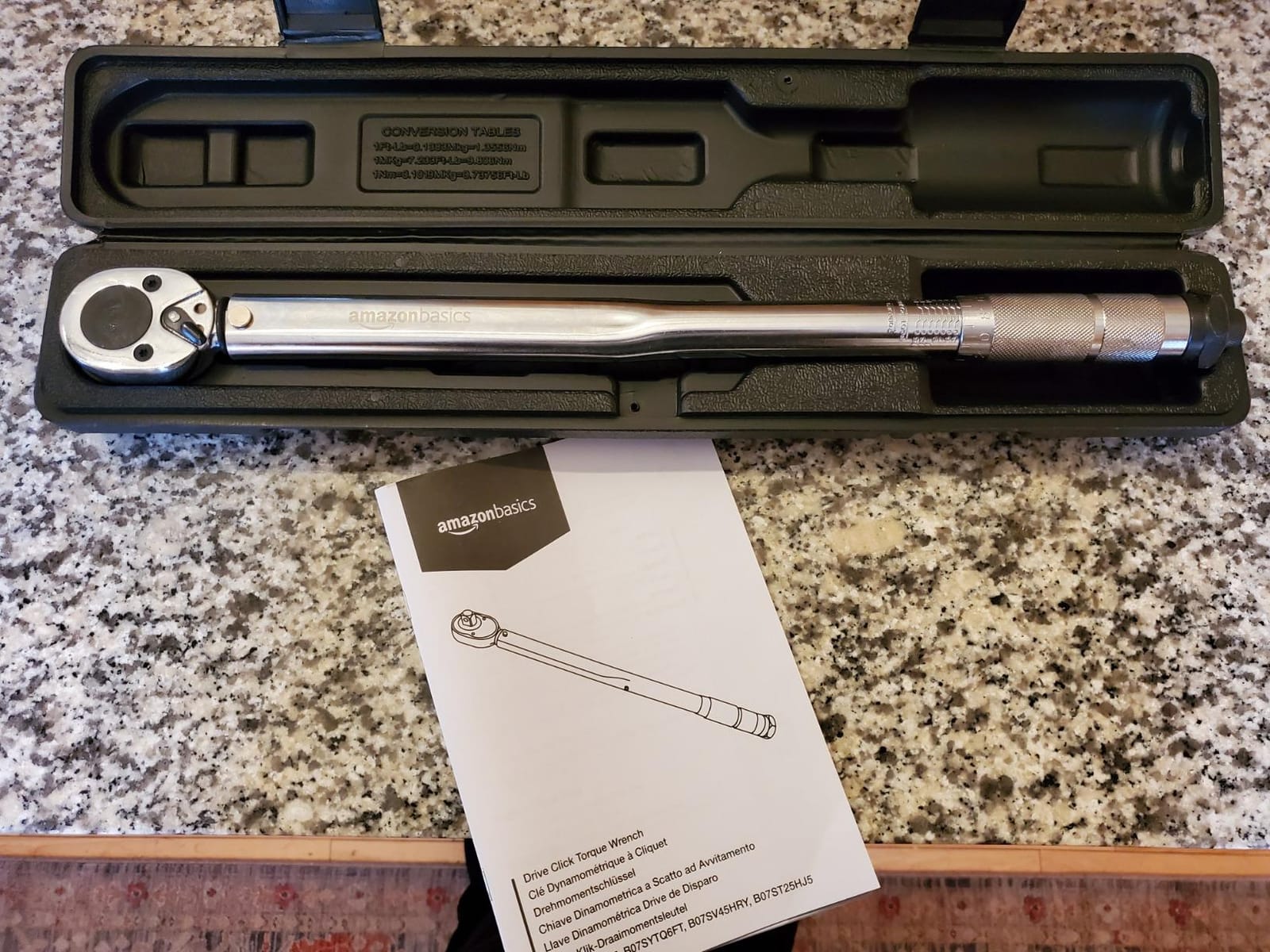
Good choice if this is your first torque wrench
Nothing about it is confusing. The scale is legible, the lock ring is the only new concept, and the case means it survives a garage. If you are buying your first click wrench and want the shortest learning curve, this is a calm place to start.
Where it falls short
It is a fixed square drive, so you must pull the socket off to reposition rather than ratcheting through a swing. On a tight wheel well with a deep-set lug, that repositioning is the difference between a smooth job and a frustrating one.
5. EPAuto 1/2-Inch Drive Click Torque Wrench, 25-250 ft-lb – Best for Recessed Truck Lugs
EPAuto 1/2-Inch Drive Click Torque Wrench,25-250 ft.-lb./33.9~338.9 Nm
- 25 inch length gives more mechanical advantage than shorter 150 ft-lb wrenches
- Distinct easy-to-hear click at the set torque
- Includes 3 inch and 5 inch extension bars
- Owners use it on F-150 wheel lugs and trailer hardware
- Dial index lines drift out of alignment with the tube markings
- Heaviest wrench in this group at 6.4 pounds
The reason to choose this over the other 250 ft-lb wrench is the length. At 25 inches it delivers more mechanical advantage than a compact 150 ft-lb tool, and owners report successfully torquing axle nuts above 180 ft-lb and 238 Nm trailer hardware that a shorter bar could not reach comfortably.
It also includes both a 3-inch and a 5-inch 1/2-inch drive extension bar, which is exactly what you need for recessed truck lugs set deep inside a steel or alloy wheel. Combine the 5-inch bar with the ratcheting head and you can work a lug in a tight well without removing the socket between pulls.
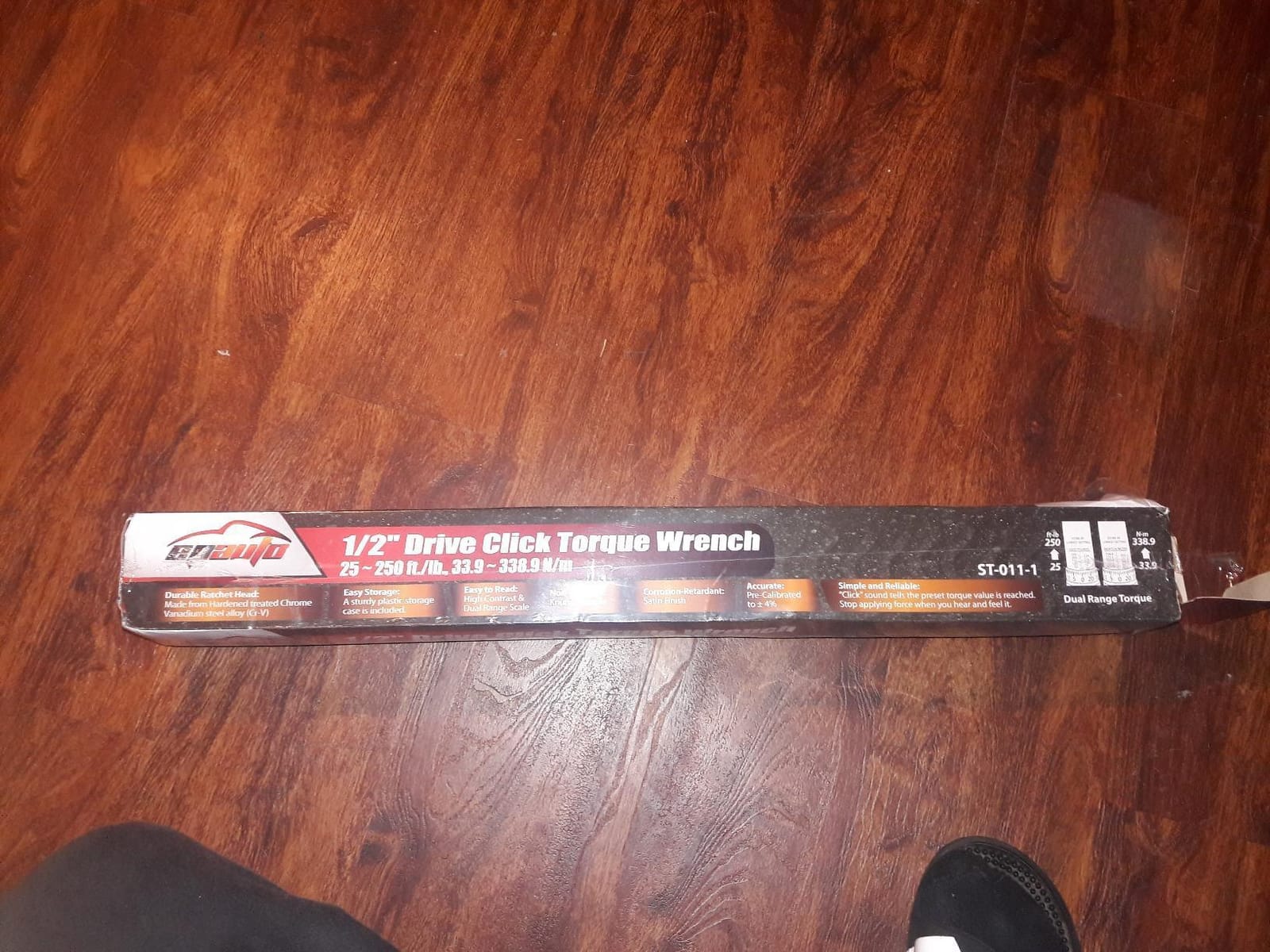
The knurled non-slip handle and satin corrosion-retardant finish hold up well in a working truck bed environment, and the click is easy to hear at the set value even with the extension attached, which is not always true of longer setups.
The recurring complaint is cosmetic but real: the reference line on the dial can drift out of alignment with the tube markings while you spin the collar, so watch the index during adjustment rather than trusting it blindly. At 6.4 pounds it is the heaviest wrench in this group, and that weight is noticeable across five wheels.
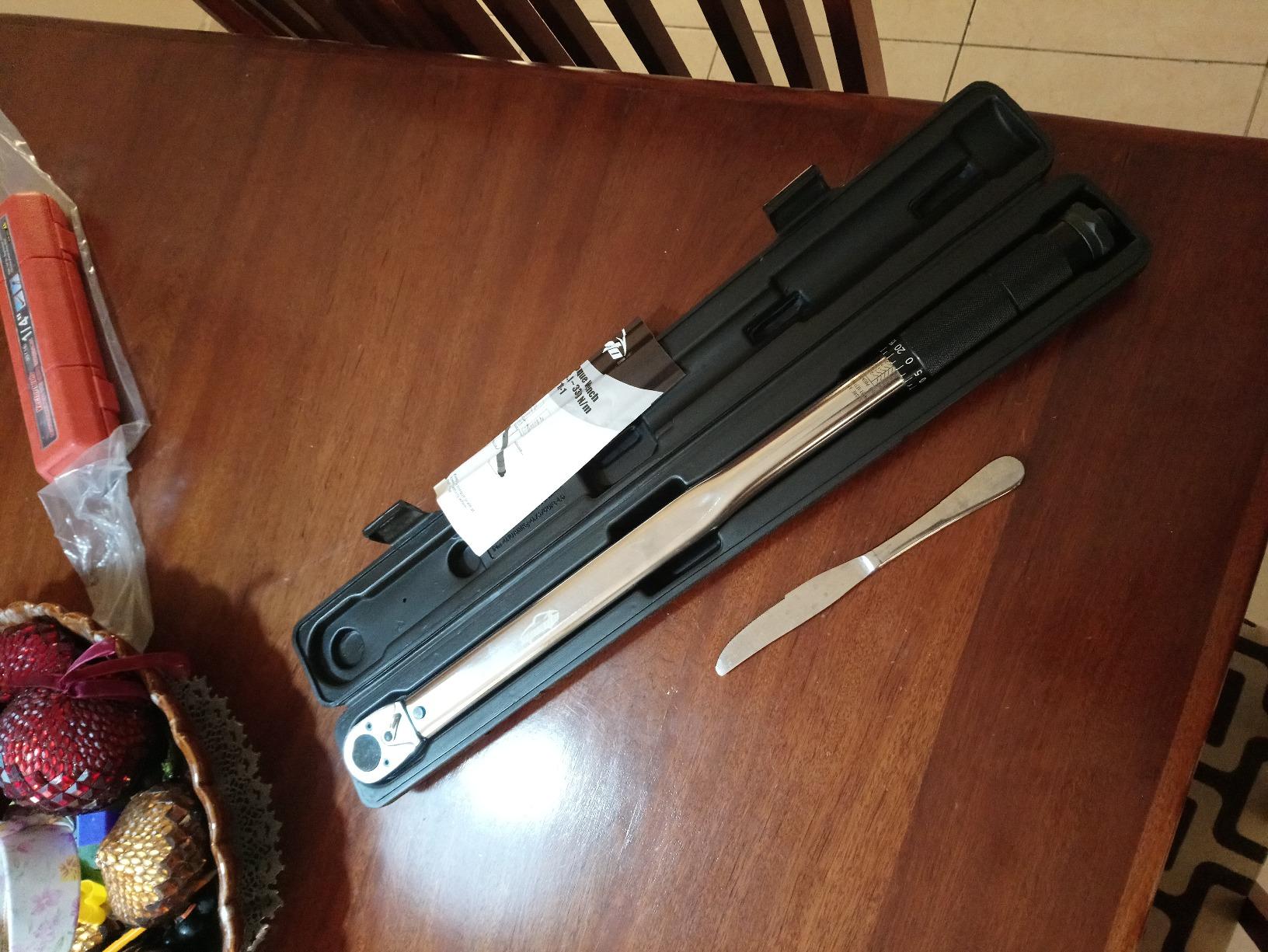
Best for trucks with deep-set lug nuts
If your wheel is a steel wheel on a pickup, the lug nuts usually sit well below the rim lip. The included extension bars solve the reach problem, and the 250 ft-lb ceiling covers the higher torque values these vehicles typically specify.
Where it is not the right tool
If your wheels are alloys on a passenger car, this is a lot of tool for a 90 ft-lb lug. The 25-inch body will not fit comfortably in a tight wheel well on a small car, and the weight adds up fast.
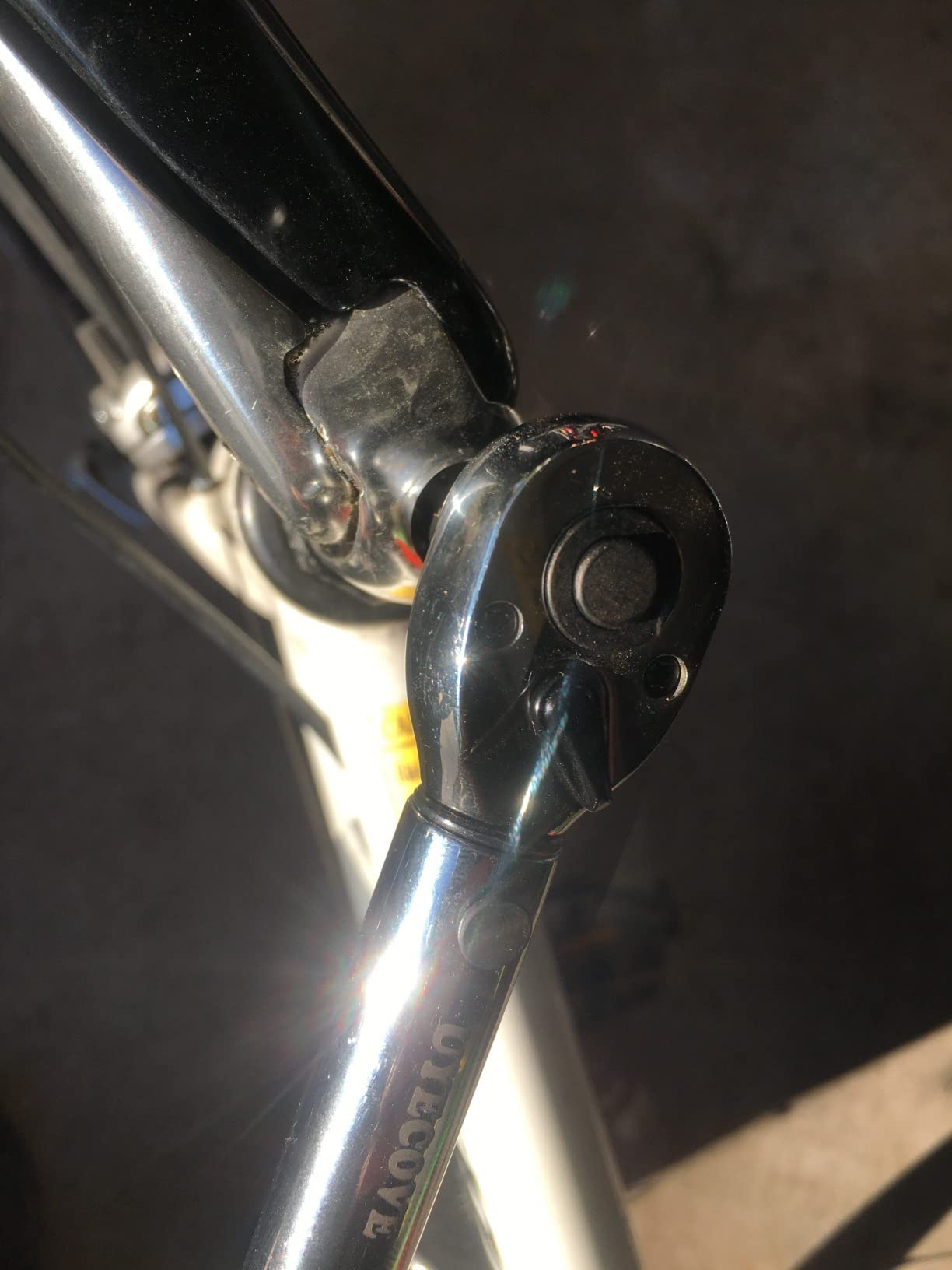
6. UYECOVE 1/2-Inch Drive Click Torque Wrench, 40-300 ft-lb – Widest Range in the Set
- Widest range here with a +/- 3% accuracy claim
- Lightweight aluminum handle reduces fatigue
- 72-tooth reversible ratchet with 5-degree arc
- Quick-release socket button
- SAE ft-lb markings are fainter than the metric markings
- Powder coat scratches with normal use
- One report of a failed socket retention ball
This one covers more torque than anything else we tested, from 40 up to 300 ft-lb, which makes it the natural choice if you divide your time between a small car and a full-size truck or a motorhome. Each tool is calibration tested before it leaves the factory, and the stated accuracy is +/- 3 percent, tighter than the +/- 4 percent claim on most of the click wrenches here.
The aluminum handle is the standout. At under a kilogram it is the lightest wrench in this group, and on a five-wheel job you genuinely feel the difference after the third car. It wipes clean and resists rust, which matters if it lives in a truck bed rather than a garage.
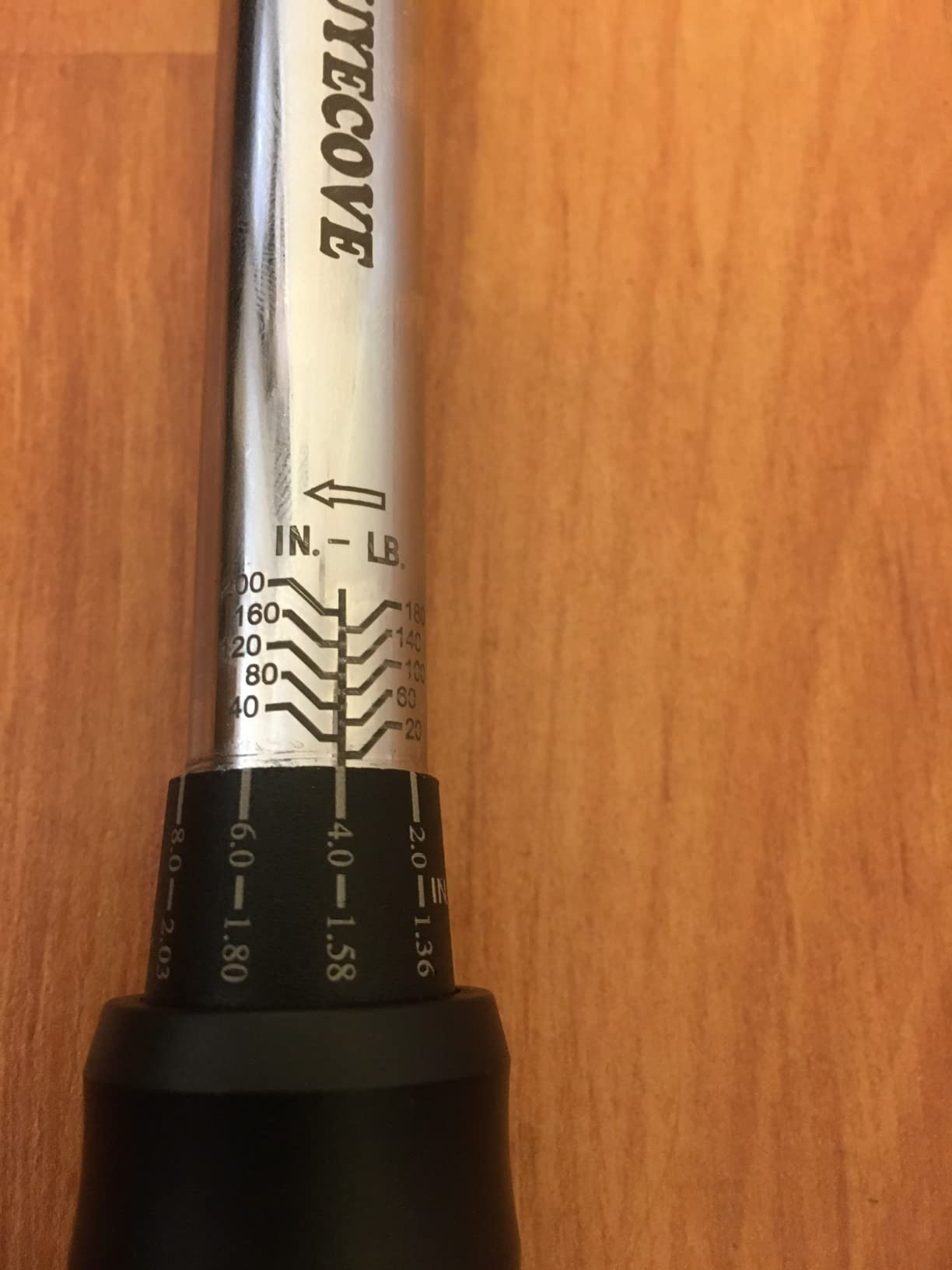
The 72-tooth reversible ratchet head gives a 5-degree ratcheting arc, so you can work a recessed lug in a narrow well without lifting the tool off the nut. The quick-release socket button is a small thing you will notice every single time.
Watch the SAE scale. Owners report the ft-lb markings are fainter and blurrier than the metric markings, so if you are reading foot-pounds, hold it up to light. The powder coat also scratches with normal use, and there is one documented report of a stuck socket retainer ball that eventually let the push-button assembly fall out of the head.
Why the 40 ft-lb floor is a feature
Many wrenches that reach 250 ft-lb start around 25 or 30 ft-lb and go soft and inaccurate near the bottom. A 40 ft-lb floor keeps you in the accurate part of the range for the fasteners you will actually meet on a vehicle, which is what you want for lug work.
Watch the finish over time
Check the collar lock and lock the setting before each lug, because a wrench whose setting drifts mid-wheel produces a wheel that is tight on one side and loose on another. Set it back to the lowest value when you store it.
7. Hairich Torque Wrench, 1/2-Inch 10-170 ft-lb – Budget Pick with a Calibration Certificate
- Lowest cost here while still claiming +/- 3% accuracy
- Includes storage box and calibration certificate
- 72-tooth reversible ratchet with 5-degree arc
- Laser-printed dual-range scale reads clearly
- Click is faint below 5 Nm
- Low-end accuracy questioned by some owners
- Not in the same class as a shop-grade wrench for calibration work
Few tools in this category ship with a calibration certificate and a 24-month warranty at this price point. The 10-170 ft-lb range covers the common passenger car band with extra headroom, and the +/- 3 percent accuracy claim is tighter than what most competitors in its bracket publish.
A reviewer with a metrology background judged the fit, finish and ratchet mechanism to be genuinely well built for the money, which is not a comment you see often. The body is chrome vanadium steel with an aluminum-titanium knurled handle, and the laser-printed dual-range scale in ft-lb and Nm is clear and easy to read.
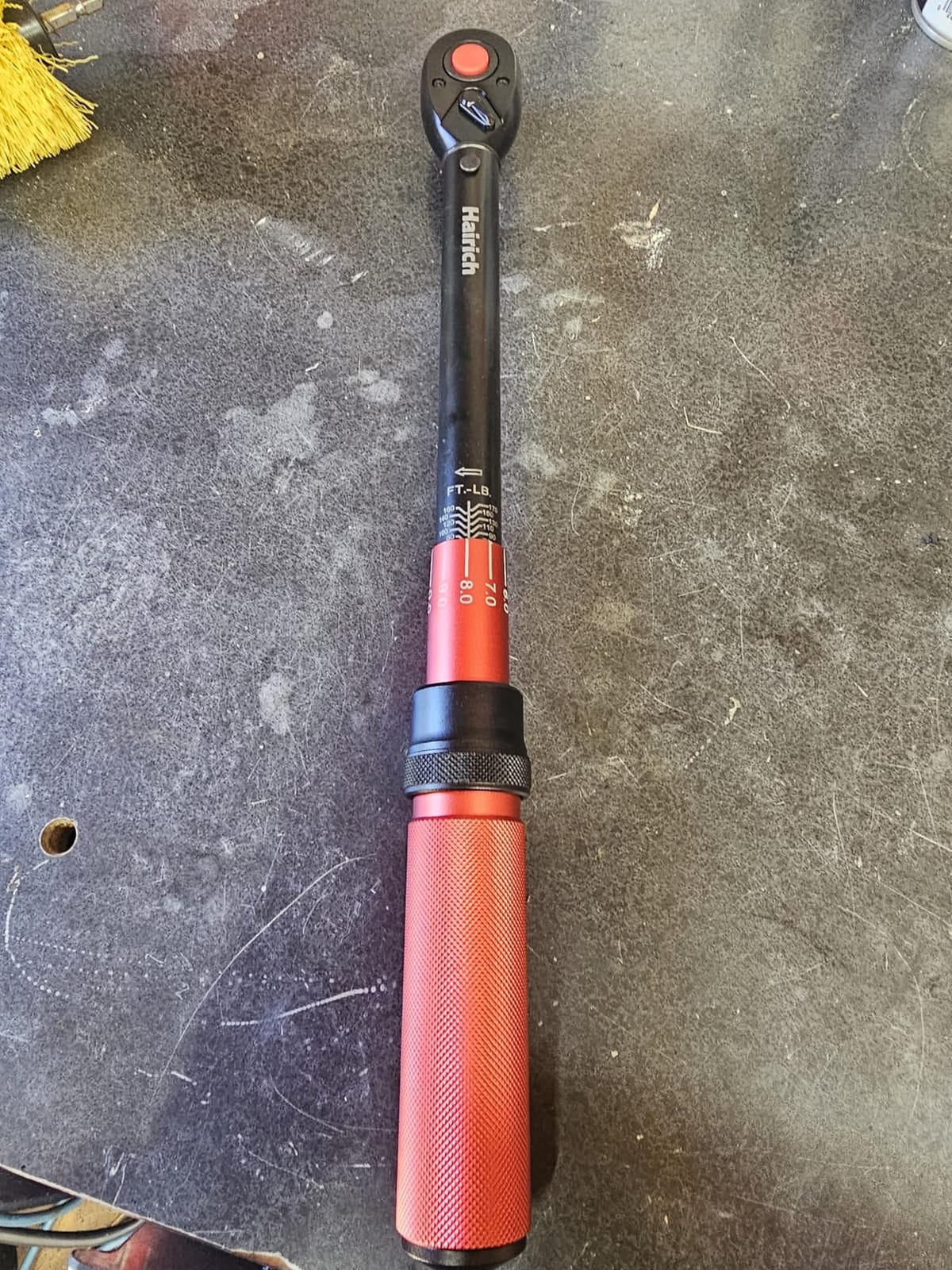
The 72-tooth ratchet with a 5-degree arc and a quick-release button is a spec sheet you would normally only find higher up the list. Reversing means it drives both directions, which saves time in a tight well.
The honest weakness is the low end. The click is easier to feel than hear below 5 Nm, and some owners question accuracy at the bottom of the range, with one reviewer reporting it would not work at lower settings. That does not affect 80-140 ft-lb lug work, but it matters if you also use the tool for small fasteners.
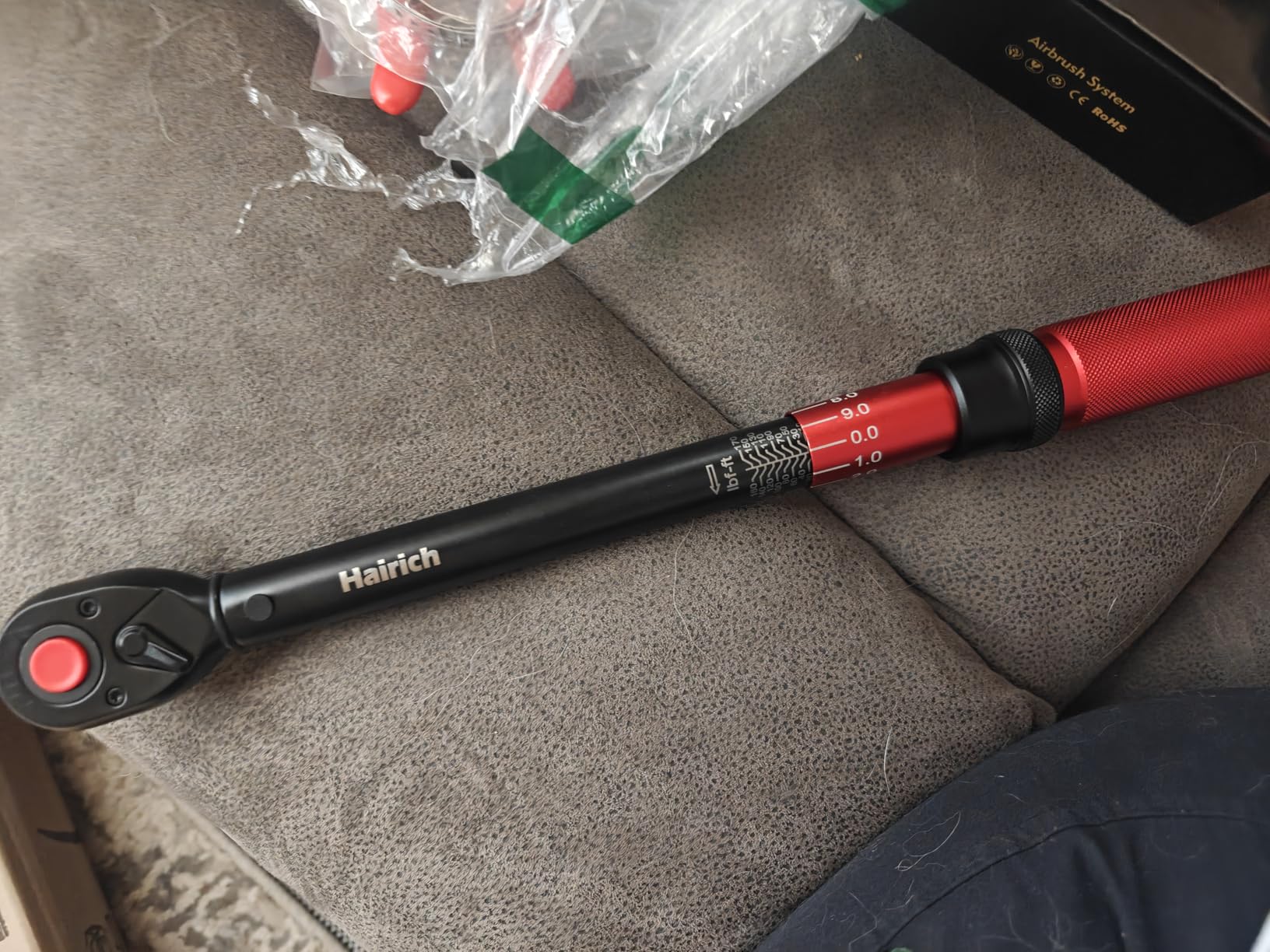
Best value for a first click wrench
You get a calibration certificate, a 24-month warranty, a 72-tooth reversible head and a hard storage case for less than the other certified click wrenches here. For tightening wheel lugs within its stated range, the value is difficult to argue with.
Not a shop-grade calibration tool
If you are doing warranty work or auditing torque values for a fleet, this is not the tool. Reviewers with calibration backgrounds are clear that it sits a tier below a professional reference wrench, even though it performs well for its class.
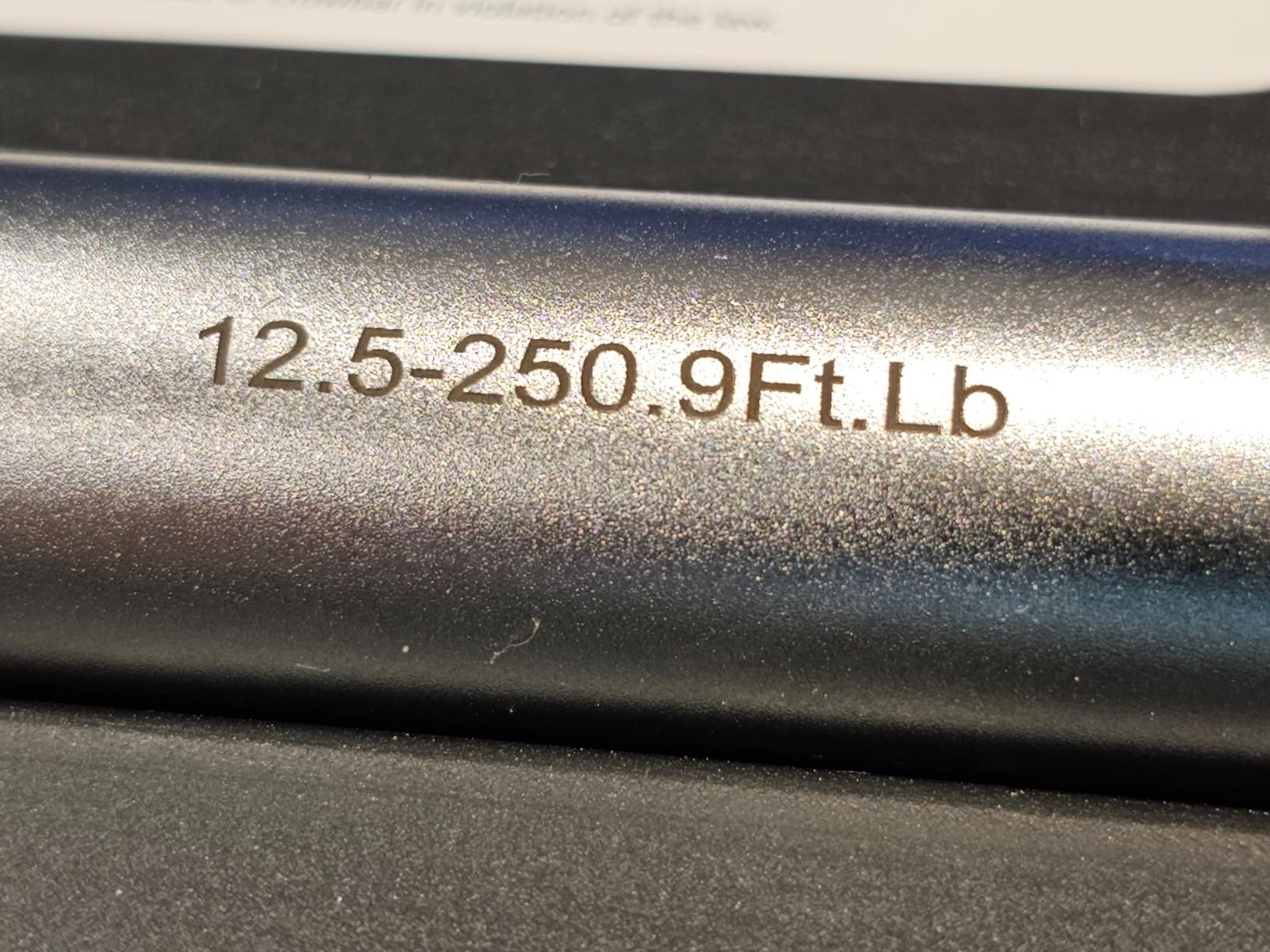
8. SUZUME Digital Torque Wrench, 1/2-Inch Drive 12.5-250.7 ft-lb – Best Digital Readout
SUZUME Digital Torque Wrench 1/2 Drive (12.5-250.7 Ft. Lb/ 17-340 N.m)
- Tightest accuracy spec in the group at +/- 2 percent
- Beep accelerates toward target and goes continuous at value
- 0.1-unit fine control on the up and down buttons
- Switchable units with peak and track modes plus data storage
- Included batteries depleted quickly in at least one report
- Control portion of the handle is plastic
- Readings weakest at the extreme ends of the range
This is the only digital wrench in the group, and the +/- 2 percent accuracy claim is the tightest number any of these tools publish. It was tested 20,000 times for accuracy, and owners report it holds precision well past 15,000 uses. For anyone who wants a written record of what torque was applied, the data storage and peak or track modes are the reason to buy it.
The feedback system is the part that changes your technique. The beep accelerates as you approach the target and goes continuous at the set value, backed by a visual LED that reads green around 85-90 percent and red at 100 percent. You stop tightening on a signal instead of a sensation, which removes most of the guesswork for a first-time user.
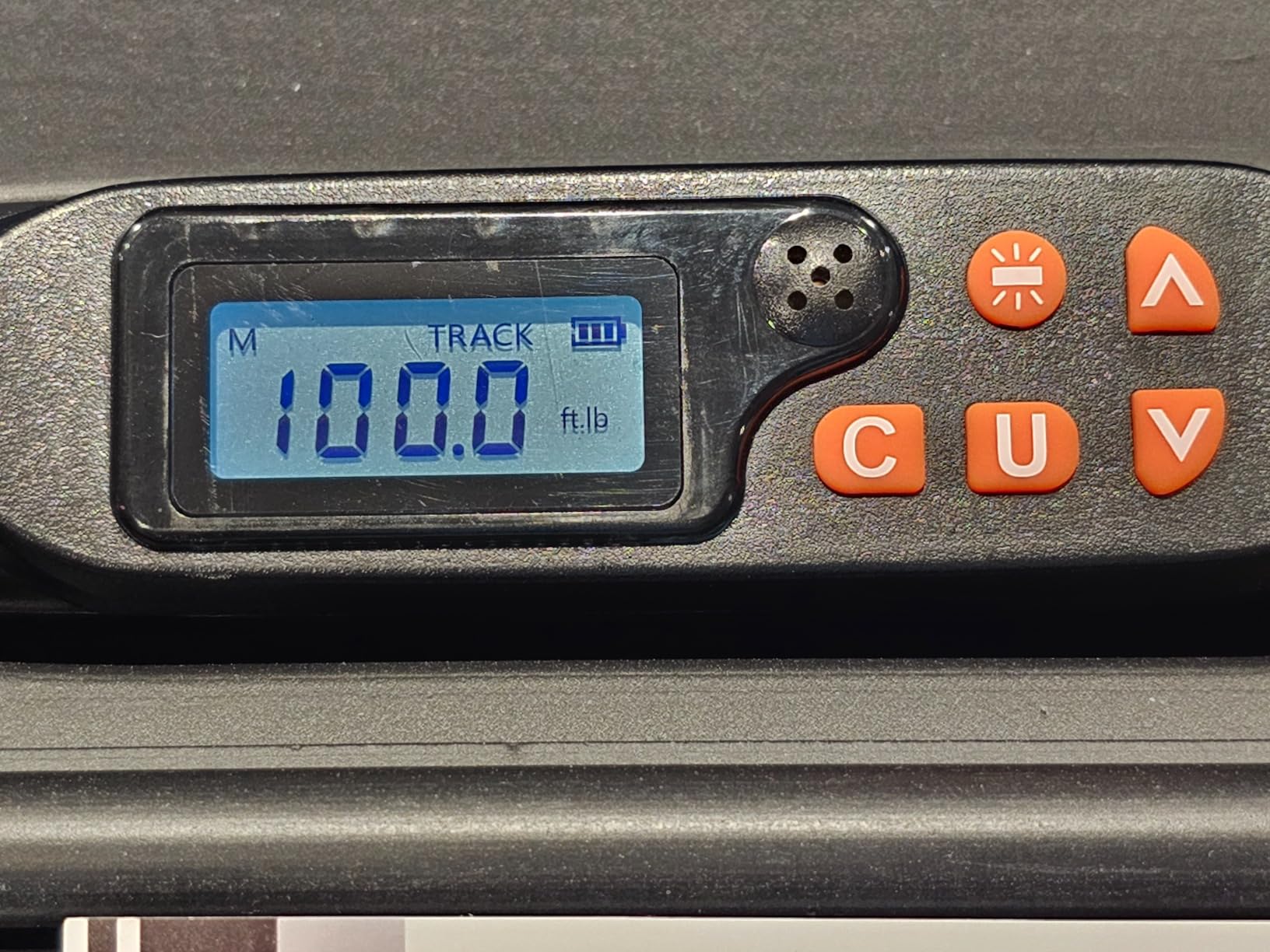
Fine control is excellent, with 0.1-unit increments on the up and down buttons and progressive speed if you hold the button. Four units are selectable, including Nm, ft-lb, in-lb and kg-cm. The 72-tooth reversible ratchet head has a 5-degree swing and a push-button socket release, and owners report it survives drops from bench height.
It applies more than 180 ft-lb on axle nuts without complaint, so the range is genuinely useful for trucks. The gripes are practical: the included batteries depleted very quickly in at least one owner report, the control portion of the handle is plastic rather than metal, and like every torque wrench the readings are most accurate away from the very bottom and top of the range.
When a digital readout pays off
Fleet maintenance, wheel installation after a suspension job, and anyone who needs to show a customer or an insurer that a lug was torqued to spec. The certificate of correction and stored data give you a record a mechanical click wrench cannot produce.
When a mechanical wrench is the better buy
For most home mechanics the digital feature set is overkill, and the 26.57-inch length is awkward in a tight wheel well. A click wrench needs no battery, works in any temperature, and costs a fraction as much for the same job on a passenger car.
9. VEVOR 1/2-Inch Drive Click Torque Wrench Set, 25-250 ft-lb – Best Complete Accessory Set
VEVOR 1/2-inch Drive Click Torque Wrench 25-250ft.lb/34-340n.m, Dual-Direction Adjustable Torque Wrench Set with Mechanical Dual Range Scales and Adapters Extension Rod
- Includes a 1/2 to 1/4 inch adapter plus 3 inch and 5 inch extension rods
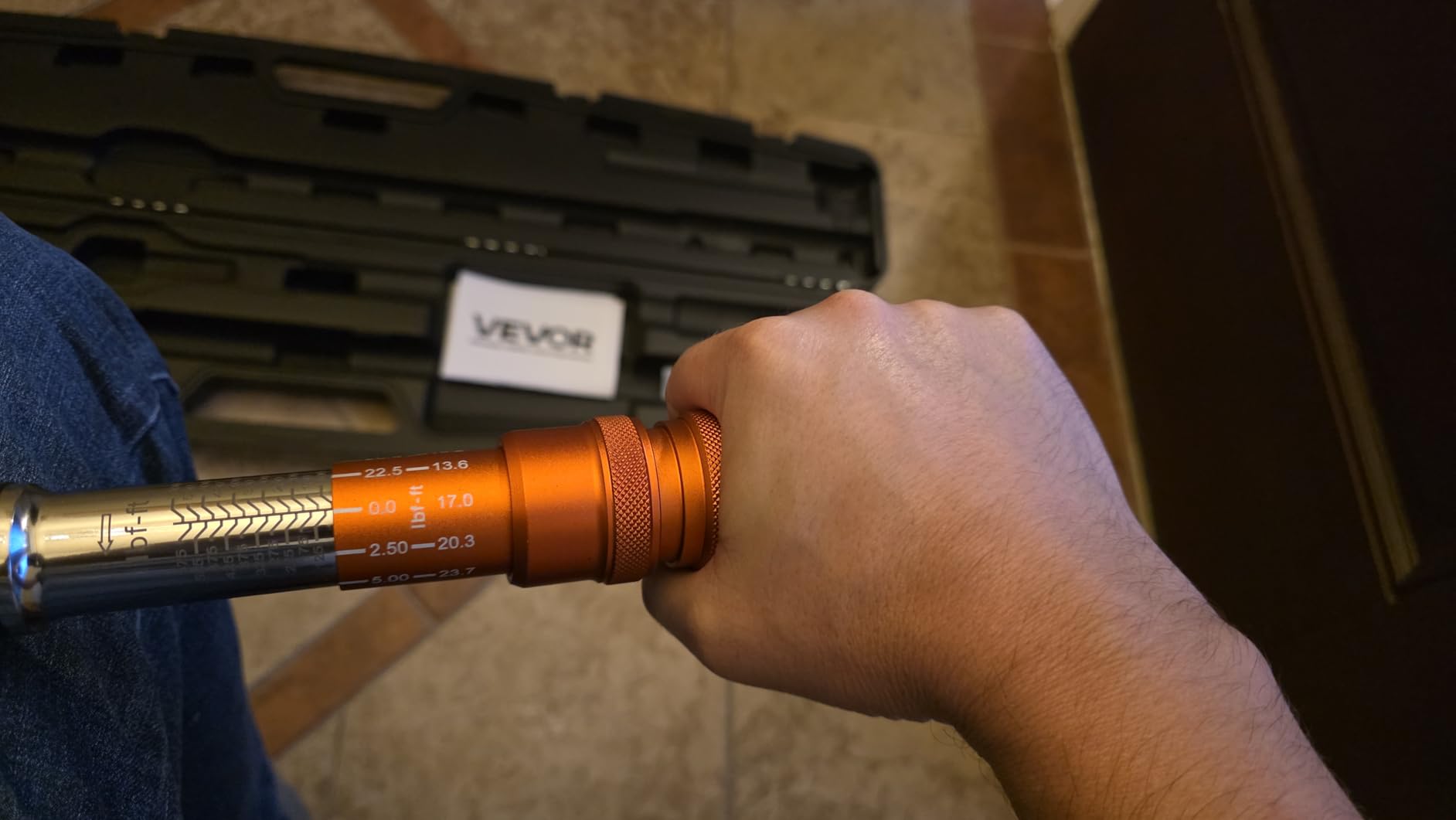
- Laser-engraved dual-range scale reads in low light
- Six-stage heat-treated Cr-V steel with chrome plating
- Calibration certificate included
- Listing length and head style fields are internally inconsistent
- Reversible head claim conflicts with the fixed square spec
The reason to pick this set is what arrives in the box. You get a 1/2-to-1/4-inch drive adapter, a 3-inch and a 5-inch extension rod, and a calibration certificate, which is the accessory bundle most competitors sell separately. If you work on a mix of fasteners, those adapters remove a purchase.
The body uses six-stage heat-treated chrome vanadium steel with a chrome-plated anti-rust coating, which held up well in testing. The laser-engraved dual-range scale is legible in low light, and the stated accuracy is up to +/- 3 percent across the 25-250 ft-lb range.
For wheel work specifically, the 5-inch extension rod is the piece that matters. It lets you reach a recessed lug on a truck wheel while the ratcheting head keeps you from repositioning the socket between pulls.
One caution: the published specification fields on this listing are internally inconsistent. The listed item length of 8.66 inches does not match a 25-250 ft-lb torque bar, and the head is described as fixed square in the spec sheet while the marketing claims dual-direction ratcheting. Treat the physical dimensions with care and check the head in your hand before a job.

Best value in accessories
If you already own sockets and extensions, this wrench competes on price and calibration alone. If you do not, the included adapter and two rods make the effective cost of a complete setup considerably lower than buying the same pieces separately.
Check the head before you rely on it
If your work depends on one-handed socket changes in a tight well, confirm the head ratchets in practice rather than trusting the listing. The same caution applies to the published length, which does not appear to describe the bar you will receive.
10. DEWALT Torque Wrench Tire Change Kit, 50-250 ft-lb, 12 Piece – Best Complete Kit
DEWALT Torque Wrench Tool Set, Tire Change Kit, 50-250 FT-LB, 12 Piece with Storage Case (DWMT45012)
- Highest average rating in the set at 4.8 stars with 89 percent five-star votes
- Complete kit with breaker bar
- nine sockets and hard case
- Protective head bumper prevents socket separation under load
- Locking trigger controls applied torque
- Included sockets are too short for some lugs without an extension
- Sockets are not impact-rated
- 30 inch body is awkward in a tight wheel well
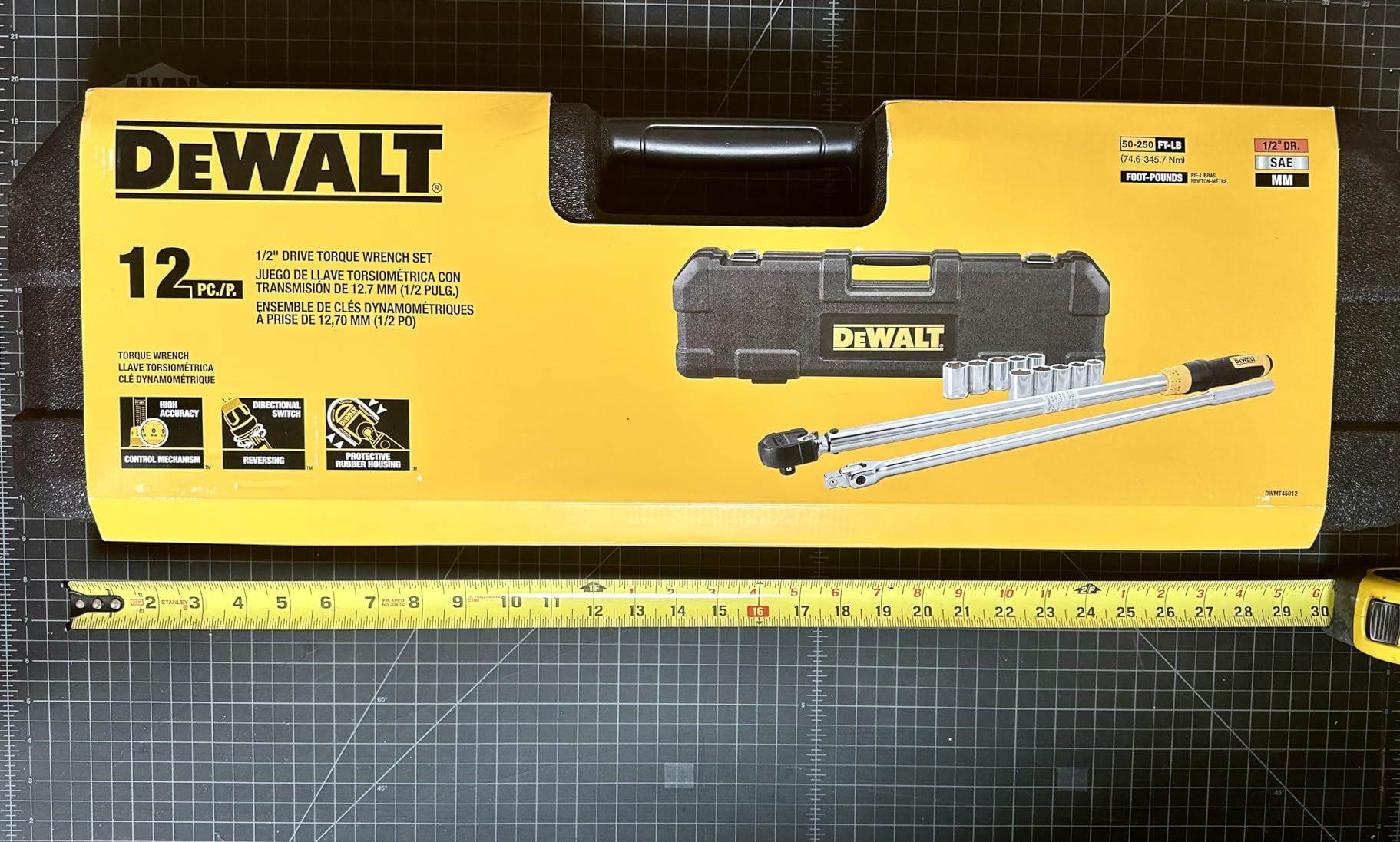
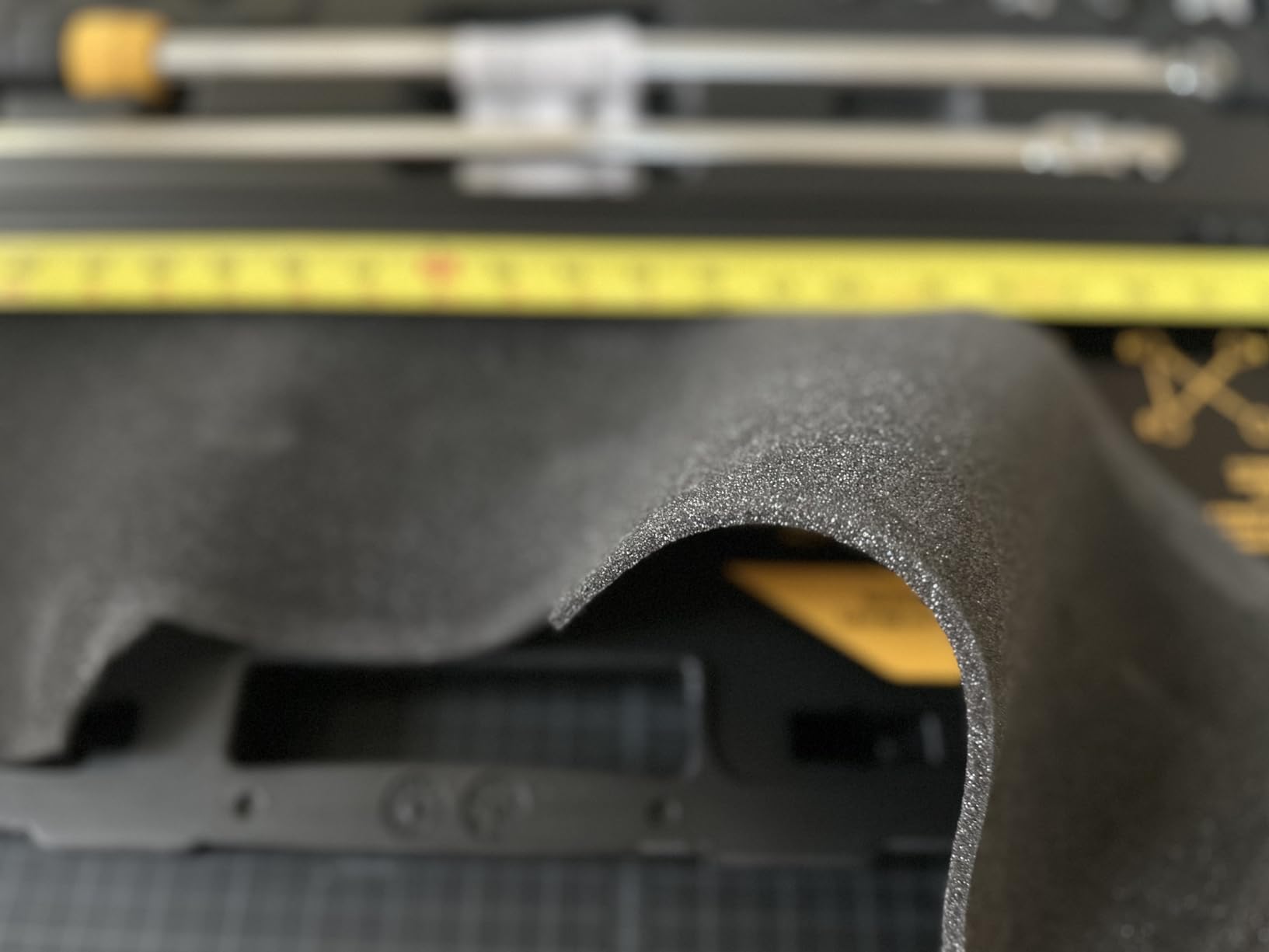
This is the highest-rated tool in the entire group at 4.8 stars, with 89 percent of votes at five stars, and it arrives as a complete tire change kit. The 1/2-inch drive micrometer torque wrench covers 50-250 ft-lb, and the box includes a 1/2-inch breaker bar, nine 1/2-inch drive sockets in SAE and metric sizes, and a hard storage case.
The breaker bar is the piece that earns its place. For lug nuts that have been torqued to 100 ft-lb and sat through a wet winter, the extra mechanical advantage from the bar is the difference between removing the wheel and giving up. The protective head bumper prevents the socket from separating under load, and the locking trigger controls the applied torque so you cannot drift the setting accidentally.
The finish is polished chrome vanadium and the tool is ASME, ISO and TAA compliant, which matters if your work is inspected. The DirectTorqueTechnology sockets have a knurled control ring and hard stamped markings, and the bi-material grip is comfortable cold. Independent testing has verified it as a strong pick against far more expensive single wrenches.
Two limitations are worth weighing. The included sockets are too short to reach some lug nuts without an extension, and on a truck or SUV the wrench body can contact the tire and spoil the reading. At 30 inches it is also the longest tool here, which is awkward in a tight wheel well. The sockets are not impact-rated, so keep the breaker bar and the impact wrench for loosening only.
Best single purchase for a new tire kit
You get a wrench, a breaker bar, sockets and a case in one transaction, which removes the most common reason people end up with a torque wrench they cannot use properly. The rating backs that completeness up.
Buy an extension for truck work
The short sockets are the one repeated complaint. Add a 3-inch extension so the wrench body clears the tire sidewall, and the accuracy problem that owners report on trucks and SUVs largely disappears.
11. Matework 1/2-Inch Drive Click Torque Wrench, 10-180 ft-lb – Best Auto-Lock Setting
- Lock knob auto-rebounds so the setting cannot be lost mid-job
- 72-tooth dual-direction ratchet with 5-degree arc
- Includes storage case and verification certificate
- Owners call it rugged with strong socket contact
- White lettering on the orange body is hard to read in direct light
- Click can be soft and easy to miss
- Storage case does not hold contents firmly
The lock knob is the feature that sets this apart. Instead of leaving the collar in a half-engaged state, it rebounds automatically into the locked position, which makes it very hard to lose a torque setting halfway through a wheel. For a first-time user worried about drifting settings, that removes a whole category of mistakes.
Mechanically it is well specified. The range is 10-180 ft-lb, accuracy is stated at +/- 3 percent with a traceable serial number, and the head is a hardened chromium-molybdenum ratchet with an aluminum-titanium knurled handle. The 72-tooth dual-direction ratchet with a 5-degree arc and quick release works smoothly in tight spaces and handles both directions.
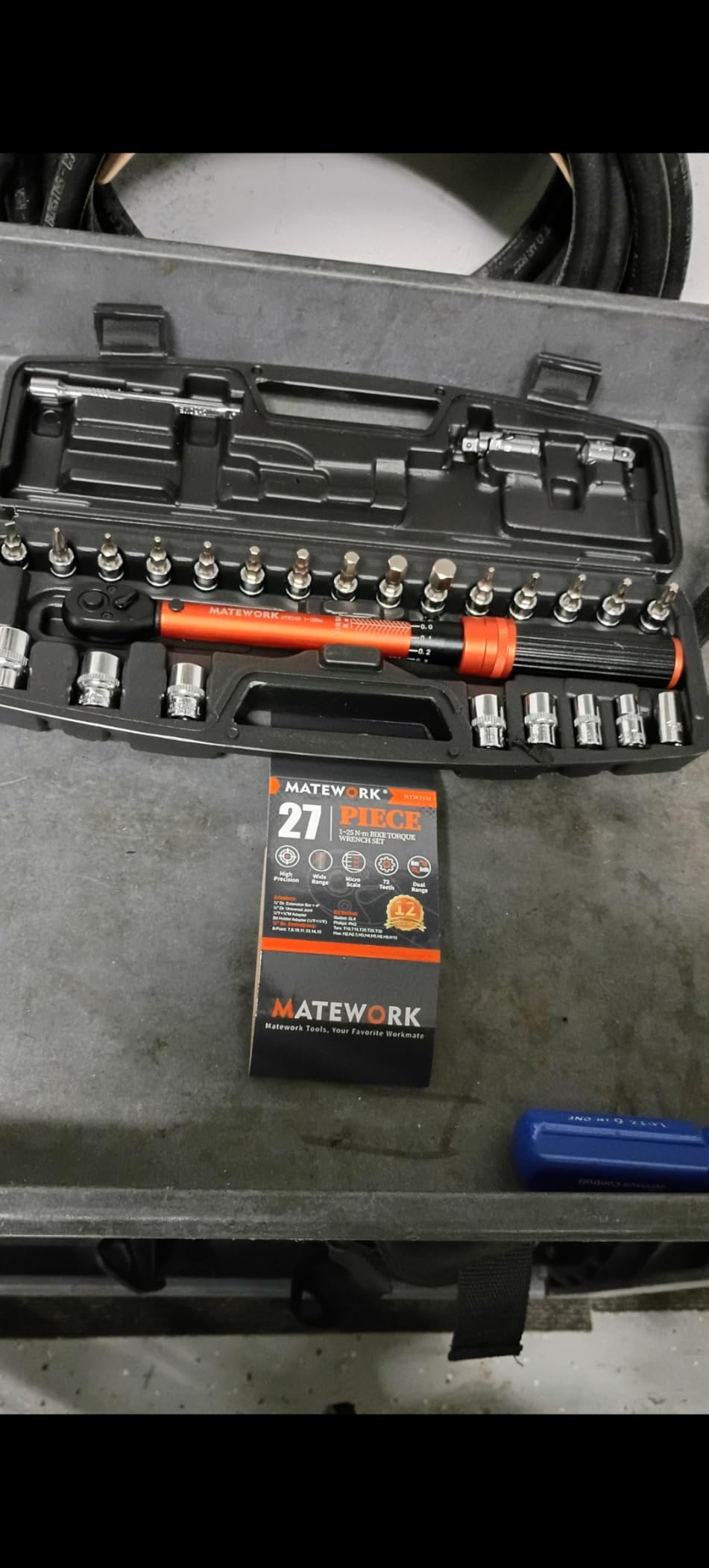
Owners rate the mechanics highly, calling the ratchet smooth, the click clean and the build rugged with strong socket contact. It includes a storage case, a guide manual and a verification certificate, so the documentation is there if you need it.
The dominant complaint is the scale. White lettering on the orange body washes out under direct light and becomes very hard to read, which is a genuine problem when you are setting a value in a sunny driveway. The click can also be soft and easy to miss, and the case does not hold its contents firmly in transit.
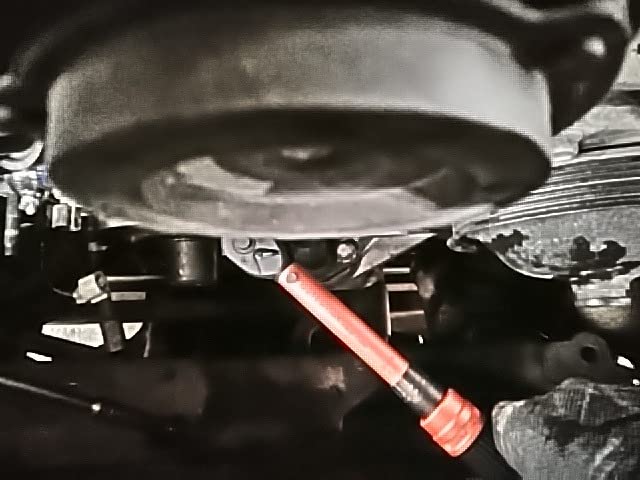
Best for anyone who forgets to lock the setting
Most inaccurate torquing happens because the collar moved after it was set. A knob that springs back into the locked position removes that failure mode without asking you to remember anything, and the 180 ft-lb ceiling covers most trucks and SUVs.
Read the scale in shade, not sun
This is the one to skip if you work outdoors in direct sunlight. The markings are white on orange and lose contrast quickly, so a wrench with a darker or laser-marked scale is the safer choice for driveway work. Shade the tool with your body or work in the garage.
12. GEARWRENCH 1/2-Inch Drive Micrometer Torque Wrench, 30-250 ft-lb – Best Brand Confidence
GEARWRENCH 1/2″ Drive Micrometer Torque Wrench 30-250 ft/lbs. – 85066
- Recognizable professional-grade brand name
- Quick pull-collar adjustment changes
- 26.75 inch length gives good mechanical advantage for high-torque lugs
- Backed by a one-year manufacturing defect warranty
- Calibration warranty is only 90 days
- Fixed square drive with no ratcheting
- Bare wrench with no case
- extensions or sockets
- Heavier barrel than aluminum alternatives
If you want a name that a technician recognizes on the bench, this is the pick. Accuracy is stated at +/- 3 percent clockwise between 20 and 100 percent of wrench capacity, which is a more precisely defined claim than the blanket +/- 4 percent used by most of the click wrenches in this list, because it tells you exactly where the tolerance applies.
The pull adjustment collar is the ergonomic win. You pull it out, spin to the value and push it back in, which is much faster than turning a screw-lock collar under load, and it is a small difference that adds up across twenty lug nuts.
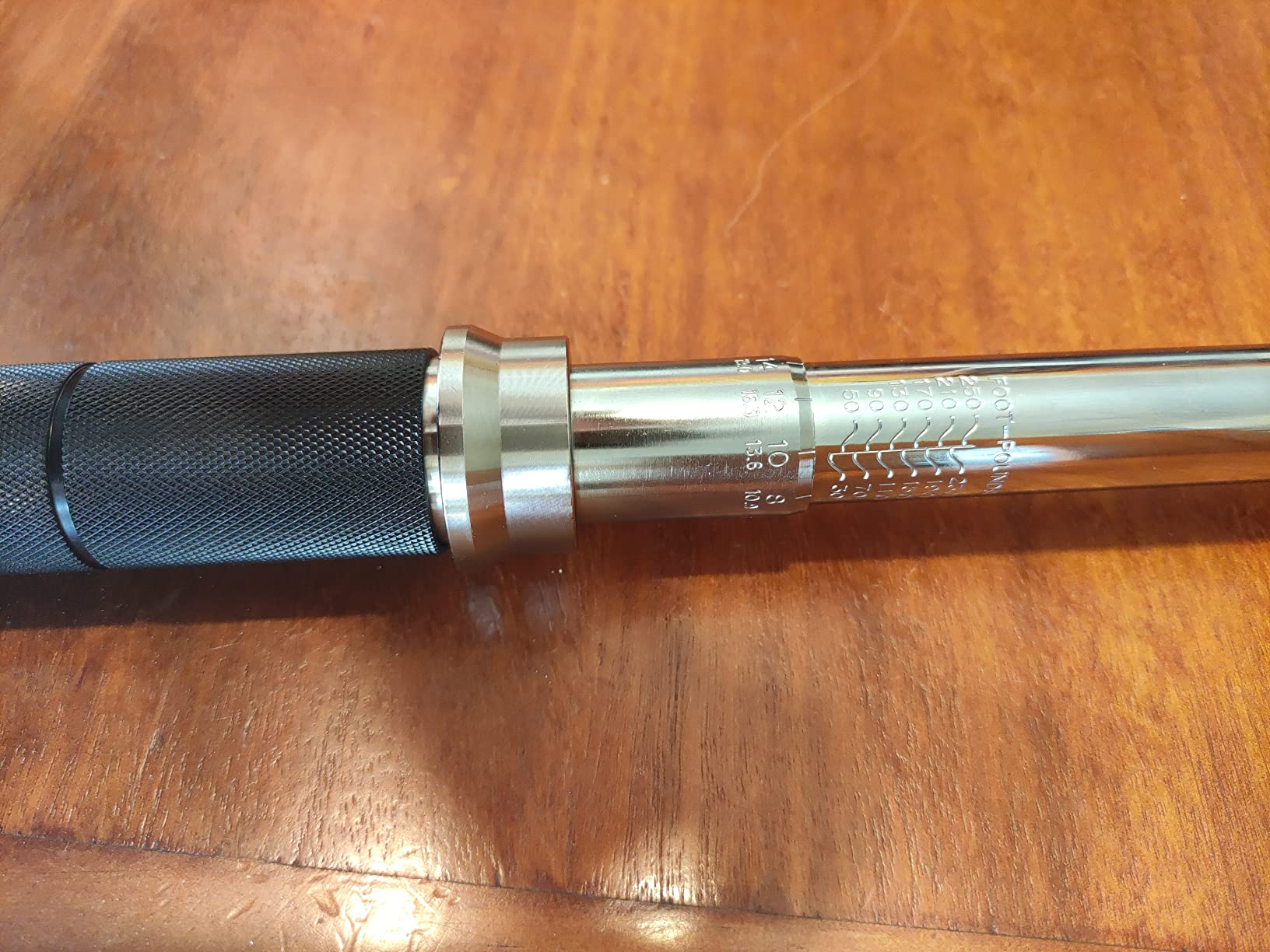
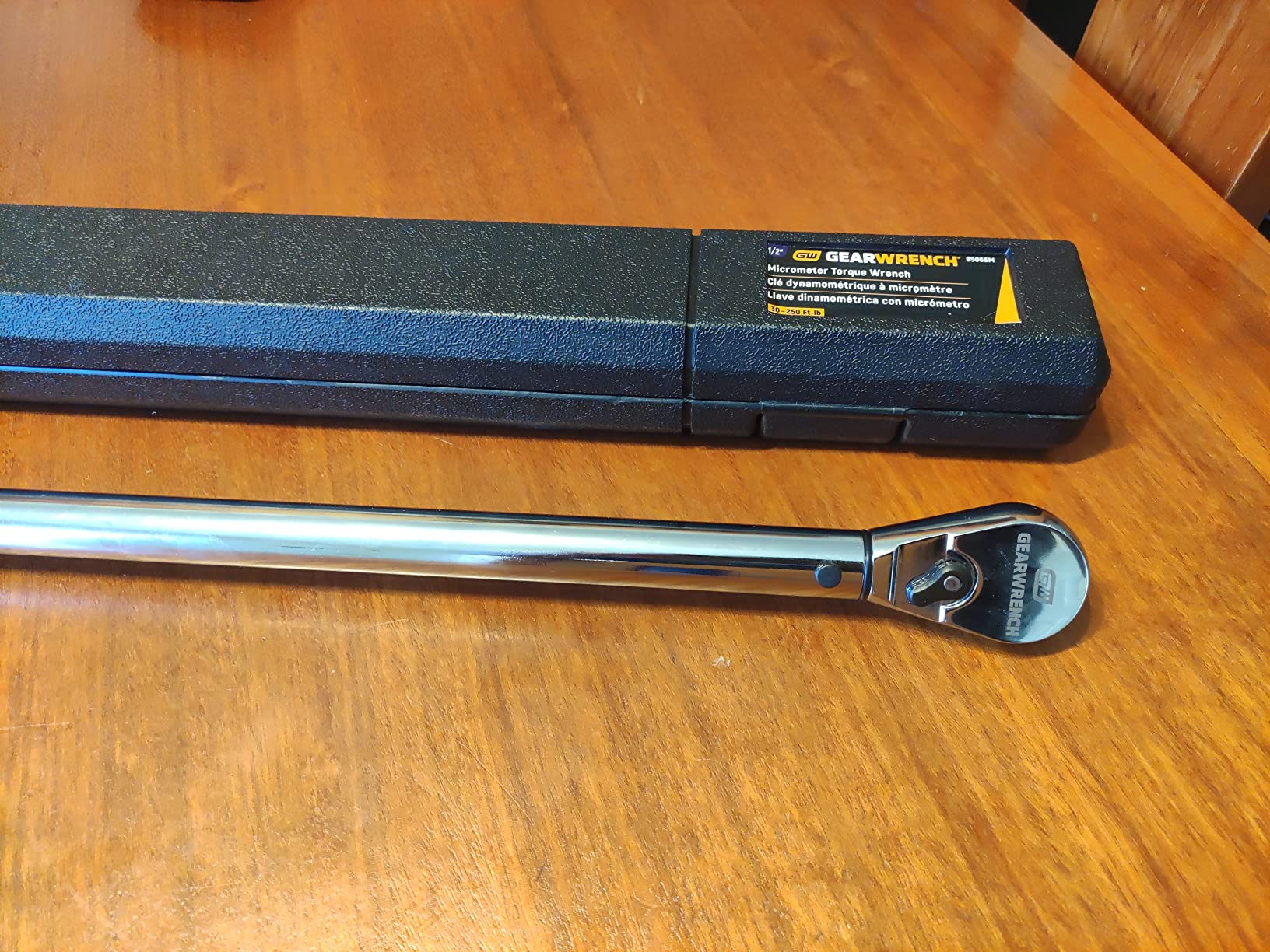
At 26.75 inches the barrel provides good mechanical advantage for high-torque wheel lugs, and the alloy steel construction with a polished finish is built for a working shop rather than a drawer. The one-year manufacturing defect warranty is the longest coverage among the bare wrenches here.
Two trade-offs stand out. The calibration warranty is only 90 days, so plan on a calibration service relatively early in ownership. The head is a fixed square drive with no ratcheting, which means you pull the socket off to reposition, and it is sold as a bare wrench with no case, extensions or sockets.
Best when your shop needs a recognised tool
Brand recognition matters when another mechanic picks up the wrench, when a customer asks who calibrated it, or when you want a straightforward warranty conversation. The 30-250 ft-lb range covers trucks and light commercial work in a single tool.
Budget for recalibration and accessories
The 90-day calibration coverage is the weakest warranty term in this group, so treat a recalibration as an early ownership cost rather than a surprise. You will also need a case and at least one extension bar to work recessed truck lugs, and the fixed square drive makes tight well access slower.
How to Torque Wheel Lugs the Right Way
The wrench matters less than the sequence. Follow these steps and any of the twelve above will do the job correctly.
1. Set the wrench to your vehicle’s specified torque, then lock the collar or confirm the auto-lock knob has engaged. Read the index line against the scale twice while it is in shade.
2. Tighten each lug to roughly one third of the specified value in a star or cross pattern. This order is what keeps the wheel from seating unevenly as the studs stretch.
3. Move to about two thirds of the specified value and repeat the same star pattern, working from one stud to the diagonally opposite one each time.
4. Bring every lug to the final specified value using the same pattern, and do not tighten one stud fully before moving on.
5. Lower the vehicle to the ground or fully load the suspension so the wheel is seated under weight, then recheck every lug once more. Weight transfer changes the numbers.
6. Recheck after 50 to 100 miles of driving. New wheels and new studs settle, and a follow-up check is what the multi-step procedure in most owner’s manuals is designed to catch.
Use an impact wrench to break the fasteners loose and the torque wrench only for the final tightening. If you also need to handle wheels on the side of the road, our cordless impact wrench guide covers the loosening half properly, and our wheel chock picks cover staying safe while you work.
How to Choose a Torque Wrench for Wheel Lugs
Buy a 1/2-inch drive with a 10-150 ft-lb range for a passenger car, and add a 25-250 ft-lb model if you touch trucks or trailers. Everything below refines that decision.
Drive size: why 1/2 inch is the answer
Wheel lugs on passenger cars and light trucks use 1/2-inch drive sockets almost without exception. That drive size is strong enough to deliver the 80-150 ft-lb range without the handle bottoming out on the rim, and the sockets are common and inexpensive. A 3/8-inch drive tops out around 100 ft-lb on most wrenches, which leaves no headroom, and 3/4-inch drive is only needed for heavy equipment lugs.
Range: buy for the highest value you will meet
Most passenger car and crossover lugs sit between 80 and 110 ft-lb, and trucks, large SUVs and light commercial vehicles run 110-150 ft-lb. RV, trailer and motorhome lugs can require 120-150 ft-lb or more. A 10-150 ft-lb range covers the first two groups, and a 25-250 ft-lb range covers everything short of heavy equipment. Avoid a wrench whose floor is above 30 ft-lb unless you have no small fasteners to deal with, because accuracy falls off near the ends of the range.
Accuracy: understand what the number covers
A +/- 4 percent claim at 100 ft-lb gives you a 4 ft-lb window, which is comfortably inside what a wheel lug tolerates. A tighter +/- 3 percent claim is better, and a +/- 2 percent digital spec is tighter still. More important than the number is whether it is defined: the GEARWRENCH states +/- 3 percent between 20 and 100 percent of capacity, which tells you exactly where the tolerance applies. Look for a calibration certificate and a traceable serial number so you have a baseline to check against later.
Ratchet head: tooth count decides tight-well comfort
A 72-tooth ratchet head needs only a 5-degree swing, so you can work a lug in a narrow wheel well without lifting the tool off the nut. A 36-tooth head needs about 10 degrees, which is workable but noticeably slower. A fixed square drive offers no ratcheting at all and forces you to pull the socket off to reposition. Reversible or bidirectional heads are worth paying for on trucks and SUVs.
Scale legibility: the most underrated feature
You are reading this scale in a driveway, often at an angle, sometimes in direct sun. The LEXIVON yellow-on-black and the VEVOR laser-engraved scale both stay readable in conditions that defeat faint engraving, and the Matework white-on-orange body is the counter-example that proves the point. A wrench you cannot read is a wrench you will mis-set.
Quiet clicks at the low end of the range
This is the usability gotcha almost no roundup explains. A click-type wrench can be noticeably quieter near the bottom of its range, and if a lug spec is low you may push past the value before you register the signal. If you work at the low end, look for a tool where the click is easy to feel, or confirm the value with a second method. The Hairich is noted by reviewers as easier to feel than hear below 5 Nm.
Calibration and recalibration
Click torque wrenches lose accuracy with use, particularly after a drop onto concrete. Treat the calibration certificate as your baseline, store the wrench at its lowest setting with the collar unlocked to protect the internal spring, and expect a recalibration service on a schedule rather than after a failure. Warranty terms are a useful signal: the GEARWRENCH covers calibration for 90 days, while the Hairich carries a 24-month warranty and the UYECOVE ships factory calibration tested with a 4-month warranty.
What actually belongs in the box
Extension bars matter more than most buyers expect, because recessed truck lugs and deep alloy wheel pockets are where a bare wrench stops being usable. The EPAuto 10-150 ft-lb includes a 5-inch bar, the 25-250 ft-lb EPAuto includes 3-inch and 5-inch bars, the VEVOR includes both bars plus a 1/2-to-1/4-inch adapter, and the DEWALT kit includes a breaker bar and nine sockets. The LEXIVON LX-183 is a bare wrench, so budget for accessories if you choose it.
If you want a broader view of the category, our general torque wrench roundup covers smaller drives and non-automotive work, and torque screwdrivers cover fasteners that never see a socket.
Frequently Asked Questions
What size torque wrench should I use for lug nuts?
Use a 1/2-inch drive torque wrench for wheel lugs. That drive size covers the 80-150 ft-lb range used by most passenger cars, crossovers and light trucks without the handle bottoming out on the rim. Choose a click-type model with a range of roughly 10-150 ft-lb for a car, or 25-250 ft-lb if you work on trucks, RVs or trailers.
Is 250 ft-lbs of torque enough for lug nuts?
It is more than enough, and for most passenger cars it is far more than the specification calls for. A 150 ft-lb ceiling already covers typical car and light truck lug torque. Buy a 250 ft-lb wrench only if your vehicle spec is higher or you work on trailers, RVs and heavy equipment, because the extra length and weight are a real cost on a tight wheel well.
Do I really need a torque wrench for lug nuts?
Yes, if you remove and reinstall wheels yourself. Under-torquing lets a wheel loosen in service, and over-torquing stretches the wheel studs and can warp the brake rotor. An impact wrench is fine for loosening, but final tightening should be done to the value in your owner’s manual with a torque wrench or a wheel torque indicator.
What is the proper torque for a 1/2 lug nut?
It depends on the vehicle, not the socket size. Most passenger car and crossover wheel lugs are specified between 80 and 110 ft-lb, while trucks, large SUVs and light commercial vehicles commonly run 110-150 ft-lb. RV and trailer lugs can need 120-150 ft-lb or more. Check the owner’s manual or the door jamb placard before tightening.
How often should a torque wrench be recalibrated?
Recalibrate on a schedule rather than waiting for failure, and immediately after any drop or impact. Click-type wrenches drift as the internal spring fatigues, so return yours for service every year or two depending on use, and treat the calibration certificate and serial number shipped with the tool as your baseline. A simple check against a known reference is enough for occasional home use.
Which Torque Wrench Should You Buy in 2026?
The EPAuto 1/2-inch 10-150 ft-lb at number one is the best torque wrench for wheel lugs for most people, because its range matches the common 80-140 ft-lb band, its accuracy claim is verified by more owner reviews than any other wrench here, and it includes the extension bar you need for recessed wheel wells.
The rest of the shortlist covers specific needs. Take the LEXIVON LX-183 if you want a traceable calibration certificate and the most legible scale. Take a 25-250 ft-lb model, like the LEXIVON LX-184 or the EPAuto at number five, if you touch trucks or trailers. Take the DEWALT 12-piece kit if you want a breaker bar, sockets and a case in one transaction, and the SUZUME digital wrench if you need a recorded torque value rather than a click.
Whichever you choose, use it to tighten only, work in a star pattern, and confirm your vehicle’s number in the owner’s manual before you turn anything. That process matters more than the specific model on your bench in 2026.