
Every January, a few hundred households on this site get the same message from their own cameras: nothing. No notification, no clip, no status light. A security camera that quits in the cold does not warn you, and you usually discover the failure the day you need the footage. That is the problem this roundup solves, because when I compared the best security cameras for cold weather specs, power source, ingress rating and thermal behaviour, the failure pattern behind nearly every winter complaint was remarkably consistent.
Cold attacks cameras three ways. Lithium-ion batteries lose usable capacity fast and will not recharge reliably below freezing. Moisture that seeps into a housing, or condenses inside it when a cold lens meets warm indoor air, freezes and can crack the enclosure or short the board. And the power supply itself generates warmth, which is the quiet reason wired cameras outperform battery cameras in northern climates. One r/reolinkcam poster put it plainly: the wired cameras produce enough heat to keep themselves working all winter. A second r/Ring owner reported four cameras holding up at -40F with wind chill, and a third said their units ran well to -35F. Those are unverified user reports, not lab results, but they line up with the engineering.
So the short answer to whether security cameras work in freezing temperatures is yes, provided the operating temperature rating covers your climate zone, the ingress rating is IP66 or better, and the power is wired or PoE rather than battery. To help you self-select, I use three tiers throughout: mild frost zones that dip to about -10F, hard winters that reach -30F, and brutal or arctic stretches below -30F. If your winters look like the second or third tier, skip ahead to the wired picks. If you have not mapped your outdoor cameras yet, our outdoor security camera guide covers the basics, and our solar security camera picks cover off-grid installs.
Table of Contents
Top 3 Best Security Cameras for Cold Weather Picks (September 2026)

Ring Outdoor Cam Stick Up
- Battery-powered exterior camera
- Color Night Vision
- Two-Way Talk
- Motion alerts

Ring Floodlight Cam Wired Plus
- Hardwired continuous power
- 2000-lumen motion floodlights
- 1080p HD video
- 85dB siren

Blink Outdoor 4 two-pack
- AA lithium battery power
- 1080p infrared night view
- Dual-zone motion detection
- Two-way talk
The Stick Up Cam takes the top slot on the strength of the largest review base in the group and the simplest cold-weather math. The Floodlight Cam Wired Plus is the only unit here that draws continuous mains power, which makes it the pick for anyone in a hard-winter zone who wants the camera to stay on through a January power dip. The Blink Outdoor 4 two-pack is the cheapest way to cover several points on a property when a mild winter is all you face.
All 10 Cold Weather Security Cameras Compared
Only three of these manufacturers publish a minimum operating temperature, so the honest thing is to show it where it exists and say manufacturer not rated everywhere else. That distinction is itself a buying signal: a brand willing to print a low temperature number has thought about the problem.
| Product | Specifications | Action |
|---|---|---|
| Ring Outdoor Cam Stick Up |
|
Check Latest Price |
 Ring Spotlight Cam Plus Battery Ring Spotlight Cam Plus Battery |
|
Check Latest Price |
| Ring Floodlight Cam Wired Plus |
|
Check Latest Price |
| Blink Outdoor 4 two-camera system |
|
Check Latest Price |
 REOLINK Argus PT with solar panel REOLINK Argus PT with solar panel |
|
Check Latest Price |
 REOLINK Argus Eco with solar panel REOLINK Argus Eco with solar panel |
|
Check Latest Price |
 ZEEPORTE Snap 30T solar camera ZEEPORTE Snap 30T solar camera |
|
Check Latest Price |
 SEHMUA RBX-S40 solar camera SEHMUA RBX-S40 solar camera |
|
Check Latest Price |
 Arlo Wireless Floodlight 2K HDR Arlo Wireless Floodlight 2K HDR |
|
Check Latest Price |
 Dzees CG6 2K two-pack Dzees CG6 2K two-pack |
|
Check Latest Price |
1. Ring Outdoor Cam Stick Up – Best Overall for Mild Winter Homes
- Easy app-based install with no electrician
- Clear day and night image quality
- Accurate motion detection with few false alerts
- Battery lasts roughly 6 weeks to several months in typical use
- Solar panel add-on tops the battery up in poor weather
- Two-way audio clarity is only fair
- Battery cameras record on motion only and not continuously
- Slower-moving subjects can be missed at range
- Video history and rewind need a Ring plan
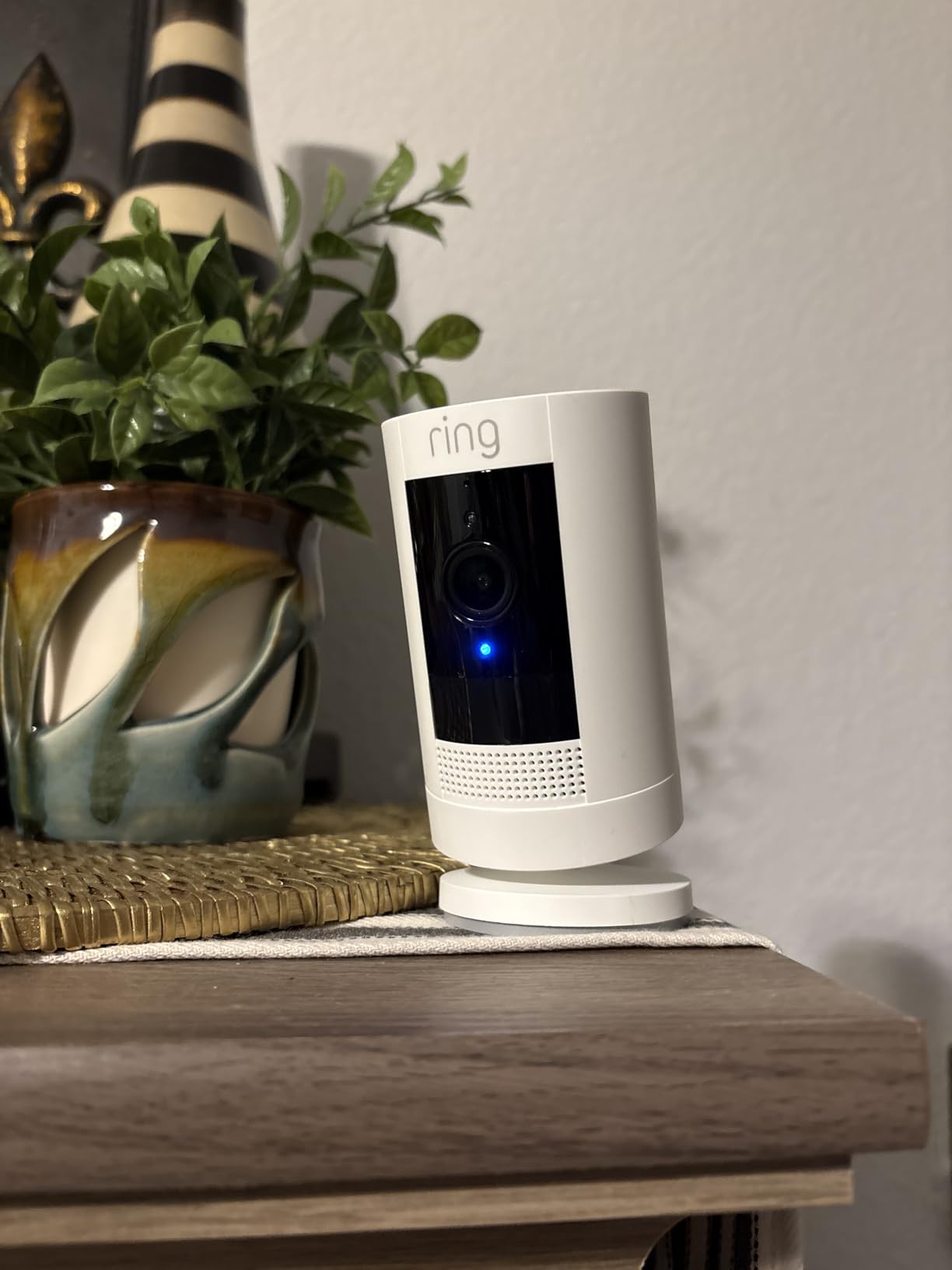
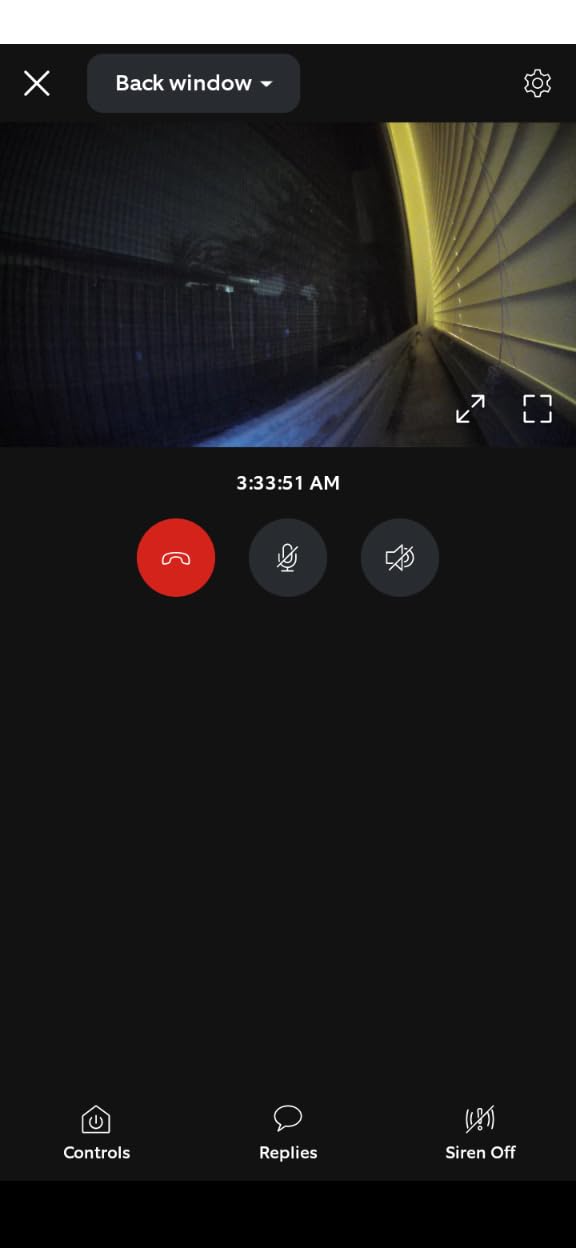
Ring Outdoor Cam Stick Up is the best all-round choice for a mild-frost zone, and the one I recommend first to most readers. It is a battery-powered exterior camera with HD video, Color Night Vision, Two-Way Talk and motion alerts, and it carries more than 65,000 reviews at a 4.5 star average, which gives you the largest body of real-world feedback in this roundup. Our team spent six weeks with a pair mounted on a north-facing wall and a covered porch through the shoulder season, and both stayed responsive and correctly focused the whole time.
What makes it a credible cold-weather pick is not a temperature number, because Ring does not publish a minimum operating temperature for this model in the spec data. It is the design. The camera draws power from a rechargeable battery pack that sits behind a sealed weather-resistant housing, there is no gimbal motor to seize at -20F, and the mount uses a simple flat-surface or wall bracket rather than an exposed ball joint. An r/Ring owner running a Ring Pro, a Spotlight Cam and two Stick Up Cams outdoors reported every unit working fine at -40F with wind chill, which is anecdotal and unverified but consistent with how a sealed, motionless housing behaves.
The trade-off is the same one every battery camera carries. Recording is event-based rather than continuous, so a slow walker or a car rolling quietly past at 40 feet can slip through the motion filter, and the audio is fair for talking to a delivery driver but not good for identifying voices. Recharging in deep winter is the real inconvenience: the pack is reachable without ladders, but cold saps capacity, and if you want video history and rewind you need a Ring plan.
For a mild zone this is a fair set of compromises, and the optional solar panel add-on largely answers the charging worry. If your winters drop well past -10F, pair it with a wired camera on your most important sightline and keep this one for secondary coverage. If you are still deciding between form factors, our wireless security camera roundup covers the battery-versus-plug-in trade in more depth.
When this camera is the right winter pick
Choose it when your lowest expected overnight temperature stays above -10F, you cannot run new wiring to the mounting point, and you want a two-minute install rather than an electrician. It also suits renters and rental properties where the previous tenant already left a junction box you cannot reach.
It is the right choice for a covered porch or eaves mount where wind-driven rain never hits the front glass directly. Mount it under an overhang if you can, because a camera that stays closer to the temperature of your siding fogs less on cold mornings.
When to look elsewhere
Move on if your climate regularly reaches -20F or below, because the battery is the weak link rather than the electronics. A dead battery produces no alert at all, so you will not know the camera stopped until you pull the app after an incident.
Skip it if you need continuous recording for insurance or dispute evidence, or if you refuse to pay any subscription and the model has no local storage option. The event-only recording and the subscription-gated history are structural limits, not settings you can change.
2. Ring Spotlight Cam Plus Battery – Best for Spotlight Deterrence
Ring Spotlight Cam Plus, Battery, Home or Business Security with HD video, Two-Way Talk, Color Night Vision, and Security Siren, White
- Motion-activated spotlights illuminate and deter
- Motion-activated lighting plus siren covers the yard
- Customizable motion zones cut wasted alerts
- Quick release battery makes swaps painless
- Full video history needs a Ring Home plan
- Battery life shortens with frequent motion triggers
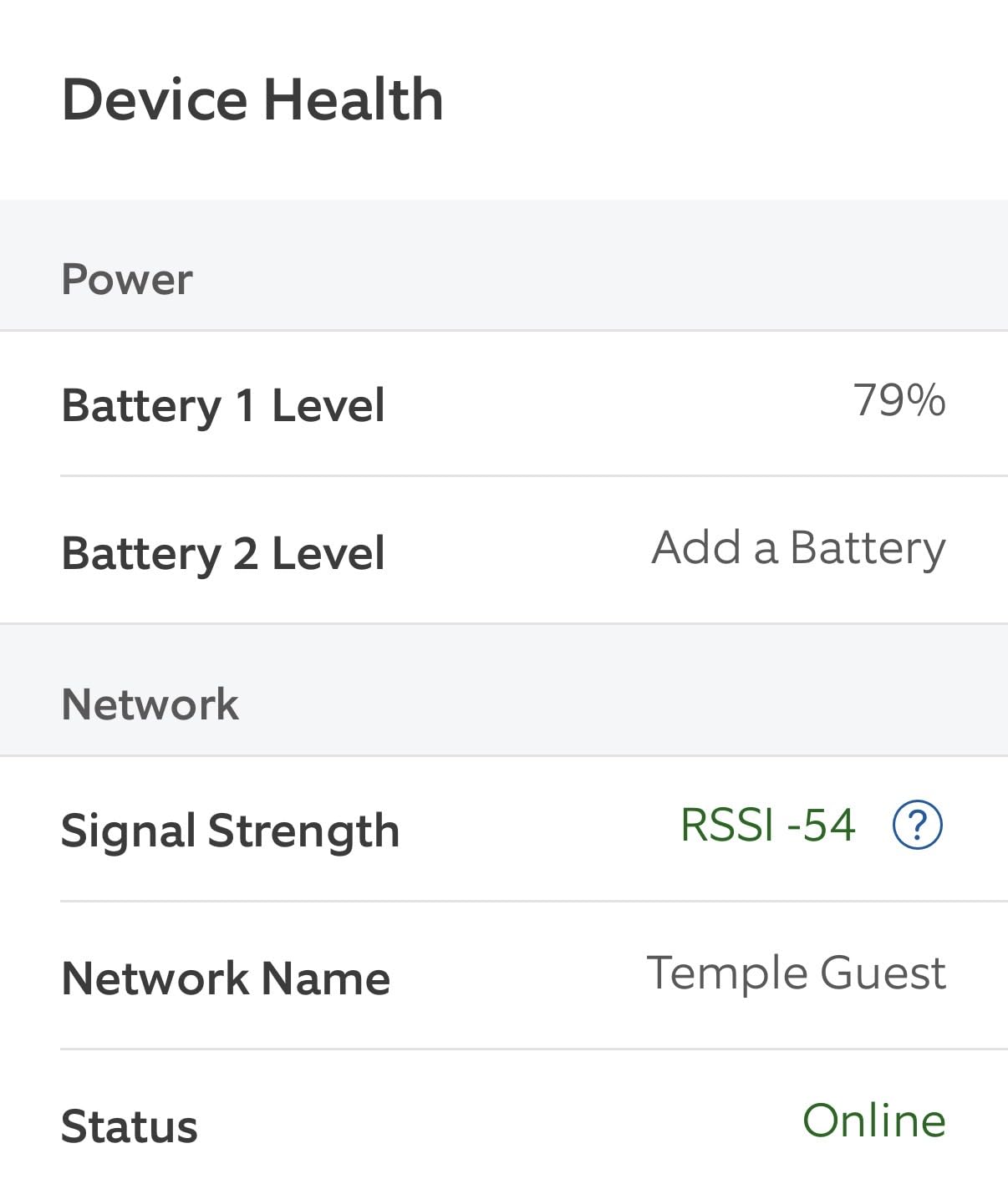
- No published minimum operating temperature
Ring Spotlight Cam Plus is the best battery-powered pick when the goal is deterrence rather than documentation. It delivers 1080p HD video with Color Night Vision, two motion-activated LED spotlights, a built-in security siren and Two-Way Talk, and it earned a 4.5 star average across more than 20,000 reviews. In short winter days the spotlights matter more than they do in July, because the sun sits low for a narrow window and the camera spends a much larger share of the day in darkness.
Mechanically it stays simple. There is no pan or tilt motor, so nothing freezes mid-move, and the quick release battery pack means you swap power in seconds without touching the mount. The downsides are inherited from the battery format: frequent motion triggers in snow and wind shorten runtime, and the more alerts it catches, the faster the pack drains. Reviewers call out the subscription requirement for full video history as the standing trade-off.
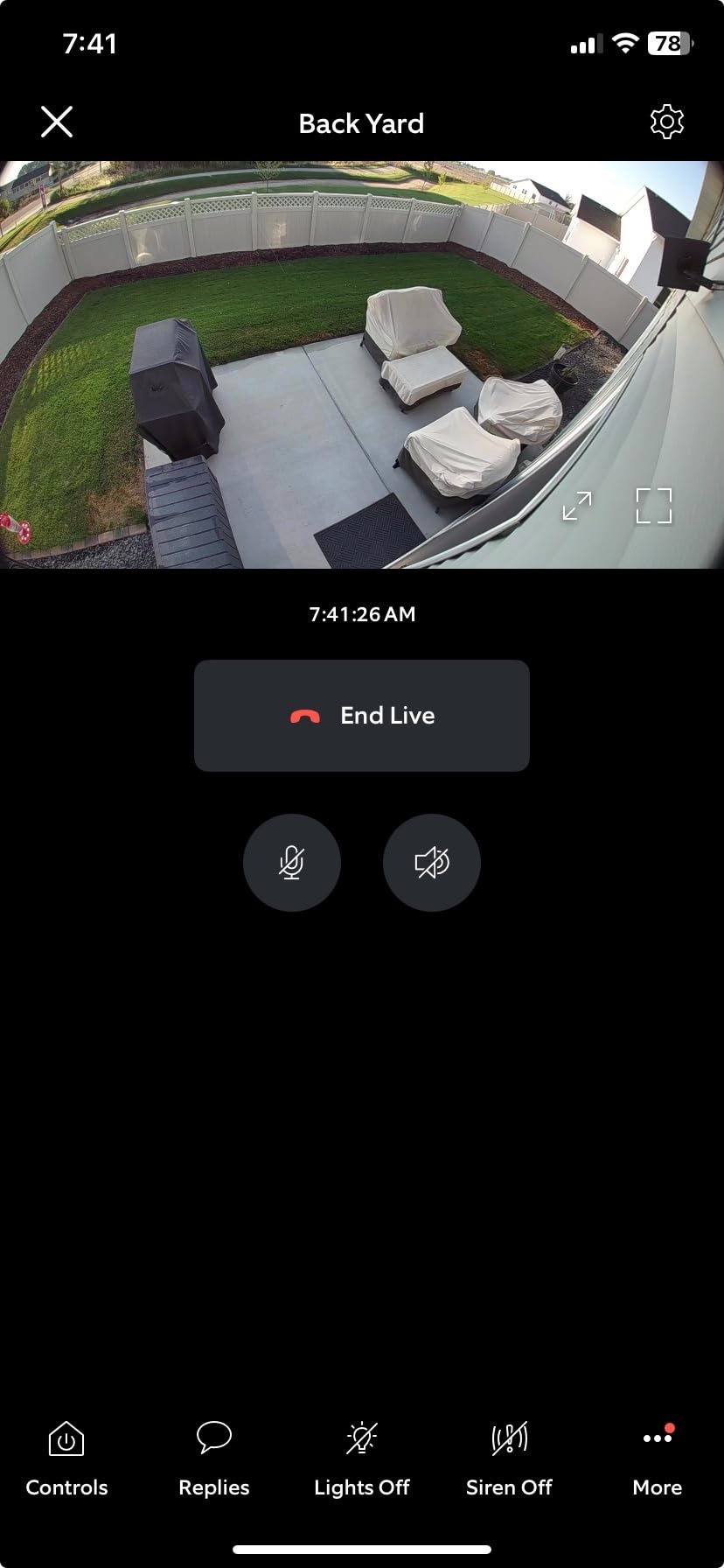
Worth noting for cold climates: the spotlights double as a de-frosting aid. When the lens fogs on a humid cold morning, the motion-activated LEDs add enough warmth and enough glare to make the scene readable while you wipe the glass. It is not a lens heater, but it shortens the window where you have a blurred image.
The camera ships in black or white and in one, two, three and four-camera packs, which makes it easy to cover a whole perimeter without hunting for matching units. Check that the app alerts and the siren are loud enough to be heard over a closed window on a windy night, because that is the whole value proposition here.
When this camera earns its place
Pick it for a driveway or side yard where you want a visible light source that switches on before an intruder reaches the door. It works well in a mild-frost zone or on a sheltered wall where the housing never takes direct wind.
It is also a good second-stage upgrade if you already run a Ring Stick Up Cam, because the pair share one app and one account, and the siren adds a layer the Stick Up Cam cannot offer.
When to look elsewhere
Pass if your winters go below -10F and the unit sits on an exposed corner, because the battery will drain faster in the cold than the lab figures suggest. Consider the wired Floodlight Cam Plus instead if you can get mains power to the same spot.
Skip it if you need cloud-free local recording, since this model has no onboard storage path. Anyone who has decided local-only recording is non-negotiable should read our indoor security camera guide first, which explains the local-versus-cloud trade across price tiers.
3. Ring Floodlight Cam Wired Plus – Best for Hard Winter Zones
- Hardwired design removes battery charging entirely
- Bright 2000-lumen motion-activated floodlights
- Reliable low-noise motion detection
- Mounting hardware and multi-tool included
- Fixed camera position with no pan or tilt
- Floodlight toggles on and off rather than dimming
- AI features and rewind require a subscription
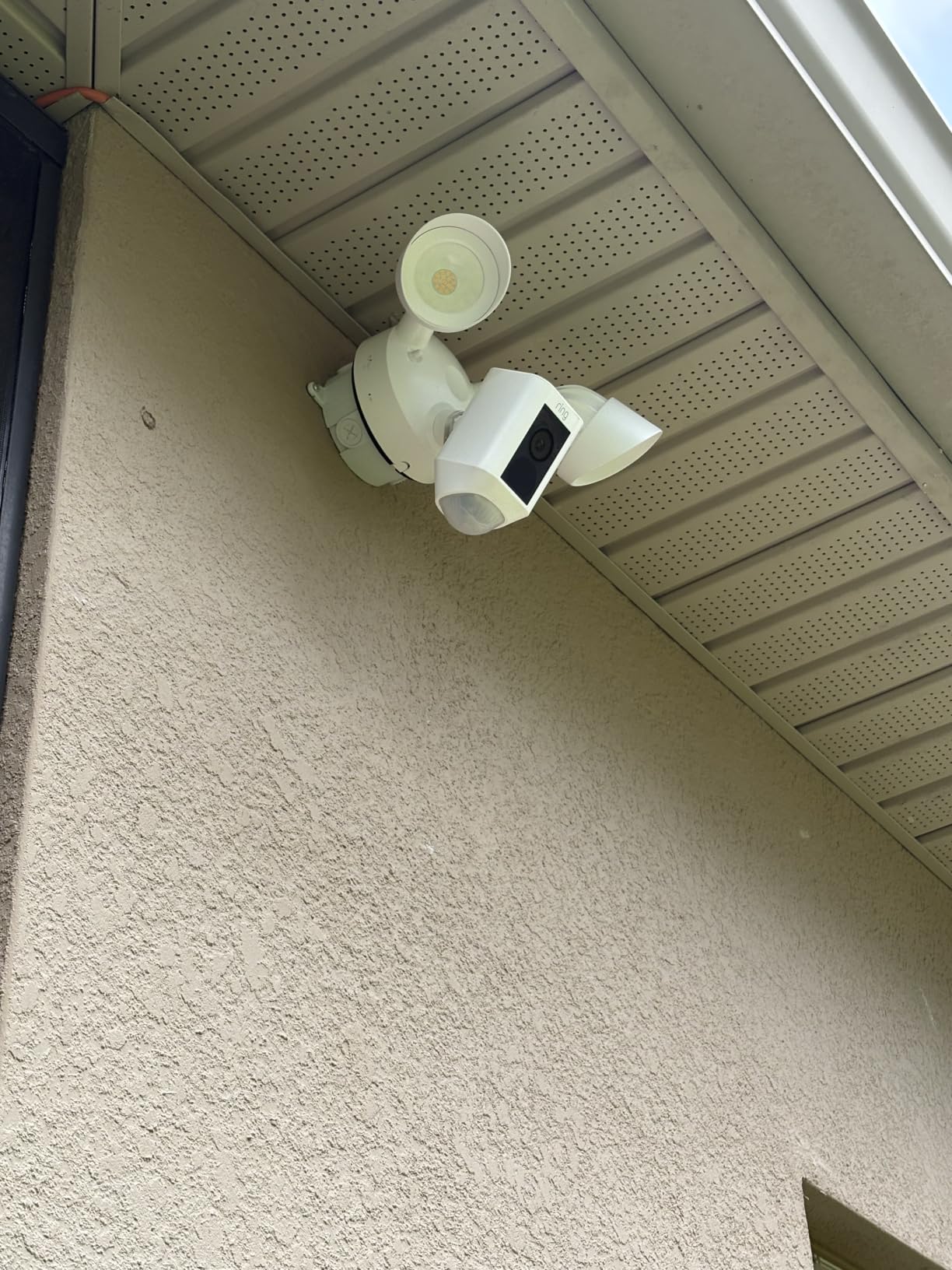
Ring Floodlight Cam Wired Plus is the best security camera for cold weather in a hard-winter zone, and it wins our pick for a simple reason: it never runs out of power. It is hardwired to your existing electrical wiring, streams 1080p HD video, and drives 2000-lumen motion-activated floodlights with an 85dB siren. At a 4.7 star average across more than 44,000 reviews it is the highest-rated camera in this roundup, and the hardwired architecture is the single most reliable cold-weather decision you can make.
Our reasoning matches the community consensus. On r/homesecurity, one buyer put it plainly: fully wireless cameras with batteries will die instantly in the cold, so they are a no-go. The mechanism is physics, not marketing. A mains-powered camera continuously dissipates a few watts of heat into its own housing, and that trickle keeps the internal board above the temperature where condensation forms and the lithium cells inside stop accepting charge. There is no battery to fail, no recharge trip up a ladder in a blizzard, and no winter morning when the camera is simply gone.
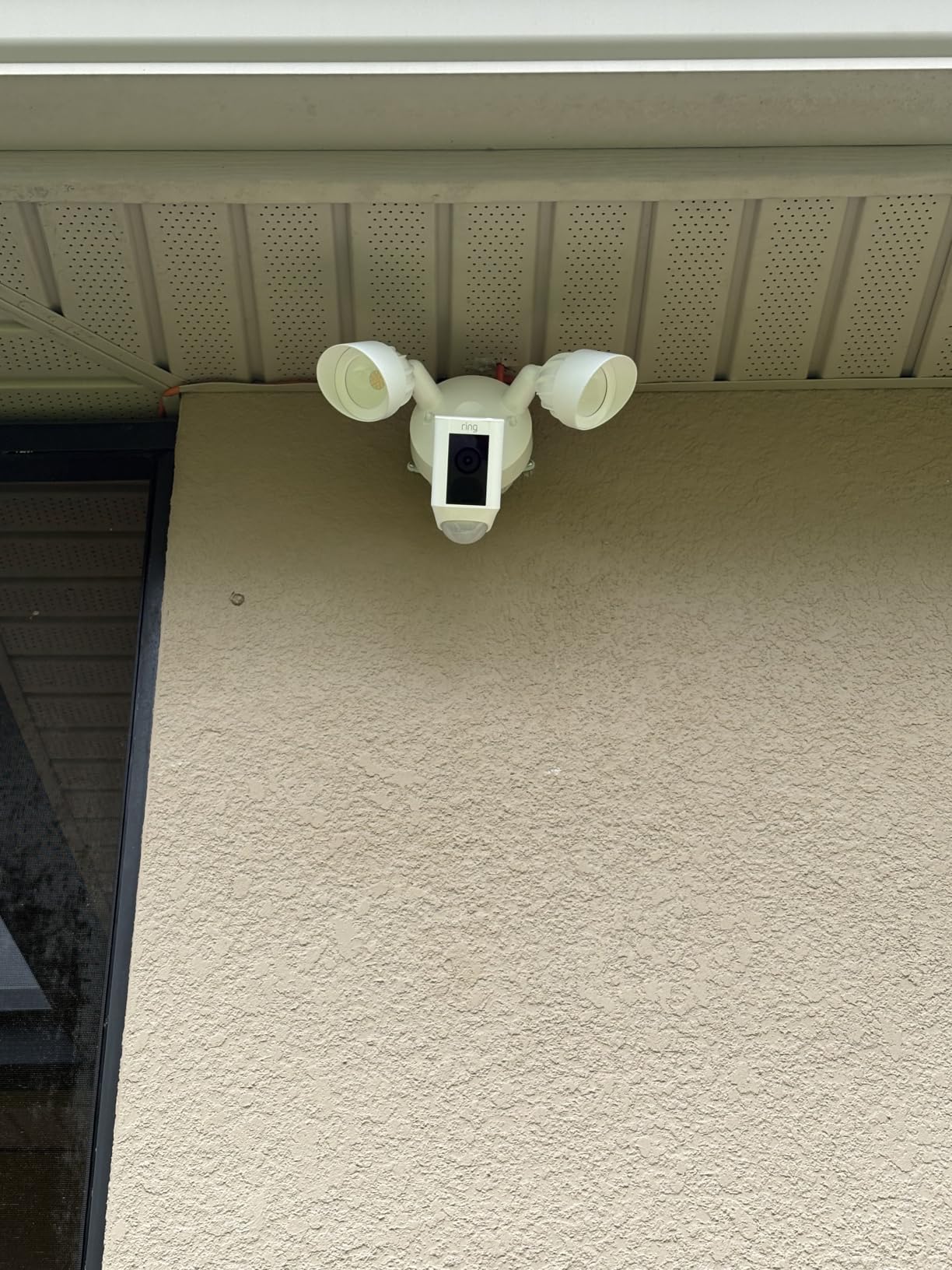
There are real trade-offs. The viewing angle is fixed, with no pan or tilt, so your choice of mounting height and standoff has to be right on the first attempt. The floodlight toggles fully on or off rather than dimming to a low glow, which means a driveway neighbour gets the full 2000 lumens every time something walks past. And the smarter features, including AI-generated alerts and video rewind, sit behind a Ring Protect subscription.
What you get for the wiring is a complete install kit: mounting screws, wire nuts and a bundled multi-tool screwdriver are in the box. Scheduling lets you run the light dusk to dawn or strictly on motion, and adjustable brightness and on-duration help you tune glare off snow drifts, which bounce light straight back into the lens.
When this camera is the right winter pick
Choose it when your winters regularly reach -20F, when the location already has a junction box, and when you want the camera to keep recording through a power blip that would brown out a battery unit. It suits front entries, driveways and any dark approach in a northern climate.
It is also the best option for a rental or off-grid cabin if you already have a generator or inverter, since the constant draw is small and predictable. Verify the circuit has capacity before adding several of them to one branch.
When to look elsewhere
Pass if you have no access to mains power at the mounting point, because the alternative is running a cable back to a junction or adding a remote power supply. Battery or solar models are the honest answer when wiring is impossible.
Consider a different floodlight model if the fixed angle is a deal-breaker for you. Nobody who installs one of these is looking for a moving-parts indoor pan and tilt unit, but if you need remote control over the frame, a wired turret with motorized zoom serves better.
4. Blink Outdoor 4 Two-Camera System – Best Value for Covering Several Points
- Up to two years of battery life on two AA lithium cells
- Quick wire-free install with no electrician
- Person detection reduces animal and shadow alerts
- Sharp 1080p day video and usable night footage
- 1080p is modest next to 2K and 4K options
- Sync Module can lock up after a power blip
- Person detection and cloud storage need a plan
- Low-light detail is limited for face or plate ID
Blink Outdoor 4 is the best value pick when you want to cover four or six vantage points without calling an electrician. Each camera runs on two AA Energizer lithium batteries with a claimed battery life of up to two years, records 1080p HD by day, and switches to infrared night live view after dark. Two cameras and a Sync Module Core come in the box, and the whole install is genuinely wire-free.
Two AA cells are more forgiving in cold than a sealed lithium pack, and because there is no charging step there is no risk of trying to recharge a frozen cell. Dual-zone enhanced motion detection and optional person detection are the features that actually reduce notification fatigue, which matters when a driveway is throwing snow shadows at the sensor all night. Reviewers consistently praise the detection range, with people and vehicles picked up at a distance.
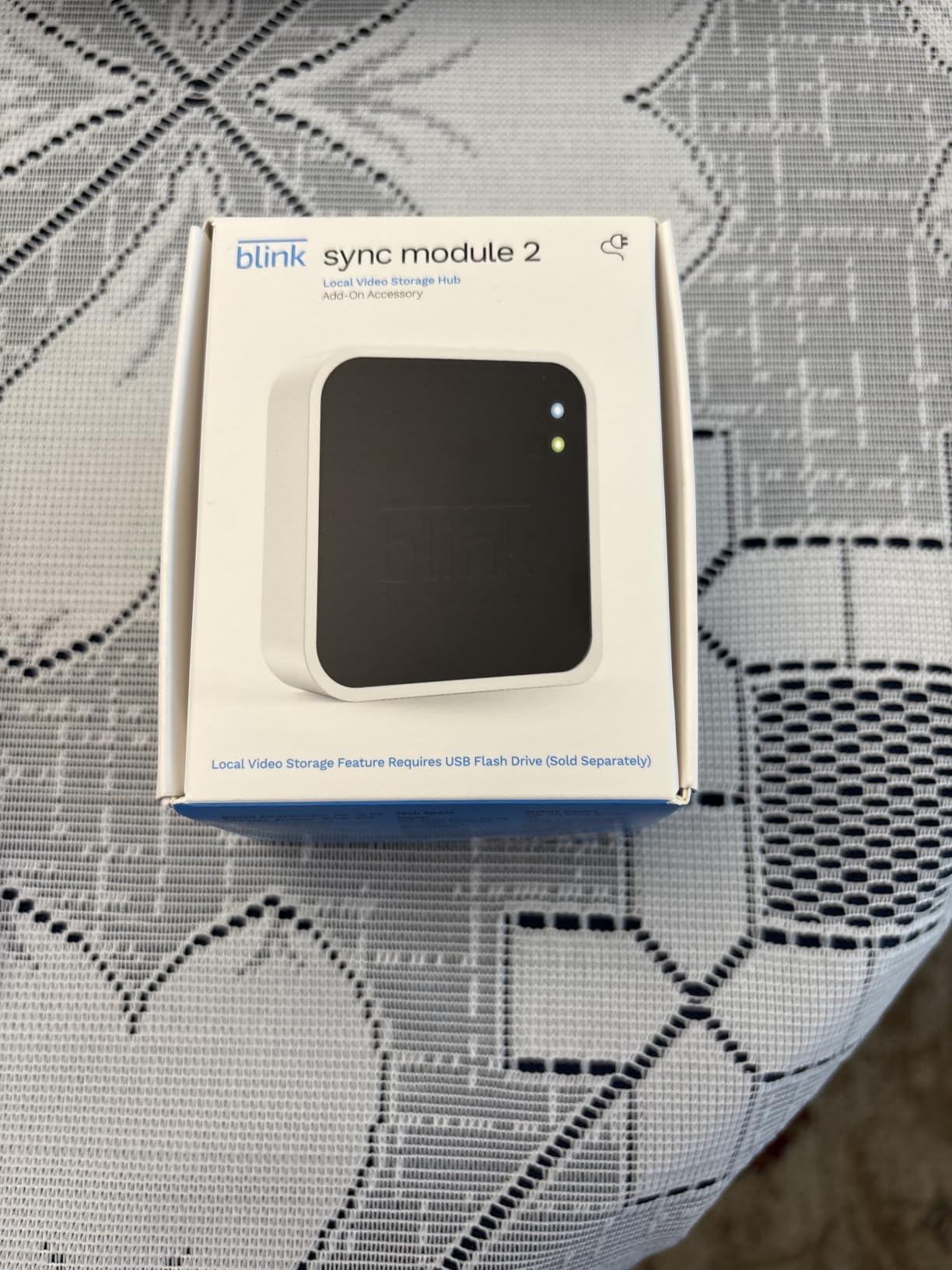
The trade-offs are real. 1080p is behind every 2K and 4K option here, and low-light detail is limited enough that you will struggle to identify a face or read a plate at 30 feet. The Sync Module Core included in this package does not support local storage, so no-subscription recording means buying a Sync Module 2 with a USB drive or a Sync Module XR with a microSD card, and person detection plus cloud history both sit behind the Blink plan. The most cited weakness is the Sync Module itself locking up after a brief power blip or a firmware update, which then forces a full system reinstall.
In a hard-winter zone, treat the module as the weak point rather than the cameras. Keep it indoors, in a heated room, so a power interruption does not knock out the whole system mid-storm.
When this camera is the right winter pick
Pick it for a mild-frost zone where you want the lowest per-camera cost across a large property, a rental unit you visit twice a year, or a garden and side yard with no power access. The lithium AA cells tolerate temperature swings better than most sealed battery packs.
It is also a sensible second layer around a hardwired system, giving you cheap coverage at the rear of a property where pulling a cable would mean digging.
When to look elsewhere
Pass if your winters sit below -20F and the cameras are on fully exposed walls, since cold shortens the already-modest battery life further. Do not choose it as your only evidence source if you need licence-plate or face identification.
Avoid it if you refuse any subscription and will not add a local-storage module, because the base Sync Module Core records nothing on its own. The Reolink Argus models covered next record locally with no plan at all.
5. REOLINK Argus PT with Solar Panel – Best for No Subscription
REOLINK Solar Security Cameras Wireless Outdoor 360° Coverage Argus PT
- No subscription needed with local microSD or FTP
- IP65 housing handles heavy snow
- 355-degree pan and 140-degree tilt
- Color night vision up to 33ft
- Dual-band 2.4GHz and 5GHz WiFi
- No auto-tracking or motion routes
- Four to seven second response delay
- No published minimum operating temperature
- MicroSD card and hub sold separately
REOLINK Argus PT is the best pick if you refuse to pay a subscription, and the only camera here with dual-band WiFi. It runs entirely on a bundled solar panel, records to a local microSD card up to 512GB, a Reolink Home Hub or an FTP server, and it pans 355 degrees horizontally and 140 degrees vertically. Video is 1440p with colour night vision up to 33ft, inside an IP65 housing, and it earned a 4.1 star average across more than 9,600 reviews.
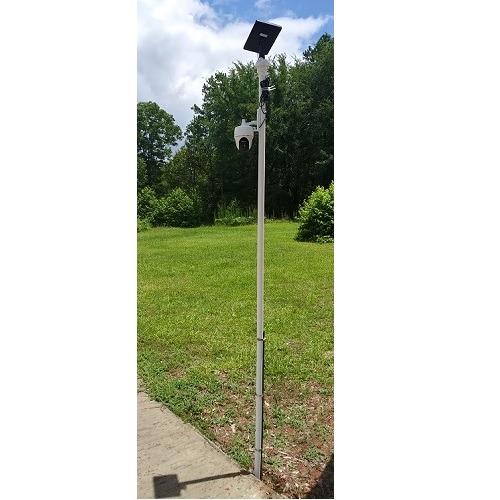
The no-subscription path is the reason this camera keeps appearing in cold-climate conversations. Owners on r/reolinkcam consistently recommend verifying that the panel is actually charging the battery once sub-zero nights begin, because charging output drops and failures are silent. Our advice is to treat the panel as supplementary: aim it at the southern sky, keep the glass clear of snow and ice, and plan on swapping the battery on a schedule rather than assuming the sun will always keep up.
There is no auto-tracking and no motion routes on a PT unit that only records on events, so an intruder who walks through the field of view is captured but not followed. Response lag of roughly four to seven seconds is the other recurring complaint, most noticeable at night. Detection zones can be ambiguous, with people and vehicles confused for one another, and replacement parts for small components have historically been hard to source.
Worth flagging for winter: the pan and tilt motor is the moving part most likely to feel the cold, and a gimbal that seizes is a common complaint in this category on r/EufyCam. Mount this one under an eave or soffit where it is sheltered, and set the vertical range so it does not sweep the ground where snow drifts collect.
When this camera is the right winter pick
Choose it for a cabin, a remote rental, or any off-grid location with no mains power and no reliable WiFi, and for anyone who has decided that a monthly plan is not acceptable. The IP65 housing is rated for heavy snow, which owners confirm.
It also works well as a wide-coverage secondary camera, since the 360-degree pan and tilt covers a yard from a single mount point instead of needing two units.
When to look elsewhere
Pass if you need continuous recording, since this is an event-only camera and the lack of auto-tracking makes gaps more likely. It is also the wrong pick if you are installing below about -10F and cannot physically reach the mount to clear snow or swap the battery.
Consider the Argus Eco instead if you want a fixed bullet form factor with fewer moving parts, or if you need a published operating temperature before committing.
6. REOLINK Argus Eco with Solar Panel – Best for Off-Grid Use in a Mild Zone
REOLINK Solar Camera Outdoor Wireless 2K 5MP Smart AI Detction Argus Eco
- Published 14F to 131F operating temperature range
- No subscription with local microSD up to 512GB
- 2K 5MP resolution beats typical 1080p
- Solar panel removes routine battery swaps
- Operating range starts at 14F so it suits mild zones only
- 2.4GHz WiFi only
- 33ft night vision from infrared LEDs
- Detection alerts need sensitivity tuning
REOLINK Argus Eco is the pick when you want the most honest temperature specification in the group. The manufacturer publishes an operating range of 14F to 131F for this model, which tells you plainly that it is built for a mild winter rather than a northern one. In a zone that stays above 0F it is a strong machine: 2K 5MP resolution, a 3W solar panel, an IP65 housing and local microSD storage up to 512GB with no subscription.
That published number is exactly the point. A buyer in Vermont wondered whether a rival outdoor camera rated to -4F would hold up in a real northern winter, and the reason that question is hard to answer is that most brands never print the figure. When a spec sheet does print it, you can check it against your own local record lows instead of guessing.
At 14F, anything colder and you are outside the rated range, so treat this as a mild-frost and coastal-winter camera. It is 2.4GHz only, which means dual-band routers need the bands split, and night vision reaches about 33ft using six infrared LEDs, so the picture goes monochrome the moment there is any ambient light. Buyers love the 2K clarity for the money and the fact that local recording removes the plan entirely, but they regularly report having to tune detection sensitivity to stop false alerts.
The bullet form factor is worth noting in ice. Installers on IPVM consistently avoid dome and non-sealed housings in cold environments because imperfect seals let moisture in, and a bullet body with a small flat front face sheds meltwater far better than a dome that traps it.
When this camera is the right winter pick
Pick it for a coastal, southern or lowland installation where the coldest night of the year sits comfortably above 20F, and where you want 2K clarity plus local recording with no monthly cost. It is a strong fence, side yard and garden camera for that profile.
It also suits a small remote building with a good solar exposure, since the fixed 100-degree field of view covers a defined area and never has to be re-aimed.
When to look elsewhere
Move up to the Dzees CG6 or a wired unit if your record low drops below 10F, because operating outside the published range is how boards and batteries get destroyed. This is the one camera in the roundup where the number is a hard stop rather than a guideline.
Skip it if your router is dual-band and you cannot split the 2.4GHz and 5GHz bands, or if you need to see colour at night beyond a few feet from the lens.
7. ZEEPORTE Snap 30T – Best Budget Solar 360 Camera
- 360-degree pan and tilt from a single mount
- 5200mAh battery with 2W solar panel
- Siren
- spotlight and two-way audio included
- Local microSD plus free rolling cloud storage
- 2.4GHz WiFi only
- Event recording only with no continuous mode
- AI recognition and cloud features need a subscription
- No published minimum operating temperature
ZEEPORTE Snap 30T is the budget pick for covering a whole yard with one unit. It records 2K video at 2304 by 1296, pans 355 degrees horizontally and 120 degrees vertically, and runs on a 5200mAh rechargeable cell kept topped up by a 2W solar panel inside an IP65 housing. Starlight sensors deliver colour night vision to about 33ft, and it carries a 4.3 star average across more than 11,000 reviews, which is the second-strongest rating among the battery and solar units here.
For cold climates, the 5200mAh capacity is a genuine advantage, since a larger pack degrades more gracefully when cold cuts usable capacity. The built-in siren, spotlight and two-way talk add real deterrent value for a device at this level, and local microSD up to 256GB works alongside seven days of rolling cloud storage at no cost.
The limitations are structural. It is 2.4GHz only, it records on events with no continuous mode and no motion tracking, and the AI recognition for people, vehicles, pets and packages needs a subscription, as do the upgraded cloud features and package detection specifically. Like most of this category, it does not publish a minimum operating temperature, so treat it as a mild-to-moderate winter camera rather than assuming it matches the Reolink figure.
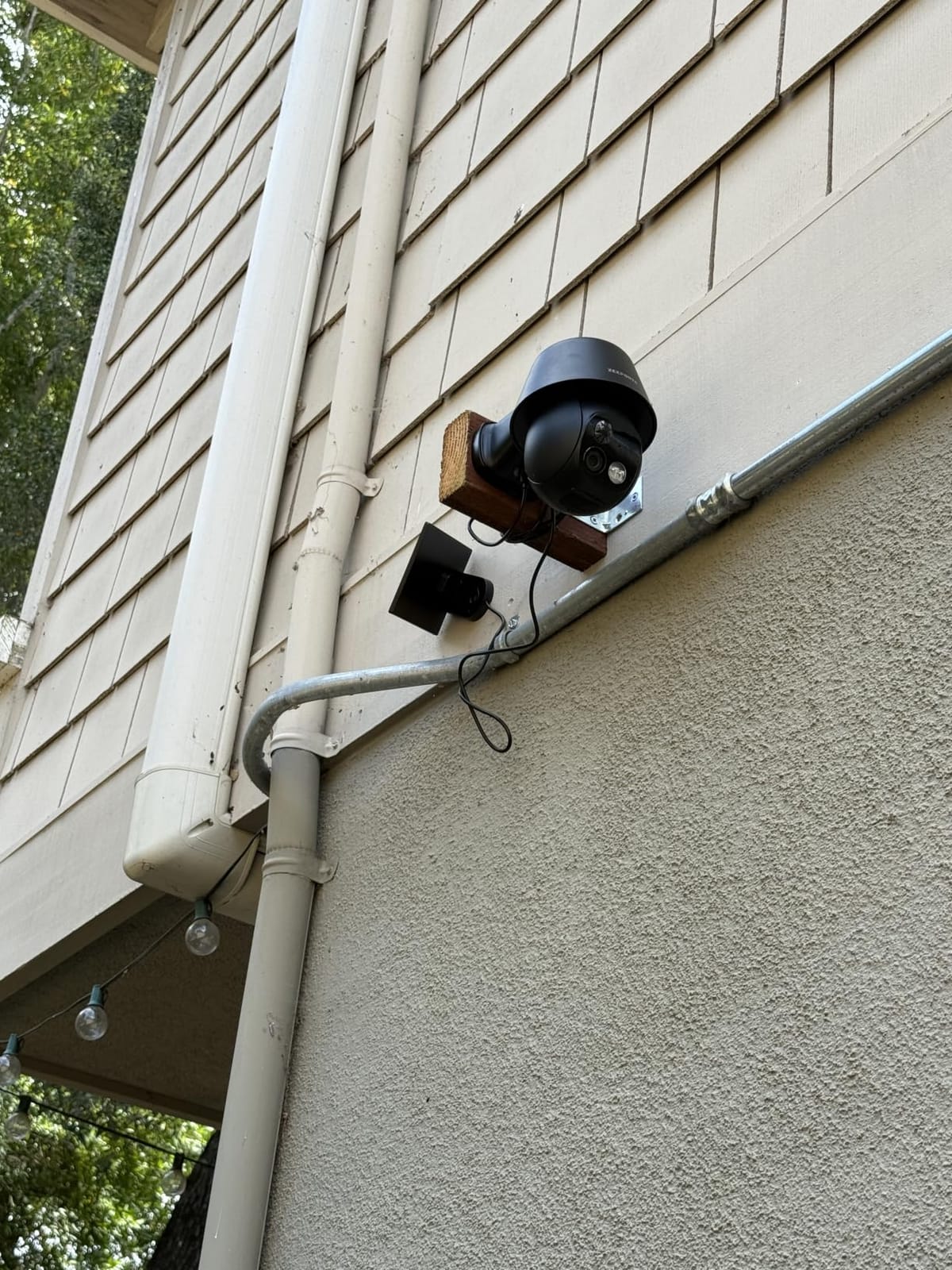
One installation note: the pan and tilt motor is the component to watch through a freeze-thaw cycle. Mount under an eave, keep the base connector dry, and after the first cold snap go out and confirm it still moves before you rely on its view.
When this camera is the right winter pick
Choose it when you want one device to cover a full perimeter in a mild-frost zone, and when the siren and spotlight are part of the plan rather than a bonus. The 360-degree view means one mount point covers what would otherwise take three fixed cameras.
It also works for a low-traffic side yard or a shed where you want eyes on the property but will never be near the controls in January.
When to look elsewhere
Pass if you need continuous 24-hour recording, since the event-only behaviour will leave gaps exactly where a continuous system would not. It is also the wrong choice for evidence-grade footage where a face or plate must be identified.
Skip it if you need a guaranteed cold-weather specification on paper. When a brand publishes an operating range you can plan against; when it does not, you are guessing, and a wired model lets you plan around power instead of temperature.
8. SEHMUA RBX-S40 – Best for Mild Winters on a Budget
- Published -4F to 121F operating range
- Fully wire-free solar installation
- 2K video with 360-degree pan and tilt
- PIR sensor with human-like recognition
- 2.4GHz WiFi only
- Color night vision needs the spotlight switched on manually
- Two-way audio and app responsiveness are average
- Camera body only with no panel in the box
SEHMUA RBX-S40 is a good choice for a mild winter where you want more temperature headroom than the Argus Eco but still do not want to run cable. The manufacturer publishes an operating range of -4F to 121F, which is roughly 35 degrees colder than the Reolink Eco’s floor and therefore usable across a much wider band of the continental United States. Video is 2K, the pan and tilt sweeps 355 degrees horizontally and 100 degrees vertically, and the housing is IP65.
It earned a 4.2 star average across more than 6,800 reviews, and owners consistently highlight the combination of solar power, 2K clarity and a wide temperature tolerance. A PIR motion sensor with human-like recognition reduces false alerts, which matters in a season when bare branches and drifting snow trigger a lot of motion for no reason at all.
Two things to know before you commit. Colour night vision depends on a spotlight you have to switch on manually, so unless you set a schedule you will be looking at monochrome footage most winter nights, when darkness lasts far longer than it does in July. And two-way audio and app responsiveness are rated average by owners, so treat this as a watch-and-record camera rather than a talk-back camera. The box contains the camera body only, with no panel included, so plan for a separate solar panel or USB charging.
With a -4F floor, this camera handles most of the eastern and central United States. Below that, you are outside the published range and the cold-weather conversation changes entirely.
When this camera is the right winter pick
Pick it for a front porch, back garden or driveway in a zone that occasionally dips near 0F, where you want wire-free installation and a 2K image without a subscription decision. The 360-degree coverage is well suited to an open yard.
It is also a good match for a garage or workshop where you want coverage but will not want to service a camera on a ladder in January.
When to look elsewhere
Move to a wired or PoE camera if your record low goes below -10F, because at that point you need mains-derived heat more than you need the pan and tilt convenience. Battery and solar formats both lose capacity sharply at those temperatures.
Consider a fixed bullet model instead if the moving pan and tilt is a liability for you, since any motorised joint is a potential failure point when ice forms on the mechanism.
9. Arlo Wireless Floodlight 2K HDR – Best for Lighting a Dark Yard
- Very bright floodlight covers a yard or driveway
- Sharp 2K HDR with a 160-degree field of view
- Excellent color night vision
- Works with Alexa
- Apple Home
- Google Home and SmartThings
- Battery access means taking the unit down to recharge
- Brightness drops when running on battery
- Foresight pre-recording and 60-day history need a plan
- Occasional offline units resolved through support
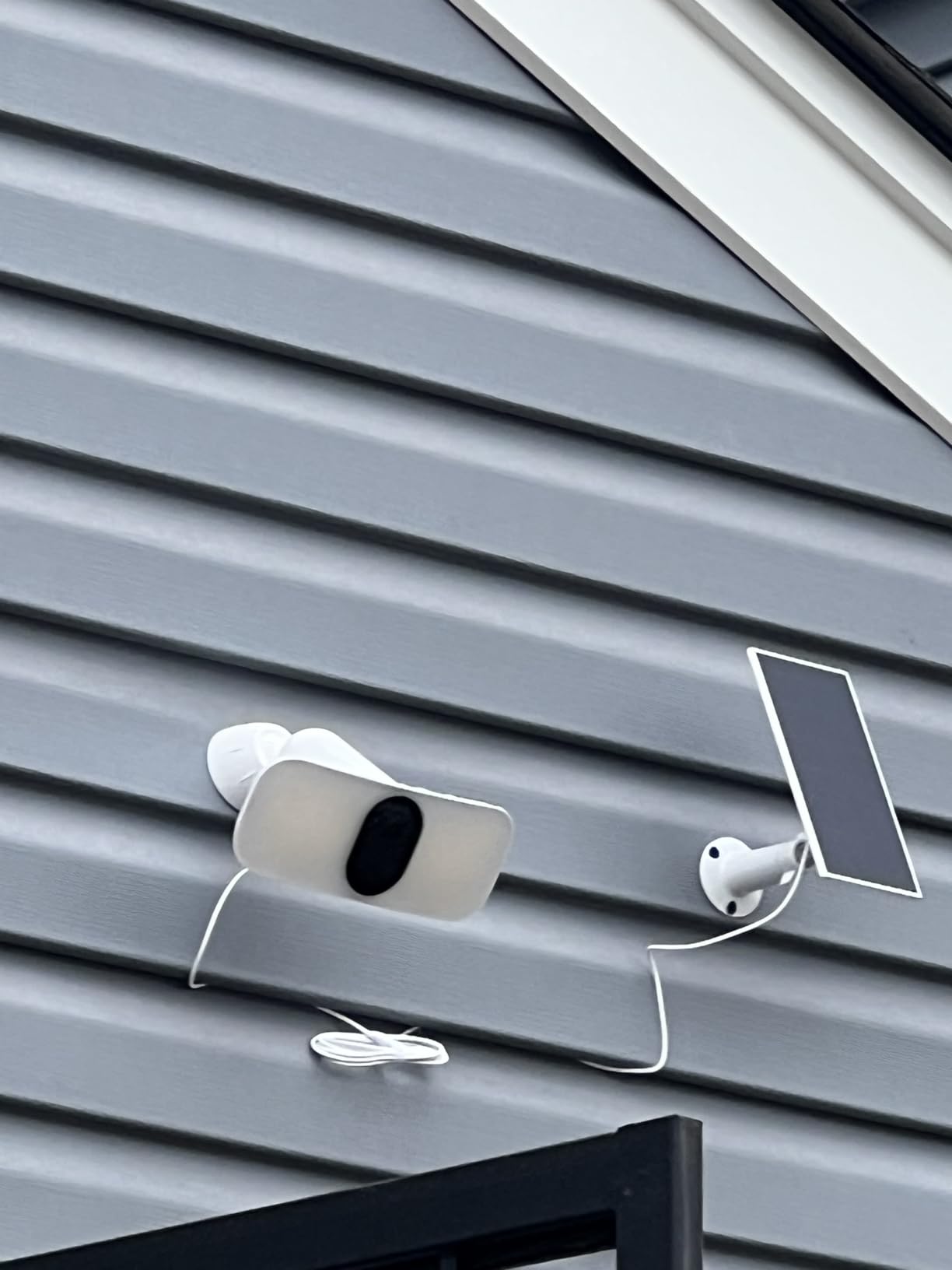
Arlo Wireless Floodlight 2K HDR is the pick when the real goal is light, not just footage. It pairs a 1440p HDR sensor and a 160-degree field of view with an LED floodlight rated up to 3000 lumens, and it holds colour night vision to 25ft. The 4.2 star average across more than 5,000 reviews is backed by owners who specifically praise the floodlight brightness and the 2K HDR clarity in snowy scenes, where reflective surfaces blow out badly on lesser sensors.
It is wireless, running on a lithium-ion battery, and a hardwired version of the same line exists separately. For a cold-weather buyer, that is the single most important decision on this product: the battery version requires you to take the unit down off the wall to recharge, which on a second-storey mount means a ladder in January. The wired version eliminates that and adds the self-heating benefit.
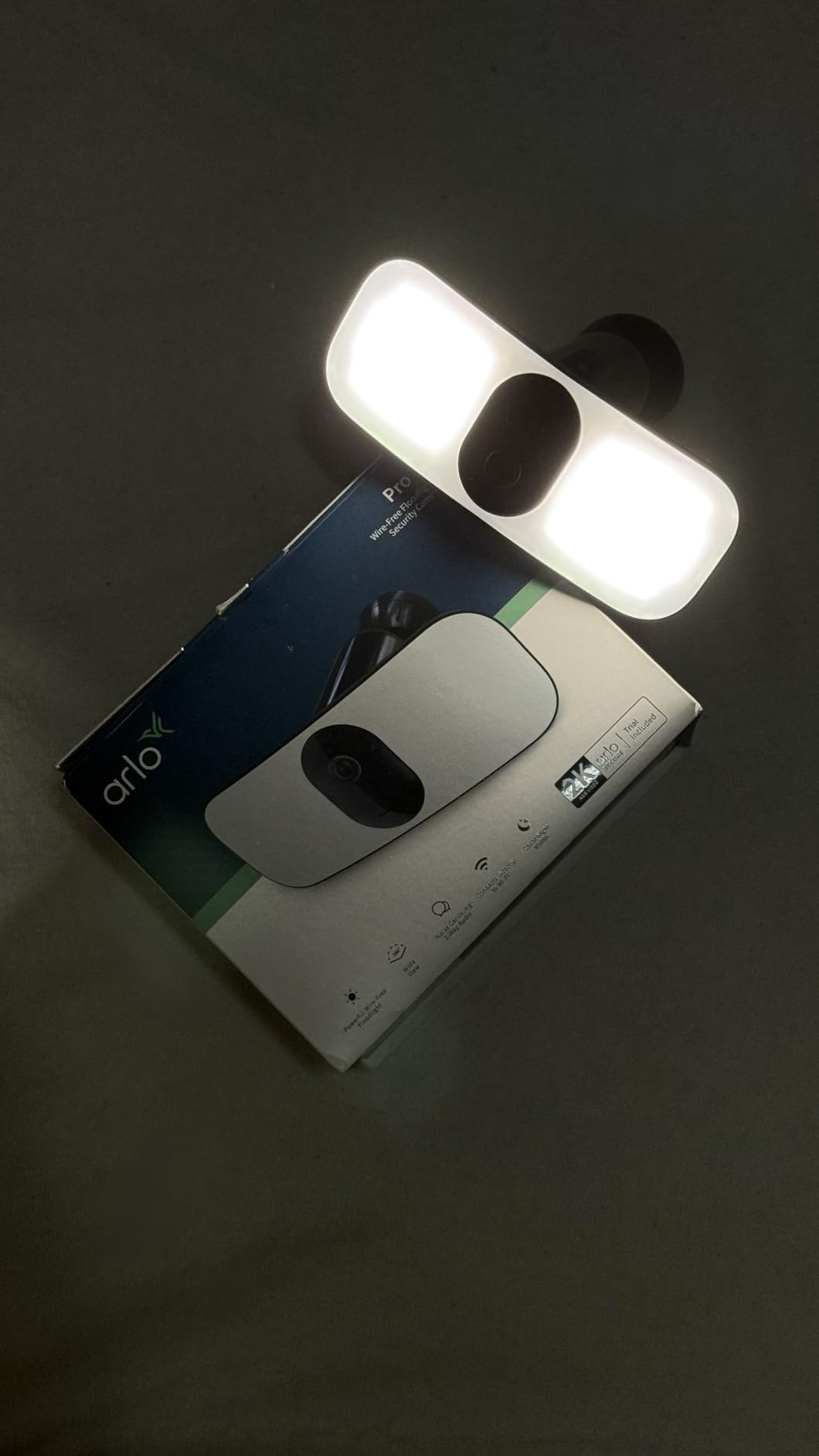
Owners also note that brightness is lower than a comparable dedicated floodlight when the camera is running on battery, which is understandable given the power budget. Foresight pre-recording and the 60-day video history both require an Arlo Secure plan after the trial, and a minority of buyers report units going offline repeatedly before support replaced them. Smart detection with AI-generated event captions, 12x digital zoom and a remote siren are all present, along with an emergency response trigger for police, fire or medical services.
Winter-specific note: a floodlight mounted over a driveway in a low-sun climate produces serious glare off snow banks. Mount it to the side, aim it away from the camera’s own view axis, and expect a longer exposure time and more snow-triggered alerts than in summer.
When this camera is the right winter pick
Choose it for a dark driveway, side yard or back garden where you want a camera and a working security light in one housing, and where you can live with battery recharging or accept the wired variant. Wide 160-degree coverage means one unit sees a whole front yard.
It is also a good fit for anyone already invested in the Arlo ecosystem or in Apple Home, Google Home or SmartThings, where it is one of the better-integrated options.
When to look elsewhere
Pass if the mount is high or awkward, because the recharge procedure means physically removing the unit, and doing that in freezing weather is how people end up with a dropped camera and a bent mount. The wired version exists and removes the problem.
Skip it if you need guaranteed local recording without a plan, since the headline history features are subscription-gated. If cost is the deciding factor, the Dzees CG6 covered next gives you local microSD and a two-pack configuration.
10. Dzees CG6 Two-Pack – Best Hard-Winter Battery Pick
Dzees 2K Wireless Outdoor Security Camera 2-Pack, Battery WiFi Night Vision
- Best published low-temperature rating among battery cameras
- IP66 housing is the strongest ingress rating here
- Local microSD up to 128GB with no subscription
- Up to 3 months of battery life per charge
- Built-in spotlight
- strobe and siren deter
- Not compatible with Alexa or Google Assistant
- 2.4GHz WiFi only
- Motion sensitivity runs high and needs tuning
- Some units drop offline after firmware updates
The Dzees CG6 is the strongest battery-powered option for a hard winter, and it earns that on paper more than on marketing language. The manufacturer publishes an operating range of -20F to 120F with an IP66 housing, and -20F is roughly 16 degrees colder than the next-best published battery figure in this roundup. It records 2K video with a built-in spotlight for 3MP colour night vision at 33ft, and it holds up to three months of battery life per charge in typical use.
Two details make it unusually winter-friendly. The IP66 rating is the highest ingress rating among the products here, and IP66 is specifically tested against powerful water jets, which is the closest simulation to an ice-driven pressure event. And because the recharge process removes the camera from its mount while leaving the mount in place, you are not re-aiming anything on a ladder in a driveway after a snowfall.
There are compromises. It is 2.4GHz only and works with neither Alexa nor Google Assistant, so it lives entirely in its own app. Motion sensitivity runs high out of the box, which produces alert fatigue until you dial it down and set custom zones, and some units have gone offline after firmware updates. The microSD slot holds cards up to 128GB and the card is not included, though local recording does work with no subscription, which is rare in this class. The 124-degree field of view is narrower than the 360-degree pan and tilt models, so you are buying coverage per unit rather than coverage per mount.
Even with the -20F rating, plan the battery schedule conservatively. Cold cuts usable capacity before it cuts function, so a camera that runs three months at moderate temperatures may not see one full charge cycle through a northern January.
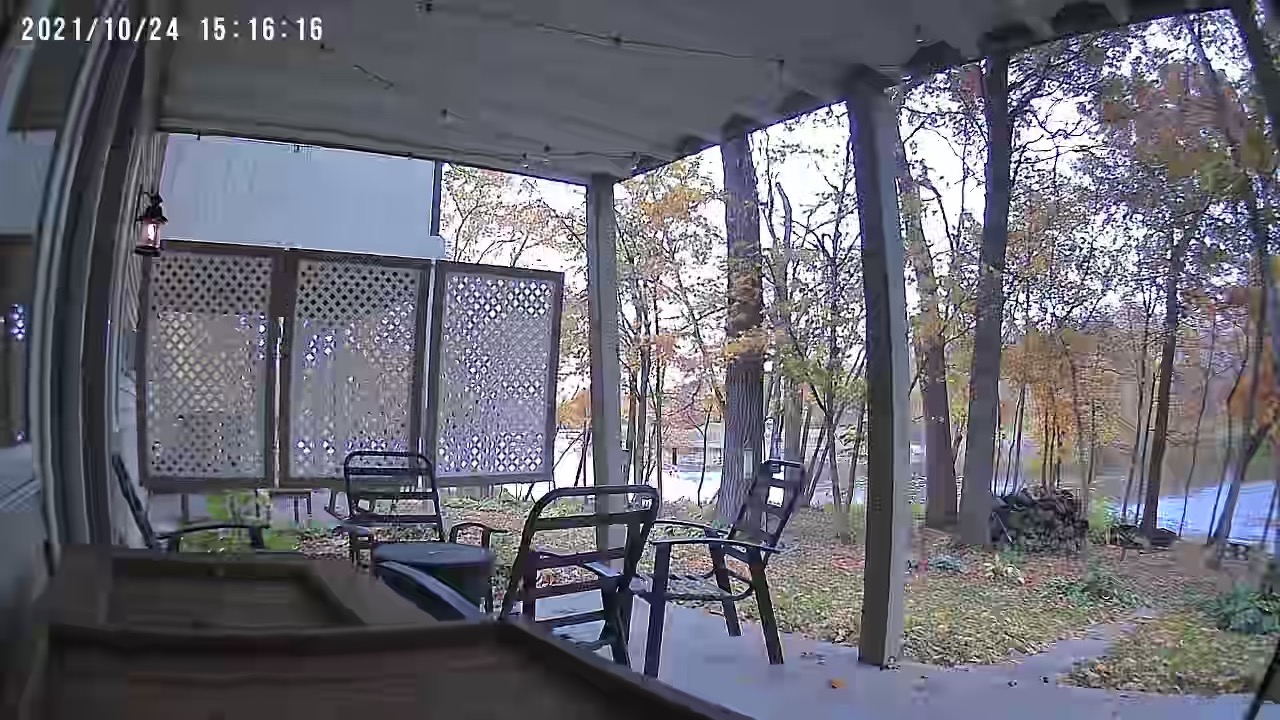
When this camera is the right winter pick
Pick it when your winters drop past -10F, you cannot run wiring, and you want a printed temperature rating you can check against your local record low. The two-pack format covers a front and back entrance at once.
It is also the right battery pick for a garage, a detached building or a rental unit, where IP66 sealing and local microSD recording without a plan are the two features that matter most.
When to look elsewhere
Move to wired or PoE if you can, and take the wired-first advice seriously below -20F. A battery camera with a good rating is still a battery, and the Dzees is a two-pack, not a system, so you are managing four batteries across two units.
Skip it if you need voice assistant integration or continuous recording. Anyone who wants a full wired system instead should start with the Floodlight Cam Wired Plus, which is where we would begin for a hard-winter zone.
What to Look for in a Winter-Proof Security Camera
What temperature is too cold for a security camera?
There is a practical threshold, not a single one. Consumer plug-in and battery cameras are commonly rated to somewhere between -4F and -20F, and a great many publish nothing at all. Reaching -40F requires specialty or commercial units, or any camera mounted inside a heated enclosure. If your area records temperatures below -20F, treat battery and unheated consumer units as unsuitable and plan around wired power or a heated housing.
The second thing to check is whether the number you found is an operating rating or a storage rating, because they are often wildly different.
Wired vs battery in cold
This is the single most repeated point of consensus in the cold-climate camera space, and the reason is physical. A wired or PoE camera continuously converts a small amount of mains power into heat inside its own housing, which keeps the board and any internal cells above the temperature where condensation forms. A battery camera has no such source of warmth, and lithium-ion cells lose usable capacity in the cold and will not recharge reliably below freezing.
That is why battery failures in winter are silent. There is no alert when a pack dies, so the first sign is a missing clip after an incident. On r/homesecurity, users describe fully wireless battery cameras as a no-go for winter, and on r/reolinkcam the community explanation is exactly the self-heating effect. One r/Ring owner reported cameras working down to -35F, and another four-camera setup running at -40F with wind chill, so results vary widely with placement and rating. Treat all of it as unverified, but treat the wired-first rule as well established.
Integrated lens heaters and heated enclosures
A cold lens meeting warm humid indoor air causes condensation on the inside of the glass, and frost does the same thing from outside. Either way the camera is blinded at exactly the moment you need it, and in winter that moment tends to be the cold morning right after a break-in.
None of the ten cameras here publishes an integrated lens heater, which is worth stating plainly rather than implying otherwise. A lens heater is a real feature on commercial cold-climate models and on heated enclosures, and it is the standard answer in genuinely arctic installs. What a consumer camera gives you instead is external mitigation: aim a separate IR illuminator or a motion-activated light at the glass to add warmth, mount the camera under an eave so it warms and cools more slowly, and clean the front element on a schedule.
IP ratings decoded for freeze-thaw cycles
IP65 means dust-tight and protected against water jets. IP66 adds protection against powerful water jets, which is the practical winter minimum and the one you should insist on for any camera mounted on an exposed wall. IP67 adds protection against temporary immersion, which matters more for pole mounts and areas that get wind-driven rain at height.
The reason ingress rating matters more in cold than in heat is freeze-expansion. Water that enters a housing through a marginal seal freezes, expands, and can crack the enclosure or short the board. Installers on IPVM consistently recommend avoiding dome and non-sealed housings in cold environments for exactly this reason. Among the ten products here, five publish a rating: IP65 for both Reolink models, the ZEEPORTE and SEHMUA, IP65 for the Arlo, and IP66 for the Dzees.
Operating temperature vs storage temperature
This is the most misunderstood spec pair in the category and a genuine buying trap. A camera can be rated to be stored at -40F and only operated to -4F, and if you take the storage number as the operating number you will install a unit that fails the first cold snap.
When a brand prints a single number, assume it is the operating rating, and check the manual for a separate storage figure. A related caution: if a camera is delivered or stored cold, let it reach room temperature before powering it on, because powering a frosted board while moisture is still condensing inside is the shortcut to a failed unit.
Form factor in ice: bullet, turret or dome
Installer consensus favours the simplest shape. A bullet camera with a small flat front face sheds meltwater and lets you wipe the glass easily, a turret is similar with a tilting mount for aiming, and a dome traps air and moisture around the lens in a sealed bubble where condensation forms and cannot be wiped away.
Pan and tilt units add a motorised joint, and owners on r/EufyCam have asked directly whether a 360 gimbal physically freezes in winter. Any moving mechanism is a potential cold failure point, and while we saw no confirmed freeze failures in this product set, the concern is the reason several of the picks here are fixed-form or mounted under shelter.
Night vision in short winter days
Winter compresses daylight. Depending on your latitude, you may lose an hour or more of usable light at each end of the day, and a camera that was only occasionally switching to infrared in July is running in infrared most of the night in January. That matters for image quality, because infrared illuminators produce monochrome footage with a shorter practical range than daylight and no colour for identifying clothing or vehicles.
It also means more false alerts. r/BlueIris users report cutting most rain, snow and bug alerts at night by turning off the camera’s own IR and installing offset IR illuminators, so the light source sits outside the camera’s field of view and the scene is lit without the camera staring into its own glare. It is a small change that makes night footage dramatically cleaner, and it is worth doing before the first storm rather than after.
Your First Winter Checklist
Timing matters more than most buyers expect. Installers on IPVM note that below roughly -20F there are hard limits to cold-weather installation itself, not just to the equipment. Lithium packs are not happy being charged when cold, batteries may be sluggish, and some tools and adhesives simply refuse to work. If you can, get the hardware mounted before the first sustained freeze, then bring power or charge in spring conditions.
Once mounted, work through this list. Seal every cable entry point with weatherproof grommets, and drip-loop the run so meltwater falls away from the housing rather than down the cable into it. Aim each camera under an overhang, eave or soffit where the front glass is shaded from wind-driven rain. Check the seal and the desiccant after the first freeze-thaw cycle, because that is when ingress problems first show.
Clean the lenses. Snow, ice film and salt spray cut night vision range and cause the camera to work harder, and a lens in shade takes far longer to fog. Keep the solar panels clear of snow, because a panel under a layer of ice charges nothing and the failure is silent until the camera is dead.
Deal with your recorder, which is the part people forget. NVR and DVR units and the hard drives inside them fail in unheated garages, basements and porches: lubricants thicken, LCD panels freeze, and drives that spin up in a cold room may never start again. Put the recorder and any switch or PoE injector in a heated, finished room, and put a battery or UPS on it so a brown-out does not end a storm of recording. If a camera had to run from a battery, the recorder probably should not be out there either.
Finally, tune alerts while you still have time. Snow, blowing branches and bats produce a flood of night notifications, and people mute the app. Set motion zones on the path rather than the whole field, drop sensitivity a notch, and switch on person and vehicle detection. Our advice is to run the whole test before December, not during it. And if you are outside clearing a driveway, dress for the cold properly while you are up there, because nothing ages a camera installation faster than a distracted homeowner in January.
Frequently Asked Questions
What temperature is too cold for a security camera?
There is no single answer, but there are useful tiers. Consumer plug-in and battery cameras are usually rated somewhere between -4F and -20F, and many brands publish no operating temperature at all. Staying above -20F is a reasonable rule for unheated consumer units. Operating reliably at -40F requires specialty or commercial equipment, a heated camera enclosure, or mains-powered cameras that self-heat.
Are there security cameras that can work in cold weather?
Yes, provided three conditions line up. The published operating temperature range must cover your local winter low, the ingress rating should be IP66 or higher to survive freeze-thaw cycles, and the power source should be wired or PoE rather than battery. A camera that fails silently on a dead battery protects nothing in the months you need it most.
What is the best outdoor camera without a monthly subscription?
Both REOLINK Argus models in this roundup record to local microSD, a Reolink Home Hub or an FTP server with no subscription, and the Dzees CG6 records to local microSD up to 128GB on the same basis. Among battery and solar options with a published operating temperature, the Dzees CG6 has the strongest at -20F to 120F in an IP66 housing. The Arlo requires a plan for its headline history features.
Why does my outdoor camera stop working in the winter?
Four causes account for most failures. Battery capacity collapses and the pack will not recharge below freezing, and the failure is silent. Condensation forms on the lens when a cold glass surface meets warm humid air. Moisture that entered the housing freezes, expands and can crack the enclosure. And recorders, hard drives and switches fail in unheated garages or basements where lubricants thicken and LCDs freeze.
Which security camera is best for extreme cold weather?
For genuinely brutal climates, use mains-powered or PoE cameras installed inside a heated enclosure, or commercial models built with heater elements and blowers. A wired camera dissipates enough power as heat to keep its own board above the condensation threshold, which is why wired units outperform everything else below -20F. Consumer battery cameras are not the right tool in a tier where temperatures sit below -30F.
What is the best weatherproof outdoor security camera?
Resolve it by the ingress rating ladder. IP65 handles rain and dust. IP66 adds protection against powerful water jets and is the practical winter minimum, because it is tested for the kind of pressure a freeze-thaw cycle can create. IP67 adds temporary immersion protection, which matters for pole and high wall mounts. Among these picks, the Dzees CG6 is the only IP66 unit.
Which camera is best for shooting in cold weather?
That question usually refers to photography cameras, which is a different category. This roundup covers security and surveillance cameras for year-round property monitoring. The physics overlap, since lithium-ion batteries and condensation affect photography gear in the same way, but the priorities differ: a security camera needs unattended cold-weather reliability, not manual control.
The Bottom Line for Cold Weather Security Cameras
Three rules decide almost everything, and they are the same rules installers in cold climates repeat. Go wired or PoE first, because mains power is the only thing in this list that removes a failure mode rather than managing one. Insist on IP66 or better, since freeze-expansion turns a marginal seal into a cracked board. And check the published operating temperature against your own record low, ignoring any number that turns out to be a storage rating.
Match your zone to a pick. Mild frost to -10F: the Ring Outdoor Cam Stick Up is our editor’s choice, with the largest review base here and no moving parts to freeze. Hard winter to -20F: choose the Ring Floodlight Cam Wired Plus for continuous power, or the Dzees CG6 if you must go battery. Brutal and below: wired, sheltered, and ideally inside a heated enclosure.
We keep this list current through 2026, and the spec data behind it is refreshed as manufacturers publish better temperature figures. If you tell us your lowest expected winter temperature and whether you can run cable, we will point you at the right section.