
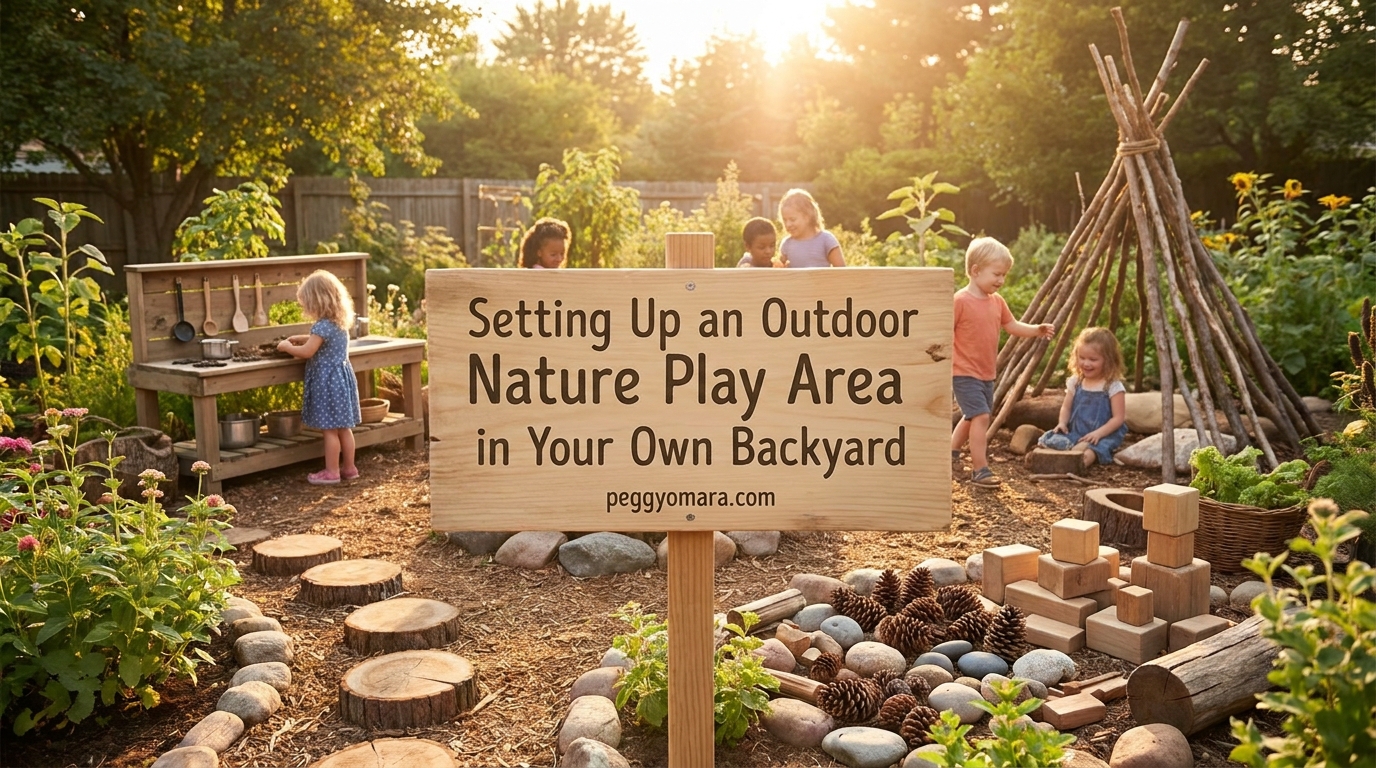
Creating an outdoor nature play area in your own backyard transforms an ordinary yard into an extraordinary learning laboratory. You do not need expensive equipment or a massive space to give your children the developmental benefits of natural play.
Our team has helped hundreds of families design backyard play spaces over the past decade. We have seen firsthand how a simple mud kitchen or log stepping stones can engage children for hours while supporting their physical, cognitive, and emotional growth.
In this guide, you will learn exactly how to create a natural play space tailored to your yard size, budget, and children’s ages. We will cover everything from planning your layout to selecting safe plants, building DIY features, and maintaining your space through every season.
Table of Contents
What Is a Nature Play Area?
A nature play area is a designated outdoor space designed for unstructured play using natural materials and elements. Unlike traditional playgrounds with plastic slides and metal swings, natural play spaces use logs, rocks, dirt, water, plants, and loose parts to encourage open-ended exploration.
The concept of loose parts play is central to nature play areas. Loose parts are materials children can move, carry, combine, and redesign in multiple ways. A stick becomes a wand, a digging tool, a balance pole, or building material. This flexibility sparks creativity and problem-solving in ways that fixed plastic equipment simply cannot match.
Nature play differs from conventional outdoor play because it engages all the senses simultaneously. Children feel the texture of bark, smell herbs, hear birds, see changing colors, and taste edible plants. This sensory integration supports brain development in ways that indoor activities and screen time cannot replicate.
Why Natural Outdoor Play Matters for Child Development?
Research consistently shows that natural play supports all five developmental domains in children. When children engage with natural environments, they develop physically, cognitively, communicatively, socioemotionally, and adaptively.
Physical development happens naturally as children navigate uneven terrain, climb logs, carry heavy rocks, and dig in dirt. These activities build gross motor skills, balance, coordination, and strength without formal exercise programs.
Cognitive development flourishes through nature play because the environment is complex and ever-changing. Children must assess risks, solve problems, and make decisions constantly. They learn physics by building with rocks, biology by observing insects, and math by sorting natural materials.
The benefits extend to attention span and mental health. Studies show that children who play regularly in natural settings demonstrate improved concentration, reduced symptoms of ADHD, and lower stress levels. Even 20 minutes of outdoor play can reset a child’s ability to focus.
Socioemotional learning happens organically in nature play areas. Children negotiate shared use of materials, collaborate on building projects, and comfort each other during minor setbacks. They develop self-regulation skills as they learn to assess and manage reasonable risks.
Perhaps most importantly, natural play fosters a lifelong connection to the environment. Children who grow up with regular nature experiences become adults who value and protect the natural world.
Planning Your Outdoor Nature Play Area (2026)
Before you start building, take time to plan your outdoor nature play area thoughtfully. A well-planned space serves your family better and avoids costly mistakes.
Assessing Your Space
Walk your backyard with fresh eyes. Note existing features you can incorporate: mature trees for shade, sunny patches for gardens, slopes for climbing, and flat areas for activity zones.
Observe how your family currently uses the yard. Where do children naturally gravitate? Which areas stay muddy after rain? Understanding these patterns helps you design a space that flows with rather than against your yard’s character.
Consider sight lines from your house. Young children need supervision, so position activity areas where you can see them from windows or the deck.
Small Backyard Solutions
You do not need acres to create an engaging nature play space. Even a 10-by-10-foot corner can become a rich play environment.
For small yards, think vertically. Use climbing vines on fences, hang wind chimes, or install a vertical herb wall. Create multiple activity layers in a compact footprint.
Consider portable elements that can move as needed. A wheelbarrow filled with sand becomes a mobile sandbox. Baskets of loose parts can move between patio and yard.
Use boundaries creatively. Low borders of logs or stones define play zones without consuming space. Container gardens on patios extend your nature play area footprint.
Creating Activity Zones
Divide your space into distinct zones based on activity type. This organization helps children understand where different play happens and keeps incompatible activities separated.
Most successful nature play areas include at least three zones: an active play area for running and climbing, a sensory zone for messy play like mud and sand, and a quiet zone for observation and relaxation.
Connect zones with pathways made from stepping stones, wood chips, or logs. These pathways are not just functional; they become part of the play experience.
Types of Play Zones to Create in Your Backyard
Thoughtful zone planning creates a backyard play space that engages children for years. Here are the essential zones every nature play area should consider.
Sensory Play Zone
A sensory zone engages children’s senses through tactile, olfactory, and visual experiences. This zone typically includes a sandpit, water features, and textural plants.
Build your sandpit at least 12 inches deep and 4 feet square to allow real digging. Natural sand without added chemicals works best. Provide scoops, buckets, and funnels, but also natural tools like large shells or gourds.
Include plants with interesting textures and scents. Lamb’s ear offers velvety leaves. Lemon balm and mint release fragrance when touched. Lavender provides calming scent.
Consider adding a sound element. Wind chimes, bamboo tubes, or seed pod rattles add auditory dimension to sensory play.
Mud Kitchen and Digging Area
The mud kitchen consistently ranks as the most-used feature in backyard nature play areas. Children return to it again and again because it supports dramatic play, sensory exploration, and social interaction.
You can build a simple mud kitchen from wooden pallets, old stumps, or salvaged kitchen cabinets. The key elements are a work surface at child height, storage for pots and pans, and access to water and dirt.
Provide real kitchen items rather than plastic toys. Old pots, wooden spoons, muffin tins, and colanders inspire more complex play. Thrift stores are excellent sources for these materials.
Position your mud kitchen near a water source but away from high-traffic paths. A simple rain barrel with a spigot works perfectly for water access.
Active Play Zone
Children need space for big movement. An active play zone supports running, jumping, climbing, and balancing.
Natural climbing structures work beautifully for this zone. Large logs or stumps arranged at varying heights create stepping challenges. A fallen tree trunk becomes a balance beam. Large rocks offer climbing opportunities.
Consider building a simple teepee or tunnel from branches. Willow branches planted in a circle and woven together create a living den that grows more defined each year.
Ground cover matters in active zones. Wood chips, sand, or rubber mulch under climbing elements cushion falls better than grass or bare dirt.
Quiet and Secret Spaces
Every child needs a place to retreat, observe, and imagine. Quiet spaces provide refuge from active play and support focused observation.
Create a secret garden by planting tall grasses, sunflowers, or native shrubs in a curved bed. Leave a small entrance and a cozy spot inside for sitting.
A simple teepee made from bamboo poles and climbing beans or morning glories becomes a green hideaway by mid-summer. Children love spaces that feel enclosed but not confined.
Include observation tools in quiet spaces. A magnifying glass, binoculars, or sketching materials invite children to look closely at the natural world around them.
Nature Study and Wildlife Area
Connecting children to wildlife deepens their nature play experience. A wildlife zone attracts birds, butterflies, and beneficial insects that become part of daily discovery.
Install a bird feeder, birdbath, or bee hotel. These simple additions bring wildlife within observation range. Position them where children can watch from a quiet spot.
Plant native flowers that attract pollinators. Milkweed feeds monarch caterpillars. Coneflowers and black-eyed Susans attract goldfinches. Herbs like dill and fennel host swallowtail butterflies.
Consider certifying your backyard as a wildlife habitat through the National Wildlife Federation. Their requirements help you create a space that genuinely supports local wildlife.
Natural Elements and Materials to Include (2026)
The materials you provide shape the play that happens. Natural elements offer more possibilities than manufactured toys because they can transform in a child’s imagination.
Loose Parts Collection
Loose parts are the building blocks of creative play. Collect and organize natural materials that children can move, combine, and redesign.
Start with stones in various sizes. Smooth river rocks work well for stacking and building. Larger rocks become seats, tables, or garden borders. Children use stones in countless ways: as currency in games, ingredients in mud kitchens, or building materials for structures.
Sticks and branches are essential loose parts. Collect fallen branches after storms. Cut them into manageable lengths and store them in baskets or buckets. Children build forts, make magic wands, create letters and numbers, and explore physics with stick leverage.
Seed pods, pinecones, acorns, and shells add variety. These small loose parts work well for sorting, counting, and pattern-making. They bring different textures and weights into play scenarios.
Store loose parts in open containers that children can access independently. Wicker baskets, wooden crates, or galvanized buckets keep materials organized while maintaining natural aesthetic.
Natural Play Structures
Permanent natural structures anchor your play area and provide gross motor challenges. These elements require more planning but last for years.
Log stumps arranged in a line or cluster become stepping stones, seating, or tables. Choose logs 12 to 18 inches in diameter and cut them to varying heights. Sink them slightly into the ground for stability.
A balance beam from a fallen log challenges coordination. Choose a log about 6 inches in diameter. Secure it on the ground or slightly elevated on flat stones. The slight unevenness of natural wood provides better balance training than perfectly uniform manufactured beams.
Climbing logs should be substantial: at least 8 inches in diameter and anchored securely. Position them at gentle angles for younger children. Older children enjoy steeper challenges.
A living willow structure grows stronger each year. Plant willow whips in spring in the shape you want. Dome, tunnel, or teepee shapes all work beautifully. Weave the tops together and trim annually to maintain shape.
Water Play Features
Water transforms ordinary play into extraordinary discovery. Simple water features add sensory richness and scientific learning to your nature play area.
A water play station needs only a source and containers. A rain barrel with a spigot at child height works perfectly. Add pitchers, funnels, tubes, and spray bottles for water exploration.
Create a simple stream by running a hose through a sloped channel lined with stones. Children build dams, float boats made from leaves, and explore how water moves.
Even a shallow birdbath provides water play opportunities. Children enjoy washing dolls, floating flowers, and observing how water behaves in different containers.
Storage and Organization Solutions
Storage keeps loose parts accessible while maintaining a tidy appearance. Good storage solutions support children’s independence in getting and putting away materials.
Open shelving near activity areas keeps frequently used items visible and accessible. Low shelves at child height encourage independent access and cleanup. Wooden crates, wicker baskets, or galvanized tubs all work well.
Label storage with pictures rather than words so pre-readers can participate in organization. A photo of sticks on the stick basket helps children return materials properly.
Create a tool library for shared equipment. Store magnifying glasses, binoculars, bug boxes, and shovels in one location. This prevents loss and teaches responsibility for shared resources.
Best Plants for a Child-Friendly Nature Play Area
Plants transform a play area from sterile to alive. The right plant choices provide sensory experiences, attract wildlife, and create beautiful spaces for exploration.
Safe and Sensory Plants
Choose plants that engage multiple senses safely. These varieties have proven successful in hundreds of backyard nature play areas.
Lamb’s ear offers the softest silver leaves children love to touch. It grows in poor soil and tolerates foot traffic. Children stroke the leaves for comfort and use them as pretend bandages in play scenarios.
Sunflowers grow rapidly from seed, allowing children to observe the full plant life cycle. The giant stalks become teepee walls, and seeds attract birds in fall.
Herbs provide multiple sensory experiences. Mint, lemon balm, and pineapple sage release fragrance when touched. Basil and chamomile add interesting scents. Many herbs are edible, allowing taste exploration.
Ornamental grasses add sound and movement. Children enjoy running their hands through the feathery plumes and listening to the rustling. Choose native grasses adapted to your region.
Plants That Attract Wildlife
Wildlife adds wonder to daily play. These plants bring butterflies, birds, and beneficial insects into your backyard play space.
Milkweed is essential for monarch butterflies. Plant several varieties for extended bloom time. Children watch caterpillars grow, form chrysalises, and emerge as butterflies.
Echinacea and black-eyed Susans provide seeds for goldfinches and other songbirds. The flowers bloom for months, offering color and insect activity.
Native wildflowers support local pollinators. Research which species grow naturally in your area. These plants require less maintenance than non-native alternatives while supporting your local ecosystem.
Berry bushes provide food for both wildlife and children. Blueberries, raspberries, and serviceberries offer tasty snacks during outdoor play. Birds enjoy any berries the children miss.
Plants to Avoid
Safety requires knowing which plants pose risks to children. Remove or avoid these common toxic plants from play areas.
Poison ivy, oak, and sumac cause painful rashes. Learn to identify these plants in your region and remove them completely. Never burn these plants, as smoke carries the irritant.
Oleander, foxglove, and lily of the valley are highly toxic if ingested. These ornamental plants have no place in children’s gardens.
Teach children to ask before eating any plant. Even safe plants can cause stomach upset if consumed in large quantities. Establish clear rules about which plants are for eating and which are for looking only.
Age-Appropriate Nature Play Design
Different ages need different features. Designing for your children’s developmental stages ensures the play area engages rather than frustrates them.
Toddlers (Ages 1-3)
Toddlers need safe spaces where they can explore without constant intervention. Simple, ground-level features work best for this age.
A shallow sandpit with buckets and shovels provides appropriate sensory play. Keep sand depth under 6 inches for easy exit. Supervise water play carefully.
Low stumps or stepping stones at ground level allow climbing practice without serious fall risk. Arrange them close together so little legs can step confidently.
Plant only non-toxic species toddlers might mouth. Avoid plants with berries that could pose choking hazards. Keep thorny plants away from toddler areas.
Preschoolers (Ages 3-5)
Preschoolers thrive with dramatic play opportunities. Their nature play area should support imaginative scenarios and social interaction.
The mud kitchen becomes essential at this age. Preschoolers engage in complex pretend play, cooking elaborate meals and running restaurants. Provide plenty of kitchen items and space for multiple children.
Add simple tools like child-sized shovels, rakes, and watering cans. Preschoolers enjoy real work and will maintain garden beds with guidance.
Create spaces for hiding and secret play. A simple sheet over a clothesline becomes a fort. Bushes with tunnels underneath invite imaginative scenarios.
School-Age Children (Ages 6-12)
Older children need challenge and complexity. Their nature play area should support building, creating, and risk-taking within safe boundaries.
Provide real tools and materials for building. Hammers, nails, scrap wood, and rope allow fort construction. Supervise initially, then gradually increase independence as skills develop.
Include opportunities for reasonable risky play. Climbing trees, using tools, and navigating uneven terrain build judgment and confidence. Set clear boundaries about what requires adult supervision.
Create dedicated spaces for specific interests. A vegetable garden, butterfly habitat, or weather station engages school-age children’s growing capacity for focused study.
Budget-Friendly Tips for Creating Your Nature Play Area
A beautiful nature play area does not require a big budget. Many families create engaging spaces for under $100 using creativity and salvaged materials.
Shop your own property first. Fallen branches become building materials and balance beams. Rocks from garden beds become loose parts. Old garden hoses become tunnels or water channels.
Source materials from your community. Tree trimming companies often give away wood chips and logs. Construction sites may have clean scrap lumber. Garden centers discount plants at season’s end.
Build your mud kitchen from pallets. Many businesses give away wooden pallets for free. Sand them smooth, arrange in an L-shape, and add a salvaged sink or plastic tubs for water play.
Buy tools and kitchen items at thrift stores. Real metal pots, wooden spoons, and enamel bowls cost less than plastic toys and last longer. Children prefer real items to toy versions.
Start with one zone and expand gradually. A single sandpit with loose parts engages children for months. Add features as budget allows rather than trying to build everything at once.
2026 Safety Considerations for Natural Play Areas
Natural play involves reasonable risk, which supports healthy development. Your job is to manage serious hazards while allowing beneficial challenges.
Assess your space for environmental hazards. Test soil for lead if you live in an older home. Check for buried utilities before digging. Remove poison ivy and other toxic plants.
Secure large elements properly. Logs for climbing should be buried at least 6 inches deep or anchored with metal brackets. Balance beams need stable foundations to prevent tipping.
Provide appropriate supervision without hovering. Stay within rescue distance for water play and climbing. Allow independent exploration in safe zones where children can test their limits.
Establish clear rules with children. No running on the balance beam. Ask before eating plants. Carry sticks safely with points down. Rules taught early become habits that prevent injuries.
Seasonal Rotation and Year-Round Enjoyment
A nature play area changes with the seasons, offering fresh experiences throughout the year. Planning for seasonal rotation keeps children engaged long-term.
Spring brings mud season and planting opportunities. Add extra shovels and containers for the inevitable spring mud. Start seeds indoors to transplant when weather warms.
Summer requires shade and water play. Move loose parts into shaded areas. Add water features and plan morning play to avoid midday heat. Harvest berries and vegetables with children.
Fall offers collecting and building materials. Gather fallen leaves for piles and compost. Collect seed pods, acorns, and pinecones for loose parts storage. Plant bulbs for spring surprises.
Winter play requires warm clothing and different activities. Leave snow undisturbed in areas for tracking wildlife. Provide tools for snow building. Evergreen shrubs maintain hiding places year-round.
Perform maintenance at season changes. Refresh sand, tighten loose structures, and inspect plants for health. Remove broken items promptly to prevent injuries.
Frequently Asked Questions
How to transform a small backyard or corner into a sensory play area?
Start with a container approach. Use a large planter box or raised bed as your main sensory zone. Fill it with sand or a sand-and-water combination. Add a vertical element like a trellis with climbing beans or a wall-mounted chime for sound. Use portable loose parts stored in baskets that can move around. Even a 6-foot-square corner can include sand play, plants, and loose parts when designed thoughtfully.
What are some low-cost and natural ideas for outdoor play spaces?
Collect fallen branches and logs from your property or neighborhood for building materials. Create a mud kitchen from wooden pallets and thrift store kitchen items. Use rocks from garden beds as loose parts. Build stepping stones from concrete mixed in a tub and poured into molds. Plant seeds rather than buying mature plants. Source wood chips from tree trimming companies for ground cover. Many families create engaging spaces for under $50 using these approaches.
How do you create a natural playground at home?
First, assess your space and identify existing natural features to incorporate. Create three basic zones: an active area with logs or stumps for climbing and balancing, a sensory zone with sand or water play, and a quiet zone with plants and seating. Add loose parts like rocks, sticks, and seed pods in accessible containers. Include child-sized tools for digging and exploring. Start with one zone and expand gradually as time and budget allow.
What is natural play?
Natural play is unstructured outdoor play using natural materials like sticks, rocks, dirt, water, and plants. It allows children to explore, create, and learn through direct interaction with nature without prescribed rules or plastic equipment. The concept of loose parts is central: materials children can move, combine, and redesign in multiple ways.
What are the benefits of natural play for child development?
Natural play supports all five developmental domains: physical, cognitive, communicative, socioemotional, and adaptive. It improves gross motor skills through climbing and balancing. It enhances cognitive development through problem-solving and risk assessment. It supports attention span and reduces stress. Children develop self-regulation through managing reasonable risks and negotiate social situations during collaborative play.
How do I handle HOA restrictions on natural landscaping?
Present your nature play area as an educational landscape rather than unkempt yard. Create defined borders and neat edges to show intentionality. Use native plants that look maintained while supporting wildlife. Share research about nature play benefits with your HOA board. Some families create nature play in backyard areas not visible from the street. Consider applying for wildlife habitat certification, which adds legitimacy to natural landscaping choices.
What ground cover works best under play structures?
Wood chips or mulch 6 to 12 inches deep provide excellent cushioning for falls and blend naturally with the environment. They require periodic refreshing but are free from many tree trimming companies. Sand works well under climbing elements and in digging areas. Avoid rubber mulch, which does not biodegrade and gets hot in summer. Grass becomes compacted and worn quickly under active play.
Start Small, Grow Naturally
Creating an outdoor nature play area in your own backyard is one of the most valuable investments you can make in your child’s development. You do not need to build everything at once. A single sandpit with a basket of sticks and rocks will engage children more deeply than the most elaborate plastic play structure.
Start with one zone that matches your children’s current interests. Add elements gradually as you observe how they play. Let the space evolve with your family.
The best nature play areas grow organically over time. A simple teepee frame becomes covered in morning glories. Seedlings planted by small hands grow into climbing trees. The mud kitchen expands as cooking interests develop.
Your children will remember the backyard where they built forts, watched butterflies emerge, and cooked mud pies long after they have forgotten every plastic toy they owned. Start today. Your outdoor nature play area awaits.