
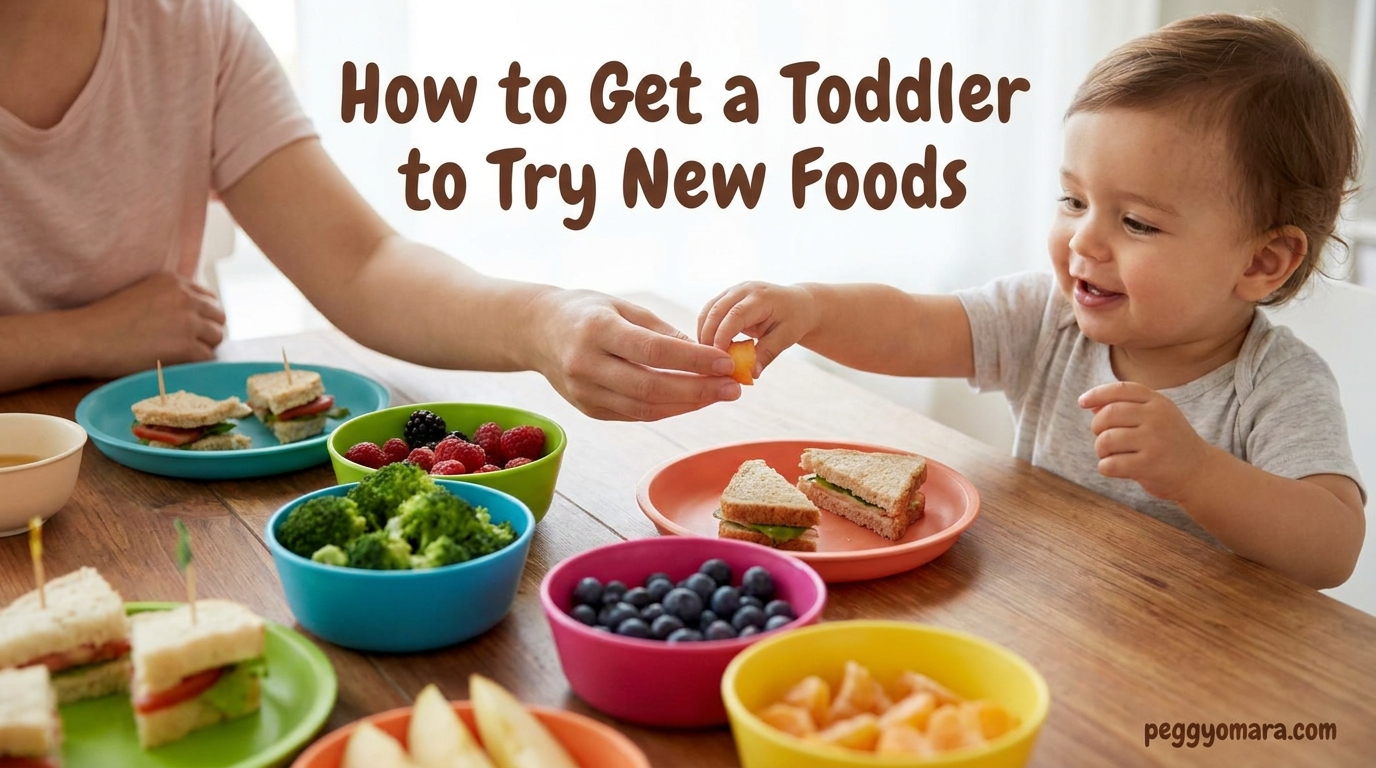
Nothing tests a parent’s patience quite like watching your toddler push away a plate of carefully prepared food without even a glance. You’ve tried everything from airplane noises to promises of dessert, yet your two-year-old remains firmly committed to their three-food diet of mac and cheese, bananas, and whatever crackers they can negotiate from the pantry. I have been there, standing in my kitchen feeling defeated after another meal went untouched except for the one bite that was licked and then dropped to the floor.
Learning how to get a toddler to try new foods requires a complete shift in how we think about feeding our children. Research tells us it takes between eight and fifteen exposures to a new food before most toddlers will accept it. That is not fifteen attempts in one week. That is fifteen separate occasions over weeks or even months.
This article will walk you through the developmental reasons behind picky eating, give you twelve practical strategies that actually work, and help you know when stubbornness crosses into something that needs professional attention. You will leave with a toolbox of approaches and the reassurance that you are not failing as a parent.
Table of Contents
Why Toddlers Resist New Foods: The Science Behind Picky Eating (2026)
Before we dive into solutions, we need to understand why your toddler acts like you are serving them poison when you offer a piece of broccoli. There is actually solid evolutionary science behind this behavior.
Food Neophobia: A Survival Instinct
Food neophobia is the technical term for fear of new foods, and it peaks between ages two and six. From an evolutionary perspective, this made perfect sense. Once toddlers became mobile enough to wander away from caregivers, their suspicion of unfamiliar plants and foods protected them from eating something poisonous.
Your toddler is not being difficult to spite you. Their brain is literally wired to be cautious about new foods during this developmental window. This is developmentally normal behavior, not a sign of poor parenting or a character flaw in your child.
The 8-15 Exposures Research
A landmark 2007 study published in the journal Appetite found that children needed between eight and fifteen exposures to a new food before they would regularly accept it. Here is the critical part that most parents miss: the study measured exposures, not bites. Simply seeing the food on their plate counts as an exposure. Smelling it counts. Touching it counts.
Many parents give up after three or four rejections, concluding their child simply does not like carrots. In reality, they stopped offering carrots just before the breakthrough would have happened.
This Is Not Your Fault
You are not a bad parent because your toddler refuses vegetables. You did not spoil them or create bad habits. The parents who seem to have adventurous eaters often just got lucky with a child who has lower sensitivity to textures or who happened to accept a new food on exposure number three instead of exposure number thirteen.
Your anxiety about their nutrition is valid. The stress you feel when they refuse dinner is real. You are allowed to feel frustrated while also understanding this is a normal phase that will pass with patience and the right approach.
How to Get a Toddler to Try New Foods: 12 Proven Strategies
The following strategies are backed by feeding therapists, registered dietitians, and decades of research. Take what resonates and leave what does not fit your family. Progress is rarely linear, and what works this week might not work next week.
1. Start with Tiny Portions
A full portion of an unfamiliar food can look overwhelming to a toddler. Serve one pea, not five. One small bite of chicken, not a whole drumstick. When the amount looks manageable, the psychological barrier drops.
You can always offer more if they surprise you and eat it. But starting small shows respect for their hesitation and reduces food waste that makes you feel terrible when you scrape untouched plates into the trash.
2. Pair New Foods with Safe Foods
Never serve a plate of only unfamiliar foods. Use food bridges by pairing something new with foods your child already accepts. If they love pasta, add a tiny amount of a new sauce alongside plain buttered noodles they recognize.
The concept of safe foods is important here. Always include at least one item you know they will eat, even if that means they fill up on bread while ignoring the rest. This ensures they do not leave the table hungry while still being exposed to the new options.
3. Remove All Pressure
Pressure comes in many forms, and some are sneaky. Bribery is pressure. Praise for eating is pressure. The one-bite rule is pressure. Even negotiating and reasoning can become pressure when a child feels your desperation.
Registered dietitian Ellyn Satter developed the Division of Responsibility in Feeding, which states that parents are responsible for what, when, and where food is served. Children are responsible for whether and how much they eat. Your job ends when the food hits the plate. Their job starts there.
When you release the pressure valve, something magical often happens. Without the power struggle, the food becomes just food, not a battleground.
4. Follow the Two-Hour Rule
Children need to come to the table with actual hunger to be motivated to try unfamiliar foods. If they grazed on crackers twenty minutes before dinner, they have zero incentive to tackle something challenging.
Aim for two hours between a snack and a meal. This might mean adjusting your schedule or offering smaller snacks at strategic times. I learned this the hard way when my daughter consistently refused dinner, only to realize she was filling up on milk at four-thirty every afternoon.
5. Use Family-Style Serving
Instead of plating food in the kitchen, bring serving dishes to the table and let everyone serve themselves. This gives your toddler control and agency, which they crave intensely at this age. They can take a microscopic portion of the new food while loading up on familiar items.
Watching you serve yourself the new food also provides natural modeling. They see you take some, put it on your plate, and eat it without fanfare. The low-pressure exposure happens organically.
6. Try the “No Thank You” Bowl
This technique comes from feeding therapists and works wonders for food waste anxiety. Place a small empty bowl on the table designated as the “no thank you” bowl. If your child does not want something on their plate, they can politely transfer it to the bowl.
This gives them an appropriate way to decline without the food waste that makes you wince. It also removes the power struggle because they are making a choice within boundaries you set. No arguing, no pleading, just a simple transfer to the bowl.
7. Let Them Get Messy
Sensory exploration is a legitimate step toward eating. If your toddler wants to squish the avocado, let them. If they want to smell the bell pepper twenty times, that is progress. Touching food without eating it still counts as an exposure in that critical eight to fifteen count.
Remove the pressure to stay clean during meals. Put a splat mat under the high chair. Dress them in a full-coverage bib or a shirt you do not care about. When they are free to explore textures with their hands, they often become curious enough to explore with their mouths.
8. Model the Behavior You Want
Children learn by watching far more than by listening to lectures. Sit down and eat the same foods they are eating. Show genuine enjoyment. Narrate your experience with comments like, “These green beans are crunchy today,” or “I love how sweet this roasted carrot is.”
Do not make a performance out of it. Just eat normally and let them observe. Over time, your consistent modeling builds trust that these foods are safe and enjoyable.
9. Change the Environment
Sometimes the environment creates invisible stress. Try breakfast outside on the patio. Have a picnic dinner on a blanket in the living room. Use a different plate or cup. Move from the high chair to a booster seat at the regular table.
Novelty can disrupt established refusal patterns. I once watched my daughter reject a food at our kitchen table, then eat three servings of the same food two hours later at a park picnic with her cousins.
10. Narrate Your Own Eating
Talking about food in descriptive, neutral ways builds food literacy without pressure. Comment on colors, textures, temperatures, and flavors. “This cucumber is cold and crisp,” or “The soup is warm and smooth.”
Avoid labeling foods as good or bad, healthy or unhealthy. Just describe them factually. This helps your child develop vocabulary for their own sensory experiences and reduces the moral baggage that often comes with food talk.
11. Do Not Take Rejection Personally
When your toddler screams “ewwww” or dramatically throws food on the floor, respond with a matter-of-fact tone. “You do not have to eat it.” Then move on. Do not show frustration. Do not try to convince them. Do not sigh or mutter about wasted effort.
Your emotional reaction is the fuel for the power struggle. When you remain neutral, you remove the reward they were seeking, which was your big reaction. Keep offering the food again another day without mentioning the previous rejection.
12. Celebrate Small Wins
Progress is not binary. Your child does not go from refusing broccoli to eating a full serving overnight. The progression looks like this: tolerating the broccoli on their plate, interacting with it by pushing it around, smelling it, touching it with a finger, kissing it, licking it, holding it in their mouth, chewing and spitting it out, and finally swallowing.
Each of those steps is a win worth celebrating internally. You might say, “You touched the broccoli with your finger. That is a new step.” Do not gush or make a huge deal, just acknowledge that progress matters.
Food Play and Kitchen Involvement: Building Comfort Outside Mealtimes
The dinner table is not always the best place to build familiarity with new foods. The pressure to eat is highest there. Instead, use play and participation to create positive associations with foods in low-stakes settings.
The 5 Steps of Sensory Exploration
Feeding therapists often use a systematic approach to help children progress toward eating. These five steps represent the natural progression from fear to acceptance:
- Step 1: Tolerate the presence – The food sits on the table or another plate without causing distress
- Step 2: Interact with the food – Stirring, pushing with a utensil, or playing near it
- Step 3: Smell the food – Bringing it close to the nose without touching lips
- Step 4: Touch the food – Finger touches, holding it, squishing it
- Step 5: Taste the food – Kissing, licking, biting, chewing, and eventually swallowing
Most parents skip straight to step five and demand a bite. Meeting your child where they are and letting them progress through these steps at their own pace respects their comfort level while still building toward the goal.
10 Food Play Activities
These activities get food on your toddler’s hands and into their awareness without any expectation of eating:
- Edible sensory bins – Fill a shallow container with dry rice, beans, or pasta for scooping and pouring
- Vegetable stamping – Cut bell peppers, apples, or potatoes into stamps for painting
- Food painting – Use yogurt, pudding, or purees as finger paint on a high chair tray
- Play dough with herbs – Mix dried herbs into homemade play dough for scent exposure
- Spaghetti sensory play – Cooked spaghetti in a bin with oil provides squishy exploration
- Fruit and vegetable washing – Let them scrub produce in a sink of water
- Tearing lettuce or herbs – Great for developing fine motor skills while handling greens
- Sorting games – Sort different beans, pasta shapes, or colored cereals by attribute
- Building with toothpicks and soft foods – Use cheese cubes, grapes, or melon chunks as building blocks
- Make faces on plates – Use various foods to create silly faces before snack time
These activities work because they separate the experience of the food from the pressure of eating it. Your child learns that peas are small, round, and roll across the table before they ever need to put one in their mouth.
Age-Appropriate Kitchen Tasks
Kitchen involvement dramatically increases willingness to try foods. When children participate in preparation, they feel ownership and curiosity about the result. If you are interested in making your own baby food, this can also extend into toddlerhood with simple preparations.
For toddlers ages 2-3:
- Washing vegetables in a bowl of water
- Tearing lettuce or greens for salad
- Dumping pre-measured ingredients into bowls
- Stirring mixtures with a large spoon
- Placing toppings on pizza or sandwiches
- Pressing cookie cutters into soft foods
For preschoolers ages 4-5:
- Cracking eggs with supervision
- Using a butter knife to spread condiments
- Measuring dry ingredients with cups
- Scrubbing potatoes or carrots
- Shelling peas or edamame
- Peeling oranges or easy-to-peel fruits
Always supervise closely and expect mess. The goal is participation, not perfection. When they help make the meal, they are far more likely to taste it.
When to Worry: Red Flags and When to Seek Help
Most picky eating is a normal developmental phase that resolves with time and patience. However, some patterns signal a more serious issue requiring professional intervention.
Normal Picky Eating vs. Problem Feeding
Normal picky eaters may refuse new foods but can typically maintain their weight and growth on their accepted foods. They might eat twenty or thirty different foods, just not the variety you wish for. They can usually tolerate the presence of disliked foods without extreme distress.
Problem feeding involves a highly restricted diet, often fewer than twenty accepted foods. These children may have extreme reactions to the sight or smell of non-preferred foods, including gagging, vomiting, or meltdowns. They may refuse entire food groups or all foods of certain textures.
Warning Signs That Need Professional Evaluation
Contact your pediatrician or a feeding specialist if you notice any of the following:
- Fewer than twenty accepted foods, and the list is shrinking over time
- Complete refusal of all foods in one or more food groups
- Gagging or vomiting at the sight or smell of food
- Choking or coughing during most meals
- Difficulty coordinating chewing and swallowing
- Oral motor delays affecting speech and eating
- Extreme anxiety around mealtimes affecting family functioning
- Failure to thrive or significant weight loss
- Food refusal that began after a choking incident, illness, or trauma
ARFID (Avoidant/Restrictive Food Intake Disorder) is a clinical diagnosis for severe feeding difficulties not explained by sensory issues or medical conditions alone. Children with ARFID may require specialized treatment including exposure therapy with a trained professional.
Children with ADHD, autism spectrum disorder, and sensory processing differences often experience higher rates of food aversion. If your child has a diagnosed condition and feeding challenges, early intervention with an occupational therapist or feeding specialist is particularly important.
Who to Call for Help
If you are concerned, start with your pediatrician to rule out medical issues like swallowing problems or nutritional deficiencies. From there, you may be referred to:
- Pediatric feeding therapists – Specialists trained in behavioral and sensory feeding issues
- Speech-language pathologists (SLPs) – For oral motor and swallowing concerns
- Occupational therapists (OTs) – For sensory-based feeding aversions
- Registered dietitians – For nutritional analysis and supplementation if needed
Trust your instincts. You know your child better than anyone. If something feels wrong beyond normal toddler stubbornness, seek help early rather than waiting to see if they outgrow it.
Frequently Asked Questions
What is the 3 3 3 rule for toddlers?
The 3 3 3 rule refers to feeding guidelines suggesting children try at least 3 different food groups at each meal, with 3 hours between meals and snacks, and no more than 3 cups of milk daily to maintain appetite for solid foods.
What is the 80 20 rule for toddlers?
The 80 20 rule suggests that if toddlers eat nutritiously 80 percent of the time, the remaining 20 percent can be less nutritionally ideal. This approach reduces pressure and allows flexibility for treats and social eating situations without guilt.
How many times should I offer a new food before giving up?
Research indicates children typically need 8 to 15 exposures to a new food before accepting it. Some children may require 20 or more exposures. Continue offering the food periodically without pressure, as acceptance often happens suddenly after many rejections.
Should I force my child to try one bite?
No. Forcing a child to take even one bite creates negative associations with food and mealtimes. It teaches children to ignore their body’s signals and can actually worsen picky eating. Instead, use gentle exposure through food play and modeling without pressure to taste.
Is it okay if my toddler only eats a few foods?
While frustrating for parents, some toddlers do maintain adequate nutrition on a limited variety of foods temporarily. Monitor growth and energy levels. If your child accepts at least 20 different foods across all food groups, they are likely meeting nutritional needs even if the variety feels limited to you.
Why does my toddler eat at daycare but not at home?
Toddlers often eat better at daycare due to peer modeling from other children, structured meal schedules with consistent hunger cues, less emotional pressure from non-parental caregivers, and the novelty of a different environment. Consider what elements you might replicate at home, such as consistent timing and reduced pressure.
Conclusion: You Are Doing Better Than You Think
Learning how to get a toddler to try new foods is as much about changing your mindset as it is about changing their behavior. The strategies in this article work, but they work slowly. Your patience, your willingness to offer foods without attachment to the outcome, and your ability to stay calm through the chaos matter more than perfect meal planning.
Remember that research-backed eight to fifteen exposures statistic when you feel like giving up. Remember that food neophobia is a survival instinct, not a parenting failure. Remember that other parents are standing in their kitchens feeling the same frustration you feel tonight.
Keep offering. Keep modeling. Keep the pressure off. And trust that with time, your toddler will expand their palate in their own way and on their own timeline. You are not failing. You are parenting through a challenging phase with grace, and that is enough.