
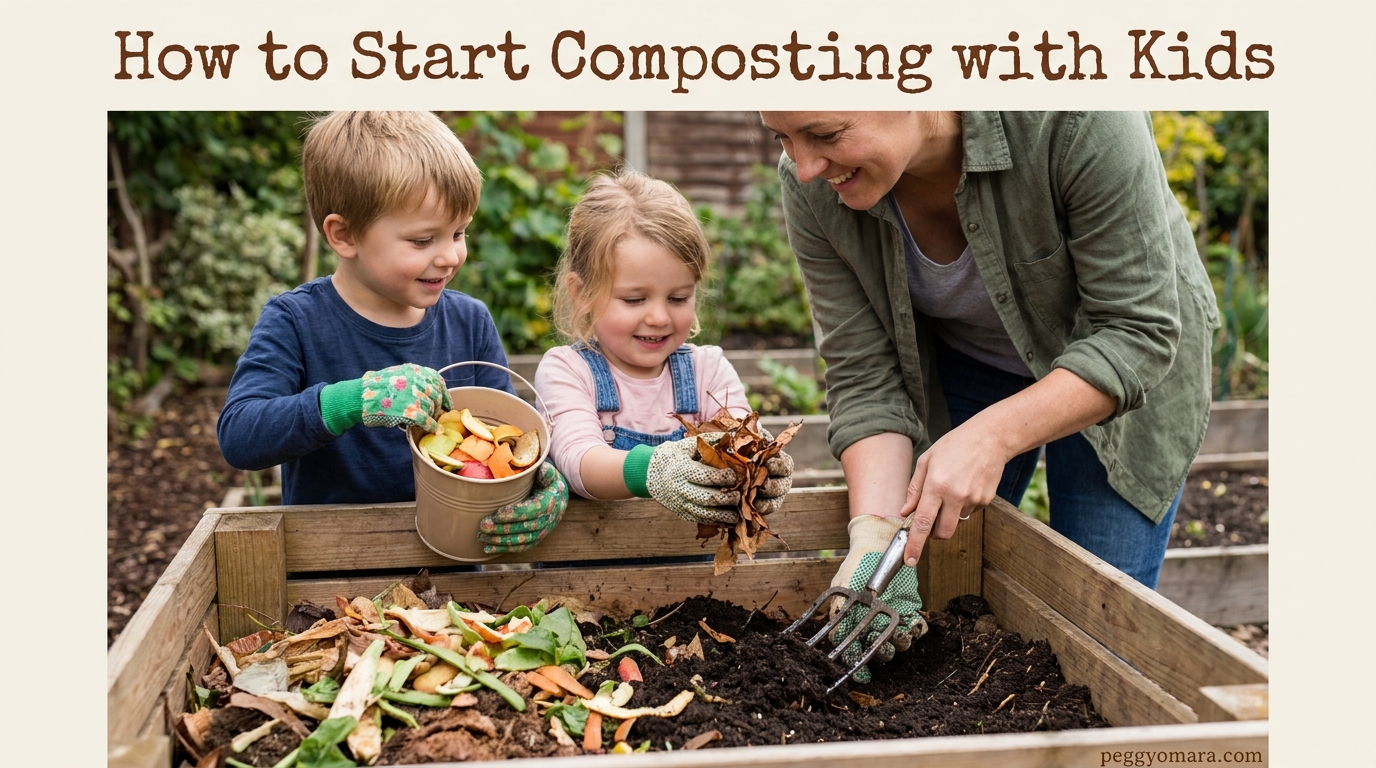
I stared at the banana peel in my hand, then at the trash can under my kitchen sink, then at the tiny balcony outside my apartment. My daughter, then four years old, was watching me with that curious expression kids get when they know you’re about to make a decision. We didn’t have a yard. We didn’t have a garage. We barely had enough closet space for our winter coats. But I wanted her to understand that food scraps weren’t garbage—they were potential.
That was three years ago. Today, we have a thriving worm bin under our kitchen sink, a rotating collection of soil-arium jars on our windowsill, and a daughter who can explain the nitrogen-carbon ratio to her grandparents. Composting with kids in a small space isn’t just possible. It might actually be the best way to start, because you’re forced to keep it simple, manageable, and visible.
Our family learned how to start composting with kids through trial, error, and a lot of handwashing. In this guide, I’ll share everything we discovered: the methods that actually work in apartments and small homes, the age-appropriate tasks that keep children engaged, the safety rules we established, and the troubleshooting tips that saved our compost when things went wrong. Whether you have a balcony, a closet corner, or just space under your sink, you can teach your children about decomposition, responsibility, and environmental stewardship without needing a homestead.
Table of Contents
Why Compost with Kids?
Before we got our worm bin, I worried composting would be one more chore on an already overflowing parental to-do list. I was wrong. Composting became the activity my daughter asked to do, not the one she avoided.
The educational benefits hit immediately and kept growing. For a two-year-old, composting is pure sensory magic—squishing coffee grounds, watching worms wiggle, smelling something “stinky but good.” For a five-year-old, it becomes a science lab where they observe decomposition firsthand and learn that organic matter doesn’t disappear; it transforms. By elementary school, children understand the full cycle: food grows from soil, we eat it, scraps return to soil, and new food grows again. This isn’t abstract environmental education. It’s hands-on science they can see, touch, and smell.
The family bonding surprised me most. Our evening ritual of “feeding the worms” became sacred time. No screens, no rushing, just the two of us talking about our day while we chopped vegetable scraps and checked the bin’s moisture. My daughter took ownership quickly. She named the worms (all of them “Wiggles” because she was four and lacked creativity). She created a feeding schedule. She reminded me when I forgot to add shredded paper. This wasn’t me teaching her about responsibility. It was her practicing it.
The environmental impact matters too. The average family throws away 250 pounds of food scraps annually. By composting, we reduced our landfill contribution by about 30 percent. More importantly, my daughter now sees herself as someone who helps the earth, not just someone who lives on it. That identity will shape her choices for decades.
Best Composting Methods for Small Spaces with Kids (2026)
The key question parents ask: how to compost with minimal space? You have four realistic options when square footage is limited. Each offers different levels of kid involvement, maintenance requirements, and costs. I’ve ranked them by child-friendliness based on our experience and feedback from dozens of families in apartment composting groups.
Here’s how to compost with minimal space: choose vermicomposting (worm bins) for maximum kid engagement and fastest results, Bokashi fermentation for odor-free indoor processing, electric countertop systems for zero-maintenance convenience, or freezer collection with community drop-off for zero-space commitment. Each method fits apartments and requires under two square feet of space.
Vermicomposting (Worm Composting) – The Kid Favorite
Red wigglers are the rock stars of small-space composting. These worms process food scraps rapidly, produce odor-free castings (the “black gold” of gardening), and fascinate children for years, not just weeks. Our worm bin lives in a plastic storage container under our kitchen sink. It takes up exactly one square foot of floor space.
The kid engagement potential is unmatched. Children can observe worms through clear bin sides, feed them by hand, and eventually harvest the castings themselves. The full cycle from scrap to soil takes four to eight weeks, fast enough to hold a child’s attention but slow enough to teach patience. Our daughter has learned more about biology from our worms than from any workbook.
Setup costs run 40 to 80 dollars for a basic worm bin kit, including the worms themselves. You can DIY the container for under 20 dollars if you prefer. The only ongoing cost is replacement bedding (shredded newspaper or cardboard), which is essentially free if you recycle junk mail. Maintenance requires about 15 minutes weekly: checking moisture, burying food scraps, and fluffing bedding.
Bokashi Composting – The Fermentation Method
Bokashi uses beneficial microorganisms to ferment food scraps in an airtight bucket. No worms required. No turning needed. The system fits neatly in a kitchen corner or closet and processes meat, dairy, and oils—items vermicomposting can’t handle.
The kid-friendliness rating drops slightly here. Children can’t observe the fermentation process (it happens inside a sealed bucket), and the acidic smell during fermentation isn’t appealing to most kids. However, children can still participate by adding scraps, sprinkling the Bokashi bran (the microbial inoculant), and pressing the bucket’s compression plate. The two-bucket system means while one ferments for two weeks, the other receives fresh scraps.
Startup costs range from 50 to 120 dollars for a complete Bokashi kit. The ongoing expense is the bran, running about 15 dollars every three months for an average family. After fermentation completes, you bury the pre-compost in soil or a garden bed to finish breaking down. For apartment dwellers without outdoor space, many Bokashi users add the fermented material to community garden bins or vermicomposting systems.
Countertop Composting Systems – The Set-and-Forget Option
Electric composters like Lomi or FoodCycler sit on your counter and process scraps into dry, soil-like material within 24 to 48 hours. These units use heat and grinding to accelerate decomposition. The result isn’t technically finished compost—it needs further curing in soil—but it’s odor-free, pest-proof, and incredibly convenient.
Children can participate by adding scraps and pressing the start button. Some units have transparent windows showing the grinding process, which appeals to younger kids. The main drawback is cost: these systems run 300 to 500 dollars. They also use electricity and produce some noise during operation. For families with busy schedules or kids who lose interest quickly, this removes the maintenance burden entirely.
Freezer Scrap Collection – The Zero-Space Solution
Not ready to maintain a bin? Not sure your kids will stay engaged? Collect scraps in a freezer container and drop them at a community garden, farmers market, or municipal composting site. This requires zero space beyond your freezer and zero daily maintenance.
Kid involvement is limited but still possible. Children can help identify which scraps are compostable, add them to the collection container, and join you on drop-off days. Many families use this method as a trial period before committing to active composting. If your kids stay interested for three months of freezer collection, they’re likely ready for a worm bin.
Quick Comparison: Which Method Fits Your Family?
| Method | Space Needed | Startup Cost | Kid-Friendly Rating | Time to Compost | Best For |
|---|---|---|---|---|---|
| Vermicomposting | 1-2 sq ft | 40-80 dollars | 5/5 | 4-8 weeks | Families wanting hands-on science |
| Bokashi | 2 sq ft | 50-120 dollars | 3/5 | 2 weeks + burial | Households with meat/dairy scraps |
| Countertop Electric | Counter space | 300-500 dollars | 4/5 | 24-48 hours | Busy families, zero maintenance |
| Freezer + Drop-off | Freezer space only | 0-20 dollars | 2/5 | N/A | Testing interest, minimal commitment |
How to Start Composting with Kids: A Step-by-Step Family Guide
How do beginners start composting? The secret is starting small and building habits before expanding. Our family spent two months with just a freezer container before upgrading to worms. That gradual approach prevented overwhelm and let us discover what actually worked for our routine.
Follow this week-by-week guide to launch your family composting system without the common pitfalls that cause parents to quit.
Week 1: Planning and Shopping
Gather your supplies before announcing the project to your kids. Nothing kills enthusiasm faster than “we’ll start composting… once I order the stuff.” For a vermicomposting setup, you’ll need: a 10-18 gallon plastic storage bin with lid, 1/2 pound of red wiggler worms (order online or check local garden centers), shredded newspaper or cardboard for bedding, a spray bottle for moisture, and a small trowel or garden fork.
Total shopping list cost: 40 to 80 dollars for vermicomposting, 50 to 120 dollars for Bokashi, or 300 to 500 dollars for electric systems. Include your child in the shopping if they’re old enough—it builds investment before the first banana peel hits the bin.
Choose your location now. Worm bins need temperatures between 55 and 77 degrees Fahrenheit, so under-sink cabinets, closet floors, or balcony corners work well. Avoid direct sunlight and freezing temperatures. Test that your kids can access the bin safely. If they need to climb or reach awkwardly, find a better spot.
Week 2: Setup and First Feeding
Prepare the bin on a weekend when you have time for messes. Drill 1/8-inch ventilation holes around the bin’s upper sides and lid—about 20 holes total. Add moistened bedding (shredded paper soaked in water and squeezed to wrung-out-sponge consistency) to fill the bin one-third full. Introduce your worms by gently placing them on the bedding surface.
Let your kids add the first food scraps. Vegetable peels, coffee grounds, crushed eggshells, and fruit scraps work best. Avoid citrus, onions, and garlic initially—they’re too acidic for new bins. Bury scraps in one corner and cover with fresh bedding. Let your child mark that corner with a popsicle stick labeled “Feeding Zone.”
Establish your safety rules immediately. Our family’s non-negotiables: always wash hands after touching the bin, never add non-food items, and ask a grown-up before feeding anything new. We posted these rules above our bin with pictures for our pre-reader.
Week 3: Building the Habit
Create a simple routine. We feed our worms every Sunday and Thursday after dinner. My daughter holds the scrap container while I chop large pieces. She buries the food and adds fresh bedding on top. The whole process takes five minutes. Consistency matters more than perfection. If you miss a feeding, the worms won’t die. If you add too much, they’ll eventually catch up.
Start your observation log. Even young children can draw pictures of the worms or dictate descriptions to you. Note what foods disappear fastest (watermelon rinds vanish overnight; avocado skins take weeks). This builds scientific observation skills and keeps kids engaged between feedings.
Month 2: First Harvest and Troubleshooting
After six to eight weeks, you’ll see dark, crumbly material at the bin’s bottom—the finished vermicompost, or worm castings. Push the contents to one side. Add fresh bedding and food to the empty side. The worms will migrate over in a week, letting you scoop out the finished compost.
Let your kids help harvest. Spread the compost on a tarp or newspaper in bright light. The worms burrow down to escape, letting you scrape off the top layer. Children love this “worm sorting” activity. Use the finished compost for houseplants, garden beds, or share with neighbors.
If something goes wrong—odor, pests, or worms trying to escape—refer to the troubleshooting section below. Most problems have simple fixes that kids can help implement.
Age-Appropriate Composting Tasks for Kids
This is where our approach differs from every competitor guide I researched. Generic advice like “let kids help” isn’t helpful when you’re wondering if your two-year-old will try to eat the worms or if your twelve-year-old will roll their eyes at the whole project. Here are specific, developmentally appropriate tasks by age.
Toddlers (Ages 2-3)
At this stage, supervision is constant and tasks are sensory. Let them carry the compost scrap container (with a lid) from the table to the bin. They can spray the bedding with water to maintain moisture—children this age love spray bottles. They can watch worms through clear bin sides and practice gentle touching with your guidance.
Keep tasks under five minutes. Their attention span is short, and their impulse control is developing. Never leave a toddler unsupervised with an open bin. Our rule: bin opens only when a grown-up is present. Handwashing happens immediately after.
Preschoolers (Ages 4-5)
This is the golden age for composting engagement. Preschoolers can sort scraps into “worm food” and “trash” categories. They can tear newspaper for bedding (excellent fine motor practice). They can bury food scraps with a small trowel and cover them properly. They can check if the bedding feels like a “wrung-out sponge” for proper moisture.
Preschoolers love documentation. Give them a simple drawing journal to sketch the worms, count how many they see, or color-code what foods get added. Our daughter at this age created elaborate “worm menus” showing what her pets would eat each week.
Elementary Age (Ages 6-10)
School-age children can handle the full feeding routine independently after initial training. They can chop scraps safely with kid-friendly knives, layer browns and greens properly, and maintain the carbon-nitrogen balance. They can check bin temperature (should feel room temperature) and adjust location if needed.
This age group can understand the science. Explain the decomposition process, the role of microorganisms, and why we balance wet greens (nitrogen) with dry browns (carbon). Connect composting to school science standards—many states include decomposition and ecosystems in elementary curricula.
Tweens and Teens (Ages 11+)
Older children can take full ownership of the composting system. They research methods online, troubleshoot problems using resources, and potentially teach younger siblings. They can harvest finished compost and plan how to use it for gardening projects.
Connect composting to bigger issues for this age group. Discuss food waste statistics, landfill methane production, and soil health. Let them lead a family challenge to reduce kitchen waste. Some teens enjoy sharing their composting knowledge on social media or starting neighborhood composting education.
Fun Composting Activities to Keep Kids Engaged
Kids lose interest in new projects—that’s normal, not failure. These activities re-engage children when the novelty of “feeding worms” wears off.
The Soil-Arium Jar
Create a mini decomposition lab in a clear glass jar. Layer soil, food scraps, and more soil. Cover with breathable cloth secured by a rubber band. Let children observe daily changes as the food breaks down. This works faster than a full bin and provides close-up viewing. When the material decomposes fully, use it to feed houseplants.
Compost Scavenger Hunt
Send children hunting for “browns” (carbon sources) around your home: dry leaves, shredded paper, cardboard tubes, straw, sawdust. Then hunt for “greens” (nitrogen sources): vegetable peels, fruit scraps, coffee grounds, fresh grass clippings. This teaches the carbon-nitrogen balance concept through active play.
Worm Observation Log
Provide a simple notebook for drawing, counting, and describing worm behavior. How many worms appear when you lift the bedding? What happens when you add a new food? Which foods disappear fastest? Older children can graph decomposition rates.
Decomposition Timeline Photos
Place identical food scraps (like apple slices) in different conditions: one in the compost bin, one in soil, one exposed to air, one in water. Photograph weekly to compare decomposition rates. This demonstrates why composting accelerates the natural process.
Troubleshooting Common Composting Problems with Kids
Problems will happen. Expect them. The question isn’t whether you’ll face challenges, but whether you have solutions ready. Here are the issues most parents encounter when composting with children.
Odor Control
Compost shouldn’t smell bad. If it does, something is wrong. Anaerobic conditions (lack of oxygen) create ammonia or rotten egg smells. Add more browns (dry bedding), fluff the material to introduce air, and reduce moisture. Let kids help with the fix—they can add shredded paper and stir gently with a stick.
If the bin smells sour or vinegary in a Bokashi system, that’s normal fermentation. If it smells putrid, the seal failed and oxygen entered. Check the lid gasket and press the compression plate firmly.
Pest Prevention
Fruit flies appear when food sits exposed. Bury all scraps under at least two inches of bedding. Keep a fruit fly trap nearby during summer months. We make one from a jar, apple cider vinegar, and a drop of dish soap. Children enjoy checking the trap count.
Ants indicate the bin is too dry. Mist the bedding with water and create a moat (small dish of water) under bin legs if ants persist. No food in the bin means no pest attraction. Never add meat, dairy, oils, or cooked foods to worm bins.
When Kids Lose Interest
This is the number one reason families quit. Combat it with novelty rotation. Switch up the activities: one month focus on observation drawing, next month try a decomposition experiment, following month harvest and use the compost. Let children invite friends to “meet the worms.” Create a responsibility chart with stickers for completed tasks.
If interest truly wanes, switch to freezer collection temporarily. No shame in pausing. A six-month break won’t ruin your composting future. Better to return refreshed than force participation until everyone hates it.
Safety Guidelines for Children
Is it safe for children to play with compost? Generally yes, with proper precautions. Wash hands thoroughly after any bin contact. Supervise children under five closely. Teach kids to avoid touching their faces during composting activities. If anyone in your household has mold allergies, consider Bokashi or electric methods instead of worm bins.
Don’t let children handle finished compost if they have open cuts (same rule as garden soil). If using a Bokashi system, the fermentation liquid is acidic—keep it away from eyes and wash spills immediately. When in doubt, err on the side of caution and parental supervision.
Frequently Asked Questions
How to compost with minimal space?
Choose vermicomposting with a worm bin under your sink (1-2 square feet), Bokashi fermentation in a closet (2 square feet), an electric countertop composter, or freezer collection with community drop-off. All methods work in apartments and require no outdoor space. Worm bins offer the best results for families with children who want hands-on involvement.
What is the lazy compost method?
The lazy compost method involves minimal intervention: add scraps to a bin or pile, occasionally toss in browns like leaves or paper, and let nature do the work over 6-12 months. For small spaces with kids, the freezer scrap collection method is the true lazy option—collect scraps and drop them at community gardens or farmers markets monthly with zero maintenance.
What three items should not be placed in a compost pile?
Never compost meat, fish, or poultry (attracts pests and smells), dairy products including cheese and yogurt (creates odor and attracts rodents), or pet waste from dogs and cats (contains harmful pathogens). These items require specialized hot composting systems not suitable for small-space family setups.
How do beginners start composting?
Beginners should start with these steps: (1) Choose your method based on space and budget—vermicomposting for kid engagement or freezer collection for zero commitment. (2) Gather supplies including a container, bedding material, and worms if needed. (3) Set up in a temperature-stable location kids can access. (4) Add initial scraps with your child’s help. (5) Establish a weekly feeding routine. Start small and expand once habits form.
Is it safe for children to play with compost?
Yes, composting is safe for children with basic precautions. Supervise children under five. Teach handwashing immediately after touching bins or worms. Avoid touching faces during composting activities. Keep children with mold allergies away from active bins. Never add meat, dairy, or pet waste that could harbor pathogens. Finished compost is as safe as garden soil when handled with normal hygiene practices.
What is the downside to composting?
Composting requires consistent attention—forgetting feedings leads to odor or pest issues. There’s a learning curve as you balance moisture and materials. Small-space systems need more monitoring than backyard piles. Initial setup costs 40 to 500 dollars depending on method. Worm bins specifically require temperature control and can’t handle extreme heat or freezing. However, most families find the educational and environmental benefits outweigh these manageable challenges.
What veggies should not be composted?
Avoid composting diseased plants that could spread pathogens, heavily pesticide-sprayed produce (chemical residues harm beneficial organisms), and invasive weeds that might survive and spread. For worm bins specifically, limit citrus peels, onions, and garlic which are too acidic and can irritate worms in large quantities. All other vegetable scraps are excellent compost materials.
Getting Started Today
You don’t need a yard. You don’t need expensive equipment. You don’t need to be a gardening expert. You just need a small space, some food scraps, and a child who asks “why” about everything. How to start composting with kids in a small space begins with a single step: choosing your method.
Our family’s composting journey started with that banana peel and a four-year-old’s curiosity. Three years later, my daughter understands decomposition, responsibility, and her connection to the natural world in ways no book could teach. We still live in that same small apartment. We still have that same worm bin under the sink. But now we also have rich, dark compost for our balcony herbs, a science-loving eight-year-old, and the knowledge that we diverted hundreds of pounds of food waste from landfills.
Start this weekend. Choose one method from this guide. Make the shopping list with your kids. Set up the bin together. Add those first scraps. You won’t do it perfectly. Neither did we. But you’ll do it, and that’s what matters. Your children will remember not the perfect compost, but the time you spent together learning how waste becomes wonder.