
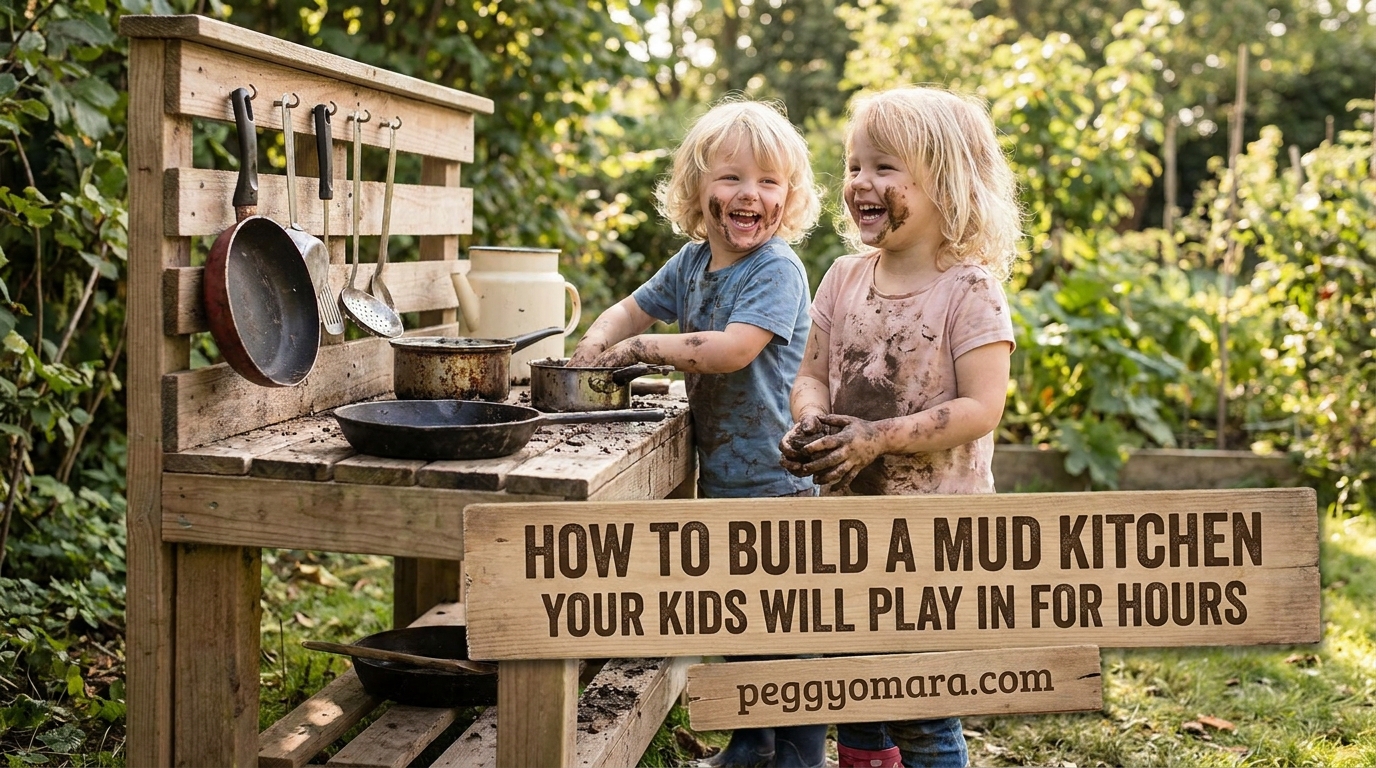
Want your kids to play outside for hours without once asking for a tablet? Build them a mud kitchen. Our family built ours three summers ago, and it remains the most-played-with “toy” in our backyard. I have seen my children create mud pies, nature soups, and magical potions for entire afternoons while I drank coffee on the patio.
This guide walks you through how to build a mud kitchen your kids will play in for hours. You do not need carpentry experience. You do not need expensive tools. Most families complete this project in one weekend for under $100.
By the end of this article, you will have a complete materials list, step-by-step instructions with time estimates, and troubleshooting tips for common mistakes. Let us turn that patch of yard into your kids’ favorite play destination.
Table of Contents
What Is a Mud Kitchen and Why Kids Love Them?
A mud kitchen is an outdoor play space where children mix soil and water using real kitchen tools like pots, pans, and spoons. Think of it as an outdoor kitchen dedicated to messy, sensory, imaginative play. Kids combine natural materials like dirt, leaves, rocks, and flowers to create mud pies, nature soup, and pretend meals.
My daughter once spent two hours making “birthday cakes” from mud and dandelions. She decorated them with pebble “candles” and served them to every stuffed animal in her room. That level of sustained, independent play happens almost daily in our mud kitchen.
The Developmental Benefits Research Supports
Mud kitchen play supports sensory development, fine motor skills, and scientific exploration. When children mix soil and water, they learn about ratios, textures, and cause-and-effect. They develop hand strength through stirring, pouring, and squeezing. They practice math concepts like full, empty, more, and less.
The benefits extend beyond academic skills. Playing in soil exposes children to beneficial microbes that support immune system development. Research from the University of Bristol found that soil bacteria Mycobacterium vaccae can reduce stress and improve mood. Kids who play in dirt are often happier and more relaxed.
Mud kitchens also encourage cooperative play and problem-solving. Children negotiate sharing tools, collaborate on recipes, and solve challenges like “how do we get water up to the second shelf?” These social skills develop naturally through open-ended play.
Educational Connections Teachers Love
Educators recognize mud kitchens as valuable learning environments. Children practice literacy skills when they write menus or label their creations. They explore science concepts like evaporation, mixing, and states of matter. They develop vocabulary describing textures, colors, and smells.
Jan White, an early childhood consultant, published a free PDF called “Making a Mud Kitchen” that educators worldwide use. She emphasizes that mud kitchens meet children’s fundamental need for sensory, hands-on exploration. This type of play supports brain development in ways structured activities cannot replicate.
How to Build a Mud Kitchen: Planning Your Setup
Before you buy a single board, spend time planning your mud kitchen setup. Good planning prevents costly mistakes and ensures your kitchen fits your space and your children. Let us walk through the key decisions.
Choosing the Perfect Location
Select a spot with partial shade if possible. Full sun makes mud dry too quickly and can overheat children during summer play. Look for level ground that drains well after rain. Avoid low spots where water pools.
Consider proximity to your house. You want the kitchen close enough for supervision but far enough that mess stays outdoors. Many families place mud kitchens near a fence line or garden edge. This creates a defined play zone while keeping mud away from main traffic areas.
Think about water access. Your kids will need water for mixing. Options include running a hose nearby, using a watering can from the house, or installing a simple beverage dispenser. We will cover water solutions in detail later.
Height Guidelines by Age
The right height keeps kids comfortable and engaged. The work surface should hit around elbow height for your child. This allows comfortable stirring and mixing without hunching over.
Use this height guide when planning your build:
- Ages 1-2: 18-20 inches high
- Ages 3-4: 20-24 inches high
- Ages 5-6: 24-28 inches high
- Ages 7+: 28-32 inches high
If you have children of different ages, build for the tallest child. Younger kids can stand on a sturdy stool or use a lower shelf as their workspace. My six-year-old uses the main counter while my three-year-old works on the bottom shelf.
Planning Your Water Source
Every mud kitchen needs water. The simplest solution involves carrying water from the house in pitchers or watering cans. This works fine but requires frequent refills during active play.
A beverage dispenser creates an independent water station. Fill a large glass or plastic dispenser and place it on a shelf where children can operate the spigot. Look for dispensers at thrift stores or during end-of-summer clearance sales.
For a more permanent solution, install a hose bibb or outdoor sink. Some families repurpose old laundry sinks or utility tubs. Others use Rubbermaid containers with holes drilled for drainage. Any container that holds water and allows controlled pouring works well.
Creating Your Mud Source
You need a dedicated source of soil for mixing. The easiest option uses a large shallow bin or sandbox filled with topsoil. Position this near the kitchen so kids can easily scoop and carry soil to their work surface.
Choose clean topsoil or loam without chemical fertilizers or pesticides. Avoid using garden soil that might contain residues. Some families create a “mud mixing station” using an old plastic storage bin or kiddie pool partially filled with soil.
Another option: let kids dig from a designated patch of yard. Mark off a soil patch with stones or landscape edging. This works best if you have naturally sandy or loamy soil that makes good mud.
Materials and Tools You Will Need
Building a mud kitchen requires basic lumber, hardware, and tools. Most families spend between $50 and $100 on materials. You can reduce costs significantly by using pallet wood or reclaimed materials.
Build Method Comparison (2026)
Choose your build method based on budget, skill level, and durability needs:
| Method | Cost | Time | Durability | Skill Level |
|---|---|---|---|---|
| Cedar 2x4s and fence boards | $80-100 | 4-6 hours | 10+ years | Beginner |
| Pallet wood | $0-30 | 6-8 hours | 3-5 years | Beginner |
| Cinder blocks and board | $20-40 | 1-2 hours | Indefinite | Anyone |
The cedar method creates a beautiful, long-lasting kitchen that withstands weather for a decade or more. The pallet method works great for tight budgets but requires extra prep time for sanding and nail removal. The cinder block method takes almost no skill and can be assembled in an afternoon.
Complete Materials List (Cedar Method)
This list builds a sturdy mud kitchen approximately 4 feet wide with one shelf and a backsplash:
- Three 8-foot cedar 2x4s (frame)
- Three 8-foot cedar fence boards 1×6 (surfaces)
- One 8-foot cedar 1×2 (backsplash support)
- One small cedar 1×4 (optional knobs backing)
- One pound deck screws (2.5 inch and 1.5 inch)
- Wood glue (exterior grade)
- Exterior stain or sealant
- Three cabinet knobs
- Two shallow plastic bins for sinks (Rubbermaid or similar)
Total cost: approximately $85-95 at most home improvement stores.
Budget Alternatives
Cut costs with these substitutions:
- Pressure-treated 2x4s instead of cedar (saves $30 but requires stain)
- Reclaimed pallet wood for surfaces (free but time-intensive)
- Old cutting boards or plastic trays for sinks (free from thrift stores)
- Tree branch hooks instead of purchased hooks (free)
- Leftover house paint for weatherproofing (free)
Tools Required
Basic tools get the job done:
- Circular saw or hand saw
- Drill with drill bits and driver bits
- Measuring tape
- Square (for corners)
- Pencil
- Sandpaper (80 and 120 grit)
- Paint brushes (for stain/sealer)
- Hammer (for pallets)
- Pry bar (for pallets)
- Safety glasses
If you do not own a circular saw, most lumber yards will cut boards to length for a small fee. This reduces your tool needs to just a drill and hand tools.
Step-by-Step Building Instructions
Now comes the fun part: building your mud kitchen. These instructions follow the cedar method, which creates the most durable result. Adapt the steps if using pallets or cinder blocks. Each step includes time estimates to help you plan your weekend.
Step 1: Cut Your Lumber (30 minutes)
From your cedar 2x4s, cut four legs at your desired height. For a standard 24-inch counter suitable for ages 3-6, cut four 24-inch legs. Remember to account for the thickness of your countertop when calculating final height.
Cut two long frame pieces at 48 inches for the front and back of the counter. Cut three shorter pieces at 21 inches for the sides and center support. These dimensions create a kitchen approximately 4 feet wide and 2 feet deep.
Pro tip: Label each piece with pencil as you cut. This prevents confusion during assembly.
Step 2: Build the Lower Frame (45 minutes)
Construct a rectangle using two legs and the 48-inch frame pieces. Position the frame so the top edge sits where you want your lower shelf. For most builds, place the lower shelf 4-6 inches from the ground.
Drill pilot holes to prevent wood splitting. Attach using two 2.5-inch deck screws per joint. Apply wood glue before screwing for extra strength. Check that your corners are square using a carpenter’s square or by measuring diagonals.
Repeat for the other pair of legs. You now have two rectangular leg assemblies.
Step 3: Connect the Leg Assemblies (30 minutes)
Connect your two leg assemblies using the 21-inch cross pieces. These form the sides of your kitchen and provide stability. Space them evenly: one at the front, one at the back, and one centered.
Again, drill pilot holes and use 2.5-inch deck screws with wood glue. Check that the frame sits level on flat ground. Adjust now if needed; fixing wobbles later requires disassembly.
Troubleshooting: If your frame wobbles, your cuts may not be perfectly square. Loosen screws slightly, adjust until level, then re-tighten. Small gaps are normal and will not affect strength.
Step 4: Add the Countertop (30 minutes)
Lay your cedar fence boards across the top frame. The boards should overhang the front and sides by about 1 inch for a finished look. Leave a small gap between boards for drainage.
Mark one board where you want your sink cutout. A standard Rubbermaid dishpan requires approximately an 18×14 inch opening. Cut this section out using your saw or a jigsaw if available.
Secure boards from underneath using 1.5-inch deck screws. Space screws every 12 inches.
Step 5: Install the Lower Shelf (20 minutes)
Cut remaining fence boards to fit the lower shelf area. These do not need gaps since drainage matters less below. Secure with 1.5-inch screws from underneath.
This shelf holds mud bins, water containers, and loose parts. Make sure it feels sturdy; kids will step on it.
Step 6: Build the Backsplash (30 minutes)
Cut a cedar 1×2 to fit across the back of your countertop. Mount it vertically so it extends 12-18 inches above the counter. This backsplash prevents items from falling behind and provides a surface for hanging hooks.
Attach fence boards vertically to this frame, leaving gaps for a slatted look. This creates visual interest and reduces weight.
Step 7: Add Burners and Knobs (20 minutes)
Draw four circles on your countertop using a permanent marker to represent stove burners. A large coffee can makes the perfect template. Space them like a real stovetop.
Mount three cabinet knobs on the backsplash or front edge for control knobs. Pre-drill holes to prevent splitting. Use nuts and bolts if screws do not grip well.
Real parent tip: The sharpie burners will surprise you. Every adult who sees our kitchen asks where we bought the “stovetop.” Kids never question it; they just start cooking.
Step 8: Install Your Sink (15 minutes)
Drop your Rubbermaid bin or sink basin into the cutout. The rim should rest on the countertop. Test that it sits level and removes easily for cleaning.
If using a dishpan, consider drilling a small drainage hole in the bottom. Plug it during play, then pull the plug for easy emptying.
Step 9: Sand and Finish (45 minutes)
Sand all surfaces with 80-grit paper, then finish with 120-grit. Pay special attention to edges and corners where small hands will touch. Round over sharp edges completely.
Apply exterior stain, paint, or sealant. A clear polyurethane sealant protects the wood while showing its natural beauty. Darker stains hide dirt better. Let dry completely before allowing play.
Step 10: Add Hooks and Accessories (15 minutes)
Screw cup hooks into the backsplash or sides for hanging utensils. Space them 6-8 inches apart. Add S-hooks for hanging pots and pans.
Your mud kitchen is complete. Step back and admire your work. Then watch your kids discover it.
Common Build Mistakes and How to Fix Them
Even experienced DIYers make mistakes. Here is how to handle common problems:
Wobbly frame: Your ground may be uneven, or your cuts were not perfectly square. Shim under short legs with flat stones or wood scraps. For severe wobble, add diagonal corner braces.
Wood splitting: You skipped pilot holes. Drill holes slightly smaller than your screw diameter. Cedar splits easily; take time to pre-drill every hole.
Sink basin too loose: Add wooden strips around the cutout rim to create a lip. The bin should rest securely without rocking.
Water pooling on counter: Your board gaps are too small or nonexistent. Use a router or saw to widen gaps, or drill drainage holes in low spots.
Pallet wood too rough: Pallet wood requires serious sanding. Start with 60-grit paper and a power sander if possible. Remove all splinters completely; kids will touch every surface.
Mud Kitchen Accessories and Tools for Kids (2026)
A beautiful kitchen sits empty without the right tools. Kids need real, functional kitchen equipment to engage in meaningful play. Skip the toy plastic versions; actual kitchen tools work better and cost less.
Essential Tools Every Mud Kitchen Needs
Gather these basics from thrift stores, garage sales, or your own kitchen:
- Pots and pans in various sizes (stainless steel holds up best)
- Muffin tins and baking sheets
- Plates, bowls, and cups (metal or enamel, not glass)
- Spoons, ladles, and spatulas
- Whisks for mixing
- Colanders for draining nature soup
- Measuring cups and spoons
- Cookie cutters for shaping mud pies
- Rolling pins for flattening
- Cutting boards and plastic knives
Thrift stores regularly sell complete sets for under $10. Look for older, heavier items that feel substantial in small hands. Avoid non-stick coatings that can scratch.
Special Additions That Extend Play
These extras spark new types of creative play:
Squeeze bottles: Fill with water for controlled pouring. Add food coloring for potion-making. Dollar Tree sells three-packs for $1.25.
Spice jars: Empty containers hold sand, glitter, or crushed leaves. Kids love shaking “seasonings” into their creations.
Mortar and pestle: Perfect for grinding flowers, leaves, and chalk into powders. Look for stone sets at thrift stores.
Watering cans: Multiple sizes allow different pouring speeds. Small ones work for precise watering; large ones create instant rivers.
Pitchers and funnels: Transferring water between containers fascinates young children. Add various-sized funnels for experimentation.
Loose Parts for Creative Play
Loose parts are open-ended materials children can move, combine, and transform. Collect these natural and recycled items:
- Sticks and twigs for stirring and decoration
- Rocks and pebbles in various sizes
- Leaves, flowers, and petals (teach ethical foraging)
- Pinecones, acorns, and seeds
- Shells from beach trips
- Bark pieces and wood slices
- Old keys, corks, and bottle caps
- Fabric scraps for tablecloths
- Chalk for marking and drawing
Store loose parts in open containers at kid height. Rotate materials seasonally to maintain interest. A basket of pumpkin seeds in fall or flower petals in spring sparks fresh creativity.
Storage and Organization Solutions
Organization prevents chaos and teaches responsibility. Mount a small mailbox or basket near the kitchen for recipe cards and menus. Use a pallet section with Mason jars screwed to the boards for visible tool storage.
Plastic bins slide neatly under the lower shelf. Label bins with pictures for pre-readers: a spoon image for utensils, a leaf for natural materials. Clear bins let children see contents without opening.
Hang aprons on hooks nearby. Old adult t-shirts work perfectly as mud aprons. Designate a specific spot for water containers so refilling becomes routine.
Safety, Hygiene, and Maintenance
Mud kitchens require some safety considerations and regular maintenance. A well-maintained kitchen lasts longer and stays safer for children. Let us cover the essentials.
Safety Guidelines for Worry-Free Play
Supervise young children, especially around water. Even shallow bins pose drowning risks for toddlers. Teach children that the kitchen is for play, not drinking.
Check tools regularly for rust or sharp edges. Replace damaged items immediately. Metal cookie cutters can rust and create sharp edges when bent.
Position the kitchen away from hazardous plants. Teach children to identify poison ivy, oak, and sumac. Ensure any plants within reach are non-toxic.
Avoid pressure-treated lumber if children will mouth the wood. Modern pressure-treated wood uses safer chemicals than old arsenic treatments, but cedar or naturally rot-resistant woods remain the safest choice.
Hygiene Best Practices
Playing in dirt is healthy, but basic hygiene prevents problems. Require handwashing after mud kitchen play. Keep soap and water accessible.
Cover your mud source when not in use to prevent animal contamination. A simple plywood lid or tarp works well.
Empty and rinse water containers daily to prevent mosquito breeding. Standing water attracts insects within 48 hours.
Wash kitchen tools periodically with soap and water. Sun-dry completely to prevent mold growth.
Weatherproofing and Seasonal Care
Protect your investment with proper weatherproofing. Reapply sealant annually or when water stops beading on the surface. Look for wear spots on horizontal surfaces.
Consider a tarp cover for harsh winters. Snow and freeze-thaw cycles stress wood joints. A simple cover extends kitchen life by years.
In rainy seasons, check drainage regularly. Remove leaves from board gaps. Ensure the kitchen sits level so water runs off rather than pooling.
Store removable items indoors during severe weather. Fabric, paper items, and wooden loose parts last longer with indoor storage.
Age-Appropriate Setup Guidance
Different ages use mud kitchens differently. Adapt your setup to match your child’s developmental stage. The same kitchen works for multiple ages with small modifications.
Toddlers (Ages 1-2)
Young toddlers need simple, safe setups. Use a lower shelf or small table at 18-inch height. Provide large containers that are easy to scoop from. Avoid small items that present choking hazards.
Focus on sensory exploration. Water play alone often satisfies this age. Add large spoons and cups for pouring practice. Supervise constantly around any water.
Keep ingredients simple: sand, water, and large leaves. Skip small seeds, pebbles, or anything that fits in a mouth.
Preschoolers (Ages 3-5)
This is the golden age for mud kitchens. Preschoolers engage in elaborate pretend play with complex recipes and role-playing. They can handle more tools and ingredients.
Provide real cooking tools and diverse loose parts. Introduce recipe cards with simple pictures. Add play scenarios like “bakery,” “restaurant,” or “science lab.”
Encourage independence. Position water where they can refill themselves. Organize tools at child height. Step back and let them manage their play.
School Age (Ages 6-8)
Older children use mud kitchens for more complex projects. They create detailed menus, experiment with ratios, and engage in multi-step processes. They can handle real responsibilities like cleaning up.
Challenge them with advanced tools: real mortar and pestle, measuring scales, or garden trowels. Introduce science experiments: evaporation studies, filtration with colanders, or growing seeds in mud.
Consider adding a chalkboard for menu writing. Provide notebooks for recipe recording. Older children enjoy documenting their creations.
Managing Multiple Ages Together
Siblings of different ages often share mud kitchens. Create separate zones when possible: a low shelf for toddlers, main counter for older kids. Establish clear rules about tool sharing.
Teach older children to help younger ones. This builds responsibility and reduces conflicts. Praise cooperative play and problem-solving between siblings.
Rotate special items to prevent competition. When conflict arises, separate the children briefly or redirect to different activities.
Mud Kitchen Activities and Recipes
Kids need inspiration to start playing. Provide these “recipes” and activity ideas to spark creativity. Children will quickly develop their own variations.
Classic Mud Pie Recipe
The foundation of all mud kitchen play. Mix two parts soil with one part water. Stir until smooth like brownie batter. Pour into pie pans or muffin tins. Decorate with flower petals, leaves, or pebble “berries.”
Let pies “bake” in the sun. The drying process teaches patience. Serve to stuffed animals, parents, or imaginary customers.
Nature Soup Variations
Fill a pot with water. Add ingredients based on the season:
Spring soup: Dandelion petals, fresh grass clippings, clover flowers.
Summer soup: Mint leaves, lavender buds, cucumber peels from the kitchen.
Fall soup: Acorns, colorful leaves, pumpkin seeds.
Winter soup: Evergreen sprigs, pine needles, winter berries.
Stir with a wooden spoon. Serve in small cups to fairies, gnomes, or garden creatures.
Potion Lab Experiments
Transform your kitchen into a science laboratory. Provide squeeze bottles with colored water (food coloring or liquid watercolor). Mix potions in clear containers to observe color changes.
Add baking soda and vinegar for fizzy reactions. Sprinkle glitter for magical effects. Write potion recipes on clipboards.
Seasonal Activities to Extend Play
Rotate activities to maintain interest throughout the year:
Spring: Plant seeds in mud and observe sprouting. Create mud seed bombs for the garden.
Summer: Add ice cubes for cooling experiments. Make sun tea with herbs.
Fall: Grind colored leaves into “spices.” Create mud sculptures that dry into shapes.
Winter: Mix snow with dirt for “snow mud.” Create ice decorations using molds.
Frequently Asked Questions
How much does it cost to build a mud kitchen?
Building a mud kitchen costs between $50 and $100 using new cedar materials. You can reduce costs to under $30 using pallet wood or cinder blocks. The main expenses are lumber ($60-80), hardware ($10-15), and sealant ($10-20). Many families build functional kitchens for free using reclaimed materials and items they already own.
How tall should a mud kitchen be?
A mud kitchen work surface should reach your child’s elbow height for comfortable play. Use these guidelines: ages 1-2 need 18-20 inches, ages 3-4 need 20-24 inches, ages 5-6 need 24-28 inches, and ages 7+ need 28-32 inches. Build for your tallest child; younger children can use stools or lower shelves.
What mud is best for a mud kitchen?
Clean topsoil or loam works best for mud kitchen play. Avoid garden soil treated with fertilizers or pesticides. Purchase bags of topsoil from garden centers, or designate a soil patch in your yard. The ideal mud consistency resembles thick brownie batter: two parts soil to one part water. Avoid clay-heavy soils that become too sticky or sandy soils that fall apart.
What age is a mud kitchen for?
Mud kitchens suit children ages 1 through 8. Toddlers enjoy simple sensory exploration with water and large scoops. Preschoolers engage in elaborate pretend play and cooking scenarios. School-age children use kitchens for complex projects and scientific experiments. Adapt the height and tools to match your child’s developmental stage.
Can you use a mud kitchen in winter?
Yes, mud kitchens work year-round with seasonal adaptations. In winter, mix snow with dirt to create snow mud. Make ice sculptures using molds and freezing temperatures. Store water containers indoors to prevent cracking. Clear snow off surfaces regularly. Some families cover kitchens with tarps during harsh weather, but many leave them open for winter play opportunities.
How do you keep a mud kitchen clean?
Regular maintenance keeps mud kitchens functional. Empty water containers daily to prevent mosquitoes. Wash tools periodically with soap and water. Cover your soil source when not in use. Reapply wood sealant annually. After play sessions, require handwashing. Do not stress about dirt; the kitchen is designed for mess. Focus on preventing standing water and removing debris that attracts pests.
What tools do kids need for a mud kitchen?
Kids need real kitchen tools, not toy versions. Essential items include pots, pans, muffin tins, spoons, ladles, measuring cups, and colanders. Add special items like squeeze bottles, spice jars, and mortar and pestle for extended play. Source tools from thrift stores for authenticity and durability. Metal and wood hold up better than plastic outdoors.
Can you build a mud kitchen indoors?
Yes, apartment dwellers can create indoor mud kitchens using sensory bins. Fill shallow storage containers with play sand or kinetic sand. Use a low table as the work surface. Add real kitchen tools scaled to the space. Place a drop cloth underneath for easy cleanup. Alternatively, use a balcony or patio space with a small cinder block setup that can be disassembled when needed.
Conclusion
You now have everything needed to build a mud kitchen your kids will play in for hours. From planning the perfect height to troubleshooting wobbly frames, this guide covers the complete process. Remember that perfection is not the goal. A simple cinder block setup provides just as much joy as a cedar masterpiece.
The investment pays dividends in outdoor play, creativity, and childhood memories. Our mud kitchen has hosted countless mud pies, nature soups, and science experiments. It has kept my children engaged through three summers and counting. They still run outside after breakfast to check on their “restaurant.”
Start gathering materials this weekend. Cut your first board. Watch your children’s faces when they discover their new outdoor kitchen. The mud awaits. Happy building!