
The best trivia game for adults and teens overall is I Should Have Known That by Hygge Games. It is rated 4.5 out of 5 across more than 34,000 reviews, it plays with anyone aged 14 and up, and its penalty scoring turns a normal question-and-answer night into something louder and more competitive than a standard quiz.
That pick matters because most trivia games on the market are built for one of two audiences, and neither one is yours. Many are pitched at children, where adults find the difficulty insulting and teens check their phones within a round. Others are pitched at serious quiz enthusiasts, where a mixed group of parents and teenagers spends the evening quietly stumped. The twelve games below sit in the middle band, and each one comes with an honest note about where it stops working.
We compared question counts, player ranges, age ratings, formats, and category spreads across the whole roundup, then grouped the results by the situations people actually host: a pub quiz at home, a holiday gathering, a teenager’s birthday, a date night, and a group too large for one table. The picks cover physical card games, board games, and travel-sized decks, and the buying guide explains when each format earns its place.
One theme runs through almost all of the feedback we read. Trivia is one of the few screen-light activities that scales from four people to fifteen without breaking, which makes it a strong default for game night. If your group skews younger and you want the phone-free evening to be non-negotiable, our guide to the best trivia board games for families covers the picks aimed a bracket lower.
Table of Contents
Top 3 Trivia Picks for Game Night (October 2026)
I Should Have Known That
- Points subtracted for wrong answers
- 110 cards with 400+ questions
- Ages 14 and up
- Screen-free card play
Trivial Pursuit Classic Edition
- 2
- 400 questions in six categories
- Buzzer and 1-minute timer
- 2-6 players ages 16+

Lyrically Correct 90s and 2000s
- Finish-the-lyrics gameplay
- 140 cards plus 10 challenge cards
- Ages 13 and up
Each of these three earns its slot for a different reason. The Hygge deck wins on replay value and the sheer size of its review base, the Classic Edition wins on question bank depth and the highest rating in this roundup, and Lyrically Correct wins when your group has a specific taste and wants a format that is nothing like standard trivia.
All 12 Trivia Games at a Glance in 2026
| Product | Specifications | Action |
|---|---|---|
| I Should Have Known That |
|
Check Latest Price |
 Do You Really Know Your Family Do You Really Know Your Family |
|
Check Latest Price |
| Trivial Pursuit Classic Edition |
|
Check Latest Price |
 Smart Ass Smart Ass |
|
Check Latest Price |
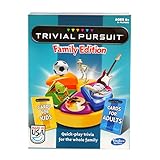 Trivial Pursuit Family Edition Trivial Pursuit Family Edition |
|
Check Latest Price |
| Lyrically Correct 90s and 2000s |
|
Check Latest Price |
 Chronology Chronology |
|
Check Latest Price |
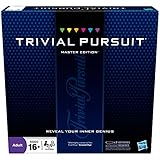 Trivial Pursuit Master Edition Trivial Pursuit Master Edition |
|
Check Latest Price |
 Urban Trivia Urban Trivia |
|
Check Latest Price |
 Trivial Pursuit Decade Mini Packs Trivial Pursuit Decade Mini Packs |
|
Check Latest Price |
 American Trivia American Trivia |
|
Check Latest Price |
 HISTORY Channel Trivia Game HISTORY Channel Trivia Game |
|
Check Latest Price |
1. I Should Have Known That – The Best Overall Pick for Adults and Teens
I should have known that! – A Trivia Game About Things You Oughta Know, Green
- Points are subtracted for wrong answers which speeds the game up
- More than 400 questions across 110 cards
- Compact box stores and travels easily
- Humorous premise that suits teens and adults
- Questions skew toward obscure facts rather than mainstream trivia
- Penalty scoring frustrates casual players
This is the game we hand to a group that has never met and has no shared history. Hygge Games built it around a simple reversal: you lose points for every wrong answer instead of earning them for correct ones. That single rule turns a passive quiz into a tense one, and it works because nobody wants to be the person who quietly sinks the team.
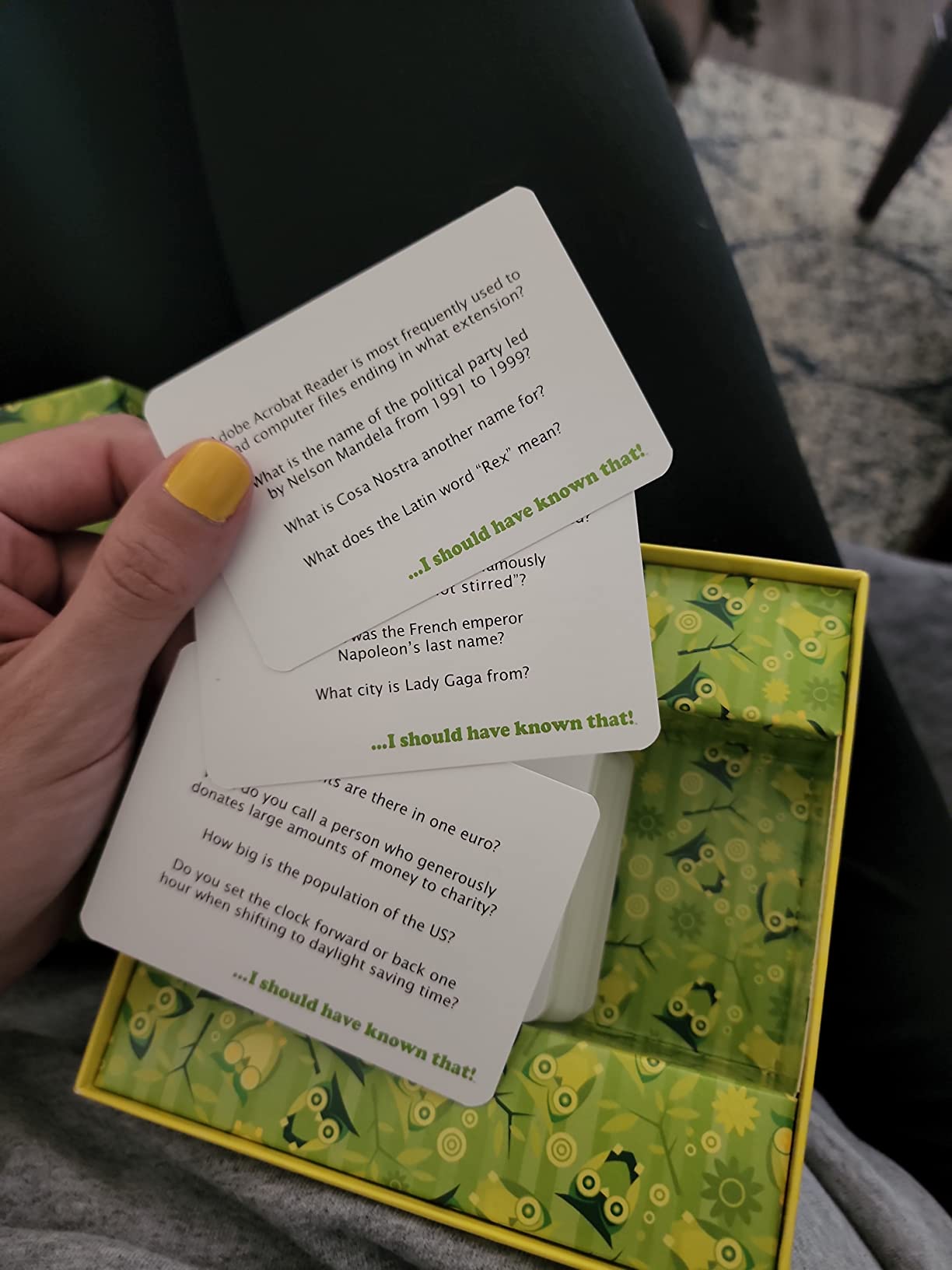
The bank is 110 cards holding more than 400 questions, which gives you several full sessions before the deck starts repeating itself. That matters more than it sounds. The single most common complaint about card-based trivia is exhaustion of the question pool by the third game, and 400 questions is comfortably past the point where a typical family or friend group runs dry.
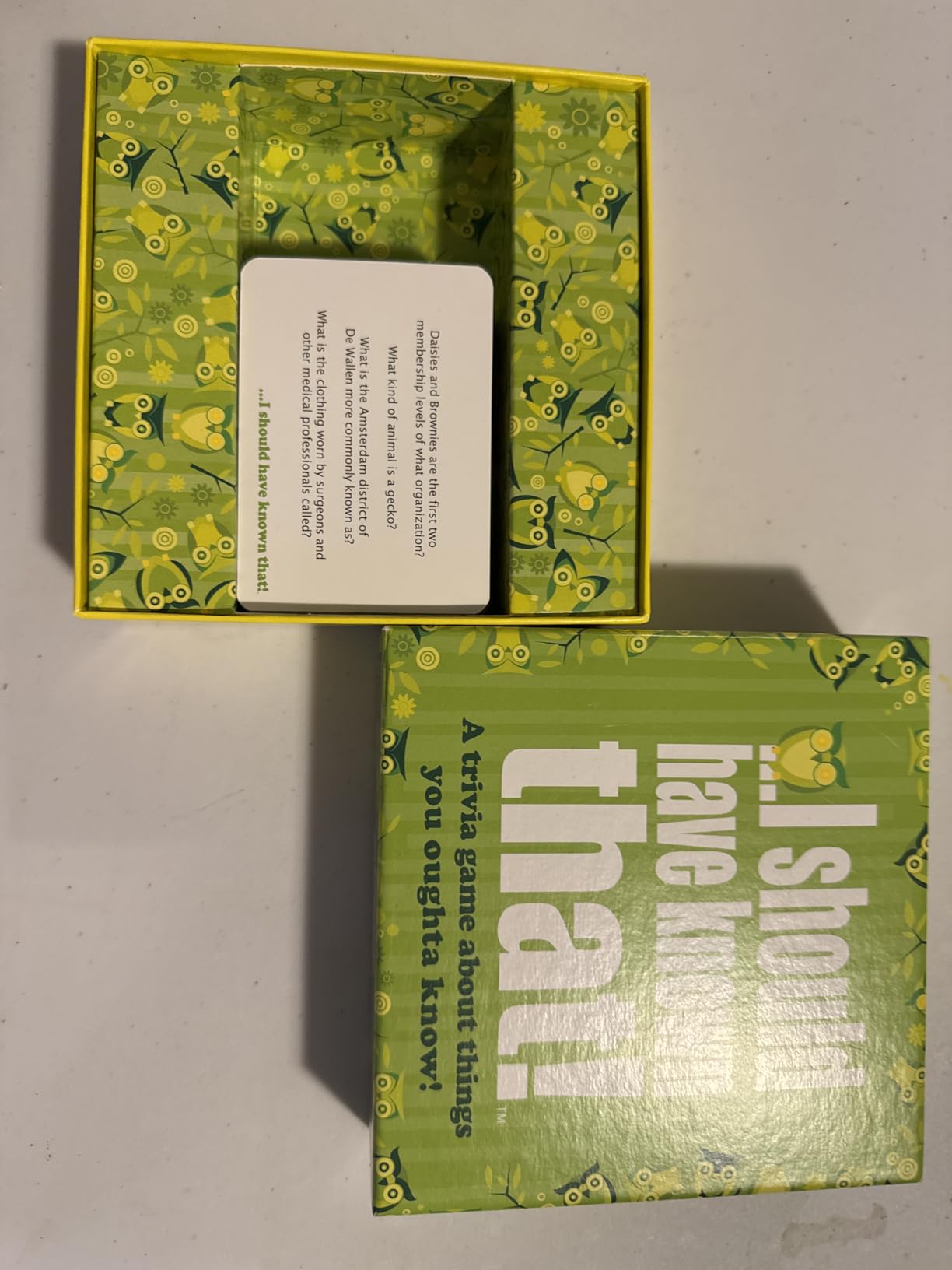
The build is deliberately small at 5.7 inches square and 8.8 ounces, so it lives in a drawer instead of a closet. Hygge Games rates it for ages 14 and up, which makes the manufacturer’s own guidance a good match for the adults-and-teens audience this roundup serves.
Our group ran it at eight players split into two teams of four, and the box did not dominate the table the way a full board game does. Setup is a matter of dealing a hand and reading the question, so getting a round going took under a minute once the rules were understood.
Who this game rewards
It rewards confident bluffers and bluffers themselves. Players who are willing to commit to an answer they are not sure about do well, because the scoring punishes hesitation as much as ignorance. In a group with a couple of strong personalities, that produces the kind of shouting, laughing, competitive energy people remember.
It also suits a mixed-skill table better than most. The penalty structure means a knowledgeable player cannot simply run away with the round, since one wrong guess costs them. A group of parents and teenagers playing together tends to stay closer, which is the outcome you want.
Where it frustrates people
The questions are not mainstream general knowledge. They are framed as things you ought to know, and reviewers regularly note that the subject matter is more obscure than a standard pub quiz. A group that expects film, music, and sport trivia will finish the night less satisfied than one that enjoys trivia-adjacent facts.
The subtraction scoring also gets criticism from casual players, and it is worth testing with your group. If someone will take losing points personally, choose a game where a wrong answer simply costs nothing. That is the single most common reason adults abandon trivia games mid-round.
2. Do You Really Know Your Family – Best for Mixed-Age Tables
Do You Really Know Your Family? Fun Family Game for Kids, Teens and Adults
- Learns in seconds with no lengthy setup
- Rounds move quickly
- Reviewers report teens engaging willingly
- Encourages phone-free conversation
- Not traditional trivia so replay value depends on the group
- Some challenge cards get skipped
- Little difficulty progression
This one works differently from every other game in the roundup. Instead of testing general knowledge, it tests how well the players know each other, and it does so with two-sided quiz and conversation cards. That design makes it unusually good at pulling a quiet teenager into a game with grandparents and parents.
Reviewers consistently describe the same effect: even resistant teens participate, and the table ends up talking about itself rather than about facts. At 4.6 stars from more than 16,000 reviews, it is one of the most proven choices here, and the 3-8 player range covers most living rooms and small dinner parties.

The format is genuinely fast. Cards come out one at a time, answers go back into the deck, and a session fills a gap between courses rather than a whole evening. We found it useful as the first fifteen minutes of a larger game night, before the competitive rounds take over.
The tin measures 2 by 4.7 by 6.7 inches and needs no batteries, which makes it the easiest thing in this roundup to pack for a trip. A game that fits in a carry-on and starts with no setup is exactly what you want when a gathering is spontaneous.
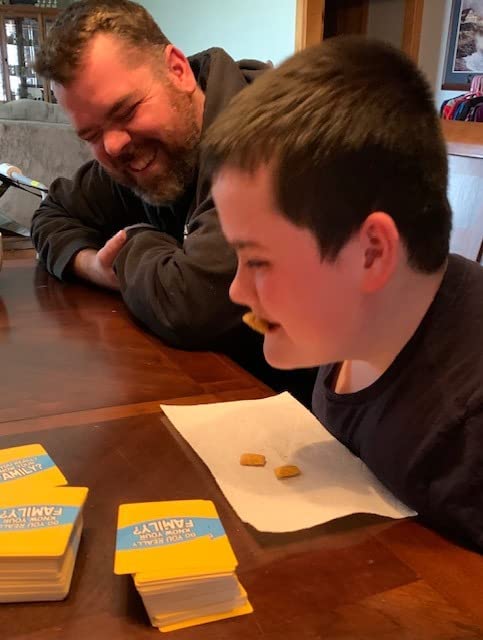
Who this game rewards
It rewards groups that already like each other, or groups willing to be a little exposed. The questions force players to predict what someone else knows or likes, and the silly challenge cards add physical comedy that breaks up a quiet table quickly. Families with a wide age span get the most out of it.
It is also the best icebreaker in this roundup for a dinner party. There is no setup, no scoring dispute, and no loser, so it carries almost no social risk for a guest who is meeting the group for the first time.
Where it frustrates people
It is not a trivia game in the sense most buyers mean. Replay value depends on the people at the table, and once the same group has played several rounds, the answers stop surprising anyone. Reviewers also note that some of the challenge cards are hard enough that groups begin skipping them.
There is no difficulty progression either, so it will not satisfy a group that wants to be tested. If competition and a clear winner are the goal, choose a scored game instead and keep this one for the warm-up.
3. Trivial Pursuit Classic Edition – Best Question Bank
- Highest rating in this roundup at 4.7 stars
- Large bank of 2400 questions
- Buzzer and 1-minute timer add pace
- Nostalgic 1980s-style gameboard
- Longer sessions than card-based trivia
- Some questions skew to older pop culture decades
If you want the highest-rated game in this roundup and the largest question bank in it, this is the edition to buy. Hasbro’s Classic Edition carries 2,400 questions spread across six categories: geography, entertainment, history, art and literature, science and nature, and sports and leisure. That spread is what makes it a fair test rather than a niche one.
The rating reflects broad agreement. It sits at 4.7 stars from more than 8,000 reviews, and 83 percent of those ratings are five stars. Very few products in any category sustain a review count and average at that level for this long.
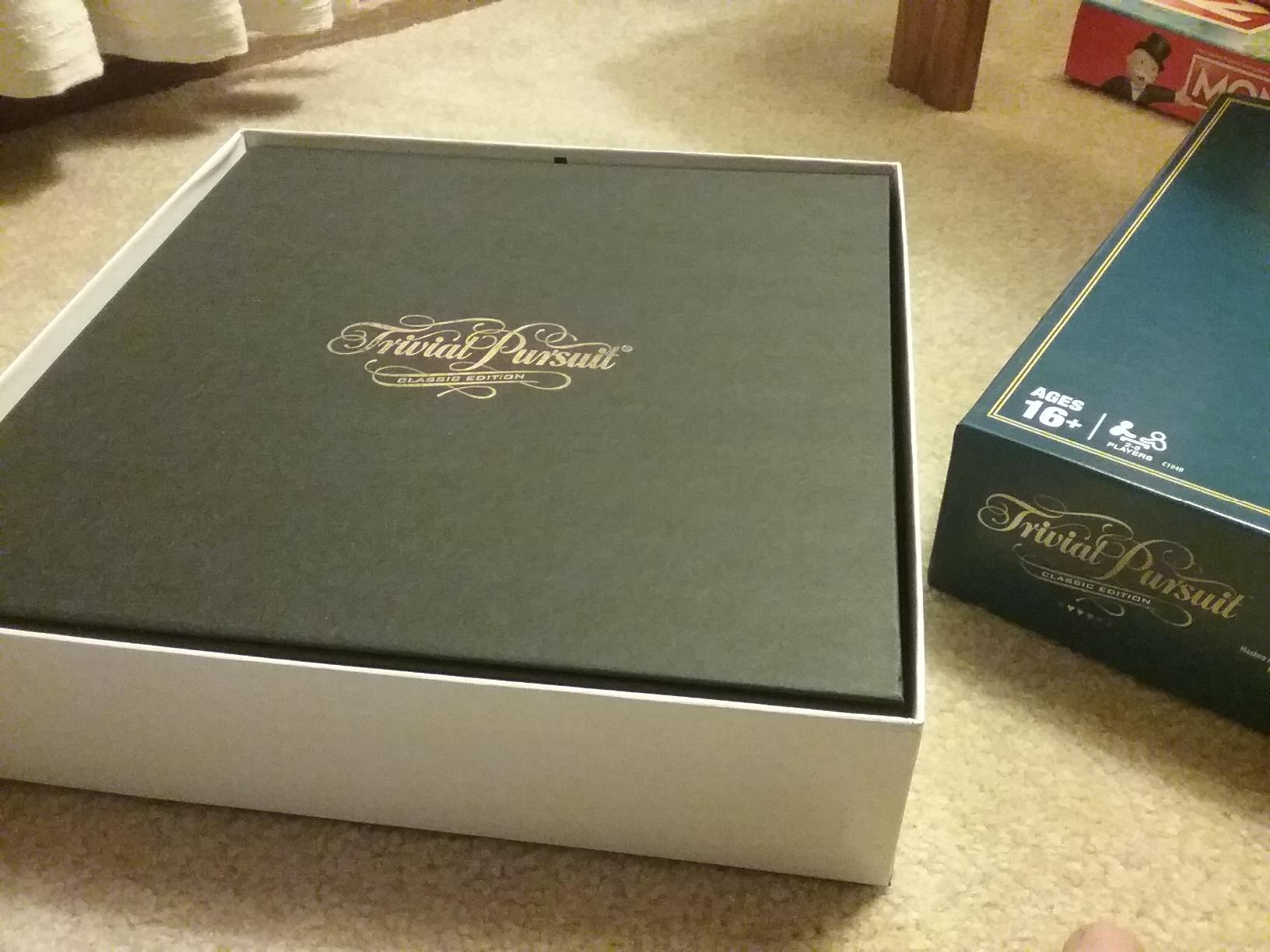
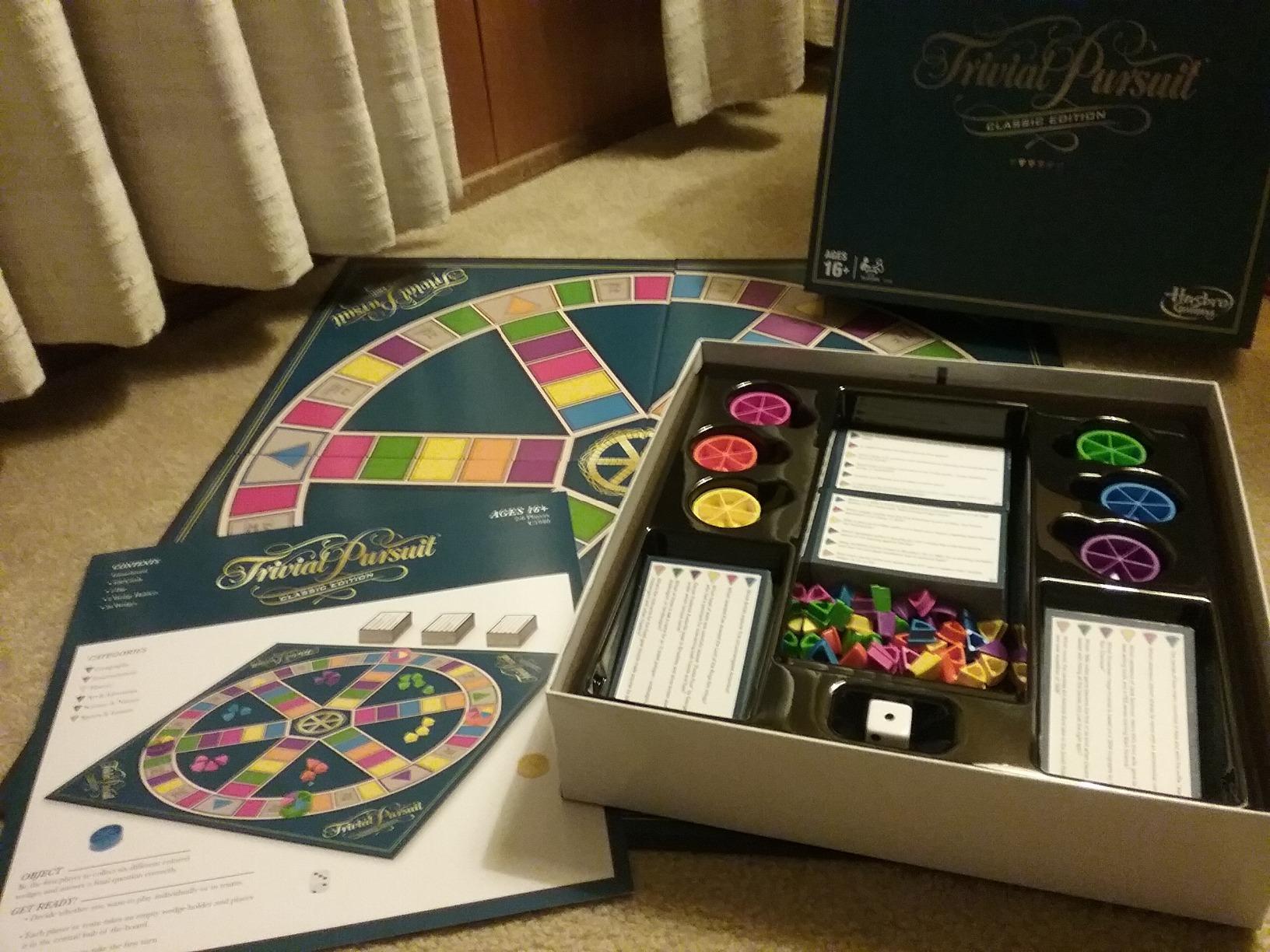
The box includes 264 cards, a buzzer, a 1-minute timer, a score pad, and instructions. The buzzer and timer are the details that separate this from a plain card deck, because they force fast decisions and stop a slow team from stalling the table while they deliberate.
Play time runs about 60 minutes for 2-6 players, which makes it an evening rather than a warm-up. It is a wedge-collecting game: you take turns, answer questions in a category, and collect six colored wedges before facing a final question to win.
Who this game rewards
It rewards a group with broad, patient knowledge and a willingness to sit through a full board game. Families that grew up playing it get the most out of the classic 1980s-style gameboard, and the nostalgia is a genuine part of why ratings stay high.
The question bank also makes it the safest pick for a large mixed group, because sheer volume means no single category dominates the score. Teams of three or four per side work well, and the timer keeps each turn short enough that nobody has to concentrate for an hour straight.
Where it frustrates people
It is slower than card-based options, and that is the main recurring complaint. If you want a game that runs in twenty minutes between other activities, this is not it. Sixty minutes is a real commitment to a single box.
Some questions draw on older decades of pop culture, which younger players can miss entirely. For a group skewing hard toward teenagers, expect a few rounds where the adults hold the advantage, and pair it with a faster second game if fairness matters that evening.
4. Smart Ass – Best for Loud, Competitive Groups
Smart Ass Fast-Paced Trivia Board Game for Families, Ages 12+
- Very fast rounds that finish quickly
- Shouting out answers creates real party energy
- 411 cards of updated content
- Works well in teams
- Clue difficulty is uneven across cards
- Plays thin with only three players
- Cover art reads as a kids game
This is the answer for a group of friends who find a traditional trivia board too slow and too polite. University Games’ Smart Ass lets any player shout out an answer at any time, even out of turn. First to get the right answer moves toward the marker and wins the card, and the resulting noise is the point.
It holds 4.6 stars from roughly 7,400 reviews, with 78 percent five-star ratings. The dominant praise in those reviews is speed and energy rather than question quality, which tells you exactly what kind of night you are buying.
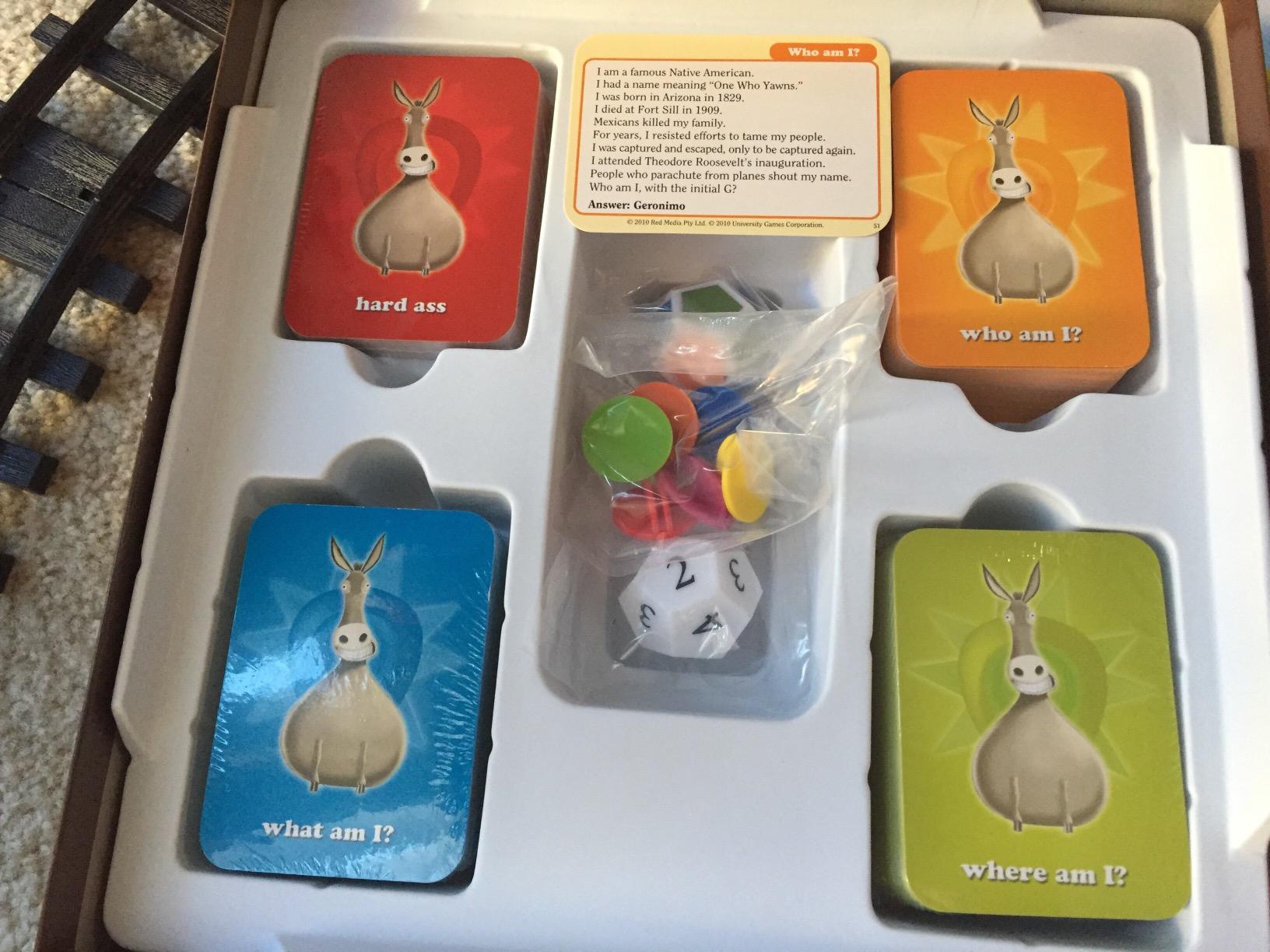
The components are a 10.63 inch square board, 6 playing pieces and stands, 411 question cards, a jumbo category die, a jumbo movement die, and instructions. Two dice rather than one is a small design choice with a real effect, since it adds movement variance and keeps the board unpredictable.
The card content was refreshed with all-new topics in the current edition, and the game carries a one-year warranty against manufacturer defects. At 2.4 pounds it is a substantial box, but it is the only pick here that genuinely fills a corner of a large table.
Who this game rewards
It rewards loud, competitive groups and anyone who enjoys a race. The shout-out rule means a fast player can steal points from a slower one, so groups of four or more get noticeably better than a quiet pair. It also works cleanly in teams, which is the right structure once you have eight people.
For a household with teens aged 12 and up, the quick format is often the difference between a game that gets played and one that sits in a box. The age rating starts lower than most of the adult-and-teen picks here, and the pace is what makes that fair.
Where it frustrates people
Difficulty is uneven. Some clue cards are easy and some are close to expert, and the recurring complaint is that younger teens stall on the harder ones while adults cruise. Plan for a couple of slow moments rather than expecting a smooth curve.
Two other limits are worth knowing. Three players is thin, because the shout-out mechanic needs bodies competing for answers, and the cover art looks like a children’s game. That second point is cosmetic, but it matters when you are trying to convince a group of adults to play.
5. Trivial Pursuit Family Edition – Best When Younger Kids Join In
Hasbro Gaming Trivial Pursuit Game: Family Edition Board Game, Family Trivia Games for Adults and Kids, 2+ Players, Ages 8+ (Amazon Exclusive)
- Separate adult and kid decks let mixed ages compete
- Quick-play board shortens each game
- Works solo or in teams
- 4.7 stars from more than 7000 reviews
- Kid deck is noticeably easier than the adult deck
- Shallower question depth than the Master Edition
- Small parts warning for very young children
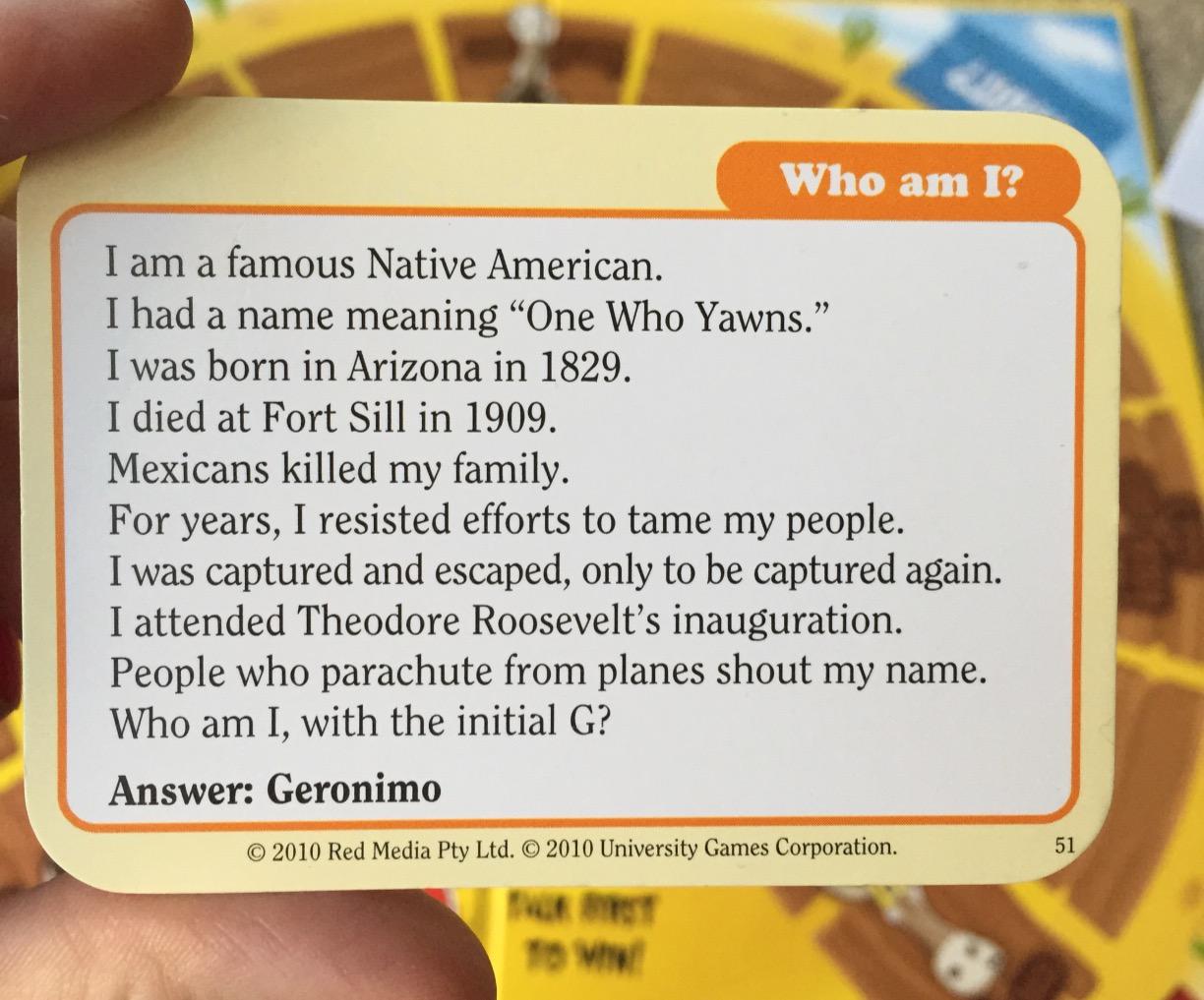
The defining feature here is the two-deck system. The box ships with 100 blue cards for adults and 100 yellow cards for kids, used with two cardholders, and the two groups answer from different decks at the same table. That solves the most common problem with family trivia, where one deck is either insulting or winnable by a seven-year-old.
Question depth is 1,200 across six categories, and the quick-play board lets a player earn a wedge on any colored space rather than matching a specific one. Both changes exist to shorten the game, and both are the reason this edition finishes faster than the Classic version.
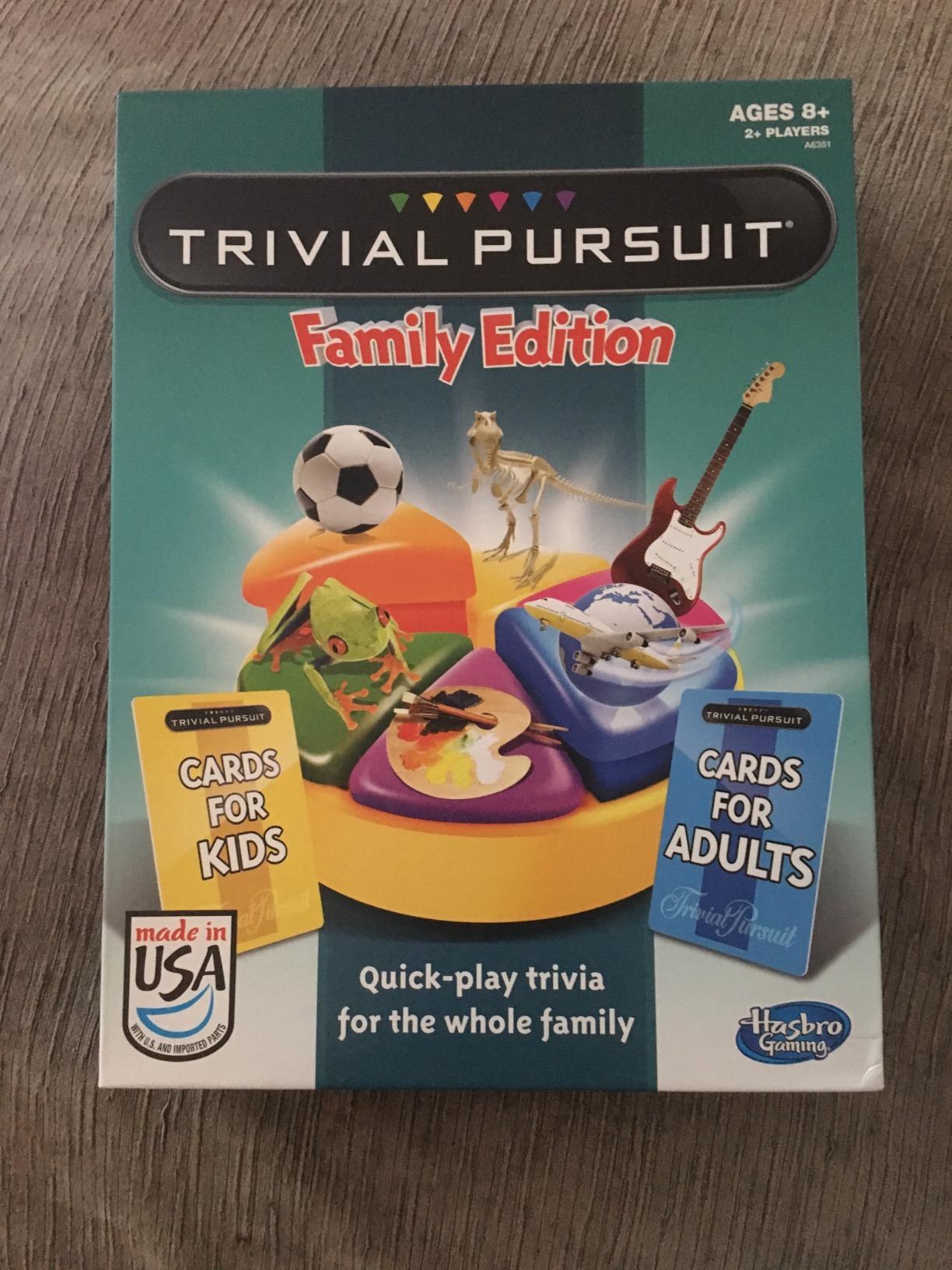
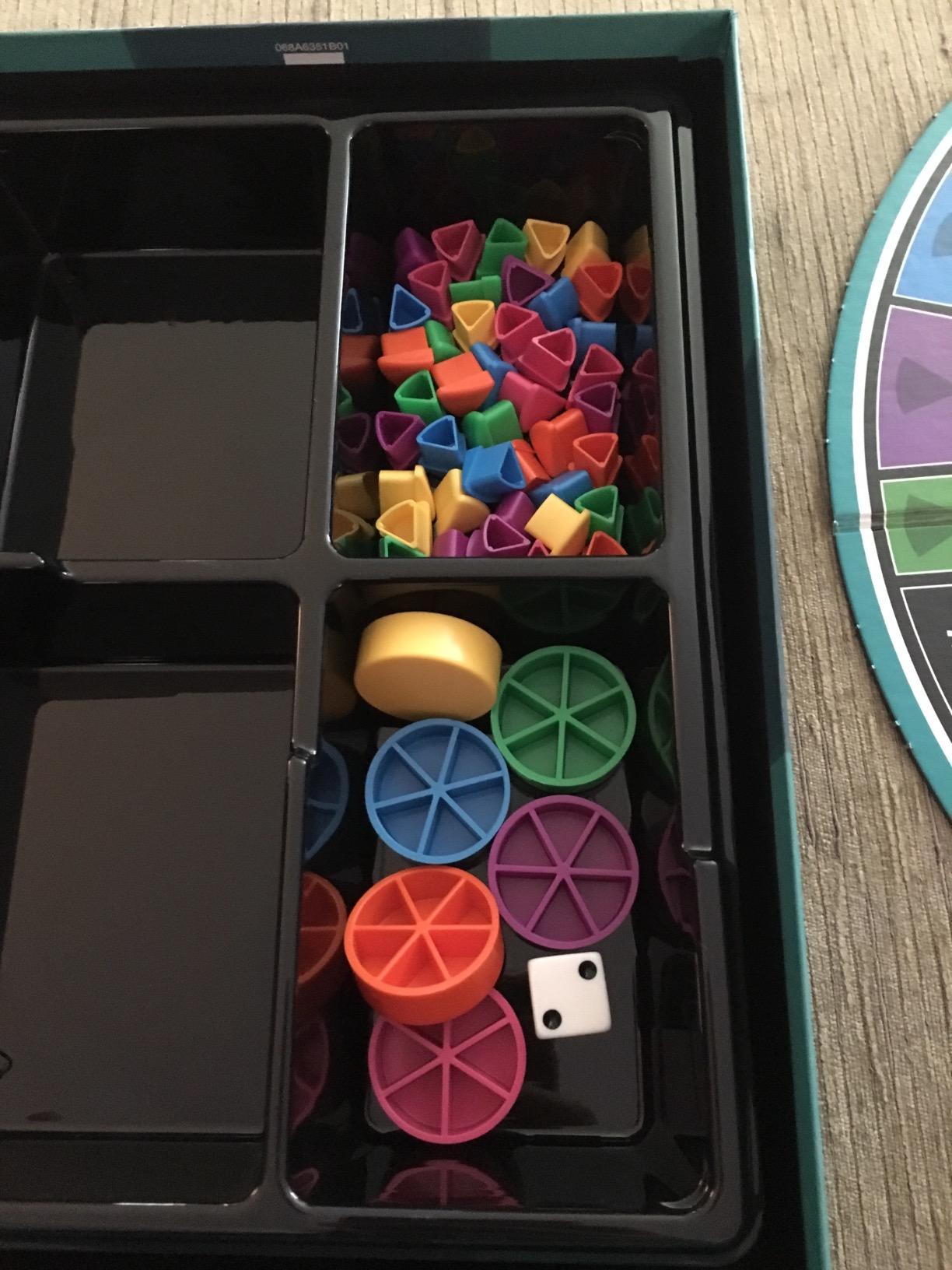
Everything needed is in the box: the gameboard, two cardholders, 6 scoring tokens, 36 scoring wedges, a die, and instructions. It plays for 2 or more players at ages 8 and up, individually or in teams, and needs no batteries.
It holds 4.7 stars from more than 7,000 reviews with 80 percent five-star ratings, which puts it level with the Classic Edition on rating. For a household where the youngest player is under 12, that is the Trivial Pursuit version to own.
Who this game rewards
It rewards households and gatherings with a real age spread. A table with a fourteen-year-old, two parents, and a grandparent can all compete on equal footing because the decks are calibrated separately. That is exactly the mixed-age situation this roundup is built around.
It also rewards anyone who wants a familiar format. If your family has played Trivial Pursuit before, the wedge system needs no explanation, so you can get into a game within minutes. Teams work well, which makes it usable for eight or more people.
Where it frustrates people
Reviewers note the kid deck is noticeably easier, which is by design but can feel unbalanced once players notice it. You can offset that by assigning the yellow deck to the strongest adults in a mixed group rather than strictly by age.
Question depth is shallower than the Master Edition, so a serious trivia player will exhaust the interesting material quickly. There is also a small-parts choking warning, which limits the age range below 8 despite the 8+ label.
6. Lyrically Correct 90s and 2000s – Best for a Niche Music Crowd
- Finish-the-lyrics format is unlike standard trivia
- 140 cards plus 10 twists give solid replay
- Strong nostalgia payoff at parties and reunions
- Compact box travels well
- Very narrow subject area
- Player count listed only as 2 or more
- Lyric difficulty varies hugely between players
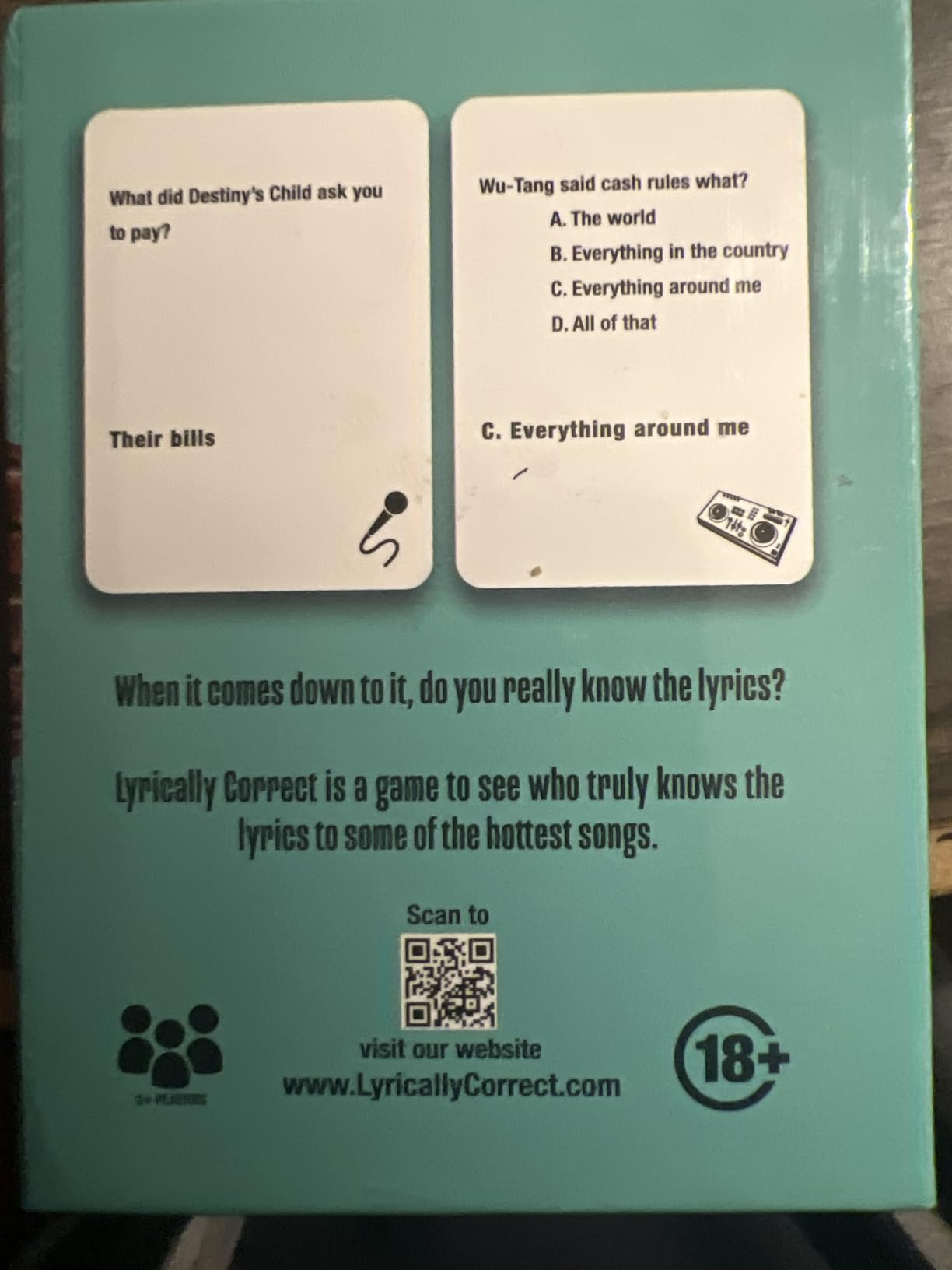
When the group has a specific taste, a focused deck beats a general one. Lyrically Correct covers 90s and 2000s hip-hop and R&B through a finish-the-lyric mechanic with trivia questions and surprise twists, drawing on artists including TLC, Mary J. Blige, Outkast, Usher, Missy Elliott, Notorious B.I.G., and Wu-Tang Clan.
It rates 4.6 stars from more than 4,500 reviews and sits in the top 50 of dedicated deck card games, which is a strong result for a themed product. Reviewers describe the nostalgia payoff as the entire appeal, and they report real engagement when the group fits the era.
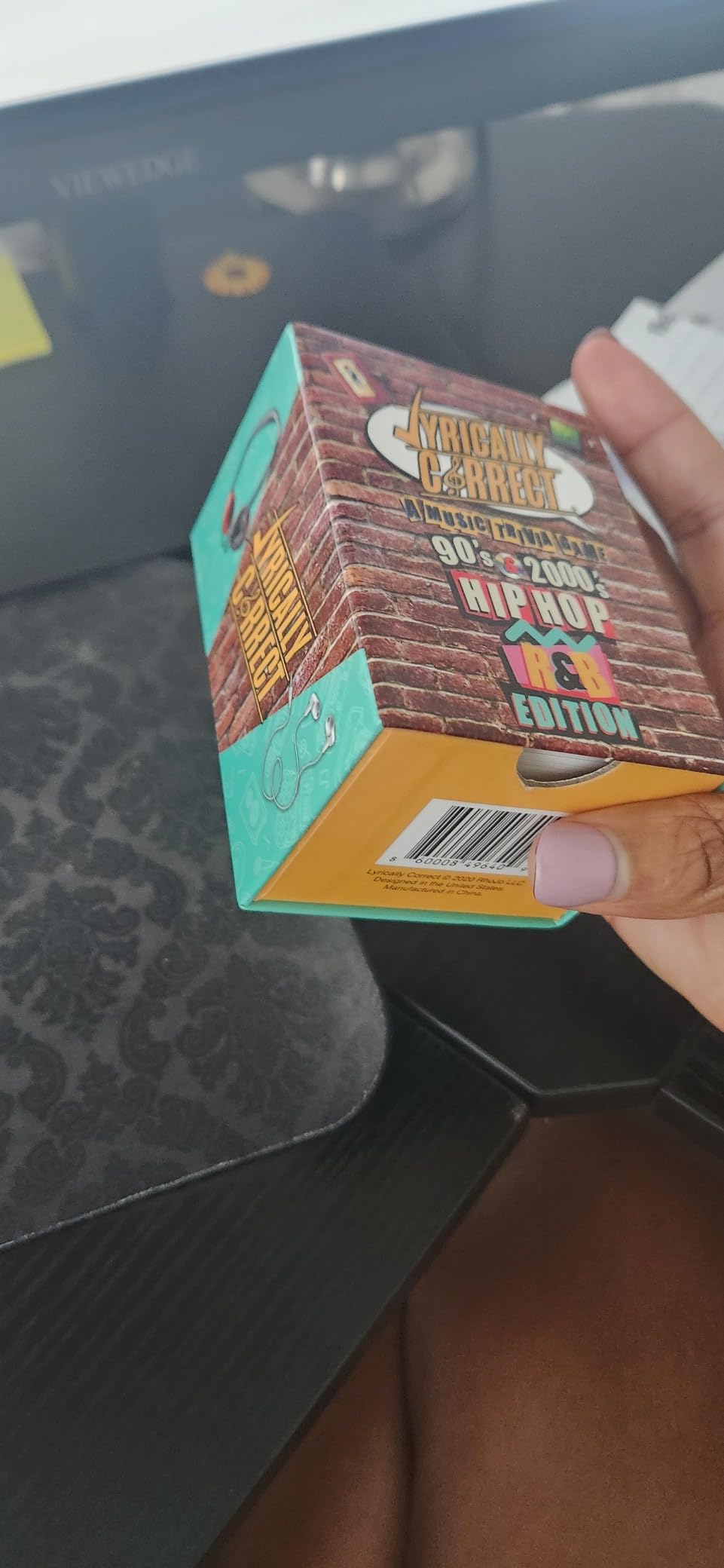
The deck holds 140 trivia cards plus 10 challenge cards, so the challenge twists arrive rarely enough to feel like events. The box is 3 by 2 by 3 inches and weighs 9.1 ounces, small enough for a coat pocket, and the manufacturer rates it for ages 13 and up.
Because there is no board, a session can happen anywhere people are already sitting. Reviewers mention cookouts, reunions, and travel, and the format transfers well to a car journey or a waiting room with a large group.
Who this game rewards
It rewards groups raised on that music. If half the table lived through those two decades, this produces stories and arguments alongside points, which is a different kind of fun from fact recall. It also works well as a second game after a general-knowledge opener, when the group has warmed up.
Teenagers who came up on the same music will engage with it far more readily than with a deck of 1990s television trivia. Reviewers specifically mention it working across generations at family gatherings, which makes it a strong multi-age choice when the right audience is present.
Where it frustrates people
The subject area is narrow, and that is a genuine limitation rather than a preference. If even one or two people at the table have no interest in the era, they become spectators for the whole session, and one weak deck ruins an evening built around a single game.
Player count is listed only as 2 or more, so larger groups need to split into teams to work well. Lyric difficulty also varies a great deal depending on how well someone knows the songs, which leaves the least musical player with nothing to contribute.
7. Chronology – Best for History Buffs and a Change of Pace
Buffalo Games – Chronology – The Game Where You Make History – Historical Timeline Trivia for 2+ Players, Ages 14+
- Highest rating in the roundup at 4.8 stars
- Timeline mechanic breaks up standard trivia
- 800 events give history buffs real depth
- Scales from 2 to 8 players
- Requires genuine historical recall
- Replay value falls once the card set is memorized
- Weak fit for groups with no history interest
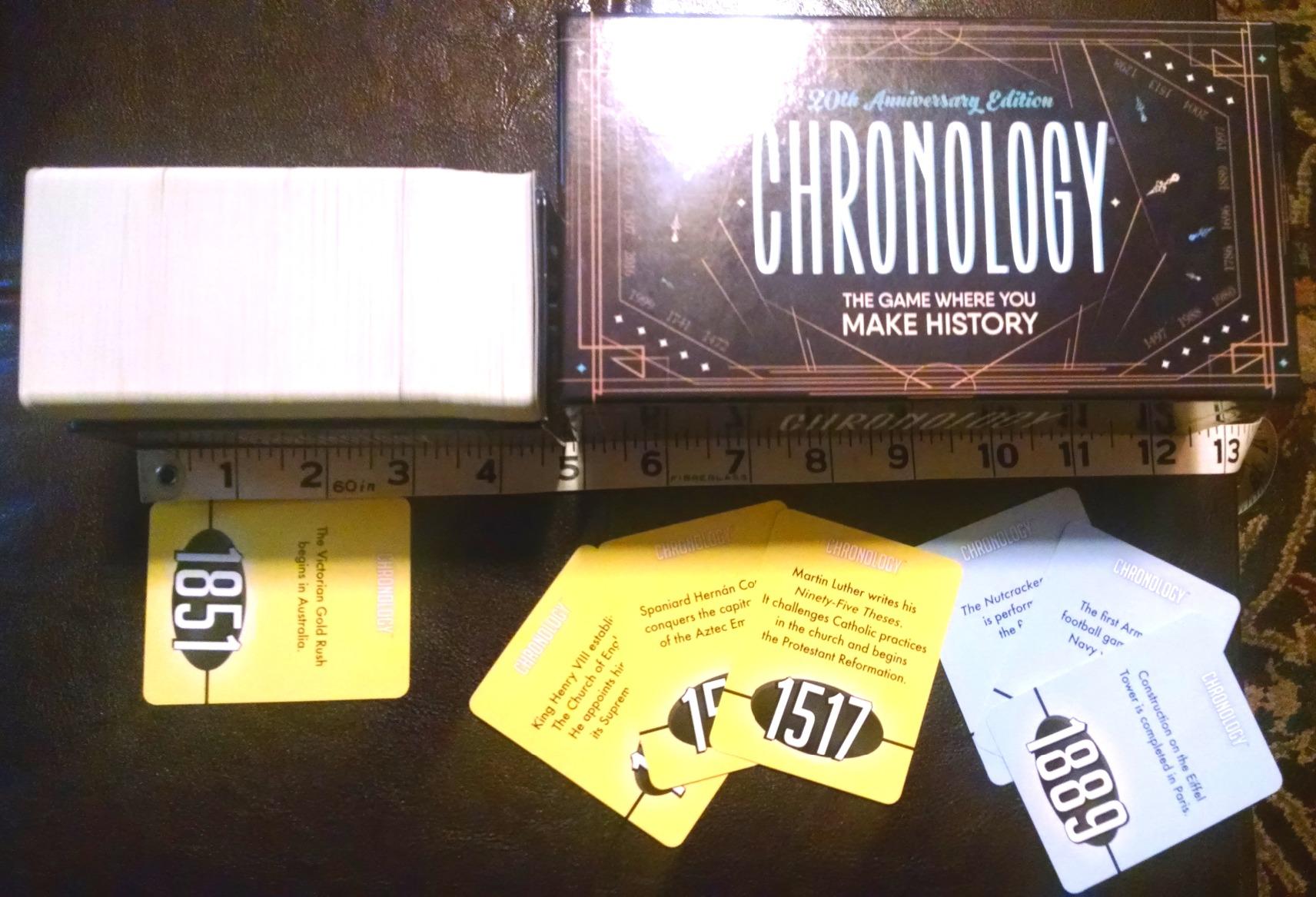
This is the highest-rated game in the roundup at 4.8 stars, with 87 percent five-star ratings across more than 3,600 reviews. It also plays nothing like trivia. Instead of question and answer, players place historical events on a personal timeline, and the first player to lay down 10 cards wins.
The 20th Anniversary Edition carries 800 unique true events spanning 2,000 years, and reviewers regularly single out the refreshed card set as the reason to buy this edition rather than an older copy whose questions have been memorized.
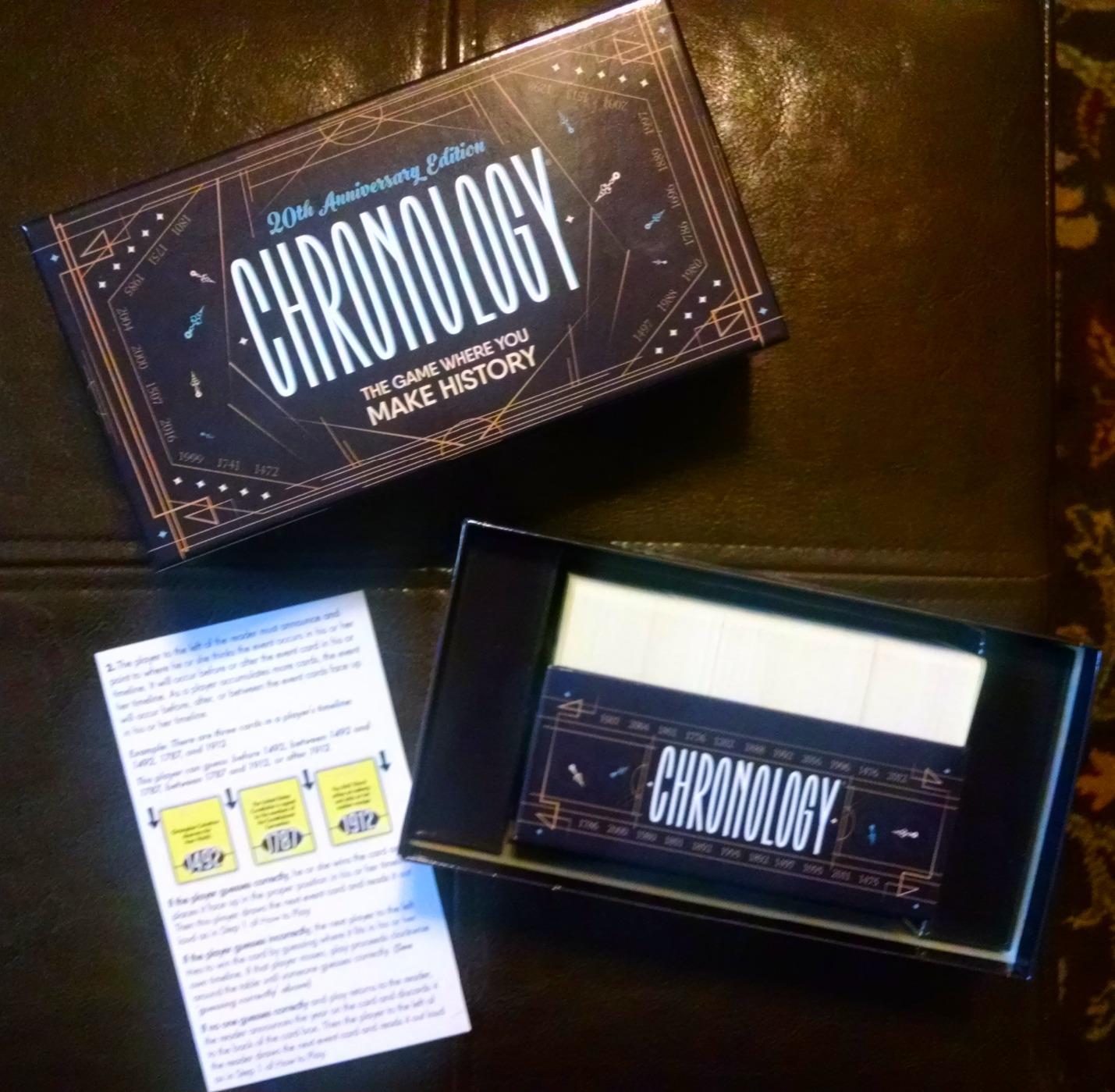
Setup is the strongest argument for it. Reviewers and the packaging both emphasize that you can be playing within minutes, and the rules are short enough that nobody skips them. Ages run 14 and up for 2 to 8 players, with a 90-day warranty against manufacturer defects.
It is also the best answer to a tired game night. When players have read the same rulebook a dozen times, a timeline mechanic gives a fresh problem to solve, and the education happens without anyone noticing it as a lesson.
Who this game rewards
It rewards people who enjoy ordering events and arguing about the order. The mental task is recall plus sequencing rather than recall alone, so it stays interesting for players who found straight quiz questions repetitive.
The 2-8 player range is unusually wide for a game in this category, which lets one box cover a two-person date night and a seven-person gathering. It pairs well as a second game with a faster deck, since the pace is relaxed enough for a mixed group.
Where it frustrates people
The timeline format demands real historical recall and offers no forgiveness. A player who cannot place an event gets nothing for the round, so a group with uneven history knowledge will see the score separate quickly.
Replay value declines once players memorize the set, and the appeal drops sharply for anyone uninterested in history. This is a specialty pick rather than a safe one, and it works best when you already know the group leans that way.
8. Trivial Pursuit Master Edition – Best for Serious Trivia Players
Hasbro Gaming Trivial Pursuit Master Edition Trivia Game, Board Games for Adults and Teens, Includes Electronic Timer, Trivia Games for 2 to 6 Players, Ages 16 and Up (Amazon Exclusive)
- Largest question bank of any Trivial Pursuit edition
- Electronic timer keeps games moving
- Harder questions suit real trivia buffs
- Flexible wedge rules for a faster game
- Difficulty can frustrate casual and mixed-skill players
- Timer needs 2 AAA batteries
- Heavier and bulkier than card decks
This is the adult end of the Trivial Pursuit line, and it is built for people who want to be tested. The Master Edition holds 2,950 questions across the same six categories as the Classic version, described as challenging, intriguing, and sometimes humorous.
It rates 4.6 from more than 3,300 reviews, and reviewers consistently treat it as the serious trivia option rather than a family game. The electronic timer is the component most often mentioned as a genuine improvement, since it applies visible pressure to every turn.

Rules are flexible. You can play the traditional wedge-space version or use the faster rule where any correct answer earns a wedge, which means you can compress a long game into half the time. That switch is what lets the box work for both a knowledge-strong group and a mixed one.
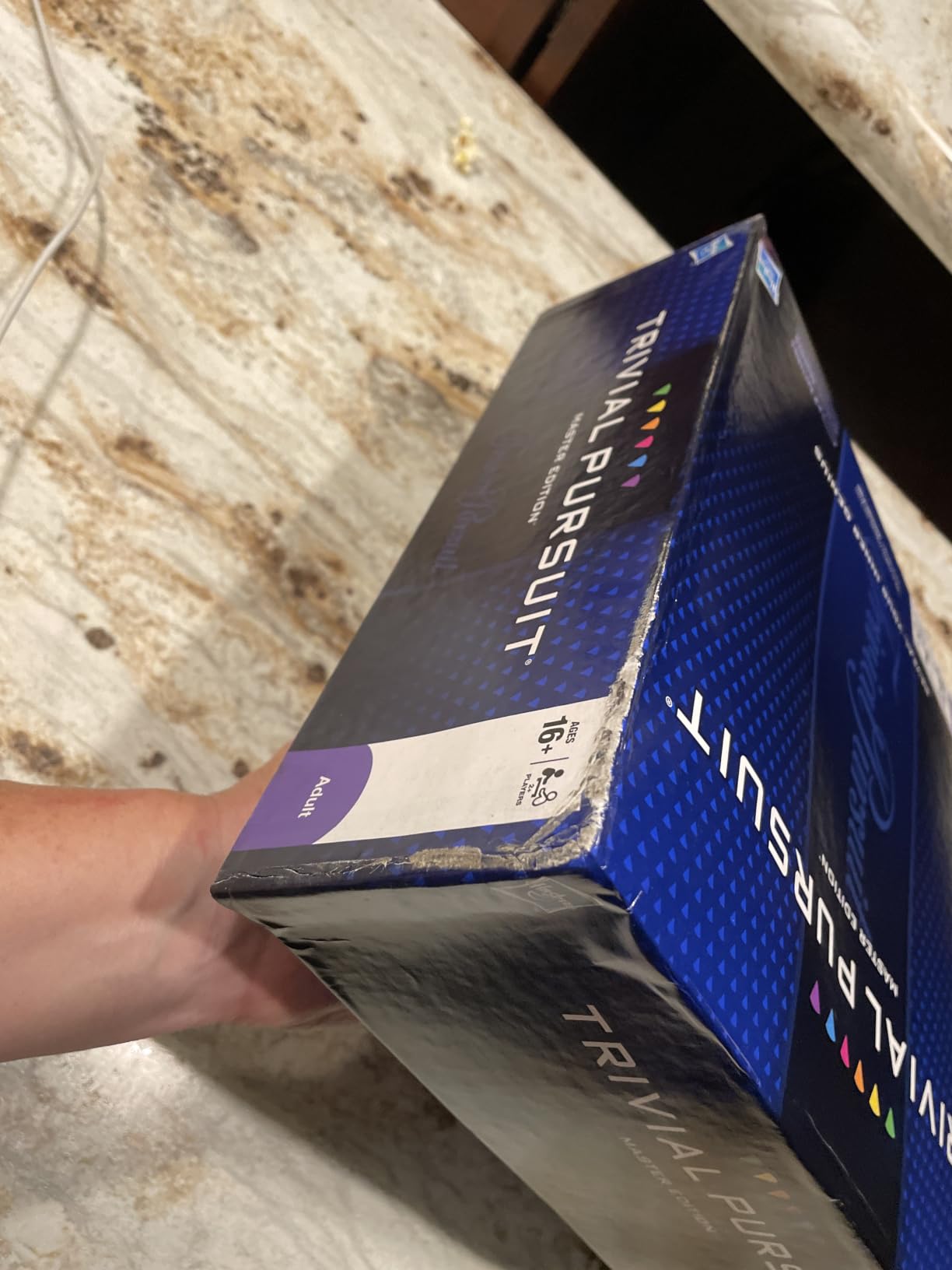
The timer requires 2 AAA batteries, and the box is 2 pounds and 10.5 inches square, so it is the bulkiest item in this roundup. Treat it as a game that lives on a shelf rather than one that travels.
Who this game rewards
It rewards adult groups with strong general knowledge, particularly couples and friend groups who already enjoy quiz formats. The quick-play rule is the key to including less confident players, since the pressure comes from the timer rather than only from difficulty.
At 2-6 players and ages 16 and up, it suits a household with teenagers rather than small children. The question depth is the selling point for anyone who found the Classic Edition too easy.
Where it frustrates people
The recurring criticism is difficulty, and it is legitimate. Questions are hard enough to frustrate casual players and mixed-skill groups, and there is no separate easier deck inside the box to compensate.
Two smaller drawbacks: the timer needs batteries you will eventually not have on hand, and the box is heavy and bulky next to a card game. If your group mostly plays casually, the Classic Edition gives a similar experience with less friction.
9. Urban Trivia – Best for Groups of Ten or More
- Scales to 4-20 players for large gatherings
- Subject matter no mainstream deck covers
- Reviewers report constant laughter and interaction
- Rules are easy to modify
- Content skews older for younger players
- Niche appeal limits who it suits
- No board or physical component
Almost every pick here caps out around six or eight players, which makes this one the practical answer for a holiday table or family reunion. Urban Trivia is rated for 4-20 players, and it covers Black TV, movies, music, sports, and growing up Black across a deck of cards.
It holds 4.6 stars from more than 3,200 reviews with 76 percent five-star ratings. Reviewers describe it as funny, relatable, and effective at getting a whole room interacting rather than sitting in teams of three.
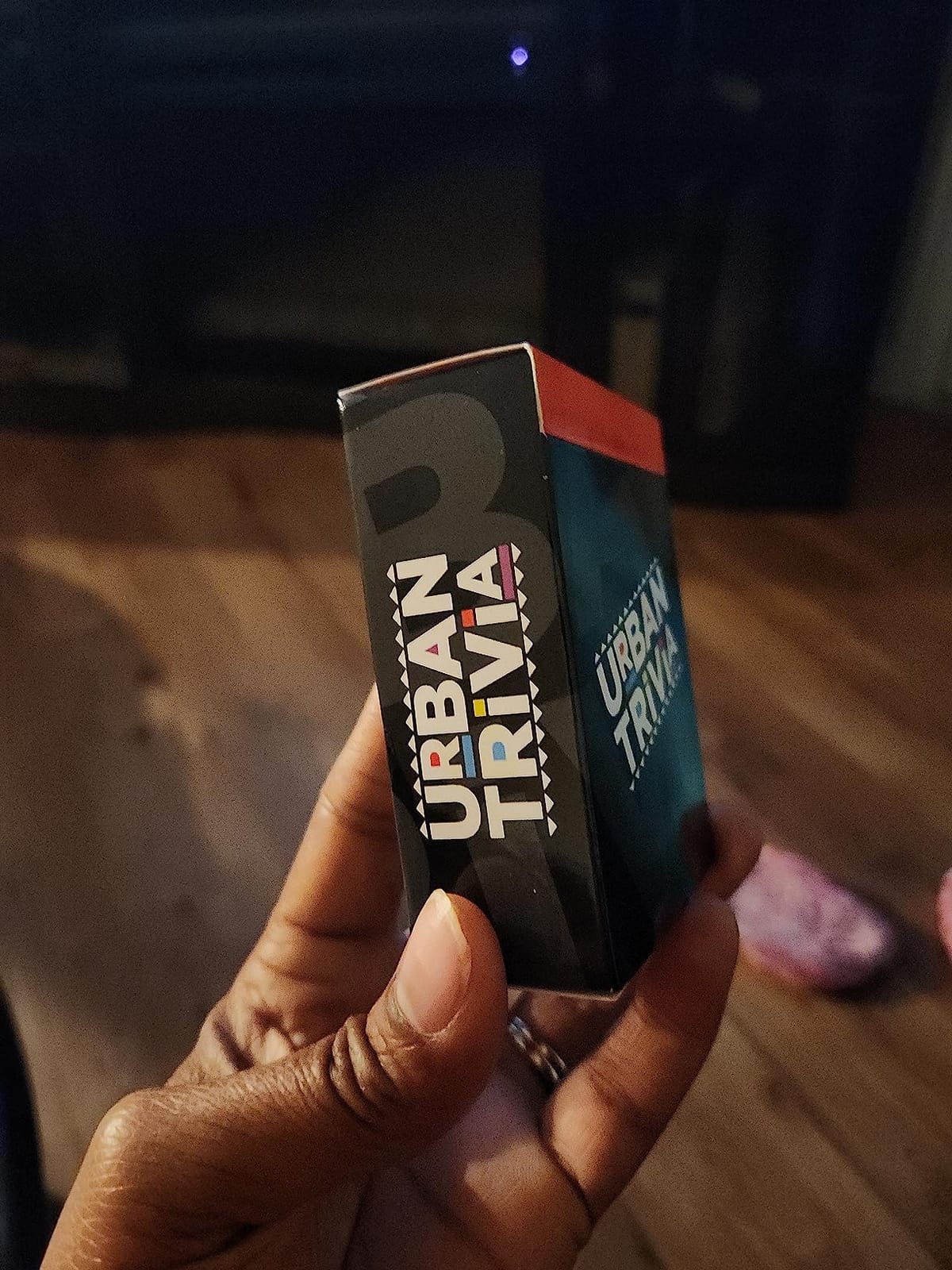
The questions are drawn from the creators’ own man-on-the-street series on Instagram and TikTok, which explains the conversational tone. The product is Black-owned and operated and based in Dallas, Texas, and the manufacturer rates it for ages 13 and up.
At 5.6 ounces and 2.7 by 1 by 3.6 inches, it is the smallest box in the roundup and the easiest to hand around a large room. There is no board, so nothing has to be set up in the middle of the table or cleared away before dinner.

Who this game rewards
It rewards large, culturally connected groups. The 4-20 player range means one deck can serve a big gathering, and reviewers mention Thanksgiving, shindigs, and family game nights as the settings where it works best.
The subject matter is also the most distinctive in this roundup. No mainstream trivia deck covers it, which means a group that has played everything else can still find a new angle. Being able to modify the rules helps when a group of 15 needs a faster structure.
Where it frustrates people
Content skews older, and at least one reviewer notes the questions suit players 45 and up. In a room that skews young, expect a lopsided night rather than a competitive one.
The narrow appeal is the other limitation. Outside its target culture it is simply the wrong deck, and card-based play means no board movement or physical component, which some groups need to stay engaged. Buy it for a specific gathering rather than as a general-purpose family game.
10. Trivial Pursuit Decade Mini Packs – Best for Travel and Big Groups
- Four decade decks let different generations compete fairly
- Cards-only format is genuinely portable
- Only 5 cards needed to win
- Mix of easy and hard questions
- Questions are heavily US-centric
- Language not clearly labeled on some listings
- Cards do not match the board game color coding
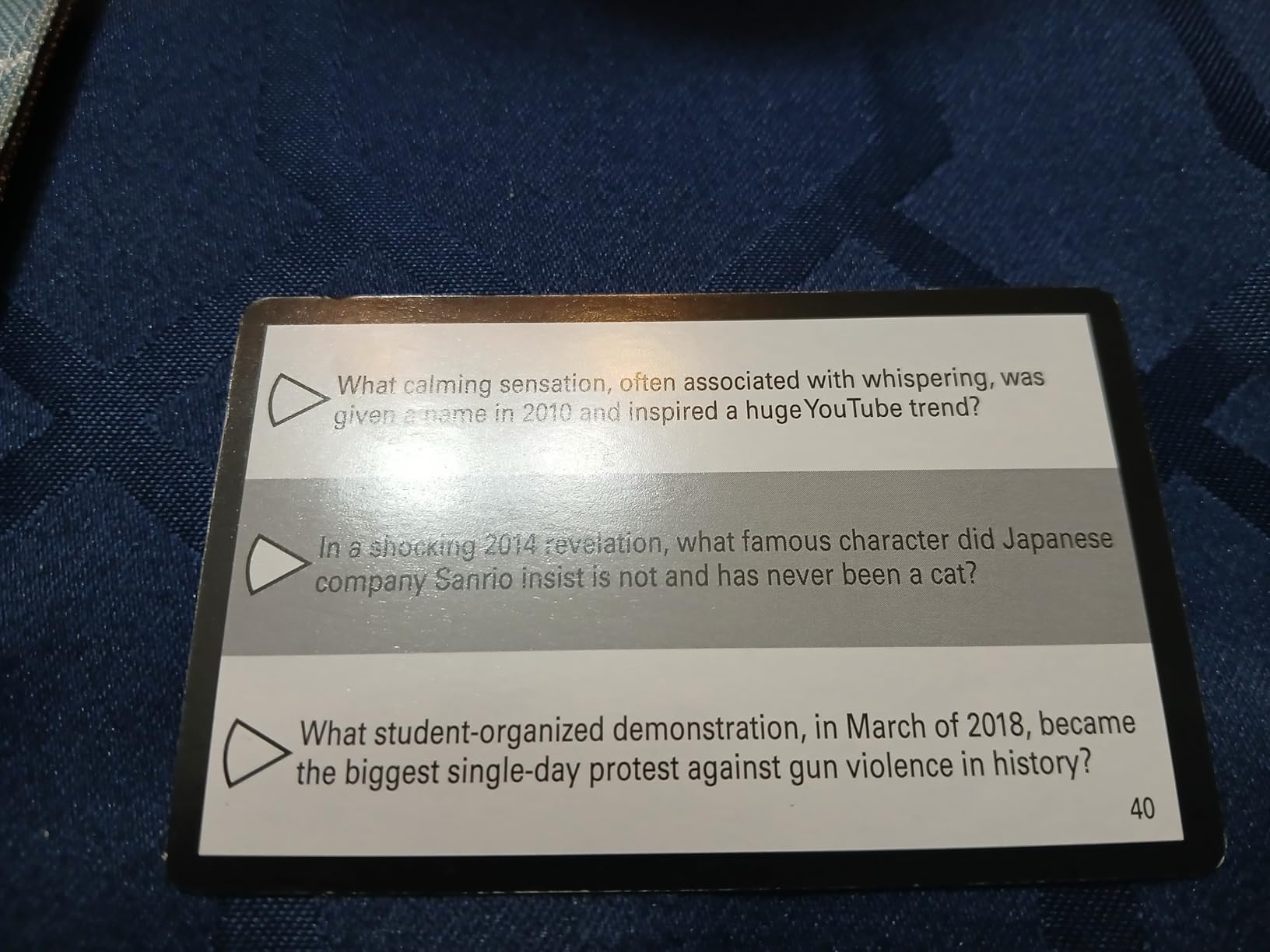
This multipack solves a specific problem: how do you make a trivia game fair across a twenty-year age gap? The answer is four separate decks covering the 1980s, 1990s, 2000s, and 2010s, with each generation pulling from the era it actually lived through. Each pack holds 80 cards and 240 questions.
It is the most compact option here. There is no board and no table space needed, which reviewers specifically praise for road trips, car journeys, and camping. Games are short: you keep a card for a correct answer and five cards wins.
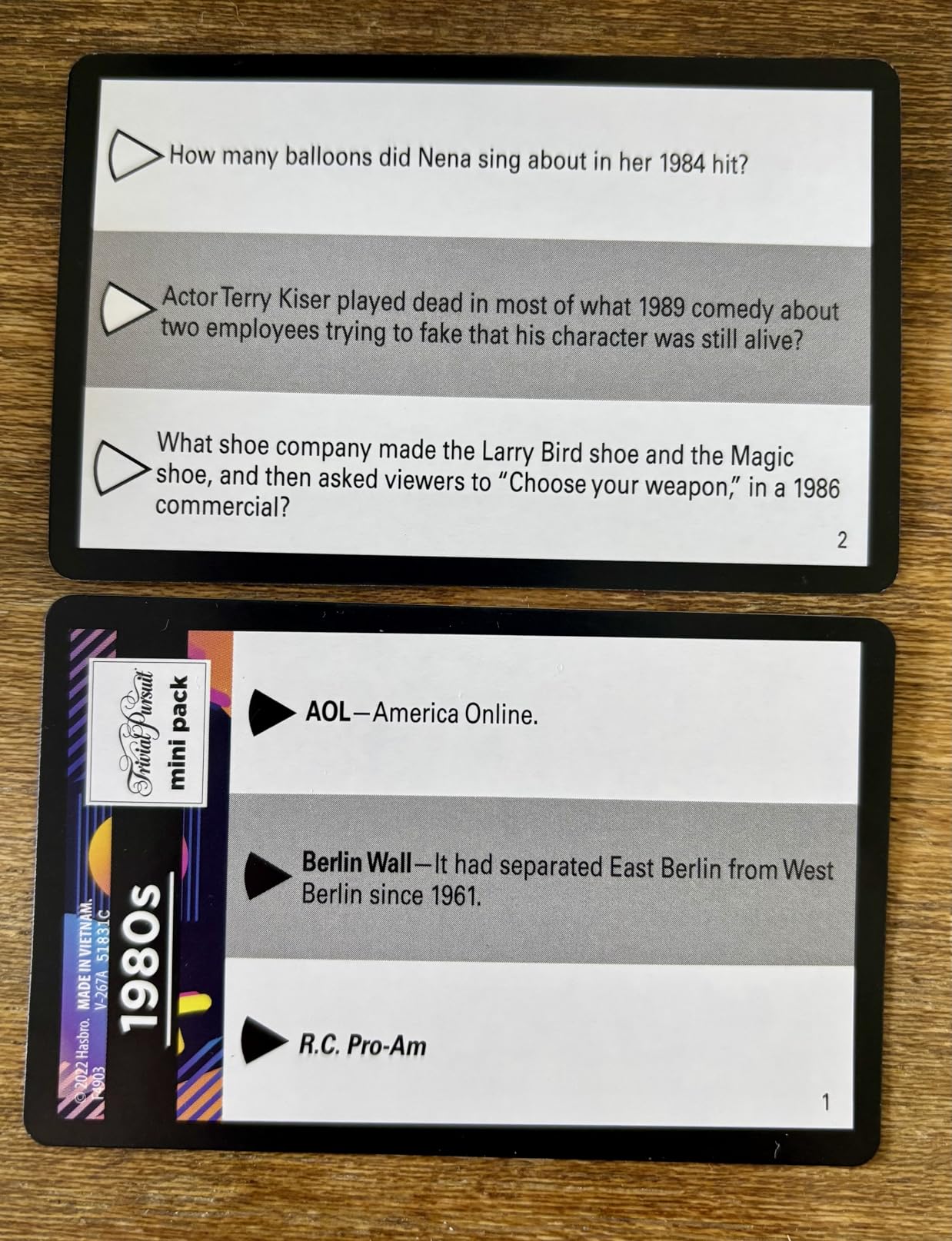
Across all four packs that is 960 questions, and the set is rated 4.5 stars from roughly 1,500 reviews. That is the smallest review base of the twelve, so treat the rating as promising rather than definitive, and check that the content suits your group before committing to it as a main game.
Manufacturer age guidance is 16 and up for 2 or more players, and the current release is clearly marketed as a portable set. The box measures 3.38 by 3.75 by 4.75 inches and weighs 1.1 pounds, which is easy to distribute between several cars or rooms.
Who this game rewards
It rewards multi-generational groups with a short attention span. Because winning takes only five cards, a round finishes in minutes and the whole multipack can be spread across a single evening, with each pair of players taking a different decade.
It is also the pick for travel. A deck that needs no board and no space is the only trivia option in this roundup that works in a car, a tent, or a hotel room. The mix of easy and challenging questions keeps mixed-skill tables together.
Where it frustrates people
The content is heavily US-centric, which international reviewers flag directly. If your group is outside the United States, a large share of these questions will be unfamiliar regardless of which player is holding them.
There are also smaller frictions worth noting: the language is not clearly labeled as English on some listings, the cards do not match the color coding of the Trivial Pursuit board game, and experienced trivia players report some questions are easy. Treat it as a warm-up or travel companion rather than a main event.
11. American Trivia – Best Budget Card Game for Big Groups
- Best question count per dollar in the roundup
- Clear simple instructions that learn fast
- Thick durable cards
- Range of difficulty suits mixed players
- Adults exhaust the card pool after a few games
- Some questions are obscure or dated
- Some questions are too hard for younger players
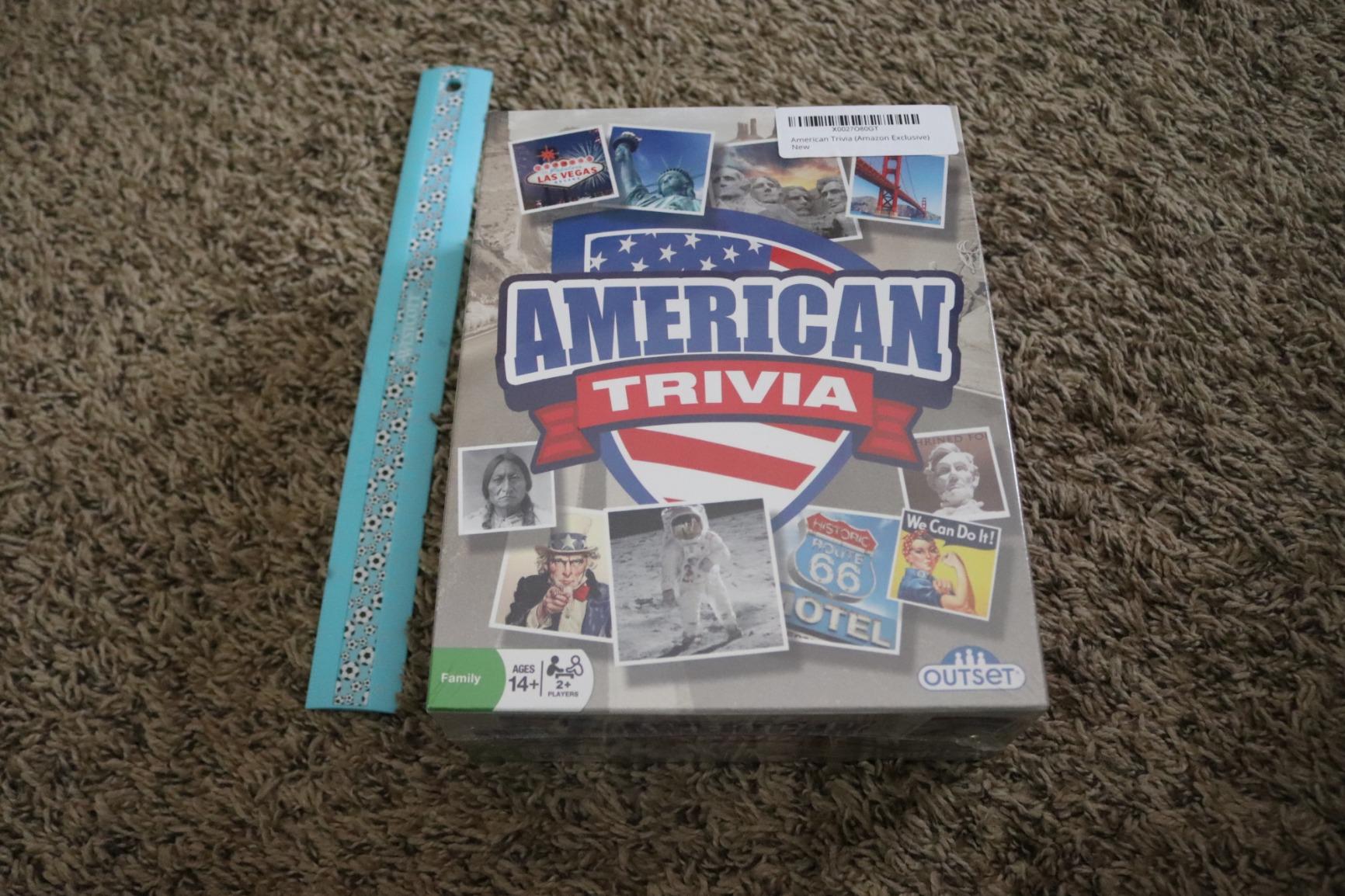
Outset Media’s American Trivia delivers 1,000 questions on 100 double-sided cards, which makes it the best value per question in this roundup by a wide margin. If you are buying for a large group, feeding several people, or planning multiple sessions on a limited budget, the math is hard to argue with.
It holds 4.6 stars from more than 1,400 reviews. Reviewers consistently praise the build quality, the category balance, and how quickly the rules can be explained, which are the three things that matter most in a game meant to be handed to a group of strangers.
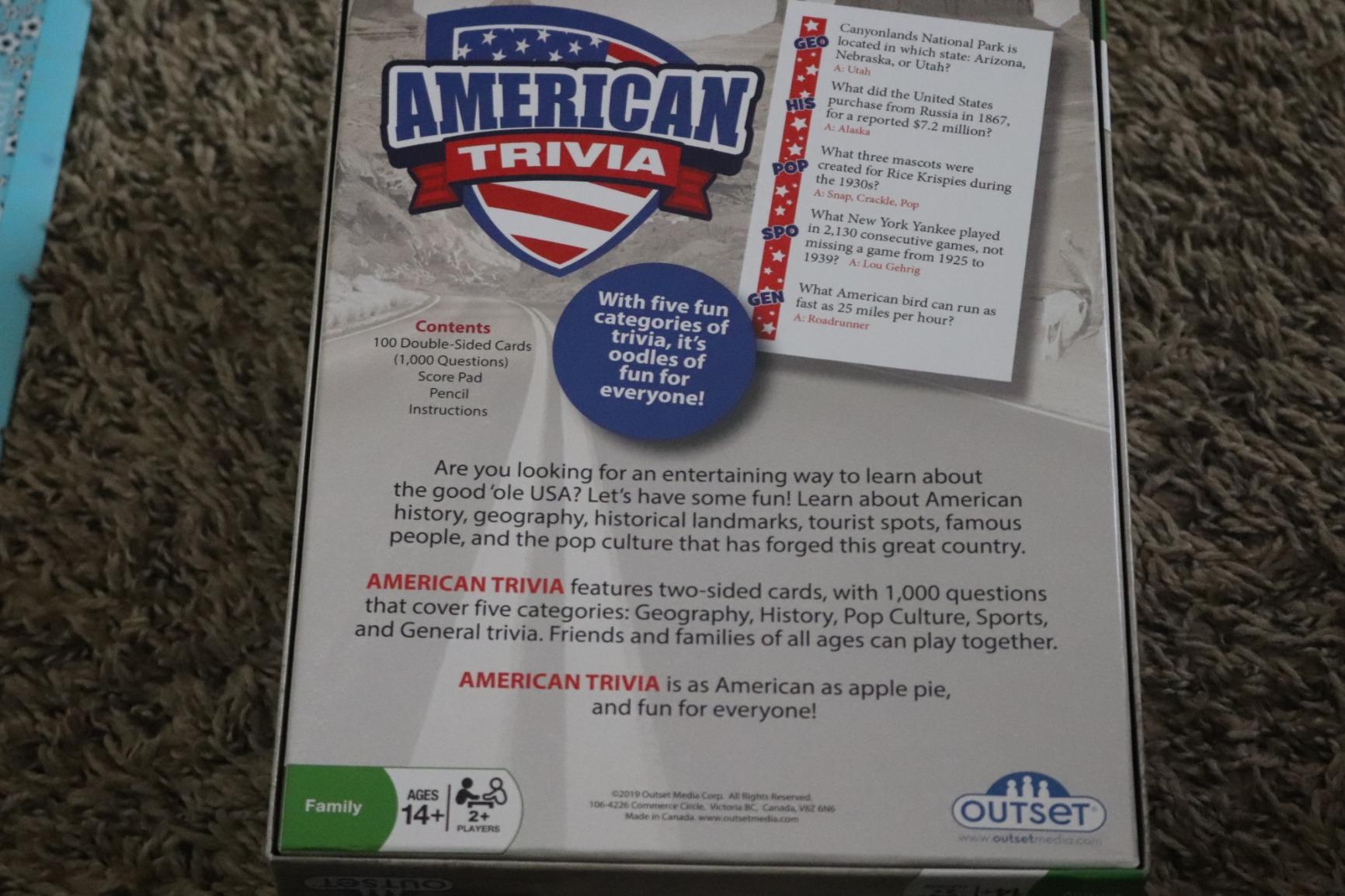
The five categories are geography, history, pop culture, sports, and general trivia, and the manufacturer notes a deliberate mix of easy and challenging questions. That spread is what keeps a group with mixed skill levels engaged rather than letting the strongest player run away with it.
Everything is in the box, including a score pad, pencil, elastic band, and instructions, and the manufacturer rate is 2 or more players at ages 14 and up. The box measures 6 by 8 by 2.5 inches and weighs just over a pound.
Who this game rewards
It rewards groups that want a complete trivia night for a modest outlay, and themed gatherings. Reviewers mention using it for Fourth of July parties and similar occasions, where the American-focused categories become the main event instead of one section of it.
It is also strong for larger gatherings because the setup is nothing more than dealing cards and writing on a pad. No board, no dice, no batteries, and no quizmaster required, which makes it the most flexible box for an improvised evening.
Where it frustrates people
Adults report exhausting the card pool after a few games. A thousand questions sounds like a lot until four adults and two teenagers have played three rounds, so plan on one game per evening rather than a marathon.
A second complaint is calibration. Reviewers say some questions are obscure or dated, and others are nearly impossible for younger players despite the 14+ labeling. It is a better fit for families with teenagers than for adult trivia buffs chasing depth.
12. HISTORY Channel Trivia Game – Best Modern Party Rules
- No pawn movement and no discarding of used cards
- Rules are explainable in a minute or two
- Substitution rule lets weaker players still win
- Questions spark discussion rather than recall
- Difficulty is high for tweens and younger teens
- Pop culture is mixed in despite the branding
- A few reviewers find the content repetitive
This is the newest design in the roundup and the one that most deliberately abandons old trivia conventions. The HISTORY Channel Trivia Game, created in partnership with The HISTORY Channel, uses no pawn movement around a board and no discarding of used cards, so the deck keeps its full value for the next round.
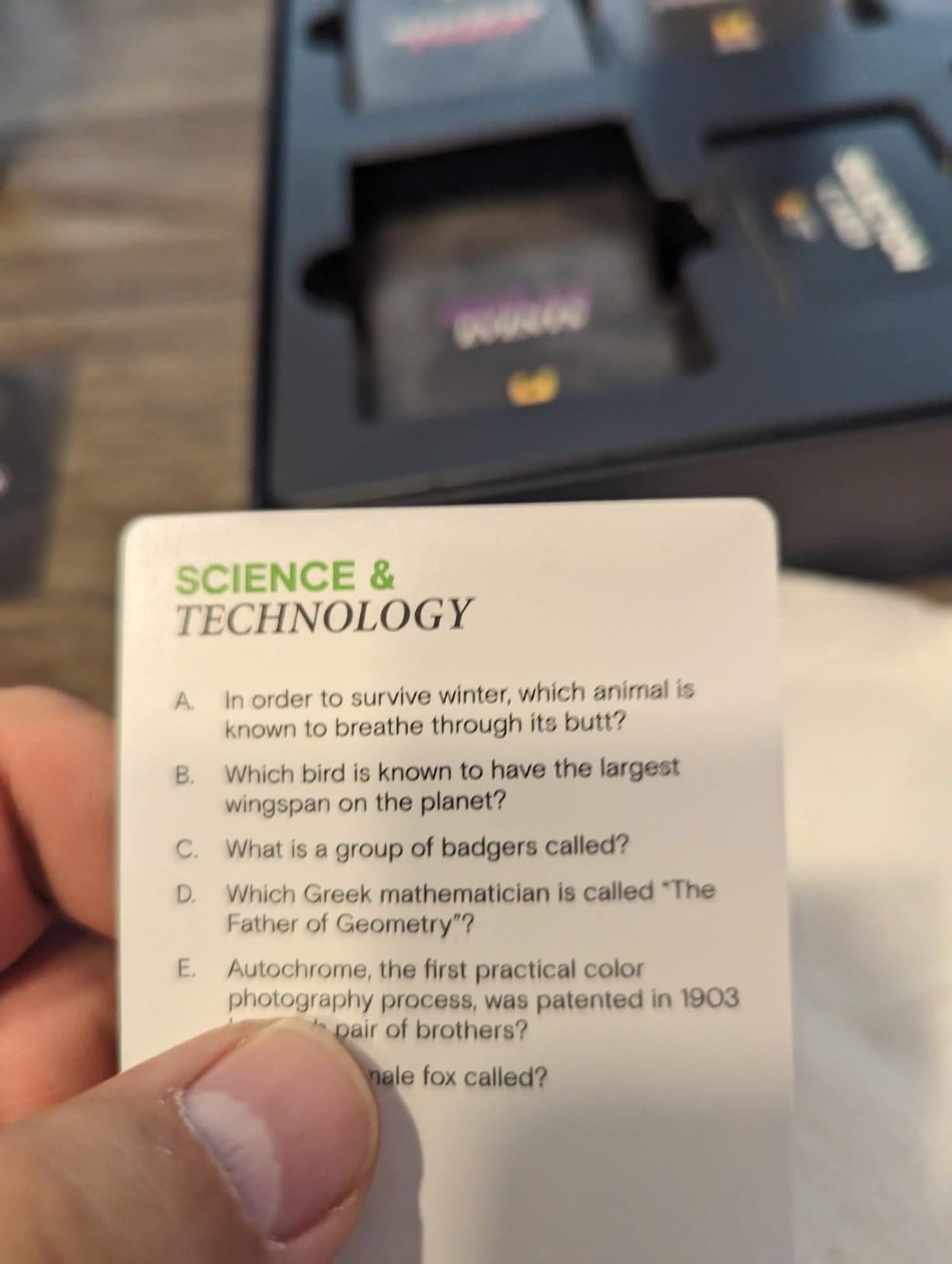
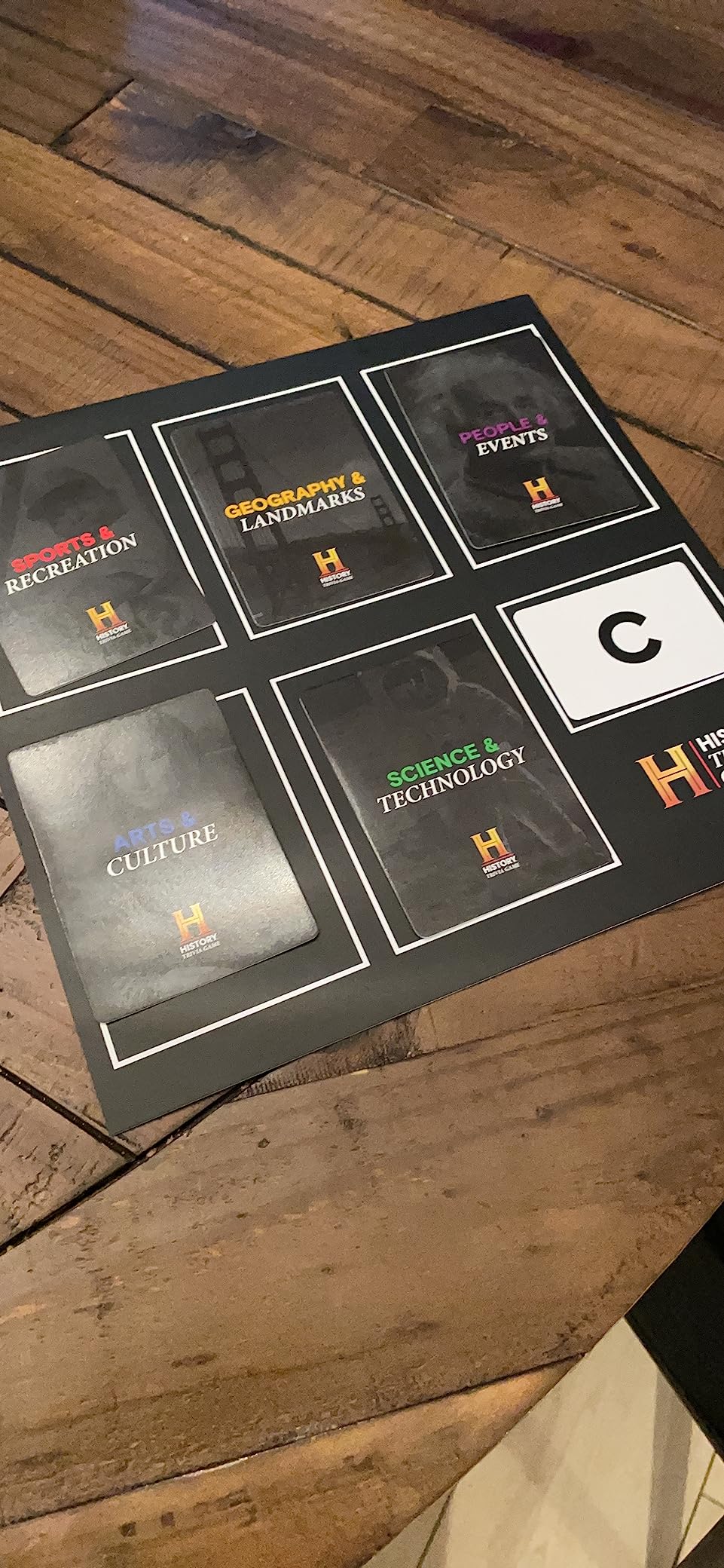
It carries more than 2,000 general knowledge questions across five categories: arts and culture, sports and recreation, science and technology, geography and landmarks, and people and events. Play time runs 30-45 minutes for 2 or more players at ages 14 and up.
The scoring rule is the cleverest part. The goal is one correct answer per category, with a substitution rule that lets players swap out a category they are weak in. Reviewers highlight this as the feature that keeps mixed-ability tables competitive, since a team is never eliminated by one bad subject.
Setup takes a minute or two: flip a card to choose which question to use, and each card holds six questions. At 4.6 stars from just over 1,000 reviews, it has the smallest review base here, so treat the strong score as encouraging rather than settled.
Who this game rewards
It rewards groups who like to talk as much as they like to score. Reviewers describe the questions as thoughtful and thought-provoking rather than filler, and several mention it sparking discussion that outlasted the game itself. Reviewers also report playing it on a couch with only two people.
For adults and teens specifically, the substitution rule is a real advantage. A teenager and a parent can compete without one of them spending the evening unable to score.
Where it frustrates people
Difficulty is the main complaint, and several reviewers note the questions are too hard for tweens, teens, and younger children despite the 14+ rating. For a group centered on teenagers, test it first or pair it with an easier deck.
Branding also sets an expectation the content does not always meet, since notable pop culture is mixed in despite the history branding. A few reviewers find the material repetitive. If your group wants trivia rather than discussion, choose a question-and-answer deck instead.
How to Host a Trivia Night That Actually Works
The difference between a good trivia night and a disappointing one is usually not the game. It is the setup, the team structure, and what happens in the last ten minutes.
Pick the format before the group. Decide whether you want a quizmaster reading questions aloud or a self-scoring card game where teams write answers. Quizmaster play is louder and easier to run, but it needs someone willing to read for an hour. Self-scoring needs no host, which makes it better for a gathering where you are also cooking.
Split teams by skill, not by age. This is the single rule that fixes most mixed-age problems. Put one confident player and one quieter player on each team, and rotate that pairing for the second game if the first ends in a blowout. Community lists and player discussion both point to skill mixing as what keeps young players engaged.
Set a question limit before you start. Decide on a fixed number of cards or rounds rather than playing until the deck is empty. Fatigue sets in well before the questions do, and a planned finish is what gets people to stay for the second game.
Cover the weak categories in advance. Most games with a substitution or betting mechanic let you choose what to drop. Look at the category list, find one where your team is weak, and agree on it before the first question so nobody accuses the other team of picking the easy one.
Use a written tie-breaker procedure. If two teams finish level, take one unanswered question from the deck and play it as a sudden-death round with no consultation. Decide this rule at the start, because inventing it at the end is how trivia nights end in arguments.
Keep a back-up round ready. Physical decks run out sooner than people expect. Keep one quick, free, printable round of general knowledge questions in a drawer as a stopgap, and it doubles as a warm-up when a group arrives early.
Where you host matters less than who is in the room, but if the evening is happening in a teenager’s bedroom, our guide to the best desks for teens bedrooms covers the furniture side of setting up a corner that a game night can take over.
On scoring, a simple system works better than a complicated one: award the same number of points for every correct answer regardless of category, and give one bonus point for the closest wrong answer so there is a consolation worth arguing about. A flat system removes the incentive to negotiate category difficulty, which is where most disputes start.
For a mixed adult and teen group, category mix matters as much as the game. Blend two or three categories your teens know cold, such as music, streaming, video games, or contemporary sport, with two broad ones like geography and history. Adults tend to own the broad categories, teens tend to own the current ones, and splitting the board that way keeps both halves relevant.
Buying Guide: Card-Based vs Board-Based vs Digital Trivia
Card-based games are the flexible default. They need no table space, set up in under a minute, and scale from 2 to 20 players depending on the deck. I Should Have Known That, American Trivia, and the Trivial Pursuit decade packs are all card games, and they cover everything from a two-person trip to a large family gathering.
Board games add structure and physical play, at the cost of table space and time. Trivial Pursuit Classic, Smart Ass, and Chronology all fall here. If your group enjoys a game with visible progress, these are worth the extra footprint. If you want something finished in twenty minutes, they are the wrong category.
Digital and app-based trivia uses phones as controllers, which removes the question-reading bottleneck and scales to large numbers of players with no physical product. It also brings real friction: downloads, in-app purchases, and subscriptions often stand between a group and the first question. For a group that shows up and expects to play immediately, a box on the table is faster. For a large office or holiday gathering where you already have everyone on phones, a digital option is the practical one.
Player count is the decision most people get wrong. For a group of 3-6, almost every pick here works. For 8 or more, narrow your list to games that either support higher counts or are comfortable in teams, which means Chronology, American Trivia, the Trivial Pursuit Family Edition, and Urban Trivia. Games that cap at 6 will leave two people watching.
Screen-free play deserves its own consideration, and it is a frequent priority for adults who want an evening that is not another screen session. Every game in this roundup runs without a device, which is a meaningful difference from app trivia. Our broader guide to family trivia board games goes deeper on keeping a mixed-age table occupied without a screen.
Finally, calibrate difficulty honestly against your specific group. Several picks here, including the Trivial Pursuit Master Edition and the HISTORY Channel deck, are hard enough to embarrass a confident thirty-something in front of a teenager. Check the age guidance against the youngest player, and use the substitution or quick-play rules when the gap is large. More detail on setting a phone-free evening for a house with teenagers is in our parent’s guide to teens and social media.
Frequently Asked Questions
What are some good adult trivia games?
For adults, I Should Have Known That leads our list with a 4.5 rating from more than 34,000 reviews and a penalty scoring system that keeps games competitive. Trivial Pursuit Classic Edition offers the biggest question bank at 2,400 across six categories with a buzzer and timer. Chronology rates highest at 4.8 stars with 800 historical events. The Master Edition suits groups that want harder questions, and Lyrically Correct covers 90s and 2000s music.
What are some good trivia games for teenagers?
Smart Ass works well with teens aged 12 and up because shouting the answer out of turn is allowed and rounds finish fast. Lyrically Correct is rated 13+ and covers music teens actually know, which pulls them in faster than general knowledge. Trivial Pursuit Family Edition handles mixed ages with separate adult and kid decks. For teens who want a real test, the Master Edition and the HISTORY Channel game run hard.
What are the top 10 trivia games?
Our top ten, in order, are I Should Have Known That, Do You Really Know Your Family, Trivial Pursuit Classic Edition, Smart Ass, Trivial Pursuit Family Edition, Lyrically Correct 90s and 2000s, Chronology, Trivial Pursuit Master Edition, Urban Trivia, and the Trivial Pursuit Decade Mini Packs. Two further picks, American Trivia and the HISTORY Channel Trivia Game, round out the full list of twelve.
What are some good adult trivia card games?
For adult card games, American Trivia delivers 1,000 questions across five categories and is the best value per question in the roundup. Lyrically Correct runs 140 trivia cards plus 10 challenge cards of 90s and 2000s hip-hop and Ru0026amp;B. Urban Trivia scales to 20 players and covers Black TV, film, music, and sport. The Trivial Pursuit decade packs add 960 questions with no board at all.
What are engaging trivia questions for teenagers?
Teenagers respond best to categories they own rather than general knowledge, so draw from music, streaming and video games, contemporary sport, and internet culture, then balance them with geography and history so adults stay competitive. Keep questions in the middle difficulty range, since the fastest format is an out-of-turn shout-in rule. Team players by skill rather than age so nobody sits out a round.
What are engaging trivia questions for both adults and teens?
Mix categories across the age gap rather than picking a single level. Use two or three current categories the teens know, such as music, streaming, or sport, alongside two broad ones like geography, history, and science. Prefer games with a substitution rule so a team can drop a weak category, and split teams by skill instead of age so every player contributes.
Our Top Trivia Picks for 2026
For the best trivia games for adults and teens overall, start with I Should Have Known That. More than 400 questions, a compact box, and a penalty scoring system that keeps a mixed-age table close make it the safest single purchase in this roundup.
Pick Trivial Pursuit Classic Edition when you want the deepest question bank and the highest rating, Smart Ass when the room needs more noise, and Lyrically Correct when your group has a music era in common. Add Chronology for a change of pace and Urban Trivia for gatherings of ten or more.
We may earn a commission when you buy through links on this page, which does not change what we recommend. The order above reflects how the games performed across question count, player range, age fit, and repeat play, not where they sit in any store.