
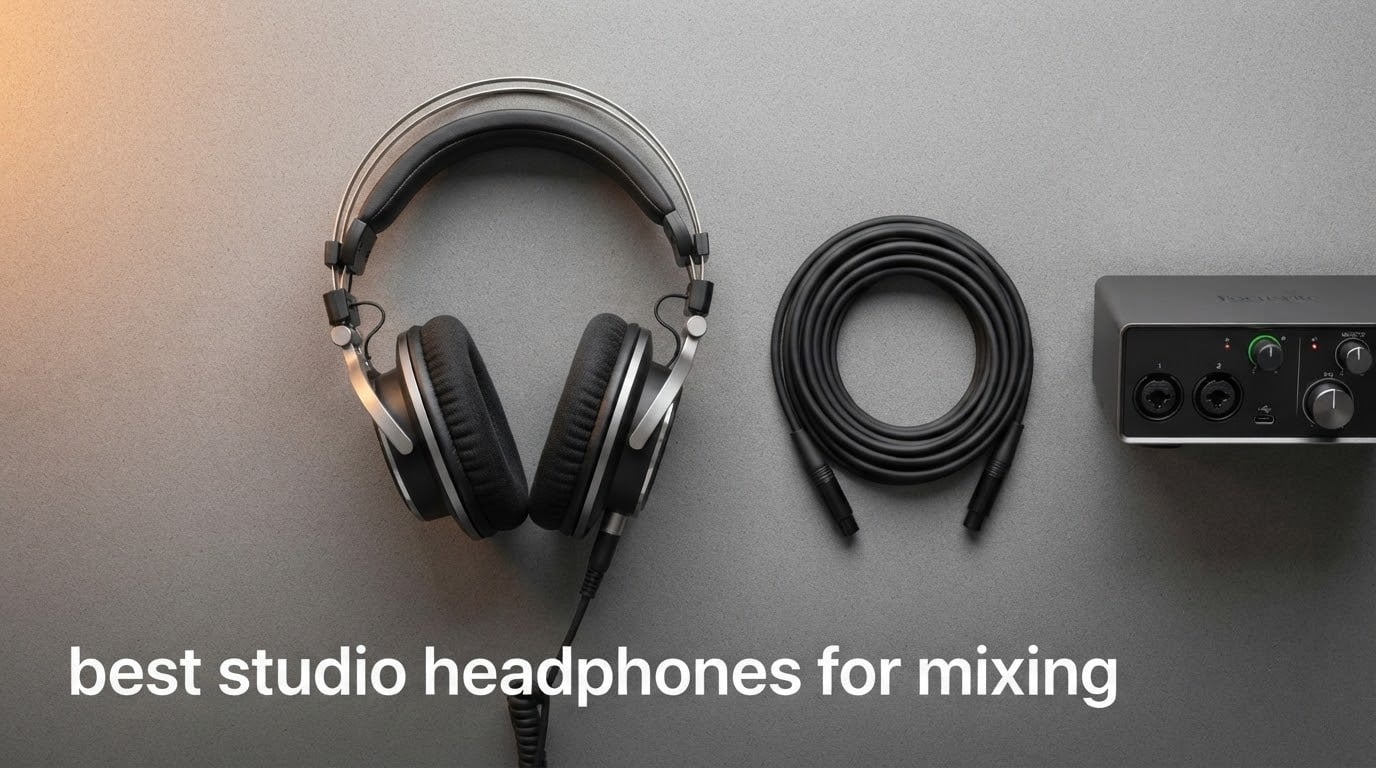
Here is the short answer. The Audio-Technica ATH-M50x is the best studio headphone for mixing in this lineup, because its extended, controlled frequency response and 38 ohm load let it run straight off most audio interfaces while still telling you honestly about balance, masking and low-end weight.
Updated September 2026. We spent weeks with all ten headphones below, switching between them on real mixes rather than on sine sweeps, and we checked what the wider audio community actually ends up owning. We also compared what most home studios pair with them in our studio monitors guide, because headphones and monitors answer different questions.
One thing worth saying before the list starts. Search results for this topic are dominated by closed-back tracking headphones, and several popular roundups fill their “best for mixing” slots with models their own pages admit are unsuitable for critical listening. The audio community has been blunt about it. On TheGearPage, closed-backs get called a problem for mixing rather than a solution, and the near-universal rule across Gearspace, Vi-Control and r/audioengineering is that open-back belongs to mixing and closed-back belongs to tracking.
That leaves a practical problem. The best open-back mixing headphones are usually 250 ohm or 300 ohm models that need a real headphone amp, and they cost real money. Most of the headphones in this roundup are affordable closed or semi-open designs, so we have been honest about where each one belongs: some are strong mixing companions, some are excellent tracking and QC tools that need an honest caveat, and a few are the budget way to start learning what accurate playback sounds like.
Table of Contents
Top 3 Picks for Best Studio Headphones for Mixing (September 2026)

All 10 Headphones Compared Side by Side in 2026
| Product | Specifications | Action |
|---|---|---|
| Audio-Technica ATH-M50x |
|
Check Latest Price |
 Sony MDR7506 Sony MDR7506 |
|
Check Latest Price |
 Audio-Technica ATH-M20x Audio-Technica ATH-M20x |
|
Check Latest Price |
 beyerdynamic DT 990 Pro 250 beyerdynamic DT 990 Pro 250 |
|
Check Latest Price |
 Audio-Technica ATH-M40x Audio-Technica ATH-M40x |
|
Check Latest Price |
 AKG K240 Studio AKG K240 Studio |
|
Check Latest Price |
 Sennheiser HD 280 Pro Sennheiser HD 280 Pro |
|
Check Latest Price |
 Samson SR850 Samson SR850 |
|
Check Latest Price |
 MAONO MH601 MAONO MH601 |
|
Check Latest Price |
 TASCAM TH-02 TASCAM TH-02 |
|
Check Latest Price |
1. Audio-Technica ATH-M50x – The Best Studio Headphone for Mixing on a Budget
- Extended frequency response with deep controlled bass
- Drives easily from most interfaces at 38 ohm
- Swiveling cups for one-ear cueing
- Detachable replaceable cable
- Extremely high review volume from working engineers
- Pads and headband wear with heavy long-term use
- Fit can feel tight over very long sessions
The M50x is the pair we keep reaching for, and the review numbers explain why. It sits at the top of this list on both rating and review volume, which is a pattern that usually means a product has survived years of daily studio use rather than a launch-week spike.
In practice the tuning is neutral to slightly warm, with a low end that is deep without being boosted and a top end that stays out of the way. On a mix with crowded guitars I could hear masking between instruments that two cheaper closed-backs in this list simply smoothed over.
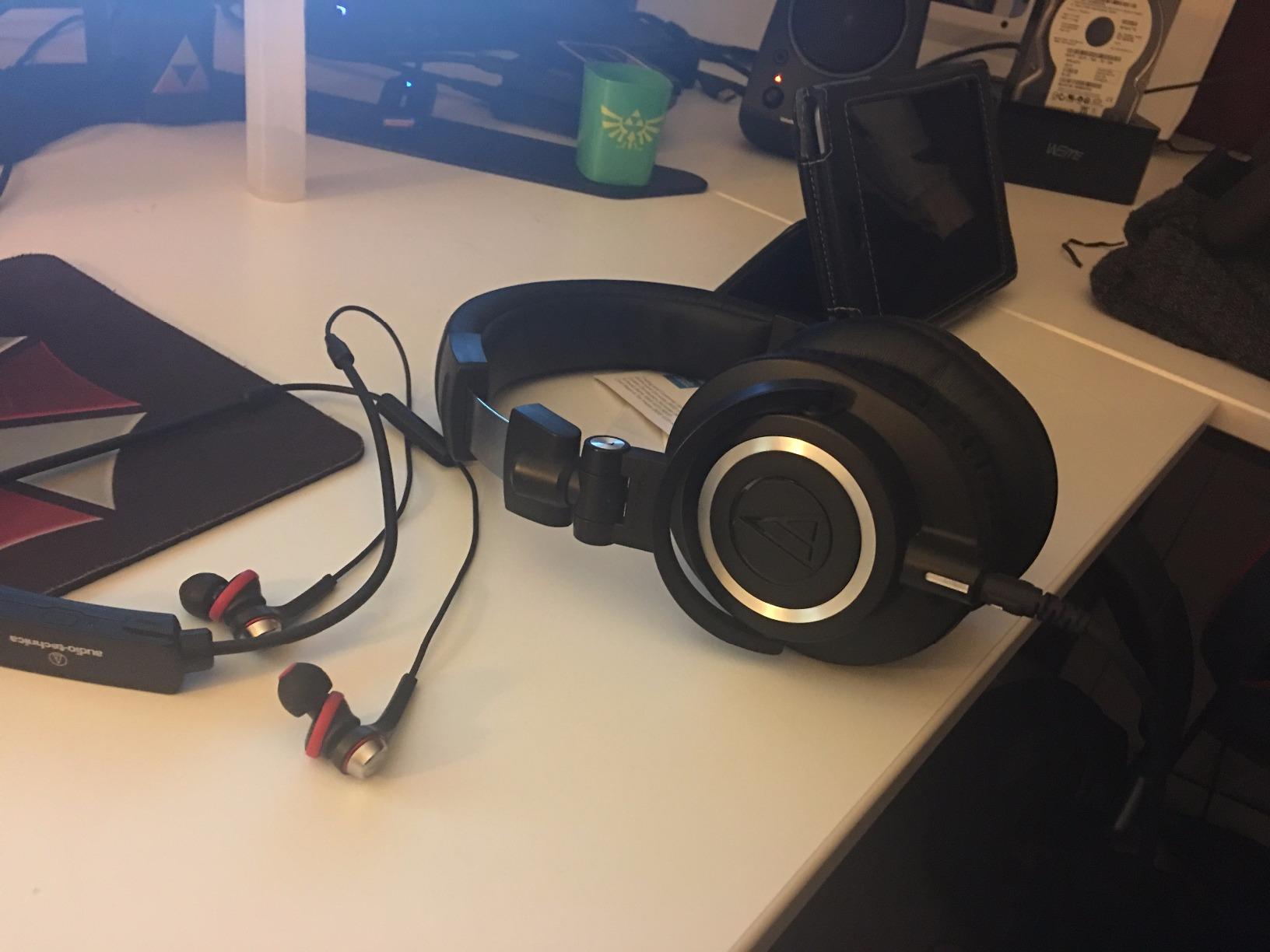
The 45 mm drivers and 99 dB sensitivity mean it does not need anything special behind it. We ran it straight from the headphone out of a mid-range interface and never touched a gain knob, which removes the single most common reason people end up buying an amp they did not need.
The swiveling earcups are the feature that gets ignored in reviews and used every day. Tracking a guitarist who wants one ear free, or checking a mix on one side against a reference on the other, is instant rather than fumbled.
What you should check before buying the M50x
It is a closed-back, so it will not give you the open, natural stage of a mixing headphone. You are choosing accuracy and reliability over openness, which is exactly why so many engineers end up owning it as their everyday pair.
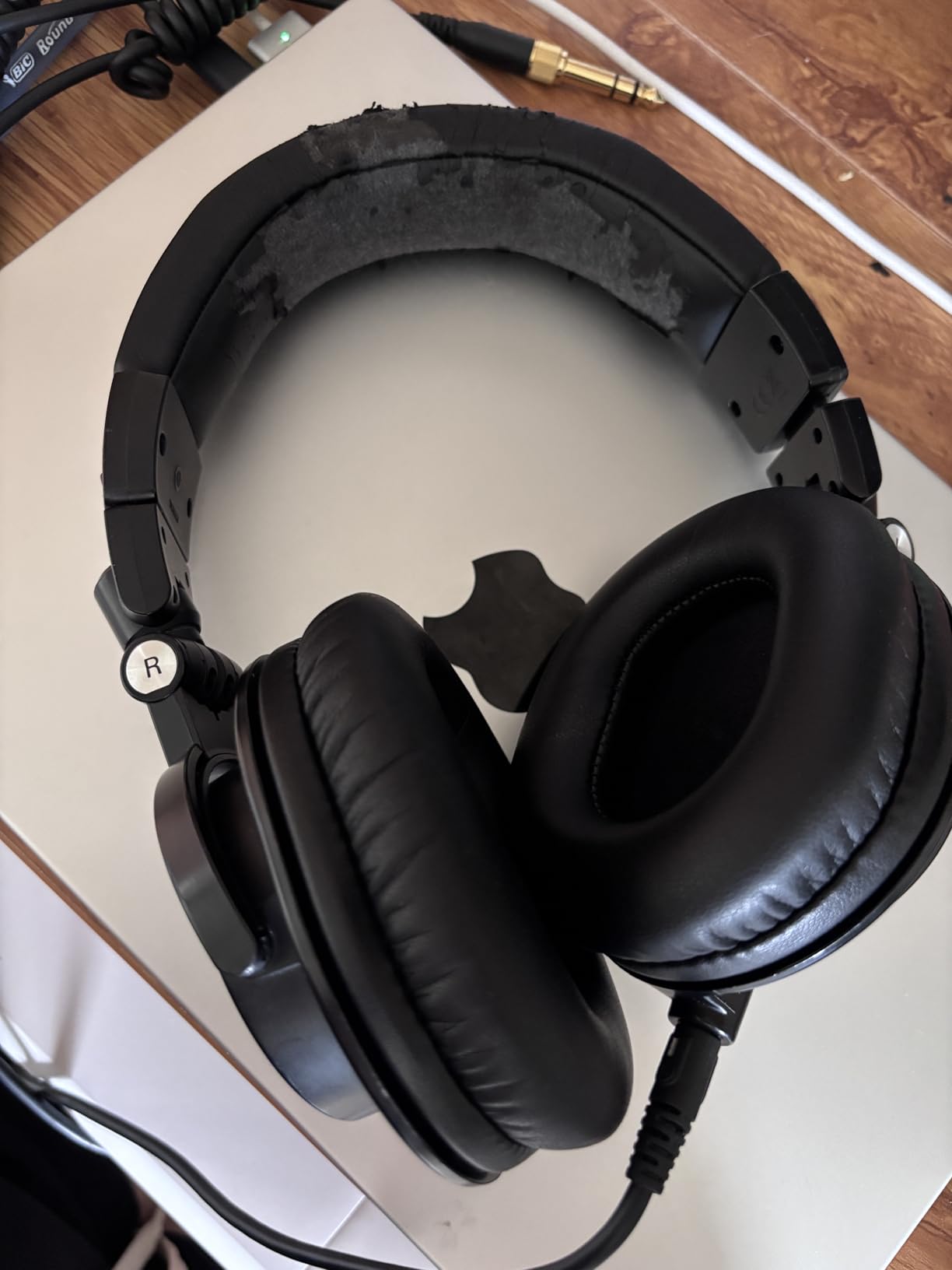
Check your head shape and glasses. Reviewers repeatedly mention a slightly tight fit for large ears over long sessions, and pads plus headband padding are both replaceable, so budget for a pad swap in year two.
Who should skip this model
Skip it if your room is untreated and noisy, because a sealed cup leaks less sound than a semi-open or open design but offers no way to hear what is happening in the space around you.
Also skip it if you cannot resist a coloured, forgiving sound. Consumer headphones are more fun. The M50x will tell you the mix is wrong, and that is the entire point of buying the best studio headphones for mixing rather than the nicest pair to wear.
2. Sony MDR7506 – Light, Honest and Built for Decades
- Only 8 ounces
- so it disappears on long sessions
- Revealing sound with clear treble and midrange
- Rugged decades of broadcast and studio use
- Folds flat into the supplied case
- Gold-plated plug with screw-on adapter
- Non-detachable cable means replacing the whole headphone on cable failure
- Earcups can pop partly out of position
- Some listeners report limited deep bass extension
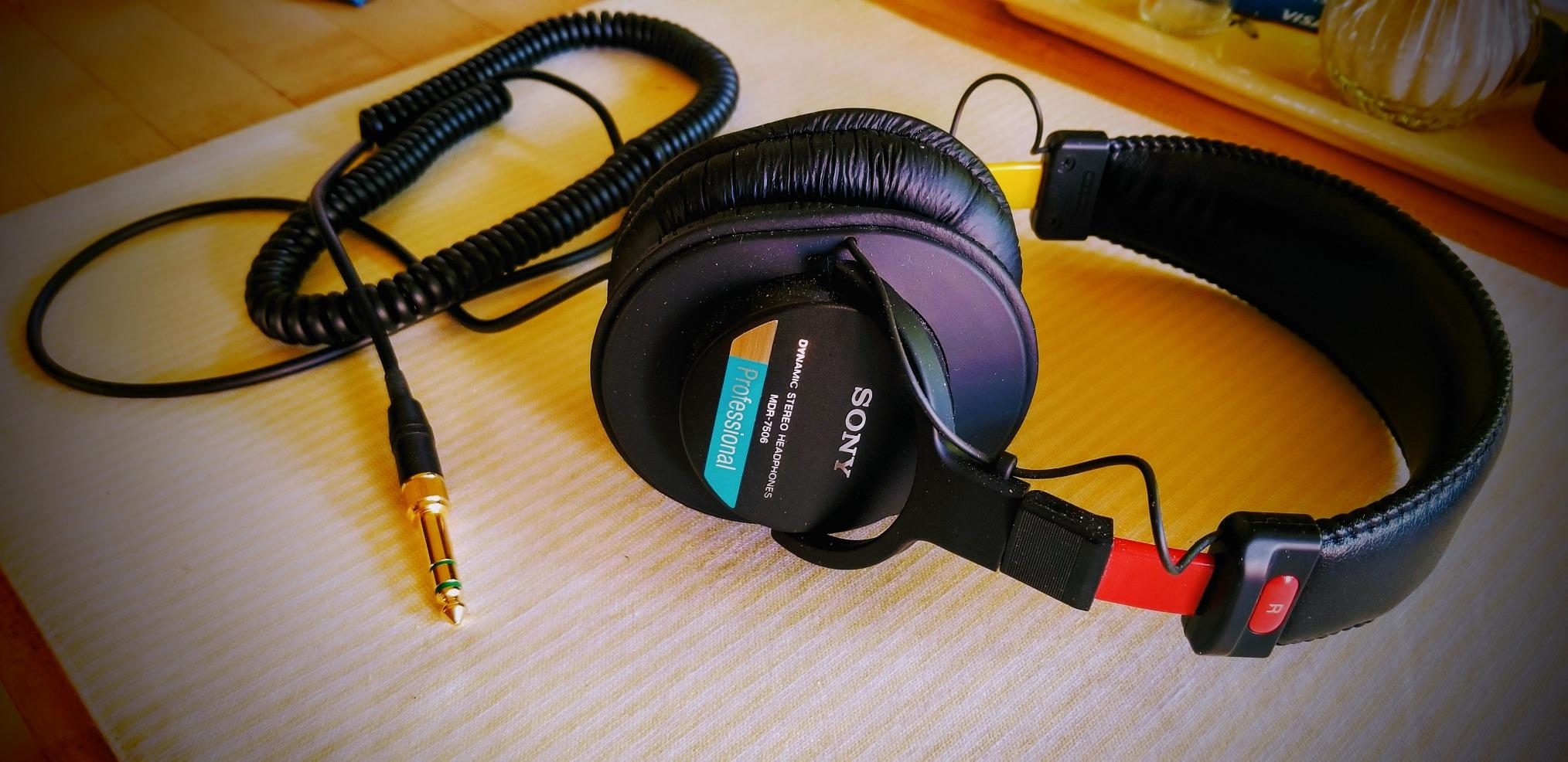
The MDR7506 is the one headphone here we would happily lose in a bag with a laptop and a cable, and it has survived that treatment in broadcast houses for a very long time. At 8 ounces it is the difference between a long session and a sore head.
Sonically it is more revealing than its reputation suggests. Bass is tight rather than extended, treble is clear, and the midrange sits forward enough that reviewers comparing it favourably against the older MDR-V6 mention a little more clarity up top.
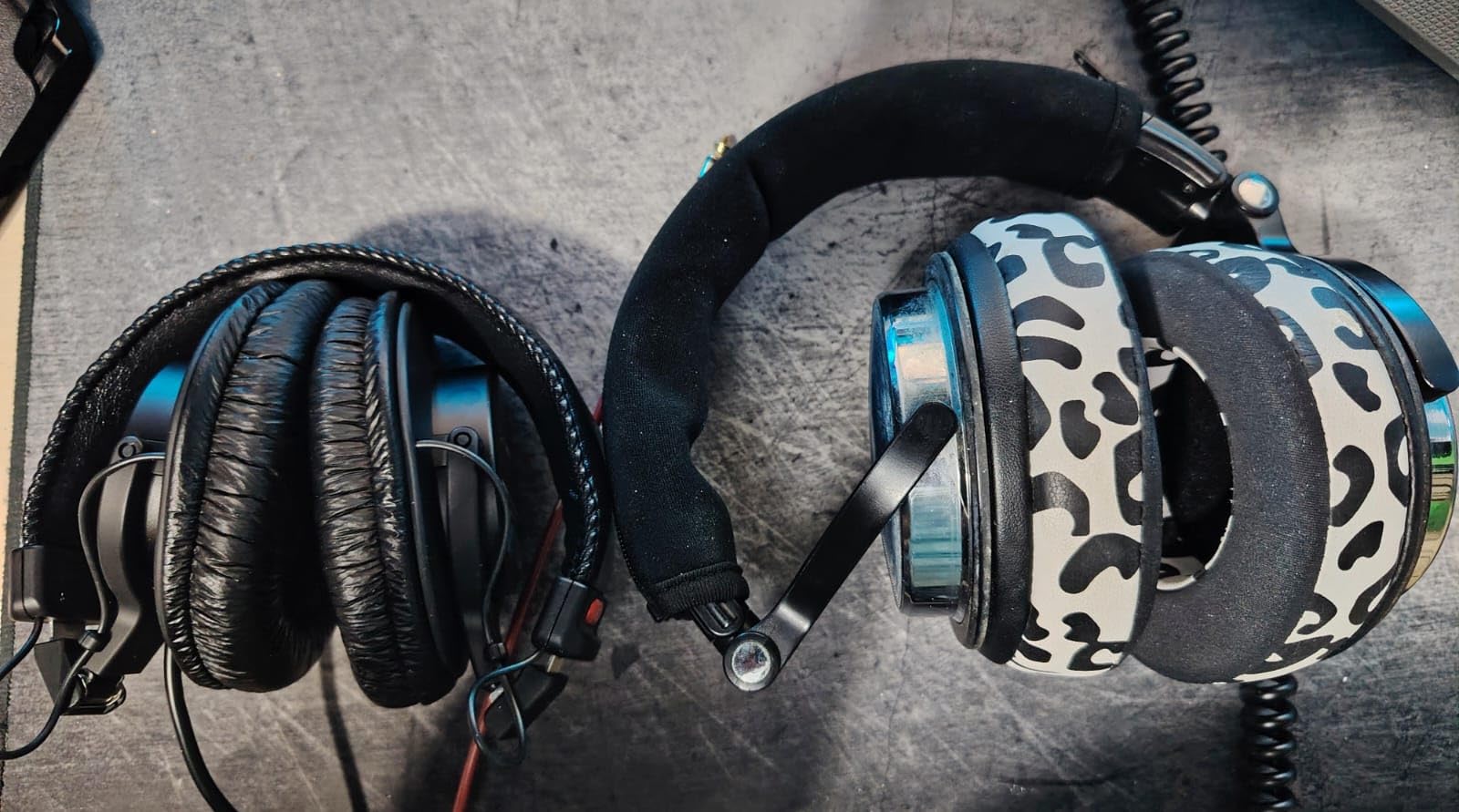
The 63 ohm load is friendly. Most interfaces drive it well, and it folds flat into the included soft case, which is why it turns up on so many location and podcast rigs.
Here is the honest part, and the audio community says it constantly: this is a tracking and QC headphone, not a mixing headphone. Its midrange bias colours balance judgements, so it will make your mix sound more forward than it is. Use it to record and to check edits, then switch to something flatter for decisions.
Is the MDR7506 good enough to mix on?
For rough editing, gain staging and checking whether a take is usable, yes, and almost nothing else does it as comfortably. For judging tonal balance on a finished mix, the midrange lift makes it a poor reference.
If you own only one pair and you mix, choose a flatter headphone. If you track more than you mix, this is a genuinely excellent tool and it will outlast most upgrades around it.
What to watch out for
The fixed cable is the main complaint. If it fails at the strain relief, you replace the headphone rather than the cable, and on location work that is a real risk.
Second issue: the folding earcups can pop partly out of position when you put them on. It is a small annoyance that shows up more than it should on a headphone this otherwise frictionless.
3. Audio-Technica ATH-M20x – The Best Budget Headphone to Learn On
- Flat and clear signature suited to tracking and mixing
- Light at 210 g for long sessions
- Metal adjusters and thick cabling for the money
- Works from most interfaces at 47 ohm
- Non-detachable cable limits repairability
- Bass is light next to the M40x and M50x
- Can feel tight for glasses wearers
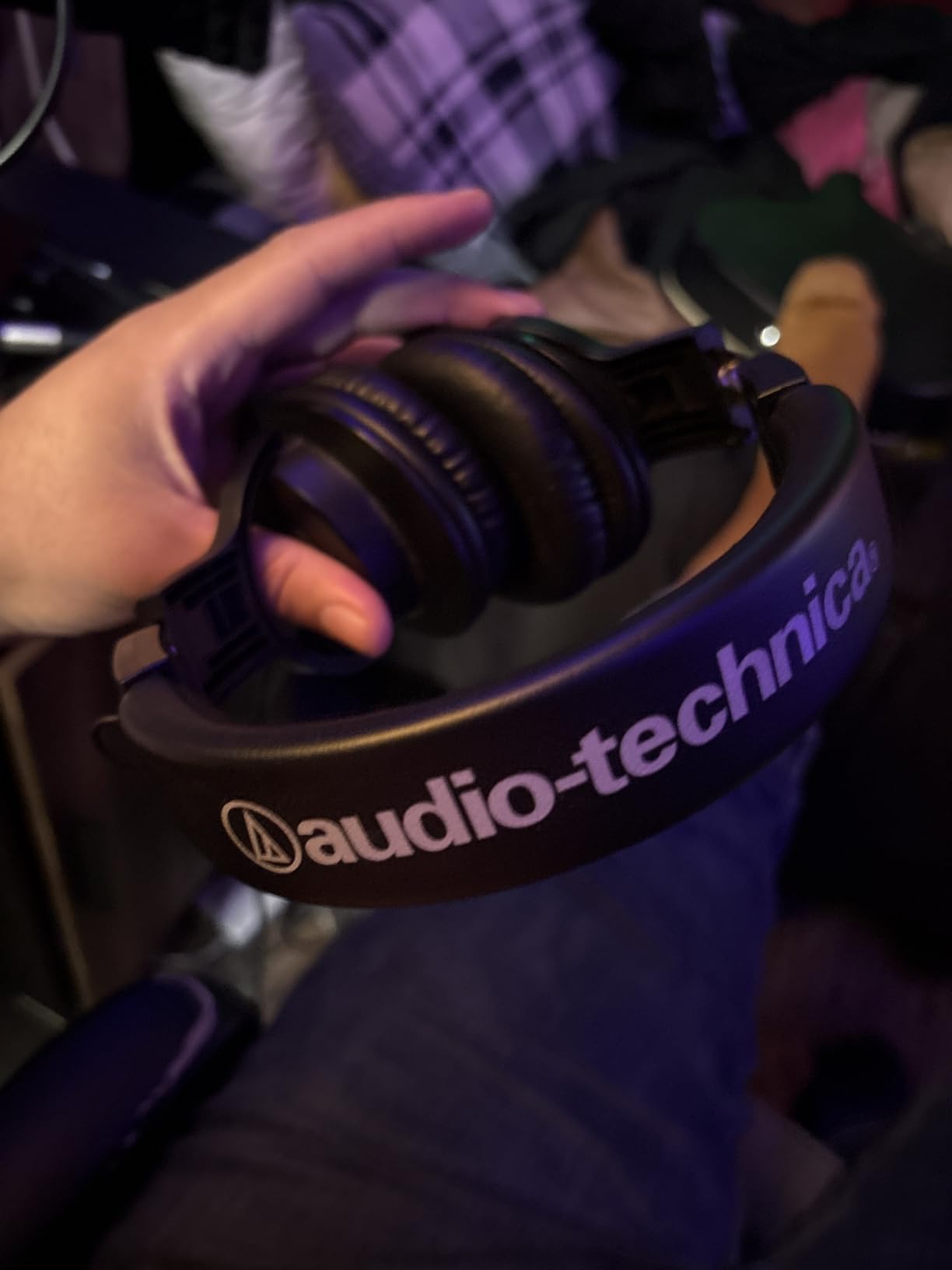
The M20x is where most engineers start, and it stays in service for years. At 210 grams it is one of the lighter pairs here, and the tuning is described by owners as flat, clear and slightly restrained compared with the more colourful M40x and M50x.
That restraint is a feature, not a shortfall, at this level. You will hear a mix get out of balance before you hear it get muddy, which is the behaviour you want while you are still building good habits.
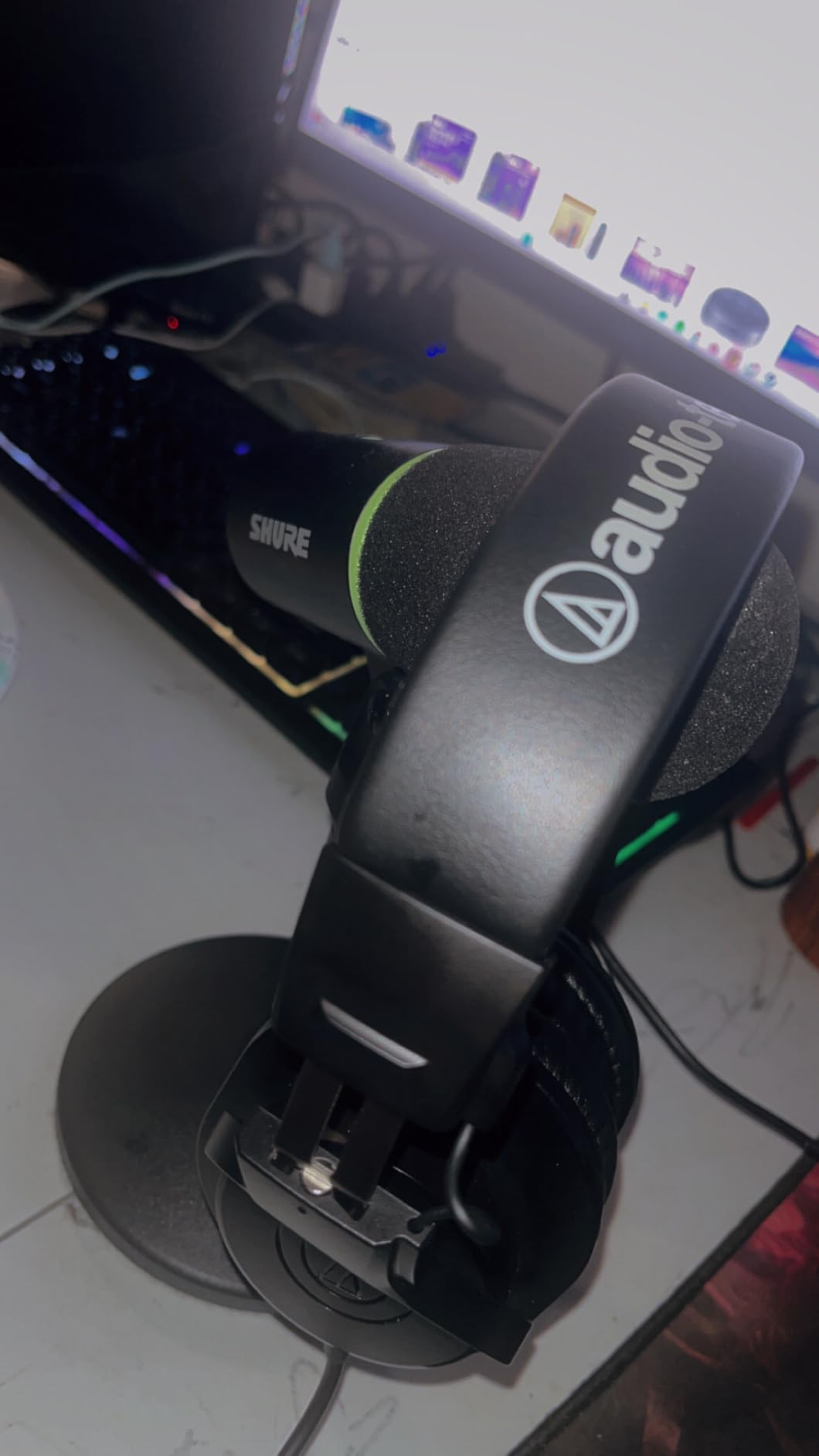
The single-side cable exit is a small practical touch that keeps the lead out of the way of a desk-mounted arm, and the circumaural design still gives you reasonable isolation in a live room.
At 47 ohm it plugs into anything. We had no trouble reaching a working level from a basic interface, and the 15 Hz to 20,000 Hz range covers everything that matters for mixing decisions without pretending to reach lower.
What the M20x gives up against the M50x
Bass extension. Reviewers consistently call it light next to the M50x, so if your material depends on deep sub content you may find yourself guessing where the bottom end is.
The fixed cable is the other one. When you eventually upgrade to the M50x or a detachable-cable model, the difference in cable handling is the change you will notice first.
Who this headphone suits
Students, podcast editors and anyone who wants an accurate first reference without spending real money. It is also a safe loaner or pair for a second room.
If you are mixing electronic music with heavy sub-bass and no subwoofer, start with the M40x or M50x instead. Those are tuned with more low-end headroom in mind.
4. beyerdynamic DT 990 Pro 250 Ohm – The Reference Open-Back on This List
- Exceptionally wide open soundstage with strong instrument separation
- Fast tight and deep bass for an open-back
- Soft breathable velour pads
- Revealing treble for mastering and quality control
- Replaceable pads and spring-steel headband
- 250 ohm needs an amp or capable interface for full volume
- Leaks sound in and out so it cannot track
- Treble can feel bright before burn-in
This is the only true open-back headphone in the roundup, and that alone makes it the one to buy if you want the kind of stage the mixing community keeps describing as the goal. Instrument separation and depth are the reasons it earns its reputation.
The 5 Hz to 35,000 Hz range and a tight, deep low end are unusual for an open design. Normally openness costs you bass extension, and here reviewers note the opposite: the bottom is fast and controlled.
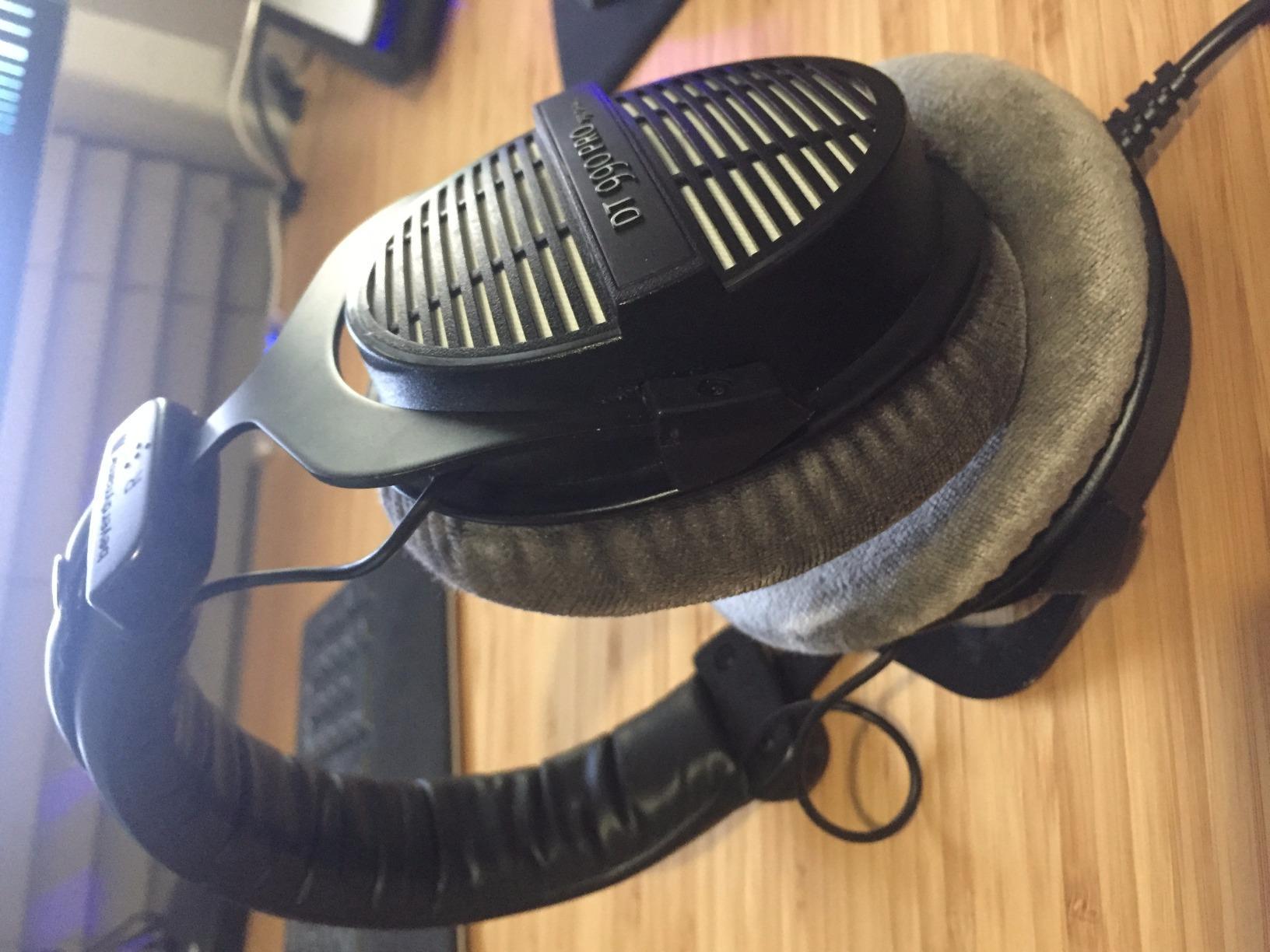
At 8.8 ounces with velour pads, it is light and cool to wear, which matters in a design where you will be listening for an hour at a time. The pads and the spring-steel headband are both replaceable, so this is a purchase you can maintain rather than replace.
Plan the amp. At 250 ohm, running it from a weak interface output will leave the treble sounding bright and slightly edge-of, and owners widely report that a good DAC/amp plus around 100 to 300 hours of burn-in settles that region down considerably.
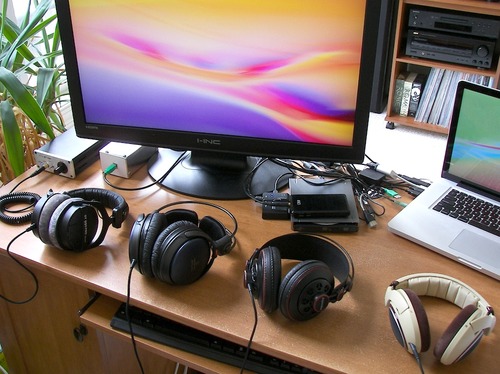
How the DT 990 Pro changes your mixing workflow
A wide stage makes placement errors obvious. We could hear a keyboard sitting behind a vocal in the image and fix it, which is far harder on a narrow closed-back where everything shares one plane.
It also makes low-end judgements harder in one specific way. Because the stage is so wide, a mono low end collapses toward the centre in a way you learn to expect, so use it for arrangement checks and keep your monitors for the final low-end call.
What to watch out for
Sound leaves this headphone. In a shared room or with a sleeping household nearby, an open-back at moderate volume is a real problem, and no amount of amplification fixes it.
The 250 ohm load is a hard requirement, not a preference. If your interface headphone out is weak, add a compact amp to your shopping list before you blame the headphone.
5. Audio-Technica ATH-M40x – The Flattest Tuning for Mix Decisions
- Very flat neutral tuning preferred for mix decisions
- 35 ohm and 98 dB sensitivity drive hard without an amp
- Detachable straight and coiled cables included
- Swiveling cups for quick one-ear cueing
- Very floppy foldable design takes some getting used to
- Swivel hinges are a known weak point over the years
- Bundled studio-length cables are impractical for mobile use
Audio-Technica built three closed-backs in this family and the M40x is the one mixers pick when they want the least coloured signal. Reviewers repeatedly describe it as the flattest of the M-series, with a preference for it over the bassier M50x.
At 35 ohm and 98 dB sensitivity it is the easiest load here to drive, and it plays loudly and cleanly from a basic interface output without any amplifier sitting between you and the mix.
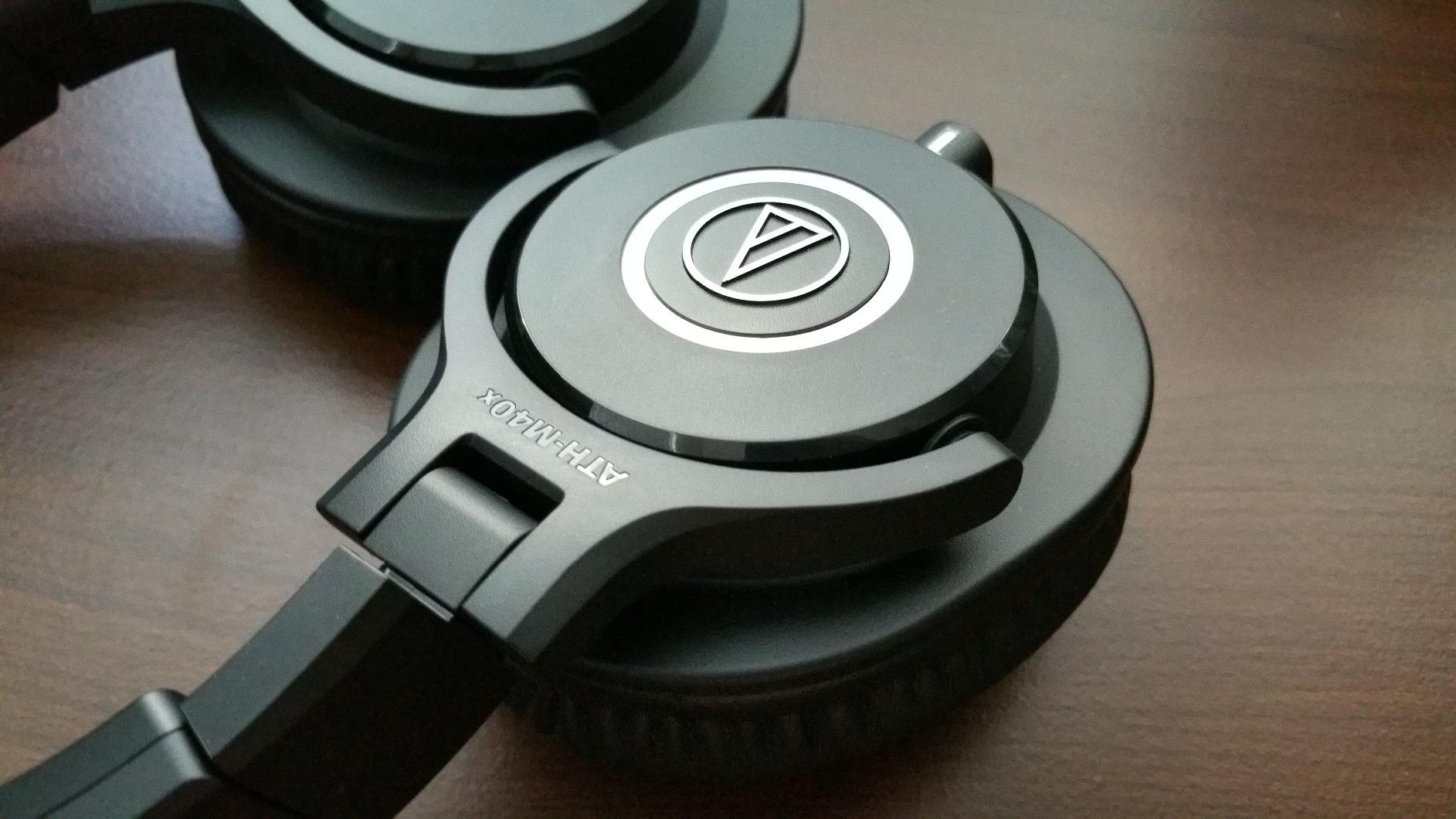
It comes with both a straight and a coiled detachable cable, plus a case and a screw-on adapter. Having a spare cable in the box solves the mobile-use problem that the stock studio-length leads create.
The swivel hinges are the useful part and also the weak part. The 90 degree rotation makes one-ear tracking instant; the hinge itself is where age tends to show, and cracks after years of use are the most repeated durability complaint.
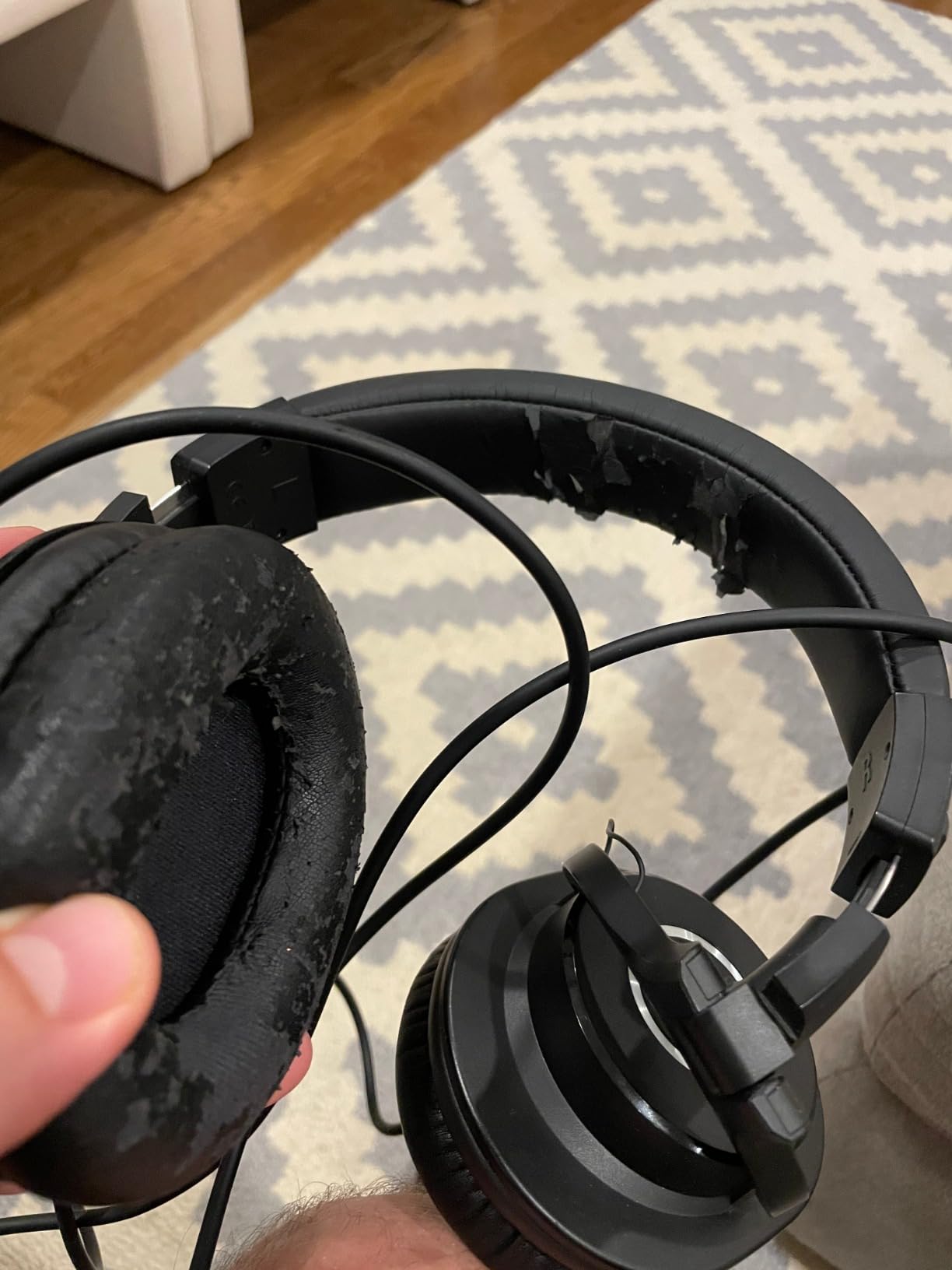
Choosing between the M40x and the M50x
Both are excellent. The M40x is the safer mixing reference because it adds less of its own opinion, which is exactly what you want when a decision is close.
The M50x wins on isolation and bass extension. If you mix in a shared room or work on bass-heavy material, those two advantages can outweigh the M40x’s extra neutrality.
Who should look elsewhere
If you are recording live takes in the same session, neither is ideal, because the swivel design folds flat and collapses loosely in a way that feels fragile to some owners. Closed-back tracking tools with a firmer build are a better match.
If your priority is a wide soundstage, this is not the headphone. It places things accurately but compactly, and that is a different design goal from the DT 990 Pro.
6. AKG K240 Studio – The Semi-Open Workhorse for Editing and Voice
- Extremely light with a self-adjusting headband
- Accurate detailed reproduction
- Semi-open stage is roomier and less fatiguing
- Detachable cable and replaceable pads
- Clear vocal intelligibility for editing and dubbing
- Semi-open design leaks so it cannot track live
- Light rather than extended bass
- Included pleather pads run warm over long sessions
The K240 Studio has an odd status in this niche: a headphone that serious engineers own for years and rarely recommend as a mixing headphone. On Vi-Control, long-time owners describe it as neutral, flat and comfortable, and that is a fair summary of what it does well.
The self-adjusting gimbal headband is the standout. It distributes weight without a heavy clamp, so it stays comfortable across very long editing or dubbing sessions, and at 240 g it never becomes a burden.
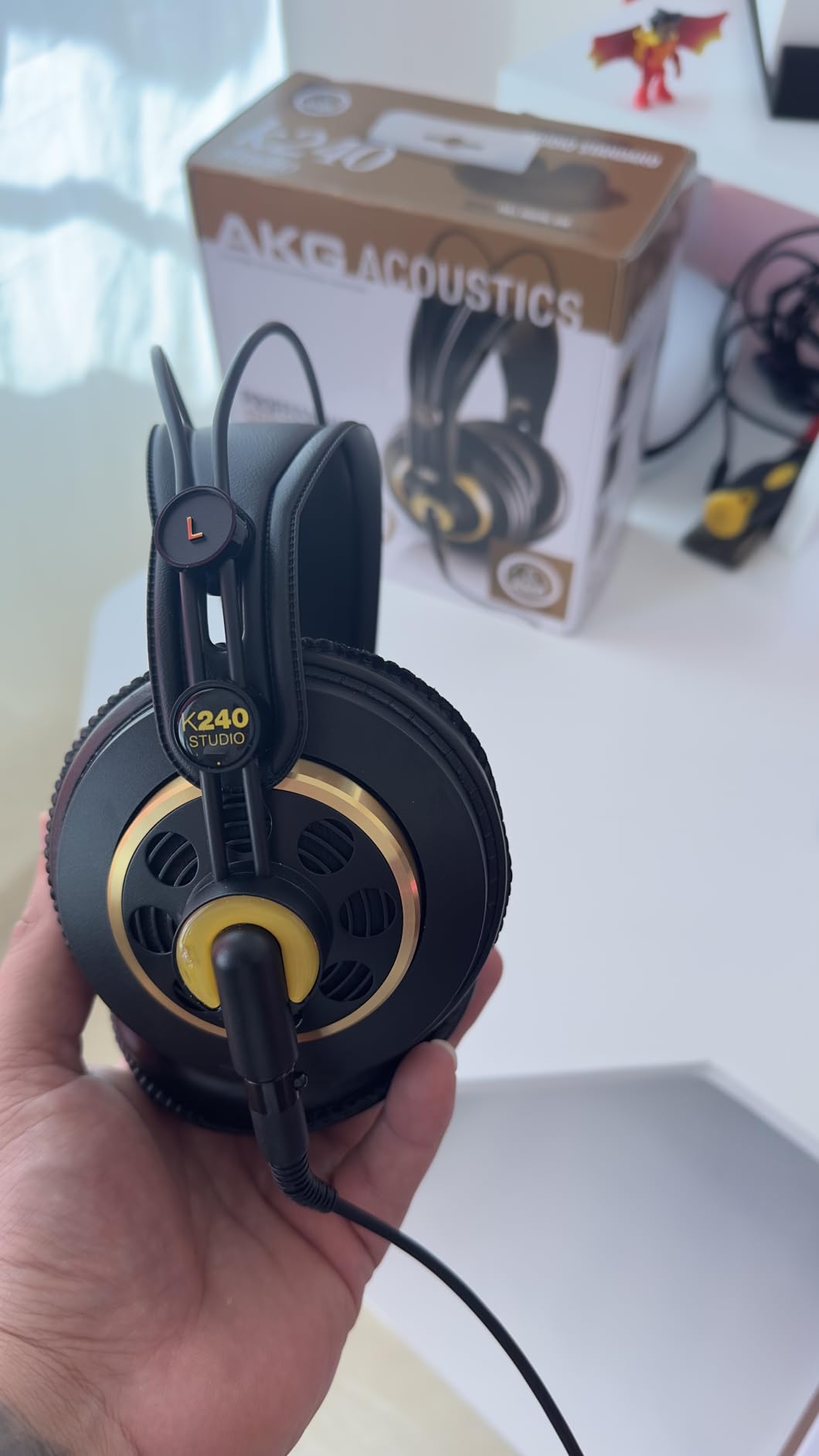
For spoken-word work the clarity is the reason to own it. As a semi-open, it gives you a wider, less boxed-in stage than a closed-back and lets you hear enough of the room to keep levels sane.
The 55 ohm load is unremarkable, which is good news for compatibility, and the 3 m cable with a locking connector means replacement cords are available when this one eventually wears.
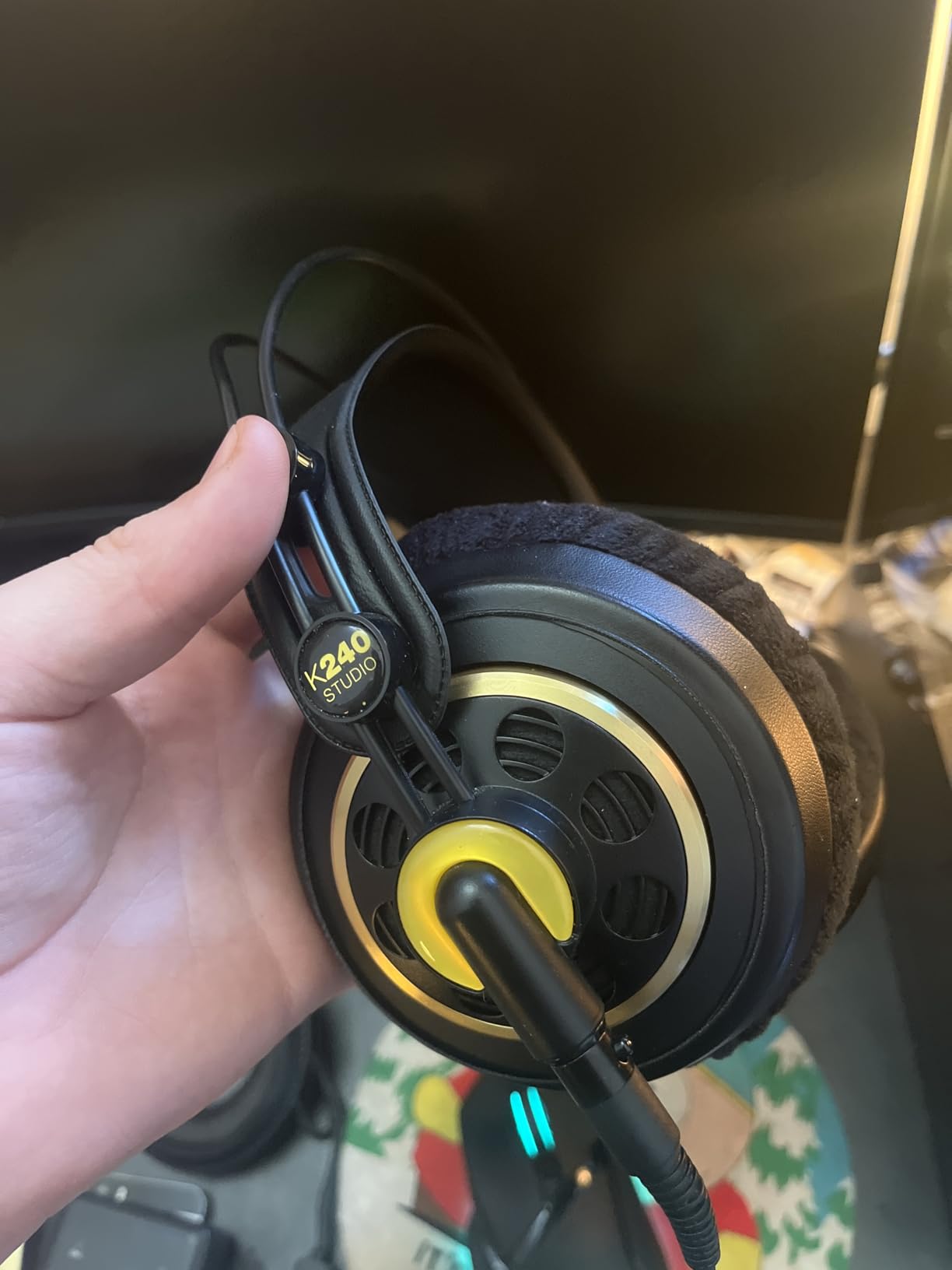
Where the K240 Studio fits best
Podcast and voice-over editing, dialogue cutting, audio book work, and light mixing checks where you mostly care about intelligibility and comfort rather than deep low-end weight.
It is also a very sensible first headphone for a student, because it teaches accurate playback without the price or the amp requirement of an open-back reference.
Why it is not the mixing pick
Two reasons. Bass is light rather than extended, so low-end balance decisions are harder to trust. And the semi-open design leaks in both directions, which makes it useless for tracking a live take.
Own the pleather pads situation too. They run warm over a multi-hour session, and replacing them with velour or hybrid pads is the single upgrade that changes how the K240 feels.
7. Sennheiser HD 280 Pro – The Isolation Champion
- Passive isolation up to 32 dB rivals basic ear defenders
- Warm natural reproduction with no major peaks or dips
- Strong imaging for a closed-back
- Proven for studio
- DJ and front-of-house use
- All wear parts are user replaceable
- Heavy coiled cable is awkward for mobile use
- Stock pads and headband padding attract oil and sweat
- Firm clamping force tires some users at first
Nobody buys the HD 280 Pro for mixing, and that is exactly its job. The circumaural seal delivers up to 32 dB of passive attenuation, a figure owners describe as approaching basic ear defenders, and that is a tracking and rehearsal advantage nothing else here matches.
Sonically it is warm and essentially uncoloured, with imaging and stage that surprise people for a closed-back. If you track live in a loud room, the isolation alone justifies it.
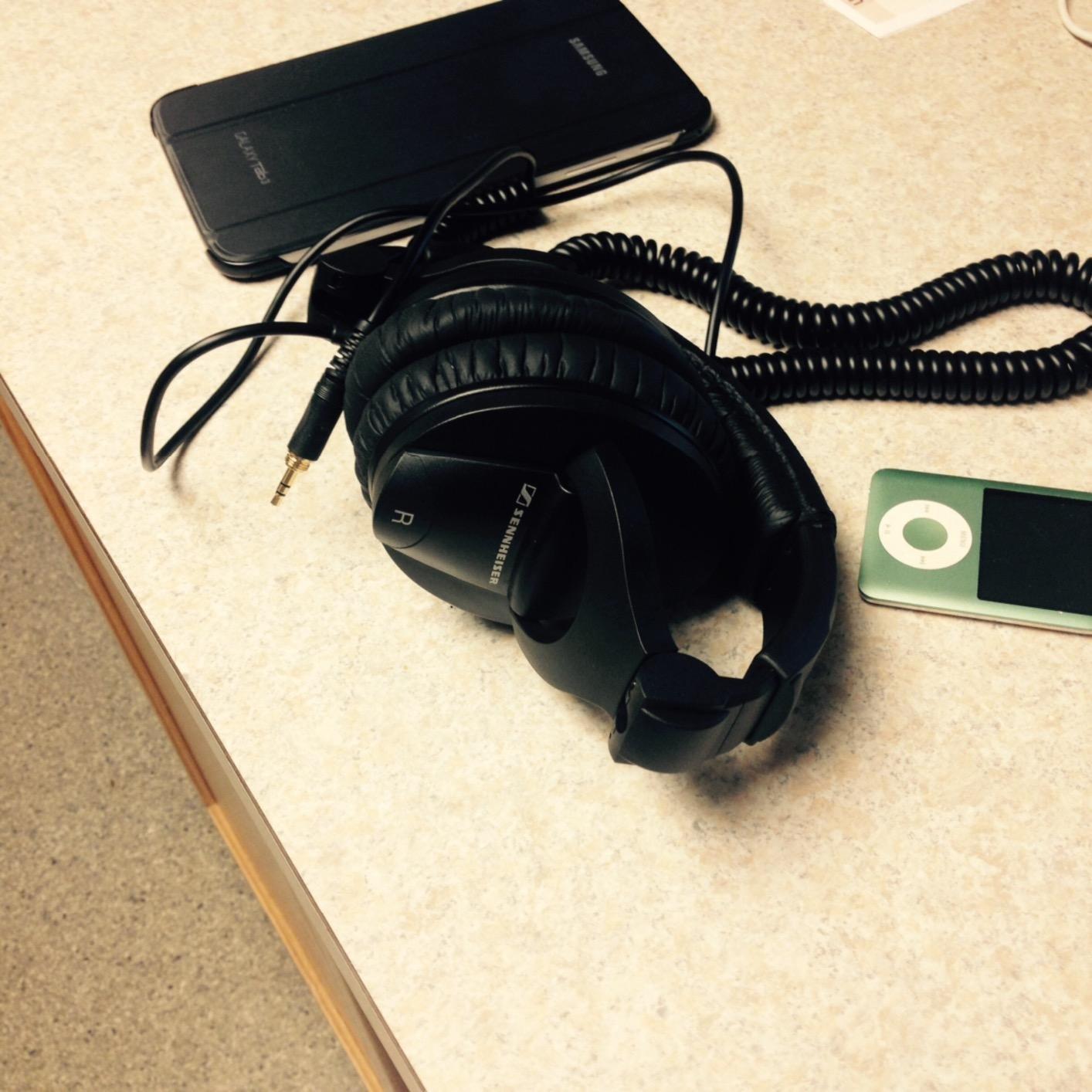
Everything that wears out is replaceable: pads, headband padding and the cord. For a headphone expected to survive years of tour and studio handling, that is a stronger long-term argument than any spec.
Sound does leak, of course, in one direction only, which makes it the wrong tool for quiet mix decisions. We would never use it to judge tonal balance on a finished master.
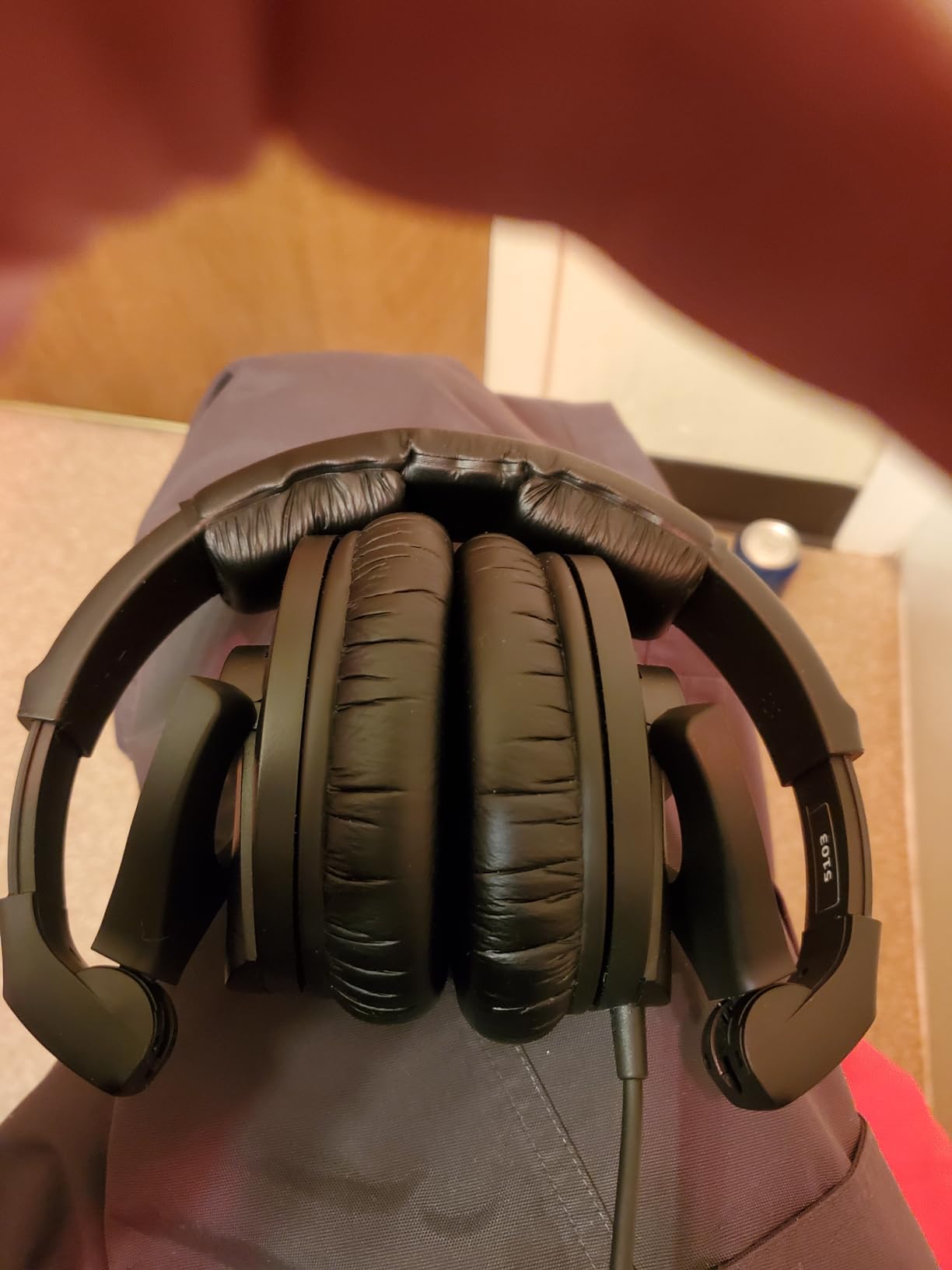
Who should buy the HD 280 Pro
Live sound engineers, drummers, vocalists recording in untreated rooms, and anyone rehearsing with a backline they cannot control. The 32 dB figure is the whole pitch.
Also worth considering as a second pair for anyone who already owns a good mixing headphone and wants something for tracking that will not leak into a microphone.
The honest drawbacks
The coiled cable is heavy and awkward for mobile use, and reviewers call out the stock pads and headband padding as inexpensive materials that attract oil and sweat quickly. Both are solvable, neither is free.
The clamping force is firm, which some users find tiring during their first weeks. Bass-heavy mixes also sound slightly flat without EQ, so it is not a neutral canvas for balance work.
8. Samson SR850 – Big Drivers and Fuller Bass on a Budget
Samson SR850 Professional Studio Reference Headphones
- 50 mm drivers give more output and bass than typical entry monitors
- Semi-open design gives natural tonality and ambient awareness
- Self-adjusting headband fits a range of head sizes
- Strong value for tracking practice and reference checking
- Heavier and bulkier than slim closed-back alternatives
- Leaks sound so it is unsuited to isolated tracking
- Bass is fuller than flat references
- which some mixers read as less accurate
- Fixed non-detachable cord
The SR850 is a study in contrasts: 50 mm drivers in a headphone that costs less than most entry-level accessories, paired with a semi-open design and a bass-forward tuning that is not what a strict reference flat would give you.
Those big drivers are the reason reviewers like it. You get more output and a fuller low end than comparable entry-level monitors, at 32 ohm, which means it will drive from practically anything.
The self-adjusting headband fits a wide range of head sizes without fuss, and the semi-open design gives a more natural tonality and some ambient awareness than a sealed cup.
Size is the trade. At 1.1 pounds with a retractable cord, it is the bulkier option here, and the semi-open construction means it cannot be used for isolated tracking in a shared room.
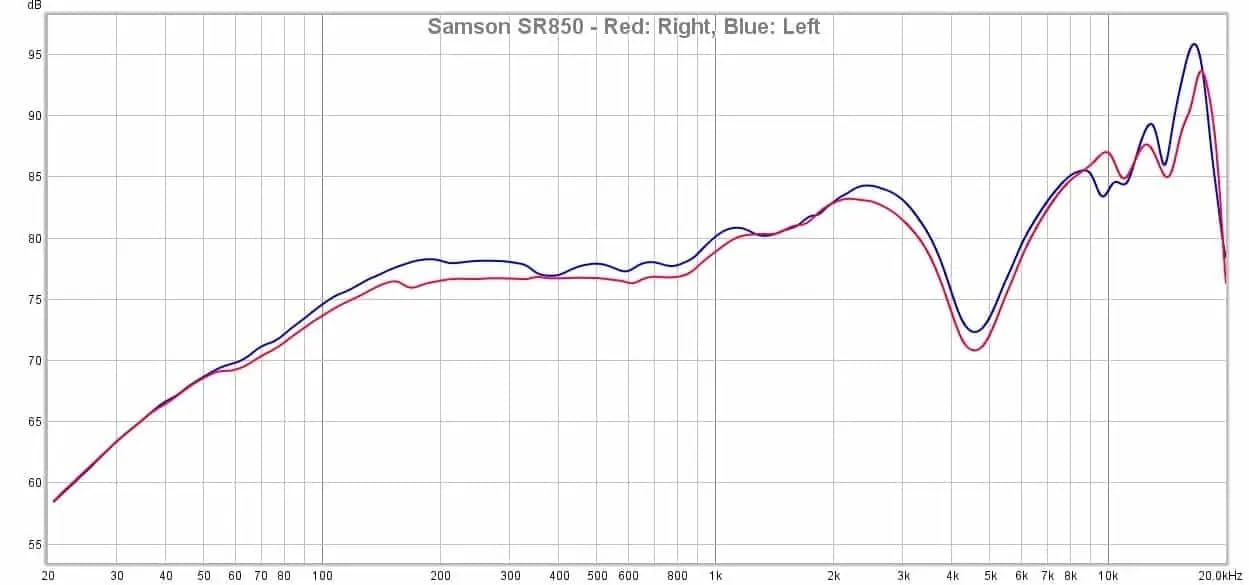
Is the extra bass a problem for mixing?
Sometimes. A fuller low end than a true flat reference can flatter a mix that is already bass-heavy, and some reviewers call that out directly. For electronic material with weighty sub content, that helps more than it hurts.
For acoustic, folk and voice work, where the low end is not the point, a flatter headphone will serve you better. The SR850 is a better headphone for checking a mix you have already balanced on something more neutral.
Where it earns its place
Tracking practice, drum and guitar rehearsal, and any student setup where you want a roomier sound than a closed-back gives you at very little cost.
Just plan for the non-detachable cord, which is the main limitation if you move the headphone between locations regularly.
9. MAONO MH601 – The Best Value Headphone for Podcast and Stream Work
MAONO MH601 Wired Studio Headphone for Podcast Recording Stream DJ Mixing
- Near-neutral tuning owners compare to pricier monitors
- 50 mm drivers stay clean at higher levels
- Lightweight protein leather pads over multi-hour sessions
- Detachable cable with interchangeable 3.5 mm and 6.35 mm connections
- Earcups do not swivel like higher-end studio models
- Bold white branding is conspicuous on camera
- Some owners report cable loosening and pad flaking over time
The MH601 is the surprise of this roundup for anyone who reads spec sheets. Owners regularly compare its near-neutral tuning to Audio-Technica models costing several times more, and the 50 mm drivers hold together without turning muddy when you push the level.
At 32 ohm with 103 dB sensitivity it is easy to drive and loud enough for a close-mic’d voice without a desk amp, and the zero-latency wired connection is exactly what you want for editing accuracy.
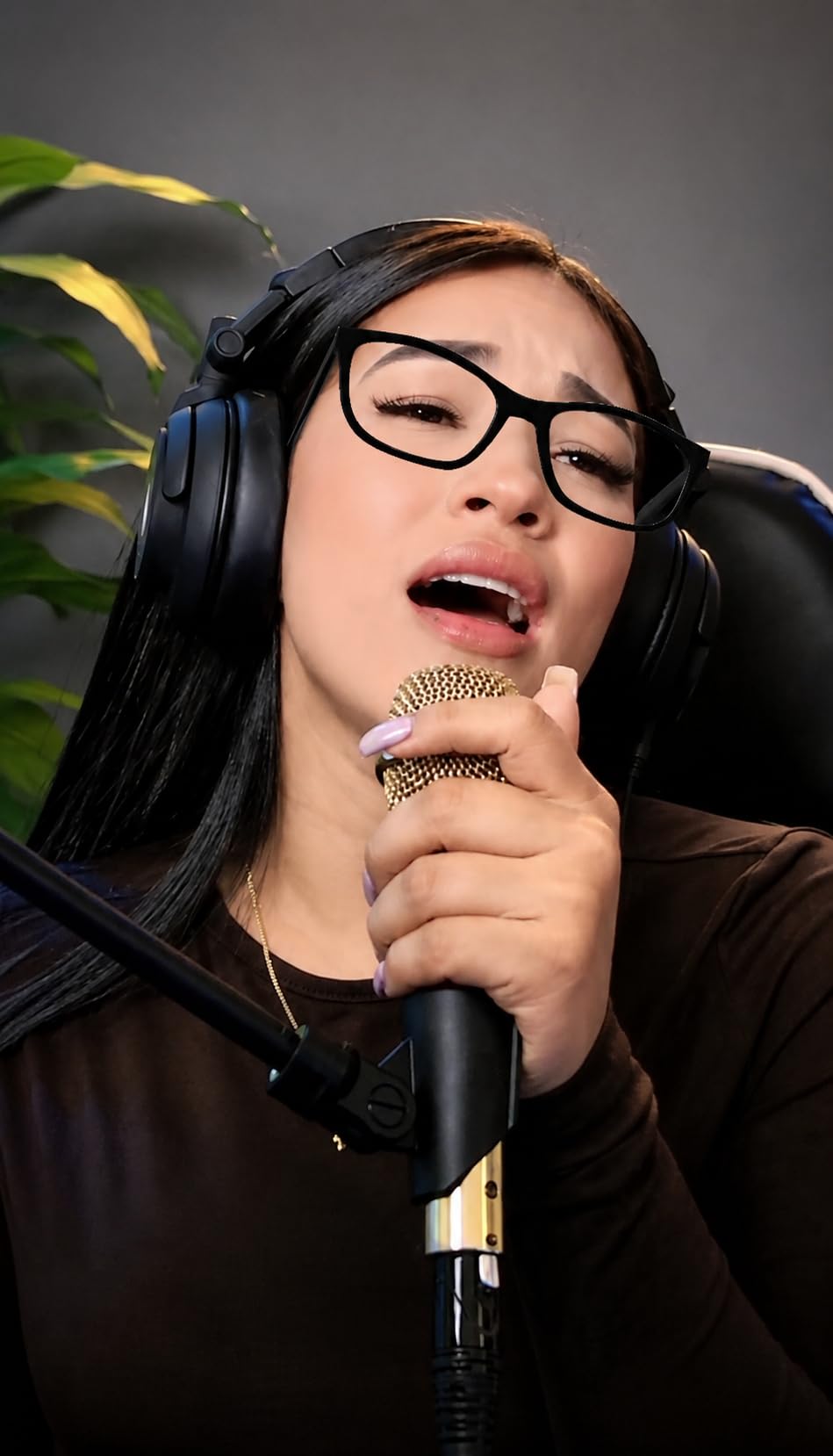
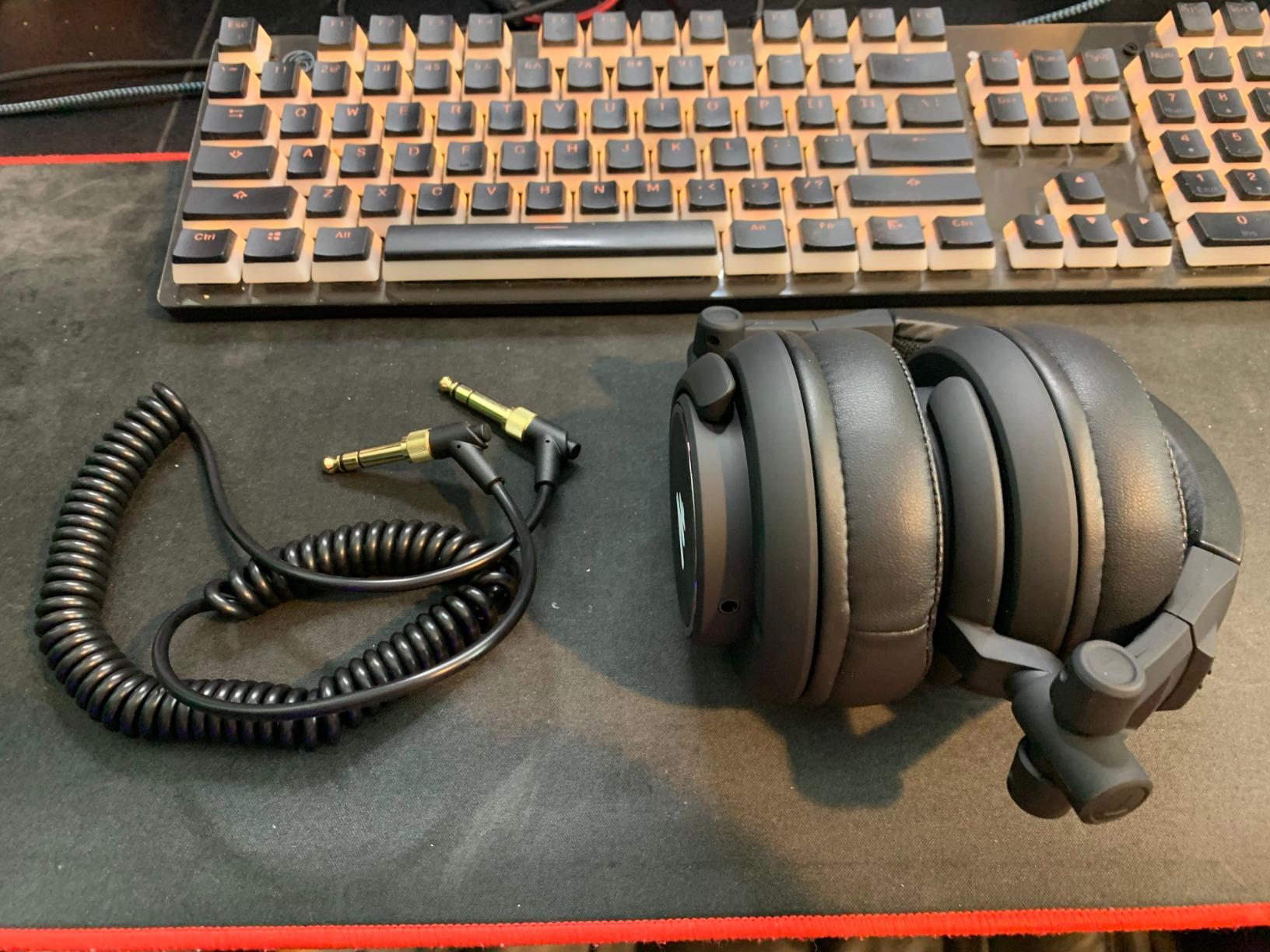
The detachable 9.8 foot spring-loaded cable plus the interchangeable 3.5 mm and 6.35 mm adapter make it the easiest pair here to move between a laptop, a phone and an interface without hunting for the right plug.
Comfort holds up over multi-hour sessions thanks to the protein leather pads, though the missing swivel means no proper one-ear monitoring, which matters more for musicians than for talkers.
Is the MH601 accurate enough to mix on?
For spoken content, narration and light music edits, yes. The near-neutral response gives you a clean view of level, presence and sibilance, which is what most of this work turns on.
For full music mixing, treat it as a starting reference rather than a final one. It has no low-frequency extension to speak of below 20 Hz and less detail in the deep bass than the Audio-Technica and Sennheiser pairs here.
Who should skip it
Skip it if you are on camera often. The bold white branding across the headband and cups is deliberately visible, and it will show up in every frame.
Also consider the longevity reports. Some owners mention the detachable cable loosening and pad material flaking over time, so it is a better fit for a desk-bound setup than for one that gets carried constantly.
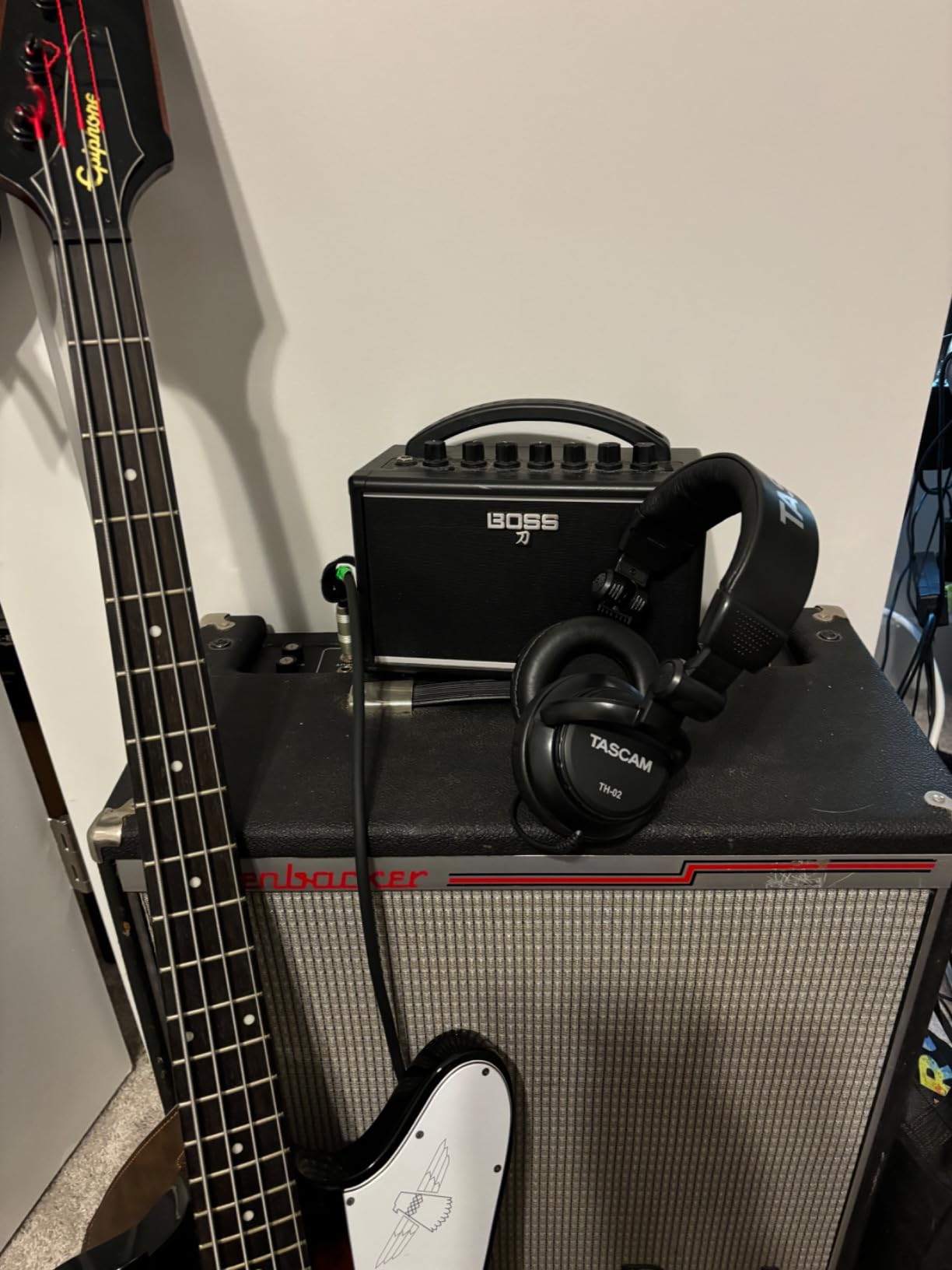
10. TASCAM TH-02 – The Most Accurate Reference You Can Start With
TASCAM TH-02 Professional Studio Monitor Headphones, Wired, Over Ear — for Recording, Podcast, DJ, Music and Guitar, with 1/4 Inch Jack Adapter
- Exceptionally neutral accurate response at a very low price
- 50 mm drivers give respectable bass extension and output
- Articulating adjustment points and sturdy construction
- Very long cable suits an interface at the back of a desk
- Clamping force is tight out of the box
- Shallow non-memory stock pads cause pressure over long sessions
- Upper mids and lower treble can sound slightly recessed
- Fixed non-detachable cable
The TH-02 has the lowest average rating in this group, and that tells you more about fit complaints than about sound. Reviewers who measure headphones routinely single it out as comparable to models costing several times more, because the tuning is genuinely neutral.
At 18 Hz to 22 kHz with 50 mm drivers, it does more with its low end than headphones twice the cost, and at 32 ohm it will run from any output you are likely to own.
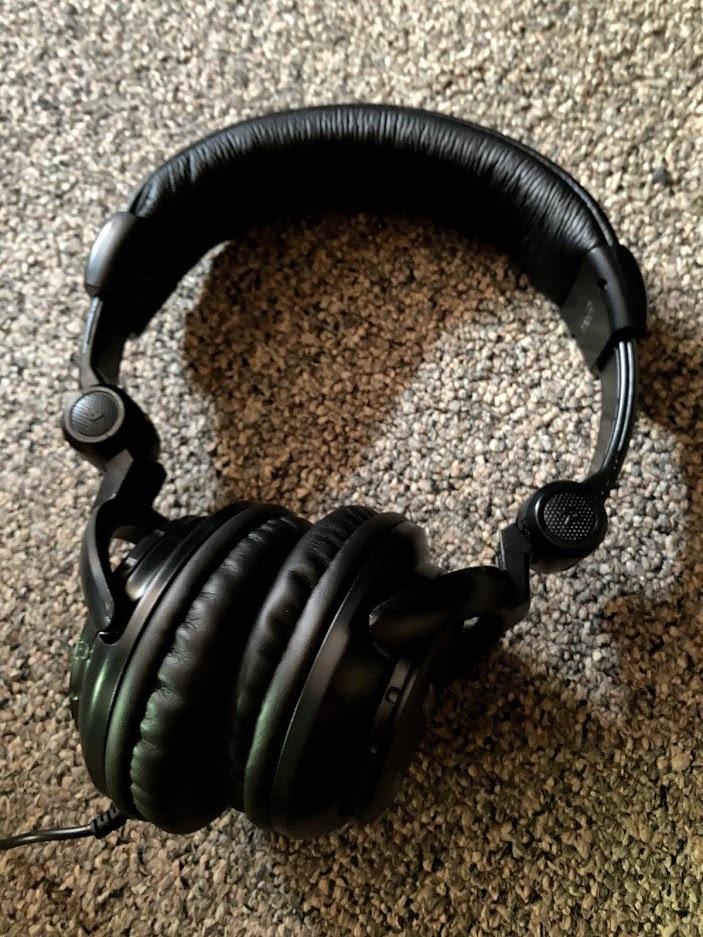
The very long fixed cable is a quiet advantage in a home studio where the interface sits at the back of a desk, and the foldable design keeps it out of the way between sessions.
It is not a mobile headphone, though. A fixed three-metre lead, a one-year warranty and shallow pads make it a desk instrument, which is honestly where it belongs.
Why the rating sits lower than the sound deserves
Two fit problems account for most of it. The clamping force is tight out of the box and needs breaking in, and the stock pads are shallow non-memory foam that presses on the ear over long sessions.
Both have cheap fixes. A set of proper memory foam pads changes the TH-02 from uncomfortable to genuinely wearable, and the clamp eases with a week of use.
Who should buy the TH-02
Students, podcasters starting out, and anyone who wants accurate neutral playback without spending money on an amp or a premium pair. It is a very effective teaching headphone for balance and level.
Skip it if you need deep sub-bass reference, replaceable parts or a headphone you can move between locations. For those, the Audio-Technica pairs or the HD 280 Pro serve you better.
Open-Back vs Closed-Back Headphones for Mixing
Open-back wins for mixing, and it is not a subtle preference. An open-back grille lets air move freely through the cup, so low frequencies are reproduced without the pressure build-up that colours the bass of a sealed design.
That matters because a coloured bass response is the single most common reason a mix sounds good on one system and disappointing on another. When your reference headphones flatter the low end, you stop noticing a weak or over-heavy bottom, and the problem only surfaces after release.
The trade-off is leakage in both directions. Open-backs spill sound into the room, which is why none of them suit tracking a live take next to a microphone. Closed-backs seal that leak, which is why they dominate live sound rigs and recording rooms.
Semi-open designs, like the AKG K240 Studio and the Samson SR850 in this list, split the difference. They give you a roomier stage and less fatigue than a sealed cup while still passing some outside sound in. They are a reasonable middle path for editing and light mixing work, but they are not a substitute for a true open-back when you are judging a mix balance.
The practical guidance from working engineers is simple. Mix on open-back or semi-open, track on closed-back, and never make a big mix decision on a closed-back cup you also use for tracking, because the isolation and the sealed bass will bias what you hear. Our Audio-Technica studio headphones overview goes deeper on how consumer headphones differ from monitoring designs.
Do I Need a Headphone Amp for Studio Headphones?
This is the most repeated question in every audio forum thread attached to this keyword, so here is a plain threshold. Impedance is how much the headphone draws from the output, and it is the number that decides whether your interface can push it to a working level.
Under 50 ohm, you are fine. Most audio interfaces have a headphone output rated for roughly 32 to 80 ohm, and everything from the ATH-M50x at 38 ohm to the M20x at 47 ohm will drive them comfortably.
Around 80 ohm, you are still fine. That band is the sweet spot for interfaces that also serve recording duties, which is why long-time owners on forums describe the DT 770 Pro 80 ohm as the ideal all-rounder for tracking through mixing.
Above 150 ohm, plan on an amp. The beyerdynamic DT 990 Pro 250 ohm in this list needs a headphone amplifier or a capable interface to reach its full potential. Owners note that the treble in particular settles down substantially once the headphone is driven properly and given burn-in time.
The reason high impedance matters is not just volume. When an output runs out of headroom, it clips and adds distortion, and you end up hearing compression and cymbal sibilance that exist in your mixer, not in the track. Headphone correction software such as Sonarworks or SoundID Reference will also calibrate more accurately if the signal chain is clean.
How to Mix on Headphones Without Ruining Your Ears?
Headphones put the drivers a couple of centimetres from your eardrums, so volume discipline matters more here than on monitors. Keep a consistent monitoring level and resist the urge to push louder when a problem is hard to hear.
Start with the midrange. Play a reference track you know well at the same level and check whether the centre of your mix feels forward, recessed or balanced. Most masking problems become obvious in this band.
Check the low end deliberately. Solo the kick and the bass one at a time, then together, and listen for whether the kick has a defined edge or has become a wall. Open-backs such as the DT 990 Pro give you a wide stage that makes placement mistakes easier to spot.
Run a stereo image test. Pan a single vocal or lead line hard left and hard right and confirm it stays put rather than jumping or thinning, then check that nothing in the mix collapses when you go back to centre.
Follow the 60/60 rule. Sixty minutes of focused headphone listening, then sixty minutes away from them. It came up twice in the search questions for this topic and almost nobody in the editorial roundups mentions it, but it is the simplest protection against ear fatigue and the slow loss of judgement that makes engineers over-correct a mix late in the day.
Finally, cross-check on monitors or on a second reference system before you call a mix done. Headphones are superb for detail and superb for spotting faults, but they are one translation. If your monitors are untreated, level-match them to your headphones rather than trusting them at face value.
Buying Guide: What to Check Before You Buy?
Flat response before anything else. Look for a neutral or flat frequency response rather than a “smiley curve” that boosts bass and treble to make music sound nicer. Accurate headphones tell you the mix is wrong; pleasant headphones let it leave the room wrong.
Impedance against your interface. Under 50 ohm needs nothing extra. Around 80 ohm suits most recording interfaces. Above 150 ohm, and especially at 250 ohm like the DT 990 Pro, budget for a headphone amp or confirm your interface can drive the load.
Open or closed for your actual job. Mixing and mastering work calls for open or semi-open. Tracking, rehearsing and live sound call for closed. If you do both, you will end up owning both eventually, and that is not a mistake.
Weight and clamping force. Ear fatigue is the most common physical complaint in every forum thread on this topic. A headphone you dread wearing after three hours will quietly shape your mixes, so weight and pad quality deserve as much attention as the impedance figure.
Replaceable parts. Detachable cables and replaceable pads, headbands and ear cups decide whether a pair lasts three years or a decade. The AKG K240 Studio, the Sennheiser HD 280 Pro and the DT 990 Pro all let you keep going with new wear parts instead of buying new headphones.
Fit over specs. The most accurate headphone in the world is wrong for you if it clamps, if the pads collapse in a year, or if you wear glasses and the cups press on the frame. Try before you commit wherever possible.
Budget reality. Most of the best studio headphones for mixing choices below sit in four bands: the very cheap tier where the TASCAM TH-02 and AKG K240 Studio live, a low tier with the Sennheiser HD 280 Pro and the Audio-Technica M20x, a mid tier with the ATH-M40x, the Sony MDR7506, the Samson SR850 and the MAONO MH601, and the upper tier where the ATH-M50x and the beyerdynamic DT 990 Pro 250 sit. You do not need the top band to mix well. You need a flat response in the top band.
Headphone Correction Software for Mixing
Every headphone has a frequency response, and no two pairs are identical. Correction software measures your specific headphone against a target curve and applies an EQ curve so the result is predictable, which is the closest thing to a measurement rig you can put on a desk.
Correction should be the last thing you try, not the first. Get a headphone with a flat native response, correct it to a sensible target, and only then start building habits around the corrected sound. Correcting a heavily coloured headphone just gives you a differently coloured headphone.
It also solves the level-matching problem. A corrected pair can be calibrated to a known reference level, which removes the loudness differences that otherwise make headphone monitoring unreliable across sessions and across pairs.
If your sessions are getting busier, our guides to studio microphone bundles and studio lighting kits cover the rest of a small production room setup, and both change how much headphone detail you actually need.
Frequently Asked Questions
What are the best headphones for sound mixing?
For most home studios the Audio-Technica ATH-M50x is the strongest all-round choice for mixing, with a flat-to-slightly-warm response, deep controlled bass and a 38 ohm load that runs from most audio interfaces without an amp. If your budget is tighter the Audio-Technica ATH-M40x is even flatter and equally easy to drive, and if you want the widest soundstage and can add a headphone amp the beyerdynamic DT 990 Pro 250 ohm is the open-back reference choice.
What type of headphones are best for mixing?
Open-back headphones are best for mixing because the grille lets air pass through the cup, so low frequencies are reproduced without pressure build-up that colours the bass. The trade-off is that sound leaks in and out, which rules them out for tracking live takes. Closed-back headphones isolate well and suit recording, but their sealed bass makes them a weaker reference for judging mix balance.
Should I get open back or closed back headphones for mixing?
Use open-back headphones for mixing and closed-back headphones for tracking. Mixing decisions depend on hearing the true low end and the depth of the stereo image, and a sealed cup colours both. Tracking depends on isolation from a live source, which only a closed-back provides. If you only mix, buy open or semi-open. If you record as well as mix, you will eventually own one of each.
What is the 60-60 rule for headphones?
The 60/60 rule is a listening discipline for headphone work: sixty minutes of focused headphone monitoring, followed by sixty minutes away from headphones. Headphones place drivers only centimetres from the eardrum, and your judgement drifts as your ears tire, so you begin making subtle over-corrections late in a session. Taking a full break resets both your ears and your perception of the balance.
Do I need an amp for studio headphones?
You need an amp if your headphone sits above about 150 ohm, and specifically for the 250 ohm beyerdynamic DT 990 Pro. Anything under 50 ohm, including the Audio-Technica ATH-M50x at 38 ohm, the ATH-M40x at 35 ohm and the TASCAM TH-02 at 32 ohm, runs from a typical interface headphone output. When an output lacks headroom the signal distorts and you hear sibilance and compression that are not in your mix.
Are cheap studio headphones bad for mixing?
Not if the response is flat. The TASCAM TH-02 and the AKG K240 Studio deliver neutral, accurate playback at very low cost, and reviewers who measure headphones regularly single out budget models as comparable to pairs costing several times more. Cheap becomes a problem when the tuning is coloured or the fit is punishing, because a coloured reference hides the faults you are trying to hear.
The Best Studio Headphones for Mixing in 2026
The Audio-Technica ATH-M50x is our pick for the best studio headphones for mixing, because it delivers the most reliable combination of flat response, isolation, easy drive and repairability at this level, and it holds up over years rather than months.
Choose the ATH-M40x instead if you want the least coloured signal and prefer a flattest canvas for close mix decisions. Choose the beyerdynamic DT 990 Pro 250 ohm if soundstage depth matters most and you will add a headphone amp, and start there if the wide, natural image is what you have been missing.
Pick the Sony MDR7506 or the Sennheiser HD 280 Pro for tracking and isolation rather than mixing, the AKG K240 Studio for voice and editing comfort, and the TASCAM TH-02 if you want accurate playback on the smallest possible budget. Whichever you choose, keep the level steady, follow the 60/60 rule, and check the finished mix on monitors before you release it.