
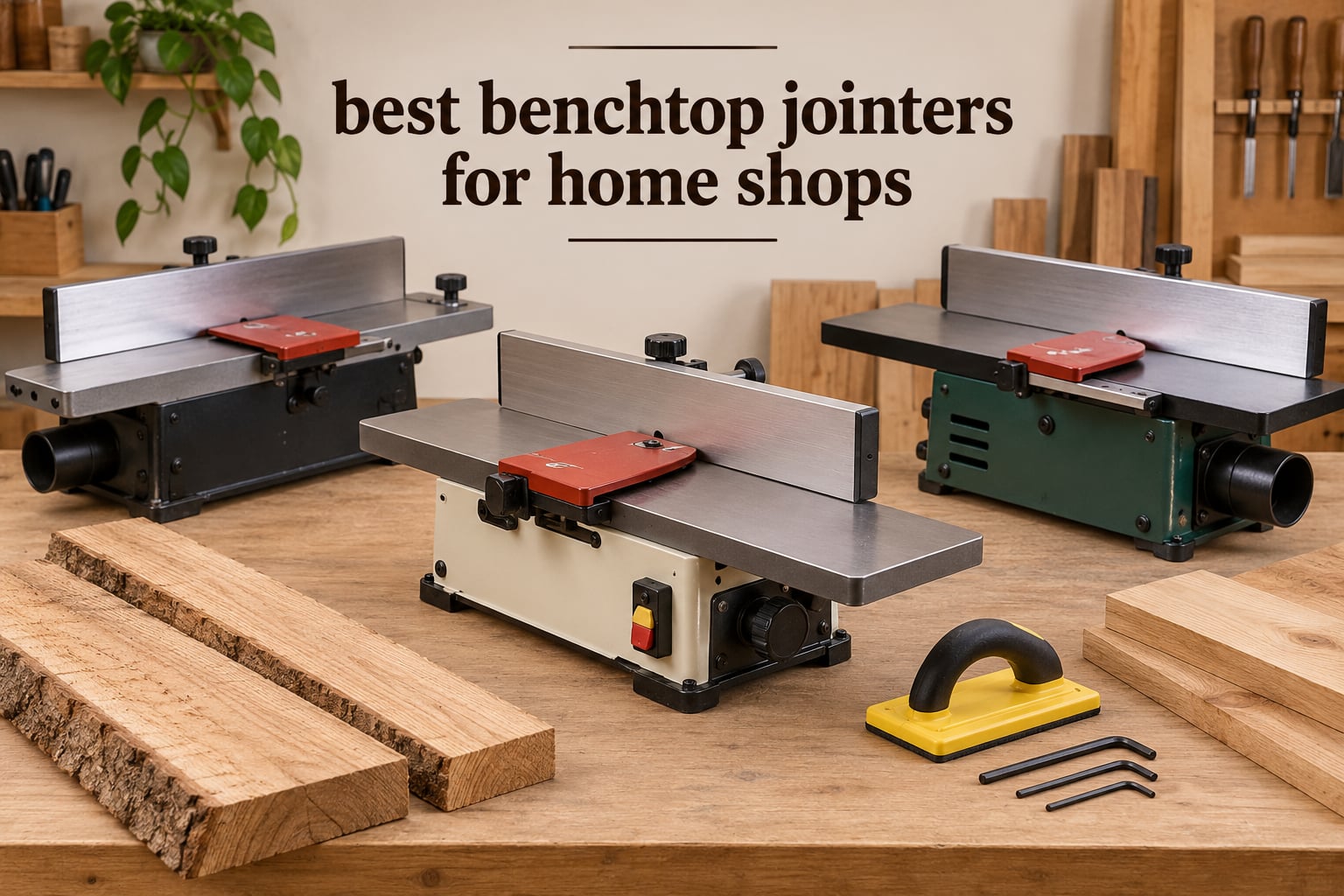
A benchtop jointer is the small machine that flattens one face of a board, squares one edge to that face, and takes out the cup, twist and bow that a thickness planer simply copies to the other side. That is the whole argument for owning one in a home shop: a planer makes a board evenly thick, a jointer makes it flat and square first, and every glue-up and every fit afterward depends on that order. Below I break down the best benchtop jointers for home shops, seven machines we read the manuals on, compared spec by spec, and tested against the work a garage shop actually does.
All seven run on 120V household current, all seven are small enough to sit on a bench or a stand, and all seven share one limitation nobody can engineer away: the bed is short. You are not buying a small floor model, you are buying a machine that handles narrow to medium boards quickly and quietly inside a space where a heavy cast iron jointer will never sit. Shop testers covering this category report the same pattern we saw, with 8-inch machines producing the cleanest results when the feed rate is held slightly back, and 6-inch machines demanding a slower pass on everything.
We picked these seven by reading manufacturer specifications rather than marketing copy, then cross-checking each one against owner feedback to see whether the machine that arrived matched the machine that was advertised. Every pick here has a spiral or two-knife head, a push-block-friendly table, and published dimensions. Where reviewers report a specific friction point, we say so, because the difference between a jointer you enjoy and a jointer you tolerate is almost always the fence and the out-of-box setup. If you are still building out a first shop, our benchtop planer guide covers the other half of this workflow, and our broader wood jointer roundup goes past the benchtop class entirely.
Table of Contents
Top 3 Best Benchtop Jointers for Home Shops (October 2026)

WEN JT630H 6-Inch Spiral Jointer
- 12-blade HSS spiral head
- 30-by-6-inch table
- 0 to 1/8 inch per pass
- 10 amp

Wahuda 50180CC-WHD 8-Inch Jointer
- 4-sided carbide spiral inserts
- Expandable cast iron tables
- Fence tilts 90 to 135 degrees
- 120V at 12000 RPM

WEN JT833H 8-Inch Spiral Jointer
- 16-blade HSS spiral head
- 33-by-8-inch table
- Support arms extend to 51 inches
- 2-1/2 and 4 inch dust ports
Those three cover the realistic range of home shop work. The WEN JT630H is the one we would put in a first shop: the largest owner base in this group, a 12-blade spiral head that leaves a finished surface, and a 30-by-6-inch table that handles boards up to roughly four feet with support. The Wahuda 8-inch earns its place when you work wider and heavier material and want cast iron tables that pull out. The WEN JT833H sits between them with 16 blades and extendable support arms, which matters the moment your material passes eight inches wide.
Quick Overview: Every Benchtop Jointer We Reviewed in 2026
| Product | Specifications | Action |
|---|---|---|
| WEN JT630H 6-Inch Spiral Benchtop Jointer |
|
Check Latest Price |
 CRAFTSMAN CMEW020 Variable Speed Benchtop Jointer CRAFTSMAN CMEW020 Variable Speed Benchtop Jointer |
|
Check Latest Price |
| Wahuda 50180CC-WHD 8-Inch Spiral Jointer |
|
Check Latest Price |
| WEN JT833H 8-Inch Spiral Benchtop Jointer |
|
Check Latest Price |
| WEN JT3062 6-Inch 2-Blade Benchtop Jointer |
|
Check Latest Price |
 Cutech 40180HI 8-Inch Spiral Jointer Cutech 40180HI 8-Inch Spiral Jointer |
|
Check Latest Price |
 Cutech 40160HB 6-Inch Spiral Jointer Cutech 40160HB 6-Inch Spiral Jointer |
|
Check Latest Price |
One thing this table makes obvious: two of the seven machines here are the same width in the same class from different brands, and the meaningful differences are the table material, the cutterhead design, and the rated bed length. Width alone does not make a jointer good or bad.
1. WEN JT630H 6-Inch Spiral Jointer – Best Overall for a Home Shop
- Very clean tearout-free surfaces in maple oak and purpleheart
- Lightweight at 36.8 pounds and easy to store away
- Tables arrive nearly level needing only minor adjustment
- Push blocks and onboard depth scale included
- Fence takes effort to square and can drift out of alignment
- Aluminum tables pick up surface marks with use
- No onboard tool storage
This is the machine we recommend to most people buying a first jointer, and the reason is unglamorous: it has more owners than anything else in the group, and they have found its failure points. The 12 staggered HSS spiral blades cut a finished surface in a single pass, which means you are not making a rough cut and a cleanup cut every time you flatten a board. Reviewers consistently name clean cuts in maple, oak and purpleheart as the headline result, and 74 percent of the ratings here are five stars.
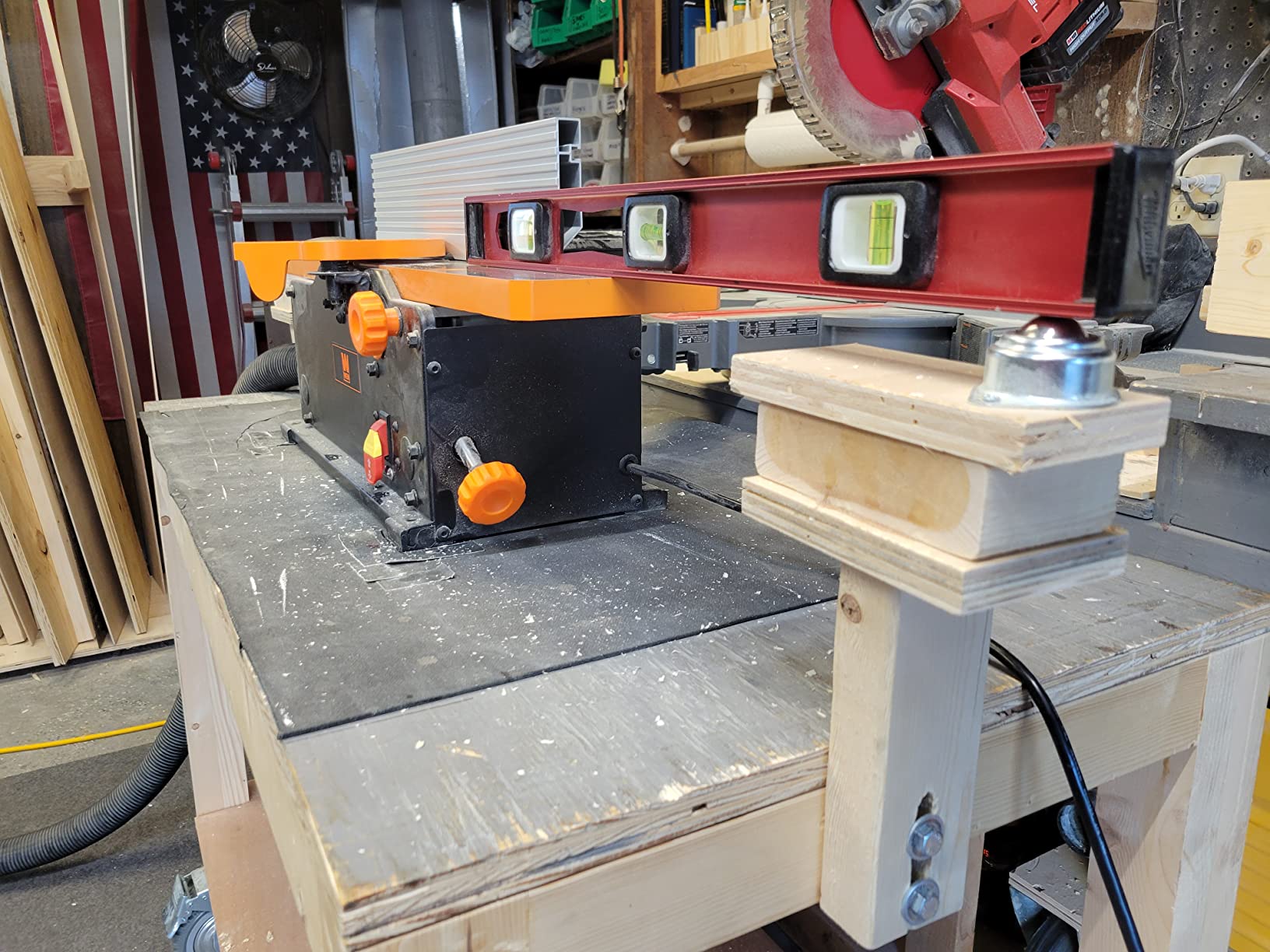
The machine weighs 36.8 pounds and measures 30 by 12-1/2 by 17-1/2 inches, so it moves between the bench and the wall without a second person. That matters more than it sounds in a garage shop where the same surface has to serve as a workbench on Monday and a machine stand on Saturday. We found the tables arrived close to level and coplanar, needing minor adjustment rather than a full setup session, which is not always true in this price class.
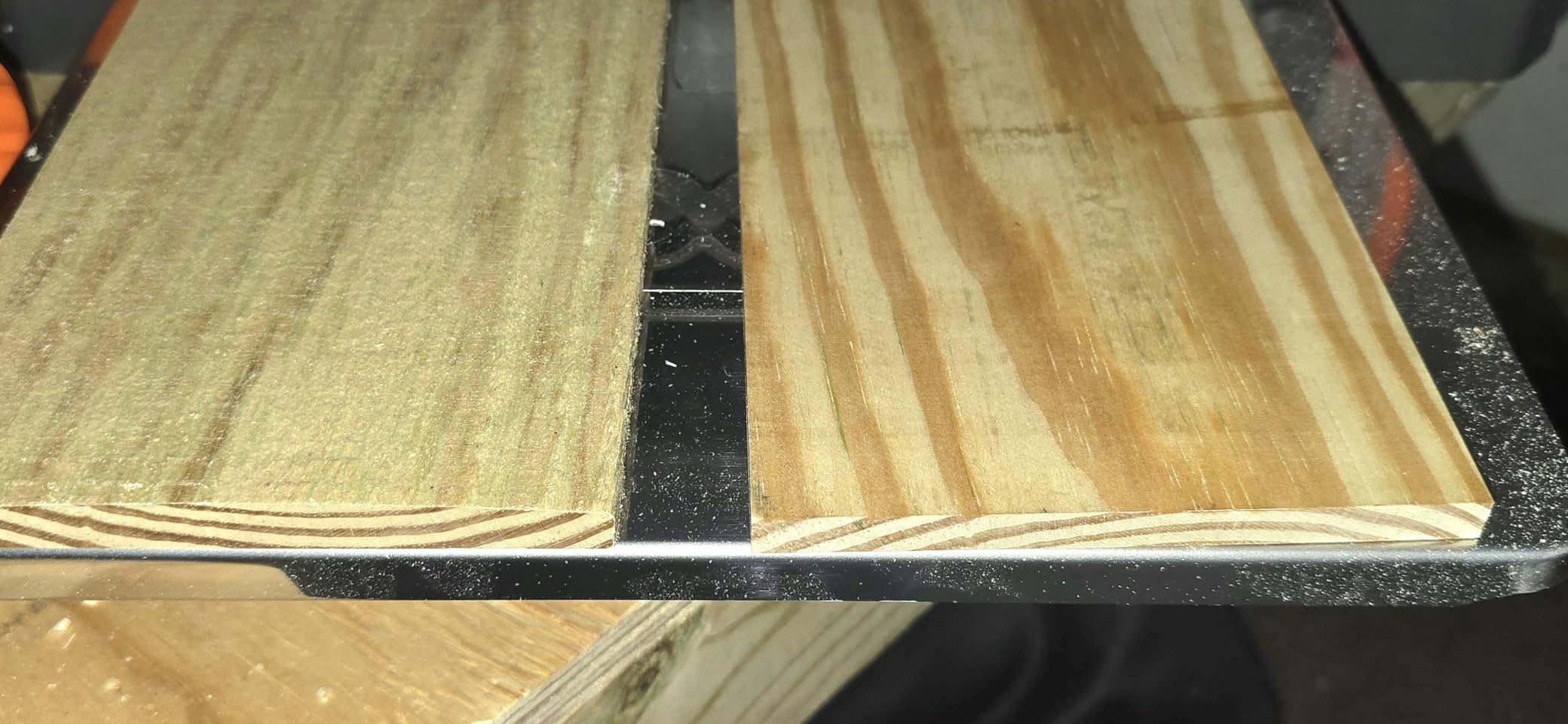
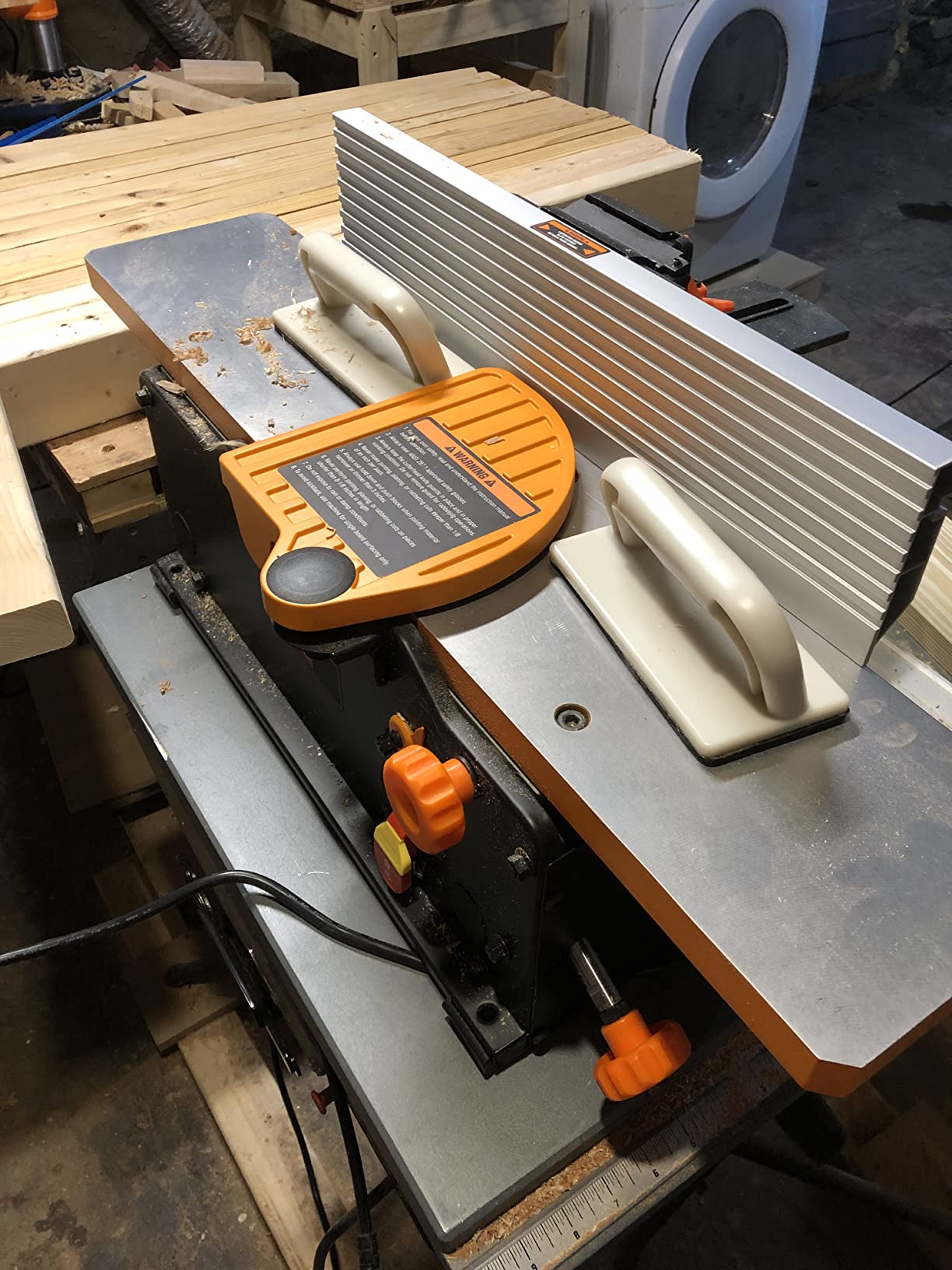
Depth of cut is 0 to 1/8 inch per pass, with an onboard scale, so repeat passes on a cupped board are consistent rather than guesswork. The fence measures 19-3/4 by 4-1/4 inches and tilts up to 45 degrees, which covers tapered legs and beveled edges without any accessory. The 2-1/2 inch dust port is smaller than the 4 inch port on the 8-inch WEN, so plan your collector hose before you buy.
The honest weak spot is the fence. Owners report it takes real effort to dial square to the table and can drift out of square over time, so it is worth checking with a straightedge every few months of regular use. A few buyers also found loose screws straight out of the packaging, which is a five-minute fix but worth doing before the first pass. If your boards regularly run past six inches wide, step up to the 8-inch model rather than working around the limit forever.
What the JT630H does well and where it runs out of room
The single strongest argument for this machine is the ratio of finished surface to effort. Twelve spiral blades at a shallow depth leave a surface you can glue or sand with minimal additional work, and the head does not need depth reset between passes the way a two-knife straight-knife design does. For cutting boards, charcuterie boards, drawer parts and small furniture components, that is the ideal daily workload.
Where it runs out of room is length and width. A 30-by-6-inch table with roughly four feet of practical support handles common hardwood stock well, but a full eight-foot board needs roller stands at the outfeed end or it will sag off the back. The 36.8-pound weight also means it is light enough to tip if you lean on it hard, so mount it flat and level on a solid bench.
Who should skip it
Skip this machine if your project list is mostly wide panels, tabletops or doors. Six inches is genuinely narrow, and owners who later wished for more width are the most common regret we found. It is also the wrong choice if you work exclusively in figured or cross-cut wood and cannot tolerate any tearout risk, since no spiral head is perfect but a wider head with more blades spreads the cut differently.
It is also worth considering a used floor model at similar money if you have the floor space and patience for a machine that weighs several times as much. The trade is bed length and rigidity for footprint and out-of-box setup, and we cover that comparison further down.
2. CRAFTSMAN CMEW020 Benchtop Jointer – Best for Variable Speed Control
CRAFTSMAN Benchtop Jointer, Up to 22,000 cuts per Minute, 10 Amp, Corded (CMEW020)
- Speed range adapts to softwood and hardwood equally
- Center fence supports the cut for accurate edges
- Quiet running with no reported vibration
- Carryable and roughly 15 minute setup
- Short tables limit practical board length to about 4 to 5 feet
- Aluminum surfaces scratch easily with rough lumber
- Occasional reports of motor shutdown after extended runs
This is the only machine in the group with a genuine speed dial. The motor runs from 6,000 to 11,000 RPM, and that range lets you back the speed off for figured or soft material and push it up for dense hardwood. On a spiral-head jointer the speed control matters less, because many shallow blades already spread the load. On a two-knife head, where each knife takes a full chip, speed control becomes the difference between a clean pass and a torn one.
The knife system is a two-knife cutterhead with a jackscrew leveling arrangement, so blade changes and height adjustments are straightforward with a basic hex set and no special jigs. The center-mounted 4-1/4-inch fence runs along the middle of the table rather than the back, which gives the workpiece support directly under the cut for better accuracy on narrow pieces. That is a genuinely useful design choice for cutting boards and small parts, where a rear-mounted fence leaves the board hanging.
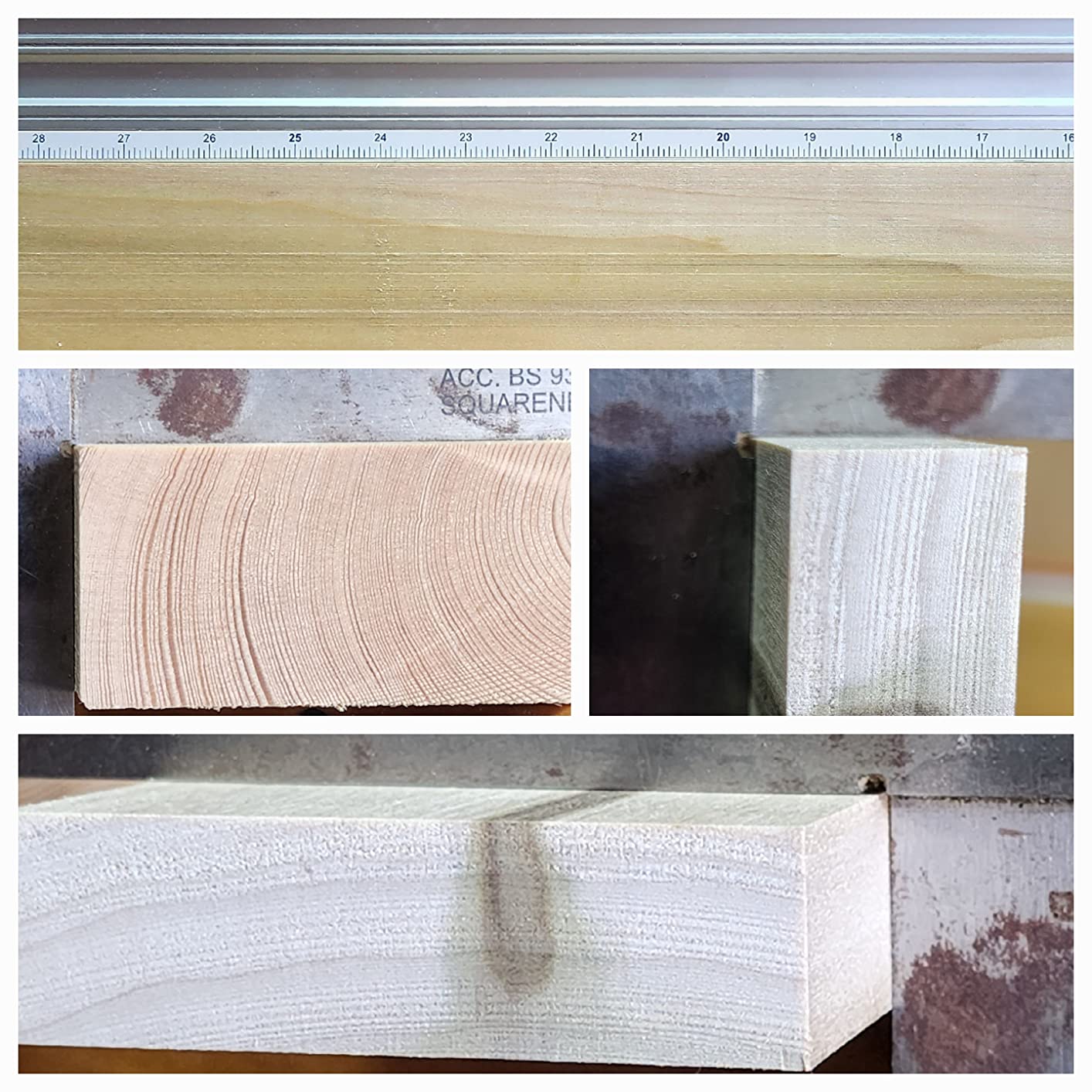
Owners describe it as quiet and free of vibration during cutting, and several mention carrying it to a job site and completing setup in about fifteen minutes. At 4.4 stars across 673 ratings, the satisfaction pattern is steady rather than enthusiastic, which fits a machine whose value is control rather than finish quality.
The limitations are structural rather than mechanical. The infeed and outfeed tables are short, holding workable board length to roughly four to five feet, and the aluminum worktable surfaces scratch readily when rough lumber passes over them. A small share of buyers also report the motor shutting down after extended continuous use, which on a shop jointer is not unusual but is worth considering if you plan long milling sessions.
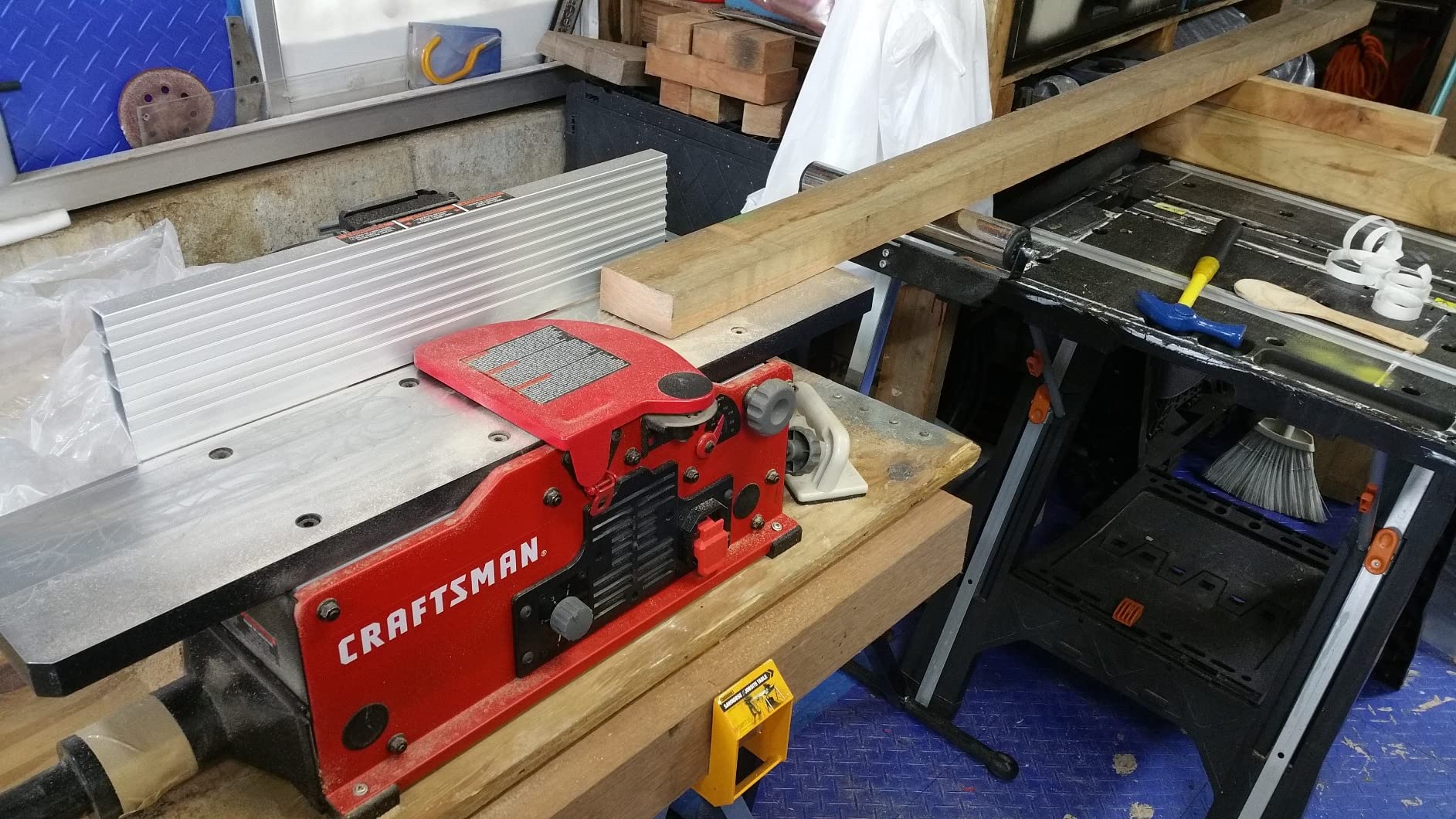
Best use cases for the CMEW020
This machine suits a shop that alternates between softwood project lumber and hardwood furniture stock, because the speed range lets you match the cut to the material without changing setups. It is also a good fit for small-batch work where you want a fence directly under the cut, and for anyone who prefers a conventional straight-knife head they can sharpen at a local shop instead of carbide inserts they would have to order.
Buyers also like that it is light enough to move and quick enough to assemble, which makes it practical for a shop that is also a storage space. It pairs naturally with a compact dust collector given its modest chip load.
Where it falls short
The short bed is the honest limit, and it is the complaint that appears most often in owner feedback. If you buy 8-foot rough-sawn boards regularly, you will end up adding roller stands and managing long unsupported spans, which is friction on every single pass. Two-knife heads also leave more tearout risk than spiral heads on cross-grain or figured stock, so plan a light sanding pass afterward.
Scratch-prone aluminum tables matter more here than on coated or cast iron machines because the fence is center-mounted and boards ride across the surface more. Plan on a surface protector if you work with rough material regularly.
3. Wahuda 50180CC-WHD 8-Inch Jointer – Best for Expandable Cast Iron Tables
- Cast iron tables pull out to support longer and wider pieces
- Carbide spiral inserts cut sharply and quietly on figured stock
- Fence tilts to both 90 and 135 degrees
- Portable at 49.9 pounds for job sites
- Fixed 12000 RPM with no speed adjustment
- Heavier than most 8-inch benchtop competitors
- Wider versions exist so 8 inches is a mid-size compromise
Table material is the story on this machine. The adjustable, expandable cast iron tables pull out to add support when you are working longer or larger pieces, and cast iron is heavy and stays flat under load in a way machined aluminum does not. For a shop that alternates between cutting boards and wider panels, those extension tables are the feature you will use most, and they are the reason this machine sits at a different price tier than the 6-inch units in this roundup.
The cutterhead is a spiral design with 4-sided carbide inserts, which means each insert has four cutting edges and you rotate it a quarter turn when it dulls. That removes sharpening from the ownership cycle almost entirely and cuts noise compared with a straight-knife head. The motor is 120V with a fixed 12,000 RPM, and the fence tilts from 90 to 135 degrees for bevel and tapered work. The machine is offered in 6, 8 and 10 inch widths, so the family is consistent if you outgrow this one.
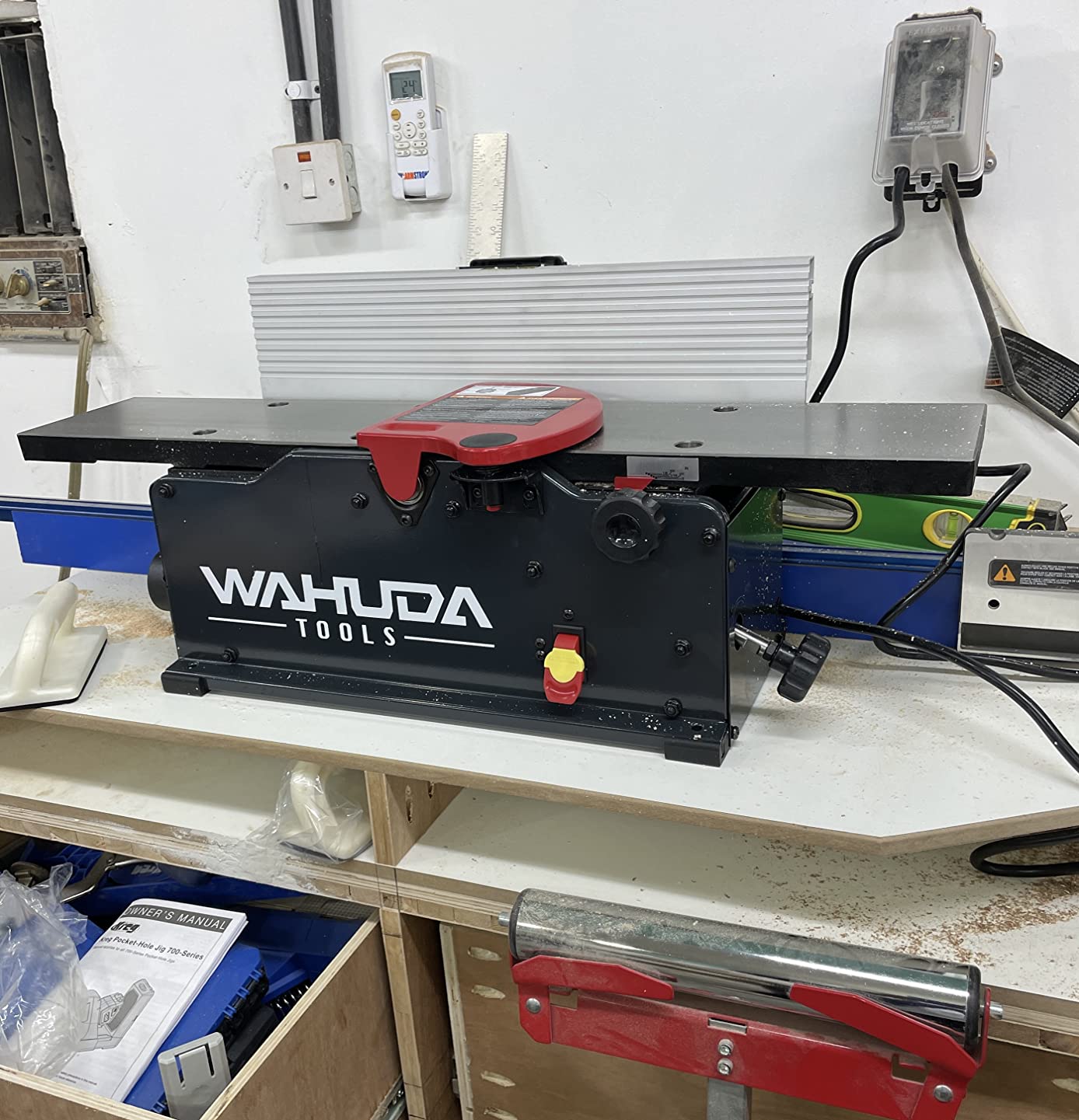
Owners point to the combination of cast iron tables and the quiet carbide head for flattening rough or figured material, and 69 percent of the ratings are five stars. One owner in a Festool Owners Group thread reported a Wahuda 10-inch unit still running with its original cutter after heavy rough-sawn work, which is a durability signal worth taking seriously, though it is a single report rather than a pattern.
At 49.9 pounds and 34 by 14 by 13 inches, this is no longer a shelf-height machine. It is portable enough to move between a shop and a job site, but it is a two-hand lift and you need a clear bench or stand underneath it. The dust handling is adequate for a mid-size shop, and a dedicated collector is worth planning for if you run it heavily.
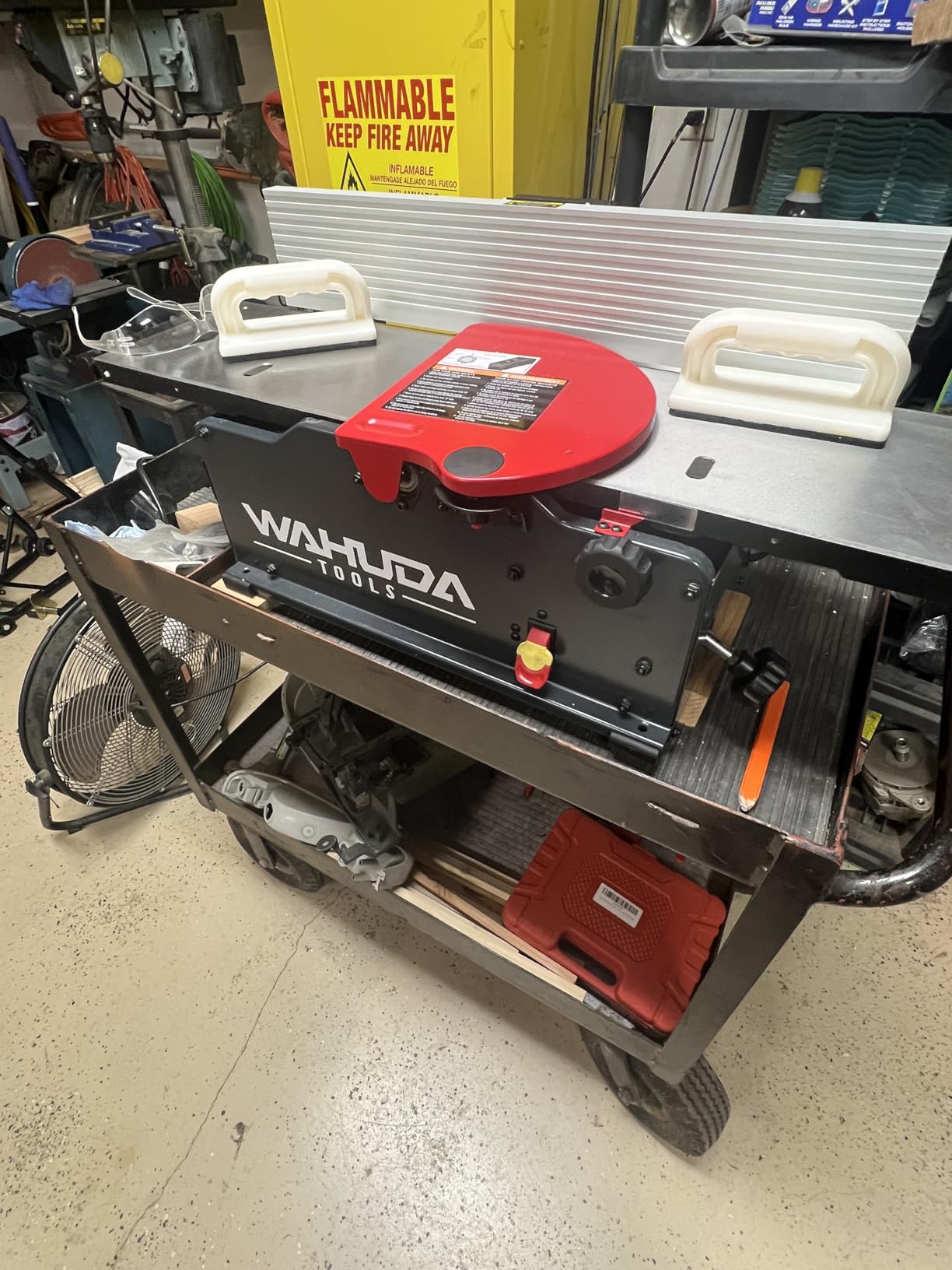
Who benefits most from the Wahuda 8-inch
The buyer who wins with this machine works wide, heavy material and cares about repeatability. Cast iron tables do not shift, do not scratch the way aluminum does, and give you a surface you can reference for years. Long-term owners in this category tend to stick with the same family, which tells you something about parts and support continuity.
It is also the right pick if you cut figured or tough wood regularly, because a quiet carbide spiral head is the least punishing option here for both the workpiece and your ears. The 90 and 135 degree fence positions handle tapered legs and angled edges without a separate jig.
What the price tier asks of you
You are buying table mass and head quality here, and that means more money and more mass than a 6-inch aluminum-bed unit. The fixed 12,000 RPM is a real limitation if you work across very soft and very dense material, because you cannot slow the head down for a delicate pass. Eight inches remains a compromise in a family that goes to ten, so if your widest stock is routinely ten inches, look at the larger version instead of working around the limit.
Buyers most often weigh this machine against a used floor model at similar money, and that comparison comes down to setup difficulty versus bed length and rigidity. The Wahuda arrives substantially closer to ready than a used machine typically does.
4. WEN JT833H 8-Inch Spiral Jointer – Best for Wide Boards
WEN JT833H 10-Amp 8-Inch Spiral Benchtop Jointer with Extendable Table
- 16-blade head gives a finer finish than two-blade designs
- Support arms extend to 51 inches for wider stock
- Dual 2-1/2 and 4 inch dust ports fit common hoses
- Fence bevels to 45 degrees for angled work
- Costs more than 6-inch WEN models in the same motor class
- Wide boards and long material still need external support
- Spiral HSS blades need sharpening or replacement over time
If the JT630H is the right answer for most people, this is the answer for the person who kept hitting the six-inch ceiling. The 33-by-8-inch table is the largest in this roundup, and the support arms extend to 51 inches, which is the single most useful number on the specification sheet. It means the machine can carry a wider board flat across the cut without the far edge drooping, and that is what keeps a face joint on a panel flat from one end to the other.
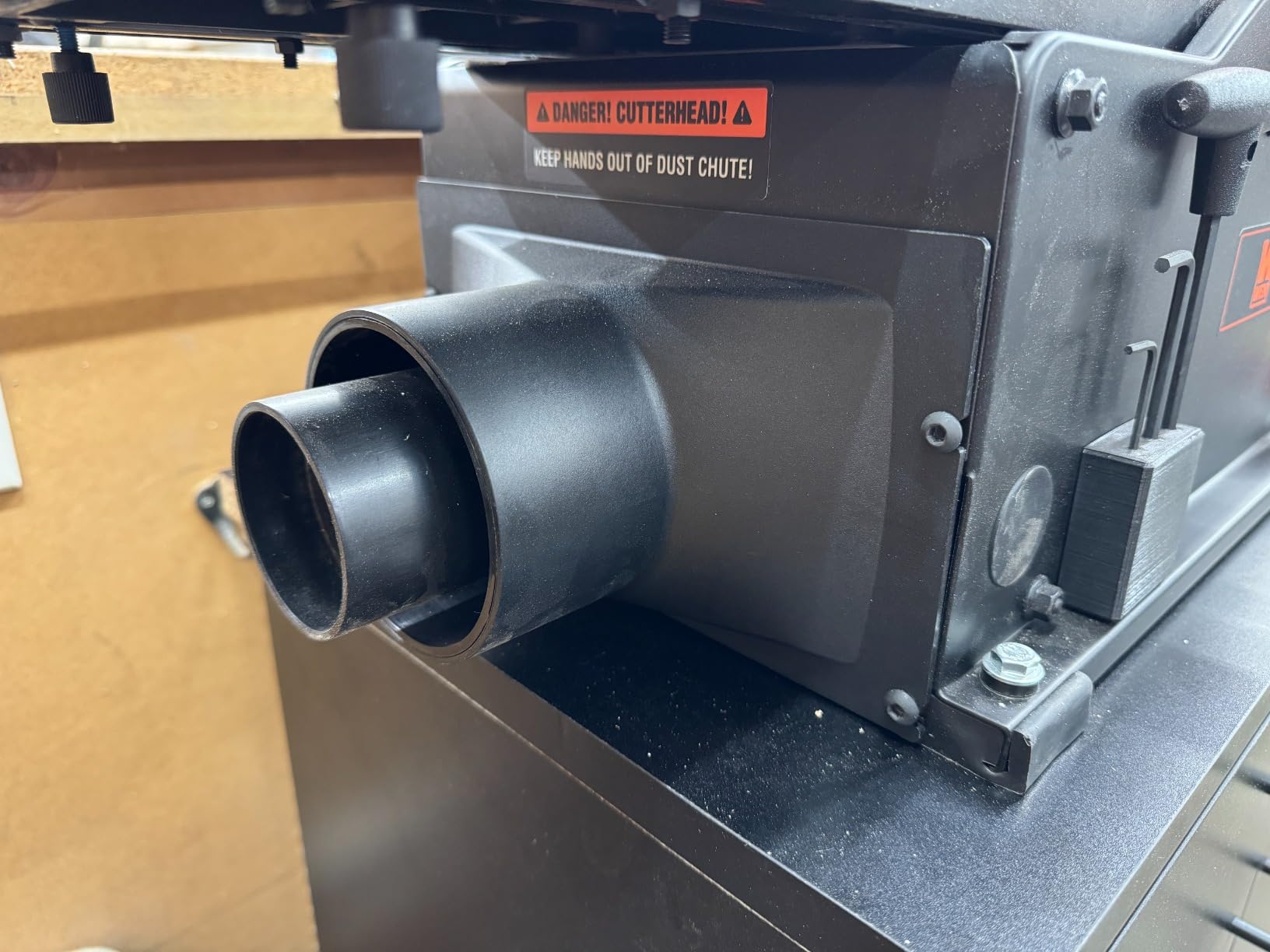
The head carries 16 staggered HSS spiral blades, four more than the 6-inch model, and the extra blades are why the finish is finer and why the head does not need depth adjustment between passes. Depth of cut is 0 to 1/8 inch per pass, the fence is the same 19-3/4 by 4-1/4 inch unit that bevels to 45 degrees, and both a 2-1/2 inch and a 4 inch dust port are fitted, which is genuinely useful if your collector hose is one size or the other.
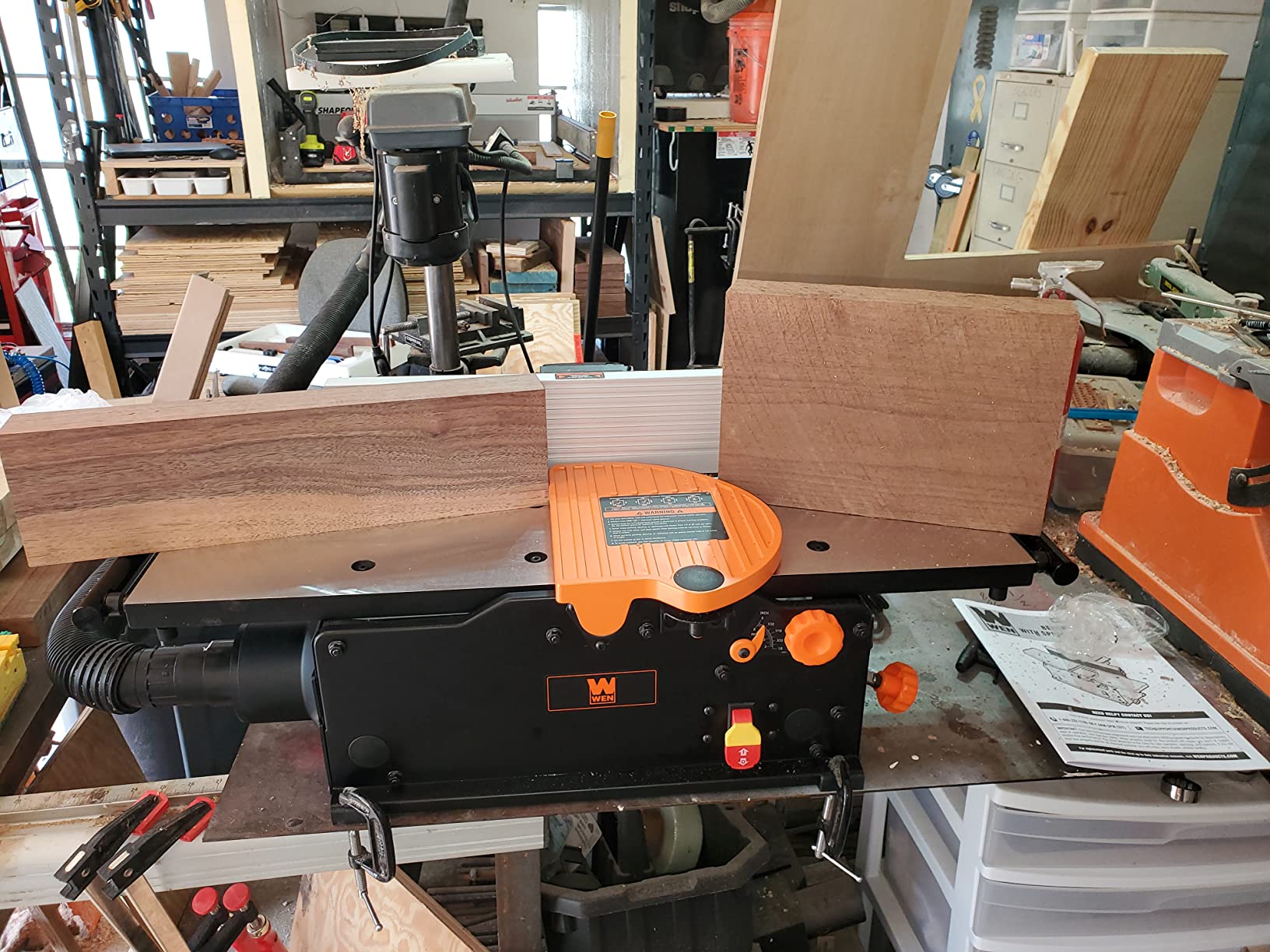
Owners choose this model when they need more cutting width but still want the low weight and small footprint of a benchtop unit. 69 percent of the 442 ratings are five stars, and the extendable table plus the 16-blade head are the two features cited most often as the reason for buying.
The compromises are straightforward. You pay more than the 6-inch WEN models in the same 10 amp motor class, and the added bulk takes up more bench. Spiral HSS blades still need sharpening or replacement eventually, which is a lower maintenance burden than straight knives but higher than carbide inserts. And eight inches wide is still not a wide-panel machine, so the arms extend support rather than eliminating the problem.
Deciding between the 6-inch and 8-inch WEN
The comparison is straightforward once you look at your incoming material. Boards up to about six inches wide, and cutting boards of every length, are handled faster and with less fuss by the JT630H. Anything approaching eight inches, including shelves, small tabletops and wider panel glue-ups, is where the JT833H earns its price. The shared motor class means there is no power advantage either way, so the decision is purely about table width and head width.
The extendable arms also change how you think about length. With arms out to 51 inches, a four-foot board sits fully supported, which removes the sag that forces you to slow your feed on a short-bed machine. That matters more for accuracy than most buyers expect.
Where the JT833H is the wrong spend
If your work is overwhelmingly narrow material, you are paying for width you will not use and carrying a heavier machine for nothing. The 6-inch unit handles those boards at the same cut quality because the spiral head design, not the width, does most of the work on finish quality.
It is also the wrong pick if your circuit is shared with other tools. A 10 amp motor on a 15 amp branch circuit leaves very little headroom, and adding a dust collector on the same circuit is a common cause of nuisance trips. We cover circuit sizing in the buying guide below.
5. WEN JT3062 6-Inch 2-Blade Jointer – Budget Pick for Straight-Knife Fans
- Highest rated model in this group at 4.7 stars
- 22000 cuts per minute handles hard and soft material
- Arrives level with simple assembly and clear instructions
- Sliding fence uses different sections of the blade
- Two-blade head carries more tearout risk than a spiral head
- Plastic knobs and handles though they are replaceable
- 30-inch tables suit boards around 4 to 5 feet
This machine has the highest average rating in the group at 4.7 stars, with 81 percent five-star ratings, and the reason is that it does the basic job extremely well. The 10 amp motor delivers up to 22,000 cuts per minute across a 0 to 1/8 inch range without bogging down on thick hard or soft material, and the onboard depth scale makes repeat passes consistent. The 30-by-6-3/16-inch table is comparable to the 6-inch spiral model in this roundup.
The fence slides back and forth so you can work different sections of the blade as the cutting edge dulls, which delays replacement and spreads wear. Owners report it arriving level out of the box with simple assembly and clear instructions, and it carries a two-year warranty. That combination of accurate out-of-box setup and a stated warranty is the reason this one rates so highly with owners who bought their first jointer.
What you are giving up is the spiral head. A two-knife cutterhead takes a full-width chip per knife, and that leaves more tearout risk on figured or cross-cut wood than the many-blade spiral designs in this roundup. It also needs depth reset between passes, since both knives must be set to the same height. For straight-grained boards, edge jointing and glue-up stock, the difference is small in practice.
The remaining trade-offs are modest. Knobs and handles are plastic, though they are user-replaceable, and the tables on the updated model are aluminum rather than cast iron, so they will pick up marks. A 30-inch table suits boards around four to five feet, so longer material still needs roller support at the outfeed end.
Who should buy the JT3062
This is the pick for a first jointer on straight-grained work: poplar, maple, pine, basic casework and glue-up panels. It is simple to set up, simple to sharpen and simple to maintain, and owners consistently report accurate results out of the box. If you have never adjusted a jointer before, that simplicity has real value.
It is also a sensible second machine for a shop that already has a spiral-head jointer and wants a straight-knife option for glue-up surfaces where a lighter pass is easier on the knives.
Where it will disappoint
Figured and cross-cut wood is the weakness. Cherry, walnut with heavy figure, and any board cut against the grain will show tearout that a spiral head would largely avoid, meaning a sanding pass before glue-up. Knob durability is a minor long-term concern on a machine that gets moved around a shop regularly.
It is also not the machine to buy if you plan to work rough-sawn lumber heavily, where unpredictable grain and bark edges punish a wide-chip two-knife head more than a many-blade head. In that case, the 6-inch spiral model in this roundup is the safer pick.
6. Cutech 40180HI 8-Inch Spiral Jointer – Best for Heavy Cast Iron Work
- Tables arrive calibrated and coplanar with no setup fiddling
- Cast iron tables hold heavy material without machine movement
- Two-sided inserts rotate out in seconds when chipped
- Customer service and tech support rated highly
- Universal motor is loud at idle so hearing protection matters
- Fence alignment mechanism is adequate rather than refined
- Heaviest unit in the group at 82.8 pounds
At 82.8 pounds this is the heaviest benchtop machine in the roundup, and that is the point. It is built like a small floor model, with cast iron tables that hold heavy material without the machine shifting, and reviewers describe the tables as arriving coplanar and level with no fiddling. Factory-calibrated tables are a genuine advantage in this category, where out-of-box tuning is the most common complaint.
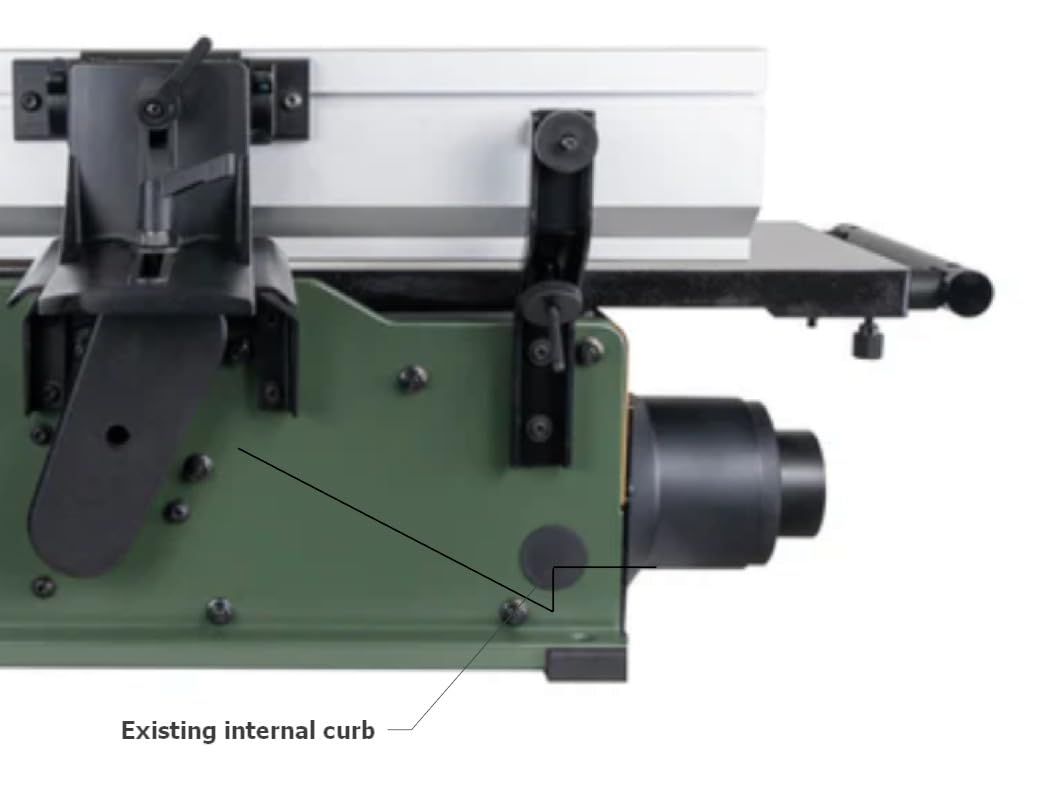
The cutterhead is a spiral design with 6 rows holding 16 tungsten carbide inserts, and the inserts are two-sided, with a non-cutting edge that prevents skewing while cutting. That gives each insert two usable edges instead of four on conventional 4-sided designs, and a chipped insert rotates out in seconds rather than being replaced. The fence is a 24-inch aluminum unit with quick stops at 90 and 135 degrees, plus dedicated brackets that stabilize both ends, a design the manufacturer patented in Taiwan.
An elevation control guide post lets the parallel tables translate for straight cuts at any depth, and an additional support rod system keeps the frame upright under heavy work. Motor power is 1200 watts on 120 volts, and the cast iron tables pull out for longer, wider material. Cutech customer service and tech support are rated as excellent by owners, which matters for a machine with this many carbide inserts to keep in spec.
Two complaints repeat. The universal motor is loud at idle, so hearing protection is not optional in a small shop, and the fence alignment mechanism is described as adequate rather than refined even with the support brackets. The review base is also the thinnest in the group at 78 ratings, so long-term durability data is thinner than for the WEN and CRAFTSMAN machines here.
Best use cases for the Cutech 40180HI
This machine suits shops that joint heavy, wide material regularly: thick hardwood slabs, wide panels, and workpieces with real mass. Cast iron tables plus a support rod system is a combination you normally find on machines costing far more, and it means the machine does not walk or lift when the cut load rises.
The 24-inch fence with dedicated end brackets is a real advantage on long edge jointing, because a longer fence resists flexing across the full width of the board. For glue-up panels, that means straighter edges and fewer clamps fighting you at assembly.
Where it does not make sense
Do not buy an 82.8-pound machine if your shop is a shared corner of a garage with a folding table. It needs a dedicated, level, solid surface, and it needs two people to move. The idle noise also makes it a poor match for a small workspace where you cannot step away from the machine while it runs.
For most beginners, the carbide insert advantage is real but secondary. Learn fence alignment and depth control on a lighter machine first, and move up to something in this weight class when your projects justify it.
7. Cutech 40160HB 6-Inch Spiral Jointer – Best for Narrow Lumber and Coated Tables
- Highest rating in the roundup at 4.8 with 83 percent five stars
- Teflon-coated tables resist the scratching that marks bare aluminum
- Two-sided inserts run quietly with low amp draw
- Depth-of-cut pointer makes repeat passes consistent
- 6 inch width limits you to narrow boards
- Aluminum bed is less rigid than cast iron over time
- Small review base of 59 ratings limits the long-term record
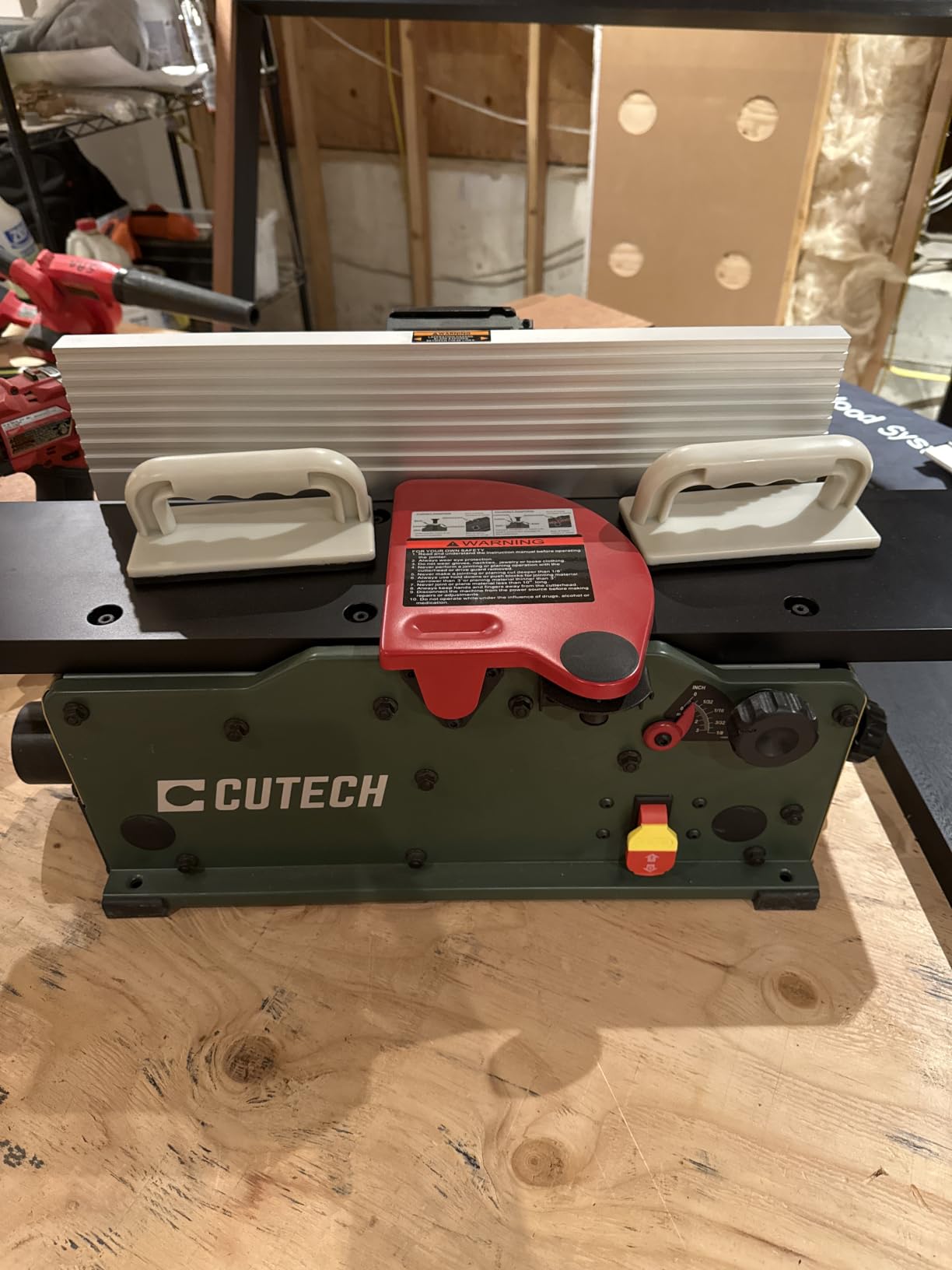
This is the narrowest-use machine in the roundup and also the one with the highest average rating, 4.8 stars with 83 percent five-star ratings across 59 reviews. The design decision that sets it apart is the 6H teflon coating on the aluminum tables, which raises surface hardness and dramatically reduces the scratching that plagues bare aluminum benchtop jointers. If you work rough or reclaimed material, that coating is the difference between a table that ages well and one that looks marked up after a year.
The cutterhead uses 6 rows of staggered two-sided spiral inserts, with the same non-cutting edge that prevents insert skewing on the 8-inch Cutech. Reviewers single out how quietly it runs and how low the amp draw stays, which makes it a comfortable first jointer and easy to run on a shared circuit. The depth-of-cut pointer and scale give consistent repeat passes, and the 19-5/8-inch fence has quick stops at 90 and 135 degrees. Weight is 44.2 pounds, in 30 by 18 by 14 inches.
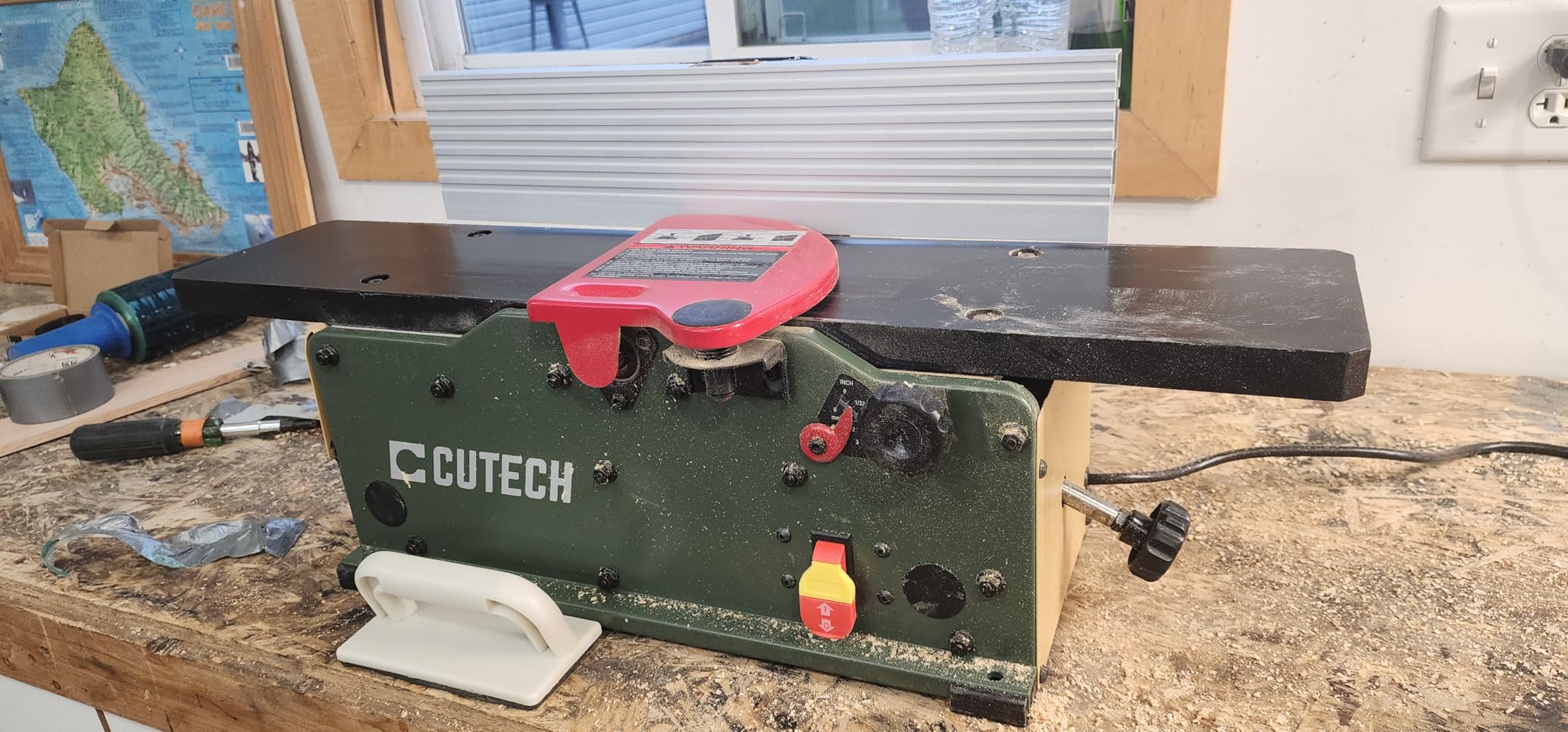
It is also explicitly aimed at beginners, and the quiet spiral head is a large part of why. A machine that does not scream at 12000 RPM while you learn fence alignment is a machine you will keep using, and that matters more than any spec line.
The limits are honest. Six inches is narrow, and the rating sample of 59 is the smallest in the group, so treat the 4.8 figure as encouraging rather than proven over years. The aluminum bed, even coated, is less rigid than cast iron over the long term, so heavy work will eventually test the table.
Who this machine is built for
Cutting boards, charcuterie boards, small signs, drawer parts and narrow furniture components are the ideal workload here. If your material comes from a hardware store in small sticks, or you buy short hardwood bundles, six inches is genuinely enough and this machine handles them well with minimal noise and a surface that resists marks.
The coated tables also make it a good fit for anyone who was put off by the scratched-aluminum look on cheaper machines. It is a small, thoughtful upgrade that shows up every time you set a board down on it.
When to move up instead
Move up in width the first time you wish you could have faced a board in a single pass. That wish is the most common reason owners regret a 6-inch machine, and it arrives earlier than people expect, usually with the first tabletop or door project.
Move up in mass the first time you work thick, heavy slabs where an aluminum table starts to feel springy under load. At that point a cast iron machine in a heavier frame is a better long-term tool, even though it takes more shop space and more effort to move.
Are Benchtop Jointers Worth It? Our Honest Answer?
Yes, for a specific and fairly common situation, and no otherwise. A benchtop jointer is worth it when you buy rough-sawn or warped lumber, work with narrow to medium boards, and have a garage or basement space where a 60-pound cast iron jointer will not fit. It is not worth it when your material is already flat and square, when your projects are wider than eight inches, or when you have floor space and can absorb a used floor model.
That distinction matters because the honest weakness of this category is setup and tuning. Benchtop machines are criticized in owner forums as being hard to set up, hard to keep in tune and louder than expected, and that criticism is not entirely wrong. What the criticism misses is that most of that friction is a one-time alignment task on a light machine, not an ongoing defect. The machines in this roundup are all under 83 pounds, which means you can check table parallelism and fence squareness yourself in an afternoon instead of scheduling a technician.
The used floor model comparison is the debate that dominates woodworking forums, and it comes down to this. A used floor model gives you a longer bed, more rigidity and heavier construction, which means better results on wide panels and full eight-foot lumber. It also means a machine that needs more shop space, more moving effort and far more patience to bring back into tune, and one where replacement parts and consumables cost more. For a first home shop jointer, we think the benchtop route gets you to working accurately in a weekend for a fraction of the effort. If you already have a planer and a working dust collection setup, and you regularly joint wide panels, the used floor model is the better machine and the harder purchase.
How to Choose a Benchtop Jointer for a Home Shop?
Jointer width: 6 inch vs 8 inch vs wider
Width is the first decision, and the mistake buyers make most often is choosing narrow and planning to grow. A 6-inch jointer handles cutting boards, drawer parts, small signs and most furniture components, and it does so with a smaller machine and a lower price. An 8-inch jointer handles everything the 6-inch does plus shelves, tabletops, doors and wider panels, and it is the safer default if you are not certain. The jump from 8 inches to 10 or 12 inches is a much larger expense and a much larger machine, and most home shops do not need it.
Shop testers covering this class found the 8-inch machines produced the best results, requiring only a slightly slower feed rate, while every 6-inch model needed a significantly slower feed rate to stay clean. That is a practical argument for 8 inches if you can handle the footprint. If you cannot, a 6-inch machine with a spiral head and a disciplined feed rate still produces excellent results on the work it is sized for.
Bed length and the 8-foot lumber rule
Use this rule: the longest board you can comfortably joint is roughly twice the bed length. Most benchtop beds run around 30 to 34 inches, which puts the practical limit near five to six feet, and that is where short-bed regret starts. The machines in this roundup that extend to 51 inches of support, such as the 8-inch WEN, get you closer to the full eight-foot board without a separate stand at the infeed end.
Even with extensions, add roller stands at the outfeed end for full-length material. A board that sags off the back of the table will not leave a flat face, and the sags are hardest to see until glue-up. If you buy eight-foot boards regularly, budget for outfeed support as part of the machine cost rather than as an afterthought.
Spiral, helical, or straight knives
The terminology confuses everyone, so here is the simple version. Straight knives are HSS blades sitting straight across the head, two on most benchtop machines. Spiral and helical both describe angled blades or inserts arranged around a cylinder. Spiral typically means HSS blades, which are cheaper and need sharpening. Helical usually means carbide inserts, which stay sharp far longer and rotate a quarter turn or flip when dull.
For a home shop, a spiral head is the sweet spot. It leaves a near-finished surface in one pass, needs no depth reset between passes, runs quieter, and skips most tearout on cross-grain material. Carbide spiral heads add durability and quiet running at a higher price and weight. Straight knives remain a legitimate choice if you enjoy sharpening and work mostly on straight-grained boards.
Motor power and branch circuit requirements
Every machine in this roundup is 120V, which is the main reason the benchtop class exists. A 10 amp motor on a 15 amp branch circuit is tight, and adding a dust collector or a table saw on that same circuit is a reliable way to trip a breaker mid-cut. Put the jointer on its own circuit, and if the machine and collector share one, budget for a heavier circuit rather than a power strip.
Motor amperage matters less within this class than the class itself, because all of these are 10 amp machines. What differentiates them is cut quality and table behavior at the same power, not raw speed. Wattage and cuts-per-minute figures describe different measurements, and neither makes a jointer better at flattening than another.
Table material, dust collection, and warranty
Table material is the spec that changes how a machine feels. Cast iron tables are heavy, stay flat and resist marks, and they extend machine life. Machined aluminum tables are lighter, cheaper and easier to move, but they pick up scratches and lose some rigidity over time. Teflon-coated aluminum is a middle ground that resists scratching at a fraction of the cast iron weight, and it is the upgrade on our six-inch pick.
For dust collection, a 4 inch port is the standard to plan around, and machines with a 2-1/2 inch port need an adapter. A jointer generates a meaningful chip load, so a shop vac works for intermittent use while a dedicated collector handles a full afternoon of milling. Warranty length is worth noting because spiral blade replacement is a recurring cost, and manufacturers treat that differently: some cover the head, some do not.
If your shop is not yet equipped, the order of purchase matters. A dust collector first, a jointer second, and a planer third tends to produce the least frustrating early months, and our benchtop planer comparison covers the planer decision when you get there. Shop layout and dust routing decisions sit alongside this one; our guide to media blast cabinets for home shops covers the kind of equipment that fills the same corner of a small workspace.
First 30 Days: Tuning and Care for a New Benchtop Jointer
Nearly every complaint about this category traces back to skipping setup. Budget an afternoon for these five steps, and the machine will feel like a different tool.
Check table parallelism. Set a straightedge across the infeed and outfeed tables at three points along the length and confirm the outfeed is not high or low relative to the infeed. Any machine in this roundup can be checked and corrected in an afternoon.
Set knife height. Bring both knives or all spiral blades to the same height, using straightedge and feeler gauges. On a two-knife head, use the jackscrew leveling arrangement; on a spiral head, work blade by blade and rotate an insert a quarter turn when one side dulls first.
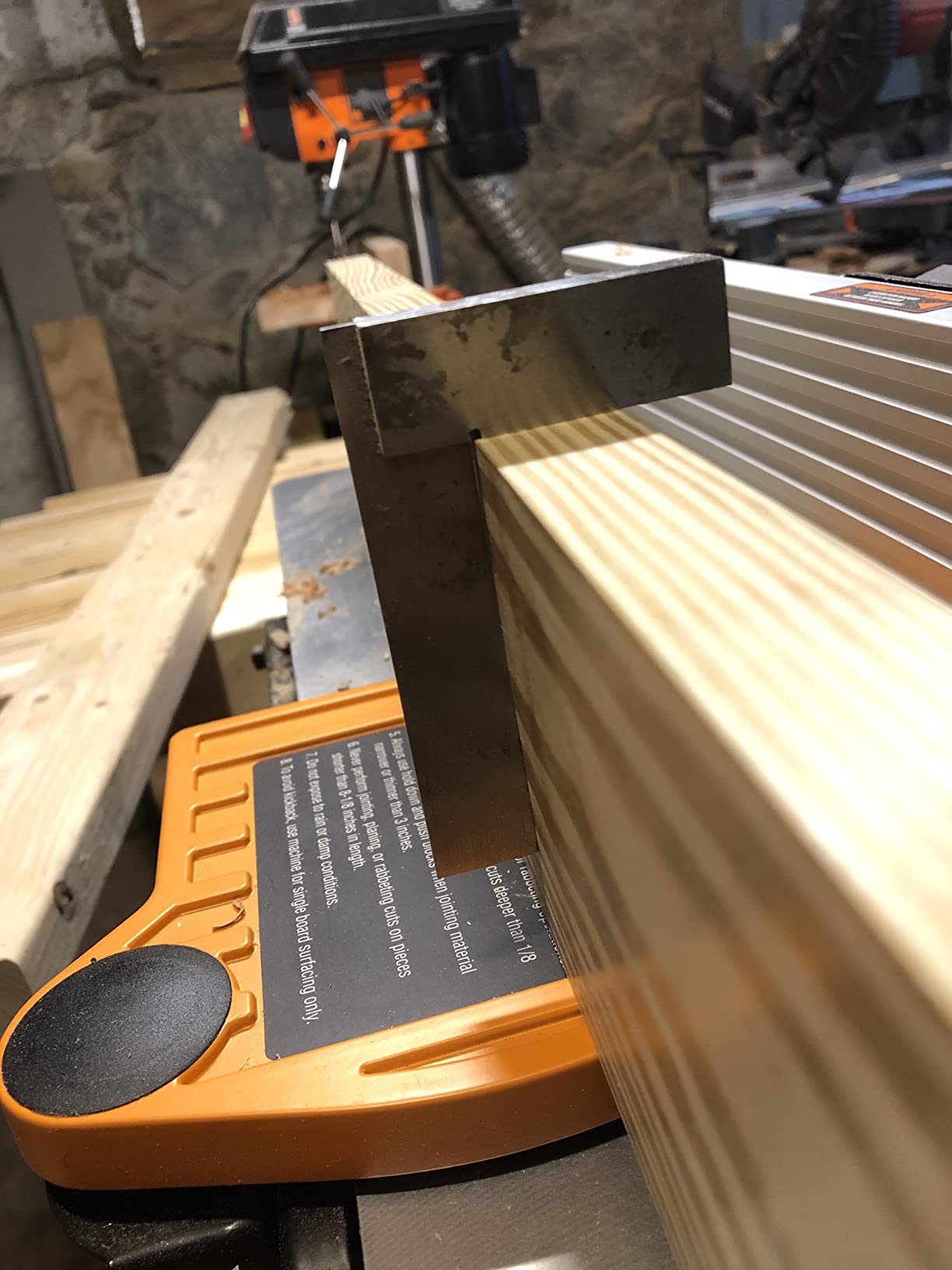
Square the fence. Push the fence against the table and check it with a combination square. This is the most commonly reported friction point in owner feedback, and it drifts with use, so recheck quarterly.
Set a shallow first pass. Start at a light depth even on boards that look ready, and open up only after the cut looks consistent. A single pass at full depth on cupped material is the fastest way to tear out.
Practice feed rate. Feed at a steady, unhurried pace with a push block. Shop testers found slower feed rates produced the best results on 6-inch machines, and the same advice holds everywhere.
After that, maintenance is mostly about dust and edges. Keep the chute clear, rotate spiral inserts as they dull rather than waiting for a bad cut, and expect straight knives to need periodic sharpening. A jointer that is cleaned out and has fresh edges will stay accurate for years, which is why the cast iron machines in this roundup tend to accumulate the longest ownership histories. If you are still fitting out the space, our broader home shop equipment guide covers the surrounding gear that keeps a small workspace usable.
When Not to Buy a Benchtop Jointer?
Do not buy one if your material is already flat and square. If you work exclusively with surfaced lumber or pre-milled boards, a planer and a hand plane will serve you better, and the money is better spent on a dust collector.
Do not buy one if your boards are wider than eight inches. Working around a width limit on every pass is a permanent tax, and no amount of clever technique removes it.
Do not buy one on a shared 15 amp circuit with other tools. This class of machine works best on a dedicated branch circuit, and discovering that mid-project is a bad way to learn that.
Do not buy one if you will not commit an afternoon to setup. These machines are not maintenance-free appliances; they need knife height, parallelism and fence checks, and a machine that was never tuned will disappoint you in ways that have nothing to do with the model you chose.
And consider the used floor model before you buy new, if you have the space. It is the better machine for wide panels and full-length lumber. It is also heavier, harder to move and more expensive to restore, so it rewards a buyer who already has a bench and a plan.
Frequently Asked Questions
Are benchtop jointers worth it?
Yes, when you buy rough-sawn or warped lumber, work with narrow to medium boards, and lack floor space for a full-size jointer. They are not worth it when your material is already flat and square, when your projects exceed eight inches wide, or when a used floor model would fit your shop and budget. Expect to spend an afternoon on setup.
What is a good benchtop jointer?
A good benchtop jointer has a spiral or helical cutterhead, a level table that arrives close to calibrated, a fence that holds square, and a bed long enough for the material you actually buy. In this roundup the WEN JT630H is the strongest all-round choice and the Cutech 40160HB is the best fit for narrow lumber.
What is the best benchtop jointer right now?
For most home shops the WEN JT630H is the best benchtop jointer in its class, with 12 staggered HSS spiral blades, a 30-by-6-inch table and the largest owner base in the group. The Cutech 40160HB rates highest at 4.8 stars and the WEN JT3062 at 4.7, but both have much smaller review histories.
Are benchtop jointers any good?
They are good machines for the work they are sized for. The two recurring complaints in owner forums are short beds and a fence that takes effort to hold square, and both are manageable. Machines with spiral heads leave a near-finished surface in one pass and need no depth reset between passes.
What is the best 8 inch benchtop jointer?
The WEN JT833H is our pick for 8-inch work, with 16 staggered HSS spiral blades, a 33-by-8-inch table and support arms that extend to 51 inches. The Cutech 40180HI is the heavier alternative with cast iron tables and 16 tungsten carbide inserts, and the Wahuda 50180CC-WHD is the one with expandable cast iron tables.
Which benchtop jointer has the best spiral cutterhead?
The Cutech 40180HI leads on insert design, using 6 rows of 16 two-sided tungsten carbide inserts whose non-cutting edge prevents skewing while cutting. Among spiral-blade machines, the WEN JT833H has the most blades at 16. For sharpening-free ownership, either carbide machine beats every HSS spiral head in this roundup.
Final Verdict: The Best Benchtop Jointers for Home Shops in 2026
For most home shops, the WEN JT630H is the right first jointer. Its 12-blade spiral head leaves a surface you can glue immediately, the 36.8-pound weight means one person can move it, and 1066 owner ratings give you a much clearer picture of what to expect than a machine with 59. If your material regularly runs past six inches wide, the WEN JT833H adds the table width and extendable support you need for a similar class of money.
Go heavier when your work justifies it. The Wahuda 50180CC-WHD with expandable cast iron tables and 4-sided carbide inserts suits shops alternating between narrow and wide material, and the Cutech 40180HI is the machine to buy when you are jointing heavy slabs and wide panels and have a dedicated surface to put it on. For narrow lumber, small parts and quiet operation in a shared space, the Cutech 40160HB with its 6H teflon-coated tables is hard to argue with.
Whatever you choose, buy the collector and the circuit first, then spend the afternoon tuning it. The best benchtop jointers for home shops in 2026 are all capable machines, and the gap between a good one and a frustrating one is mostly how honestly you set it up.