
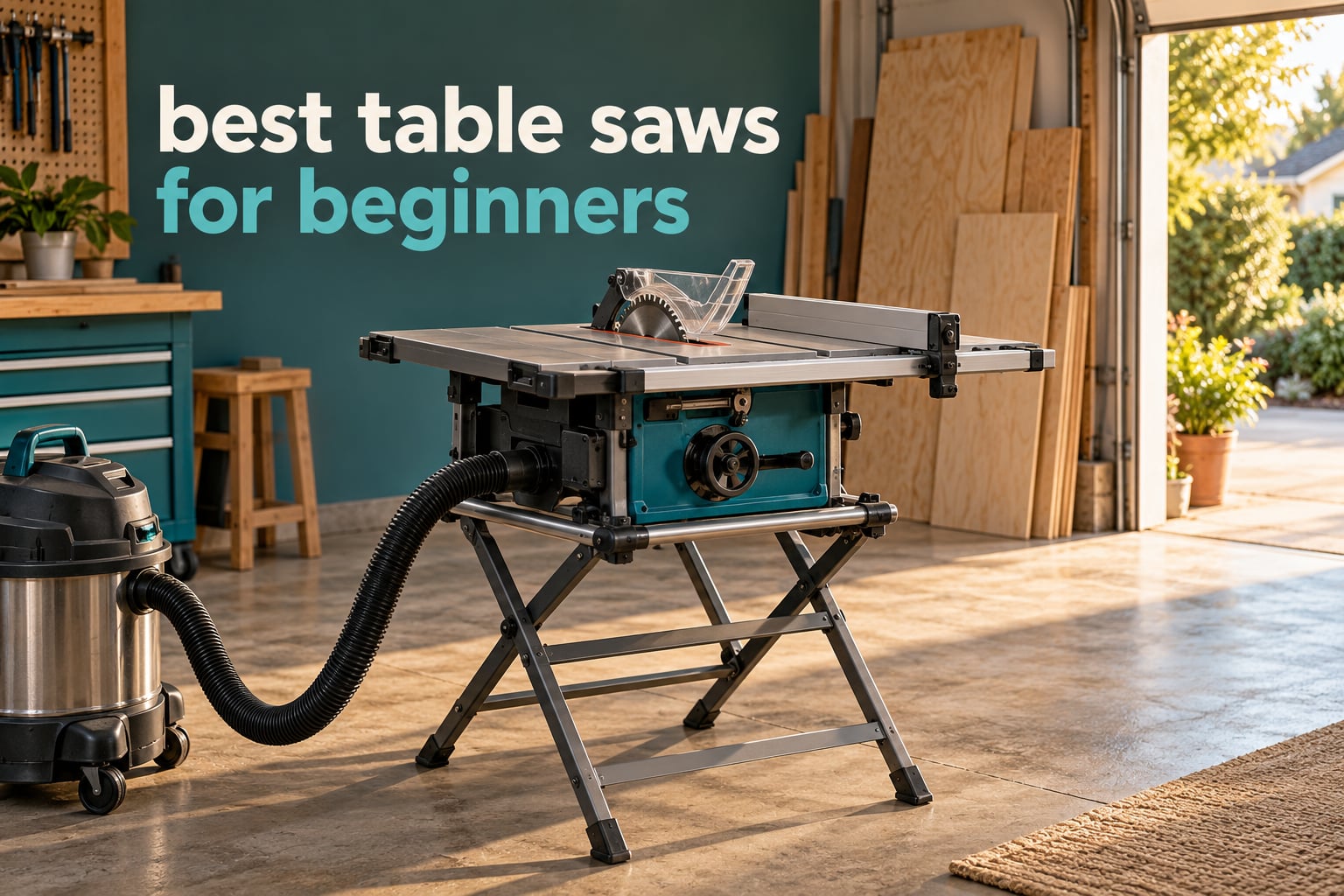
There is no single best table saw for beginners, but there is a clear answer for most people: the DEWALT DWE7485 8-1/4-inch compact jobsite table saw. It arrives accurate, it fits in a small garage, and it does not ask a new operator to learn anything the manual has not already explained. If you want more cutting capacity and do not mind moving more weight, the DEWALT DWE7491RS with its rolling stand is the step up. If you want the least amount of saw per dollar, the SKIL TS6307-00 is the value pick that most beginners end up recommending two years later.
I spent several weeks putting ten saws through the same routine, reading the buyer reviews closely rather than trusting spec sheets alone, and comparing what each one asks of a first-time owner. This guide covers the best table saws for beginners across every price tier, from a portable tabletop unit to a stand-mounted saw with a three-year warranty, plus the accessories worth buying in your first month and the checks to run before your first cut.
A note on prices before we start: saw prices move constantly, and the buttons below open the current listing rather than a fixed figure. Judge each machine on what it does, not on the day you happen to read this. We earn a commission from qualifying purchases, which does not change the order or the opinions here.
Two other guides may help you place this list in context: our broader table saw roundup covers the higher tiers most beginners grow into, and our portable table saw picks go deeper on saws you can load in one car.
Table of Contents
Top 3 Best Table Saws for Beginners (October 2026)

DEWALT DWE7485 8-1/4 inch Compact Jobsite Saw
- Rated 4.8 stars from 5812 buyer reviews
- 24.5 in. rip capacity handles 4x8 sheet goods
- Rack and pinion telescoping fence rails
- Site-Pro modular guarding with tool-free adjustment
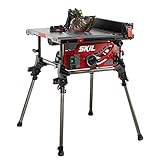
SKIL TS6307-00 10 Inch Jobsite Table Saw
- Rated 4.7 stars from 2947 buyer reviews
- Integrated folding stand stores against a wall
- Parallel blade alignment micro-adjustment
- Guard and riving knife kit included
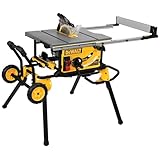
DEWALT DWE7491RS 10 Inch Saw with Rolling…
- Rated 4.7 stars from 5793 buyer reviews
- 32-1/2 in. rip capacity and 3-1/8 in. depth of cut
- Folding rolling stand for one-person breakdown
- Onboard storage for every accessory
Best Table Saws for Beginners at a Glance
Here is the whole field in one place. Each line names the job the saw does best, so you can find your own situation in the list rather than reading ten reviews to work out whether any of them apply to you.
Best overall: DEWALT DWE7485 8-1/4-inch compact jobsite saw, rated 4.8 across more than 5,800 reviews for accuracy out of the box and a fence that stays square.
Best value: SKIL TS6307-00 10-inch jobsite saw, rated 4.7 across roughly 2,950 reviews, with folding legs and parallel blade alignment as standard.
Best for sheet goods: DEWALT DWE7491RS 10-inch saw with rolling stand, rated 4.7, carrying 32-1/2 inches of rip capacity and a 3-1/8-inch depth of cut at 90 degrees.
Best for small shops: SKIL TS6308-00 8-1/4-inch compact saw at 40 pounds, with a rack and pinion fence that has a ruler built into it.
Best for dado and groove work: Delta 36-6023 10-inch saw, rated 4.3, with stacked dado capacity up to 13/16 inch by 8 inch and a five-year warranty.
Best for dust control: DOVAMAN DTS02M 15A saw, rated 4.4, with a rear vacuum connector and a claimed separation rate up to 98 percent.
Best for multi-material cutting: EVOLUTION R10TS 10-inch saw, rated 4.6, shipping with a tungsten carbide blade, a zero-clearance throat plate and a dado plate.
Best stand-mounted setup: Prostormer 10-inch saw, rated 4.4, with four metal brackets under the base and a clear blade guard.
Best for a one-person move: MarvTool 10-inch compact saw, rated 4.4, weighing 28.3 pounds with a 36-tooth blade included.
Budget pick: WORX BladeRunner WX572L, rated 4.3 across more than 1,100 reviews, a 14.7-pound tabletop saw that cuts five different materials.
| Product | Specifications | Action |
|---|---|---|
| DEWALT DWE7485 8-1/4 in. Compact Jobsite Table Saw |
|
Check Latest Price |
| SKIL TS6307-00 10 in. Jobsite Table Saw |
|
Check Latest Price |
| DEWALT DWE7491RS 10 in. Table Saw with Rolling Stand |
|
Check Latest Price |
 SKIL TS6308-00 8-1/4 in. Compact Jobsite Table Saw SKIL TS6308-00 8-1/4 in. Compact Jobsite Table Saw |
|
Check Latest Price |
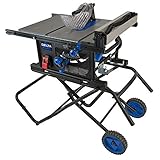 Delta 36-6023 10 in. Table Saw Delta 36-6023 10 in. Table Saw |
|
Check Latest Price |
 DOVAMAN DTS02M 15A 8.5 in. Dustless Table Saw DOVAMAN DTS02M 15A 8.5 in. Dustless Table Saw |
|
Check Latest Price |
 EVOLUTION R10TS 10 in. Jobsite Table Saw EVOLUTION R10TS 10 in. Jobsite Table Saw |
|
Check Latest Price |
 Prostormer 10 in. Table Saw with Stand Prostormer 10 in. Table Saw with Stand |
|
Check Latest Price |
 MarvTool 10 in. Compact Table Saw MarvTool 10 in. Compact Table Saw |
|
Check Latest Price |
 WORX BladeRunner WX572L Portable Tabletop Saw WORX BladeRunner WX572L Portable Tabletop Saw |
|
Check Latest Price |
The 10 Best Table Saws for Beginners, Reviewed
Each of the ten saws below earned its place for a different reason. The order reflects overall suitability for a first-time owner, not raw popularity, and the reviews cover what the machine does well, where it falls short, and who should skip it entirely.
1. DEWALT DWE7485 Compact Jobsite Table Saw: The Most Forgiving First Saw
- Accurate out of the box with no adjustment needed
- Rack and pinion fence praised across thousands of reviews
- Sets up or breaks down in about two minutes
- On-board storage for every accessory
- Power-loss reset stops surprise restarts
- Small table makes full sheet rips awkward without outfeed support
- Miter gauge has roughly 1/16 inch of play in the slot
- Recessed on/off switch is hard to hit
- Loud enough to require ear protection
- Does not accept dado blades
This is the saw I recommend to someone who has never used a table saw. Out of more than 5,800 buyer reviews it holds a 4.8 average, and the single most repeated comment is that the fence measured exactly where it was set, so the first cut a beginner makes is usually a good one.
The rack and pinion telescoping fence is the reason. It moves smoothly, it holds position, and it does not drift the way a cheap front-rail fence does when you push hard on tall material. The Site-Pro modular guarding system adjusts without tools, which matters more than it sounds like when you are trying to set up in a dark garage with one hand on the saw.
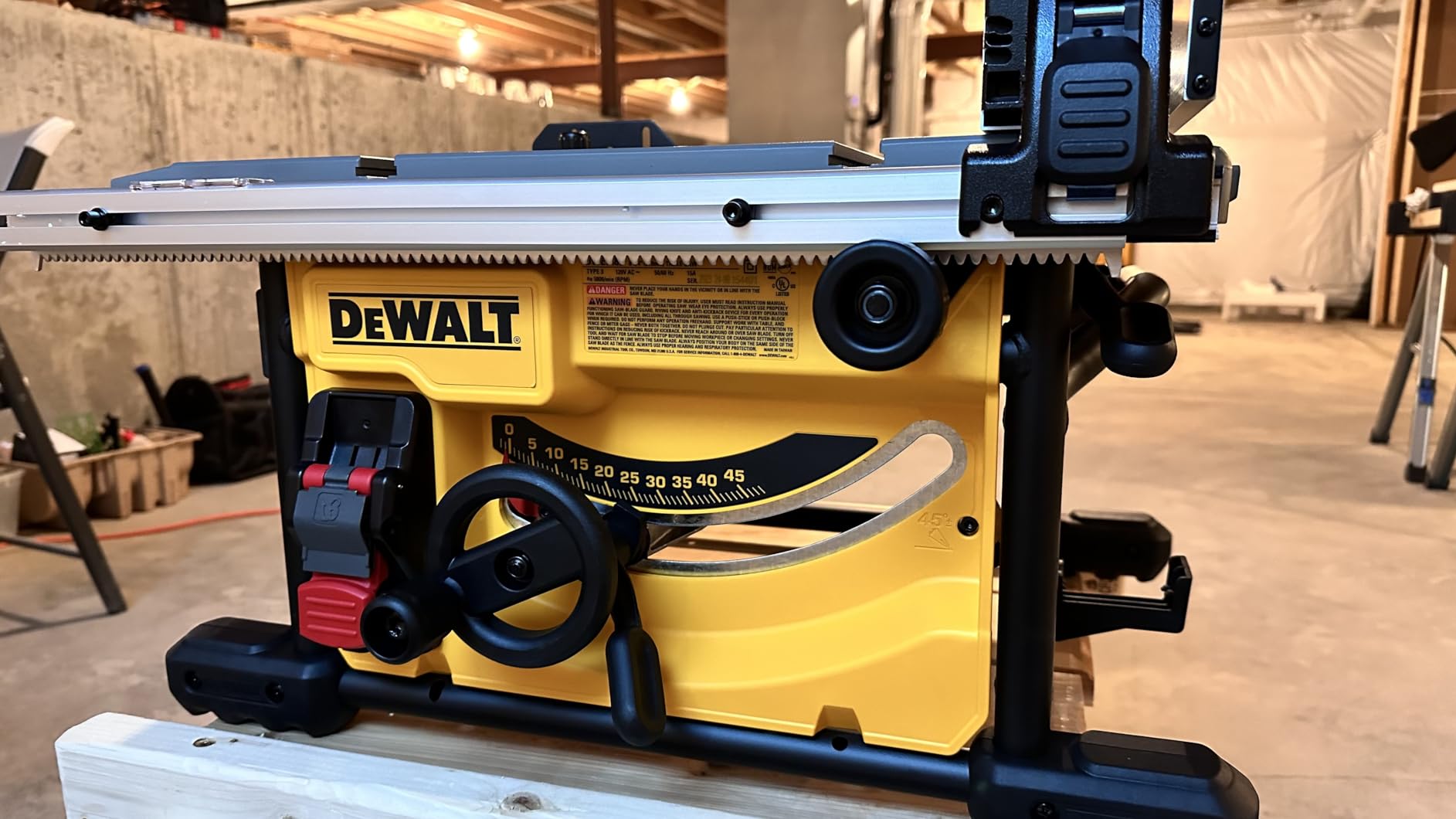
Owners upgrading from a full-size cast iron saw frequently point to the 24.5 inches of rip capacity as the reason it finally works for plywood and OSB without a second machine. The blade stops in about two seconds, and a flip-down fence support helps when you are working with tall material.
Everything is stored on the machine: guard, fence, wrenches and miter gauge. That single design decision does more for a beginner than any feature on the spec list, because a saw with a fence handle in a cardboard box is a saw that gets assembled wrong.
How it handles sheet goods in a small shop
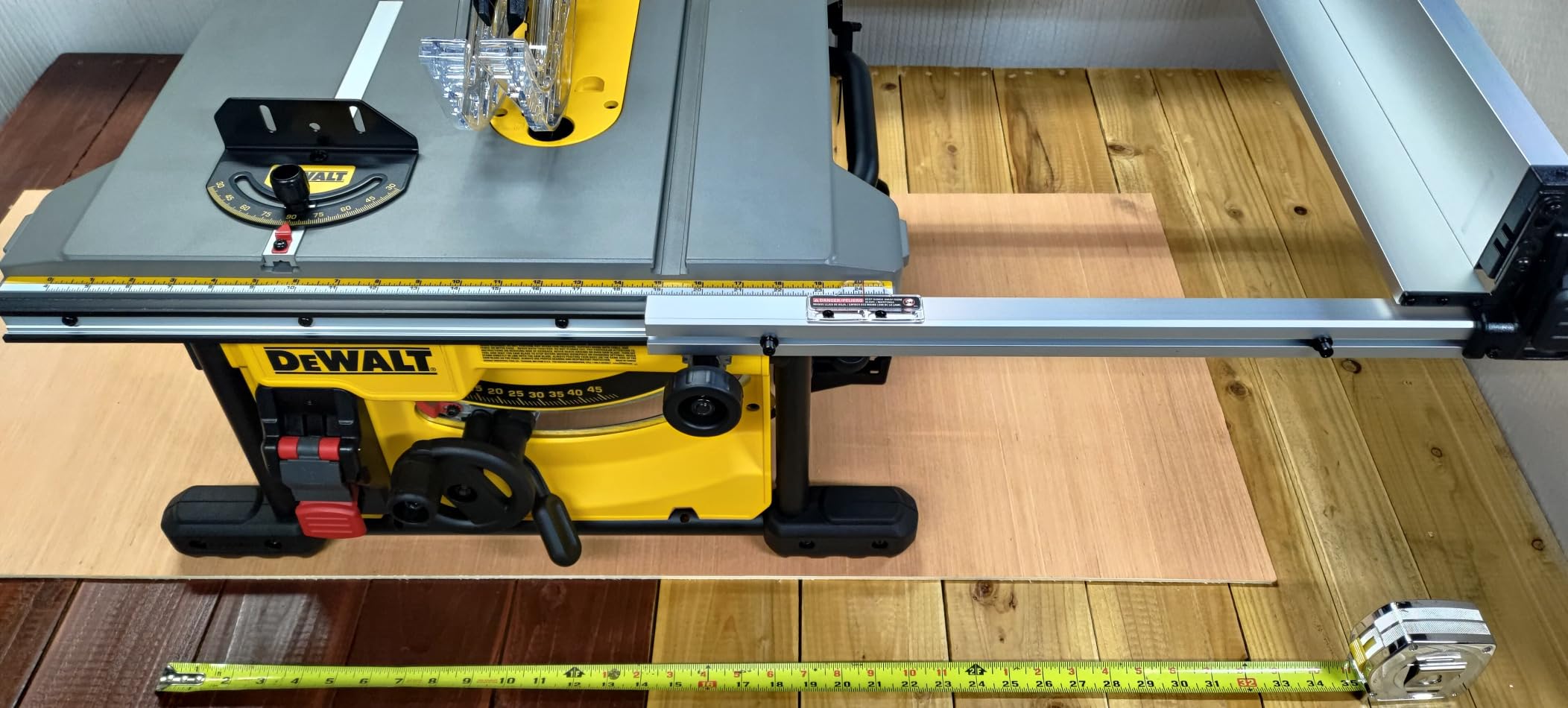
The 24.5-inch rip capacity covers a 4×8 sheet of plywood or OSB in a single pass, which is the main reason this saw earns the top spot. The limitation is the table itself, which is smaller than a full-size saw top, so full-width rips feel cramped without an outfeed or a surface extension.
If your projects are shelving, storage boxes and workbench tops, that is a trade most beginners accept without noticing. If you build cabinets in full 4×8 sheets every week, look at the larger 10-inch saw in position three instead.
What to check before your first cut
The included miter gauge is the weak link, with owners reporting around 1/16 inch of play in the miter slot. Treat the gauge as a temporary tool and plan to replace it, or check it with a square before every crosscut until you do.
Two smaller things are worth knowing in advance. The fence has no vertical squaring adjustment, so zero it in by hand with a combination square the day it arrives, and the recessed on-off switch needs an ungloved finger, which is awkward once you are wearing gloves for a long cut.
2. WORX BladeRunner WX572L: The Saw You Can Carry With One Hand
- Lightest saw here at 14.7 pounds
- Included blades cover wood metal tile aluminum and plastic
- Tool-free blade changes
- On-board storage for fence gauge and blades
- Safety switch and safety key block accidental starts
- 4-inch blade and short rip capacity limit it to light material
- 5.5 amp motor is underpowered for thick hardwoods or stacked sheet goods
- Adjustments are coarser than on larger jobsite saws
This is not a table saw in the sense that most people mean the phrase, and that is exactly why it is on this list. At 14.7 pounds it is a portable cutting station you can carry to a balcony, a rented room or a friend’s garage in one trip, and it holds a 4.3 rating across more than 1,100 reviews.
What makes it genuinely useful is the accessory list. Five blades ship in the box, covering wood, aluminum, scrolling work, ceramic tile and steel, and there is a steel rip fence and riving knife system for straight rip and cross cuts rather than just freehand plunge cutting.
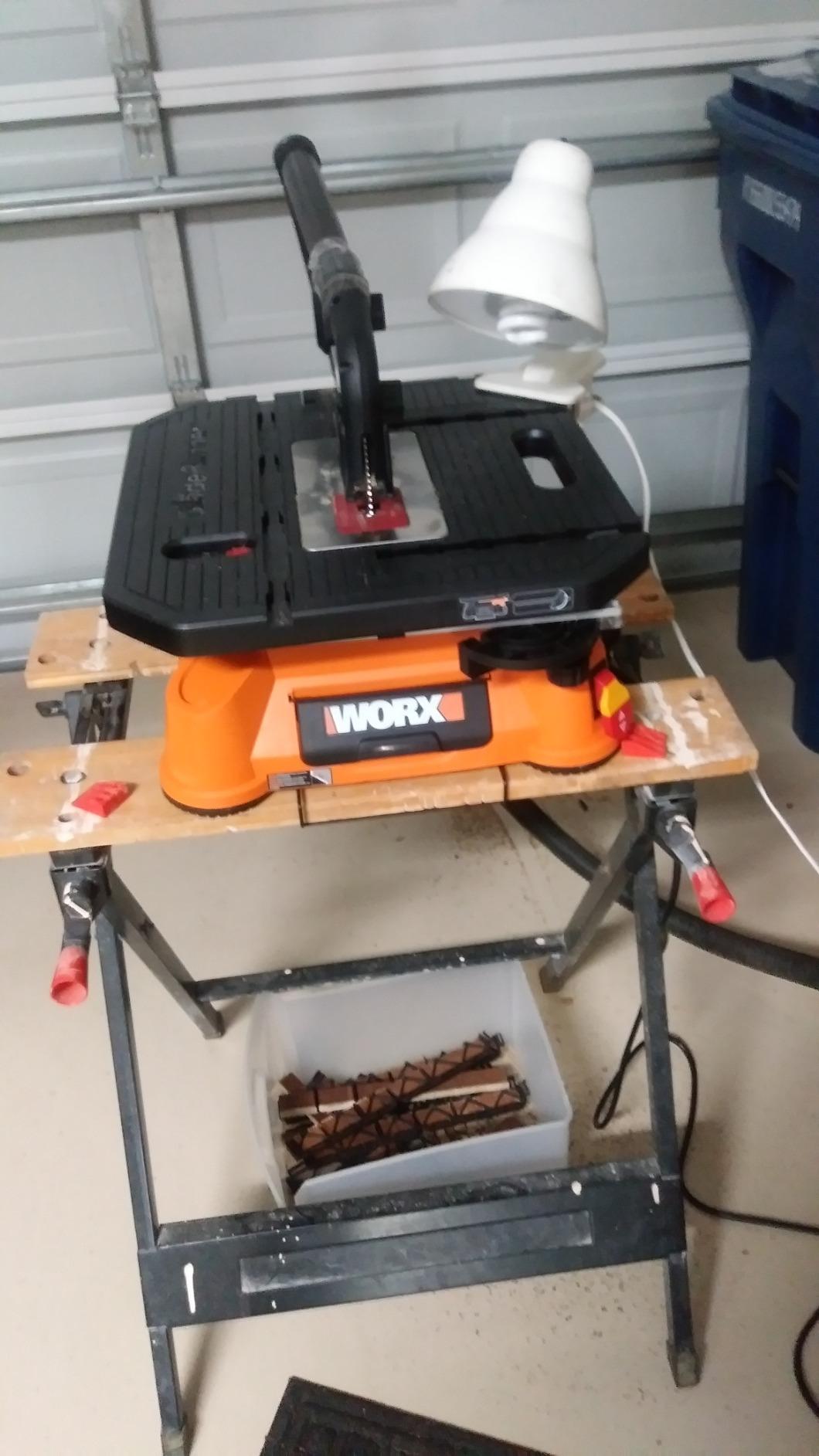
The safety switch and safety key are the details most reviewers mention first when describing why they trust it around beginners. On-board storage for the miter gauge, rip fence and blades means the whole thing packs back into its footprint instead of spreading across the bench.
Tool-free blade changes matter more than the specification suggests, because a beginner changes blades constantly. Swapping from a wood blade to a tile blade takes seconds rather than a wrestling match with two wrenches.
Where this saw is genuinely the right tool
Picture a renter with a small workbench, or someone learning to cut trim and small parts. This saw handles that job well, and it stores in a closet between sessions. The 0-60 degree adjustable miter gauge works from either side, so repeat angles do not require a reset.
It is also a reasonable second machine for a bigger shop, used for small parts and cleanup cuts while the main saw stays set for ripping.
Where the 4-inch blade stops you
Ripping a stack of hardwood or a sheet of plywood is outside its envelope. A 4-inch blade at 4500 rpm and a 5.5 amp motor will bog down quickly on thick material, and the short rip capacity means long boards have to be cut in stages.
If your projects include furniture-scale lumber or sheet goods, skip this one and spend up. If they include trim, small boxes, picture frames and craft work, this is the cheapest sensible entry point on the list.
3. DEWALT DWE7491RS 10 Inch with Rolling Stand: For When You Outgrow the Compact Saw
- 10-inch blade with 3-1/8 inch depth of cut at 90 degrees
- 32-1/2 in. rip capacity with patented material support
- Rack and pinion telescoping fence rails
- Everything stores on board
- 3 year limited warranty
- 110 pounds is awkward for one person or stairs
- Premium price bracket for occasional use
- Dust port needs a vacuum to do anything
This is the answer for a beginner who already knows they will be cutting hardwoods and full sheets. It holds a 4.7 average across nearly 5,800 reviews with 87 percent five-star ratings, and it sits at number two in the table saw category for a reason.
The 32-1/2 inches of rip capacity is the number that changes what you can build. Combined with the patented material support and flip-over fence for narrow rips, it handles full 4×8 sheet material and long trim in a way the compact saws on this list cannot.
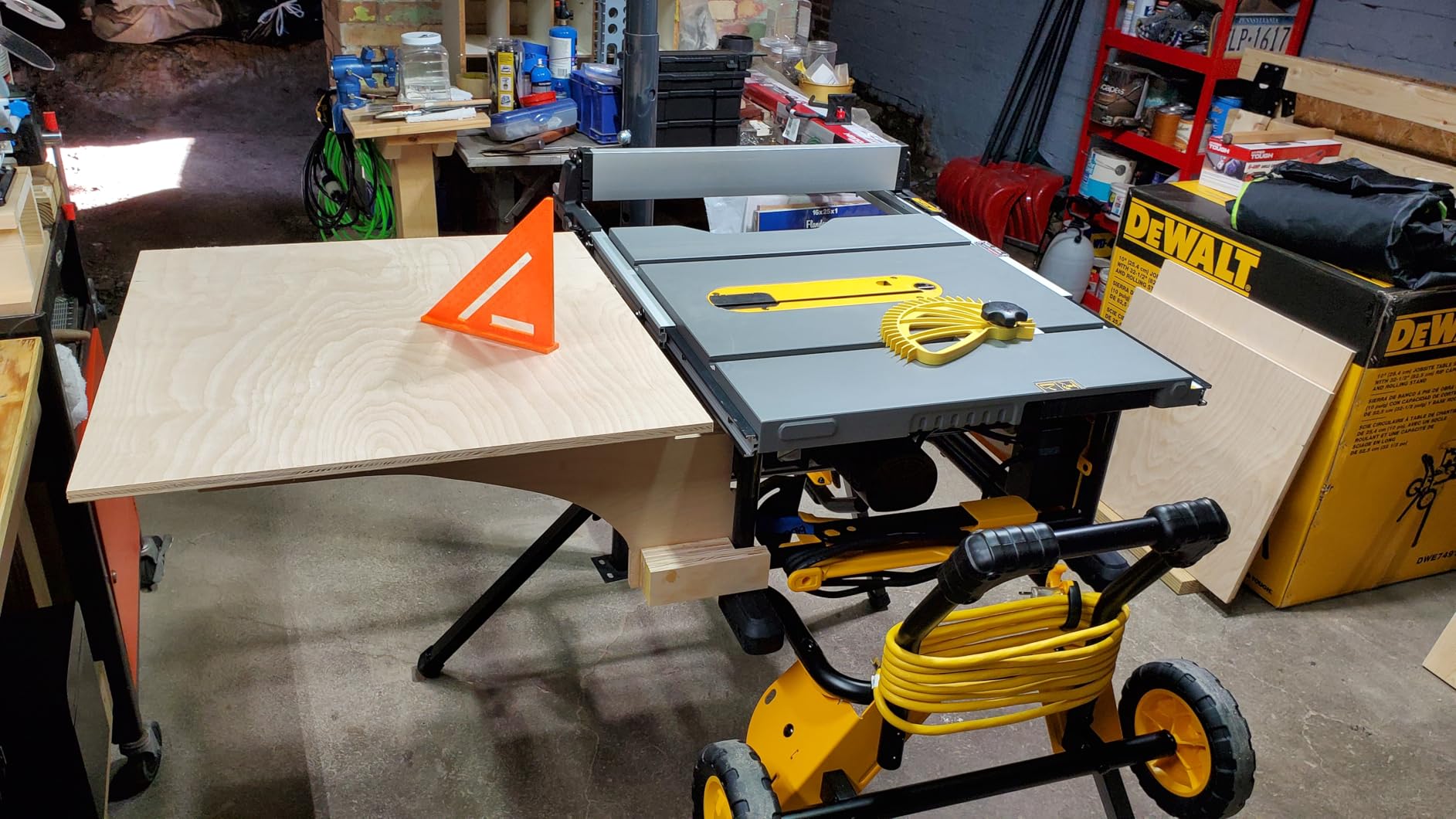
The fence is the same rack and pinion telescoping system the smaller DEWALT uses, so the adjustment feel is familiar. The depth of cut is 3-1/8 inches at 90 degrees and 2-1/4 inches at 45 degrees, which covers solid hardwood boards without stacking material.
A 2-1/2-inch dust collection port and onboard storage for the guard assembly, fence, riving knife, miter gauge, wrenches, push stick and cord wrap complete a package that is unusually tidy for a jobsite saw.
Deciding whether the extra capacity is worth the extra weight
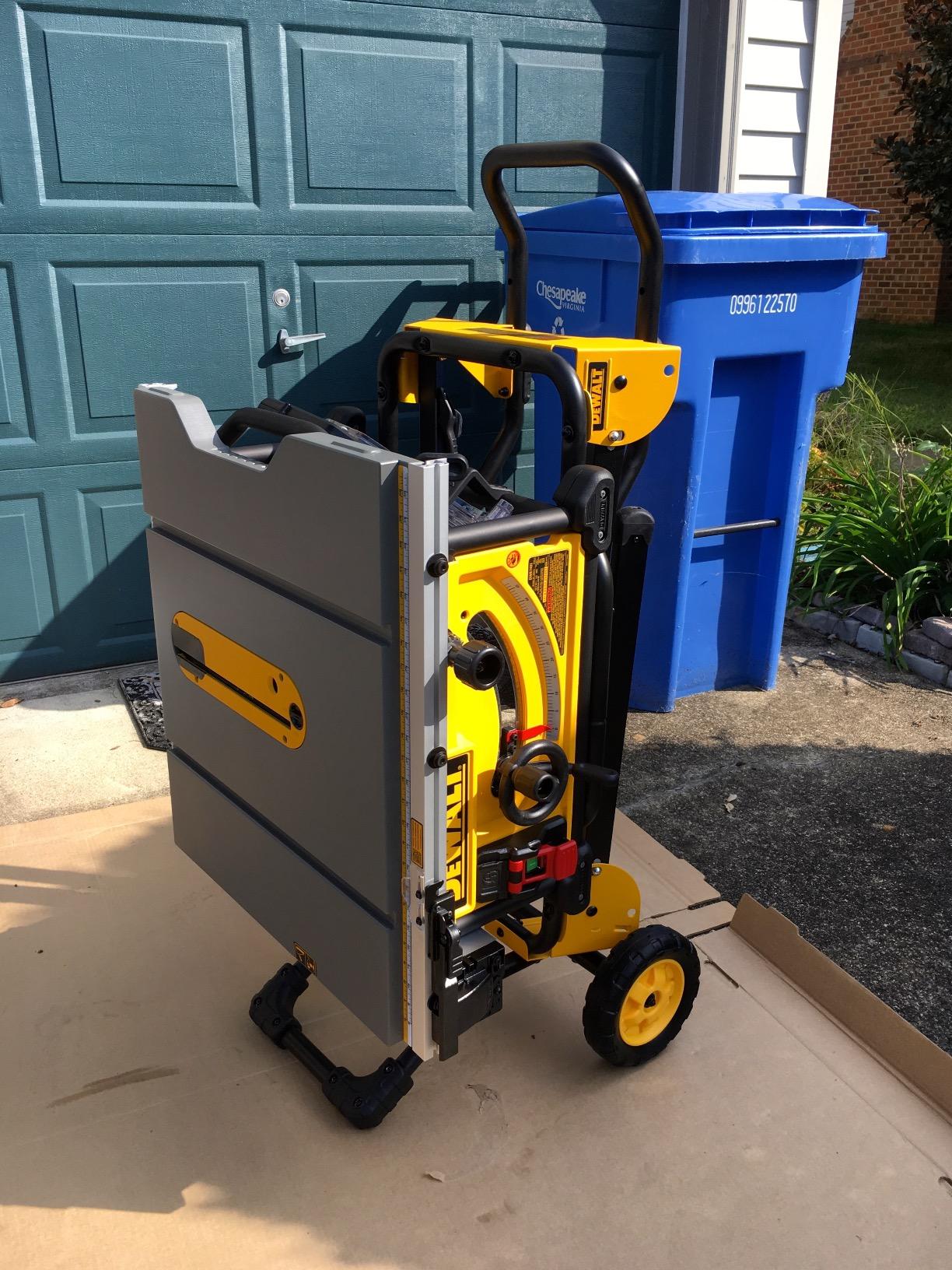
The honest drawback is the 110-pound package. Two people can move it comfortably, and the folding rolling stand makes setup and breakdown straightforward, but a single person moving it up basement stairs will feel every one of those pounds.
Compare that against the compact 8-1/4-inch saws on this list. If your projects are furniture, shelving and hardwood trim, the capacity difference pays for itself in workarounds you stop doing. If you are cutting a few boards a month, it is capacity you will rarely touch.
What is included and what stays on the shelf
The 15 amp motor is the same class as the mid-size competitors here and is described by owners as ripping through hardwoods without complaint. The three-year limited warranty is standard for the brand and parts are easy to source at any major home improvement retailer.
Connect a vacuum to the dust port or plan to sweep. The port does nothing on its own, and the one consistent note in the reviews is that the work surface stays cleaner when something is actually attached.
4. SKIL TS6307-00 10 Inch Jobsite Table Saw: The Value Pick Everyone Recommends
- Rated number one in its category with 81 percent five-star ratings
- Folds flat against a wall and one person can carry it
- Factory aligned so owners find the adjustments already correct
- Parallel blade micro-adjustment
- Rack and pinion fence with guard and riving knife
- Included miter gauge is short with a small working surface
- Heavy plastic use makes it light to moderate duty
- Louder than comparable DEWALT and Bosch saws
- Rip capacity tops out around 25.5 inches
- Riving knife needs a blade with a 0.1 in. kerf or greater
If you read one section of this guide, read this one. The SKIL TS6307-00 holds a 4.7 average across roughly 2,950 reviews, sits at number one in its category, and is the machine most beginners name first when they describe the saw they kept.
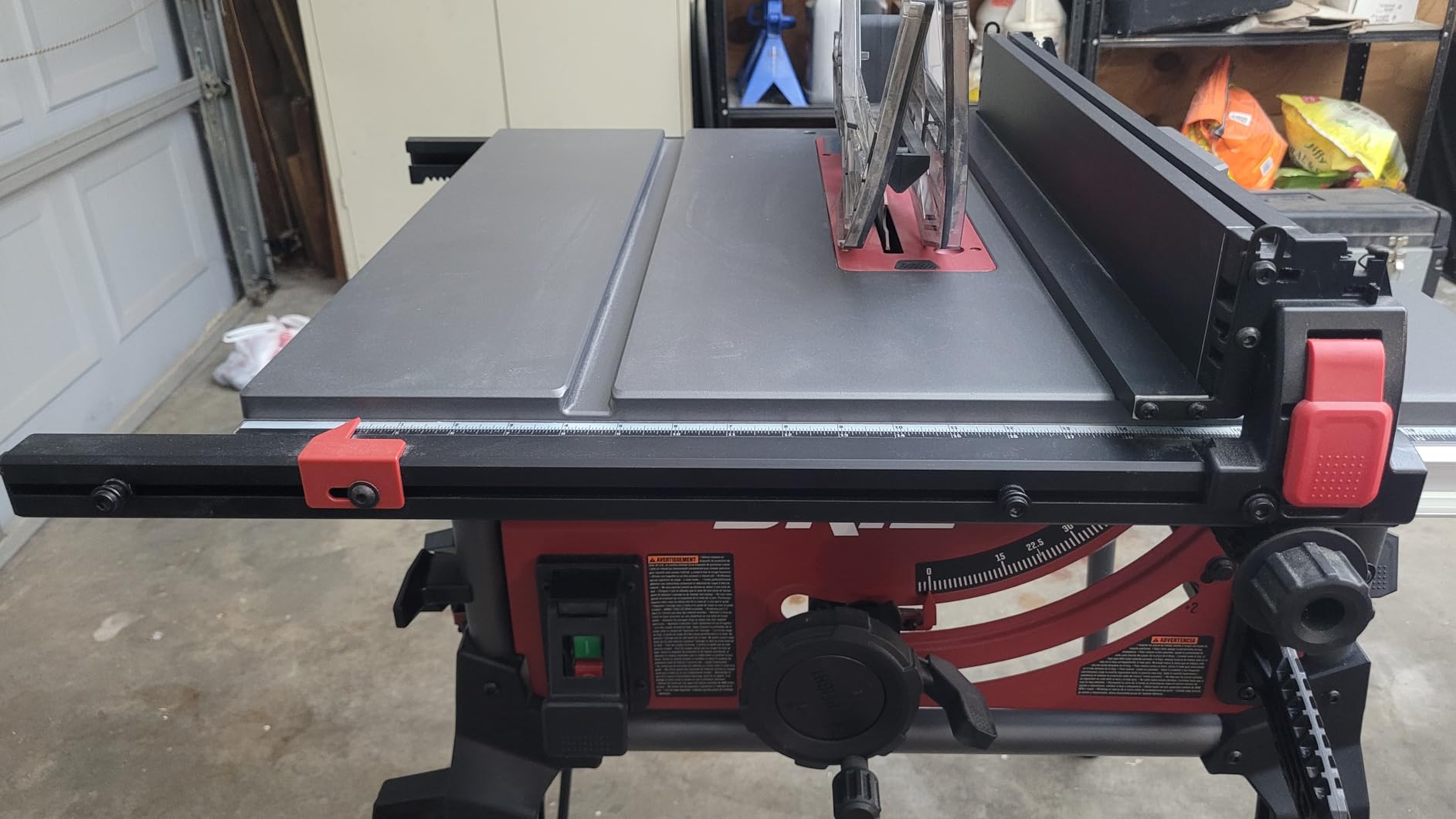
The reason is the folding stand. The legs fold flat, so the saw goes against a wall in a one-car garage or a corner of an apartment, and at 51.2 pounds one person can carry it without a fight. Nothing else on this list stores that small.
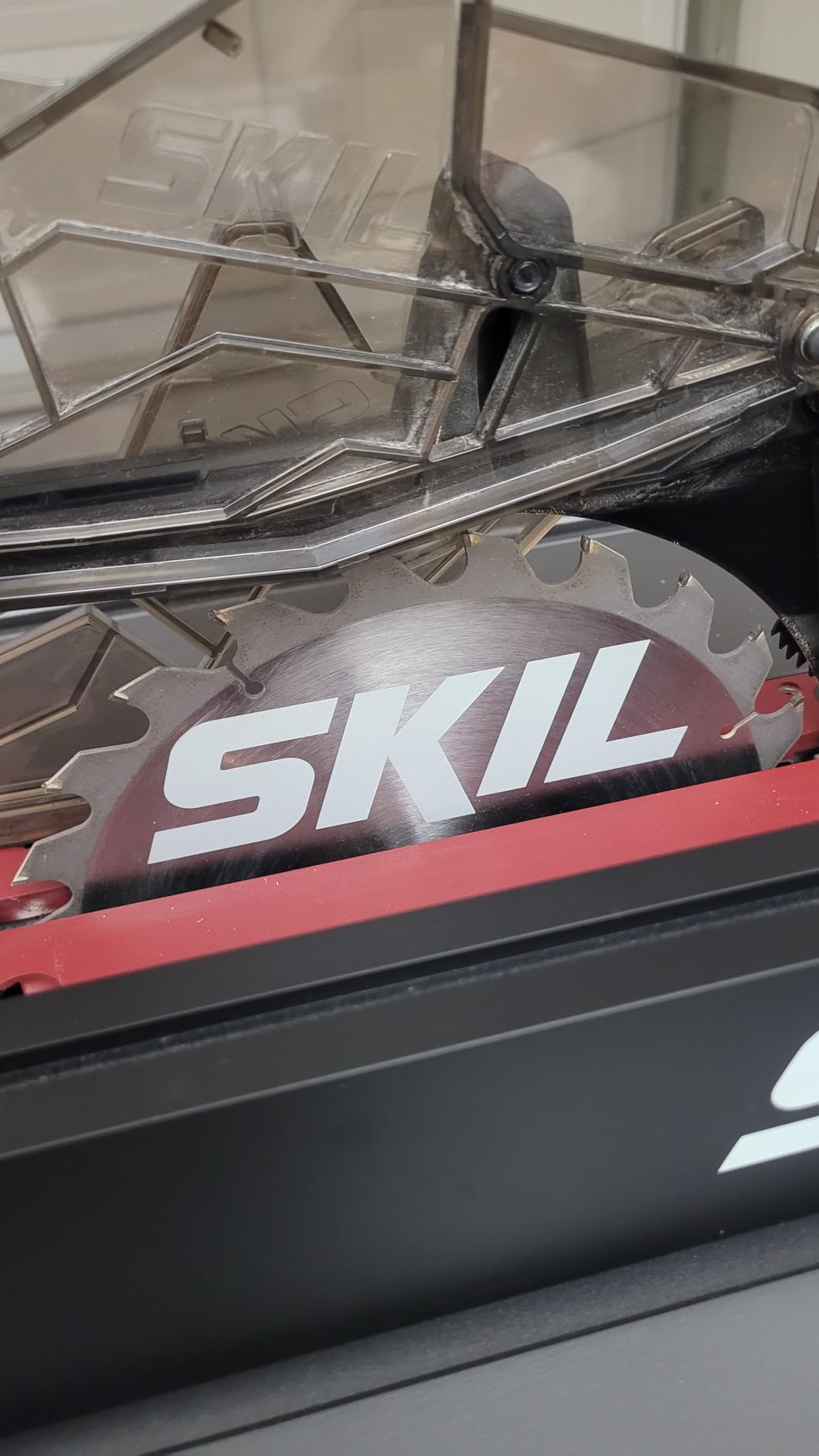
Owners repeatedly report that they checked every alignment after delivery and found them correct. The parallel blade alignment micro-adjustment lets you dial the blade to the rip fence and the miter slot, which is the single most useful adjustment on any new saw because it fixes a bad cut at the source.
Bevel capacity runs from 2 to 47 degrees with positive stops at 0 and 45 degrees and a quick release lever. It cuts material up to 4×4 at 90 degrees, and the box includes a blade guard, push stick, miter gauge, anti-kickback pawl, dust port elbow, two wrenches, riving knife, rip fence and a 24-tooth blade.
The upgrade that changes this saw
Replace the miter gauge. It is the most repeated recommendation across the reviews, and it is the right first purchase. The supplied gauge is short, has a small working surface and is hard to control on a wide crosscut, which is exactly the cut beginners attempt first.
The second upgrade is a blade. The included 24-tooth blade is designed for fast ripping, and swapping to a 40-tooth general-purpose blade gives noticeably cleaner crosscuts and sheet goods for very little money.
Know the limits before you buy
Rip capacity tops out around 25.5 inches, so rips wider than that need another method. If your work regularly involves 30-inch-wide sheet material, look at the 10-inch saw in position three.
Two smaller notes. The saw uses enough plastic to make it a light to moderate duty tool rather than a daily jobsite workhorse, and the riving knife only works with a blade whose kerf is 0.1 inch or greater, which rules out some thin-kerf aftermarket blades.
5. SKIL TS6308-00 8-1/4 Inch Compact Saw: The One With a Ruler on the Fence
SKIL 15 Amp 8-1/4-Inch Compact Portable Jobsite Table Saw (Stand SFS0001 Sold Separately)-TS6308-00
- Fence has a built-in ruler so you can set it without tape measures
- Aluminum table and rails feel solid
- Light at 40 pounds and easy to repurpose onto an existing table
- 15 amp motor handles hardwood ripping
- Easy setup with clear instructions
- Much of the body is plastic and some parts have failed early
- Guards block the view of the blade
- No height scale for dado setup
- No riving-knife-only option out of the box
- Some reports of inconsistent precision and blade wobble
This is the small-shop answer, and its defining feature solves a problem nobody else addresses at this level: the rack and pinion fence has a ruler built into it. A beginner can set a rip width and read the number off the fence instead of measuring, marking and re-measuring.
At 40 pounds it is light enough to carry up stairs or lift onto a workbench, and the dimensions are compact enough to disappear when the work is done. That is a genuine advantage in an apartment, a condo or a shared garage.
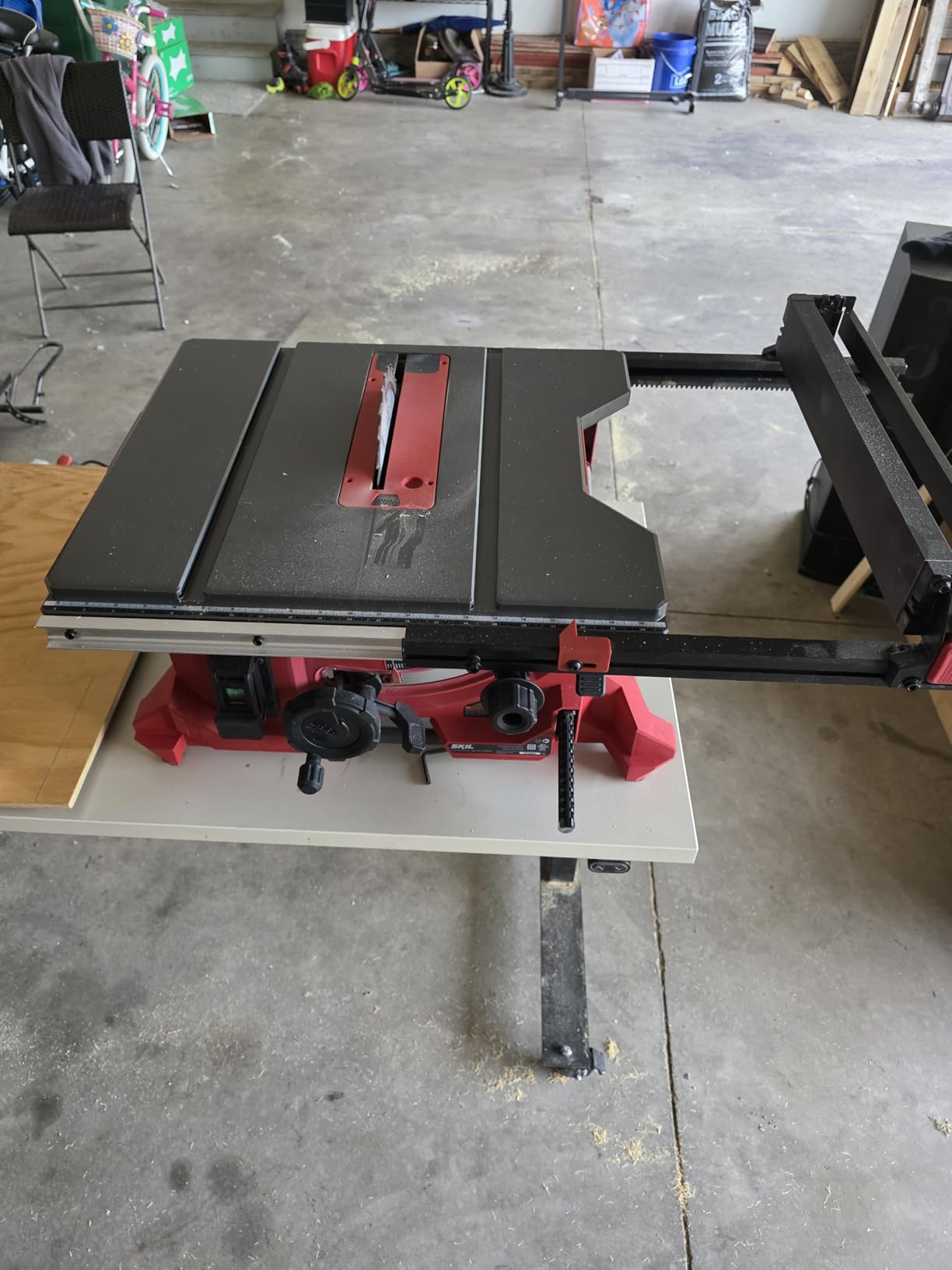
Rip capacity is 24.5 inches on one side and 12 inches on the other, which is enough for sheet material and typical lumber. The 15 amp motor handles hardwood ripping without stalling, and a dust port elbow is included for shop vac hookup.
Reviewers consistently mention the easy setup and clear instructions, which is not a small thing for a first table saw. The aluminum table and rails feel solid for the size, and the blade can be adjusted for vertical alignment.
Who should buy this instead of the SKIL TS6307-00
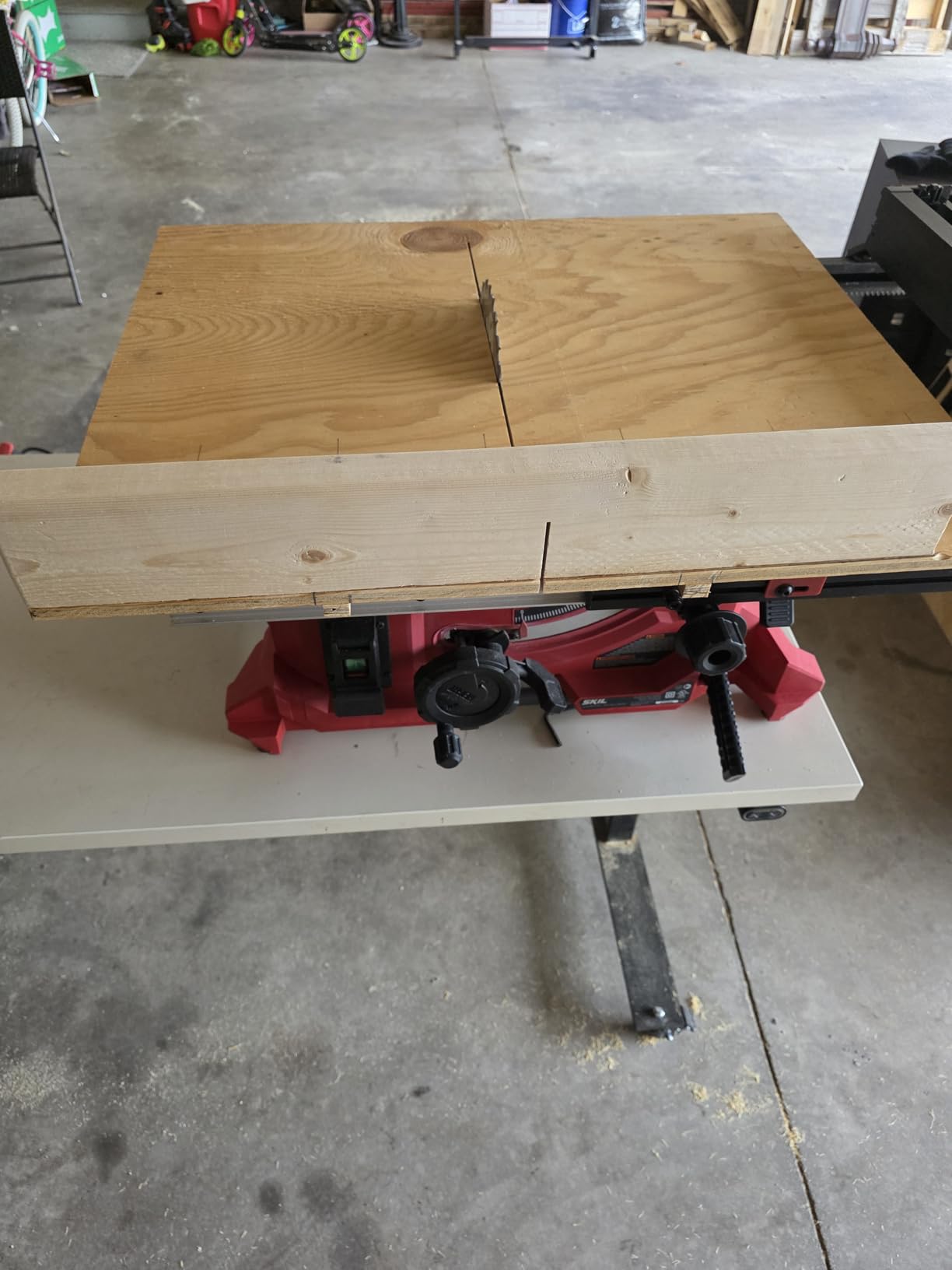
Buy this one if storage is your binding constraint. The TS6307-00 folds flat, but the TS6308-00 is smaller still and can sit on a shelf or a bench rather than against a wall.
Buy it if the built-in fence ruler appeals to you. Several reviewers describe it as unusually good for the price, and it removes the measurement step that causes most beginner errors.
What to watch out for
Plastics are the recurring theme. One owner reported a plastic part breaking during first assembly, and another had a guard assembly fail after about a week and come apart during a kickback. Check every plastic fastener during assembly and re-check them after the first few sessions.
Two further limits. The guards block the view of the blade with no riving-knife-only configuration out of the box, and there is no height scale, so setting up for dado work requires holding a square against the crank. The folding stand is sold separately, so budget for that before the saw is usable at standing height.
6. Delta 36-6023 10 Inch Table Saw: The Only One Here With Stacked Dado Capacity
- 13/16 in. by 8 in. stacked dado capacity for grooves and joints
- 32.5 in. rip capacity for large material
- A portable stand is included in the box
- Durable rack and pinion fence rails
- Lowest average rating in this group at 4.3 with a 7 percent one-star share
- 77 pounds is heavy for a portable saw
- Small review base of 200 compared with the bestsellers
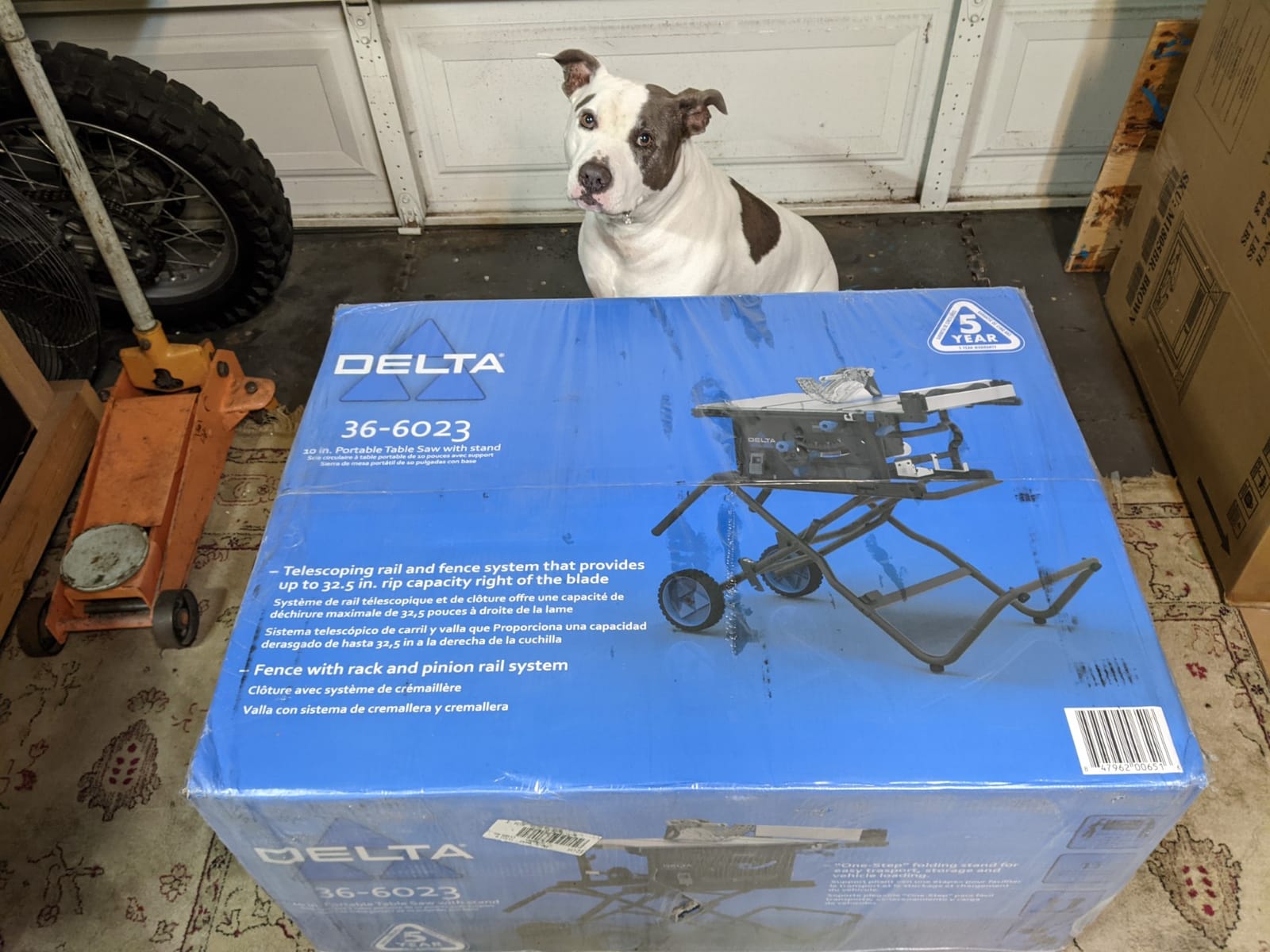
Almost every portable table saw in this class refuses dado blades. The Delta 36-6023 does not, and that single specification is why it is here, alongside a 32.5 inches of rip capacity and a five-year professional warranty.
Stacked dado capacity of 13/16 inch by 8 inch means you can cut grooves for box joints, sliding dovetails and cabinet components without stacking multiple blades at different heights and hoping the alignment holds.
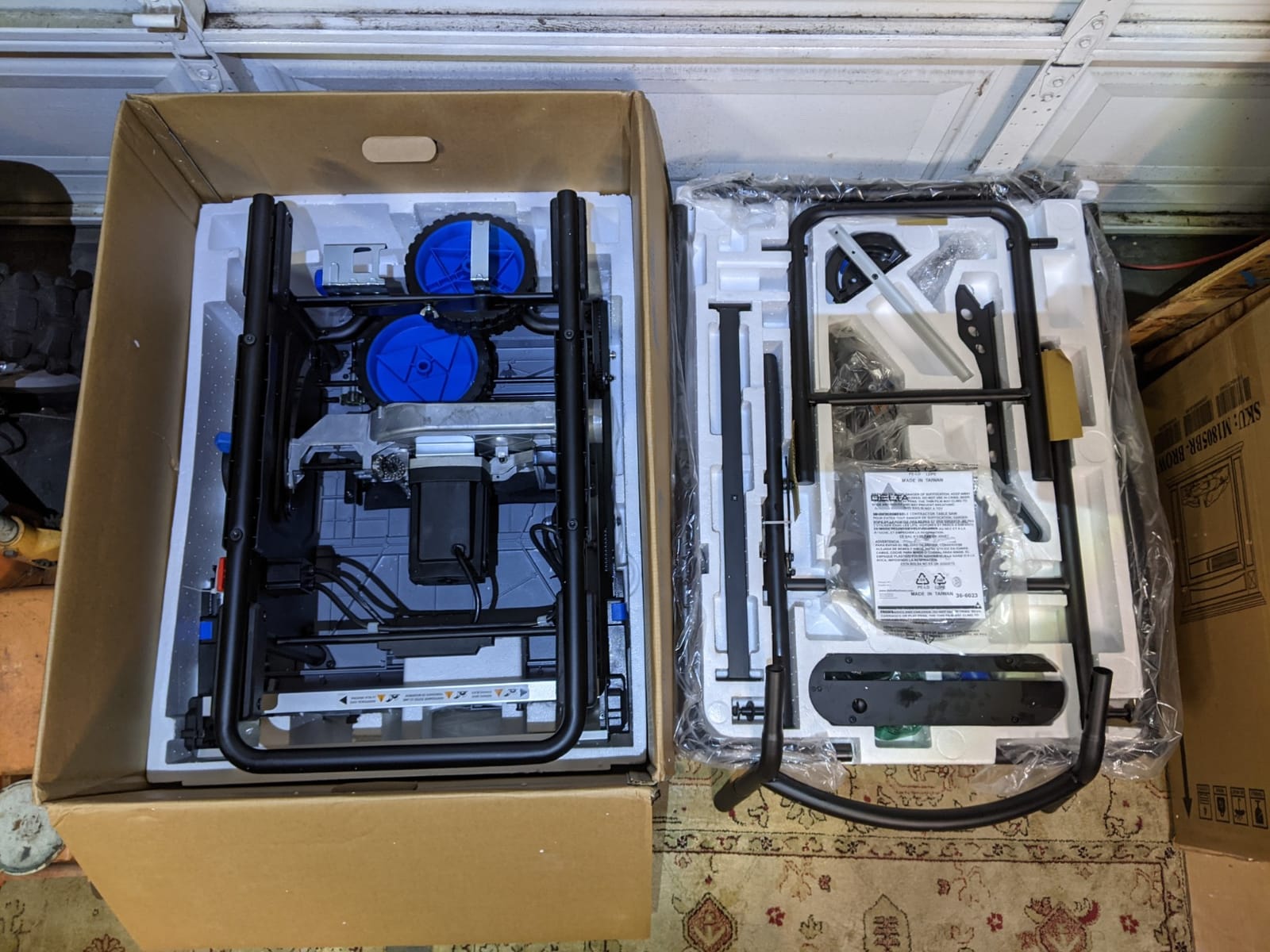
The 15 amp contractor grade motor is specced for treated lumber and hardwoods, and the rack and pinion fence rails give smooth, repeatable adjustments. A portable stand, push stick, rip fence, miter fence and carbide blade are all in the box.
If you are building cabinets or boxes, the warranty is worth noting. Five years is longer than any other saw on this list, and it is the kind of cover that matters when a new owner is worried about buying the wrong thing.
Who this saw is actually for
Buy it if you plan to make joinery rather than simple dimensional cuts. If you only need to rip boards to width and cut a few lengths to length, every other saw here does that job with a higher average rating and a much larger body of buyer feedback.
It is also a reasonable second-step purchase for someone moving up from a benchtop machine, since the 32.5-inch rip capacity covers large material and the dado capability opens furniture making.
Read the rating carefully
At 4.3 with 7 percent one-star reviews, this is the lowest-rated saw in the group, and the reasons are the usual ones for a smaller brand: heavier build relative to feedback volume, and far fewer buyer reviews than the DEWALT, SKIL and WORX options. That does not make it a bad saw, but it does mean you are buying on specification rather than on a large body of owner experience.
Test the fence alignment and check for play before your first real cut, and keep the receipt.
7. DOVAMAN DTS02M 15A Dustless Table Saw: Built Around the Vacuum
- Dust collection is the standout feature and owners report a visibly cleaner shop
- Soft start prevents jerky startup and tripped breakers
- 60-tooth carbide blade gives smooth cuts including melamine
- Extendable side plate adds support for larger panels
- Cast aluminum work plate and on-machine accessory storage
- Blade guide drifts out of alignment with the blade over time
- Rip fence can vary 2 to 3 mm top to bottom without squaring
- Blade guard is awkward with material thicker than 2 cm
- 16 mm T-slots instead of the standard 19 mm
- Heavy enough that owners build a wheeled base
Dust collection is the quiet problem in a home garage, and this is the only saw on the list designed around solving it. Owners single out the system as a major upgrade over older machines, with a claimed separation rate up to 98 percent through the rear vacuum connector.
Soft-start technology is the second feature that earns goodwill. It controls startup vibration, which means fewer tripped breakers and fewer marks on the first piece of material after the motor spins up.
The included 60-tooth carbide-tipped blade is unusual for a saw in this class. It is normally a plywood and finish-cutting blade rather than a fast rip blade, and reviewers mention smooth, precise results including in melamine.
An extendable side work plate grows the cutting surface from 48 cm to 80 cm, which helps when cutting larger panels alone. Depth of cut is 60 mm at 90 degrees and 40 mm at 45 degrees, with an adjustable bevel stop from 0 to 45 degrees.
The alignment checks this saw needs most
Two complaints recur and both are fixable. The blade guide drifts out of alignment with the blade after use, and the rip fence can vary 2 to 3 mm from top to bottom if you have not checked it with a square.
Build the check into your first few sessions rather than discovering it mid-project. A combination square and a straightedge take a minute and tell you immediately whether the fence is parallel.
Know what you are giving up
The 16 mm T-slots are the significant catch. Most sleds, jigs and premium miter gauges are made for 19 mm slots, so accessories that fit other saws on this list will not fit here. Check compatibility before buying a crosscut sled.
The blade guard also binds with material thicker than 2 cm, and at 50 pounds the saw is heavy enough that several owners built a wheeled base. The 8.5-inch blade and 4.4 average across 158 reviews are worth weighing against the dust benefit before you commit.
8. EVOLUTION R10TS 10 Inch Jobsite Table Saw: The Best Fence in the Group
- Fence produces square and accurate cuts and is praised by experienced woodworkers
- Sliding cross-cut table reduces the need for a separate sled
- Light enough for one person to move around a small shop
- Tungsten carbide blade cuts wood plus mild steel and aluminum
- Zero-clearance throat plate reduces tear-out
- 3 year warranty and responsive service
- Included miter gauge is well below the quality of the rest and will not lock to the sliding table
- Bundled multi-material blade leaves curved marks
- Some units shipped with a bent rack and pinion rail from packaging damage
- Packaging and instruction diagrams are substandard
The fence is the story here. Reviewers with decades of experience describe it as class-leading for a portable saw, and it produces the square, repeatable cuts that make a beginner confident enough to trust their measurements.
The sliding cross-cut table is the second feature nobody else in this list offers. Instead of clamping a separate sled, you slide the table across the saw, which changes how a beginner approaches crosscutting a full sheet.
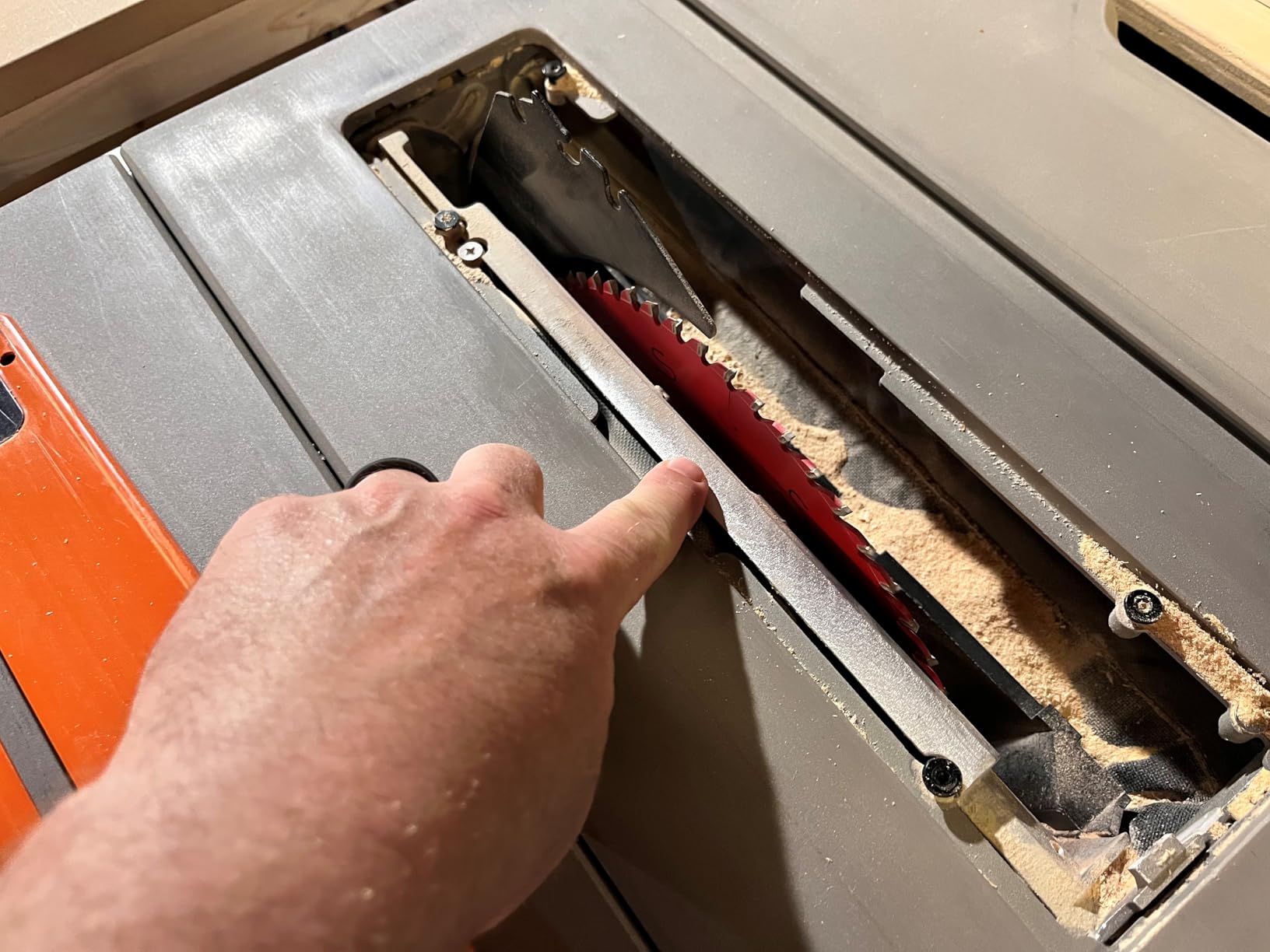
The tungsten carbide blade is a genuine multi-material tool. It handles wood, mild steel, aluminum and composites from the same 15 amp high-torque motor with soft start, so you are not hunting for a different machine when a project turns to metal.
A zero-clearance throat plate reduces tear-out on cuts that would otherwise fringe, and a dado plate is included for grooves and joints. Electronic blade brake, anti-kickback pawls, a quick-release riving knife and a large paddle switch round out the safety hardware.
What makes it different from the other 10-inch saws
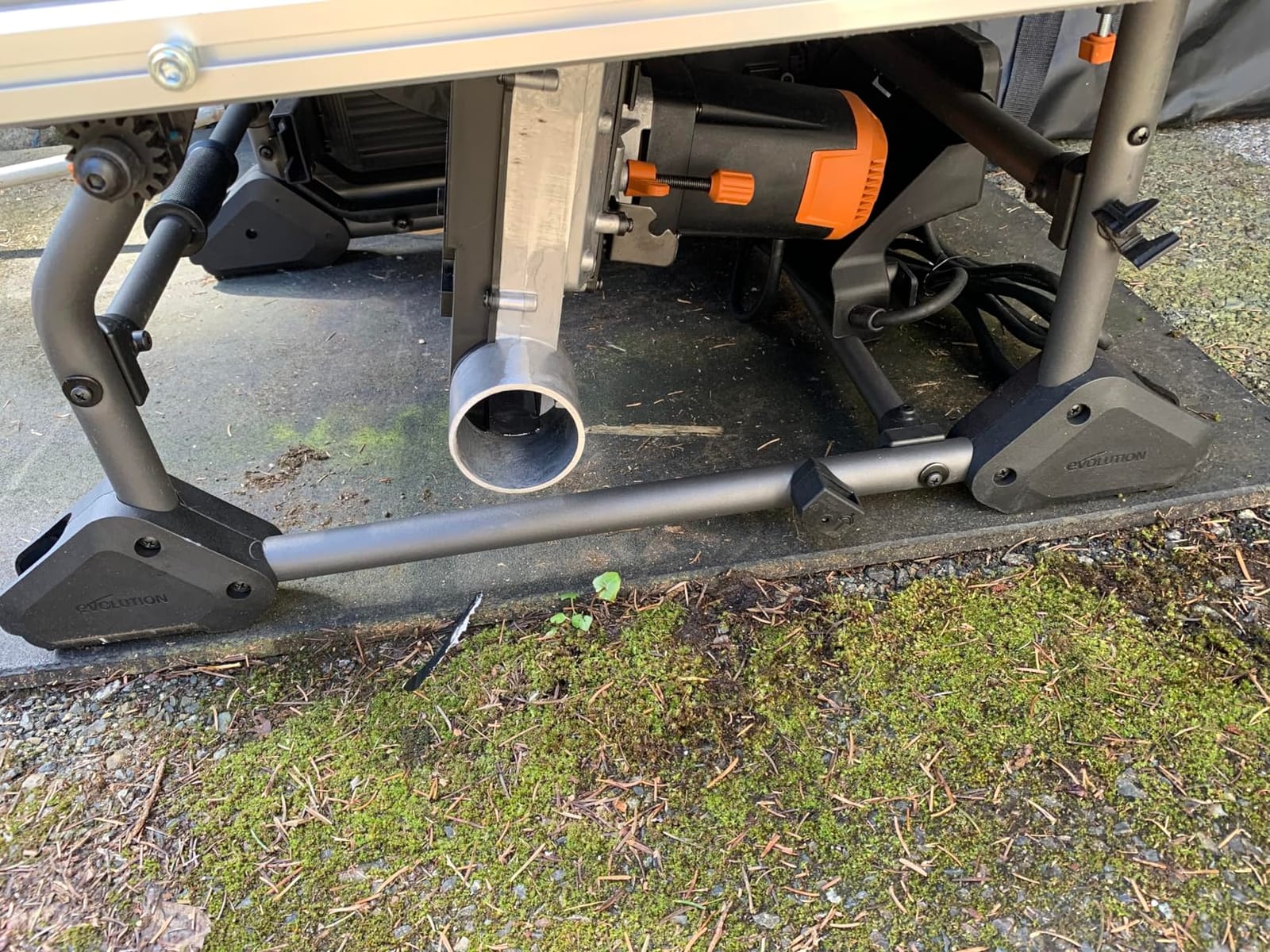
Three things, all of them real: 26 inches of rip capacity with a 3-3/8-inch maximum cut depth, a 0-45 degree geared bevel, and the carbide blade that cuts more than wood. If your projects involve metal or composite panels, that alone justifies the choice.
The steel frame with carry handles is light enough for one person to move around a small shop, and there is onboard storage plus an outfeed support bar.
What to expect on delivery
Inspect the rack and pinion rail before you assemble anything. Some units have shipped with a bent aluminum slider from packaging damage, and a bent rail will never hold square no matter how good the design is.
Plan on two accessories immediately. The included miter gauge is well below the quality of the rest of the saw and does not lock to the sliding table, and the bundled carbide blade leaves curved marks on wood that a dedicated wood-cutting blade removes.
9. Prostormer 10 Inch Table Saw with Stand: A Full-Size Saw Without the Full-Size Price
- Low entry point for a stand-mounted 10-inch saw
- 5000 RPM and 15 amp rating cover common rip and crosscut work
- Four metal brackets under the base add rigidity where budget saws use plastic
- Clear blade guard improves visibility
- Push stick and side storage included
- No rack and pinion fence so setup is manual and slower to repeat
- Dust collector not included only the port
- 4.4 average with a 5 percent one-star share
- Less brand recognition and fewer reviews than the big three
Most entry-level saws force a choice: a folding jobsite saw that stores small, or a fixed stand-mounted saw that cuts bigger material. The Prostormer takes the second option at a price that makes it worth a look for a garage with permanent floor space.
What it does well is structure. Four metal brackets under the base add rigidity, which is exactly where cheaper saws use only plastic and eventually feel vague under load.
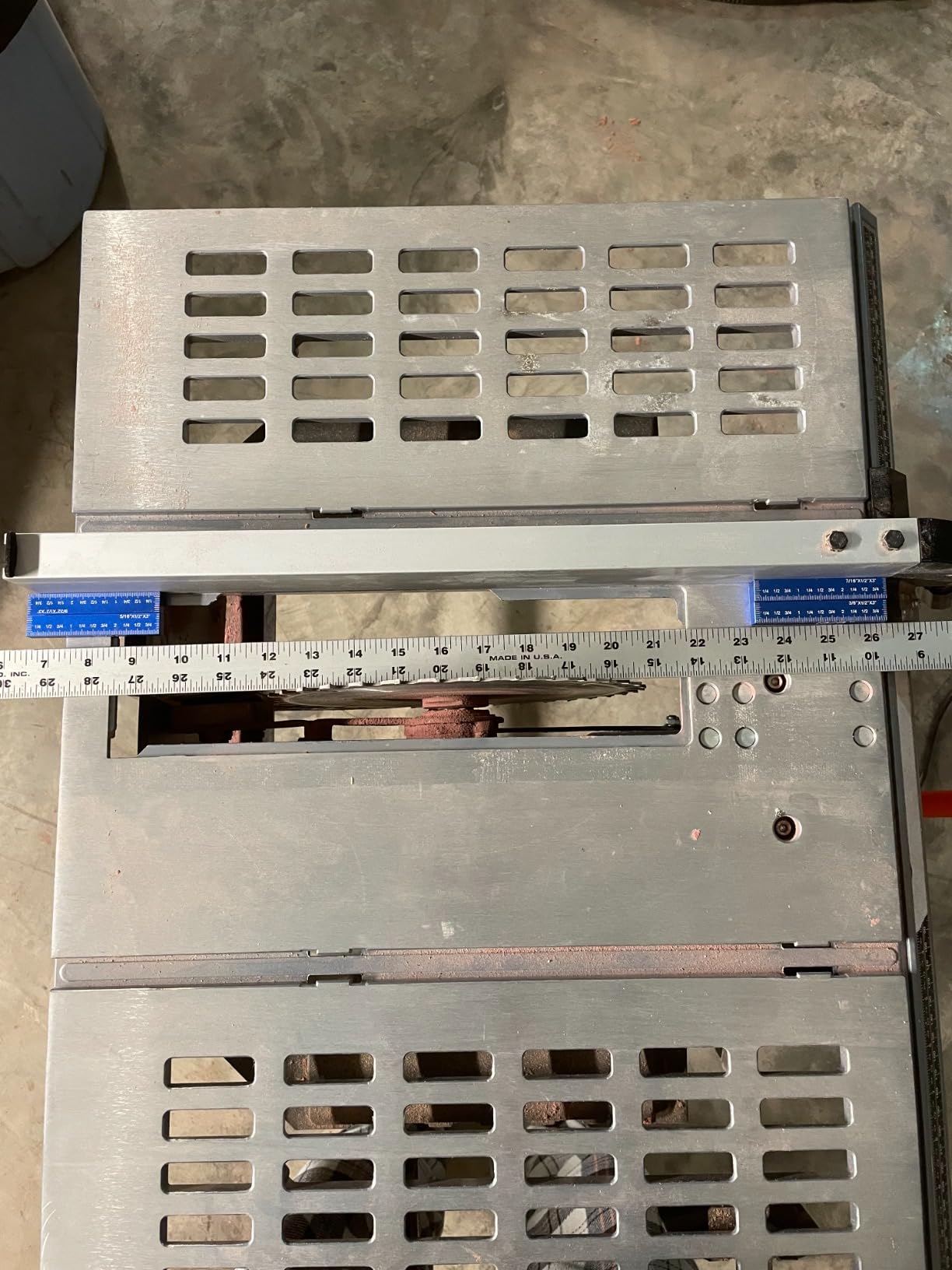
The clear blade guard is a real safety and usability choice. You can see the blade through it, and combined with the included push stick and the stable bottom support, it gives a new operator more visual feedback than an opaque guard does.
Blade height and angle adjust for 90-degree crosscuts and 0-45 degree bevels, and side storage compartments hold the wrenches and push stick. A rear dust collector port accepts a hose, though the collector itself is not included.
Why the missing rack and pinion fence matters most
This is the single most important fact for a beginner. A rack and pinion fence slides on rails and returns to the same place; a manual fence has to be set, marked and re-set every time. Newcomers who rip a stack of identical boards to the same width will notice the difference on cut three.
If you plan to repeat cuts, add the time of setting the fence by hand to the price difference between this saw and a SKIL or DEWALT before deciding.
When it makes sense and when it does not
It makes sense in a fixed garage workshop where you want a full-size stand-mounted saw, a clear view of the blade, and metal under the table without paying for a name brand.
It does not make sense for heavy repeated work or for anyone who values a long service life, because the 4.4 average and 160 reviews are thinner evidence than the 5,800-review average on the DEWALT. Check the fence squareness carefully on arrival, because there is no fine adjustment to help you.
10. MarvTool 10 Inch Compact Table Saw: The Lightest Full-Size Blade Here
- Lightest saw here with a 10-inch blade at 28.3 pounds
- Cuts hardwoods plywood OSB thin aluminum and PVC
- Adjustable blade height and angle for 90 degree and 0-45 degree cuts
- Transparent blade guard and dust port
- Support team replaced a failed unit overnight
- Some owners report lateral vibration and high noise
- Blade guard is basic
- A few reports of a defective returned unit
- Limited track record with 89 reviews
A 10-inch blade in a machine weighing 28.3 pounds is unusual. Every other full-blade saw on this list is at least 40 pounds, and two of them are well over 70, so if moving the saw alone is your main concern this is the pick.
The included 36-tooth blade is a sensible general-purpose compromise, faster than a 60-tooth finish blade and cleaner than a 24-tooth rip blade. Cutting depth is 3.4 inches at 90 degrees and 2.1 inches at 45 degrees.
Owners describe a wide, level table surface that gives good stability and precision, and fence performance that meets expectations for the money. The 15 amp motor covers hardwoods, plywood, OSB, thin aluminum sheet and PVC pipe.
Assembly is reported as easy and operation straightforward, and several reviewers singled out the support team, which replaced a failed unit overnight by courier. That kind of after-sales response matters more than it sounds when you are new and something goes wrong on day two.
Where weight savings pay off
Stairs, a second-floor workshop, a car boot or a saw you move between the garage and an outdoor project bench. If none of those describe your situation, the lighter weight is less interesting than the fence quality on a higher-rated machine.
The compact size is the real advantage. It can be set on a bench or a low stand and moved out of the way in seconds, which is a workable arrangement in a small space.
What the reviews flag
A small number of owners report lateral vibration and high noise under load, and one received a returned unit with a stripped blade-height lever and a blade that would not lower. Treat the height and tilt cranks as the first things to test on arrival.
With 89 reviews the long-term track record is short compared with the 5,000-review machines near the top of this list, and the blade guard is described as basic. If you want the lightest option, this fills a real gap; if you want the most proven, the DEWALT compact saw is a safer bet.
Do You Actually Need a Table Saw Yet?
The most common question in woodworking forums is not which saw to buy. It is whether a new woodworker should buy a table saw at all, and the honest answer is sometimes no.
A table saw earns its place when you need repeatable rip cuts and sheet goods. If your projects are a handful of trim boards and a few shelves, a circular saw with a straightedge guide and a sliding compound miter saw will cover nearly everything a table saw does, and it costs less, stores in a corner and is far easier to learn.
Here is the honest comparison.
Table saw: Best at repeatable rip cuts, sheet goods and joinery. Highest learning curve, highest risk, and it needs floor or bench space. It is the right answer once you are cutting the same dimension over and over.
Track saw: Best at straight sheet-goods cuts in a small space, and it can be used on a door, a countertop or a workbench laid on the floor. The limitation is that rip cuts still need a guide of some kind, and dust control is a problem in a home.
Circular saw plus miter saw: Best for crosscutting lumber, trim and angles with no learning curve. The limitation is that cutting accuracy depends on your setup, and sheet goods need a long straightedge and support underneath.
Our view: if you are undecided, buy the circular saw and miter saw first, build two or three projects, and see whether you are frustrated by breaking down sheet material by hand. If you are, you will know exactly which saw to buy next, and you will not have wasted the money.
For a wider look at the saws most beginners graduate to, our general table saw roundup covers benchtop, contractor and cabinet-class machines.
How to Choose a Beginner Table Saw?
Most buying guides start with price. For a beginner, the more useful order is blade size, then motor, then fence, then everything else.
Blade size decides what you can rip. A 10-inch blade is the right default for nearly everyone, and it is the size most buyers describe as the way to go. An 8-1/4-inch blade gives up cutting depth and rip capacity in exchange for a machine half the weight, which is a good trade in a small shop and a bad one if you handle sheet goods. A 12-inch blade is a step up for heavy timbers, not a beginner purchase.
Motor power matters more than horsepower claims. A 15 amp motor handles hardwood ripping and plywood without bogging down. Below 10 amps, the saw will labour on anything thick, and the frustration of a stalled motor teaches a beginner nothing except that they picked wrong.
The fence is where accuracy lives. A rack and pinion fence slides on rails and returns to the same position. A manual fence has to be set by hand each time. This single distinction separates the saws on this list that we recommend from the one we consider a compromise.
Rip capacity is the real limit on long cuts. Between 24.5 and 25.5 inches covers most sheet material and framing lumber. Above 30 inches, as on the two larger saws here, you can rip full-width stock without a second method.
Table surface and stand determine everything else. A cast iron top stays flat for decades; a cast aluminum top is lighter and easier to move. A folding stand matters enormously if you store the saw between sessions, which is most beginners.
Assembly difficulty is a legitimate buying criterion. Reviews on this list repeatedly mention unclear instructions and missing detail in diagrams. A saw that arrives half assembled with everything stored on board is a better beginner purchase than a better-built saw you cannot assemble.
Dust collection is worth planning for. Every saw here has a port; only one is designed around a vacuum system. Budget for a shop vac with a hose that fits the port, because an unconnected port does nothing.
Once you are committed and the work justifies a dedicated machine, our cabinet table saw guide explains what the higher tiers actually add.
Safety Features Every Beginner Saw Should Have
Table saws cause some of the most serious injuries in home woodworking, and the majority of those injuries are kickback and contact with the blade. Whatever else you compare, compare safety hardware.
Read the manufacturer’s instructions before your first cut and consider a hands-on course if you have never used one. Nothing in this guide replaces that.
Riving knife or splitter: A fin-shaped blade behind the saw blade that holds the workpiece open to the thickness of the cut, preventing pinching and kickback. It must match the kerf of your blade.
Blade guard: Covers the top of the blade. On a portable saw it is often a plastic shield that also acts as the riving knife, which is why guards on compact saws can block your view.
Anti-kickback pawls: Small teeth that allow the workpiece to move forward but not backward. They are included with every saw on this list.
Blade brake or electronic stop: Stops or drops the blade after contact. Only the EVOLUTION R10TS on this list has an electronic blade brake; flesh-sensing technology in a separate saw class costs considerably more.
Push stick and push block: Keep your hands away from the blade on narrow rips. Every saw here ships with a push stick except the stand-mounted Prostormer, which includes one as well.
Overload protection and power-loss reset: The DEWALT DWE7485 has a power-loss reset that prevents the saw restarting after a disruption. Ask yourself whether your circuit can handle the saw before you run it.
On forums, the first thing experienced hands check on a saw that cuts poorly or kicks back is a bent riving knife. If your cuts are inconsistent, verify the knife is flat and matches the blade kerf before changing anything else.
What to Buy in Your First 30 Days?
The saw is the cheap part of getting set up. These are the purchases that make a mid-range machine behave like a better one, in the order they are worth doing.
A push block, before a blade upgrade. A quality push block gives you firm downward pressure on the workpiece, which reduces kickback more than any other single accessory. A plain push stick included in the box is a starting point, not a solution.
A featherboard, second. A featherboard holds the workpiece against the fence with spring force so your hands stay clear. It is the cheapest kickback prevention available and the biggest accuracy gain on a rip cut.
A better miter gauge, third. The included miter gauge is the most commonly criticized part on almost every saw in this guide. Replace it before you spend money anywhere else.
A zero-clearance insert, fourth. Where the blade passes through the table, a drop-in insert with a slot matched to your blade kerf removes the tear-out that a standard throat plate causes. SawStop-style inserts need a brake, so match the insert to your saw.
A 40-tooth general-purpose blade, fifth. The blades included with these saws are usually 24-tooth rippers, which are fast but leave a rough edge on crosscuts and sheet goods. A 40-tooth blade is the single best upgrade for crosscut accuracy. A 60-tooth blade suits plywood and finish work.
Dust collection, last. A shop vac with an adapter for the dust port transforms the work surface. It is the least glamorous purchase here and the one you will notice most in week two.
Total cost of the saw plus these six items is what a realistic first setup looks like, and it is worth calculating before you buy rather than discovering halfway through the first project.
Buying a Used Table Saw: What to Inspect?
A used cast iron saw can be excellent value, and used marketplaces are full of them. The inspection matters more than the price, so here is what to check before you commit.
The top. Cast iron rusts. Surface rust on a table is cosmetic and removable; deep pitting means the surface is no longer flat and the saw needs machining. Walk away from heavy rust inside the cabinet and on the underside of the castings.
The motor and drive. A belt-drive induction motor that starts without a hum and runs without overheating is a good sign. Listen for bearing noise, and check that the belt is not glazed or slipping. Replace a worn belt cheaply rather than negotiating on price for a saw that needs one.
The fence. This is where used saws hide their problems. Push the fence against a known straight edge and check for play, and look for a rack that has been bent. Bent rails are the most common reason a used saw is not worth buying.
The riving knife and guard. Confirm both are present and that the knife is flat and matches the blade kerf. Missing safety hardware is a walk-away condition, not a discount.
The table extensions and miter slots. Make sure both wings are present, that they sit flush, and that the miter slots are clean and unworn. A missing wing means the saw will not support full sheet material.
Accessories matter less than people think. Wrenches, sleds and a push stick are cheap to replace. Skip the price negotiation over a missing crosscut sled.
The same alignment checks apply to a brand new saw before the first cut, and it takes an afternoon. Set the blade to about three-quarters of an inch of height, place a scrap board against the fence, and check that the fence is parallel to the blade with a combination square. Then set the miter gauge, cut a scrap along both slots, and compare the two ends of the cut with a square. If they differ by more than a sixteenth of an inch, fix it before you touch real material.
Frequently Asked Questions
What is the best table saw for a beginner?
The DEWALT DWE7485 8-1/4-inch compact jobsite table saw is the most forgiving first saw, holding a 4.8 average across more than 5,800 buyer reviews. It is accurate out of the box, has a rack and pinion telescoping fence, and sets up or breaks down in about two minutes. The SKIL TS6307-00 10-inch saw is the better value if you want more cutting capacity and can accept about 25.5 inches of rip capacity.
What is the best cheap table saw?
The WORX BladeRunner WX572L is the cheapest sensible entry point, at 14.7 pounds with five included blades for wood, aluminum, ceramic tile, steel and plastic, and it holds a 4.3 rating from more than 1,100 reviews. Its 4-inch blade and 5.5 amp motor mean it is a light-duty cutting station rather than a saw for hardwoods or sheet goods.
What size table saw should a beginner buy?
A 10-inch blade is the right default for nearly everyone and covers most hardwood and sheet-goods work. An 8-1/4-inch blade trades cutting depth and rip capacity for roughly half the weight, which suits a small shop or an apartment. A 12-inch blade is a step up for heavy timbers rather than a beginner purchase.
What safety features should a table saw have?
Look for a riving knife or splitter matched to your blade kerf, a blade guard, anti-kickback pawls, a push stick, and overload protection. An electronic blade brake or flesh-sensing technology adds a further layer of protection and appears on the EVOLUTION R10TS on this list in electronic blade brake form. A secure stand and a power-loss reset are worth having on any portable saw.
How thick of wood can a table saw cut?
With a standard 10-inch blade, most saws on this list cut roughly 3 inches at 90 degrees. The DEWALT DWE7491RS manages 3-1/8 inches, the EVOLUTION R10TS reaches 3-3/8 inches, and the MarvTool compact saw reaches 3.4 inches. Rip capacity rather than cutting depth is usually the real limit on long material.
Is a track saw really worth it instead of a table saw?
For straight sheet-goods cuts in a small space, a track saw used on a floor or a workbench is hard to beat and stores in a corner. A table saw wins on repeatable rip cuts, on joinery, and on crosscutting without re-measuring every time. If your projects are mostly occasional trim work, a circular saw with a straightedge plus a sliding compound miter saw covers most of what a table saw does.
What should I buy before my first table saw cut?
Buy a push block and a featherboard first, since both reduce kickback and let you keep your hands away from the blade. Then replace the included miter gauge, which is the most commonly criticized part on nearly every budget saw, and fit a 40-tooth general-purpose blade to improve crosscut finish. A shop vac for the dust port is the last purchase worth making.
Are cheap table saws a false economy?
Not if you buy the right one. The SKIL TS6307-00 and the DEWALT DWE7485 carry averages of 4.7 and 4.8 across thousands of reviews, and both have rack and pinion fences that hold an adjustment. The false economy is a saw without a rail fence, because a manual fence has to be set by hand for every rip cut.
Which Beginner Table Saw Should You Buy?
The DEWALT DWE7485 remains the pick we would hand a friend who just bought their first piece of plywood. It is accurate from the box, it stores small, and it has the highest average rating of any saw we covered, backed by the largest body of buyer feedback on the list.
Buy the SKIL TS6307-00 instead if your budget is the deciding factor and you want 10-inch capability with folding legs. Buy the DEWALT DWE7491RS when you are already working with full sheets and hardwoods and need the 32-1/2 inches of rip capacity. The rest of the list covers specific gaps: a one-hand carry for a small apartment, dust control for a garage, dado capability for joinery, and a carbide blade for multi-material work.
Whatever you choose, spend your first accessory budget on a push block, a featherboard and a replacement miter gauge before you spend it on blades. Those three purchases do more for a beginner than any upgrade to the saw itself, and they are the difference between a first project that goes well and a first project that ends with a bent riving knife.
Check the current price and buyer reviews before you order, run the alignment checks above before your first real cut, and read the manufacturer’s instructions from cover to cover. That is how you get the most out of any of the best table saws for beginners on this list in 2026.