
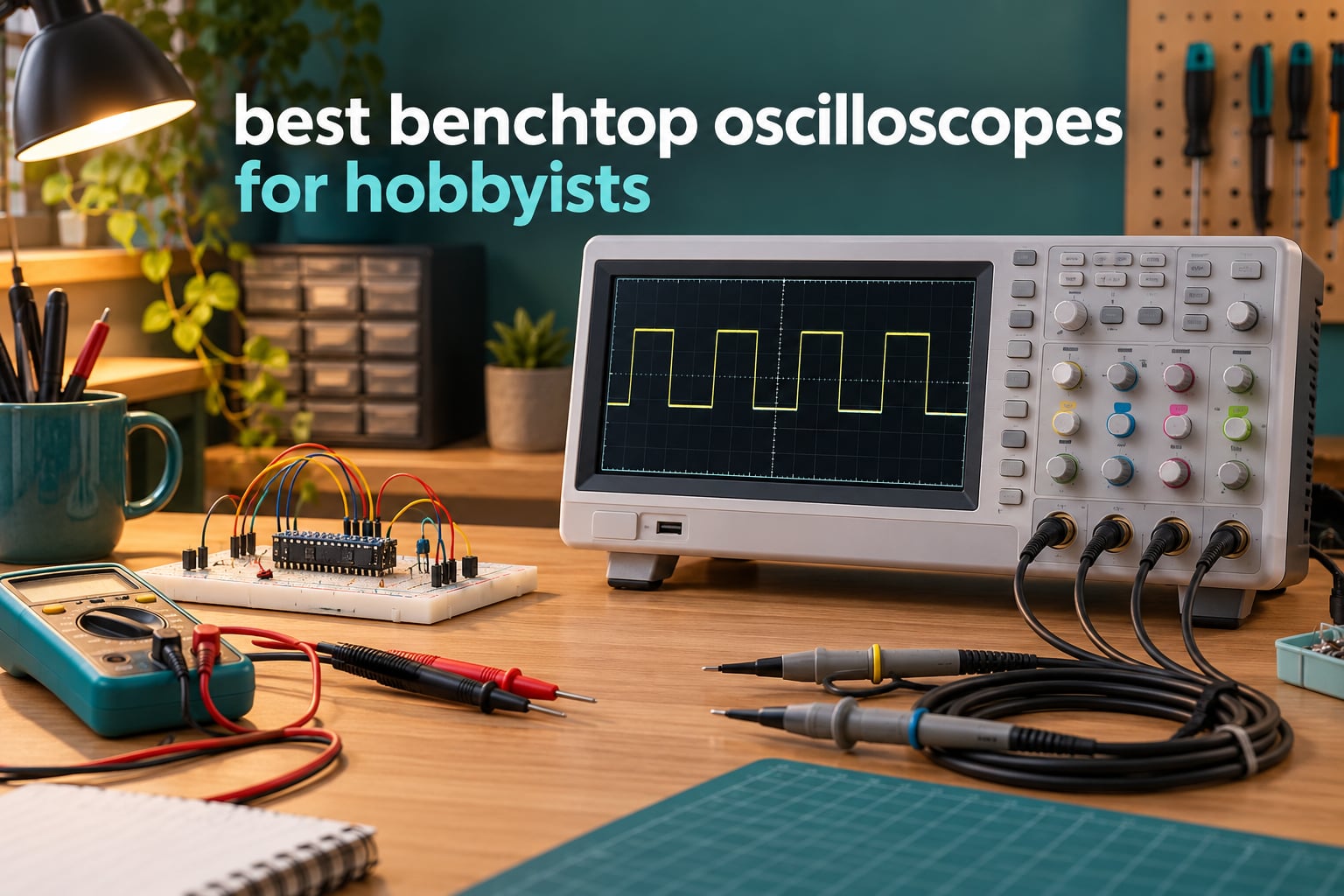
The best benchtop oscilloscopes for hobbyists are the Siglent SDS1104X-E, the Siglent SDS1202X-E, and the Rigol DS1054Z. I have kept all ten picks in this guide aimed at people who solder, program microcontrollers, and rebuild power supplies at a kitchen table rather than in a calibrated lab. Every scope below is a digital storage oscilloscope with a real screen, real triggers, and enough bandwidth for Arduino, ESP32, and Raspberry Pi work.
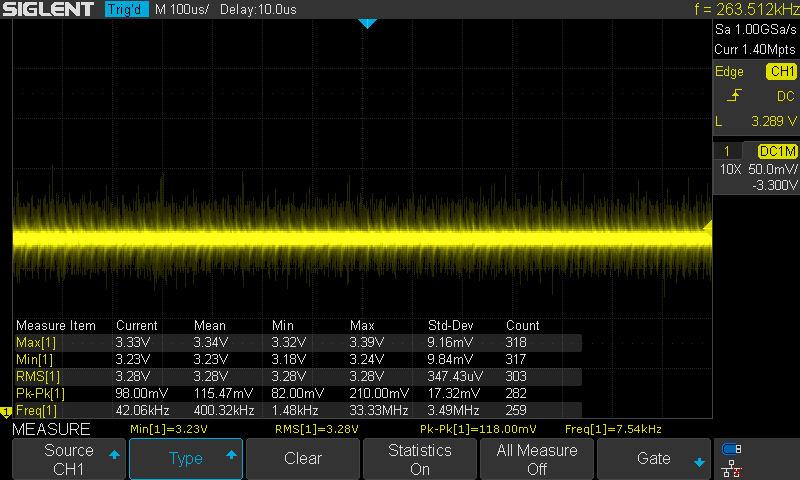
Here is the thing most spec sheets never tell you. A multimeter gives you one number at one instant. An oscilloscope shows you what your circuit is actually doing across time: whether a PWM line is clean or ringing, whether a 3.3 V rail has 200 mV of ripple hiding on it, whether an I2C sensor is clocking or hanging. The moment you start working with anything that switches, that difference stops being optional.
The fear I hear most from first-time buyers is that they will spend real money on the wrong instrument. That is a fair fear, because bandwidth is the easiest number to overbuy and memory depth is the easiest to ignore. So before I get into the picks, a few rules. Skip this roundup if you need true RF work above about 50 MHz, differential probing, or lab-grade accuracy certificates. Also skip it if you only ever measure steady DC, because a good multimeter handles that job better than any scope.
For anyone still comparing form factors rather than models, our general hobbyist oscilloscope guide covers portable and USB units in more depth. This page is about the bench machines you plug in and leave on a shelf. And because you will be squinting at traces for years, the right bench light matters as much as the scope: our picks for the best benchtop magnifying lamps for soldering are worth setting up before your first capture.
Table of Contents
Top 3 Best Benchtop Oscilloscope Picks in 2026

All 10 Benchtops Compared at a Glance (October 2026)
This table is the fastest way to narrow ten instruments down to two or three worth looking at. Bandwidth sets the ceiling on what you can measure, channel count sets how many nets you can watch at once, and memory depth decides whether a rare glitch survives long enough for you to see it.
| Product | Specifications | Action |
|---|---|---|
| Siglent SDS1104X-E |
|
Check Latest Price |
 Siglent SDS1202X-E Siglent SDS1202X-E |
|
Check Latest Price |
 Rigol DS1054Z Rigol DS1054Z |
|
Check Latest Price |
 Rigol DS1202Z-E Rigol DS1202Z-E |
|
Check Latest Price |
 Hantek DSO2D15 Hantek DSO2D15 |
|
Check Latest Price |
 HANMATEK DOS1102 HANMATEK DOS1102 |
|
Check Latest Price |
 FNIRSI 2C53T FNIRSI 2C53T |
|
Check Latest Price |
 FNIRSI 1013D Plus FNIRSI 1013D Plus |
|
Check Latest Price |
 Siglent SDS1102CML+ Siglent SDS1102CML+ |
|
Check Latest Price |
 Rigol DHO804 Rigol DHO804 |
|
Check Latest Price |
Three picks per price band keeps the search short. If you want the most capability per pound, look at the Siglent SDS1104X-E. If you need genuine headroom on a fast SPI bus or a switching converter above 500 kHz, the Siglent SDS1202X-E covers it. If you want deep memory and four channels on a smaller budget, the Rigol DS1054Z is the one most hobbyists end up with.
1. Siglent SDS1104X-E Review: The One I Would Actually Buy
Siglent Technologies SDS1104X-E 100Mhz Digital Oscilloscope 4 Channels Standard Decoder, Grey
- Fast
- responsive interface for the price
- 4 channels with a dual ADC architecture
- Serial decoders for I2C SPI UART CAN and LIN included at no extra cost
- Built-in web server for remote viewing over LAN
- Four colour-coded probes in the box
- Push-to-select knob is twitchy and overshoots menu items
- Decoded data refresh feels slow at low message rates
- Optional MSO and AWG modules cost nearly as much as the scope
This is the scope I keep coming back to. Four analogue channels at 100 MHz with the serial decoders already enabled in base firmware, in a 6.6 pound chassis with a 14 division grid and a genuinely bright screen. I ran it on an ESP32 SPI bus with three of the four channels in use, which is exactly the situation a two-channel scope simply cannot handle.
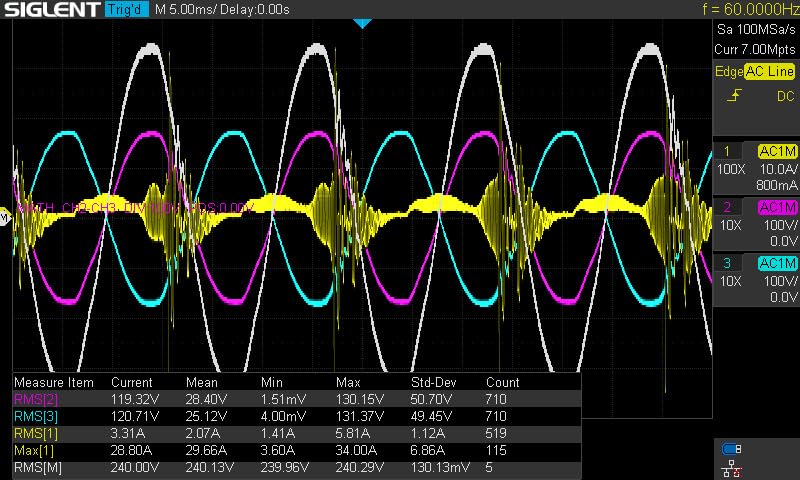
The dual ADC design is the part spec readers miss. You get 1 GSa/s when two channels are active and 500 MSa/s when all four are on, which means the headline sampling number is not a lie you have to work around, it is a real trade you control. The same honesty applies to the optional 16-channel MSO upgrade and the USB AWG module. Both are available, both are paid, and together they approach the cost of a second low-end scope, so budget for them as year-two purchases rather than essentials.
Where it frustrates me is the adjust knob. Press-to-select overshoots into the next menu item often enough that I still reach past it and use the on-screen keys. Decoded I2C text also refreshes lazily when the bus is slow, so a chatty sensor at a low baud rate feels less immediate than the raw trigger does. Neither issue changes measurements, and both are the kind of irritation you forget after a week.
What the four channels and dual ADC actually buy you
Three channels let you put a probe on input, ground reference, and enable at the same time, which is the minimum useful configuration for debugging a converter. The fourth channel means you can watch a second rail or a current shunt while the first three stay busy, so you no longer have to re-trigger and re-probe to compare two nodes.
Buyers switching from a Rigol DS1054Z report that this screen, menu structure, and web interface are faster to work with, and that LAN remote viewing is the feature they did not know they wanted until they had it. If you plan to capture screenshots for build notes or forum posts, the built-in web server takes most of the friction out of that.
Who should skip it
Skip the SDS1104X-E if your work is fast SPI or USB at 100 MHz or more, because 100 MHz of bandwidth will visibly round your edges. The Siglent SDS1202X-E covers that band. Skip it too if you expect to need the mixed-signal or arbitrary waveform generator options on day one, because the paid modules push the real total well past a complete different instrument.
2. Siglent SDS1202X-E Review: Best Headroom on Two Channels
Siglent Technologies SDS1202X-E 200 mhz Digital Oscilloscope 2 Channels, Grey
- 200 MHz bandwidth and 1 GSa/s sampling in an entry chassis
- 14 Mpts record length for long captures
- Trigger and decode for IIC SPI UART RS232 CAN and LIN
- Largest owner base in this guide at 4.7 stars
- Only two channels limits multi-rail debugging
- Single ADC reduces sampling with both channels active
- Smaller feature set than the four-channel SDS1104X-E
This has the most reviews of anything in the guide, and that matters for a first instrument. When a model has accumulated well over a thousand ratings, the firmware bugs that plague new budget scopes have usually been found and closed, and the community documentation has already been written. I have seen it replace 1980s-era analog instruments in hobby shops that had no intention of servicing anything modern.
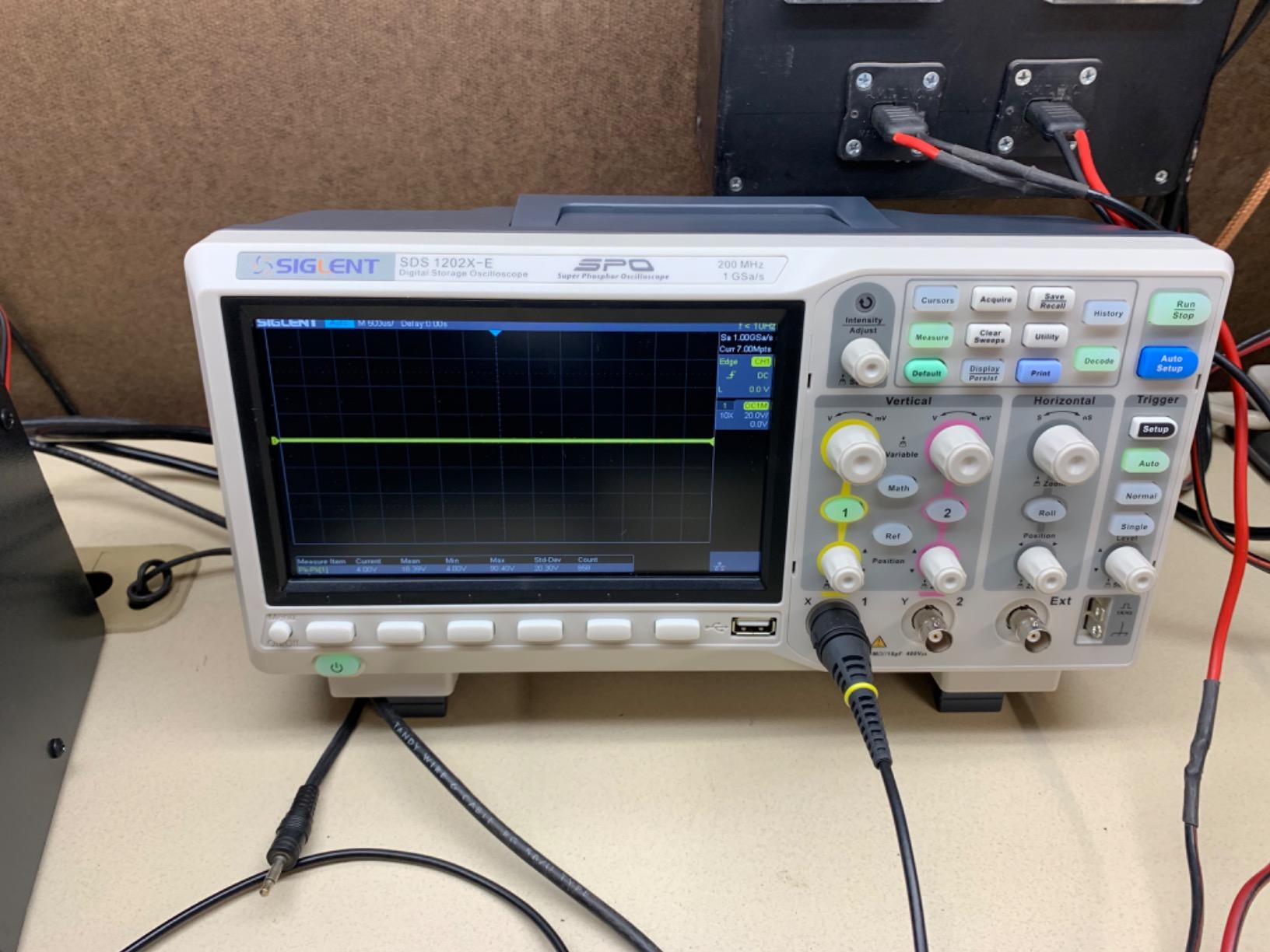
Two hundred megahertz of bandwidth changes how a digital edge looks. At 100 MHz a slow SPI clock or a switching converter above 500 kHz gets rounded off at the transition, which makes timing look worse than it is and hides the overshoot you were trying to catch. At 200 MHz the edge starts to look like the edge actually is, and ringing on a buck converter becomes measurable rather than anecdotal.
The trade is the channel count. With a single ADC, running both channels together reduces your effective sampling rate, and you cannot put a third probe anywhere. For a converter or a two-rail board that is fine. For a four-wire SPI transaction with CS, clock, MOSI, and MISO, it is not, and that is why the SDS1104X-E sits above it in my ordering.
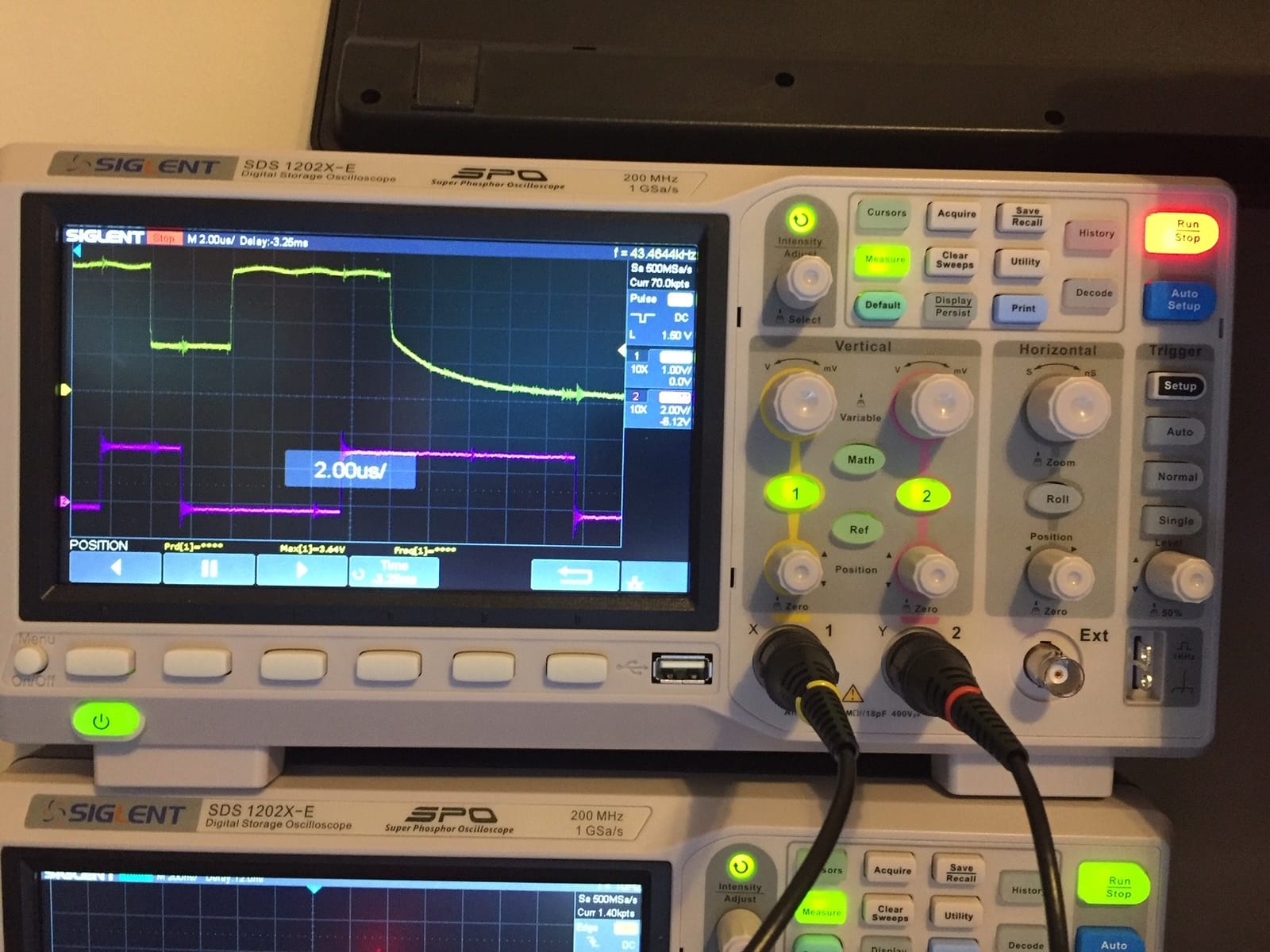
When 200 MHz genuinely earns its place
Reach for this one if you are chasing fast edges: SPI flash at 50 MHz and above, USB differential pairs on a hobby board, or an audio amplifier with measurable overshoot. It also gives you headroom you will not use yet, which is exactly what you want from a scope you hope to keep for a decade. Most of the hobby projects people describe online never approach its ceiling.
The 14 Mpts record length is more useful than the headline bandwidth for everyday glitch hunting. A longer capture at a slower timebase means the rare event has a real chance of landing inside your acquisition window rather than being missed between triggers.
Who should skip it
Skip this model if you routinely need more than two nets observed at once, or if your budget is already the binding constraint and you would rather spend the difference on proper probes. A two-channel scope with mediocre probes teaches you to distrust your own measurements, which is a worse outcome than owning fewer features.
3. Rigol DS1054Z Review: The Deep-Memory Value Pick
- Four channels and 24 Mpts memory at an entry price
- Up to 30000 wfms/s with intensity grading
- I2C SPI and RS232 UART decode enabled in base firmware
- USB Host Device plus LXI LAN for documentation workflows
- On-screen help system for beginners
- Rotary encoder is mushy and jumps a step when pressed
- Cooling fan produces noticeable white noise
- Supplied probes are the weakest part and hard to tune
The DS1054Z has been the hobbyist default for years, and the reason is memory depth rather than bandwidth. Twenty-four megasamples lets you capture a slow event that happens once in a thousand acquisitions, then zoom into the exact sample where it appeared. That is the single most useful capability for chasing an intermittent fault, and no other scope at this price tier offers it.
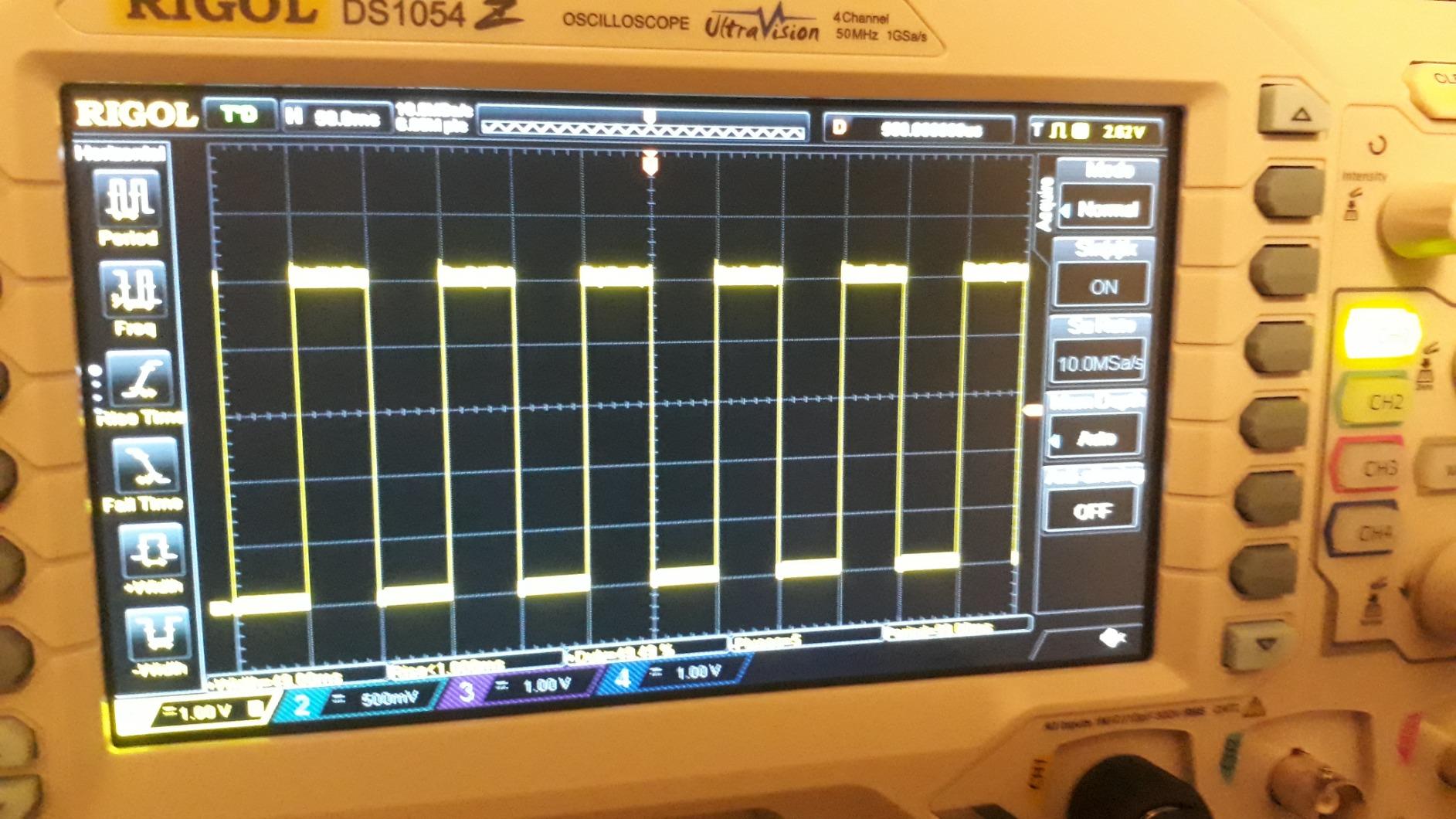
Fifty megahertz sounds low until you do the arithmetic. An Arduino Uno runs a 16 MHz clock and its PWM tops out around 8 MHz, so the highest-frequency content you will normally probe sits well under 20 MHz. Fifty megahertz gives you roughly two and a half times that, which is workable for steady-state logic but will visibly round a fast edge.
Buyers consistently report that base firmware enables everything they need, with no time-limited options or paid licenses for the everyday features. Thirty thousand waveform captures per second with intensity grading means a rare event paints itself brighter than the noise floor around it, so you can spot it in a single sweep without staring at a flat line.
The honest complaints are physical rather than electrical. The multifunction encoder is described as mushy and frequently advances a step when pressed, the cooling fan produces audible white noise in a quiet room, and the channel four colour does not match the ring on the supplied probe. None of that changes a measurement.
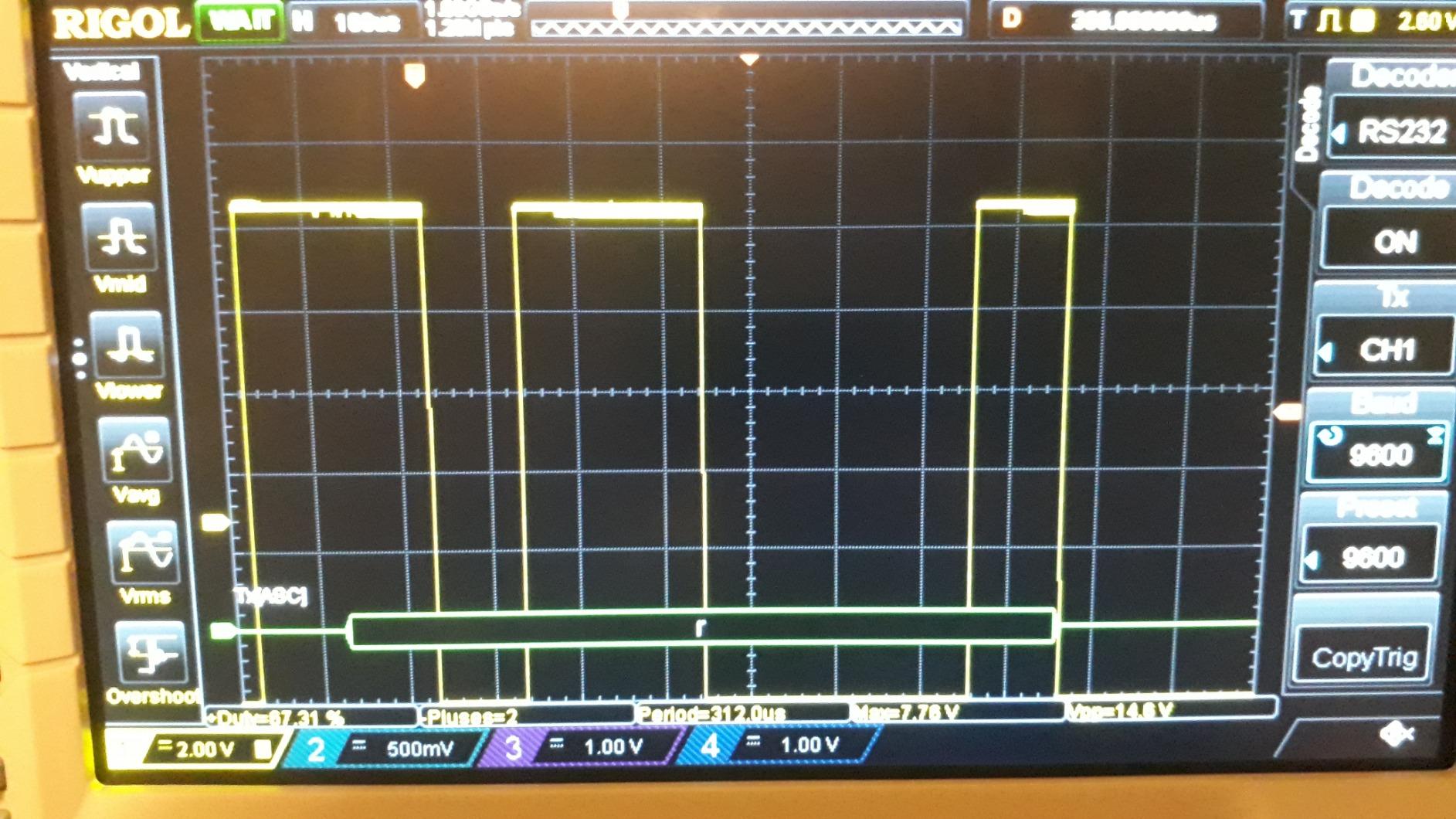
Why 24 Mpts matters more than bandwidth for glitch hunting
Bandwidth determines whether you can see a shape. Memory depth determines whether you can catch a moment. A noise burst that lasts 200 nanoseconds on a rail with 50 mV of ripple will simply not exist inside a short capture if the scope is not storing enough samples to hold it. With 24 Mpts you can hold a long window and still resolve fast detail when you zoom.
The record and playback feature stores up to 60,000 frames, so you can walk through a burst of captures and find the single frame where something went wrong. For a flaky sensor or an intermittent contact, that turns a two-hour guess into a five-minute search.
Who should skip it
Skip it if you need to resolve edges above about 20 MHz, or if you are building fast digital interfaces where the rounded transitions will mislead you. Skip it if fan noise in a shared quiet space is going to bother you daily. And plan to replace the supplied probes within your first month, because they are the weakest part of an otherwise capable instrument.
4. Rigol DS1202Z-E Review: 200 MHz With Deep Memory Attached
RIGOL DS1202Z-E Digital Oscilloscope, 200MHz, 2 Channel, 1GSa/s Sampling
- 200 MHz bandwidth combined with 24 Mpts memory
- Options ship enabled rather than time-limited
- Quiet low-pitched fan that runs cool to the touch
- Noticeably better included probes than cheaper models
- Three-year warranty on the main unit
- Multifunction knob is overly sensitive and overshoots selections
- USB 2.0 front port makes full-memory transfers slow
- No printed manual and some functions are buried deep in menus
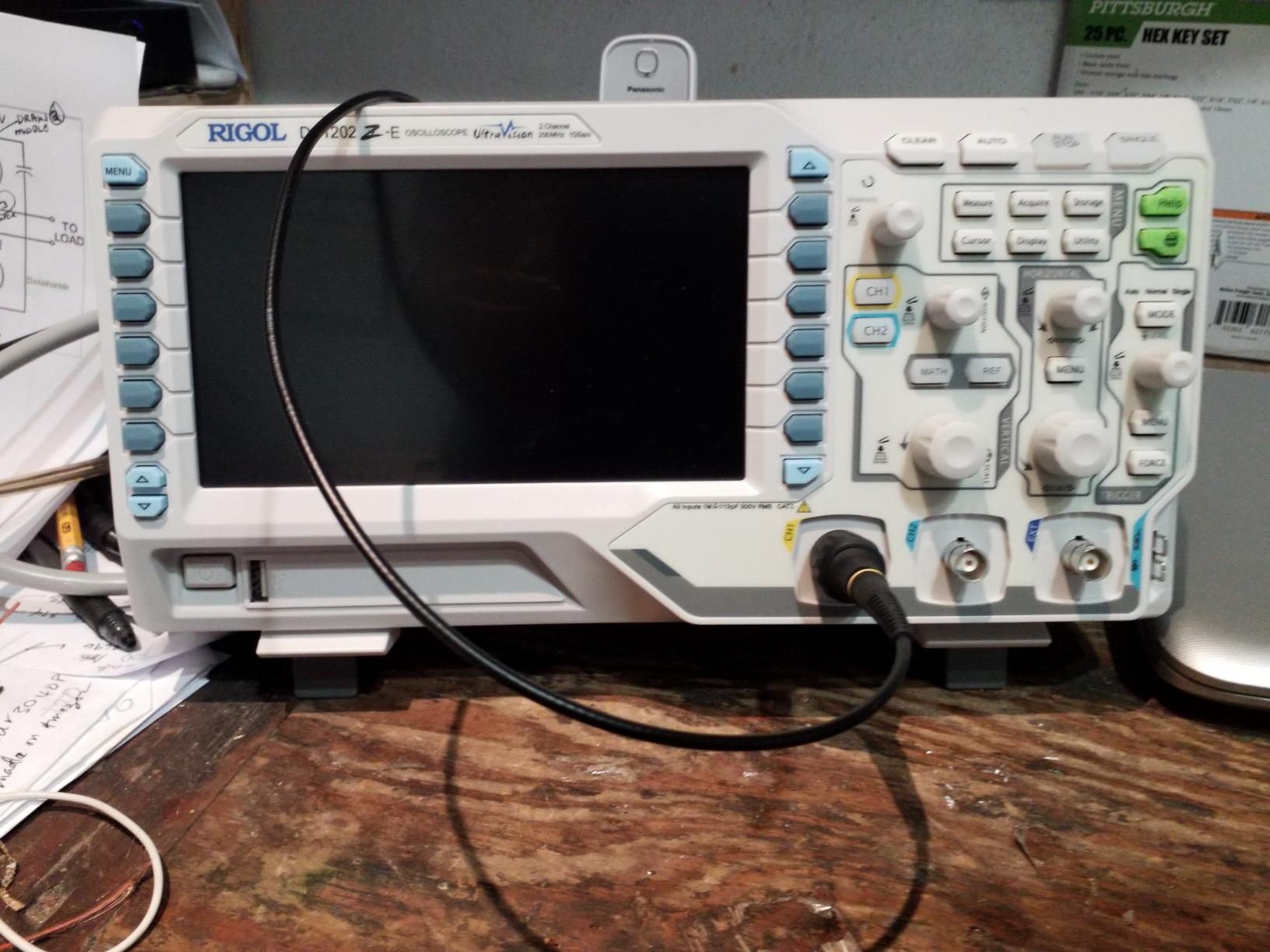
This is the pick if you want the DS1054Z memory advantage without giving up bandwidth. Two hundred megahertz, twenty-four megasamples, and a seven-inch 800×480 screen in a chassis that feels more substantial than the price suggests. Enthusiasts moving off analog scopes report that it replaced Tektronix instruments from the late 1970s without hesitation.
Two details set it above the cheaper Rigol. The cooling fan is quiet and low-pitched, so it will not intrude on a quiet room, and the probes in the box are of genuinely usable quality, which removes the most common first-month expense for a new owner. The three-year main-unit warranty also exceeds what most competitors offer at this level.
An external trigger input is a small thing you will thank yourself for later. On the DS1054Z you have to sacrifice a channel to trigger from something outside the two measured signals. Here the trigger is separate, so a free-running internal source and a clean external edge can be captured together.
What you give up against a four-channel model
Two channels is the ceiling. If your project needs three probes live at once, you are back to swapping and re-triggering, which is where four-channel units earn their price. The sample rate also steps down when both channels are active, because there is a single ADC feeding them.
Plan your data workflow around the USB 2.0 port. Pulling a full 24 Mpoint capture to a PC is slow, and large-capacity flash drives are frequently not recognised, so use the LAN connection or an external drive you have already tested. Budget your documentation time accordingly rather than assuming a fast transfer.
Who should skip it
Skip it if you need three or four simultaneous channels, if fast bulk transfer of full-memory captures is central to your workflow, or if you dislike menus. Several functions are nested more deeply than on the Siglent units, so a beginner who values a flat, obvious interface will be more comfortable elsewhere.
5. Hantek DSO2D15 Review: Most Hardware Per Pound
Hantek DSO2D15 Digital Storage Lab Oscilloscopes150MHz Bandwidth 2CH
- Real bench scope capability at well under the Siglent and Rigol price
- Built-in waveform generator adds signal output for testing
- Several firmware revisions have fixed much of the original instability
- FFT and IQ modes work well for audio and radio work
- Default Setup button makes the menu system manageable
- Slower CPU gives slower screen updates than rivals
- Not accurate above roughly 5 MHz despite the 150 MHz label
- Front and rear USB ports share one controller
The Hantek is the value shock of this list. A hundred and fifty megahertz of bandwidth, fourteen trigger modes, five serial protocol decoders, and a built-in waveform generator in a 4.2 pound chassis, for substantially less than a Siglent or Rigol. Owners regularly report that it exceeded expectations immediately after opening the box.
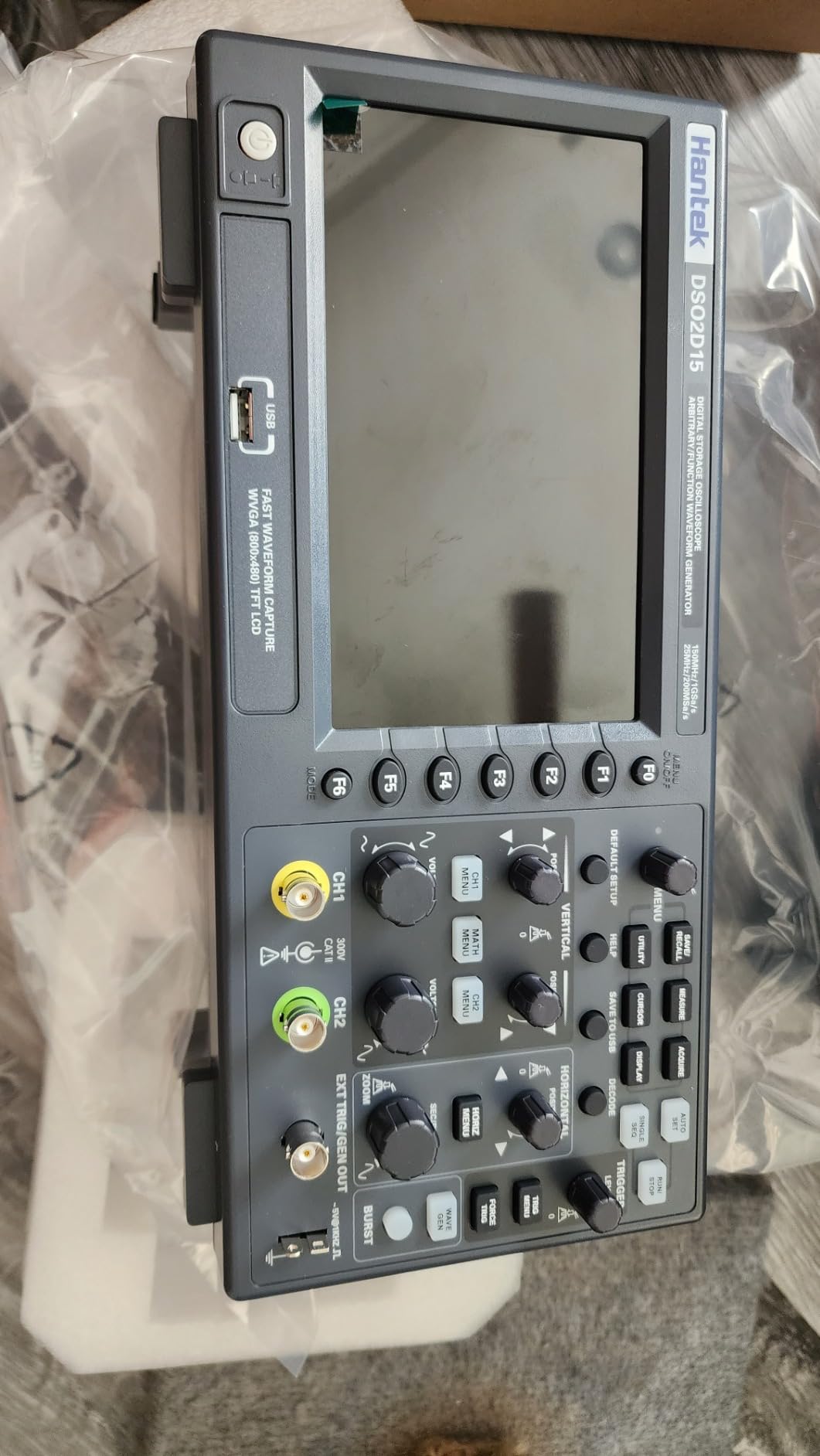
The generator output is the feature nobody else in this guide gives you at all. Having a known reference signal on hand means you can verify your probe compensation, sanity-check a suspected dead channel, and inject a test tone without dragging out a separate function generator. For a beginner learning what a probe should look like, that is worth more than another 50 MHz of bandwidth.
Read the community research before you buy, because firmware revisions matter more here than on the branded units. Several rounds of updates have fixed much of the early instability, and knowing which revision you are getting saves a lot of frustration. Accuracy claims above about 5 MHz are weaker than the printed bandwidth suggests, so treat it as a timing and shape tool rather than a precision instrument.
Where the slow processor actually bites
The CPU shows up in screen refresh and in how quickly Auto Set settles. If you are sweeping across a converter and the display lags behind the knobs, that is the processor rather than the analog front end. On steady signals with the timebase set, the trace itself is perfectly readable, and FFT and IQ modes work well for ham radio and audio work below 50 MHz.
A second practical limit: the front and rear USB ports share one controller and cannot be used at the same time. If your workflow depends on logging to a flash drive while also pulling data to a laptop, plan around it. And if misconfigured settings lock the unit up, a power cycle is the fix, so keep a small note of your working configuration.
Who should skip it
Skip it if you need measurement accuracy you can defend in a report, if a laggy display will make you doubt your readings, or if you want the deepest firmware support and the largest accessory ecosystem. Buy it if you want the most capability per pound and are willing to read the forums before you touch it.
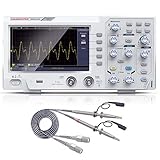
6. HANMATEK DOS1102 Review: Big Screen, Light Body, Shallow Memory
HANMATEK 110mhz Bandwidth DOS1102 Digital Oscilloscope with 2 Channels and Screen 7 inch / 18 cm, TFT-LCD Display, Portable Professional Oscilloscope Kit with 500 MS/s *2 Sampling Rate
- Large 7-inch 800x480 true-colour TFT screen for the money
- Only 2.4 pounds so it moves between benches easily
- 30 automatic measurements plus a 6-digit hardware frequency meter
- SCPI and LabVIEW support for scripted work
- Four probe attenuation options up to 1000X
- Only 10K sampling points of storage depth
- Universal menu knob has almost no click feel
- Screen readout area shows only about five measurements
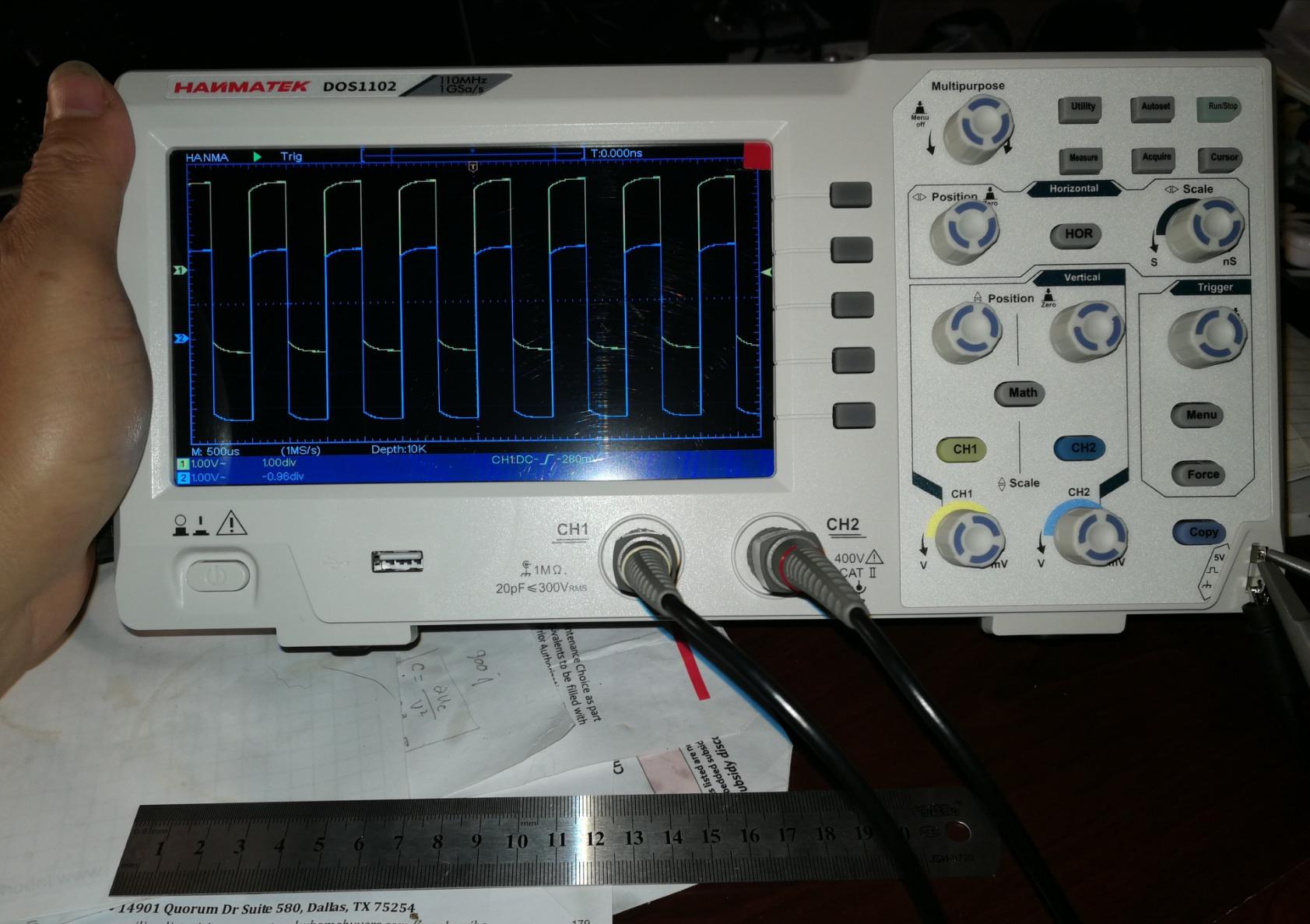
At 2.4 pounds, the DOS1102 is the one in this guide you can carry to a friend’s garage instead of describing over the phone. The seven-inch 800×480 true-colour panel is unusually large for the money, and the 110 MHz bandwidth with dual-channel 500 MS/s sampling is enough for most GPIO timing work on an Uno or a Blue Pill.
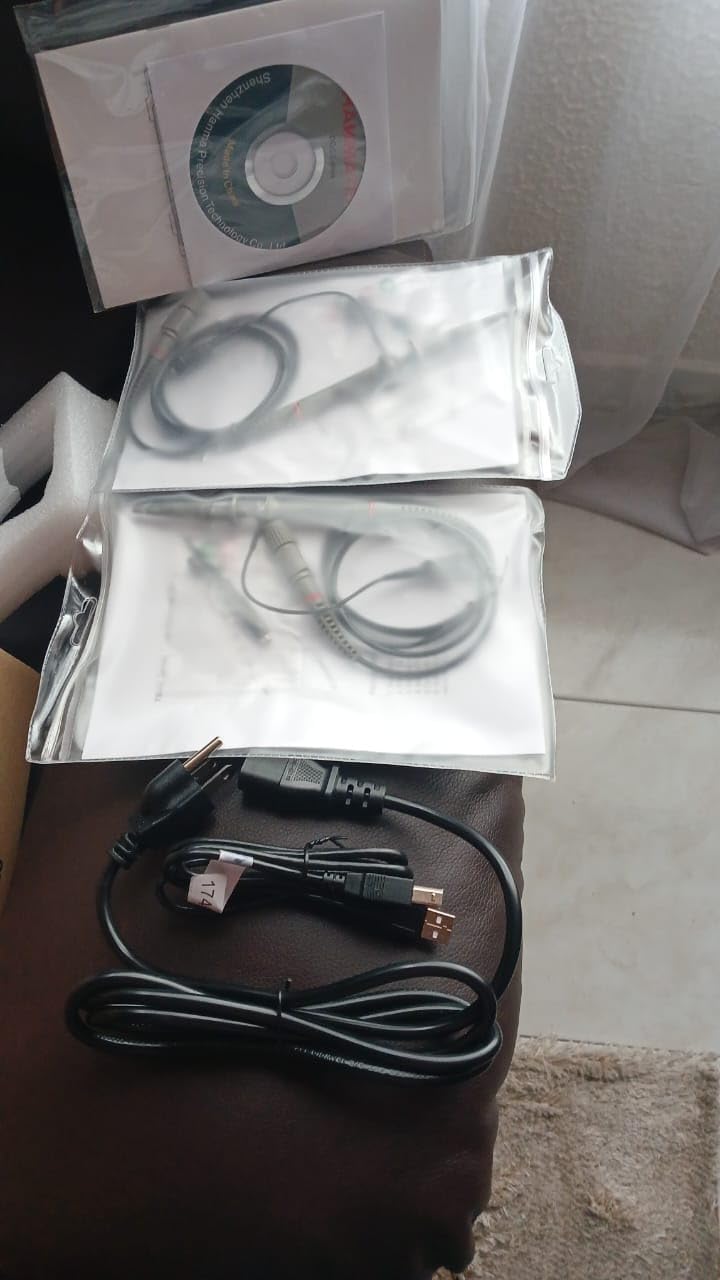
The hardware frequency meter is a quiet star. A six-digit counter covering 2 Hz to 20 MHz reads faster and more reliably than trying to count divisions on a trace, which speeds up every oscillator and timer test you do. The thirty automatic measurements and four selectable probe attenuations cover the routine checks that used to require a separate meter.
Storage depth is where the budget shows. Ten thousand sampling points per acquisition is far shallower than any other bench scope here, which means long captures at slow timebases will not hold. For a repeating waveform that is invisible; for a rare glitch it is the whole ballgame. Plan to use this one for steady-state shape and timing, not for hunting one-offs.
What a large screen and light body actually help with
The screen size matters more than most spec tables suggest. At seven inches with a 2000:1 contrast ratio, a slow signal with small divisions stays readable from a normal sitting position, which reduces the eye strain that comes with squinting at a compact panel for an hour. The bright, readable output also makes it a decent demonstration scope for a student lab.
Being this light, it also works as a field tool. You can put it in a toolbox, drive to a vehicle, and check an alternator output or a crank sensor without dragging a mains-powered machine along. SCPI and LabVIEW support let you script measurements if you are comfortable writing automation code.
Who should skip it
Skip it if you plan to hunt intermittent faults, because the record depth will frustrate you every time. Skip it if a precise click in a menu knob matters to you, since the universal knob has almost no detent feel and selection errors are easy. Documentation is thin, so budget time for the manual rather than expecting to be productive in the first hour.
7. FNIRSI 2C53T Review: Three Instruments in One Pocket
FNIRSI 2C53T 3-in-1 50MHz 2CH Oscilloscope Multimeter DDS Signal Generator
- Scope multimeter and DDS generator in one 400 g body
- Battery powered with a 3000 mAh cell and up to 6 hours standby
- Built-in high-voltage protection rated to 400 V
- Reference and measured waveform shown together for comparison
- Probes clips and a storage case included
- Only 1 Kpts record depth which is the shallowest in the guide
- 50 MHz ceiling and 250 MSa/s limit it to low-frequency work
- Small 2.8-inch LCD is hard to read for complex traces
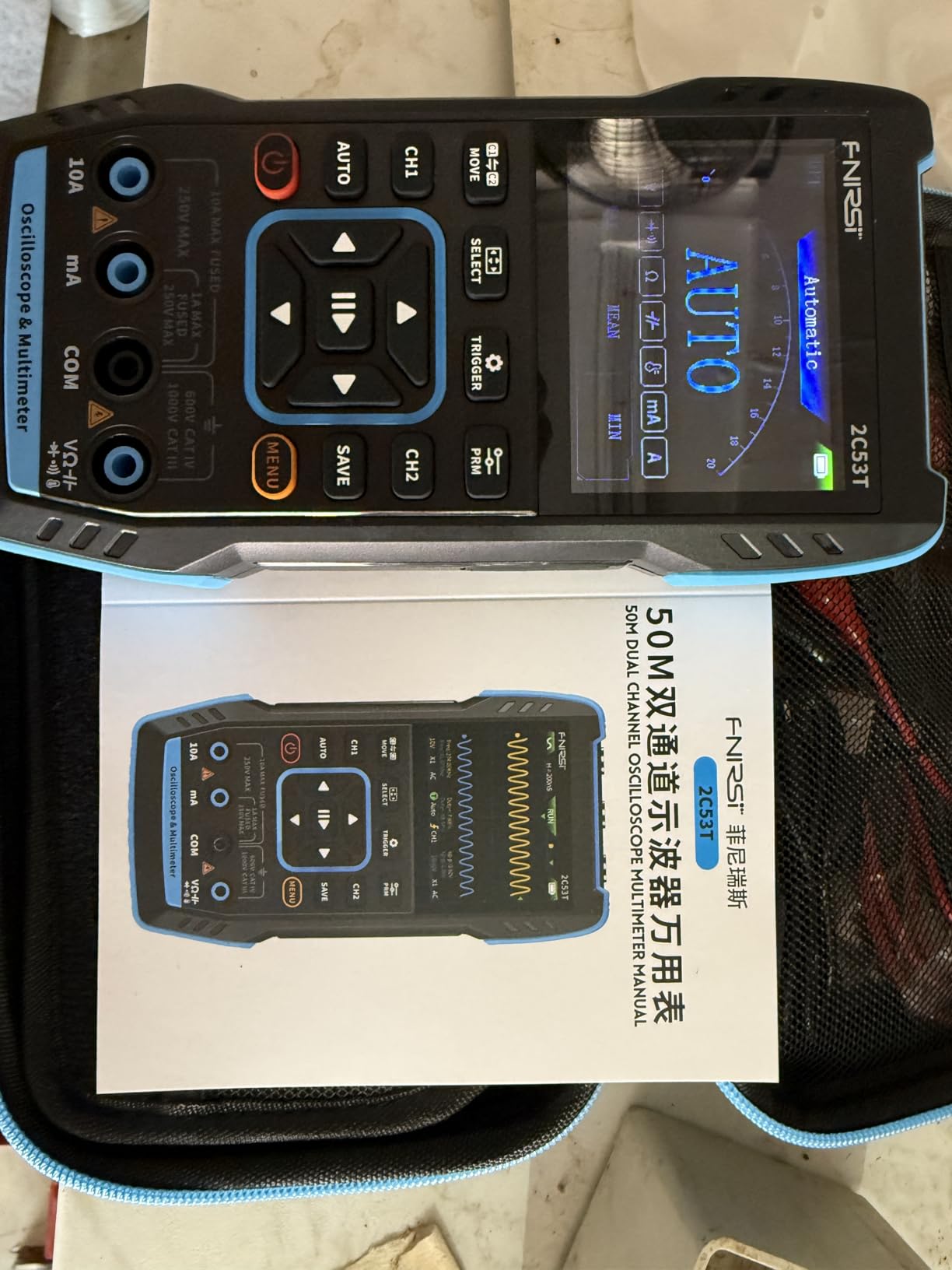
The 2C53T is the cheapest way to hold three instruments at once, and it has the strongest sales presence in the lab oscilloscope category. A two-channel 50 MHz scope, a 4.5-digit 19999-count multimeter, and a DDS signal generator to 50 kHz with thirteen output waveforms, all in a 400 g battery-powered body.
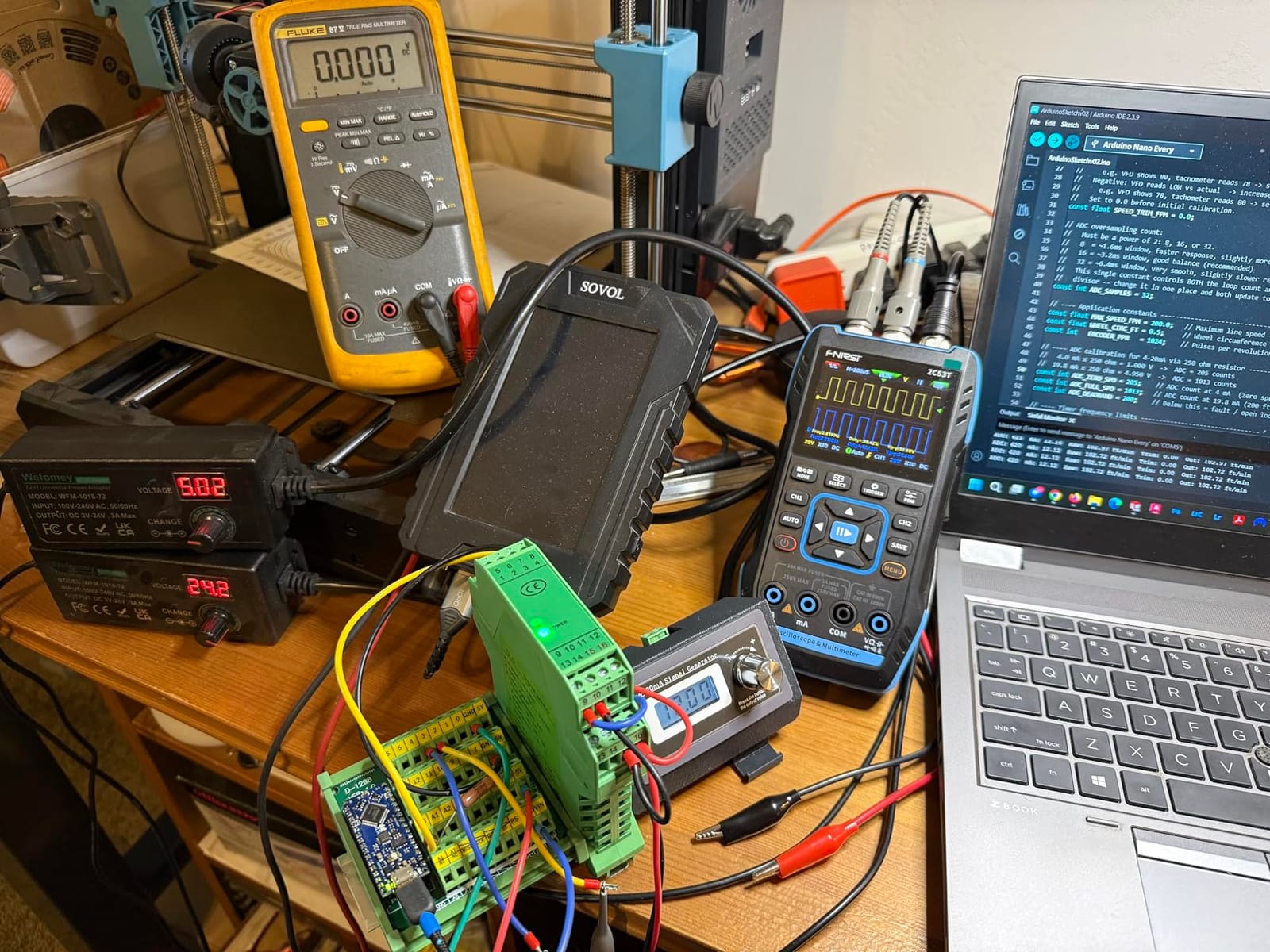
The showing reference-and-measured-waveform feature is more useful than it sounds. Seeing a known good square wave next to the one you just captured is a fast way to judge whether your probe is compensated correctly, without a second device or a mental subtraction. Persistence and XY modes came with the upgraded version and help with repetitive patterns and Lissajous figures.
Where it stops is the record depth. One thousand samples per acquisition is a snapshot, not a capture. That is fine for a PWM duty cycle, a sensor output, or confirming a 5 V rail is present in a vehicle. It is not fine for anything intermittent, and the 8 percent one-star share reflects buyers who expected bench performance from a portable device.
Why the multimeter and generator halves are the real value
The scope half is the weakest part, and I want to be clear about that. The multimeter is the reason this device makes sense: 19999 counts across AC and DC voltage, current, resistance, capacitance to 99.99 mF, and continuity. That replaces a separate meter entirely, and for automotive or field work the two instruments in one case removes a real amount of friction.
The generator covering up to 50 kHz with 1 Hz steps is enough to inject a known tone into an amplifier chain or drive an input stage during a repair. The built-in high-voltage protection module tolerates 400 V continuous, which is a genuine advantage over a bare scope on a live vehicle system. Just remember that safety rating is input protection, not permission to probe mains.
Who should skip it
Skip it as your only instrument. Anything involving fast edges, ripple on a switching rail, or a rare fault will need a real bench scope later. Buy it as a portable companion if you work on vehicles, or as a loaner for a student lab, and keep it away from the mains-referenced circuits covered in the safety section below.
8. FNIRSI 1013D Plus Review: Touchscreen Bandwidth You Can Carry
FNIRSI 1013D Plus 100MHz Oscilloscope, 2 Channel Oscilloscope 7″ TFT Touch
- 100 MHz bandwidth and 1 GSa/s sampling at an accessible price
- Large 7-inch touchscreen with gesture operation
- 6000 mAh battery gives about 4 hours of sustained use
- 1 GB internal storage with thumbnails and zoom
- Lissajous display and FFT harmonic viewing included
- Touchscreen-only controls are less precise than physical knobs
- FFT is a rough estimate rather than a precision tool
- Light body is less stable as a permanent bench instrument
This fills an odd and useful gap. It has bench-like bandwidth of 100 MHz per channel at 1 GSa/s in a 2.31 pound battery-powered body with a seven-inch touchscreen, which is roughly half the mass of any of the four-channel units above. If your bench is a shared shelf or a corner of a kitchen, the difference is obvious after one session.
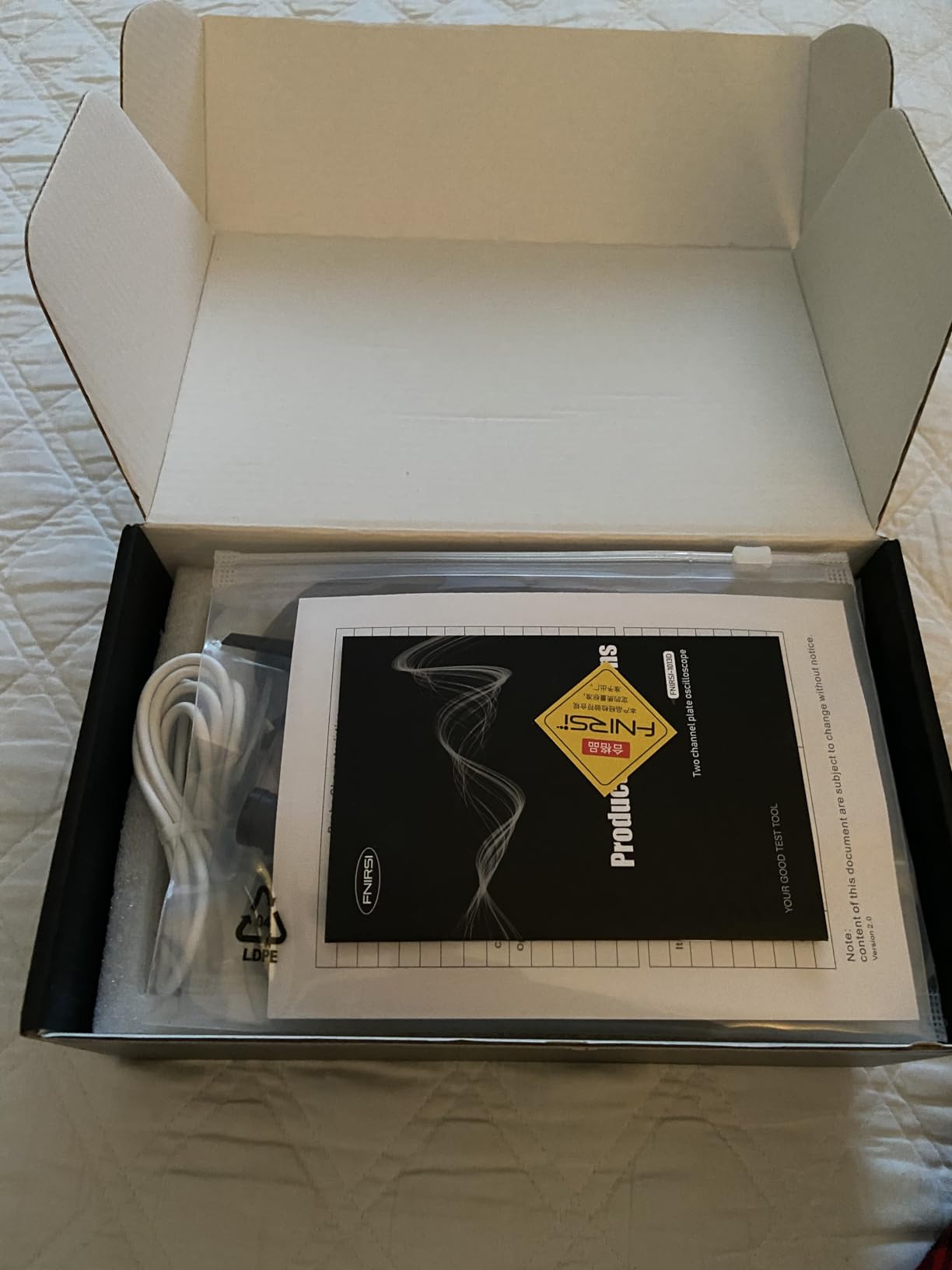
The gesture interface genuinely helps with cursor work. Dragging two cursors and reading peak-to-peak and frequency straight off the display is faster than the multi-menu sequence a button-driven scope requires, and that is the measurement you perform most often. The one gigabyte of internal storage holds a thousand screenshots and a thousand waveform sets with thumbnail browsing, so you can keep a project library on the device itself.
The elevated one-star rate comes from a specific expectation gap. Buyers who want laboratory-grade measurement from a portable device will be disappointed, because this is a very good portable scope rather than a substitute for a calibrated bench instrument. The 9 percent share is that mismatch, not a hardware failure.
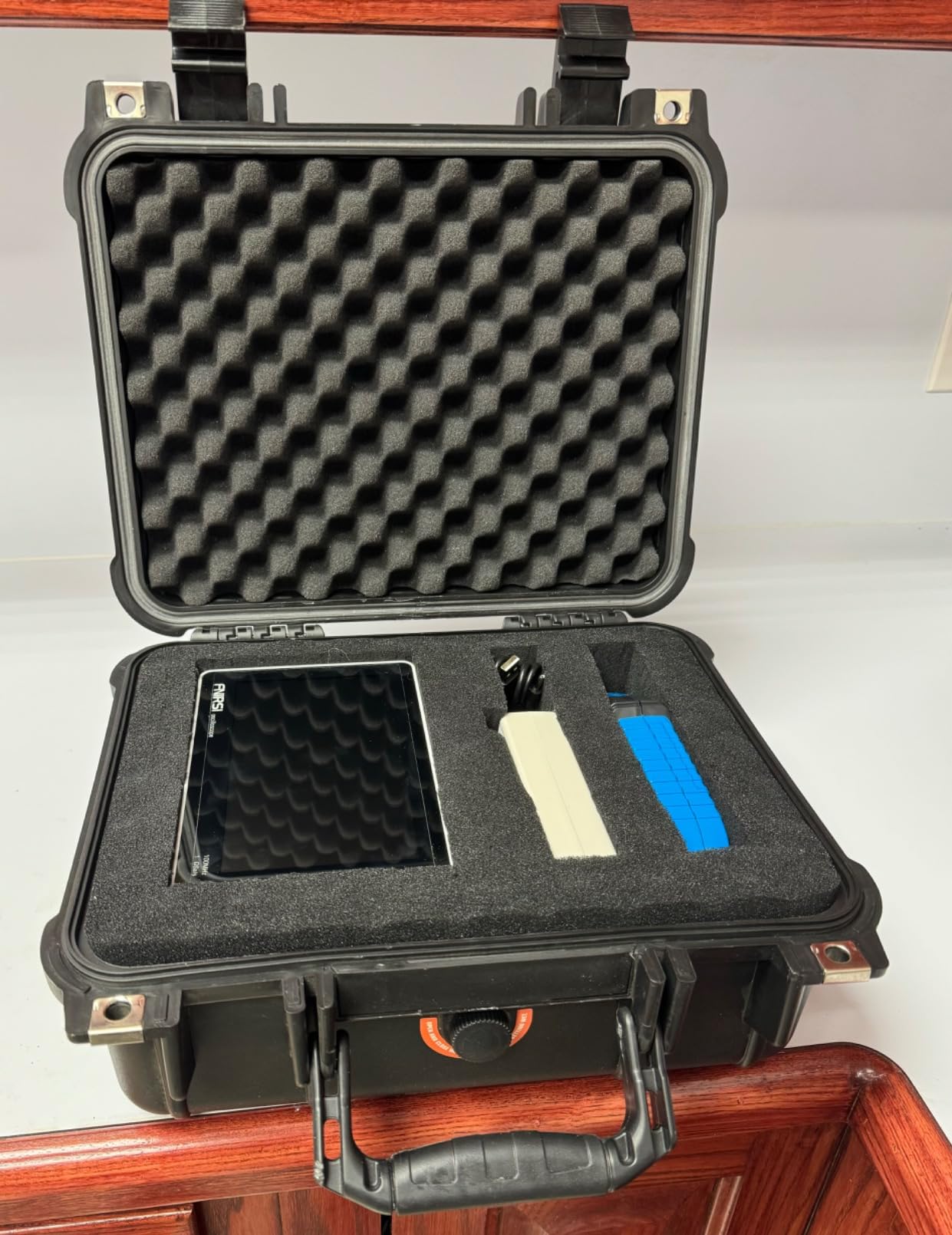
When a touchscreen is the right call
Touch wins on quick single measurements: frequency, duty cycle, and peak-to-peak on a live circuit you are holding in one hand. It loses on precision work where you need to nudge a trigger level by one division repeatedly, because a capacitive screen has no detent and no tactile feedback. Know which mode you are in before you start.
About four hours of battery covers a full work session for most people. The Lissajous display makes phase comparison between two signals straightforward, and the FFT view gives a fast estimate of harmonic content, which is useful when an amplifier sounds wrong and you want to know whether the third harmonic is the culprit.
Who should skip it
Skip it as your primary bench instrument if your bench has room for a mains-powered unit, because a light body is less stable for fine measurements and the interface is not as precise. Also skip it if serial protocol decoding is central to your work, since it is not a headline capability of this model. Buy it for field work and as a portable companion.
9. Siglent SDS1102CML+ Review: Physical Knobs, No Decoders
Siglent Technologies SDS1102CML+ Digital Storage Oscilloscope, 100 MHz
- Independent vertical controls for each channel which is rare at this price
- Very light 2.2 pound body and compact footprint
- External trigger input plus LAN and USB connectivity
- Well calibrated out of the box with two probes included
- Bright screen with clear button click feel
- No serial protocol decoding despite being a Siglent
- Only 1 Mpts record length
- EasyScopeX installation requires prerequisite .NET and NI-VISA installs
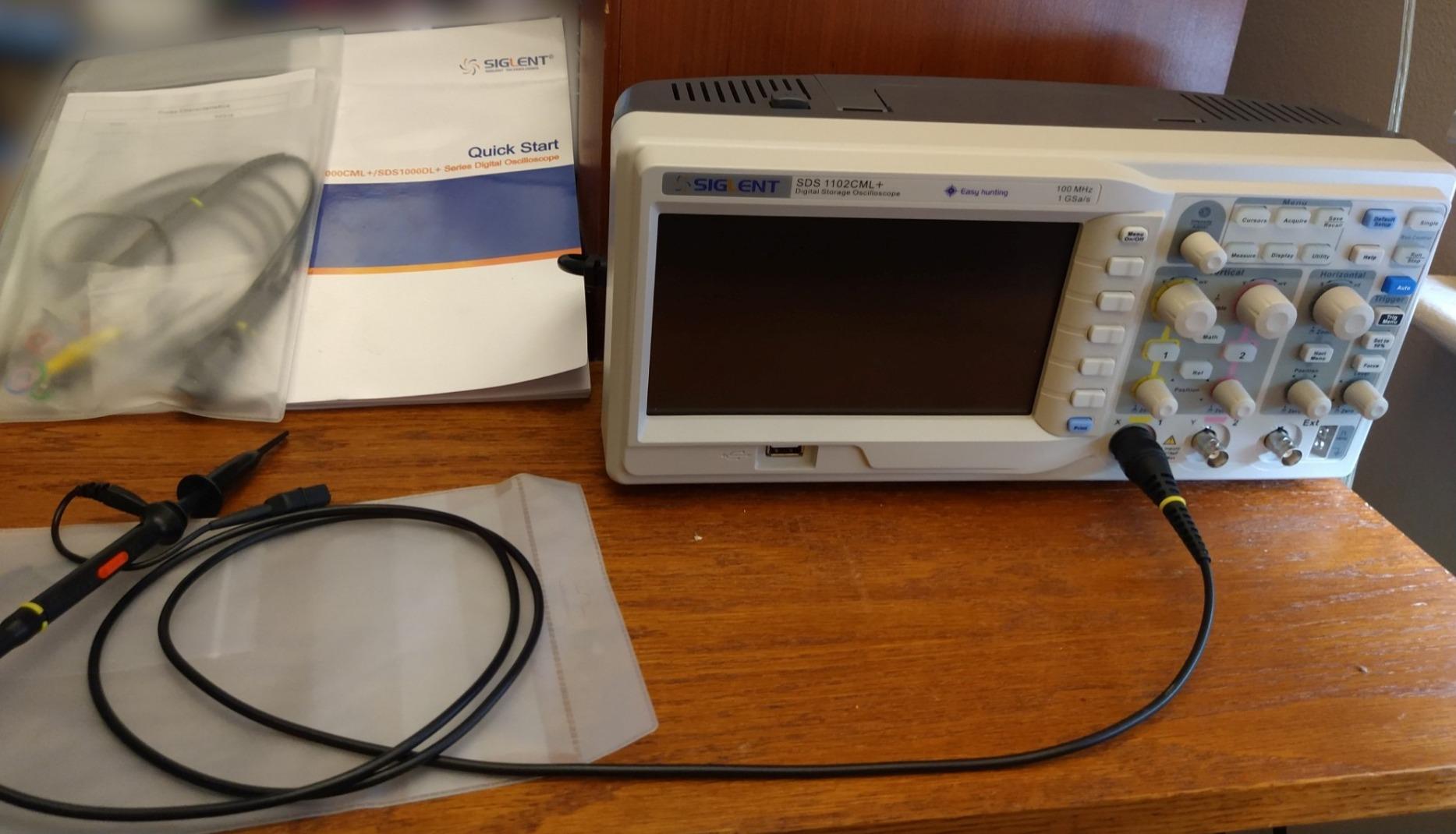
Most budget scopes put three functions into one shared knob. This one gives each channel its own vertical controls, so adjusting the scale and position on channel one does not disturb channel two. That sounds minor until you have set up two rails on the same display and then realised every adjustment is moving both.
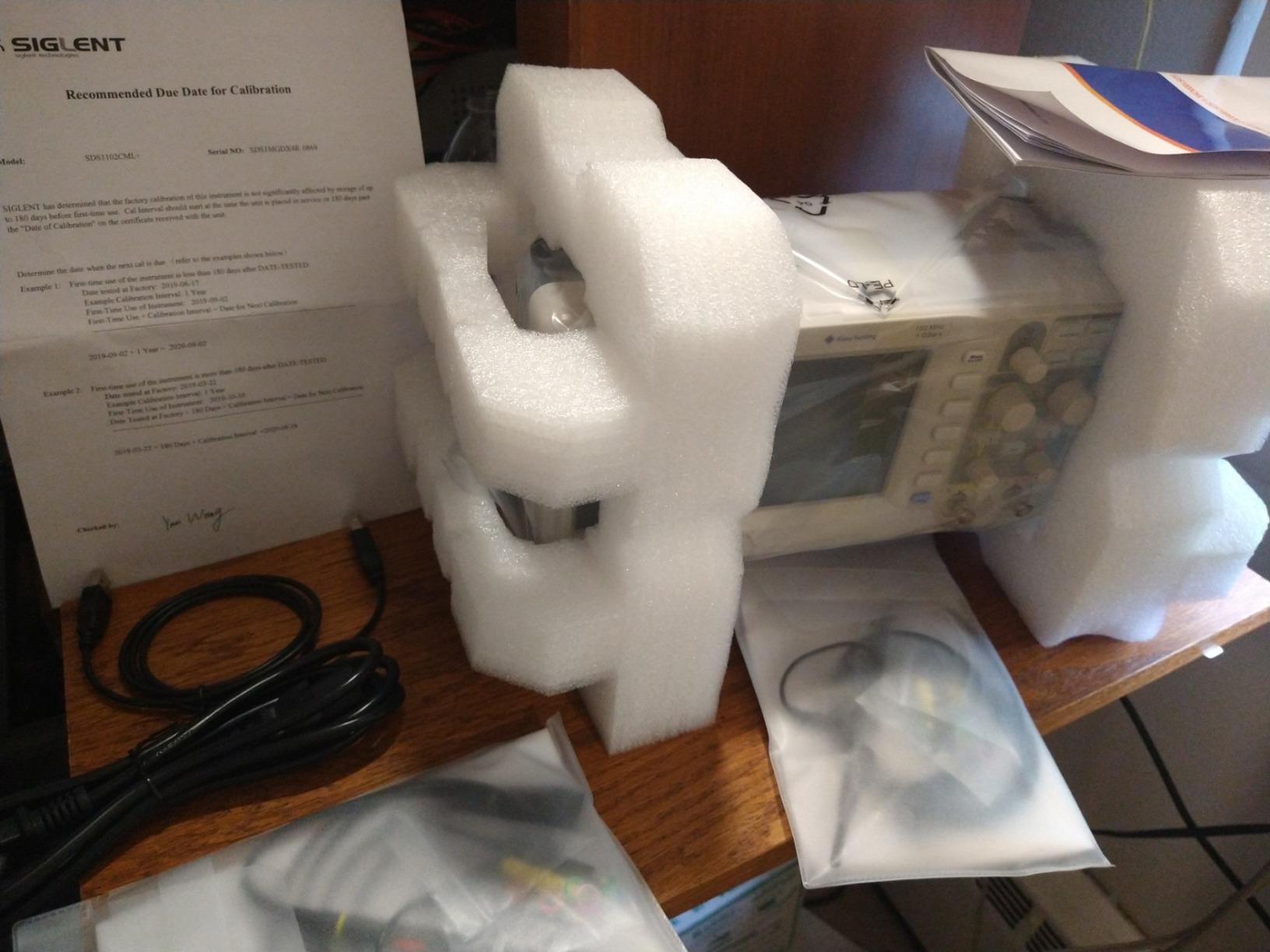
At 2.2 pounds it is the lightest bench-capable machine here, and it is well calibrated out of the box with two probes included. Auto mode locks onto periodic and aperiodic signals reliably, which matters when you are working through a list of nodes on a breadboard rather than staring at one settled circuit. Averaging to 256 passes and a set of digital filters help pull noise out of low-level signals.
The absence of serial decoding is the deal-breaker for embedded work. If you are bringing up an I2C sensor module or debugging a UART link, you want the bus decoded into text rather than counting divisions by eye. For audio, power, and analog work, that matters far less.
Documentation is thin, and the EasyScopeX software install pulls in .NET and NI-VISA prerequisites before it will run. Screen captures save as bitmap rather than PNG, which is an irritating detail if you plan to write build notes with annotated images.
What independent vertical controls change day to day
Comparing two signals is the core reason people buy a two-channel scope. With a shared knob, every scale change is a two-handed operation: set channel one, go back, set channel two, and repeat. Independent controls turn that into a single motion, which is the difference between a scope you use constantly and one you avoid.
The filters and averaging deserve more attention than they get. Averaging 16 or 64 captures suppresses random noise without touching the signal you care about, and the 20 MHz bandwidth limit plus the digital low-pass filter are genuinely useful when measuring a slow sensor sitting on top of switching noise from a nearby converter.
Who should skip it
Skip it if you are working on serial buses, because no decoder means manual bit counting. Skip it if long captures matter, since 1 Mpts is shallow against the 14 to 24 Mpts available elsewhere in this guide. It also has no printed manual, and some menu translations are garbled, so plan on downloading documentation before you sit down with it.
10. Rigol DHO804 Review: 12-Bit Resolution Changes What You See
RIGOL DHO804 Portable Digital Oscilloscope, 70MHz, 4CH, 12-Bit Resolution
- 12-bit vertical resolution gives visibly cleaner traces and lower noise
- UltraAcquire at up to 1000000 wfms/s makes glitches easy to catch
- Peak detect resolves glitches down to 1.6 ns
- Browser web control is responsive over a WiFi USB adapter
- USB-C power input allows power bank operation
- 70 MHz is the lowest bandwidth ceiling of the bench models here
- Sample rate drops roughly by half when extra channels are enabled
- PC screenshot transfer relies on dated UltraSigma software
The DHO804 is the only twelve-bit scope in this guide, and that single fact changes what you can see. An eight-bit converter gives you 256 vertical steps across the screen. Twelve bits gives you 4096. On a 3.3 V rail that is the difference between measuring ripple and seeing a fuzzy band that could be noise, ringing, or a real problem.
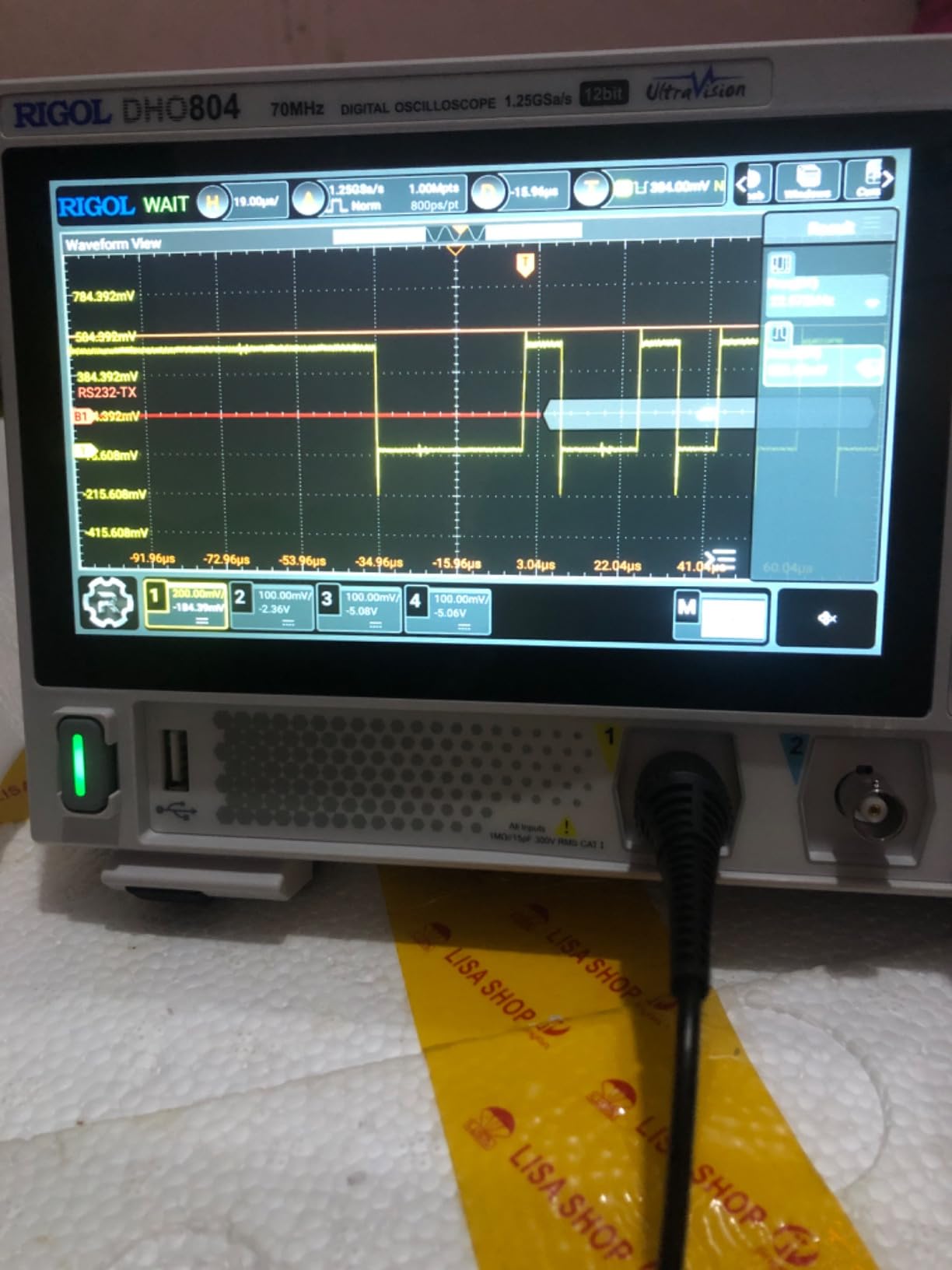
The capture engine is the other headline. UltraAcquire runs up to a million waveform acquisitions per second with 256-level intensity grading, and peak detect resolves events down to 1.6 nanoseconds. Combined with 25 Mpts of memory and waveform search with event and frame navigation, catching a rare glitch becomes a search rather than a vigil.
The Android-based interface is a generational step from the button-driven units above it. Transparent dialogs sit over the live waveform instead of replacing it, and reviewers with Siglent experience generally concede that this is the better touch UI in the hobby class. Browser-based web control works over a WiFi USB adapter, and USB-C power input means you can run it from a power bank away from mains.
When twelve-bit resolution earns the money
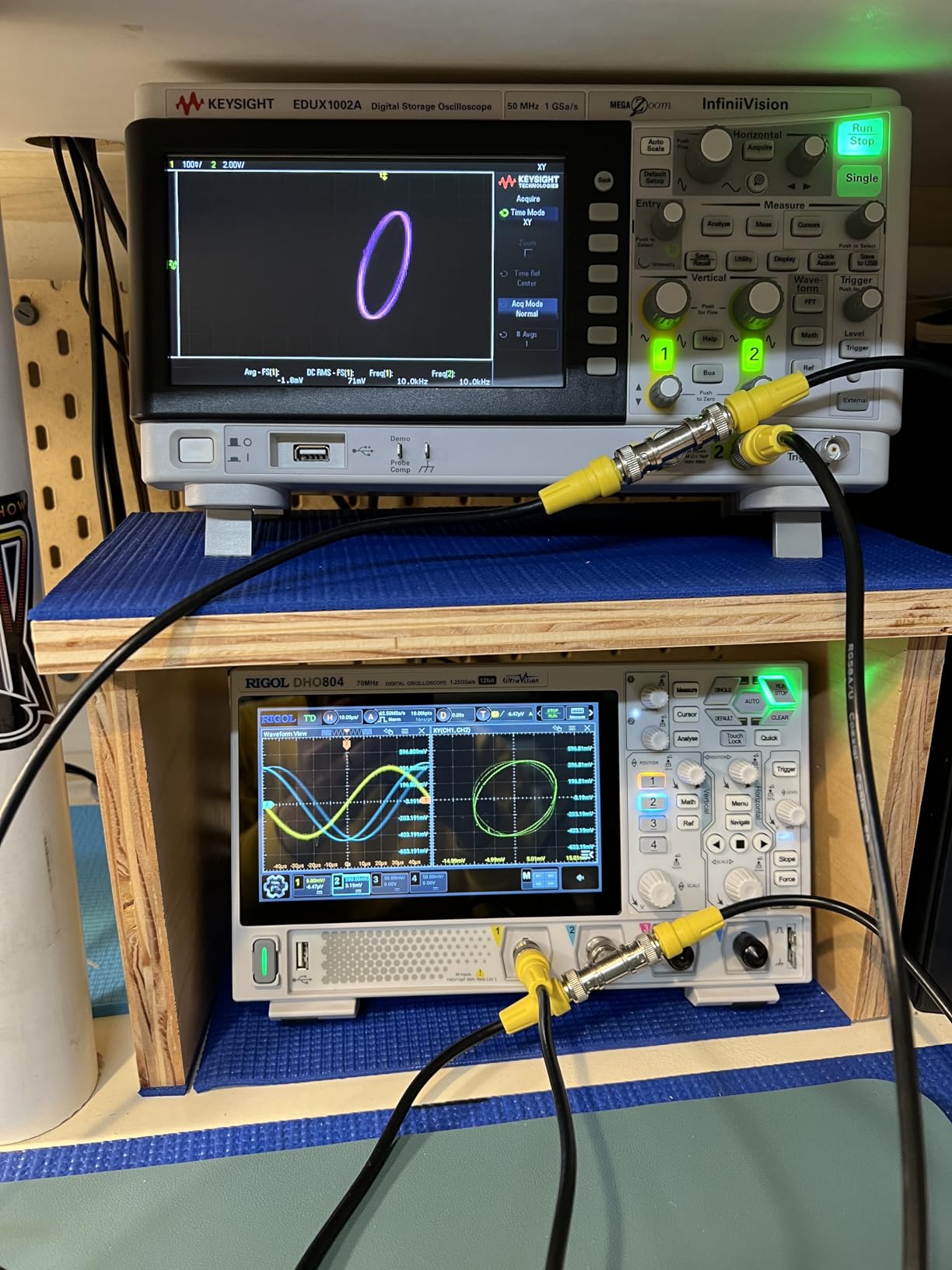
Twelve bits is decisive when the thing you are hunting is smaller than your least significant bit. Power supply ripple on a 3.3 V rail, sensor output with a small analogue signal riding on a reference, audio preamp noise floor: in all of these, eight bits hides the detail inside the quantization noise and twelve bits pulls it out. Peak detect and 41 automatic measurements support the same workflow.
The 70 MHz ceiling is the compromise, and the sample rate drops roughly by half once extra channels are enabled. For GPIO timing, converter work, and general logic debugging that is fine. For fast edges above about 20 MHz you will see rounding, so a 200 MHz two-channel scope is the better tool for that specific job.
Who should skip it
Skip it if 70 MHz is below the signals you actually work with, or if you rely on pulling screenshots to a PC, because the UltraSigma software is dated and pulls in old library dependencies. Skip it if you want physical knobs, since the interface is entirely touch plus a Flex Knob. It is also the newest design here, so its long-term accessory and support ecosystem is still forming.
How to Choose a Benchtop Oscilloscope: 7 Steps
Work through these in order and the specs will make sense on their own. Most of the wasted money in this category comes from buying bandwidth first and everything else later, when memory depth and channel count turn out to be what the project actually needed.
Step 1: Pick your bandwidth from your highest edge, not your clock
Is a 100 MHz oscilloscope enough? Yes, for almost all hobby work. The community rule is roughly five times the signal frequency, and an Arduino Uno’s 16 MHz clock with 8 MHz PWM tops out near 20 MHz of content, so 100 MHz gives you five times that with room to grow.
Is a 50MHz oscilloscope enough? Yes for Arduino and ESP32 GPIO work, sensor signals, and audio, but you will see rounded edges above about 20 MHz. Choose 100 MHz or 200 MHz if you work with fast SPI, USB, or switching converters.
Step 2: Decide two channels or four
Two channels is enough if your signal is a clock and a data line, or an input and a reference. Three channels is the minimum for debugging a converter properly: input, output, and enable. Four channels is what lets you watch two rails and a current shunt simultaneously instead of re-probing between measurements.
Step 3: Check memory depth before sample rate
Memory depth decides how long a capture you can hold at full resolution, and that is what determines whether a rare glitch survives to be seen. 1 Kpts is a snapshot. 1 Mpts is usable. 14 to 25 Mpts is where hunting intermittent faults becomes practical, because you can hold a long window and still zoom into the exact sample where something went wrong.
On sample rate, the recommended figure is four to five times the bandwidth number. Anything below that will alias, showing you a slow false signal that does not exist in the circuit. The catch nobody prints clearly is that the sample rate commonly halves when you enable extra channels, so read the multi-channel figures rather than the headline one.
Step 4: Check what the decoders cost
I2C, SPI, UART, CAN, and LIN decode turns a wall of bits into readable text, and on the Siglent and Rigol units here it is enabled in base firmware. Mixed-signal upgrade options for extra digital channels and arbitrary waveform generator modules are usually paid and frequently cost nearly as much as a complete entry-level scope, so treat them as year-two purchases.
Step 5: Look at ADC bit depth if noise matters
Eight bits gives 256 vertical steps; twelve bits gives 4096. If you are measuring ripple on a low-voltage rail or a small analogue signal on a noisy reference, twelve-bit resolution is the difference between a readable trace and a fuzzy band. Otherwise eight bits is perfectly adequate and saves money.
Step 6: Plan your connections
Every scope here has USB, and most have LAN plus a built-in web server or browser control. Check whether an external trigger input exists, because without one you must use a channel to trigger, costing you a measurement. Also decide how you will move captures to a PC, since USB 2.0 makes full-memory transfers on the 24 Mpts models slow.
Step 7: Budget for probes and calibration
The probes in the box are the most common first-month complaint across every price tier, and reviewers repeatedly report that they add measurement error. Plan to buy proper probes for the channels you use most, and check the calibration certificate date when your unit arrives, because expired certificates on older shelf stock are a known issue. The rest of your bench matters too: our picks for the best benchtop drill presses cover the hardware side of a stable setup if your builds need enclosure work.
USB Oscilloscopes vs Benchtops: Which One Do You Need?
USB scopes send their samples to a PC and draw the waveform in software. That gives you unlimited record length, shareable files, and scripting, at the cost of a screen you cannot use away from a laptop.
Buy a USB scope if you already sit at a desk with the circuit in front of you, if you want automated measurements across thousands of samples, or if you need long captures that no bench scope at this price can store. Buy a benchtop if you move between benches, if you want to show a trace to someone else, or if you want the measurement to happen without a computer in the loop.
The honest tradeoff is long-term support. PC-based units depend on operating system drivers and vendor software that may stop being maintained, while a standalone bench scope keeps working for a decade with no software at all. For a hobbyist who just wants to see a PWM signal once, either works. For someone who will keep this instrument for many years, the standalone machine is the safer long-term purchase.
Before You Probe Mains: A Safety Checklist
Bench scopes have their BNC inputs referenced to earth ground, and that one fact causes more damage than any spec choice on this page. Every scope ground clip is connected to protective earth through the chassis. Clip it to a live node and you have created a short circuit through your instrument, through the circuit under test, and through the wiring in your building.
Here is the rule set I follow. Do not attach the ground clip to any point that is not at the same potential as the circuit under test. Do not probe across a switch, a fuse, a transformer primary, or a non-isolated mains-referenced node. Do not lift protective earth to make a measurement work, because that removes the fault current that protects both you and the equipment.
If you genuinely need to look at a mains-side waveform, the answer is an isolation transformer or a differential probe rated for the voltage, both of which remove the earth reference from the measurement. The FNIRSI 2C53T and 1013D Plus are battery powered with high-voltage input protection, which reduces the risk in the field, but neither one makes probing a live mains board a good idea.
Beginners frequently want to check the switching waveform inside an enclosed power supply, and that is exactly where accidents happen. If a circuit is not isolated and not battery powered, treat it as out of reach for a bench scope and use a multimeter on the primary side instead.
Frequently Asked Questions
What is a good entry level oscilloscope?
A good entry level oscilloscope for a hobbyist is a 100 MHz, 2-to-4 channel digital storage model from Siglent or Rigol with at least 1 Mpts of memory and serial decoding included. The Siglent SDS1104X-E and the Rigol DS1054Z are the two most common answers in hobby forums today. Avoid unbranded units with shallow record depth, since memory is what lets you catch a rare glitch.
Are USB oscilloscopes any good?
Yes, USB oscilloscopes are good if you work at a desk with a laptop and want long captures, scripting, or shareable files. They are a poor fit if you move between benches or need to show a trace without a computer. Their main long-term risk is software support, since a PC-based unit depends on drivers and utilities that may stop being maintained, while a standalone bench scope keeps working for years.
Do I need an oscilloscope?
You need one once your measurements stop being steady voltages. A multimeter tells you what a 5 V rail reads right now; an oscilloscope tells you whether that rail has ripple, whether a PWM signal is clean or ringing, and whether an I2C bus is clocking at all. For pure DC work a multimeter is better and cheaper, so buy the scope when your projects start switching.
What is the recommended sample rate for an oscilloscope?
The recommended sample rate is four to five times the bandwidth figure. A 100 MHz scope sampling at 1 GSa/s meets that comfortably. Sampling below twice the highest frequency you care about causes aliasing, where the scope draws a slow false signal that does not exist. Note that the sample rate commonly halves when extra channels are enabled, so read the multi-channel figures rather than the headline number.
Is a 100 MHz oscilloscope enough?
Yes, 100 MHz is enough for almost all hobbyist work. The community rule is roughly five times your highest signal frequency, and an Arduino Uno’s 16 MHz clock with 8 MHz PWM produces under 20 MHz of content. Step up to 200 MHz only for fast SPI above 50 MHz, USB debugging, or switching converters running above about 500 kHz.
Is a 50MHz oscilloscope enough?
Yes for Arduino and ESP32 GPIO timing, sensor signals, and audio, because 50 MHz gives you roughly two and a half times the content in an 8 MHz PWM signal. You will see visibly rounded edges on anything above about 20 MHz. Choose 100 MHz or 200 MHz if you work with fast digital interfaces or switching converters.
What are the key differences between Rigol and Siglent oscilloscopes?
Siglent units generally ship more serial decoders at the same price and use a dual ADC design, while Rigol units typically offer deeper memory and, on the newer DHO series, 12-bit vertical resolution with a touch interface. Siglent leans toward faster interfaces and web-based remote control. Rigol leans toward memory depth, a longer warranty on some models, and PC-based screenshot tooling that buyers find more awkward.
Final Verdict
The best benchtop oscilloscopes for hobbyists come down to one decision: do you need a fourth channel, or do you need more bandwidth on two? If it is channels, buy the Siglent SDS1104X-E, which is the best all-round instrument in this guide with four analogue channels, the full set of serial decoders enabled in base firmware, and LAN remote access. If it is bandwidth, buy the Siglent SDS1202X-E for genuine 200 MHz headroom.
On a tighter budget, the Rigol DS1054Z remains the value pick thanks to 24 Mpts of memory, and the Rigol DHO804 is the one to watch if ripple measurement on a low-voltage rail is your main goal, because twelve-bit resolution shows you things eight-bit converters cannot. Start there, buy real probes in your first month, and check the calibration certificate date before you power it up for the first time.