
Lochia is the vaginal discharge you experience after giving birth. It is a mixture of blood, mucus, uterine tissue, and cells from the lining of your uterus as it heals. Most new mothers are surprised by how long it lasts and how much it changes in color and flow from week to week.
I remember standing in the hospital bathroom two days after my first baby was born, wondering if the amount of blood I saw was normal. No one had prepared me for the reality of postpartum bleeding. This guide will show you exactly what to expect week by week, so you can focus on bonding with your baby instead of worrying about what is happening with your body.
Postpartum bleeding typically lasts between four and six weeks, though some women bleed for as little as two weeks or as long as eight to twelve weeks. The flow and color change gradually as your uterus shrinks back to its pre-pregnancy size and the placental attachment site heals. Understanding this normal progression helps you recognize when things are proceeding as expected and when you should call your healthcare provider.
Table of Contents
What Is Lochia and Why Does It Happen
Lochia is your body’s natural way of cleaning out your uterus after pregnancy. During the nine months you carried your baby, your uterine lining thickened to support the placenta and nourish your growing baby. After delivery, your uterus must shed this lining and heal the area where the placenta was attached.
The process is called uterine involution. Your uterus contracts to squeeze out blood, tissue, and fluid while shrinking from about the size of a watermelon back down to the size of a pear. These contractions, often called afterpains, are more noticeable during breastfeeding because oxytocin triggers both milk let-down and uterine contractions.
Whether you had a vaginal birth or a C-section, you will experience lochia. The bleeding comes from the entire surface of the uterine lining, not just from any vaginal tearing or episiotomy. Even if your baby was born by cesarean delivery, your uterus still needs to heal the large wound left where the placenta detached.
The Three Stages of Lochia
Medical professionals divide postpartum bleeding into three stages based on color and composition. Each stage has a specific name and represents different phases of your uterine healing. Understanding these stages helps you know what to expect, but many mothers find that a week-by-week description is even more helpful for day-to-day expectations.
Lochia Rubra: The Red Stage
Lochia rubra is the first stage, lasting about three to five days after delivery. The bleeding is bright red to dark red in color and contains blood, shreds of fetal membranes, and small blood clots. The flow is heaviest during this stage, often requiring a new maxi pad every two to three hours.
Lochia Serosa: The Pink and Yellow Stage
Lochia serosa begins around day four to seven and lasts for two to three weeks. The color changes to pinkish-brown or yellowish-brown as the bleeding decreases and serous exudate from the healing uterus mixes with the discharge. You may see streaks of old blood mixed with a lighter, more watery fluid during this stage.
Lochia Alba: The White and Clear Stage
Lochia alba is the final stage, typically beginning around week three or four and lasting until week six or longer. The discharge becomes yellowish-white or creamy white, containing mostly white blood cells, mucus, and cells from the healing uterine surface. The flow is very light, often just occasional spotting or a slight dampness on your pad.
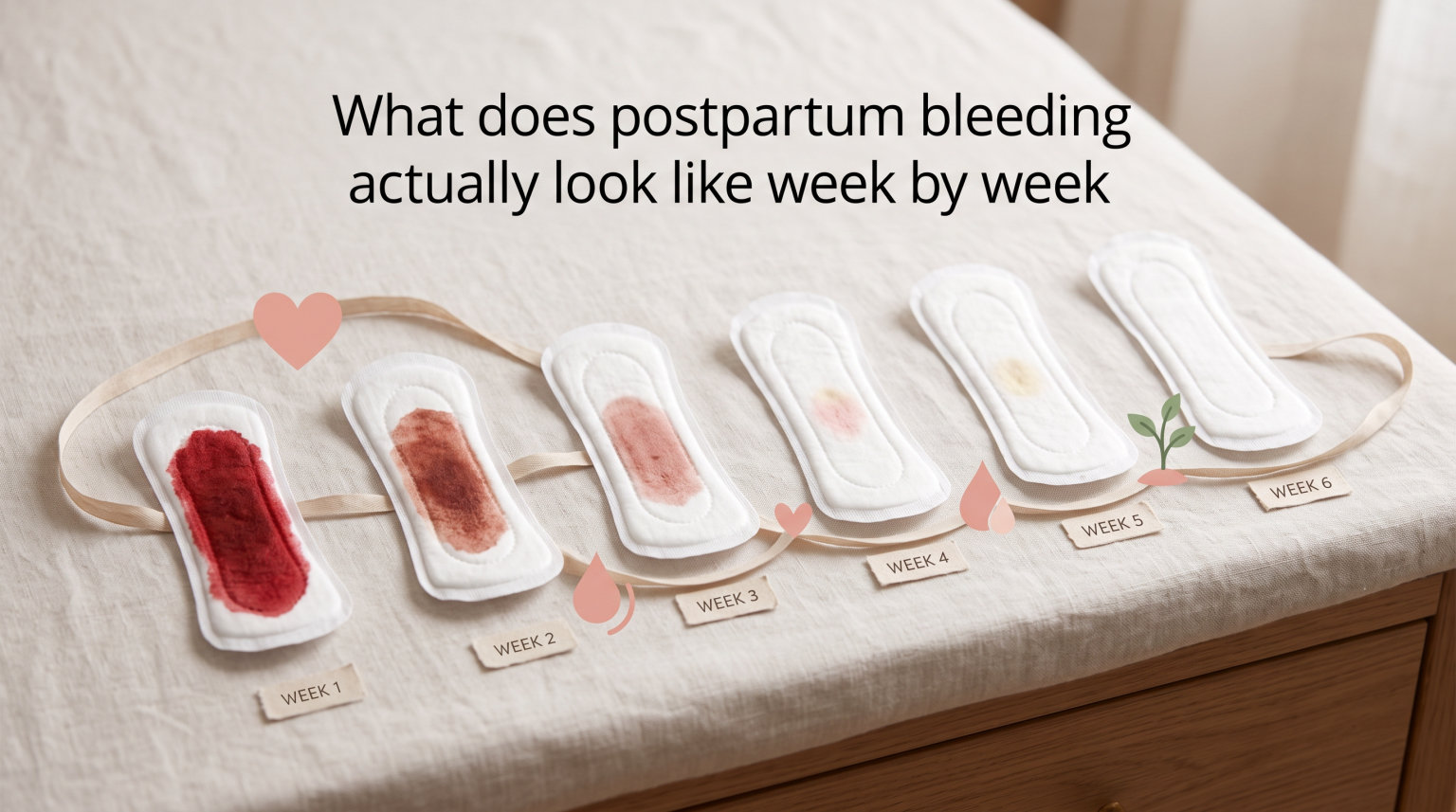
What Does Postpartum Bleeding Look Like Week by Week
This week-by-week breakdown shows you exactly what most mothers experience. Remember that every woman’s body heals differently, and your bleeding pattern may vary slightly. The key is watching for the overall trend of decreasing flow and changing color from red to pink to white.
Week 1: Heavy Flow and Bright Red Bleeding
The first week brings the heaviest bleeding you will experience. Days one through three are the most intense, with bright red blood that looks like a very heavy menstrual period. The flow is steady and may include small blood clots, especially when you first stand up after sitting or lying down.
During these first days, you will likely need to change a heavy-flow maxi pad every one to two hours. Many mothers find that overnight or postpartum pads with wings work best. Some women experience a gush of blood when standing after resting, which is normal as pooled blood exits the vagina.
By days four through seven, the bleeding gradually becomes darker red or brownish-red. The flow starts to decrease, and you may be able to extend pad changes to every three to four hours. You might notice the bleeding is heavier in the morning after lying down all night, then gradually lightens throughout the day.
Week 2: Pinkish-Brown Discharge and the Eschar Warning
Week two brings a noticeable shift in color and flow. The bleeding changes to a pinkish-brown or reddish-brown shade, similar to the end of a menstrual period. The flow becomes much lighter, and you may need only a regular maxi pad rather than the heavy-duty ones from the first week.
Many mothers are surprised by a temporary increase in bleeding around days ten to fourteen. This is called eschar bleeding and happens when the scab that formed over your placental attachment site falls off. You may see bright red blood again for a day or two, possibly passing a few larger clots.
This mid-second-week surge catches many women off guard. It is typically normal if the increased bleeding lasts only a day or two and then returns to the pinkish-brown flow. However, if the heavy bleeding persists beyond forty-eight hours or fills a pad in an hour, contact your healthcare provider.
Week 3: Yellowish Discharge and Light Spotting
By week three, most women see their lochia transition to a yellowish or yellowish-brown color. The flow is light, often described as light spotting or a watery discharge with occasional streaks of old blood. You may be able to switch from maxi pads to panty liners during the day.
The consistency changes too, becoming more like cervical mucus than blood. Some mothers describe it as similar to the discharge they experienced during early pregnancy or ovulation. The amount varies day by day, with some days showing almost nothing and others requiring a light pad.
During this week, bleeding often stops and starts. You might have two days with no bleeding, then notice light spotting after a bowel movement, breastfeeding session, or increased physical activity. This on-and-off pattern is completely normal as your uterus continues its healing process.
Week 4: Light Yellow to White Discharge
Week four postpartum bleeding should look like light yellow, cream-colored, or white discharge. The flow is minimal, and many women need only a panty liner or may have several days with no protection at all. This is the lochia alba stage in full swing, indicating your uterus is nearly healed.
If you are still seeing bright red blood at week four, especially if it returned after having stopped, mention it to your healthcare provider at your postpartum checkup. Some spotting is normal, but persistent red bleeding could indicate that your uterus is not contracting as quickly as expected or that you are doing too much physical activity.
At this point, the discharge should have little to no odor or smell similar to normal vaginal discharge. Any foul or rotten smell at week four needs medical evaluation, as this could indicate an infection.
Weeks 5 and 6: Final Clear or White Discharge
By weeks five and six, most mothers have minimal to no lochia. What little discharge remains is white or clear, similar to normal vaginal secretions. Your uterus has completed the involution process, and the placental site has fully healed.
If you are still experiencing more than occasional spotting by week six, discuss this with your healthcare provider. While some women naturally bleed longer, persistent lochia beyond six weeks can indicate subinvolution, where the uterus is not shrinking properly, or other issues that need attention.
Some mothers experience a brief return of light bleeding around week six that turns out to be their first menstrual period rather than continued lochia. If the bleeding is brighter red and accompanied by cramping, it might be your cycle returning, especially if you are not exclusively breastfeeding.
Blood Clots: What Is Normal and What Is Not
Passing blood clots during postpartum bleeding can be alarming, but small clots are a normal part of the process. Your uterus is shedding its thickened lining, and clots form when blood pools in the vagina before exiting. Understanding what size clots are normal helps you recognize when to seek help.
During the first week, small clots about the size of a grape or a quarter are common, especially when you first stand up after resting. These clots are typically dark red or maroon and may look like jelly. Passing several small clots throughout the day in the first three to four days is usually not concerning.
Clots become less common after the first week. If you pass clots larger than a golf ball at any time, or if you pass frequent clots larger than a grape after day four, contact your healthcare provider immediately. Large clots can indicate that your uterus is not contracting properly or that tissue remains in the uterus.
Another warning sign is passing multiple large clots in a short period. If you fill a pad with blood and clots in an hour or less, or if clots are accompanied by severe cramping, dizziness, or a feeling of faintness, seek emergency medical care. These can be signs of postpartum hemorrhage.
Warning Signs: When to Call Your Healthcare Provider
While postpartum bleeding is normal, certain signs indicate complications that require medical attention. Trust your instincts. If something feels wrong or different from what you have read here, call your provider. It is always better to be checked than to worry at home.
Call your healthcare provider immediately if you soak through a maxi pad in an hour or less for two consecutive hours. This heavy bleeding, especially if it returns after having lightened, can indicate postpartum hemorrhage. Other urgent signs include bleeding that suddenly becomes bright red and heavy after having decreased.
Passing clots larger than a golf ball, experiencing severe abdominal cramping, or noticing a foul, rotten odor from your discharge all warrant immediate evaluation. These signs can indicate infection, retained placental tissue, or uterine atony, where the uterus is not contracting properly.
Systemic symptoms like fever over 100.4 degrees Fahrenheit, chills, dizziness, rapid heartbeat, or feeling faint are also red flags. These can indicate postpartum infection or excessive blood loss. Do not wait for your scheduled postpartum appointment if you experience these symptoms.
If your bleeding has stopped and then returns heavily after physical activity, sexual intercourse, or a workout, this may be your body’s way of telling you to slow down. While some increased spotting is normal after activity, heavy bleeding means you need more rest.
Practical Tips for Managing Postpartum Bleeding
Managing lochia is a daily reality for new mothers, and having the right supplies and strategies makes the experience more comfortable. These practical tips come from mothers who have been through the postpartum period and learned what works best.
Stock up on heavy-flow maxi pads before your baby arrives. Overnight pads with wings provide the best coverage for the first week. Some mothers prefer disposable postpartum underwear or adult briefs for the first few days, especially at night. These offer better leak protection and are more comfortable when you are bleeding heavily.
Never use tampons, menstrual cups, or any internal products during postpartum bleeding. Your uterus needs to remain open to allow fluids to drain freely, and internal products can trap bacteria, leading to serious infection. Stick to external pads until your healthcare provider clears you, usually at your six-week checkup.
Change your pad every time you use the bathroom, even if it does not look full. Frequent pad changes help prevent infection and keep you feeling fresh. Use a peribottle filled with warm water to rinse your perineal area after using the toilet, then pat dry with a clean towel before applying a fresh pad.
Wear dark-colored underwear and loose, comfortable clothing during the early weeks. Dark fabrics hide any leaks or stains, and loose clothing promotes airflow to your healing perineum. Many mothers also recommend having a waterproof pad or towel to sit on when resting on furniture, just in case.
Rest as much as possible. Physical activity increases bleeding, so listen to your body and slow down when you notice more blood. Breastfeeding helps your uterus contract and can cause a temporary increase in bleeding or cramping during nursing sessions, which is normal and actually helps your healing.
C-Section vs Vaginal Birth: Is There a Difference
Women who deliver by cesarean section often wonder if their postpartum bleeding will be different from those who had vaginal births. The answer is yes, but perhaps not as different as you might expect. Your uterus still needs to heal the placental attachment site regardless of how your baby was born.
Immediately after a C-section, some women experience slightly less bleeding than after a vaginal delivery because the surgical team manually removes much of the uterine contents during the procedure. However, this difference is usually minimal, and by day two or three, the bleeding pattern is similar.
The main difference for C-section mothers is that you must avoid anything in the vagina for a longer period. The risk of introducing bacteria to your healing uterus is higher after abdominal surgery, so your provider may be more cautious about clearing you for tampons or intercourse at your six-week checkup.
Both C-section and vaginal birth mothers follow the same week-by-week progression from lochia rubra through serosa to alba. If you had a C-section and are experiencing heavier than expected bleeding, mention it to your provider, as this can occasionally indicate issues with the uterine incision.
Breastfeeding and Postpartum Bleeding
Breastfeeding affects postpartum bleeding in two significant ways. First, the hormone oxytocin released during nursing triggers uterine contractions. These afterpains can cause a temporary increase in bleeding during or immediately after breastfeeding sessions, especially in the first week.
This increase is actually a positive sign that your uterus is contracting properly. The contractions help compress blood vessels at the placental site and expel lochia more efficiently. Many mothers notice gushes of blood or increased flow while nursing or pumping, which typically subsides within a few minutes.
Second, exclusive breastfeeding often delays the return of your menstrual period. While your lochia will still follow the normal four to six week timeline, your first true period may not arrive for months if you are nursing frequently. This makes it easier to distinguish between continued lochia and your cycle returning.
If you are not breastfeeding, or if you are supplementing with formula, you may notice your bleeding follows a different pattern. Your uterus may contract less vigorously without the oxytocin stimulation, and your first period may return sooner, sometimes making it harder to tell where lochia ends and menstruation begins.
Frequently Asked Questions
What should 4 week postpartum bleeding look like?
At week four, postpartum bleeding should appear as light yellow, cream-colored, or white discharge with minimal flow. You should need only a panty liner or may have days with no bleeding at all. Occasional light spotting is normal, but bright red bleeding or heavy flow at this stage should be evaluated by your healthcare provider.
What is the 3 3 3 rule for postpartum?
The 3 3 3 rule refers to three hours of bleeding, three days of bed rest, and three weeks of light activity. For bleeding specifically, if you experience heavy bleeding for more than three hours in a row, contact your healthcare provider immediately. This rule helps new mothers remember important recovery milestones and warning signs.
How do I know when postpartum bleeding is done?
Postpartum bleeding is done when you have had no discharge or spotting for at least three consecutive days, and any discharge that appears is clear or white rather than yellow, pink, or red. Most women reach this point by week six. If you are unsure whether bleeding has truly stopped or if it keeps returning after activity, consult your healthcare provider.
Can lochia stop for a week and start again?
Yes, lochia can stop for several days and then start again, especially after physical activity, breastfeeding, sexual intercourse, or a workout. This on-and-off pattern is normal as your uterus continues healing. However, if the bleeding returns as bright red and heavy flow after having stopped, or if it persists beyond six weeks, contact your healthcare provider to rule out complications.
Conclusion
Understanding what postpartum bleeding actually looks like week by week helps you navigate the fourth trimester with confidence. From the bright red heavy flow of week one through the pinkish-brown discharge of week two, the yellowish discharge of weeks three and four, and finally the clear or white ending by week six, your body follows a predictable healing pattern.
Remember that every mother’s experience is slightly different. Some women heal faster, others take the full eight to twelve weeks. The important thing is watching for the overall trend of decreasing flow and the color progression from red to white. Trust your instincts, and do not hesitate to contact your healthcare provider if you experience any warning signs.
Your postpartum bleeding is a sign that your body is healing beautifully from the incredible work of growing and delivering your baby. Be patient with yourself, rest when you can, and know that this phase, like all phases of new motherhood, will pass. Before you know it, you will be looking back at this time from the other side, fully healed and fully focused on the joy of your growing family.