
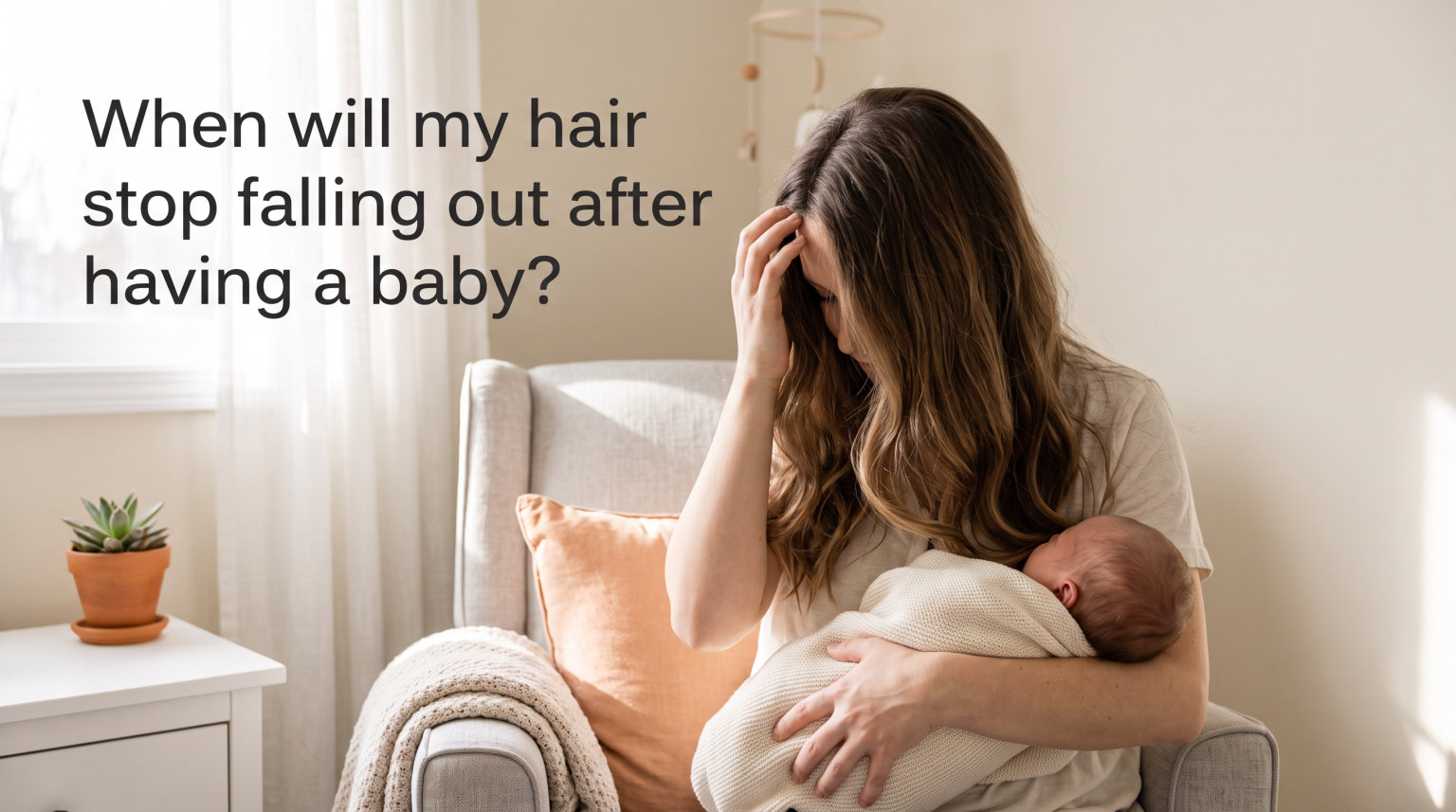
Finding clumps of hair in your brush or shower drain can be alarming when you are already adjusting to life with a newborn. If you are wondering when will my hair stop falling out after having a baby, here is the reassuring answer most new mothers need to hear. Postpartum hair loss is completely normal, temporary, and typically resolves within 6 to 12 months after delivery.
I have talked with dozens of mothers who have gone through this experience, and the common thread is always the same. The sudden shedding feels scary, but understanding the timeline and knowing you are not alone makes all the difference.
Between 50 and 80 percent of new mothers experience some degree of postpartum hair loss. Your hair will grow back. This guide will walk you through exactly what to expect, why it happens, and how to care for your hair during this temporary phase.
Table of Contents
Postpartum Hair Loss Timeline at a Glance
Here is the straightforward timeline most women experience with postpartum hair shedding. Keep in mind that every body is different, and your experience may vary slightly.
- 2 to 4 months postpartum: Hair loss typically begins as hormone levels shift
- Around 4 months: Shedding usually peaks and is most noticeable
- 6 to 9 months: Hair loss begins to slow down significantly
- 6 to 12 months: Most women see shedding stop completely
- 12+ months: Hair returns to normal fullness for the majority of mothers
Some women may experience shedding for up to 15 months, particularly if they are breastfeeding or have nutritional deficiencies. If your hair loss extends beyond 12 months, it is worth discussing with your healthcare provider.
What Is Postpartum Hair Loss
Postpartum hair loss is a form of temporary hair shedding called telogen effluvium that occurs after childbirth. The medical term sounds intimidating, but the condition itself is a natural response to the dramatic hormonal shifts your body experiences after pregnancy.
During pregnancy, elevated estrogen levels keep your hair in the growth phase longer than usual. This is why many women enjoy thicker, fuller hair while pregnant. After delivery, those estrogen levels drop rapidly, causing the hair that was held in the growing phase to enter the resting and shedding phase all at once.
The result is excessive shedding that can seem alarming but is actually just your hair cycle returning to its normal pattern. It is not permanent hair loss, and your follicles remain healthy and ready to produce new growth.
Understanding the Hair Growth Cycle
To fully grasp why postpartum hair loss happens, it helps to understand the three phases of normal hair growth. Each strand of hair on your head cycles through these phases independently.
Anagen phase: This is the active growth phase that lasts 2 to 7 years. During pregnancy, high estrogen levels prolong this phase, which is why you shed less hair and your hair seems thicker.
Catagen phase: This short transitional phase lasts about 2 to 3 weeks. The hair follicle shrinks and detaches from the blood supply, preparing to enter the resting phase.
Telogen phase: This is the resting phase that lasts about 3 months before the hair sheds naturally. After childbirth, the sudden drop in estrogen pushes many hairs into this phase simultaneously, leading to the noticeable shedding known as telogen effluvium.
When Does Postpartum Hair Loss Start
Postpartum hair loss typically begins 2 to 4 months after giving birth. The delay occurs because it takes time for your hormone levels to shift and for the hair cycle to respond to those changes.
Many mothers report noticing the first signs around the 3-month mark. You might see more hair in your shower drain, on your pillow, or coming out in handfuls when you brush. For some women, the shedding starts closer to the 2-month mark, while others may not notice it until 4 months postpartum.
The timing can vary based on several factors including whether you breastfeed, your overall health, stress levels, and nutritional status. Breastfeeding mothers sometimes experience delayed onset because hormone levels remain elevated longer.
When Does Postpartum Hair Loss Stop
Postpartum hair loss typically slows down between 6 and 9 months after delivery. By the 6-month mark, most women notice significantly less shedding, though some continued thinning may still occur.
For the majority of mothers, hair shedding completely stops by 12 months postpartum. Your hair will have largely returned to its pre-pregnancy thickness, although the texture may be slightly different as new growth comes in.
Hair regrowth becomes noticeable around the 3 to 6-month mark after shedding begins. You may see short baby hairs along your hairline and temples. These can be frustrating to style, but they are a positive sign that your follicles are actively producing new hair.
Factors That May Extend the Timeline
Several factors can cause postpartum hair loss to last longer than the typical 6 to 12 months. Understanding these can help you identify if your experience falls outside the normal range.
Continued breastfeeding can extend the timeline because prolactin and other hormones remain elevated. Significant stress, poor nutrition, iron deficiency, or thyroid issues can also prolong shedding. If you are still experiencing noticeable hair loss beyond 12 months, consult your healthcare provider to rule out underlying conditions.
What Causes Postpartum Hair Loss
The primary cause of postpartum hair loss is the dramatic drop in estrogen levels after childbirth. During pregnancy, estrogen levels are 50 to 100 times higher than normal, which keeps hair in the growing phase and prevents normal shedding.
After delivery, estrogen levels plummet back to pre-pregnancy levels within days. This hormonal shock triggers the hair follicles to enter the resting phase simultaneously, leading to the excessive shedding you experience a few months later.
The physical stress of childbirth also contributes to hair shedding. Labor and delivery are physically demanding events that can temporarily disrupt normal bodily functions, including the hair growth cycle. Blood loss, fatigue, and the overall physical recovery process all play a role.
Nutritional Factors
Nutrition plays a significant role in postpartum hair health. Many women enter pregnancy with low iron stores, and the demands of pregnancy and breastfeeding can deplete these further. Iron deficiency is a known contributor to hair loss.
Other important nutrients for hair health include biotin, zinc, protein, and vitamins A, C, D, and E. The postpartum period is demanding, and many new mothers struggle to eat balanced meals while caring for a newborn. This nutritional gap can exacerbate hair shedding.
Breastfeeding and Hair Loss
Many mothers wonder if breastfeeding causes postpartum hair loss. The answer is no, breastfeeding does not directly cause hair loss, but it can influence the timeline. The hormonal environment of breastfeeding, particularly elevated prolactin levels, can delay the return to normal hair cycling.
Some women who breastfeed experience prolonged shedding compared to those who do not. However, breastfeeding also provides many health benefits for both mother and baby, so the decision to breastfeed should not be based solely on hair concerns.
How to Manage Postpartum Hair Loss
While you cannot stop postpartum hair loss entirely, there are several strategies to minimize shedding and support healthy regrowth. These practical tips come from both medical guidance and real experiences shared by mothers.
Nutritional Support
Eating a nutrient-rich diet supports hair regrowth from the inside out. Focus on foods high in iron such as lean red meat, spinach, lentils, and fortified cereals. Include plenty of protein from eggs, fish, poultry, beans, and nuts since hair is primarily made of protein.
Continue taking your prenatal vitamins or switch to a postnatal vitamin specifically formulated for new mothers. These typically contain higher levels of biotin, iron, and other nutrients that support hair health. Stay hydrated by drinking plenty of water throughout the day.
Gentle Hair Care Practices
Be extra gentle with your hair during this vulnerable time. Use a wide-tooth comb to detangle wet hair, starting from the ends and working up to minimize breakage. Avoid tight hairstyles like ponytails, buns, or braids that pull on the hairline.
Wash your hair with a gentle, volumizing shampoo and lightweight conditioner. Avoid heavy products that can weigh down thinning hair. Let your hair air dry when possible, and minimize heat styling tools like flat irons and curling wands.
Styling Tips for Thinning Hair
While waiting for regrowth, there are ways to make thinning hair less noticeable. A shorter haircut can create the illusion of fuller hair and reduce the weight that pulls on thinning areas. Layers can also add volume and movement.
Try changing your part to cover thinning spots at the crown or temples. Volumizing mousse or dry shampoo can add texture and lift at the roots. Some women find that hair fibers or tinted powders help camouflage sparse areas along the part or hairline.
Stress Management
Stress can worsen hair loss, so prioritizing self-care is important. I know this is easier said than done with a newborn, but even small moments of relaxation help. Ask for help from your partner, family, or friends so you can rest.
Practice gentle exercise like walking or postpartum yoga when cleared by your doctor. Deep breathing exercises and short meditation sessions can reduce stress hormones. Remember that taking care of yourself enables you to better care for your baby.
Medical Treatment Options
Most postpartum hair loss resolves without medical intervention. However, if shedding is severe or prolonged, your dermatologist may recommend treatments. Topical minoxidil is sometimes suggested to speed regrowth, though it is not typically necessary for postpartum shedding.
If your healthcare provider suspects an underlying condition like thyroid disease or anemia, they may order blood tests. Treating these conditions often resolves the associated hair loss.
Emotional Support and Reassurance
Let me be direct about something that is rarely discussed. Postpartum hair loss can be emotionally devastating. Waking up to hair on your pillow, clogging the shower drain, or coming out in clumps when you brush can shake your confidence at a time when you are already adjusting to major life changes.
You are not overreacting if you feel upset about this. Hair is deeply connected to identity and self-image for many women. Seeing your hair thin dramatically when you are already dealing with sleep deprivation and hormonal fluctuations is genuinely difficult.
Remember that this is temporary. Your hair will grow back. The baby hairs that annoy you now will eventually become normal-length strands. In the meantime, be kind to yourself and focus on the incredible work your body has done in growing and delivering your baby.
When to See a Healthcare Provider
While postpartum hair loss is usually normal and self-limiting, there are situations where you should consult a healthcare provider. Knowing the warning signs helps you distinguish normal shedding from conditions requiring treatment.
Contact your doctor if hair loss continues beyond 12 months postpartum or if shedding seems excessively severe. If you experience other symptoms like fatigue, weight changes, or cold intolerance, ask about thyroid testing. Significant scalp irritation, redness, or patchy bald spots also warrant evaluation.
Your provider may check iron levels, thyroid function, and other markers to rule out underlying causes. They can also provide reassurance if your hair loss falls within the normal range.
A Note About Baby Safety
There is one practical safety concern related to postpartum hair loss that deserves mention. Loose hairs can pose a risk to babies in rare cases. Long strands of shed hair can wrap tightly around tiny fingers, toes, or other body parts, potentially cutting off circulation.
This condition is called a hair tourniquet and requires immediate medical attention if it occurs. To minimize risk, check your baby’s fingers and toes regularly, especially if you notice significant shedding. Keep your hair tied back when holding the baby, and check that no loose hairs are wrapped around their body.
Frequently Asked Questions About Postpartum Hair Loss
At what point does postpartum hair loss stop?
Postpartum hair loss typically stops between 6 to 12 months after giving birth. Most women notice shedding slowing down around the 6 to 9 month mark, with hair returning to normal fullness by 12 months. Some women may experience continued shedding up to 15 months, particularly if breastfeeding. If hair loss continues beyond 12 months, consult your healthcare provider to rule out underlying conditions.
How do I stop my hair from falling out after having a baby?
You cannot completely stop postpartum hair loss as it is a natural hormonal process, but you can minimize shedding and support regrowth. Eat a nutrient-rich diet with plenty of iron and protein. Continue taking prenatal or postnatal vitamins. Be gentle with your hair by using a wide-tooth comb, avoiding tight hairstyles, and minimizing heat styling. Manage stress through rest and gentle exercise. Most importantly, be patient as this phase is temporary.
What are the first signs of postpartum hair loss?
The first signs of postpartum hair loss typically appear 2 to 4 months after delivery and include noticing more hair than usual in your shower drain, on your pillow, or in your hairbrush. You may see increased shedding when brushing or washing your hair. Some women notice thinning at the temples or crown, or find loose hairs on their clothing. These signs indicate your hair is transitioning from the growth phase to the shedding phase.
Does everyone suffer from postpartum hair loss?
No, not everyone experiences postpartum hair loss, though it is very common. Between 50 and 80 percent of women experience some degree of shedding after childbirth. Some women notice only mild thinning, while others experience more noticeable hair loss. Factors that influence whether you will experience postpartum hair loss include your genetics, hormone levels, nutrition, and stress levels during the postpartum period.
Does postpartum hair loss grow back?
Yes, postpartum hair loss always grows back. This is temporary shedding, not permanent hair loss. Your hair follicles remain healthy and will begin producing new hair typically 3 to 6 months after shedding starts. You may notice short baby hairs along your hairline and temples as regrowth begins. Full thickness usually returns within 6 to 12 months after shedding stops.
Is postpartum hair loss worse with breastfeeding?
Breastfeeding does not cause postpartum hair loss, but it can extend the timeline. The hormonal environment of breastfeeding, particularly elevated prolactin, can delay the return to normal hair cycling. Some breastfeeding mothers experience shedding for longer than non-breastfeeding mothers. However, the decision to breastfeed should not be based on hair concerns, as breastfeeding provides significant health benefits for both mother and baby.
Conclusion: When Will My Hair Stop Falling Out After Having a Baby
If you are wondering when will my hair stop falling out after having a baby, take comfort in knowing the answer is typically 6 to 12 months after delivery. Postpartum hair loss is a normal, temporary condition that affects the majority of new mothers. Your hair will grow back.
The timeline follows a predictable pattern: shedding begins around 2 to 4 months, peaks at 4 months, and gradually slows by 6 to 9 months. While waiting for regrowth, focus on gentle hair care, good nutrition, and being kind to yourself during this challenging adjustment period.
Remember that your body has done something remarkable in creating and delivering your baby. The changes you are experiencing, including postpartum hair loss, are part of the process. This too shall pass, and before you know it, those annoying baby hairs will be a distant memory.