
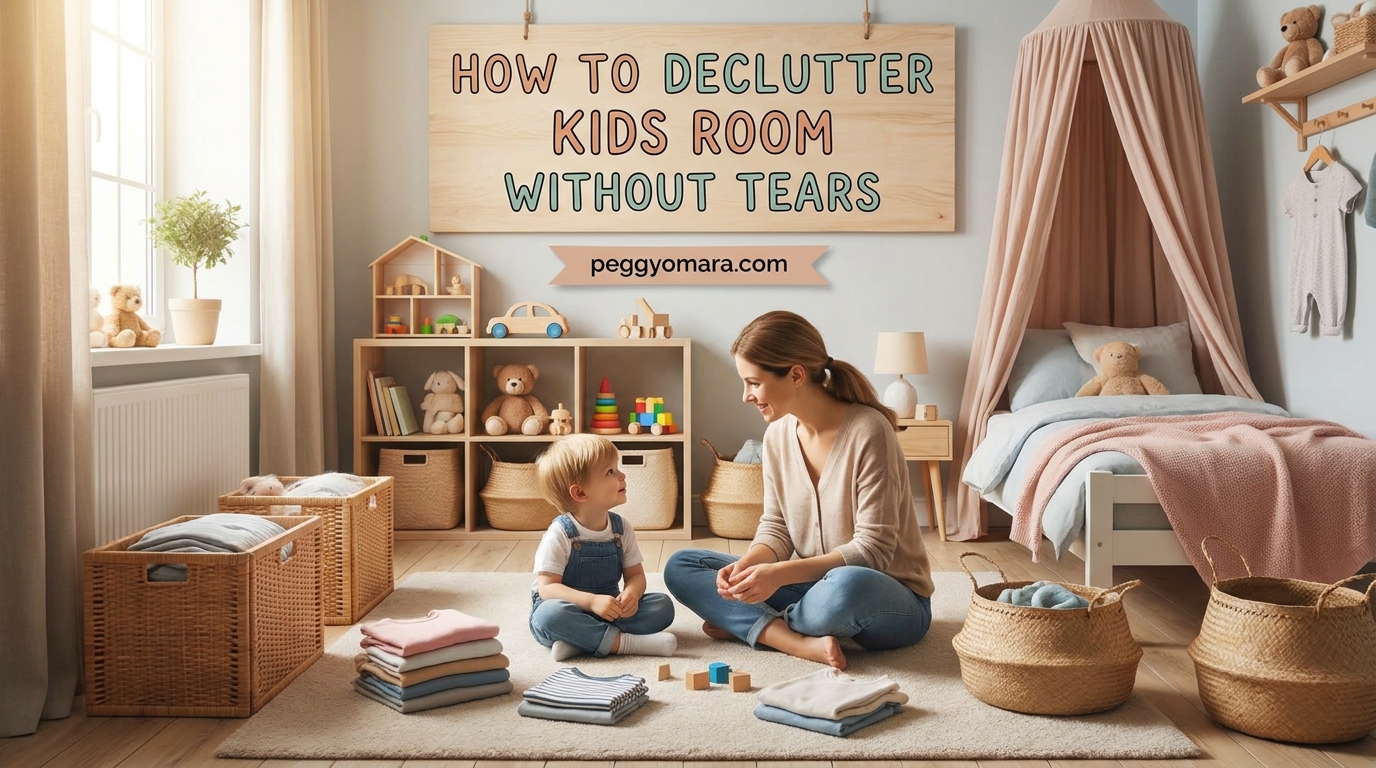
You walk into your child’s bedroom and immediately feel your shoulders tense. Toys cover every surface. Outgrown clothes spill from drawers. Artwork from three years ago still hangs on every wall, joined by newer creations that have nowhere else to go. When you suggest cleaning up, the tears start. The tantrums follow. Before long, you have given up and closed the door, wondering if you will ever reclaim that space.
I have been there more times than I care to admit. After working through this process with my own children and researching what actually works for families, I discovered that learning how to declutter kids room without tears is not about having the perfect storage system or being naturally organized. It is about understanding your child, working with their developmental stage, and creating an approach that respects their emotions while teaching valuable life skills.
This guide will walk you through a proven system that transforms decluttering from a battlefield into a bonding experience. You will learn why kids struggle to let go, how to set up the process for success, specific strategies for every age group, and systems that keep the room tidy long after the initial cleanup is done.
Table of Contents
Why Kids Struggle to Let Go of Their Things?
Before diving into the how, we need to understand the why. Children do not resist decluttering because they are stubborn or spoiled. Their attachment to stuff runs deeper than most adults realize, and honoring that attachment is the first step toward cooperation.
Emotional Attachment and Comfort Objects
For children, possessions often serve as extensions of themselves. That stuffed animal is not just fabric and stuffing. It is a source of comfort during thunderstorms, a confidant during tough days, and a tangible piece of security in an unpredictable world. Research in child psychology shows that children form genuine emotional bonds with their toys, treating them much like trusted friends or family members.
When we ask kids to give away these items, they experience real grief. To them, it feels like we are asking them to abandon a friend. Understanding this transforms how we approach the conversation. Instead of dismissing their feelings with phrases like “it is just a toy,” we can acknowledge the real loss they feel and work through it together.
Fear of Loss and Lack of Control
Children have so little control over their lives. Adults decide what they eat, where they go, when they sleep, and what they wear. Their room is often one of the only spaces that truly belongs to them. When parents swoop in and start making decisions about what stays and what goes, kids feel a profound loss of agency.
This lack of control triggers resistance. Even young children sense when their autonomy is being threatened, and they push back the only way they know how. Refusing to part with a broken toy becomes an act of self-preservation, a way of saying “I matter, and my choices matter.” Giving them genuine participation in the process addresses this need directly.
Gifts and Guilt
Among the hardest items to part with are gifts from loved ones. Children often feel that giving away a present from grandma is equivalent to rejecting grandma herself. This is especially true for gifts from relatives they do not see often, where the object becomes a physical connection to that person.
Guilt complicates the process further. Kids worry about hurting feelings, disappointing gift-givers, or seeming ungrateful. They need help separating the love behind the gift from the physical object itself. Teaching them that gratitude lives in the heart, not on the shelf, frees them to make clearer decisions about what they truly want to keep.
Setting the Stage for Decluttering Success
Success depends more on preparation than execution. When you set up the right conditions, the actual decluttering becomes surprisingly smooth. Skip this step, and you are building on quicksand.
Choose the Right Time
Timing matters enormously for this kind of work. Avoid starting a major decluttering session when your child is hungry, tired, or emotionally depleted from a tough day at school. Weekend mornings often work well, when energy is high and the day stretches ahead without pressure.
Consider external stressors too. If your child is adjusting to a new sibling, dealing with friendship challenges at school, or processing any significant change, hold off on major decluttering. Their capacity for emotional work is already maxed out. Wait for a stable period when they have emotional bandwidth to spare.
Set Realistic Expectations
This is not a one-afternoon project. Most kids’ rooms require several sessions spread across days or even weeks. Trying to power through in a single marathon session guarantees meltdowns. Set the expectation upfront that you will work in chunks, taking breaks whenever needed.
Progress beats perfection every time. A room that is 60% decluttered with a happy child is infinitely better than a perfectly organized room and a traumatized one. Keep your eye on the relationship, not the result. The goal is teaching skills, not achieving magazine-worthy spaces.
Create a Positive Environment
Decluttering is physical and emotional work. Treat it like any other labor-intensive activity. Have snacks ready. Put on music your child enjoys. Take dance breaks. Promise a fun activity afterward, not as a bribe but as a natural transition to celebrate progress.
Frame the work positively from the start. Instead of “we need to clean up this mess,” try “let us make space for the toys you really love to play with.” Language shapes experience. Your attitude becomes their attitude, so bring genuine enthusiasm and patience to the process.
How to Declutter Kids Room Without Tears: The Step-by-Step Process
Now we get to the heart of the system. This five-step process has worked for hundreds of families because it builds momentum gradually and respects children’s emotional needs at every stage. Work through these steps in order, taking breaks whenever anyone needs them.
Step 1: Start with the Easy Wins
Begin with items that carry zero emotional weight. This builds confidence and creates visible progress without triggering resistance. Start by collecting obvious trash: candy wrappers, broken crayons, dried-up markers, and random paper scraps.
Move next to broken toys that cannot be repaired, outgrown clothes that no longer fit, and items that clearly belong elsewhere in the house. These decisions are easy because they are objective, not emotional. Your child will say yes to almost everything in this category, and that yes momentum carries forward.
I always tell parents to spend the first session only on these easy wins. Do not push further. End while everyone is still feeling successful. The visible clearing of space creates motivation for tackling harder categories next time.
Step 2: Use the Container Concept
The container concept is the single most powerful tool for teaching kids to declutter. Here is how it works: you choose a container for a category of items, and the child keeps only what fits inside that container. When the container is full, something must go before something new can be added.
This creates a clear, visual boundary that children understand intuitively. Instead of vague notions of “too much stuff,” they see a physical limit. A stuffed animal bin holds fifteen animals. Once it is full, adding a new one requires choosing an old one to donate. This transforms decluttering from a judgment call into a simple math problem.
Apply this concept to every category: the Lego bin, the doll clothes basket, the art supplies drawer. Label each container clearly. Clear bins work best because kids can see what is inside without dumping everything out. The container becomes the bad guy, not the parent, which eliminates power struggles.
Step 3: Sort by Categories, Not Rooms
Traditional cleaning advice suggests tackling one room at a time. With kids, this approach fails. Instead, gather all items of one type from across the room and make decisions about that category together. This prevents the overwhelm of seeing everything at once and allows focused decision-making.
Start with categories that are less emotionally loaded. Books often work well because they do not carry the same attachment weight as toys. Gather every book from the room into one pile. Sort into keep, donate, and relocate stacks. The relocate stack goes to other rooms or siblings.
Move through categories systematically: books, then clothes, then stuffed animals, then toys. Artwork and sentimental items come last, when your child has built decision-making confidence. Group similar items together within categories: all the cars, all the dolls, all the building sets. This makes comparing and choosing much easier.
Step 4: The Three-Box Method for Kids
Create three distinct boxes or bins labeled Keep, Donate, and Not Sure. The Not Sure box is your secret weapon for avoiding meltdowns. Items that trigger hesitation go here for temporary holding. This gives kids time to sit with the decision without pressure.
Establish ground rules for the Not Sure box. It can hold items for one week, maximum two. After that period, your child revisits the box. Almost always, they are ready to let go of most items by then. The distance created by the waiting period reduces emotional charge.
For the Donate box, make the impact concrete. Talk about the child who will receive this toy. Mention that their donation helps families who cannot afford new toys. Some families take photos of the donation box before dropping it off, creating a positive memory of giving. This reframes letting go as an act of generosity rather than loss.
Step 5: Create Homes for What Remains
Every kept item needs a designated home that your child can reach and use independently. Low shelves, clear bins, and open baskets work better than closed drawers or high shelves. If your child cannot easily put something away, the system will fail.
Create zones in the room: a reading corner, a building zone, a dress-up area. Store items where they are used. Books live near the reading chair. Art supplies live at the art table. This logical organization makes cleanup intuitive rather than mysterious.
Use picture labels for pre-readers and simple word labels for early readers. The visual cue helps kids remember where things belong. Spend time teaching the new organization system, putting items away together several times before expecting independent cleanup.
Age-Specific Strategies for Every Developmental Stage
What works for a three-year-old will frustrate a ten-year-old, and vice versa. Tailor your approach to your child’s developmental stage for best results. These age-specific strategies honor where your child is right now.
Toddlers (Ages 2-4): The Treasure Hunt Approach
Toddlers have short attention spans and limited decision-making capacity. Work in ten-minute sessions maximum. Turn cleanup into a treasure hunt by asking them to find specific items: “Can you find all the red blocks?” or “Let us hunt for all the animals.”
Offer only two choices at a time. Hold up two toys and ask which one stays. This prevents overwhelm while still giving agency. Remove items they have outgrown while they are sleeping, keeping only current favorites and age-appropriate toys accessible.
Model decluttering behavior constantly. Narrate your own decisions: “I am donating this shirt because it does not fit anymore. I am giving it to a new home where someone can use it.” Toddlers learn by watching, and your example teaches more than any instruction.
Early Childhood (Ages 5-7): The Helper Mindset
This age group wants to help and takes pride in competence. Frame decluttering as a special project you are doing together. Give them real responsibilities, like being the “donation captain” who decides which items go in the donate box.
Introduce simple systems they can maintain independently. The one-in-one-out rule works well here: for every new toy that comes in, one old toy goes out. Make this a routine part of birthdays and holidays, not a punishment for acquiring something new.
Use storytelling to help with letting go. Suggest that a beloved toy wants to go play with a child who does not have any toys. Or that the art supply wants to help another child make beautiful pictures. This age still lives in a world of magic and narrative, so use that to your advantage.
Tweens (Ages 8-12): The Independence Factor
Tweens value privacy and autonomy above almost everything. Knock before entering their room. Ask permission before touching their belongings. Frame decluttering as their project that you are supporting, not your project that they are helping with.
Appeal to their growing desire for a space that feels mature and cool. Show them organization inspiration from magazines or social media that matches their style. Let them choose storage solutions and room layout. The more control they have over the aesthetic, the more invested they become in maintaining it.
Address digital clutter alongside physical clutter. This age group accumulates downloaded games, photos, and files. Teach them to organize digital spaces using the same principles: folders for categories, regular deletion of what is no longer needed, and backups of what matters.
Turning Decluttering Into a Game
When work feels like play, resistance disappears. These games transform decluttering from a chore into an adventure your child actually looks forward to.
The 10-Minute Dash Challenge
Set a timer for ten minutes and challenge your child to find as many items to donate as possible before the buzzer sounds. Make it a personal best competition, not a race against siblings. Keep a running count and celebrate new records.
The time pressure creates excitement without allowing for overthinking. Kids make quicker, more intuitive decisions when they are focused on beating the clock. After the dash, count the items together and talk about how many children will benefit from their generosity.
The Color Code Challenge
Assign colors to categories and hunt for items by color. “Today we are finding everything blue!” Gather all blue items, decide which stay and which go, then move to the next color. This adds variety and makes the task feel fresh even in long sessions.
Variation: assign each family member a color and see who can find the most items in their assigned shade. Competition adds energy, though keep it friendly and emphasize that everyone wins when the room gets clearer.
The Mystery Bag Game
Fill a paper bag with ten small items from the room without your child seeing. They reach in, pull out one item at a time, and must immediately decide keep or donate. The mystery element makes each pull exciting, and the quick-decision format prevents overthinking.
Switch roles and let your child fill the bag for you. Kids love the power reversal, and watching you make quick decisions models the behavior you want them to learn. Plus, they delight in trying to trick you with tricky items.
The Before and After Photo Shoot
Take photos before you begin and after each major session. Create a slideshow of progress. Children love seeing visual proof of their work, and the photos become a source of pride they want to share with others.
Print the before and after photos and display them on a bulletin board or in a simple album. When motivation lags in future sessions, look back at previous transformations. Remind your child that they have done this before and can do it again.
Handling Sentimental Items and Special Treasures
Some items carry emotional weight that makes standard decluttering approaches fail. These strategies address the special categories that trip up even cooperative kids.
The Memory Box Solution
Designate one container as the official memory box. This is where special treasures live: favorite baby clothes, first drawings, ticket stubs from special events, small souvenirs from trips. The memory box has a size limit, which forces curation of what truly matters.
Let your child decorate the memory box to make it special. When they want to add something new, they review what is already inside and decide if something can be released to make space. This teaches that memory-keeping is about quality, not quantity.
Photo Documentation Strategy
For items that carry memories but not practical value, take photos before letting them go. Your child can hold the item for the photo, creating a final moment of connection. The photo goes in a digital album or printed book that takes up minimal space.
Create a simple system: a folder on your phone or computer labeled with your child’s name and the year. When they want to remember the item, they can scroll through the photos. The memory is preserved, but the clutter is not.
This works especially well for large or awkward items: that giant stuffed animal from the carnival, the art project that took up half the dining table, the costume they wore for three Halloweens. The photo captures what matters while freeing physical space.
Artwork Decisions
Children produce art at an astonishing rate. Keeping everything is impossible, yet every piece feels precious to the artist. Create a system for honoring creativity without drowning in paper.
Display current favorites on a rotating gallery wall or bulletin board. When new masterpieces arrive, older ones come down. The artist helps choose which displayed pieces deserve permanent storage in the memory box or portfolio. Photograph everything before it leaves the display.
For three-dimensional creations, set a time limit. Clay sculptures and elaborate constructions stay for one month, then are photographed and dismantled. The photo preserves the work; the materials return to the supply stash for future creativity.
Gifts from Grandparents and Special People
Gifts from beloved relatives carry guilt as well as emotional weight. Help your child understand that love does not live in objects. The person who gave the gift loves them regardless of whether they keep the item.
Consider a “gift gratitude ritual.” When a gift arrives, spend time appreciating it together. Play with it, wear it, or use it for a designated period. When it is time to let it go, write a thank-you note or draw a picture for the gift-giver expressing what they enjoyed about the present. This honors both the relationship and the experience of receiving.
For recurring over-givers, have a gentle conversation with the adult about your family’s shift toward experience gifts or consumable presents. Most grandparents would rather give something useful than contribute to household stress.
Troubleshooting Common Decluttering Challenges
Even with the best preparation, you will hit roadblocks. These strategies address the most common challenges parents face when working with children on decluttering.
When Your Child Wants to Keep Everything
Some children struggle more than others with letting go. This is not stubbornness or greed. It often reflects anxiety, sensory processing differences, or a particular temperament that finds change difficult. Approach with extra patience and smaller steps.
Start with micro-decluttering: sorting a single drawer or one basket of toys rather than a whole category. Build tolerance gradually. Acknowledge that letting go is hard for them without shame or judgment. Some kids simply need more time and support than others.
If the resistance seems extreme or involves distress that goes beyond typical attachment, consider consulting a child psychologist. Early signs of hoarding tendencies can sometimes appear in childhood, and professional guidance helps address them before they become entrenched patterns.
When Kids Change Their Mind About Donations
The day before donation drop-off, your child suddenly needs every item in the donate box. This common reversal happens because the reality of loss becomes concrete when departure is imminent. The parking lot strategy prevents this stress.
Create a designated holding area, the “parking lot,” for items bound for donation. Items live there for one to two weeks before actually leaving the house. This buffer gives kids time to change their minds and retrieve items without consequence. Most never reclaim anything, but the option eliminates anxiety.
When the holding period ends, deliver the items without drama. Do not remind your child of what is leaving or ask for final confirmation. Simply complete the planned donation. By this point, the emotional distance created by the parking lot has done its work.
When Parents Disagree on What Stays
Different parenting styles often surface during decluttering. One parent sees a broken toy as trash; the other sees a beloved companion. One parent values minimalism; the other sees value in everything. These conflicts confuse children and stall progress.
Have the disagreement conversation away from your child. Decide on ground rules together before involving the kids. Maybe broken toys automatically go unless the child requests repair. Maybe each parent gets veto power over a set number of items. Maybe you alternate who leads each decluttering session.
Present a united front in front of your children, even when you disagree privately. Kids feel unsafe when parents are in conflict. They will exploit disagreements to avoid letting go of anything. Resolve differences behind closed doors, then move forward together.
When to Declutter Without Your Child Present
Sometimes parents ask if they should simply declutter while the kids are at school. The answer is complicated. For babies and toddlers, absolutely. Remove outgrown items, broken toys, and obvious trash without involving them. They will not notice, and the reduction in clutter helps everyone.
For preschoolers and early elementary children, remove only items that are clearly broken, dangerous, or developmentally inappropriate. Keep their favorites and anything they actively play with, even if you personally find it annoying.
For older children, decluttering without their presence damages trust. Their room is their territory, and sneaking in to remove belongings while they are away teaches them that their space is not safe. Only remove items you know for certain they have forgotten about, and tell them afterward what you removed and why.
If you find yourself wanting to declutter behind your child’s back regularly, examine why. Is the resistance so high that cooperation feels impossible? Is the clutter actually yours to manage? Is your child struggling with attachment issues that need professional support? Honest answers to these questions guide your next steps.
Maintaining a Tidy Room: Systems That Stick
The best decluttering job in the world will fail without maintenance. These systems prevent the slow slide back into chaos and teach children the ongoing habits that keep spaces functional.
The One-In-One-Out Rule
This simple rule prevents clutter from rebuilding: for every new item that enters the room, one existing item must leave. New birthday toy means one old toy donated. New shirt means one outgrown shirt passed along.
Make this rule automatic by keeping a donation bag permanently hung in the closet or on a doorknob. When something new arrives, something old goes directly into the bag. When the bag fills, it goes to the donation center. No drama, no accumulation.
Apply this rule to your own belongings too. Children learn by watching parents. When they see you applying the same standard to your stuff, the rule feels fair rather than punitive.
Daily Tidy-Up Routines
A five-minute evening reset prevents small messes from becoming overwhelming disasters. Before bedtime, do a quick sweep of the room together. Put away anything left out from the day’s play. Dirty clothes in the hamper. Books back on shelves.
Make this routine pleasant, not punitive. Put on a special “cleanup song” that plays only during this time. Set a timer and race to beat it. Or simply chat about the day while you work. The goal is building a habit that feels natural, not a chore that feels like punishment.
Older children can handle this independently. Younger ones need company and modeling. Either way, consistency matters more than perfection. A room that gets daily attention stays manageable. A room ignored for weeks becomes overwhelming for everyone.
Seasonal Decluttering Traditions
Build decluttering into your family rhythm by attaching it to predictable calendar moments. Back-to-school season is perfect for clearing out clothes that no longer fit and making space for new supplies. Before winter holidays, make room for incoming gifts by donating current possessions.
Spring cleaning can include a full room review. End of summer, before school starts, is ideal for tackling accumulated summer clutter. These predictable touchpoints normalize decluttering as a regular life skill, not a crisis response to overwhelming mess.
Mark these traditions on the family calendar. Make them special with rituals: a particular snack, a special meal out afterward, or a small reward for completing the work. Positive associations make future sessions easier.
Storage Solutions Kids Can Actually Use
The best organization system is the one your child will actually maintain. Open bins beat closed drawers because kids can see contents without pulling everything out. Low shelves beat high shelves because kids can reach and return items independently.
Clear containers work better than opaque ones. Picture labels help pre-readers remember what goes where. Simple categories beat complex sorting systems. “Cars” is a better category than “vehicles with wheels and tracks.”
Keep frequently used items accessible and rarely used items stored away. Art supplies used daily belong on an open shelf. Holiday decorations used once a year belong in a closet or attic. Match accessibility to frequency of use.
Rotate toys to maintain novelty without buying more. Store 75% of toys and rotate them monthly. When the stored toys reappear, they feel new again. This keeps play fresh while preventing floor-to-ceiling toy piles.
Frequently Asked Questions
How do I start decluttering when my child resists?
Start with non-emotional items like trash and broken toys to build momentum. Use the container concept to create clear boundaries. Make it a game with timers and challenges. Most importantly, acknowledge their feelings without judgment. Resistance often comes from feeling powerless, so give genuine choices within structured limits.
What if my child wants to keep broken toys?
Validate the attachment first: ‘I know you love that car even though the wheel is broken.’ Then offer solutions: repair together, take a goodbye photo, or create a special ‘fix it’ box for items awaiting repair. Set a time limit for repairs. If the item stays broken past the deadline, it goes. Follow through consistently so the limit has meaning.
How do I handle gifts from grandparents?
Help your child separate the love from the object. Teach that gratitude lives in the heart, not on the shelf. Create a ritual of thanking the gift-giver with a note or drawing before letting the item go. Have a gentle conversation with over-giving relatives about shifting toward experience gifts or consumables that do not add permanent clutter.
Should I declutter without my child knowing?
For babies and toddlers, yes. Remove outgrown and broken items without involving them. For preschoolers, remove only obviously broken or dangerous items. For school-age children and tweens, decluttering without their presence damages trust. Their room is their territory. Only remove forgotten items, and tell them afterward what you removed and why.
How often should we declutter?
Build seasonal traditions around decluttering: back-to-school, pre-holidays, and spring cleaning are natural touchpoints. Daily tidying prevents accumulation. Monthly reviews of specific categories keep things manageable. The one-in-one-out rule applied consistently prevents the need for major decluttering sessions entirely.
At what age should a child be able to clean their room?
Toddlers (ages 2-4) can help with simple tasks like putting toys in bins with adult guidance. Early childhood (ages 5-7) can maintain simple systems independently with reminders. Tweens (ages 8-12) should be capable of full room maintenance with occasional oversight. Remember that capacity varies by child, and skills must be taught before independence is expected.
Final Thoughts: Decluttering as a Gift
Learning how to declutter kids room without tears is about so much more than a tidy space. You are teaching your children lifelong skills about decision-making, healthy relationships with possessions, and the joy of giving to others. You are showing them that their feelings matter while guiding them toward practical solutions. You are building a relationship where they can trust you with their treasures, both physical and emotional.
The room will get messy again. That is not failure. It is life. What matters is that you have built systems that make recovery possible, communication patterns that prevent power struggles, and memories of working together rather than fighting apart. Your child will not remember whether their room was perfectly organized in April 2026. They will remember that you listened when they were sad about letting go of their favorite shirt. They will remember the game you played while cleaning. They will remember feeling capable and trusted.
Start small. Choose one drawer, one category, one ten-minute session. Celebrate what you accomplish rather than mourning what remains undone. The journey toward an organized room is just that: a journey, not a destination. Take the first step today, and know that every small victory moves your family toward a calmer, more connected home.