
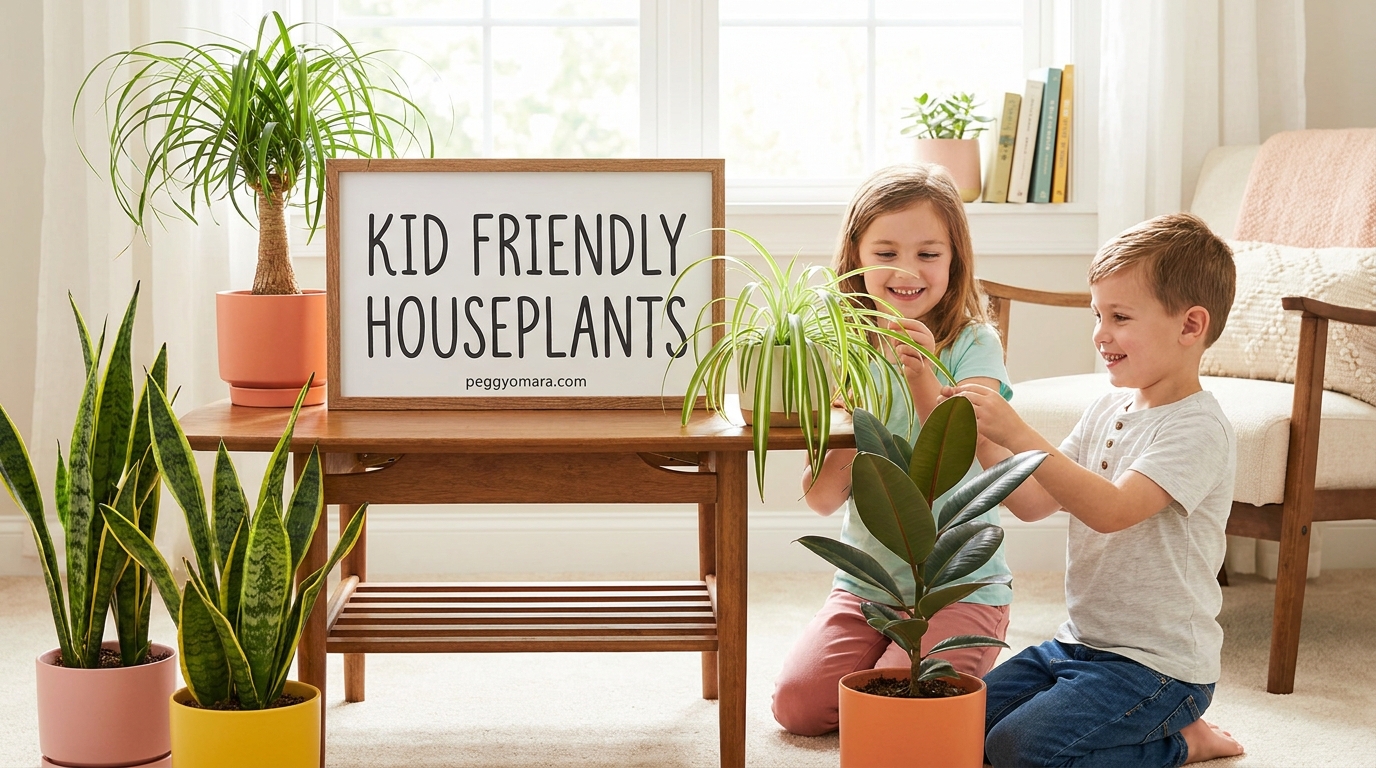
Children are naturally drawn to houseplants. Those lush green leaves beg to be touched, and curious little fingers often find their way into soil. As parents, we want to nurture that curiosity while keeping our kids safe. That is where kid friendly houseplants come in.
These ten non-toxic options are perfect for families. They are hardy enough to survive occasional neglect, safe if touched or accidentally sampled, and simple enough for children to help care for. Whether you are filling a sunny windowsill or a dim corner, there is a safe option here for every home.
I have grown most of these with my own children over the years. The plants on this list have survived forgotten waterings, enthusiastic “help” with pruning, and even the odd knock off the shelf. Here are the ten best houseplants that are safe and easy to grow with kids around.
Table of Contents
Quick Comparison: All 10 Kid Friendly Houseplants at a Glance (2026)
Before diving into individual plants, here is a quick reference guide. This table covers light needs, watering frequency, and what makes each plant special for families.
| Plant | Light | Water | Difficulty | Kid-Friendly Feature |
|---|---|---|---|---|
| Spider Plant | Bright indirect | Weekly | Very Easy | Produces baby plants |
| Boston Fern | Medium to bright | Keep moist | Easy | Soft, touchable fronds |
| African Violet | Medium indirect | Weekly | Easy | Colorful flowers year-round |
| Peperomia | Low to bright | Every 10 days | Very Easy | Thick, interesting leaves |
| Christmas Cactus | Bright indirect | Every 2 weeks | Very Easy | Blooms in winter |
| Prayer Plant | Medium indirect | Weekly | Easy | Leaves fold up at night |
| Ponytail Palm | Bright direct | Monthly | Very Easy | Fun, quirky shape |
| Cast Iron Plant | Low to medium | Every 2 weeks | Extremely Easy | Survives any condition |
| Haworthia | Bright direct | Every 3 weeks | Very Easy | Miniature size for kids |
| Parlor Palm | Low to medium | Weekly | Easy | Elegant, air-purifying |
10 Kid Friendly Houseplants That Are Safe and Easy to Grow
Now let us look at each plant in detail. I will cover why these are non-toxic houseplants for children, how to care for them, and what makes them perfect for little helpers.
1. Spider Plant (Chlorophytum comosum)
The Spider Plant tops every list of kid friendly houseplants for good reason. This plant is practically indestructible and endlessly fascinating for children.
Why kids love it: Spider Plants produce long arching stems with tiny baby plants dangling like green spiders. My children call them “plant families” and love when a baby spiderette gets big enough to propagate. It is like the plant is having babies right on your windowsill.
Safety note: Completely non-toxic and safe for children and pets. Even if a curious toddler takes a nibble, there is no danger.
Light: Bright, indirect light is ideal. An east or north-facing window works perfectly. Direct afternoon sun can scorch the leaves.
Water: Water once a week when the top inch of soil feels dry. Spider Plants are forgiving if you miss a watering. They will wilt dramatically to let you know they are thirsty, then perk right back up after a drink.
Kid activity idea: Propagating baby Spider Plants is the perfect first gardening project for children. Simply snip off a baby plantlet, place it in water until roots form (about a week), then pot it up. Kids can grow their own plant to keep or give to a friend.
2. Boston Fern (Nephrolepis exaltata)
The Boston Fern has been a classic houseplant since Victorian times. Its soft, feathery fronds make it one of the most touchable safe houseplants for children.
Why kids love it: The fronds are soft and inviting. Children naturally want to run their fingers through the foliage. Unlike many ferns, Boston Ferns are resilient enough to handle gentle interaction.
Safety note: Non-toxic to children and pets. This is one of the few ferns that is completely safe for a household with curious little ones.
Light: Medium to bright indirect light. Avoid harsh direct sun which can brown the fronds. A spot near a curtained window is ideal.
Water: Keep the soil consistently moist. Water when the top half-inch feels dry. These ferns appreciate humidity, so misting occasionally or placing near other plants helps.
Growing tip: If fronds turn brown at the tips, the air may be too dry. Trim the brown bits with child-safe scissors and increase humidity. This is a great way to teach kids that plants communicate their needs.
3. African Violet (Saintpaulia)
African Violets reward patient caregivers with almost constant blooms. They are compact, colorful, and perfect for a child’s bedroom shelf.
Why kids love it: The flowers come in purples, pinks, whites, and bi-colors. Kids get excited when a new bud opens. It is like a little surprise party on the windowsill.
Safety note: Non-toxic and safe for children. The fuzzy leaves are interesting to touch but teach children to handle gently as the leaves mark easily.
Light: Medium indirect light. An east-facing window is perfect. They bloom best with consistent bright light but no hot direct sun.
Water: Water from below by placing the pot in a saucer of water for 20 minutes. This prevents water spots on the fuzzy leaves. Water weekly when the soil feels dry.
Kid activity idea: Teach children to “bottom water” the plant. They love the ritual of filling a saucer and watching the water disappear up into the soil. It feels like magic.
4. Peperomia
Peperomias are the underrated heroes of low maintenance houseplants. With hundreds of varieties featuring different leaf textures and colors, there is one for every taste.
Why kids love it: The thick, succulent-like leaves feel substantial. Varieties like Watermelon Peperomia have striking silver and green stripes that look painted on. Ruby Peperomia has deep red undersides that flash when a breeze moves the leaves.
Safety note: All Peperomia varieties are non-toxic to children and pets. They are as safe as they are beautiful.
Light: Highly adaptable. They thrive in everything from low light to bright indirect sun. This makes them perfect for rooms without perfect windows.
Water: Let the soil dry out between waterings. Water every 10-14 days. The thick leaves store water, making these plants drought-tolerant and forgiving.
Growing tip: Peperomias stay compact, rarely growing over 12 inches. This makes them ideal for small spaces like a child’s desk or nightstand.
5. Christmas Cactus (Schlumbergera)
Do not let the name fool you. This is no desert cactus with spines. The Christmas Cactus is a tropical plant that blooms spectacularly in winter, right when the garden outside is sleeping.
Why kids love it: The blooms appear just when everything else is dormant. Bright pink, red, white, or peach flowers dangle from segmented stems. Children love the timing, as these plants often bloom near the holidays.
Safety note: Completely non-toxic. No spines to worry about. The segments are smooth and safe to handle.
Light: Bright indirect light. Can handle some morning sun. To encourage blooming, the plant needs 12-14 hours of darkness starting in October.
Water: Water every 2 weeks, letting soil dry between waterings. More frequent watering when buds appear. Much more water-tolerant than desert cacti.
Fun fact to share: Christmas Cacti can live for decades. Many families pass them down through generations. Your child could grow up with the same plant they cared for as a toddler.
6. Prayer Plant (Maranta leuconeura)
The Prayer Plant is nature’s interactive toy. Its leaves fold upward at night like hands in prayer, then lower again in the morning. Kids find this daily movement mesmerizing.
Why kids love it: The nyctinastic movement (folding at night) happens right before bedtime. Children can say goodnight to their plant and check on it first thing in the morning. The leaves often have striking red veins and patterns too.
Safety note: Non-toxic to children and pets. Safe for bedrooms and play areas.
Light: Medium indirect light. Too much sun fades the beautiful leaf patterns. An east or north window is ideal.
Water: Keep soil consistently moist but not soggy. Water weekly. These plants are less forgiving of drought than some others on this list.
Observation activity: Have your child take a photo of the plant in the evening and again in the morning. Comparing the two images shows the dramatic movement clearly.
7. Ponytail Palm (Beaucarnea recurvata)
With its swollen trunk base and cascading hair-like leaves, the Ponytail Palm looks like a Dr. Seuss character come to life. It is one of the most fun indoor plants for children’s rooms.
Why kids love it: The bulbous trunk looks like an elephant’s foot. The long, curly leaves spill over like a ponytail. It has personality and whimsy that appeals to children.
Safety note: Non-toxic and safe. Despite the name, it is not a true palm but actually a succulent relative of the asparagus. No sharp edges or toxic compounds.
Light: Bright light including some direct sun. A south or west-facing window is perfect. The more sun, the faster it grows.
Water: Extremely drought tolerant. Water monthly in winter, every 2-3 weeks in summer. The trunk stores water like a camel’s hump.
Care tip: This is the perfect plant for teaching kids that overwatering is worse than underwatering. The trunk visibly shrinks when thirsty and plumps up after watering.
8. Cast Iron Plant (Aspidistra elatior)
True to its name, the Cast Iron Plant is nearly impossible to kill. If you have low light, irregular watering habits, or a busy household, this is your plant.
Why kids love it: The broad, dark green leaves are satisfyingly substantial. New leaves unfurl slowly, teaching patience. Children can dust the glossy leaves with a soft cloth, giving them a caretaking task they can handle independently.
Safety note: Non-toxic and safe for all family members. The sturdy leaves resist rough handling better than delicate plants.
Light: Low to medium indirect light. Thrives in corners and hallways where other plants would fail. One of the best low light houseplants safe for children.
Water: Every 2 weeks, letting soil dry between waterings. Can survive longer neglect. This is the plant to choose if you travel frequently or tend to forget watering day.
Teaching moment: The Cast Iron Plant grows slowly. Use it to teach children that plants work on their own timeline. Growth happens, even when we cannot see it daily.
9. Haworthia
Haworthias are miniature succulents that look like alien architecture. Their striped, pointed leaves form perfect geometric rosettes that fit on the smallest windowsill.
Why kids love it: These look like something from another planet. The zebra-striped varieties are particularly appealing. Their small size means children can have their own plant on their desk or dresser.
Safety note: Non-toxic and safe. While they have pointed tips, they are not sharp like cactus spines. Safe for supervised interaction.
Light: Bright light with some direct sun. A sunny windowsill is ideal. They can handle more direct sun than many houseplants.
Water: Water every 3 weeks, letting soil completely dry between waterings. In winter, water monthly. They store water in their fleshy leaves.
Collection potential: Haworthias come in dozens of varieties. Children often enjoy starting a collection with different patterns and shapes. They stay small, so a collection fits easily on one tray.
10. Parlor Palm (Chamaedorea elegans)
The Parlor Palm has graced Victorian parlors for centuries. It brings a touch of the tropics indoors with arching fronds and an elegant silhouette.
Why kids love it: The feathery fronds feel prehistoric. Children often call them “dinosaur plants” because they look like something a brontosaurus might munch. They create a little jungle atmosphere that sparks imagination.
Safety note: Non-toxic to children and pets. The ASPCA lists this as safe for cats and dogs, making it a dual-purpose safe choice.
Light: Low to medium indirect light. Perfect for that dim corner you have been wanting to fill. Avoid direct sun which burns the fronds.
Water: Water weekly, keeping soil lightly moist but not soggy. They prefer consistency over flooding.
Bonus benefit: Parlor Palms are excellent air purifiers. They remove formaldehyde and xylene from indoor air. This is a great talking point about how plants help us breathe cleaner air.
Tips for Growing Kid Friendly Houseplants with Children
Getting the right plants is only half the battle. Here is how to make plant care a positive experience for the whole family.
Start with One Plant
Do not overwhelm yourself or your child with ten new plants at once. Pick one from this list and master caring for it together. Success builds confidence.
Create a Watering Schedule
Children thrive on routine. Create a simple chart with pictures showing which day each plant needs water. Let your child be the “plant monitor” who checks the schedule.
Teach Observation Skills
Plants communicate through their leaves. Teach children to notice when leaves droop, yellow, or perk up. Ask questions: “What do you think this plant is telling us?” This builds critical thinking.
Choose the Right Pots
Pick plastic or unglazed ceramic pots for children’s rooms. They are lighter and safer than heavy terra cotta if knocked over. Ensure every pot has drainage holes.
Involve Kids in Repotting
When a plant outgrows its pot, let your child help. They can gently loosen roots, add fresh soil, and choose a new spot for the plant. It is messy, memorable, and educational.
Propagation Projects
Spider Plants, Peperomias, and Christmas Cacti are easy to propagate. Children love growing new plants from cuttings. It is free, educational, and deeply satisfying.
Frequently Asked Questions About Kid Friendly Houseplants
What is the easiest plant to grow indoors for kids?
What house plants are safe for children?
What is the easy plant for a child to grow?
What are the 10 best indoor plants?
Are these plants safe for pets too?
What if my child eats a leaf?
Final Thoughts on Kid Friendly Houseplants
Introducing kid friendly houseplants into your home offers benefits beyond simple decoration. Children learn responsibility, observation skills, and an appreciation for living things. The ten plants in this guide provide safe, accessible entry points into the world of gardening.
Start with just one plant that matches your home’s light conditions. Let your child help pick it out. Watch together as it grows and changes. The Spider Plant’s babies, the Prayer Plant’s nightly dance, or the Christmas Cactus’s winter blooms all offer moments of wonder.
Remember that perfection is not the goal. A slightly wilted plant that recovers teaches more than one that never faces challenges. These hardy, non-toxic houseplants give you and your children room to learn, make mistakes, and grow together.
Pick your first plant this week. Your indoor garden and your little ones will thank you.