
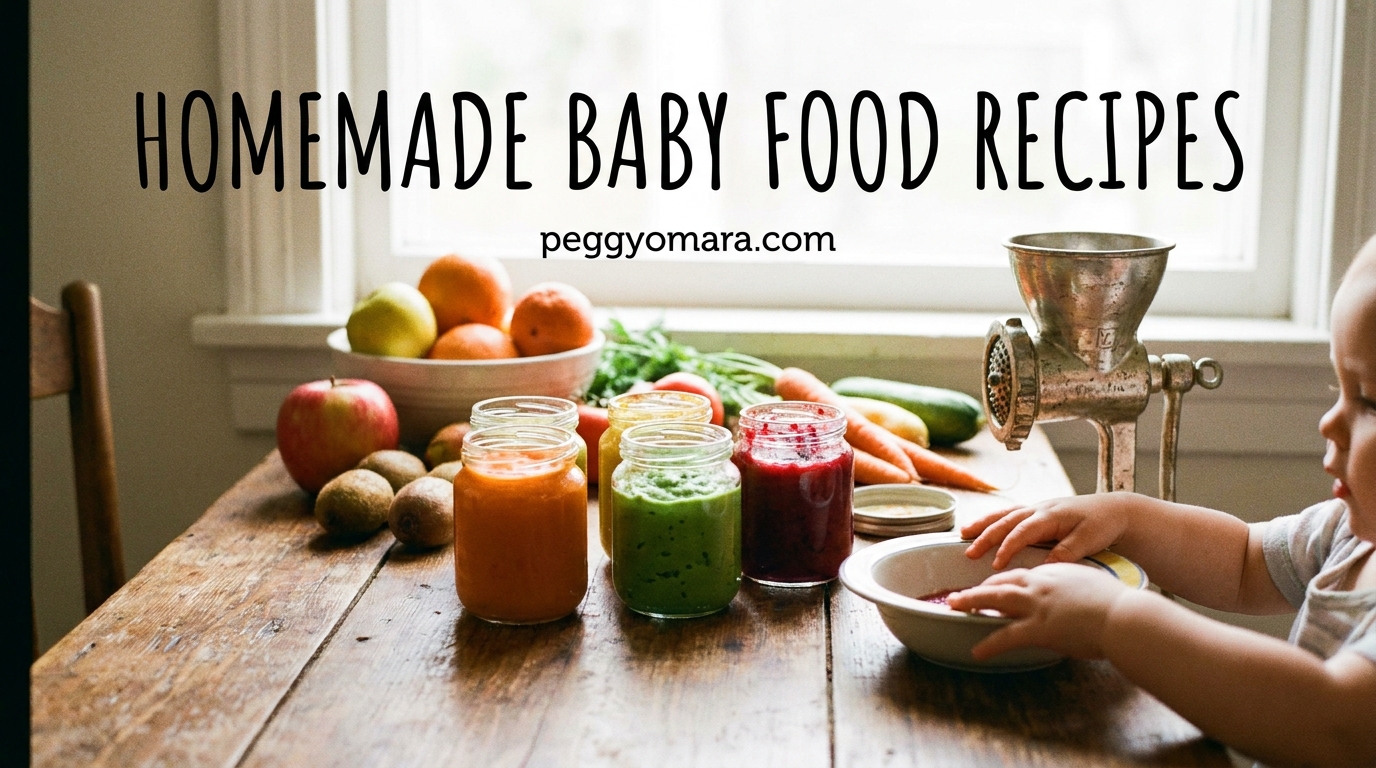
Making your own baby food is one of the most rewarding experiences as a new parent. I remember the first time I watched my daughter’s eyes light up tasting fresh sweet potato puree. It was nothing like the jarred stuff we had sampled at a friend’s house.
These homemade baby food recipes have helped thousands of parents navigate the transition from milk to solids. You’ll find age-appropriate options for every stage from first purees at 4 months through finger foods at 12 months.
Everything here follows current pediatric guidelines while keeping prep time under 30 minutes. I have included storage solutions, allergen guidance, and the exact recipes that worked when my three children were babies.
Table of Contents
Quick Guide: Best First Foods by Age (2026)
Before diving into specific recipes, here is a snapshot of the top foods for each developmental stage. This gives you a shopping list and meal planning starting point.
4 to 6 Months: Smooth Single-Ingredient Purees
Sweet Potato: Packed with beta carotene and naturally sweet. Most babies love this as their first bite.
Avocado: Rich in healthy fats that support brain development. Requires zero cooking.
Apple: Gentle on tummies and mixes well with breast milk or formula for thinning.
6 to 9 Months: Combination Purees with Texture
Apple + Sweet Potato Blend: A classic pairing that introduces mixed flavors.
Carrot + Peas: Adds plant-based protein and green vegetable exposure early.
Chicken + Sweet Potato: Essential iron and zinc from meat for growing babies.
9 to 12 Months: Soft Finger Foods and Self-Feeding
Scrambled Eggs: Excellent protein source and choline for brain development.
Soft Salmon Cakes: Omega-3 fatty acids support cognitive function.
Mini Meatballs: Iron-rich finger food perfect for pincer grasp practice.
How to Know Your Baby Is Ready for Homemade Baby Food Recipes?
The American Academy of Pediatrics recommends starting solids between 4 and 6 months. Individual readiness varies more than calendar age. Your baby will show clear developmental signs when their digestive system is prepared.
Look for these readiness indicators before offering first foods. Your baby should sit upright with minimal support and hold their head steady. The tongue-thrust reflex must diminish so they do not automatically push food out. They should show interest in your food by reaching or watching you eat.
Starting too early can cause digestive upset and food aversions. Most pediatricians suggest waiting until around 6 months unless your baby shows all readiness signs earlier and has specific nutritional needs.
What Can I Cook for My 4 Month Old Baby?
At 4 months, stick to single-ingredient smooth purees with thin, runny consistency. Your baby is learning to swallow something thicker than milk. Good options include thinned sweet potato, well-cooked apple sauce, or ripe avocado mashed with breast milk.
Start with just one tablespoon once daily. Watch for any reactions over the next three days before introducing a new food. The goal is exposure and practice, not nutrition since milk remains the primary source.
4 to 6 Months: First Baby Food Purees
Stage one baby food should be completely smooth with no chunks. Think applesauce consistency or thinner. These first foods focus on gentle flavors and easy digestion while building your baby’s palate.
Sweet Potato Puree
Sweet potato was the first food all three of my children tried. It is naturally sweet, highly nutritious, and easy to prepare in batches.
Ingredients: 1 medium sweet potato, 2-4 tablespoons water or breast milk
Instructions: Preheat oven to 400°F. Pierce potato with fork and bake 45-60 minutes until soft. Cool, peel off skin, and blend flesh with water until smooth. Add more liquid for thinner consistency.
Storage: Refrigerate up to 3 days or freeze in ice cube trays for 3 months.
Avocado Puree
This requires zero cooking and provides healthy fats essential for brain development. Perfect for busy days when you need something nutritious in minutes.
Ingredients: 1 ripe avocado, 1-2 tablespoons breast milk or formula
Instructions: Cut avocado in half and remove pit. Scoop flesh into bowl. Mash with fork or blend until completely smooth. Thin with breast milk to desired consistency.
Tip: Avocado browns quickly. Add a squeeze of lemon juice if storing, though fresh is best.
Apple Puree
Apples provide gentle fiber and vitamin C. Cooking them makes them soft enough for new eaters while concentrating the natural sweetness.
Ingredients: 2 medium apples (Gala or Fuji work well), 1/4 cup water
Instructions: Peel, core, and chop apples. Place in saucepan with water. Cover and simmer 8-10 minutes until very soft. Blend or mash until smooth, adding cooking liquid as needed.
Storage: Keeps 3 days refrigerated or 3 months frozen.
Banana Puree
Bananas are perfect for travel or restaurants since they need no prep. Choose very ripe bananas with brown spots for easiest digestion.
Ingredients: 1 ripe banana, 1 tablespoon breast milk or formula (optional)
Instructions: Peel banana and mash thoroughly with fork until no lumps remain. For younger babies, blend with small amount of liquid until completely smooth.
Note: Bananas can cause constipation in some babies. Pair with prune puree if this occurs.
Carrot Puree
Carrots deliver beta carotene that converts to vitamin A for eye health. They steam quickly and blend into vibrant orange purees babies enjoy.
Ingredients: 4 medium carrots, 1/2 cup water
Instructions: Peel and chop carrots into coins. Steam over boiling water 10-12 minutes until very tender. Reserve cooking liquid. Blend carrots with enough liquid to achieve smooth, thin consistency.
Storage: Refrigerate 3 days or freeze up to 3 months.
Pear Puree
Pears are gentler on digestion than apples and can help with constipation. They cook quickly and blend smoothly.
Ingredients: 2 ripe pears, 1/4 cup water
Instructions: Peel, core, and chop pears. Simmer with water 5-7 minutes until soft. Blend until completely smooth, adding cooking liquid as needed.
Tip: Pear puree freezes well and thaws quickly for quick meals.
6 to 9 Months: Combination Purees and Texture Introduction
At this stage, your baby is ready for thicker textures and combined flavors. Stage two baby food includes small soft lumps that dissolve easily. Most babies can handle two meals daily and explore more diverse ingredients.
Apple + Sweet Potato Blend
This classic combination was a favorite in our house. The apple adds natural sweetness while sweet potato provides substance.
Ingredients: 1 medium sweet potato, 1 medium apple, 1/2 teaspoon cinnamon (optional)
Instructions: Bake sweet potato at 400°F for 45 minutes. Meanwhile, peel, core, and chop apple. Steam apple 8 minutes until soft. Scoop sweet potato flesh and combine with apple in blender. Add cinnamon if desired. Blend with small amount of water for thicker but still smooth consistency.
Nutrition note: Beta carotene from sweet potato pairs with vitamin C from apple for better absorption.
Carrot + Peas Puree
Introducing green vegetables early helps prevent picky eating later. Peas add plant protein and create a beautiful bright green color.
Ingredients: 3 medium carrots, 1 cup fresh or frozen peas, 1/4 cup water
Instructions: Peel and chop carrots. Steam carrots and peas together 10 minutes until very tender. Reserve cooking water. Blend with enough liquid to create slightly chunky but mostly smooth texture.
Storage: This puree stores well frozen for up to 3 months.
Green Machine Blend (Banana + Avocado + Spinach)
Do not let the green color fool you. The banana and avocado make this sweet and creamy while spinach adds iron.
Ingredients: 1 ripe banana, 1/2 ripe avocado, 1/2 cup fresh baby spinach
Instructions: Wilt spinach in steamer for 2 minutes. Peel banana and avocado. Combine all ingredients in blender and process until smooth. The texture should be thick but spoonable.
Tip: Serve immediately as this does not store well due to browning.
Chicken + Sweet Potato Protein Puree
Babies need iron from food sources starting around 6 months. This puree delivers heme iron from chicken in a familiar sweet potato base.
Ingredients: 1 boneless chicken thigh, 1 medium sweet potato, 1/4 cup low-sodium chicken broth or water
Instructions: Bake sweet potato at 400°F for 45 minutes. Meanwhile, poach chicken in simmering broth 15 minutes until fully cooked. Shred chicken and combine with sweet potato flesh. Blend with cooking liquid until smooth with small soft flecks of texture.
Iron boost: Chicken thigh has more iron than breast meat.
Berry Oat Breakfast Puree
This introduces whole grains and antioxidants. The natural sweetness makes it perfect for breakfast or a hearty snack.
Ingredients: 1/4 cup rolled oats, 1/2 cup blueberries, 1 ripe banana, 3/4 cup water
Instructions: Cook oats in water 5 minutes until soft. Meanwhile, simmer blueberries 5 minutes until burst. Mash banana. Combine all ingredients and blend until thick with small oatmeal texture remaining.
Note: Blueberries stain. Use a bib you do not mind discoloring.
Butternut Squash + Apple with Ginger
A pinch of ginger adds subtle warmth without heat. This autumn-inspired blend works year-round.
Ingredients: 2 cups butternut squash cubes, 1 medium apple, 1/8 teaspoon ground ginger
Instructions: Steam squash cubes 12 minutes until very tender. Peel, core, and chop apple. Add apple to steamer for final 5 minutes. Blend both with ginger until smooth with slight texture.
9 to 12 Months: Soft Finger Foods and Table Food Prep
Your baby is developing the pincer grasp and wants to feed themselves. Stage three baby food includes soft, graspable pieces they can pick up. These recipes bridge the gap between purees and family meals.
Scrambled Eggs with Cheese
Eggs are a nutritional powerhouse with complete protein and choline. This soft texture is perfect for developing eaters.
Ingredients: 1 large egg, 1 tablespoon breast milk or whole milk, 1 tablespoon shredded cheddar
Instructions: Whisk egg with milk. Pour into non-stick pan over medium-low heat. Stir gently until just set but still soft. Remove from heat, sprinkle cheese, and let melt. Cut or tear into small bite-sized pieces.
Allergen note: Introduce eggs early following your pediatrician’s guidance on allergens.
Soft Salmon Cakes
Salmon provides omega-3 fatty acids for brain development. These cakes are soft enough for gums but hold together for self-feeding.
Ingredients: 1 can (5 oz) wild salmon, 1/4 cup mashed potato, 1 tablespoon olive oil
Instructions: Drain salmon, removing large bones. Mix with mashed potato. Form into small patties, about 1 inch diameter. Pan-fry in olive oil over medium heat 2 minutes per side until golden. Cool and break into small pieces.
Tip: Make a batch and freeze individually wrapped for quick meals.
Mini Meatballs
These iron-rich bites are perfect for pincer grasp practice. The soft texture dissolves easily in little mouths.
Ingredients: 1/2 pound ground beef or turkey, 1/4 cup breadcrumbs, 1 egg yolk, 2 tablespoons grated zucchini
Instructions: Mix all ingredients gently. Roll into 3/4-inch balls. Place on baking sheet. Bake at 375°F for 12-15 minutes until cooked through. Cool completely and cut into quarters for serving.
Storage: Freeze uncooked balls on tray, then store in bag for up to 2 months. Cook from frozen, adding 5 minutes.
Oat Pancakes for Babies
These soft pancakes contain no added sugar and use whole grain oats. They are perfect for baby-led weaning or as finger food.
Ingredients: 1/2 cup rolled oats, 1/2 ripe banana, 1 egg, 2 tablespoons milk, 1/4 teaspoon cinnamon
Instructions: Blend oats into flour consistency. Add remaining ingredients and blend until smooth batter forms. Pour small silver-dollar sized circles onto buttered griddle over medium heat. Cook 2 minutes per side. Cool and serve in strips or small pieces.
Serving tip: These freeze well between parchment paper layers.
Mashed Chickpeas with Olive Oil
Chickpeas offer plant-based protein and fiber. Mashing creates a texture babies can scoop or pick up.
Ingredients: 1 can (15 oz) low-sodium chickpeas, 1 tablespoon olive oil, 1/4 teaspoon cumin (optional)
Instructions: Rinse and drain chickpeas. Place in bowl and mash with fork, leaving some chunks for texture. Stir in olive oil and cumin if using. Serve slightly warm or at room temperature.
Variation: Add mashed avocado for extra creaminess.
Soft Roasted Veggie Sticks
These prepare your baby for table foods. The sticks are easy to hold while the soft centers are safe to eat.
Ingredients: 1 sweet potato, 1 zucchini, 1 carrot, 1 tablespoon olive oil
Instructions: Cut vegetables into thick finger-shaped sticks, about 3 inches long. Toss with olive oil. Roast at 400°F for 25-30 minutes until very soft when pierced with fork. Cool to warm before serving.
Safety note: Test softness before serving. Veggies should squash easily between your fingers.
Feeding Schedule by Age: When and How Much?
Understanding portion sizes and timing helps establish healthy eating patterns. Here is a practical guide based on pediatric recommendations and what worked for our family.
4 to 6 Months Schedule
Offer 1-2 tablespoons of single-ingredient puree once daily. The best time is mid-morning when your baby is alert and not overly hungry. After nursing or bottle feeding, offer the puree. Most babies take only a few bites at first. This is normal. Milk remains the primary nutrition source.
6 to 9 Months Schedule
Increase to 2-4 tablespoons twice daily, typically breakfast and dinner. Your baby may start showing preferences. Continue offering rejected foods every few days. Begin introducing small soft finger foods alongside purees for texture exploration.
9 to 12 Months Schedule
By now, many babies eat three meals plus one or two snacks. Portions range from 4-8 tablespoons depending on appetite. Continue breast milk or formula alongside meals. Introduce a wider variety of family foods in soft, appropriate textures.
What Time Should a Baby Eat Dinner?
Schedule dinner 1-2 hours before bedtime to allow digestion. For most families, this means 5:30 to 6:30 PM. Avoid heavy meals right before sleep as this can cause discomfort. If your baby attends daycare, dinner might need to be earlier on weekdays to accommodate pickup schedules.
Spices and Seasonings for Baby Food
Contrary to old advice, babies can enjoy flavorful food from the start. Introducing herbs and spices early actually helps develop adventurous eaters. Skip the salt and sugar, but feel free to experiment with these safe seasonings.
Safe Spices for Babies
Cinnamon: Pairs beautifully with apples, sweet potatoes, and oatmeal. Start with just a pinch.
Cumin: Yes, babies can have cumin. It adds earthy warmth to lentils, chickpeas, and vegetable purees. Use 1/8 teaspoon for a full batch of food.
Turmeric: A tiny amount provides color and mild flavor. Combine with black pepper to enhance absorption.
Ginger: Fresh or ground ginger aids digestion. Use sparingly as it can be strong for young palates.
Garlic and Onion Powder: Add depth to vegetable and meat purees without harshness.
Basil, Parsley, Mint: Fresh herbs add bright notes. Finely chop and stir into purees at the end.
Can Babies Have Cumin?
Absolutely. Cumin is safe for babies starting around 6 months when they have tried basic purees. It is a traditional ingredient in many cultures’ baby foods. Start with small amounts and watch for any reaction, though cumin allergies are rare. The spice adds warmth without heat, making it perfect for lentil dishes and vegetable blends.
Storage and Freezing: Make-Ahead Baby Food Tips
Batch cooking saves hours during busy weeks. I spent one Sunday afternoon each month preparing a freezer stash that lasted weeks. Here is how to store your homemade baby food safely.
Refrigerator Storage
Store purees in airtight containers for up to 3 days. Glass jars work well for daily portions. Label everything with the date prepared. Keep refrigerator temperature at 40°F or below.
Freezer Methods
The ice cube tray method is genius for portion control. Fill clean trays with puree, freeze solid, then transfer cubes to labeled freezer bags. Each cube equals approximately 1 ounce or 2 tablespoons. Most purees store well for 3 months frozen.
Alternatively, use silicone baby food containers with lids for easy stacking. These often come in 2-4 ounce sizes perfect for growing appetites.
Thawing Safely
Thaw overnight in the refrigerator or use the defrost setting on your microwave. Never leave baby food at room temperature more than 2 hours. Heat to lukewarm and always test temperature before serving. Do not refreeze thawed food.
Introducing Allergens Safely
Current research supports early introduction of allergens rather than delay. The LEAP study and subsequent guidelines changed how we approach common allergens. Introducing these foods between 4-6 months may actually reduce allergy risk.
The Top 9 Allergens
These account for 90% of food allergies: milk, eggs, fish, shellfish, tree nuts, peanuts, wheat, soybeans, and sesame. Introduce one at a time, waiting 3-5 days between new allergens.
Safe Introduction Protocol
Offer a small amount in the morning when you can observe your baby all day. Watch for hives, vomiting, diarrhea, or unusual fussiness. Have emergency contacts ready, though severe reactions are rare. Once tolerated, continue regular exposure to maintain tolerance.
Discuss your introduction plan with your pediatrician, especially if your family has allergy history. They may recommend specific timing or medical supervision for certain foods.
Pro Tips from Parents Who Have Been There
These insights come from forums, personal experience, and conversations with hundreds of parents. They address the real challenges that come up when making homemade baby food recipes.
Use Frozen Vegetables
High-quality frozen vegetables are just as nutritious as fresh. Steam them in the microwave and blend. This saves washing, peeling, and chopping time. Frozen peas, carrots, and green beans work beautifully for purees.
Thin with Breast Milk or Formula
For younger babies, thin purees with familiar milk instead of water. This adds nutrition and a taste they recognize. As they adjust to solids, gradually reduce the milk content.
Handle Food Rejection Gracefully
Babies often reject new foods multiple times before accepting them. This is normal neophobia. Keep offering rejected foods every few days without pressure. Try different preparations. A baby who hates steamed carrots might love roasted ones.
Batch Cooking Balance
Make peace with store-bought options for travel or emergencies. Homemade baby food is wonderful but not worth parental burnout. Even offering one homemade meal daily provides benefits. On weekends, prepare larger batches to supplement weekday convenience options.
Frequently Asked Questions
What can I cook for my 4 month old baby?
At 4 months, offer single-ingredient smooth purees like sweet potato, avocado, apple, banana, carrot, or pear. Start with just 1-2 tablespoons once daily. The texture should be thin and runny, similar to a thick soup. Cook all vegetables and fruits until very soft, then blend with breast milk, formula, or water to achieve the right consistency.
What food can I give to a 4 month old baby?
Safe first foods for 4 month olds include sweet potato puree, avocado puree, apple puree, banana puree, carrot puree, and pear puree. These should be single-ingredient, smooth, and thin in consistency. Avoid honey, cow’s milk as a drink, added salt or sugar, and choking hazards like whole nuts or popcorn. Introduce one new food every 3-5 days to watch for allergic reactions.
What time should a baby eat dinner?
Babies should eat dinner 1-2 hours before bedtime, typically between 5:30 and 6:30 PM for most families. This timing allows proper digestion before sleep. For younger babies (4-6 months), dinner might be just a small tasting portion after their regular milk feeding. As babies grow (9-12 months), dinner becomes a more substantial meal with 4-8 tablespoons of food.
Can babies have cumin?
Yes, babies can have cumin starting around 6 months of age. Cumin is safe and commonly used in baby foods across many cultures. It adds warm, earthy flavor without heat. Start with small amounts (about 1/8 teaspoon for a full batch of food) and mix into vegetable purees, lentil dishes, or meat blends. As with any new food, introduce cumin alone first and watch for any reaction over the next few days.
Conclusion
Making homemade baby food recipes is simpler than most parents expect. With just a pot, blender, and fresh ingredients, you can provide nutritious meals that support your baby’s growth and develop their taste preferences. Start with single-ingredient purees at 4-6 months, progress to combinations and textures at 6-9 months, then embrace finger foods by 9-12 months.
Remember that every baby develops at their own pace. These recipes provide a framework, but your intuition as a parent matters most. Trust the process, batch cook when possible, and enjoy watching your baby discover the wonderful world of food.