
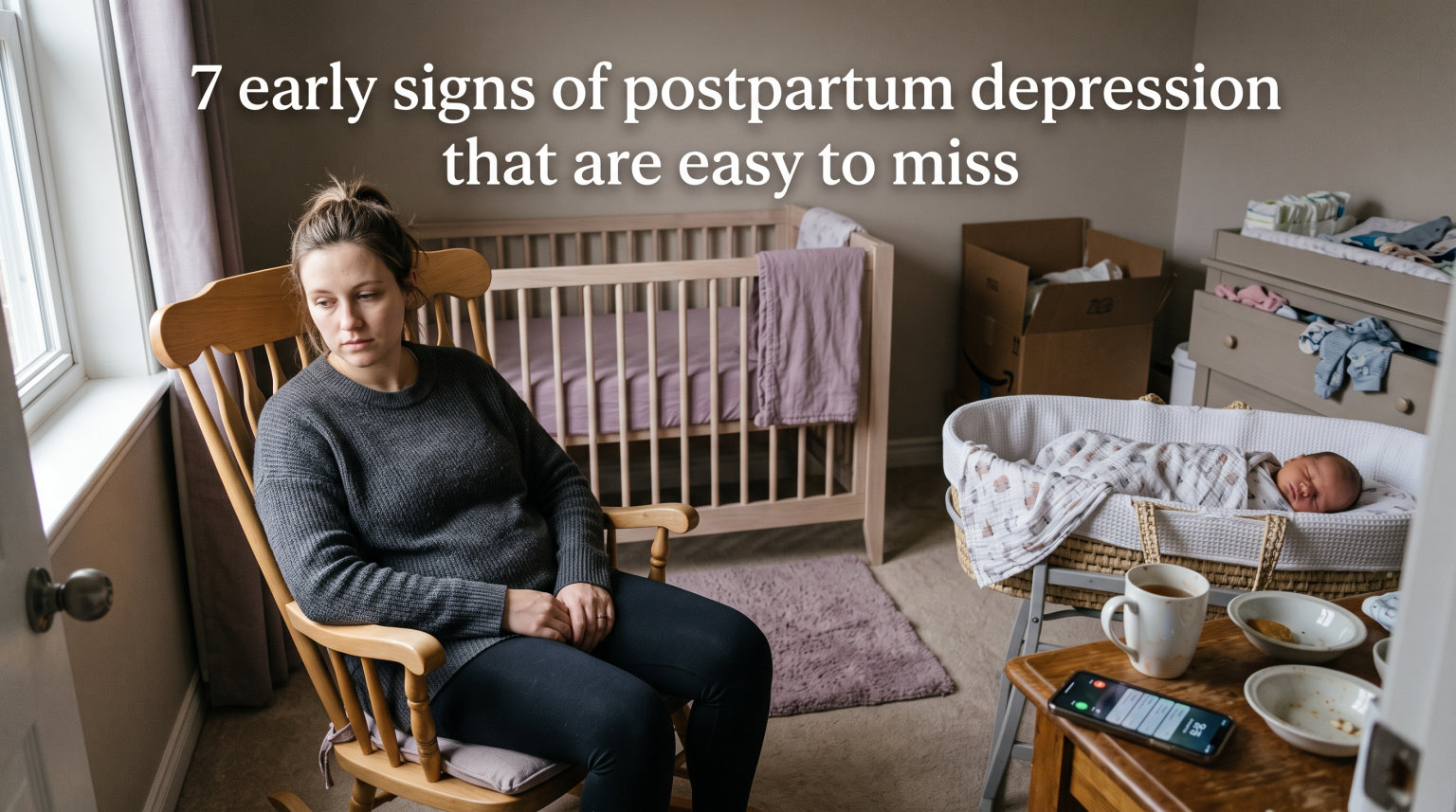
After bringing your baby home, you expect sleepless nights and emotional moments. The first weeks are a blur of feedings, diaper changes, and trying to remember when you last showered. But sometimes, something deeper settles in beneath the surface, something that looks like normal new parent exhaustion but is not.
Postpartum depression affects up to 1 in 7 women after childbirth. Many do not realize they have it because the early signs of postpartum depression are easy to miss. They hide behind the chaos of new motherhood, disguised as typical stress or sleep deprivation.
This guide covers 7 early signs that often go unrecognized. Recognizing them could mean the difference between months of silent suffering and getting the help you need.
Table of Contents
Understanding the Difference: Baby Blues vs Postpartum Depression
Before diving into the warning signs, you need to understand what is normal and what is not. The postpartum period brings massive hormonal shifts, physical recovery, and life changes that would overwhelm anyone.
What Are Baby Blues?
Baby blues are incredibly common, affecting up to 80% of new mothers. They typically begin within the first 2-3 days after delivery and peak around day 5. You might experience mood swings, crying spells, anxiety, and difficulty sleeping even when the baby sleeps.
The key distinction is duration. Baby blues resolve on their own within two weeks. They feel intense in the moment but lift as your hormones begin stabilizing.
What Is Postpartum Depression?
Postpartum depression (PPD) involves more severe and longer-lasting symptoms. It can begin anytime within the first year after childbirth, sometimes not appearing until months later. The emotional pain does not improve with rest or time.
PPD affects your ability to function and care for yourself and your baby. It is not a weakness or character flaw. It is a medical condition that requires treatment, just like diabetes or high blood pressure.
Recognizing the Timeline and Severity
Baby blues last days to two weeks. Postpartum depression lasts weeks to months without treatment. Baby blues make you weepy and overwhelmed. PPD can make you feel hopeless, disconnected, or unable to bond with your baby.
If your symptoms persist beyond two weeks, worsen over time, or interfere with daily functioning, it is time to reach out for professional support.
7 Early Signs of Postpartum Depression That Are Easy to Miss
The following signs often masquerade as normal new parent struggles. They are subtle at first, easy to dismiss or rationalize away. But knowing what to watch for can help you catch PPD early and get the support you deserve.
1. Overwhelming Exhaustion Beyond Normal Tiredness
Every new parent is tired. That is not what we are talking about here. This is a bone-deep, crushing fatigue that sleep does not fix.
You sleep when the baby sleeps, yet you wake feeling like you have been hit by a truck. Your limbs feel heavy. Simple tasks like showering or making toast seem insurmountable. You describe it to friends as feeling like you are walking through molasses.
Many mothers dismiss this as just part of having a newborn. They push through, thinking everyone feels this way. But persistent, unrelenting exhaustion that does not improve with rest is often one of the first physical manifestations of depression.
2. Unexplained Physical Symptoms
Postpartum depression is not always emotional. It often shows up in your body first, which makes it particularly easy to miss.
You might experience frequent headaches, muscle tension, or back pain that has no clear cause. Digestive issues like nausea, stomach pain, or changes in appetite are common. Some women report heart palpitations or feeling short of breath.
Because you recently gave birth, it is natural to attribute these symptoms to physical recovery or stress. You visit your doctor for headaches and get told it is tension. You mention the stomach issues and hear it is probably diet-related. Meanwhile, your body is signaling that your mental health needs attention.
One mother shared in a support forum that her PPD became a physical manifestation long before she recognized the emotional symptoms. She kept seeking medical answers for her body aches while the root cause was depression.
3. Feeling Disconnected from Your Baby
This sign cuts especially deep because it conflicts so strongly with the narrative of instant, overwhelming maternal love. You expected fireworks and instead feel numb.
You go through the motions of feeding, changing, and soothing your baby. You do everything right on the outside. But inside, you feel like you are caring for someone else’s child. The emotional bond you expected simply is not there, and that terrifies you.
You might find yourself staring at your baby and feeling nothing, or worse, feeling resentful. You wonder if you are a terrible mother. You are too ashamed to tell anyone because it sounds monstrous to admit.
This disconnection is not a failure of love. It is a symptom of depression affecting your brain chemistry. Many mothers report bonding delays that resolved completely once their PPD was treated. The love was there, just buried under depression.
4. Irritability Masked as Normal Stress
Everyone warns you that newborns are stressful. So when you find yourself snapping at your partner over minor things, you assume it is just the sleep deprivation talking.
But this irritability is different. It is constant and disproportionate. You feel rage bubbling up over spilled milk, a crying baby, or a text message tone. You yell and then feel guilty, or you swallow it down and feel resentful.
Your partner walks on eggshells around you. You know you are being unreasonable but you cannot stop. You tell yourself it is just stress, just hormones, just the pressure of new parenthood.
While some irritability is normal, persistent anger and low frustration tolerance can signal postpartum depression or anxiety. This is especially true if the irritability is accompanied by intrusive thoughts or feeling overwhelmed to the point of panic.
5. Persistent Sense of Doom or Dread
You are not worried about specific things like the baby breathing or developmental milestones. Instead, you carry a free-floating anxiety that something terrible is coming.
It feels like sitting in the front car of a roller coaster that is slowly climbing, knowing the drop is coming but not when. You cannot name what is wrong, but you are certain that everything is about to fall apart.
This sense of doom often strikes at odd moments. You might be rocking your peacefully sleeping baby and suddenly feel overwhelmed with dread. Or you wake at 3 AM with your heart racing and no specific fear to point to.
One mother described this feeling beginning on day 5 postpartum: overwhelming doom, sadness, anxiety, and fear without being able to explain why. She knew something was wrong but could not articulate what.
This existential dread differs from normal new parent worries because it is pervasive and not tied to concrete concerns. It follows you everywhere, coloring even peaceful moments with darkness.
6. Hyperfocus on Being a Good Mother
At first glance, this does not look like depression. You are not crying in bed or neglecting your baby. You are doing the opposite. You are obsessing over every detail of motherhood.
You spend hours researching the perfect sleep schedule. You panic over every feeding choice. You feel intense anxiety about developmental milestones and compare your baby constantly to others. You cannot rest because there is always something more you should be doing.
This perfectionism is often driven by anxiety and feelings of inadequacy that characterize PPD. You feel like you are failing, so you overcompensate by trying to control everything.
You might ace the postpartum depression screening at your doctor’s office because you are functioning so well on the outside. You say you are fine because you are doing everything right. But inside, you are crumbling under the pressure.
This sign is particularly easy to miss because it looks like dedication rather than distress. Only when you examine the anxiety beneath the hyperfocus does the depression become visible.
7. Withdrawal from Support Systems
Your mother offers to watch the baby so you can nap. You decline. Your friend wants to visit with a meal. You say maybe next week. Your partner encourages you to go to a new parent group. You make excuses.
Isolation is a classic depression symptom, but new parenthood provides perfect cover. You can claim the baby needs routine, or you are too tired, or you are worried about germs. No one questions a new mother wanting to stay home.
But the withdrawal goes deeper than convenience. You stop answering texts. You let calls go to voicemail. When you do interact, you feel like you are performing, pretending everything is fine while feeling empty inside.
You might tell yourself you are just protective of your baby or that other people would not understand. The truth is that depression makes connection feel impossible. The effort required to be around others feels overwhelming, so you retreat further into solitude.
This isolation creates a vicious cycle. The more you withdraw, the worse you feel. The worse you feel, the more you withdraw. Breaking that cycle requires recognizing it for what it is: a symptom, not a choice.
When to Seek Professional Help
Knowing the signs is important, but knowing when to act is critical. Some symptoms require immediate attention, while others warrant a conversation with your healthcare provider.
Timeline Red Flags
If your symptoms last longer than two weeks, that is your signal to reach out. Baby blues resolve naturally. Depression does not. The longer PPD goes untreated, the harder it becomes to treat and the more it affects your bonding with your baby.
Symptoms that worsen over time rather than improving are another red flag. Feeling slightly better one day and much worse the next suggests you need professional support.
Crisis Warning Signs
Some symptoms require immediate help. If you have thoughts of harming yourself or your baby, seek emergency assistance right away. Do not wait. Do not rationalize. These thoughts are symptoms of a medical emergency, not reflections of your character.
Other crisis signs include inability to care for your baby, severe confusion, paranoia, or hallucinations. These can indicate postpartum psychosis, a rare but serious condition requiring immediate treatment.
How to Reach Out
Call your obstetrician, midwife, or primary care provider and tell them you are struggling. Be specific about your symptoms and how long they have lasted. Ask for a postpartum depression screening and a referral to a mental health professional.
Many providers now recognize PPD as a serious health concern and will prioritize getting you help quickly. You do not need to have all the answers or a formal diagnosis. Simply saying “I think I might have postpartum depression” is enough to start the conversation.
Crisis Resources
If you are in crisis or having thoughts of harming yourself or your baby:
988 Suicide and Crisis Lifeline: Call or text 988 for immediate support, 24/7, free and confidential.
Postpartum Support International: Call 1-800-944-4773 for the PSI HelpLine, or text 503-894-9453. They provide support, information, and local resource referrals.
SAMHSA National Helpline: Call 1-800-662-4357 for free, confidential, 24/7 treatment referral and information.
Crisis Text Line: Text HOME to 741741 to connect with a crisis counselor.
These resources exist because postpartum depression is common and help is available. Using them is a sign of strength, not weakness.
Treatment Options Overview
Postpartum depression is highly treatable. Most women experience significant improvement with proper care, and many recover completely.
Therapy
Cognitive behavioral therapy (CBT) and interpersonal therapy (IPT) are particularly effective for PPD. These approaches help you identify negative thought patterns, develop coping strategies, and process the massive life transition you are experiencing.
Many therapists now offer telehealth sessions, making it easier to fit therapy into your new schedule. Some specialize specifically in perinatal mental health.
Medication
Antidepressants can be safe and effective for treating postpartum depression, including while breastfeeding. Selective serotonin reuptake inhibitors (SSRIs) like sertraline (Zoloft) are commonly prescribed because they have favorable safety profiles for nursing mothers.
Brexanolone (Zulresso) is an FDA-approved treatment specifically for postpartum depression, administered as an infusion over 60 hours under medical supervision. It works quickly for severe cases.
Zuranolone (Zurzuvae) is a newer oral medication approved in 2023 for PPD, offering another option for rapid symptom relief.
Support Groups
Connecting with other mothers who understand can be incredibly healing. Postpartum Support International offers virtual support groups for mothers experiencing PPD. Hearing others describe feelings identical to yours helps combat the isolation and shame.
Local hospitals and community centers often host new parent groups where you can meet others in your area facing similar challenges.
Self-Care Strategies
While professional treatment is essential, self-care supports recovery. Prioritize sleep whenever possible, even if that means skipping household chores. Accept help with cooking, cleaning, and baby care. Eat regular, nutritious meals. Get outside for short walks if your provider has cleared you for activity.
Be gentle with yourself. You are recovering from childbirth while caring for a newborn and managing a mood disorder. That is an enormous load. Lower your expectations and celebrate small wins.
Frequently Asked Questions
When does postpartum depression start?
Postpartum depression can begin anytime within the first year after giving birth. While many women experience onset within the first 4-6 weeks, some do not develop symptoms until several months later. Symptoms that begin after the typical baby blues window (2 weeks postpartum) may indicate PPD rather than normal adjustment.
When does PPD go away?
Without treatment, postpartum depression can last months or longer. With proper treatment including therapy and/or medication, most women experience significant improvement within weeks to a few months. The earlier you seek help, the faster recovery typically occurs. PPD is highly treatable, and full recovery is absolutely possible.
How do I know if I have postpartum depression?
If you have symptoms lasting longer than two weeks that interfere with your ability to function or enjoy life, you may have PPD. Common signs include persistent sadness, loss of interest in activities, difficulty bonding with your baby, excessive anxiety or irritability, and physical symptoms like fatigue or headaches that do not improve with rest. A healthcare provider can formally diagnose PPD using screening tools.
Do I have PPD or am I just tired?
New parent exhaustion is real, but there are key differences. Normal tiredness improves when you get rest, even if that rest is brief. PPD-related exhaustion persists regardless of sleep. Additionally, PPD involves emotional symptoms like hopelessness, disconnection from your baby, or intrusive thoughts that pure exhaustion does not cause. If you are unsure, speaking with your provider can provide clarity.
Can postpartum depression start at 4 months?
Yes, absolutely. While many cases of PPD begin in the early weeks postpartum, onset can occur anytime within the first year after childbirth. Symptoms appearing at 4 months, 6 months, or even later are still considered postpartum depression. The hormonal and life changes of new parenthood create vulnerability throughout that first year.
What did your postpartum depression feel like?
Women describe PPD in many ways: like walking through fog, carrying a weight you cannot put down, feeling disconnected from everything including your baby, constant dread without knowing why, or emotional numbness where you expected joy. Some experience primarily physical symptoms like exhaustion and body aches. Others describe intense anxiety, rage, or persistent crying. Every experience is valid and deserves support.
Conclusion: You Are Not Alone
Recognizing the 7 early signs of postpartum depression that are easy to miss could change the trajectory of your postpartum experience. That crushing exhaustion, those unexplained body aches, the disconnection you are too ashamed to name, the irritability you blame on stress, the doom that follows you everywhere, the perfectionism that exhausts you, and the isolation that feels safest, these are not character flaws. They are symptoms of a treatable medical condition.
Up to 1 in 7 women experience postpartum depression. That means in any new parent group, multiple mothers are struggling silently right alongside you. The shame you feel is the depression talking, not the truth about who you are as a mother.
If you recognized yourself in any of these signs, reach out today. Call your doctor, text a crisis line, join a support group, or simply tell someone you trust that you are not okay. That first step is the hardest and the most important.
Postpartum depression does not make you a bad mother. Seeking help makes you a strong one. Recovery is possible. The bond with your baby can develop and deepen. The fog can lift. And on the other side, you can find the joy in motherhood that depression temporarily stole from you.
You deserve support. You deserve treatment. You deserve to feel like yourself again.