
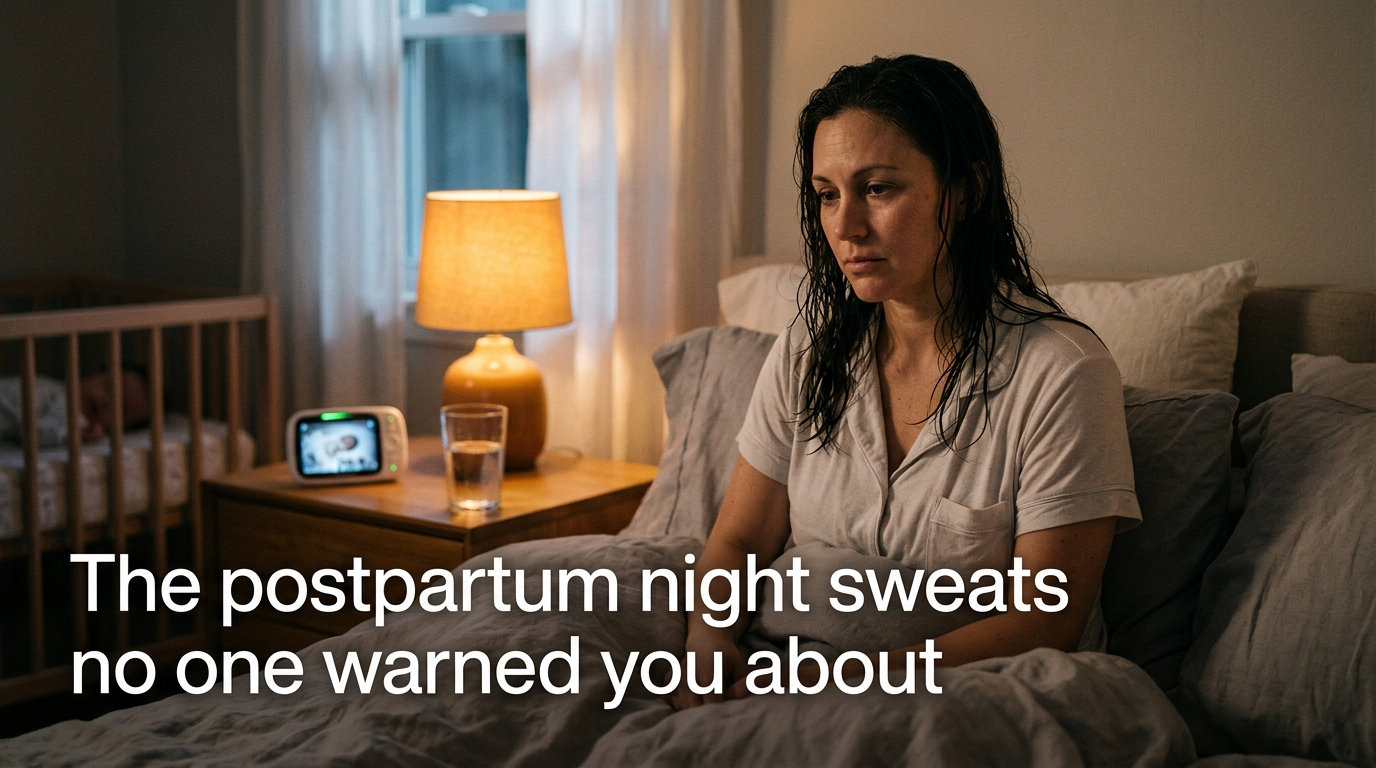
You wake up at 3 AM drenched. Your hair is soaked. Your sheets feel like someone spilled a water bottle across them. This is postpartum night sweats, and if you are experiencing this right now, you are not alone. I am going to walk you through exactly what is happening to your body, why no one warned you about this, and how to get through it.
When I had my first baby, I thought the hard part was over once delivery ended. No one mentioned that I would spend the next few weeks waking up feeling like I had run a marathon in my sleep. The truth is that postpartum night sweats affect the vast majority of new mothers, yet they remain one of the most unexpected and unsettling parts of the fourth trimester.
In this guide, I will explain the hormonal changes causing this excessive sweating, how long you can expect it to last, and practical strategies to make your nights more comfortable. I have also gathered real experiences from other mothers who have been exactly where you are right now.
Table of Contents
What Causes Postpartum Night Sweats
Postpartum night sweats are caused by a dramatic drop in estrogen levels that occurs immediately after you give birth. During pregnancy, your estrogen levels were at an all-time high. Once you deliver your baby and the placenta, those levels plummet. This hormonal crash triggers your body to regulate temperature differently, leading to excessive sweating especially at night.
Your body is also working to eliminate the extra fluid you retained during pregnancy. Remember those swollen ankles and puffy fingers? That fluid has to go somewhere. While you will shed some through increased urination, a significant amount leaves through your skin as sweat. This process is completely normal and actually shows your body is doing exactly what it should be doing.
Breastfeeding can intensify night sweats for some women. The hormone prolactin, which stimulates milk production, can further suppress estrogen levels. This creates a perfect storm for hormonal night sweats that may feel more intense than expected. If you are nursing, you might notice the sweating peaks during feeding sessions or right after.
Why No One Warns You About Postpartum Night Sweats
We hear plenty about the baby blues, the potential for hair loss, and the challenges of breastfeeding. Yet somehow postpartum sweating remains the secret no one shares. Part of this silence stems from the fact that it is temporary and not medically dangerous. Healthcare providers focus on serious complications, and night sweats, while uncomfortable, are simply a normal part of recovery.
Culturally, we also tend to gloss over the messy, uncomfortable realities of new motherhood. There is so much focus on the joy of having a newborn that the physical recovery process gets minimized. When I searched forums while researching this topic, I found the same sentiment repeated over and over. One mother wrote, “Nobody talks about postpartum sweating enough because WHAT IS THIS.” Another shared, “No one warned me about postpartum night sweats. I woke up completely soaked and thought something was seriously wrong with me.”
The lack of warning leaves many new mothers frightened. You have just been through the intense physical experience of giving birth. Your body feels foreign. Then you start experiencing night sweats after giving birth and wonder if you are developing an infection or some other complication. The emotional toll of not knowing this was coming can be significant.
How Long Do Postpartum Night Sweats Last
For most women, postpartum night sweats peak during the first two weeks after delivery and gradually improve over the next six to eight weeks. By the time you reach your six-week postpartum checkup, the sweating should be significantly reduced or completely gone. Some women may experience occasional episodes for up to three months, particularly if they are breastfeeding.
The timeline varies based on several factors. If you are breastfeeding, the hormonal fluctuations might prolong the sweating phase since your body is actively managing milk production and related hormone levels. Women who had significant fluid retention during pregnancy may also experience more intense sweating as their bodies work harder to eliminate that excess fluid.
Your individual hormone levels play a role too. Every woman’s endocrine system rebalances at its own pace. While six to eight weeks is typical, there is a wide range of normal. If you are still experiencing significant excessive sweating postpartum beyond three months, it is worth mentioning to your healthcare provider.
How to Manage and Reduce Postpartum Night Sweats
While you cannot completely stop postpartum night sweats until your hormones stabilize, you can make them more manageable. Here are the strategies that actually help new mothers get better sleep during this phase.
Optimize Your Sleep Environment
Keep your bedroom cool, ideally between 60 and 67 degrees Fahrenheit. Use a fan or open a window to promote air circulation. Consider moisture-wicking sheets designed for hot sleepers. Cotton percale or bamboo sheets breathe better than traditional cotton and can help you feel less clammy when you wake up sweaty.
Layer your bedding so you can easily remove blankets without fully waking up. A light cotton blanket on top of your sheet gives you something to pull on and off as your body temperature fluctuates through the night. Keep a spare pillowcase within arm’s reach so you can do a quick swap without getting out of bed.
Dress for Temperature Regulation
Wear lightweight, breathable sleepwear made from natural fibers like cotton or bamboo. Avoid synthetic fabrics that trap heat and moisture against your skin. Some mothers find that sleeping in a nursing tank top and lightweight shorts works better than pajama sets. Others prefer sleeping in just underwear and a loose tank.
Keep a clean set of pajamas on your nightstand. When you wake up soaked at 2 AM, being able to change quickly helps you get back to sleep faster. The less you have to think or move, the better your chances of dozing off again before the baby needs you.
Stay Hydrated Strategically
It might seem counterintuitive, but drinking enough water during the day can actually help reduce the intensity of night sweats. Dehydration can trigger your body to work harder to regulate temperature. Keep a large water bottle nearby and sip throughout the day, especially if you are breastfeeding.
Avoid caffeine in the afternoon and evening as it can increase body temperature and trigger more sweating. Spicy foods can have a similar effect, so you might want to skip the hot sauce at dinner for a few weeks. These small dietary adjustments can make a noticeable difference in how intensely you sweat at night.
Protect Your Sleep Surface
Consider using a waterproof mattress protector to prevent sweat from seeping into your mattress. A towel layered underneath your fitted sheet can absorb moisture and be easily changed in the morning. Some mothers swear by placing a soft cotton towel directly under their torso where sweating tends to concentrate.
If you co-sleep or have your baby in a bassinet nearby, make sure your temperature regulation efforts do not affect your little one. Keep the room at a temperature that is safe for the baby while using your fan or lighter bedding to manage your own comfort. A sleep sack for your baby can help them stay warm while you keep the room cooler.
The Emotional Experience of Postpartum Night Sweats
The physical discomfort of night sweats is only part of the story. The emotional impact can be surprisingly heavy, especially when combined with sleep deprivation and the demands of caring for a newborn. There is something deeply unsettling about waking up drenched in your own sweat when you are already feeling vulnerable and exhausted.
Many mothers describe feeling betrayed by their bodies during this phase. You have just accomplished the incredible feat of growing and delivering a human. You expect to feel powerful, or at least relieved. Instead, you are dealing with postpartum symptoms that make you feel out of control and uncomfortable in your own skin.
The forum discussions I reviewed revealed a common thread of isolation. Women felt alone in this experience because no one had mentioned it. One mother shared that she cried the first time it happened, convinced she was sick or that something had gone wrong during delivery. Another described the frustration of finally getting her baby to sleep, only to wake up an hour later needing to change her clothes and bedding.
If you are feeling overwhelmed by this symptom, please know that your reaction is valid. Being uncomfortable while sleep-deprived is genuinely difficult. Give yourself permission to feel frustrated while also recognizing that this phase will pass. Reach out to other mothers, whether in online forums or local groups, and you will likely find a chorus of “me too” that helps you feel less alone.
When to Seek Medical Help
While postpartum night sweats are typically normal, there are situations where you should contact your healthcare provider. Knowing the difference between normal postpartum sweating and concerning symptoms can give you peace of mind.
Contact your doctor if you experience a fever above 100.4 degrees Fahrenheit along with night sweats. This could indicate an infection, particularly if the fever persists or you also have chills, body aches, or foul-smelling discharge. While some warmth is normal as your body recovers, a true fever is not.
Seek medical attention if the sweating is accompanied by rapid heartbeat, unexplained weight loss, or extreme fatigue beyond typical new motherhood exhaustion. These symptoms could indicate a thyroid issue such as postpartum thyroiditis, which affects some women after delivery. Thyroid problems are treatable but need to be diagnosed.
If your night sweats persist beyond three months postpartum or are so severe that they are preventing you from getting any rest, mention this at your next appointment. Your provider may want to run some blood work to check hormone levels or rule out other underlying conditions. Do not hesitate to advocate for yourself if something feels wrong.
Frequently Asked Questions
Is it normal to sweat a lot at night after giving birth?
Yes, night sweats after giving birth are completely normal and affect most new mothers. They are caused by the dramatic drop in estrogen levels after delivery combined with your body eliminating excess pregnancy fluids. The sweating typically peaks in the first two weeks and improves within six to eight weeks.
How long do postpartum night sweats last?
Postpartum night sweats typically last between two to eight weeks, with most women seeing significant improvement by their six-week postpartum checkup. Women who are breastfeeding may experience them for slightly longer due to continued hormonal fluctuations. If sweating persists beyond three months, consult your healthcare provider.
How to stop postpartum night sweats?
You cannot completely stop postpartum night sweats until your hormones rebalance, but you can manage them by keeping your bedroom cool between 60-67°F, wearing breathable cotton or bamboo sleepwear, using moisture-wicking sheets, staying hydrated during the day, and avoiding caffeine and spicy foods in the evening.
When should I worry about night sweats postpartum?
Contact your doctor if night sweats are accompanied by a fever over 100.4°F, rapid heartbeat, unexplained weight loss, or extreme fatigue. Also seek medical help if sweating persists beyond three months or is so severe it prevents rest. These could indicate infection, thyroid issues, or other conditions requiring treatment.
Does breastfeeding make postpartum night sweats worse?
Breastfeeding can make postpartum night sweats more intense or prolong their duration because prolactin, the milk production hormone, suppresses estrogen levels further. However, breastfeeding is not the cause of night sweats, and non-breastfeeding mothers also commonly experience them. The hormonal fluctuations are the primary driver.
Conclusion
Postpartum night sweats are one of those hidden challenges of new motherhood that no one seems to talk about until you are already in the middle of them. They are caused by normal hormonal shifts and fluid elimination as your body recovers from pregnancy and delivery. While uncomfortable, they are temporary and typically resolve within six to eight weeks.
If you are currently waking up drenched at 3 AM, know that this is not a reflection of anything you are doing wrong. Your body is simply doing the work of transitioning from pregnancy to postpartum. Use the strategies outlined here to make yourself more comfortable, reach out to other mothers who understand, and remember that this phase will pass. You are not alone in this experience, and you are doing better than you think.