
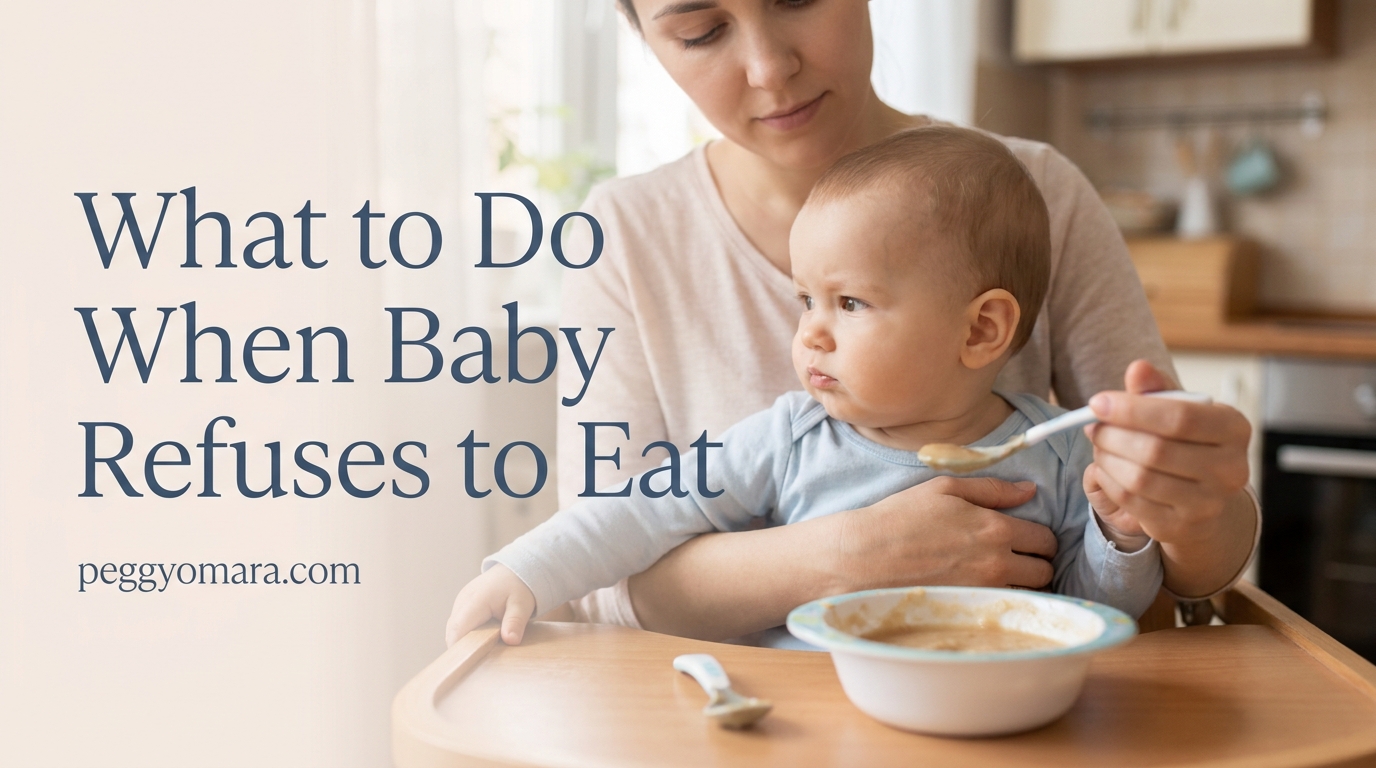
You’ve spent 30 minutes preparing a colorful plate of steamed vegetables and finger foods. Your baby takes one look, turns their head away, and pushes the plate across the table. This scene plays out in millions of homes every day, and if you’re wondering what to do when baby refuses to eat, you’re certainly not alone.
Food refusal is one of the most common concerns parents face during the first three years. Our team has spoken with hundreds of parents and pediatric feeding specialists over the past 2026 to understand what actually works. The good news is that most food refusal is a normal developmental phase, not a sign that something is wrong with your parenting or your baby.
In this guide, we’ll walk through practical strategies organized by age, explain why babies refuse food in the first place, and help you know when to seek professional help. By the end, you’ll have a clear framework for handling mealtime challenges without stress or pressure.
Table of Contents
Understanding Why Your Baby Refuses to Eat (2026)
Babies refuse food for dozens of reasons, and understanding the root cause helps you respond appropriately. The most common triggers include not being truly hungry, feeling uncomfortable from teething or illness, or simply not being developmentally ready for the textures you’re offering.
Appetite naturally fluctuates during the first two years. Many parents don’t realize that a baby’s growth rate slows significantly after 6 months, which means they genuinely need less food than before. This biological change often coincides with starting solids, leading parents to worry unnecessarily about intake.
Developmental Readiness Matters
Starting solids before your baby is truly ready often leads to immediate and persistent refusal. True readiness signs include sitting upright with minimal support, showing interest in food you’re eating, and being able to move food from the front of the mouth to the back. If you’re seeing consistent refusal after a few attempts, your baby may simply need more time.
Texture sensitivity is another major factor that emerges around 8-10 months. Many babies who happily accepted purees suddenly reject anything with lumps or texture. This is a normal part of sensory development, not a permanent preference.
Environmental and Social Factors
Distractions at the table, pressure from well-meaning family members, or a negative association from a previous choking episode can all trigger refusal. Babies are remarkably sensitive to the emotional tone at mealtimes. If you’re anxious, they sense it and may become resistant to eating.
What to Do When Baby Refuses to Eat: 0-6 Months
Before 6 months, most babies receive all necessary nutrition from breast milk or formula. If your young infant is refusing feeds, the approach differs significantly from older babies.
For nursing strikes, try feeding in a quiet, dimly lit room with minimal distractions. Skin-to-skin contact often helps reset the feeding relationship. If bottle refusal is the issue, experiment with different temperatures, positions, or nipple flow rates rather than switching formulas repeatedly.
Check for physical discomforts like teething, ear infections, or nasal congestion that make sucking difficult. A baby who suddenly refuses feeds after previously doing well may be experiencing pain or illness rather than a behavioral issue.
What to Do When Baby Refuses to Eat: 6-12 Months
This is the most common age for parents to search for what to do when baby refuses to eat. The transition from milk to solids creates natural confusion and resistance.
Start by examining what you’re offering. Many parents offer portions that are too large or textures that are too advanced. A 6-month-old needs food pieces about the size of your pinky finger for easy grasping, not bite-sized pieces they can’t pick up yet.
Embracing Baby-Led Weaning
Many families find success with baby-led weaning, where babies feed themselves from the start rather than receiving spoon-fed purees. This approach respects a baby’s natural appetite regulation and reduces pressure at the table.
When offering finger foods, focus on soft, graspable options. Steamed sweet potato sticks, banana pieces with some peel left as a handle, and flaked salmon all work well. Let your baby explore without interference, even if most food ends up on the floor initially.
Handling Texture Sensitivity
If your baby gags on anything with texture, slow down the progression. Stay on smooth purees for an extra week or two, then introduce tiny lumps gradually. Some babies need 10-15 exposures to a new texture before accepting it comfortably.
Consider the temperature of foods too. Some babies strongly prefer room temperature foods over warm options, or vice versa. This preference is individual and worth experimenting with.
What to Do When Baby Refuses to Eat: 12+ Months
Toddlers are notorious for erratic eating patterns. One day they consume an adult-sized portion, and the next they barely touch their food. This is completely normal and reflects their slower growth rate and developing independence.
Food jags, where toddlers want the same food repeatedly for days or weeks, are common at this age. While frustrating, this behavior usually passes if you don’t make it a battle. Continue offering variety without pressure, and trust that your toddler will eventually expand their preferences again.
Modeling Positive Eating
Toddlers learn by watching. Sit down and eat the same foods you’re offering them, showing genuine enjoyment. Avoid making separate meals for your toddler, as this reinforces the idea that they need special treatment at mealtimes.
Family meals become increasingly important at this stage. The social aspect of eating together often motivates resistant toddlers better than any individual strategy.
The Division of Responsibility: Your Role vs. Baby’s Role
Ellyn Satter’s Division of Responsibility in Feeding is the most effective framework for handling food refusal. This approach eliminates pressure while ensuring proper nutrition.
As the parent, you are responsible for what food is offered, when it is offered, and where it is offered. Your baby is responsible for whether they eat and how much they eat. When parents cross these boundaries by pressuring, bribing, or restricting, eating problems typically worsen.
Trust that your baby knows their own hunger and fullness cues better than you do. Some meals they’ll eat heartily, others they’ll refuse entirely. Both are normal variations that average out over a week.
Practical Application
Offer three meals and two snacks at consistent times each day. Include at least one food you know your baby typically accepts at each meal. Once the meal is over, clear the table without comment about how much was or wasn’t eaten.
Between scheduled eating times, only offer water. This creates natural hunger that drives interest in the next meal. Grazing throughout the day is one of the most common causes of persistent food refusal.
Creating a Mealtime Environment That Encourages Eating
The physical and emotional environment has a bigger impact on eating than most parents realize. Small adjustments can transform a resistant eater into an engaged one.
Position your baby’s highchair at the table with the family, not facing a wall or television. Feet should be supported, either by a footrest or adjustable seat position. When feet dangle unsupported, babies feel less stable and secure, which affects their willingness to focus on eating.
Minimize distractions during meals. Turn off screens, put away toys, and keep the table surface clear except for food. Some gentle background music is fine, but avoid anything that competes for attention.
Sensory Exploration Before Meals
Many babies refuse food because they’re still learning to tolerate different textures and temperatures. Offer sensory play opportunities outside of mealtimes, such as playing with cooked pasta, rice, or yogurt. This exploration reduces the novelty and threat of new food textures.
Consider making your own baby food if store-bought options aren’t appealing to your little one. Homemade purees often taste fresher and allow you to control texture progression more precisely.
The Power of Routine
Consistent mealtime routines signal to babies that eating is a normal, expected part of the day. A simple routine might include washing hands, sitting in the highchair, offering food for 20-30 minutes, then cleaning up together.
Keep mealtimes to a reasonable length. Young babies need only 10-15 minutes, while toddlers can handle 20-30 minutes. Extending meals beyond this window rarely results in more eating and often increases frustration for everyone.
When to Contact Your Pediatrician
While most food refusal is normal, certain signs warrant professional evaluation. Trust your instincts if something feels wrong beyond typical picky eating.
Contact your pediatrician if you observe any of the following:
- Your baby loses weight or fails to gain weight for two consecutive months
- Signs of dehydration appear, including fewer than four wet diapers daily, dark urine, or lethargy
- Food refusal persists beyond two weeks and is accompanied by vomiting or diarrhea
- Your baby shows signs of pain when eating, such as arching back, crying, or refusing to open their mouth
- Gagging progresses to actual choking incidents
- Your baby develops a strong aversion to an entire food group
- You notice difficulty with swallowing or excessive drooling
Medical Causes to Consider
Reflux and GERD can make eating painful for babies, leading to refusal that appears behavioral but has a physical cause. Ear infections, throat irritation, and constipation can also suppress appetite significantly.
In rare cases, food refusal indicates an underlying oral motor delay or sensory processing disorder. If your baby shows multiple red flags, ask for a referral to a pediatric feeding therapist or occupational therapist who specializes in infant feeding.
Frequently Asked Questions
What to do if my baby doesn’t want to eat?
Stay calm and avoid pressure. Offer small portions of varied foods, eat together as a family to model behavior, and follow the Division of Responsibility framework where you control what, when, and where food is offered while your baby decides whether and how much to eat. Remove the food after 20-30 minutes without comment and try again at the next scheduled meal.
What is the 3 6 9 rule for babies?
The 3 6 9 rule refers to a feeding approach where babies try a new food 3 times in the first meal, 6 times over the first week, and 9 times before deciding they truly dislike it. Research shows babies often need 8-15 exposures to accept a new food, so repeated offering without pressure is key.
When should I worry about my baby not eating?
Contact your pediatrician if your baby shows signs of dehydration, loses weight or fails to gain for two consecutive months, refuses all food and milk for more than 24 hours, experiences pain when eating, or has persistent vomiting or diarrhea accompanying food refusal. Most food refusal is normal, but these red flags warrant evaluation.
What is the hardest month for a baby?
Many parents find months 6-9 particularly challenging as babies go through significant developmental changes including starting solids, teething, sleep regression, and increased mobility. The 8-10 month period often brings texture sensitivity and separation anxiety that can affect eating patterns. Every baby is different, but these months typically require the most patience and adjustment.
Conclusion
Learning what to do when baby refuses to eat is really about understanding normal development and trusting your child’s natural cues. Most feeding challenges resolve with time, patience, and a pressure-free approach that respects your baby’s autonomy.
Remember that your relationship with your child matters more than any single meal. The habits and attitudes formed during these early years set the foundation for a lifetime of healthy eating. Focus on making mealtimes pleasant, model the behavior you want to see, and let your baby guide their own intake.
If you’re ever genuinely concerned about your baby’s growth or health, don’t hesitate to reach out to your pediatrician. But for the vast majority of food refusal situations, the best response is calm consistency and faith that this phase will pass.