
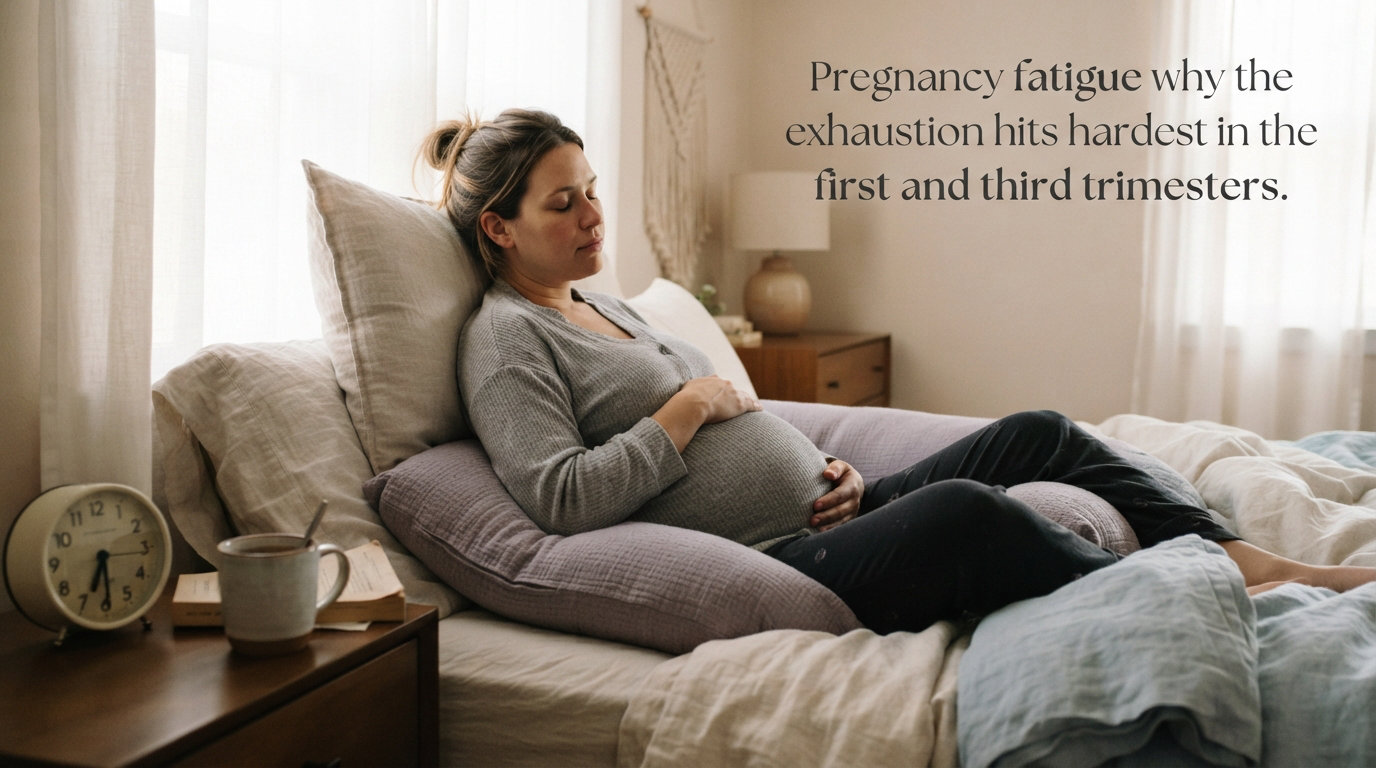
Pregnancy fatigue hits hardest during the first and third trimesters, affecting more than 90% of pregnant women at these two distinct phases. The exhaustion you feel is not only normal but a sign that your body is working overtime to support your growing baby. Understanding why fatigue peaks at these specific times can help you navigate this challenging experience with more confidence and self-compassion.
Many women describe first trimester fatigue as a bone-deep exhaustion that simple rest cannot cure. Third trimester fatigue feels different, more like an all-over body ache combined with the difficulty of carrying significant extra weight. Both are completely normal, but they stem from very different physiological causes.
Table of Contents
Why Does Pregnancy Cause Extreme Exhaustion?
Your body undergoes dramatic changes during pregnancy that demand enormous amounts of energy. These changes explain why pregnancy fatigue can feel so overwhelming compared to ordinary tiredness.
The Progesterone Effect
Rising progesterone levels play the biggest role in first trimester sleepiness. This hormone increases sharply in early pregnancy to support the uterine lining and prevent miscarriage.
Progesterone has a sedative effect on your brain, literally making you feel sleepy as levels climb. This is nature’s way of encouraging rest during a critical developmental period for your baby.
Building the Placenta
Your body builds the placenta from scratch during the first trimester, which requires tremendous metabolic energy. This organ will eventually nourish your baby, but creating it drains your reserves.
The placenta formation process increases your metabolic rate significantly. You are essentially running a construction project inside your body while maintaining all your normal functions.
Blood Volume Increases
Your blood volume increases by up to 50% during pregnancy to support your growing baby. Your heart must pump faster and harder to move this additional blood throughout your body.
This cardiovascular workload increases even when you are resting. The constant extra effort contributes significantly to feelings of exhaustion, especially in the first trimester when the increase happens rapidly.
Iron Demands and Anemia Risk
Pregnancy increases your iron needs substantially as your body produces more blood. Many women develop iron deficiency anemia during pregnancy, which can compound fatigue significantly.
Your healthcare provider will typically monitor iron levels throughout pregnancy. Low iron can turn normal pregnancy tiredness into debilitating exhaustion that affects daily functioning.
First Trimester Fatigue: Why the Bone-Deep Exhaustion Hits
First trimester fatigue often catches women by surprise with its intensity. The combination of hormonal surges, placenta building, and often morning sickness creates a perfect storm of exhaustion.
When First Trimester Fatigue Peaks
Most women report that first trimester fatigue peaks between weeks 8 and 12. This timing coincides with the most rapid placenta development and the highest progesterone levels.
Some women describe this period as feeling like they have been hit by a truck upon waking. Tasks that required minimal effort before pregnancy, like showering or preparing simple meals, can feel monumental.
Morning Sickness Compounds the Problem
Nausea and vomiting during pregnancy, commonly called morning sickness, make first trimester fatigue worse. When you cannot keep food down, your energy reserves deplete rapidly.
Many women find themselves caught in a cycle where fatigue makes nausea worse, and nausea makes fatigue worse. Breaking this cycle often requires creative eating strategies and plenty of rest.
The Invisible Nature of Early Pregnancy
First trimester fatigue can feel particularly isolating because you may not look pregnant yet. Colleagues, friends, and family cannot see your symptoms, which sometimes leads to dismissal of your experience.
Many women in pregnancy forums describe feeling frustrated when others suggest they should just push through the tiredness. The reality is that this fatigue is physiological and beyond willpower to overcome.
Real Experiences from Pregnant Women
Women discussing pregnancy fatigue in online forums consistently validate how extreme first trimester exhaustion feels. One common description is needing three or more naps per day just to function at a basic level.
Another frequent experience involves crying at the thought of simple tasks like doing laundry or washing dishes. The mental load of knowing you should do something but lacking the physical capacity creates additional emotional strain.
The Second Trimester Energy Boost: Why You Feel Better
The second trimester often brings welcome relief from extreme fatigue for most pregnant women. Many refer to weeks 14 through 27 as the honeymoon period of pregnancy.
Your Placenta Takes Over
By the second trimester, your placenta is fully formed and takes over hormone production. Progesterone levels stabilize rather than continuing their sharp climb, reducing the sedative effect.
The metabolic energy previously directed toward building the placenta now supports maintaining it. This shift frees up significant energy resources that your body can redirect elsewhere.
Your Body Adjusts to Pregnancy
Your cardiovascular system adapts to the increased blood volume by the second trimester. Your heart becomes more efficient at pumping, reducing the constant strain you felt initially.
Morning sickness typically fades during this period as well. Being able to eat normally again restores your energy reserves and helps stabilize blood sugar levels.
How Long the Energy Boost Lasts
Most women enjoy improved energy from approximately week 14 through week 27 or 28. The exact timing varies, but the relief is noticeable and welcome after first trimester struggles.
This energy window offers an ideal time to prepare for your baby’s arrival. Many women use this period to set up nurseries, attend childbirth classes, and tackle projects before third trimester fatigue returns.
Third Trimester Fatigue: When Exhaustion Returns
As you enter the third trimester, fatigue typically returns with a different quality than you experienced in early pregnancy. The causes shift from hormonal to primarily physical and practical.
Carrying Extra Weight
By the third trimester, you are carrying significant additional weight from your baby, amniotic fluid, increased blood volume, and breast tissue. Simple movements require more effort than before.
Your center of gravity has shifted, forcing your muscles to work differently to maintain balance. Activities like walking upstairs or standing for extended periods become genuinely tiring.
Disrupted Sleep Patterns
Third trimester sleep disruption comes from multiple sources. Your baby may be active at night, kicking and moving when you are trying to rest.
Frequent bathroom trips interrupt sleep as your growing uterus presses on your bladder. Finding comfortable sleeping positions becomes increasingly challenging with a large belly.
Many women also experience heartburn or leg cramps that wake them during the night. The cumulative effect of fragmented sleep creates genuine sleep debt that daytime rest cannot fully resolve.
Your Body Prepares for Labor
Your body begins preparing for labor in the third trimester, which requires additional energy. Braxton Hicks contractions, cervical changes, and hormonal shifts all demand resources.
The mental and emotional load also increases as your due date approaches. Anxiety about labor, preparation tasks, and impending life changes consume mental energy alongside physical demands.
How Third Trimester Fatigue Feels Different
Women often describe third trimester fatigue as more of a physical ache compared to first trimester sleepiness. Your body actually hurts from the strain of carrying the pregnancy.
While first trimester fatigue makes you want to nap constantly, third trimester fatigue can feel like your body needs to stop moving entirely. The distinction is important for understanding what type of rest will help most.
First vs Third Trimester Fatigue: Understanding the Difference
Both the first and third trimesters challenge pregnant women with significant fatigue, but understanding their differences helps you cope more effectively with each phase.
First Trimester: Hormonal and Metabolic
First trimester fatigue stems primarily from internal processes you cannot see or control. Your body is building life-supporting infrastructure while managing extreme hormonal shifts.
The fatigue feels sleepy, heavy, and relentless regardless of how much you rest. You might sleep ten hours at night and still need naps during the day.
Third Trimester: Physical and Practical
Third trimester fatigue comes from visible, physical demands. You can see and feel your belly, and you experience the strain of carrying it with every movement.
The fatigue feels more like soreness and physical limitation. Your body aches from supporting the weight, and your sleep quality suffers from practical discomforts.
Why Both Are Considered the Hardest
Medical professionals and experienced mothers consistently identify first and third trimesters as the most exhausting periods. The first challenges you with invisible hormonal forces, while the third challenges you with visible physical demands.
The second trimester serves as a respite between these two demanding phases. Understanding this pattern can help you mentally prepare and forgive yourself for needing extra support.
How to Cope With Pregnancy Fatigue
While you cannot eliminate pregnancy fatigue entirely, strategic approaches can help you manage it more effectively. These strategies address both the physical and practical aspects of exhaustion.
Prioritize Rest Without Guilt
Give yourself permission to rest when your body demands it. Pregnancy fatigue is not laziness or weakness but a sign that your body is working hard.
Short naps of 20-30 minutes can refresh you without interfering with nighttime sleep. Even resting your eyes while lying down provides benefits when sleep proves elusive.
Nutrition and Hydration Strategies
Eat small, frequent meals to maintain stable blood sugar levels. Blood sugar crashes contribute significantly to feelings of exhaustion during pregnancy.
Stay well-hydrated, as dehydration worsens fatigue. Many pregnant women do not realize they are dehydrated because they are focused on other symptoms.
Focus on iron-rich foods to support your increased blood production. Lean meats, leafy greens, legumes, and fortified cereals can help maintain healthy iron levels.
Delegate and Ask for Help
Accept that you cannot maintain your previous activity levels during peak fatigue periods. Tasks that once seemed essential may need to wait or be handled by others.
Ask your partner, family members, or friends for specific help rather than general support. People often want to assist but do not know what would be most useful.
Partner Support Strategies
Partners can provide meaningful support by taking over physical tasks without being asked. Doing dishes, handling laundry, and preparing meals significantly reduce your energy expenditure.
Emotional validation matters enormously when you are exhausted. Partners who acknowledge that your fatigue is real and physiological rather than motivational help reduce the guilt many pregnant women feel.
Creating a restful environment at home also helps. Taking over childcare for existing children, managing household noise, and ensuring you have comfortable resting spaces demonstrates practical support.
When to Contact Your Healthcare Provider
While fatigue is normal during pregnancy, extreme exhaustion can sometimes indicate underlying issues. Contact your provider if fatigue prevents you from performing basic daily activities.
Sudden onset of severe fatigue, especially with dizziness or fainting, requires immediate medical attention. These symptoms can indicate anemia, thyroid issues, or other treatable conditions.
Your provider can check iron levels, thyroid function, and blood sugar to rule out complications. Treatment for these conditions often dramatically improves energy levels.
Frequently Asked Questions
When does fatigue hit the hardest during pregnancy?
Pregnancy fatigue hits hardest during the first and third trimesters. The first trimester brings extreme hormonal fatigue from rising progesterone and placenta development. The third trimester brings physical fatigue from carrying extra weight and disrupted sleep patterns. Most women experience a welcome energy boost during the second trimester between weeks 14 and 27.
Why am I so tired in the third trimester?
Third trimester fatigue stems from carrying significant extra weight, disrupted sleep from baby movements and frequent bathroom trips, and your body preparing for labor. Unlike first trimester hormonal fatigue, third trimester exhaustion feels more like physical strain and body ache. Poor sleep quality during this period creates sleep debt that daytime rest cannot fully resolve.
Why does the first trimester cause so much fatigue?
First trimester fatigue results from dramatically rising progesterone levels that have a sedative effect on your brain. Your body is also building the placenta from scratch, which requires enormous metabolic energy. Blood volume increases by up to 50%, forcing your heart to work harder. Many women also experience morning sickness, which depletes energy reserves when nutrition suffers.
Which trimester is the most exhausting?
Both the first and third trimesters are considered the most exhausting for different reasons. The first trimester challenges you with invisible hormonal forces and metabolic demands that create bone-deep exhaustion. The third trimester challenges you with visible physical demands from carrying extra weight and disrupted sleep. Most women experience a noticeable energy boost during the second trimester.
When should I worry about pregnancy fatigue?
Contact your healthcare provider if fatigue prevents basic daily functioning, comes on suddenly with dizziness or fainting, or is accompanied by severe weakness. While normal pregnancy fatigue is challenging, extreme exhaustion can indicate treatable conditions like anemia or thyroid issues. Your provider can check iron levels and thyroid function to rule out complications that might require treatment.
Conclusion
Pregnancy fatigue hits hardest in the first and third trimesters, creating two distinct challenging periods separated by a welcome energy boost. Understanding why each trimester affects your energy differently helps explain what your body is accomplishing during these demanding phases.
Remember that pregnancy fatigue is temporary and serves a purpose. Your body is performing remarkable work to support your growing baby, and the exhaustion you feel reflects that effort. Give yourself grace, ask for help when needed, and know that this phase will pass.