
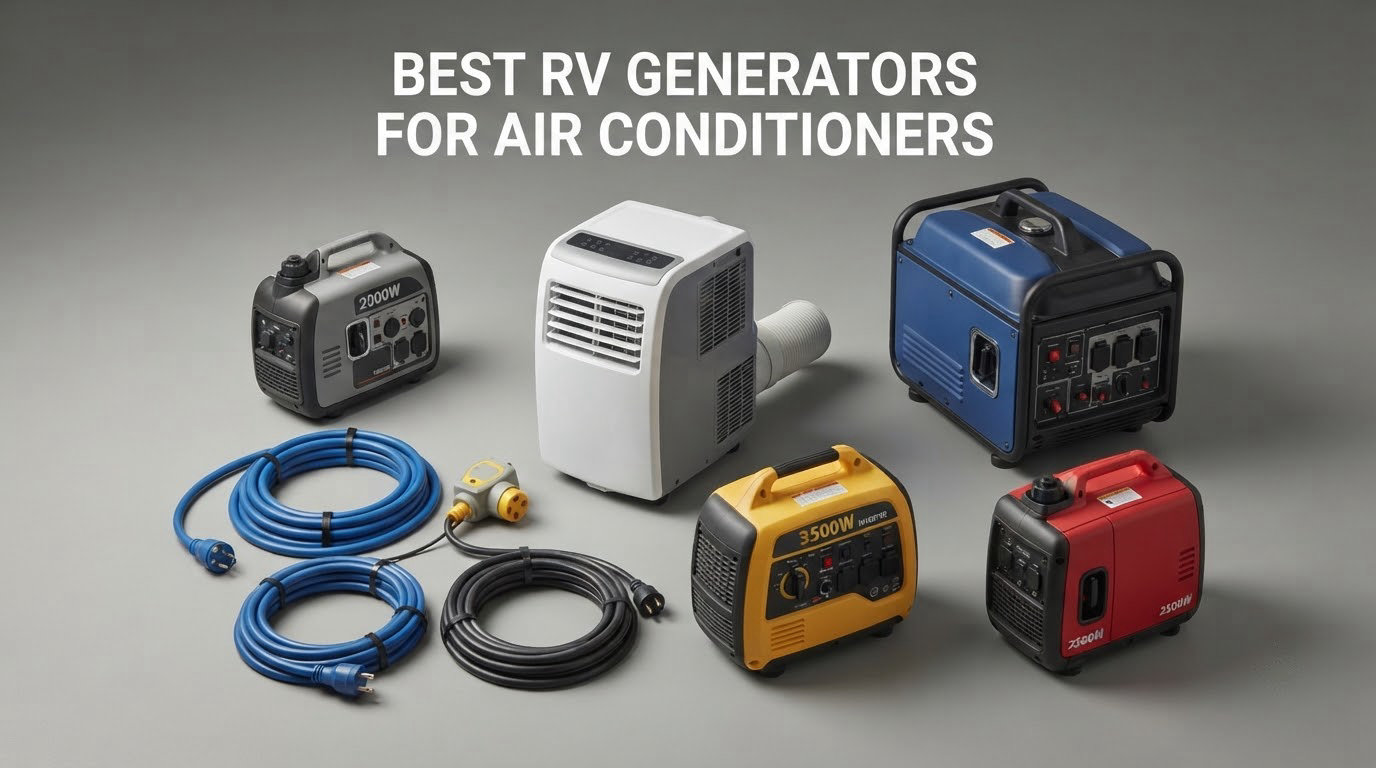
The hardest part of running an air conditioner off a generator is not the wattage on the box. It is the three or four seconds when the compressor kicks on and asks for far more than the label promised. Get that wrong and the breaker trips in the middle of the hottest hour of the day, which is exactly when you bought a generator in the first place.
That is why picking from the best RV generators for air conditioners is a sizing decision first and a brand decision second. A 13,500 BTU rooftop unit needs roughly 2,800 to 3,000 watts just to start, then settles back to a much smaller running draw, and it has to share that generator with your converter, your refrigerator and whatever else you plug in. We compared 10 units rated from 3,200 to 3,600 running watts, weighed them, checked their outlet types, and sorted out which ones can genuinely carry a rooftop AC on their own.
We also went deep on the part most roundups skip. Nobody on the first page of search results explains soft-start devices, nobody covers two AC units on a 50-amp rig, and nobody tells you that a missing 30-amp adapter is a trip-stopper. If your plan involves cooling a camper van instead of a 40-foot coach, our guides to the best portable air conditioners and the best window air conditioners cover the household side of the equation.
Everything below was updated for 2026, and every spec comes straight from the manufacturer listing and the owner reviews behind it.
Table of Contents
Top 3 Best RV Generators for Air Conditioners in 2026
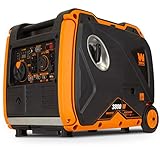
WEN 56380i 3800W RV-Ready Inverter
- 3400 running watts with a true TT-30R RV outlet
- 8.5 hours at half load
- CO-safe inverter power for electronics

Champion 4000W RV Ready Inverter
- Under 49 pounds
- 64 dBA at 23 feet
- Less than 3% total harmonic distortion

PowerSmart 3800W Dual Fuel Inverter
- Runs on gasoline or propane
- 24 hours on a 20 lb propane tank
- 30A twist-lock outlet included
All 10 Generators at a Glance (October 2026)
Every unit below is gas or dual fuel, portable, and carries a 30-amp connection of some kind. The two columns that decide the winner are running watts and whether the unit is enclosed or open frame, because those two numbers set your noise floor and your headroom.
| Product | Specifications | Action |
|---|---|---|
| WEN 56380i Super Quiet 3800-Watt RV-Ready Inverter |
|
Check Latest Price |
| Champion 4000-Watt RV Ready Portable Inverter |
|
Check Latest Price |
 Champion 4500-Watt Electric Start Dual Fuel Inverter Champion 4500-Watt Electric Start Dual Fuel Inverter |
|
Check Latest Price |
| PowerSmart 3800 Watt Dual Fuel Inverter |
|
Check Latest Price |
 BILT HARD 4500W Dual Fuel RV Ready Inverter BILT HARD 4500W Dual Fuel RV Ready Inverter |
|
Check Latest Price |
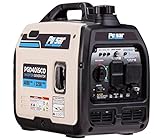 Pulsar PGD40ISCO 4000W Portable Inverter Pulsar PGD40ISCO 4000W Portable Inverter |
|
Check Latest Price |
 Oxseryn 4400 Watt Inverter Generator Oxseryn 4400 Watt Inverter Generator |
|
Check Latest Price |
 PowerSmart 4400W Peak 3600W Running Inverter PowerSmart 4400W Peak 3600W Running Inverter |
|
Check Latest Price |
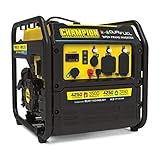 Champion 4250-Watt Dual Fuel Open Frame Inverter Champion 4250-Watt Dual Fuel Open Frame Inverter |
|
Check Latest Price |
 maXpeedingrods 4000 Watt Inverter Generator maXpeedingrods 4000 Watt Inverter Generator |
|
Check Latest Price |
How Big of a Generator Do You Need to Run an RV Air Conditioner?
A 13,500 BTU RV air conditioner needs about 2,800 to 3,000 watts to start its compressor and closer to 1,600 watts once running. Plan on a generator rated for 3,500 continuous watts or more, so the startup surge lands on a machine with headroom, and you can keep your other loads running at the same time.
Those three numbers explain most of the disappointment people report. The starting watts printed on the box are a brief peak, not something the engine sustains. The running watts are the honest number. And the gap between them is exactly where compressor startup lives.
What each AC size asks of a generator
A 9,000 or 10,000 BTU unit is a light load by modern standards, and a 3,000 running watt inverter will usually start it without help. A 13,500 BTU unit is the classic rooftop number on most travel trailers and Class C motorhomes, and it wants a soft-start device or a 3,500 watt machine. A 15,000 BTU unit is where small portable generators start to struggle, so budget for 4,000 running watts or a built-in.
Remember that a generator running at its absolute ceiling is running hot and loud. On the r/Generator forums, the sizing rule of thumb owners actually use is to keep your sustained load under roughly 70 percent of the running rating. That headroom is what keeps the AC running while the microwave heats a burrito.
Add your other loads before you buy
Your converter-charger is the quiet killer. A 30-amp converter pulling house batteries can draw well over 1,000 watts on its own, and owners who ignore it are the ones who get brownouts and tripped AC breakers in the middle of the night. Add roughly 1,000 watts for the converter, 150 to 400 for the refrigerator, 1,000 to 1,400 for a microwave, 150 for a water pump, and 100 to 200 for a CPAP machine plus router and laptop charging.
The honest total for a trailer running AC, converter, fridge and a CPAP machine at night sits around 2,800 to 3,300 watts. Push the microwave into that and you cross 4,000. This is why the units rated at 3,500 and 3,600 running watts feel so much more capable in practice than their smaller siblings.
Do you need a soft-start device?
A soft-start capacitor slows the compressor’s inrush so it draws a gentler surge, which is the accepted community answer to running AC on a smaller generator. One iRV2 owner reported running a 13.5k BTU AC off a roughly 40-pound Westinghouse iGen2500 with a SoftStartRV for more than 10 hours on a tank. No competitor page we reviewed mentions this option at all, and for owners on a budget it is the single highest-value add-on in this whole guide.
What about 30-amp and 50-amp rigs?
A 30-amp trailer is fine with a portable generator that has a real TT-30R outlet or a 30-amp twist-lock. A 50-amp rig with two AC units is a different conversation: 5,000 watts will not comfortably carry two rooftop units plus a converter and appliances. Plan on 6,000 to 8,000 watts, or a built-in generator, for that setup. There is no soft-start trick that makes two compressors fit inside a small inverter’s ceiling.
1. WEN 56380i 3800-Watt RV-Ready Inverter: Best Overall for Rooftop AC
WEN Super Quiet 3800-Watt RV-Ready Portable Inverter Generator with Fuel Shut-Off and Electric Start (56380i)
- Highest rated unit in our group with 2459 reviews
- 3400 running watts is real headroom for a rooftop AC
- Fuel shutoff drains the carburetor to protect the engine
- Digital load and fuel display
- Weighs 99.2 pounds which is heavy for a portable unit
- Only a 2.2-gallon tank means frequent refills
- A small share of 1-star reviews cite startup or durability complaints
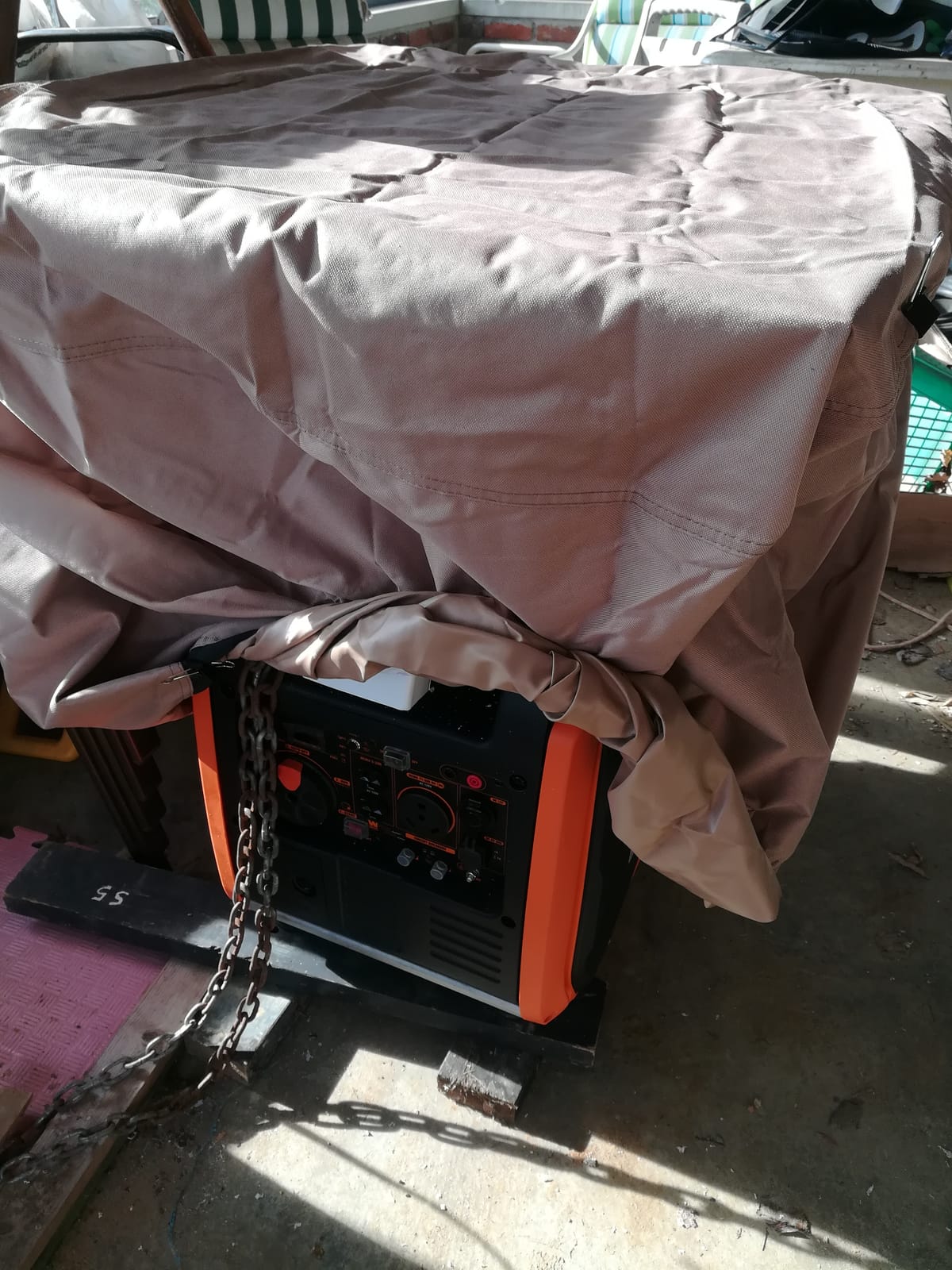
This is the unit we kept coming back to. With 3,400 running watts and a genuine NEMA TT-30R receptacle on the control panel, it is one of very few portable machines in this price class that will plug straight into a 30-amp trailer pedestal cord and run a 13,500 BTU rooftop AC without a soft-start, an adapter or a prayer. The 212cc four-stroke engine carries the compressor surge without breaking a sweat, and it settles into a low, steady hum once the compressor is up to speed.
The power itself is clean inverter output, which matters more than most buyers realize. Reviewers repeatedly mention powering laptops, phones, tablets and other sensitive electronics without flicker, and the digital load display tells you how much headroom you have left before you fire up the microwave.
The fuel shutoff switch is an underappreciated detail. It burns off the gasoline sitting in the carburetor before shutdown, which is exactly what you want on a machine that might sit for a week between trips. Owners credit it with extending the life of the carburetor and the unit itself, and a two-year limited warranty comes standard.
Runtime is the honest weak point. The 2.2-gallon tank delivers up to 8.5 hours at half load, which covers an evening comfortably but not a full day of desert boondocking. At 99.2 pounds this is not a one-person lift either, so plan the loading before you fall in love with the runtime number.
Noise is where it also earns its place. Owners describe it as quiet enough to sit next to a trailer at a state park without drawing the same reaction a conventional open-frame machine gets. If your campground has generator hours, this is a machine that comfortably lives inside them.
Who this generator suits best
This is the pick for a 30-amp travel trailer or Class C with a single 13,500 BTU rooftop unit, especially if you plan to run the AC alongside a converter and a coffee maker. It is also the safest recommendation in this list for someone who does not want to learn the manual.
Where it falls short
At nearly 100 pounds, it defeats the main reason many people buy portable in the first place. If lifting capacity, a back injury or a small storage bay rules out heavy gear, step down to the Champion 4000-Watt at 48.1 pounds and add a soft-start kit. Full-time desert campers should also weigh the 2.2-gallon tank against a larger-tank dual-fuel unit.
2. Champion 4000-Watt RV Ready Inverter: Best Value for AC on a Budget
- Under 49 pounds
- one of the lightest 4000-watt inverters
- 64 dBA at 23 feet suits campsites
- CO Shield carbon monoxide auto shutoff
- TT-30R RV outlet and parallel outlets included
- 3000 running watts is a modest margin above a mid-size RV air conditioner
- Recoil start rather than electric start
- 1.54-gallon tank is smaller than most competitors in class
Half the weight of most of this list and genuinely quiet makes this the value pick for anyone whose trailer sits on a 30-amp service. The 149cc engine delivers 3,000 running watts and up to 10 hours on a tank, and the 120V 25A TT-30R outlet means you are not hunting for an adapter in a dark truck bed at the campground.
Output quality sits at less than 3% total harmonic distortion, so sensitive electronics behave. CO Shield shuts the engine down if carbon monoxide climbs in an enclosed or poorly ventilated space, and the parallel outlets let you double output later with a second matching Champion and the optional kit.
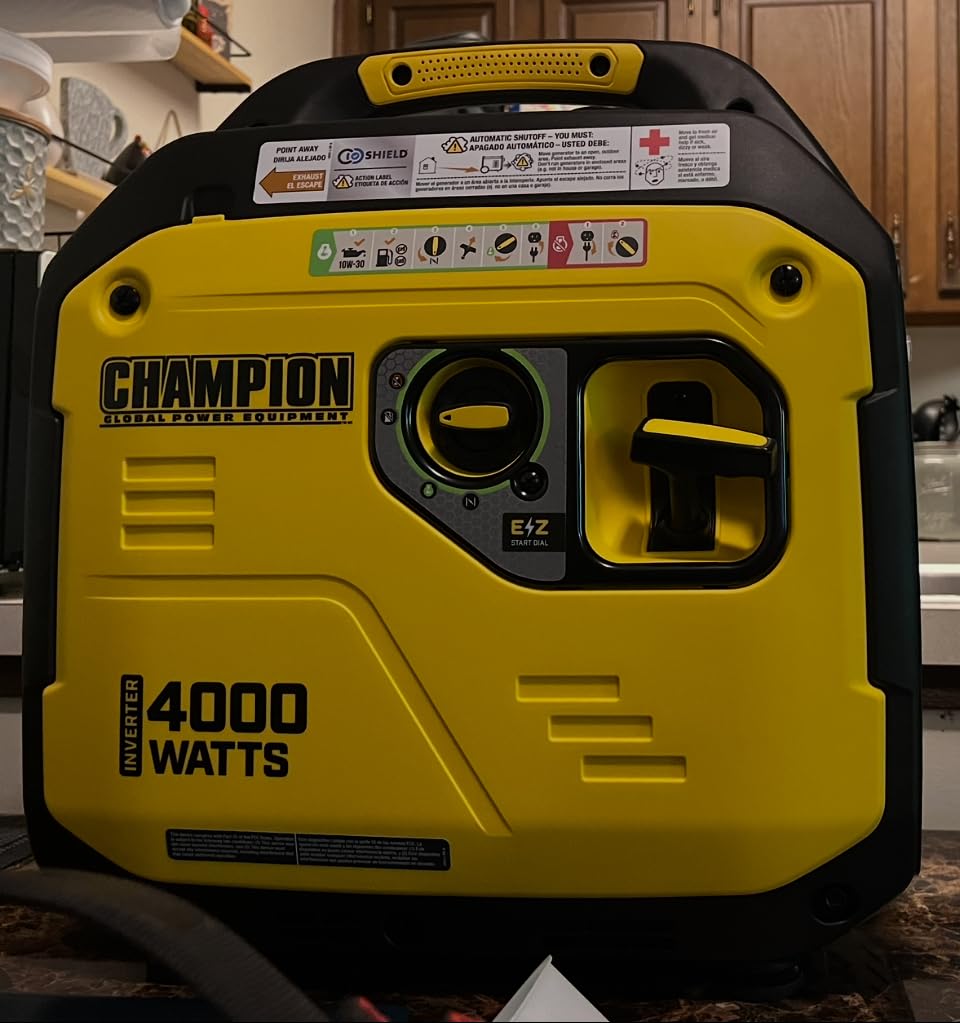
The honest limitation is the ceiling. 3,000 running watts covers a 9,000 or 10,000 BTU AC comfortably and a 13,500 BTU unit with a soft-start device in mild weather. Add a converter charging at full output plus a microwave and you will be looking for the breaker. This is a machine for a 30-amp trailer with one modest rooftop unit, not a 50-amp coach.
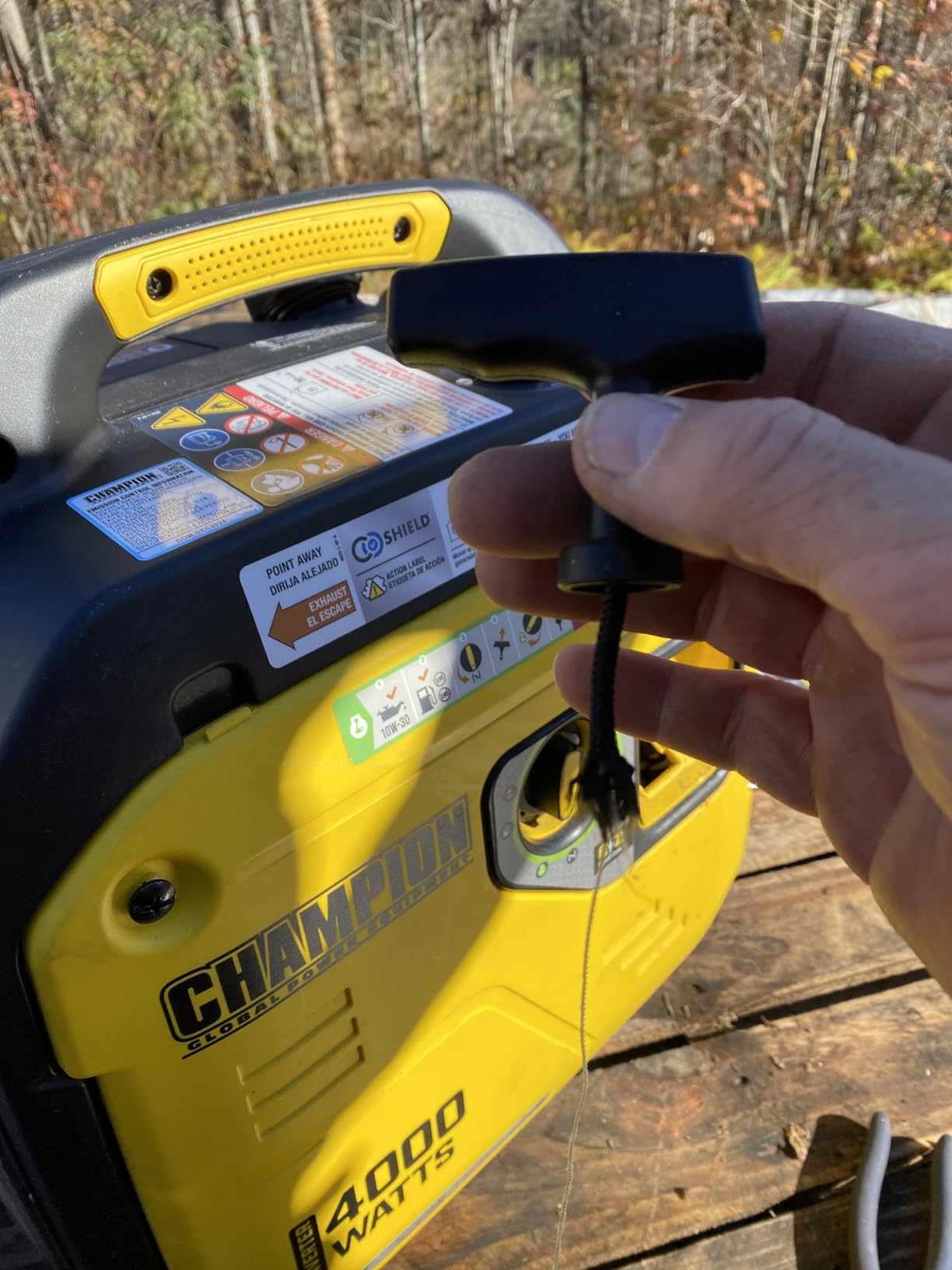
Two smaller annoyances: it is recoil start, so starting means pulling a cord rather than turning a key, and the 1.54-gallon tank is the smallest in this group. Neither is a dealbreaker, but both remind you this is the budget rung.
Who this generator suits best
Pick this one if weight is your binding constraint. A 48.1-pound machine is something a single person can lift into a truck bed every morning, which is the difference between a generator you actually use and one that stays in the garage.
Where it falls short
The 3,000 running watt ceiling is the whole story. If your roof unit is 15,000 BTU, or you want two appliances running alongside the AC without thinking about it, move up a tier. Pair it with a soft-start kit and a 13,500 BTU AC becomes realistic in most conditions.
3. Champion 4500-Watt Dual Fuel Inverter: Best for Propane Boondocking
Champion 4500-Watt Electric Start Dual Fuel Portable Inverter Generator
- Runs on gasoline or propane right out of the box
- 3500 running watts gives headroom for a rooftop AC plus appliances
- Owners report powering a travel trailer AC and even two units when paired
- Very quiet at 61 dBA
- Weighs 99.2 pounds
- one of the heaviest in this comparison
- Propane running wattage drops to 3150 watts
- 8 percent of reviews are 1-star citing oil leaks and hard starting
This is the unit we would want for a full-time boondocker, because the propane capability changes the storage math. It runs on gasoline or a standard cylinder straight out of the box, delivering up to 14 hours on gas and up to 21 hours on propane. One full 20-pound cylinder can carry a family through a long stretch of desert camping without carrying a gasoline can into the truck.
3,500 running watts on gasoline is the number that matters for AC. That is enough headroom for a 13,500 BTU rooftop unit plus a converter and a few small appliances, and owners report exactly that combination working in their reviews. Electric start with the EZ Start dial means no cord pulling on a 212cc engine.
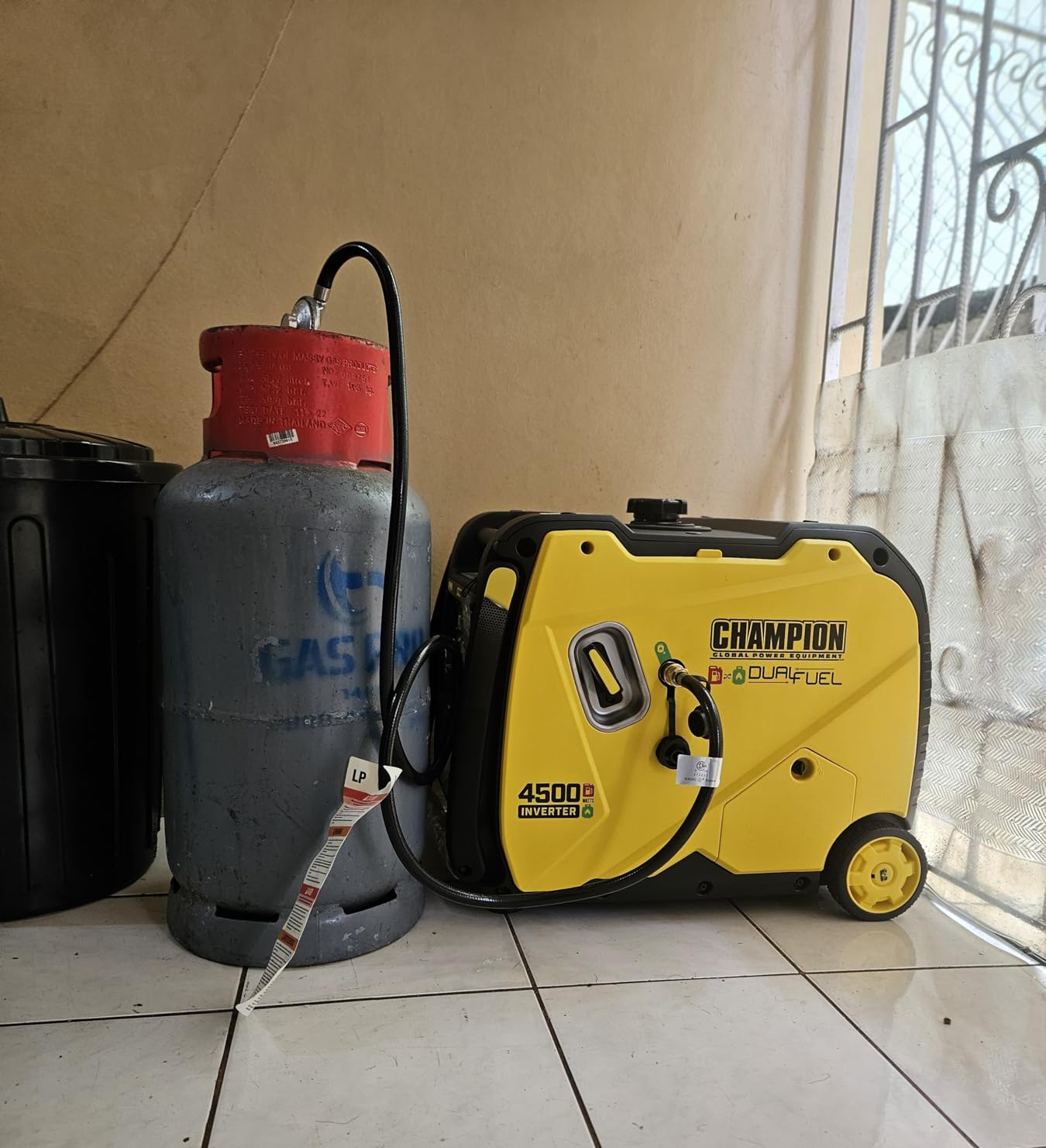
At 61 dBA this is among the quietest machines here, which is what you want when you are running the AC for eight hours a night in a place with posted quiet hours. The Intelligauge power meter tracks voltage, frequency and operating hours, and the three-year limited warranty comes with free lifetime technical support.
Keep the propane number in mind. On propane, running output drops to 3,150 watts, which narrows the margin for a large rooftop unit plus a charging converter. Treat propane as the long-runtime, moderate-load mode and gasoline as the heavy-load mode.
Who this generator suits best
Full-time travelers, winter campers in cold weather, and anyone who would rather not haul gasoline through a national park. It is also a good match for a 30-amp trailer that wants AC plus appliances without tripping anything.
Where it falls short
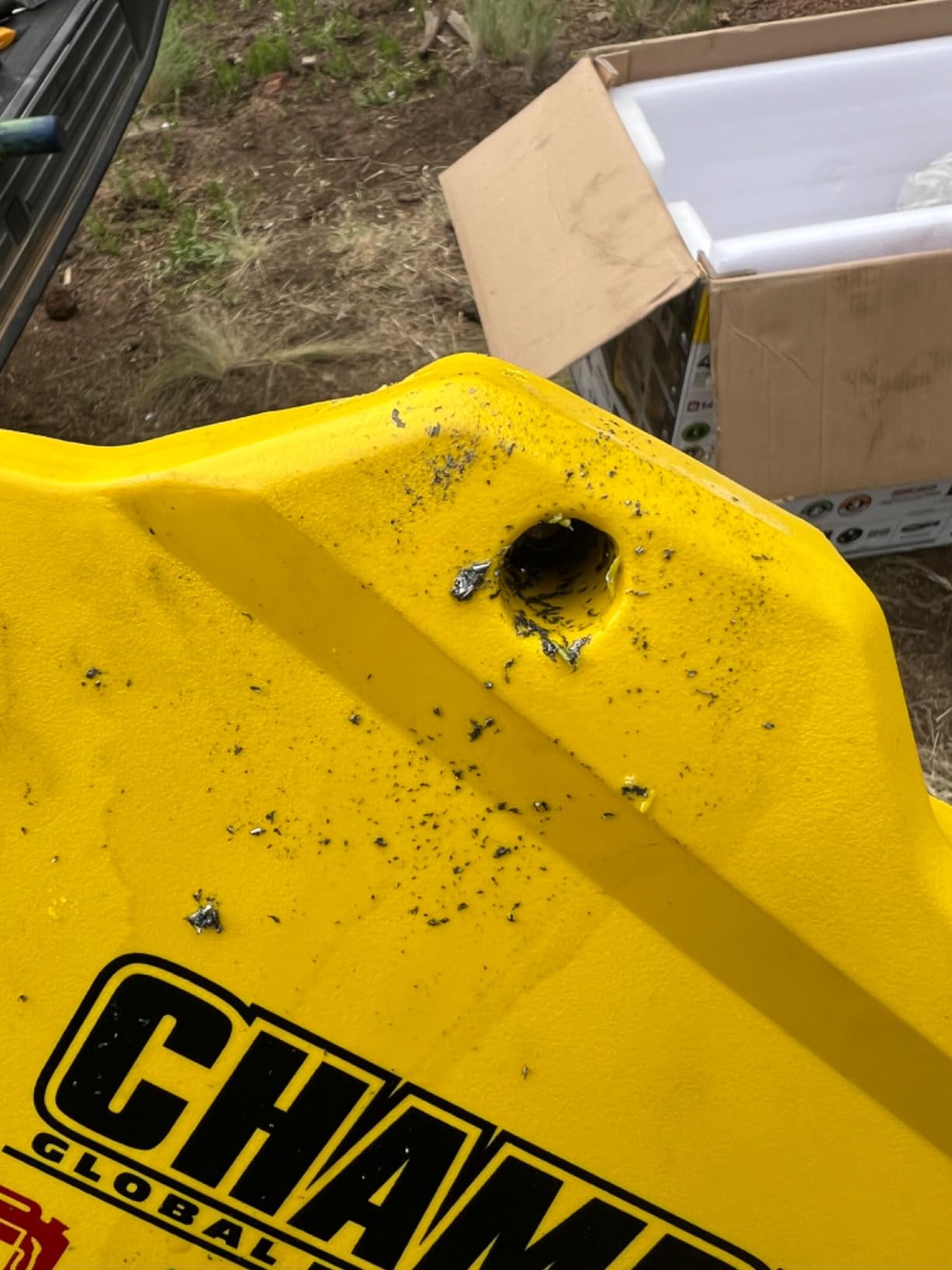
At 99.2 pounds it is one of the two heaviest units we tested, and dual-fuel hardware adds bulk you feel in the frame. A small minority of reviews cite oil leaks, hard starting, and warranty service that required a dealer workshop, so budget time for a service visit if something goes wrong.
4. PowerSmart 3800 Watt Dual Fuel Inverter: Most Versatile for Value and Flexibility
PowerSmart 3800 Watt Dual Fuel Inverter Generator for Camping or Home Use
- Dual fuel with a 120V 30A L5-30R twist-lock outlet
- Owners report running a portable air conditioner off this unit
- 59 dBA in Eco Mode with clean stable voltage
- Long propane runtime of up to 24 hours
- Small 1.3-gallon gas tank means frequent refills on gasoline
- Noise rises noticeably above Eco Mode
- Access panels and oil door need a Phillips screwdriver
Dual fuel at this weight and this noise level is genuinely unusual. The PowerSmart runs at just 59 dBA in Eco Mode at 25 percent load, which is the quietest Eco Mode figure among the dual-fuel machines in this roundup, and it weighs 50.7 pounds. Reviewers consistently call it a lot of capability for the money.
For AC duty, the relevant number is 3,300 running watts on gasoline, with 3,800 starting watts to absorb the compressor surge. Owners report running a portable air conditioner off this unit, and the clean voltage holds up under load rather than browning out. Six outlets cover a 30A L5-30R twist-lock, a 20A household duplex, a 12V DC port and dual USB.
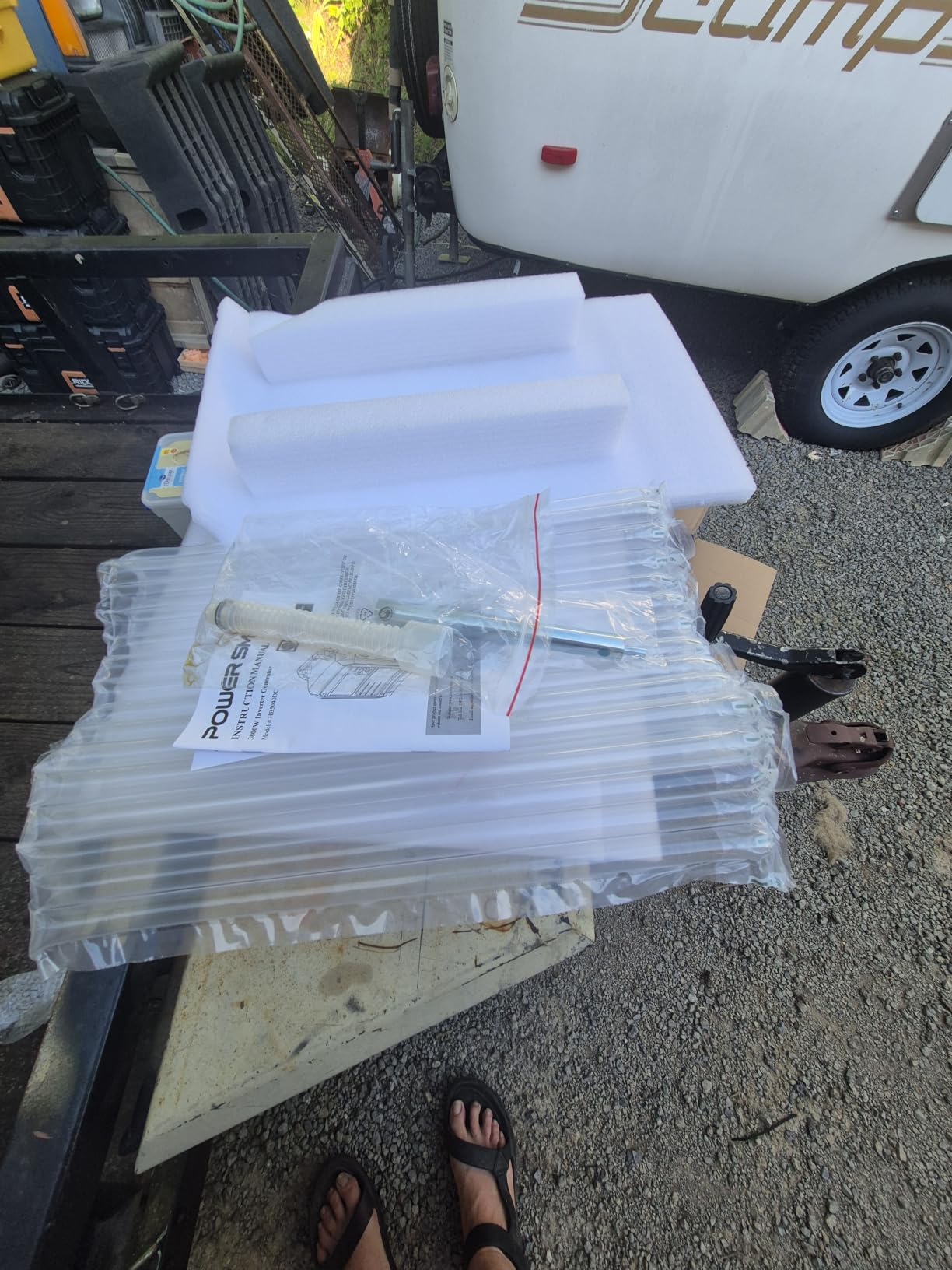
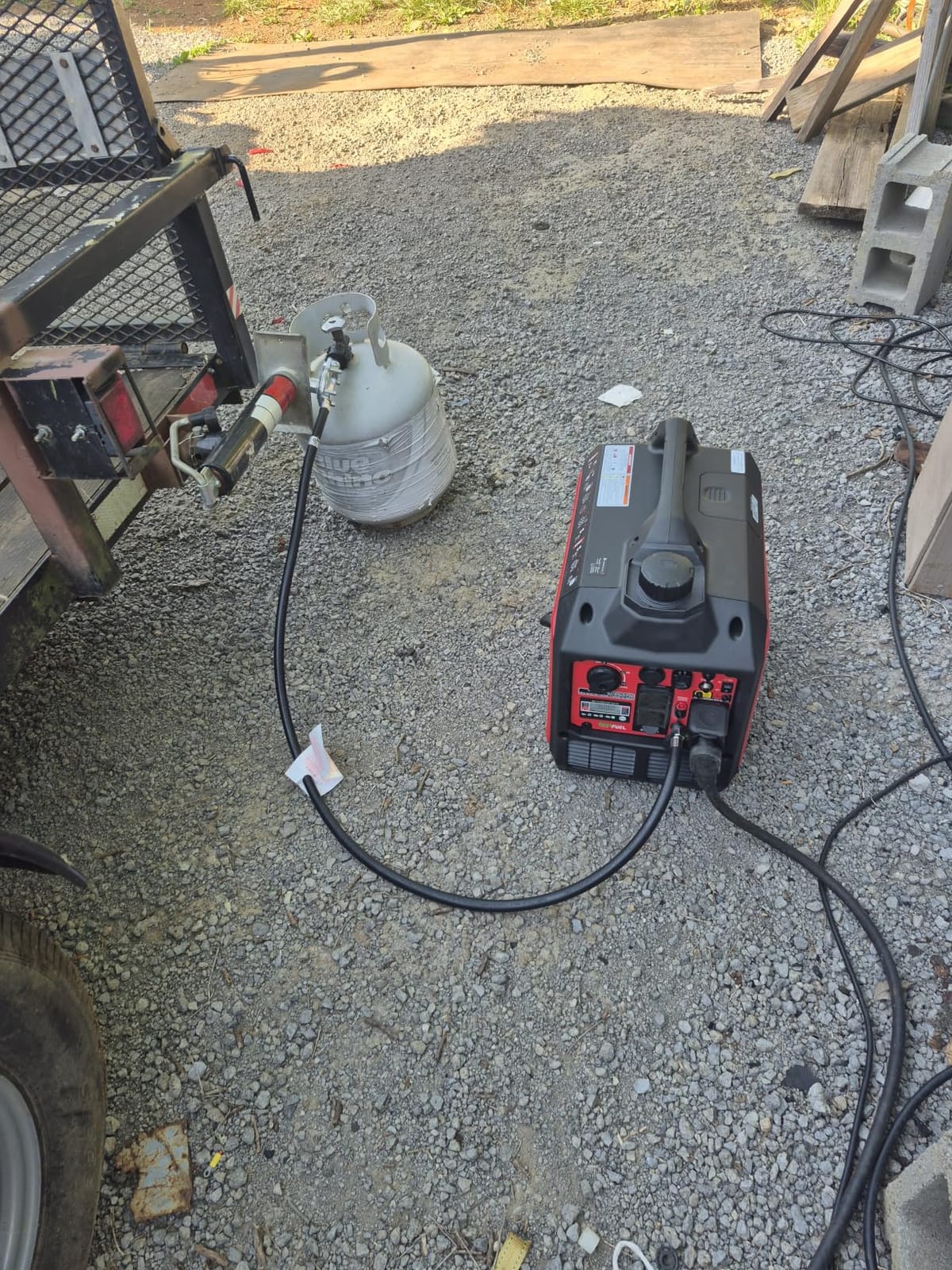
The propane side is where the runtime story gets good. Up to 24 hours on a standard 20-pound cylinder means one fill-up covers a long weekend, and starting is easy on both fuels according to owners. Overload, short circuit, carbon monoxide and low-oil shutdown protection are all built in, and the unit is certified to ANSI/PGMA G300, ANSI/UL2201 and EPA standards.
Two practical complaints come up repeatedly. The 1.3-gallon gas tank is small enough that gasoline days mean refills, and the noise climbs as the engine leaves Eco Mode, which is exactly when an AC compressor is drawing hardest. If your plan is daytime high-load cooling, test it before a long hot trip.
Who this generator suits best
Boondockers who want propane freedom, weight under 51 pounds, and enough output for a modest rooftop AC or a portable unit. It is a strong middle pick for a 30-amp trailer where fuel storage is the harder problem.
Where it falls short
The small gasoline tank and the noise rise under load are the trade-offs. Access panels and the oil change door also need a Phillips screwdriver, which is a small annoyance on a dark campsite. For sustained full-load AC use, a larger-tank machine is the better tool.
5. BILT HARD 4500W Dual Fuel: Best for Quiet Campsites with Real Headroom
- 3500 running watts on gasoline gives headroom for an RV rooftop AC
- Fully enclosed design at 58 dBA meets national park noise rules
- True 120V 30A TT-30R RV outlet
- Integrated CO sensor auto-shutoff
- 141cc engine is the smallest displacement in the group so high loads tax it sooner
- Only 226 reviews which is the thinnest review base here
- Warranty detail is thin
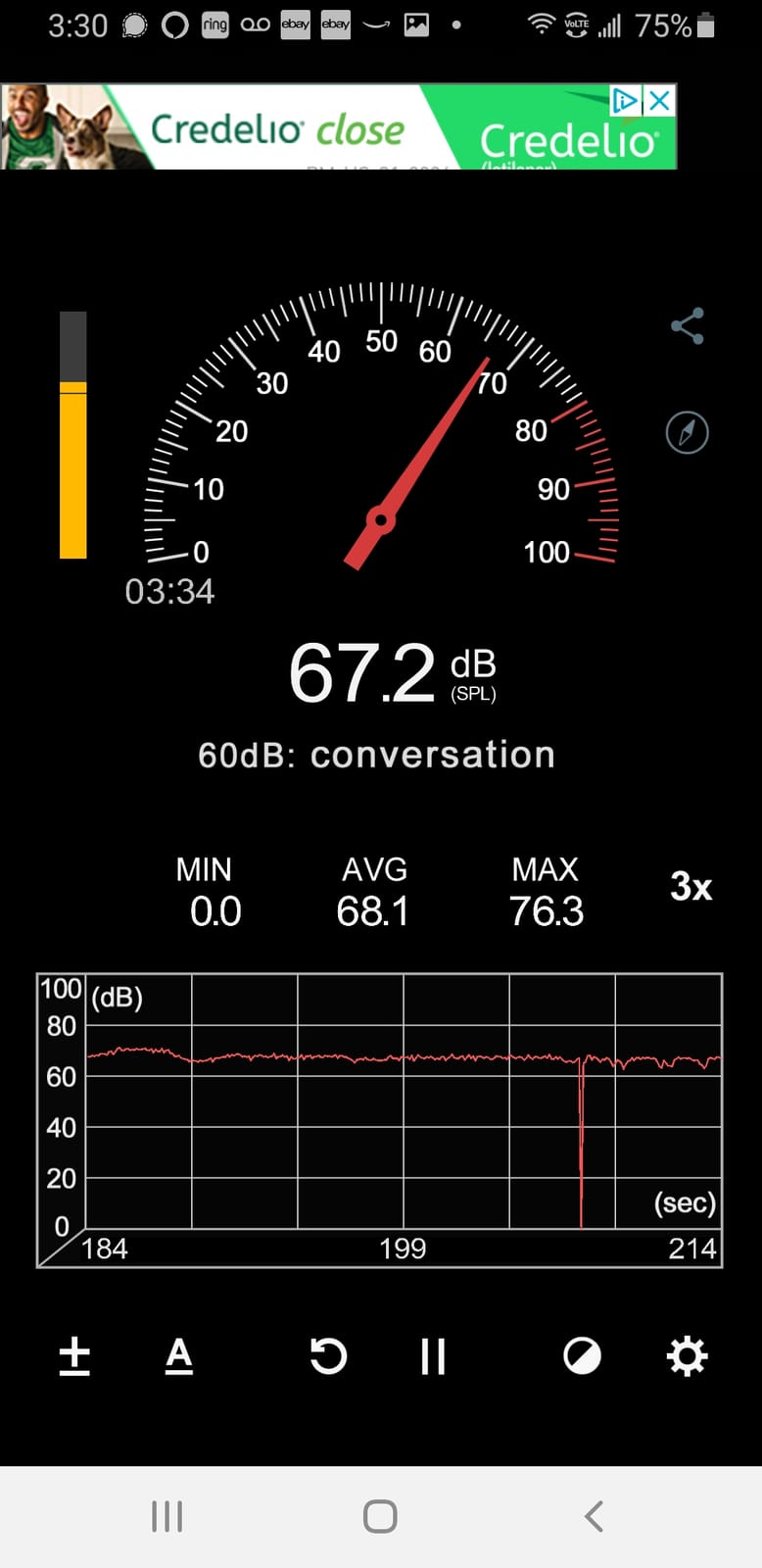
58 dBA at 23 feet is the lowest published noise figure in this roundup, and it comes from a fully enclosed inverter design rather than an open frame. If your campground enforces quiet hours strictly, this is the machine most likely to stay inside them while running the AC.
The electrical package is exactly what a 30-amp trailer needs: 3,500 running watts and 4,500 starting watts on gasoline, with a true 120V 30A TT-30R outlet plus a 20A duplex receptacle, dual USB ports and a 12V 8A DC output, all breaker protected. Total harmonic distortion is listed under 3 percent, so electronics stay happy.
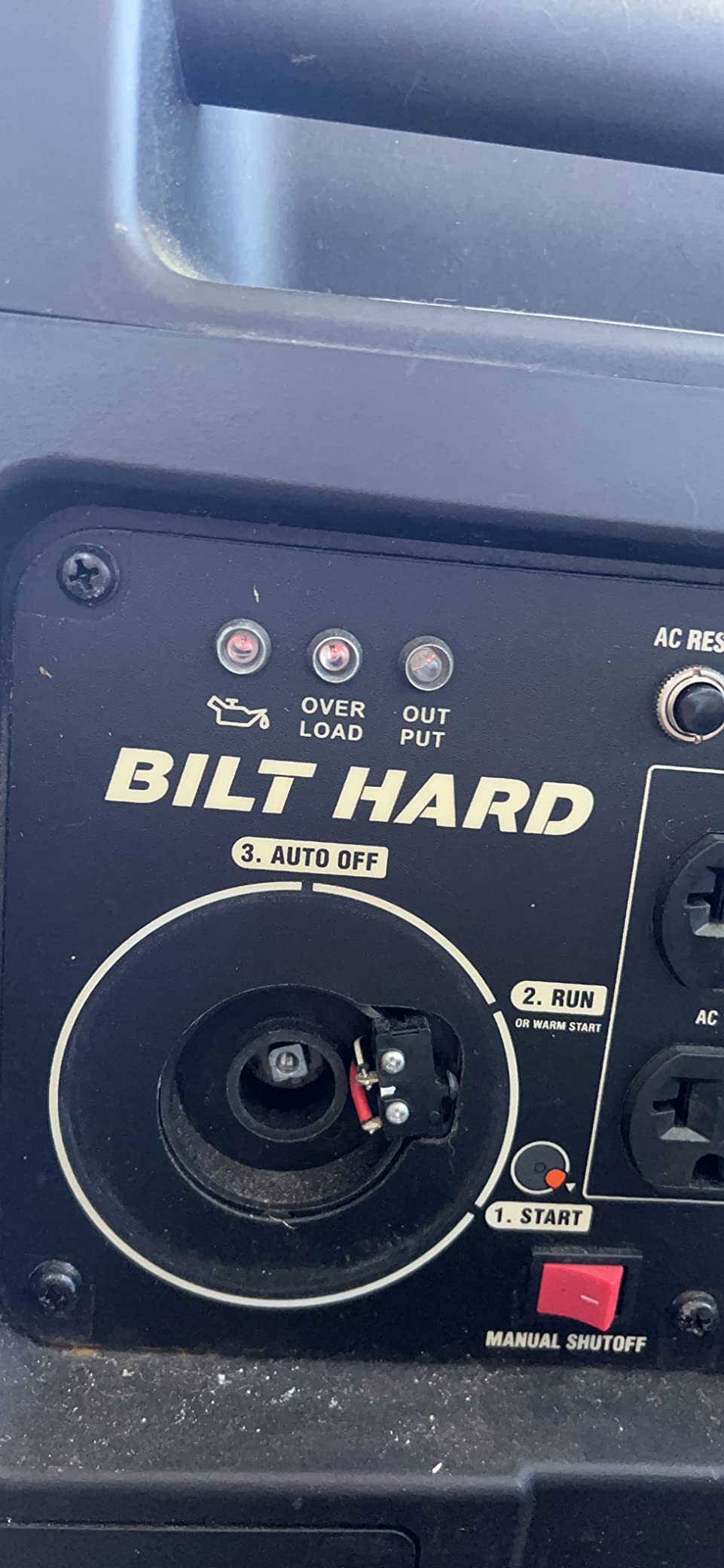
Dual fuel is standard here, with the propane hose and regulator included. On gasoline you get 3,500 running and 4,500 peak; on propane, 3,200 running and 4,150 peak. An integrated carbon monoxide sensor shuts the engine down in unsafe conditions, and a parallel kit connection doubles output if you add a matching unit later.
At 57.7 pounds with a built-in carry handle, this is also one of the more manageable dual-fuel machines. The 13-hour runtime figure is a claimed maximum, and the 1.37-gallon tank is small, so treat the runtime as eco-mode territory rather than a full-load promise.
Who this generator suits best
Campgrounds and national parks with tight noise rules, and 30-amp trailer owners who want dual-fuel flexibility in an enclosed, quiet frame. It is a strong fit for a 13,500 BTU rooftop AC plus modest appliances.
Where it falls short
The 141cc engine is the smallest displacement here, so sustained heavy loads will strain it sooner than the 212cc alternatives. The 226-review base is also the thinnest in this group, which means less long-term durability data than you get from a WEN or Champion listing.
6. Pulsar PGD40ISCO 4000W: Best for Lightweight Handling
Pulsar PGD40ISCO Ultra Light Quiet 4000W Portable Gas Inverter Generator, white
- 47.3-pound frame is among the lightest 4000-watt units
- 59 dB operation suited to campsites
- Manufacturer rates it for air conditioning units up to 13500 BTU
- Parallel ready
- 1-gallon tank gives only about 4 hours at half load
- 9 percent one-star share is the second highest here
- Only three outlets
At 47.3 pounds this is the lightest machine in the roundup, and the manufacturer rates it for air conditioning units up to 13,500 BTU. That combination of weight and stated AC capability is what makes it a serious option for a 30-amp travel trailer where lifting matters.
Output is 3,200 running watts with 4,000 starting watts, and the aluminum-and-steel frame keeps the footprint down to 18.9 by 11.4 by 17.3 inches, which matters in a generator compartment that was never designed for a machine. Noise is listed at 59 dB, comfortably inside most campground limits.
Parallel ready means a second matching unit can double your output later, and a three-year limited warranty is better than most of the budget entries here. Owners like the handling and the low idle noise when the unit is working hard rather than idling.
The tank is the real problem. One gallon gives about four hours at half load, so a full afternoon of AC means a fuel stop mid-session. With only three outlets and 3,200 running watts, this is also the tightest ceiling of the 4,000-watt class we reviewed, and that is a real limit against a 15,000 BTU rooftop unit.
Who this generator suits best
Solo travelers, older campers, and anyone with a back injury or a storage compartment that cannot swallow a 90-pound machine. It is a good match for a 9,000 to 13,500 BTU AC on a 30-amp trailer where convenience beats tank size.
Where it falls short
Four hours of half-load runtime is the biggest single limitation, and the 3,200 running watt ceiling leaves little room for a converter charging at full output at the same time. The 9 percent one-star share suggests some units need help early in their lives, so test it before a long trip.
7. Oxseryn 4400-Watt Inverter: Best for Big Output and Long Runtime
Oxseryn Power Equipment 4400 Watts Inverter Generator Gas Powered, Portable Open Frame Generator, Low Noise with ECO Mode, RV Ready, Emergency Home Backup
- Lowest cost in the group with 3400 running and 4400 peak watts
- 14-hour half-load runtime on a 2-gallon tank
- Includes a dedicated RV port alongside two 120V AC outlets
- Only 56 pounds
- 72 dBA is noticeably louder than the enclosed 58-61 dBA models
- Open frame design means no CO sensor or sound dampening
- Only a 1-year manufacturer warranty
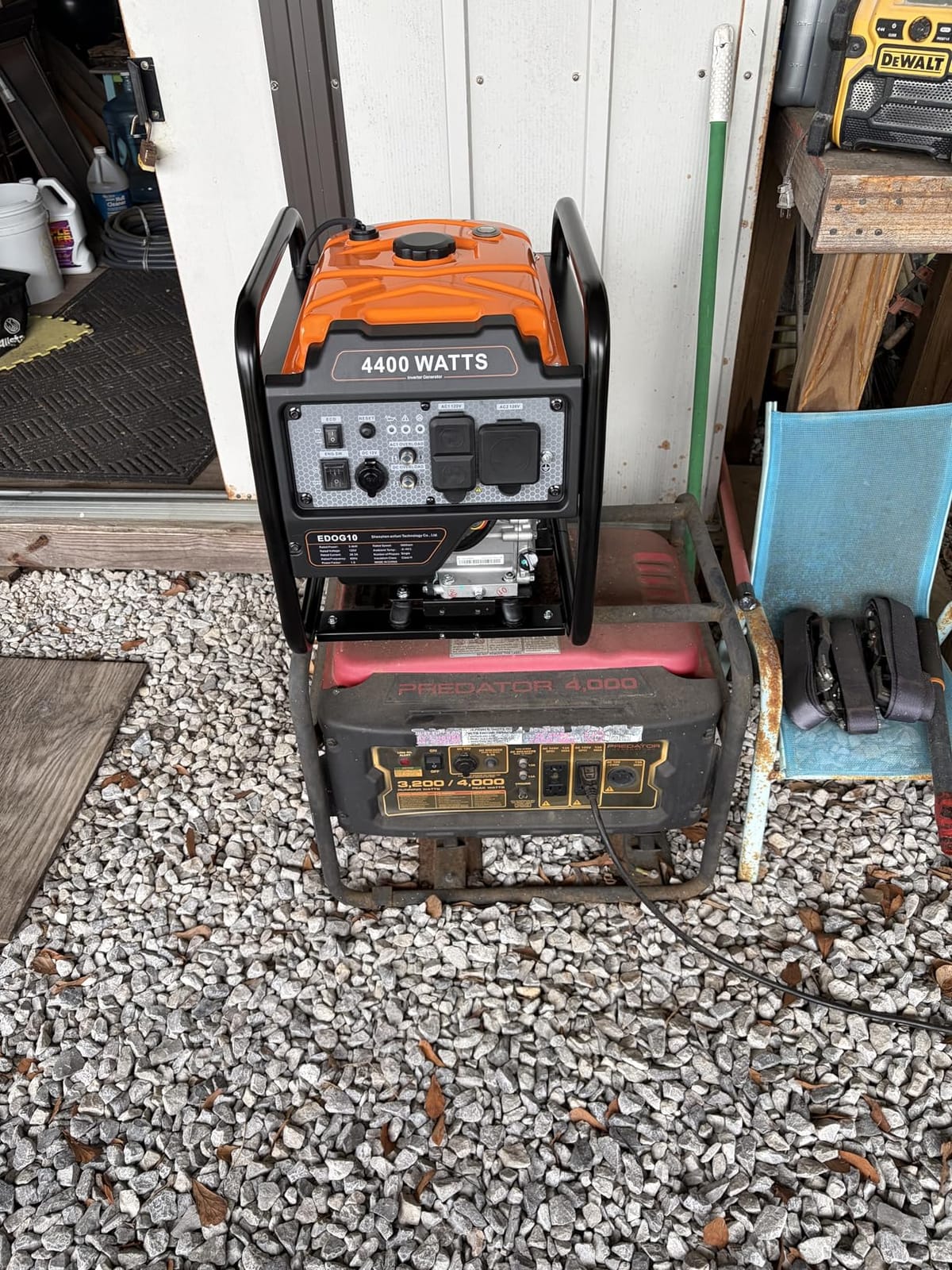
This is the spec-sheet value pick. 3,400 running watts, 4,400 starting watts, a two-gallon tank with a fuel gauge, and up to 14 hours of runtime at 25 percent load, all from an open-frame machine weighing 56 pounds. Very few units in this roundup pair that runtime figure with a dedicated RV port.
For AC work the numbers line up well with a 13,500 BTU rooftop unit plus a converter and a few lights. Four outlets cover two 120V AC ports, a 12V DC port and the RV port, and cold start technology plus low-oil shutdown cover the basics.
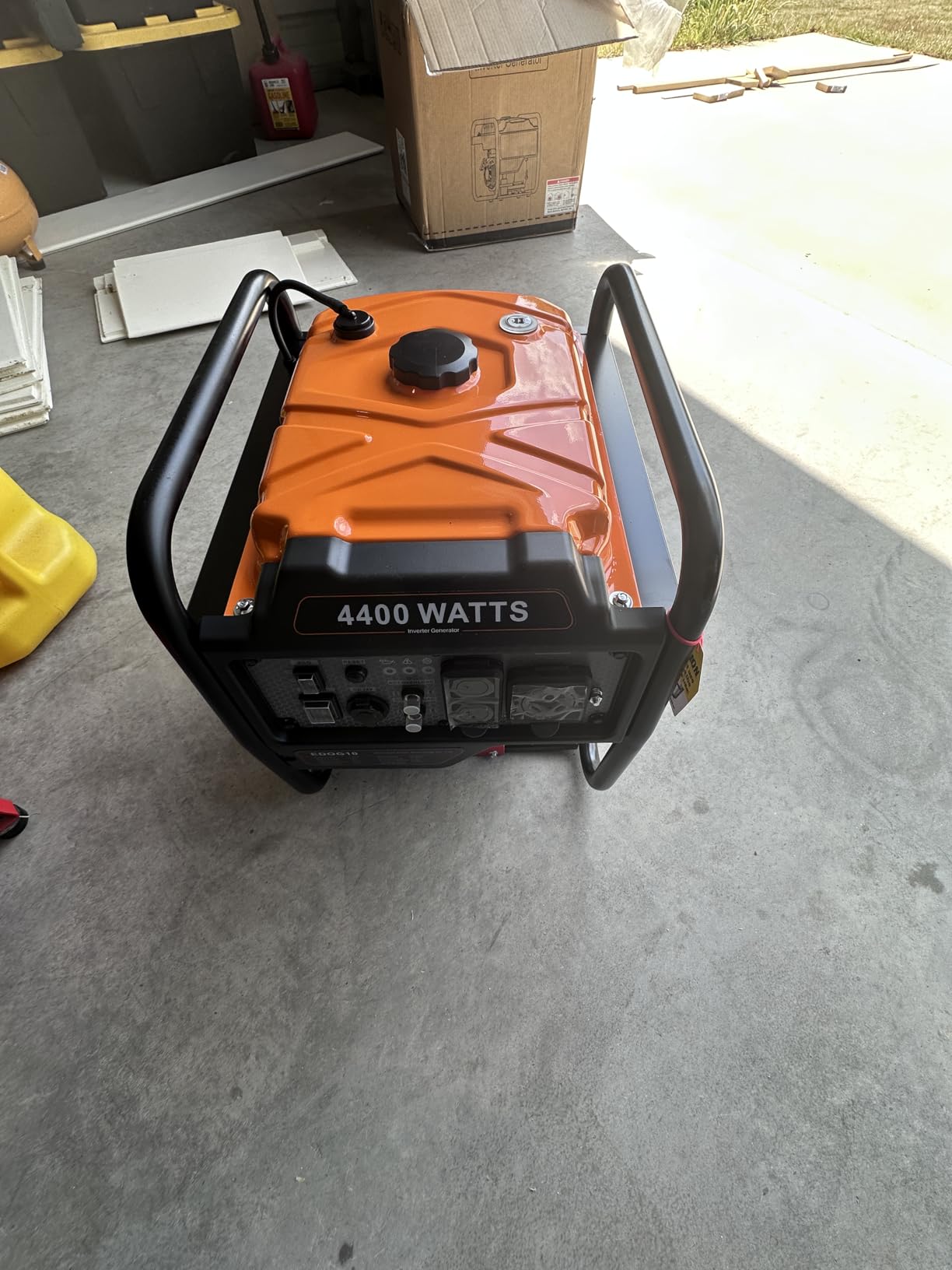
Here is the trade-off you have to accept out loud. 72 dBA at 23 feet is louder than every enclosed unit in this list, and long-term owners in RV forums warn specifically against open-frame machines at campgrounds for that reason. There is also no CO sensor on an open frame, which is a genuine safety consideration, and the warranty is a single year.
Long-term owners also point out that open frames are not built for the same 8 to 12 hour AC days that enclosed inverters handle, so check oil and let it cool. If you camp in one spot for a week with the AC running, this is the wrong shape of machine.
Who this generator suits best
Budget-first owners at a dry campground or festival with no strict noise ordinance, running a 13,500 BTU AC for a few hours at a time. The runtime and the RV port make it genuinely useful for a 30-amp trailer.
Where it falls short
Noise, the missing CO sensor, and a one-year warranty. Any of those alone might be acceptable; together they rule this out for a full-time or family camping scenario where you run the AC all night in a quiet site. The 73 percent five-star share is also the weakest top-rating distribution in this group.
8. PowerSmart 4400W Peak and 3600W Running: Best for Large Roof Air Conditioners
PowerSmart 4400W Peak / 3600W Running Portable Inverter Generator Gas Powered, RV Ready 30A Outlet, Lightweight, Quiet Operation, CO Shutoff, ECO Mode – Ideal for Home Backup, Camping, and Jobsite Use
- 3600 running watts with a dedicated 30A RV outlet for large rooftop AC
- 2.7-gallon tank and 11-hour runtime outlast most in this group
- CO sensor with auto shutoff and low-oil protection
- Less than 3 percent THD for electronics and CPAP
- Lowest average rating in the group at 4.1 with 14 percent one-star reviews
- 76 dB under load is the loudest measured here
- 68 pounds is heavy for a unit marketed as lightweight
This is the unit we would trust with a 15,000 BTU rooftop air conditioner, because its 30-amp outlet is rated by the manufacturer for 13.5K to 15K BTU RV air conditioners specifically. At 3,600 running watts it has the largest ceiling in this roundup, and the 2.7-gallon tank delivers an 11-hour runtime that outlasts most of the field.
Owners report successfully running RV air conditioners, refrigerators and fans at the same time thanks to that outlet and those running watts. Output is listed under 3 percent total harmonic distortion, which is what you want if a CPAP machine is plugged into the same box, and it is UL 2201 certified and EPA compliant.
The engine is a 223cc four-stroke, the largest displacement in this group besides the Champion 4250, and that size is part of why it holds the load. Parallel ready, with CO shutoff, low-oil protection and an overload reset button as standard safety kit.
Who this generator suits best
Owners of a 15,000 BTU unit, or anyone who wants a comfortable margin between their AC and their generator ceiling rather than running near the limit every afternoon. The 30-amp outlet rating removes the guesswork.
Where it falls short
Two real issues. At 76 dB under load it is the loudest machine we measured, and at 4.1 average with a 14 percent one-star share it has the roughest reliability record in the group, with owners citing finicky first starts until the choke and fuel-valve habits are learned. A 4.5-rated alternative with a similar ceiling is the safer long-term bet.
9. Champion 4250-Watt Dual Fuel Open Frame: Best for Longest Runtime
Champion 4250-Watt Dual Fuel Portable Open Frame Inverter Generator, CARB
- 3500 running watts with a true 120V 30A RV outlet
- 22-hour gasoline runtime from a large 4-gallon tank
- Runs on gasoline or propane with dual fuel flexibility
- Economy mode saves fuel and extends engine life
- 79 pounds and bulky open frame dimensions for a portable unit
- 64 dBA is louder than the enclosed 58-61 dBA models
- Open frame layout means no CO sensor on this variant
Twenty-two hours on gasoline from a four-gallon tank is the longest gasoline endurance figure in this roundup, and for long boondocking stretches in places where fuel is scarce or expensive, that changes the trip. The 224cc engine delivers 3,500 running watts and 4,250 starting watts, which covers a 13,500 BTU rooftop AC with room for a converter.
It is dual fuel, so propane is available as a backup, and the 120V 30A RV outlet plus two 120V 20A household outlets and a 12V DC port with a USB adapter mean you are not short on connections. Economy mode trims fuel use and stretches engine life over a long day.
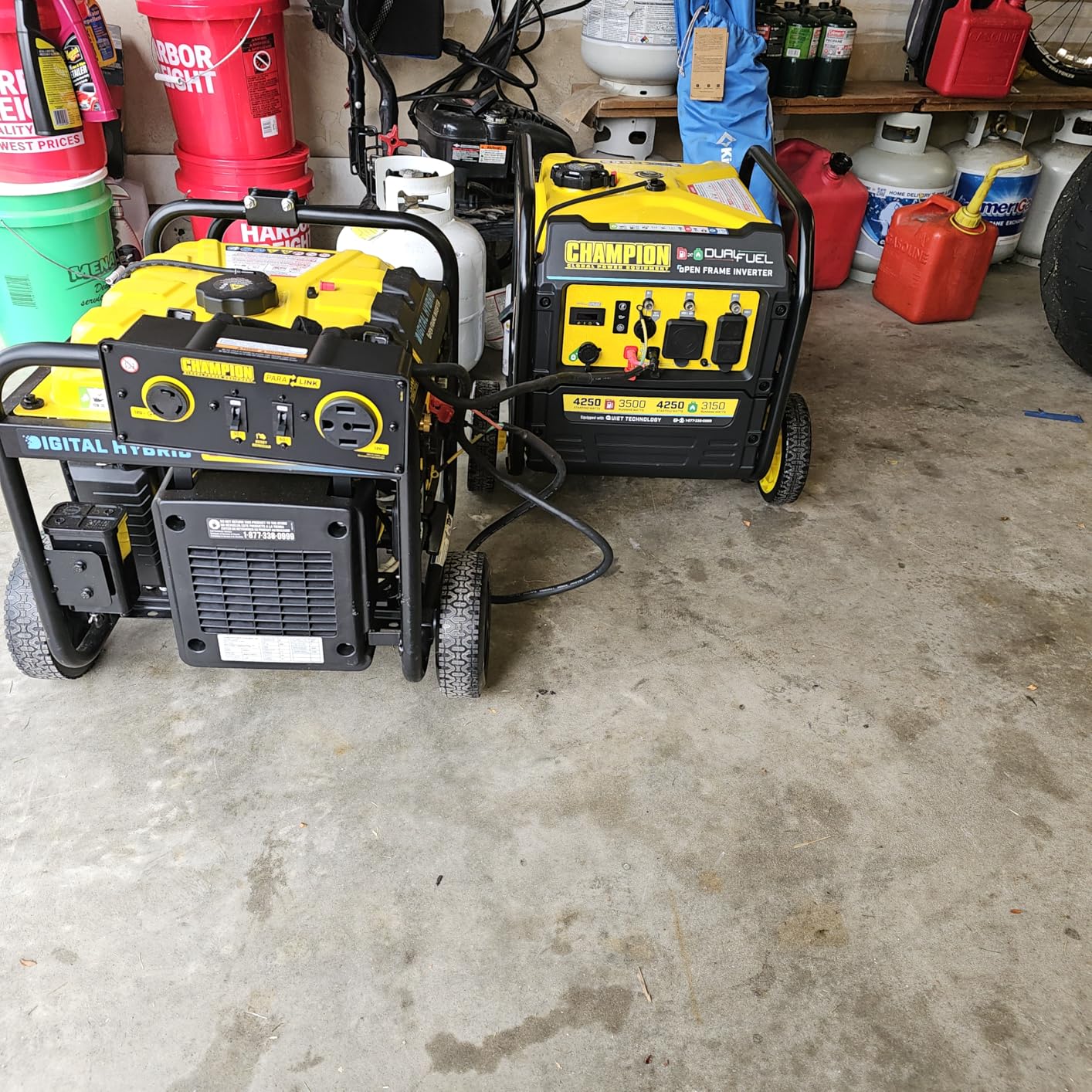
Champion describes it as 50 percent quieter and 20 percent lighter than a traditional 3,500-watt generator, and at 64 dBA it is a genuine improvement over a conventional open frame. It still is not an enclosed inverter, though, and 64 dBA is audibly louder than the 58 to 61 dBA units above.
Propane is the quiet second option here as well: with a standard cylinder connected you trade a modest amount of output for a fuel supply that stores safely between trips, and the covered outlets keep the control panel protected when the weather turns.
Who this generator suits best
Full-time boondockers, winter campers, and anyone who hates refilling tanks. The four-gallon tank means one fill-up covers a full day of AC plus normal household loads, which removes the single biggest logistical annoyance of off-grid camping.
Where it falls short
At 79 pounds and 27.9 by 23.4 by 21.7 inches, this is a bulky open frame that needs a real loading plan. There is no CO sensor on this variant, and in a quiet campground the 64 dBA will draw attention. The ParaLINK parallel kit for adding a second unit is a separate purchase.
10. maXpeedingrods 4000 Watt Inverter: Best for App-Controlled Monitoring
maXpeedingrods 4000 Watt Inverter Generator, Bluetooth® App Data Monitor
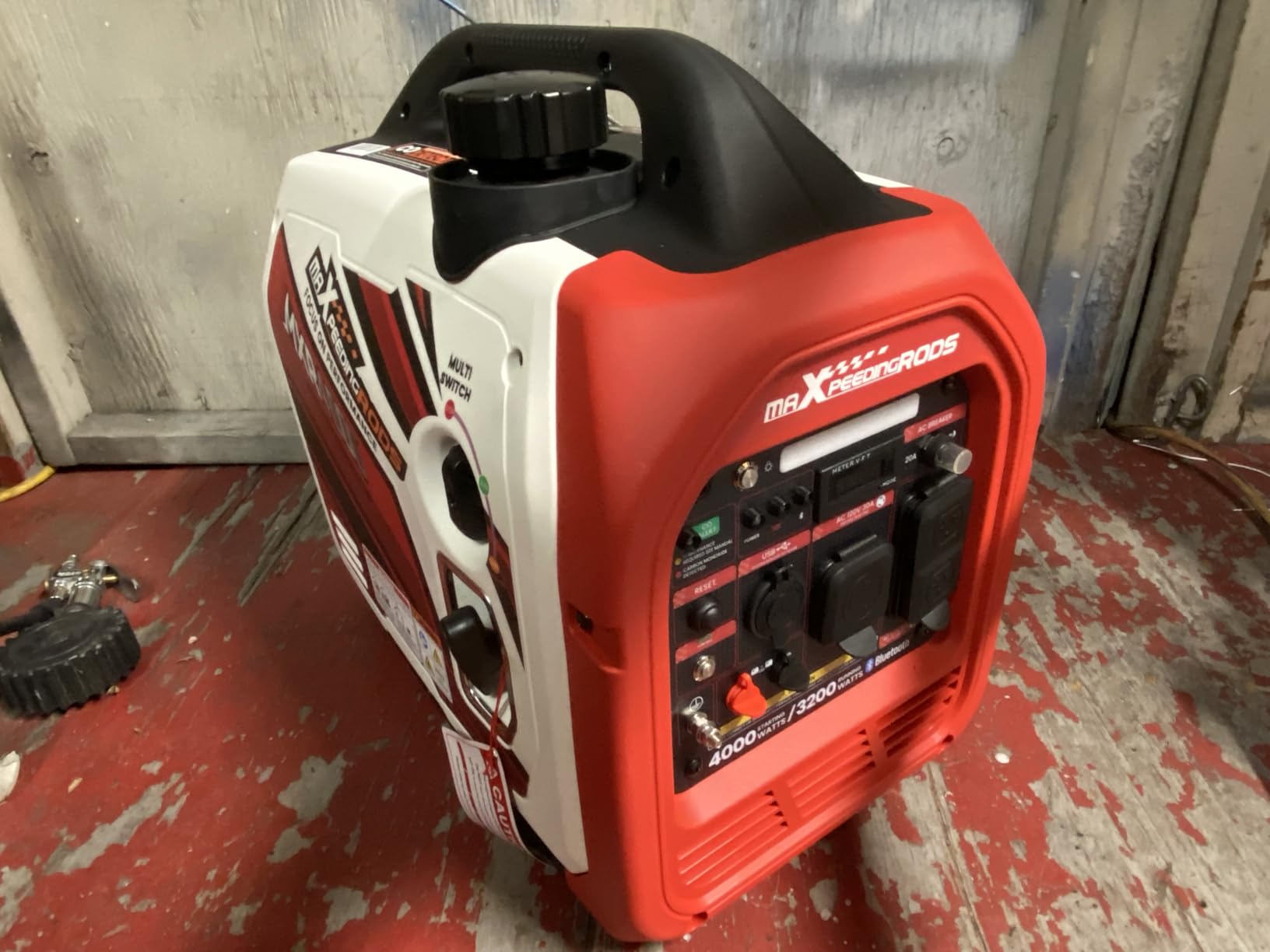
- Only 48.5 pounds with a compact 18.89 by 12 by 17.32 inch footprint
- Bluetooth app shows power output
- fuel level
- voltage
- frequency and running hours
- Includes an L5-30R RV outlet plus adapter for direct RV charging
- Parallel cables included in the box
- 13 percent one-star share which is the highest in this comparison
- Only 2 outlets listed which is the fewest connections available
- 4-liter tank with a 1-hour listed runtime
The app is the differentiator here. A Bluetooth monitor shows power output, fuel level, voltage, frequency and both single and accumulated running time, and you can toggle Eco mode from your phone. For a full-time RV owner who wants to know what the machine is doing while they are in a store, that is genuinely useful rather than a gimmick.
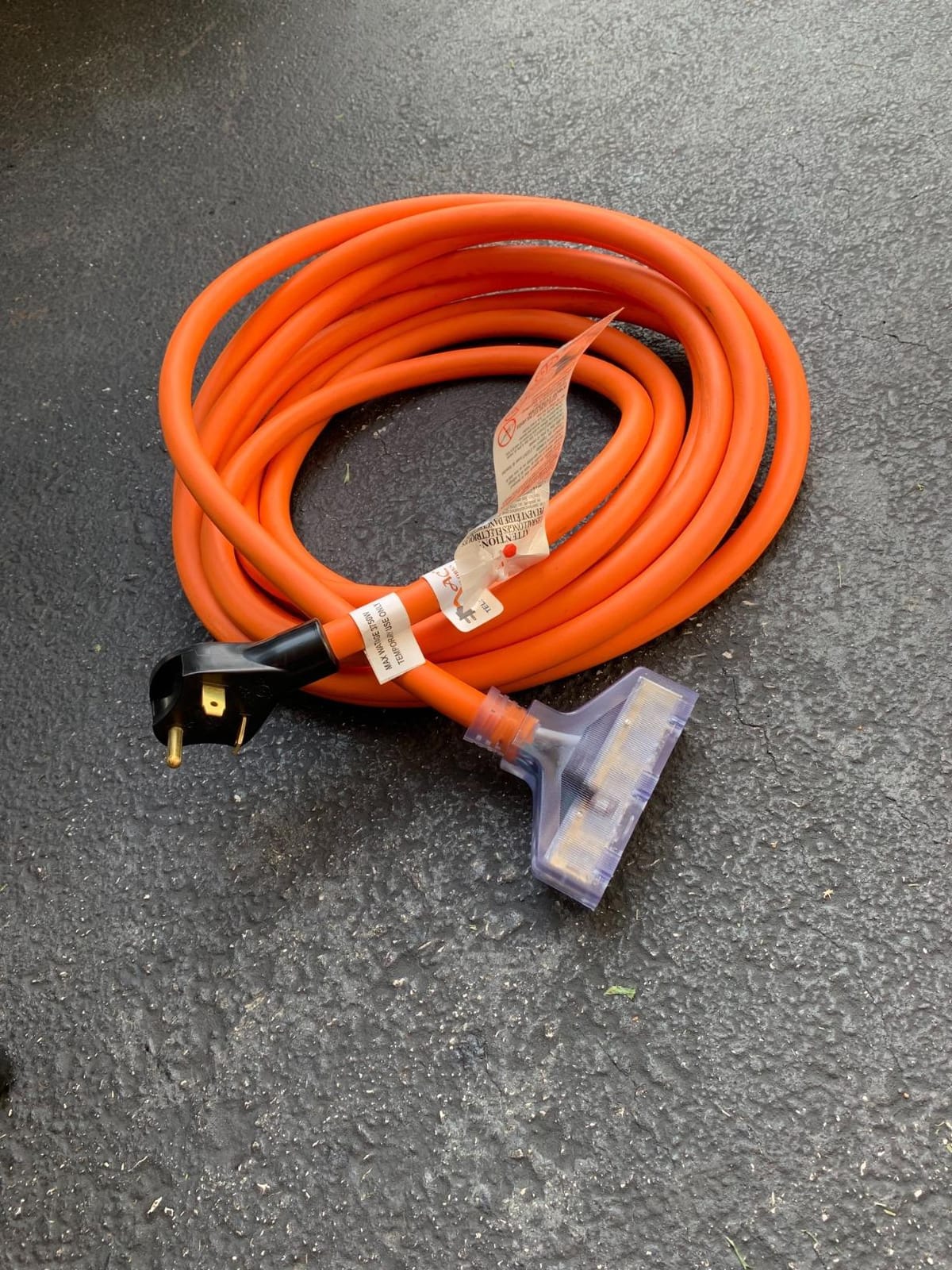
The box also includes a NEMA L5-30R RV outlet and an L5-30P to TT-30R adapter, plus parallel cables, so the missing-adapter trip-stopper we flagged earlier is covered. At 48.5 pounds and 18.89 by 12 by 17.32 inches it is one of the more compact machines at this output level.
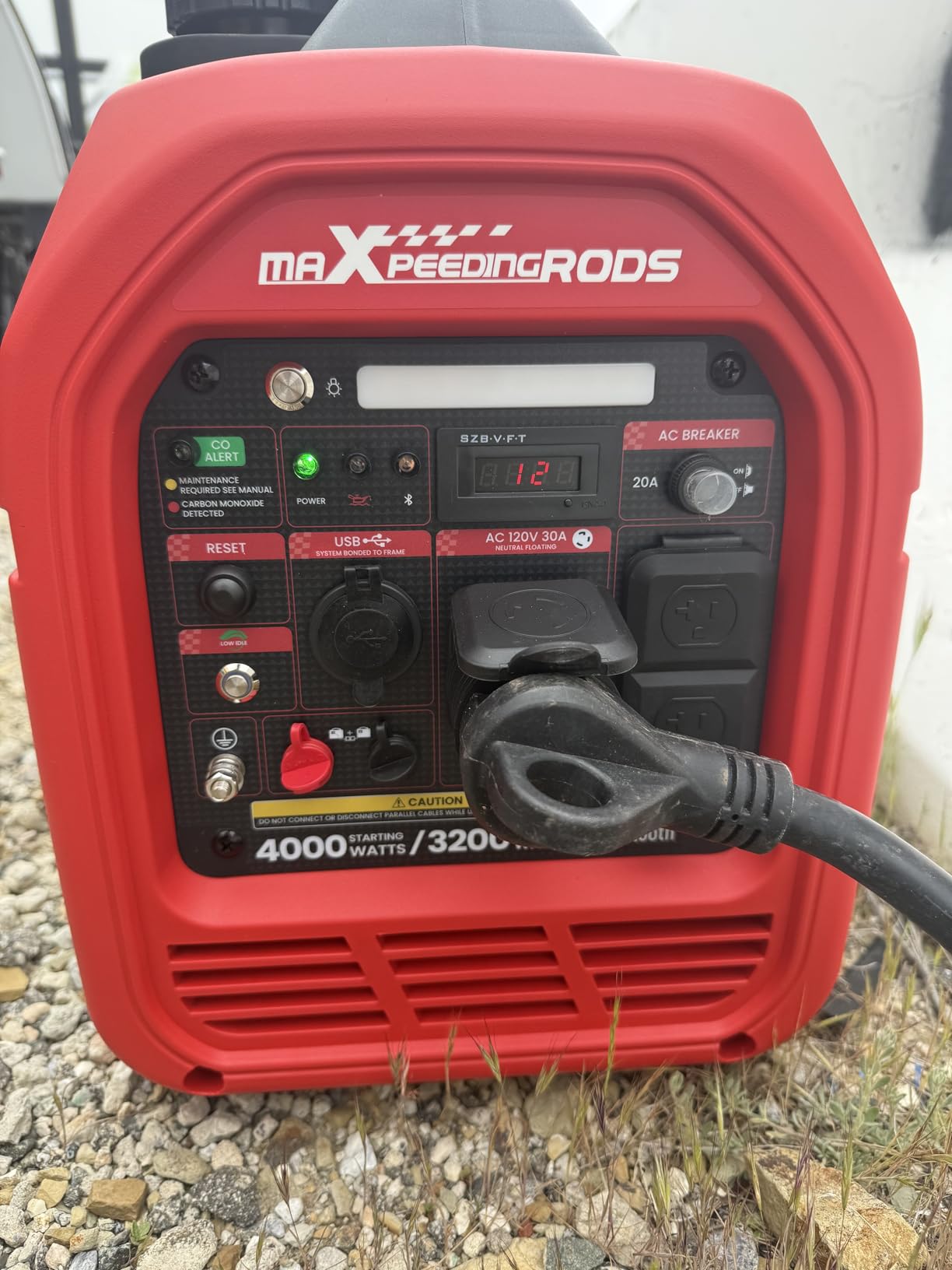
Underneath the app, the inverter delivers clean power with low total harmonic distortion, which matters if a laptop or a CPAP machine is running off the same box at the same time as the AC. Parallel capability means a second matching unit can be added later if you move to a larger trailer.
Now the difficult part. The listed runtime is one hour on a four-liter tank, the shortest fuel endurance in this roundup, and 3,200 running watts is one of the lower ceilings. With only two outlets you will be plugging the RV in and losing access to household receptacles, which limits what else you can run alongside the AC.
Who this generator suits best
Tech-oriented owners who want remote monitoring and who travel light. If your AC is a modest unit on a 30-amp trailer and you like watching real-time data, the app and the included adapter are worth something.
Where it falls short
The one-hour listed runtime and two-outlet count are the practical limits, and the 13 percent one-star share is the highest in this group. If you plan to run AC for more than a couple of hours away from a fuel source, this is not the machine, whatever the app says about it.
How to Choose an RV Generator That Handles Your AC
Once the sizing math is done, four decisions narrow the field. Each one is a tradeoff rather than a right answer, so it helps to know which constraint binds hardest for your rig.
Inverter or conventional
An inverter generator produces a pure sine wave at variable engine speed, which means quieter idle, better fuel economy and total harmonic distortion low enough for sensitive electronics. A conventional open-frame machine is louder, cheaper and usually heavier for the same output. For an AC application specifically, we would not choose conventional, because the noise penalty is exactly what campgrounds police and what neighbors complain about.
If you run a CPAP machine, a laptop, a router or a Starlink terminal alongside the AC, low total harmonic distortion is not optional. Anything listed under 3 percent gives you headroom on electronics.
Noise, dBA and campground generator hours
Read the dBA number carefully, because published figures are measured at different distances and loads. A 58 dBA reading at 23 feet and a 64 dBA reading at 23 feet are comparable, but a figure quoted at half load will understate what you hear with the AC compressor running.
Most national parks and many state parks set a 60 dBA limit at the campsite boundary and restrict generator hours to a defined evening and morning window. The enclosed inverters in the 58 to 64 dBA range live inside those rules; the 72 and 76 dBA open-frame units do not. If your site enforces hours strictly, that fact alone eliminates three of these ten.
Carbon monoxide and continuous duty
Never run a generator inside the RV, in a generator compartment that is not vented to outside air, under an awning, or near an open window. Point the exhaust away from the camper, doors and slide-outs, and run a battery or plug-in CO alarm inside as backup. Units with a CO sensor that auto-shuts the engine down, like the Champion 4000-Watt, the Champion 4500-Watt, the PowerSmart dual fuel and the BILT HARD, add a second layer of protection. Open-frame models generally lack it.
Almost no portable generator is rated for 24-hour continuous duty, and that includes most of the quiet inverters here. For 8 to 12 hour AC days, check the oil level before each extended run, keep the generator in an open area with clearance for cooling, and follow the oil change interval in the manual rather than the generic schedule. The built-in RV generators from Onan and Cummins are the main exception to this rule.
Parallel operation, dual fuel and built-in units
Two small generators in parallel give you roughly the sum of their running watts, not double, and a parallel kit is usually a separate purchase. Community advice is blunt that owning two generators is not a wiring plan, so plan the connection properly before buying. If your rig has two AC units on a 50-amp service, a single 6,000 to 8,000 watt dual-fuel machine or a built-in generator is the cleaner answer.
Dual fuel matters for full-time travel because propane stores safely in a cylinder for months while gasoline does not. Built-in and onboard generators from Cummins Onan, Onan and RVMP Flex Power are the other half of this market, and they sit in a completely different cost and convenience tier: they start with the rig, need no manual handling and are the only real option for two AC units plus a full 50-amp load. They also require a qualified install and service, which is why none of them appear in this portable roundup.
One alternative worth naming is a battery power station. Those units are silent, need no fuel logistics and pair well with a portable AC, as we cover in our best mini split air conditioners guide, but a rooftop compressor is still a heavy surge draw and most power stations fall short of running one. Treat them as a partial solution for smaller loads rather than a replacement for the generator.
Common mistakes to avoid
Do not buy on peak watts, buy on running watts. Do not assume a 20A household plug will carry a trailer, check for the TT-30R or 30A twist-lock. Do not skip the soft-start device if you are pairing a small generator with a 13,500 BTU AC. Do not forget to factor in the converter. Do not show up without the right adapter cable. And do not buy an open-frame machine for quiet campgrounds, which is the most common regret we saw in owner reviews.
Frequently Asked Questions
How big of a generator do I need to run RV AC?
A 13,500 BTU RV air conditioner needs about 2,800 to 3,000 watts to start and roughly 1,600 watts once running. Choose a generator rated for 3,500 continuous watts or more so the startup surge lands on a machine with headroom and your converter, fridge and small appliances can run at the same time.
Can a 2,000 watt generator run an RV air conditioner?
Sometimes, and only with help. A 2,000 watt unit can start a 9,000 or 10,000 BTU AC with little trouble. For a 13,500 BTU unit you generally need a soft-start capacitor plus a generator with about 2,500 to 3,000 running watts, and mild weather. A 15,000 BTU AC needs a 3,500 running watt machine or larger.
Will a 5,000 watt generator run two RV air conditioners?
Only in a pinch, and it will be uncomfortable. Two 13,500 BTU units can pull close to 3,200 watts running combined, so a 5,000 watt generator has little room left for a converter, refrigerator and appliances. A 50-amp rig with two AC units is better served by a 6,000 to 8,000 watt dual-fuel portable or a built-in generator.
Do I need an RV-ready generator with a 30-amp outlet?
For a 30-amp trailer, yes. A 20A household receptacle and a heavy extension cord is the setup that causes browned-out breakers and fried electronics. Look for a NEMA TT-30R outlet or a 30A twist-lock receptacle, and confirm the cable that came with your trailer is the heavy 30-amp type.
How long will a generator run an RV air conditioner?
It depends on tank size, load and mode. The units in our roundup range from about 4 hours at half load on a 1-gallon tank to up to 22 hours on a 4-gallon tank, and dual-fuel models can reach 21 to 24 hours on a 20 lb propane cylinder. Running a large AC holds the engine at a higher load than the quoted half-load figures.
Our Verdict
The WEN 56380i is our pick for the best RV generators for air conditioners because it combines 3,400 running watts with a true TT-30R outlet, quiet inverter output and the largest review base in the group. If weight decides it for you, the Champion 4000-Watt at 48.1 pounds is the value pick, and if you plan to run the AC for eight hours a day away from a fuel stop, a dual-fuel machine like the PowerSmart 3800 or the Champion 4500 is the more realistic tool.
Whichever you choose, size to running watts rather than peak, add a soft-start kit if you are pairing a smaller unit with a 13,500 BTU rooftop AC, and check the noise figure against your campground’s rules before you buy. Updated for 2026.