
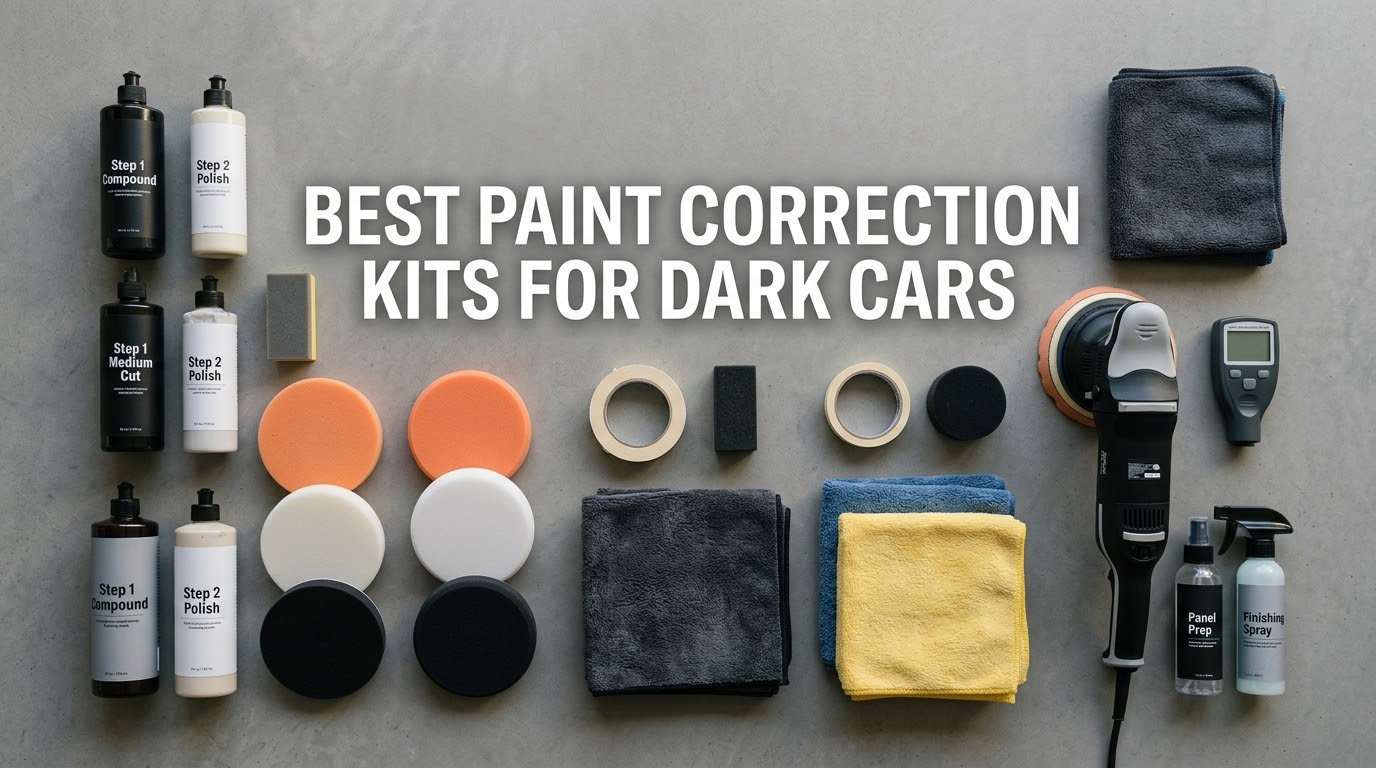
Black paint is the least forgiving surface in detailing. A swirl that barely registers on a silver car reads like a spider web under direct sun on a black one, and a hazy finish that reads as soft grey on white looks like a failed paint job. That is why the best paint correction kits for dark cars are not the ones with the most aggressive compound. They are the ones that cut enough to level the defects, then finish clean enough that you cannot see the work.
Most dark cars that people want to correct do not need a full multi-stage cut. A wash, a clay bar, a finishing polish and a sealant will remove the majority of light swirls. The expensive mistake is reaching for a heavy compound on soft black metallic, which leaves haze you then spend hours trying to remove and, on some finishes, clear coat that never comes back.
We compared 10 correction kits and machines built for this job, weighting finishing quality on black far above cutting power, and split them by whether you need a polisher in the box. Every rating and review count below comes from the current listing data, and each kit carries a best-for line so you can match it to your paint and your patience.
Last reviewed and updated for 2026.
Table of Contents
Top 3 Best Paint Correction Kits for Dark Cars in 2026
The short answer to who makes the best paint correction kit is Chemical Guys, largely because it is the only brand here that covers the whole job: a complete compound-to-finish product range, a machine bundle that includes the polisher, and a sealant formulated specifically for black and dark colours. Our overall pick, the V Line four-bottle system, is the safest complete correction kit for dark paint because you can step up or down the cut level on the same car rather than committing to a single aggressive formula.
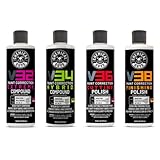
Chemical Guys V Line 4-Bottle Kit
- 4 x 16 oz heavy to light system
- Machine or hand application
- Clear coat and ceramic safe
- 4 separate stages

Chemical Guys TORQX Polisher Kit
- Polisher with pads and compounds included
- 8mm orbital throw
- 6 speed settings
- Works on paint and headlights

Meguiar’s Ultimate 3 Step Kit
- Compound
- polish and wax in one box
- Hand application only
- Synthetic polymer protection
Every Kit at a Glance (October 2026)
All 10 options, ordered by how much finishing control they give you on a dark panel. Only number 2 ships with a polisher; the rest are chemicals you can work by hand with patience or drive with a machine you already own.
| Product | Specifications | Action |
|---|---|---|
| Chemical Guys V Line Polish and Compound Kit |
|
Check Latest Price |
| Chemical Guys TORQX Random Orbital Polisher Kit |
|
Check Latest Price |
| Meguiar’s Ultimate 3 Step Paint Care Kit |
|
Check Latest Price |
 Adam’s Polishes 2-Step Polishing System Adam’s Polishes 2-Step Polishing System |
|
Check Latest Price |
 Meguiar’s Mirror Glaze M105 and M205 Bundle Meguiar’s Mirror Glaze M105 and M205 Bundle |
|
Check Latest Price |
 Menzerna Three-Step Polishing Set Menzerna Three-Step Polishing Set |
|
Check Latest Price |
 Chemical Guys Black Light Hybrid Glaze and Sealant Chemical Guys Black Light Hybrid Glaze and Sealant |
|
Check Latest Price |
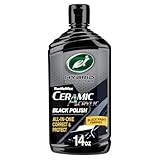 Turtle Wax Ceramic Black Polish and Wax Turtle Wax Ceramic Black Polish and Wax |
|
Check Latest Price |
 Adam’s Polishes Hand Correction System Adam’s Polishes Hand Correction System |
|
Check Latest Price |
 Carfidant Black Scratch and Swirl Remover Carfidant Black Scratch and Swirl Remover |
|
Check Latest Price |
1. Chemical Guys V Line Polish and Compound Kit – Best Overall for Dark Paint
Chemical Guys, V Line Polish & Compound Kit, Paint Correction, 4 x 16 oz
- Complete heavy to light four bottle system
- Cuts swirls then refines gloss
- Safe on clear coat
- single stage and ceramic
- Machine or hand application
- Four stages mean more panel time than a one-step
- Polisher sold separately
- No sealant included
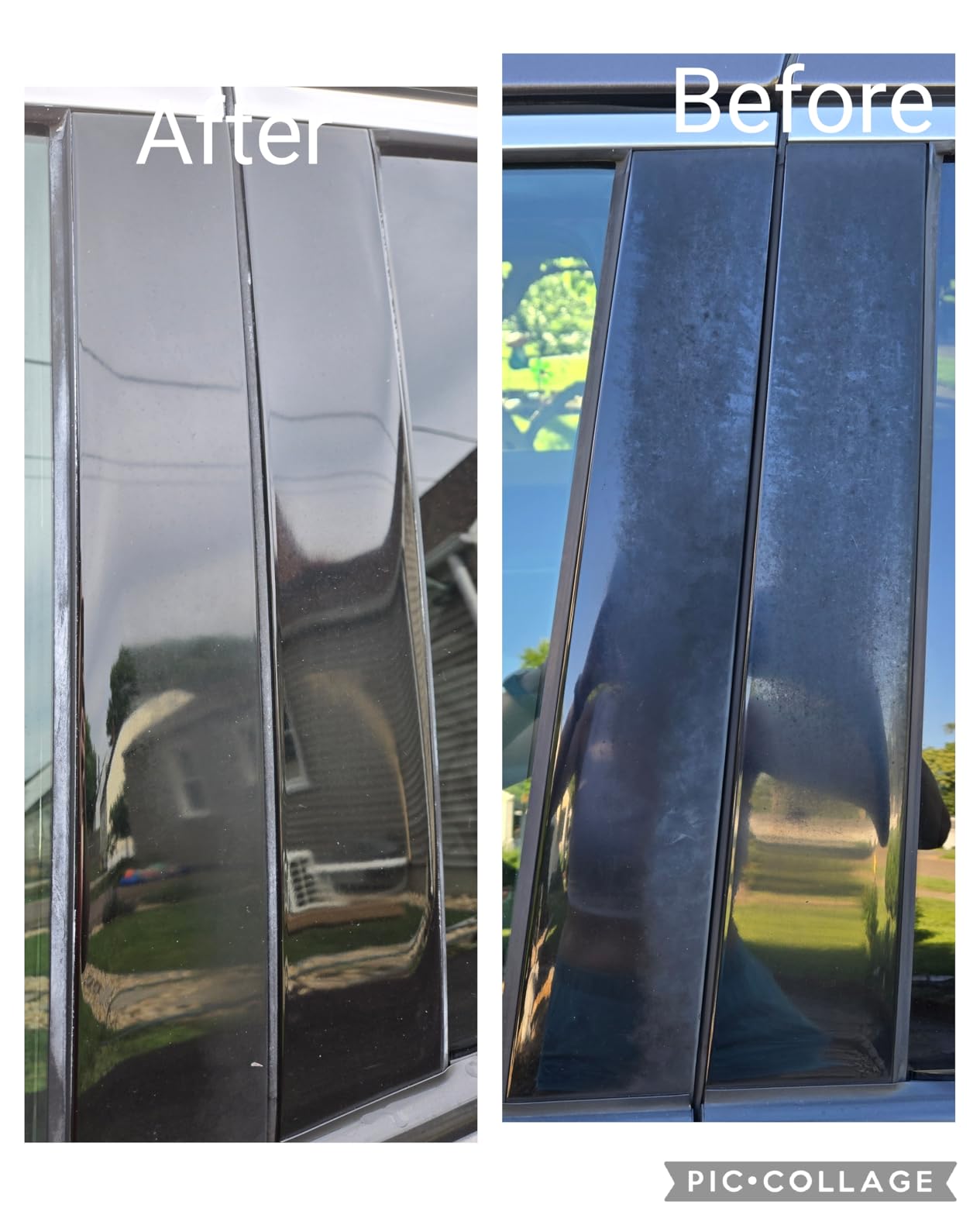
This is the kit I recommend most often to people with black paint, and the reason is flexibility rather than raw power. It ships as a 4 x 16 oz system: V32 and V34 compounds for the cut, then V36 and V38 polishes to refine the finish. On a car that has been through automatic washes for years you might start on V32 with a foam pad and step down, and on soft black metallic with only light swirls you can go straight to a polish stage and never risk hazing the panel.
Reviewers consistently report the same thing once the stages are used in order: swirls come out and gloss comes back. The AI summary on the listing puts 81% of ratings at five stars, with owners citing dark paint results specifically when they worked through the bottles in sequence rather than jumping straight to the strongest compound.
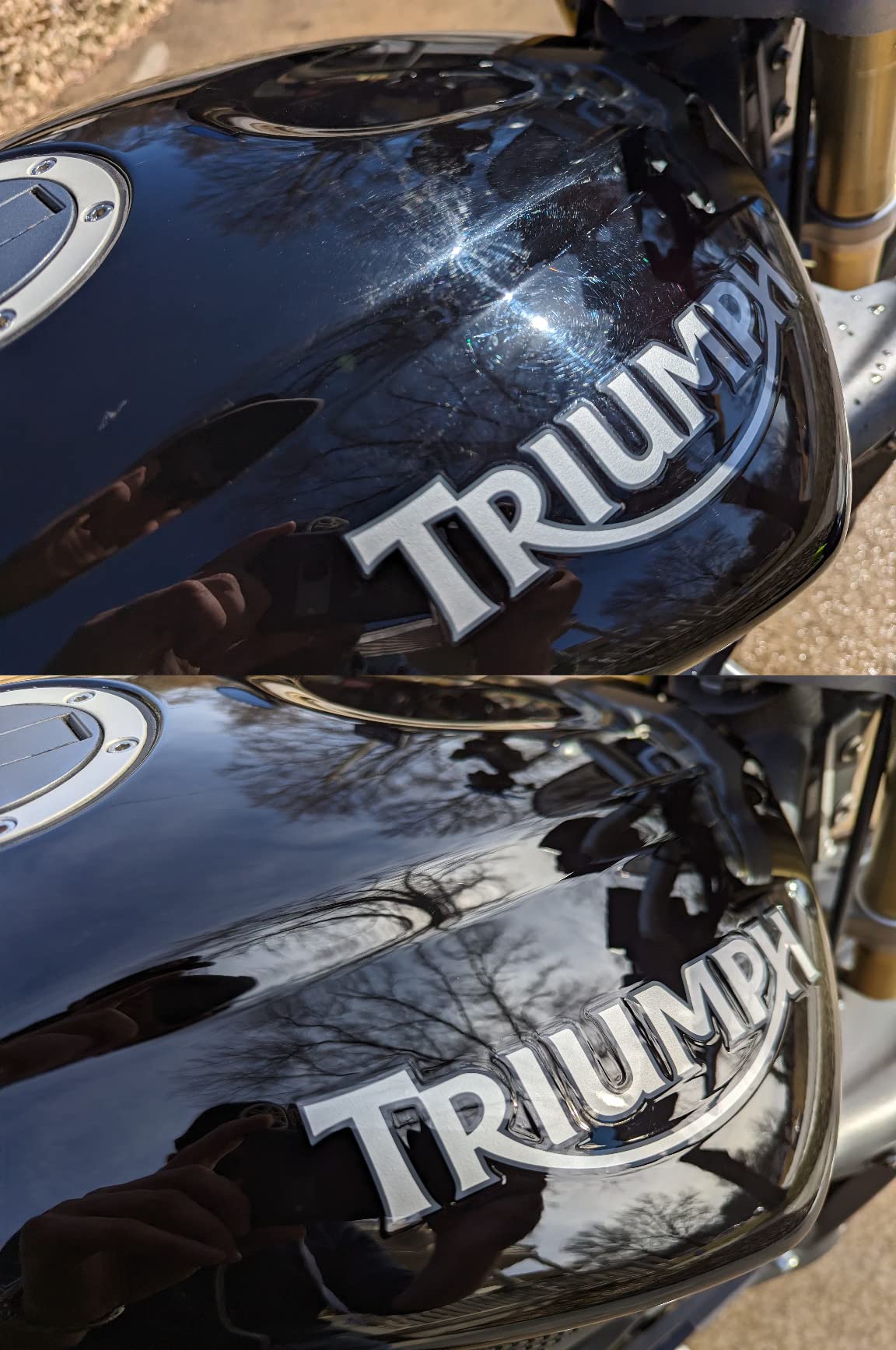
The kit is labelled for clear coat, single-stage and ceramic-coated finishes, and it works equally well with a dual action polisher, a rotary or a hand applicator. That matters more than it sounds, because it means the same purchase covers a garage-kept black car and a neglected one. Bottle labelling is clear enough that a first-time user can follow the sequence without an instruction sheet, which is not something we can say for every kit in this list.
At 2359 g and 9.41 x 7.99 x 2.28 inches, this is the largest product-only bundle we looked at. That volume is genuinely useful if you plan to correct more than one car, because you will go through far more product on black than the bottle suggests.
Why it suits dark paint better than the alternatives
Dark paint punishes an unbalanced system. If a kit gives you a strong cut and no real finishing step, you end up with a panel that looks corrected under garage light and hazy in the sun. This set has two dedicated polishes, so the second half of the job is handled properly instead of being left to a generic wax.
The diminishing abrasives also mean a beginner can make a mistake on a test section and back off by changing the bottle rather than the technique. On paint that is soft, that control is the difference between a good result and a clear coat you cannot polish back.
Where it falls short for dark cars
It is not a machine bundle, so if you have no polisher at all you are buying chemicals and a separate purchase for the tool. It is also a correction kit rather than a protection kit: nothing in the box seals the finish, and unsealed black paint will collect new swirls within weeks.
Four stages on a full vehicle is a long evening, and the 16 oz bottles mean you will be mixing larger amounts than a one-step needs. If your paint is already close to clean and you just want the depth back, the Meguiar’s 3 Step below is a shorter path to the same place.
2. Chemical Guys TORQX Random Orbital Polisher Kit – Best Value Starter Machine Bundle
- Polisher and pads and compounds in one box
- 8mm orbital throw for control
- 6 speed settings
- Balanced weight for long sessions
- Random orbital is slower to cut than a rotary
- Listing and spec sheet disagree on motor wattage
This is the kit that solves the number one question beginners ask on detailing forums: do I need a machine at all, and if so what kind. A random orbital, also called a dual action, is the safest machine you can put on black paint because the pad orbits as it rotates, so it cannot drill a burn hole the way a rotary can. The 8mm throw and 6 speed settings give you enough range to work a finishing polish gently and still handle a slightly firmer pad for swirls.
What makes this a bundle rather than a polisher is everything around the machine. The 9-piece configuration includes pads, compounds and polishes, so a first correction does not require a second order. The listing also notes it works on paint, clear coat, headlights and wheels, which means the same session can handle plastic trim and cloudy lenses.
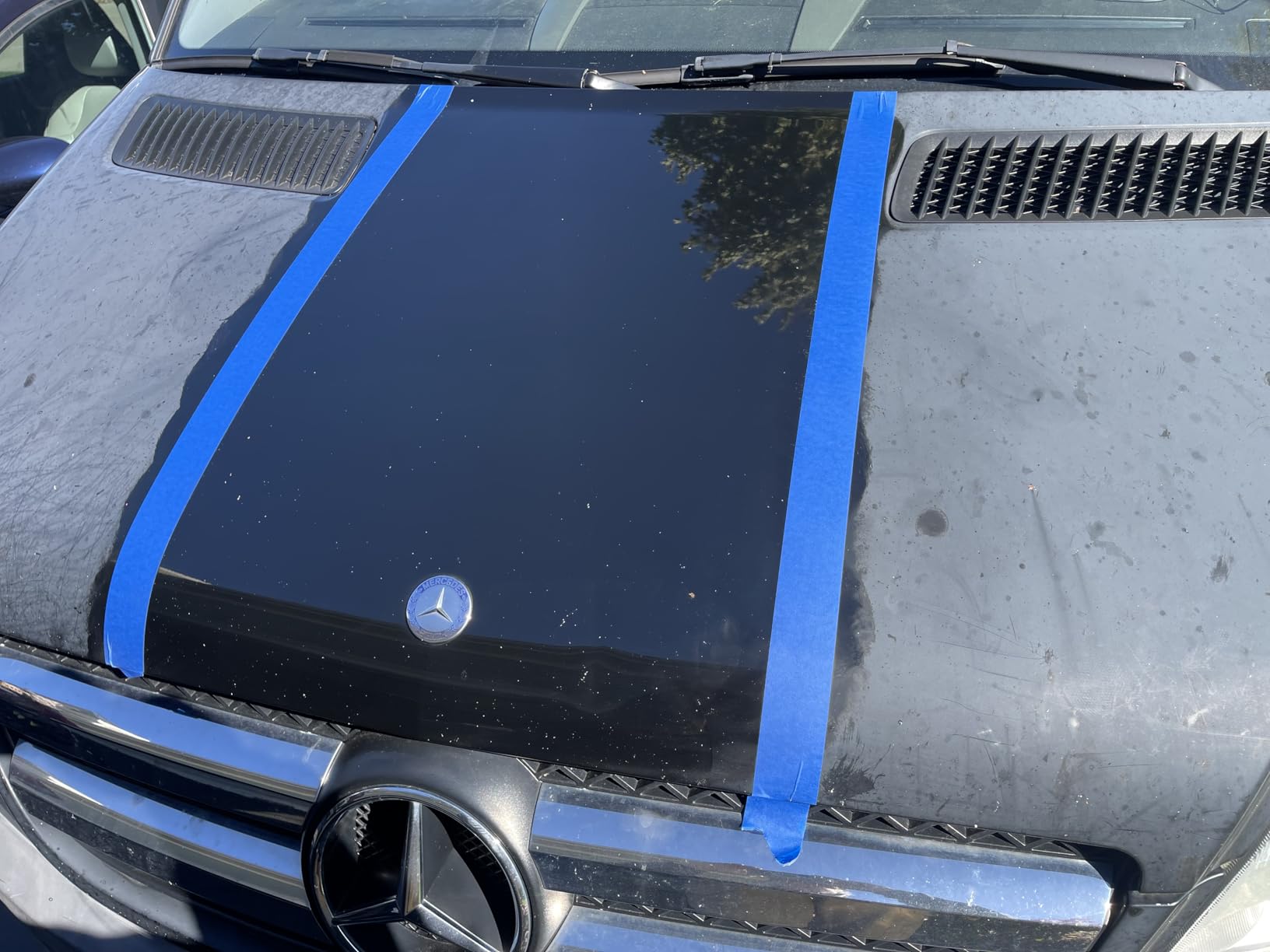
Reviews rate it 4.6 across more than 6400 ratings, with 80% at five stars, and the recurring theme is approachability: owners describe it as making machine correction possible without assembling pads and liquids separately. The balanced weight and ergonomic design come up often in reviews from people doing whole cars, which matters more than it sounds on a hood with a black finish under direct sun.
One detail to note before you buy: the product title says 800W while the technical specification lists 700W maximum power at 5.83A and 120V. We are flagging it because the difference matters when comparing machines, not because the polisher performance.
Why it suits dark paint better than the alternatives
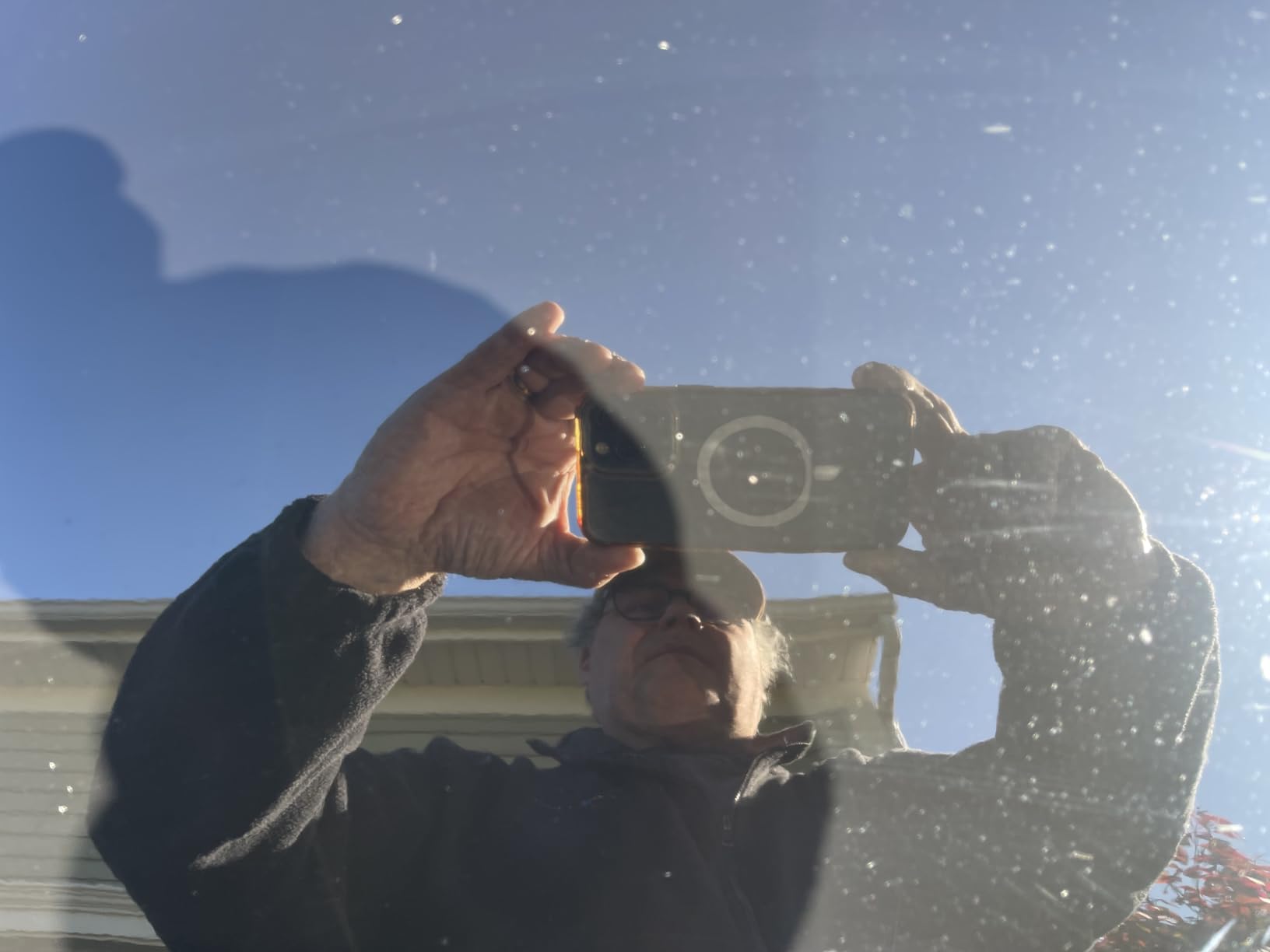
A random orbital is the tool that lets you use a compound on black without the risk profile of a rotary. When detailers on r/Detailing advise beginners to start with a DA and a finishing polish, the reason is heat: a DA spreads the work over a wider area and generates less concentrated heat at any single point, which is exactly where soft clear coat gives up.
The 6 speed settings also map directly onto the two things you need to vary on dark paint. Low speed with a soft pad for finishing, higher speed with a firmer pad for the initial cut.
Where it falls short for dark cars
A random orbital simply cuts slower than a forced-rotation machine, so a badly neglected car takes longer than it would with a rotary. The bundled products are also entry-level compared with the dedicated ranges, which means you will likely replace the pads and compound sooner.
There is no sealant in this bundle either. Corrected black paint with nothing on top of it will look excellent for a weekend and start collecting swirls again within a few washes.
3. Meguiar’s Ultimate 3 Step Paint Care Kit – Most Versatile Working by Hand
Meguiar’s Ultimate 3 Step Paint Care Kit, Car Detailing and Polishing Kit
- Compound
- polish and wax progression in one box
- No power tool required
- Reported to fade swirls on black over repeats
- Adds a real sealing step
- No instructions in the box
- About six hours of hand work for a full vehicle
- Milder than dedicated cutting compounds
This is the kit to buy if you are not buying a polisher, and it is the one we suggest to owners of a brand-new dark car with light swirls. The system is Ultimate Compound, Ultimate Polish and Ultimate Liquid Wax, applied in that order by hand. The compound uses micro-abrasives to lift oxidation, scratches and water spots, the polish refines the finish and adds conditioning oils for depth, and the wax seals it with synthetic polymers.
Owners of black paint report that the finish change accumulates rather than appearing on day one. Several reviews describe swirls on black becoming visibly less noticeable over a few repeat treatments, and a common note is the shine recovery on sun-faded dark panels. It rates 4.6 across more than 1100 ratings.
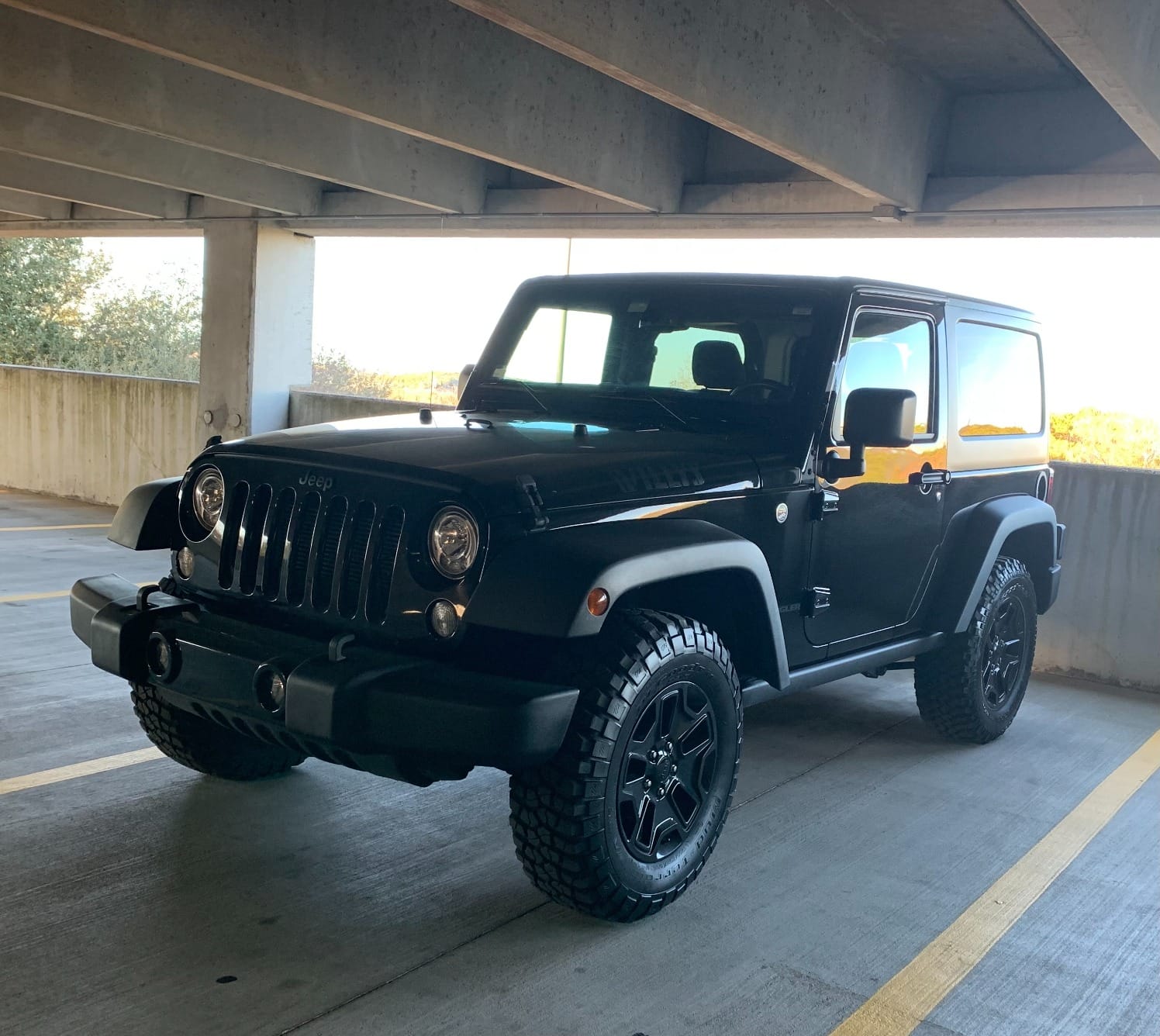
What we like most is that the third step is protection, not another abrasive. Most hand kits stop at polish and leave you unprotected. This one ends with a wax, so the correction you just did has a reason to last. The package is 9.96 x 9.53 x 7.36 inches and 5.47 pounds, which is a manageable weight for a full car.
Two honest caveats. There are no instructions in the box, so plan on learning the order from a video or a guide. And detailer-leaning reviews are candid that the compound is gentle rather than aggressive, meaning deep scratches will not clear regardless of how long you work.
Why it suits dark paint better than the alternatives
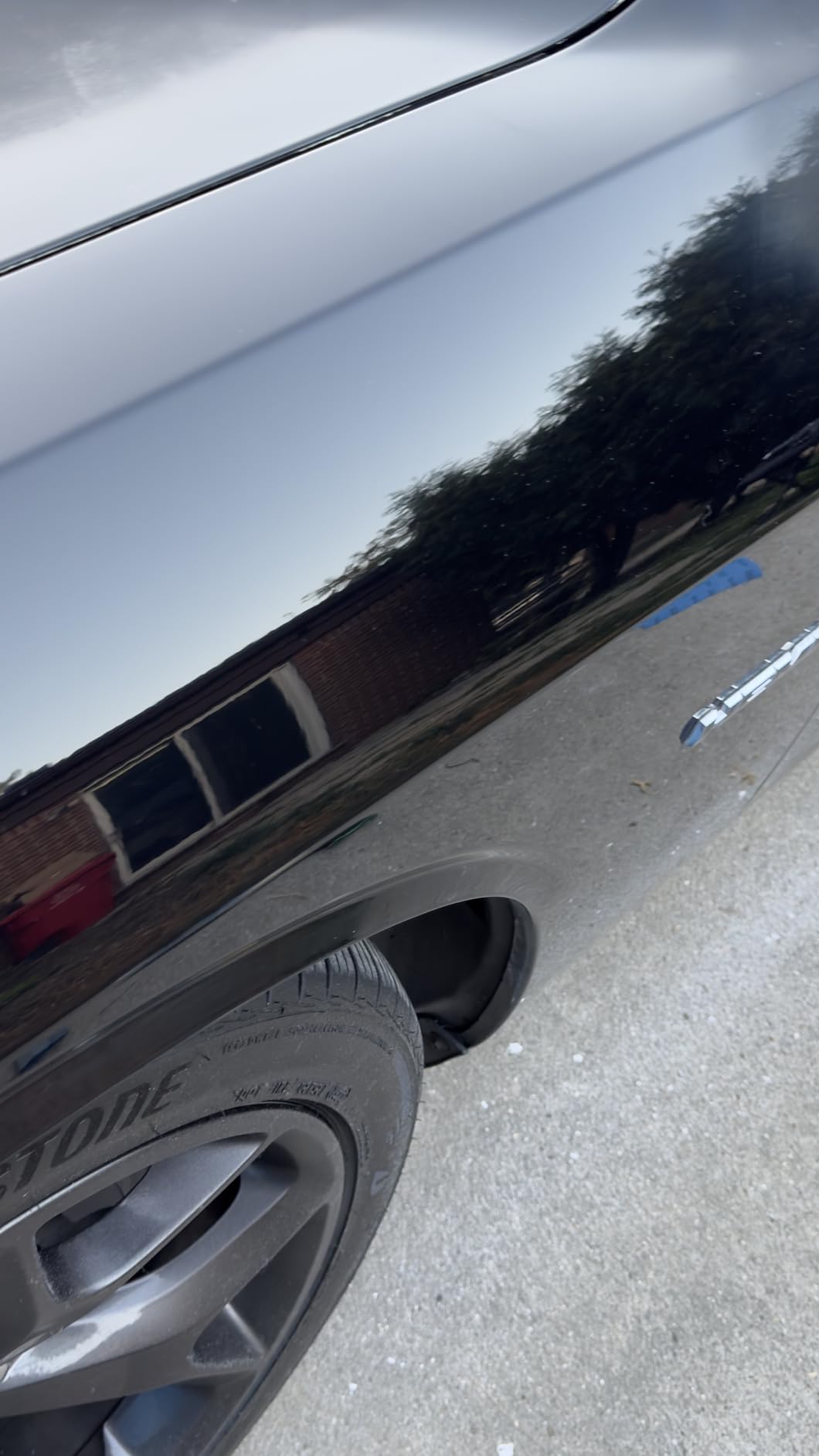
Hand application is the most forgiving way to work black paint because you control pressure precisely and can stop the moment the product disappears. On soft black metallic, experienced detailers repeatedly recommend skipping the compound entirely and going straight to a finishing polish, which is essentially step two of this system.
The wax step also solves the biggest complaint we found in black paint reviews. Forum users on r/AutoDetailing consistently ask whether to polish before or after sealing, and the answer is always before. This kit has the correct order built in.
Where it falls short for dark cars
Time is the real limitation. Reviews put a full-vehicle hand application at roughly six hours, and that is on a car that needs one pass per product. If you have a large dark SUV and a free weekend, plan two.
On moderate swirls from years of automatic car washes, the compound is not aggressive enough to clear them in a single session. You will see gloss, you will see a deeper colour, and you may still need a machine kit afterwards.
4. Adam’s Polishes 2-Step Polishing System – Best Two-Step Correction Pair
- Stated to avoid marring black and dark finishes
- Colour coded to matching pads
- Works with cutting
- microfiber
- wool and foam pads
- Pad contents vary by listing variant
- Best results reported with a dual action polisher
This is the pair detailers name when a black car needs a genuine correction rather than a clean-up. Adam’s states plainly on the listing that the system buffs to a mirror-like finish without marring black or dark finishes, and that is a claim we can trace to the format: a diminishing abrasive compound that loses bite as you work, followed by a finishing polish that removes the haze the compound leaves behind.
The colour coding is the detail most people miss. The liquids are matched to Adam’s Blue Foam and Microfiber Cutting pads and White Finishing pads, so the cut level is controlled by pad choice rather than by how hard you press. On soft paint that is a meaningful safety feature, because pressure is the one variable a beginner cannot easily judge.
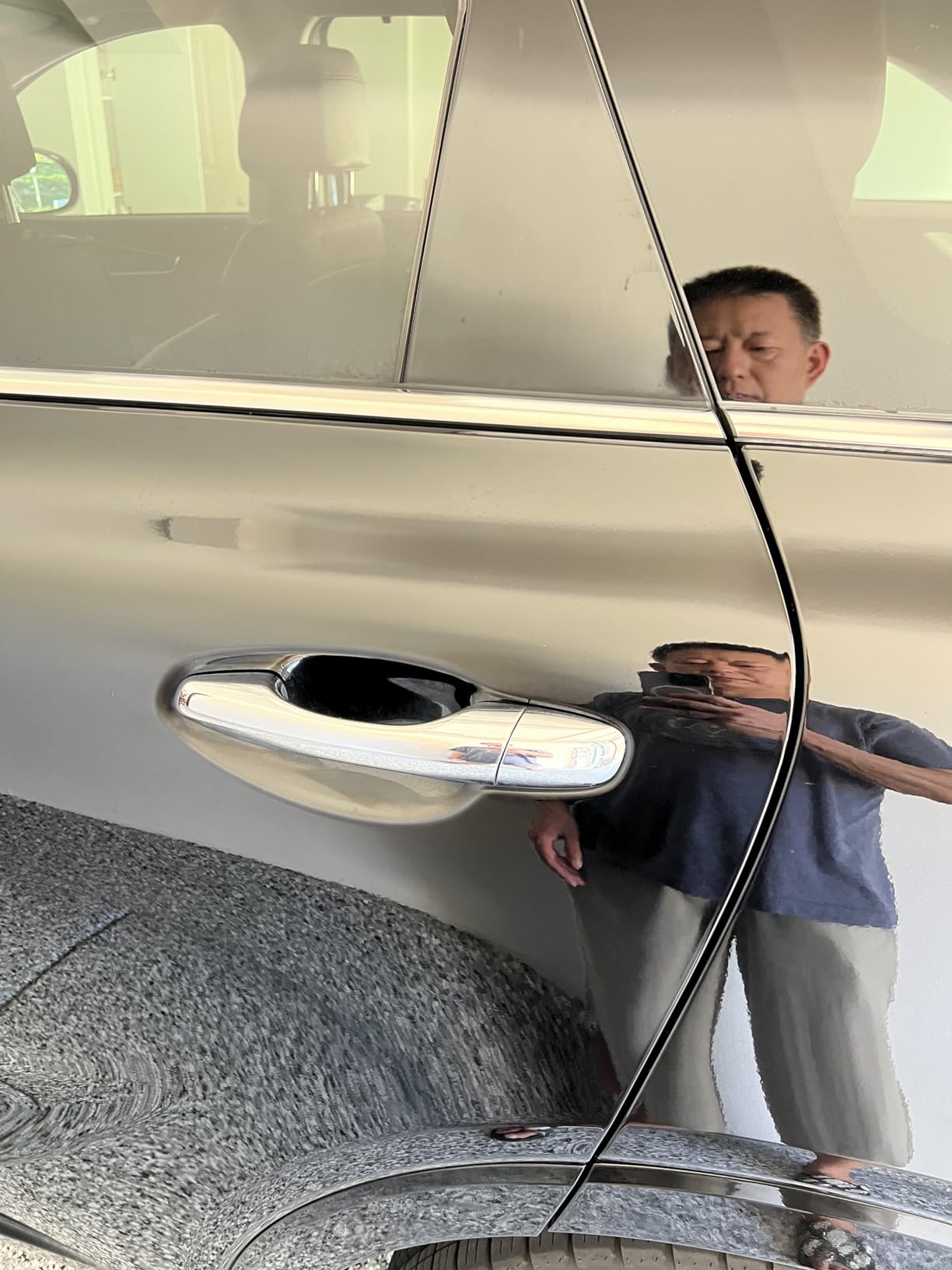
Users working it with a dual action polisher report typical swirl removal on dark paint, and many skip the heavier cut pad entirely, going straight to a softer pad with the finishing stage. That is the correct instinct on soft black metallic. A minority of reviews find results did not match expectations, which tracks with the 400 grit medium classification and the absence of a third stage.
The silicone-free formula matters later than it does during correction. Silicone and filler residue interferes with sealant and coating adhesion, and on black paint a poorly bonded sealant beads unevenly, which shows every swirl underneath it.
Why it suits dark paint better than the alternatives
Two steps is the shortest path that still produces a properly refined finish. One-step products cut and finish in the same pass, which is faster but gives you less control over haze, and haze is the specific failure mode that makes black paint look worse than it did before you started.
Variants are offered in 3.5 inch, 5.5 inch and 6.5 inch pad configurations, so you can pick a small pad for tight areas around badges and a larger one for door skins.
Where it falls short for dark cars
Pad contents vary between listing variants, so check what is actually included with the configuration you order. Buying the liquids expecting a full pad set and receiving none is a common review complaint.
There is no sealant, and the finish that a compound leaves will not survive wash after wash unprotected. Budget for a sealant such as Collinite 845, which detailers on forums name repeatedly as an inexpensive and dark-paint-safe way to lock in gloss.
5. Meguiar’s Mirror Glaze M105 and M205 Bundle – Best for Sanding Marks
- Cuts through 1200 grit sanding marks
- Micro-abrasives minimise new swirling
- Hand
- dual action or rotary application
- Clear coat safe
- Only a one-step compound
- so very deep defects need a second product
- Takes practice to use at full cut rate
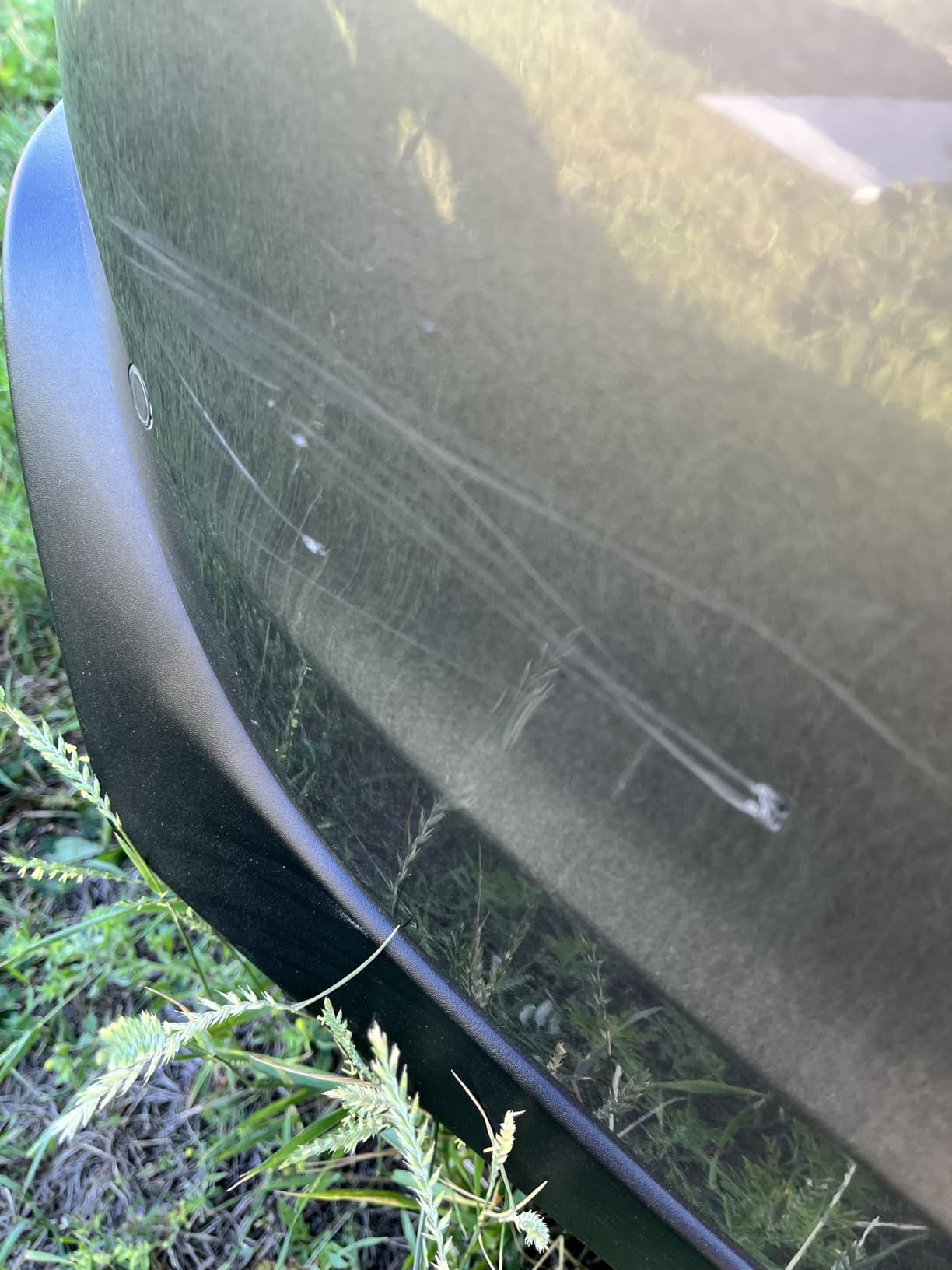
Most correction kits are aimed at swirls. This one is aimed at damage. M105 Ultra-Cut Compound is specified to cut through 1200 grit or finer sanding marks, which means it handles the marks left by body shop work, colour sanded panels and badly resprayed bumpers, and M205 Ultra-Finishing Polish then removes light swirls and holograms and adds gloss.
On a dark car, sanding marks are the defect that most needs a real compound, because they sit deeper than anything a wash will produce. M105 handles them and the micro-abrasives are designed to minimise the swirls that cutting usually creates, which is the other half of the problem on black.
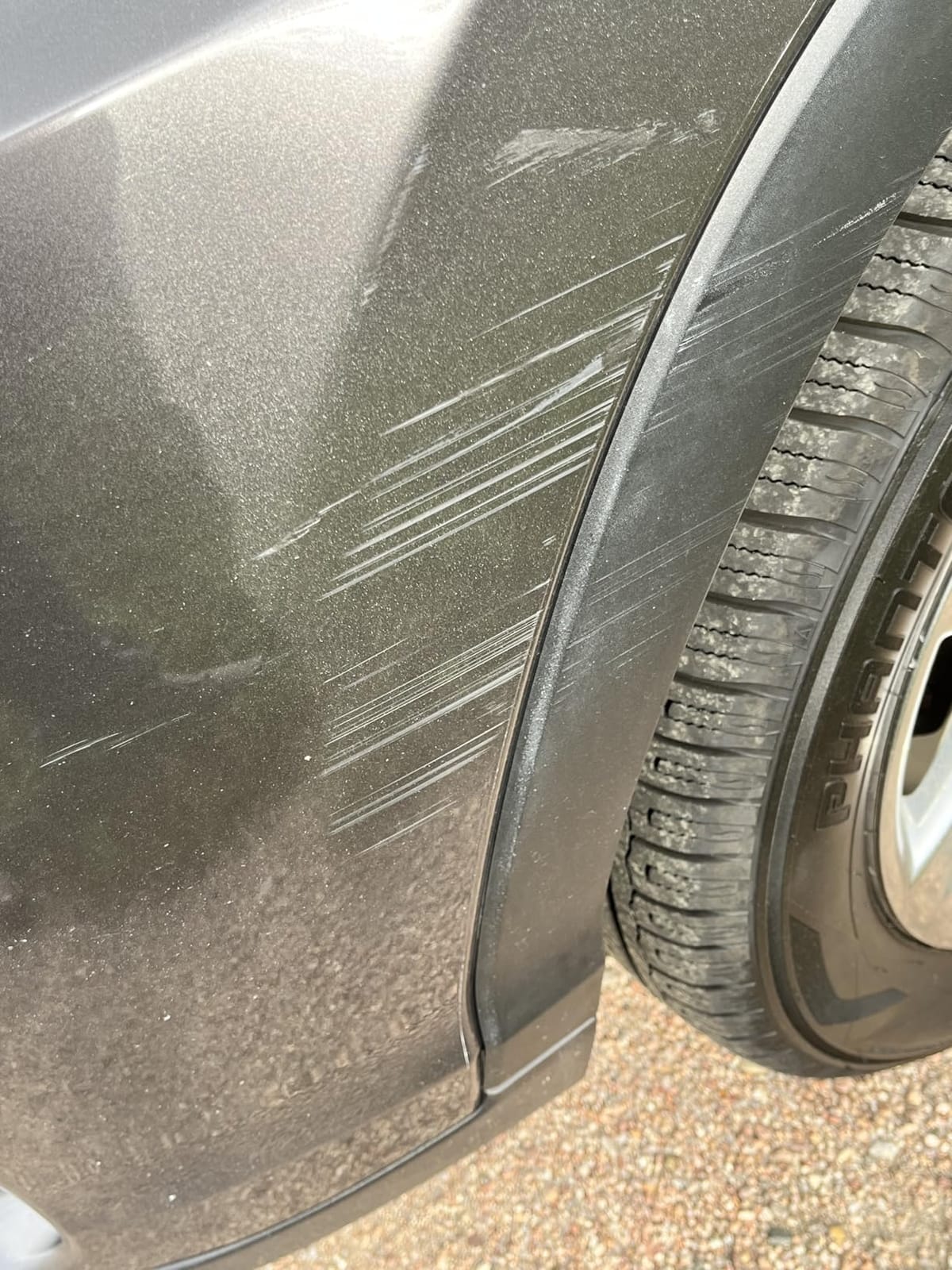
It rates 4.7 across more than 400 ratings, and the dominant owner comment is that scratches clear in a few passes when paired with a quality DA or forced rotation polisher and a decent pad. A minority rate the Ultra-Cut as handling only very minor abrasions, which is fair: it is a fast-cutting one-step compound, not a replacement for a full three-stage system.
Application is flexible. The listing states it can be used by hand, with a dual action or with a rotary buffer, so it suits both a cautious first correction and a car that has already been resprayed in places.
Why it suits dark paint better than the alternatives
Holograms, the faint arc patterns a compound leaves behind, are far more visible on black than on any other colour, and M205 exists specifically to remove them. Pairing a cut this aggressive with a dedicated finishing step is the right structure for a dark panel, because it means you are not relying on a single product to both cut and finish.
At 8 oz per bottle this is also the easiest of the heavy-cut options to work with by hand in small sections, where the tendency to over-apply is highest.
Where it falls short for dark cars
The cut rate takes practice. Amateur users consistently describe a learning curve, and on soft black metallic using a compound this aggressive without a test section is how you end up with haze that takes another product to remove.
There is no protection in the bundle, and the 8 oz bottles run out quickly on a full vehicle if you are correcting more than one panel at a time.
6. Menzerna Three-Step Polishing Set – Best Full Three-Stage Correction
menzerna Polishing Set 8 oz I HCC1000, MCC2500 I 3800 I 3-Step System
- Genuine three-stage progression in one purchase
- Heavy
- medium and finish stages map to a real workflow
- Ranks near the top of its Amazon category for demand
- Pad and microfiber bundle variants exist
- Three products means the longest panel time in this list
- No guidance for first-time users
- Each step adds risk of overworking soft paint
This is the most complete correction system here and the one that rewards patience. It contains Heavy Cut Compound 1000 for scratch and swirl removal, Medium Cut Compound 2500 for holograms and polishing marks, and Super Finish 3800 for mirror-like gloss, in 8 oz bottles with 1000 grit aluminum oxide abrasives.
The reason a three-stage system produces better results on dark paint is that each stage exists to fix a specific artefact of the previous one. Stage one levels defects, stage two removes the haze and buffer marks stage one leaves, and stage three removes the fine haze stage two leaves. Skip any stage and the black panel will show it in sunlight.
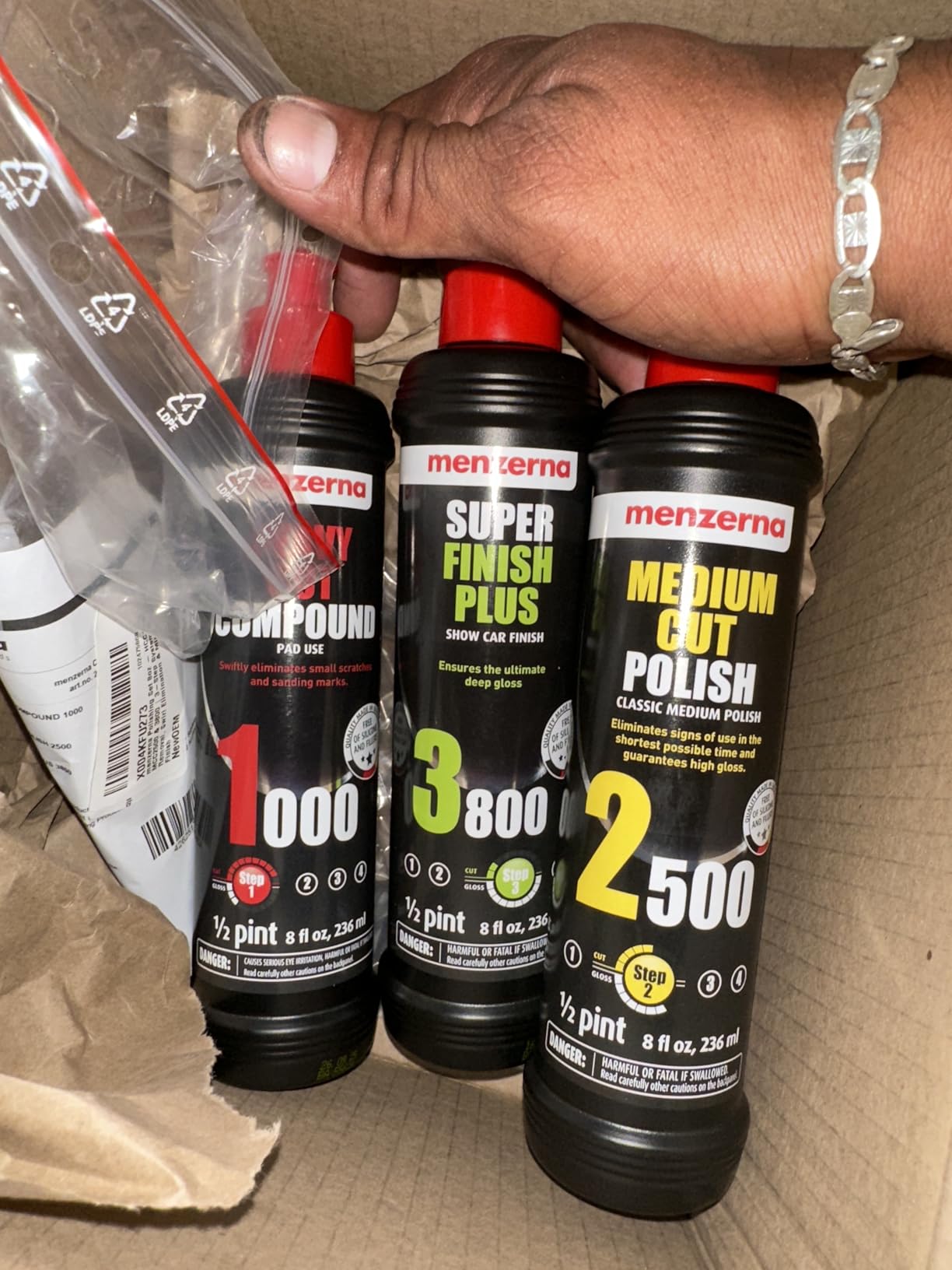
Enthusiast-oriented reviews emphasise the mirror finish achievable through the full sequence, and the listing ranks number 5 in Polishing and Rubbing Compounds, which tells you how much demand there is for it. Ratings sit at 4.5 across more than 500 reviews, slightly below the Meguiar’s and Chemical Guys bundles, with the main friction being the extra steps.
Variants are offered as 8 oz set, 8 oz with pad, 8 oz with pad and microfiber, and 16 oz with pad, so you can match the bundle to whether you already own pads and towels.
Why it suits dark paint better than the alternatives
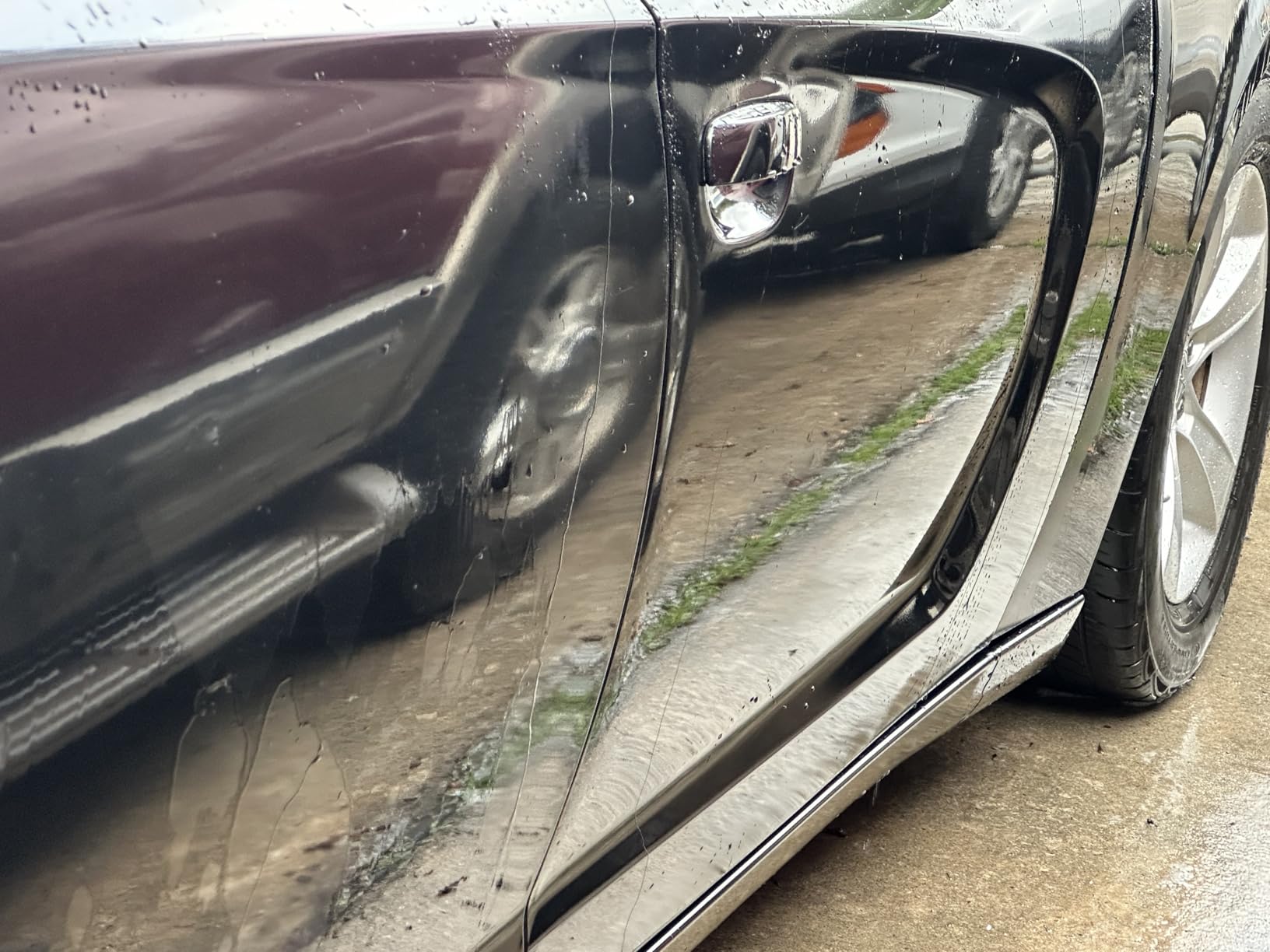
Gloss depth on black is a function of how completely the surface is refined, and a three-step progression is the most reliable way to get there. Reviewers who complete all three stages report the deepest results in this group, and on a garage-kept car you can see the difference between stage two and stage three under a lamp.
It is also the best option here for a car that has been neglected for years, where the clear coat has oxidised and faded rather than simply being scratched.
Where it falls short for dark cars
This is not an instructional product. Reviews note it assumes familiarity with compound progression, and it does not tell you which stage a soft black metallic can tolerate. If your paint is soft, the correct use of this set is often to skip the heavy cut and start at the medium.
It is also the longest job of any kit here. Three full passes on a large dark vehicle is a project, not an evening.
7. Chemical Guys Black Light Hybrid Glaze and Sealant – Best for Sealing Dark Paint
Chemical Guys, Black Light Hybrid Glaze & Sealant for Dark Colors, 16 oz
- Formulated for black and dark colour depth
- Fills light swirls rather than only covering them
- Applies by hand or machine
- Reviews report it outlasting other sealants
- Not a cutting compound
- so deeper defects need separate correction
- Some reviewers suggest a second coat for durability
No kit removes every scratch, and this is the one that makes the rest of your work visible. The Black Light Hybrid Glaze and Sealant is a 16 fl oz cream formulated for black and dark colours, combining glaze and sealant technology in one step with a micro-polish that smooths minor imperfections and fills light swirls.
At 4607 ratings and 4.7, it carries the largest review base among the sealants and glazes in this roundup. Dark-colour owners consistently report a mirror-like wet finish and swirl hiding, and many note it outlasted other sealants they had used. It is also safe on clear coats, single-stage paints, glossy wraps and custom finishes.
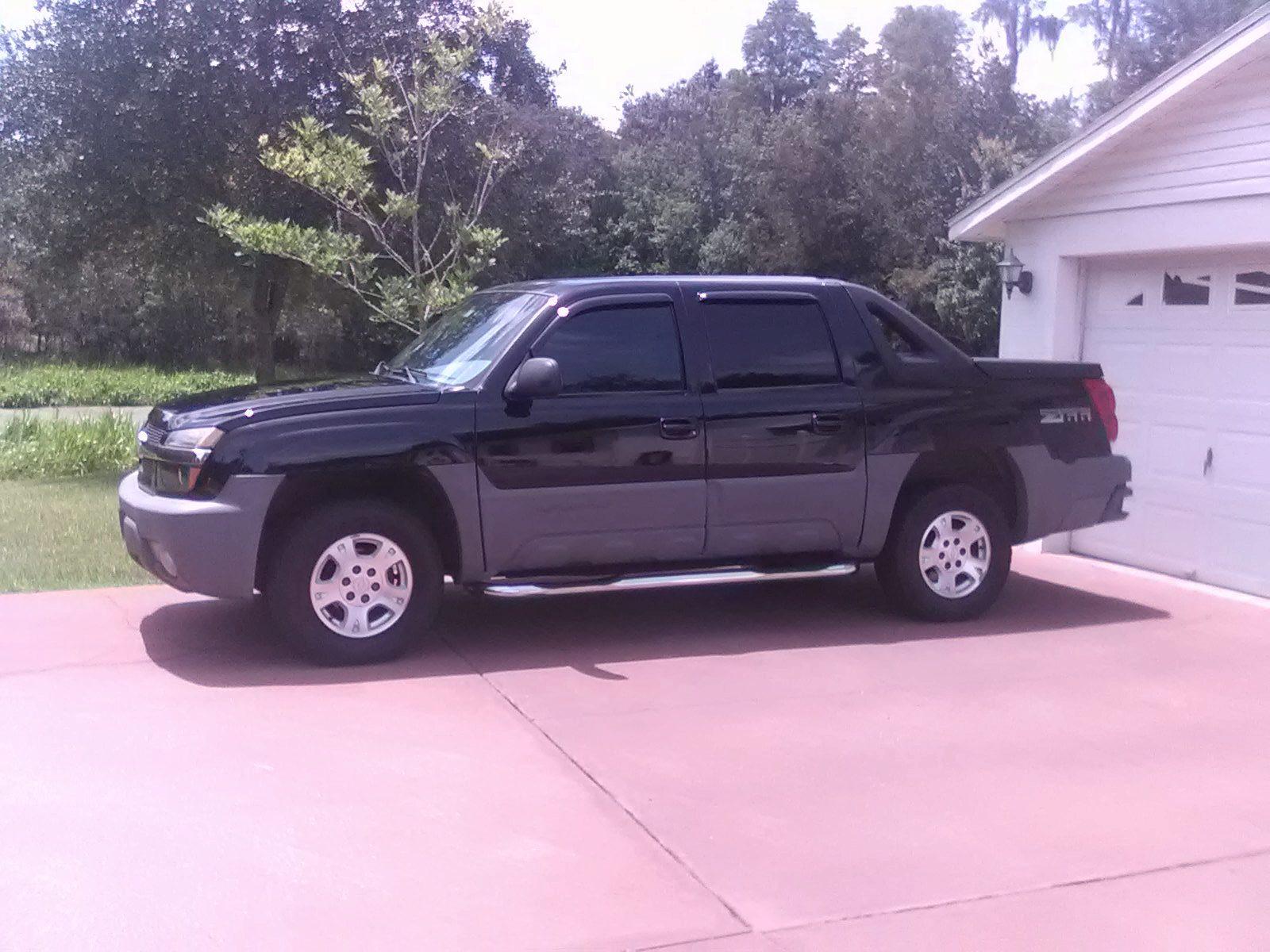
The application is simple, which is the point. It spreads evenly and wipes off clean without streaks by hand or by machine, and dry time is listed at 0.75 hour with roughly 45 minutes of cure before full removal. On dark paint the visual finish matters more than anywhere else, and a streak-free wipe-off is what separates a good sealant from a frustrating one.
A few reviewers find durability moderate and recommend a second coat, and there is no haze indicator during curing, so you set a timer rather than waiting for a visual cue.
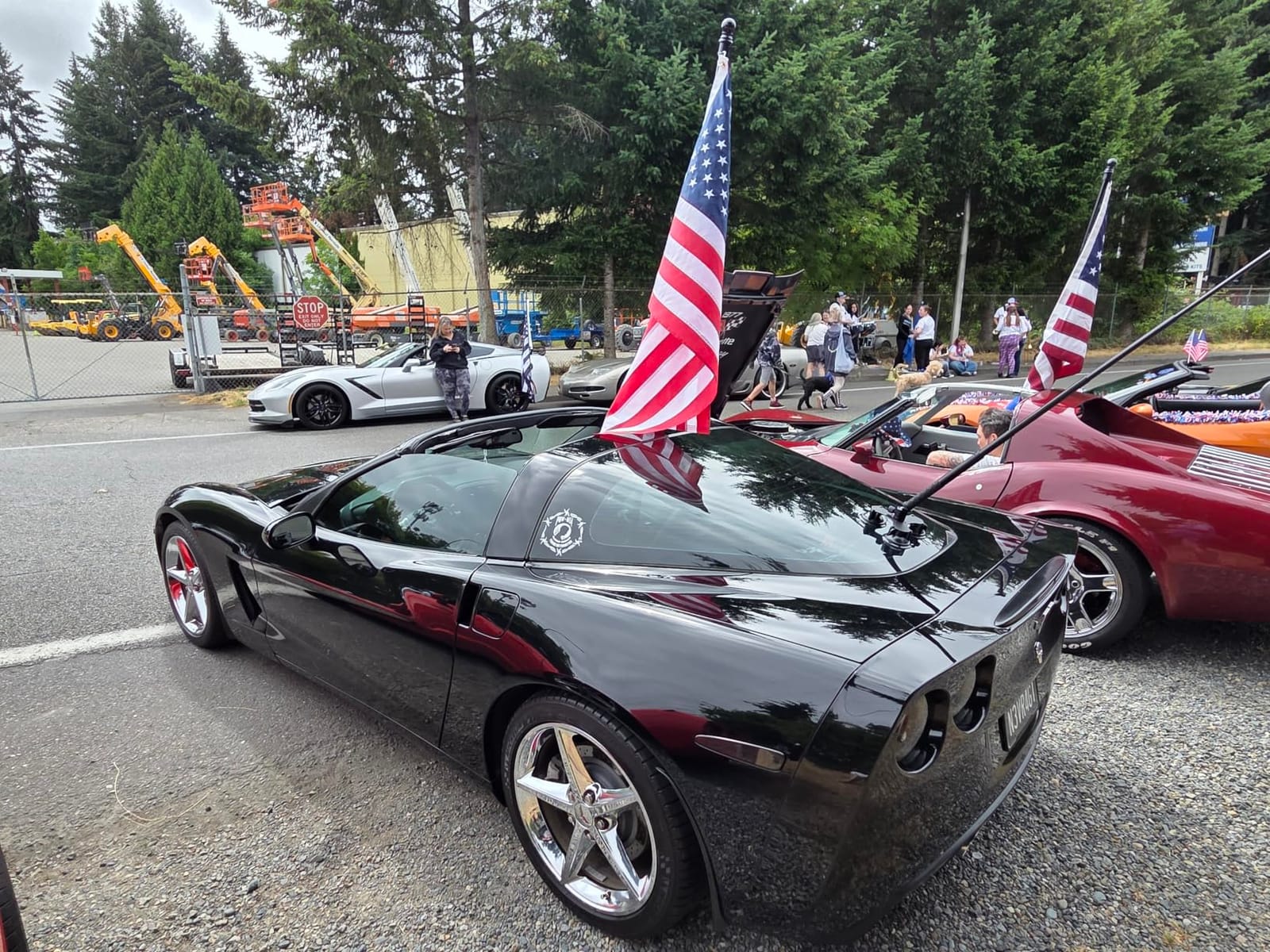
Why it suits dark paint better than the alternatives
Colour depth on black is mostly an optical effect created by a smooth, reflective surface, and that is what a glaze does better than a wax. Users report a deeper, more reflective result than cheaper dark-colour polishes, which matches its 4.7 rating across more than 4600 reviews.
Because it fills light swirls rather than only masking them with pigment, it also evens out the look of a panel you have already corrected, closing the visual gap between corrected and uncorrected sections.
Where it falls short for dark cars
It is a glaze and sealant, not a cutting compound. If you have not corrected the panel first, this will disguise light swirls and do nothing about deeper ones, and the disguise is temporary.
It also does not address oxidation. Faded clear coat needs cutting before it needs sealing, or you will seal a dull surface and wonder why the black still reads grey.
8. Turtle Wax Hybrid Solutions Ceramic Black Polish and Wax – Best for Hiding Chips and Crows Feet
Turtle Wax Hybrid Solutions Ceramic Black Car Polish & Wax, 14 oz. (1 Pack)
- Black pigment makes chips and crows feet far less visible
- Leaves no white dry wax residue in trim lines
- Ceramic polymers give water beading and UV defence
- Applies in 2x2 sections by hand
- Covers defects rather than cutting them out
- Can leave an oily film that takes effort to buff
Rock chips and crows feet are the one category of damage a polish cannot fix and a pigmented wax can disguise. This hybrid combines black pigmented carnauba wax with ceramic polymers in a single step, and black car owners widely report that fine scratches and chips become far less visible and the paint looks deep and wet.
It rates 4.5 across more than 3300 ratings, and the recurring detail we trust most is that it leaves no white dry wax residue in panel gaps and trim lines. On a black car that is a make-or-break detail, because any residue shows as a chalky line against deep colour.
Application is by hand or machine polisher, and reviewers commonly work it in 2×2 sections. Allow 24 hours to fully cure before getting the car wet, and the UV defence in the acrylic infusion is aimed at exactly the problem dark paint has, which is that black fades visibly faster than lighter colours.
Two practical notes. The pigment stains hands black, so gloves are not optional, and the first coat can look hazy before it settles, with effects needing reapplication periodically to hold the appearance.
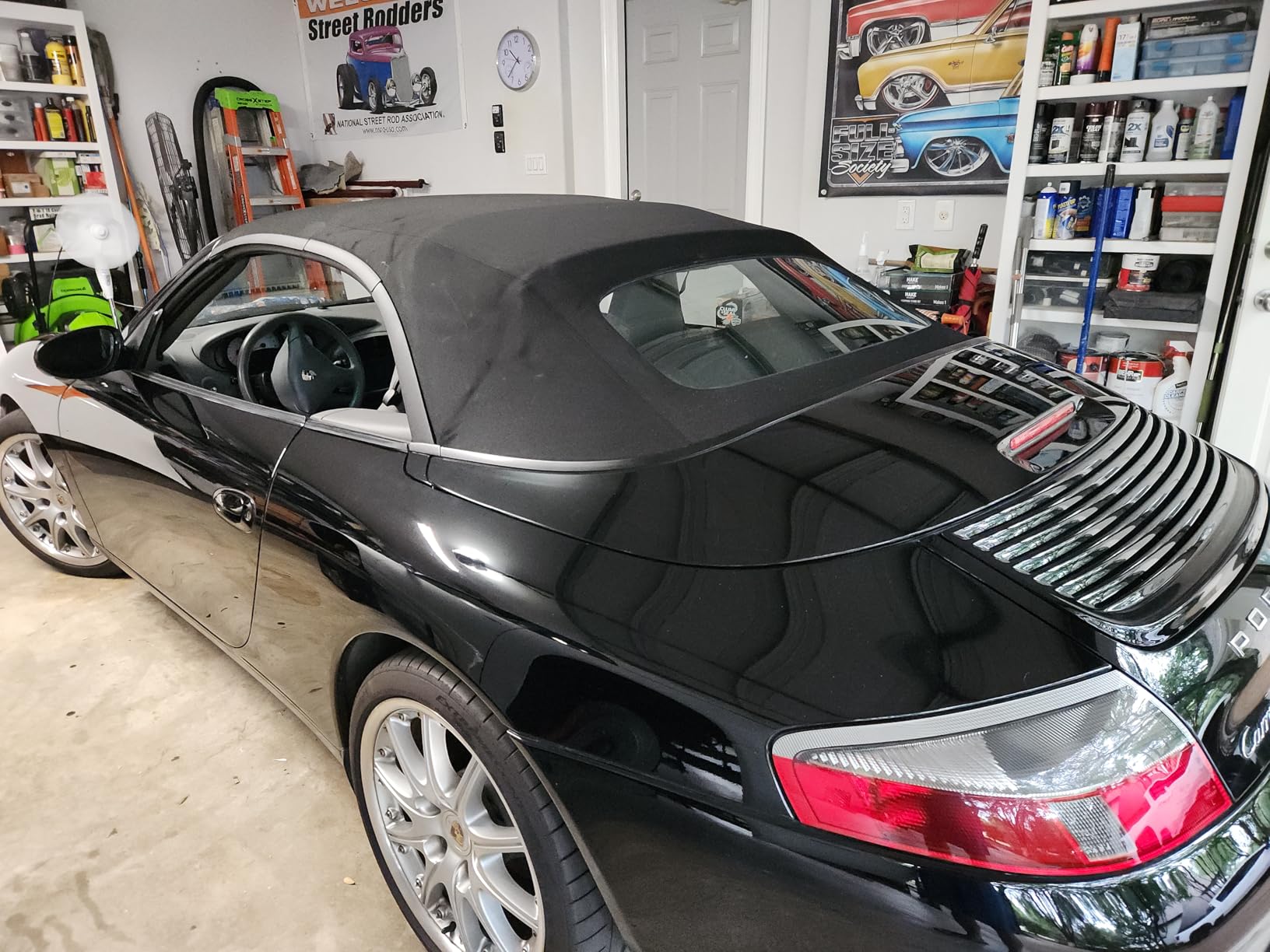
Why it suits dark paint better than the alternatives
Because it is formulated for black, dark blue and charcoal, the pigment matches the paint rather than sitting on top of it. A generic white polish-wax leaves a grey cast on a black panel in daylight, which is worse than leaving the defect alone.
It is also the only option here that addresses chips in the same step as gloss. For a car with a stone-damaged front bumper, a correction kit will not help at all and this will help a great deal.
Where it falls short for dark cars
This masks defects rather than removing them, and the review consensus is explicit about that. Anyone hoping to cut out swirls will be disappointed, because there is no abrasive stage.
The oily film that some users report takes real effort to buff off, and in direct summer heat a polish-wax hybrid can dry faster than you expect, so work small sections.
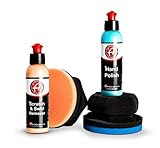
9. Adam’s Polishes Hand Correction System – Best for Dustless Daylight Work
- Includes an orange hex-grip polishing foam pad
- Diminishing micro-alumina that breaks down as you work
- No waxes
- silicones or fillers
- Dustless correcting in direct sunlight
- Hand correction is slow on large panels
- Critical reviews are wider spread than the machine systems
- Serious defects need the machine system instead
Most people want to polish in daylight because that is the only way to see swirls, and daylight is exactly when most dustless polishes turn into a mess. This system claims otherwise: no waxes, additives, silicones or fillers, and the listing states dustless correcting even in direct sunlight. The abrasive is a diminishing micro-alumina that disintegrates as you polish rather than staying intact and dragging.
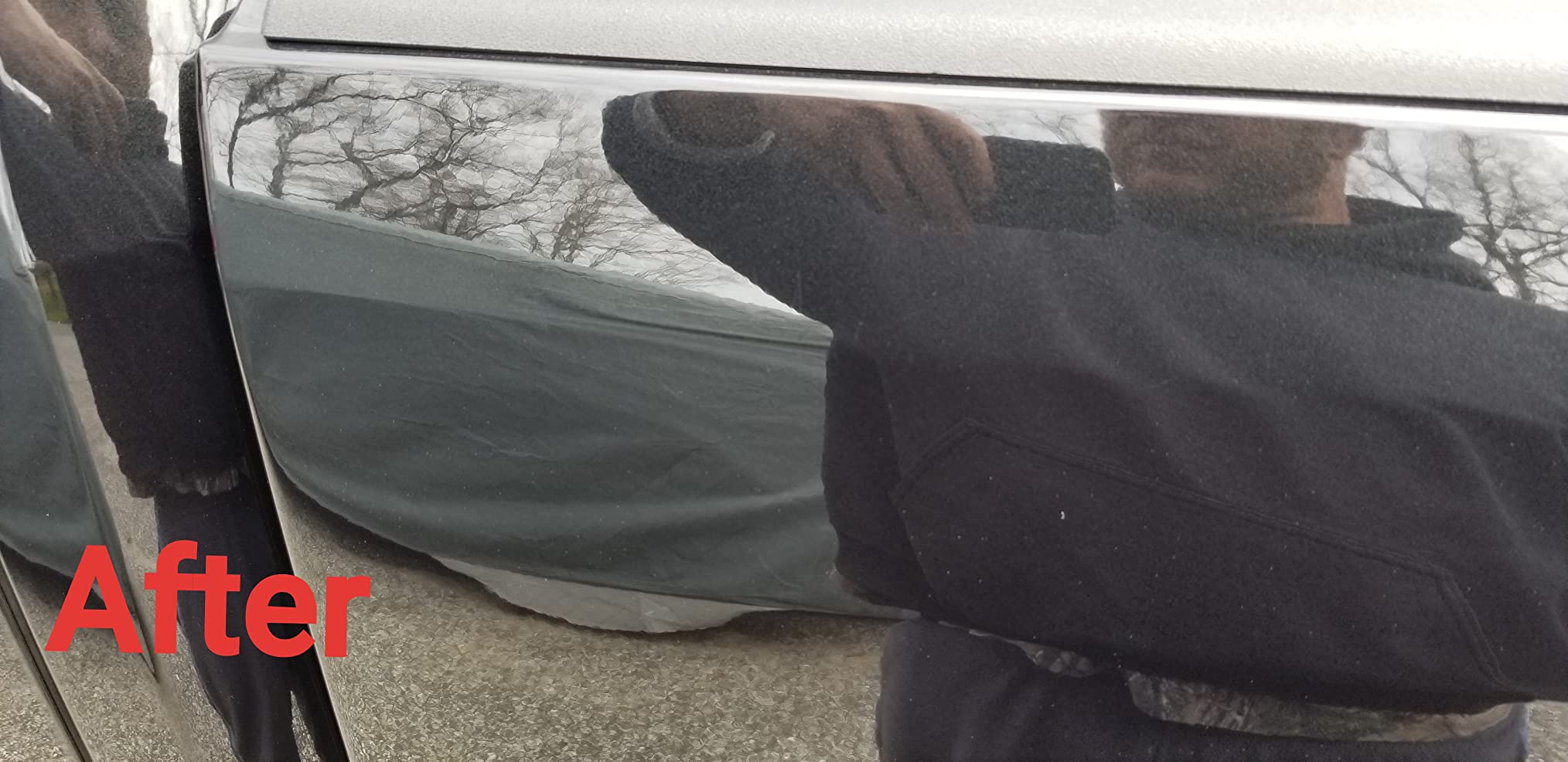
It ships with an orange hex-grip polishing foam pad applicator, so it is genuinely a kit rather than a bottle. The compound is specified for correcting scratches, swirls, sand scratches, door dings, keyed panels and paint transfer, and results are shown on black and dark coloured vehicles.
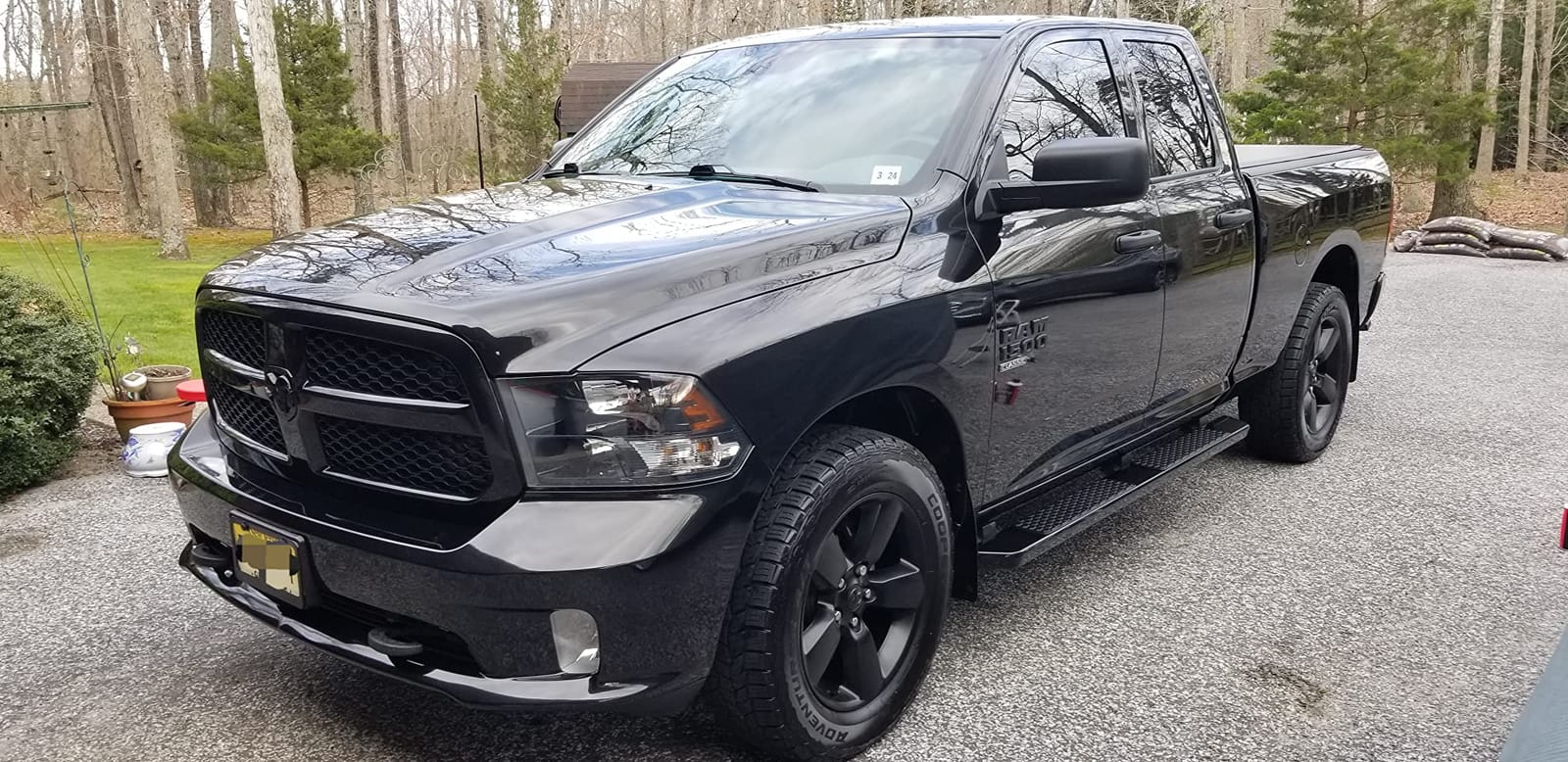
This two-step system sits at 4.3, with 7% one-star reviews. Users who complete the full two-step hand process report good results on minor defects, while others find the hand effort high relative to the correction achieved, and the kit is rated lower than the machine-oriented Adam’s 2-Step system.
That is worth taking seriously. It is not a weak product, it is a product matched to a particular job, and the job is light defects worked slowly rather than heavy swirls cleared quickly.
Why it suits dark paint better than the alternatives
The filler-free formula is the reason it suits black specifically. Fillers and waxes are what create the temporary gloss that masks micro-marring, and on a dark panel they can make a corrected section look slightly different from an uncorrected one under inspection light. This product corrects and finishes with abrasive only.
For anyone who works outdoors or in a garage with the door open, dustless in direct sun removes the single most common reason people give up on polishing their own car.
Where it falls short for dark cars
Hand correction is slow on a large panel, and on a full-size dark vehicle you should expect a genuinely long job. Speed is the reason most owners move to a machine after their first attempt.
For serious defects, the listing and reviews both point to the machine compound and polish system as the upgrade, so this is best treated as a first step or a touch-up kit.
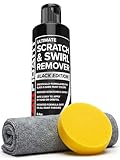
10. Carfidant Black Scratch and Swirl Remover – Best Single-Pad Fix for Light Defects
- Purpose-built formula for black and dark paint rather than a general polish
- Includes its own applicator buffer pad
- Safe on clearcoat
- single stage and multi stage paint
- No color dyes that could stain trim
- Lowest average rating in this roundup at 4.0
- Finishing consistency draws more complaints
- Hand pad application is slow for a full vehicle
The appeal here is simple: a single bottle and a pad, formulated for black and dark colour paint rather than adapted from a general polish. It is specified safe on clearcoat, single stage and multi stage paint, and the company states it contains no unnecessary color dyes or scents, which matters because dyes can stain trim and leave a halo around badge edges.
It carries a 2 year warranty, which is longer than anything else in this list offers, and the formula is described as removing years of wear, water spots, oxidation and other contaminants while restoring gloss.
At 4.0 across 414 ratings with 63% five-star and 13% one-star, it is the weakest-reviewed option here and we are not going to pretend otherwise. Buyers who commit to repeated hand applications report real scratch reduction on black paint, while others report uneven results and slower-than-expected correction.
Position it correctly and it is fine. As a spot treatment on a specific panel defect, or a first product to try before committing to a full kit, the format and the black-specific formula both make sense.
Why it suits dark paint better than the alternatives
Its entire premise is dark paint, and that shows in the spec sheet. Fine aluminum oxide grit and a formula described for black and dark colours mean it is not a general compound tinted black after the fact, which is where some of the streaking complaints in this category come from.
As a one-product answer for someone with a single bad panel, it is simpler than any multi-bottle system here.
Where it falls short for dark cars
Finishing consistency is the weakness the reviews point at, and consistency is the one thing black paint will not forgive. A panel that is 90% corrected shows the 10% far more clearly than it would on silver.
It is also a hand product with an applicator pad, so it shares the slowness of every other hand kit in this list, and it carries no protection step at all.
Test Your Dark Paint for Softness Before You Choose a Cut Level
Soft black metallic is the most common complaint in the forums we reviewed, and it is the reason a kit that works beautifully on one car fails on the next. Soft paint cuts harder than you expect, compounds leave haze that never fully clears, and the same product can look perfect on a neighbour’s glossy black and permanently cloudy on yours.
Three checks will tell you enough to choose a cut level, and none of them requires buying a tool.
1. The glass test. Take a clean microfibre and run it across a black glass window and then across the black panel beside it, using similar pressure and speed. If the glass drags noticeably and the paint does not, the clear coat is soft. Compare the feel rather than any visible mark.
2. The wash test. If swirls appeared on a dark car after very few automatic car washes, or after a single dealership delivery, that is evidence of a soft clear coat. A hard clear coat needs far more abuse before the defects show.
3. The gloss meter check. A paint depth gauge measuring microns before and after a correction will tell you how much clear coat you removed, and how much you have left to work with. It is a small expense relative to a repaint, and it is the only method that gives a number rather than an impression.
If all three point the same way, skip the heavy cut. On soft black metallic, experienced detailers on r/Detailing consistently recommend going straight to a finishing polish or an all-in-one, with products like Gyeon Prep and CarPro Eraser named repeatedly, and treating a full compound stage as optional rather than automatic.
How to Paint Correct a Black Vehicle Without Marring It
The process matters more than the product on dark paint. A correct product used wrongly will haze a black panel, and a haze on black is the single most common way a correction makes a car look worse. Here is the sequence we use.
1. Wash and decontaminate first. Forum users treat this as non-negotiable, and they are right. You cannot polish a surface that has bonded fallout, rail dust or sap on it, because the pad drags that contamination across the panel. Claying before correction is the rule, not the option.
2. Test spot before every panel. Pick an area in shade, apply a small amount of product, and work it for the length of time you plan to work the rest of the car. If haze remains after finishing, drop down a stage or change the pad. Do this on every paint type, because soft black metallics can vary panel to panel.
3. Section the car properly. Work in 2×2 foot panels. A full hood in direct sun will dry before you finish it, and dried product on black is exactly how you create micro-marring. Work out of direct sun where possible, especially in heat.
4. Apply a thin film, not a blob. On black paint the temptation is to use more product because the colour makes coverage hard to see. Use less than feels necessary. Excess product throws onto trim and neighbouring panels, and residue in gaps shows as a white line against deep colour.
5. Keep pressure low and check constantly. If you are using a machine, stay at low speed for finishing work and never let the pad stall. If you are working by hand, use the flat of the pad rather than the edge, and lift it rather than dragging it off the panel.
6. Change pads and towels often. A pad that has been loaded with compound and then flipped will start cutting when you think it is finishing. That is the most common cause of new swirls appearing after an otherwise good correction.
7. Seal the finish the same day. Corrected clear coat is more porous than the surrounding panels and will collect contamination faster. Finish with a sealant or wax, and on dark paint choose a product with real depth rather than only gloss, since gloss without depth reads grey.
On what a random orbital one-step can realistically achieve, forum users doing one-step corrections with a DA report removing roughly 90% of light swirls on a black car. Set that expectation rather than a full multi-stage result, and most people are pleasantly surprised.
What to Look for in a Paint Correction Kit for Dark Paint
Finishing quality before cutting power. On black paint the finish is what you see. A kit with one aggressive compound and no finishing polish will leave haze, and haze on black looks worse than the swirls you started with. Look for at least a dedicated finishing stage, or an all-in-one designed to refine as it cuts.
Hand or machine, decided honestly. The most common purchase mistake is buying a compound bundle with no way to use it properly. Kits 1, 4, 5, 6 and 7 all work by hand or by machine. Kit 2 is the only one here that includes a polisher, and if you do not already own a machine, that bundle is the efficient place to start. If you do own one, a product bundle gives you better chemicals per unit of effort.
Pad colour coding and pad choice as the control. On soft paint, the pad is your throttle. A system where the products are colour coded to named pads, as the Adam’s 2-Step is, lets you change cut level without changing technique. Yellow and white foam are finishing territory, green and blue sit in the middle, and orange and red are cutting pads you should keep off soft black metallic.
Diminishing abrasives over fixed-grit compounds. A diminishing abrasive breaks down as you work, so the cut reduces automatically before you burn the clear coat. This is why forum regulars trust Gyeon Prep and CarPro Eraser on soft paint and why the Adam’s hand system is described as safe on black and dark finishes. Fixed-grit compounds are faster and unforgiving.
Silicone-free and filler-free formulas. Silicone and fillers interfere with sealant and coating adhesion. If you plan to protect the car afterwards, which you should, this is a requirement rather than a preference, and a corrected black panel with a poorly bonded sealant beads unevenly and shows every swirl beneath.
Protection included or budgeted for. Kits 3 and 7 end with a wax or sealant in the box, which is why they hold their result longer than pure correction bundles. On a corrected dark panel the choice is between a sealant built for colour depth, a hybrid glaze like the Black Light, or a traditional wax that detailers name repeatedly as inexpensive and dark-paint-safe.
What a kit will not fix. Deep scratches that have gone through the base coat need a repaint, not a polish. Pealing or failing clear coat needs a body shop. Matte and satin finishes must never be polished at all, because polishing flattens the texture permanently and turns a satin panel into a shiny uneven one. Chips are not scratches; they are missing material, and only pigment like the Turtle Wax hybrid will make them less visible.
When to skip correction entirely. If your dark car has light swirls and no deeper marks, decontaminate, use a finishing polish and seal it. That is a one-evening job and it will not remove a single measurable defect, but it will make the paint look better than any amount of compounding without protection would. Reserve a compound for defects you can catch a fingernail on.
If the correction itself is not what you are after, a wash and wax routine or a spray sealant will keep a dark car in better shape between major corrections. The articles on choosing the right paint sprayer, airless paint sprayers for larger DIY jobs and watercolour paint sets for kids cover the DIY side of the craft in more depth if you want the broader picture.
Frequently Asked Questions
Who makes the best paint correction kit?
Chemical Guys covers the widest range of the job, from the V Line four-bottle compound and polish system through a complete random orbital polisher bundle to a sealant formulated for black paint. Meguiar’s and Adam’s Polishes both offer strong multi-stage systems, and Menzerna is the most thorough three-stage option for a car that needs a full correction.
How to do a paint correction on a black vehicle?
Wash and clay the car first, test spot on a shaded section, then work in small panels with a thin film of product and low pressure. Change pads and towels often, check the finish constantly in the shade, and seal the corrected paint the same day. Expect a random orbital one-step to remove most light swirls rather than a mirror-finish multi-stage result.
What is the best paint restorer for black cars?
For gloss and colour depth, a sealant built for dark paint such as the Chemical Guys Black Light Hybrid Glaze does more than a general polish, because it fills light swirls and enhances depth rather than only brightening. For actual defect removal, pair a compound or polish with a machine, because a glaze alone will not cut out a scratch.
What is the best type of coating for a black car?
A ceramic spray sealant or traditional wax applied over a corrected finish gives the deepest, most reflective black and adds hydrophobic water beading that makes washing safer. Pigmented products that match the colour are useful for disguising chips, but they cover defects rather than correcting them, so they work best after a correction rather than instead of one.
What is the best car swirl and scratch remover?
For light swirls from automatic car washes, a finishing polish or all-in-one with diminishing abrasives removes them without hazing soft black paint. For scratches, a compound such as a medium-cut mirror glaze bundle cuts faster but needs a machine and a separate finishing step. On soft black metallic, skip the compound and finish only, because compounds haze clear coat that will not fully clear.
Can swirl marks be permanently removed?
Yes, if the swirl sits in the clear coat, which is where almost all of them are. Correction removes the defect permanently, but it does not prevent new ones, so protection is what makes the result last. Swirls that have gone through the clear coat into the base coat are not correctable and need a repaint of that panel.
Final Verdict for Dark Paint Correction
For most people with a dark car and light swirls, the Chemical Guys V Line kit is the safest complete purchase because it lets you choose the cut level for the paint in front of you rather than committing to one aggressive formula. If you do not own a machine yet, the TORQX bundle is the efficient first step, and pairing it with a sealant built for dark colour is what makes the result survive the next wash.
If you plan to work entirely by hand, the Meguiar’s 3 Step kit is the shortest route to a deeper, sealed finish, and a full vehicle is a long weekend. Skip the compound entirely if your paint tests soft. The best paint correction kits for dark cars are the ones that leave no haze behind, and on black paint that is the only result that really counts.