
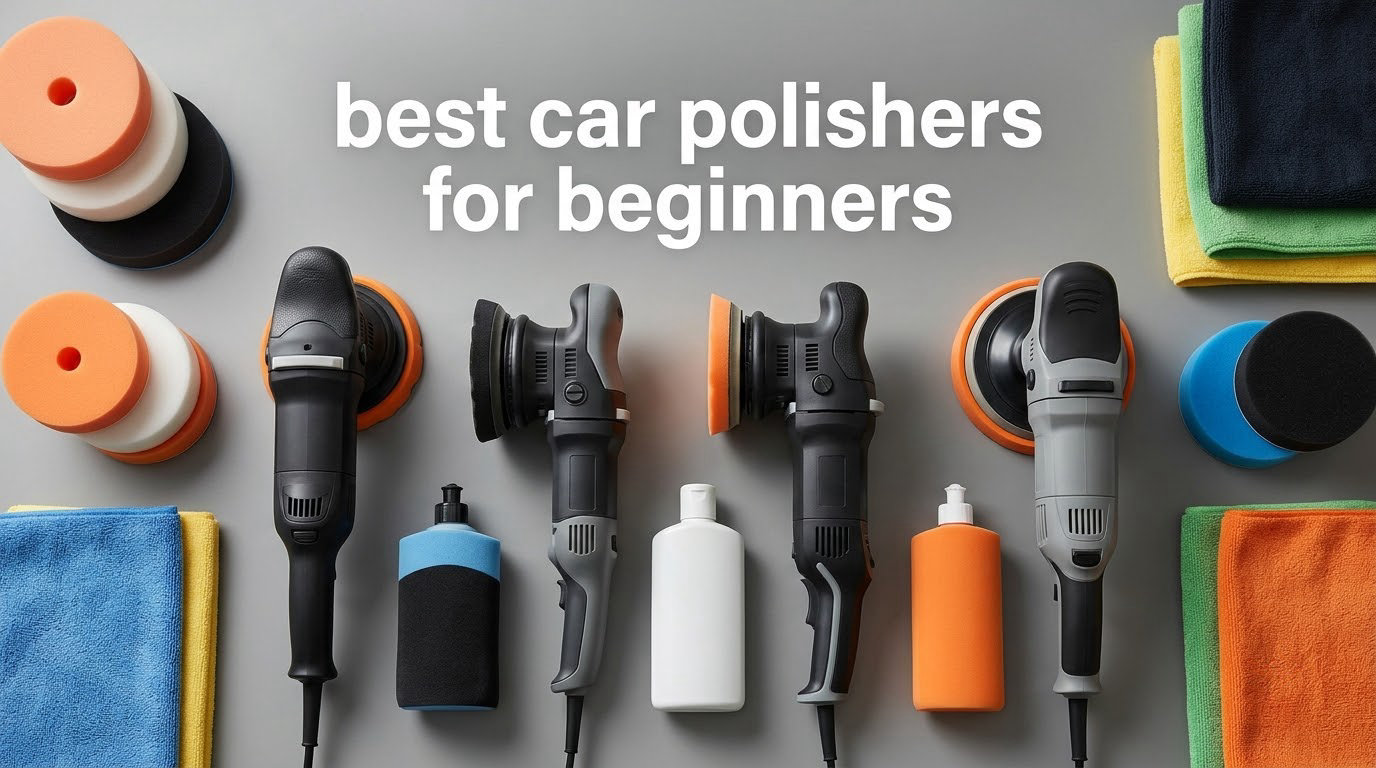
Short answer: buy a dual-action random orbital polisher, and nothing else. A dual-action machine spins the pad while oscillating it across the surface, so it can spread compound and knock down light swirl marks without ever parking in one spot long enough to burn through your clear coat. A rotary polisher does exactly that — it spins in a fixed circle at high speed — and it is the single machine we tell every beginner to walk away from.
Our list of the best car polishers for beginners covers ten machines that all share that dual-action mechanism, from a budget waxer you can learn on to a 700W kit that handles compounding, polishing and finishing in one box. We read the owner feedback on roughly 36,000 reviews across these ten products and compared the published specs side by side: motor output, orbit throw, speed range, backing plate size, weight, cord length, warranty and what actually lands in the box. If you want one recommendation, the Chemical Guys TORQX 9-piece kit is the one most beginners should start with, because it ships with pads, compounds and polishes already inside it.
And if you are wondering whether a machine polisher is worth it for a weekend warrior who only corrects paint a few times a year — the question that dominates every detailing forum — the honest answer is yes, but only if you buy the right one. A rotary will scare you off paint forever. A 6-inch dual-action with variable speed is genuinely hard to damage paint, and a full one-step polish on a mid-size car takes an afternoon once you have watched about twenty minutes of technique. For the wider car-care context, our broader car polisher roundup covers the premium end of the market.
Table of Contents
What to Look for in a Beginner Car Polisher
Three criteria decide whether a machine is safe and useful for a first-timer. Everything else is preference.
1. Dual-action or random orbital action only. The pad spins and oscillates at the same time, so no single point of the pad sits still long enough to build damaging heat. This is the reason a dual-action is described as nearly impossible to burn through clear coat, and it is the reason we exclude rotaries from this list entirely.
2. Orbit throw between 8mm and 15mm. Throw is the diameter of the path the pad traces, and it is the single most useful number on the spec sheet. Below about 5mm you are spreading wax more than you are correcting paint. Between 8mm and 15mm you get real correction work without the aggressive, heat-generating bite of a rotary.
3. Variable speed control with a soft-start trigger. A soft start ramps the pad up over a second or two instead of slamming to full speed the moment your finger touches the switch. Variable speed lets you spread compound at low RPM and finish at a higher one, and it is what separates a machine you can learn on from a frustrating one.
Two secondary criteria matter for your first purchase. A 6-inch backing plate is the sweet spot: big enough to cover a hood panel efficiently, small enough to control on a roof or a quarter panel. And check the weight, because a machine you can comfortably hold for two hours will get used far more often than one that is tiring after twenty minutes.
Top 3 Picks for Best Car Polishers for Beginners In 2026

Chemical Guys TORQX 9-Piece Kit
- 8mm random orbital throw
- 700W motor
- 9-piece all-in-one kit
All 10 Picks at a Glance (October 2026)
1. Chemical Guys TORQX 9-Piece Kit: The Best Car Polisher for Beginners Overall
Chemical Guys, TORQX Random Orbital Polisher Kit, 800W Motor, 9-Piece
- Complete 9-piece bundle covers compounding polishing and finishing
- Pads and compounds already included so nothing extra to buy first
- Balanced ergonomic body with simple controls
- Rated 4.6 across 6414 owner reviews
- Heaviest machine in this group at 3.9 kg so hands tire on a long session
- 8mm throw is gentle so heavy oxidation takes patience
- Warranty runs 30 days through Amazon
The TORQX kit is the one I hand to a friend who has never held a polisher. Everything about it is designed to remove decisions: the box contains the machine, pads, polishes and compounds, so on day one you are not Googling which product pairs with which pad at midnight.
The drive side is a 700W motor pulling 5.83 amps on 120V, driving an 8mm random orbital throw. That is a deliberately gentle orbit, which is exactly right for a first correction — it refines swirls and haze and spreads wax without the aggressive bite you would eventually grow into.
Owners consistently call the balance point good, which matters more than raw power on a first machine. You can run a roof panel without the pad walking or drifting, and that control is what prevents the wandering passes that cause the swirls people blame on polishers.
The honest drawback is weight. At 3.9 kg this is the heaviest machine in our group, and a full car takes real time. Budget breaks into panels, and you will put it down between sections rather than powering through in one stretch. The second drawback is the 30-day Amazon warranty, which is thinner than the multi-year coverage two picks below it offer.
When the TORQX is the right first machine
Choose it if this is your first correction and you want one purchase that covers everything. The included pads and liquids mean you can do a cut step, a refinement step and a wax step on the same car without a second order.
It is also the safest recommendation for someone who is worried about damaging their paint. An 8mm throw with a balanced body gives a wide margin for error, and a pad spinning in an orbit is a fundamentally forgiving tool to learn on.
When to pick something else
Skip the kit if you already own pads and compounds, because you would be paying for chemicals you do not need. It is also the wrong first machine if you are working on a long panel-heavy job like a full-size truck and your hands tire quickly on a 3.9 kg body.
And if you want genuine variable speed control, this machine does not advertise a dial — go look at the PORTER-CABLE or one of the six-speed kits instead.
2. BLACK+DECKER WP900 6-Inch Polisher: Best Value for Waxing and Light Defect Work
BLACK+DECKER 6″ Buffer Polisher, Orbital Car Polisher with Wool and Foam Bonnets (WP900)
- Lightest body in the group at 0.93 kg so it is easy to control
- 10-foot cord gives real reach around a vehicle
- Two-handle design spreads weight across both hands
- Most owner reviews of any machine on this list
- Single fixed speed with no variable speed control
- Included foam applicator and bonnets tear quickly
- Pads for this 6 inch size are not always easy to find locally
The WP900 has the largest owner-review base of any machine here, more than ten thousand reviews, and reading through them gives a consistent picture: people love how light it is and how gentle the random orbit feels, and they almost all replace the supplied bonnets within the first year.
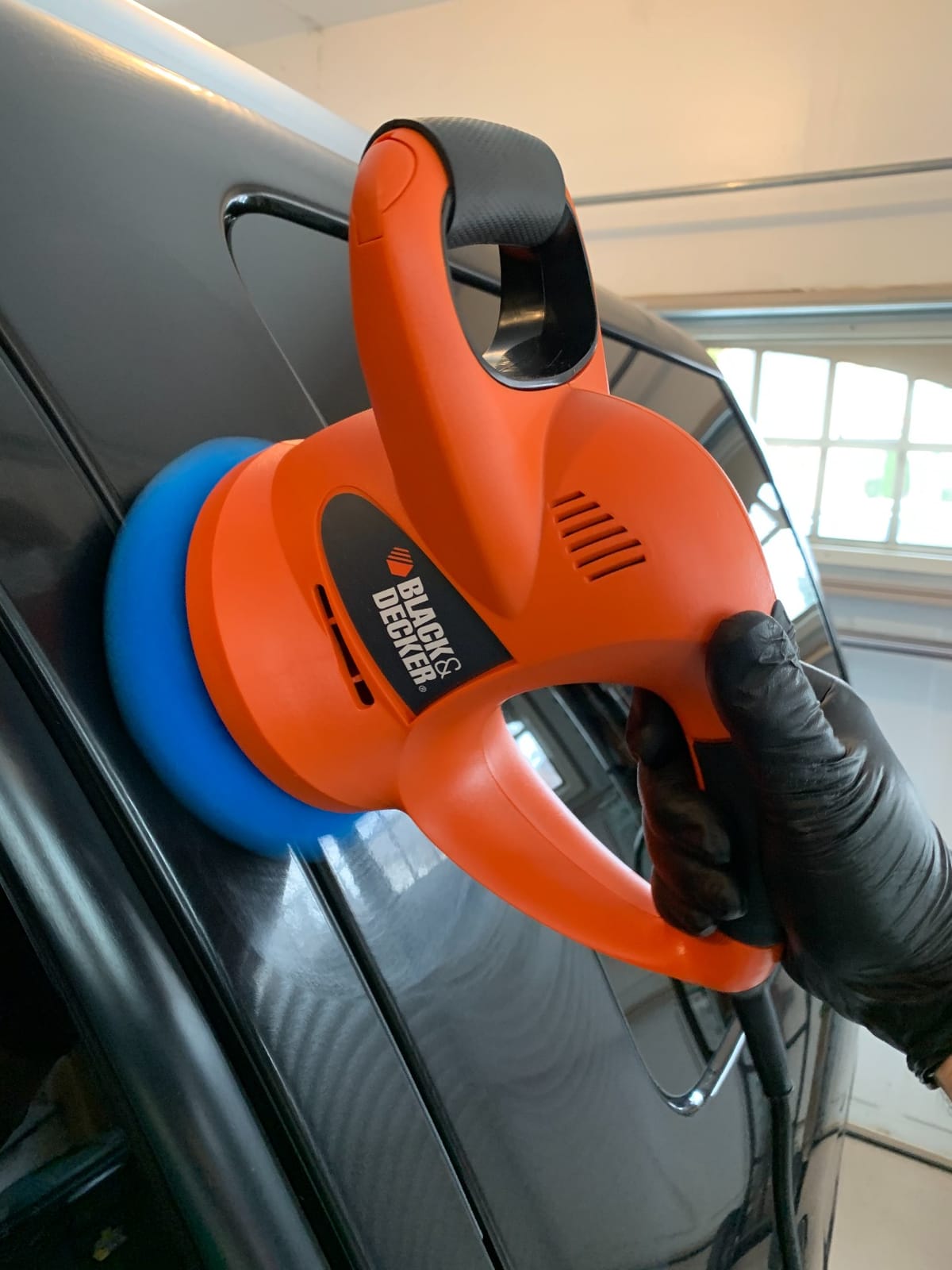
At 0.93 kg it is by a wide margin the easiest machine in this roundup to hold for a long session. The two-handle design lets you move your grip as the panel angles change, and the 10-foot cord is long enough to reach the far side of a car without hunting for a different outlet.
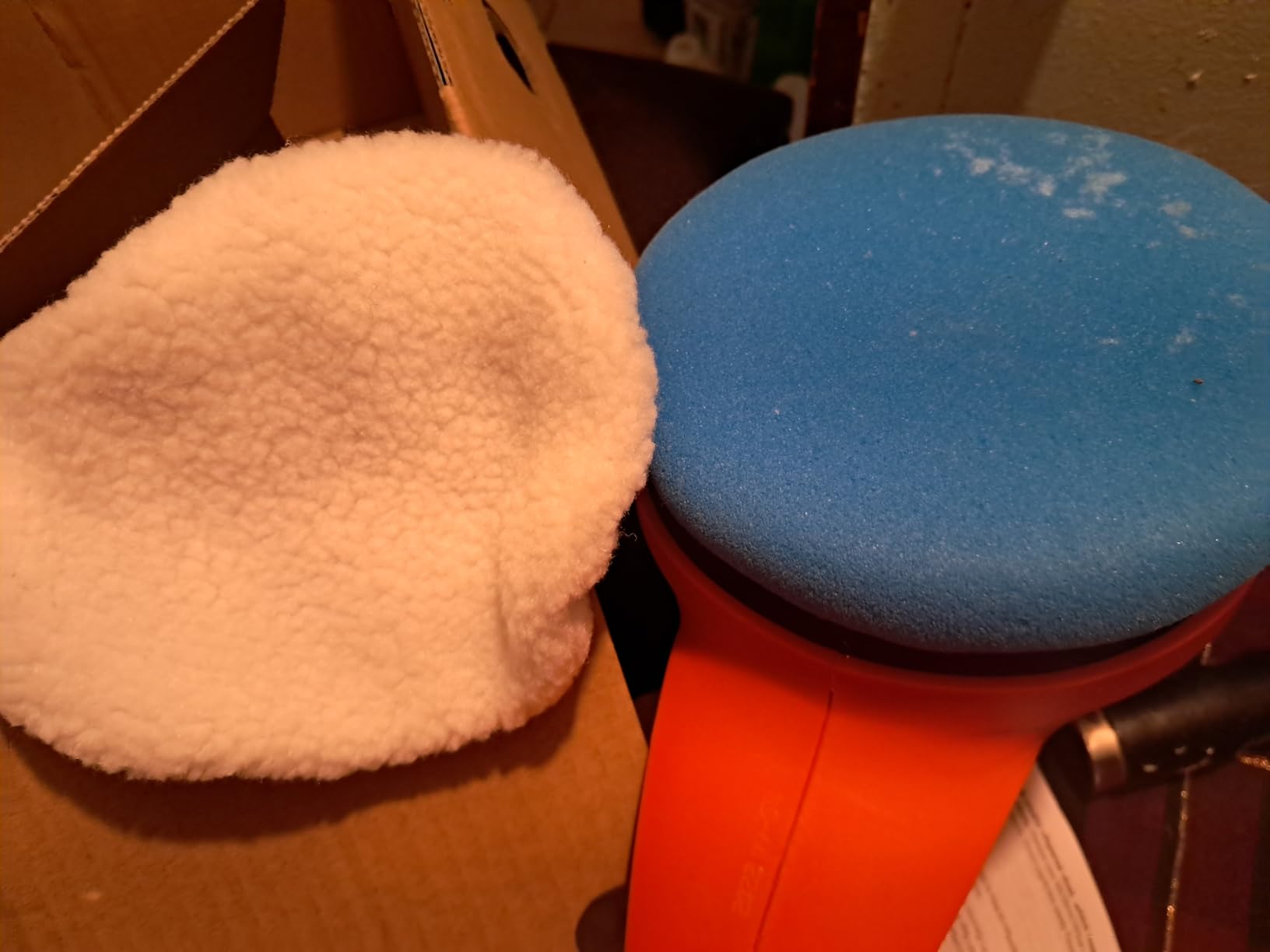
It spins at 4400 rpm, which is a sensible working speed for spreading wax and knocking down haze. The random-orbit action gives a uniform finish with very low swirl risk, and the included foam applicator bonnet makes it easy to lay product down evenly before you power on.
Two limitations are worth being clear about. There is no variable speed dial — you get one speed — so you cannot slow down to spread thick product or speed up to refine. And the supplied bonnets are the weak point; owners report tearing within months, so plan on buying microfiber or foam pads separately.
Who the WP900 suits
This is the machine for someone whose main goal is waxing and light maintenance rather than correction. Applying sealant, spreading ceramic spray, restoring hazy headlights and handling very light surface defects are all well within its capability.
It is also the best pick for a small garage or a tight workspace, because the 10-foot cord plus the light body means you are not constantly repositioning. For someone with limited arm strength, that combination is worth more than extra horsepower.
Where it falls short
Do not expect to correct meaningful swirl marks with it. A single fixed 4400 rpm and a modest motor mean a genuine one-step correction on a whole car will be a long, tiring evening, and you have no speed control to help manage it.
A small number of owners also report loud operation, heavy vibration or early motor failure, so treat it as a maintenance tool rather than a long-term correction investment. If you want the same light weight with real speed range, the AVID POWER is the step up.
3. PORTER-CABLE 7424XP: Premium Pick for Real Speed Control

PORTER-CABLE Buffer Polisher, Car Polisher for Car Detailing, 6-Inch, Orbital, Variable Speed (7424XP)
- True variable speed from 2500 to 6800 OPM for spreading and refining
- Counter-balanced design reduces swirl and vibration
- 3 year limited warranty plus a free service contract
- Side handle included for two-handed control
- Heavier at 5.8 lb than most entry-level buffers
- Sold as the machine only so pads and compounds are extra
- Higher cost than typical beginner machines
The 7424XP is the pick for a beginner who wants to learn proper technique rather than just move wax around. The electronic dial runs from 2500 to 6800 orbits per minute, which is the widest working range in this group and the one that lets you spread product gently and then refine it with a little more energy.
Under the hood it is a 4.5 amp AC motor producing 540 watts, which is enough headroom to keep its speed when the pad is loaded with compound. The included 5-inch counter balance supports 6-inch pads and is the reason this machine tracks so straight across a panel.
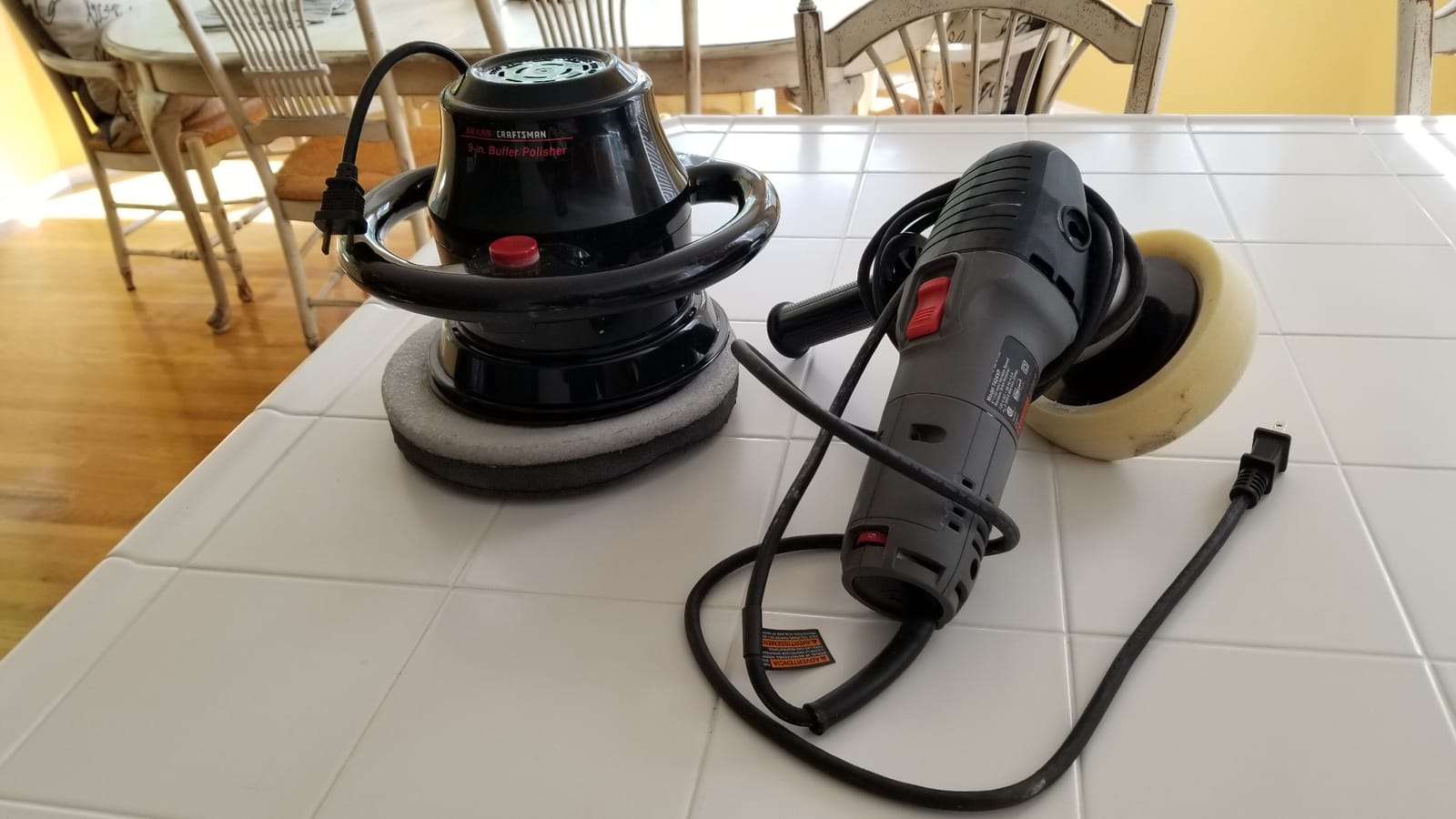
Owners frequently describe this as a satisfying upgrade from a cheaper machine, and the recurring word is control. The counter balancing reduces both swirl and vibration, and the side handle gives you a two-handed grip that helps on vertical sections like a door or a bumper.
The warranty is the strongest on this list: a 3-year limited warranty, a 1-year free service contract and a 90-day money-back guarantee. For a tool you might keep for a decade, that coverage is a real consideration, and forum buyers consistently rank warranty length as a top reason to pick this brand.
Why the 7424XP is worth the step up
Variable speed is the feature that changes how you work. Low speed spreads compound without flinging it, mid speed does the correcting, and high speed refines the finish — that control is how you learn to read a panel instead of just pushing a button.
It is also the machine to buy if you already own pads and compounds, since it is the polisher alone. Long-term owners report first-generation machines from this line still running years later, which is exactly the durability signal you want from a first tool.
When it is not the right call
At 5.8 lb it is meaningfully heavier than the two machines above it, so if you are new to machine polishing and worried about control, start lighter. It is also a bare machine, which means your first order needs to include pads and liquids separately.
And if your garage has no outlet near the car, note that this is a corded design and the cord length is not stated by the manufacturer — measure your reach before you commit.
4. SPTA 5-Inch Dual Action Detailing Kit: The Most Complete Accessory Bundle

- Highest average rating of the ten machines at 4.7
- 750W constant power holds speed under load
- Side handle and D-handle both included
- 24-piece bundle covers pads compounds sanding discs and gloves
- 110V specification limits use in 220V regions
- Bundle is bulky and includes items most beginners never touch
- Much of the package is accessories rather than machine
This kit earns its place for the 750W motor and the highest average rating in this roundup at 4.7 across 1864 reviews. Owners point to constant power and constant speed as the reason it does not bog down when a loaded pad meets a panel.
The 6-speed dial runs 2000 to 5200 RPM with no load, covering wax spreading, polishing and defect removal in one control. Both a detachable side handle and a D-handle are included, so you can pick the grip that suits the panel you are on.
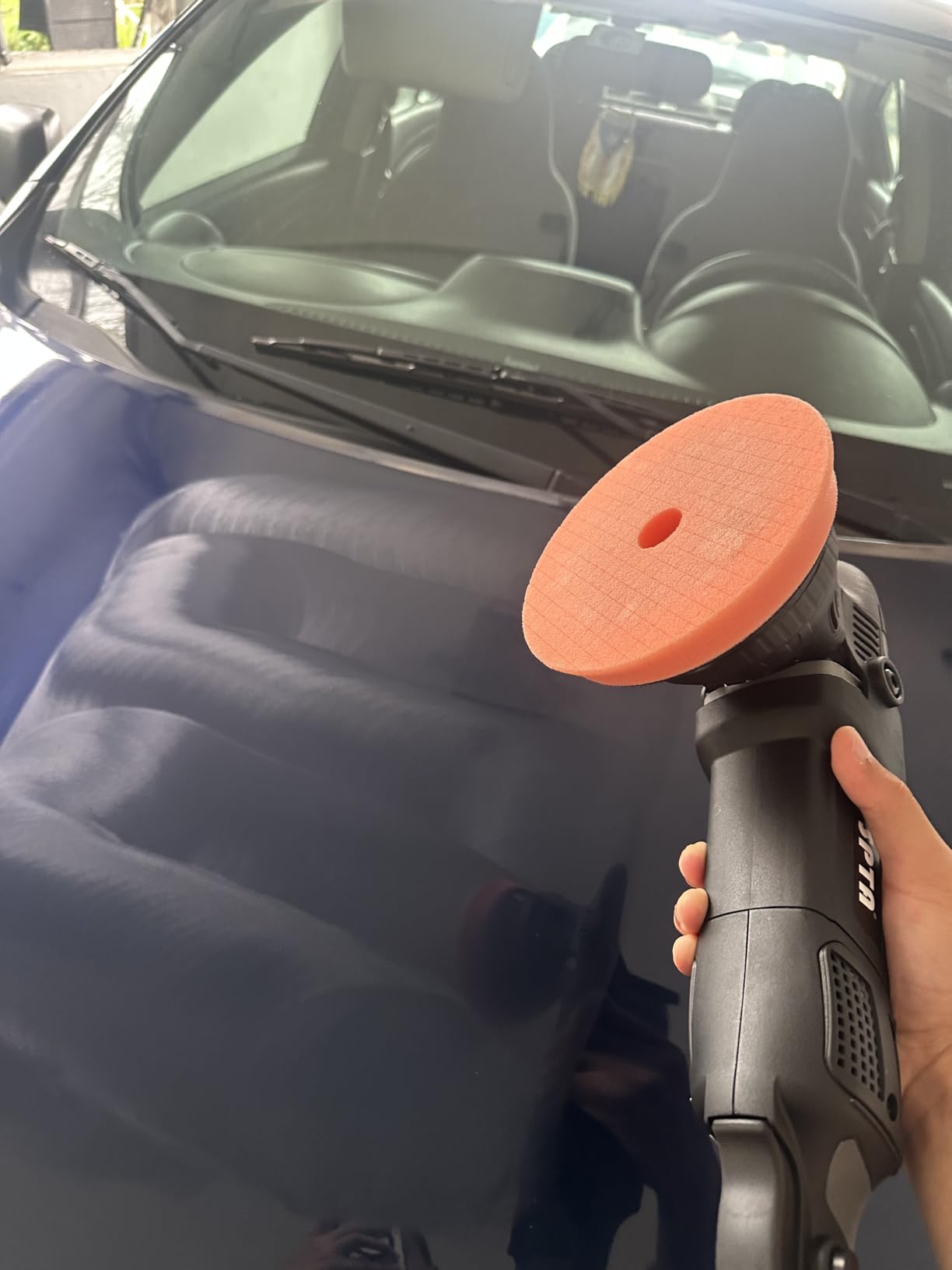
The 24-piece accessory bundle is unusually complete. It includes compounds, sponge and wool pads, sanding discs, gloves, towels and a storage bag, which for a beginner means the whole consumables question is answered inside one box.
The one specification that genuinely narrows who can buy it is the 110V rating. In 220V regions you would need a converter, and that is a real limitation for anyone outside North America to check before ordering.
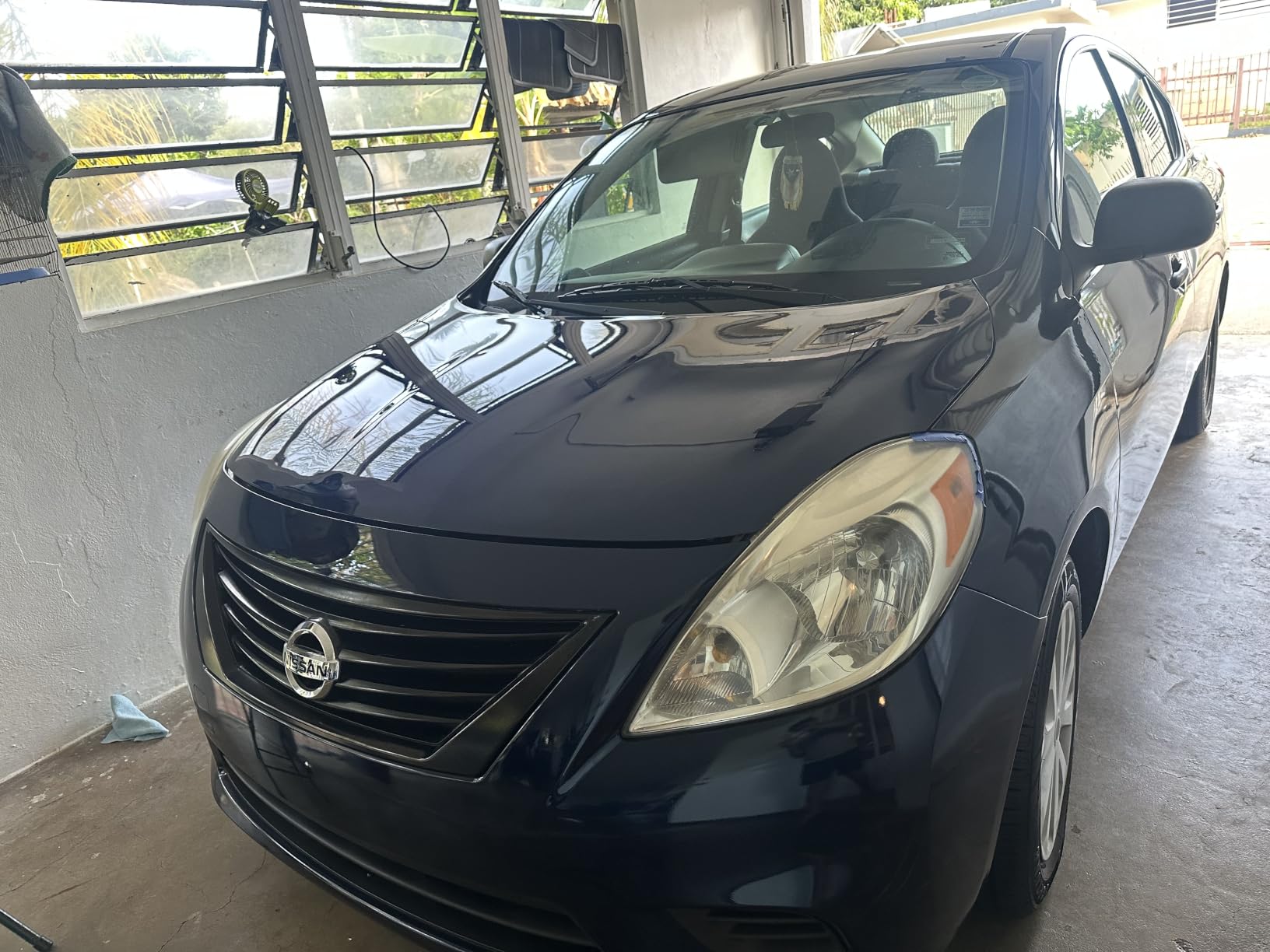
When this kit makes sense
Pick it if you want a strong motor with genuine multi-speed control and a full set of consumables in one delivery. The 750W figure puts it in the same class as the AOBEN and the TORQX, but here you also get sanding discs and two handle styles.
It suits someone who plans to do more than one correction, because the accessory list covers stages a single machine and a couple of pads will run out of quickly.
When it is the wrong choice
Do not buy it outside 110V regions without a converter — that single spec has caused more buyer frustration than anything else in the reviews. Also consider whether you will actually use 24 accessories, because owners often describe the bundle as oversized for straightforward waxing work.
If your priority is a small footprint and light weight rather than a full accessory set, the AVID POWER gives you two plate sizes with far less bulk.
5. AOBEN 6-Inch Dual Action Polisher: Most Versatile With a Genuine 700W Motor

- 700W motor and six speed settings at an entry price
- Random orbital action is safe for beginners on paint
- Side handle mounts on either side plus a top handle
- Three foam discs and a synthetic wool disc included
- Stalls if you press too hard on the three lowest speeds
- Plastic head shell and housing are less durable than metal gearcases
- Needs a light touch while the machine warms up
The AOBEN is the one to watch if you want a real 700W motor and six speed settings without stepping up a tier. Owners confirm it handles wax, polish and light defect work, and the copper-motion random orbital design is gentle enough on paint for a first machine.
Handle placement is unusually flexible for the price: the side handle mounts on either side, and there is also a top handle. That means you can keep the machine level on a roof or a hood regardless of your handedness or which direction you are working.
Three foam discs and a synthetic wool disc come in the box, and the 6.5-inch foam pads wrap the backing plate edge to stop the plate itself marking the paint. That detail is a small sign the machine was designed with real paint work in mind.
The behaviour to learn is pressure. Owners report the machine cutting out under heavy load on the lowest three speeds, so the technique is to let the machine do the work and move it slowly rather than leaning into the panel. It also has a warm-up period before it settles into its speed behaviour.
Where the AOBEN earns its slot
It is a strong first correction machine when you want variable speed and a capable motor on a tighter budget. The 1000 to 4500 RPM range gives you real control over spreading versus refining, which the single-speed budget machines cannot offer.
It is also versatile beyond cars. Owners use it on boats, furniture, floors and metal, which makes it a reasonable general-purpose tool if you want one machine for the garage and the workshop.
When to choose something else
If you plan to keep this machine for years of regular use, note that the head shell and housing are plastic rather than metal gearcases, and durability is the trade-off for the price. And if you are impatient, practise on a spare panel until you stop leaning on it.
For a similar motor with a longer accessory list, the SPTA kit adds compounds, sanding discs and a second handle option.
6. BATOCA S3 Cordless Polisher: Best Cordless Starter With Two Batteries

BATOCA S3 Cordless Car Polishers and Buffers, DA Orbital Polishing Machine
- Cordless design removes extension cords and outlet hunting
- Two 2.0Ah batteries so you can charge one while the other runs
- Light at 2.4 lb making it easy to carry and store
- Colour-coded battery indicator shows charge at a glance
- Runtime is short compared with mains-powered polishers
- 5mm throw gives less correction than larger machines
- Included accessory kit is basic and pads need upgrading
The BATOCA S3 solves the problem that quietly stops a lot of beginners before they start: dragging a cord across a driveway and finding an outlet. Two 2.0Ah batteries and a fast charger are in the box, so you swap rather than wait.
It weighs 2.4 lb, which makes it the second-lightest machine here and the easiest to manoeuvre overhead. The battery status indicator uses green, yellow and red lights, so you know your charge level without guessing between passes.
Six speed settings covering 2500 to 5000 RPM give you variable control, and the technical details describe the 5mm random orbit as friendly for beginners — which it is, in the sense that it is very hard to damage paint with it.
The trade-off is that 5mm is a small throw, so you are spreading and light refining rather than correcting. The shell is high-impact ABS with a copper motor, which is a sensible construction choice, but the accessory kit that ships with it is basic and the pads are a consumable you will likely replace.
Who should buy the BATOCA S3
Choose it if you work in a driveway, a street or a detached garage with no power nearby. Portability is not a nice-to-have here, it is the whole reason the machine exists, and the two-battery setup is a genuine convenience for a full car.
It is also good for beginners because the light weight makes it very hard to mishandle. At 2.4 lb you can move slowly and deliberately, which is exactly the technique that removes swirls instead of adding them.
When it falls short
If your goal is correcting visible swirl marks rather than waxing and maintaining, the 5mm throw will frustrate you. Small throw means more passes to cover a panel, and it will not remove what a larger orbit removes.
Runtime is also the real limit. Plan for a car panel at a time with a swap between sections, and buy spare cells early if you own more than one BATOCA tool.
7. SPTA Cordless Mini Polisher: Best for Tight Spaces and Body Lines
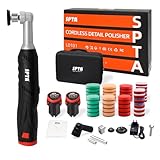
SPTA Cordless Mini Car Polisher, 12V Micro Cordless Scratches Killer Car Polisher RO/DA Mini Car Polisher for polishing, Sanding and Cleaning
- Cordless freedom with no extension cord to trip over
- 1-inch plate reaches emblems body lines and tight corners
- Free-spinning dual action helps avoid holograms
- Variable speed plus an optional rotary attachment
- 1-inch pad makes correction on large panels slow
- 80W output is not suited to heavy compounding
- Battery and charger need separate purchase to extend runtime
This is a detailer’s companion machine rather than a first polisher, and we include it because the question of whether a small machine is worth buying comes up constantly in beginner forums. Buy it second, not first.
The 1-inch backing plate reaches places a 5 or 6-inch machine physically cannot: behind badges, along body lines, in the tight corners where a hood meets a fender, and around trim. Owners use it for exactly that work rather than for whole panels.
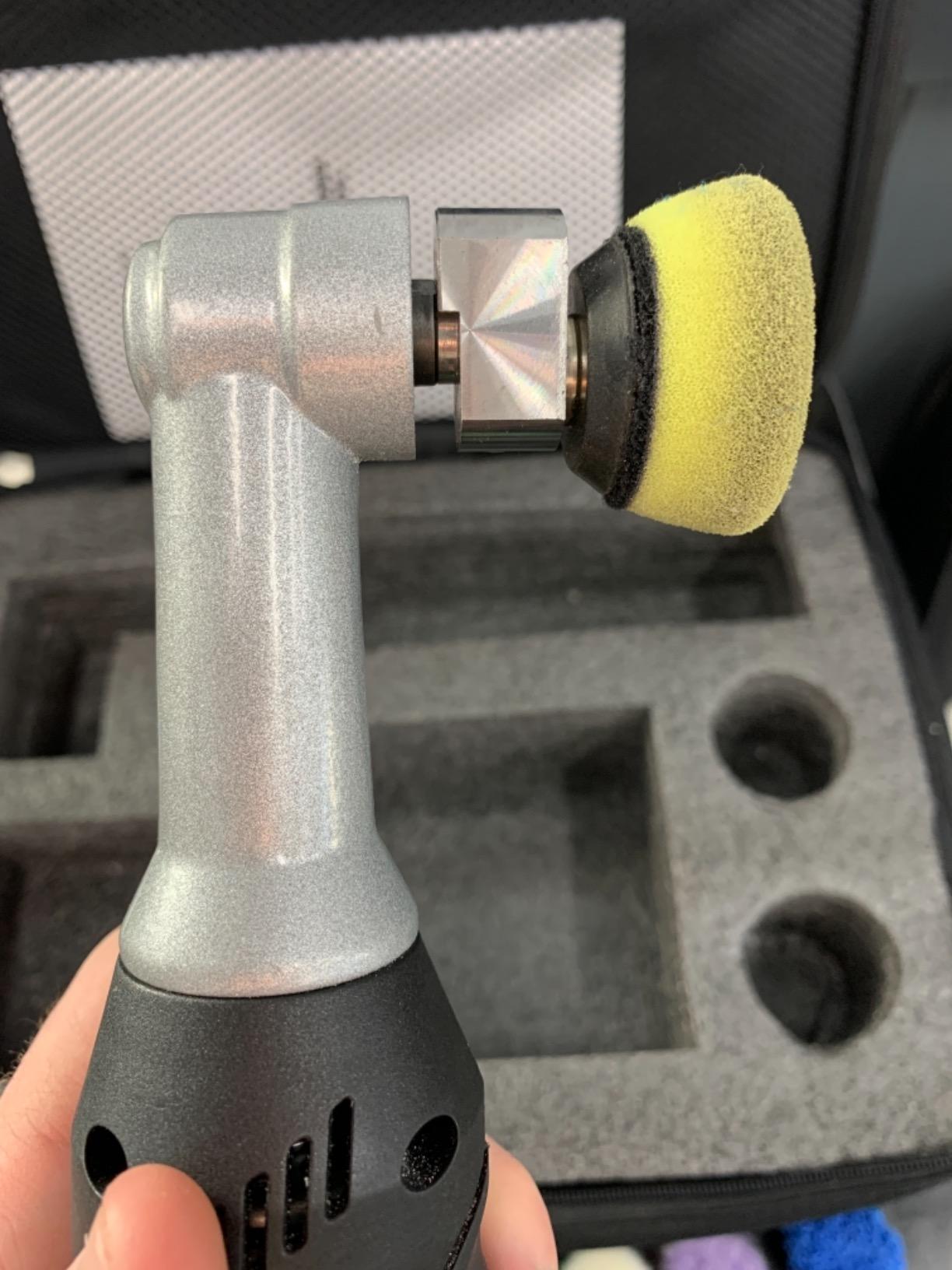
It spins at 5000 OPM with variable speed from 1000 to 5000 OPM, and the free-spinning dual action is designed to reduce holograms on edges and tight radii. The 80W battery gives up to an hour of working time at maximum speed, which covers a fair amount of detail work.
There is even an optional rotary attachment, which shows how versatile the platform is. What it is not is a correction tool: an 80W motor and a 1-inch pad simply will not cut through heavy defects, and attempting it risks doing nothing more than burning through your time.
When a second small machine is worth it
It becomes worth it once you have a 5 or 6-inch machine and you have hit the places that machine cannot fit. Badge recesses, narrow body lines, wheel faces and interior plastics are all jobs where a small plate is not a luxury.
It is also a genuinely good teaching tool. Because the pad is tiny, the risk of a bad pass is minimal, so it lets a nervous beginner practise technique without touching a large panel.
Why it is a poor first purchase
A 1-inch plate is measured in the same minutes a 6-inch plate does half a panel. For a first full car correction you would spend the day moving slowly and still not get the coverage you need.
And extending runtime means buying batteries and a charger separately, so the cost picture is not complete on day one. Start with a 6-inch dual-action and add this later if you find yourself frustrated at trim and badges.
8. GEVEELIFE 15mm Dual Action Polisher: Best for Trucks and Large Panels

- 15mm throw covers more area per pass than smaller orbits
- 780W motor with constant power and constant speed
- Works with both 5 inch and 6 inch pads
- Quiet smooth operation with comfortable handles
- Runs hot during extended work and some units get uncomfortably hot
- Included polishing pads are low quality
- Starting on a high speed can scratch paint for a first-timer
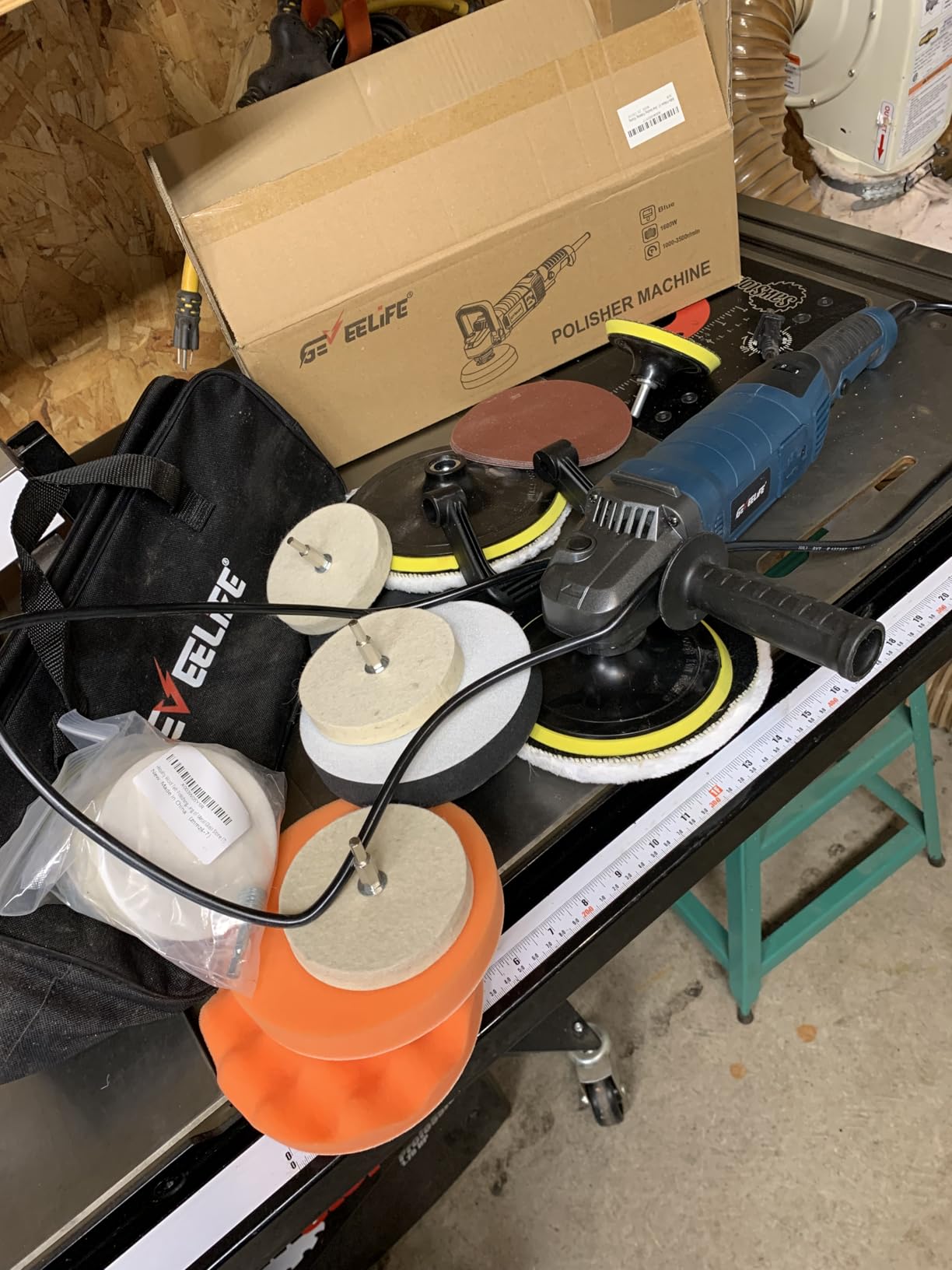
The GEVEELIFE is the widest orbit on this list at 15mm, and that number is why it suits large vehicles. A bigger throw means each pass covers more surface, which is exactly what you want when the machine is working across a full-size truck bed or a long SUV flank.
Underneath is a 780W motor rated up to 1200W with constant power and constant speed, running 6 settings from 2000 to 5200 RPM. It accepts both 5-inch and 6-inch pads, and the two-year warranty is among the longer coverages here.
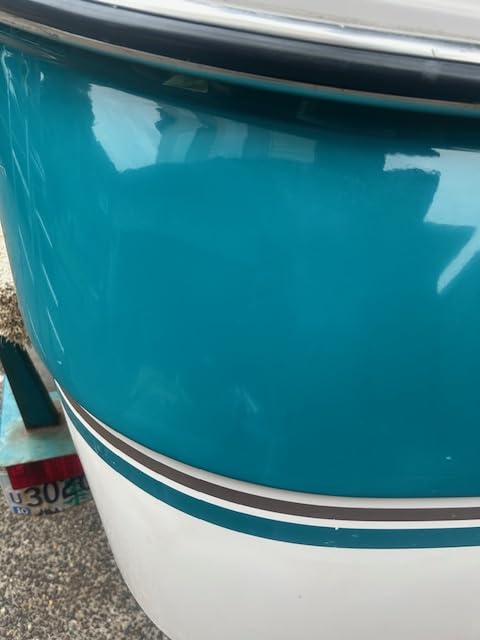
Owners like the handling and report quiet, smooth operation, and several use it for furniture finishing as well as paint. The solid metal front assembly and ergonomic handles make it comfortable to control despite the wide throw.
Heat is the recurring theme in the reviews. Extended work at higher settings makes the machine run hot, some owners report it becoming uncomfortable to hold, and a few have had heat-related failures over time. Practically, that means shorter sessions with pauses between panels rather than grinding through a whole truck in one go.
Who the GEVEELIFE suits
It is built for big vehicles. If your paint correction list is trucks, SUVs and long panels, the 15mm throw buys back time on every pass in a way a small orbit cannot.
It is also a reasonable second machine for someone who already owns a gentler 5-inch and wants more coverage per pass, and the 5-inch pad compatibility means you are not locked into one plate size.
Where caution is needed
Because it runs hot under sustained load, this is not the machine to hand to a nervous beginner on their first afternoon. Work in short bursts, let it cool between panels, and start on the lowest speed — owners do report scratching when first-timers begin on a high setting.
The included pads are also described as low quality, so budget for replacements before the first session rather than after it.
9. AVID POWER 5 and 6 Inch DA Polisher Kit: Long-Throw Value With Two Plate Sizes

AVID POWER 5″/6″ Dual Action DA Polisher Kit 6-Speed Random Orbital Buffer
- Long throw random orbit lowers swirl risk versus small orbits
- Lockable trigger and speed dial can be changed one-handed
- Includes both 5 inch and 6 inch plates plus foam pads and tools
- Responsive customer support for replacements
- Generates heat at higher speeds and gets uncomfortable to hold
- Some units developed a high-pitched whine after running hot
- Heavier than most entry machines and not suited to daily professional work
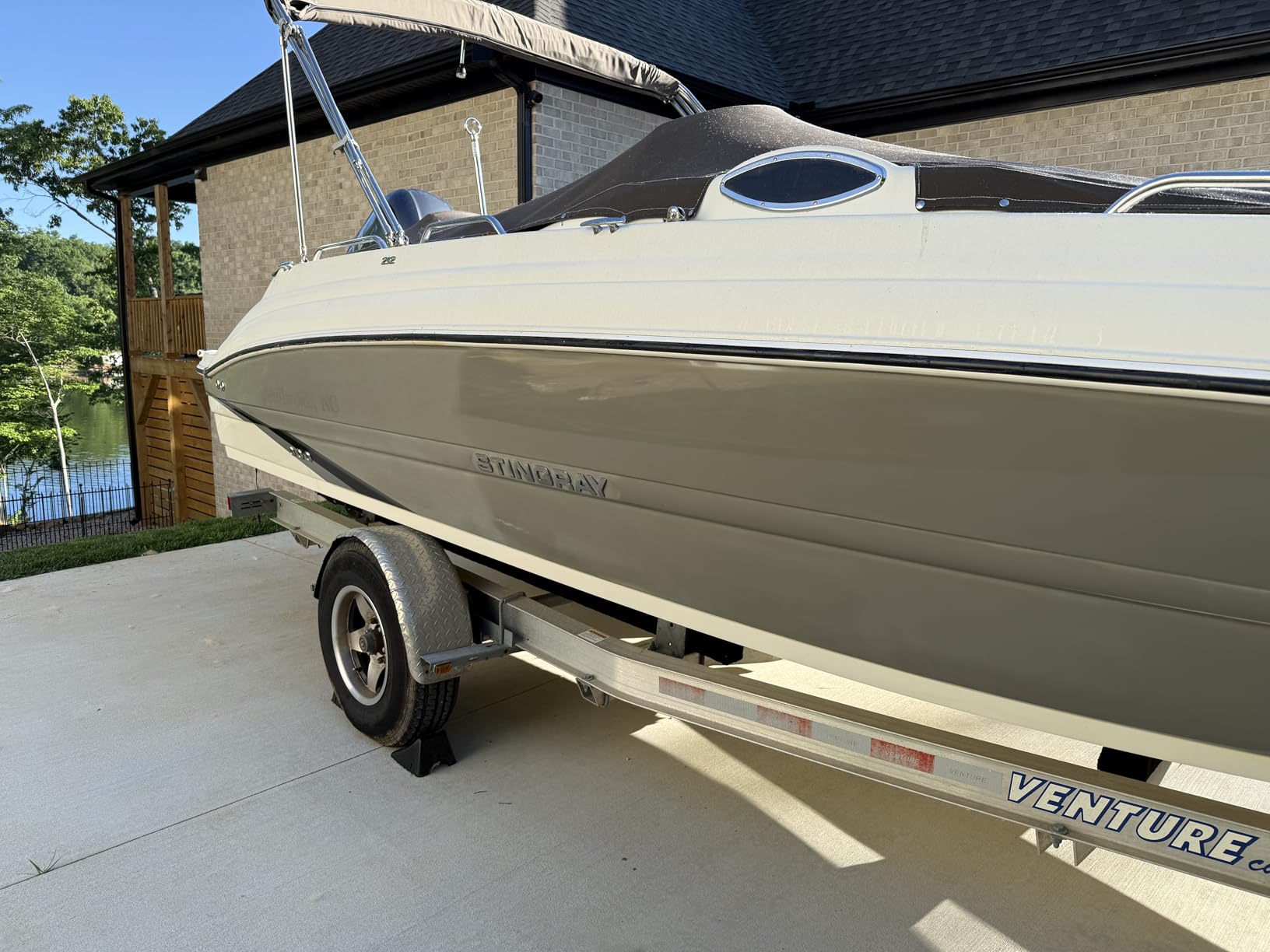
The AVID POWER kit is unusual for including two backing plates in the box. Getting both 5-inch and 6-inch plates means you can change the working area to match the panel rather than forcing one size on everything, which is a genuine advantage when you are learning.
The speed dial runs six levels from 2700 to 6500 OPM, and the lockable trigger plus a reachable dial means you can change speed with one hand while the other keeps the machine flat. The D-handle adjusts through five positions and the body is rubberised for grip.
The long throw is the reason it is described as less likely to cause swirl than machines with a small orbit, and the low-noise motor design helps in that respect. Foam pads, a spanner, a hex wrench and a manual are all included.
Heat is the dominant complaint in the reviews, exactly as with the GEVEELIFE. At higher speeds the machine heats up enough to become uncomfortable, a minority of owners report a high-pitched whine after it has run hot, and a few had non-functional low speed settings on early units. One measured report puts the weight at 8 lb, which is heavy for a first machine.
When the two-plate kit is the right buy
Pick it if you want to start with a smaller plate and work up. Learning on a 5-inch plate is a good way to build control, then the 6-inch plate lets you cover large panels once your technique is steady.
It is also strong value for occasional DIY work rather than daily professional use, which is how owners consistently characterise it. The included spanner and hex wrench also mean you can change pads without hunting for tools.
When to pass on it
Weight and heat together make it a poor choice if you are planning long sessions or are sensitive to holding a warm tool. If you are polishing every weekend for hours at a time, a lighter machine like the BATOCA or BLACK+DECKER will be more comfortable.
Check the low speed settings early in your ownership, since a minority of units reported them not working. Buying from a seller with responsive replacement service — which owners here praise — is worth prioritising.
10. WEN 6010 6-Inch Waxer: Best First Machine for Wax Application Only
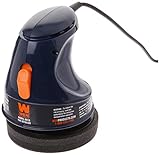
- Grip contoured for comfortable one or two handed use
- Lockable on/off switch prevents shutting off mid pass
- Very accessible as a first machine to learn on
- Includes an applicator bonnet and a terry cloth bonnet
- 0.5 amp motor stalls under heavy load
- Single fixed 3500 rpm with no variable speed control
- Basic build quality and thin short-lived bonnets
The WEN 6010 is the simplest machine here and the least capable, and that is exactly why it belongs on the list. With more than seven thousand owner reviews, it is a well-worn first step for someone who only wants to apply and buff wax rather than correct defects.
The ergonomically contoured palm and body grip works with one hand or two, which makes it easy to get a feel for a spinning pad without a heavy machine fighting you. The lockable on/off switch is a small detail that prevents the pad shutting off mid-pass and leaving a half-worked streak.
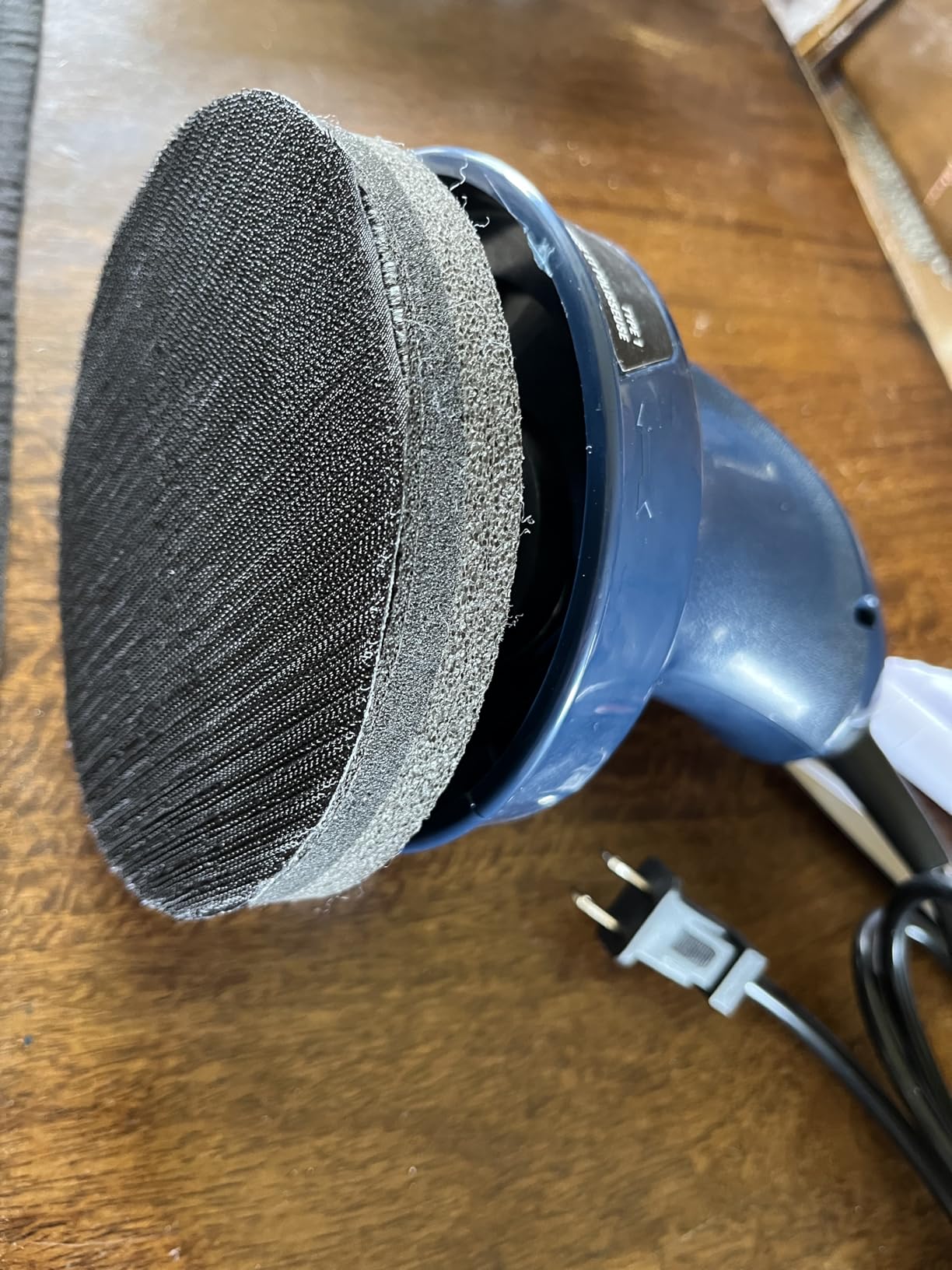
It runs a 120V 0.5 amp permanent magnet motor at 60 watts, spinning at 3500 rpm. Both a 6-inch applicator bonnet and a 6-inch terry cloth bonnet are included, so you can lay product down and then buff it off in the same session.
The limits are clear from the motor size. At 0.5 amps it has little headroom and will stall if you press hard or use a loaded pad, and the single fixed speed means no dial to turn when you want to spread thickly and finish lightly. The supplied bonnets are thin and short-lived by design.
When the WEN makes sense
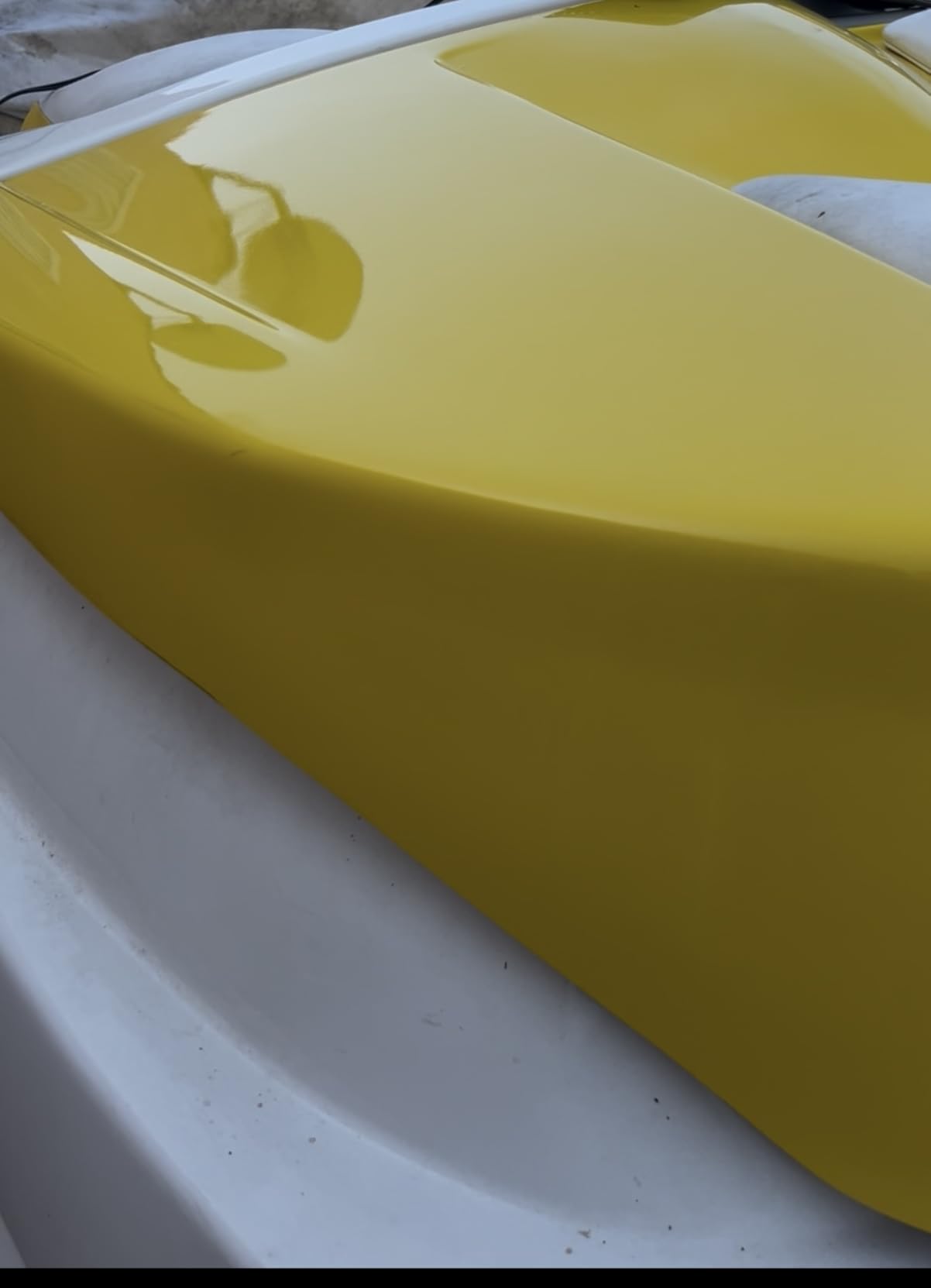
Buy it if your goal is wax and sealant application, nothing more. Spreading product, buffing it off and maintaining a finish is exactly what a light single-speed orbital is built for, and the grip design makes it very easy to pick up.
It is also a reasonable first machine to learn pad handling on. Because it is light and low-powered, the consequences of a clumsy pass are minimal, so you can practise without fear before stepping up.
When to step up instead
Do not expect correction work from a 60W motor. It will not remove swirl marks, and trying to force it risks stalling the motor rather than cutting the defect. Anyone who has read a first correction guide and wants real results should skip past this.
The one-year warranty is also the shortest here. If you can stretch to a multi-year warranty and a variable speed dial, the money goes further down the list — and if you want the gentlest first experience, the WEN 6010 is the lightest and simplest way to start.
How to Use a Car Polisher for the First Time
Work in this order and do not skip the first two steps. Polishing contaminated paint grinds dirt into the clear coat and instantly creates the fine scratches you were trying to remove.
Wash the car properly. Two bucket washes with a grit guard in the rinse bucket. Dry with clean microfiber towels, and never dry with a chamois you have used on the paint before.
Decontaminate the paint. This is the step many beginners have never heard of, and it is the one they most often skip. A clay bar with lubricating spray removes bonded fallout and industrial dust that sit on top of the clear coat. Run the clay over each panel until it feels glassy, rinse, and dry again.
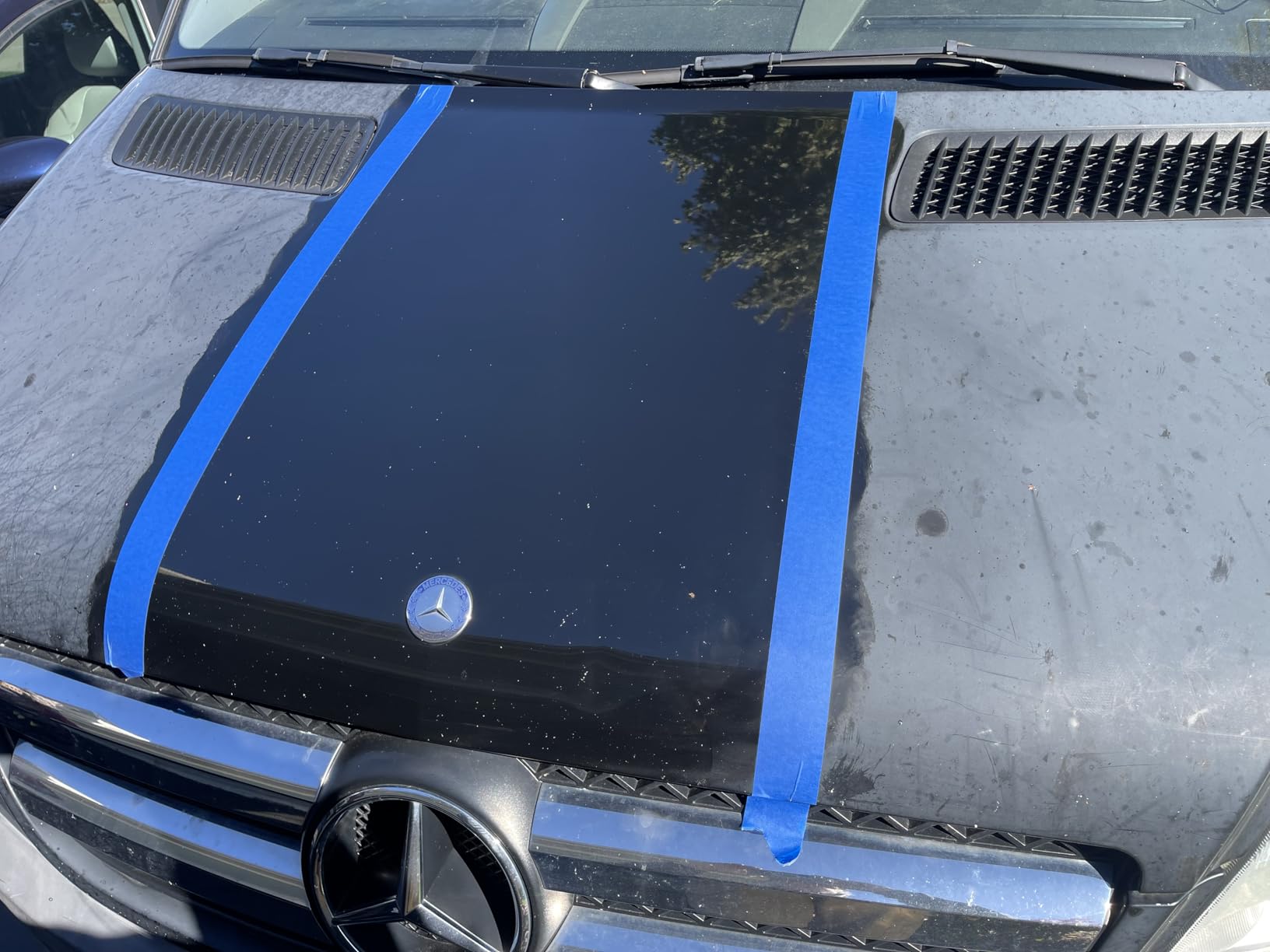
Test spot first. Pick a less visible section, apply your compound with a fingertip-sized dab, and run three or four passes at low speed. If the haze you expect does not lift within a minute, step down to a finer compound or a softer pad rather than pressing harder.
Work in small sections. Mask off one panel or half a hood. Apply five or six small dots of compound and spread them with the unpowered pad before you turn the machine on, so the pad never drags dry product across the paint.
Start slow and move constantly. Bring the pad up to speed at low RPM, then increase as the product breaks down. Keep the machine moving in slow overlapping passes and never park it in one spot — that is the single habit that prevents heat damage.
Remove the residue before it dries. While the haze is still damp, wipe off with a clean microfiber towel. A damp, warm finishing pass leaves the clearest result and saves you fighting dried compound.
Protect the result. Bare corrected paint oxidises fast. Apply a sealant or wax immediately, and if you plan a ceramic coating, polish and decontaminate first, then coat the same day.
Budget a full day for a first one-step correction on a mid-size car, and break it into panels rather than trying to rush. Wear hearing protection and eye protection — a dual-action is safe for your paint, but the noise is real and pad debris does fly.
Corded vs Cordless Car Polishers for Beginners
The corded machines here run on 120V mains power and never stop for a battery. The cordless options — the BATOCA S3 at 2.4 lb and the SPTA mini at 1.94 kg — trade uninterrupted runtime for portability, and the trade is bigger than most sellers admit.
Choose corded if you have an outlet within reach of the car and you want to finish a panel without checking a battery gauge. All of the stronger machines in this roundup are corded, and the 700W and 750W motors simply do not exist in compact battery form.
Choose cordless if you work away from power, in a driveway, or on a boat or a small vehicle. A 12V polisher is also the easiest machine to carry up to a roof or move between two cars. Just plan the charging: the BATOCA ships with two 2.0Ah cells so you can swap rather than wait, while the SPTA mini needs batteries and a charger bought separately.
Check your reach before buying any corded machine. The BLACK+DECKER states a 10-foot cord, which is generous, while the manufacturer does not publish cord length for the TORQX, the PORTER-CABLE, the AOBEN or the AVID POWER — measure from your outlet to the far side of the car first. If you need an extension, use a properly rated heavy-gauge one, since a thin extension is a common cause of a machine tripping under load.
On battery platform lock-in, note that these compact 12V units use their own cells and chargers rather than a shared platform with your other tools. That avoids the hidden battery cost that shows up with some big-brand cordless polishers, where the bare tool price means little until you add a battery and a charger.
What You Need Beyond the Polisher
Beginners routinely budget for the machine and then discover they need another four things before they can start. Here is the complete starter stack:
Two or three pads. A white foam pad for the cut step, a grey or soft white pad for refining, and a microfibre or wool bonnet for wax and sealant. Check the pad diameter matches your backing plate before ordering — this is the single most common first mistake.
A compound and a polish. Compound with mild abrasive grit removes swirls and light oxidation; polish refines the haze compound leaves behind. The TORQX and SPTA kits include both.
A clay bar and lubricant. Decontamination has to happen before the machine ever touches the paint.
Microfibre towels. Several clean ones, used only for paint. A towel that has been used on wheels will scratch a corrected finish.
Sealant or wax. Protection is not optional. Corrected bare clear coat oxidises noticeably within weeks.
One further note on matching the machine to the job. Pair a 6-inch plate with white foam for cutting and grey foam for refining. A 15mm throw machine needs very light pressure and more passes, while a small-plate machine wants a light touch and very little product. And whatever you choose, keep the compound off the pad edge — product wrapped around the edge is what throws material at your paint and into the air.
If your garage work also involves lifting tasks, our guide to the best car lifts for home use covers the same kind of first-time-owner decision.
Beginner Mistakes and How to Fix Them
Every one of these is common, and every one has a simple fix that does not require buying a different machine.
Polishing a dirty car. You grind contamination into the clear coat and create swirls while trying to remove them. Fix: wash and decontaminate with a clay bar first, every single time.
Dropping a blob of compound and powering on immediately. The pad grabs the wet lump and flings it. Fix: spread the product with the unpowered pad, then bring the machine up at low speed.
Pressing down to make it work faster. Speed comes from motor and product, not pressure, and pressure is what generates heat. Fix: use a light hand and move the machine slowly.
Parking the pad in one spot. The only behaviour on this list that can genuinely damage clear coat. Fix: keep constant motion, and lift the machine off the panel when you reposition.
Starting on speed 6. High speed plus fresh compound plus an eager beginner is how fine scratches appear. Fix: begin on the lowest setting and work up as the product breaks down.
Leaving dried compound on the paint. Dried compound is abrasive and needs aggressive removal. Fix: wipe residue while it is still damp, then follow with a clean damp towel.
Using rotary-style pressure out of habit. A dual-action works by movement and product, not force. Fix: if the pad stops spinning freely under the pad, you are pressing too hard — back off.
The reassurance worth repeating: with a 6-inch dual-action at 8mm or more throw and variable speed, damaging clear coat is genuinely difficult. The failures we see in reviews are almost always heat or pressure, both of which are technique problems rather than machine problems.
Frequently Asked Questions
What type of polisher should a beginner use?
A dual-action random orbital polisher. It spins the pad while oscillating it across the panel, so no single point of the pad sits still long enough to build damaging heat. Start with a 6-inch backing plate, an orbit throw between 8mm and 15mm, and variable speed with a soft-start trigger. Avoid rotary polishers entirely as a first machine, because they spin in a fixed circle at high speed and are the main cause of burned clear coat in beginner hands.
What is the best car polisher for home use?
The Chemical Guys TORQX 9-piece kit is the strongest all-round first machine, with an 8mm random orbital throw and a 700W motor, and it ships with pads, compounds and polishes already included. If you want a lighter body for long sessions and mostly maintain your finish, the BLACK+DECKER WP900 is the alternative, weighing just 0.93 kg with a 10-foot cord. Either way, both are dual-action machines that are safe to learn on.
What’s the difference between a car buffer and a polisher?
In practice it is mostly a naming difference, and the two words are used interchangeably by sellers. Traditionally a buffer refers to spreading and removing wax, while a polisher refers to machine correction of paint defects with an abrasive compound. What matters far more than the label is the mechanism: a dual-action or random orbital machine is beginner-safe, while a rotary is not. Judge the machine on its orbit type, throw in millimetres and speed control rather than on its name.
What is the best car polisher for the money?
Best value here means the machine plus the consumables you must buy on day one, and on that basis the BLACK+DECKER WP900 is hard to beat: a light 0.93 kg body, a 4400 rpm random orbit and a 10-foot cord, with the most owner reviews of any machine in this roundup. If you want more capability, the Chemical Guys TORQX 9-piece kit includes pads and compounds in the box, which removes the extra first-order cost entirely.
Is a DA polisher worth it for a weekend warrior?
Yes, if you buy a dual-action rather than a rotary. A full one-step polish on a mid-size car takes an afternoon, so you do not need to use a machine weekly to justify it. The reason many weekend users hesitate is the fear of burning through clear coat, and that fear is specific to rotary machines, not dual-action ones. Pick up a 6-inch dual-action with variable speed, learn on one panel, and the machine will earn its place the first time you see swirls disappear.
What pads, compound and polish do I need with a beginner polisher?
Buy two or three pads matched to your backing plate diameter: a white foam pad for the cut step, a grey or soft white pad for refining, and a microfibre or wool bonnet for wax. You also need a compound with mild abrasive grit for removing swirls, a finer polish to remove the haze the compound leaves, a clay bar and lubricant for decontamination, clean microfibre towels reserved for paint, and a sealant to protect the corrected finish afterwards.
The Verdict: Best Car Polishers for Beginners in 2026
The Chemical Guys TORQX 9-piece kit is our pick for the best car polishers for beginners, because it removes the two things that stop newcomers: the risk of damaging paint and the guesswork about what to buy next. An 8mm random orbital throw, a 700W motor and a box full of pads, compounds and polishes make the first correction a one-order job rather than a research project.
If you would rather hold something lighter all afternoon, the BLACK+DECKER WP900 is the best-value route into polishing, and if you want true variable speed control plus multi-year warranty coverage, the PORTER-CABLE 7424XP is the sensible upgrade. Whichever you choose, buy a 6-inch dual-action, decontaminate before you polish, keep the machine moving, and protect the result the same day.