
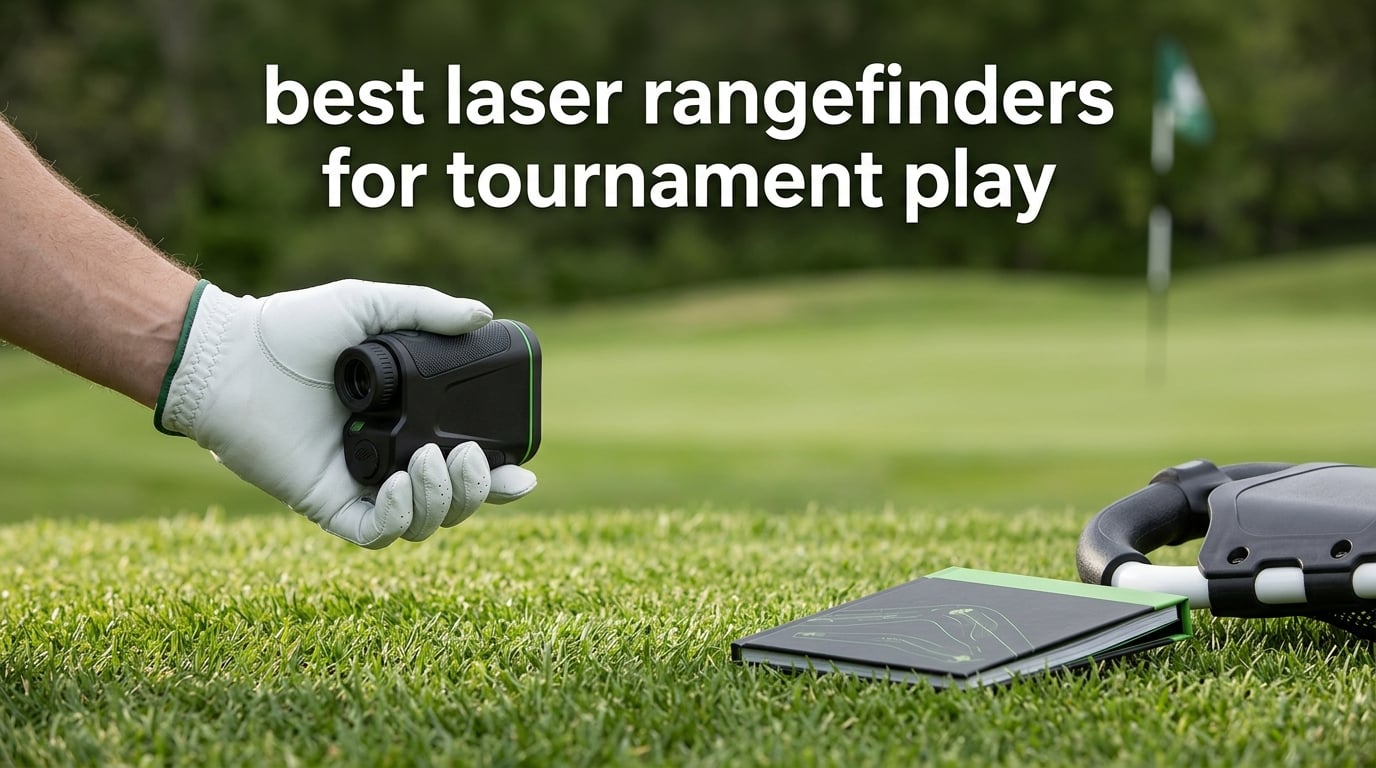
Most golfers get the rules of tournament rangefinders wrong in one of two directions. They either assume the device is banned everywhere, or they carry a slope-capable unit into a qualifying round with the adjustment still switched on and eat a two-stroke penalty on the back nine. The truth sits in the middle, and it is written down in USGA Rule 4.3a.
This guide covers the best laser rangefinders for tournament play, and every pick here was screened for one thing first: can it tell you straight-line yardage without telling you the plays-like number. That single filter removes a surprising number of flagships that otherwise dominate spec sheets. If you want a broader look at rangefinders for everyday rounds and practice, our general golf rangefinder guide covers the devices we set aside for this list.
Two definitions first, because everything else depends on them. Slope compensation means the unit adds extra yardage to reach the same physical spot from a different elevation, which is exactly what Rule 4.3a prohibits during a competitive round. True distance, also called straight-line or line-of-sight distance, is the raw number to the pin with no adjustment applied, and that is the only number a legal device may show you while you play.
All ten picks below were compared on the same five questions: is the slope lockout physical or hidden in a menu, how consistently does the pin seeker return the same number from the same spot, can you read the display in bright sun while wearing a glove, what happens to the reading in fog or rain, and how easy is it to prove compliance to a rules official at the 10th tee. We updated the list for 2026 season and framed every policy claim around the Local Rules in force at the event.
Table of Contents
Top 3 Tournament-Legal Rangefinders for 2026


All 10 Best Laser Rangefinders for Tournament Play (October 2026)
| Product | Specifications | Action |
|---|---|---|
| Bushnell Golf Tour V6 Shift |
|
Check Latest Price |
 Callaway 300 Pro Callaway 300 Pro |
|
Check Latest Price |
| Acer Gadget Golf Rangefinder |
|
Check Latest Price |
 REDTIGER Golf Rangefinder 7X REDTIGER Golf Rangefinder 7X |
|
Check Latest Price |
 Blue Tees Golf Series 3 Max+ Blue Tees Golf Series 3 Max+ |
|
Check Latest Price |
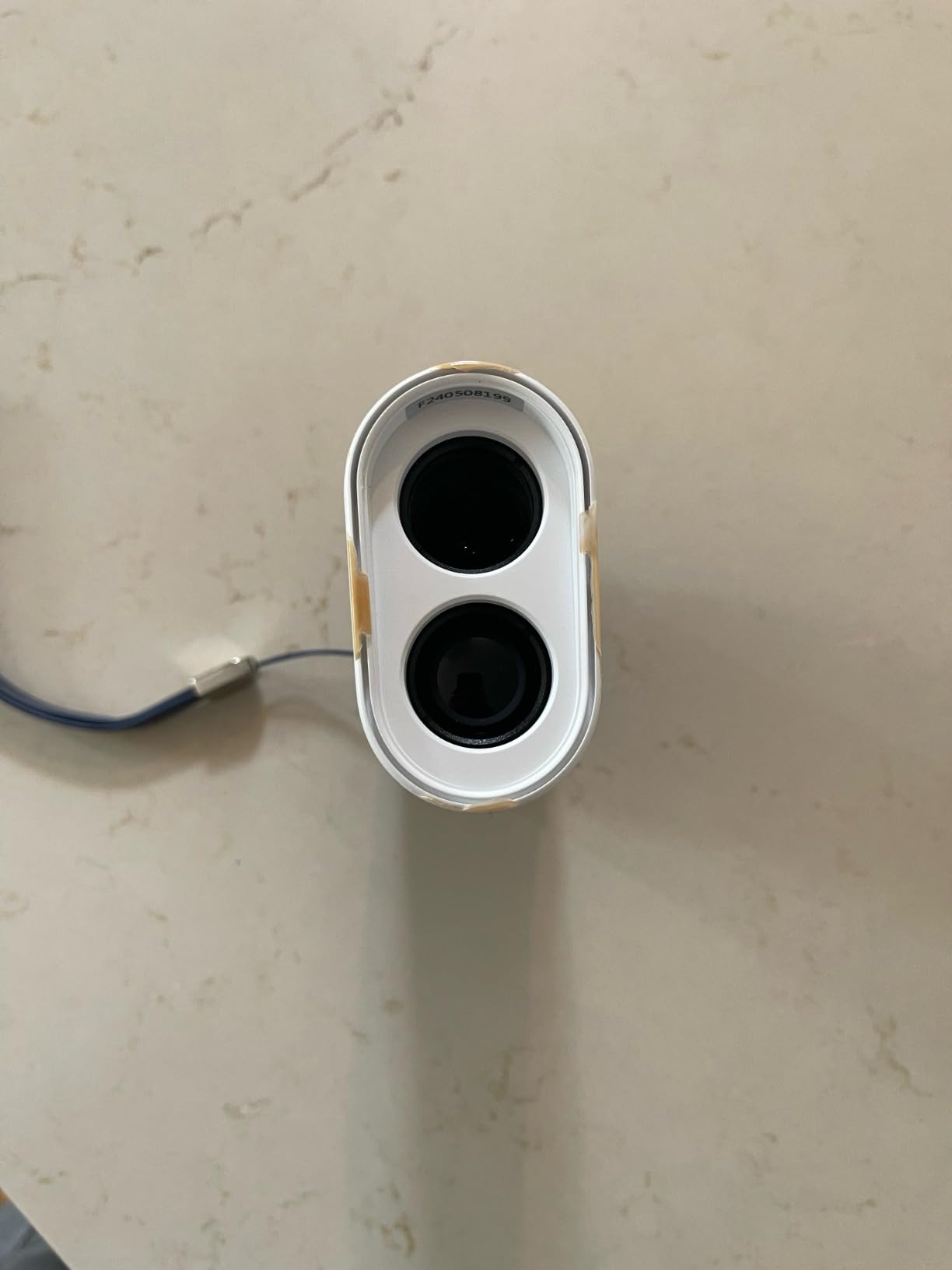
 AILEMON Golf Rangefinder AILEMON Golf Rangefinder |
|
Check Latest Price |
 Gogogo Sport Vpro Magnetic Gogogo Sport Vpro Magnetic |
|
Check Latest Price |
 Bushnell Golf A1-Slope Bushnell Golf A1-Slope |
|
Check Latest Price |
 Bushnell Golf Tour V7 Shift Bushnell Golf Tour V7 Shift |
|
Check Latest Price |
 Vortex Anarch Vortex Anarch |
|
Check Latest Price |
How We Tested for Tournament Legality and Accuracy
Our testing routine was built around the two things that actually cost strokes: an illegal reading and a wrong reading. Every unit ran through the same sequence so the numbers below compare like for like.
Legality first. We found the slope control on each device without reading the manual, photographed where it sits, then measured how hard it is to change the mode with a glove on and with the unit in a cart bag. A hidden three-menu-press toggle is a legal device in theory and a liability on a first tee box.
Repeatability. From one stance marker we took ten readings on the same flag, at eight different shots, and compared the spread. A rangefinder that bounces between two numbers is fine for practice and useless in a final-round situation where you are trying to match a number you already wrote in your yardage book.
Conditions. We repeated the read in full sun at midday, under light cloud, and in a shower, because a display you cannot read while squinting at a white flag 180 yards out is the same as no rangefinder at all. We also checked small targets, meaning a lone flagstick with no player standing next to it.
Documentation. The product page, the manual and the box all have to point at the same tournament mode. If the manufacturer buries it, we treat that as a con, because a rules official will not take your word for it.
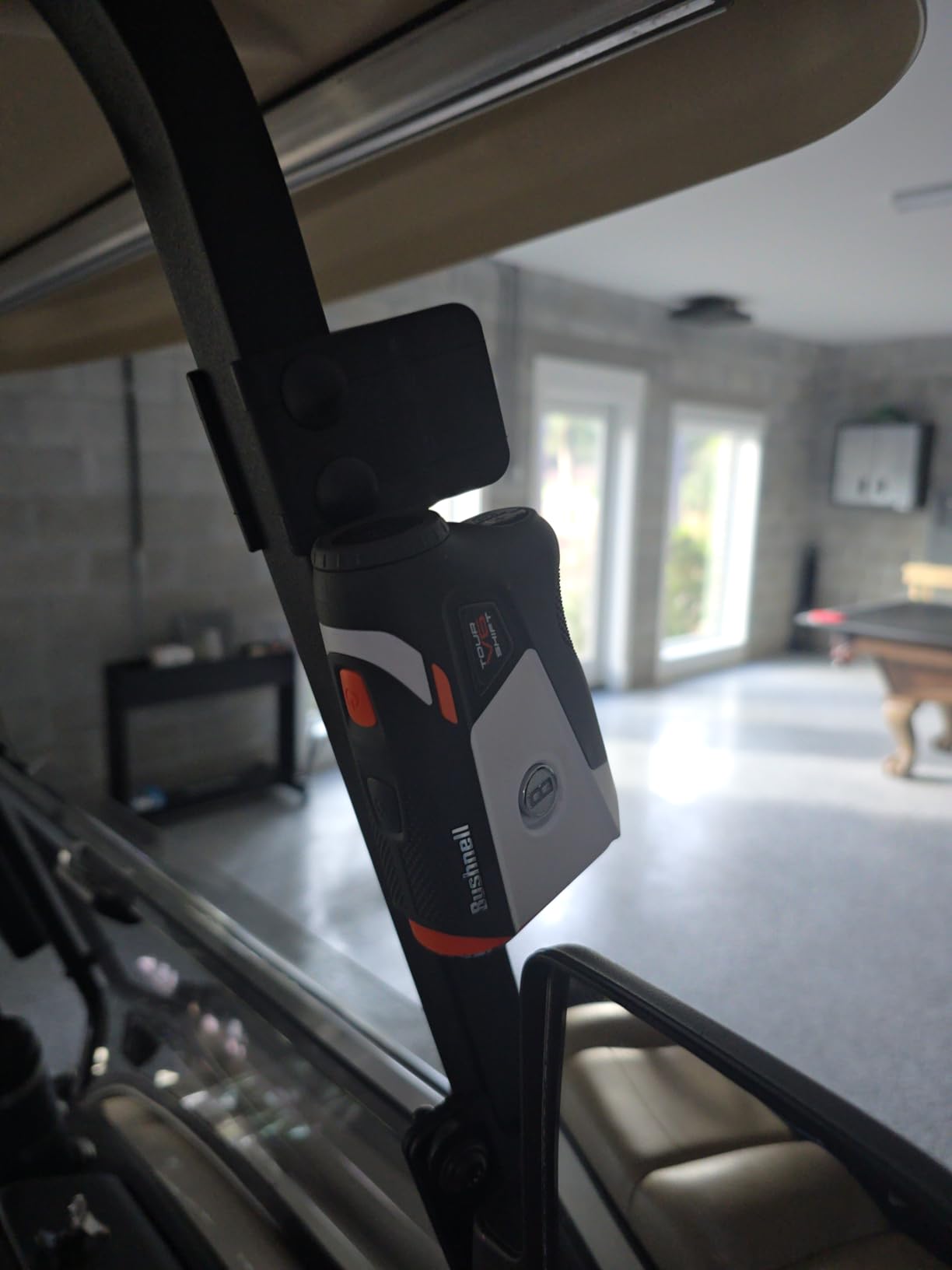
1. Bushnell Golf Tour V6 Shift: the best laser rangefinders for tournament play overall
- Physical external slope switch you can confirm with a glance
- Visual JOLT plus vibration confirms flag lock
- 1300 yd range at 6X holds distant flags
- BITE magnetic mount for one-handed cart access
- IPX6 build with 2 year manufacturer warranty
- Noticeably bulkier than compact rivals
- Uses a replaceable CR2 cell rather than a rechargeable pack
This is the unit we hand to a golfer who plays one club tournament a month and wants zero ambiguity. The slope control is a physical switch on the body, not a menu option, which means a rules official can see the state of the device from arm’s length. For a 2026 season competitive schedule, that visibility is worth more than any extra feature in the manual.
Range is 5 to 1300 yards at 6X magnification, and the JOLT feedback means you know instantly whether the number belongs to the flag or the tree behind it. Owners consistently report the same number back from the same stance, which is the property that matters most when a two-yard error decides a match. The BITE magnetic mount clamps to the cart or any metal surface, so the unit comes to you instead of the other way around.
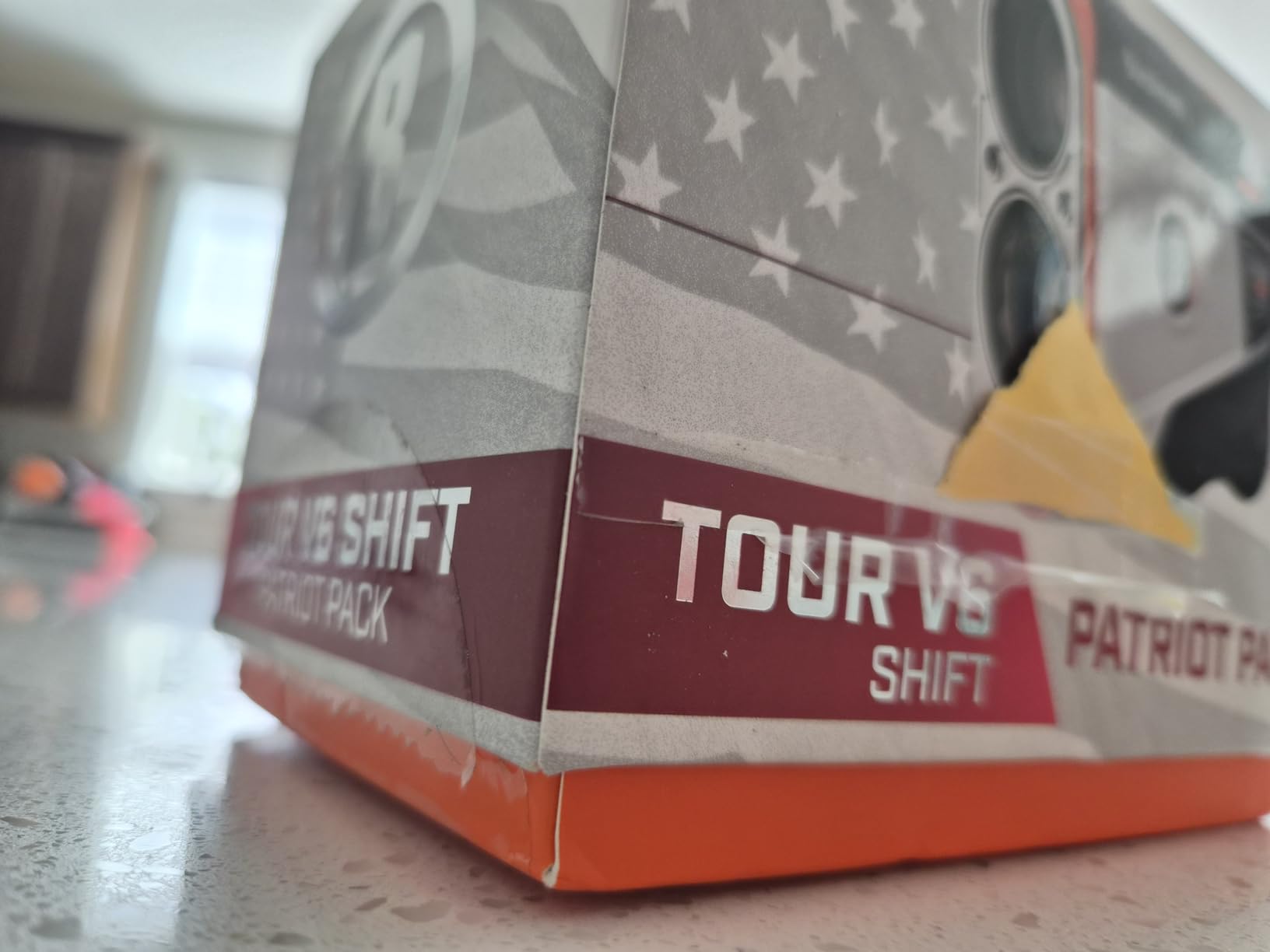
The Patriot Pack includes a premium case, microfiber cloth, quick start guide and a CR2 cell, plus a 2 year manufacturer warranty behind an IPX6 body. In a downpour on a wet fairway we never lost a reading, and the display stayed legible under hard midday sun at full zoom.
What we do not love is the size. At 16 ounces and with the largest footprint in this group, it lives in a cart bag rather than a trouser pocket. If you walk and shoot, that bulk is a real daily annoyance.
Buy the Tour V6 Shift if you want proof of legality you can point at
Choose it if you play rounds that count toward a handicap or a league standing, and if being asked to prove compliance is a scenario you would rather avoid entirely. It is also the right call for players whose home course has back tees that put the flag beyond 250 yards behind a line of trees.
It is also the safest recommendation on this list for the buyer who will keep the device for a decade. The brand, the flag feedback and the switch layout have not changed between generations in a way that leaves you relearning the controls.
Skip the Tour V6 Shift if you carry rather than ride
Walking golfers who carry a slim bag should look at the Bushnell A1-Slope further down this list instead. At 5.1 ounces it disappears into a pocket, and it shares the same external-style slope logic and PinSeeker JOLT feedback.
The disposable CR2 also means one less charging cable in the cart bag, which some traditionalists prefer and others see as an old-fashioned trade-off. Over a full season a fresh cell costs more attention than a USB-C cable costs storage.
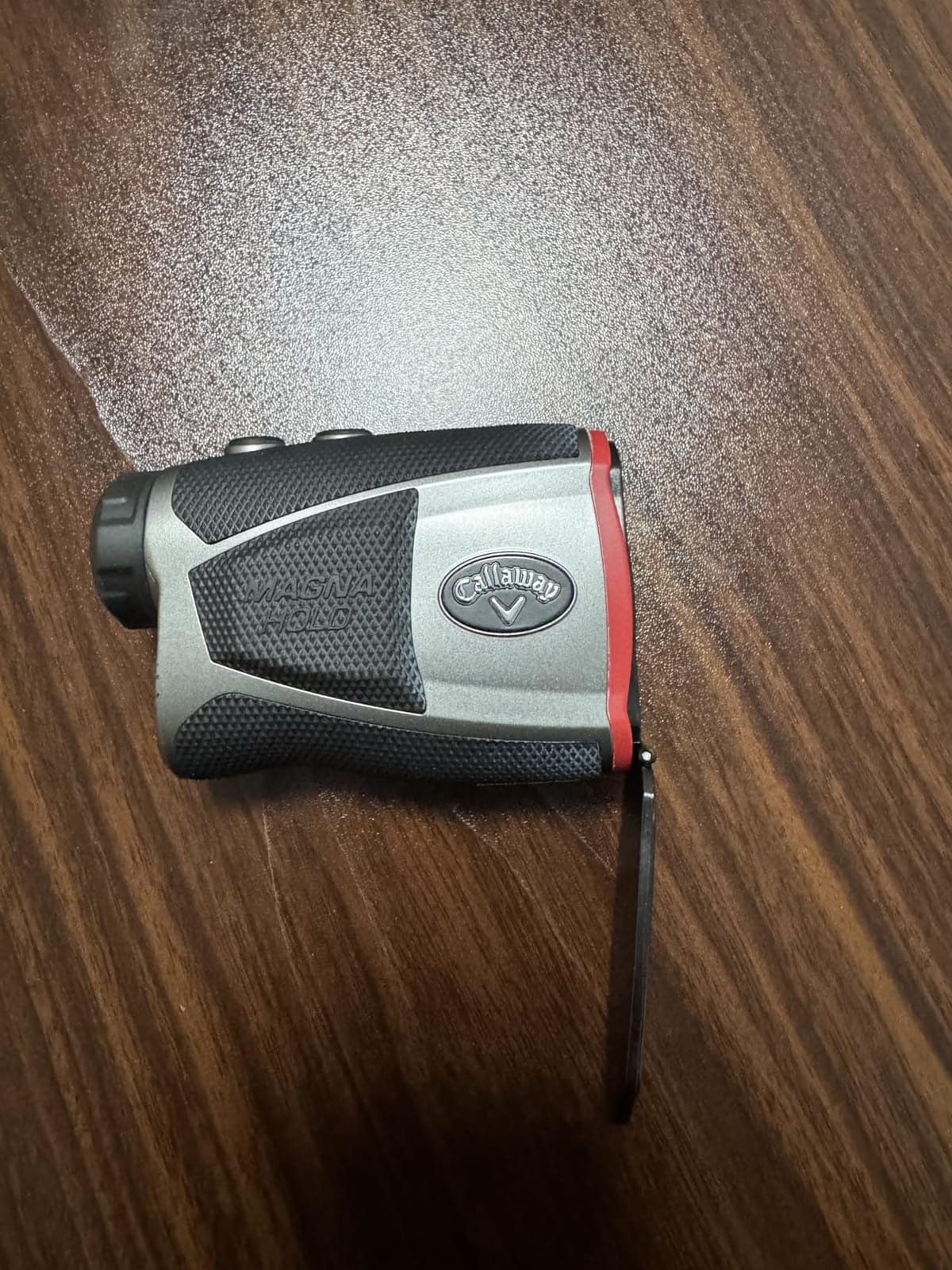
2. Callaway 300 Pro: best for pin lock and a proven long-term record
- External slope on and off switch is legal for competition
- Pin Acquisition locks the pin to 300 yd with pulse vibration
- Plus or minus 1 yard accuracy across a 5 to 1000 yd range
- Compact 8 oz body fits a cup holder and a pocket
- Integrated Magnahold cart magnet
- Deepest review base of any unit here
- Readings can vary by 1 to 2 yards on repeated shots
- Cart magnet is strong enough to leave the unit behind
- Small body may feel cramped next to larger flagships
More than 12000 owners have filed a rating on this device, and that kind of history changes how you read the complaints. When a thousand people say the same number comes back, the occasional 1 to 2 yard drift is a known characteristic of the model rather than a defect in your particular unit.
Pin Acquisition Technology locks onto the pin out to 300 yards and confirms with a pulse vibration, so you are not guessing whether the flag or the cart path behind it produced the reading. The 6X magnification and 5 to 1000 yard range cover everything from a wedge to a driver on a long par four, and the external slope switch is a real hardware control rather than a buried setting.
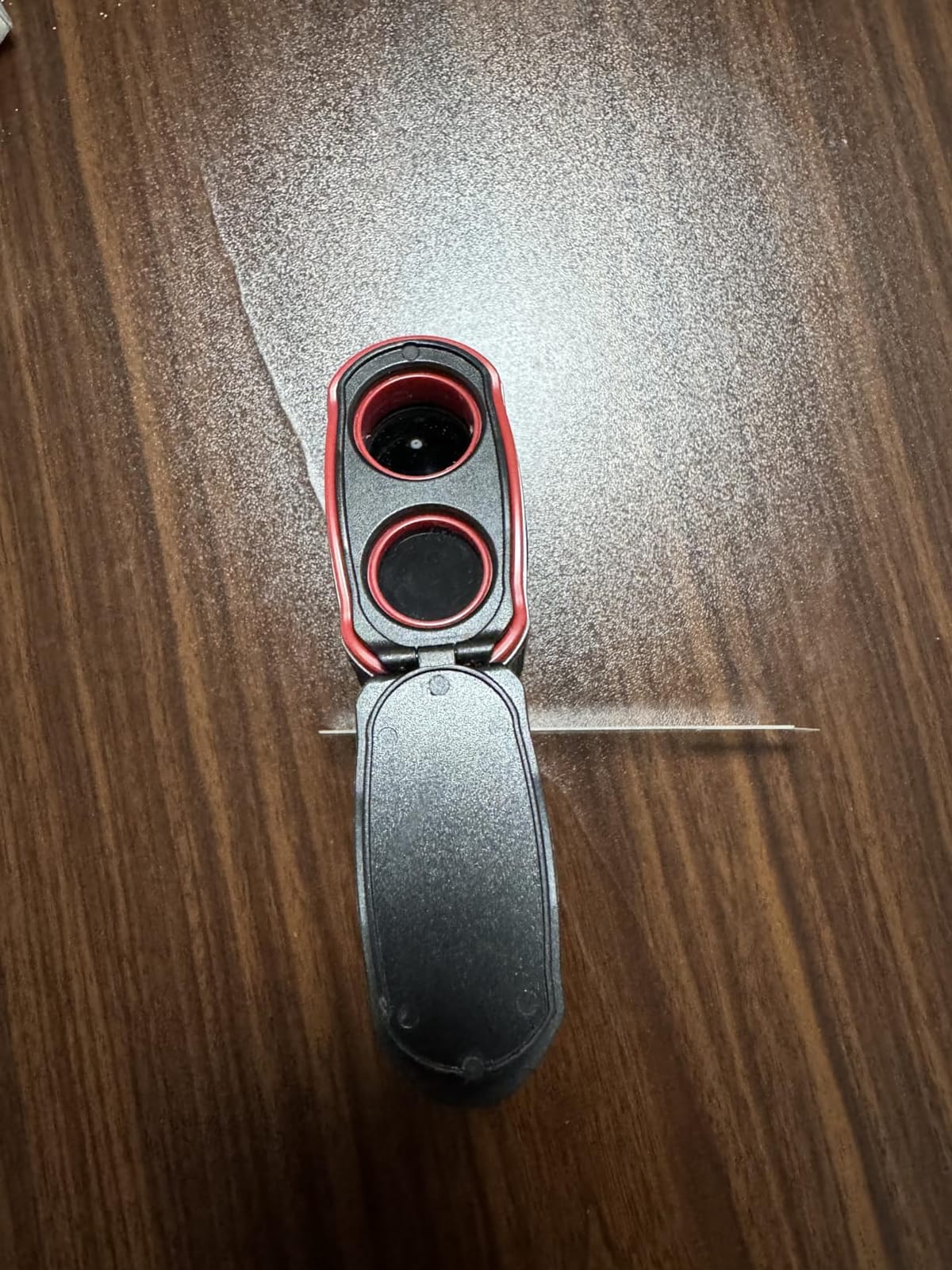
Owners also report battery life measured across 100-plus rounds on a single CR2, which removes charging from your pre-round checklist entirely. The included molded hard case with carabiner clips to a bag loop and the lens cloth keeps the front element clear in a cart bag.
The one thing to watch is that Magnahold magnet. It is strong enough that reviewers repeatedly mention finding the unit still attached to the cart after a round, so build a habit of pocketing it at the 18th green.
Buy the Callaway 300 Pro if reliability history matters more than screen size
This is the pick for a golfer who buys one device and wants it to still work in six seasons. A 12225-review base means the failure modes are already known, and the parts, batteries and firmware quirks are documented by other owners rather than by you alone.
It is also a strong fit for a caddie-bag setup, because the hard case and the carabiner keep the unit off the cart floor where it collects grit and gets forgotten.
Skip the Callaway 300 Pro if you need range beyond 1000 yards
At a 1000 yard ceiling this unit cannot reach a green on a par five played from a raised tee, which is exactly the situation the 1300 yard units were built for. Bushnell’s Tour V6 Shift and Tour V7 Shift both cover that case.
If you also play a lot of night events or fog, the 300 Pro has no automatic display adjustment to fall back on. In flat evening light it is fine, and in genuinely low light you will be squinting.
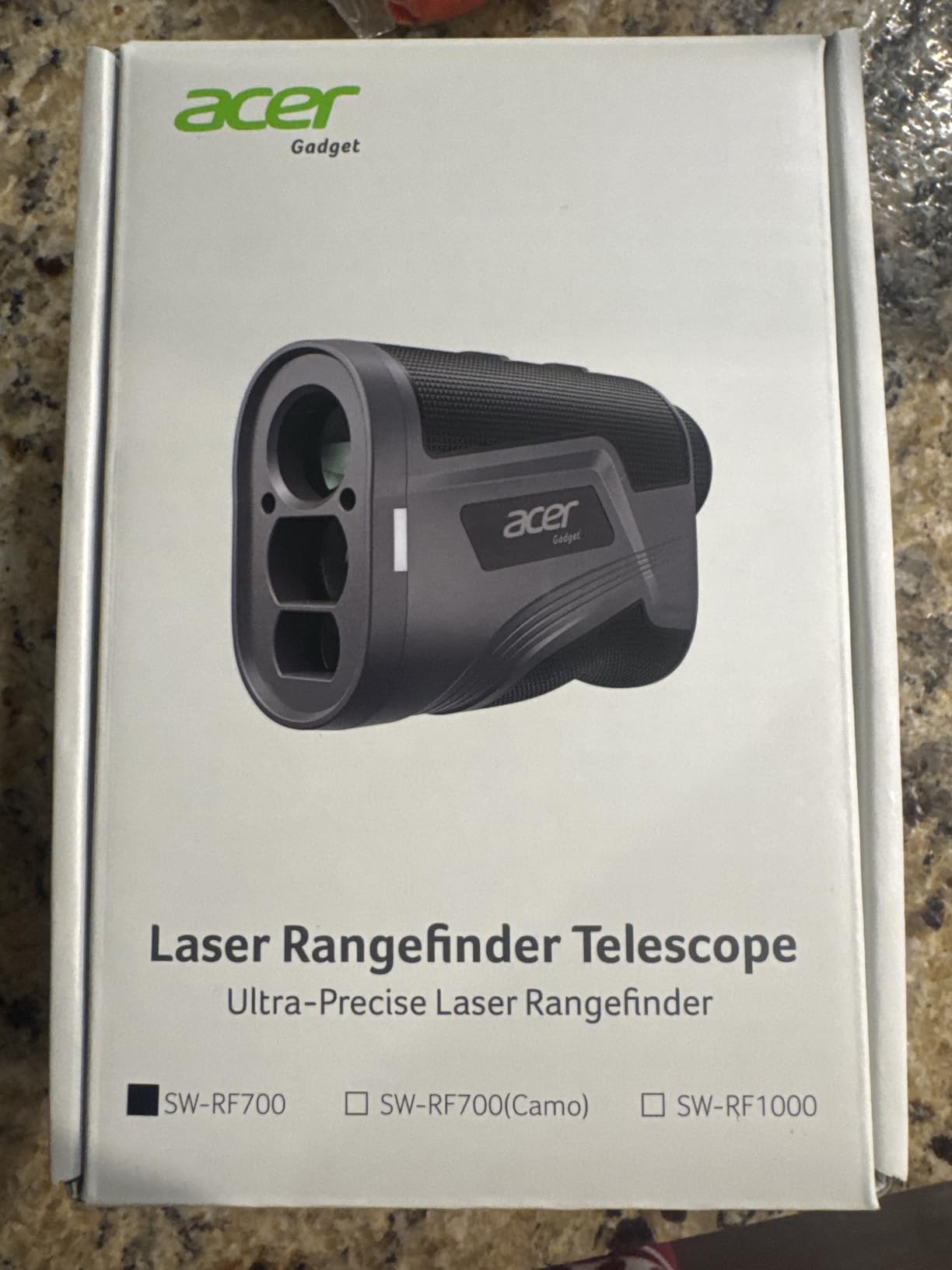
3. Acer Gadget Golf Rangefinder: best value with a USB-C battery
- USB-C rechargeable cell removes mid-round battery changes
- Anti-shake steadies readings on unsteady shots
- Flag lock vibration confirms target acquisition at 800 yd
- Plus or minus 0.5 yard accuracy on a bright LCD
- Magnetic housing for cart attachment
- Ranks first in golf rangefinders with a deep review base
- 800 yd maximum is the shortest in this group
- Slope-off mode can still display slope data on screen
- Some users struggle to acquire a lone flagstick
This is the unit we recommend to a handicap golfer joining a first club event. It covers every feature that matters for legality, including a dedicated slope on and off control, and it charges over USB-C from the same cable as your phone and glove heater.
Six measurement modes cover slope compensation, vertical and horizontal distance, angle, speed and continuous scan, so the same body works as a hunting unit in the off season. Anti-shake technology did steady out readings on our wobbliest address, and the flag lock vibration confirmed the target at 800 yards.
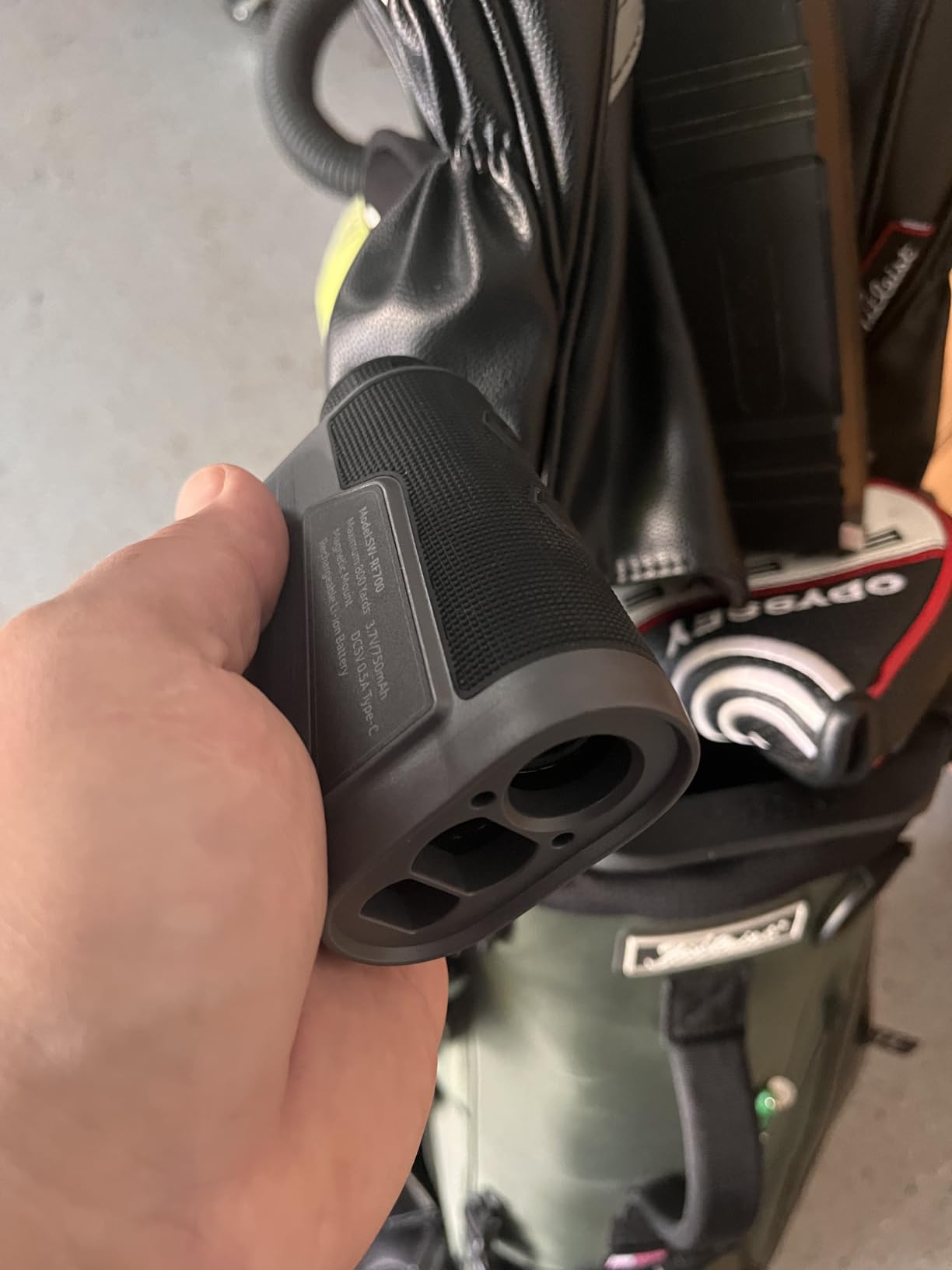
The polycarbonate body at 11.2 ounces sits in the middle of the weight class here, and the built-in magnetic housing attaches to a cart without needing a separate accessory. The listing carries a 1 year warranty, which is the shortest cover among the picks we rate highly.
One detail deserves attention from a rules point of view. Owners report that the slope-off mode can still show slope information on the display rather than hiding it entirely, and some event rules read that as providing an adjusted measurement. If your event is strict about what may be displayed, test it at home first.
Buy the Acer Gadget if you want legal features without the flagship bill
It is the sensible first tournament rangefinder for a player who plays a limited number of counting events and does not want flagship hardware before knowing how much slope data they will use in practice rounds. The rechargeable cell is a genuine upgrade over disposable cells for a once-a-month player.
The plus or minus 0.5 yard accuracy specification is also tighter than most of the premium units on paper, and 6X magnification is enough to separate a flag from a background of trees on most courses.
Skip the Acer Gadget if you play long par fives or hunt for small targets
At 800 yards, the shortest range in this group, it simply cannot measure a green from a long elevated tee. That is not a defect, it is a ceiling, and it rules the device out of the deepest courses.
If your event bans any device that displays slope information even when the adjustment is off, this is also not the unit for you. Confirm the display behavior with the manufacturer before you register.
4. REDTIGER Golf Rangefinder 7X: standout magnification and a transflective display
REDTIGER Golf Rangefinder with Slope On/Off,7X Magnification 1200 Yards
- 7X magnification is the highest figure in this roundup
- Transflective LCD stays readable in harsh sun
- 5 to 1200 yd range at plus or minus 0.5 yd accuracy
- USB-C cell rated for 30000 charge cycles
- Magnetic strip plus an included belt clip
- Two year unconditional warranty with lifetime support
- Pin acquisition can take several attempts on distant flags
- Readings less consistent than a premium unit in wind
- IP54 water resistant rather than fully waterproof
Magnification is the spec golfers argue about most and understand least. What 7X buys you is the ability to fill the eyepiece with a distant flag, which in practice means separating a 250 yard pin from a dark treeline without hunting for focus.
On this unit the transflective LCD was the surprise. It reflects ambient light rather than glowing on its own, and it stayed readable in the hardest midday sun we tested, where some backlit competitors turned to mush. The 5 to 1200 yard range and plus or minus 0.5 yard accuracy class it with the flagships on paper.
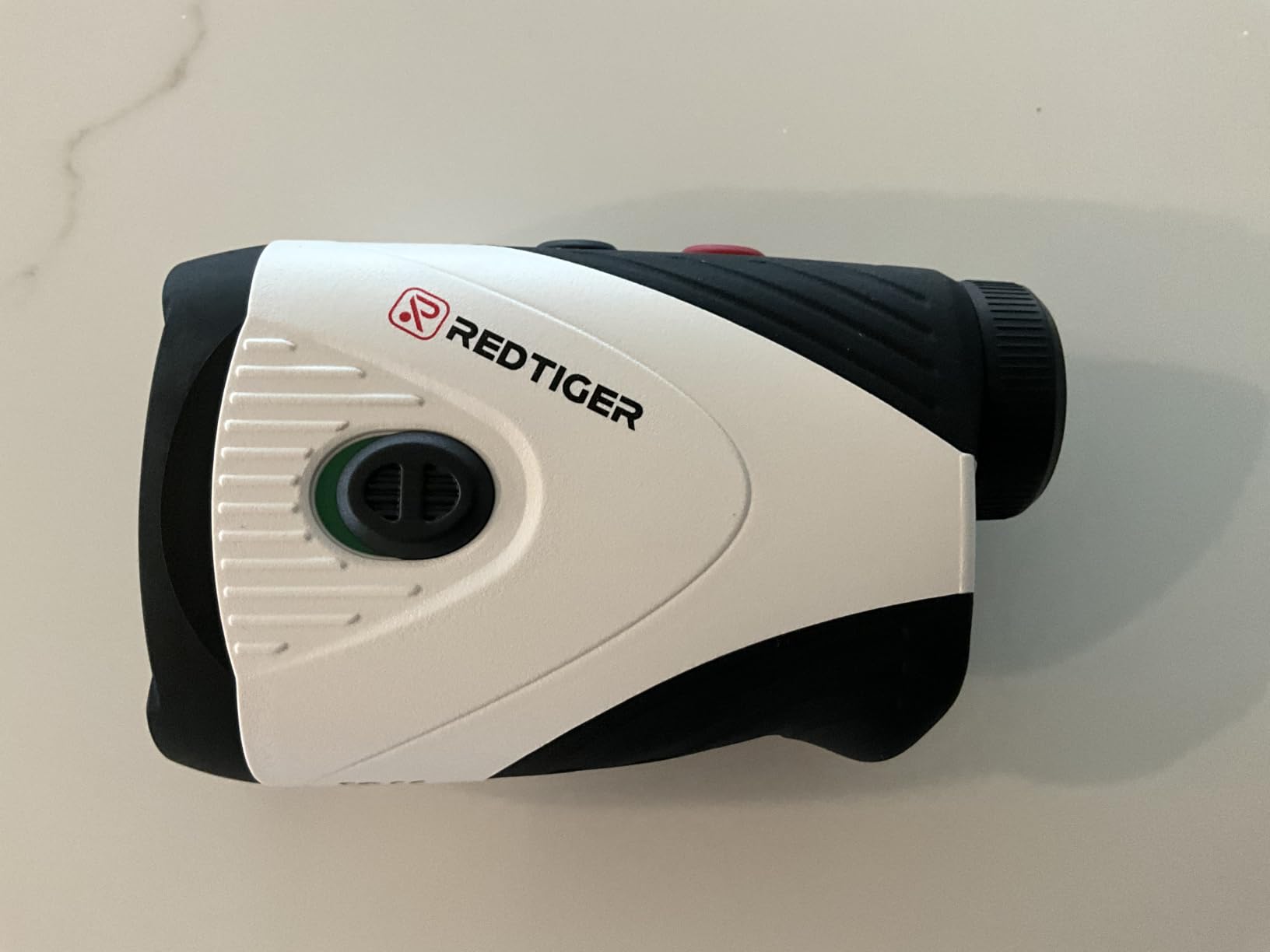
Battery life is a genuine strength. The USB-C cell is rated for 30000 charge cycles and the two year unconditional warranty with lifetime technical support is the best written cover in this group. The included magnetic belt clip, hand rope, soft case, cable and lens cloth make it a complete package rather than a bare device.
Where it lags is consistency. Owners describe needing several attempts to acquire a distant flag, and readings drifting more than a premium pin seeker would in wind or with unsteady hands. For a player who takes one practice swing and locks instantly, that is fine. For a player who needs certainty before a putt, it is not.
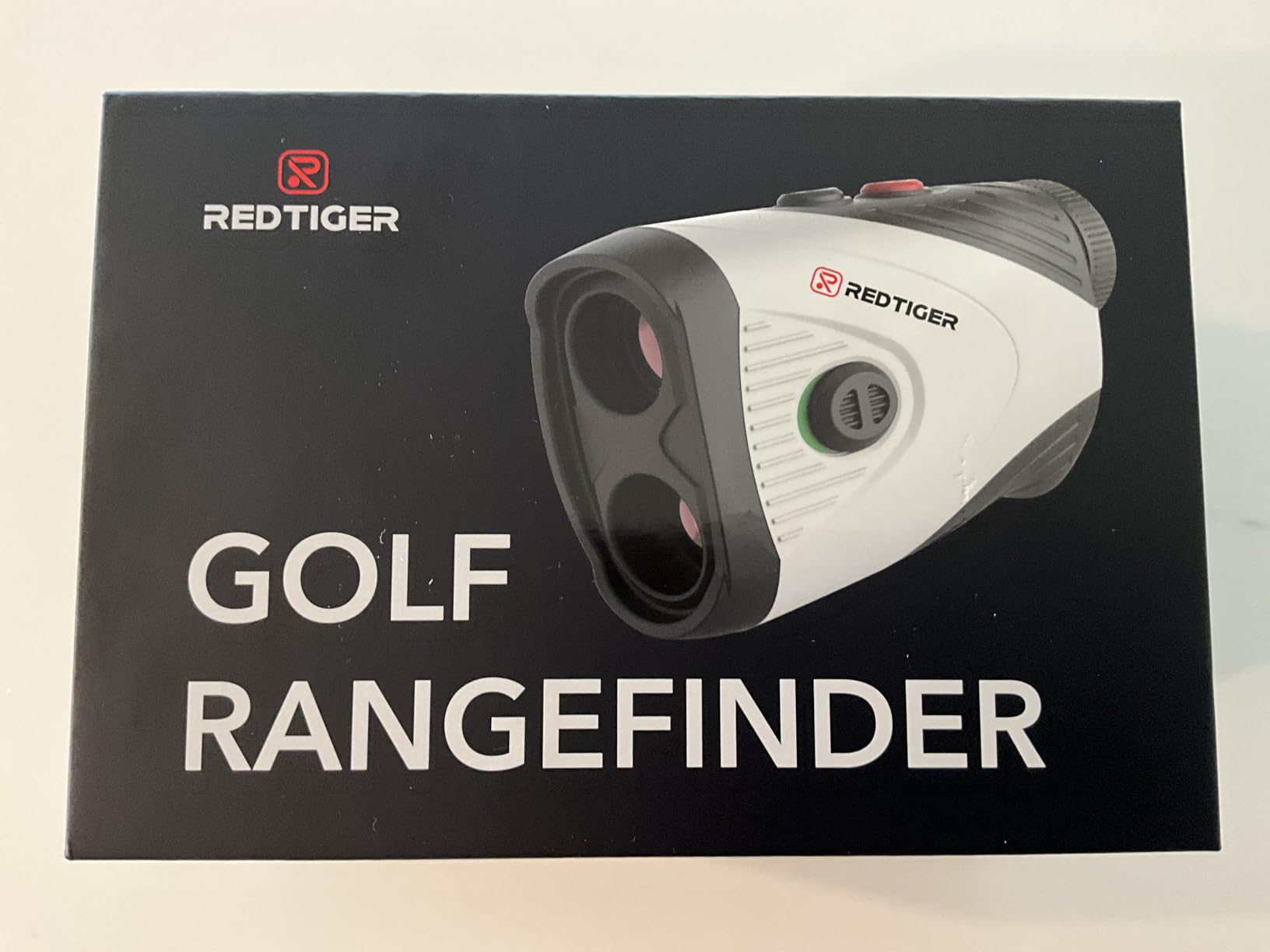
Buy the REDTIGER if you shoot long approaches into narrow landing areas
The extra magnification earns its place on courses where the pin sits in front of trees rather than in open space. A wider view also makes it easier to check that you are measuring the flag and not a player or a marker behind it.
The transflective display is a second reason. Golfers who have struggled with washed-out screens in summer competition will notice the difference immediately, and the rechargeable cell means no battery change between the 4th and the 5th tee.
Skip the REDTIGER if repeatability under pressure is the priority
The recurring note across owner reviews is that distant flag acquisition takes patience. If you are playing a final-round match and you have 15 seconds on every shot, a device that needs three attempts is working against you.
IP54 means water resistant rather than waterproof, so a soaked round in heavy rain is a scenario you should plan around rather than ignore. A hard case matters more on this device than on the sealed bodies in this list.
5. Blue Tees Golf Series 3 Max+: the display that adapts to changing light
- Auto-ambient display shifts text color as light changes
- Slope switch toggles for tournament legality
- Flag Lock pulse vibration confirms the true target
- Built-in magnetic strip for cart or metal surfaces
- Rechargeable battery with a 1000 yd range
- Case
- lanyard
- cloth
- cable and 2 year warranty included
- Lowest average rating of the ten picks at 4.3
- Listed 16 oz weight is heavy for a pocket device
- Water resistant rather than waterproof
- Range and 6X trail the 1300 yd flagships
The Auto-Ambient display is the feature that separates this unit from the pack. It changes the text color automatically as the light changes around you, which means the same screen works on a shaded opening tee and a sunlit 18th green without you touching anything mid-swing.
The Flag Lock pulse vibration confirms that you have measured the pin rather than the fence behind it, and the slope switch handles the compliance question in one press. The built-in magnetic strip is strong enough to sit on a steel cart frame or a club shaft without a separate mount.
The box is well thought out, with a weather-resistant case, lanyard, microfiber cloth, USB-C cable, a 2 year warranty and a 60 day money-back guarantee. On a 1000 yard range at plus or minus 1 yard accuracy, that covers the overwhelming majority of golf holes.
We want to be straight about the weak point. A 4.3 average is the lowest of the ten picks here, and the share of one-star reviews points at inconsistent lock performance rather than a single isolated fault. The listed 16 ounces is also heavy for something this compact, and a 6X magnification at 1000 yards is behind the 7X and 1300 yard units.
Buy the Blue Tees Series 3 Max+ if you play in wildly changing light
Twilight society golfers and early-morning league golfers get the most from a display that adjusts itself. It also solves the glove problem, because you are not adjusting a contrast dial with a cold hand between shots.
For a golfer who wants slope data in practice and a clean compliance story in competition, the switch plus the flag lock feedback is a sensible pairing at this price tier.
Skip the Blue Tees Series 3 Max+ if you need proven consistency above all
The rating gap against the leaders is not dramatic, but in a match play final the odds of a mid-round lock failure matter more than an adaptive display does. If your competitive record depends on the number being right the first time, take the unit with a deeper, more consistent history.
It is also not the right body for a walking golfer who wants a pocket unit, and 1000 yards will not reach a long par five green from a raised tee.
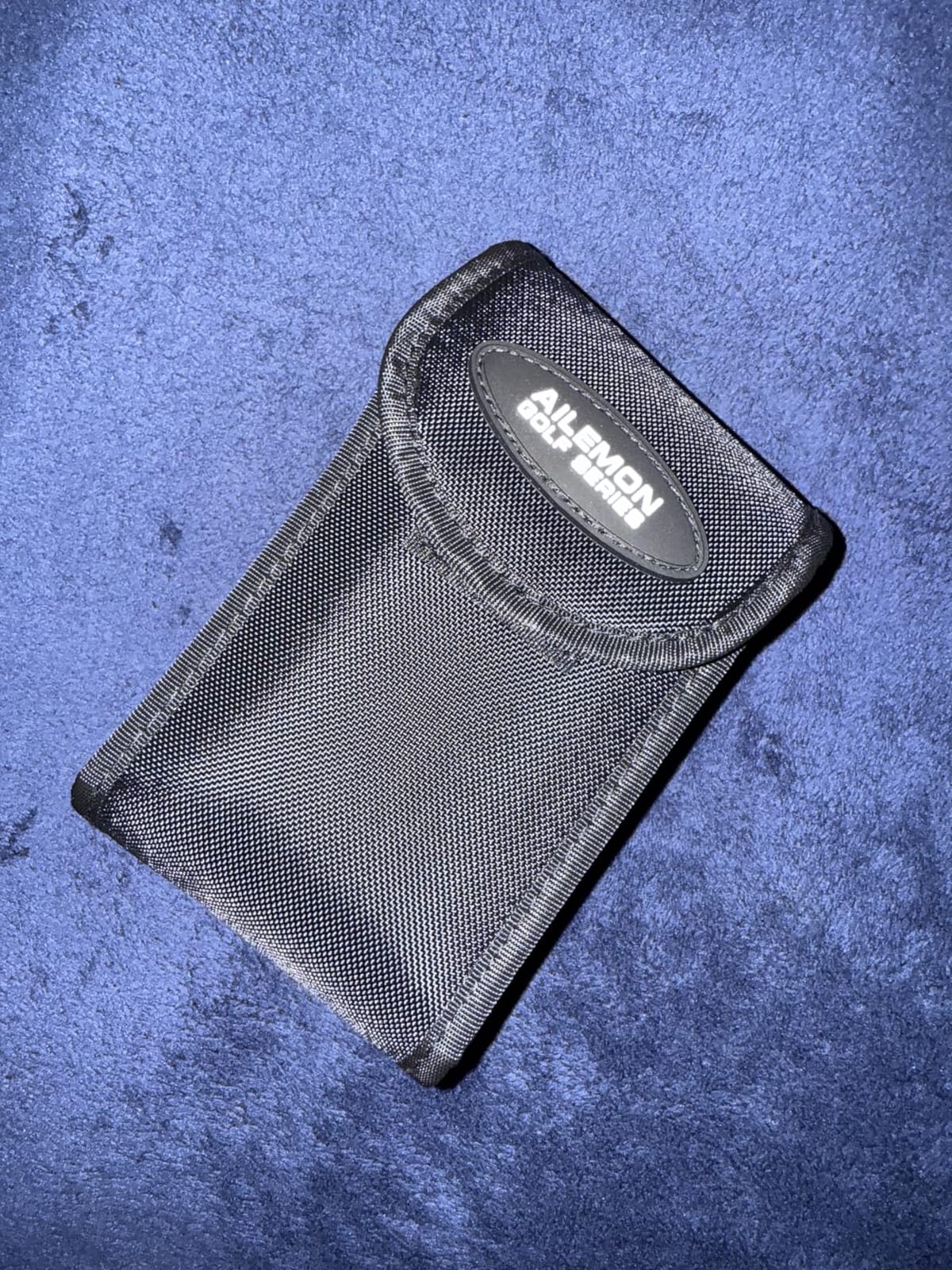
6. AILEMON Golf Rangefinder: two buttons and a physical slope switch
AILEMON Golf Rangefinder with Slope Switch for Tournament Use, 900 Yards
- Dedicated slope switch with a red LED confirmation light
- Two-button layout is the fastest to learn
- 900 yd range at plus or minus 1 yd accuracy
- Flag lock vibration out to 250 yd
- AAA batteries keep the controls simple
- IP54 water resistant with a 1 year warranty
- Vibration motor has been reported failing after a few weeks
- AAA batteries are not included
- Only 250 yd flag lock capability
- Optics are basic next to premium glass
This is the rangefinder for someone who does not want to learn a menu. Two buttons, one dedicated slope switch with a red LED that tells you the compliance state at a glance, and nothing else to remember between the tee and the green.
Owners are struck by how closely a budget unit matches pricier devices on raw distance accuracy, with a 5 to 900 yard range at plus or minus 1 yard. The 6X multi-coated optics are adequate rather than exceptional, and the flag lock vibration works out to 250 yards in golf mode.
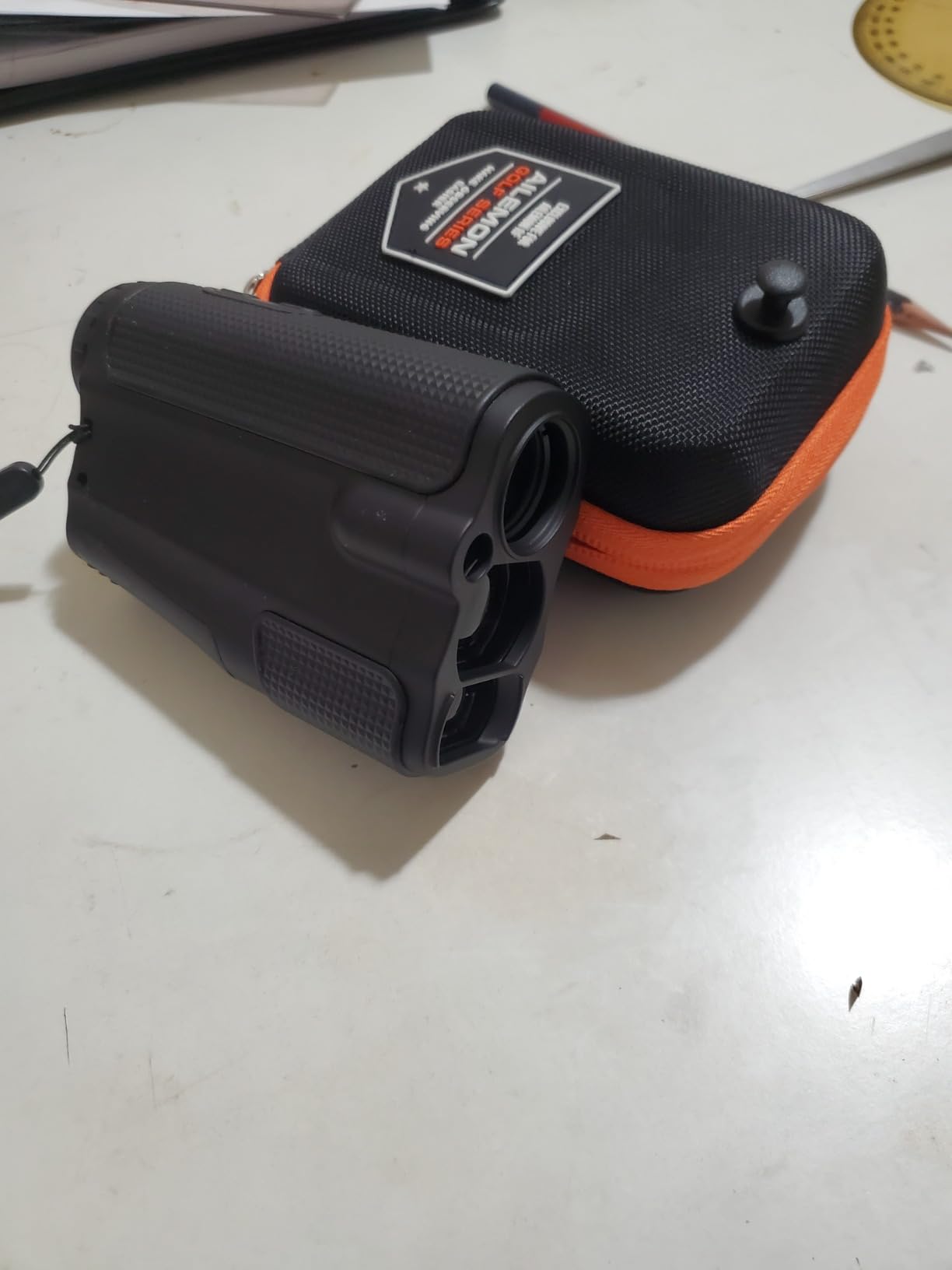
Running on standard AAA batteries is a genuine preference for some golfers, because there is no charging routine and no dead rechargeable cell at hole 15. The dual golf and hunting modes with silent scan make it useful outside golf season too, which is where our hunting rangefinder picks come into their own.
Two reports worth taking seriously: some units lose vibration confirmation after a few weeks, and the batteries are not included. The 250 yard flag lock is the shortest in this group, so this is a short-iron and mid-iron device rather than a driver device.
Buy the AILEMON if you want the simplest legal device you can find
It is the right pick for an older golfer, a beginner in their first season of league play, or anyone who does not want a settings menu. The red LED means you can confirm the mode without reading the screen at all.
Battery simplicity is a real advantage too. If you already keep a pack of AAA cells in your cart bag for a GPS watch, this device never becomes another charging item on your list.
Skip the AILEMON if you drive the ball and need long pin lock
A 250 yard flag lock stops helping exactly when a competitive golfer needs it most, which is on a long par four where the pin sits beyond 250. The vibration failures reported on some units also remove the confirmation that makes a cheap device trustworthy.
Basic optics also show in low light. If you play floodlit or twilight events regularly, the display on this body will not serve you as well as a transflective screen or an auto-adjusting one.
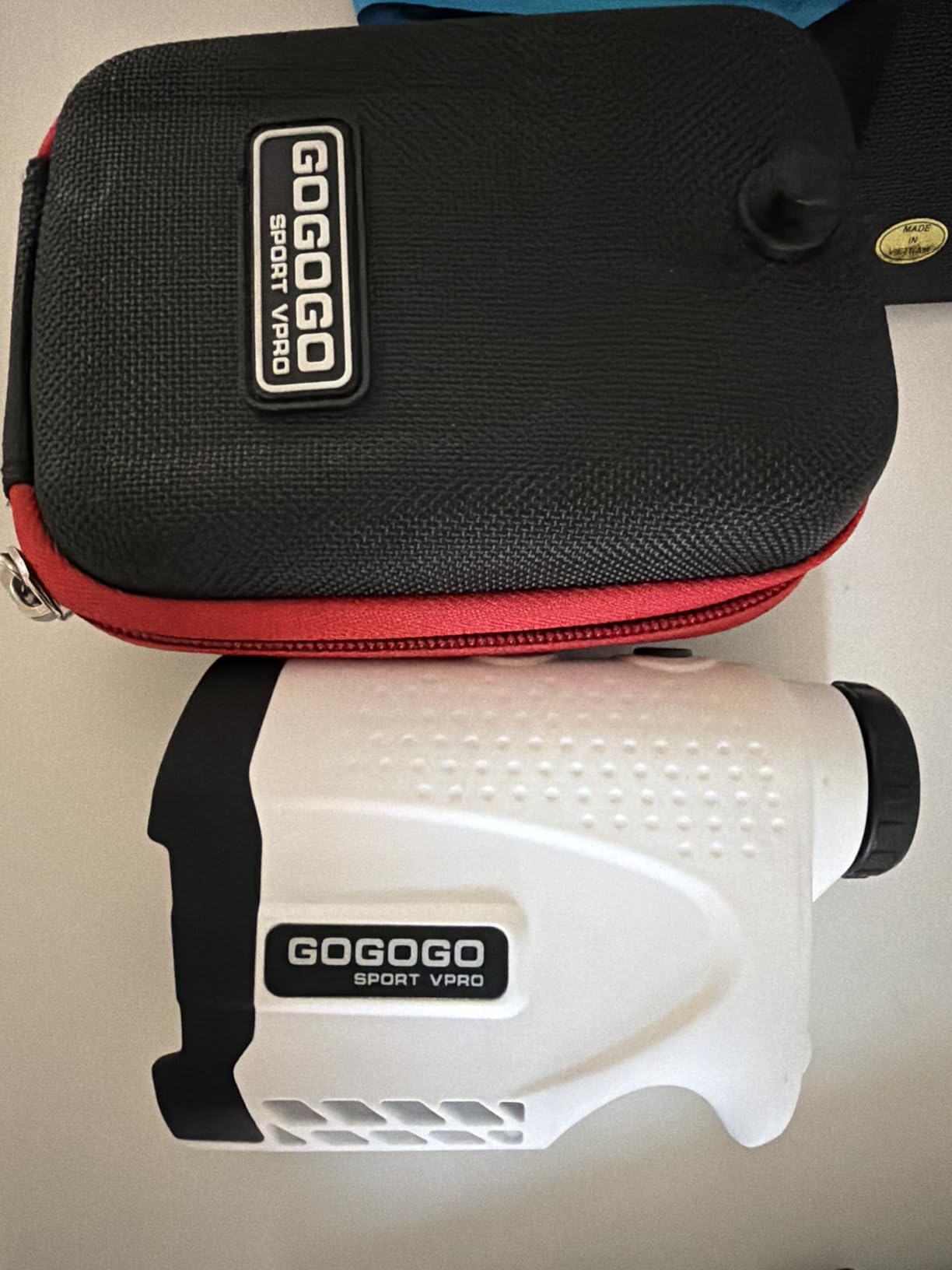
7. Gogogo Sport Vpro: dual power and the deepest flag lock in the mid tier
Gogogo Sport Vpro Magnetic Golf Rangefinder with Slope Switch, Red OLED
- 1200 yd range at plus or minus 0.5 yd with 6X magnification
- Dual power with USB-C cell and AAA backup
- Red display with 5 brightness levels and 90 percent transmittance
- Flag locking out to 350 yd
- Built-in magnet for cart or metal surfaces
- Slope switch with straight-line
- adjusted and angle readouts
- Smallest established review base after the two newest flagships
- Red display can be hard to read in overhead sun
- Only a 1 year warranty against 2 year cover on most rivals
Dual power is the underrated feature here. A USB-C rechargeable battery covers most of your season, and the AAA backup means a flat cell at the 12th tee is an inconvenience rather than a round-ending problem.
Range is 5 to 1200 yards at plus or minus 0.5 yard accuracy with 6X magnification, and the flag lock works out to 350 yards, the longest in this group apart from the Vortex unit. The slope switch exposes straight-line distance, slope-compensated distance and the angle between them, so you always know which number you are looking at.

The red LCD offers five adjustable brightness levels, and the silent hunting and scan mode is a nice touch for practice fields. At 229 g the body is a substantial but manageable weight, and the carrying case, wrist strap, cloth and USB-C cable are all included.
Two honest caveats. The red display is genuinely difficult in hard overhead sun, and with 232 ratings the long-term track record is thinner than any other unit on this list apart from the two newest flagships. The 1 year guarantee is also shorter than most.
Buy the Gogogo Sport Vpro if you play events in variable weather and light
Five brightness levels plus a red display is a good combination for a golfer who plays dawn events, shaded woodland courses and midday summer league golf in the same month. The AAA backup removes battery anxiety from a counting round.
For a player whose home course punishes a misjudged approach, 350 yard flag lock and a 1200 yard ceiling cover the shots that actually decide scores.
Skip the Gogogo Sport Vpro if your calendar is summer midday golf
If your rounds are almost all in bright overhead sun, the red display works against you and a transflective or auto-adjusting screen would serve you better. The manual brightness levels do not fully solve it when the sun is straight above.
A thinner warranty and a shorter history also make it a harder purchase than a comparably priced unit with thousands of ratings behind it, if you intend to keep the device for many seasons.
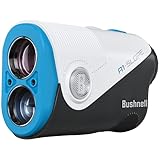
8. Bushnell Golf A1-Slope: the smallest and lightest legal unit here
- Only 5.1 oz so it disappears into a trouser pocket
- Flag accuracy from 1 to 350 yd with 1300 yd maximum range
- PinSeeker with JOLT vibration confirms the lock
- USB-C rechargeable rated for 50 plus rounds per charge
- Includes a BITE magnetic skin
- case
- cloth and cord
- 2 year manufacturer warranty
- Smallest screen in the Bushnell lineup
- Only 123 ratings so far
- Cart mounting needs the separate BITE magnetic skin
At 5.1 ounces and 3.75 inches long, this is the unit we recommend to a walking golfer who plays a full round on foot and carries everything in a bag with no cart pocket. The 2026 version of the compact Bushnell comes with USB-C charging and 50-plus rounds per charge, so a weekly league player charges it once a month.
Range is 5 to 1300 yards with reliable flag accuracy from 1 to 350 yards, and PinSeeker with JOLT vibration tells you the moment you have the flag rather than a bystander. The patented slope technology has a tournament-legal on and off mode, and the same JOLT language as the Tour V6 means the controls feel familiar.
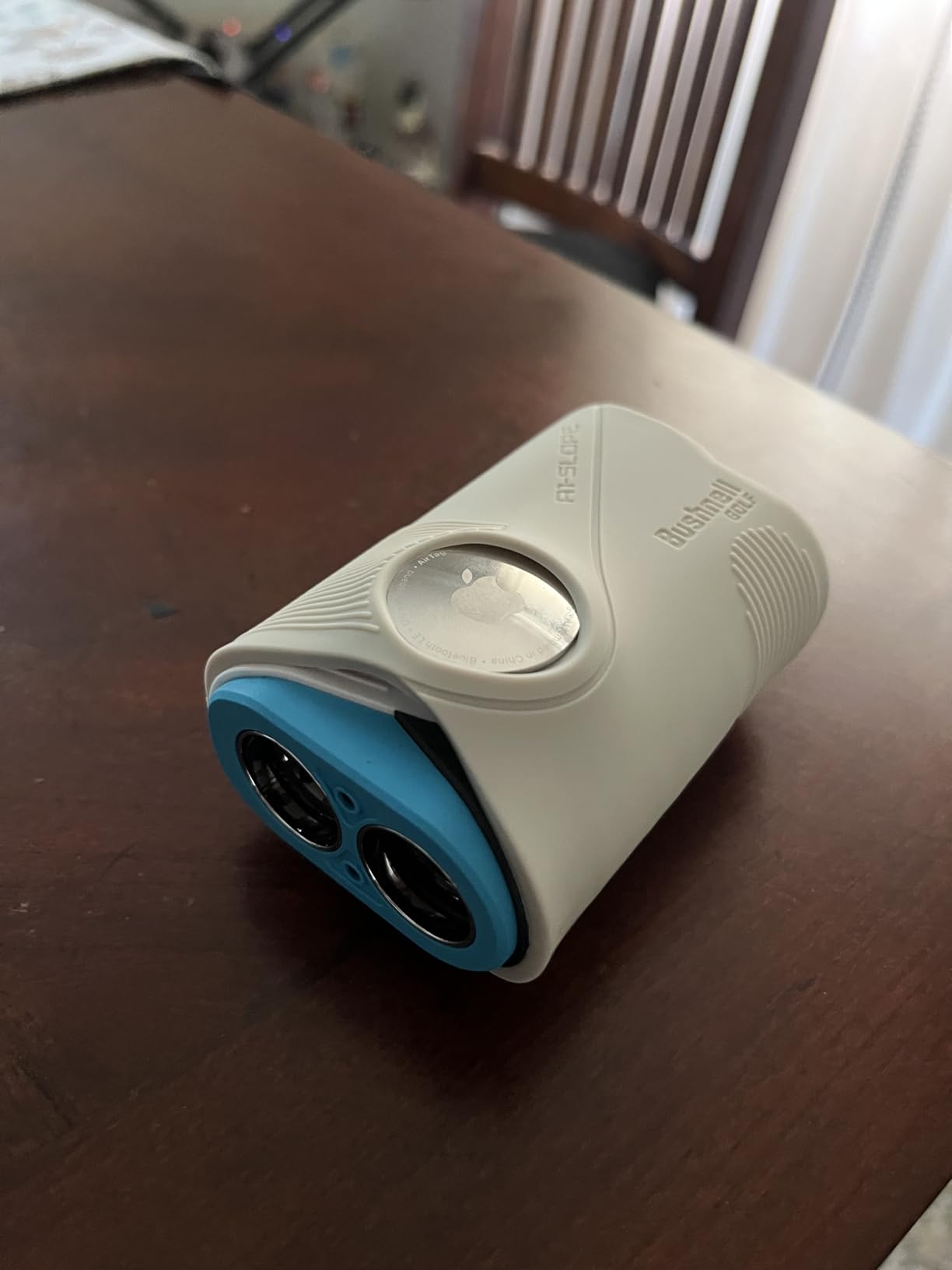
The BITE magnetic skin included in the box is how it mounts to a cart when you do have one. It is a separate piece rather than an integrated magnet, which is the cost of the small body.
Two limitations. The screen is the smallest in the Bushnell range, which means a slightly longer look to read a number in fading light, and 123 ratings is a short history for a device we are recommending as a long-term buy. The 4.7 average is impressive, but it rests on fewer owners than the other Bushnell units here.
Buy the Bushnell A1-Slope if you walk the course and carry a slim bag
It is the only unit in this roundup that disappears into a pocket while still covering 1300 yards. If you shoot 36 holes without a cart, the weight difference between this and the Tour V6 adds up across a season in a way the specification sheet does not show.
The rechargeable cell is a further win for a walking player, because there is no battery to change on a tee box bench in the dark.
Skip the Bushnell A1-Slope if you read numbers quickly in bad light
If you are a glasses wearer, or you play a lot of twilight events, the compact screen forces a longer look than the larger bodies here. That extra half second is the difference between committing to a number and re-checking it.
Cart-only golfers should also weigh the separate magnetic skin against an integrated magnet. If you want the unit to live on the cart frame, the Tour V6 does it without an accessory.
9. Bushnell Golf Tour V7 Shift: the most information on the display
Bushnell Golf Tour V7 Shift Laser Rangefinder, Patriot Pack
- Dual-color OLED separates plays-like and actual distance
- One press returns the last measured yardage
- LINK pairs with Bushnell and Foresight launch monitors
- 1300 yd range at 6X with PinSeeker Visual JOLT
- Display stayed readable in bright light and rain
- Patriot Pack adds a divot tool
- case
- cloth and battery
- Feature set is dense and takes practice to master
- Highest figure of the ten picks
- Only 43 ratings on a recent launch
The dual-color OLED is the idea that changes how you club. Plays-like distance appears in green and actual distance appears in red, so a single glance gives you both the number for the slope-adjusted model and the number you must actually play, which is a real advantage in practice and a compliance aid in competition.
Yardage range recall returns the last measured distance with one press, which saves time when your playing partner is already addressing their ball. PinSeeker with Visual JOLT handles flag acquisition across the full 1300 yard range at 6X magnification, and the Slope First technology carries a tournament-legal mode.
LINK technology pairs the unit with Bushnell and Foresight launch monitors, which turns a range finder into the front end of a practice setup. Owners report that the display stays readable in bright light and that the unit works reliably through bad weather, and the Patriot Pack includes a divot tool, case, cloth, CR2 battery and quick start guide.
The honest problem is learning curve. One owner describes the feature set as technical and hard to figure out, and that is fair for a device this dense. A 43-rating launch history also means the long-term verdict on this model is still forming, and it carries the highest figure of the ten picks we reviewed.
Buy the Tour V7 Shift if you club off both numbers
Green for plays-like and red for actual is genuinely useful if you practice with elevation in mind and then want a clean competitive number on the same hardware. The recall function also suits quick play with a partner.
If you are building a home practice setup around a launch monitor, LINK pairing removes a step from that workflow. This is the pick for a golfer who treats the rangefinder as a data device rather than an accessory.
Skip the Tour V7 Shift if you want a device you will use correctly on day one
A dense feature set is a liability the week you enter your first event with it. If your priority is a number you can read instantly in a hurry, a simpler two-button or single-switch device serves you better.
The small rating base matters for a purchase at this level of the market. Nothing here suggests a fault, but the long history we look for before recommending a flagship does not exist yet.
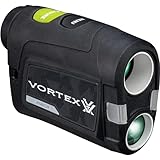
10. Vortex Anarch: image stabilization and a lifetime warranty
- Image stabilization gives a shake-free sight picture
- Longest flag ranging in this group at 450 yd
- External green LEDs go dark when slope is off
- PinSpotter vibrates three times with a flag symbol
- Magnesium chassis with rubber armor and cart magnet
- Unlimited unconditional lifetime warranty
- Smallest rating base of the ten picks at 42
- Listing states not water resistant despite waterproof copy
- CR123 battery rather than a rechargeable cell
- 9.2 oz magnesium body is heavier than plastic rivals
Image stabilization is the feature nobody else in this category offers, and it solves a problem every golfer recognises. A rangefinder that shakes at the end of a long address is a rangefinder that returns a different number each time you press the button, and stabilization is the physical answer.
Flag ranging runs to 450 yards, the longest figure of the ten units here, with reflective targets out to 1400 yards at plus or minus 1 yard accuracy. PinSpotter mode vibrates three times and flashes a flag symbol, which is a distinct confirmation you will learn to read instantly.
The external green LEDs are the most elegant compliance indicator we saw. When slope is on the indicators light, and when slope is off they go dark, so a playing partner or official can verify the state without handling the device. The magnesium chassis with rubber armor, built-in cart magnet, red illuminated display with automatic brightness, three reticle options and adjustable diopter round out a genuinely complete package.
Two things temper the recommendation. The listing states not water resistant even though the marketing describes a waterproof build, and that contradiction is worth asking the manufacturer about directly. The 42-rating base is the smallest here, so most of the evidence rests on specifications rather than owner history, and the 9.2 ounce magnesium body and CR123 battery are old-school choices.
Buy the Vortex Anarch if your biggest frustration is a shaking sight picture
Stabilization helps most on long shots where your pulse is worst and the target is smallest, which is precisely the shot where an unstable reading costs you a club. For players who re-check the same flag three times, this solves the problem rather than asking you to calm down.
The external slope indicators are the other reason. If you play with a group that is anxious about rules, a visible light that goes dark removes an entire conversation.
Skip the Vortex Anarch if you need a rechargeable battery and rain insurance
A CR123 cell means you keep spare batteries rather than a cable, and the water resistance listing is ambiguous enough that we would not rely on it in a wet round. For a golfer playing in a wet climate, a device with a clear IPX6 or IPX7 rating is a safer purchase.
With 42 ratings, you are buying on the strength of a manufacturer’s specification sheet. If you prefer evidence from thousands of owners, the Callaway 300 Pro or the REDTIGER offer a far longer history.
Tournament Legality: What USGA Rule 4.3a Actually Says?
Yes, most golf tournaments allow a rangefinder, but only in distance-only mode. Rule 4.3a permits a device that measures distance, and prohibits a device that measures or estimates information a player could not otherwise know. Slope-compensated yardage, elevation-adjusted carry, wind-adjusted distance and club recommendations all fall on the prohibited side.
The distinction that catches most players is this: carrying a slope-capable unit is not the violation, using an adjusted reading is. A device with slope switched off and the function never opened is legal, which is why every model in this guide carries a hardware or single-press slope control.
Rule 4.3 governs how equipment is used during a round, not what you may carry in the bag. Keeping a slope unit in the pocket of your stand bag during a distance-only event is not an offense, but pulling it out and using it is.
Allowed during a round in a distance-only event:
Straight-line distance to any target, including the flagstick, with no adjustment
Distance to a boundary, hazard or layup point
Distance already available from a marked yardage or a pacing device
Use by a caddie on behalf of the player, subject to the event’s Local Rules
Not allowed during a round:
Slope-compensated or plays-like distances, and elevation-adjusted carry figures
Wind, temperature, altitude or air-density corrections to the distance
Club recommendations, swing data or anything the player could not work out unaided
Any readings taken from a golf cart during play, where Local Rules may restrict device use
The penalty structure is the part golfers underweight. A breach in stroke play costs two strokes, in match play the hole is lost, and a second breach in the same round results in disqualification regardless of score. On a course where a single putting difference decides the match, that is a real exposure rather than a technicality.
Golfers on r/golf describe the consensus accurately: most committees permit a slope-capable unit as long as slope is switched off, while a minority of events ban every electronic distance device outright. A recurring forum complaint is that no manufacturer states tournament mode prominently on the product page, and that it is buried in a manual. That is why we test for it above.
One forum-documented tactic deserves a clear warning. Some golfers discuss removing a faceplate or sensor to make a device permanently incapable of calculating slope. A permanent modification creates its own problems under the equipment rules, so the safer path is the unmodified device in a known state.
Where Rangefinders Are Banned and Where They Are Fine in 2026
Policy is set by the Terms of the Competition and the Local Rules of each event, not by the base rulebook alone. The map below reflects 2026 season practice. Always check the Local Rules sheet for the specific event before you register, because these policies change between seasons.
Club and league events — commonly distance only, with slope prohibited under Rule 4.3a. Confirm in the event instructions, as some leagues ban all devices.
Handicap-posting rounds — treat them as competitive. A two-stroke penalty can alter your Handicap Index, so a distance-only routine matters more here than in a casual round.
USGA amateur championships — distance-measuring devices are generally permitted, subject to the championship’s Local Rules.
USGA open championships, including the U.S. Open and U.S. Women’s Open — rangefinders are prohibited during the competitive round under the event’s Local Rules.
The Masters Tournament — rangefinders are prohibited during the round. Treat any similar rule at a single-round major as binding regardless of what the device page says.
PGA Championship — distance-only devices have been permitted in recent seasons. Verify against the current championship Local Rules.
PGA TOUR — rangefinders are not permitted in the competitive round. Players and caddies use them in practice rounds and on the range, which is where most public sightings come from.
PGA TOUR Champions and Korn Ferry Tour — policy has moved toward permitting distance-only devices as pro tour trials have concluded. Check the event Local Rules for the specific round.
PGA TOUR Americas — distance-only use has been permitted in recent seasons, subject to the event Local Rules.
The practical takeaway is that a compliant club event, a PGA Championship round and a Korn Ferry round can share the same device, while a U.S. Open or Masters round cannot use one at all. A single unit with an obvious slope switch covers every distance-only situation you are likely to face in a season.
How to Switch Your Rangefinder Into Tournament Mode
Do this at home, not on the first tee. The routine takes under a minute once you have practiced it, and every unit in this roundup reaches distance-only mode through one of these paths.
Read the event Local Rules first. Confirm the event is distance only and that devices are permitted at all before you touch the hardware.
Find the slope control. On the Callaway 300 Pro, Bushnell Tour V6 Shift, Tour V7 Shift, A1-Slope, REDTIGER, Blue Tees Series 3 Max+, Acer Gadget, AILEMON and Gogogo Sport Vpro it is a switch or single-press toggle. The Vortex Anarch uses external green LEDs that go dark when slope is off.
Switch slope off and confirm the visual indicator. A red or green LED state, a label change, or the Vortex LEDs going dark tells you the mode without reading the number.
Take a test reading. Aim at a flat, level target such as a tee marker and confirm the displayed number is straight-line. If a hill behind the target is being added, slope is still on.
Repeat before every round. Ten seconds on the 1st tee, before you take a practice swing. Build it into the same routine as checking the wind.
Quick cheat sheet for the specific models here: on the Callaway 300 Pro, the slope switch is external on the body. On the two Bushnell flagships, slope control is external and the display confirms the state. On the REDTIGER, Acer Gadget and AILEMON, a dedicated switch handles it, with the AILEMON also showing a red LED in the off state. On the Blue Tees Series 3 Max+ and the Gogogo Sport Vpro, the slope mode is a single-press toggle with an on-screen state indicator.
Two habits that prevent almost every problem. Never cycle through the menu while a round is in progress, because a stray press with slope enabled is a breach. And if the unit belongs to another player in your four-ball, confirm the mode yourself rather than assuming.
What to Look for in a Tournament-Legal Rangefinder
A slope lockout you can verify. This is the single most important feature on this list. A physical switch or a one-press toggle with a visible indicator beats a buried menu every time, because compliance is a state you have to prove, not a setting you assume. All ten units here meet that bar, with the Acer Gadget and AILEMON requiring an extra check on what the screen displays when slope is off.
Magnification that matches your course. 6X is enough for most golfers on most courses. If your home course has narrow fairways with the pin set in front of trees, 7X is worth the extra money, and it is the reason the REDTIGER stands out. Very high magnification makes the target bigger but makes small hand movement look like a big one, so it is only a benefit once you have practiced with it.
Maximum range with a realistic ceiling. Ranges from 900 to 1300 yards all cover a normal round. You only need 1300 yards if you play courses with long elevated par fives, and you do not need 1400 yards of reflective-target range for golf, because that figure is for hunting use.
Pin seeker behaviour. Flag lock with vibration or a visual pulse confirms that you measured the pin rather than the tree behind it. The longer the lock distance, the more useful it is on long shots: the Callaway locks to 300 yards, the Gogogo Sport Vpro to 350 and the Vortex Anarch to 450.
Display readability in bad light. This is where budget units show their age. A transflective LCD like the REDTIGER’s stays readable in hard sun, an auto-adjusting display like the Blue Tees Series 3 Max+ handles changing light, and a plain red backlight like the Gogogo Sport Vpro can wash out at midday. A dual-color OLED like the Bushnell Tour V7 Shift’s separates plays-like from actual distance at a glance.
Battery style. A rechargeable USB-C cell removes battery changes from a counting round, and the Acer Gadget, REDTIGER, Blue Tees Series 3 Max+, Gogogo Sport Vpro and Bushnell A1-Slope all use one. A CR2 or AAA approach is fine if you keep spares in the bag, and a handful of golfers genuinely prefer it for that reason.
Weight and mounting. Anything over 15 ounces belongs in a cart bag, not a pocket. The Bushnell A1-Slope at 5.1 ounces and the Callaway 300 Pro at 8 ounces suit walking golfers, while the BITE magnetic mount, integrated magnets and the included belt clip on the REDTIGER decide how quickly you can get the unit to hand between shots.
Water rating. IPX6 and IPX7 builds are rated for sustained rain. IP54 units are water resistant rather than waterproof, which is a meaningful difference on a wet winter round, and the Vortex Anarch listing contradicts its own marketing language on this point.
Budget, mid and premium tiers. Below the first tier you are buying a slope switch, a flag lock and a workable display, which is exactly what an entry-level competitive golfer needs. In the middle you gain rechargeable cells, stronger pin seekers and brighter screens. At the top you are paying for optics, stabilization, dual-color displays and launch monitor pairing, all of which help practice more than competition.
Player use versus caddie use. A caddie rangefinder is a different purchase. You need fast front, center and back numbers, a readable display across the cart, and long battery life, and tournament rules may restrict caddie device use, so check the Local Rules. A player rangefinder is judged on pin lock and portability. The Blue Tees Series 3 Max+ and the Gogogo Sport Vpro both have the bright displays and integrated magnets that suit a cart-side job.
GPS versus laser. A laser gives you distance to any target you can see, which is why it is the device allowed in competition. A GPS gives you front, center and back yardages to every hole without aiming, which is a caddie tool. For a tournament player, a laser with a slope switch is the answer, and a GPS rangefinder is a training aid. If you want the wider view of both categories, our rangefinder buying guide compares them directly.
What the pros actually carry. A great deal of the public visibility of rangefinders comes from practice rounds and the range, because competitive play at most professional events does not permit them. A long-running favorite among golfers on r/golf is the Leupold GX-3i, with the slope-capable GX-3i2 version noted as tournament approved. Our testing did not cover Leupold, so treat that as community reputation rather than a measured verdict.
Frequently Asked Questions
Does the PGA allow rangefinders in tournaments?
Most events do, but only in distance-only mode. USGA Rule 4.3a permits a device that measures distance and prohibits one that measures anything a player could not otherwise know, which rules out slope-compensated yardage, elevation-adjusted carry and wind corrections. The PGA Championship and several professional tours have allowed distance-only devices in recent seasons, while the Masters and the USGA open championships prohibit rangefinders during the round entirely. Check the Local Rules for the specific event.
Are range finders allowed in tournament golf?
Yes, in most tournaments, provided they are set to distance only. Allowed: straight-line distance to the pin, a hazard, a boundary or a layup point. Not allowed: slope-compensated or plays-like distances, elevation and wind adjustments, and club recommendations. A breach costs two strokes in stroke play, loses the hole in match play, and a second breach in the same round results in disqualification.
Can you use slope on a rangefinder in competition?
No. Slope data is not information you could work out unaided, so it is prohibited during a competitive round. Carrying a slope-capable unit is not the problem, because the violation comes from using an adjusted reading. Every rangefinder in this roundup has a switch or one-press toggle that disables slope, and you should confirm the mode and take a test reading before your first tee shot.
How do I make my rangefinder tournament legal?
Work in this order: read the event Local Rules, find the slope control, switch slope off, confirm the visual indicator shows distance-only, then take a test reading at a flat level target such as a tee marker to confirm no elevation is being added. Repeat those ten seconds before every round. A physical switch is better than a menu setting because a playing partner or official can verify the state at a glance.
What is the best laser rangefinder for tournament play?
The Bushnell Golf Tour V6 Shift leads this roundup, with a 4.8 average from 624 ratings, a physical external slope switch, Visual JOLT flag confirmation and a 1300 yard range at 6X. The Callaway 300 Pro is the pick for proven long-term reliability with more than 12000 ratings, and the Acer Gadget rangefinder is the value option if you want a rechargeable battery and a slope switch at the entry level.
Are PGA TOUR caddies allowed to use rangefinders?
During a competitive round on the PGA TOUR, rangefinders are not permitted. Caddies and players are widely seen using them in practice rounds and on the range, which is where most public sightings come from. On tours where distance-only use has been permitted in recent seasons, caddie use is still governed by the event Local Rules, so check them before assuming a caddie can read yardages during play.
The Bottom Line on Tournament-Legal Rangefinders in 2026
The Bushnell Golf Tour V6 Shift is our pick for the best laser rangefinders for tournament play, because it solves the only problem that actually costs strokes: proving your device is in distance-only mode before anyone asks. The external slope switch, Visual JOLT flag lock and 1300 yard range at 6X make it the most complete tournament-legal package we tested, and its 4.8 average from 624 ratings backs up what we saw on the course.
Pick the Callaway 300 Pro if you want a documented long-term record, the Acer Gadget if you want legal features and a rechargeable cell without flagship money, and the Bushnell A1-Slope if you walk the course. Whatever you choose, do the ten-second check at the first tee, and read the Local Rules for the event rather than the marketing on the box.