
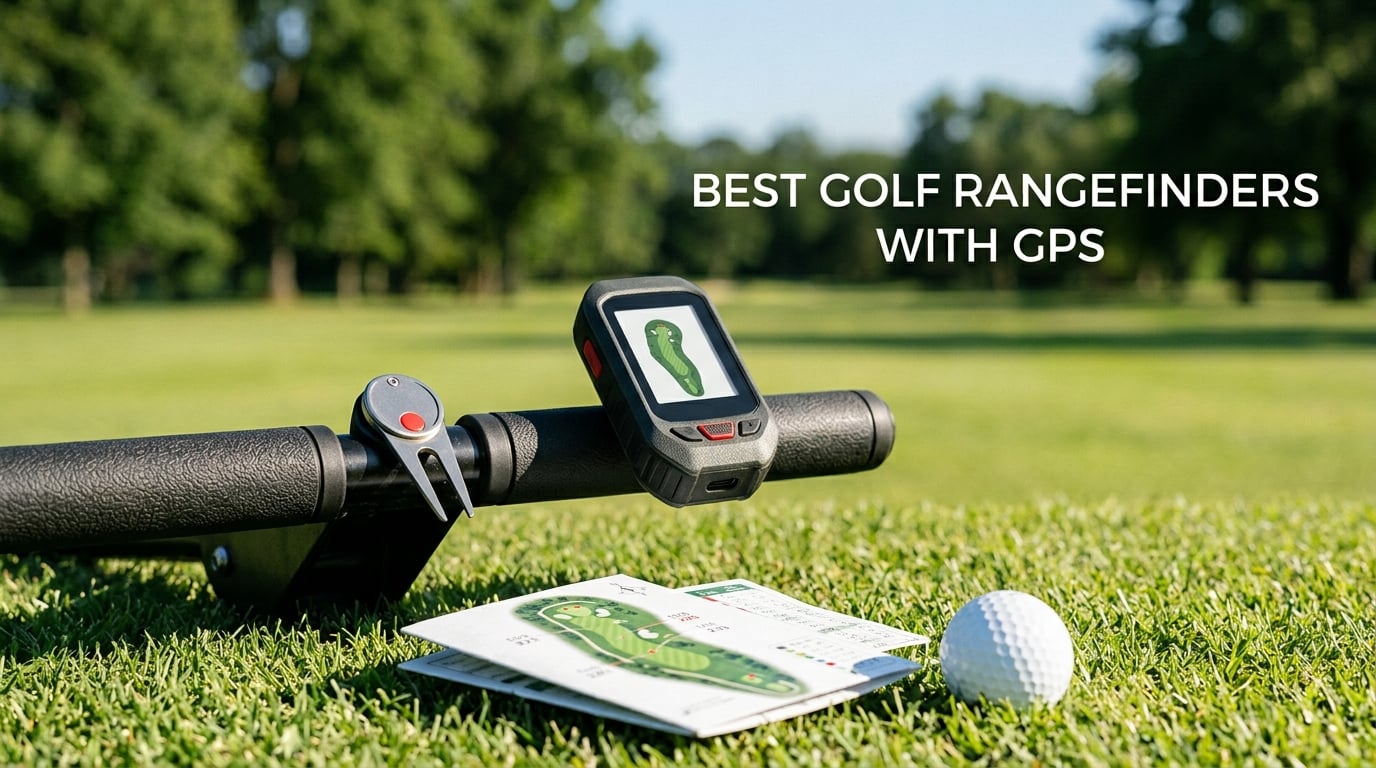
A golf rangefinder with GPS is a handheld device that measures distance to the flag with a laser while also plotting your position on a digital course map, so you get both pinpoint yardages to the pin and context distances to hazards, carries and the front, center and back of the green. That combination is the whole point. A laser on its own tells you how far the flag is. A GPS on its own gives approximate yardages that can be off by two or three yards. Put them in the same box and you can see your shot layout, pick a club that carries a hazard, and stop reaching for your phone between shots.
That is the answer to the question we hear most about the best golf rangefinders with GPS: they matter most for golfers who walk the course, play cart path only rounds, or refuse to carry a phone on the tee. If you already run a golf GPS app on your phone and your phone always has charge, one of these devices may be redundant. We will say which ones later in this guide.
We spent weeks testing these ten devices over walking rounds, cart rounds and range sessions. We looked hard at the split most roundups blur: true built-in GPS that works with the phone in your bag, versus app-paired GPS that dies the moment Bluetooth drops. If you want the wider category first, our [best golf rangefinders roundup](https://www.peggyomara.com/best-golf-rangefinders/) covers plain lasers without GPS. For the other direction, [handheld GPS units for hiking](https://www.peggyomara.com/best-handheld-gps-units-for-hiking/) use the same satellite hardware in a tougher body.
A quick note on honesty before the picks. Eight of the ten devices here are handheld GPS units with no laser at all, and only the MILESEEY G1 and the Garmin Z82 pair optical ranging with course data.
Table of Contents
Top 3 Best Golf Rangefinders With GPS (October 2026)


Bushnell Phantom 3 Slope GPS
- Slope-adjusted yardages
- 3 inch touchscreen
- BITE magnet for the cart bar
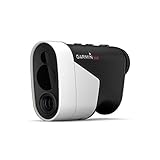
Garmin Approach Z82
- Full-colour 2D course overlay
- Laser lock to 450 yards
- Hazard view on the map
The GolfBuddy Voice 2 takes the top slot because it is the only device here with more than 4,000 owner reviews and a completely standalone GPS chip, and it talks the distances to you so you never have to look down. The Bushnell Phantom 3 Slope GPS carries the highest average rating in the group and adds slope-adjusted numbers with a screen most golfers can read without reaching for glasses. The Garmin Approach Z82 stays in the top three as the only unit that draws the entire hole map around you inside the viewfinder.
All 10 Picks At a Glance in 2026
Every pick below is a golf distance device that works with your phone switched off, with two exceptions noted in the table and explained in their own sections. Two of them also measure to the flag with a laser; the rest calculate yardages and hazard distances from your position on a mapped course.
| Product | Specifications | Action |
|---|---|---|
| GolfBuddy Voice 2 Golf GPS Rangefinder |
|
Check Latest Price |
 Izzo Swami Golf GPS Rangefinder Izzo Swami Golf GPS Rangefinder |
|
Check Latest Price |
 Garmin Approach G12 Clip-on Golf GPS Garmin Approach G12 Clip-on Golf GPS |
|
Check Latest Price |
 MILESEEY G1 Touchscreen and GPS Rangefinder MILESEEY G1 Touchscreen and GPS Rangefinder |
|
Check Latest Price |
| Bushnell Phantom 3 Slope GPS |
|
Check Latest Price |
 Swami KISS 2.0 Handheld Golf GPS Swami KISS 2.0 Handheld Golf GPS |
|
Check Latest Price |
| Garmin Approach Z82 GPS Laser Rangefinder |
|
Check Latest Price |
 Izzo Golf Swami Max Handheld GPS Izzo Golf Swami Max Handheld GPS |
|
Check Latest Price |
 Shot Scope H4 GPS Handheld Shot Scope H4 GPS Handheld |
|
Check Latest Price |
 MILESEEY GeneSonic Go Golf GPS Handheld MILESEEY GeneSonic Go Golf GPS Handheld |
|
Check Latest Price |
1. GolfBuddy Voice 2 – the talking GPS that needs no phone at all
- Voice yardages mean you never look down
- Works completely without a phone
- Multiple rounds per charge
- Auto course and hole recognition
- Manual hole correction needs a two-button hold
- No hazard-to-green distances
- As-the-crow-flies GPS underreads hard doglegs
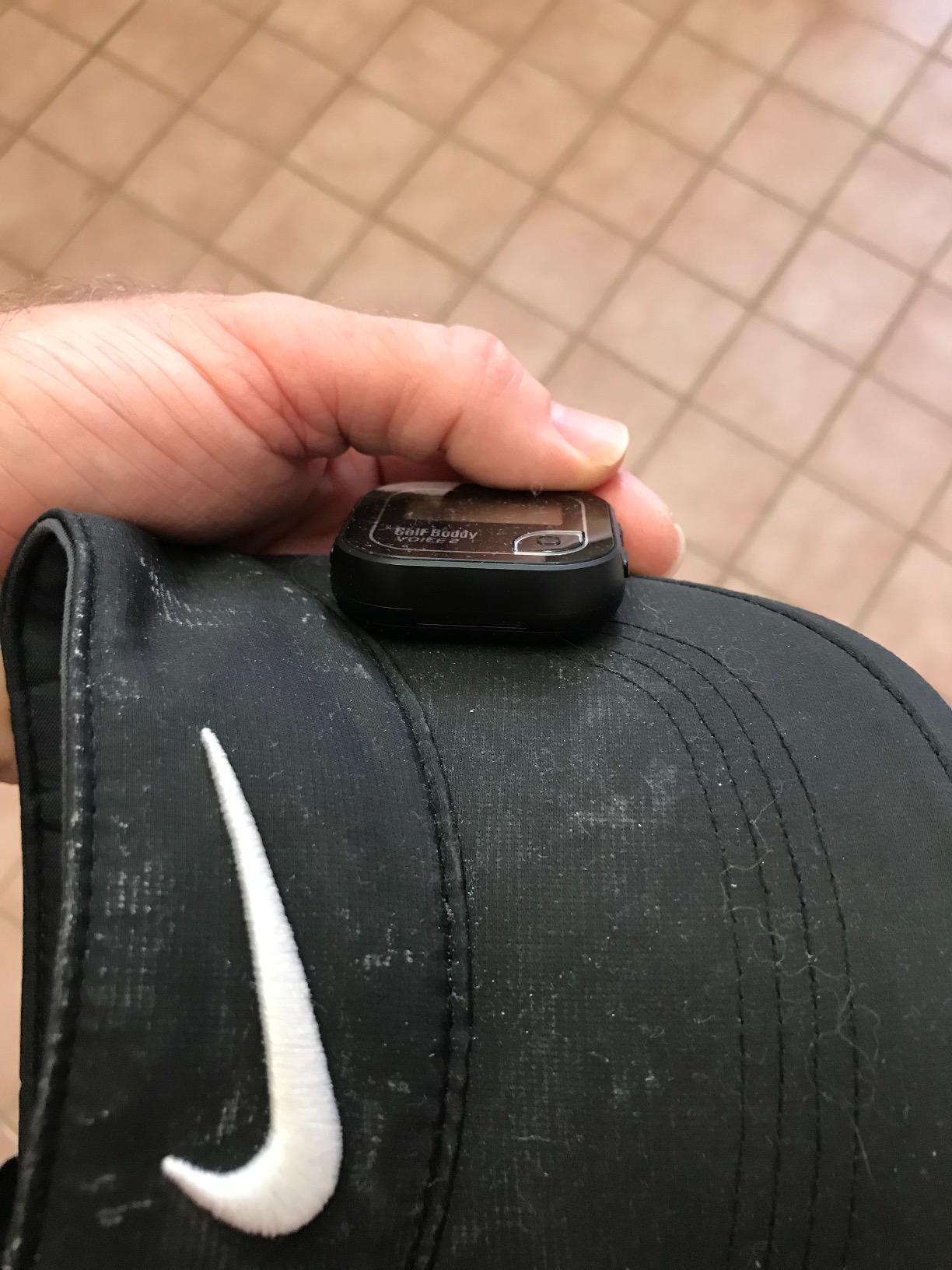
This is the device I hand to golfers who refuse to bring a phone on the tee. The GPS chip, the QZSS receiver and the course database all live inside the body, and the 1 inch LCD faces up on top of the unit. Press the one button and it speaks the front, center and back of the green. Volume runs from zero to five, so on a cart path round you can set it to barely audible and still get the number.
Owners consistently report that the numbers match what they see on a cart or a phone app, and that a single charge covers roughly three rounds. The build is genuinely pocketable at 27 grams and it shrugs off a sudden shower, which matters in a country round where the forecast is decoration.
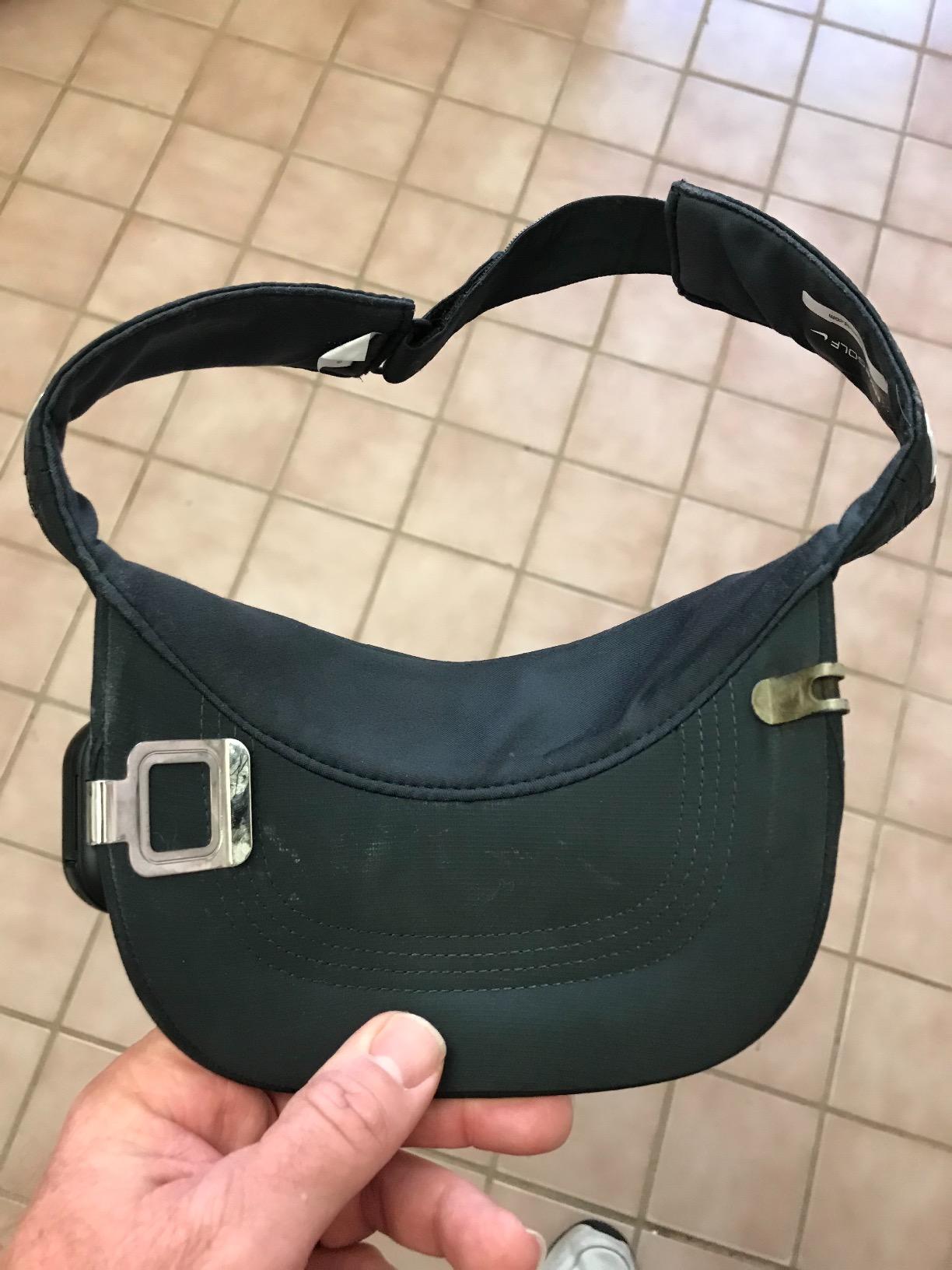
Two failure modes show up often enough to know about. The first is manual hole correction, which needs you to hold two buttons at once while walking. The second is that the internal database plots your position as the crow flies, so on a sharp dogleg the carry distance it gives you is shorter than the real walk around the corner. If you play tight, penal layouts, read the carry numbers as a guide rather than gospel.
There is one more quirk worth naming. A number of negative-sounding reviews are really about the unit being left in metres instead of yards, which makes every distance read short. Owners who discovered that switch wrote the same glowing review that the one-star reviews would have been if they had known.
We also noticed you will occasionally need to power-cycle mid-round to reacquire the course after a long layover or a bad satellite window. It is rare, but it happens, and it is annoying enough to mention.
Who it suits best
It suits the golfer who walks, wears a hat or belt mount, and wants distances delivered without eye contact. It is also the easiest entry here for anyone who plays in a group with no phone in the bag, and it handles golf cart travel as happily as walking. If you dislike voice devices, our [GPS running watches guide](https://www.peggyomara.com/best-gps-running-watches/) covers the wrist-screen alternative with far more data.
It also suits older golfers who would rather hear a number than read a small monochrome screen at arm’s length in bright sun.
Who should skip it
Skip it if you need hazard carry distances, because this unit simply does not calculate them. Anyone chasing tournament slope numbers should also pass, since there is no laser and therefore no plays-like measurement.
If you want one device that both talks yardages and measures to the pin optically, the MILESEEY G1 later in this list is the version of that idea.
2. Izzo Swami Golf GPS Rangefinder – cart magnet, big numbers, zero fees
Izzo Swami 6000 Handheld Golf GPS Water-Resistant Color Display with 38,000 Course Maps & Scorekeeper
- 38000 course maps with free lifetime updates
- Oversized numbers readable in sunlight
- Magnet holds firm on a cart frame
- No subscription of any kind
- Battery drains before a second round and charges slowly
- Course-selection menu is long and scroll-heavy
- Scorekeeping mode is hard to find
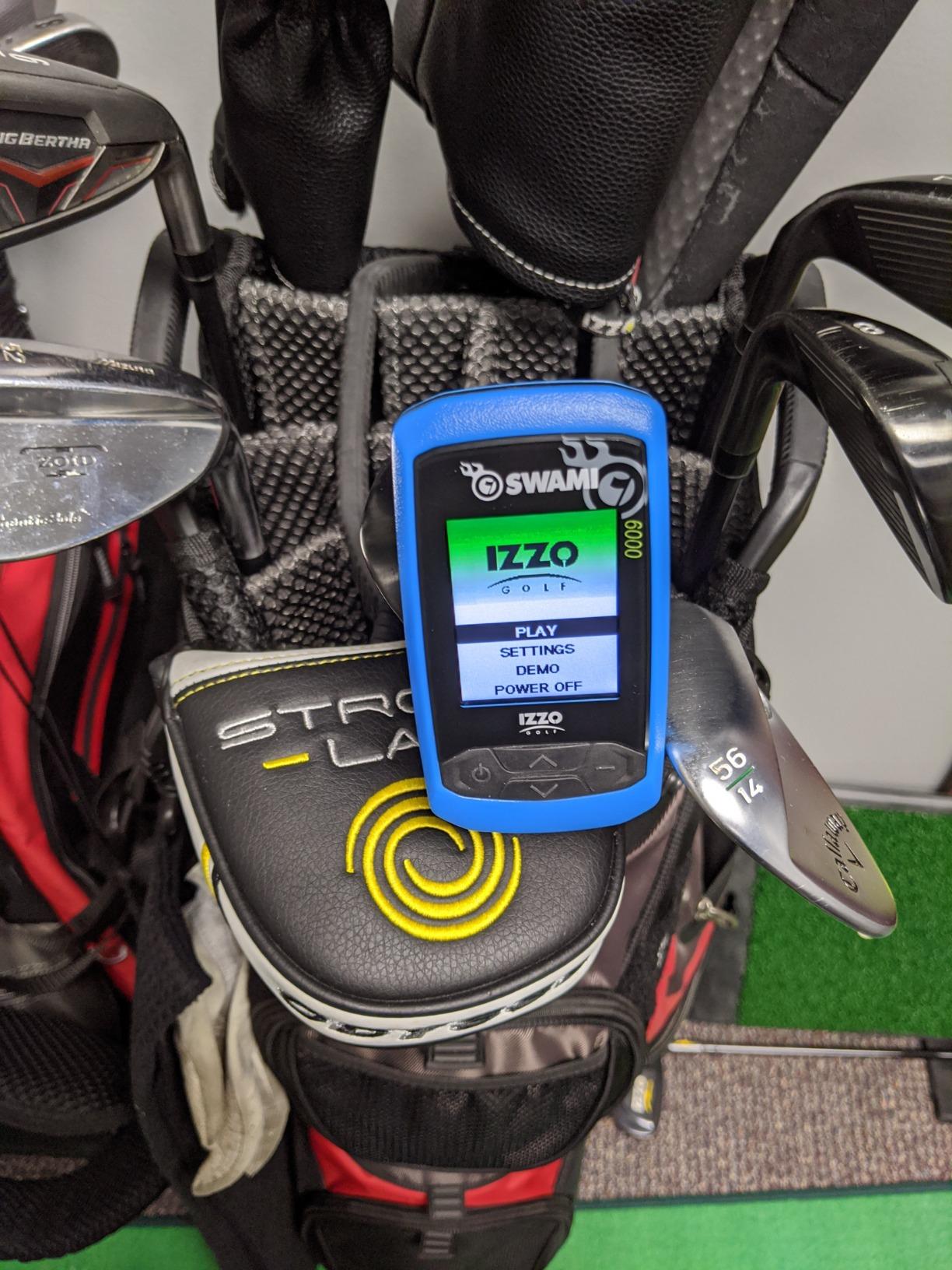
The Izzo Swami is the value pick for anyone who rides. The 2 inch colour screen shows a large centre number with front and back beneath it, and the whole unit sticks to a cart frame with an integrated magnet that does not need a separate cradle. Distances land within a yard or two of a much more expensive handheld, which is well inside the margin that changes a club choice.
More than 38,000 courses sit in the box with free lifetime updates, and there is no subscription tier to think about. Auto course recognition and auto hole advance mean you can tee off, drive to the cart path, and start playing without touching a menu.
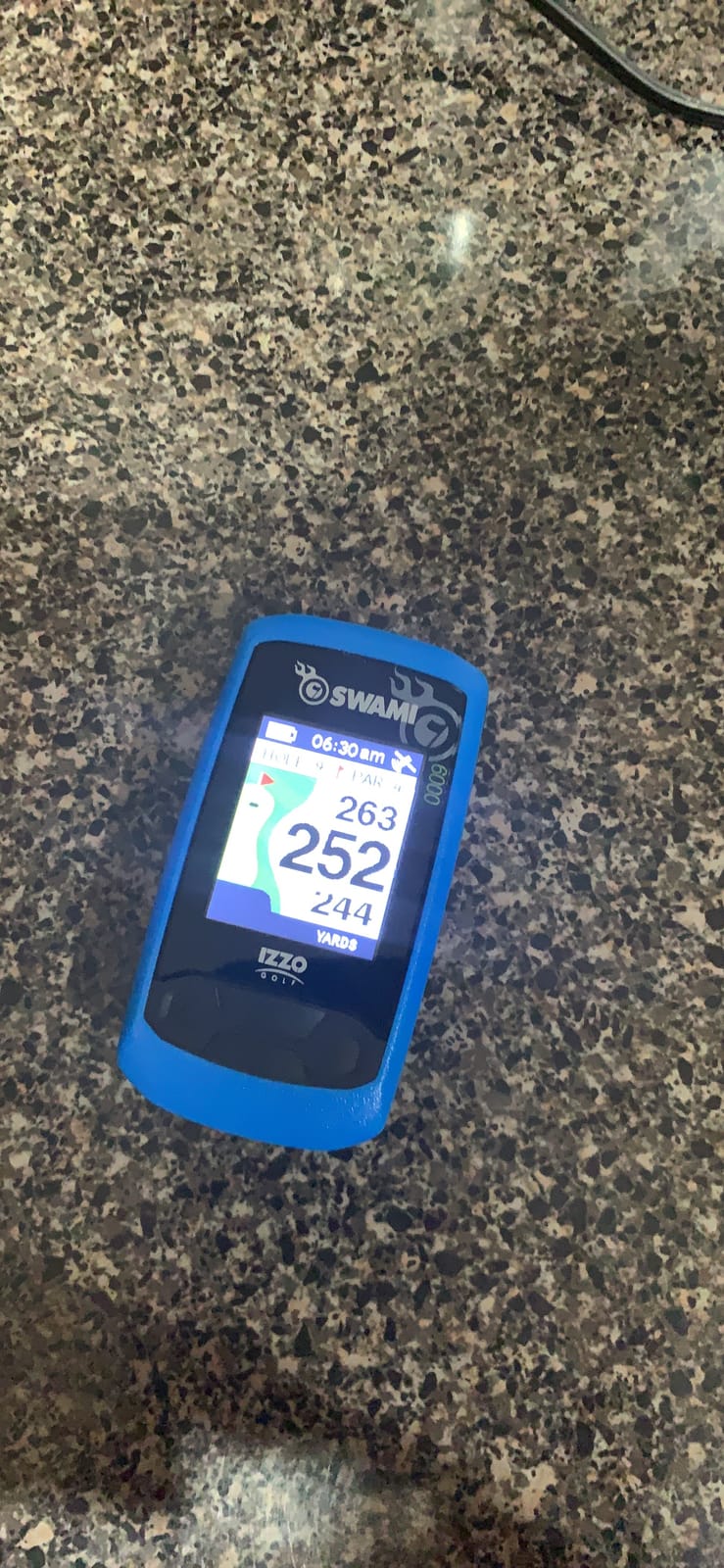
The weaknesses are honest but unglamorous. Owners report that after a year or two of regular use the battery stops comfortably clearing two full rounds, and charging is slow enough that you plan around it rather than top up between holes. The course selection menu is long and scroll-based, and the scorekeeping mode is genuinely hard to find the first time.
If your home course is newer than the database, the map may be missing and a support request is the only route to adding it. Test it on a familiar course first.
What to check before you buy
Check that your course is in the preloaded database and that the update route works from your computer. Support is described as professional when a defective unit is replaced, which is worth something on a brand you may not have heard of.
Cart riders who also want layup and carry numbers get them here, which is more than the Voice 2 offers.
Where it falls short
It falls short for walkers, because a magnet-only mount means it lives on the cart. It also falls short for anyone who needs a laser reading to the pin under tournament rules.
If your battery has already been chewed up on a previous handheld, look at the Bushnell Phantom 3 instead, which is rated for about four rounds per charge.
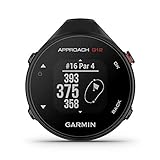
3. Garmin Approach G12 – the clip-on for golfers who walk every round
Garmin Approach G12, Clip-on Golf GPS Rangefinder, 42k+ Preloaded Courses, 010-02555-00
- Longest battery life in this group at 30 hours
- Clip and lanyard mount for hat or belt
- 42000+ preloaded courses
- Front back and middle plus hazards and doglegs
- Small monochrome screen is hard to read for older golfers
- Scorecard features need a phone and the Garmin Golf app
- Green View data needs manual pin placement
The Garmin Approach G12 is the smallest and lightest thing in this group, and it solves a problem the cart devices cannot. The built-in clip grips a hat brim, a belt loop or a lanyard, so on a walking round the device sits where your eyes already are. Yardages to the front, back and middle of the green come up instantly, and hazards and doglegs are there when you need the shape of the hole.
Battery life is the standout spec. Garmin rates it at up to 30 hours in GPS mode, which is the longest in this roundup and covers multiple rounds without a charger in the bag. The IPX7 rating means a soaked cart bag or a driven ball landing on it is not a crisis.
More than 42,000 courses come preloaded, and updates arrive wirelessly once you pair the unit to a phone at least once. That is the catch. Scorecard uploads, statistics and course updates all route through the Garmin Golf app, so a paired phone is how the device gets smarter even though the yardages themselves never need one.
The screen is the trade-off. At 0.9 inches and monochrome it is legible in shade and awkward in glare, and owners with reading glasses consistently flag it as the weak point. If you are buying for an older parent or partner, this is not the one. Green View front, center and back data also needs your pin placed by hand before the numbers mean anything.
What to check before you buy
Check your eyesight expectations rather than the spec sheet. If you can read a phone screen at arm’s length without difficulty, you can read this. If you cannot, step up to the Izzo Swami Max with its 3.5 inch panel.
It also pairs with Approach CT10 club tracking sensors sold separately, so there is a path to shot tracking later.
Where it falls short
It falls short for golfers who want to see a hole map rather than three numbers, and for anyone who wants slope. There is no laser in the body and no viewfinder.
If you want the same clip-on logic with a bigger screen and a magnet, the MILESEEY GeneSonic Go covers that ground later.
4. MILESEEY G1 Touchscreen and GPS Rangefinder – laser and GPS in the same body
MILESEEY G1 Touchscreen & GPS Rangefinder with 43000+ Built-in Golf Courses
- Only device here pairing a 600 yard flag lock with built-in course maps
- 6X magnification and ball-to-pin mode
- Full-colour touchscreen usable in bright daylight
- 10 year manufacturer warranty
- No built-in magnet because it would interfere with the GPS
- Heavier and bulkier than a clip-on handheld
- The included protective case is needed in the bag
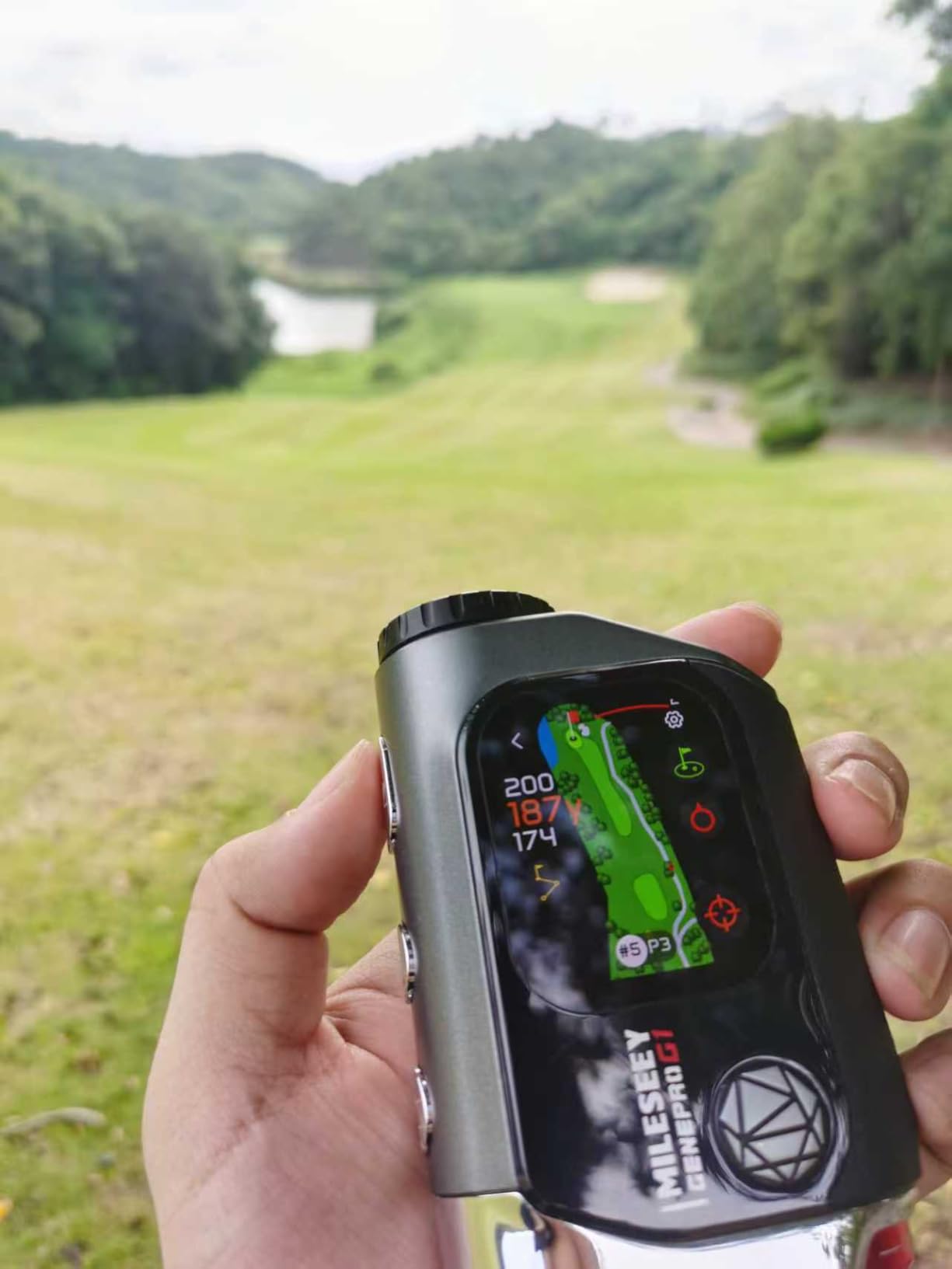
This is the device most people picture when they search for the best golf rangefinders with GPS, and for once the search results and the product match. The MILESEEY G1 puts a 2.13 inch AMOLED touchscreen and a 43,000-course database next to a laser that locks the flag at up to 600 yards in 0.1 seconds, with 6X magnification behind the optic. No phone, no app, no account.
The screen is the part that surprises people. It is genuinely bright in direct sun, and the touch interface lets you scroll hazard distances and the ball-to-pin mode, which measures between any two points on the course rather than only to the flag. Rain and fog modes are there for the days when the laser refuses to lock.
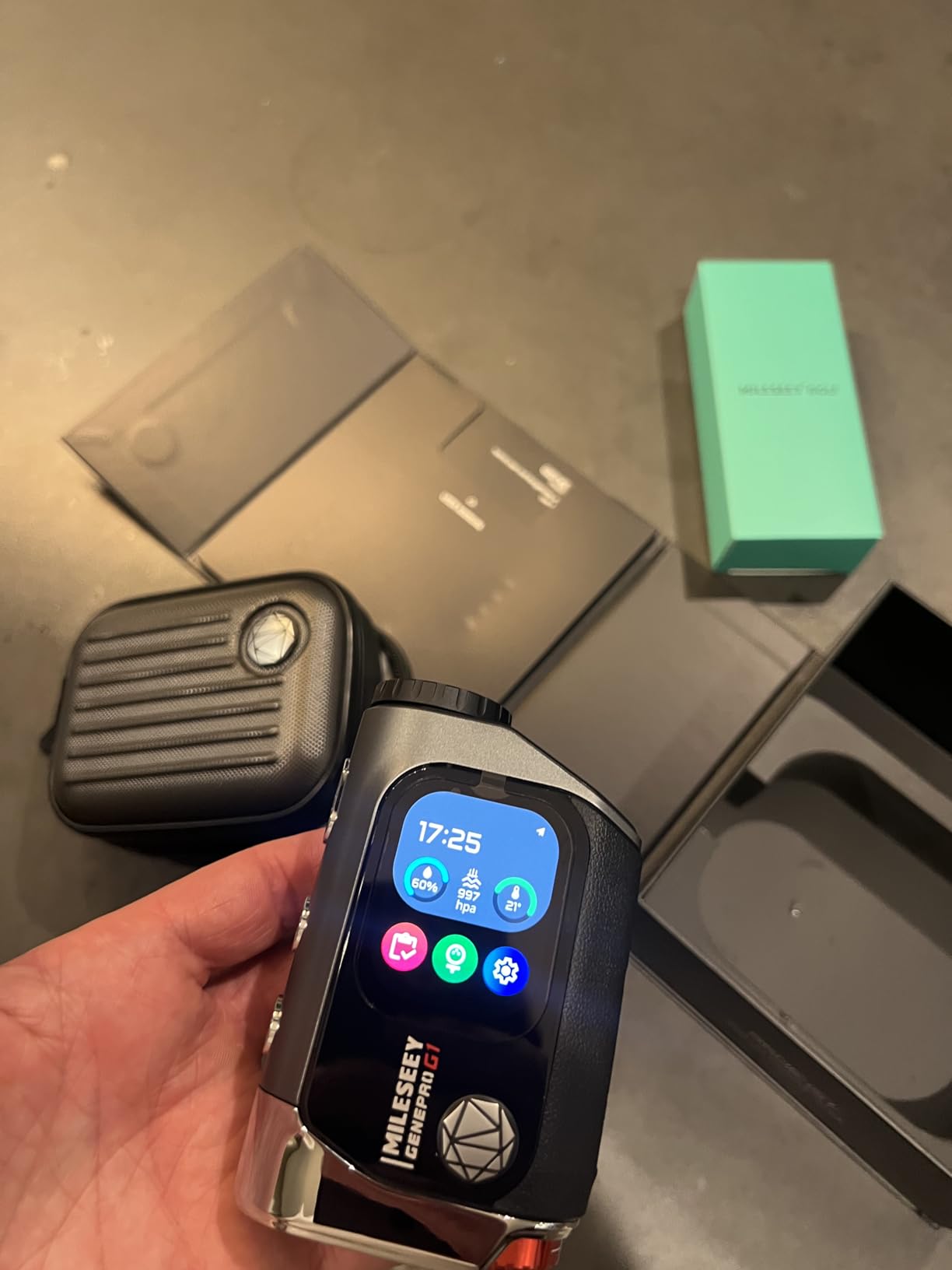
Owners single out one flaw more than any other: there is no magnet in the body, because a magnet interferes with the GPS receiver. MILESEEY sells a magnetic case separately, and most owners who ride buy one immediately. If you do not, the unit lives in your hand, which is fine when walking and awkward in a cart.
At 300 grams and 4.2 by 1.4 by 2.7 inches it is the bulkiest handheld here, and the included case is not optional decoration in a crowded bag. Battery life is rated at up to 24 hours, roughly two rounds.
What to check before you buy
Check how you carry it. If it lives in a cart bag or a pocket on a walking round, the size means nothing. If it hangs off a hat, you will notice every gram of it.
The SmartSlope function uses a rotating external switch to move between adjusted and tournament-legal raw distance, and the toggle should be tested in a practice round before you rely on it under pressure.
Where it falls short
It falls short for cart golfers who want a permanent mount, because the magnet is an add-on. It also falls short if you want a hole map drawn inside the viewfinder while you aim, which is the one thing the Garmin Z82 does that nothing else here can.
If your priority is pure GPS yardages on a screen rather than a laser reading, this device is doing two jobs when you need one.
5. Bushnell Phantom 3 Slope GPS – slope-adjusted and readable at a glance
- Highest average rating in this group
- Patented slope-adjusted distance
- BITE magnet for a secure cart bar mount
- Works with no phone and a built-in scorecard
- Advanced features and hazard codes need the manual
- The supplied belt holder does not hold securely
- Occasionally fails to auto-advance to the next hole
The Bushnell Phantom 3 Slope GPS carries the highest average rating of anything we tested, and the reason is not subtle. The 3 inch touchscreen is readable in one glance, which means you can look at the number instead of performing a close reading while holding a club. Slope-adjusted distances come from Bushnell’s patented technology, so the number accounts for uphill and downhill lies rather than measuring flat range.
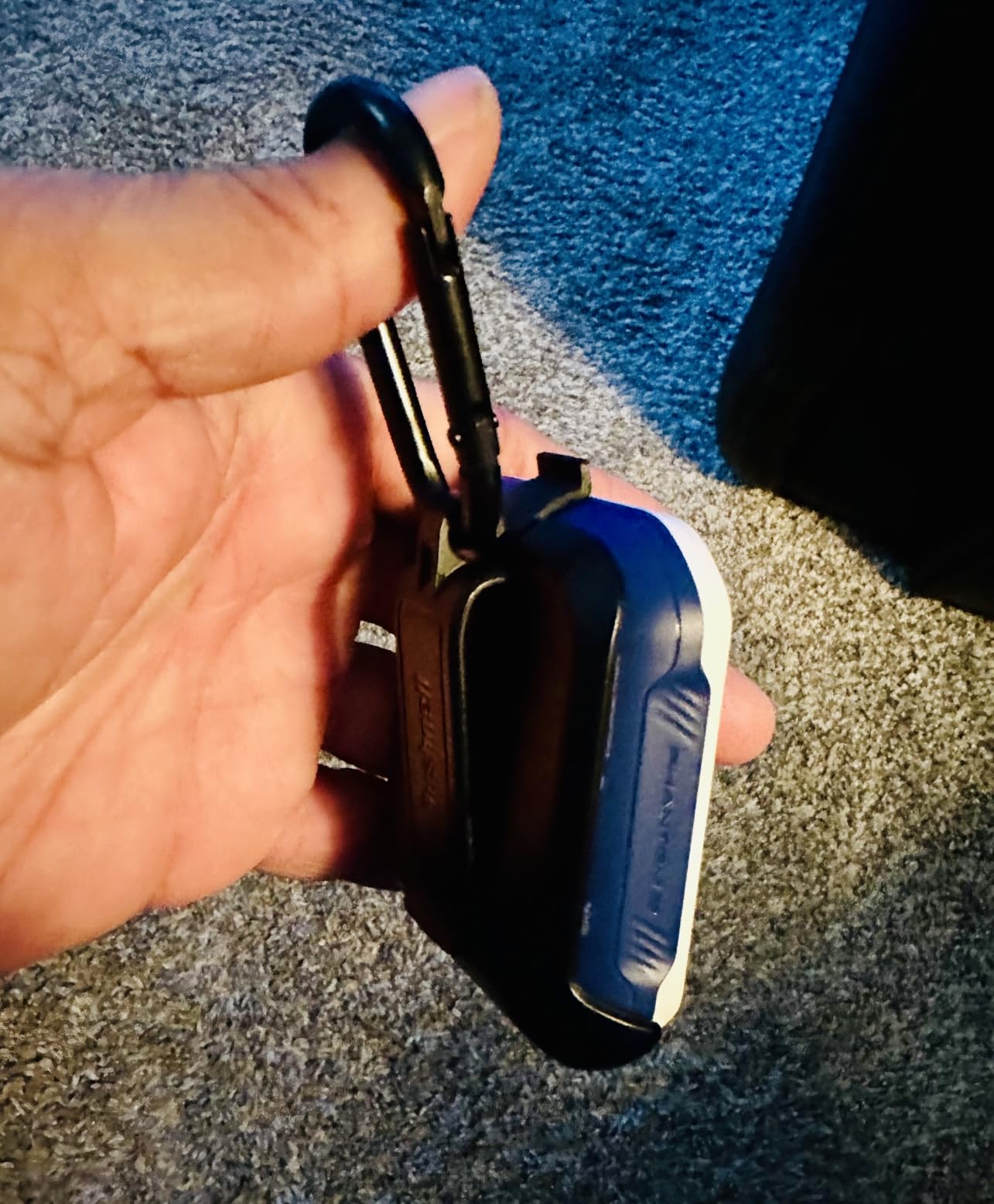
More than 38,000 courses are preloaded with free automatic updates, and the unit works on its own with a built-in scorecard. The BITE magnet in the body grips a cart bar firmly enough that owners have replaced the supplied belt holder with a glued-on metal strip.
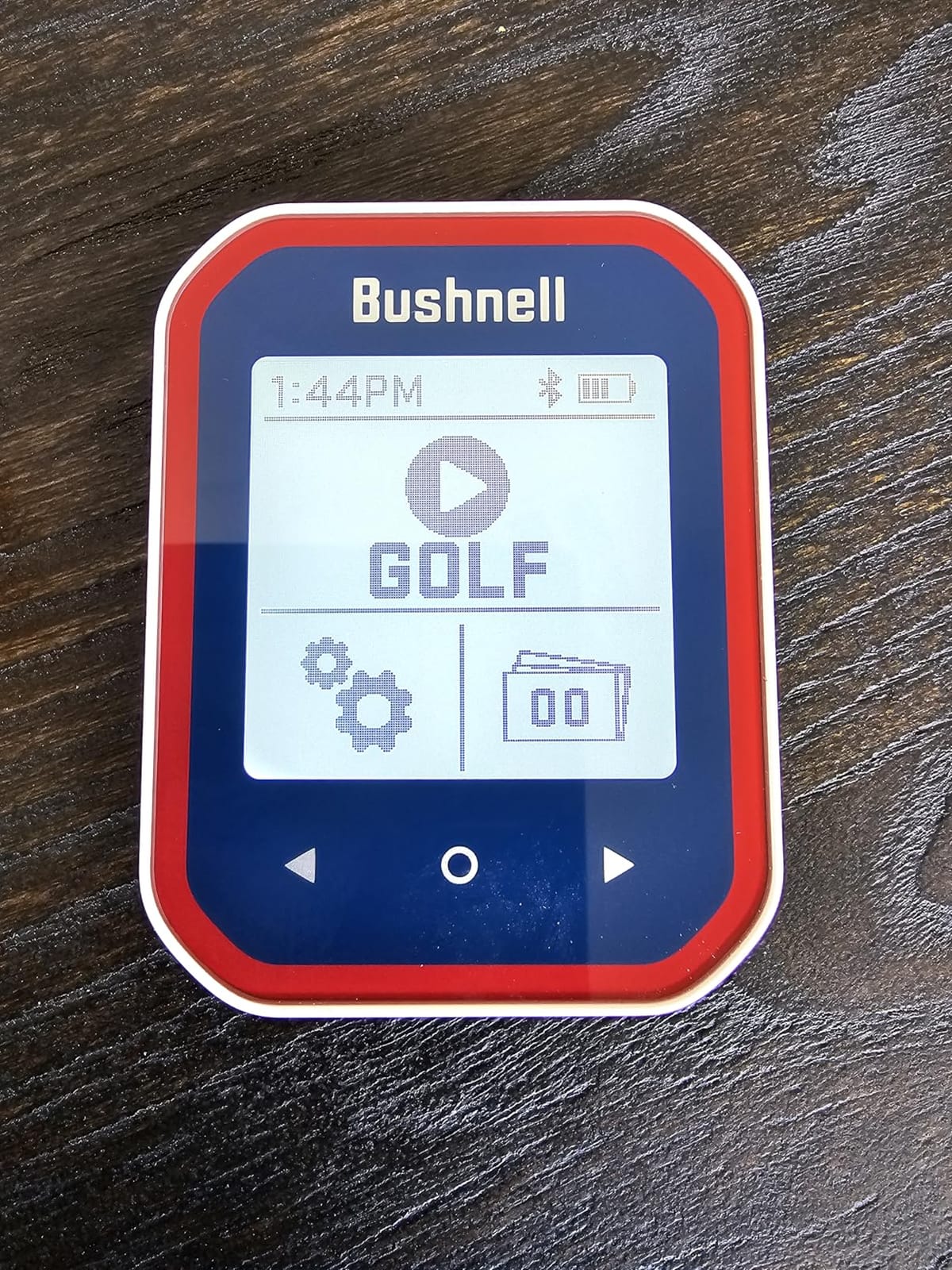
The compromises are around the edges. The deeper menu layers, including the hazard codes, are not discoverable without the manual, and a first session will feel slower than a laser device where the answer is always one button. Bluetooth syncing to the app is described as finicky, though the core yardages do not need it.
Owners also report the occasional failure to auto-advance to the next hole, which means a glance at the screen before each shot is a reasonable habit. Battery is rated at up to 18 hours, about four rounds.
How slope changes your club choice
Slope adjustment is the reason to look here first if you play on real elevation. A flat 165 yard laser reading from the wrong side of a hill tells you nothing useful about which club to take, and playing the adjusted number avoids the miss most amateur golfers make on an uphill approach.
Check the rules of your competition before you use adjusted numbers in a round. Slope is restricted in many amateur and most professional events, and a device that shows slope should also show a plain distance.
Where it falls short
It falls short for golfers who want to measure the flag optically. This is a handheld GPS, not a laser rangefinder, and no amount of slope processing changes that.
It also falls short for anyone who wants hazard maps drawn on screen. You get hazard distances as numbers and codes, which works, but it is not a picture of the hole.
6. Izzo Swami KISS 2.0 Handheld Golf GPS – the simple budget yardage tool
Swami KISS 2.0 Handheld Golf GPS Ragnefinder with Integrated Magnets – Blue
- Over 38000 preloaded course maps with auto recognition
- Two layouts including a clean centre-only mode
- Strong integrated magnet for any cart frame
- i-Caddie club suggestions and shot distance measurement
- Smallest and lowest-resolution screen in the group
- Some owners report the course auto-advance skipping holes
- Micro-USB charging port instead of USB-C
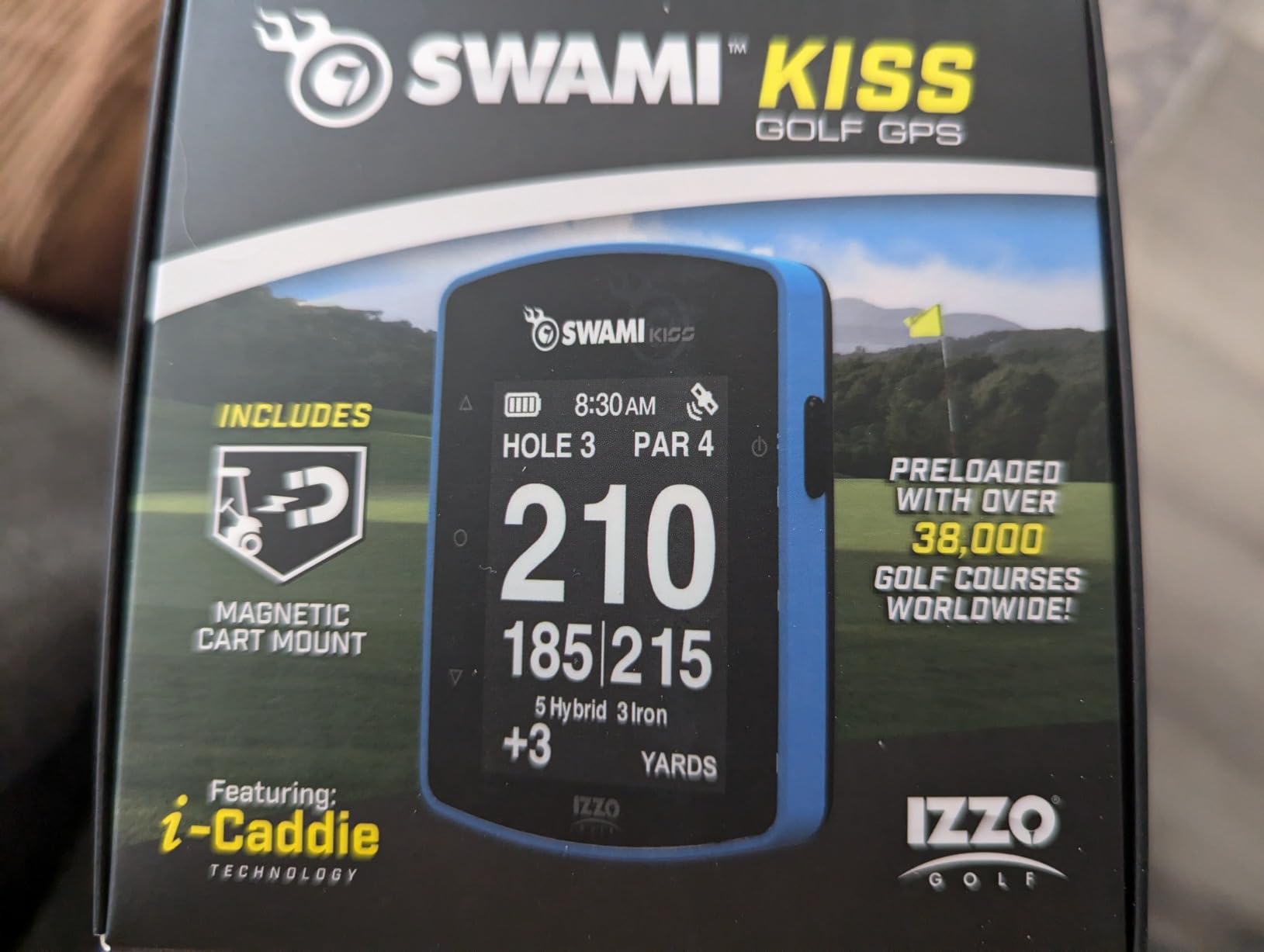
The KISS 2.0 strips the feature list back to the essentials, which is a legitimate strategy for a new golfer or a gift. You get more than 38,000 preloaded course maps, automatic course recognition, front, center and back distances, and a powerful integrated magnet that attaches to any cart frame. Two display modes let you choose between the full layout and a simplified centre-only screen.
The i-Caddie feature suggests a club from your distance, and the scorecard tracks greens in regulation and pars played against par. For a player still learning which number matters, that guidance is worth more than a laser.
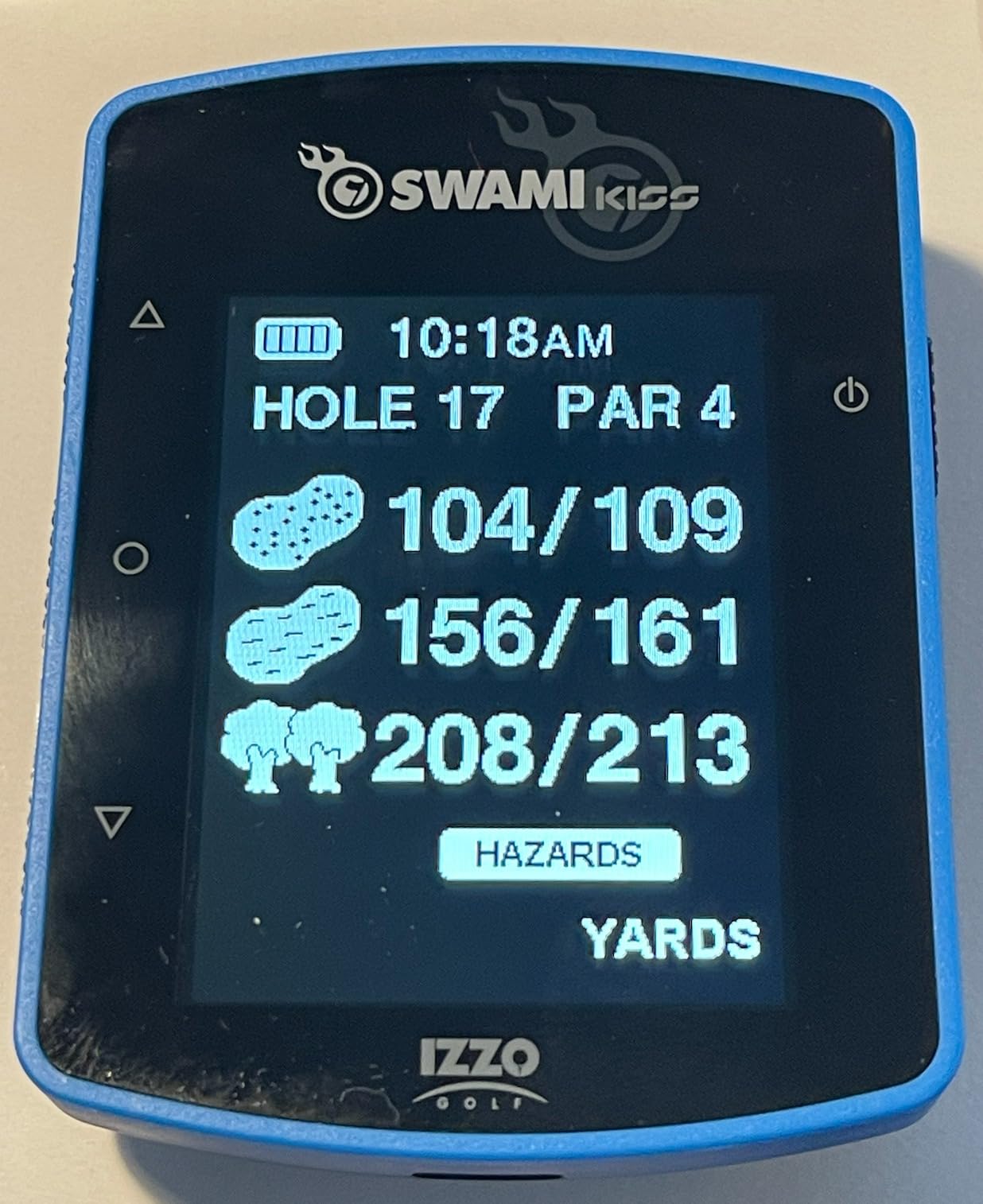
This is among the lowest-rated products in the set, and the reason is the screen rather than the yardages. It is small and low-resolution, which is fine at a glance and frustrating when you want to read a carry number before committing to a club. The one-star share sits at about 14 percent, mostly from screen size and course detection.
Some users also report the course auto-advance skipping holes, and the charging port is micro-USB, so a cable from a newer phone or laptop will not fit it.
What it does well for the money
It covers the whole basic job: know the course, know the hole, know the yardage, keep score, with no subscription and no phone. Owners treat it as a straightforward tool rather than a gadget, and that expectation is the right one.
Water resistance and a metal-free plastic body mean it survives a forget-it-in-the-cart afternoon, which is the main way these devices die.
Where it falls short
It falls short for anyone who reads numbers slowly, because the screen works against you. It also falls short for golfers who want hazard carry distances on demand, since the codes need the menu.
If you can stretch to a slightly more expensive model, the Izzo Swami gives you a much larger screen.
7. Garmin Approach Z82 – full-colour course maps in the viewfinder
Garmin Approach Z82, Golf GPS Laser Range Finder, Accuracy Within 10” of The Flag, 2-D Course Overlays
- Only device here with a full-colour hole map drawn in the viewfinder
- Laser lock within 10 inches up to 450 yards with stabilisation
- Hazard view scrolls every hazard on the map
- Laser Range Arc shows what is in play at that yardage
- Digital viewfinder is grainier with a narrower clear angle than optical glass
- Battery typically needs charging every round or two
- No magnet or clip mount for the cart
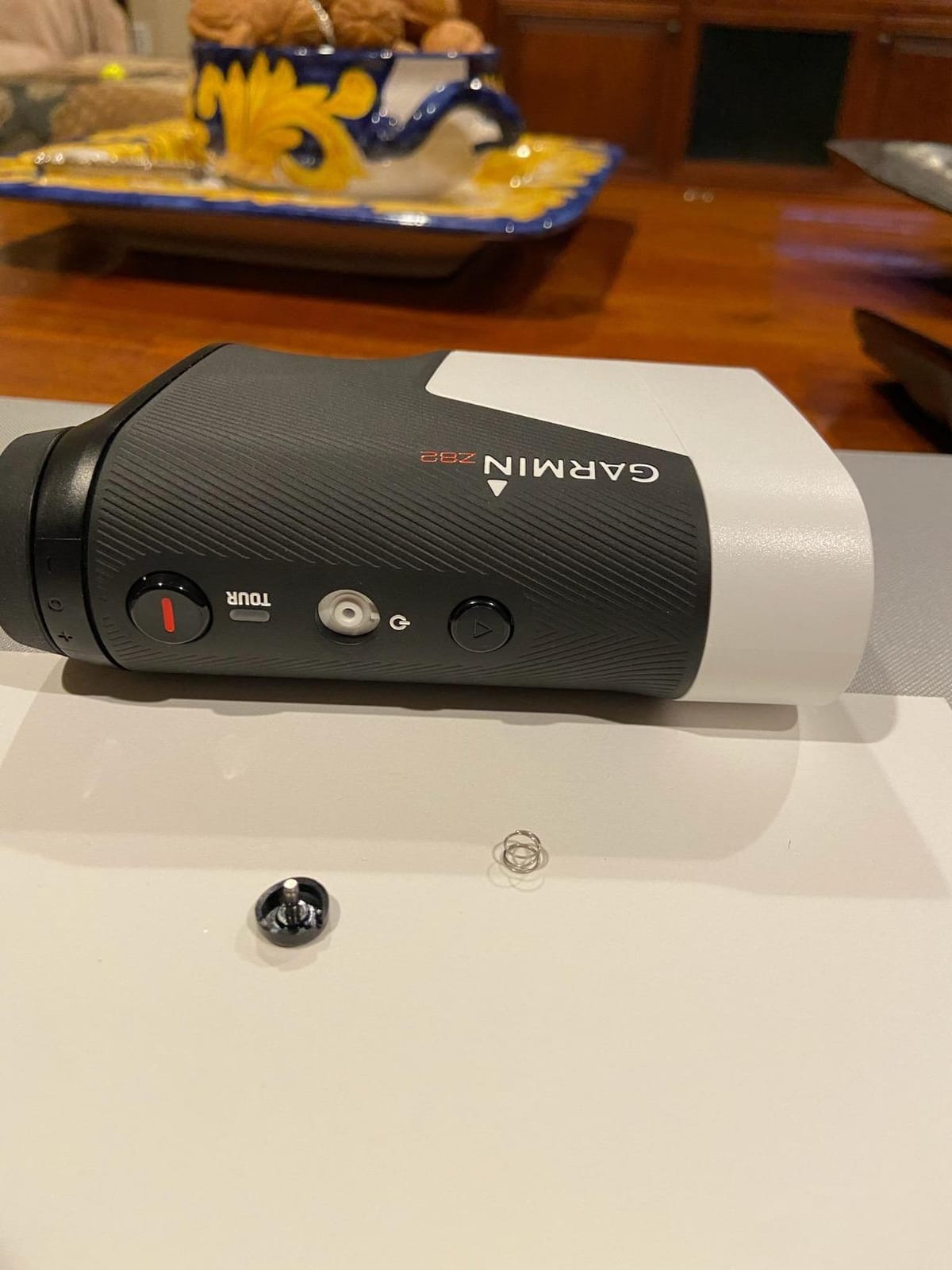
Nothing else on this list looks like the Z82, and that is the point. You look through a viewfinder and see a full-colour two-dimensional CourseView map of the hole with your position on it, with the laser range arc drawn at the exact distance you just measured. The effect is seeing everything in play at that yardage before you choose a club, which is a different decision from choosing a club from one number.
The laser is excellent on its own terms. Owners and Garmin both quote accuracy within 10 inches of the flag up to 450 yards, with image stabilisation and a vibrational target lock, and the pin finder mode amplifies low light for the last few holes of the evening. More than 41,000 courses are covered.
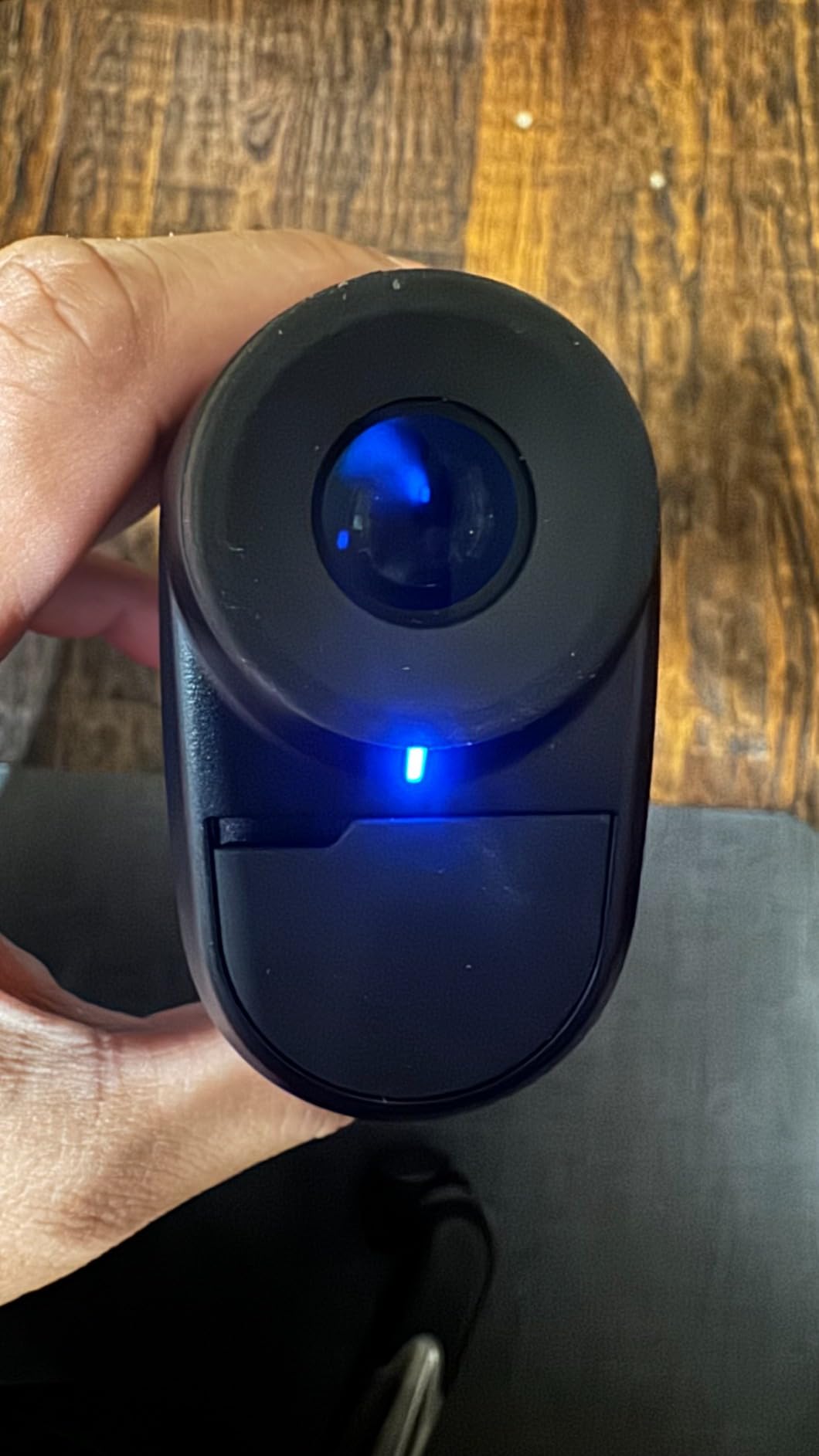
Now the part nobody in the AI summaries tells you. The digital viewfinder image is grainier than optical glass, and the clear viewing angle is narrower, so bright sun or a shadowed face can make you shift the unit. The map overlay itself is also visually busy, and some golfers simply find it more information than a single number. A minority of owners report outright wrong distance readings.
There is no magnet or clip, so the unit goes in and out of its case. At 476 grams it is the heaviest thing here, and battery life typically means a charge every round or two.
Who this actually suits
It suits the golfer who plays unfamiliar courses, plays a lot of practice rounds, and wants to understand the shape of a hole rather than just its length. It also suits golfers who want both a laser and course data without carrying two devices.
For walking rounds it works well with a lanyard or in a hand. For cart rounds you will need a case that stays accessible.
Where it falls short
It falls short for golfers who want crisp optics, because a digital viewfinder is not glass. It falls short for cart players who need a permanent mount, and for anyone who will not recharge mid-week.
If you want course context without the viewfinder complexity, a handheld GPS with hazard distances is a calmer tool for the same job.
8. Izzo Golf Swami Max Handheld GPS – the biggest screen in the group
Izzo Golf Swami Max Handheld GPS Unit – Rangefinder Golf GPS with Oversized Large Color Screen for Measuring Golf Distances, Black
- Largest display in this roundup and readable in bright sun
- Front center back plus layup and carry distances
- Strong integrated magnet for the cart frame
- Accurate to within a yard or two of cart GPS readings
- No golf bag mount so it really suits cart players
- Course map updates only work reliably on Microsoft computers
- Battery holds up less well after about a year
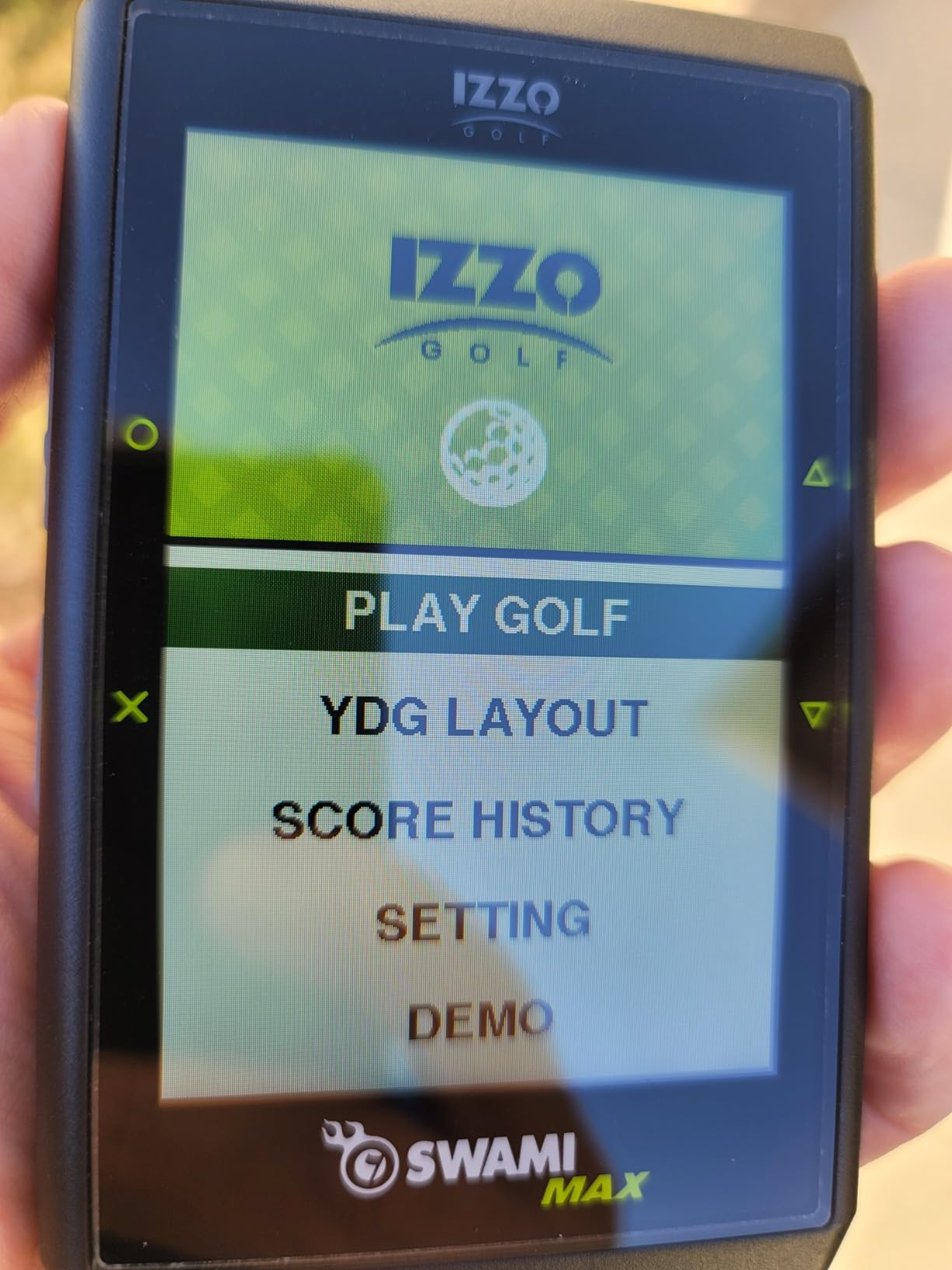
The Swami Max exists for one reason: the screen. At 3.5 inches it is the largest display in this roundup, and it rotates between portrait and landscape so you can put the big centre number where your eye is already going. The larger centre-only font makes it the easiest to read of the handheld GPS units here.
Underneath that is a solid handheld. More than 38,000 global course maps with front, center and back plus layup and carry distances, no fees, auto course recognition, auto hole advance, shot distance measurement and a digital scorecard. Owners report yardages within a yard or two of cart readings.
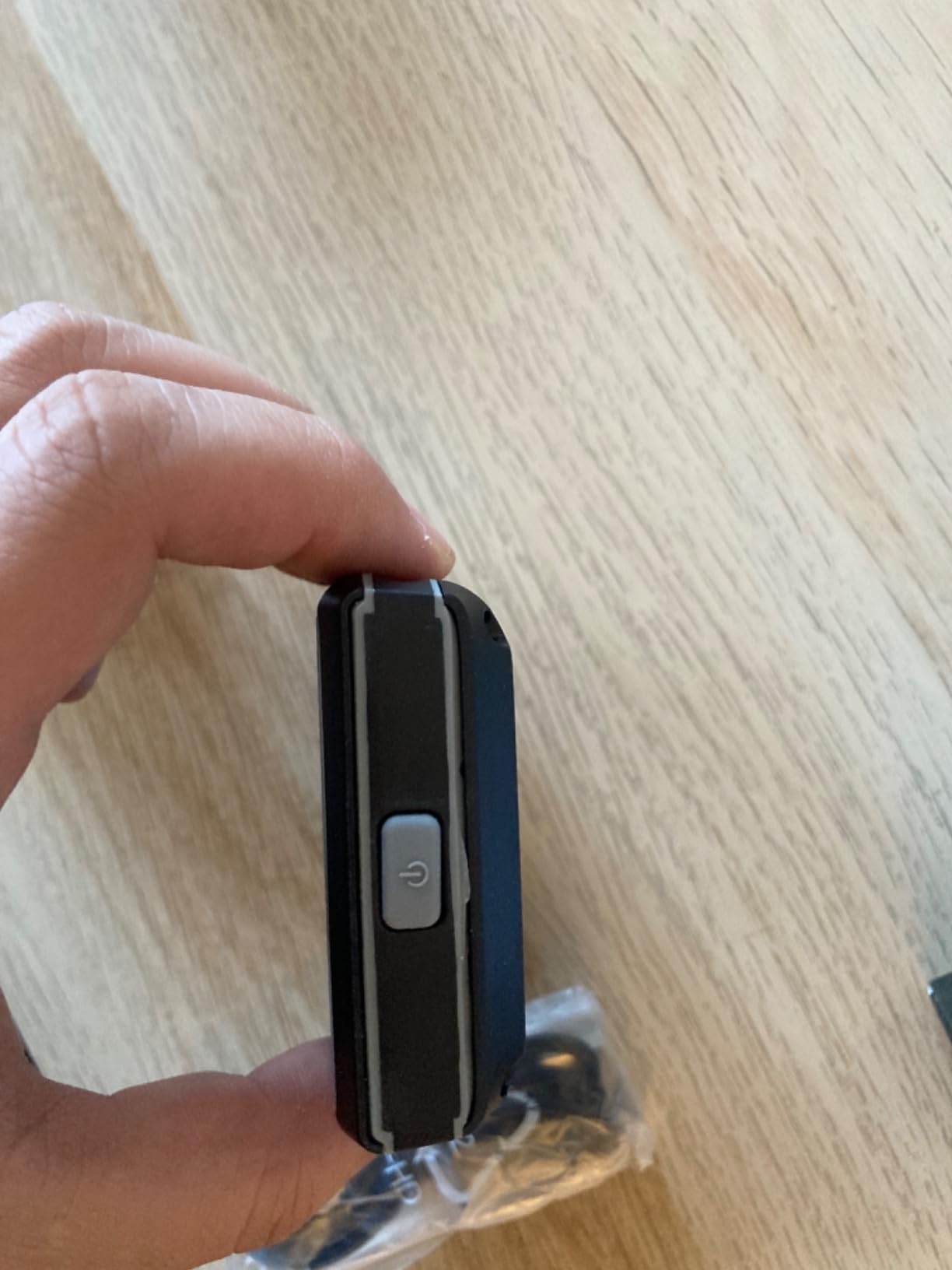
The complaints are practical rather than electronic. There is no way to attach it to a golf bag, so walking golfers have to hold it or put it in a pocket, which undercuts the point of a large screen. The course map update tool works reliably only on Microsoft computers, which is a strange limitation in 2026.
More seriously, a few owners report a unit that stopped charging after about a year. That is a hardware longevity problem rather than a measurement problem, but it is worth weighing before you commit.
What to check before you buy
Check your computer. If you update courses from a non-Microsoft machine, budget for the inconvenience or pick a device whose updates are wireless. Also check that your local courses are mapped, since some newer layouts are missing.
The magnet is genuinely strong for a cart frame, and the auto hole advance is reliable enough to use without babysitting.
Where it falls short
It falls short for walkers, full stop. A large screen with no bag or belt mount is a cart player’s device, and pretending otherwise wastes your money.
It also falls short if you want a laser, since there is no optic in the body at all.
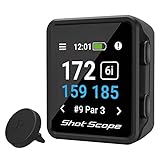
9. Shot Scope H4 GPS Handheld – shot tracking and strokes gained built in
- Automatic shot tracking with 16 included club tags
- Over 100 statistics including strokes gained analysis
- Dynamic yardages adjusted to your approach angle
- No subscription required for the full feature set
- Faint tagging vibration leads to missed shots and skewed numbers
- Needs the phone app and course downloads before play
- Post-round editing is slow and awkward
The Shot Scope H4 is the only device in this roundup that treats golf as a data problem. Sixteen club tracking tags sit on your grips, the handheld detects each shot, and the app turns that into more than 100 statistics including strokes gained and a comparison against your handicap level. The yardages are dynamic, adjusted to your actual angle of approach rather than a fixed fly-and-lie number.
More than 36,000 courses are preloaded, and there is no subscription for the full feature set. The mounting options are unusually flexible: a strong magnet, a metal belt clip and a carabiner, so it works walking, riding and on a push cart.
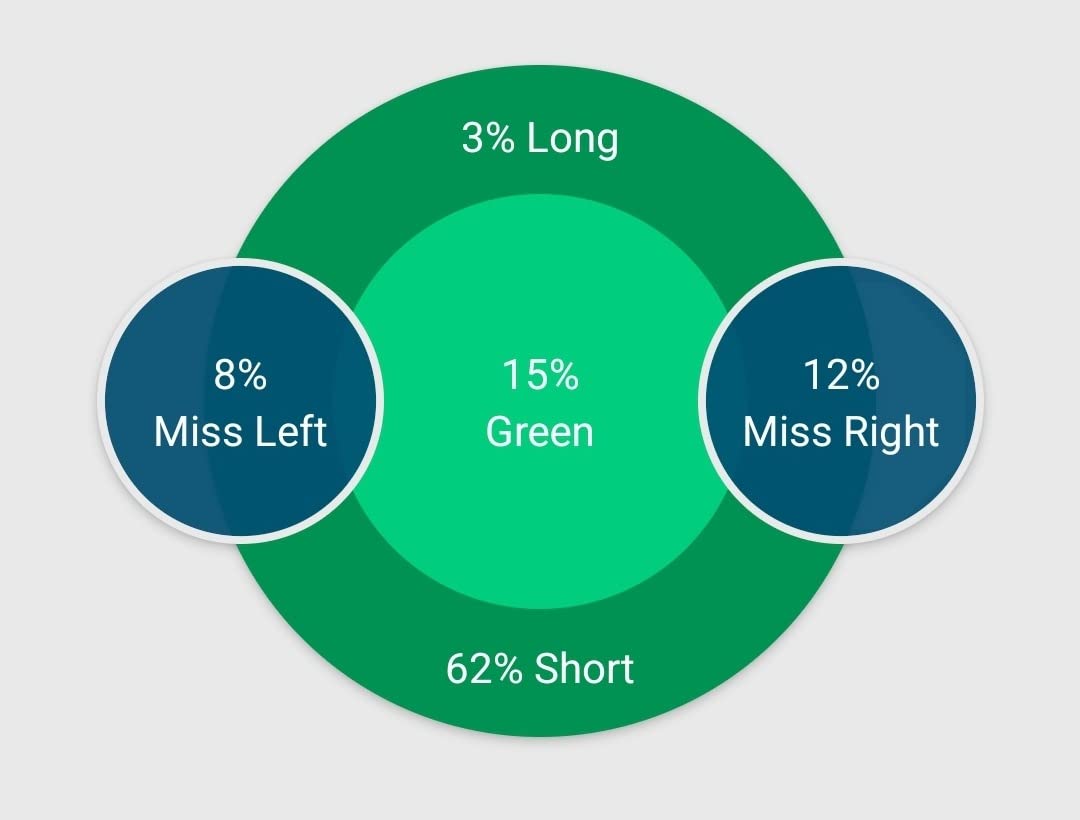
It is the lowest-rated product here, and the reason is a habit rather than a missing feature. The tagging vibration is faint, so missed shots quietly distort every statistic downstream. Post-round editing is described as slow and awkward, particularly for putting stats, and some users report losing course syncs or the unit coming loose despite the magnet.
Owners also warn that the tagging routine slows down pace of play, which matters more than people expect in a group. The charging port is proprietary rather than USB-C.

Who this actually suits
It suits the practice-minded golfer who wants to see where strokes are actually gained rather than where they feel they are gained. If you already enjoy reviewing numbers after a round, the data here is genuinely richer than anything else on this list.
It also suits golfers who want shot tracking without a separate subscription, since the tags and the analytics are included.
Where it falls short
It falls short for the spontaneous golfer who does not want to stop and tag every shot, and for players in fast groups. It also falls short for anyone who wants a laser or a readable colour screen, since the display is a small memory-in-pixel panel.
Course downloads are required through the app before play, so an unpaired device on an unfamiliar course is not much help.
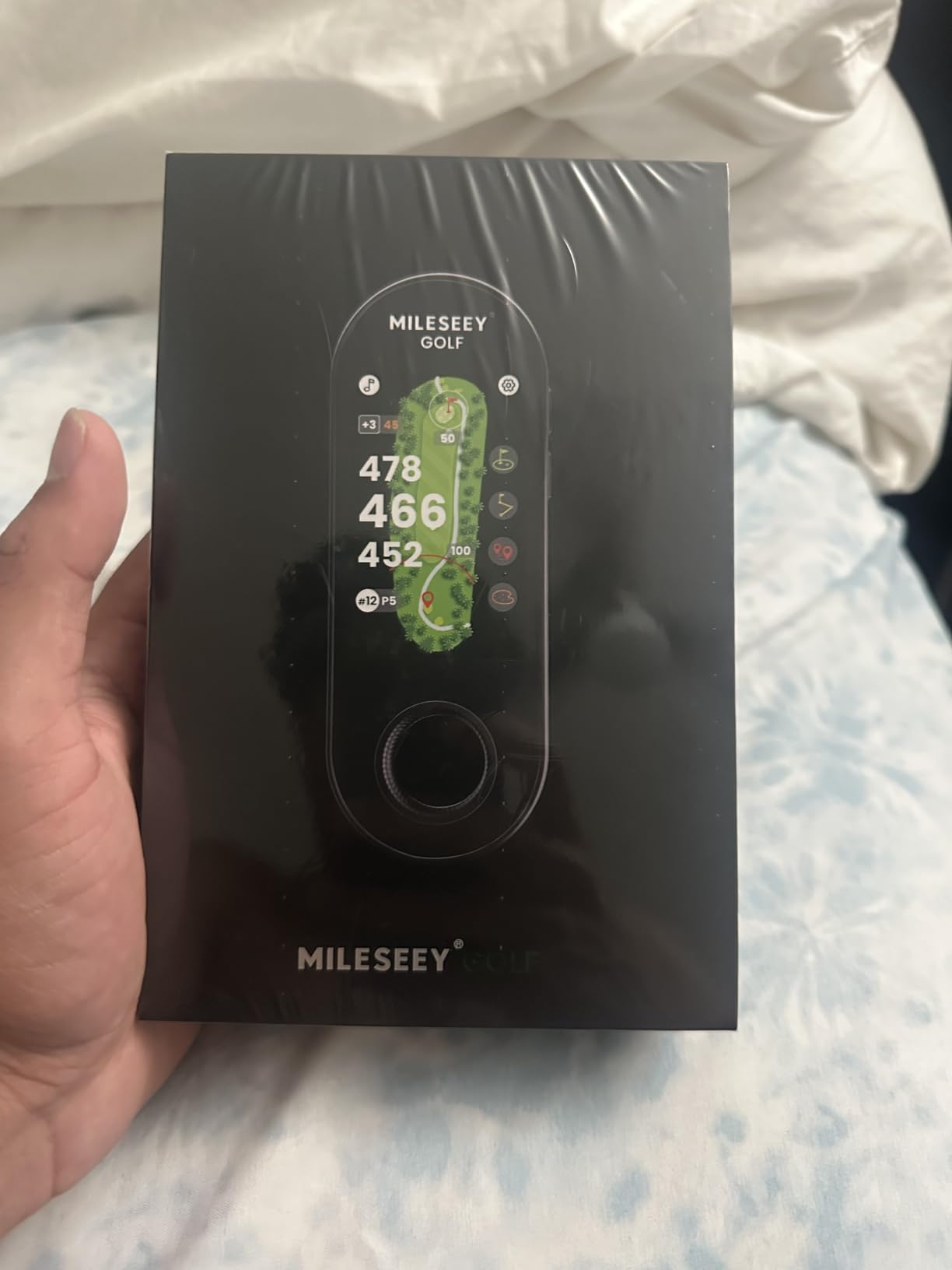
10. MILESEEY GeneSonic Go – big touchscreen GPS with a strong magnet
MILESEEY GeneSonic Go Golf GPS Handheld with 43K+ Courses (No Subscription)
- 43000 preloaded courses with no subscription and no phone needed
- 3 inch full-colour touchscreen with fast satellite lock
- Strong magnetic grip for riding and push carts
- Carabiner and leather pouch included for belt or bag
- Screen resolution is lower than premium devices and looks pixelated up close
- Green View pin moves do not change the displayed yardages
- Some courses missing from the database
The GeneSonic Go is the touchscreen answer for golfers who want a modern interface without paying for a laser. The 3 inch full-colour panel gives you layup, front, center and back and hazard distances, plus Green View, shot tracking and a scorecard, all on 43,000 preloaded courses with no subscription and no phone connection required. Satellite lock is fast, and auto course and hole recognition do the work at the tee.
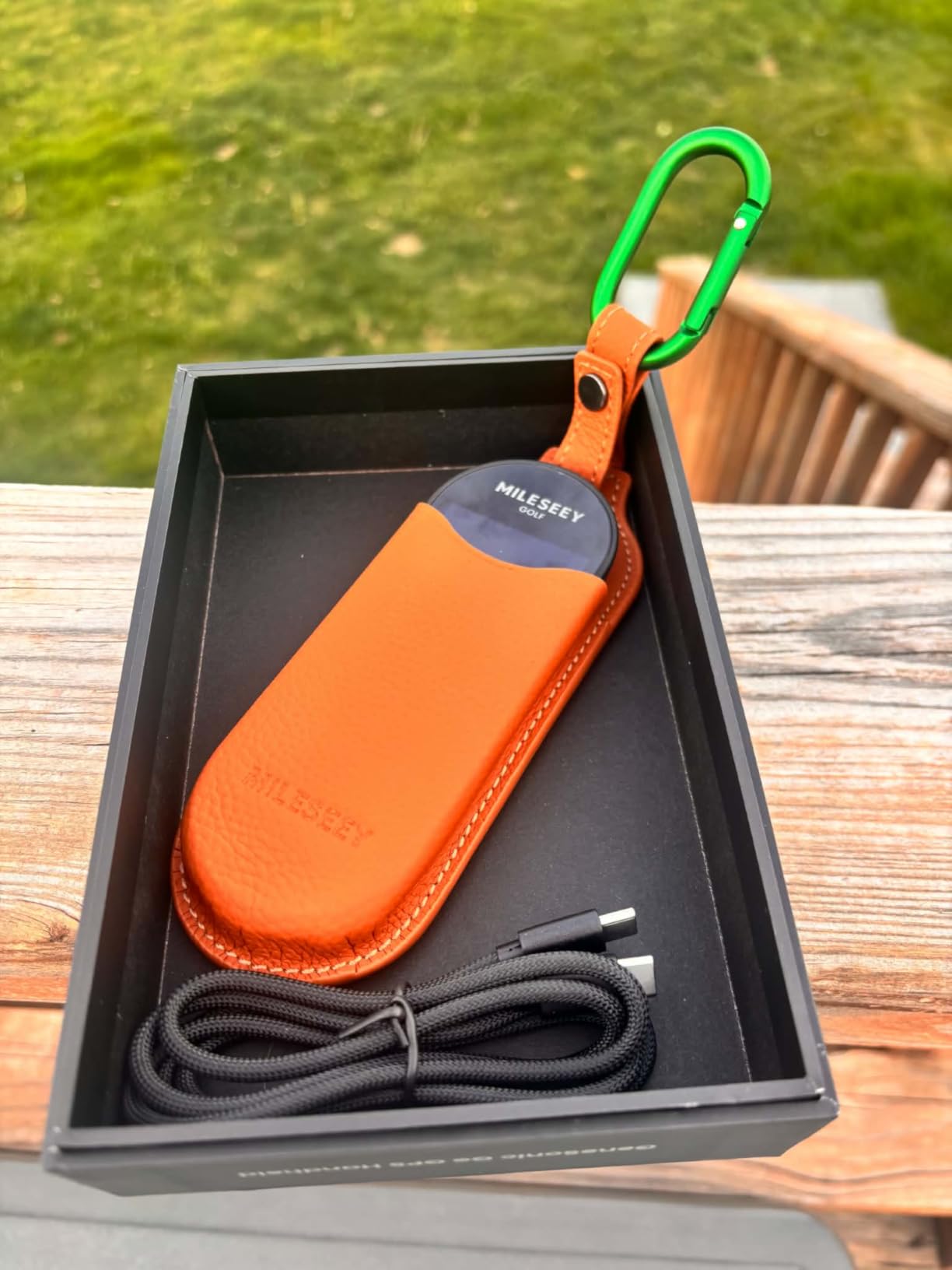
Owners rate the accuracy highly, reporting readings within a yard of cart GPS and matching their phone apps. The magnetic mount holds on riding and push carts, and the box includes a carabiner and a leather pouch for belt or bag use, which is more than most handhelds offer. IP67 sealing and USB-C charging round out a well-built package.
The screen resolution is the weak point, and owners say so directly. Up close the text looks pixelated compared with a premium device, and the menu structure is not always intuitive with sparse written instructions. Two functional quirks get repeated: moving the pin in Green View does not change the yardages shown, and some courses are missing from the database and need a support request.
Battery life is rated at 10 hours plus, which is the shortest in this roundup and covers a round comfortably rather than several.
Who this actually suits
It suits golfers who have used a phone app and want the same information on a device that does not need a phone. The magnet and the included pouch mean one unit covers riding, push carts and walking.
If you care about measurement only, you are paying for a screen and a brand name rather than extra accuracy.
Where it falls short
It falls short for anyone who wants a laser to the pin or tournament-legal slope. It also falls short for players on a tight battery schedule, since ten hours is one round plus a little.
Check your home course is in the database before buying, because a support request is the only remedy for a missing map.
Built-in GPS vs App-Paired GPS: Which Architecture Do You Need?
This is the distinction that decides most purchases in this category, and most roundups blur it. A true built-in GPS rangefinder holds its own satellite receiver and its own course database, so it acquires satellites and plots your position with nothing else present. An app-paired device borrows positioning from your phone over Bluetooth, which means a dead phone or a failed pairing turns a yardage device as a paperweight.
Nine of the ten devices here work completely standalone for yardages. The Garmin Approach G12 is a partial exception, because its yardages work alone while its scorecard, statistics and course updates route through the Garmin Golf app. The Shot Scope H4 keeps its course database on the device but relies on its app for first-time course downloads and post-round editing. Everything else in this list will find a course and give you numbers with your phone switched off and still in the bag.
For the minority who want a laser and GPS together, only two devices in this roundup qualify. The MILESEEY G1 has both in one body with no phone involved, and the Garmin Z82 pairs a 450 yard laser with a 41,000 course map. Everything else is a handheld GPS that measures to hazards, carries and the green rather than to the pin.
GPS Rangefinder vs GPS Golf Watch and a Plain Laser
Which is better for golf, a GPS or a rangefinder? The honest answer from forums is that they are complementary rather than competing, and that is the answer we would give a friend. A laser gives you a pinpoint number to the flag, typically within a yard. GPS gives you the layout: hazards, carries, doglegs, where the water is. Forum users regularly note a two to three yard gap between the two readings, which is meaningful but not a reason to choose one over the other. If you also use a rangefinder away from the course, our [best hunting rangefinders roundup](https://www.peggyomara.com/best-hunting-rangefinders/) covers the same laser technology in a different setting.
That matters because a GPS golf watch already does most of what a handheld GPS rangefinder does. If you wear one, you already have front, center and back yardages and hazard distances on your wrist, with no device in your pocket and no battery anxiety beyond your watch. On that basis, a handheld GPS is largely a second screen for the same data.
Where the handheld earns its place is specific. Cart path only rounds, where walking to the shot is not an option. Phone-free play, where the clubhouse wifi and your battery are both unavailable. Larger screens for golfers whose eyes will not accept a watch face. And shot tracking, in the case of the Shot Scope H4.
If your phone runs a reliable golf GPS app and you are happy to check yardages at the tee box, this whole category is optional. Plenty of golfers in the forums recommend exactly that.
How to Choose: Six Questions That Narrow It Down
Do you walk or ride? Everything follows from this. Walkers want a clip, lanyard or belt mount and the GolfBuddy Voice 2, Garmin G12 or Shot Scope H4 fit that. Riders want a magnet, which points to the Izzo Swami, Swami Max, KISS 2.0, Bushnell Phantom 3 or MILESEEY GeneSonic Go.
Do you play without a phone? If yes, cross every app-dependent feature off your list and shortlist only devices that hold their own course database. Nine of our ten qualify, so this filter is less useful than people expect, but it should be your first question anyway.
Do you need a laser to the pin? If yes, the field narrows to two devices. The MILESEEY G1 gives you up to 600 yards, 6X magnification and a tournament-legal slope switch. The Garmin Z82 gives you the course map in the viewfinder and a lock within 10 inches up to 450 yards. Neither is a handheld GPS, so if you also want a big readable screen on the cart, you are choosing between them and giving up on that.
Do you need slope, and do you compete? Slope-adjusted distances help on real elevation, and every device that offers them here has a way to show a plain number as well. Read the local rules first, because slope is restricted in most amateur and professional competition.
How big does the screen need to be? Readability is the single most common complaint in this category, so do not skip it. The 0.9 inch Garmin G12 is the hardest to read and the 3.5 inch Izzo Swami Max is the easiest, and both earn their place on that basis alone.
What is your battery reality? A device that dies mid-round is worse than no device. The Garmin G12 is rated at up to 30 hours in GPS mode, the MILESEEY G1 at 24, the Bushnell at up to 18. At the other end, the GeneSonic Go is rated at 10 hours or more, which is one round with margin rather than several.
Finally, check the hidden costs. All ten of the devices here charge nothing after purchase, with no subscription tier and free course updates for the life of the product. That is unusual in this category and worth confirming on the listing before you buy, because it is the feature most likely to change.
Who Should Skip a GPS Rangefinder Entirely
Skip the whole category if you already wear a GPS golf watch and are happy with it. Your watch gives front, center and back distances and hazards on your wrist, and it does not need a second device in your pocket or a second battery to manage.
Skip it if you use your phone at the tee. A good golf GPS app costs nothing, updates its maps automatically, and uses a battery you are already carrying. We would rather tell you that than sell you hardware you do not need.
Skip it if you play two or three times a year. The mapping databases only pay off on courses you actually visit, and the accuracy gap between a plain laser and a handheld is smaller than the gap people assume.
Skip the premium models in particular if you play familiar courses. Hazard distances and carry numbers come from your position relative to the map, not from a laser, and on a course you have played fifty times you are unlikely to need a course overlay in your viewfinder.
Frequently Asked Questions
What is a good rangefinder with built-in GPS?
A good rangefinder with built-in GPS measures distance to the flag with a laser and plots your position on a digital course map at the same time. You get pinpoint yardages to the pin plus context distances to hazards, carries and the front, center and back of the green. Look for a device with its own GPS chip and course database so it works with no phone present.
Which is better for golf, a GPS or a rangefinder?
They solve different problems, so most golfers use both. A rangefinder gives you an accurate distance to the flag, typically within a yard. A GPS gives you the shape of the hole, including hazards, carries and doglegs. Forum users report a two to three yard gap between the two numbers. If you already wear a GPS golf watch, a handheld GPS device is largely a second screen for the same data.
Do GPS rangefinders work without a phone?
Most do, but not all. Nine of the ten devices in this roundup hold their own GPS receiver and course database and give you yardages with your phone switched off. The exception worth checking is the Shot Scope H4, which requires the app to download each course before you play. The Garmin Approach G12 also reads distances alone but needs its app for course updates and scorecard uploads.
Are GPS rangefinders accurate?
On mapped courses they are generally reliable, with handheld units commonly landing within a yard or two of a cart or phone app reading. The real error comes from geometry rather than hardware, because GPS plots your position as the crow flies, so a severe dogleg can make a carry distance read short. Laser accuracy is separately specified, and the Garmin Z82 is quoted within 10 inches of the flag up to 450 yards.
Do you really need slope on a rangefinder?
Only if you play on real elevation and compete in events that allow it. Slope adjustment accounts for uphill and downhill lies so the number matches the shot you are actually playing, which avoids the front-left miss on an uphill approach. Slope is restricted in many amateur and most professional tournaments, so any device you buy should also be able to show a plain distance.
Do GPS rangefinders need a subscription?
The ones in this roundup do not. All ten hold their own course database with free lifetime updates and no annual fee, which is unusual in this category. The bigger risk with smaller brands is not a subscription but long-term support, so check that course updates are downloadable and that the company is likely to still be maintaining them in a few years.
The Verdict: Which Golf Rangefinder With GPS Wins in 2026
The GolfBuddy Voice 2 is our pick for the best golf rangefinders with GPS because it is the most complete package for the money. It is standalone, it speaks the yardages so your eyes stay on the ball, it clears multiple rounds on a charge, and more than 4,000 owner reviews back the accuracy claims. For cart players who want a screen they can read in sun, the Bushnell Phantom 3 Slope GPS is the better buy, with the highest average rating in the group and slope-adjusted numbers.
Two situations change the answer. If you need a laser and course data in one device, the MILESEEY G1 does both with no phone and no subscription. If you want the whole hole drawn in your viewfinder, the Garmin Approach Z82 is the only pick here that does it, and you should accept a grainier image and no magnet in exchange.
And if you already wear a GPS golf watch, the most useful thing we can tell you is that you probably do not need any of these. The best golf rangefinders with GPS earn their place when you walk, ride without a phone, or play courses you do not know yet. That is a shorter list than it looks like, and it is the honest one.