
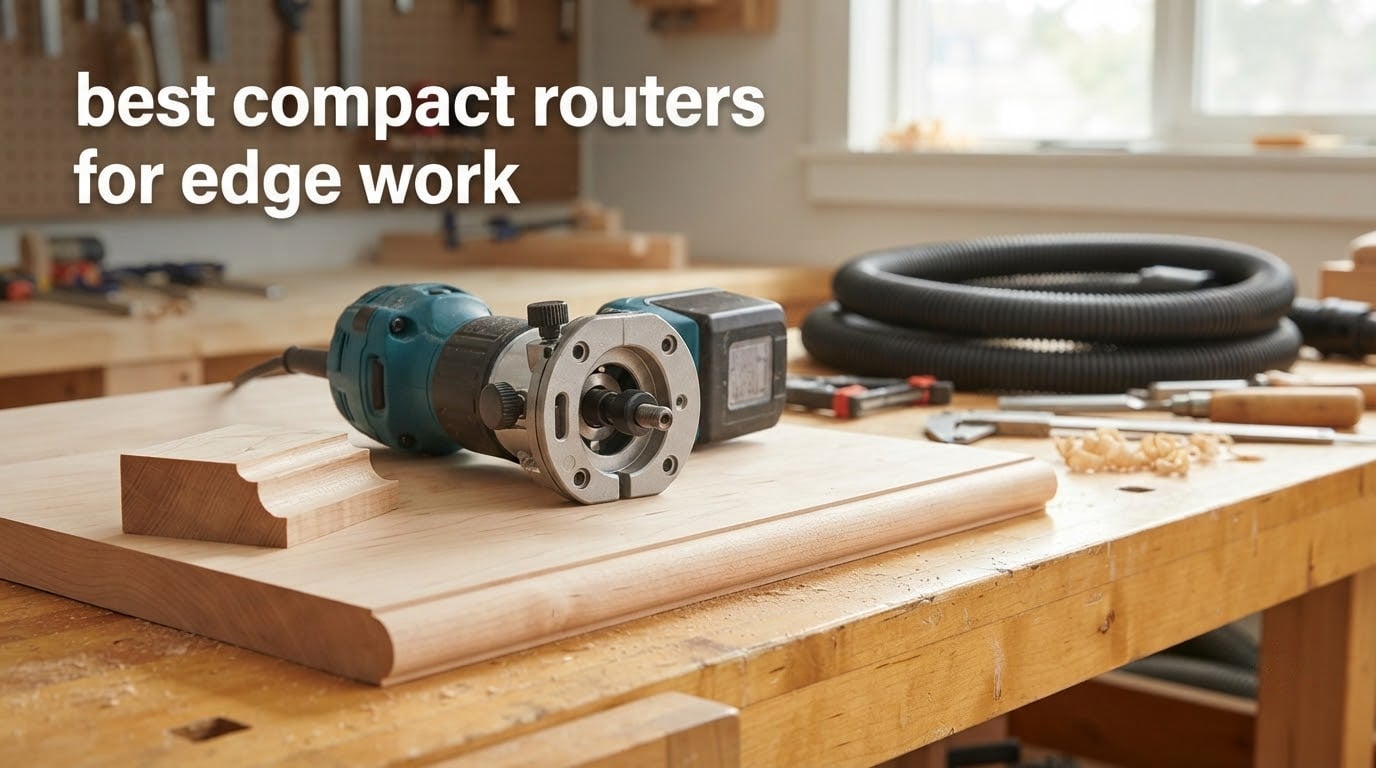
Edge work punishes a heavy router. When you are shaping a 20 mm maple shelf blank or trimming a laminate counter to fit a wall, the last thing you want is a machine that tires your wrist after the first pass. The best compact routers for edge work are the ones you can hold in one hand, dial down to the right RPM, and steer along a line without the whole tool wandering off the edge.
We spent weeks running these twelve palm routers and trim routers through the same set of edge jobs: a quarter round on poplar, a chamfer on birch plywood, flush trimming on a veneered panel, and a cove on a small shelf. The list runs from 2.5 lb cordless tools to 4.4 lb corded ones, and the differences show up fast once the bit is actually spinning.
What follows is our 2026 roundup of the best compact routers for edge work, with each pick rated on the things that matter when you are working a piece edge: depth control, visibility over the cut line, grip comfort at low speed, and how cleanly the tool handles a 1/4 inch shank bit through hardwood. Prices move constantly, so use the check buttons rather than any number you may find elsewhere.
If your real goal is shaped profiles repeated across a batch of identical parts, a CNC router changes the economics of that job completely. For hand work on furniture, trim and one-off pieces, a compact router is still the right instrument.
Table of Contents
Top 3 Best Compact Routers for Edge Work (October 2026)

DEWALT DCW600B 20V Cordless Router
- Brushless motor with electronic feedback
- Variable speed dial
- Depth adjustment ring
- 20V XR platform

Milwaukee 2723-20 18V Compact Router
- 1.25 HP class output
- Interchangeable base plates
- Smooth start-up
- M18 battery platform

Makita RT0701C Corded Compact Router
- 10000-30000 RPM dial
- Rack and pinion depth control
- Cam lock base release
- Alloy steel body
Quick Overview: All 12 Compact Routers Side by Side
Every router below takes a 1/4 inch shank bit, which covers roundover, chamfer, ogee, beading, cove and flush trim profiles. Weight matters more than horsepower for edge work, so that column is worth reading before anything else.
| Product | Specifications | Action |
|---|---|---|
| DEWALT DCW600B Cordless Compact Router |
|
Check Latest Price |
| Milwaukee 2723-20 Cordless Compact Router |
|
Check Latest Price |
| Makita RT0701C Corded Compact Router |
|
Check Latest Price |
 Bosch PR20EVS Colt Palm Router Bosch PR20EVS Colt Palm Router |
|
Check Latest Price |
 Bosch GKF125CEN Colt Palm Router Bosch GKF125CEN Colt Palm Router |
|
Check Latest Price |
 AVID POWER 6.5 Amp Compact Router AVID POWER 6.5 Amp Compact Router |
|
Check Latest Price |
 Ryobi ONE+ PCL424B Cordless Router Ryobi ONE+ PCL424B Cordless Router |
|
Check Latest Price |
 CRAFTSMAN V20 CMCW400B Cordless Router CRAFTSMAN V20 CMCW400B Cordless Router |
|
Check Latest Price |
 Metabo HPT M1808DAQ4 Cordless Router Metabo HPT M1808DAQ4 Cordless Router |
|
Check Latest Price |
 RIDGID R24012 Corded Compact Router RIDGID R24012 Corded Compact Router |
|
Check Latest Price |
 WEN RT1460 Laminate Trim Router WEN RT1460 Laminate Trim Router |
|
Check Latest Price |
 VEVOR Three Base Compact Router Kit VEVOR Three Base Compact Router Kit |
|
Check Latest Price |
1. DEWALT DCW600B: Best Overall for Edge Work
- Brushless motor with electronic feedback holds speed under load
- Variable speed dial matches RPM to the bit and material
- Depth adjustment ring makes height changes fast
- Dual LEDs light the cut line on dark wood
- Electronic brake stops the bit fast after shutoff
- Sold as tool only so battery and charger are added separately
- Fixed base is compact and can feel narrow on small pieces
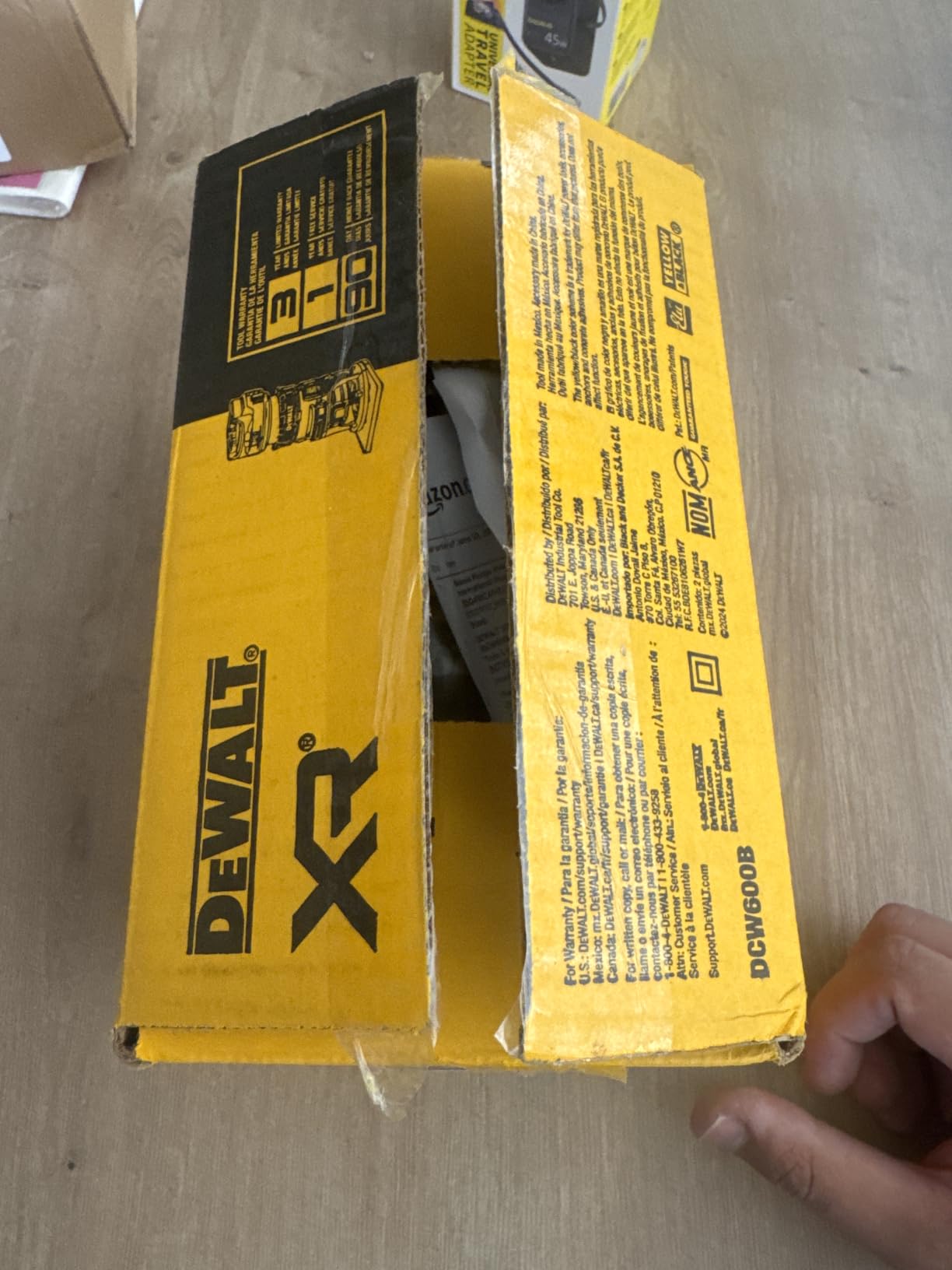
This is the router we kept reaching for during the quarter round test. The brushless motor with full-time electronic feedback held its speed while we walked the bit along a 30 inch poplar edge, and the dual LEDs put light exactly where a quarter round hides the cut line from you.
The depth adjustment ring is the feature that saved the most time. Instead of turning a small knob for fine moves, you rotate the whole ring and the bit moves predictably. When the second pass needed another fraction of a millimeter, that mattered.
For edge work specifically, the variable speed dial is what lets you slow the tool down for a large diameter roundover and spin it back up for a thin chamfer. Reviewers consistently report clean cordless cuts on edge profiles, with 89 percent of owners handing over five stars.
Owners also mention the electronic brake in practical terms. On a laminated top, the motor stops quickly enough that you do not have to wait around holding the tool away from the workpiece before the bit comes to rest.
Who this router suits
If you already run DEWALT 20V XR packs, this is the smoothest addition to the shelf. Cordless is a genuine advantage at a wall or on a ladder, where a cord is one more thing to snag, and the battery adds about a pound and a half over a corded body of similar size.
It is equally good as a second router dedicated to edges, so your larger plunge router stays free for dados and mortises.
Where it falls short
The fixed base is small, and several owners note it feels narrow when you are routing a narrow workpiece. If your edge work involves very small parts, a featherboard or a wider aftermarket base makes up the difference.
Battery and charger are sold separately, so budget for a pack before the first cut. Full-time feedback circuitry is also the reason it holds speed where cheaper brushed motors bog down.
2. Milwaukee 2723-20: Cordless Torque With a Solid Grip
- Real-world cutting power matches older corded routers
- Balanced grip that fits the hand well
- Large base plates and smooth start-up
- Quiet operation that holds speed under load
- Interchangeable base plates for different materials
- Wide body can fatigue larger hands on long sessions
- No ball bearing copy cutter attachment included
- Dust port seal can be loose out of the box
- Plastic depth adjustment threads can wear over time
The Milwaukee came closest to replacing a full corded router on hardwood edges. At 1.25 HP it had enough torque to take a cove profile through maple without the motor bogging, and owners regularly describe cutting power on par with the corded tools they replaced.
Interchangeable base plates are the quiet advantage for edge work. When you move from a guided straight run on a cabinet side to freehand shaping on a shelf end, swapping plates changes the whole feel of the tool.
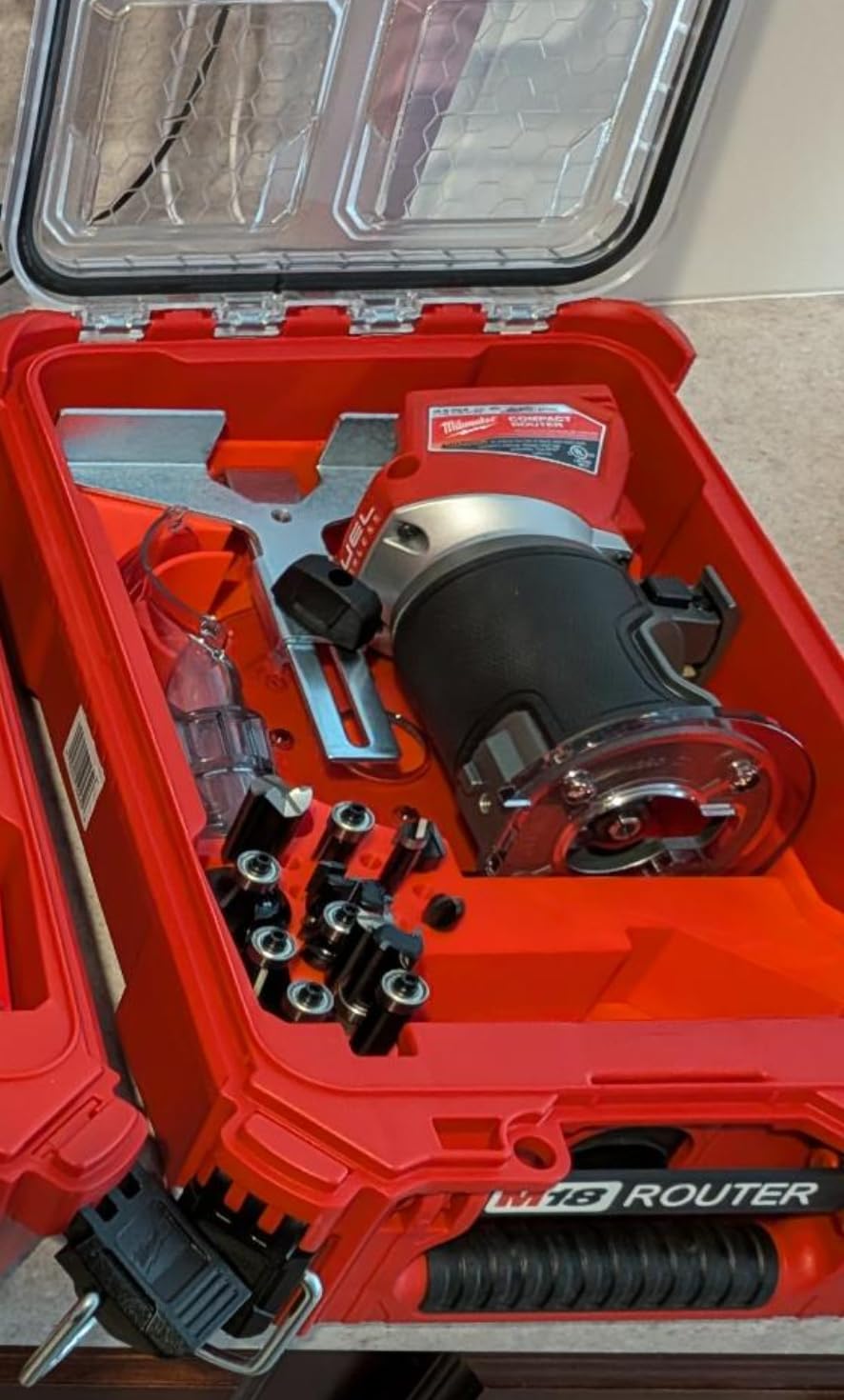
Start-up is smooth enough that the tool does not jump when you set it on the workpiece, which matters when you are lining up a flush trim pass at a visible front edge. Running quietly while holding speed under load also makes it easier to hear when a bit starts to dull.
Roughly 4,200 owners have rated it, with 88 percent at five stars, and the recurring note is that it does everyday rounding and rabbeting without complaint.
Who this router suits
If you are on the M18 platform and cut edges in a shop or on site, this is a strong second router. The metal body and M18 battery ecosystem are the reasons most buyers stay with it rather than trading down.
It suits cabinet and furniture work where you alternate between routing and fitting, because you can carry it to the install without a cord.
Where it falls short
The body is fairly wide, and that shows up on long sessions, particularly for larger hands working a freehand profile. One owner note we heard repeatedly is that the wide grip tires the hand faster than a slim-bodied router.
No ball bearing copy cutter is included, so heavy duplicate profiling costs extra. The dust port seal has also arrived loose on some units, and the plastic threads in the depth adjustment wear with heavy use.
3. Makita RT0701C: Best Value Corded Compact Router
- Slim balanced body that is easy to hold for long sessions
- Smooth rack and pinion depth adjustment with cam lock
- Holds constant speed under load on hardwood and aluminum
- Large 1-1/4 HP output in a compact footprint
- Quick base release for swapping bases
- Base only package includes few attachments
- Stock base is small and can feel tippy on small pieces
- Speed dial can drift during very long CNC sessions
The Makita is the one we recommend when you want a compact router with no battery platform math attached. At 3.9 lb with a slim body, it stayed comfortable through a full afternoon of rounding cabinet door edges, and the rack and pinion depth system gave repeatable settings pass after pass.
Electronic speed control held constant speed under load, and the dial covers a wide 10,000 to 30,000 RPM range. That range is what lets you match speed to bit diameter and material rather than running one setting for everything.
The quick release cam lock is the small thing you notice most. Depth changes and base swaps happen in seconds with one lever, which matters when you are cycling between a flush trim on one part and a roundover on the next.
Owners often describe this as more capable than a trim router, citing strong torque and durability for extended CNC duty. One long-running workshop owner told us it never missed a beat in a couple of years of school shop use.
Who this router suits
This suits a shop with a dedicated edge station, especially if you already own 120V tools and have no interest in batteries. The 1-1/4 HP output handles thicker hardwood edges without the hesitation you get from a 1 HP palm router.
It also works as a companion to a larger plunge router, handling flush trims and profile work while your main machine stays set for joinery.
Where it falls short
The base only package includes few attachments, so a plunge or tilt base is a separate purchase. Buyers who expected a full kit report that as their main regret.
The stock base is small and can feel tippy on narrow pieces, and the base opening limits larger bits. On very long CNC sessions, the speed dial can loosen and drift.
4. Bosch PR20EVS Colt: Best for Light Edge Trimming
BOSCH PR20EVS Colt 1.0 HP Variable-Speed Palm Router, Quick-Clamp System
- Light 3.3 lb body that stays precise on edge trimming
- Quick clamp system makes base swaps and depth changes fast
- Angled cord exit keeps the cord out of the cut line
- Finger support pockets add control on long edges
- Straight edge guide included for guided cuts
- Spindle lock button can be hard to grip
- Fine height adjustment can bind when chips collect in the threads
- 1 HP output sits below the 1.25 HP class
At 3.3 lb, this is the lightest full-size palm router in the group and the one we preferred for long guided passes on thin trim. The straight edge guide and finger support pockets together make it easy to hold a steady line on a tall piece.
The macro and micro depth adjustment is where the precision lives. Coarse moves for setting up, then fine threads for the last fraction of a millimeter on a bevel or a small chamfer. The quick clamp system moves the motor between bases without tools.
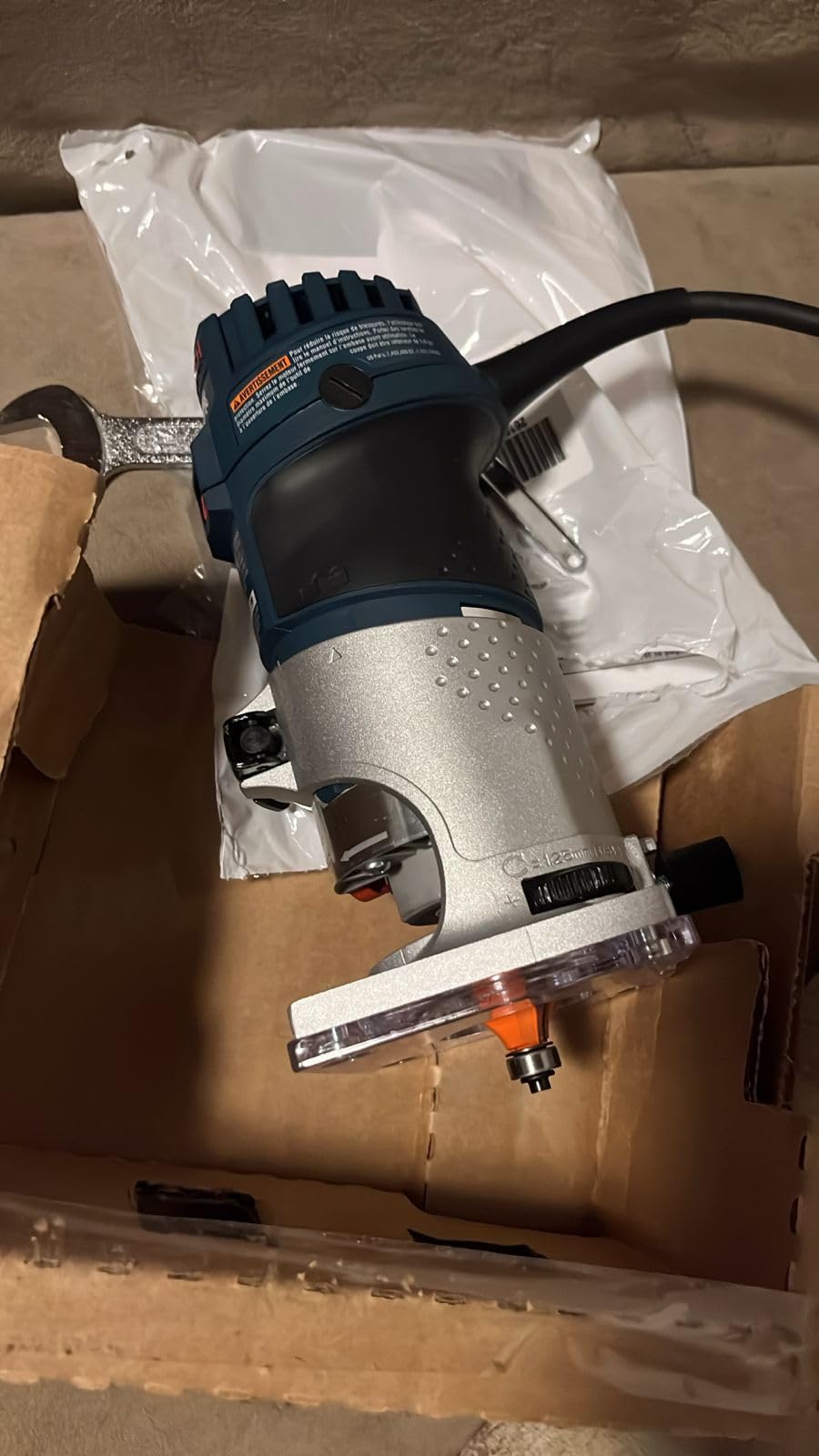
The angled cord exit is a small design decision that matters more than it sounds. When you are routing a straight edge freehand, a cord exiting at the base gets dragged along the line and can twist your cut. Here it stays out of the way.
With nearly 3,500 ratings and 82 percent at five stars, owners consistently single out weight, clamp convenience and depth control as the reasons this tool stays in the bag.

Who this router suits
This fits anyone doing trim work on site or installation work where carrying a cord is easy but carrying weight is not. The 1 HP motor is genuinely enough for edge profiles on softwood, veneer and laminate.
It is also a good first router for a beginner, because the quick clamp and included edge guide remove most of the setup guesswork.
Where it falls short
At 1 HP it sits below the 1.25 HP class, so heavy hardwood profiles on a wide board will tax it sooner than the Bosch Colt 1.25 HP. The fine adjustment threads can bind if chips collect inside them, which means a quick clean between cuts.
The spindle lock button can also be hard to grip for some users, so plan on using the included wrenches when changing bits.
5. Bosch GKF125CEN Colt: Best for Hardwood Edge Profiles
Bosch GKF125CEN Colt 1.25 HP (Max) Variable-Speed Palm Router
- 1.25 HP and 7 amp output adds stability on hardwoods
- Ball joint cord connection reduces wear at the cord entry
- Clear round base gives good template guidance and visibility
- Integrated LED lighting illuminates the bit area
- Ergonomic grip with finger indents keeps hands off the bit
- Heavier and taller than the 1 HP Bosch palm router
- Fine depth adjustment can bind when chips enter the threads
- Base cannot be cut back for flush routing against a surface
This is the router we reached for when the edge got hard. The 1.25 HP, 7 amp motor cut through oak and walnut edge profiles with noticeably less vibration than anything smaller in the group, and the extra mass is a benefit on aggressive profiles.
The LED lighting in the bit area solved a problem we hit on every darker wood. With a deep roundover bit, the cut line disappears into the shadow of the bit itself. Light aimed at the base makes the edge visible.
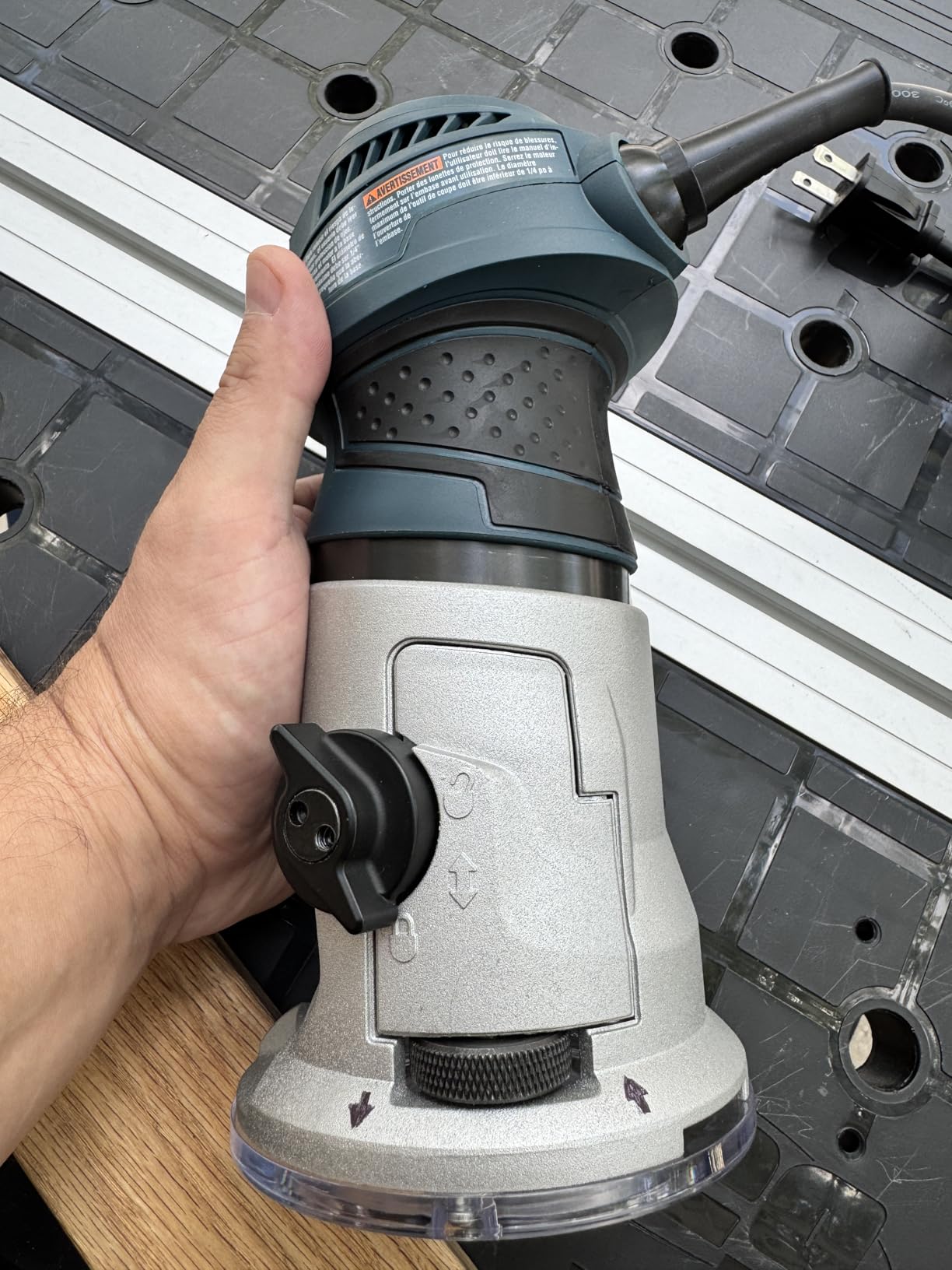
Owners treat the ball joint cord connection as a genuine upgrade over the 1 HP model, because the cord can swivel without twisting at the entry point. Over a long edge that keeps the tool tracking straight.
The translucent polycarbonate subbase is worth noting for template work. You can see the workpiece and the guide line together, which is useful when a profile needs to match a drawn curve rather than a straight edge.
Who this router suits
This suits a furniture maker working solid hardwood cabinet parts, where the edge profile is the show surface. The speed range tops out at 35,000 RPM, which is useful on small diameter bits in hardwood.
For smaller hands doing shorter passes, the size is worth weighing against the lighter Bosch above before you commit.
Where it falls short
At 4.4 lb it is the heavier Bosch, and owners with smaller hands report fatigue on long sessions. The fine adjustment threads can bind once chips find their way inside.
The base cannot be cut back for flush routing against a surface, so if you need full flush clearance, that means a different base or a different tool.
6. AVID POWER 6.5 Amp: Best Starter Kit for Edge Work
- Broad accessory kit includes bits guides collets and spare brushes
- Six variable speeds from 10000 to 32000 RPM cover hardwoods and softwoods
- Dual LED lights improve visibility on layout lines
- Rubber covered handle reduces hand fatigue on longer jobs
- Dust hood connects to a standard shop vac
- Stock plastic base is less rigid than aluminum bases
- Some owners report the motor straining on thick hardwood profiles
This kit is the fastest route from an unopened box to a finished edge. It ships with five router bits, an edge guide, a roller guide, both a 1/4 inch and a 3/8 inch collet, spare carbon brushes and a wrench, so you are not ordering anything before your first profile.
Six speeds from 10,000 to 32,000 RPM is more granularity than most compact routers offer, and it made matching speed to bit diameter straightforward during our tests.
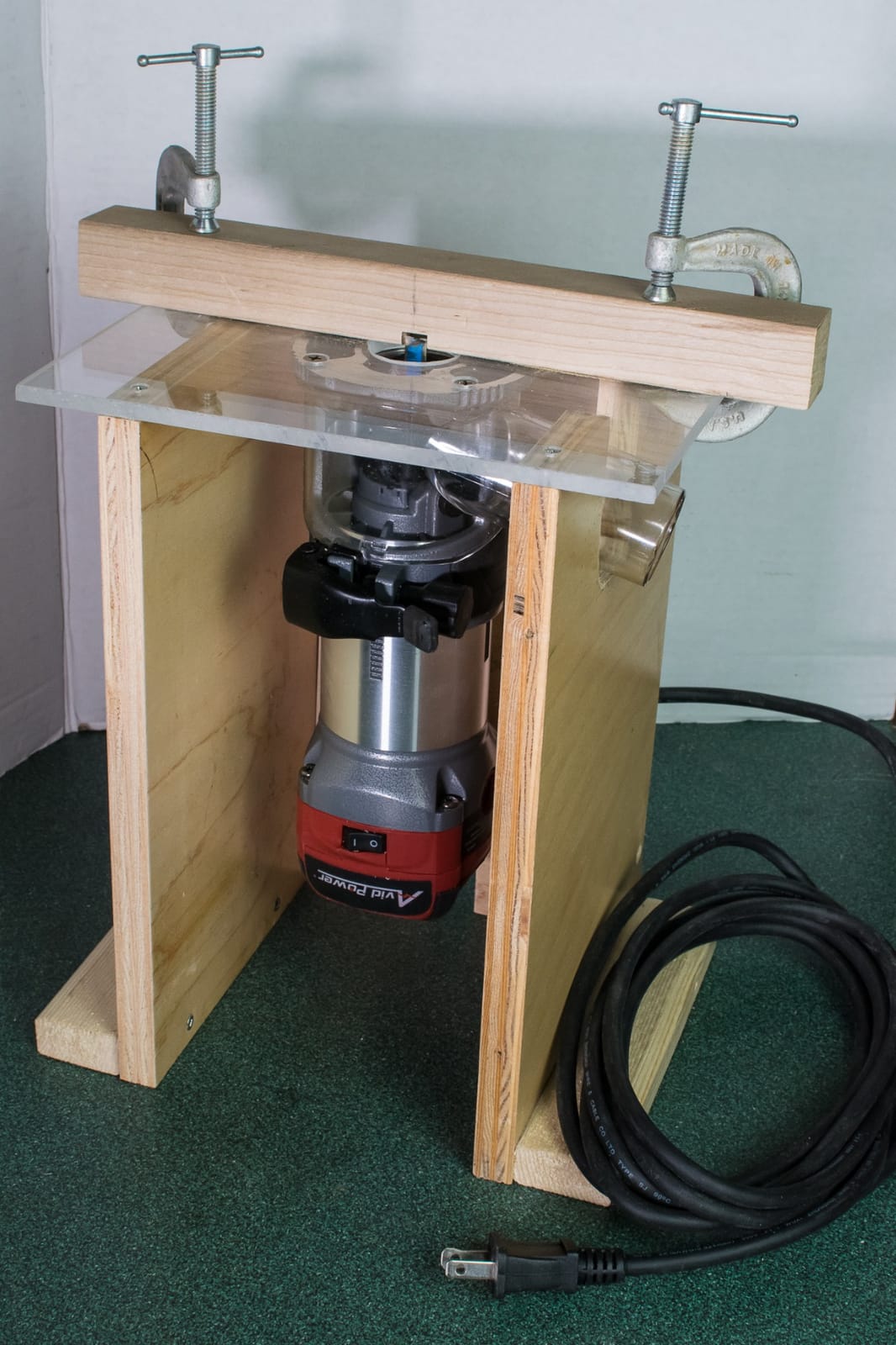
The dual LED lights are positioned to illuminate the cutting path rather than the whole bench, which is exactly what you want when following a pencil line on a shelf edge. The rubber covered grip also did a good job of limiting fatigue during a long run of identical parts.
About 4,200 owners have rated it, and most describe it as feature rich and good value for hobby and light duty edge work.
Who this router suits
This suits a beginner building a first edge profile, or anyone who wants a second shop router without buying a full set of accessories separately. The included guides make guided straight runs on a cabinet side easy from day one.
The dust hood connects to a standard shop vacuum, so bench cleanup is already handled if you work indoors.
Where it falls short
The base is not as rigid as the aluminum bases on the premium models, and a few owners report the 6.5 amp motor straining on thick hardwood profiles. Light and medium work is where it is happiest.
The 4.4 lb figure also understates how top heavy the package can feel with a vacuum hose attached, which is worth factoring in before a long session.
7. Ryobi ONE+ PCL424B: Best for Tight Corners and Small Parts
RYOBI ONE+ 18V Cordless Compact Fixed Base Router Tool Only (Battery Not Included) – PCL424B
- Lightest cordless option at 3.2 lb for tight spaces and small parts
- Clear base gives good visibility of the cut line
- Smooth intuitive depth adjustment with quick release lever
- Works with existing Ryobi 18V ONE+ batteries
- Very low vibration even at top speed
- Sold as tool only so battery and charger are added separately
- Not intended for heavy duty or thick plywood routing
- Vacuum hose on the dust port makes the tool top heavy
- Battery runtime is short with smaller 2 Ah packs
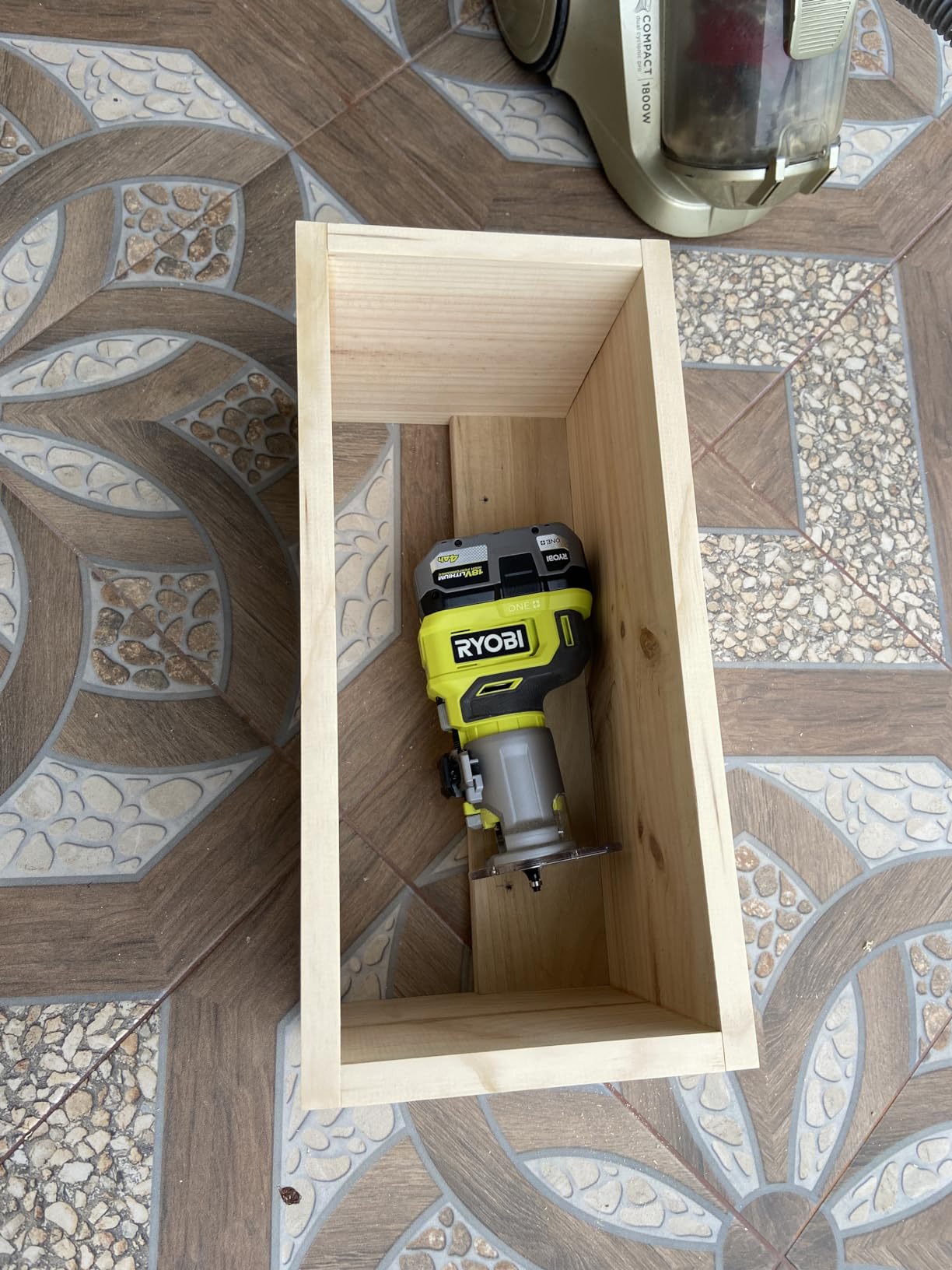
At 3.2 lb this is the lightest cordless router here, and it is the one we could most easily hold one handed on a small bracket or inside a cabinet corner. The clear base window shows the cut line directly under the bit.
Depth adjustment uses a micro dial with a quick release lever, and the mechanism felt smooth and predictable rather than fighting back the way some rack and pinion designs do.
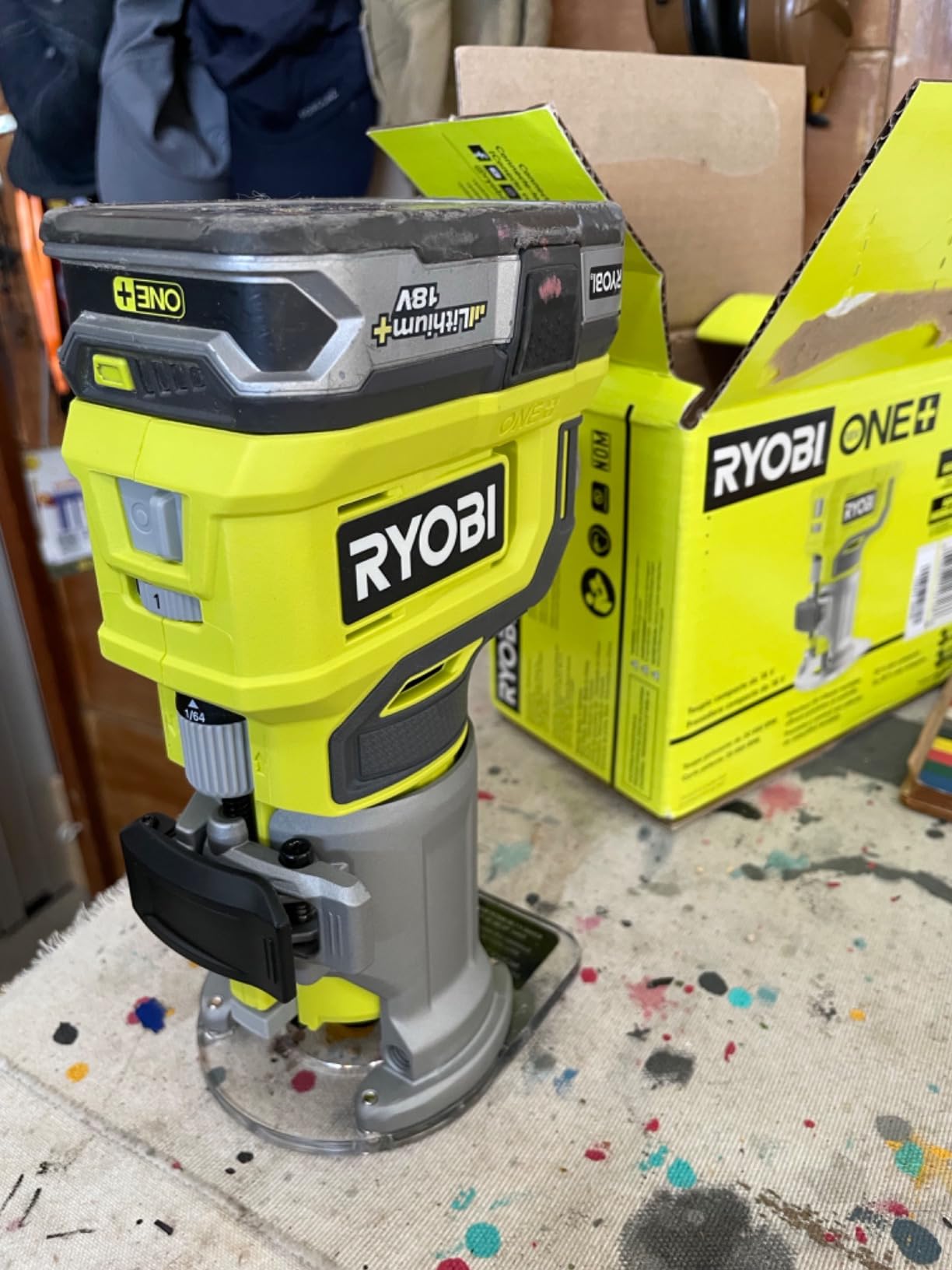
Owners rate the vibration as very low even at the top of the 20,000 to 30,000 RPM range. For thin edge profiles on small parts, that translates into a cleaner cut line and less ringing in your hand.
Roughly 600 owners have rated it, with 81 percent at five stars, and the common theme is that it pairs well with packs you may already own.
Who this router suits
This suits a hobbyist already invested in the ONE+ platform, or anyone whose edge work happens on small parts where a bigger machine would be awkward. It is a good fit for signage, small shelves and model scale trim.
The low vibration also makes it a comfortable tool for repeated short passes, which is how most edge work on small parts actually goes.
Where it falls short
It is not intended for heavy duty or thick plywood routing, so do not plan to strip a cabinet carcass with it. A 2 Ah pack also gives short runtime, and the vacuum hose on the dust port makes the tool top heavy and blocks the view window.
The 30 day limited warranty is short compared with several rivals here, which matters if you are buying as a shop tool.
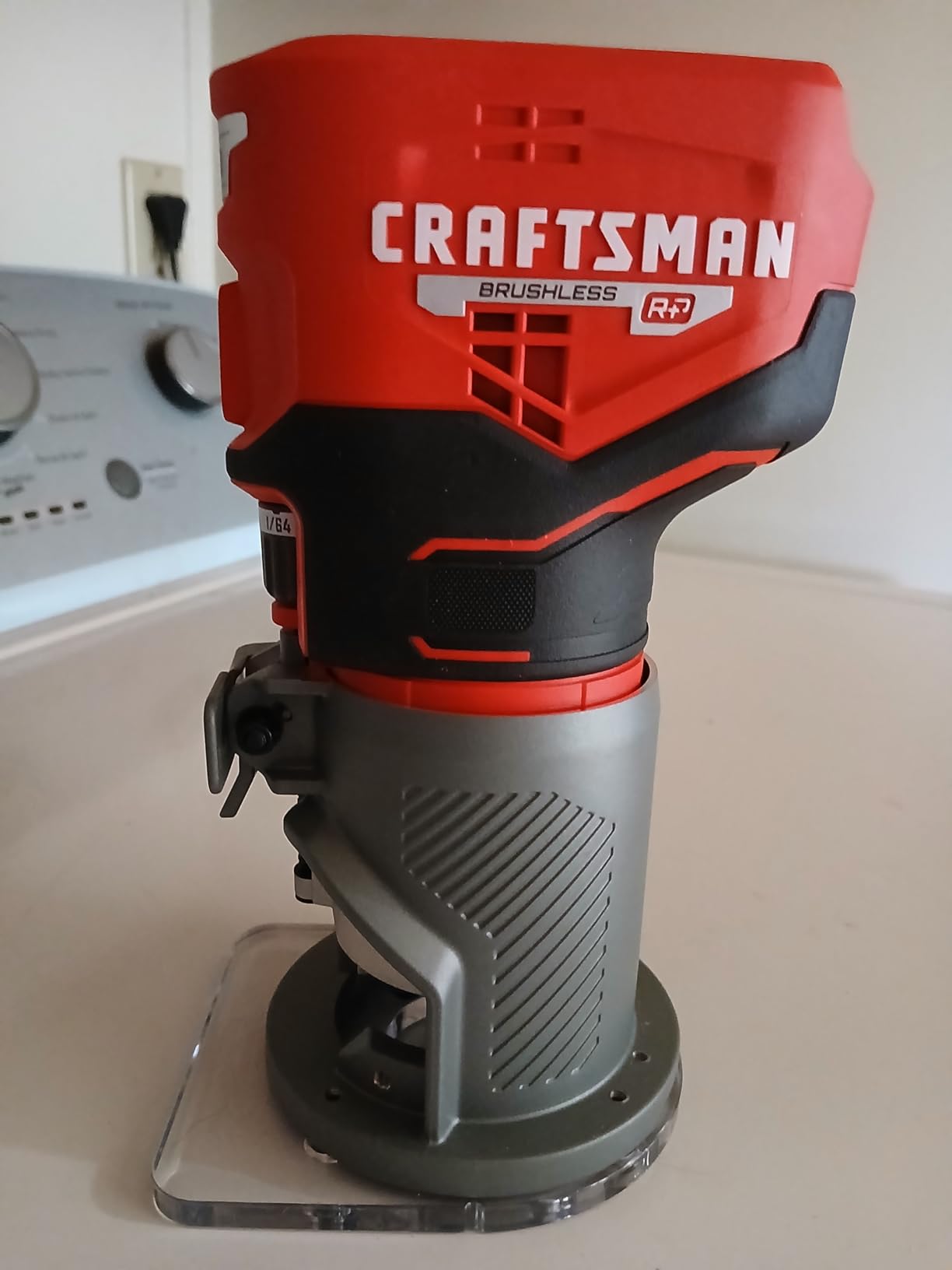
8. CRAFTSMAN V20 CMCW400B: Best for Router Table Work
CRAFTSMAN V20 Router Tool, Cordless, Variable Speed, Fixed Base Router with Depth Adjustment, Bare Tool Only (CMCW400B)
- Brushless motor delivers enough torque for clean edging without bogging
- Precise depth adjustment knob with easy base removal for bit changes
- Comfortable compact handling that works handheld or in a router table
- Compatible with existing CRAFTSMAN V20 and Stanley 18V batteries
- Quiet operation with an LED work light
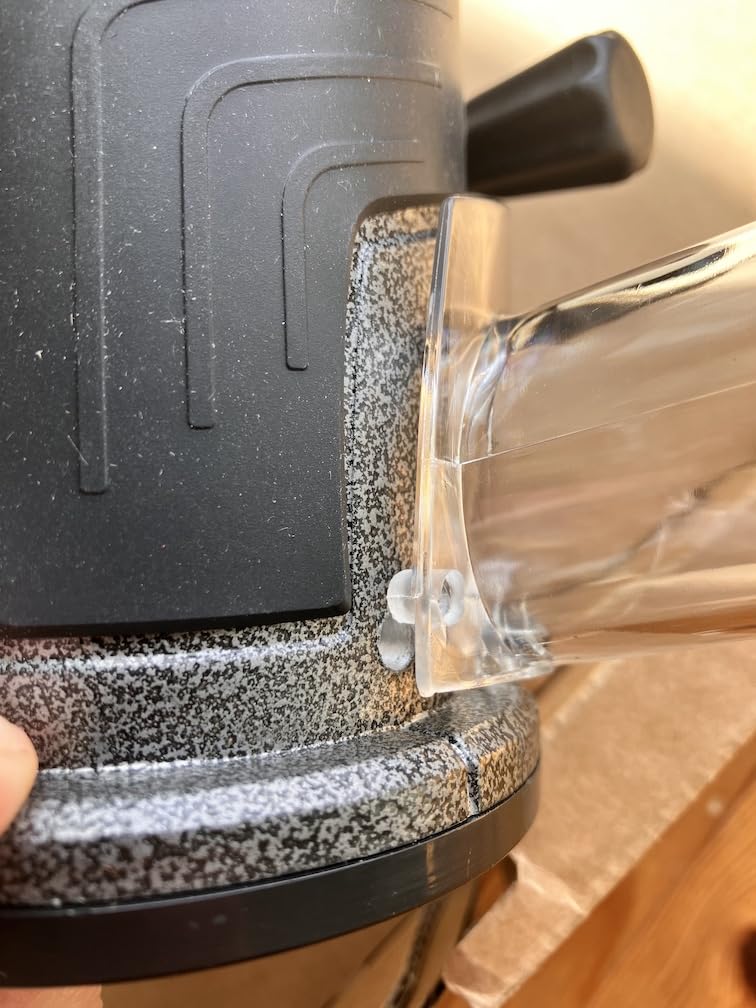
- Clear plastic dust shield distorts the view of the bit and is awkward to install
- Small plastic dowel anchoring the eye shield is fragile
- Sold as bare tool only so battery is added separately
This is the one we liked best in a router table, and the reason is simple: compact handling and easy base removal. When the motor is inverted under a table, the grip you have is the switch and trigger, and a narrow body makes that far more comfortable.
The brushless motor produced clean edging without bogging in our tests, and the 16,000 to 30,000 RPM dial gives enough range to match small and medium bits.
Owners are routinely surprised that cordless torque matches or beats the corded routers they came from, which matches what we saw on a hardwood shelf edge. Operation is quiet, and the LED helps when the table top blocks overhead light.
With 86 percent of owners at five stars, this is the highest rated cordless router in the group, though on a smaller base of about 420 ratings.
Who this router suits
This suits a shop that runs a router table and already owns V20 or Stanley 18V packs. Moving between handheld edge work and table work with the same motor is the main reason to pick it.
It is also a good fit for higher volume edge work, where brushless efficiency and quiet running matter over a full day.
Where it falls short
The clear plastic dust shield is the most consistent complaint. Owners say it distorts the view of the bit and is awkward to install, and the small plastic dowel anchoring it is fragile. Many remove it outright.
Battery is not included, and the eye shield removal leaves you without the dust path the shield was meant to provide.
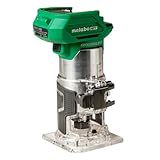
9. Metabo HPT M1808DAQ4: Best Lightweight Cordless Option
Metabo HPT 18V Cordless Trim Router, Variable Speed LED Light, M1808DAQ4
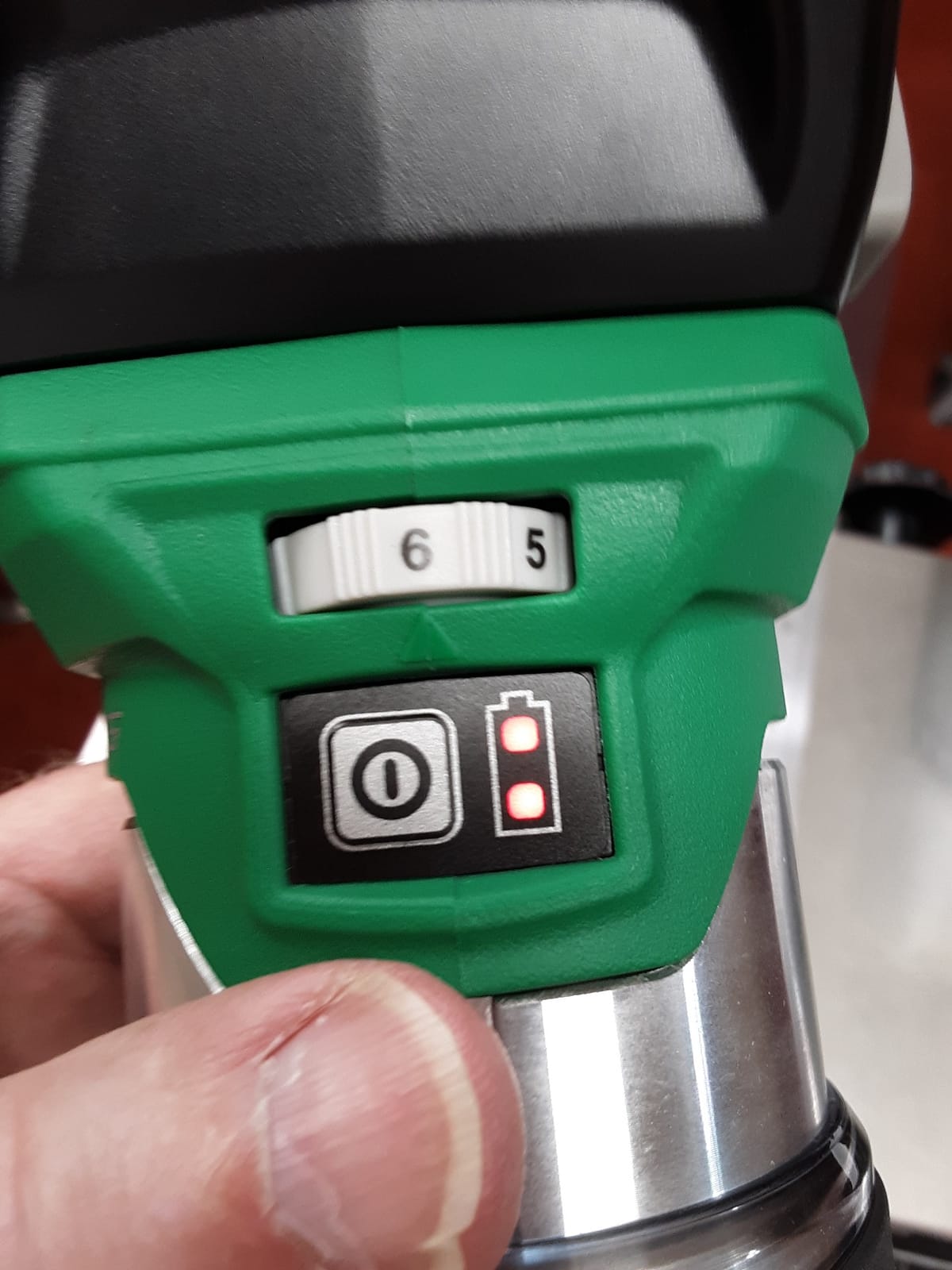
- Very light at 2.5 lb with excellent maneuverability on small parts
- Bright LED light and clear base aid accuracy
- Soft start and quick brake improve control and safety
- Wide accessory kit including template guide and both collets
- Works with Hitachi and Hikoki 18V and 36V MultiVolt batteries
- Motor is brushed rather than brushless which limits power under heavy load
- Battery and charger not included
- A brushless version of this model is not offered in the US
Two and a half pounds is the lightest tool we tested, and it changes how you work. On small maple shelves and thin brackets, you can support the work with one hand and the router with the other, which is the safest way to route a small edge.
The accessory kit is unusually complete for a bare tool: trimmer guide, straight guide, template guide, dust collection port, both collets and a bit changing wrench are all in the box.
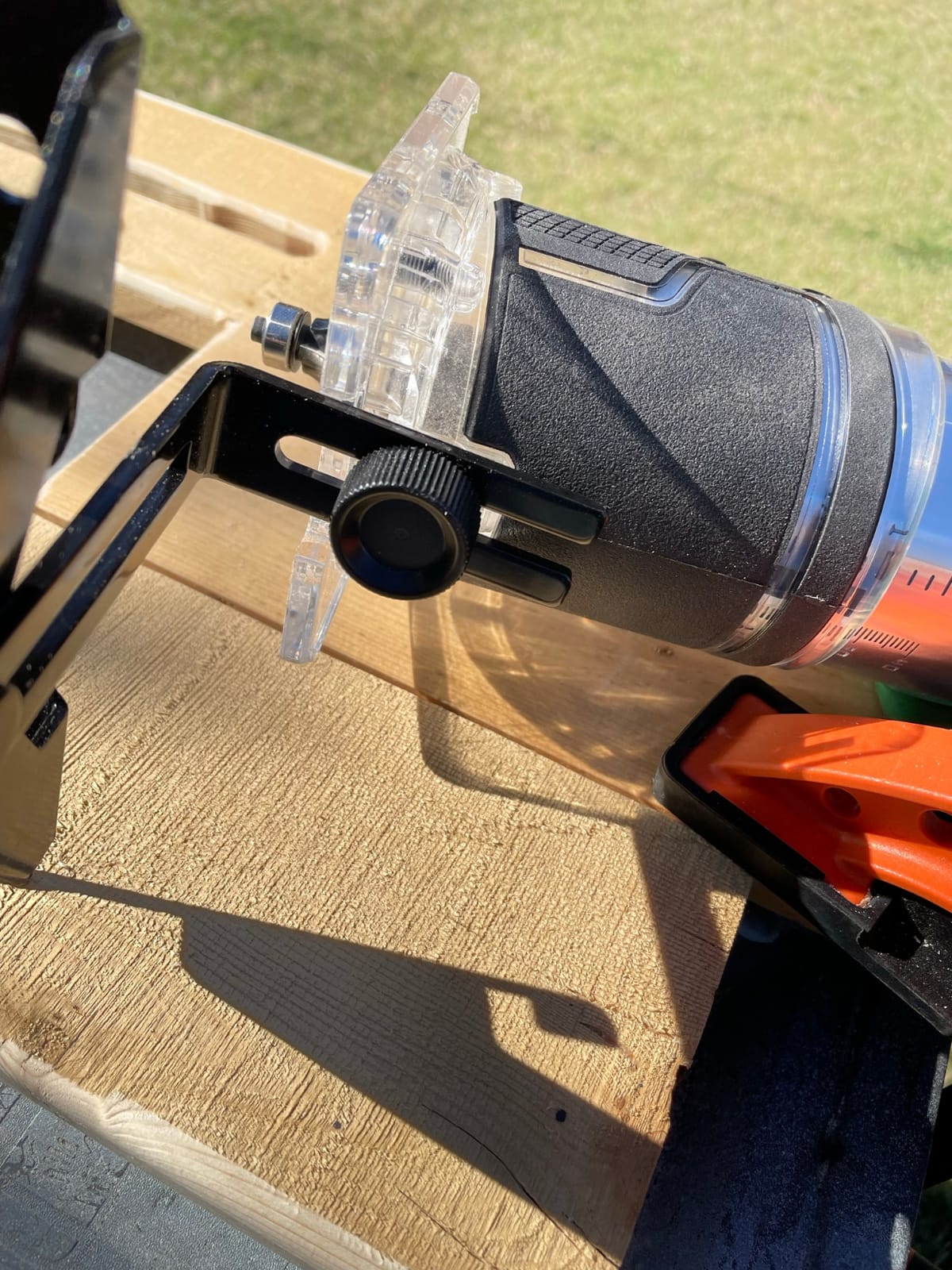
The 18V and 36V MultiVolt battery compatibility is unusual and genuinely useful if you own Hitachi or Hikoki packs. It also means a 36V pack will run the tool if you have one, which extends runtime on longer jobs.
Soft start and quick brake gave us controlled engagement on a roundover and a full stop on shutdown, and the bright LED plus clear base made the layout line easy to follow.
Who this router suits
This suits a detail-focused woodworker who spends time on small parts and wants the lightest cordless option available. It also fits anyone who already owns MultiVolt batteries and wants one more tool on that platform.
For sign work, small shelving and light trim, the handling advantage outweighs the motor limits.
Where it falls short
The motor is brushed rather than brushless, which limits power under heavy load. On thick hardwood profiles you will hear it labor before you finish the edge.
Battery and charger are not included, and the US model is not offered in a brushless version, so the heavy duty option does not exist within this line.
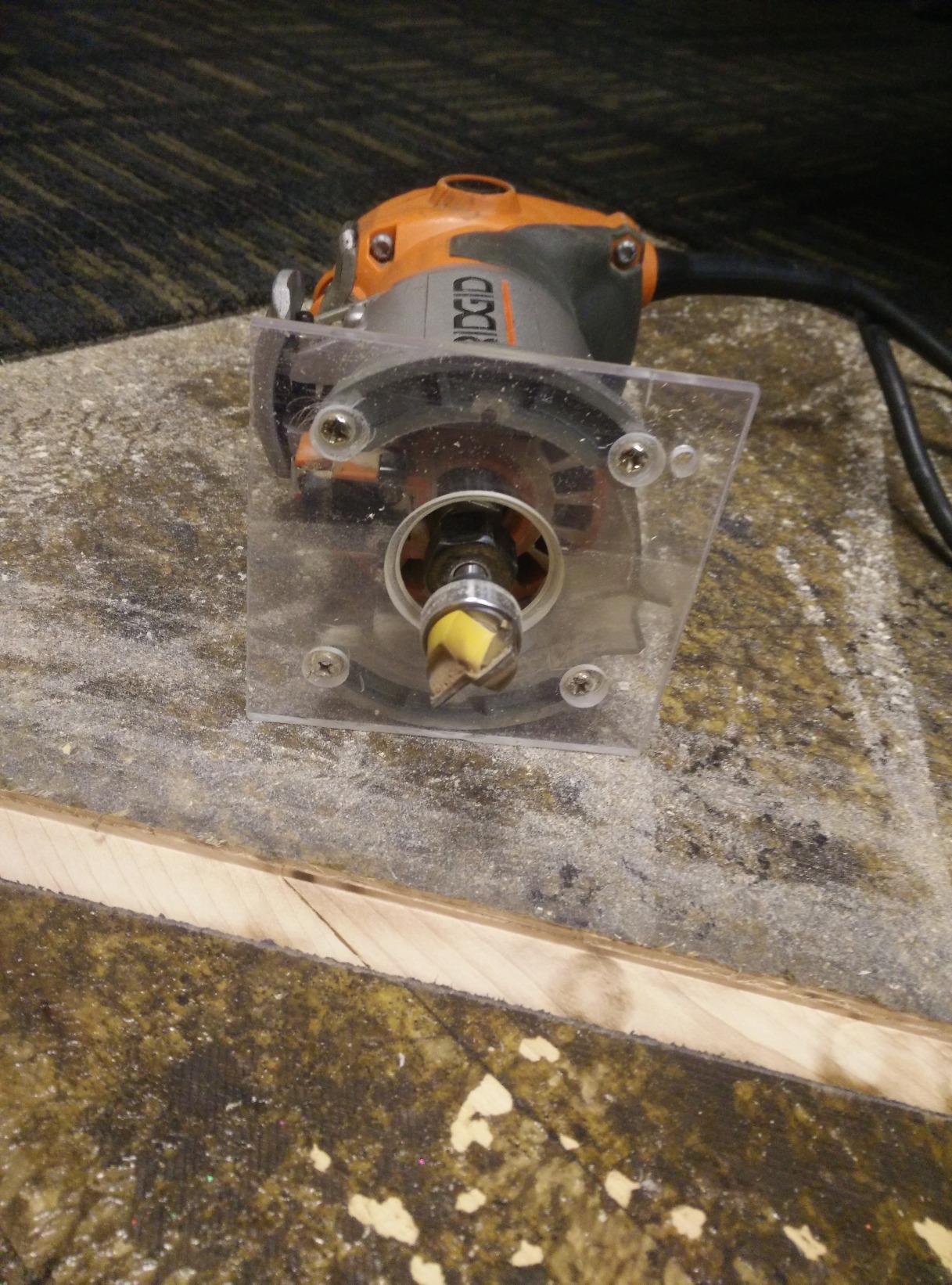
10. RIDGID R24012: Best for Job Site Durability
- 1.6 HP output in a compact 4 lb body
- Metal construction built for job site durability
- Backed by a 90-day satisfaction guarantee and a limited 3-year warranty
- Low one-star rating share at 2 percent
- Not eligible for the RIDGID Lifetime Service Agreement
- Feature listing is thin with few published specifications
- Limited configuration options compared with rivals
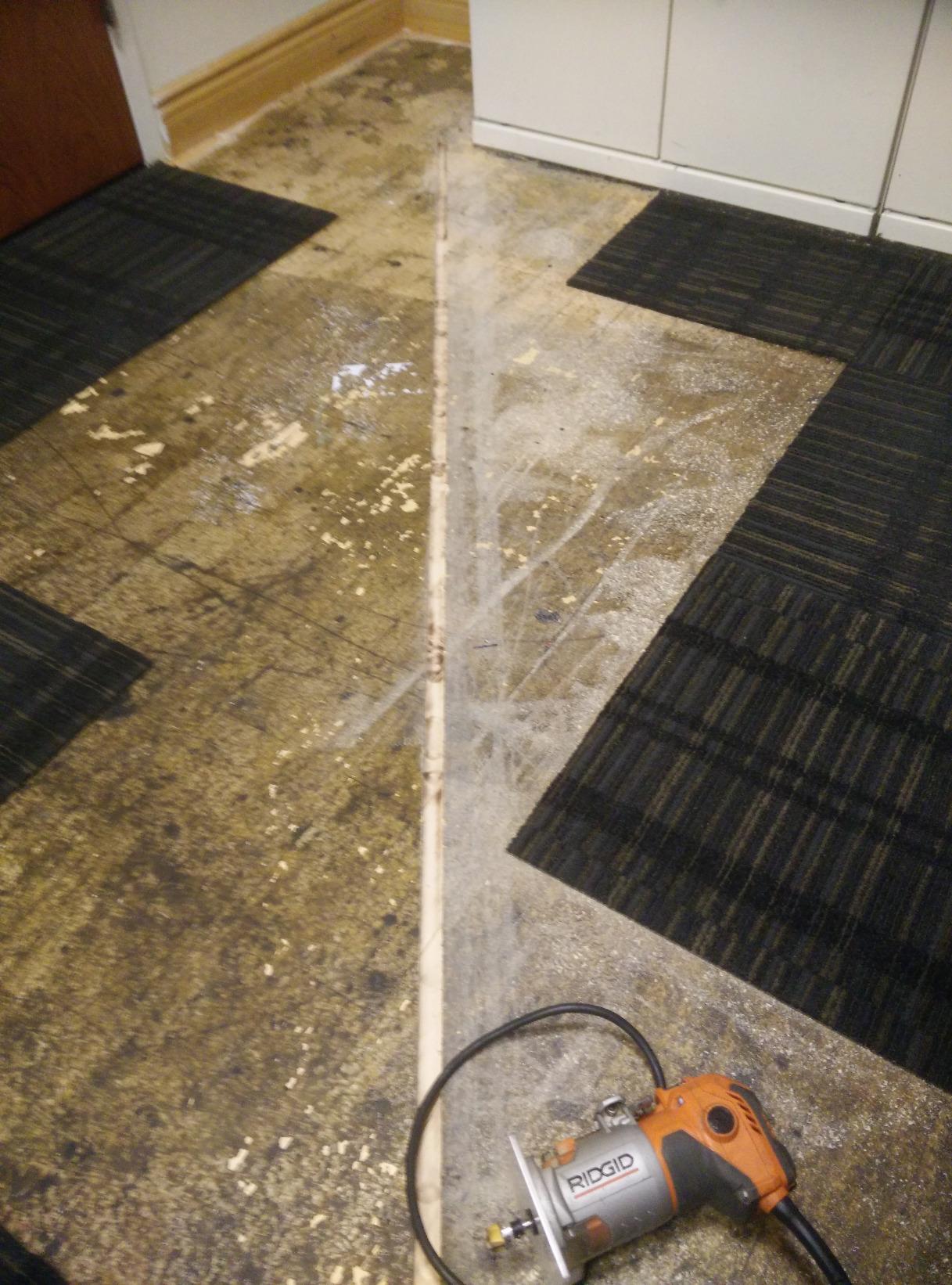
The RIDGID is the one we would throw in a van without thinking. Metal construction and a 1.6 HP class motor in a 4 lb body mean it tolerates the drop, the dust and the cable snag that come with install work.
On our chamfer test in birch plywood it held speed without complaint, and the corded design removes any question about battery endurance on a long trim run.
The 90-day satisfaction guarantee and limited 3-year warranty give some protection if you buy without handling it first, which is a reasonable fallback when a local shop display is not available.
With about 230 ratings and 75 percent at five stars, the owner base is small, but one-star reviews sit at just 2 percent, which points to a tool that rarely disappoints.
Who this router suits
This suits installers and trim carpenters who work in rough conditions rather than a clean shop. If your router lives in a truck, durability and warranty beat extra features.
It also makes sense as a dedicated flush trimming tool, since edge trimming on site produces a lot of cable handling and little need for plunge capability.
Where it falls short
This model is not eligible for the RIDGID Lifetime Service Agreement, and that is the reservation owners mention most often. The published feature listing is also thin, with few specifications beyond speed and power, so expect less guidance on variable speed behavior.
Configuration options are limited compared with rivals that include guides or multi-base kits in the box.
11. WEN RT1460: Budget Pick for Laminate Edge Trimming
WEN RT1460 6-Amp Handheld 1/4-Inch Variable Speed Laminate Trim Router for Woodworking
- Six amps is plenty for solid hardwood edge work at this level
- Variable speed is useful for matching different bit sizes
- Transparent base plate gives good visibility of the line of cut
- Runs quieter than larger routers
- Guide fence and trim guide included with responsive support
- Rack and pinion depth system has noticeable play and benefits from lubrication
- Collet can be hard to remove bits from and may slip when hot
- Several owners report the unit running hot
- No carrying case included
The WEN is the narrowest brief here. It is built for laminate and veneer edge trimming, and at six amps it has more power than the category usually gives you at this level.
The transparent base plate is the feature that earned its place. On a flush trim pass over a laminate sheet, seeing the line through the base removes almost all of the guesswork about bit position.
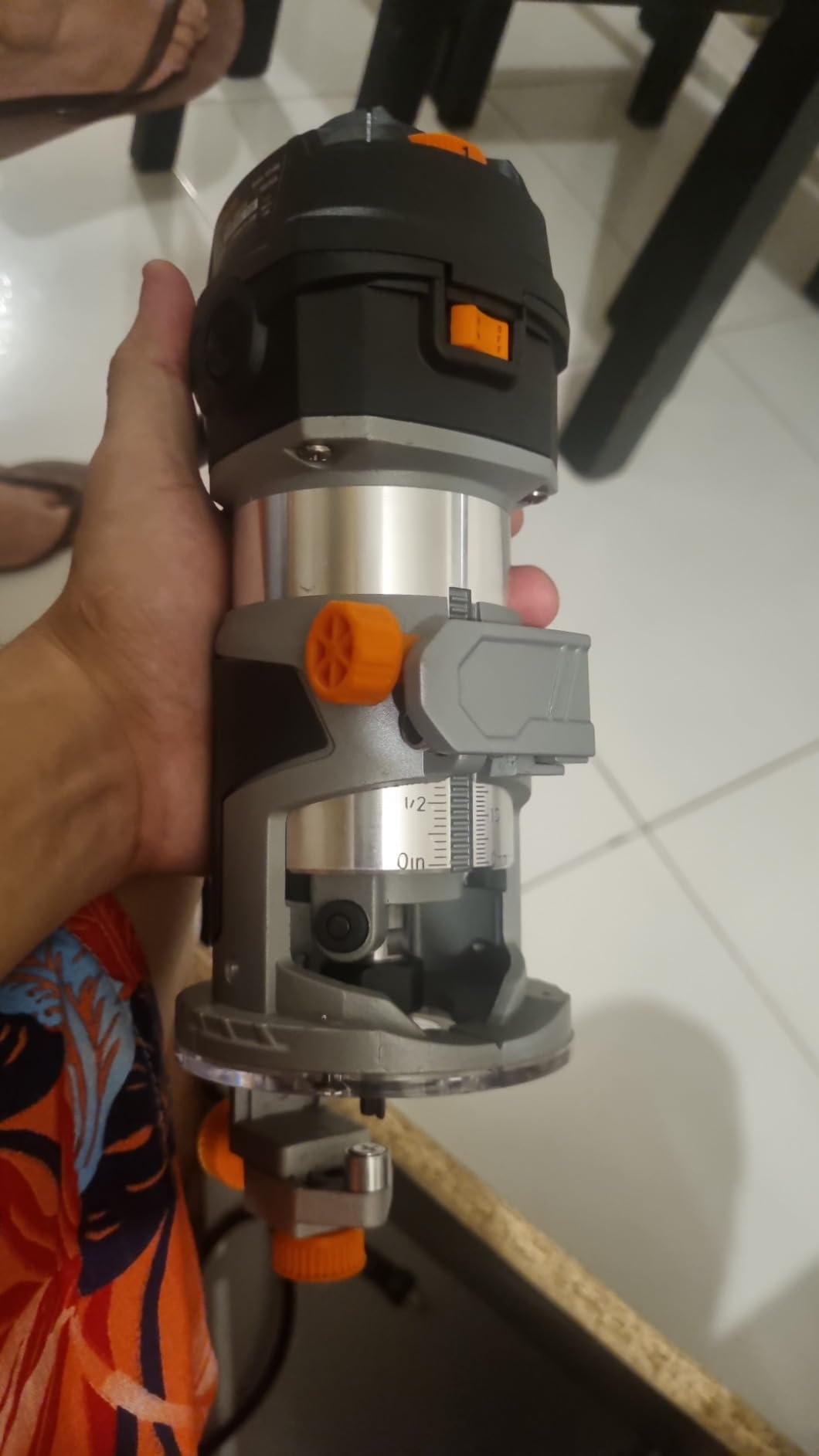
The adjustable straight base offers 1-5/8 inch of travel with a 1-inch scale in 1/16-inch markings, which is enough resolution for most edge profiles without a separate gauge.
Owners often note that it is surprisingly capable, particularly for relief carving and CNC work where the light body helps. It also runs quieter than larger routers, which makes following a pencil line easier.
Who this router suits
This suits a first edge profile on laminate, veneer or a single sheet of plywood, and anyone who wants to try compact routing without building out a platform. The guide fence and trim guide are included.
If most of your edge work is flush trimming a countertop template, that is exactly what this tool is built for.
Where it falls short
The rack and pinion depth system has noticeable play and benefits from lubrication, which is the first thing to address if your setting will not hold. The collet can also be difficult to pull bits from and may slip when hot.
Several owners report the unit running hot, and opinions differ, though some consider it unsuitable for long sessions. Expect a lighter duty tool than the premium picks on thick hardwood.
12. VEVOR Three Base Kit: Best Full Kit for the Money
- Three bases in one kit which is far more than rivals provide
- Cast aluminum motor housing reduces vibration
- 64 mm body diameter works with third-party accessory systems
- Soft start and constant response circuitry give consistent cuts
- Housing holds up under daily use
- Base fit and clamping need adjustment out of the box with reports of slop
- Brushed motor instead of brushless
- 1/4 inch collet may not accept shank bits without working them in from below
- Depth markings have no corresponding reference mark
- Short 70.87 inch cord
This kit answers a question most people buying a compact router do not think to ask: where will I use the plunge and tilt versions later. The fixed, plunge and tilt bases are all in the box, and the 64 mm body diameter also fits many third-party accessory systems.
The cast aluminum motor housing is the surprise. Vibration was noticeably lower than expected from a kit at this level, and the 10,000 to 30,000 RPM range with constant response circuitry produced even cuts on our cove profile.
Soft start reduced startup torque enough that the router did not jump in hand on a thin offcut. The rack and pinion depth control carries both inch and millimeter scales with a quick release cam lock.
Included are 1/4 inch and 3/8 inch collets, a straight edge guide, a curved edge roller guide, a dust extraction hood, spare carbon brushes and a spanner wrench.
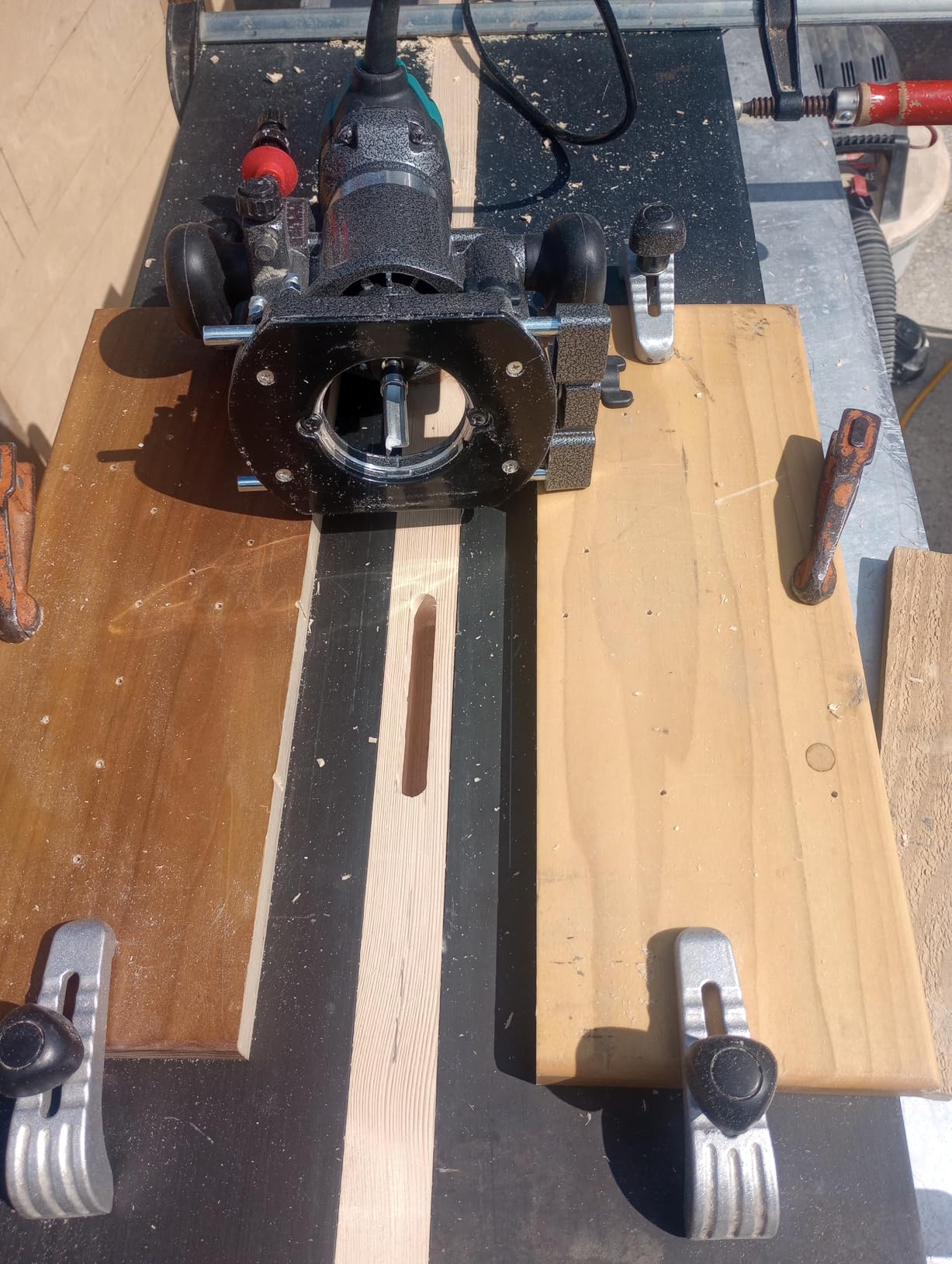
Who this router suits
This suits a builder who wants one motor to cover handheld edge work, plunge dados and tilt work on bevels, without buying three separate routers. It is a strong fit if you also use an edge bander and want matched profiles on panel stock, in the same way that a dedicated CNC machine handles repetitive profiles.
For repeat production on the same profile, a dedicated CNC router handles batch work faster, so this is the right choice for varied one-off edges instead.
Where it falls short
Base fit and clamping need adjustment out of the box, and several owners report slop between the router and base until that is sorted. The motor is brushed rather than brushless, and the 1/4 inch collet may not accept shank bits without working the bit in from below.
Depth markings have no corresponding reference mark, the 70.87 inch cord is short, and several plastic covers do not sit flush until filed. With about 144 ratings and 10 percent one-star reviews, assembly quality is the weak point.
Corded vs Cordless Compact Routers for Edge Work
The short answer is that corded models win on power consistency and cordless models win on freedom. Which one suits edge work depends on where the edge is.
A corded router keeps a constant supply of power, so it does not slow down when the bit loads up. That is the advantage that shows on hardwood profiles and on long uninterrupted passes where a battery pack would otherwise dictate the pace.
Cordless removes the cord from the equation entirely. At a wall, on a ladder or on a cabinet already installed in place, there is no cable to snag, wrap around your wrist or drag along the cut line.
Weight is the trade nobody expects. The lightest cordless option here is 2.5 lb tool only, while corded bodies run from 3.3 lb upward, but the battery pack you add back on top pushes a cordless machine past its corded equivalent.
The Bosch PR20EVS handles its cord well because of the angled exit. The Bosch GKF125CEN goes further with a ball joint cord connection that swivels so the cord does not twist at the entry point.
If you work in a shop near an outlet, corded is the simpler choice. If you install, finish or work on site, cordless removes the most common annoyance in the whole process.
Best Router Bits for Common Edge Profiles
Pair the right bit with the right speed and most compact routers handle edge work cleanly. Here is the short version of what each profile needs.
A roundover is the most common edge profile, and it is where the LED lights on the DEWALT and Bosch GKF125CEN earn their keep. The curved shoulder of the bit hides the cut line, so light at the base makes the position visible.
A chamfer is the easiest profile to run and a good first project. It needs low feed pressure and a steady pass, and it works well on a clear base router like the WEN RT1460 where you can see the line through the plate.
An ogee is a compound curve that stacks two curves together. It needs more torque and a slower speed, which favors the 1.25 HP Bosch Colt and the Makita RT0701C. Take multiple lighter passes rather than one heavy one.
A cove sits inside a corner, which makes dust control harder because chips collect in the inside radius. The AVID POWER and VEVOR kits both include a dust hood that connects to a standard shop vacuum.
A flush trim is a straight cut against a reference surface. For that job, the Bosch PR20EVS ships with a straight edge guide, and the CRAFTSMAN V20 and AVID POWER kits also include edge guides.
If you want to hide the raw edge on a panel rather than shape it, an edge bander applies a solid strip to the face instead. The compact router handles shaped edges the bander cannot reach.
Be careful with any bit at high speed. Match the manufacturer chart to the bit diameter and material, and let the tool reach full speed before you touch the workpiece.
Buying Guide: What to Look for in a Compact Router?
Weight decides more than horsepower does when you are shaping an edge. A 1 HP tool at 3.3 lb can produce a better result on a small piece than a 1.25 HP tool at 4.4 lb, simply because you can hold it steady for the whole pass. Every router here is a fixed base palm router unless noted, and all of them take 1/4 inch shank bits.
Variable speed control is the single most useful feature for edge work. Larger diameter bits need slower speeds, and without a dial you end up running one setting for every profile. The range matters too: the Makita RT0701C spans 10,000 to 30,000 RPM, the Bosch models reach 35,000 RPM, and the Ryobi and Craftsman sit in a narrower 16,000 or 20,000 to 30,000 band.
Depth adjustment quality is the second thing to check, because a bit set 0.5 mm too deep on an edge profile means tearout on the face. Rack and pinion systems on the Makita, AVID POWER, WEN and VEVOR give repeatable settings, and the macro and micro threads on the Bosch PR20EVS let you approach the final depth in stages.
Visibility over the cut line is worth more than most buyers expect. Dual LEDs on the DEWALT and AVID POWER, an LED at the bit area on the Bosch GKF125CEN, and a transparent base on the WEN all solve the same problem, which is not seeing where the bit is on a dark or finished edge.
Battery platform matters more than the router itself if you already own packs. The DEWALT runs on 20V XR, the Milwaukee on M18, the Ryobi on 18V ONE+, the Craftsman on V20 and Stanley 18V, and the Metabo HPT on 18V or 36V MultiVolt. Buying outside your platform usually means a battery and a charger before the first cut.
Base type decides what else you can do later. Fixed bases handle edge profiles, flush trimming and guided cuts. Plunge bases add grooves, dados and mortises without removing the motor. Only the VEVOR kit here includes fixed, plunge and tilt bases together, and the Makita, Milwaukee and Bosch models accept other bases through their quick release or quick clamp systems.
Spindle lock and collet access decide how often you will enjoy the tool. A spindle lock allows one wrench bit changes instead of two, and the DEWALT and Bosch models include one. Some owners of other models report the collet being difficult to release when hot.
Router table compatibility is worth checking if you own a table. Compact body width determines whether the motor clears the table opening, and the CRAFTSMAN V20 is the one reviewers most often mention for table work because of its narrow grip and easy base removal.
Dust collection deserves an honest look. A dust port or hood on the AVID POWER, Metabo HPT, Craftsman V20 and VEVOR keeps a shop vacuum close to the bit, but a vacuum hose on a light cordless body can make it top heavy. On the Ryobi, owners specifically note that the hose blocks the view window.
Finally, look at warranty length. The Metabo HPT carries a lifetime lithium ion battery warranty and the RIDGID comes with a 90-day satisfaction guarantee and a limited 3-year warranty, while the Ryobi carries a 30 day limited warranty. For a shop tool that gets used daily, that difference is real.
Frequently Asked Questions
What is the best compact router for edge work?
The DEWALT DCW600B is our top pick for edge work because its brushless motor with electronic feedback holds speed under load, the variable speed dial matches RPM to the bit, and dual LEDs light the cut line. The Milwaukee 2723-20 is the strongest cordless alternative, and the Bosch PR20EVS Colt is the lightest option at 3.3 pounds for long guided passes.
What is a trim router used for?
A trim router, also called a palm router or compact router, is a lightweight one-handed router used for edge profiling, flush trimming laminate and veneer, cutting grooves, and template work. It uses 1/4 inch shank bits and a fixed base that rides along the edge of the workpiece.
What is the difference between a router and a trim router?
A full-size plunge router has more power, a larger base opening and a plunge mechanism for cutting dados and mortises from above. A trim router is lighter, smaller and cheaper, with a fixed base and a 1/4 inch collet. It is built for edge work rather than heavy joinery.
Can you plunge cut with a trim router?
Not with a stock fixed base. Plunge cutting needs a plunge base that lowers the bit into the workpiece, which is a separate purchase for most models. The VEVOR three base kit here includes a plunge base out of the box, and the Makita, Milwaukee and Bosch units accept other bases through their quick release systems.
What is the difference between a corded and cordless trim router?
A corded router draws constant power and never slows under load, which suits long passes and thick hardwood profiles. A cordless router trades that consistency for freedom, since there is no cable to snag on a ladder, a wall or an installed cabinet. Cordless models also add the weight of the battery pack.
Final Verdict
The best compact routers for edge work in 2026 come down to what your edges are made of and where you are standing when you cut them. For most people, the DEWALT DCW600B is the answer: a brushless motor that holds speed, a fast depth adjustment ring, dual LEDs and 4.8 stars across more than 10,700 ratings.
Choose the Milwaukee 2723-20 if you want more torque and already run M18 packs. Choose the Bosch PR20EVS Colt at 3.3 lb for the lightest handling, or the Bosch GKF125CEN Colt at 1.25 HP when the edge is solid hardwood.
Use the buttons above to check current pricing on each tool, and pick the one whose platform matches the batteries already on your bench.