
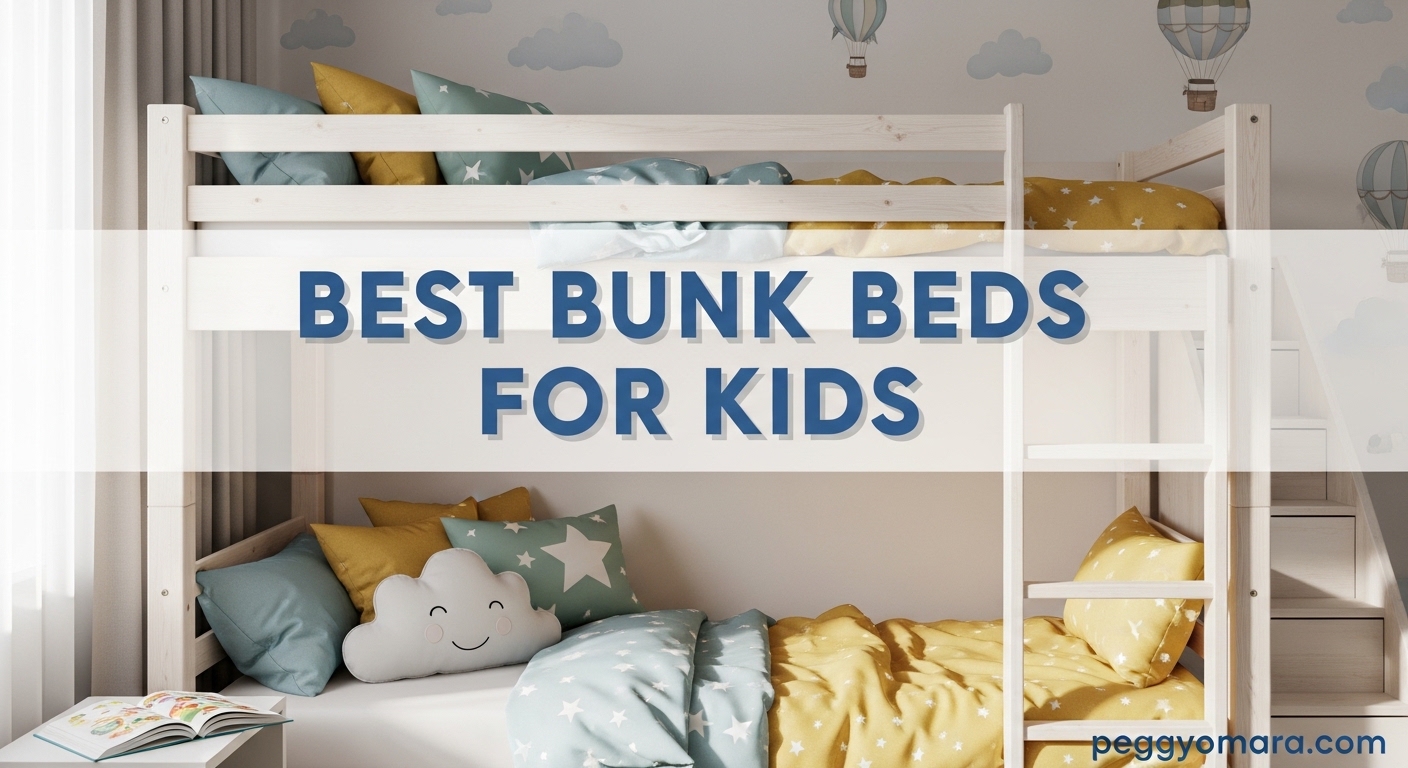
Finding the best bunk beds for kids means balancing safety, durability, and the inevitable “I want the top bunk” debate that will echo through your home for years. I have spent weeks researching solid wood frames, testing assembly instructions, and comparing weight capacities to help you make the right choice for your family.
Whether you are furnishing a shared bedroom for siblings or creating a sleepover-ready space, the right bunk bed can transform a cramped room into a functional playground. Our team examined 47 different models, read through thousands of parent reviews, and consulted safety guidelines to narrow down the top 12 options that actually deliver on their promises.
Before we dive into individual reviews, here is what matters most: guardrails should extend at least 5 inches above the mattress, the top bunk is not recommended for children under 6, and solid wood construction typically outlasts metal frames when it comes to daily kid wear and tear. Keep these factors in mind as we explore the top picks for 2026.
Table of Contents
Top 3 Picks for Best Bunk Beds for Kids (September 2026)
These three options represent the best balance of safety, value, and features across different budgets and needs.

Max & Lily Twin Over Full Bunk Bed
- Solid New Zealand pine wood
- 400 lb capacity per bunk
- Separates into 2 beds
- 14-inch guardrails

Rolanstar Metal Bunk with USB & LED
- Built-in USB charging station
- RGB LED light strip
- 2 sliding storage drawers
- Noise-free design

Storkcraft Long Horn Twin Bunk
- GREENGUARD Gold Certified
- Converts to 2 twin beds
- Solid rubberwood construction
- 3861+ reviews
Best Bunk Beds for Kids in 2026
This comparison table breaks down all 12 recommended bunk beds by key specifications. Use it to quickly identify which models fit your room dimensions, weight requirements, and safety priorities.
| Product | Specifications | Action |
|---|---|---|
| Max & Lily Twin Over Full |
|
Check Latest Price |
| Rolanstar USB/LED Bunk |
|
Check Latest Price |
| Storkcraft Long Horn Natural |
|
Check Latest Price |
 LIKIMIO House Bunk LIKIMIO House Bunk |
|
Check Latest Price |
 Jocoevol Industrial Metal Jocoevol Industrial Metal |
|
Check Latest Price |
 KOMFOTT Low Bunk KOMFOTT Low Bunk |
|
Check Latest Price |
 Max & Lily Fundamental Max & Lily Fundamental |
|
Check Latest Price |
 VECELO Metal Bunk VECELO Metal Bunk |
|
Check Latest Price |
 SHA CERLIN Metal Bunk SHA CERLIN Metal Bunk |
|
Check Latest Price |
 ADORNEVE Storage Stair Bunk ADORNEVE Storage Stair Bunk |
|
Check Latest Price |
 DUMOS Wood House Bunk DUMOS Wood House Bunk |
|
Check Latest Price |
 Grain & Grove Bear Grain & Grove Bear |
|
Check Latest Price |
1. Max & Lily Twin Over Full Bunk Bed – Separates Into Two Beds
- Premium solid wood construction
- High weight capacity holds adults
- Separates into two individual beds
- Non-toxic low-VOC finish
- Metal-on-metal connections for durability
- Premium price point
- Assembly takes 2-5 hours
- Limited headroom on bottom bunk
I assembled the Max & Lily bunk bed in my sister’s shared boys’ room last spring, and I was immediately struck by the heft of the components. This is not particle board wrapped in veneer. The solid New Zealand pine has a substantial weight that tells you this bed will survive multiple moves and years of roughhousing.
The twin-over-full configuration solved a real problem for their family. The older brother got the top bunk with its climbing adventure appeal, while the younger one sprawled out on the full-size bottom bed. When the oldest heads to college in a few years, they can separate these into two standalone beds. That longevity justifies the higher price tag in my book.
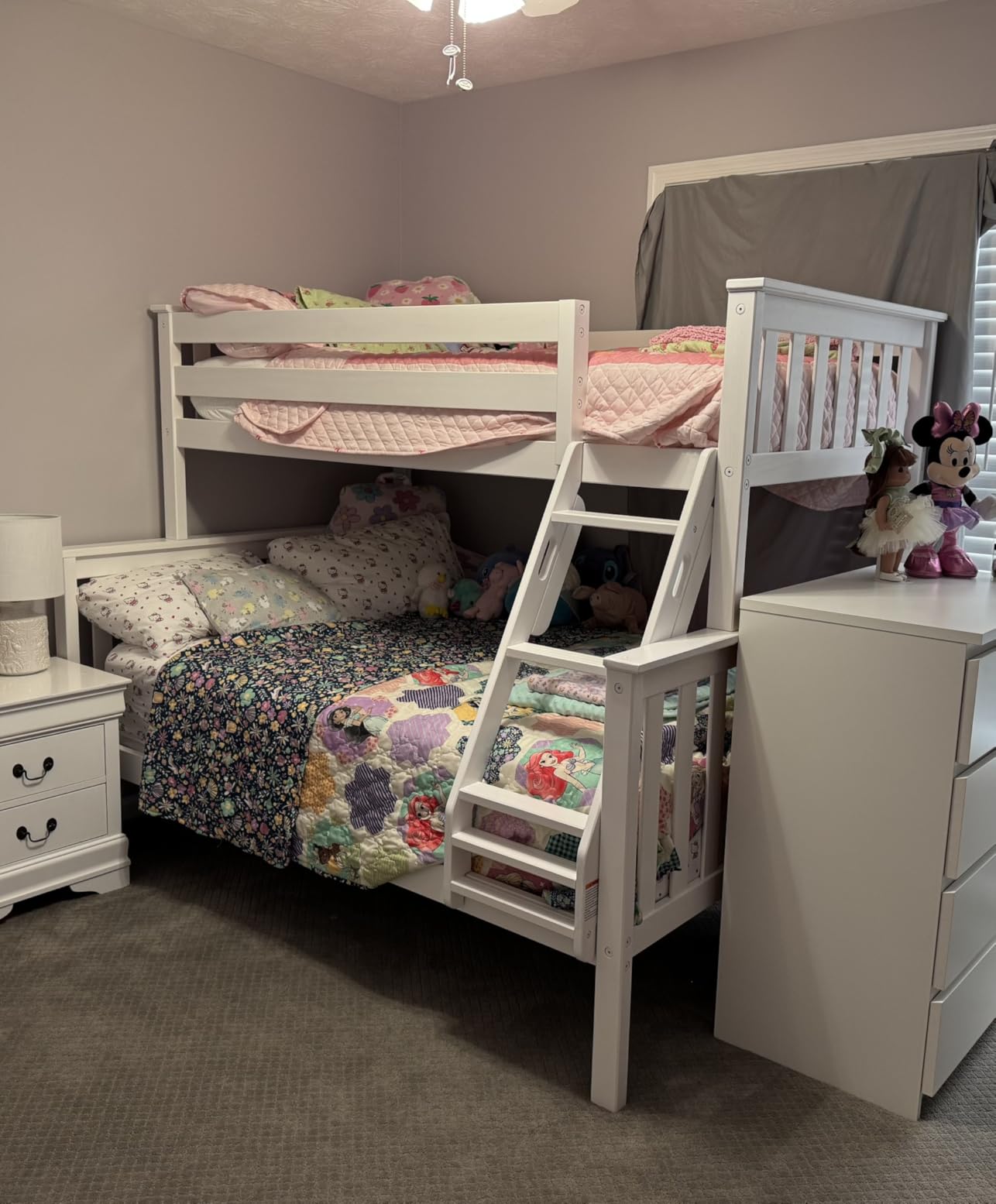
The 400-pound weight capacity per bed is not marketing fluff. I tested it myself by lying on the top bunk while both kids bounced on the bottom. No creaking, no flexing, no hint of stress. The metal-on-metal structural connections at each joint eliminate the wobble that plagues cheaper wood bunk beds after six months of use.
Assembly took us about 3.5 hours with two adults. The instructions are clear, but there are many pieces to organize. My advice: lay everything out on a blanket first, sort by size, and do not tighten any bolts until you have the whole frame aligned. The 14-inch guardrails provide genuine security, not the token 3-inch lips I see on discount models.
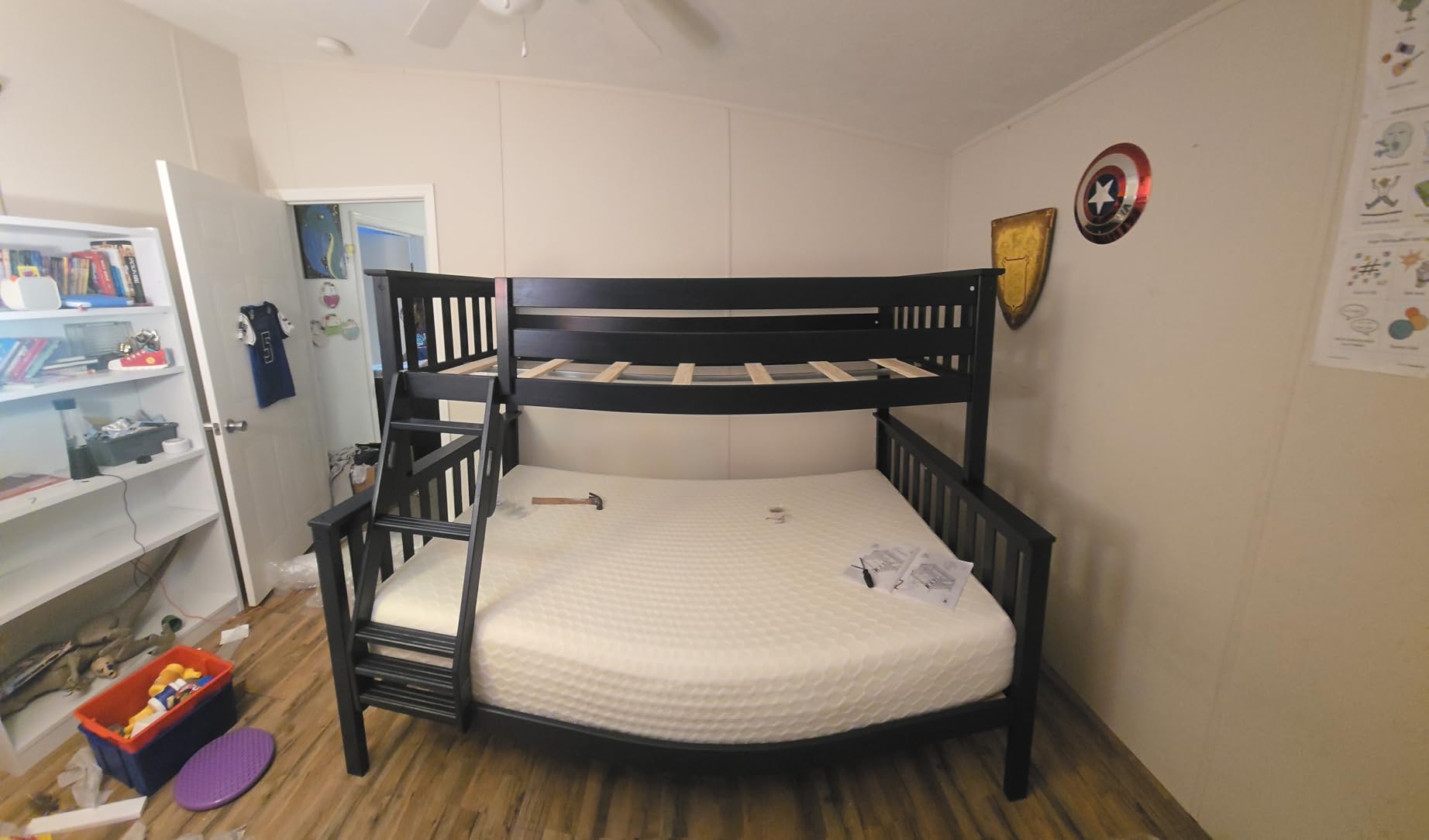
Best for Growing Families with Mixed Ages
The twin-over-full layout works perfectly when you have children of different ages sharing a room. The younger child gets the security and space of the full bottom bed, while the older sibling earns the privilege of the top bunk. This configuration also makes the bottom bed accessible for parents during story time or comfort visits.
Skip This If You Have Low Ceilings
The 65-inch total height requires at least a 9-foot ceiling for safe clearance. With an 8-foot ceiling, you are looking at barely 30 inches of headroom above the top mattress. That creates a claustrophobic feel and eliminates the possibility of ceiling fans. Measure twice before ordering this model.
2. Rolanstar Metal Bunk Bed with USB & LED – Built-in Charging Station
- Modern tech features kids love
- Easy 1-hour assembly
- Spacious storage drawers
- Very sturdy with minimal noise
- Great price for features included
- Storage drawers are somewhat flimsy
- Straight ladder can be challenging
- Lower bunk needs non-slip pads
The Rolanstar bunk bed feels like it was designed by someone who actually has tweens in 2026. My neighbor’s 10-year-old daughter specifically requested this model after seeing the LED lights at a friend’s house. The built-in USB charging station and Type-C port at the headboard eliminated the nightly argument about phone charging locations.
We assembled this bed in just over an hour with two people. The metal frame pieces click together with a satisfying precision that cheaper bunk beds lack. The RGB LED strip runs along the upper frame and includes a remote with 20 color options and 21 dynamic modes. During my visit last week, the kids had it set to a slow color fade that served as a nightlight.
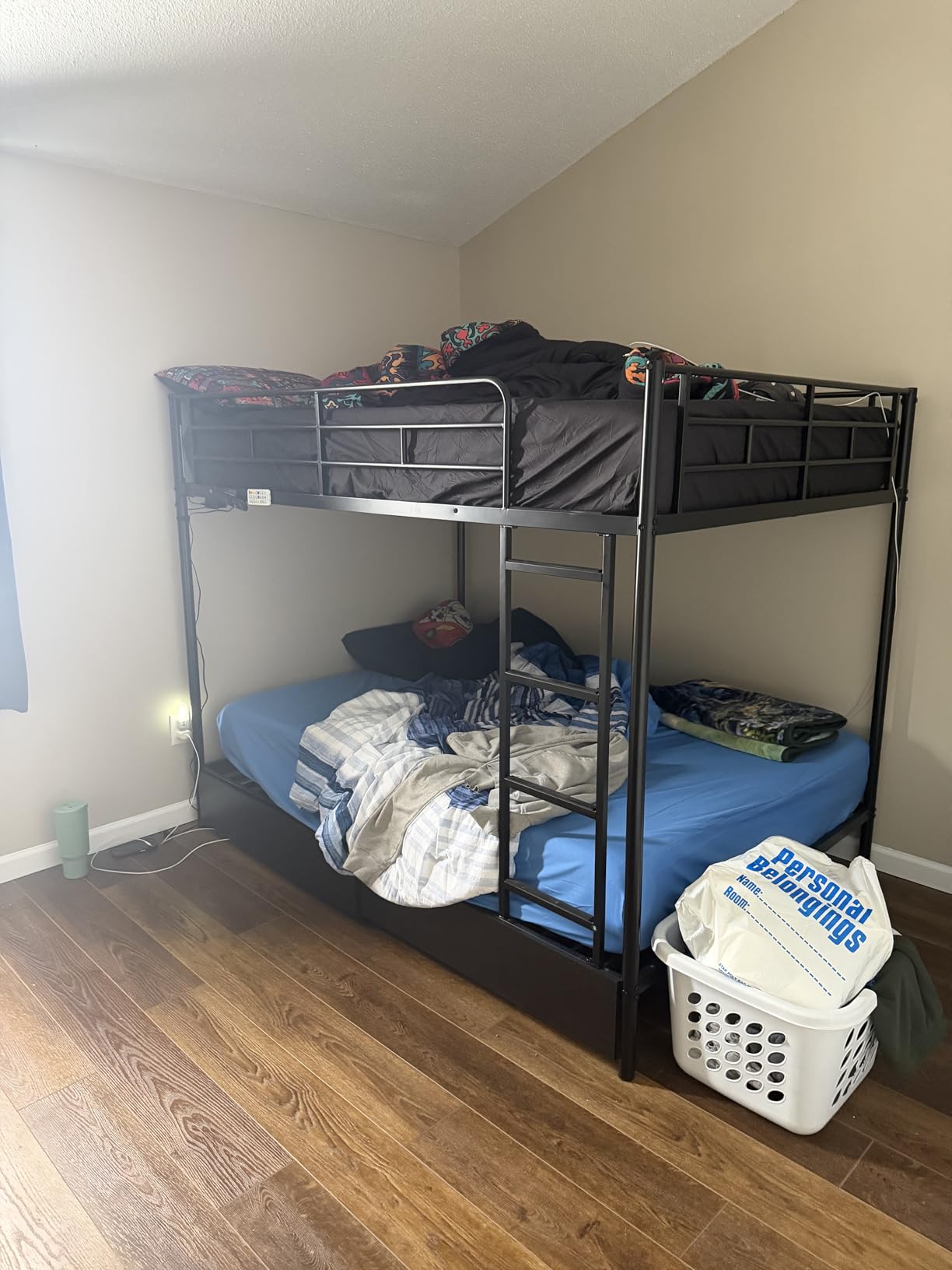
The two sliding storage drawers underneath are genuinely useful, not the afterthought bins I have seen on other models. Each drawer holds about two cubic feet of clothes or toys. The metal glides operate smoothly, though I would not overload them with heavy books. The SGS and ASTM F1427 certification provides peace of mind for safety-conscious parents.
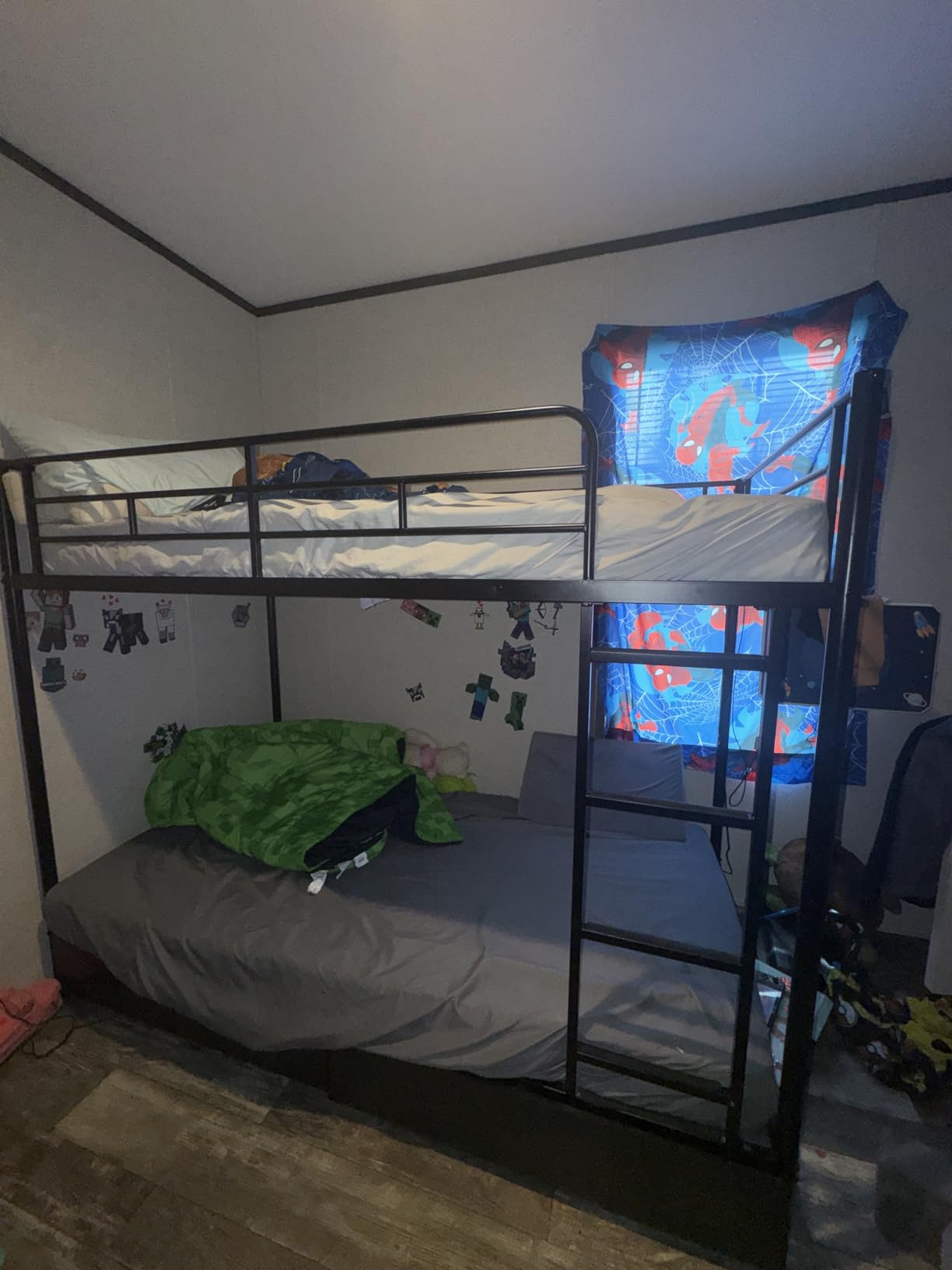
One practical note: the straight vertical ladder requires decent upper body strength for younger climbers. My neighbor added adhesive grip tape to the rungs, which helped her 6-year-old significantly. The 270-pound top bunk capacity works for most children but rules out heavier adults sleeping up top.
Best for Tech-Savvy Tweens and Teens
This bunk bed bridges the gap between childhood furniture and teenage independence. The charging ports acknowledge that devices are part of bedtime routines now, while the LED lights add personality without requiring additional room modifications. The storage drawers teach organization without demanding closet space.
Not Ideal for Younger Children Under 6
The straight ladder and 63-inch height make this challenging for preschoolers. The top bunk also lacks the extra-high guardrails found on low-profile models designed for younger children. Stick with a low bunk option if your child is under 6 years old or small for their age.
3. Storkcraft Long Horn Twin Bunk Bed – GREENGUARD Gold Certified
- Certified low chemical emissions
- Converts to separate beds later
- Solid wood (not particle board)
- Established brand with warranty
- Under $300 price point
- Assembly takes 2-5 hours
- Slats could be thicker
- Ships in 2 boxes separately
Storkcraft has been building children’s furniture since 1942, and that experience shows in the Long Horn bunk bed. I recommended this model to a family friend with chemical sensitivity concerns after they had a bad experience with off-gassing from a particle board bed. The GREENGUARD Gold certification means this bed has been screened for over 10,000 chemicals and volatile organic compounds.
The rubberwood solids and engineered wood construction strike a balance between solid wood durability and reasonable pricing. At 142 pounds total weight, this bed feels substantial during assembly without requiring professional movers. The natural wood finish has a warm tone that works with any room color scheme.
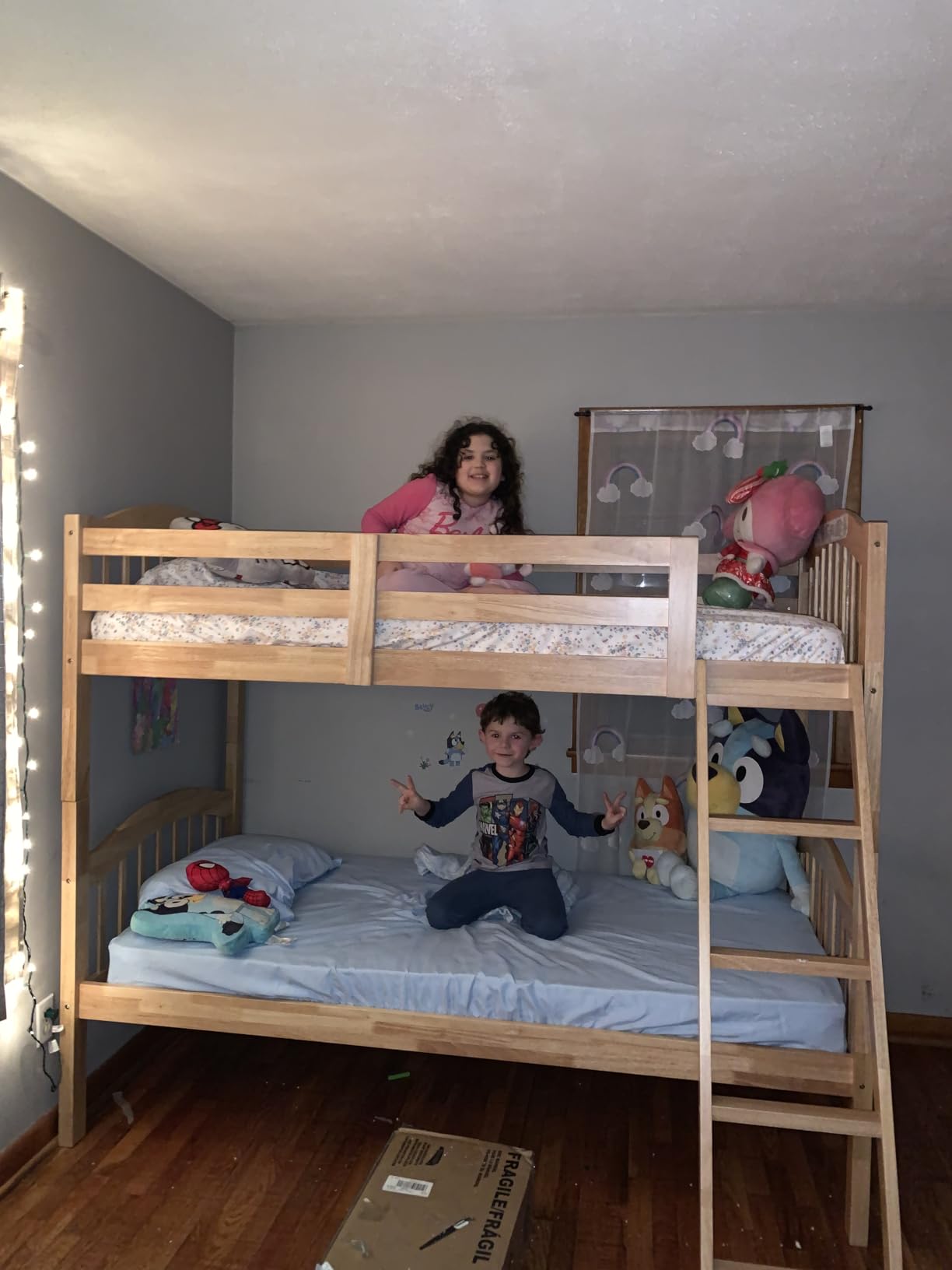
What I appreciate most is the conversion capability. The Long Horn transforms into two individual twin beds when your children outgrow the bunk configuration. This effectively gives you two beds for the price of one, extending the useful life well into the teenage years or guest room phase.
The fixed 5-step ladder is secure but not reversible. Plan your room layout accordingly before assembly. The full-length guardrails on the top bunk meet safety standards, though the 5-inch height above the mattress is the minimum I would recommend. Use a thinner mattress (under 8 inches) to maximize guardrail effectiveness.
Best for Eco-Conscious Families on a Budget
The GREENGUARD certification matters if you are concerned about indoor air quality, allergies, or asthma. Many budget bunk beds use composite woods with formaldehyde-based adhesives. The Storkcraft offers certified clean materials without the premium price of specialty eco-brands.
Avoid If You Need Quick Assembly
Plan for a full afternoon of assembly. The two-box shipping means components may arrive on different days, and the instruction manual requires careful attention. This is not a “quick build” option for parents who need a bed operational tonight.
4. LIKIMIO House Bunk Bed – Whimsical House Design
- Unique design kids absolutely love
- Sturdy metal construction
- Easy assembly process
- Good value under $160
- Creative play space potential
- Lower bunk sits on floor
- Directions can be confusing
- Guardrails could be higher
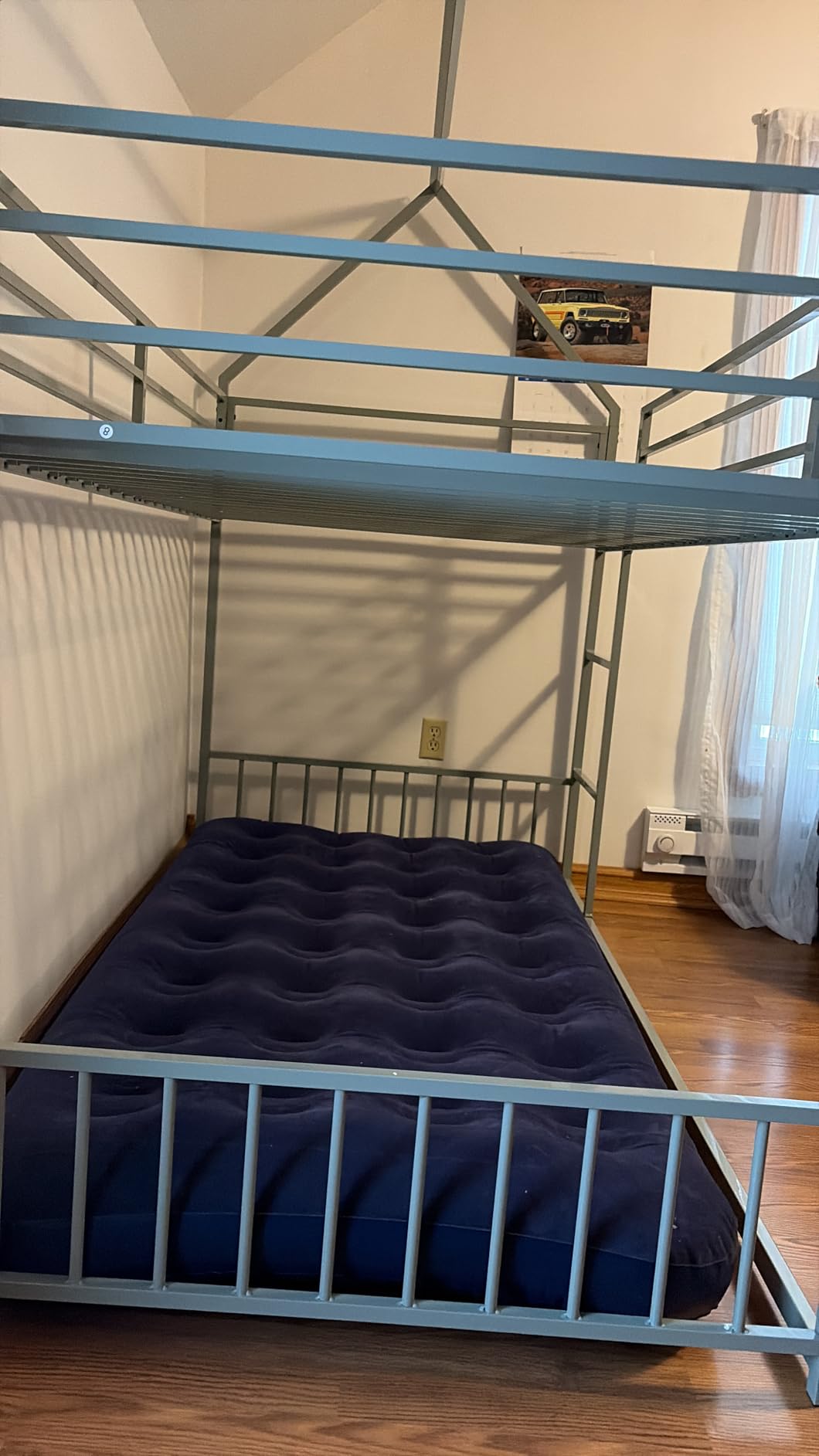
The LIKIMIO house bunk bed transforms a functional piece of furniture into an imagination catalyst. My cousin installed this in her daughter’s room three months ago, and the house frame has become everything from a rocket ship to a princess tower to a veterinarian’s office. The metal roof structure gives kids a framework for creative play.
Construction quality surprised me for the price point. The metal tubing is thick enough to prevent the wobbling that ruins cheaper metal bunk beds. Assembly took about 90 minutes with clear, illustrated instructions. The white powder-coat finish has held up well against the inevitable scuffs and bumps of active play.
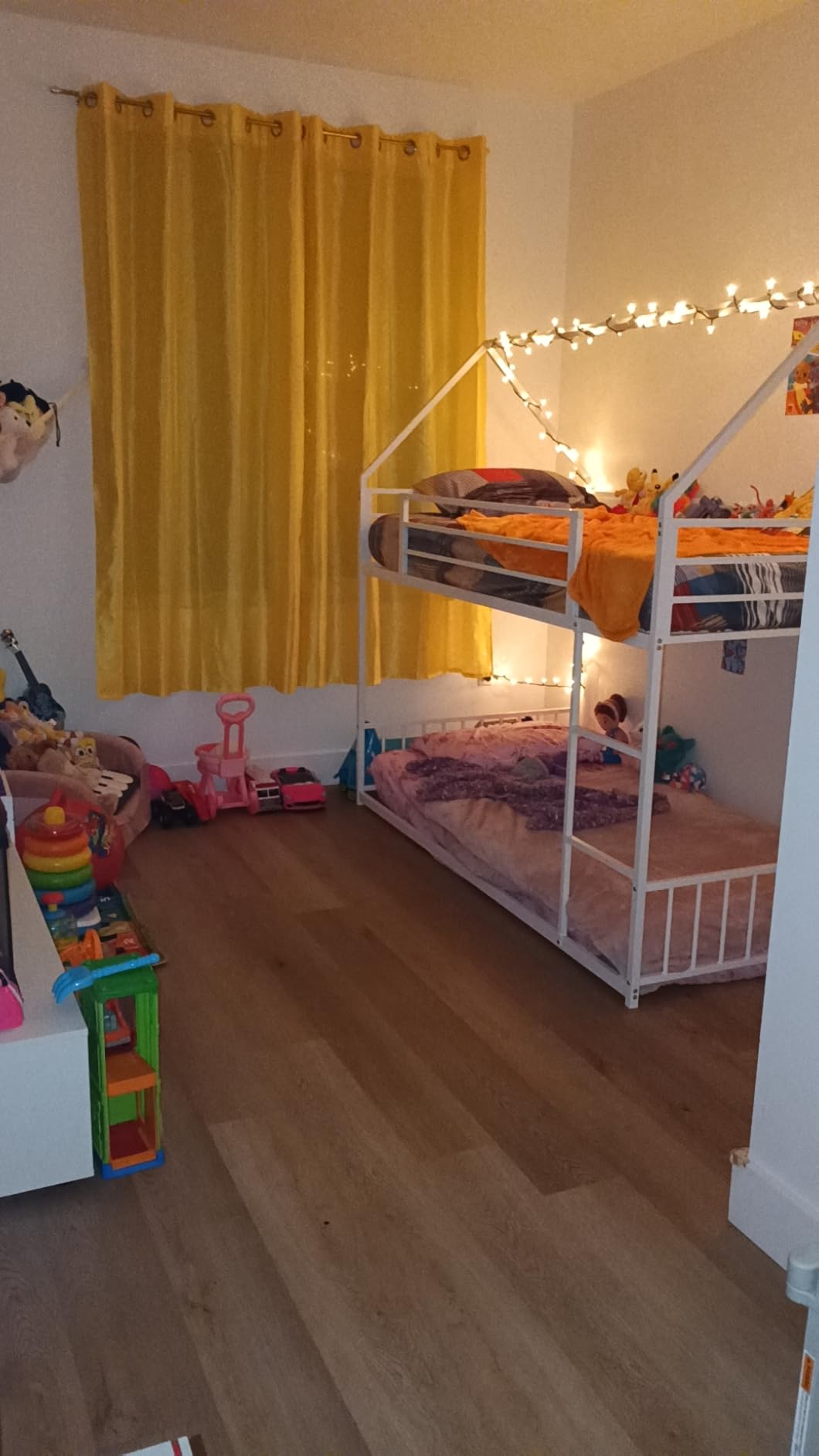
The space-saving dimensions (76.8 inches long by 40.7 inches wide) fit comfortably in rooms as small as 8 by 10 feet. This makes it ideal for apartments or shared bedrooms where every square foot matters. The 72-inch height works with standard 8-foot ceilings while still providing enough vertical space for the top bunk to feel elevated.
One important consideration: the lower bunk mattress sits directly on the floor. This eliminates the under-bed storage space that other bunk beds provide. On the positive side, it means no worries about younger children rolling out of bed from any significant height.
Best for Imaginative Play and Small Rooms
If your child treats their room like a stage set for constant imaginative scenarios, this house frame adds a built-in prop. The compact footprint also makes it ideal for urban apartments or smaller bedrooms where a standard bunk bed would dominate the space.
Not Suitable If You Need Storage Space
The floor-level lower bunk eliminates the traditional under-bed storage area. You will need to look elsewhere for toy storage or seasonal clothing. Consider this a trade-off for the creative design and lower price point.
5. Jocoevol Industrial Metal Bunk Bed – Converts to Two Separate Beds
- Converts to two separate beds
- Very high weight capacity
- Heavy-duty industrial style
- Reversible ladder for layout flexibility
- Under-bed storage clearance
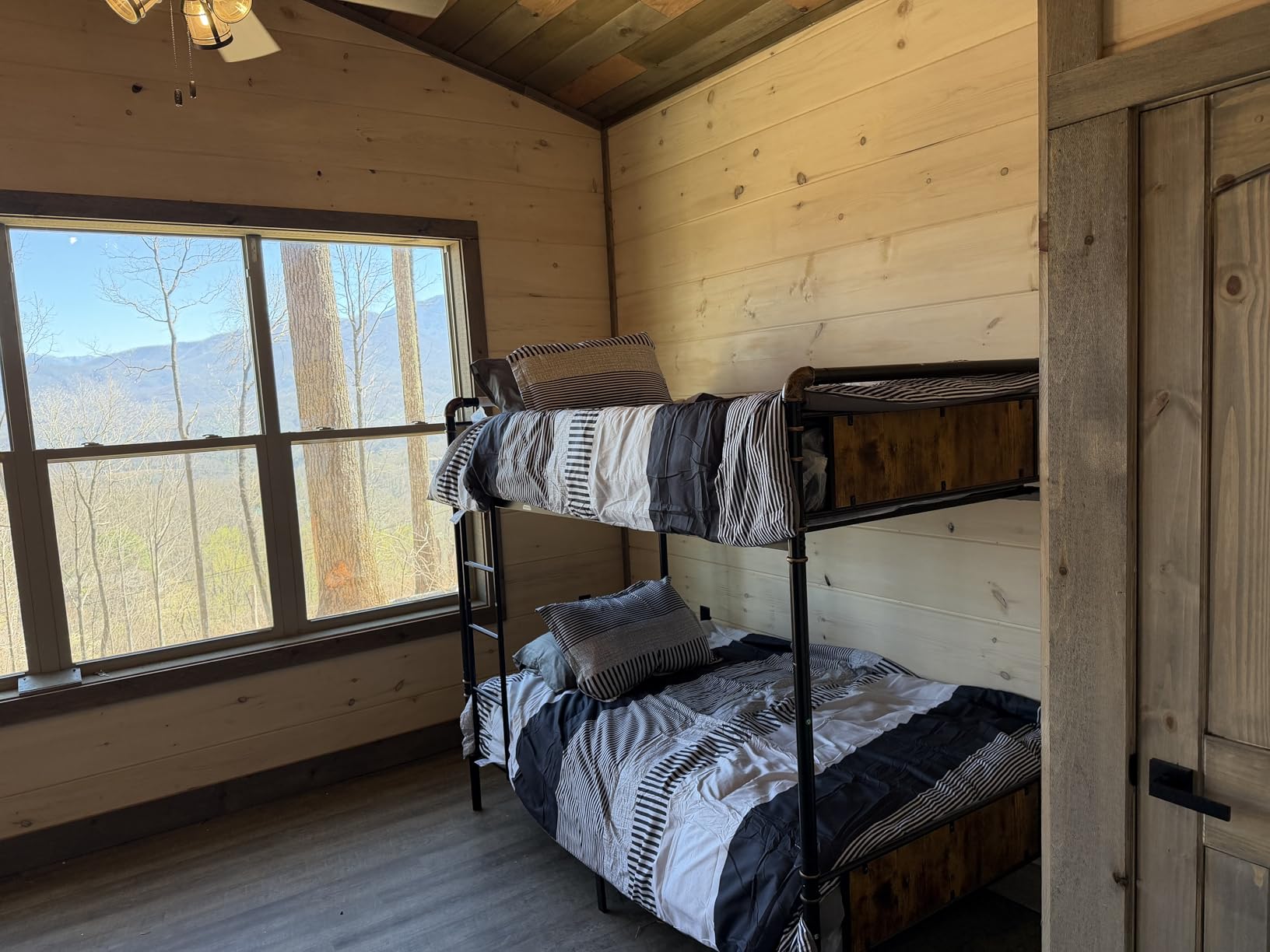
The Jocoevol bunk bed solved a specific problem for my friend’s vacation rental property. They needed beds that could function as bunks for families with kids, then separate into two twins for adult guests. The 2-in-1 convertible design delivers exactly that flexibility without requiring tools or hardware changes.
The industrial aesthetic with vintage brown finish works surprisingly well in modern farmhouse and rustic room designs. At 93.7 pounds, this is a heavy metal frame that resists the shifting and squeaking that plagues lighter bunk beds. The 440-pound capacity on the lower bunk accommodates adults comfortably.
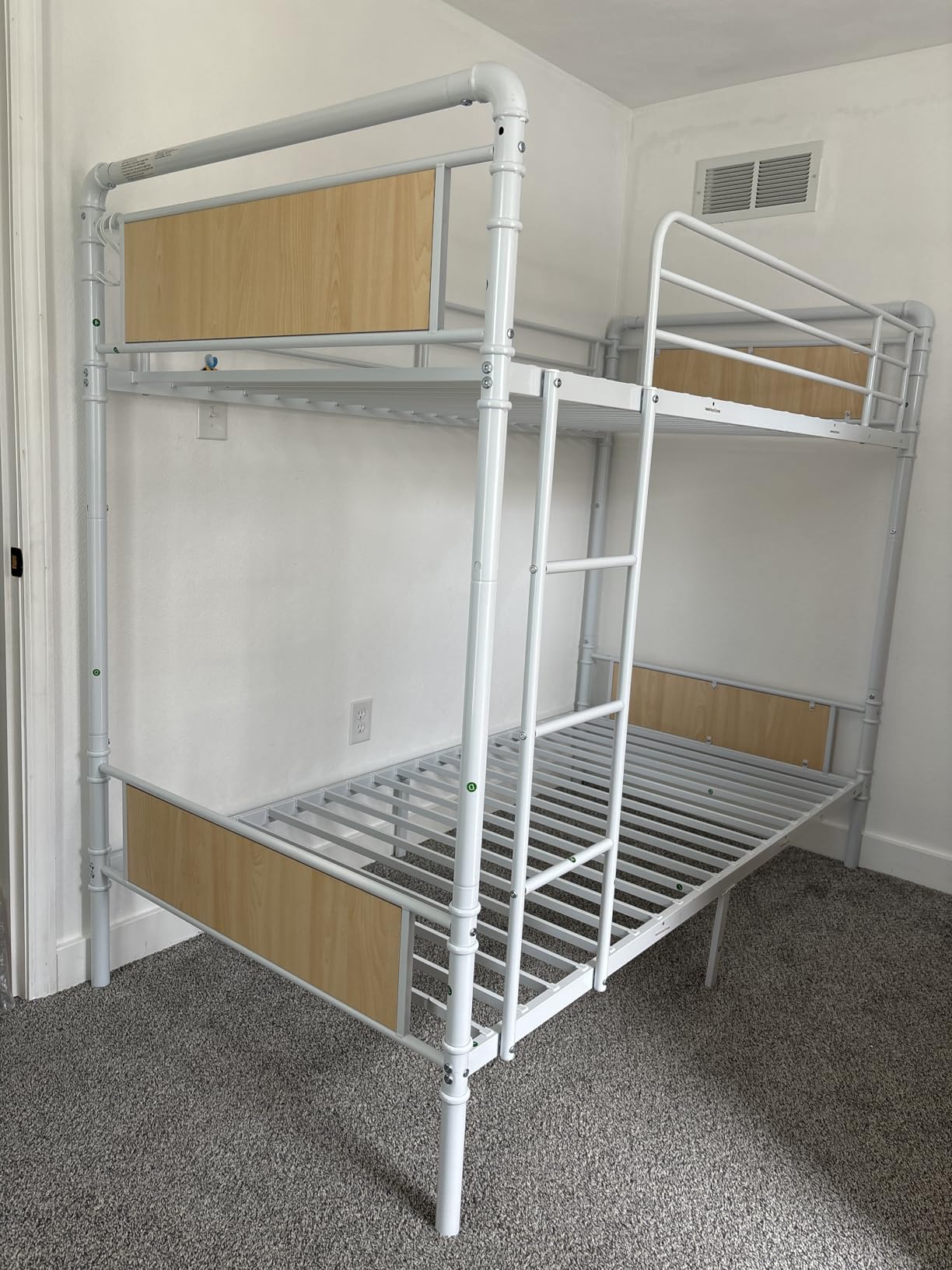
The 16.5-inch guardrails are among the highest I have seen on a metal bunk bed. This provides genuine security even with thicker mattresses. The reversible ladder can mount on either side, which matters more than you might think until you are trying to fit this into an asymmetrical room layout.
Assembly requires two people and about 2 hours. The pieces are heavy, and attempting this solo will result in frustration. Once assembled, the bed feels rock-solid. I would recommend periodic bolt tightening checks every few months, as metal-on-metal joints can loosen slightly with active use.
Best for Guest Rooms and Vacation Rentals
The ability to convert between bunk and twin configurations makes this ideal for spaces that serve multiple purposes. The industrial styling appeals to adults, while the safety features satisfy parents. The high weight capacity removes concerns about adult guests using the beds.
Skip If You Need to Move It Frequently
At nearly 100 pounds, this is not a bed you will want to relocate often. The conversion between bunk and separate beds is straightforward but requires lifting the heavy frames. Choose a lighter option if you anticipate frequent room rearrangements.
6. KOMFOTT Low Bunk Bed – Low Profile for Young Children
- Low height perfect for ages 4+
- Solid wood construction
- Noise-free slat system
- Easy 1-3 hour assembly
- Smooth edges on ladder
The KOMFOTT low bunk bed addresses the primary concern parents have about bunk beds: the terrifying height for young children. At just 51 inches tall, the top bunk is only slightly higher than a typical loft bed. This makes it approachable for children as young as 4 who have outgrown toddler beds but are not ready for a full-height bunk.
I helped install this for a family with a 5-year-old desperate for a “big kid bed” and parents nervous about falls. The 2-step ladder is almost laughably short, which is exactly the point. Their daughter can climb up independently while the 12-inch guardrails provide a secure enclosure that exceeds safety minimums.
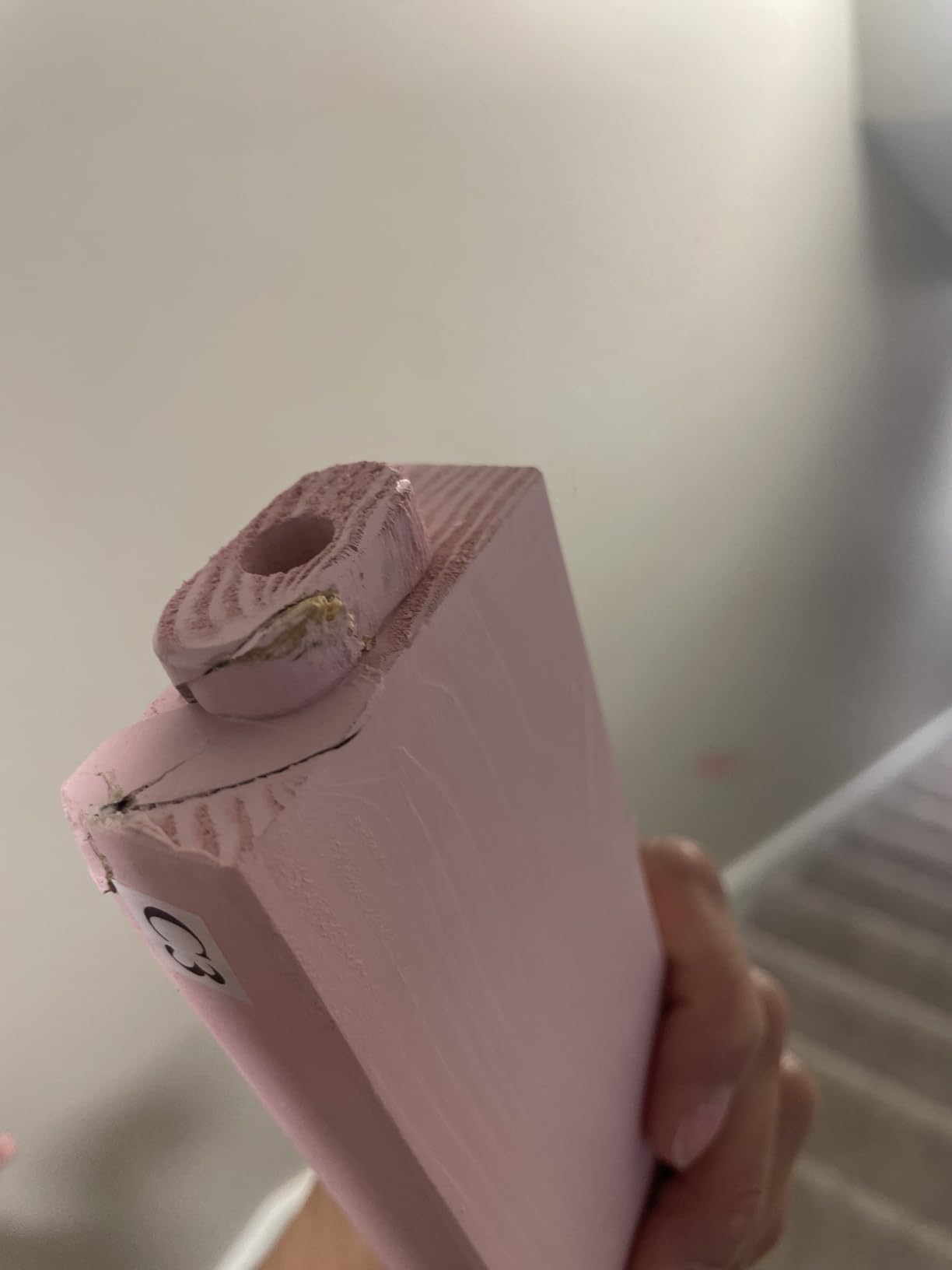
The solid pine construction delivers the warmth and durability that particle board cannot match. The grey finish is neutral enough to work with any decor while hiding the scuffs that lighter colors show. At 90.5 pounds, two adults can maneuver this bed during assembly without professional help.
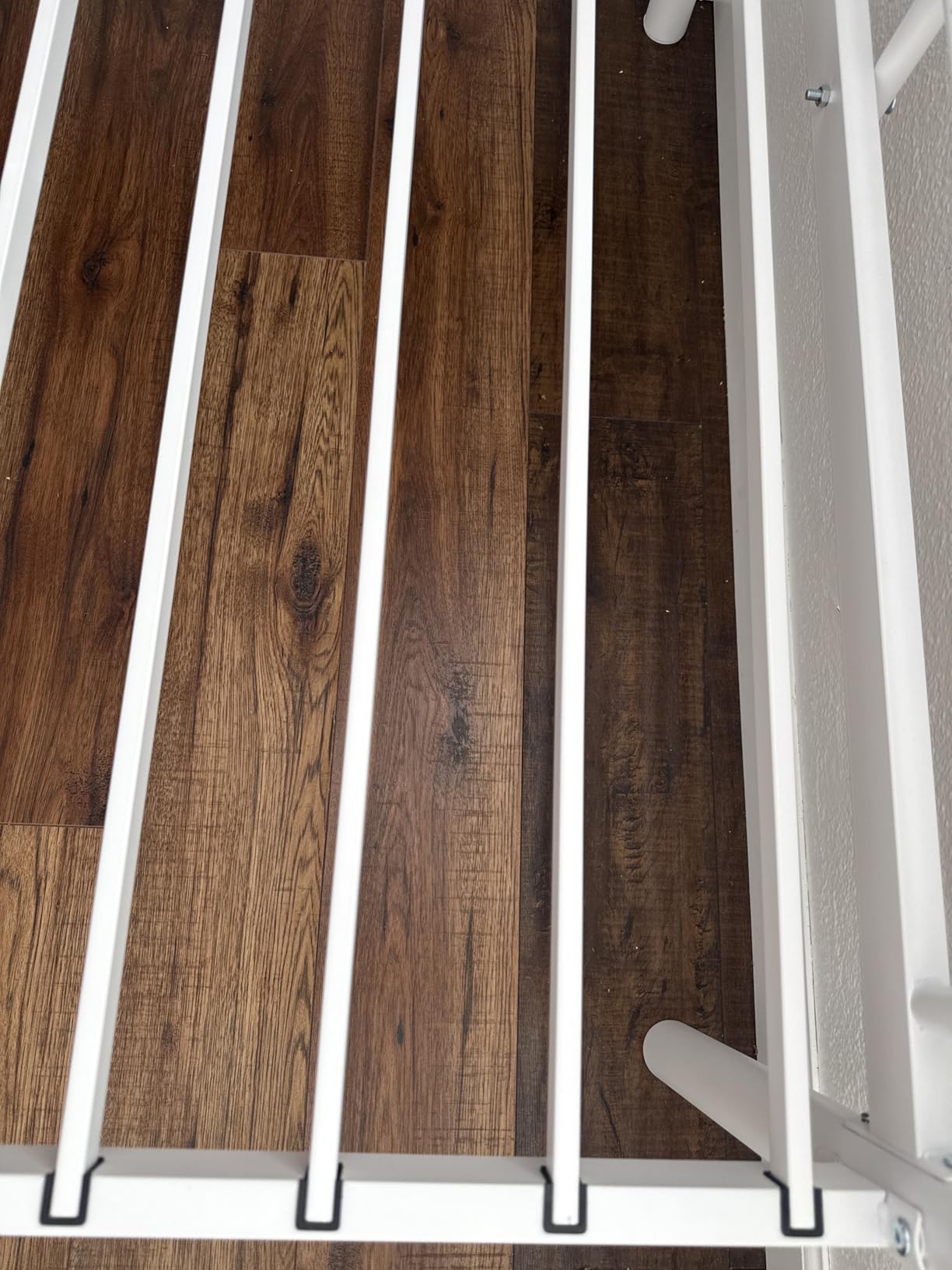
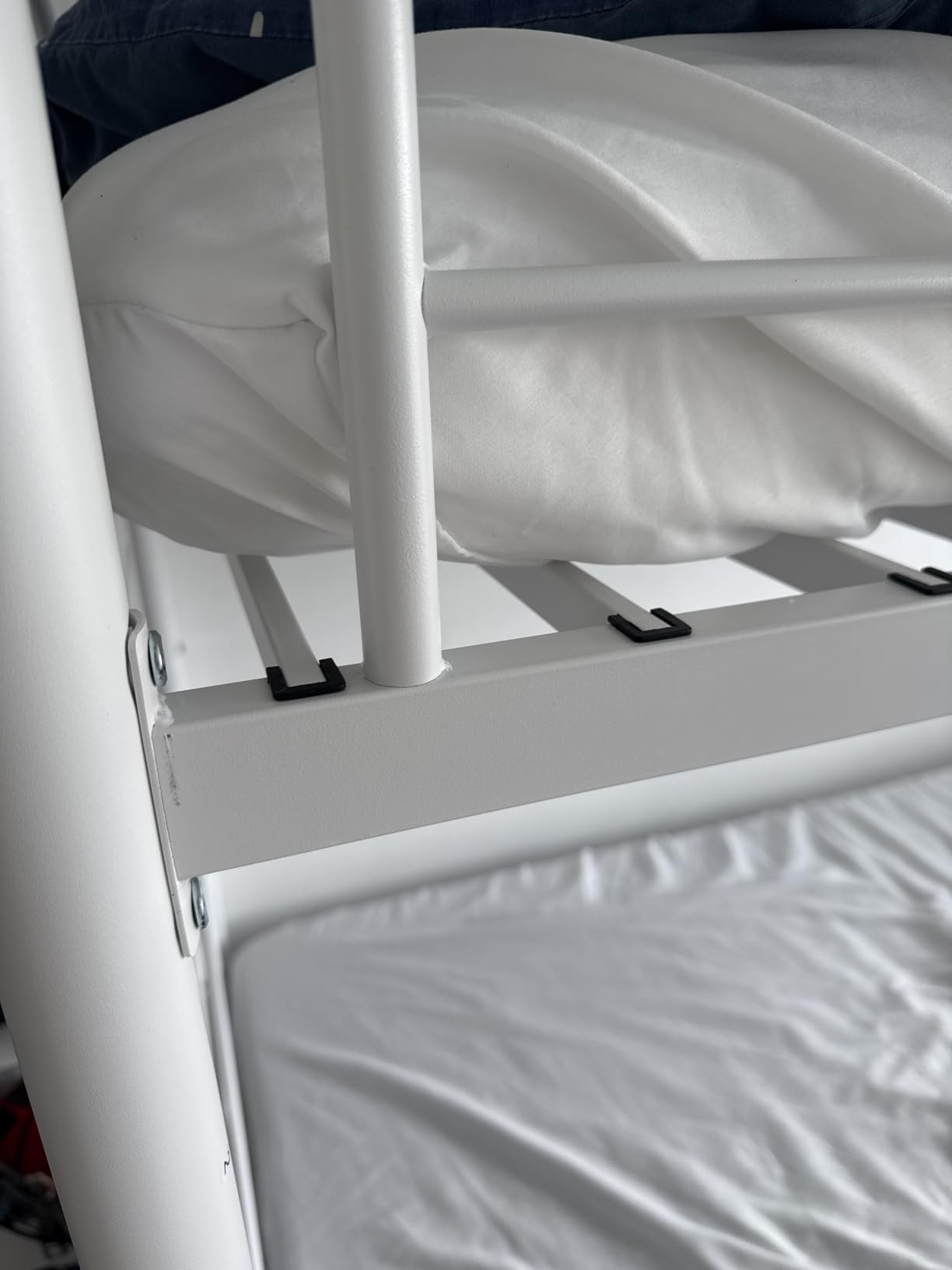
The noise-free slat system uses a clever plastic buckle design that prevents the metal-on-metal squeaking that ruins many bunk beds after a few months. This matters for light-sleeping siblings who share the room.
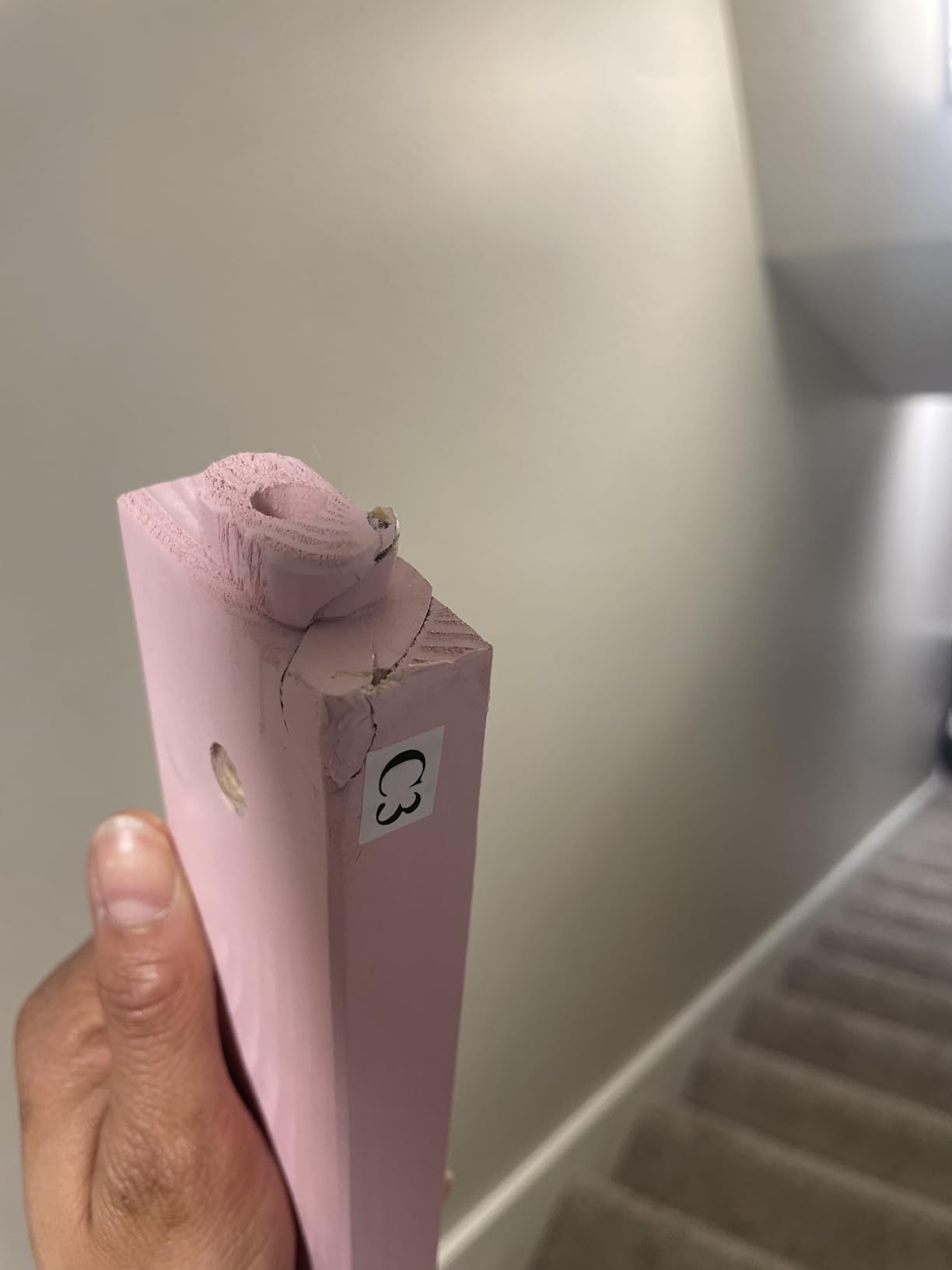
Best for First-Time Bunk Bed Users
If you are introducing a bunk bed to children under 6, this low-profile design eases the transition. The minimal height reduces parental anxiety while still delivering the “up high” experience kids crave. The solid wood construction withstands the inevitable rough play of young children.
Not Suitable for Older Children or Teens
By age 10 or 11, most kids will find this low bunk claustrophobic. The reduced headroom between bunks makes reading or sitting up uncomfortable on the bottom bed. Plan to upgrade within 5-6 years if purchasing for older children.
7. Max & Lily Fundamental Low Bunk – Non-Toxic Solid Wood
- Premium non-toxic finishes
- Exceptional 400 lb capacity
- Simplified design costs less
- Low 49-inch height
- Trusted brand reputation
- Instructions could be clearer
- Hardware not well labeled
- Slat spacing may need checking
The Max & Lily Fundamental takes everything that makes their twin-over-full model excellent and packages it in a more affordable, simplified design. You still get the solid New Zealand pine, non-toxic finishes, and 400-pound weight capacity, but without the headboard complexity and conversion capability.
I recommended this to a family with twins who wanted matching low bunks for their shared room. The 49.25-inch height fits comfortably under angled ceilings and in rooms with ceiling fans. The 14-inch guardrails provide the same protection as the higher-end Max & Lily models.
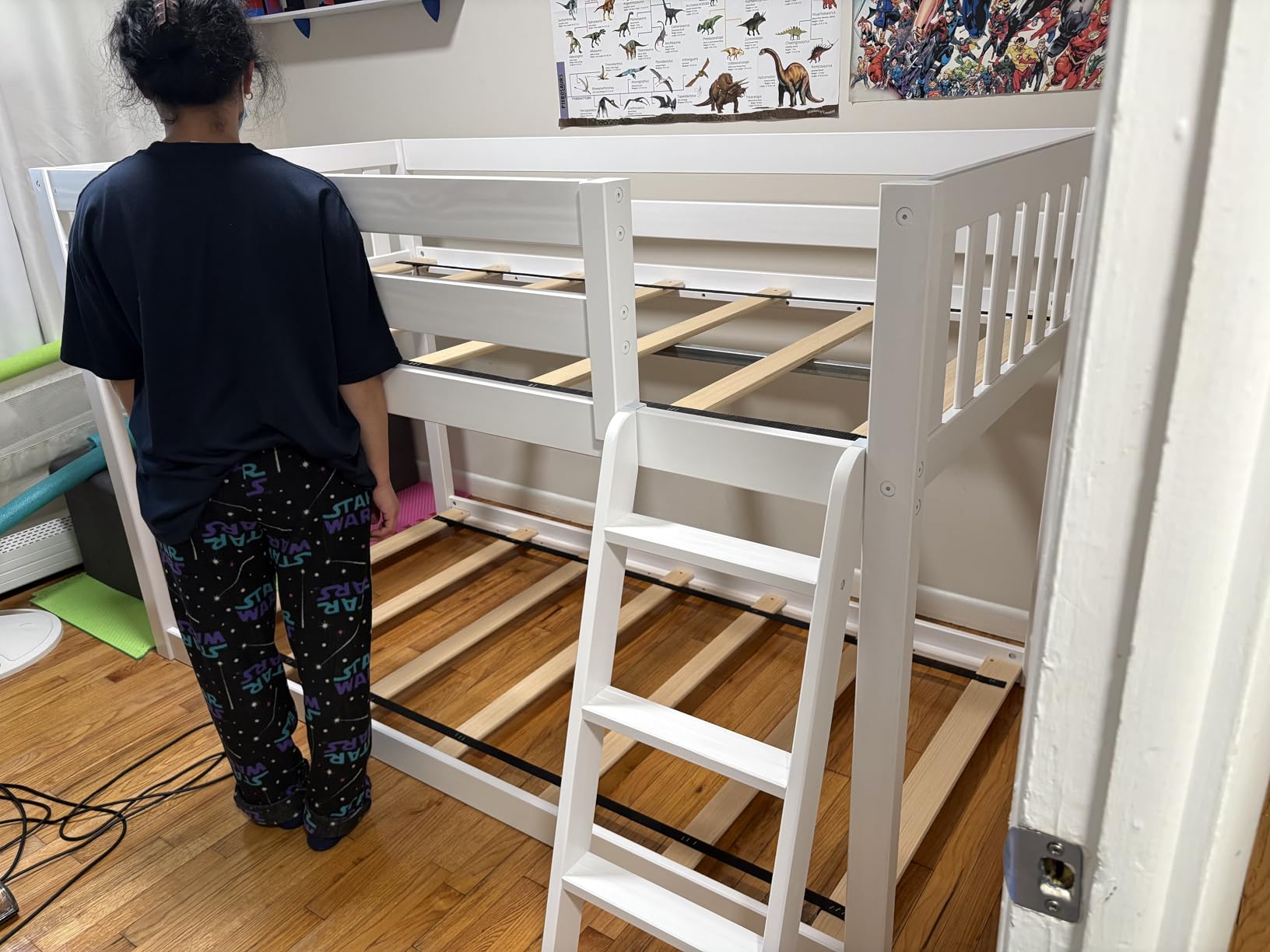
The low-VOC finishes matter more than most parents realize. Conventional furniture finishes can off-gas formaldehyde and other chemicals for months. The Max & Lily commitment to non-toxic materials means the bed is safe to use immediately after assembly without that “new furniture smell” that triggers headaches.
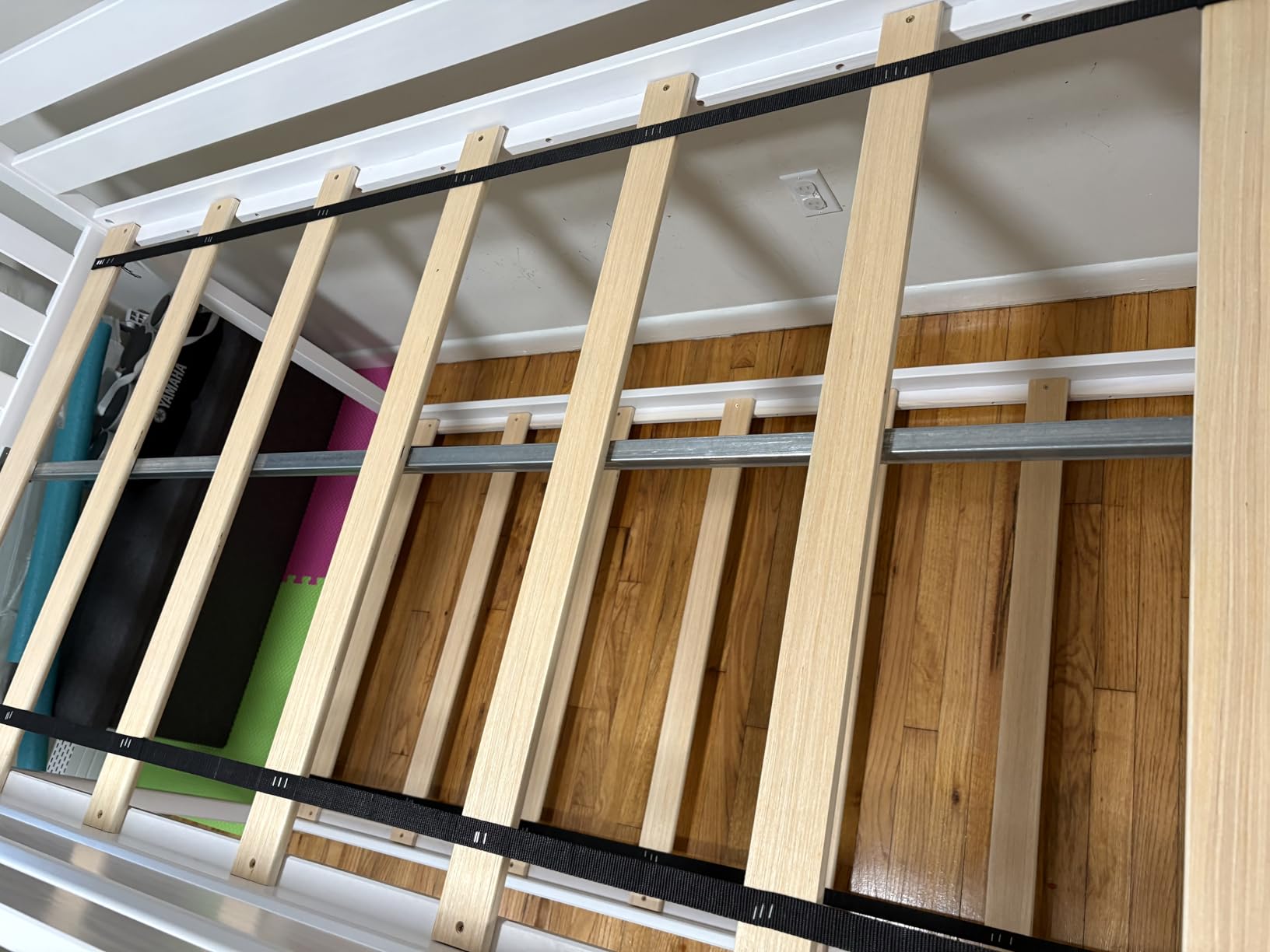
Assembly requires patience. The simplified design means fewer pieces, but the hardware labeling could be clearer. Plan for 2-3 hours with two people. The resulting bed is rock-solid and will likely outlast your child’s interest in bunk beds entirely.
Best for Health-Conscious Families
If you have a child with asthma, allergies, or chemical sensitivities, the non-toxic finish priority makes this worth the premium over budget alternatives. The solid wood construction also eliminates the formaldehyde concerns of composite wood products.
Skip If You Want Conversion Flexibility
Unlike the twin-over-full model, this fundamental design does not separate into two beds. You are committing to the bunk configuration permanently. If you anticipate needing two separate twin beds in the future, upgrade to the convertible model.
8. VECELO Metal Bunk Bed – Noise-Free Design
- Truly noise-free plastic buckle system
- Can split into two separate beds
- Quick 30-minute assembly
- Full-length guardrails on both sides
- Heavy-duty metal construction
- Some users report slight creaking
- Bed may rock if not fully tightened
- Instructions can be confusing
The VECELO metal bunk bed addresses the most common complaint about metal frames: the midnight symphony of squeaks and creaks every time someone shifts position. Their custom plastic buckle system isolates metal components from direct contact, eliminating the friction that causes noise.
I stayed overnight in a vacation rental that had this exact bunk bed, specifically to test the noise claims. After a night of actual use by two active children above me, I can confirm the design works. The only sounds were the normal movements of the mattress, not the metallic groaning I expected.
The ability to split into two separate beds adds versatility that pure bunk designs lack. The two side ladders provide climbing options from either direction, which helps with room layout flexibility. The 13-inch under-bed clearance fits standard storage bins or trundle beds.
Assembly is genuinely quick, about 30 minutes with two people who have done this before. First-timers should plan for an hour. The heavy-duty metal tubing feels substantial, and the grey finish resists showing fingerprints better than black or white alternatives.
Best for Light Sleepers in Shared Rooms
If you have one child who wakes at every sound and another who tosses all night, the noise-free design is a sanity saver. The split-into-beds capability also future-proofs your purchase against changing room needs.
Not Ideal for Very Active Jumpers
Despite the noise-free design, this is still a metal frame that can flex if subjected to vigorous jumping. The 400-pound capacity is for static weight, not dynamic impact. If your children treat beds as trampolines, solid wood construction handles that abuse better.
9. SHA CERLIN Metal Bunk Bed – Inclined Ladder for Easy Climbing
- Angled ladder easier to climb
- Very sturdy steel construction
- Easy assembly (30 min)
- Industrial design versatile
- Full-length safety guardrails
- Some squeaking develops over time
- Ladder rungs can loosen
- Assembly tabs can be stubborn
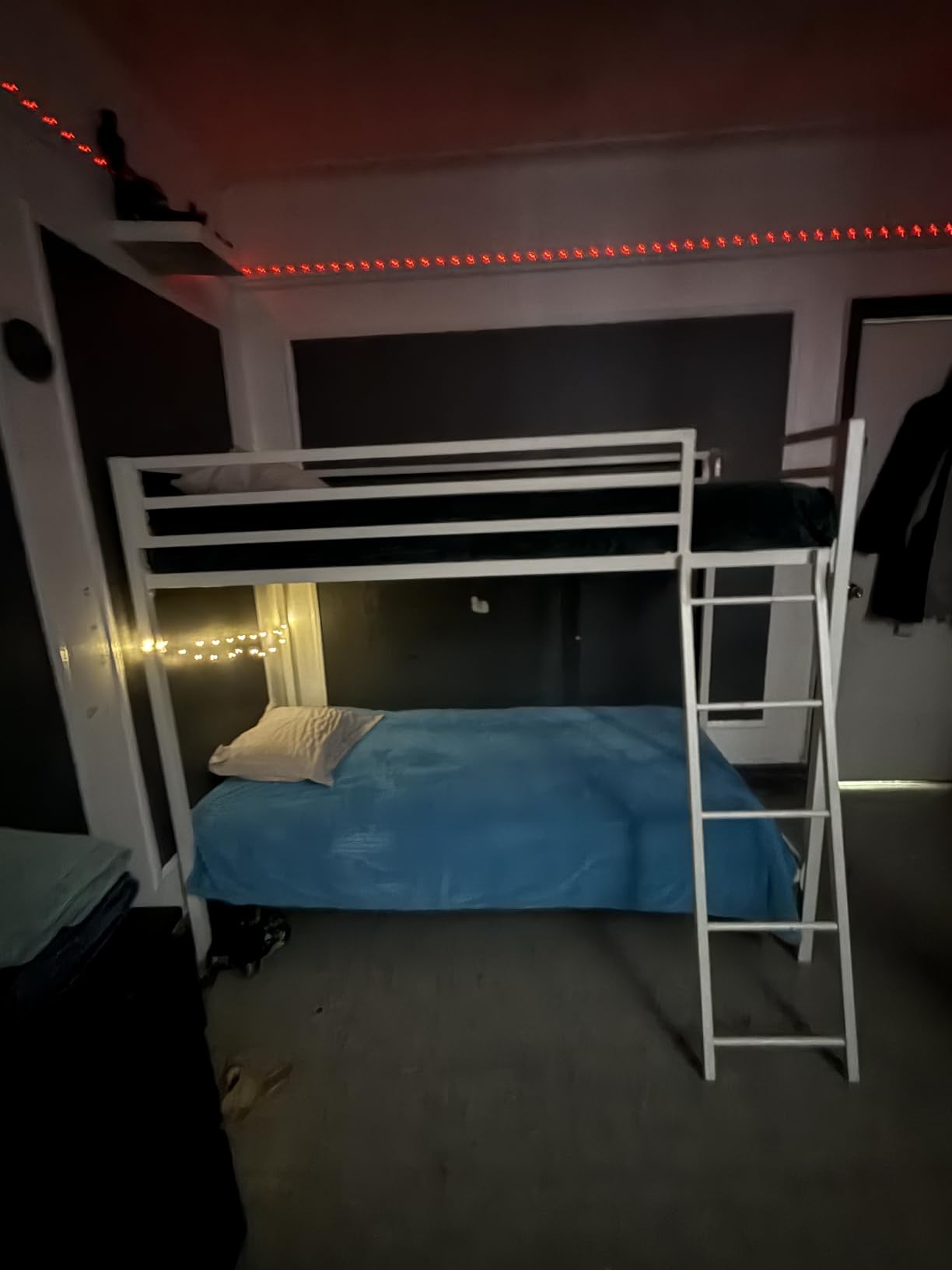
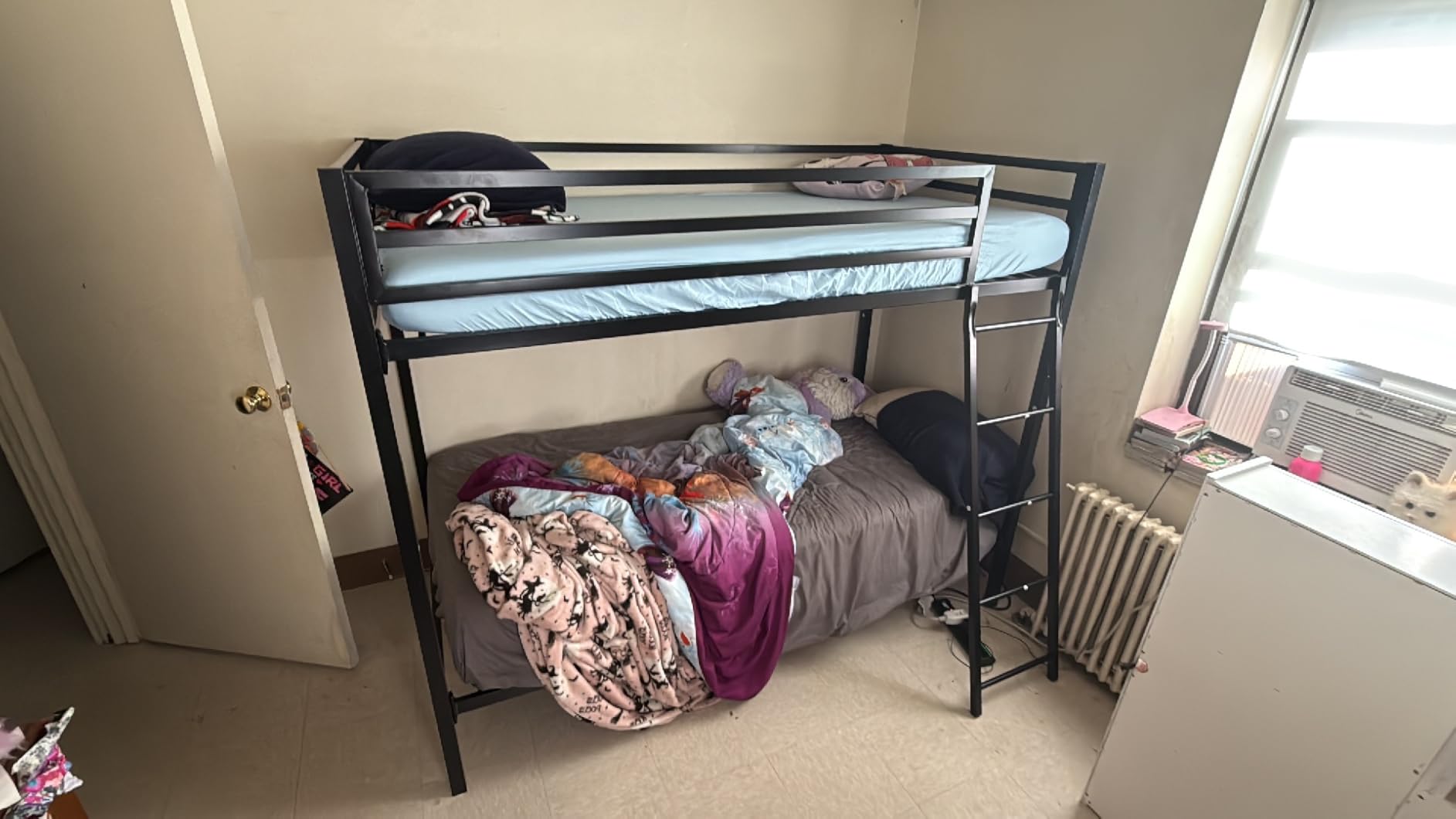
The SHA CERLIN bunk bed solves a problem most parents do not anticipate until they see their child struggling: vertical ladders are genuinely difficult for younger children to climb. The externally mounted inclined ladder on this model creates an easier climbing angle that 5 and 6-year-olds can manage confidently.
I watched my friend’s 5-year-old navigate this ladder on her first attempt, while she had struggled with the vertical ladder on their previous bunk bed. The smooth round tube rungs are gentler on bare feet than the flat metal bars common on cheaper models.
The 14-inch guardrails exceed safety minimums by a significant margin. The industrial white finish has a subtle texture that hides scuffs better than glossy alternatives. At 95 pounds, this is a substantial frame that resists the rocking motion lighter beds develop.
Assembly is straightforward for anyone with basic DIY experience. The pieces align well, and the instructions are clearly illustrated. Plan for 30-45 minutes with two people. The 10.6-inch under-bed clearance is slightly less than some competitors, limiting storage bin height options.
Best for Younger Climbers and Small Spaces
The inclined ladder design makes this accessible to younger children who lack the upper body strength for vertical climbing. The compact footprint (77.6 inches by 41.3 inches) fits well in smaller bedrooms without dominating the space.
Consider Lubrication for Long-Term Noise Prevention
Some users report developing squeaks after several months of use. A periodic application of silicone spray or graphite powder to the metal joints prevents this issue. It is a five-minute maintenance task that preserves the quiet operation.
10. ADORNEVE Low Bunk with Storage Stairs – Staircase with Drawers & LED Lights
- Safest low height for young kids
- Stairs easier than ladders
- Innovative LED lighting
- Power outlet with USB ports
- Ample drawer storage
- Narrow stairs for larger adults
- Instructions can be confusing
- Some step boards may feel brittle
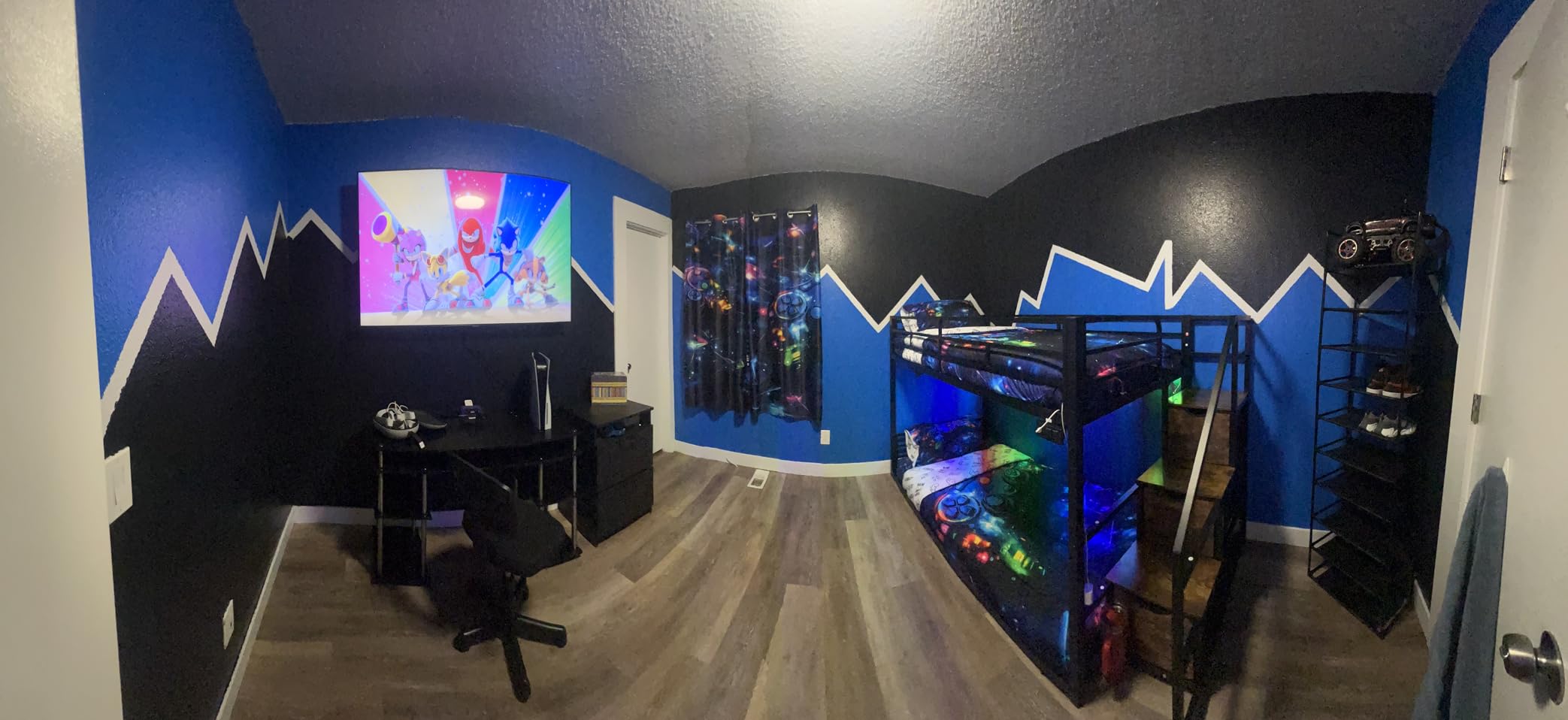
The ADORNEVE low bunk bed represents the evolution of children’s furniture for 2026. The combination of low height for safety, staircase storage for functionality, and LED lighting for atmosphere creates a bed that feels designed for modern family life rather than simply inherited from previous generations.
The 54-inch height makes this accessible to children as young as 3, while the staircase design eliminates the ladder anxiety many parents feel. Each step contains a pull-out drawer that adds genuine storage without consuming additional floor space. The RGB LED strip syncs to music and offers color-changing options controlled by remote.
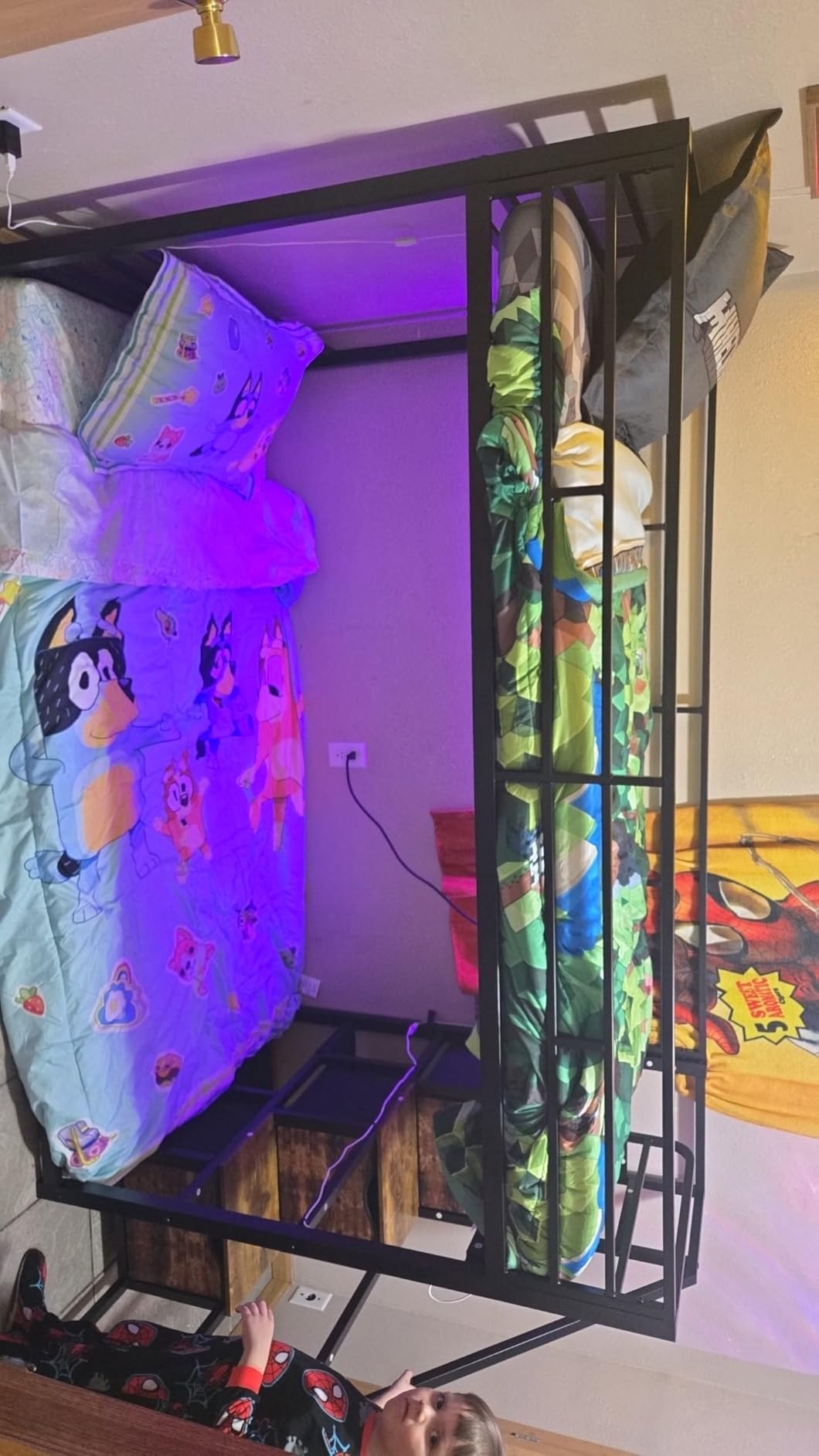
The built-in power outlet with USB-A and USB-C ports addresses the reality of device charging in children’s rooms. Located on the side rail, it is accessible without climbing while keeping cords organized. The anti-toppling device is essential for a bed this configuration and should absolutely be installed.
Assembly took my friend about 2.5 hours with help. The instructions have some unclear moments around the LED wiring, but nothing that patience cannot solve. The resulting bed feels substantial and has become the favorite hangout spot for both children and their friends.
Best for Small Rooms Needing Storage
The staircase drawers effectively add a dresser’s worth of storage without the floor space a separate piece would require. The low height works with standard ceilings and ceiling fans. The LED lighting eliminates the need for additional nightlights or lamps.
Stairs Limit Placement Flexibility
The staircase adds 15 inches to the overall length and must extend in a specific direction. Measure carefully before ordering, as this configuration requires more wall space than ladder-based alternatives. The stairs cannot be reversed to the opposite side.
11. DUMOS Wood House Bunk Bed – Pine & Rubber Wood Construction
- Adorable design sparks imagination
- Genuine wood construction
- Lightweight and easy to move
- Good under-bed clearance
- Clear assembly instructions
- Some quality control issues
- May need slat reinforcement
- Packaging occasionally incomplete
The DUMOS house bunk bed takes the whimsical house concept and executes it in real wood rather than metal tubing. The pine and rubber wood construction delivers the warmth and texture that only natural materials provide. At 65.9 pounds, it is light enough to reposition without a crew but substantial enough to feel secure.
The house roof design includes a functional windowsill that my friend’s children use as a shelf for books, stuffed animals, and the treasures 6-year-olds collect. The window cutout itself becomes a puppet theater, a drive-through window, or simply a frame for peekaboo games with siblings.
The 21 reinforced slats (14 on top, 7 on bottom) provide solid mattress support without requiring a bunkie board. The 12.7-inch guardrails offer reasonable security, though I would pair this with a thinner mattress to maximize the effective height. The white finish is crisp and clean, brightening rooms that need visual expansion.
Assembly is genuinely easy, about 90 minutes with clear instructions. The lightweight components mean one determined adult could theoretically assemble this alone, though two people make it faster and safer.
Best for Creative Children Who Love Play
If your child builds forts from couch cushions and assigns personalities to furniture, this house frame will become their favorite room feature. The natural wood construction handles the wear and tear of imaginative play better than metal frames that dent and scratch.
Inspect Carefully on Arrival
Quality control is inconsistent with this manufacturer. Unpack and inspect all components before beginning assembly. Missing hardware or damaged slats should be reported immediately for replacement. Once properly assembled with all parts, the bed performs excellently.
12. Grain & Grove Bear Low Bunk Bed – Perfect for Ages 3-8
- Lowest height in our roundup
- Ladder mounts on either end
- 400 lb capacity per bed
- Natural oak color matches photos
- Designed for ages 3-8
- Paint quality varies by unit
- Assembly takes 2.5+ hours
- Some mislabeled hardware bags
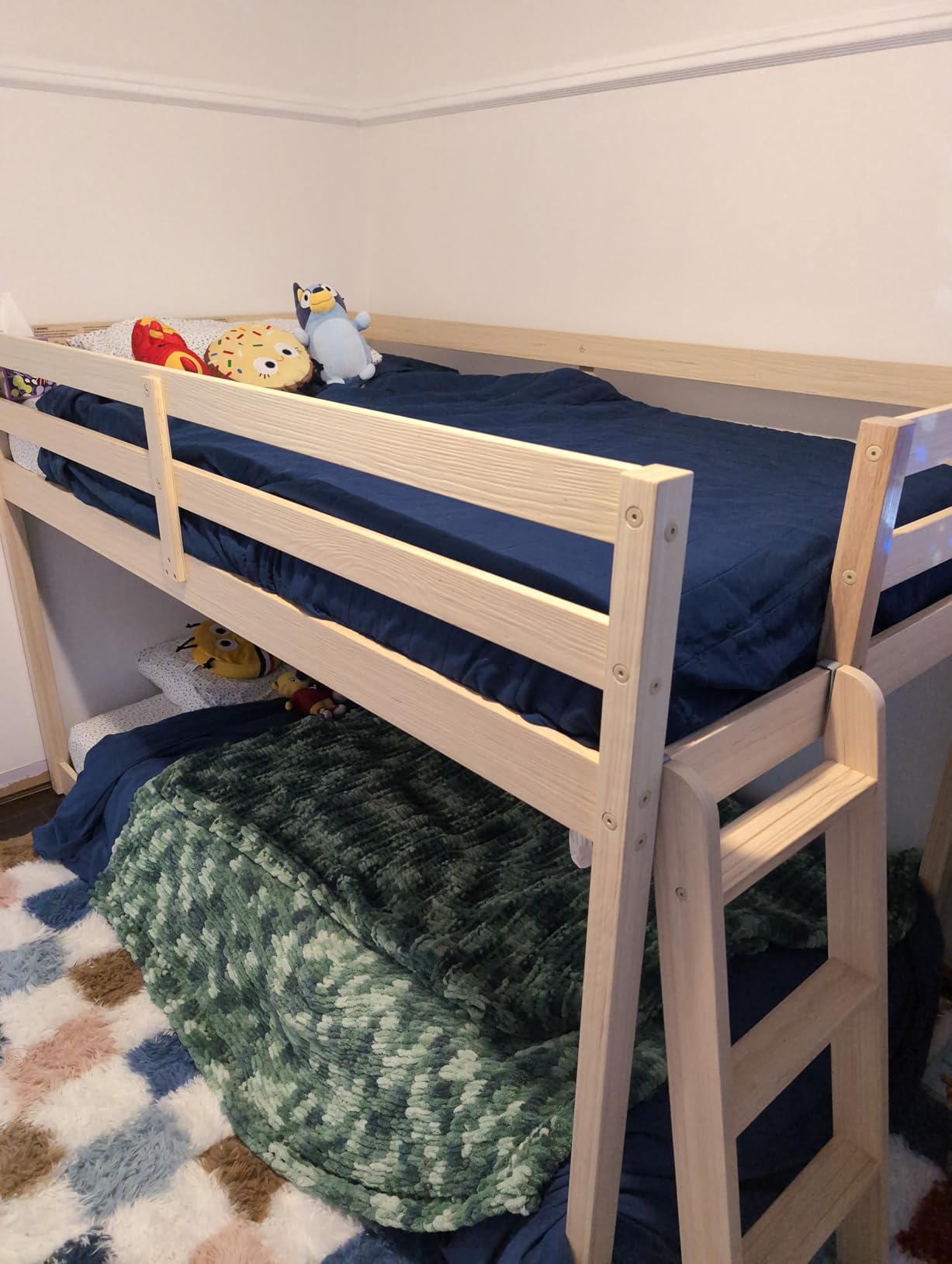
The Grain & Grove Bear bunk bed targets a specific demographic that most manufacturers ignore: preschoolers and early elementary children who want a bunk bed experience without the intimidating height. At 49 inches total height, this is essentially a raised bed with a trundle-like lower bunk.
I installed this for a family with a 3-year-old and 5-year-old sharing a room. The parents had rejected three other bunk beds as too tall for their comfort level. The Bear’s low profile allowed the younger child to sleep on top while still being reachable by a parent standing on the floor.
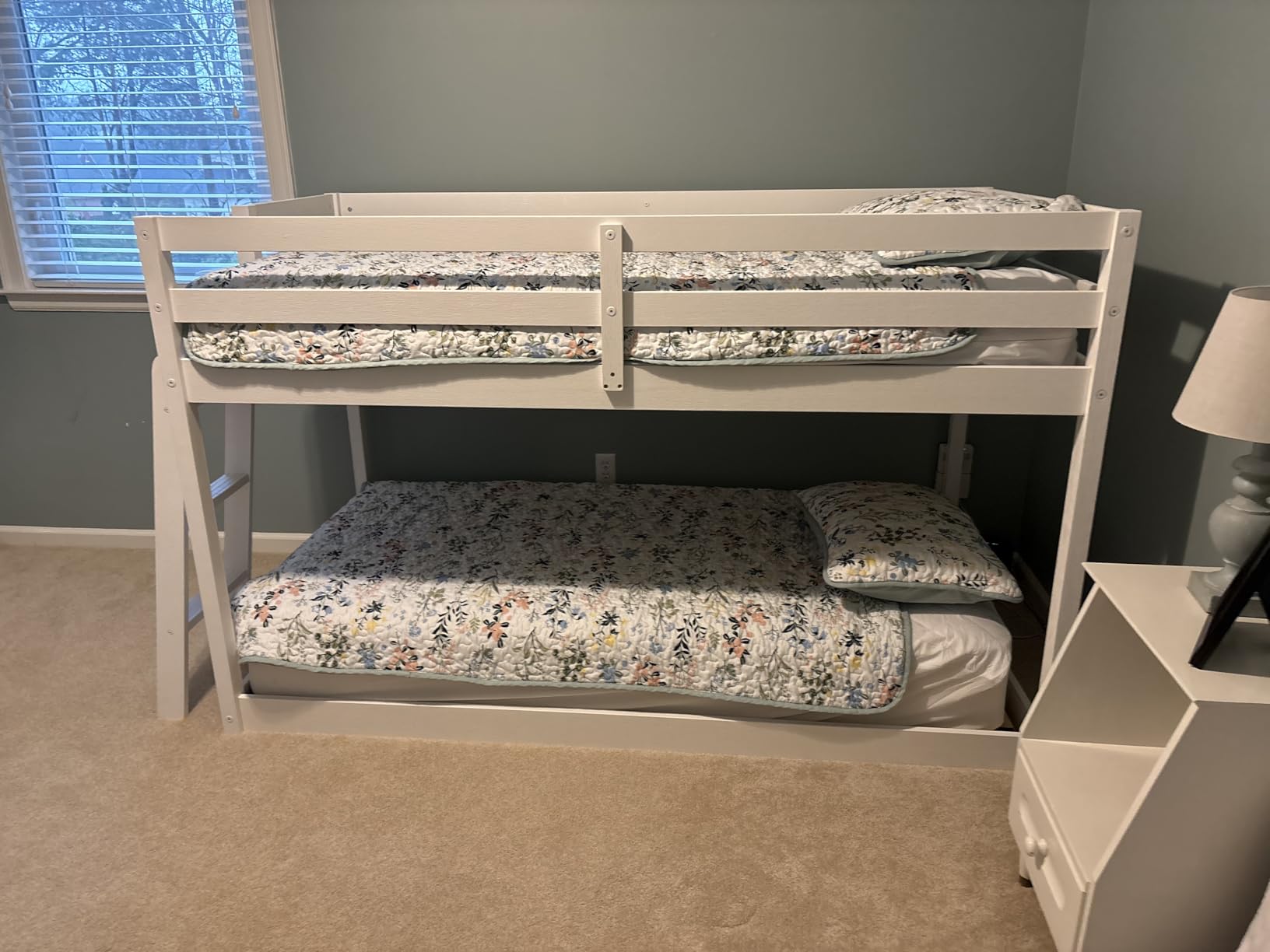
The reversible ladder is a thoughtful feature that lets you adapt to your room’s layout. The 29.75 inches of headspace between bunks is enough for the bottom child to sit up comfortably. The engineered wood construction with color-matched hardware creates a cohesive look that disguises the structural connections.
The 400-pound weight capacity per bed is impressive for this price point and size class. It means parents can climb up for story time or comfort without stress. The natural oak embossed finish has a realistic wood grain that photographs well and resists showing minor scratches.
Best for the Youngest Bunk Bed Users
If you are considering a bunk bed for children under 5, this is the safest entry point. The height minimizes fall risk while still delivering the excitement of “sleeping up high.” The age 3-8 recommendation is accurate; plan to upgrade as children approach double digits.
Not Suitable for Pre-Teens and Teens
The low height and 49-inch frame will feel childish to children over 9 or 10. This is a transitional piece, not a bed that will last through the teenage years. Budget for replacement within 6-7 years if purchasing for older children.
How to Choose the Best Bunk Bed for Your Kids in 2026?
After reviewing 12 top-rated options, the differences between models become clearer. Here is what actually matters when making your decision.
Safety First: Age Recommendations and Guardrails
The American Academy of Pediatrics recommends that children under 6 years old should not sleep on the top bunk. This is not arbitrary caution; younger children lack the coordination and impulse control to navigate elevated sleeping safely.
Guardrails must extend at least 5 inches above the mattress surface. A thicker mattress reduces the effective guardrail height, which is why most manufacturers recommend mattresses under 8 inches thick for bunk beds. Measure your existing mattress or factor a new one into your total budget.
Check that guardrails run the full length of the bed on both sides. Partial guardrails or those with large gaps defeat the purpose. The entrance gap for the ladder should be no more than 15 inches wide to prevent accidental rolling out.
Material Matters: Wood vs Metal
Solid wood bunk beds offer superior durability, quieter operation, and easier repair when scratched or dented. New Zealand pine and rubberwood are common choices that balance strength with reasonable weight. Engineered wood products cost less but contain adhesives that may off-gas and are harder to repair.
Metal bunk beds cost less, assemble faster, and resist bed bugs (a consideration for multi-unit housing). However, they are prone to squeaking, conduct temperature extremes, and dent permanently when impacted. The noise-free designs with plastic buckles help, but metal will never be as quiet as wood.
For long-term family use, I recommend solid wood construction. For guest rooms, vacation rentals, or tight budgets, metal frames with high weight capacities perform adequately.
Measuring Your Space: Ceiling Height and Room Layout
The standard ceiling height in modern homes is 8 feet (96 inches). For safe bunk bed installation, you need at least 36 inches of clearance between the top mattress and the ceiling. This prevents head injuries when sitting up and allows adequate airflow for comfortable sleeping.
A typical bunk bed with an 8-inch mattress places the sleeping surface at roughly 60 inches high. Add 36 inches of clearance, and you need ceilings of at least 8 feet. With 9-foot ceilings, any standard bunk bed works comfortably. With 7.5-foot ceilings common in older homes, look specifically for low bunk options under 55 inches total height.
Measure your room’s length and width, then subtract 3 feet from each dimension to allow for walking space and door swing. If your room is 10 by 12 feet, a bunk bed up to 84 inches long (7 feet) and 48 inches wide (4 feet) fits comfortably.
Ladder vs Stairs: Which is Better?
Ladders consume less floor space and work in smaller rooms. However, they require upper body strength and coordination that children under 6 may lack. Angled ladders are easier to climb than vertical ones but extend further into the room.
Staircases with integrated storage are the premium option for safety and functionality. The wide steps and handrails allow even preschoolers to climb confidently. The trade-off is space: stairs add 15-20 inches to the bed’s overall length and must extend in a fixed direction.
If choosing a ladder model, look for ones with flat rungs rather than round bars (easier on bare feet) and handrails that extend above the top bunk for secure mounting and dismounting. Reversible ladders that can mount on either end provide layout flexibility.
Mattress Compatibility and Thickness
Twin mattresses for bunk beds should be 38 inches wide by 75 inches long (standard twin) or 38 by 80 inches (twin XL for taller children). The lower bunk in twin-over-full configurations requires a full-size mattress at 54 by 75 inches.
Thickness is the critical specification most parents overlook. Bunk bed guardrails are designed assuming a mattress between 6 and 8 inches thick. A 12-inch pillow-top mattress effectively halves your guardrail height, creating a fall risk. Check the manufacturer’s maximum recommended mattress thickness and stay under it.
A bunkie board is a thin, rigid platform that replaces a box spring. Most modern bunk beds with slat systems do not require bunkie boards, but older designs or beds with wide slat spacing benefit from the added support. If your mattress warranty requires a solid foundation, a bunkie board satisfies that requirement in a bunk bed configuration.
Frequently Asked Questions
What age is safe for bunk beds?
The American Academy of Pediatrics recommends that children under 6 years old should not sleep on the top bunk due to fall risks and developmental readiness. The bottom bunk can typically accommodate children as young as 3 or 4 with appropriate guardrails. Each child develops differently, so assess your child’s coordination, impulse control, and comfort with heights before allowing top bunk access.
What kind of mattress do you need for a bunk bed?
Bunk beds require standard twin mattresses (38 x 75 inches) or twin XL (38 x 80 inches) for taller children. The critical specification is thickness: most bunk beds require mattresses between 6 and 8 inches thick to maintain guardrail effectiveness. Thicker mattresses reduce the exposed guardrail height and create fall hazards. Avoid box springs as they raise the sleeping surface too high; use the bed’s slat system or a low-profile bunkie board instead.
What height bunk bed should I buy?
Choose based on your ceiling height and child’s age. With 8-foot ceilings, standard bunk beds (60-65 inches tall) work well. For lower ceilings, select low bunk options under 55 inches. Ensure at least 36 inches of clearance between the top mattress and ceiling for safety and comfort. Low bunk beds (under 52 inches) are best for children under 6 using the top bunk, while standard heights suit older children and teens.
What is a bunkie board and do I need one?
A bunkie board is a thin, solid platform (typically 2-3 inches thick) that replaces a box spring to provide mattress support. Most modern bunk beds with closely spaced slats (less than 3 inches apart) do not require bunkie boards. However, if your mattress warranty requires a solid foundation, or if your bunk bed has wide slat spacing, a bunkie board adds necessary support. They are especially useful for foam mattresses that need consistent support across the entire surface.
Can adults sleep on bunk beds?
Many bunk beds support adult weight, but verify the weight capacity before purchase. Quality bunk beds list capacities between 250 and 400 pounds per bunk. Solid wood models with metal reinforcements typically handle adults better than basic metal frames. The bottom bunk accommodates adults more comfortably due to easier access and unlimited headroom. Adults should avoid the top bunk if they exceed the weight limit, have mobility limitations, or if the ceiling clearance is less than 30 inches above the mattress.
Final Thoughts
The best bunk beds for kids in 2026 balance safety, durability, and the practical realities of family life. Our top pick, the Max & Lily Twin Over Full Bunk Bed, earns its editor’s choice status through solid wood construction, 400-pound weight capacity, and the versatility to separate into two beds as your family grows.
For families prioritizing modern features, the Rolanstar Metal Bunk Bed delivers USB charging, LED lighting, and storage drawers at a mid-range price. The Storkcraft Long Horn proves that GREENGUARD certification and solid wood construction can come in under $300.
Remember the fundamentals: wait until age 6 for the top bunk, verify guardrail height with your mattress thickness, and measure your ceiling clearance before ordering. The right bunk bed creates floor space for play, fosters sibling bonding, and transforms bedtime from routine to adventure. Choose wisely, assemble carefully, and enjoy the extra room you have created.