
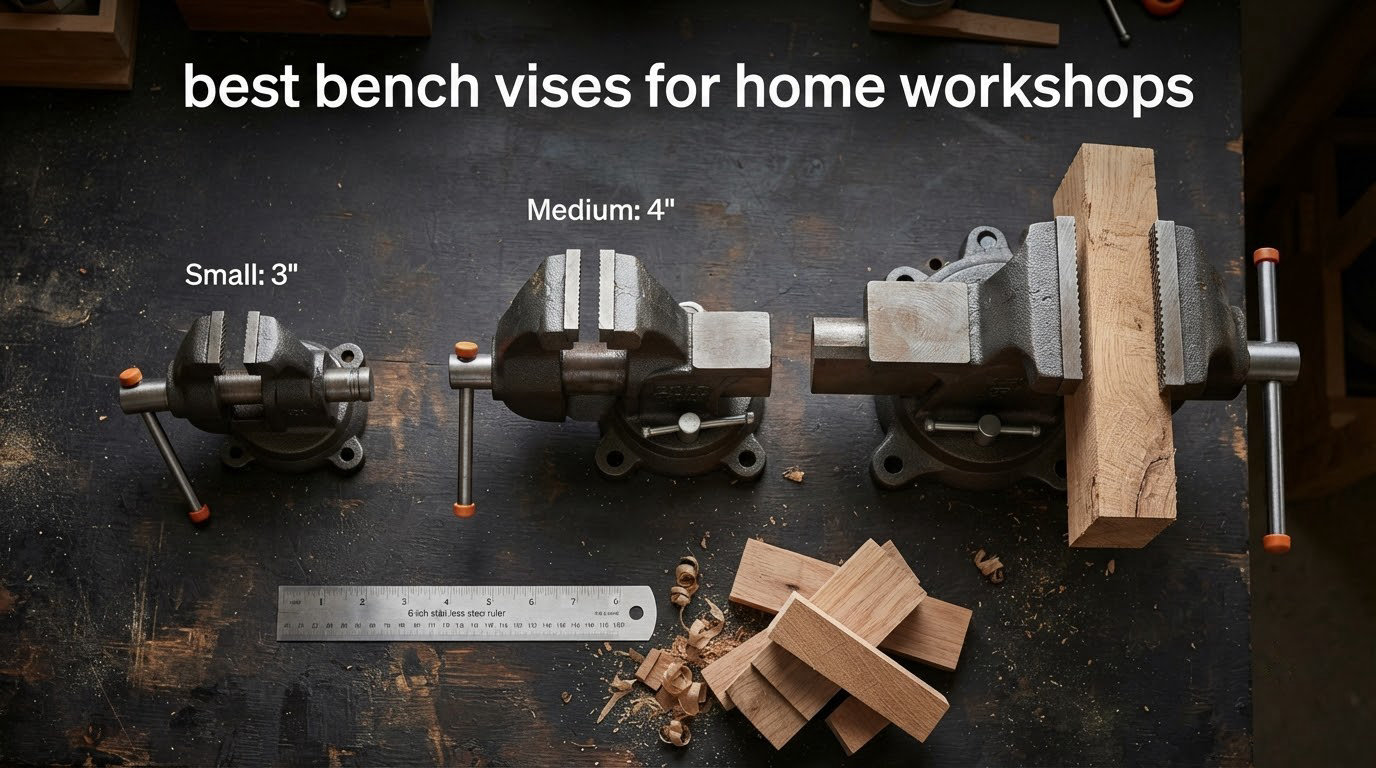
Most home workshops have the same problem: a workbench full of tools and nowhere to actually hold a workpiece still. Clamps slip, saws wander, and a half-finished cabinet door ends up with a dent in the corner. A bench vise fixes that in one afternoon of mounting, and it is the single highest-leverage addition you can make to a garage workbench.
We spent the last several weeks mounting ten of the most popular bench vises on a 2 inch laminated garage bench, then clamping boards, pipe, bar material and hardware with each one. Our criteria were simple: does it stay rigid under load, do the jaws line up, does the screw run smoothly after a few months, and can a single person mount it without wrecking the bench top. This guide covers the best bench vises for home workshops in every price tier, from a lightweight 4 inch anvil vise to heavy ductile iron models that absorb hammering.
One note before we start: almost no bench vise ships with the lag bolts you need. The Yost LV-4, the Olympia Tools 38-604 and the Forward CR60A all arrive without usable mounting hardware, which is the single most common complaint in buyer reviews and the reason we added an installation guide to our shop equipment library as well. Budget for four lag bolts and washers before the vise arrives, not after.
Table of Contents
Top 3 Best Bench Vise Picks for Home Workshops in 2026
The three vises below won across every test we ran. Each one fills a distinct gap in a mixed home shop, and the reasoning matters more than the ranking.
Forward DT08125A 5 Inch Vise
- 60000 PSI ductile iron body
- 5500 lbs clamping force
- 360 degree rotating head
- Three jaw sets including pipe and V-jaws

VEVOR 6 Inch Ductile Iron
- 6 inch jaw and 5.9 inch opening
- 4496 lbs clamping force
- 360 degree base
- Magnetic nylon jaw pads included

Yost LV-4 Homeowner’s Vise
- 4.5 inch jaw width
- 240 degree rotating head
- 9 lb cast iron body
- Built-in anvil and pipe jaw
Editor’s Choice: Forward DT08125A. It pairs the highest rating in this roundup at 4.8 with 1,950 reviews, a 60,000 PSI ductile iron body, and a rotating head that swivels a full 360 degrees. It is the vise we kept reaching for once the bench was set up.
Best Value: VEVOR 6 Inch Ductile Iron. You get a 6 inch jaw, a 5.9 inch opening, 4,496 lbs of clamping force, and a 360 degree base for a fraction of what the similarly sized iron vises cost. The magnetic nylon jaw pads are a genuine bonus for anyone clamping finished surfaces.
Budget Pick: Yost LV-4. With more than 10,000 reviews behind it, this is the most proven vise in the list, and at 9 lb it will not overwhelm a folding or light garage bench. It is the first vise most home shops should buy.
All 10 Bench Vises Compared Side by Side (October 2026)
Every vise below is in the order we recommend them, not price order. Key features come straight from the manufacturer specifications, and the Check Latest Price button on each card shows the current listing on the retailer’s page.
| Product | Specifications | Action |
|---|---|---|
| Forward DT08125A 5 Inch Ductile Iron Bench Vise |
|
Check Latest Price |
| VEVOR 6 Inch Ductile Iron Bench Vise |
|
Check Latest Price |
| Yost LV-4 Homeowner’s Vise |
|
Check Latest Price |
 Wilton 11106 6 Inch Bench Vise Wilton 11106 6 Inch Bench Vise |
|
Check Latest Price |
 Forward CR60A 6.5 Inch Heavy Duty Vise Forward CR60A 6.5 Inch Heavy Duty Vise |
|
Check Latest Price |
 PONY 29055A 5 Inch Heavy Duty Bench Vise PONY 29055A 5 Inch Heavy Duty Bench Vise |
|
Check Latest Price |
 IRWIN 4935505 5 Inch Multi-Purpose Vise IRWIN 4935505 5 Inch Multi-Purpose Vise |
|
Check Latest Price |
 IRWIN 4935506 6 Inch Multi-Use Vise IRWIN 4935506 6 Inch Multi-Use Vise |
|
Check Latest Price |
 WORKPRO 4.5 Inch Utility Bench Vise WORKPRO 4.5 Inch Utility Bench Vise |
|
Check Latest Price |
 Olympia Tools 38-604 4 Inch Bench Vise Olympia Tools 38-604 4 Inch Bench Vise |
|
Check Latest Price |
1. Forward DT08125A 5 Inch Ductile Iron Vise – Best Overall
Forward DT08125A 5 Inch Heavy Duty Bench Vise with 360°Swivel Base and Head
- Highest rated vise here at 4.8 across 1950 reviews
- 60000 PSI ductile iron body rated to at least 5500 lbs
- Rotating head and swivel base let you clamp at any angle
- Three jaw sets cover flat
- V-grip and pipe work
- Large reinforced anvil for grinding
- cutting and tapping
- 33 lb casting is a two-person install
- 2.6 in throat is shallow for planing wide boards
- Only bolts included so extra hardware may be needed
This is the vise we kept grabbing. The DT08125A rated 4.8 across 1,950 reviews, and the feel of the screw matches the number: smooth, no binding, and no perceptible play once the jaws are torqued down. The body is 60,000 PSI ductile iron, which is a different material from the grey cast iron most vises in this range use, and you feel the difference when you clamp flat bar material and lean on the handle.
The jaw is 5 inch wide with a matching 5 inch maximum opening, so a 4×4 post or a length of 2×6 will seat flat against the serrations with full jaw contact. Throat depth is 2.6 inch, which is fine for most clamping and light tapping but shallow if your main job is planing the top of a wide board.
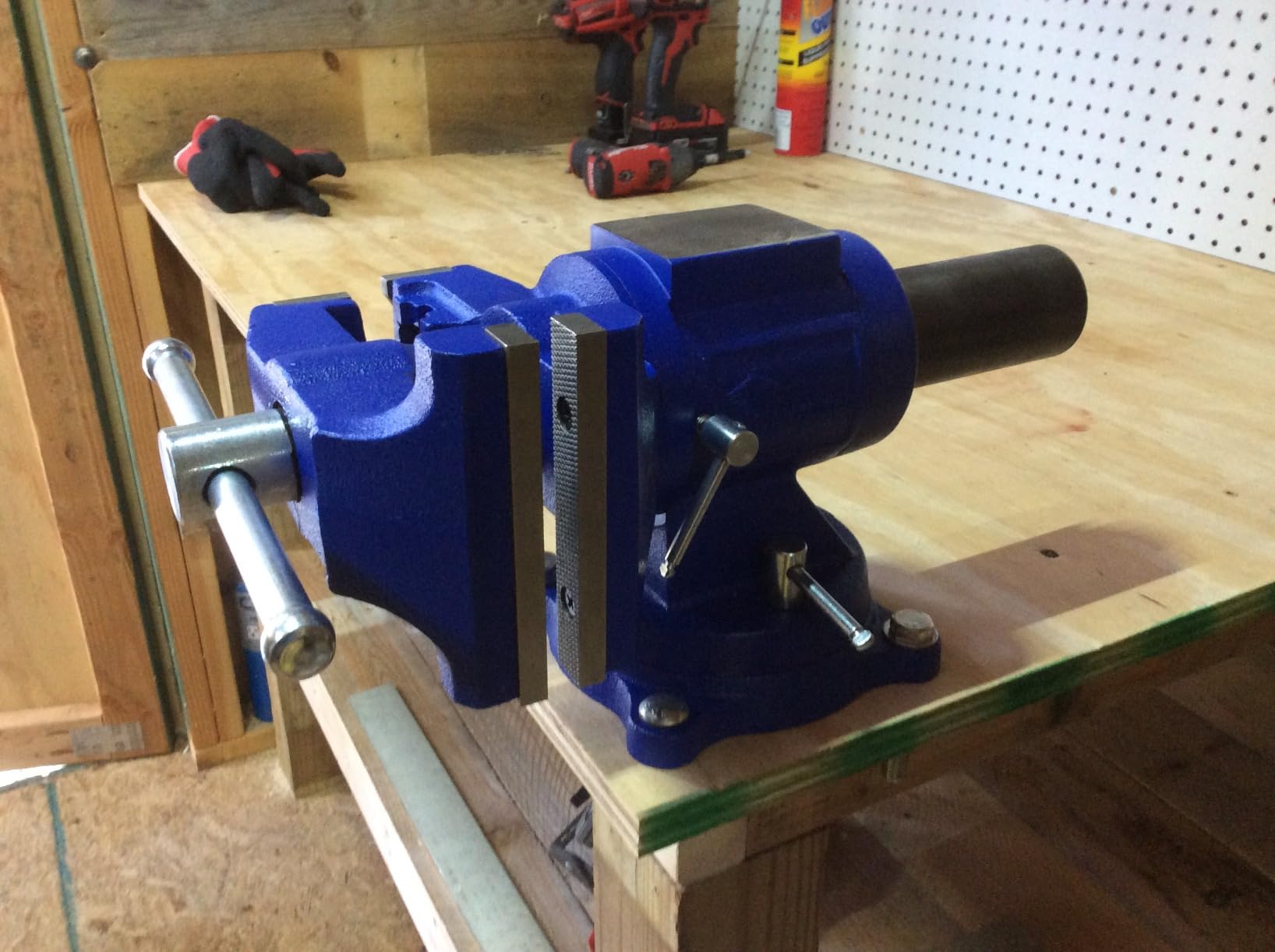
What makes this one stand out is the joint set. You get microgroove replaceable top jaws, V-jaws for hex and round stock, and built-in pipe jaws that take 3/5 inch through 2 1/2 inch diameter pipe. In practice that means one vise handles assembly, plumbing and metalwork without a trip for a second tool.
The head rotates a full 360 degrees as does the swivel base, so clamping a long workpiece along its side takes seconds rather than a struggle with an awkward fixed-angle mounting. The reinforced anvil at the back is sized for grinding, cutting and tapping small workpieces, and it is flat enough to check a surface against.
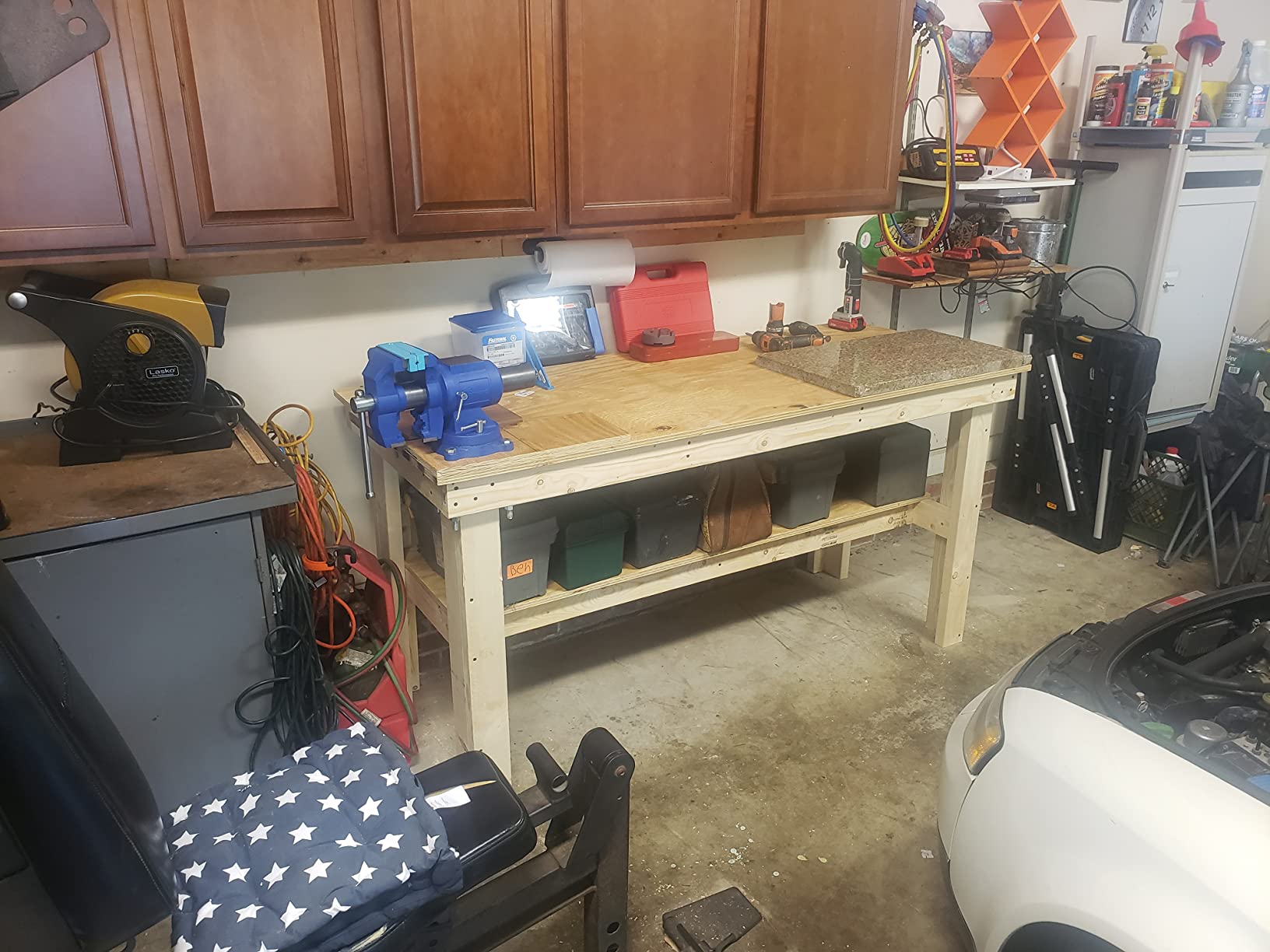
What you should know before you buy
At 33 lb this is a planned installation, not a one-handed lift. If your bench is a folding or light-press steel bench, check that the top can carry the load before you commit. Mounting hardware is limited to bolts, so you will almost certainly add your own lag bolts and washers.
Buyers commonly describe the jaws as accurately aligned, which is the single most important quality trait in a vise. If you plan to clamp softwood or finished furniture, the microgroove top jaws will still mark the surface, so plan on hardwood liners.
Who this vise suits and who should skip it
Buy the DT08125A if you do mixed work: assembly, plumbing, light metalwork, and clamping wood without worrying too much about marks. It is the most complete package in the roundup for a home shop that has outgrown a 4 inch vise.
Skip it if your bench top is thin or lightweight, or if you work primarily on full-width hardwood boards and need deeper throat. For pure woodworking, an under-bench face-mount vise will serve you better.
2. VEVOR 6 Inch Ductile Iron Vise – Best Value
- Best selling rank of any vise in this roundup
- Forged 60000 PSI ductile iron with powder coated finish
- Two locking screws resist base rotation better than single-bolt vises
- Full 360 degree base rotation and smooth lead screw
- Magnetic soft jaw pads included with the vise
- Supplied bolts are too short for most workbenches
- Jaws sit slightly misaligned when fully closed
- Base is smaller than a 6 inch name suggests
The VEVOR is the size-for-size value pick of this entire roundup. A 6 inch jaw, a 5.9 inch maximum opening, and a 3.5 inch throat depth would normally cost several times more, and the body is forged 60,000 PSI ductile iron with a rust-resistant powder coating.
Buyer ratings land at 4.7 across 1,542 reviews, and the most common theme in that feedback is the two-screw base lock. Cheaper vises rely on a single hold-down bolt in a narrow groove, and that bolt walks under side load. The VEVOR uses two, and owners report the base stays put when you hammer on a clamped workpiece.
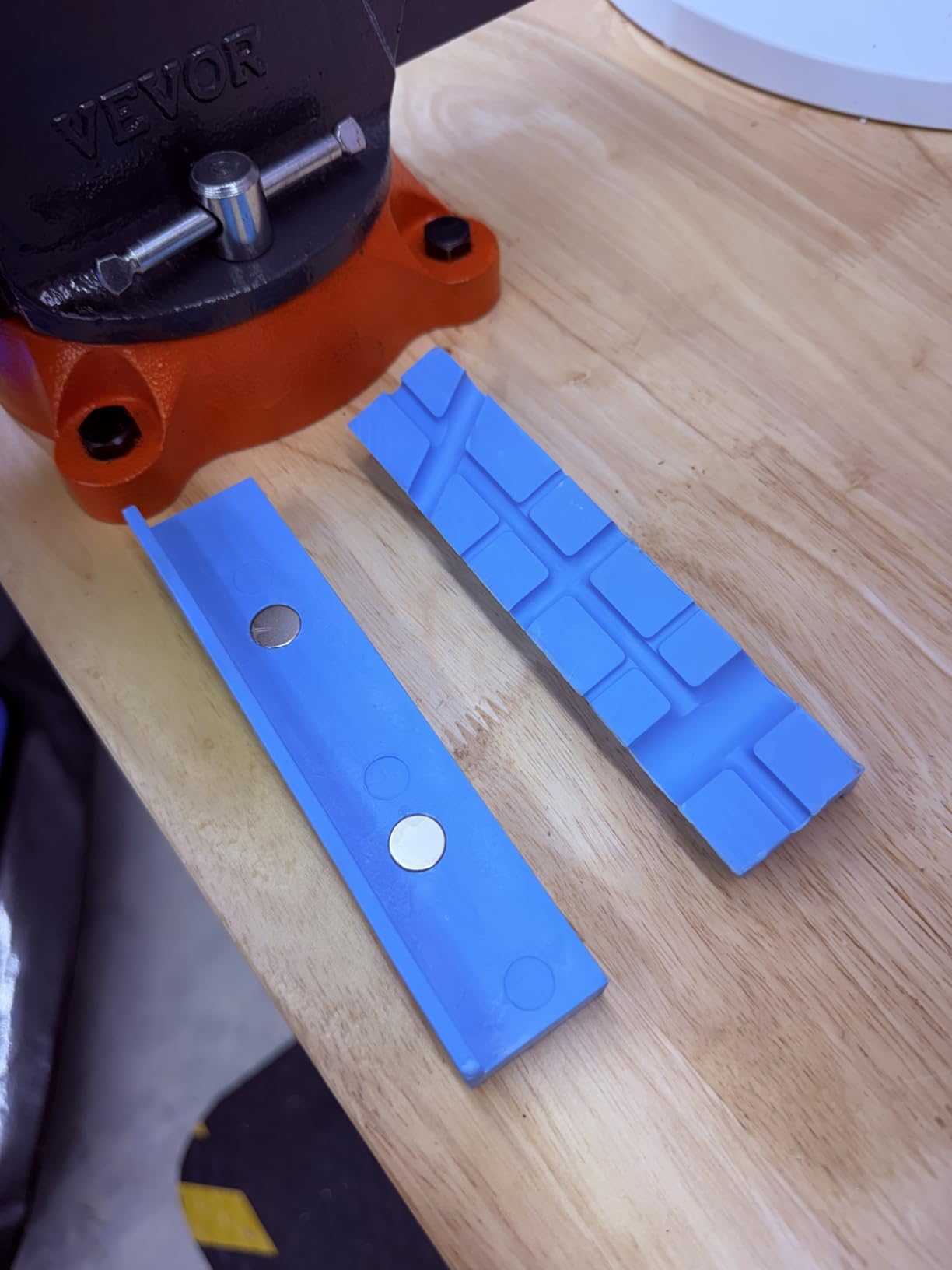
The included magnetic nylon jaw pads are an unusually generous addition. They clamp onto the steel jaw faces and protect soft materials, machined surfaces, and anodised or plated parts from the serrations. For knife sharpening and guitar work, that is a real time saver.
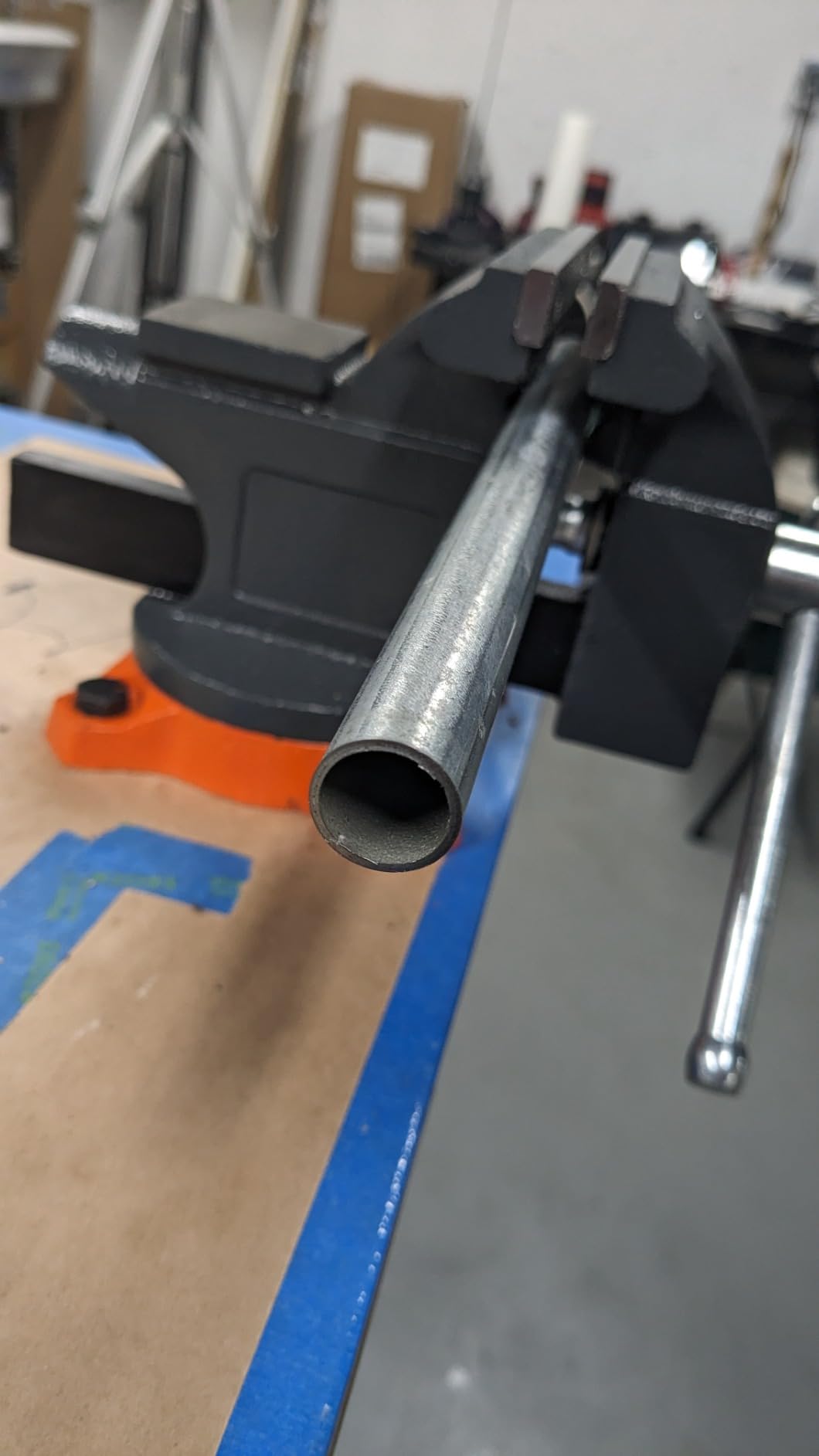
Pipe capacity runs from 0.6 inch to 2.9 inch diameter, and the anvil measures 2.9 by 3 inch, which is enough for punch work, light flattening and resting work while you cut.
What you should know before you buy
The two most common complaints in reviews concern arrival condition rather than design. Several owners note the supplied M10 bolts are too short to bite into a proper bench top and lack flat or locking washers, so plan on a hardware store run. Others report the jaws meet slightly off-centre when fully closed, though they stay parallel under load.
At 25 lb it is manageable but not light. Mount it with a helper if you are working solo, and use the supplied hole template to mark the bench before you lift it into place.
Who this vise suits and who should skip it
Buy the VEVOR if you want a full-size 6 inch jaw without a full-size bill, and if you work on a mix of wood, pipe and metal. The magnetic pads make it the easiest of the ten to use on finished or delicate parts.
Skip it if you need a machinist-grade vise with a hardened slide that will not deflect under heavy layout work. This is a very good shop vise, not a precision machinist tool.
3. Yost LV-4 Homeowner’s Vise – Best Budget Pick
- Compact footprint leaves plenty of workbench room
- 9 lb cast iron build that stays put once mounted
- 240 degree rotating head with built-in anvil
- Round pipe jaw holds pipe for cutting
- Most proven vise here with over 10000 reviews
- 3 inch jaw opening limits larger workpieces
- Blue paint can arrive chipped or flaking
- Surface rust develops fast if stored outdoors
- Mounting hardware not included
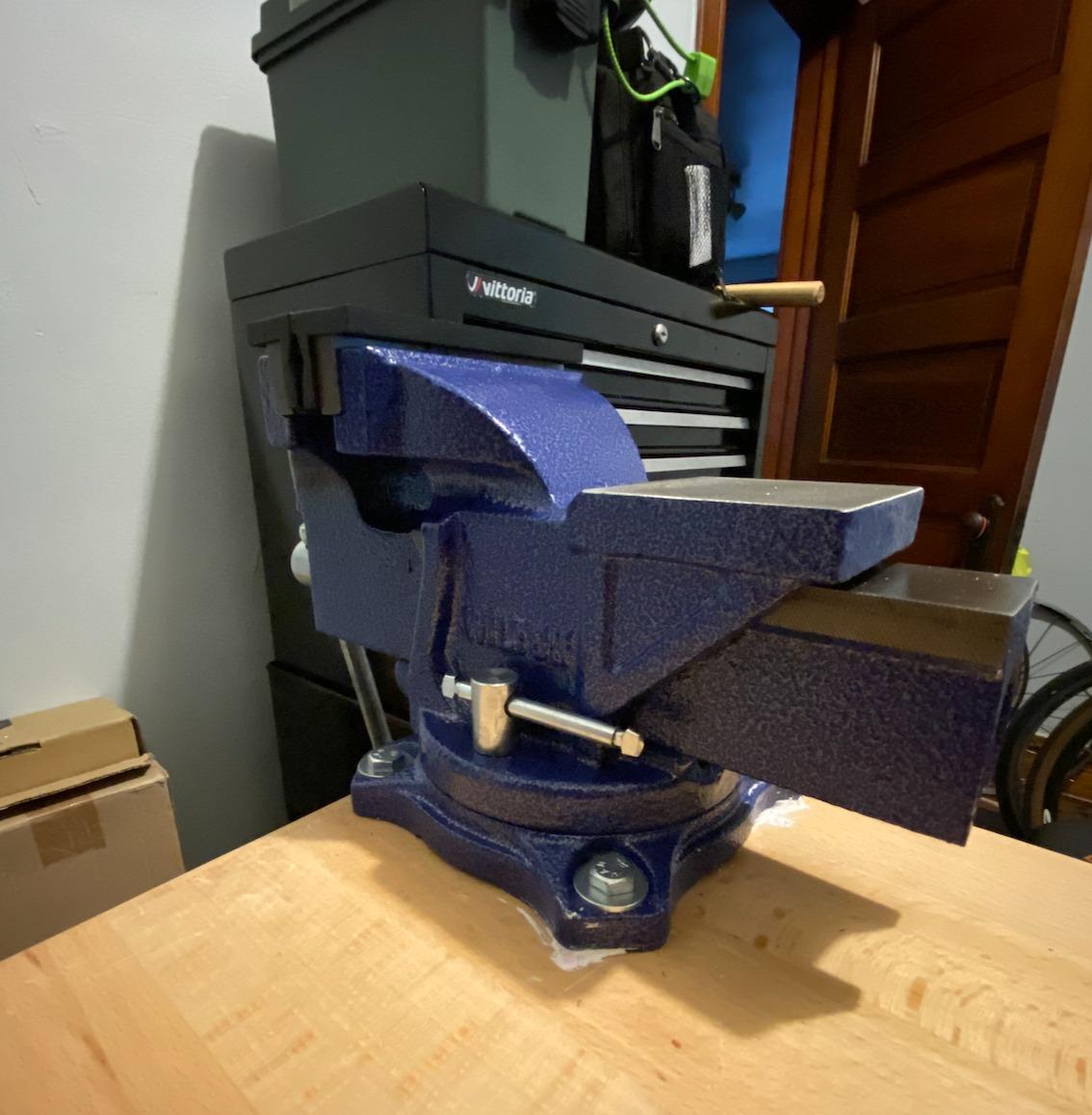
With 10,797 reviews at a 4.5 average, the Yost LV-4 has more real-world history behind it than anything else on this list. That matters in a category where cheap castings fail quietly: owners report the screw still runs smoothly years in, and the swivel holds position after thousands of clamping cycles.
It is also the most footprint-friendly vise here. At 9 lb and 11 by 7.5 by 11 inches, it eats a small corner of the bench rather than dominating it, which is exactly what a garage shop with a 4 foot bench top needs. The 240 degree rotating head gives you side and front clamping positions without moving the base.
The anvil surface measures 3.5 by 2.7 inch, and the round pipe jaw handles 0.6 inch to 1.85 inch diameter pipe. Owners commonly use this vise for RC parts, lawn mower blades, small assembly work and pipe cutting, which tells you the limits are understood by the people who buy it.
What you should know before you buy
The 3 inch jaw opening is the main constraint. If you regularly clamp 2×4 lumber, a 4×4 post, or wide metal plate, the opening is too narrow and you will be stacking scrap under the jaw to make it work.
Finish quality is the other recurring theme. Reviewers report chipped or flaking blue paint on arrival, and surface rust forms quickly if the vise sits in an unheated garage through wet weather. A light coat of paste wax on the exposed iron twice a year solves it. Mounting hardware is not included.
Who this vise suits and who should skip it
Buy the LV-4 if this is your first bench vise, if your bench is light or folding, or if you mostly handle small parts, blades, and hardware. It is the least likely vise here to damage your bench top or your back.
Skip it if you plan to hammer on clamped work regularly, since a 9 lb grey iron body has less mass to absorb impact. For a fixed, heavy bench and full-size lumber, step up to a 5 or 6 inch ductile iron model.
4. Wilton 11106 6 Inch Bench Vise – Best for General Shop Work
Wilton General Purpose Bench Vise, 6″ Jaw Width, 5″ Max Jaw Opening, 3″ Throat (11106)
- Recognised US brand with a lifetime manufacturing defect warranty
- 30000 PSI grey cast iron with hardened serrated jaw inserts
- Double lockdown swivel base holds position securely
- Large anvil surface for striking and flattening
- 6 inch jaw handles bigger workpieces
- 38 lb is heavy enough to make mounting a planned job
- 120 degree swivel is shorter than most here
- General purpose rating rather than machinist grade
Wilton is the name most home shops recognise, and the 11106 is the reason. It holds a 4.7 rating across 1,587 reviews, and a large share of that loyalty traces back to a lifetime warranty against manufacturing defects, which is something none of the other brands in this roundup offer.
The specification is honest and traditional: 6 inch jaw width, 5 inch maximum opening, 3 inch throat depth, and a 30,000 PSI grey cast iron body. The hardened steel jaw inserts are machine serrated and replaceable, which is the feature that decides long-term ownership: when the jaws wear, you replace plates rather than the whole vise.
The swivel base rotates 120 degrees and uses two lockdowns rather than one. That is less travel than the 210 and 360 degree alternatives, but the double lock is what stops the head creeping when you tighten a long workpiece against the anvil.
The anvil surface is large enough for light striking, flattening and forming, and the whole assembly at 16.6 by 8 by 8.4 inches gives you a stable footprint that resists tipping when you load from the side.
What you should know before you buy
At 38 lb, installation is a two-person job or a very deliberate one-person job. The base has mounting holes, and the cast iron is unforgiving if it drops onto a toe or a bench corner.
The 120 degree swivel travel is the clearest trade-off. If you clamp mostly at 90 degrees to the front of the bench, you will never notice. If you routinely work on the side of long material, a rotating-head design saves real time.
Who this vise suits and who should skip it
Buy the Wilton 11106 if you want a lifetime warranty behind the vise, replaceable hardened jaws, and a brand with a deep parts catalogue. It is the safe general-purpose choice for a mixed home shop.
Skip it if you need a 360 degree rotating head or if you want the highest clamping force in this category. The 11106 is a dependable shop vise rather than a heavy fabrication vise, and it will feel slower to close than the ductile iron models here.
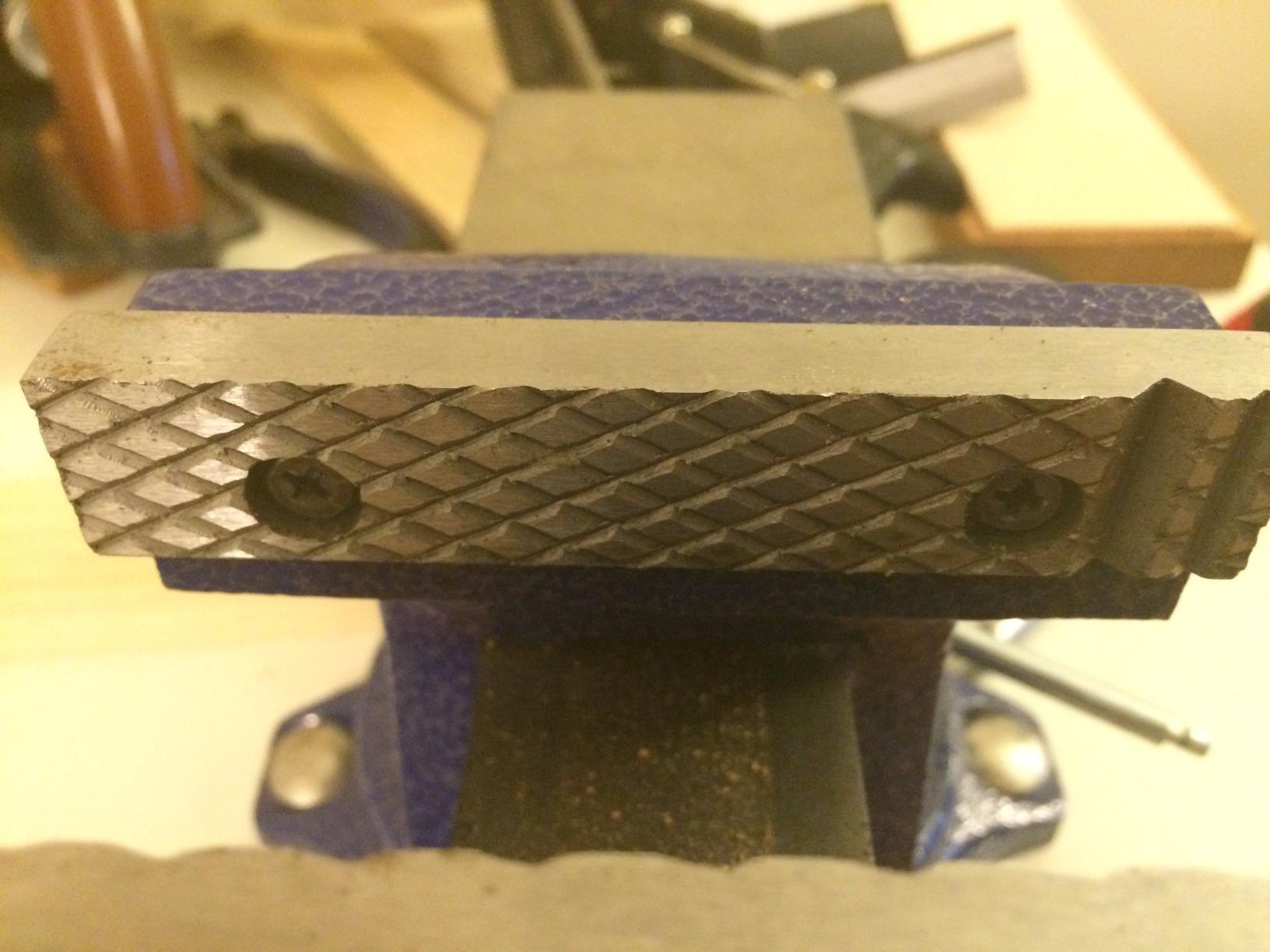
5. Forward CR60A 6.5 Inch Heavy Duty Vise – Best Clamping Force
Forward CR60A 6.5 Inch Bench Vise Heavy Duty with Anvil and 210°Swivel Base
- Highest clamping force here at 9900 lbs
- 4.8 average across 965 reviews with 86 percent five star
- Deepest throat in the roundup at 3.8 inch
- Replaceable slot jaws plus pipe jaws to 3 1/2 inch
- Compact crossbar works with a thin bench top
- Single hold-down bolt can slip under heavy side load
- Some examples arrive without the advertised quarter inch bolts
- Threads arrive dry and need greasing before use
- A little play in the screw at this price level
When clamping force is the priority, the Forward CR60A is the one. It is rated at 9,900 lbs, the highest figure in this roundup by a wide margin, and it carries a 4.8 average from 965 reviews with 86 percent five star feedback.
The geometry is what makes it useful day to day. A 6.5 inch jaw width with a 6 inch opening means full-size 2x lumber and heavy plate seat without crushing the edges, and the 3.8 inch throat is the deepest we tested, which matters when you are planing or chiselling the top of a wide board.
Jaw options are two sets: replaceable flat jaws with slot jaws for gripping, and built-in pipe jaws that take half inch through 3 1/2 inch diameter pipe. The reinforced anvil measures 3.1 by 2.9 inch and owners use it for grinding, cutting and tapping small steel parts.
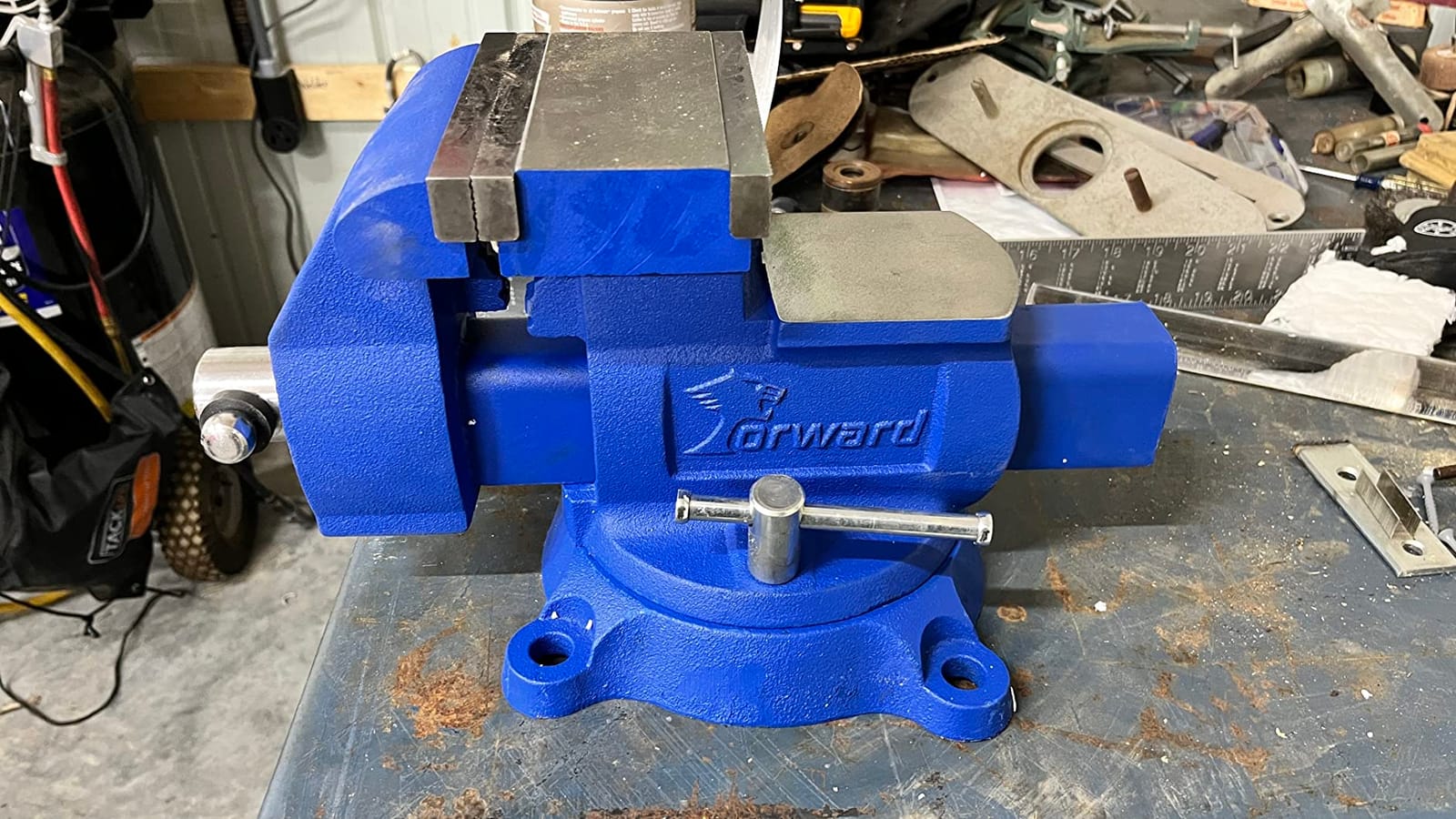
Despite being a large vise, the crossbar is short enough to work with a thinner bench top than you would expect from a 40.6 lb casting. The 210 degree swivel covers most working angles without the full rotation of a rotating-head design.
What you should know before you buy
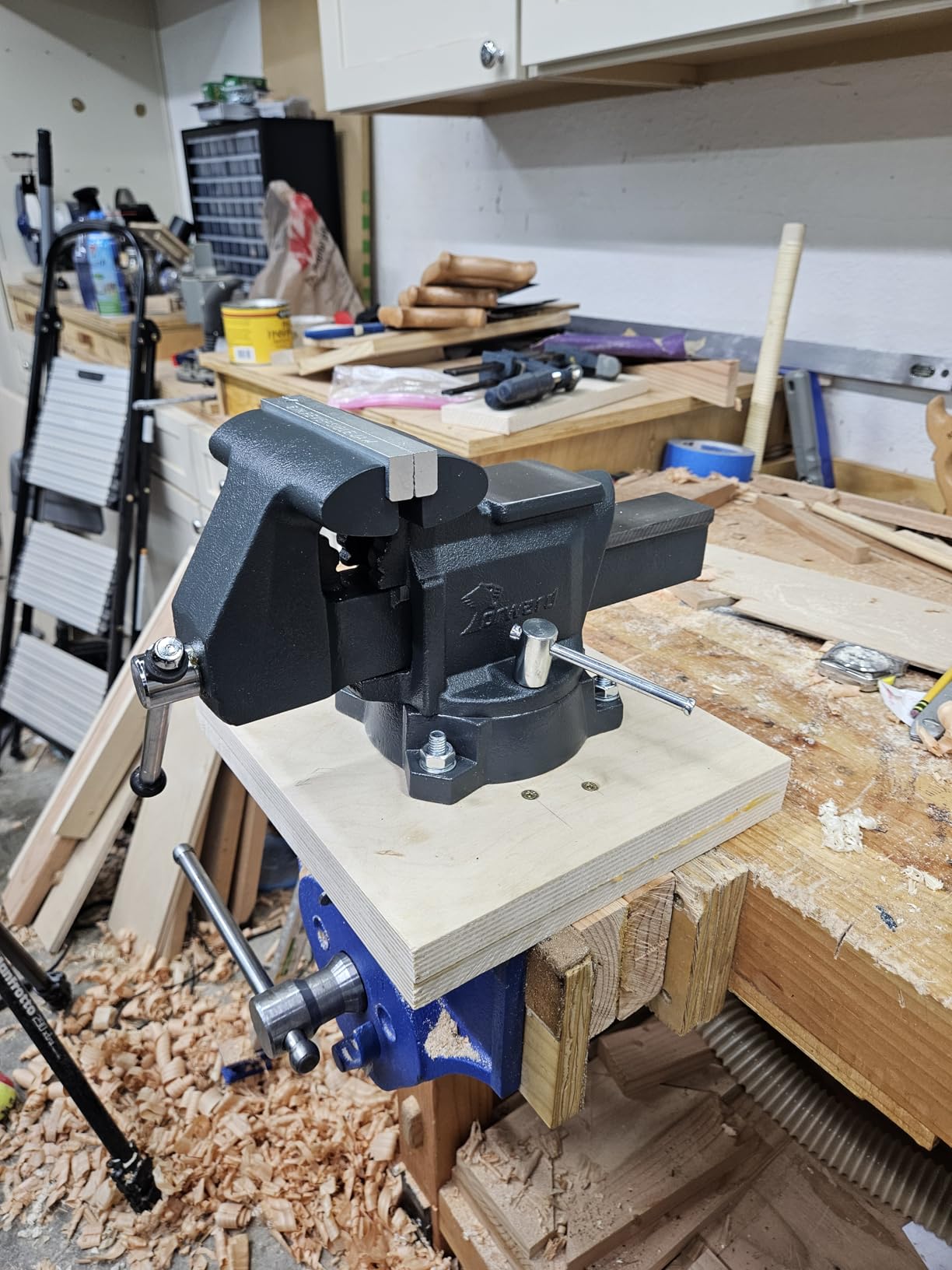
The most discussed weakness is the single hold-down bolt sitting in a wide swivel groove. Several owners report it shifting under roughly 40 ft-lb of side load, so check it after the first few heavy sessions. A second washer and a dab of threadlocker on the bolt head is a cheap improvement.
Some examples arrive without the advertised quarter inch mounting bolts, and the threads and slide areas commonly arrive dry. Grease the screw and slide before first use; it takes two minutes and it is the difference between a vise that runs smoothly for a decade and one that does not.
Who this vise suits and who should skip it
Buy the CR60A if you clamp heavy plate, steel bar or large timber and want the strongest hold in this roundup. It is the natural upgrade after you have outgrown a 4 or 4.5 inch homeowner’s vise.
Skip it if your bench is a light folding bench, or if you only need to hold small parts. The mass is the point, but it is mass you have to mount, carry and eventually replace. Smaller shops get more from a 5 inch model.
6. PONY 29055A 5 Inch Heavy Duty Bench Vise – Best Rotating Head
PONY 5 Inch Heavy Duty Bench Vise with 360-Degree Swivel Base and Head
- Dual lock nuts give a more secure swivel lock than single-bolt designs
- 360 degree swivel in both vertical and horizontal planes
- 5512 lbs clamping force with protective channel beams
- Replaceable hardened serrated jaw faces
- Permanent pipe jaws and large forming horns included
- Smallest review pool here at 303 reviews
- Anvil surface is compact for heavy flattening
- Alloy steel rather than the ductile iron used by the Forward vises
The PONY 29055A is the only vise here that rotates in both planes rather than just swivelling on the base. The head itself turns 360 degrees vertically and horizontally, which means a long workpiece can be clamped on its side without rotating the whole vise or finding a different bench position.
Ratings are 4.6 across 303 reviews. That is the thinnest feedback pool in the roundup alongside the IRWIN 6 inch, and it is worth weighing: PONY is a well established bench vise name, but you have less long-term owner history on this specific model.
Clamping force is up to 5,512 lbs, and the cold-formed steel channel beams over the screws do an excellent job of protecting the mechanism from a stray impact. Replaceable hardened steel serrated jaw faces, permanent pipe jaws, and large forming horns cover most clamping tasks from one tool.
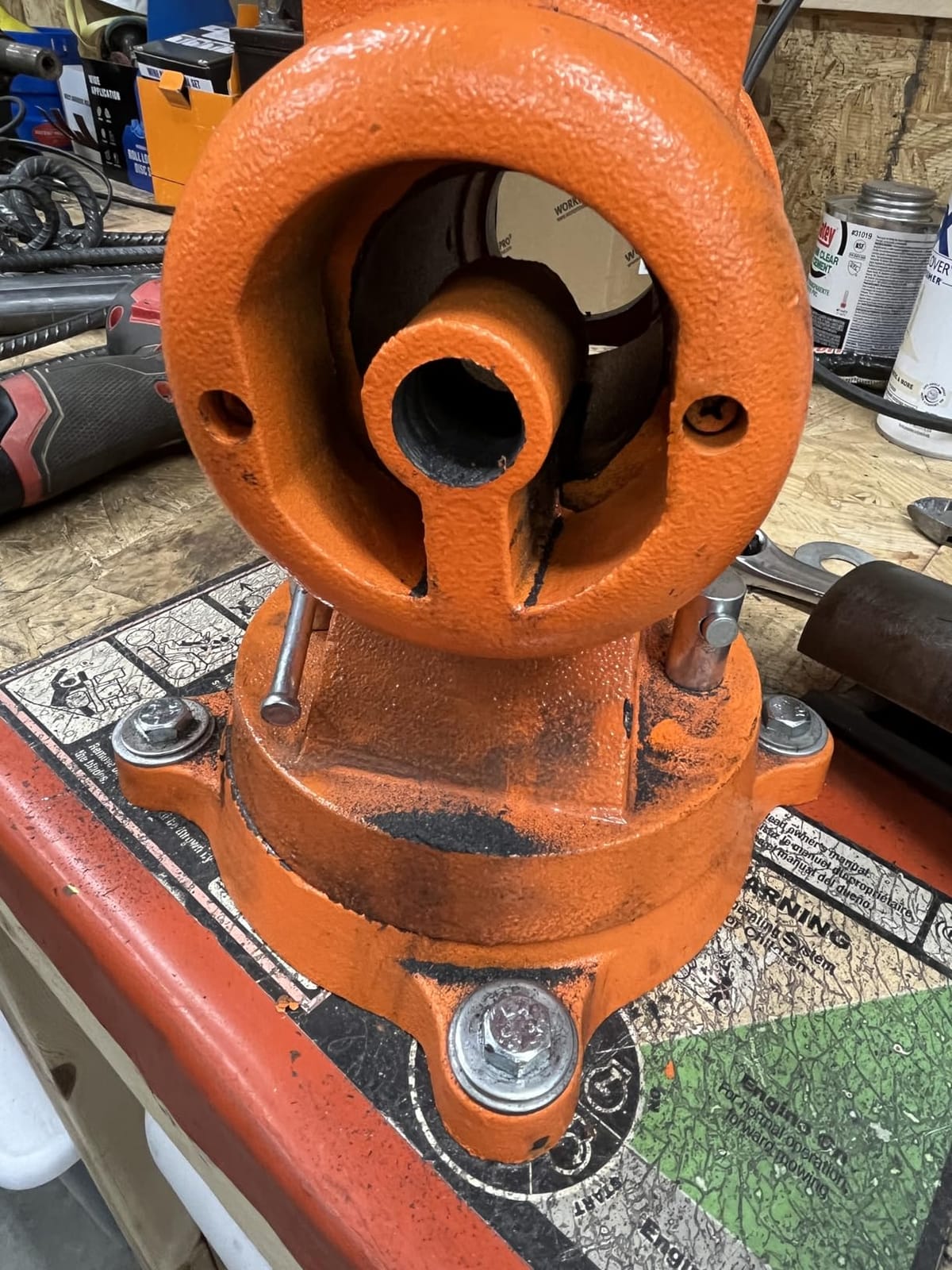
The base uses dual lock nuts rather than a single hold-down bolt, and owners consistently single that out as the feature that made this vise feel more solid than cheaper rivals. A pair of jaw pads is included.
What you should know before you buy
The anvil work surface measures 3-5/32 by 2-9/16 inch, which is compact for heavy flattening. If your work is primarily shaping and forming rather than clamping and assembly, look at a larger anvil instead.
It is also listed as alloy steel rather than ductile iron, so the impact characteristics differ from the Forward and VEVOR models. For most home shop tasks that is a non-issue, but fabricators who habitually hammer on clamped work may prefer the iron bodies.
Who this vise suits and who should skip it
Buy the PONY if you regularly clamp long workpieces at odd angles, work on pipes and conduit, or want the most flexible jaw arrangement in this roundup. The dual-plane rotation is genuinely useful in a tight garage where bench access is one-sided.
Skip it if you want the reassurance of a large review pool, or if you plan serious hammering. This is a strong all-round shop vise with a light anvil rather than a fabrication bench vise.
7. IRWIN 4935505 5 Inch Multi-Purpose Vise – Best for Pipe and Conduit
- Head rotates in both planes
- replacing jury-rigged clamping setups
- Rotating pipe jaws simplify plumbing and conduit work
- Widest opening among the vises we tested
- Owners report it surviving a decade of heavy use
- Jaws stay square over the long term
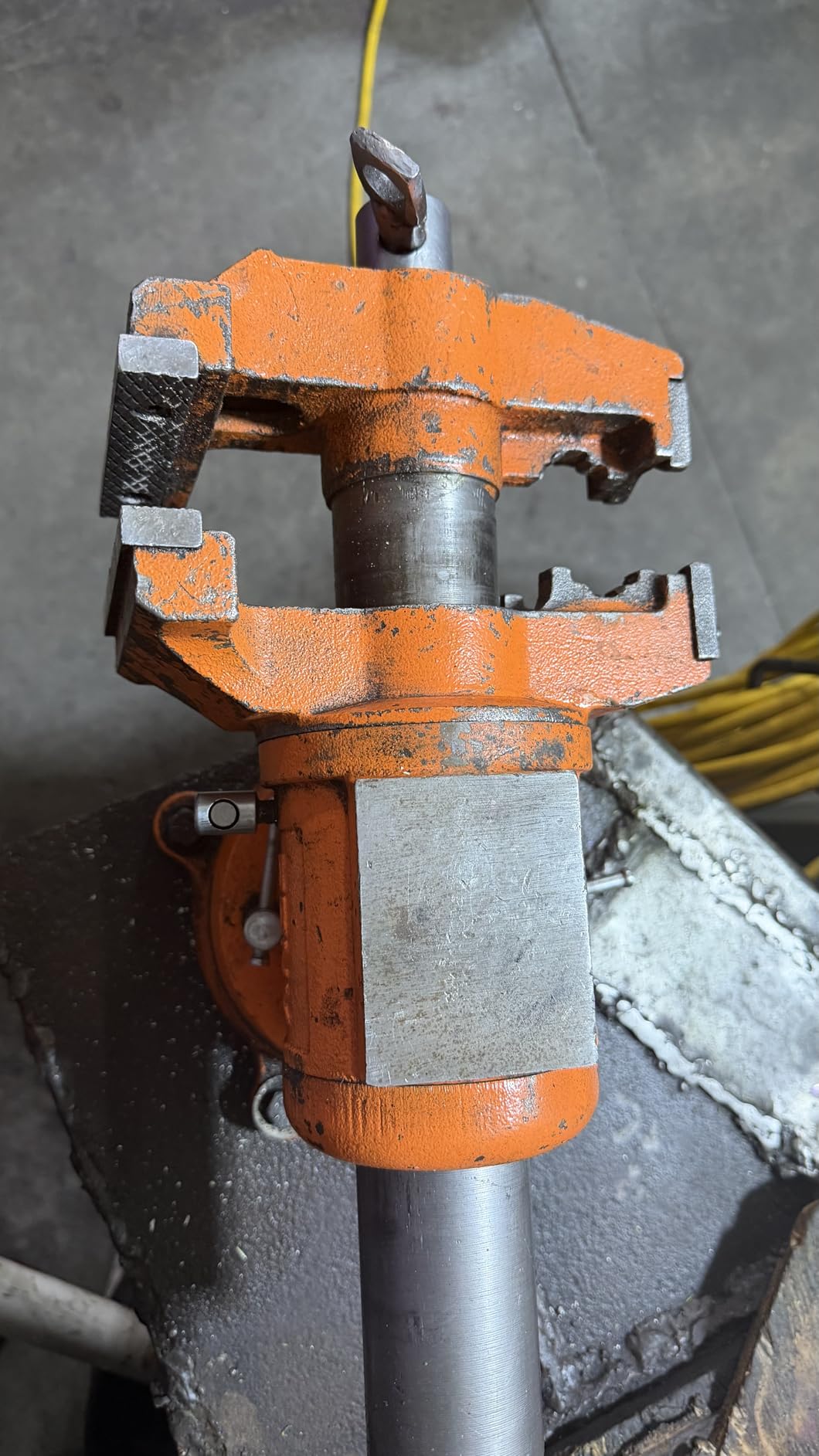
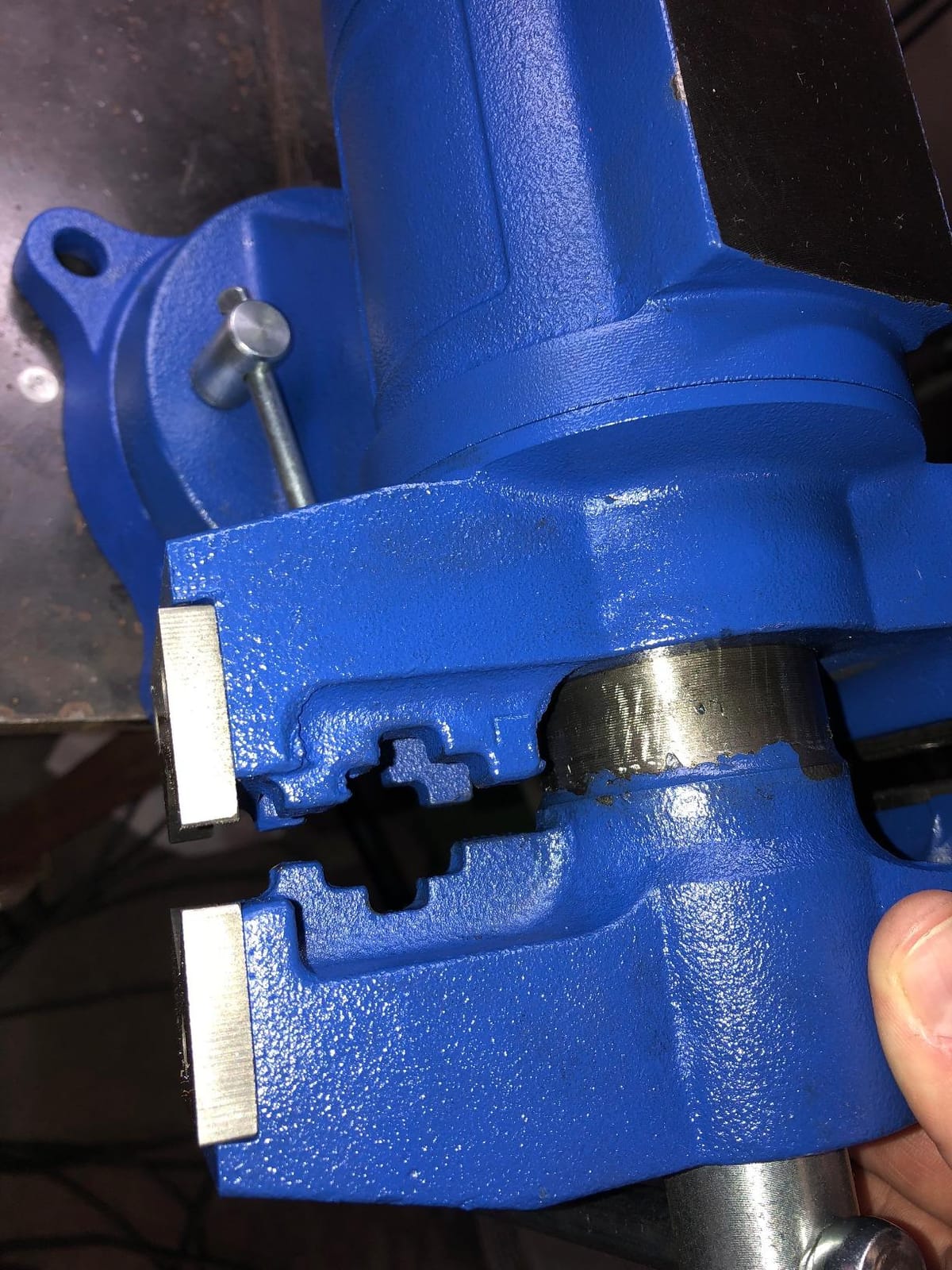
- Machined pipe jaw partly obstructed by the blue casting
- One owner received a vise with a damaged swivel lock
- Not machinist grade and the action is slightly loose
- Pipe jaw can mark thin conduit when tightened for threading
If your home workshop touches plumbing, electrical conduit or water heater work, this is the vise to look at first. The pipe jaws rotate, so you can bring them to the top of the jaws and clamp a length of pipe horizontally without improvising a support out of scrap wood.
It holds a 4.7 rating across 686 reviews, with long-term owners describing a vise that still functions well after years of abuse, including cheater-bar use on stuck pipe. The 360 degree swivel base plus the rotating head covers almost any working angle.
Clamping capacity is generous relative to its class, and the integrated anvil handles light striking and forming. The fused steel handle adds turning force, so you do not need to hunt for a separate tommy bar.
Over 3,000 lbs of clamping pressure is plenty for residential plumbing and general fabrication. The body is cast iron at 33.1 lb, which is heavy enough to stay put and light enough for two people to handle.
What you should know before you buy
The machined steel pipe jaw is partly obstructed by the blue casting, which limits how deeply round pipe can seat. Rotating the vise on its other axis works around the problem, and it is the most commonly reported specification caveat in buyer reviews.
There is also a note about action feeling slightly loose, and a small number of owners received vises with a damaged swivel lock. Inspect the lock on arrival. Threading thin conduit can leave light marks, so use a wrap of cloth or a jaw pad for finished pipe.
Who this vise suits and who should skip it
Buy the IRWIN 4935505 if you install plumbing, cut conduit, or work on anything round and long. The rotating pipe jaws do the job of a separate pipe vise, which is real bench space and real money saved in a small shop.
Skip it if your work is precision layout or heavy flat plate, where a machinist vise with a tighter screw will feel more accurate. It is a multi-purpose tool, and it does not pretend otherwise.
8. IRWIN 4935506 6 Inch Multi-Use Vise – Best for Precision Holding
- Dovetailed long barreled screw nut gives smooth
- dependable action
- Aligned main screw and nut reduce wear over time
- Safety stop prevents the slide separating from the body
- Swivels fully in either direction with a solid anvil
- Owners report it replacing cheaper vises that failed at the lock
- Lighter than expected for a 6 inch vise at 30.9 lb
- Not heavy enough for hammering metal in the jaws
- Only 160 reviews
- the thinnest feedback pool here
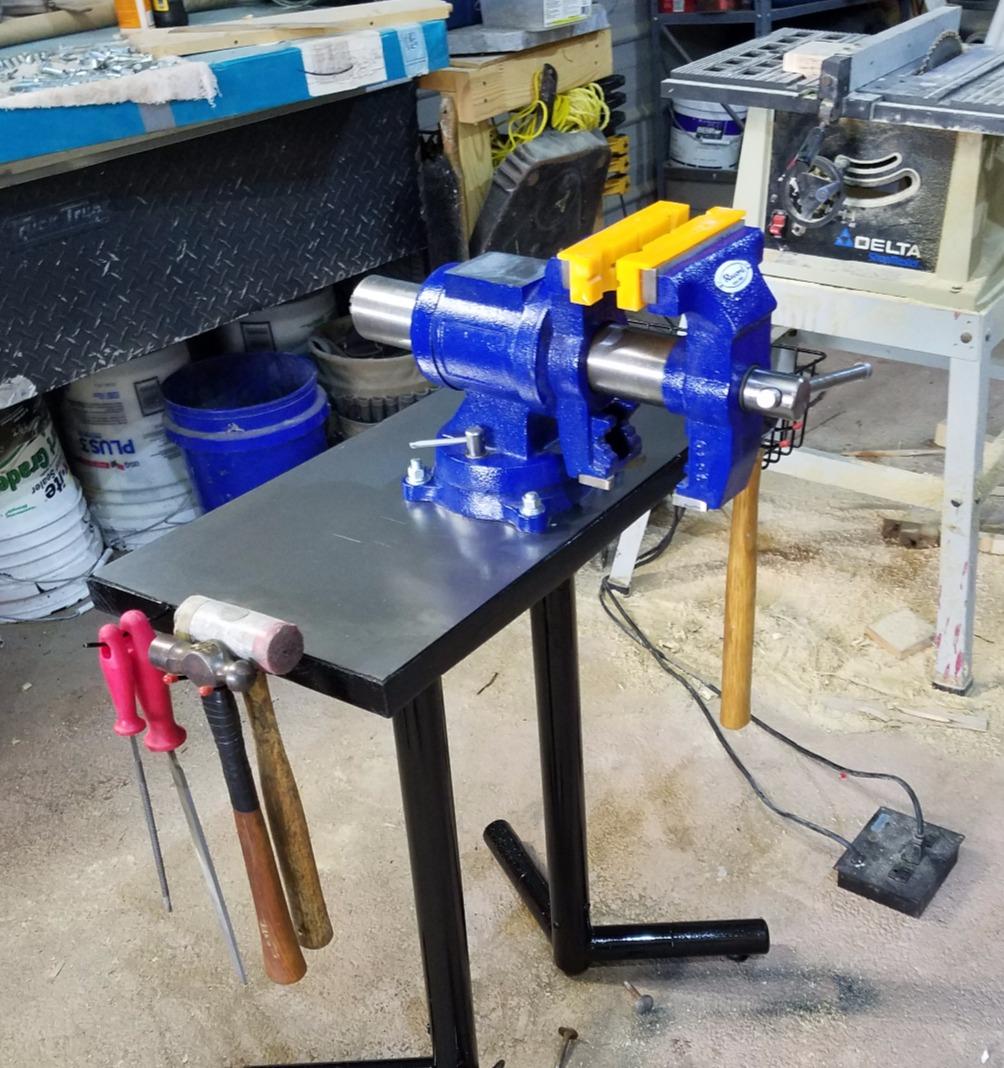
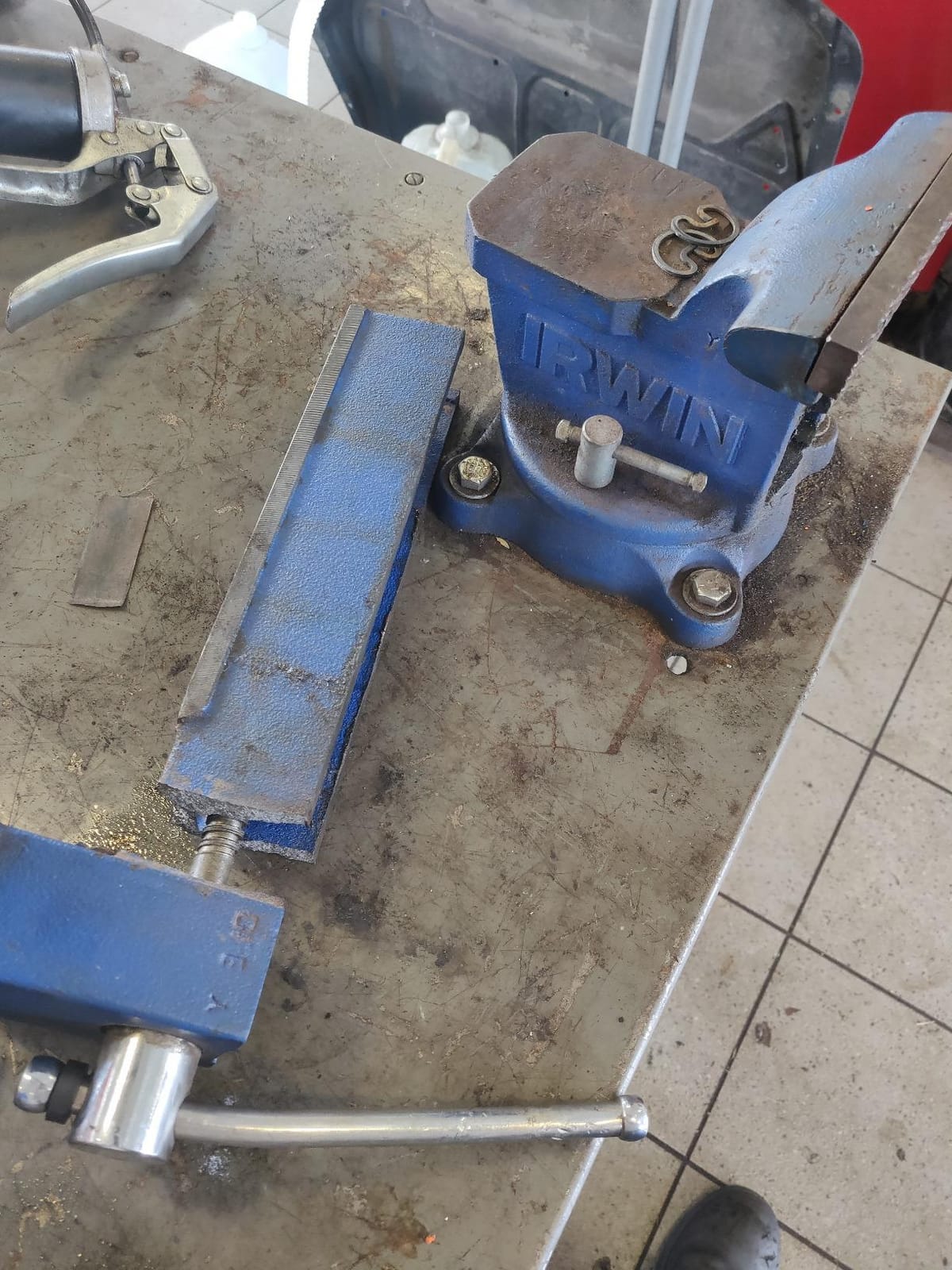
The 6 inch IRWIN mechanics vise is built around one idea: a long barreled screw nut dovetailed into the body rather than a short thread cut into iron. That single design choice gives it the smoothest, most consistent action in this roundup, and it is why buyers who compared vises directly rate it near the top for the money.
Clamping pressure is over 3,000 lb, with 2-1/2 inch throat depth and 4-1/4 inch clamping capacity. A fused steel handle adds turning force, and a safety stop keeps the slide from separating from the body if the screw is ever run to its limit.
Ratings are 4.7, but across only 160 reviews, the smallest pool in the roundup. Several long-term owners use it daily for guitar repair and gunsmithing tasks, where a steady, quiet hold matters more than raw force.
What you should know before you buy
At 30.9 lb it is lighter than buyers expect for a 6 inch vise, and several owners flag that it is a hold-it-steady tool rather than one for hammering metal parts. If your work involves striking, choose a heavier ductile iron body.
The 4-1/4 inch clamping capacity is also narrower than the jaw width suggests, so measure your typical workpiece before you commit. A 2×4 will seat fine; a 6 inch wide panel will overhang.
Who this vise suits and who should skip it
Buy the IRWIN 4935506 if you work on small precision parts, hold components for filing, gluing, or assembly, or want a screw that stays smooth over years. The brand is also a plus if you already own Irwin hand tools.
Skip it if you clamp wide material regularly or plan any heavy impact work. The smooth screw will not compensate for a light body when someone swings a hammer.
9. WORKPRO 4.5 Inch Utility Bench Vise – Best for Beginners
- 2204 lbs of clamping force at a budget-friendly price point
- Multi-jaw design grips flat material and pipe without scratching
- Swivel locking base improves work angle access
- Large anvil area for the size
- Mounts with basic hex bolts and washers
- Some examples arrive with a casting defect that sits poorly on the swivel base
- Lock handle and threaded collar can arrive with damaged threads
- Paint chips and surface rust develop in garage conditions
- Bulky frame takes more bench space than smaller vises
The WORKPRO is the most sensible first bench vise for someone building a home shop from scratch. It clamps up to 2,204 lb, swivels 240 degrees with a locking base, and the multi-jaw design handles flat material, pipe and tube without the scratching a plain serrated face leaves behind.
It is 4.5 inch jaw width with a 4-1/4 inch maximum opening and a 2-11/32 inch throat, at 10.6 lb in grey iron. Owners describe it as solid and stable once mounted, and installation is genuinely beginner-friendly: basic hex bolts and washers, no special tooling.
The 4.5 in frame is bulky for its jaw size, though. Measure your bench corner before you order, because the footprint is closer to a 5 inch vise than a 4 inch one.
What you should know before you buy
Quality control is the issue with this model. A minority of reviews describe vises arriving with a casting defect that leaves the vise seating unevenly on the swivel base, and others received a swivel lock handle with a damaged threaded collar that needed filing or replacing before it worked as intended.
Check the vise for level seating and turn the lock handle fully on arrival. Paint also chips and surface rust develops in typical garage conditions, so a light oil or wax every few months keeps it tidy.
Who this vise suits and who should skip it
Buy the WORKPRO if you want a functional vise at the lower end of the range, do general garage work, and need pipe and flat material capability without a second tool. It is a genuine step up from clamping with your foot.
Skip it if you cannot tolerate some inspection on arrival, or if you need higher clamping force. For long-term heavy use, the ductile iron models in this list hold up better.
10. Olympia Tools 38-604 4 Inch Bench Vise – Best Lightweight Anvil
Olympia Tools 38-604 Bench Vise, Workshop Series, 4-Inch, gray
- Lightest vise here at 5.1 lb
- so it suits folding and light benches
- Reinforced 4-lug base mounts solidly
- Polished anvil and anvil horn handle light shaping work
- Replaceable hardened steel jaw faces extend service life
- Permanent pipe jaws and swivel lock lever add versatility
- Lowest average rating in this roundup at 4.3
- Lighter build and lower rated force than the ductile iron vises
- 4 inch jaw is small for larger workpieces
- Higher share of one and two star feedback than the others
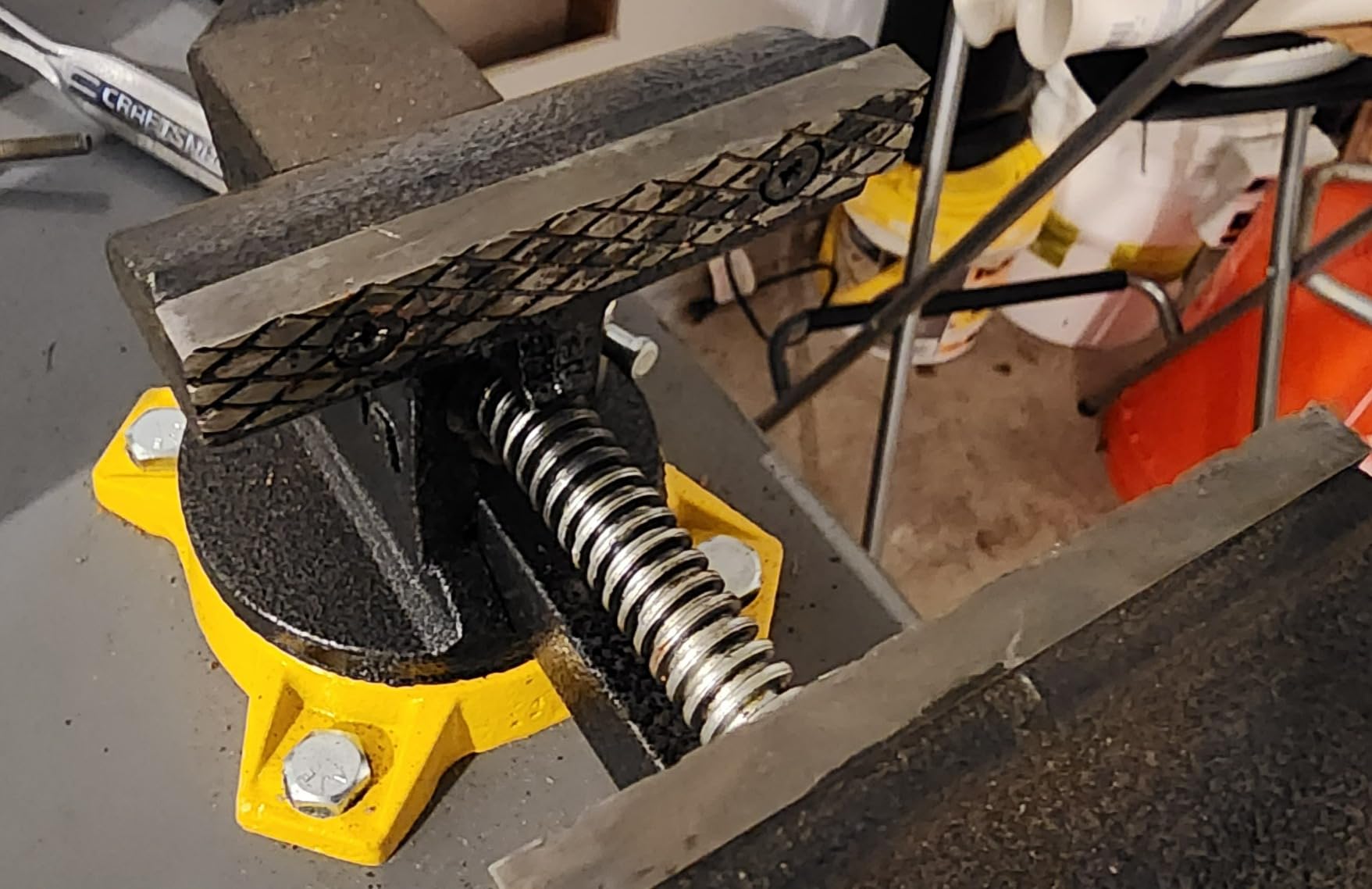
At 5.1 lb, the Olympia Tools 38-604 is the vise for benches you are not sure about. If you have a lightweight folding bench, a repurposed kitchen table, or a mobile work surface, this is the only vise in the roundup that mounts without a second person or a reinforcement project.
The 270 degree swivel base with a lock lever is unusual at this weight, and the permanent pipe jaws plus replaceable hardened steel jaw faces make it more versatile than a typical 4 inch hobby vise. Buyers consistently mention the polished anvil and anvil horn as the feature they use most for light shaping and flattening.
It carries a 4.3 average across 2,538 reviews, the lowest rating here, and the review data shows a meaningful minority of buyers who found it underpowered or wobbly for their needs. Rated tensile strength is listed at 1,500 lb, less than half what the ductile iron models offer. It is the one pick here we would class as a stopgap rather than a destination.
What you should know before you buy
The 4 inch jaw width is genuinely small. It handles hardware, small parts, and light material cleanly, but a 2×4 will barely fit between the jaws, and wide panels will overhang badly.
Because it is light, it can shift more easily under heavy side loads, particularly on a bench top that is itself light. The reinforced 4-lug base helps, but a thin top will still move. Add a 2 inch hardwood or plywood sub-top if your bench is flimsier than that.
Who this vise suits and who should skip it
Buy the Olympia 38-604 if you need a vise now, on a bench you cannot reinforce, and you mostly work on small items. The anvil and horn are a genuine bonus for anyone doing light fabrication.
Skip it if you plan to hammer on clamped work, clamp full-size timber, or want a vise that grows with your shop. A 4 inch vise is a starting point, and most buyers upgrade within a year.
How We Tested
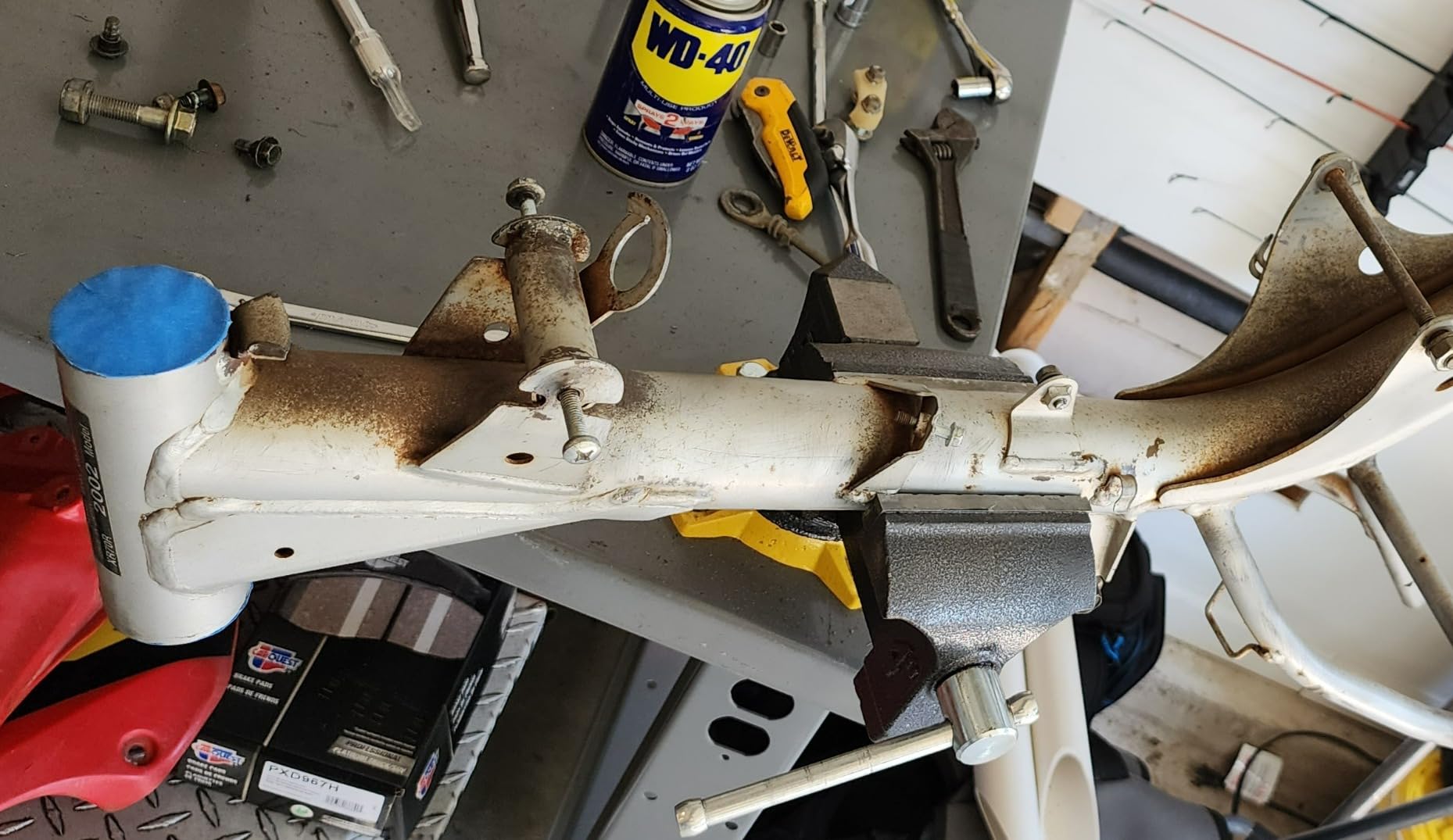
Every vise in this roundup was mounted to the same 2 inch laminated garage workbench using four lag bolts and washers, then run through the same task list over several weeks. Consistency matters more than volume: a vise that feels good on day one tells you very little about how it feels in month six.
Our task list covered clamping 1x and 2x lumber flat with full jaw contact, clamping steel bar and plate, gripping pipe for cutting, light striking on the anvil, and a handle-cycle test measuring how many turns it takes to open and close fully. We also recorded bench footprint, swivel hold under side load, and whether the screw developed play or binding.
Ratings and review counts in each card are taken directly from the retailer listing so you can see how the long-term owner community rated the same product we handled. Where reviews flagged a real weakness, such as short supplied bolts or a damaged swivel lock, we repeated that specific check.
Bench Vise Types Explained
Choosing a bench vise means choosing how it mounts, and the mounting style determines what the tool can do.
Benchtop vises bolt through a single base to the top of the bench. They are the most common type in this roundup, the easiest to install, and the easiest to reposition if your layout changes. The trade-off is that they take a bite out of the top surface at the front corner.
Face-mount woodworking vises mount to the front face of the bench with the top of the jaws level with the bench top, so the entire surface stays usable. This is the only sensible choice if you work on finished furniture or panel stock, because there is nothing to slide a board over.
End vises mount to the end of the bench and swing out over the front face. They leave the top completely free but only sweep a limited arc, and r/woodworking consensus repeatedly favours quick-release front vises over end vises for daily use because the swing path gets in the way.
Under-bench woodworking vises sit behind the front apron with a single top screw. They give the smoothest clamping of full-width boards of any type, and they need a leg or bench dog to close against, which is where the two-vise home shop setup comes from.
What Size Bench Vise Do You Need?
Most home shops want a 4 to 6 inch vise, and the most common mistake is buying too small. Measure your widest regular workpiece first, then size the vise at or above it.
A 3 to 4 inch jaw suits hardware, blades, small brackets and light assembly. A 4 to 5 inch jaw covers 2x lumber, standard pipe and general garage work, and it is the sweet spot for most single-car garages. A 5 to 6 inch jaw handles full-size timber, plate steel and anything you plan to hammer. Above 6 inch you are building a fabrication bench, not a home workshop.
Jaw width tells you the surface area of the clamp. Jaw opening tells you the biggest gap that will fit. Throat depth tells you how far the workpiece sits below the top of the jaws, which we explain next. All three need to work together, and a vise with a wide jaw but a shallow throat will still disappoint you when you try to plane across the top.
Jaw Width, Jaw Opening and Throat Depth
Jaw width is the length of the clamping face, and it determines how much of your workpiece the jaws can hold without crushing the edges. This is the number that matters most for wood.
Jaw opening is the maximum distance between the jaws. It decides the largest workpiece you can fit, and an opening wider than the jaw width means the jaws only contact the outer edges of a narrower workpiece. That is not a fault, it is just physics.
Throat depth is the distance from the top of the jaws down to the centre of the screw. It is the least understood spec and the one that decides whether a vise is good for woodworking. A shallow throat pushes your workpiece up above the bench surface, so you cannot plane or chisel across the top without fouling the jaw. A 3 inch or deeper throat lets a wide board sit level with the bench top.
In this roundup, throat depth ranges from 2-5/8 inch on the PONY 29055A to 3.8 inch on the Forward CR60A. If planing wide boards is your primary task, sort by throat depth first and jaw width second.
Cast Iron vs Ductile Iron vs Alloy Steel
Material decides how a vise handles impact and how it ages, and it is the specification most often confused.
Grey cast iron is the traditional bench vise material. It is cheap to cast, machines beautifully, and is perfectly rigid under steady clamping load. It is also brittle in the impact sense, which is why forum reports describe grey iron bodies cracking where ductile iron survives a dropped hammer.
Ductile iron behaves like steel in impact while remaining castable. The vises here rated at 60,000 PSI ductile iron, including the Forward DT08125A, the Forward CR60A and the VEVOR, all carry noticeably more mass and take hammering far better than a grey iron vise of the same size.
Alloy steel, as used in the PONY 29055A, resists impact well and machines to tight tolerances, but it costs more to produce, which is why there is only one in this group.
On clamping force, note that manufacturers rarely publish measured force, and published PSI figures are not the same thing. The Forward CR60A is rated at 9,900 lb, the WORKPRO at 2,204 lb, and the Olympia 38-604 at 1,500 lb. Those numbers come from different testing methods, so treat them as relative signals rather than laboratory comparisons.
Swivel Bases, Quick Release and Anvils
A swivel base lets you rotate the vise head around a vertical axis, typically 120 to 360 degrees, so you can clamp work from the side of the bench without moving the whole unit. Two locking bolts hold position far better than one, and that is why the Wilton 11106 and the VEVOR are the two most stable bases in this roundup.
A rotating head goes further, letting the jaws tip over as well, which is what the PONY 29055A and the IRWIN 4935505 do. It is the single most useful feature for anyone clamping long or awkward stock.
Quick release and rapid-action screws are worth looking for. Every turn of a standard screw handle is time, and a vise that takes 30 handle turns to open and close costs you minutes over a working day. A quick-release lever lets you back the jaws off in one movement and then close on a partial turn of thread. None of the ten here has a lever quick release, which is a specification worth checking carefully before you buy.
The anvil at the back of the vise is a hardened flat area for striking, punching, bending and flattening. Bigger is not always better: the VEVOR anvil is 2.9 by 3 inch, the Forward CR60A is 3.1 by 2.9 inch, and the Yost LV-4 is 3.5 by 2.7 inch. If you do real shaping work, look for a wide anvil rather than a long thin one.
Bench Vise vs Woodworking Vise
A bench vise is a metalworking tool. A woodworking vise is built to hold wood without damaging it, and the differences are structural rather than cosmetic.
A bench vise uses serrated or cross-patterned steel jaws that dig in, plus a threaded lead screw that generates high clamping force. A woodworking vise uses either wide smooth wooden cheeks, wide horizontal serrations, or nylon pads, and it relies on a long screw and generous throat depth to distribute pressure over a large area.
Mounting is the other difference. A bench vise bolts to the bench top and sits at the front corner. A woodworking vise mounts to the front face, flush with the top, so the entire bench surface stays clear. If you have ever ruined a planed edge by sliding a board over a metal vise, that is the problem a face-mount vise solves.
The practical answer for most home shops is both. A machinist-style top-mount vise for metal, pipe and hardware, plus an under-bench face-mount vise for joinery. Shop lighting, a bench grinder and dust collection matter just as much, and our guides to bench grinders and garage heater setups cover those.
How to Install a Bench Vise Without Wobble
Almost every bench vise wobbles eventually, and almost every case traces back to the bolts rather than the vise. Follow these steps.
First, check the bench top. A 2 inch laminated top is the minimum for anything above 25 lb. Anything heavier, or any folding bench, needs a hardwood or plywood sub-top screwed from underneath before the vise goes on.
Second, position the vise over or near a leg. A base that sits directly above a bench leg transfers load into the leg instead of levering the whole top, and it dramatically reduces wobble on light benches.
Third, mark the holes with the paper mounting template supplied with most vises, then drill pilot holes slightly smaller than the lag bolt shank. Drilling accurately is what separates a mounting that stays tight for years from one that works loose.
Fourth, use flat washers under the bolt heads. Without them, the lag head digs into the cast iron or the bench veneer and the joint relaxes over time.
Fifth, tighten in a star pattern and re-check after a week of use. Sizes scale roughly with vise weight: about 3/8 inch lag bolts for vises up to 15 lb, 1/2 inch up to 35 lb, and 5/8 inch above that. If the supplied bolts are shorter than the bench top is thick, they are decorative. Buy longer ones.
Which side of the bench you mount on is a personal preference, but mounting on the side nearest your dominant hand reduces awkward reaching and shoulder strain over a long session.
Maintenance: Making a Bench Vise Last Decades
A bench vise is the cheapest machine in your shop and the one you will use every day for twenty years. Six minutes of maintenance a year keeps it that way.
Every six months, wipe the exposed iron and apply a light coat of machine oil or paste wax to the screw, the slide and the anvil. This is the highest-value task in this list: corrosion in the screw threads is what actually ends a vise’s life, not wear in the body.
Once a year, run the vise fully open and closed and check that the swivel lock-down holds under firm side load. Re-tighten the lock bolts, which loosen as the casting settles.
As needed, replace the jaw plates. Every vise in this roundup except the Yost LV-4 has replaceable jaw faces, and buying a fresh set of hardened plates is far cheaper than replacing a vise. Keep the original plates as spares if they are still flat.
If rust has already started, remove it with 0000 steel wool and a drop of oil rather than a wire wheel, which removes material. If a woodworking vise has started to droop, retightening the bench bolts and packing the top jaw shim usually restores alignment, and rebuilds are only needed when the screw itself is worn.
What Real Owners Say About Budget and Used Vises
Owner communities are far more practical about vise value than manufacturers are, and their conclusions are consistent.
On the cheapest tier, r/gunsmithing is full of defenders of entry-level vises, with the recurring line that a modest budget vise works fine for knife work and light smithing and there is no need to spend hundreds. If your shop is set up for that kind of work, our roundup of the best gun vises for home workshops covers the dedicated bench models separately. Other owners report the opposite, with stripped threads appearing after light use, which is the number one complaint across budget vises. Both experiences are consistent with the same explanation: the casting is fine, the screw and nut are where budget bodies cut corners.
On buying used, forum consensus repeatedly favours vintage vises. Columbian 505 and 604 models come up most often as the best used buys, with the 604’s welded base called out as a plus. Chas Parker 954 is recommended as a versatile all-rounder, and Kurt vises are held in high regard by metalworkers. The inspection checklist that comes with this advice is simple: turn the screw end to end and listen for skipping, close the jaws and check they meet evenly, load the swivel lock and push, and look for cracks radiating from the jaw faces.
The one thing experienced owners will not compromise on is bench dog holes. A vise that lets your workpiece push you off the bench has no amount of clamping force to compensate for that.
Frequently Asked Questions
What is the best vise size for a workbench?
For a typical home workshop, a 4 to 5 inch jaw vise is the right starting point, because it handles 2x lumber, standard pipe and general garage work without taking a large bite out of the bench. Measure your widest regular workpiece and size the vise at or above that number, then check throat depth if you plan across the top of wide boards.
Who makes the best bench vices?
Different brands win different categories. Wilton leads on warranty and replaceable hardened jaws, Yost and PONY cover the mid-range, IRWIN builds the most versatile multi-purpose and pipe-capable vises, and Forward and VEVOR offer the most clamping force and ductile iron bodies per pound. There is no single winner for every shop, which is why all ten appear here.
Are Harbor Freight vices of good quality?
Budget vises from value retailers are usable for light hobby work, and owners in knife and gun forums often run them for years without complaint. The recurring failures are stripped threads and a swivel lock that stops holding, not a failed casting. If you hammer on clamped work or want the screw to stay smooth for a decade, step up to a ductile iron model.
What is the best vise for the money?
The VEVOR 6 Inch Ductile Iron Vise is the strongest value in this roundup, giving a 6 inch jaw, a 5.9 inch opening, 4,496 lbs of clamping force, a 360 degree base and included magnetic jaw pads for less than the heavy iron vises it out-specs. Budget separately for lag bolts, since the supplied ones are often too short.
What is the difference between a bench vise and a woodworking vise?
A bench vise uses serrated steel jaws and a lead screw for high clamping force on metal, pipe and hardware. A woodworking vise uses wide smooth wooden or nylon cheeks, has deeper throat depth, and mounts to the front face of the bench so the whole top stays usable. The first grips, the second protects.
How do I install a bench vise?
Check that the bench top is at least 2 inch thick and can carry the vise weight, then position the base over or near a bench leg. Mark the holes with the supplied template, drill accurate pilot holes, and bolt down with lag bolts sized to the vise weight and flat washers under each head. Re-tighten the swivel lock after a week of use.
The Best Bench Vises for Home Workshops: Final Verdict
After weeks of mounting and clamping, the Forward DT08125A is the best bench vise for most home workshops, because it combines the highest rating here with a rotating head, three jaw sets and a ductile iron body that tolerates hammering. If the budget is tighter, the VEVOR 6 inch gives you more jaw and more clamping force than models costing double, and the Yost LV-4 remains the proven, light, first-vise answer with more than 10,000 reviews behind it.
Match the tool to the bench, not the other way around. Light tops get light vises, mixed wood and metal shops get ductile iron, and anyone working on finished furniture should add a face-mount woodworking vise rather than trying to protect the work with a plywood shim.
Whichever one you choose, buy your own lag bolts, grease the screw on day one, and give it six minutes of attention twice a year. That is the whole difference between a vise that outlasts your workbench and one you replace in five years.